
Learn how to Carve Wood Online Courses & Lessons
Ever look at a block of wood and wonder what it could become? Want to design your own ornaments instead of copying others? Tired of tools that tear the grain instead of slicing it like butter? let's do something about it.
$25 a month to see every cut.
Watch
School Of Wood Carving
3,000+
Carving Video lessons in the library, and growing!
As Featured In
For Every Level
Who is this Wood Carving school for?
Beginners
Never carved before?
Start from zero. Learn to hold your tools right, read the grain, and cut your first relief panel at your own pace.
Artisans
A hobbyist looking to improve?
Break through your plateau. Pick up classical European technique that changes how you carve everything, from flowers to full architectural panels.
Professionals
An experienced carver?
Master the deeper vocabulary of old-world carving. Grinling Gibbons style, Baroque foliage, and the mathematical design principles behind them. The real thing.
Process
How it works
01
Choose a Course
Browse library of in-depth carving courses, from beginner basics to advanced foliage techniques.
02
Learn at Your Pace
Stream Carving video lessons anytime, take notes, track your progress, and rewatch as many times as you need.
03
Master Your Craft
Ask questions about Wood Carving, and get feedback from Alexander himself.
What Others Say
Trusted by carvers worldwide
By far the best course I found for learning woodcarving.
Jonas Jonsson
Artist · Sweden
Subject matter NOT FOUND anywhere else in any online carving classes.
Robert Stokes
Woodworker · USA
The best online woodworking school I have seen, and I have seen a lot of them.
Luke Addington
Addington Furniture
Essential for further development of the wood carving craft.
Gerry Michaud
Prof. Emeritus, Univ. of Cincinnati
Carver whose work is so admirably skillful, crisp, and fluent.
David Esterly
Master Wood Carver · Author
Mighty fine work. Exceptional craftsmanship and attention to detail.
Frederick Wilbur
Master Wood Carver · Author
Hats off to Alexander. What an elegant carving, it sings to me!
Chris Pye
Master Wood Carver · Author
Your work is stunning. You know how to carve wood.
Mark Baker
Group Editor, Woodworking Mags
Your Instructor
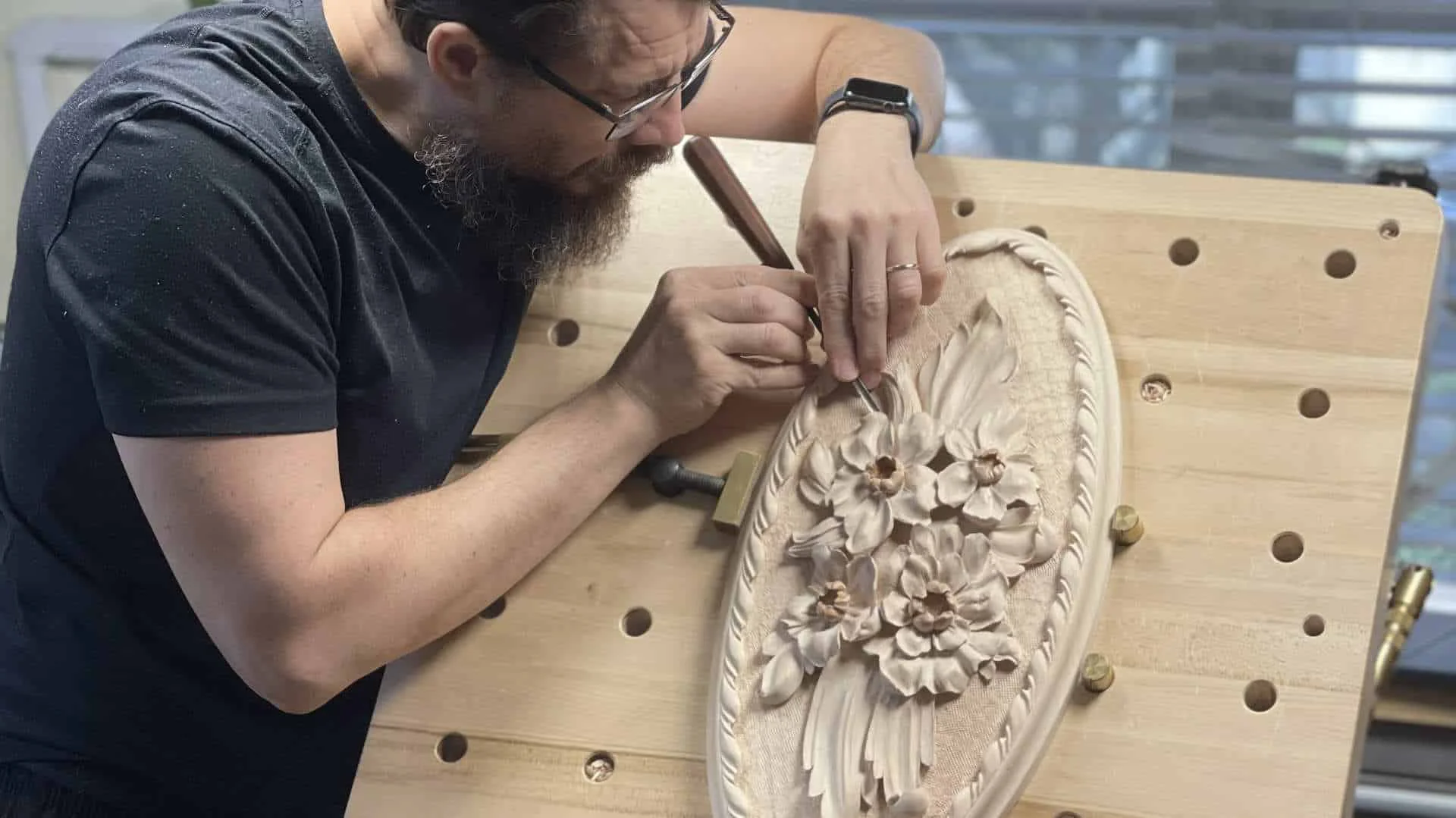
Alexander Grabovetskiy
Alexander has taught thousands of students across USA and online, sharing classical European carving technique with carvers of every level.
His approach combines old-world European technique with clear, structured lessons that make even the most complex carving open to every skill level.
Two ways in
What will you carve this year?
Never held a gouge, or carved for fifty years? Either way, you get every course and someone to show you how. Go at your own pace.
Yearly Access
$200
Renews automatically every 12 months.
4 months free · save $100
To see every cut, all year round.
Monthly Access
$25
Renews automatically every month.
To see every cut, month by month.
Cancel whenever you want.
FAQ
Questions & Answers
How many videos are in the library?
Over 3,000 carving lessons are available right now, and new lessons are added regularly. The library never stops growing.
Can I watch lessons on my phone or tablet?
Yes. All lessons stream 24/7 on your computer, tablet, or phone. You can rewatch them as many times as you like.
Do I need experience to start?
Not at all. The curriculum covers every level: complete beginners, hobbyists refining their technique, and professionals mastering advanced methods.
Are the courses self-paced?
100% self-paced. Even with a busy schedule or travel, you can go at your own speed. Every lesson is available around the clock.
What tools do I need?
Alexander recommends Pfeil Swiss-made tools for premium quality. Ashly Iles tools, Henry Taylor, Addis, Herring Brothers wonderful choice also.
What wood types do you recommend for beginners?
Basswood is ideal for beginners. It's soft, easy to carve, and very forgiving. Butternut and walnut are excellent for intermediate work.
Does Alexander use power tools?
No. Alexander teaches exclusively with hand tools, the traditional European approach that produces the finest results.
Is there a guarantee?
Yes. There is a 100% satisfaction guarantee. If you're not happy, you can cancel at any time. No hoops, no questions.
Updated July 2026
Ready to pick up
the chisel?
Learn the craft on your schedule, with fresh lessons added regularly.
Live streams
Know when I go live
One short note with the link and the start time. The streams are free.
About the School of Woodcarving, read more
How to Learn Wood Carving with Alexander Grabovetskiy
Classic European wood carving is the craft of cutting mass out of a solid block of basswood with hand gouges, one cut at a time, until high relief and full round form rise up out of the board. Hand tools only. Nothing in my shop plugs into a wall, and no amount of sanding will save a cut you made in the wrong direction. What you carve this way, your grandkids will still be holding a hundred years from now.
Ever look at a rough board and feel a shape sitting in there, waiting for you? Then you pick up your gouge, it tears the grain instead of slicing it, and nobody tells you why. And maybe you are tired of tracing somebody else's pattern when the ornament in your own head is better.
Those three questions are why these online woodcarving classes exist. You stand behind my shoulder and watch how I carve the real projects, the way an apprentice learns.
Do you want to learn how to carve wood. Could it be you just tired of sawdust. Or your gouge will not hold an edge for ten minutes and you have had enough of guessing. Whatever brought you here, you are here. I am Alexander Grabovetskiy. Carving is how I make my living, and this is my school. Privet. Pull up a chair.
Been hunting for wood carving courses, wood carving lessons, or fine woodworking classes that go past the first week of basics? You are in the right shop. Nobody here films two minutes of a cut and calls it a lesson. What we do is the physical craft. Digging inside the wood. Taking a block of basswood and removing mass until the shape breathes.
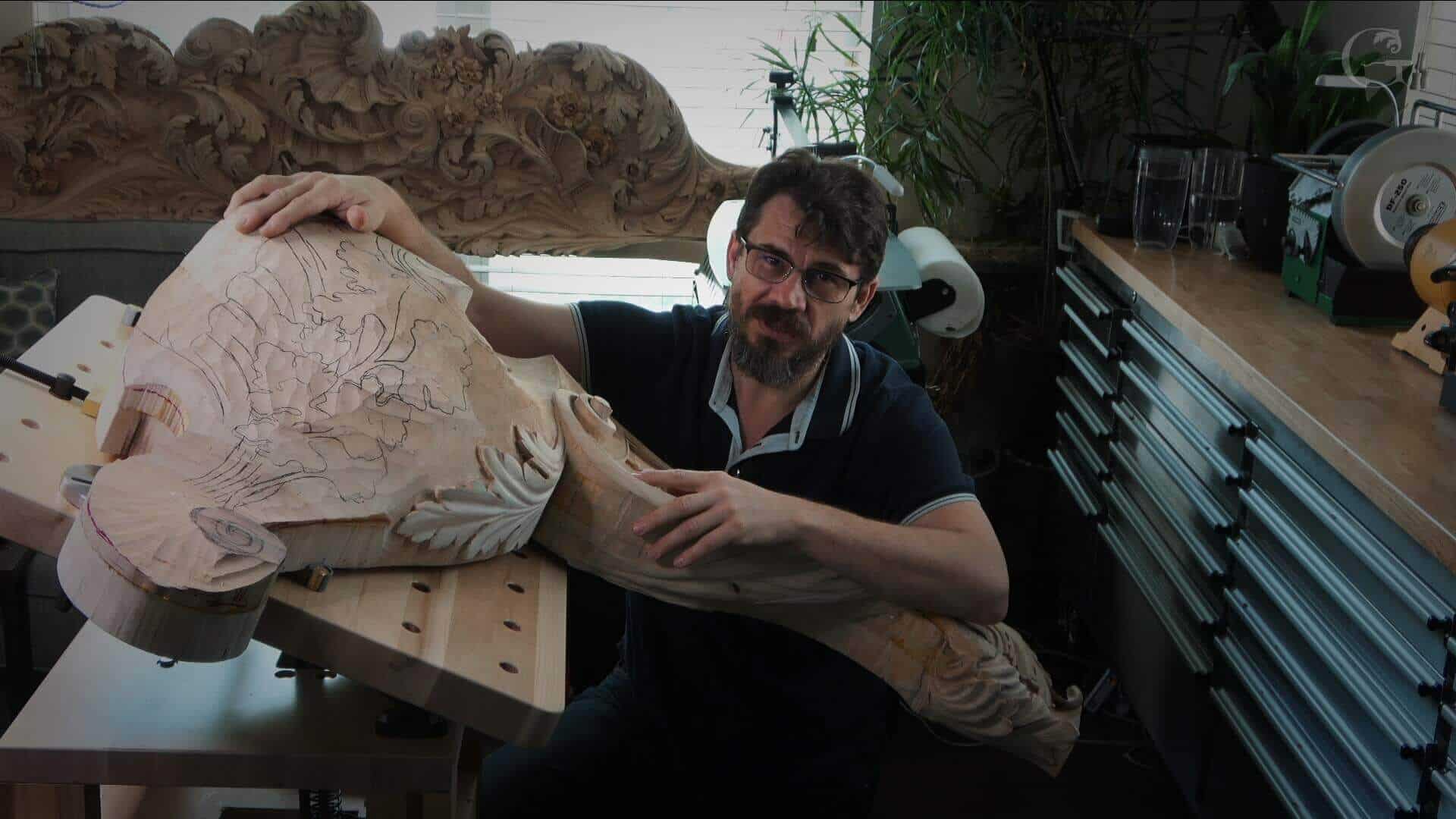
Alexander Grabovetskiy, master wood carver.
What is the School of Woodcarving?
The School of Woodcarving is an online virtual apprenticeship where you learn classical European wood carving, sharpening, and 3D design by watching a master carver work at real speed, across more than 3,000 video lessons.
You do not read a textbook. Instead you stand over my shoulder at the bench, and you see every cut, including the mistakes I have to fix on camera. Watching a cut go wrong and get fixed is how woodcarving skills go into your hands.
I started this school because the three dimensional world got hold of me early and never let go. My grandfather put a chisel in my hand when I was six years old in the Soviet Union. I took it straight to a brick, because I wanted to carve a face and a brick was what was in front of me. The tool was ruined in about a minute, and the passion was born right there. That same road later brought me the International Woodcarver of the Year award.
You can almost smell the shavings curling off a #7 gouge. These online wood carving courses will not physically drag you into my shop, but they bring the shop to you. Some students watch from the couch. A few carry a laptop out to the garage and carve along with the video, pausing every thirty seconds to catch the angle of the bevel.
The way I teach is the old apprenticeship. Design, then the tools, then the hardest one, sharpening. No gimmicks. You have to be real.
Who is teaching you?
My name is Alexander Grabovetskiy, master wood carver and sculptor, and I hold the International Woodcarver of the Year award. The studio takes high end architectural ornament and luxury commissions. Wood is in my blood, because my great grandfather worked mahogany in the Chippendale style. The oldest sword ever dug up in Poland is called the Grabovetskiy sword.
At sixteen I became the only apprentice of a fine art master in Russia. He taught me the lesson this whole school is built on. Design is not drawing on paper. It is the laws of space, rhythm, and repetition, plus knowing what each tool can do. He taught me to think like a tool. What he handed me, I hand to you, and that is the whole point of an apprenticeship. There is more of the story on my page.
We run the School of Woodcarving as a 501(c)(3) non-profit. Tuition pays for the lessons and also feeds international orphan and widow charities, and it sponsors talented kids from poor families who cannot pay for art school. I could not pay for it either, back when my father left us.
What does classic wood carving actually take?
Classic European woodcarving runs from flat low relief all the way up to carving in the round, and every bit of it rests on three skills. Learn them in this order.
Design. The geometry and the quiet laws of space, so the ornament sits right on the board before one chip flies.
Carving. Reading the grain and driving the gouge. Chopping and slicing the mass away until the form shows up.
Sharpening. The hardest skill in the craft. It takes years, because a dull edge tears the wood, tires your arms, and kills good tools.
Design comes first. Always.
Low relief sits close to the surface, like a face on a coin. In high relief the shapes climb off the panel far enough to throw a real shadow, and that is where most of my work lives. Carving in the round is a sculpture finished on every side, and you can pick it up and turn it in your hand. Same gouges either way. The basswood does not care which one you choose.
How is this different from other woodworking schools?
The School of Woodcarving is different from a normal woodworking school because everything here is three dimensional hand carving, not flat carpentry and not power tools.
Go to a regular woodworking class and you learn to measure, cut, and join flat boards. You build a cabinet. Good work, useful work. Here we carve the ornament that goes on the cabinet. No rotary tools and no dust hood. Classical hand skill on a bench quiet enough that you hear the cut. Want the embellishment of furniture skills? You need this kind of training, not another set of jigs.
Do you teach caricature carving?
No, we do not teach caricature carving here.
If you came looking for caricature carving lessons, or you want to know how to carve a caricature face, let me save you some time. That is knife work. Little cowboys and cartoon faces cut out of a small stick with a knife in your hand. Good hobby, and I respect the men who do it well, but it is a different craft from mine. Here you learn Classic European woodcarving, real high relief in furniture and panels, cut with a full set of gouges on a bench. Different tools, different goal. If a caricature is what you want, another teacher will serve you better. Stay right here if you want acanthus leaves, shells, and shields.
Who are these wood carving lessons for?
These wood carving lessons are for the absolute beginner who has never held a tool, and for the working professional carving classical acanthus leaves who wants to see how somebody else solves the same problem.
Never picked up a carving chisel in your life? You belong here. We have students who worked through the beginner wood carving lessons and came out with high relief panels they are proud to hang on a wall. It happens all the time. You need patience, not talent you were born with.
Already carve? Good, you are also in the right place. Plenty of students come in wanting to move past simple pieces and learn Venetian style furniture, or finally understand how the acanthus scroll turns.
And if you are a professional who is bored with standard woodworking classes, dobro pozhalovat. Welcome. Our community runs to thousands of students all over the world, and the professionals stay because there is always more. Back home we say, live a century, learn a century. Nobody finishes. I also keep a free library of more than 200 old carving books open to anybody who wants it, student or not.
Some people quit anyway. Nobody likes to print that on a school page, and it is still true.
Is wood carving hard to learn?
Wood carving is not hard to start and it is hard to master, and the reason is almost never talent. Nine times out of ten a beginner struggles because the tool is dull or the wood is wrong. Fix those two things and your hands improve overnight. I go through both in how to carve wood for beginners.
How long does it take to learn wood carving?
You can carve a simple, honest relief piece in your first month. Real control over a gouge takes about a year of steady practice, and sharpening keeps teaching you for the rest of your life. I have been carving for over forty years and I still learn.
Am I too old to start carving?
No. I have students in their seventies and eighties, and they carve better than men half their age because they sit down and pay attention.
Working in three dimensions also builds new brain cells and lights up parts of the brain that drawing on flat paper never touches. It guards your mind as you get older. I would tell you that even if you never paid me a dollar. Same reason I train my body every single day.
Do I need to know how to draw?
You do not need to draw like an academy student, but you do need design, and design is a different animal. Design is space, rhythm, and repetition, and I teach it from zero.
What tools do I need to start?
Two good tools beat thirty bad ones. Start with a 10mm #7 gouge and a V-tool, add a mallet, and get a strop.
Skip the twenty dollar set of thirty chisels. That steel will not hold an edge, and you will blame yourself for what the metal is doing. Before you spend money, read what I wrote about wood carving tools and sharpening.
What wood should I carve first?
American basswood, which is Tilia americana, also called limewood or lindenwood. It slices clean, it holds a crisp detail in high relief, and it forgives you. Carve construction lumber instead and you will fight hard rings and soft rings all day, tear the grain, kill your edge, and decide you have no talent. You are not a bad carver. Your wood is bad. Professional basswood costs real money, and that is simply what it costs to stop fighting the board all day. You have to be real. My wood guide covers what else is worth cutting and what will ruin your day.
What is the right way to sharpen a gouge?
You take the edge through the stones, then you strop it until the metal reflects like a mirror with no white line left on the bevel. Test it on end grain. If the edge slices without pushing, it is sharp. Lean on the handle and you already have your answer. Sharpening gets more video time than anything else in the school, because every other skill sits on top of it.
Classical European relief carving, taught cut by cut.
What will you learn in these wood carving courses?
In these wood carving courses you learn the foundation of classical European carving, starting with the geometry of 3D design, then hand tool technique, then sharpening, and moving up into high relief and full round projects.
The foundation course teaches you how to carve wood safely and how to design for the three dimensional world, which is nothing like drawing on flat paper.
After that you watch, on video, exactly how each hand tool enters the wood. Start with the basics. Build up to the advanced work. Because it is all recorded, you rewind anything that did not click and watch it again at half speed. Nobody can do that in a live workshop. Learning by doing is the only way it stays in your hands for good. Open the lessons map and every course is laid out for you, the whole road at once.
I have taught students who walked in as total beginners and climbed to professional work. They started with the plain questions. What wood do I buy. Why does my tool slip on the down cut. How much is this going to cost me before I even know whether I like it. Tools cost money and good wood costs money, and I will never pretend otherwise.
But if that talent is in you, you have to work on it.
I also tell you why. Why this gouge and not that one for this exact curve. And why light matters more in relief than depth does. That kind of teaching is rare, and it is the reason students stay for years.
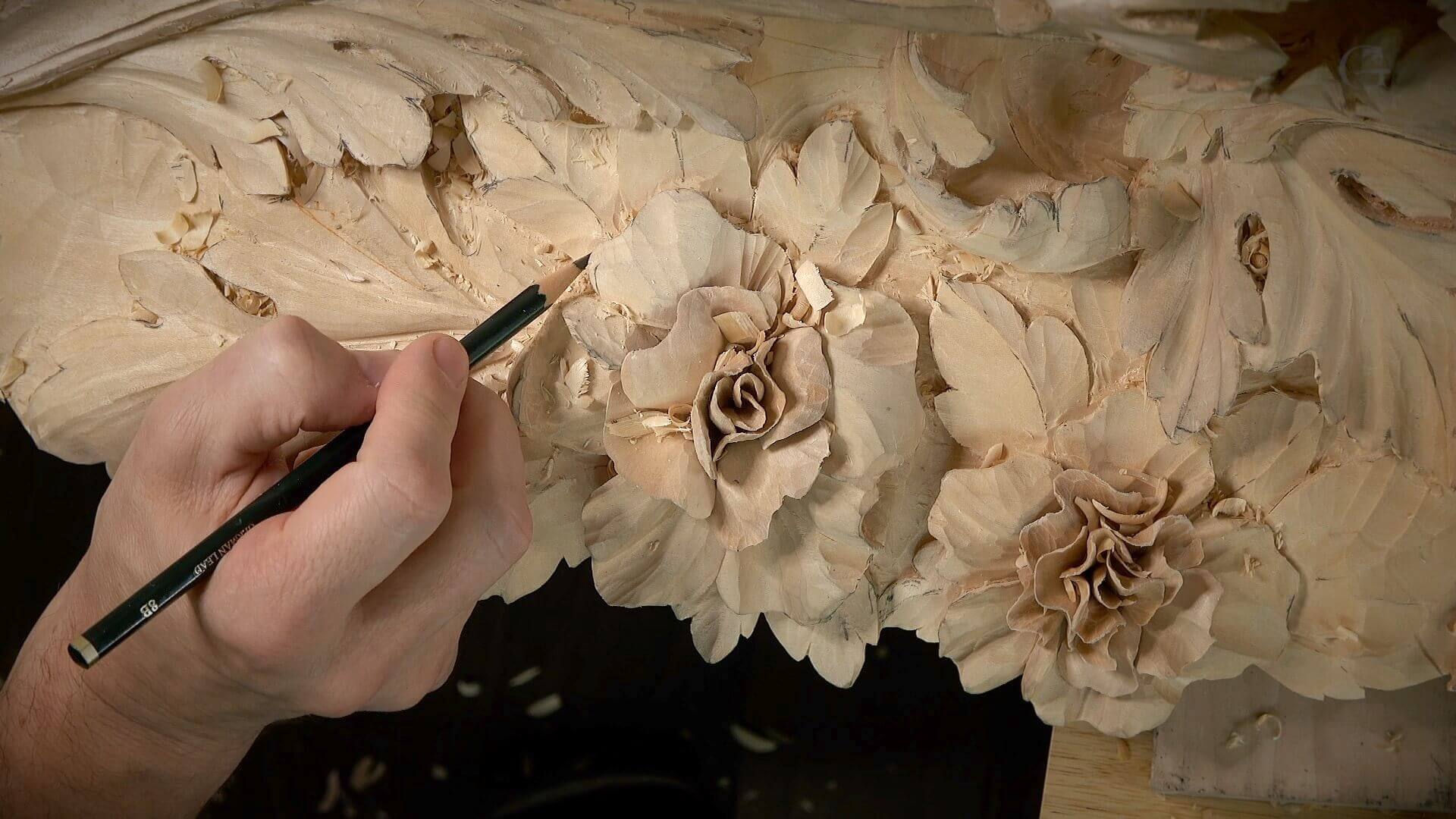
A student-level project, a hand carved lily box.
What builds serious woodcarving skills?
You build woodcarving skills by starting with the right foundation instead of grabbing a knife and cutting. Learn the geometry, get the edge right, and repeat the same cut until the tool feels like a finger. Most people fail on dull tools and unread grain. I show you how to read the wood so you stop fighting it.
Can I learn the embellishment of furniture skills online?
Yes, and honestly it works better than a crowded classroom. When I teach, the camera sits right over my hands. You see the exact angle the gouge enters the wood to lift an acanthus leaf or turn a classical rosette. Miss it, rewind it. You cannot rewind a live workshop, and you cannot ask the man in front of you to do that cut nine more times. That is how a plain piece of furniture turns into something a family keeps.
Can you carve custom furniture details and mouldings?
Yes, you can carve custom wood furniture details for restoration, from a broken chair foot up to a whole ruined cornice.
Restoration is where classical carving pays the bills. Furniture makers and restorers come to these online woodcarving classes to match old work that no factory can copy. You learn carving mouldings by hand, running a bead or an egg and dart along an edge so it flows with no visible seam. And you learn to read an antique well enough to cut the missing piece so nobody can tell it was ever gone.
Hand carved wood appliques for furniture, the raised ornaments you glue onto a door or a drawer front.
Acanthus leaf wood carving for cabinet doors, the curling leaf that frames the finest casework.
Victorian style hand carved furniture feet, including claw and ball and paw feet that carry a heavy piece.
Rosettes, shells, and linenfold panels for doors and chests.
Repair carving that blends a fresh cut into old worn wood until the seam disappears.
A factory prints a thousand look alikes. You carve the one nobody can copy.
What can I carve in my first month?
In your first month you carve a practice board of basic cuts, then a simple low relief leaf, then a small panel you would actually show somebody. Small pieces, real cuts, no shortcuts. The first project matters far less than owning the cut, and owning one cut is what carries you into the next twenty.
How do the lessons work?
The lessons are recorded video you watch whenever you want, on a phone, a tablet, or a laptop out in the garage, and you keep access to all of them while your tuition is active. Watch in order, or open the course catalog and jump to the project you need this week. Not sure where to begin? Start here. New lessons keep coming, so your learning does not stop at the end of a course.
How much do the wood carving courses cost?
The wood carving courses cost $25 a month, or $200 a year, and both plans open the whole library of more than 3,000 lessons.
The yearly plan works out to four months free. Either way you get everything, beginner to advanced, with nothing locked behind a second door.
Plan | Price | Billed | What you get | Best for |
|---|---|---|---|---|
Monthly Access | $25 a month | Every month | All 3,000+ video lessons, beginner to advanced | Trying it out, or one short project |
Yearly Access | $200 a year | Once a year, four months free | All 3,000+ video lessons, beginner to advanced | Carvers who know they are staying |
Both plans renew automatically. The monthly plan renews automatically every month at $25, and the yearly plan renews automatically every 12 months at $200, until you stop it. You cancel any time from your account page, or you write to me and I do it for you.
Is there a guarantee for the lessons?
Yes, there is a 100% satisfaction guarantee, and you can cancel your access whenever you want.
Listen to me carefully, because I am going to tell you the plain truth. Your risk here is close to nothing. Try it, and when the craft turns out not to be for you, talk to me and I cancel it. No argument, and nobody sends you through a form. So the only thing you really risk is the price of a good gouge and some basswood.
What do students say about the School of Woodcarving?
Students say two things most often about the School of Woodcarving, that these lessons are not available anywhere else and that they finally understand why a cut works.
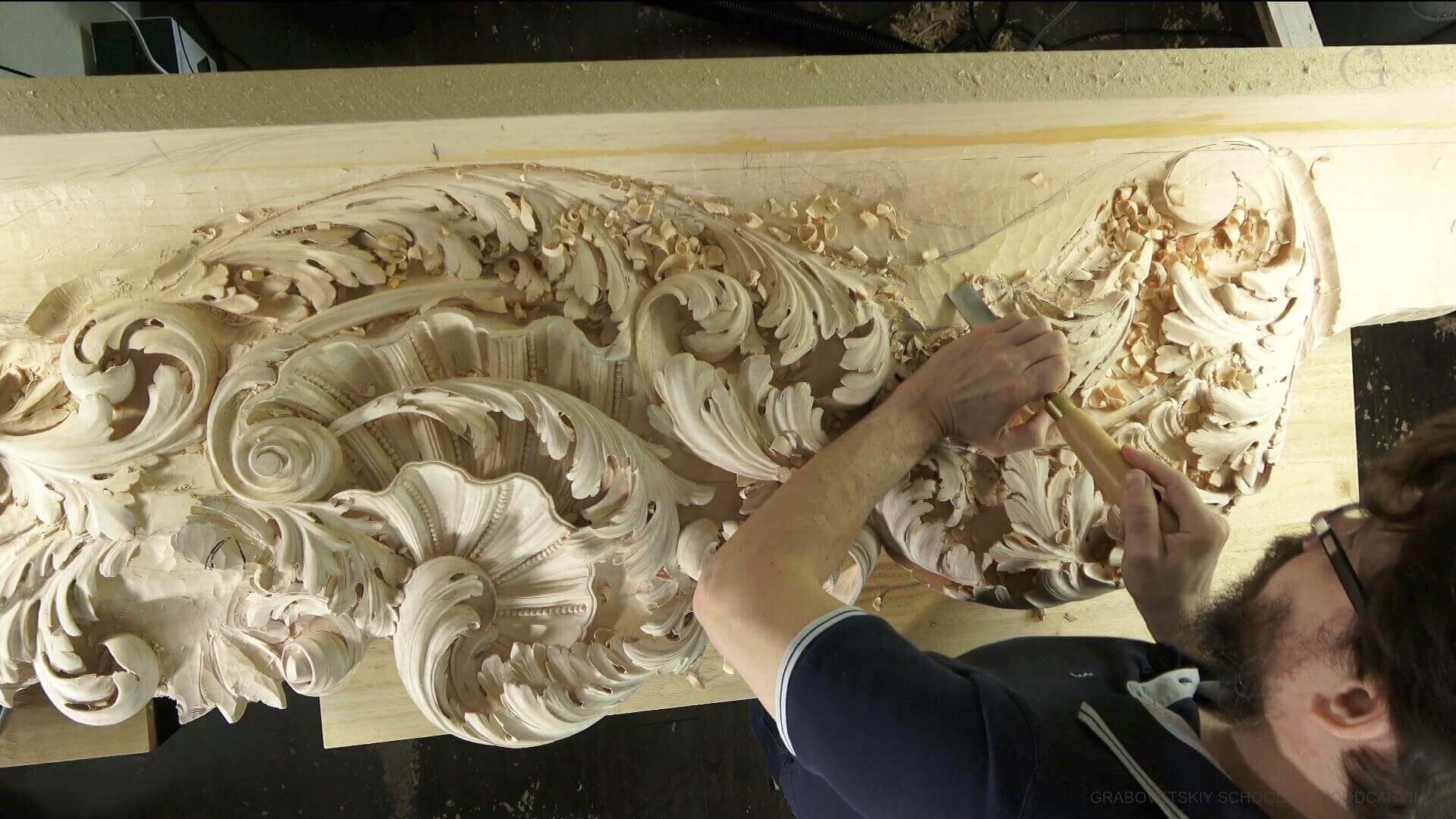
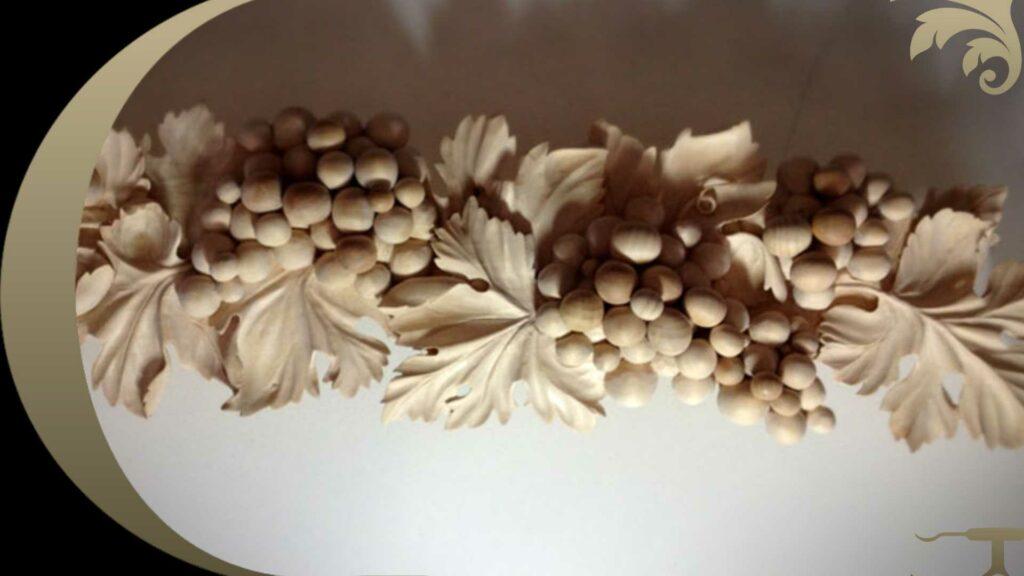
Grinling Gibbons style work, the tradition students learn to carve.
Jonas Jonsson carves in Sweden and has two little toddlers at home, so his bench time comes in pieces. He called the School of Woodcarving the best place to learn wood carving online. The fast clips on YouTube never gave him anything he could hold on to, he told me, and what he wanted was the apprentice relationship. He got it here.
Robert Stokes said the plain thing about other woodworking schools. The lessons here are not somewhere else. He liked being told which tool to pick up and why, and that the teaching builds confidence instead of nerves.
Even the masters have said it. David Esterly called the work admirably skillful. From Frederick Wilbur I got two words, mighty fine, and I keep them. Chris Pye said it sings. Mark Baker told me straight out that I know how to carve wood, and coming from him that meant more than a certificate on the wall.
Gerry Michaud, a university professor, said every serious carver needs this online workshop. Luke Addington called it the best woodworking school he has seen. Nothing dressed up about it. European tradition, taught the way it was handed to me.
My in person classes sell out in about eight minutes, which is exactly why I built the online school. Not everybody can fly to a place i teach in person, and eight minutes is not much of a window.
What happens when you finally start?
You pick up one sharp gouge, cut one practice board, and the three dimensional world opens up in front of you. Michelangelo said he saw the angel in the marble and cut until he set him free. Swap marble for a block of basswood. The shape is already sitting in there, and your only job is to take away everything that is not it.
I sold my Felder machines years ago so I could carve full time. When I go into automatic mode at the bench I put on Vivaldi.
People have carved wood for centuries. Now it is your turn, from home, at your bench, on your own hours, first timer or professional. God gave you a talent. Do not spend it clicking on Facebook. If you have a passion for the 3D world, you have a purpose, so work on it.