
Alexander Grabovetskiy, woodcarver, School of Woodcarving · Published 2017
Part of Carving Antique Style Rosette
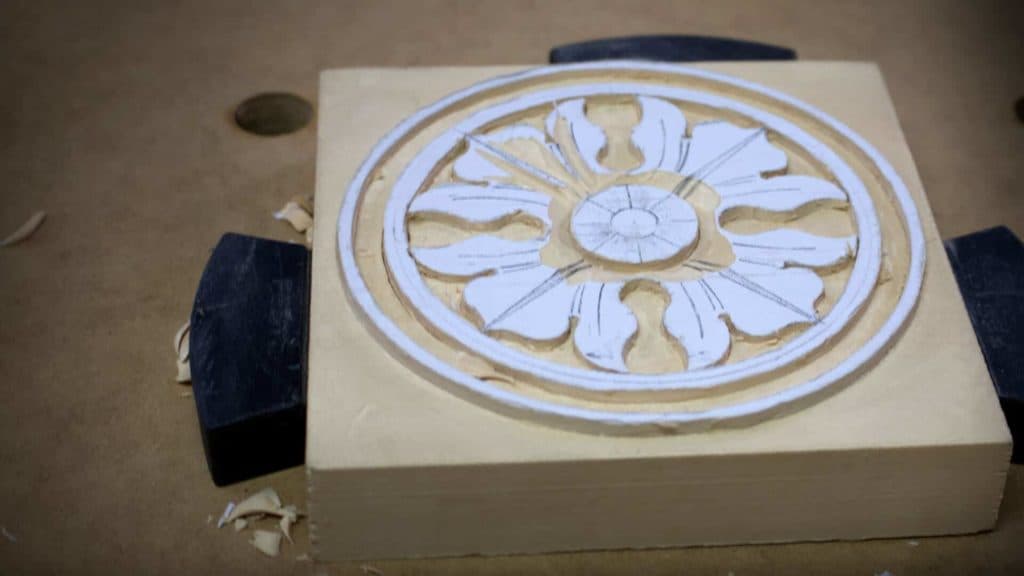
The full video lesson is inside the school.
Alexander Grabovetskiy, woodcarver, School of Woodcarving · Published 2017
Quick answer: An antique rosette starts with layout rather than a tool. The blank is cut dead square, a paper drawing is glued to its face, and a gauge scores the ground depth right round the block. That scored line is what every later cut is measured against.
An antique rosette gets decided before it is carved, and the whole job rests on one measurement. An eighth of an inch. That is the depth of the ground, scored with a gauge on each face in turn, and every cut that follows is judged against that single line.
Ordered a rosette off a photograph and had no idea where the first cut belongs? Watched a ground carved by eye come out shallow down one side, with nothing to blame it on? A client sent me a picture. No original piece, no measurements, and an order for fifteen. This is the workshop where the layout got settled.
Layout, and it happens long before the first chip leaves the block. The rosette is among the oldest ornaments anybody carves, turning up in Egypt, across the old Babylonian territory, in Greece and right through Europe, and the name came from a rose sitting inside a circle.

Design is where a rosette is usually free. There is no rule saying how many petals, how deep the ring sits, whether the centre rises or falls away, and I have drawn a good many different ones over the years for no reason beyond wanting to. This job is the other kind. A client sent one photograph of an antique piece, there is no original to measure, and my task is to read the picture and put back what the photograph implies.
My blanks measure 5 3/8 square and they have to be exactly that. Dead square, no gaps anywhere, because a rosette that is out by a hair reads crooked once it goes up. I cut mine a shade over, at an inch and an eighth, when the finished piece wants an inch, which leaves a little in hand.
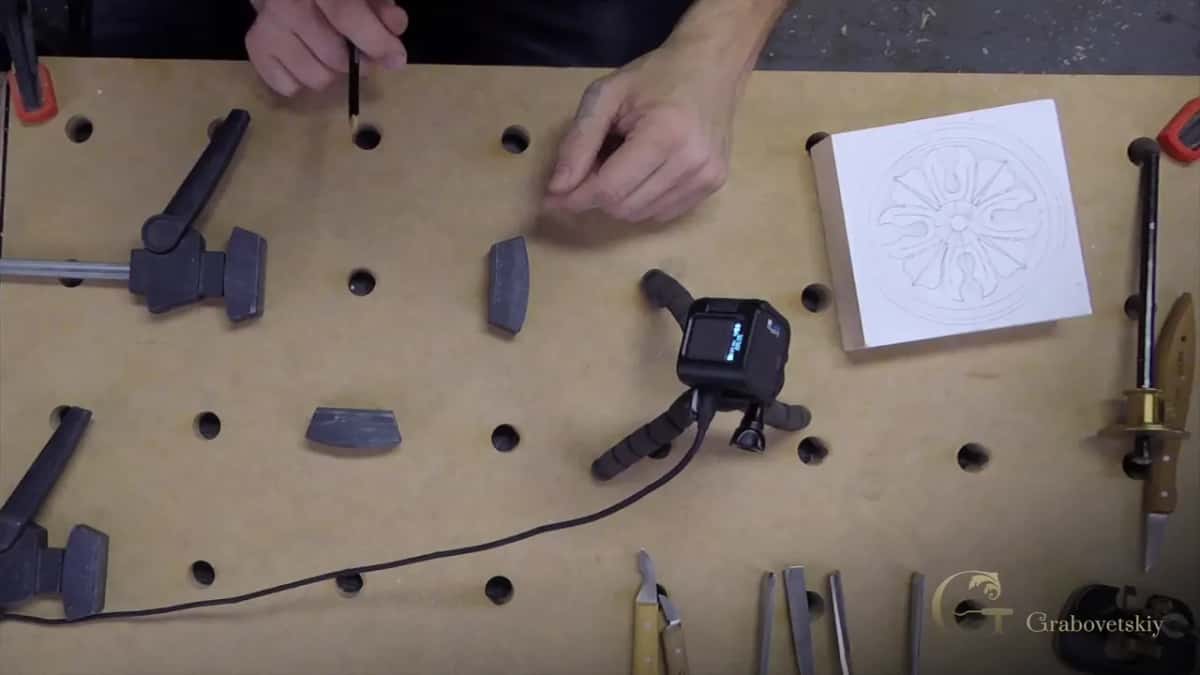
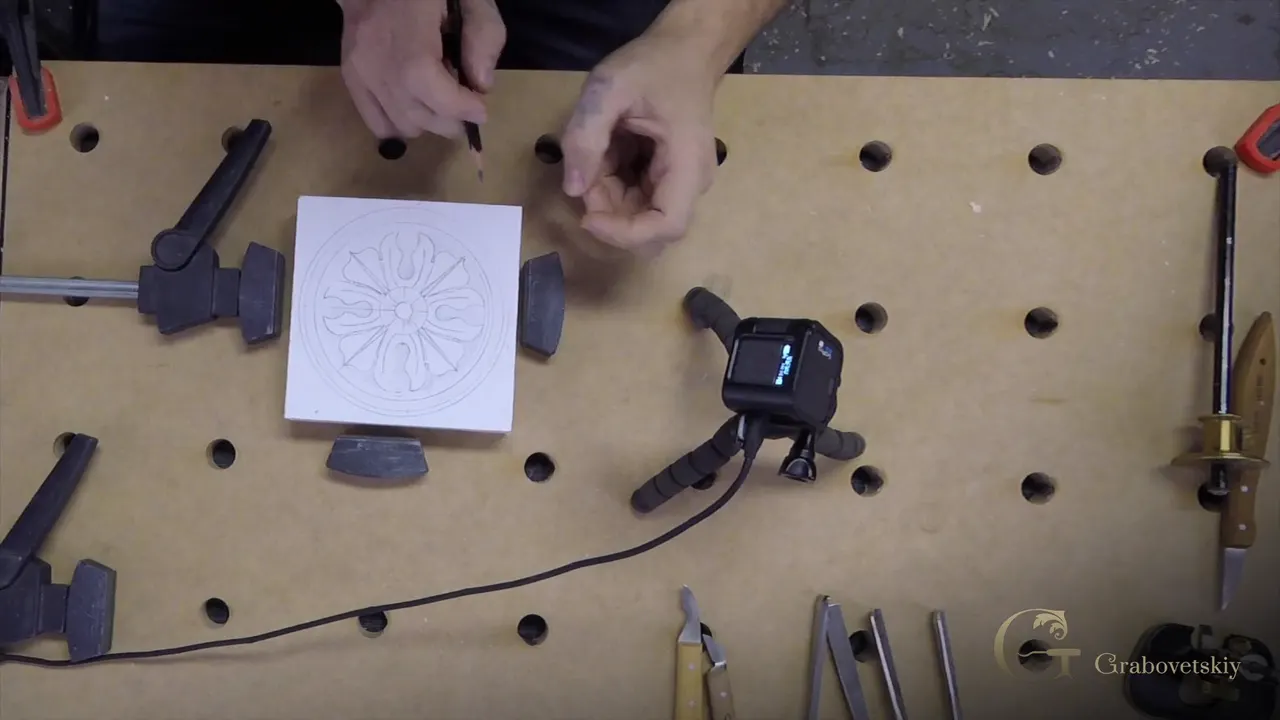
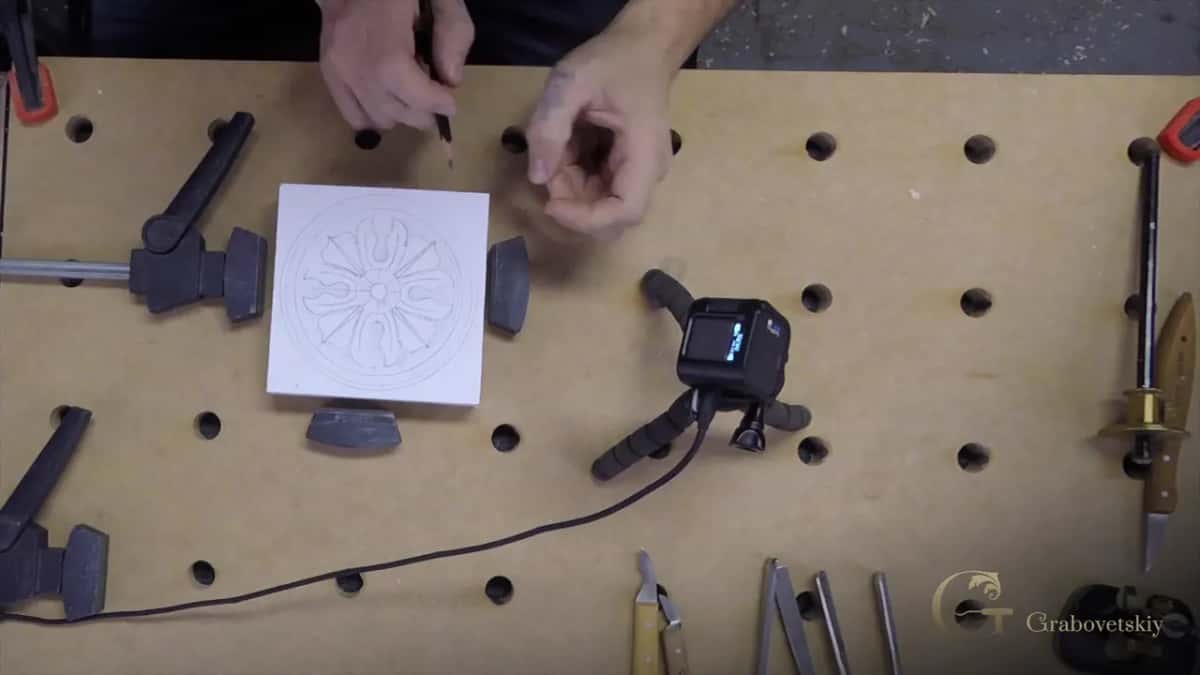
Sixteen blanks for a run of fifteen. One spare, since there is always one. Drawing the pattern onto bare wood sixteen times is work nobody needs, so the drawing went onto paper, sixteen copies came off the machine, and each square got glued face down onto its block.

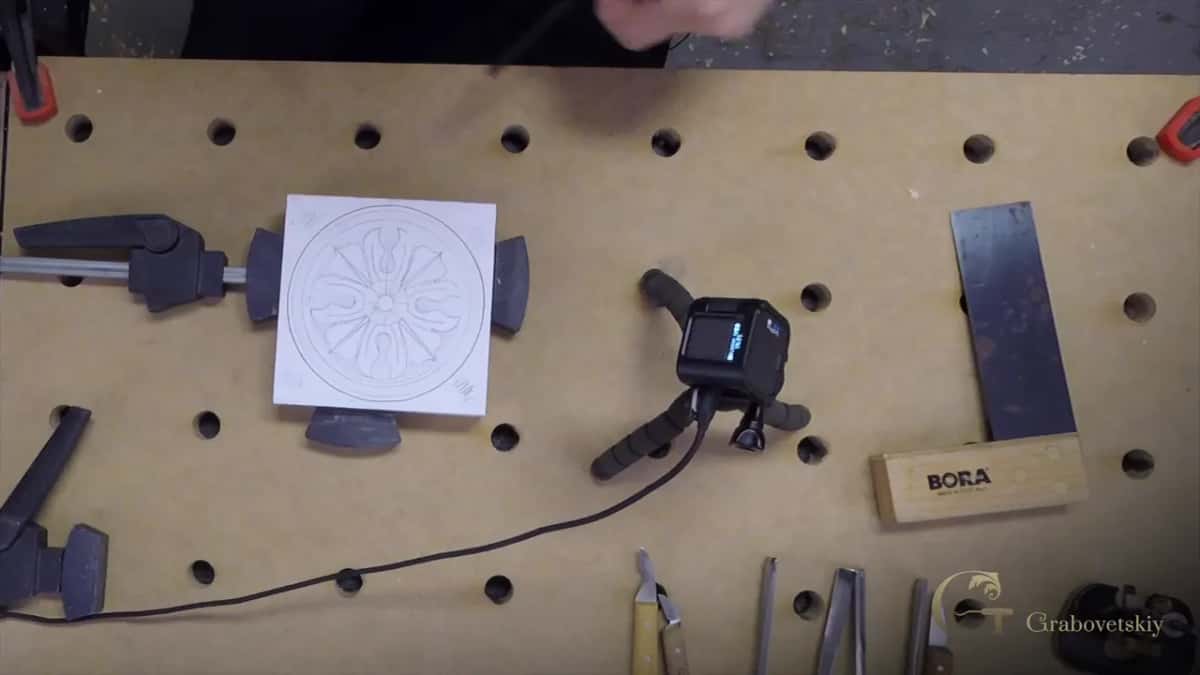
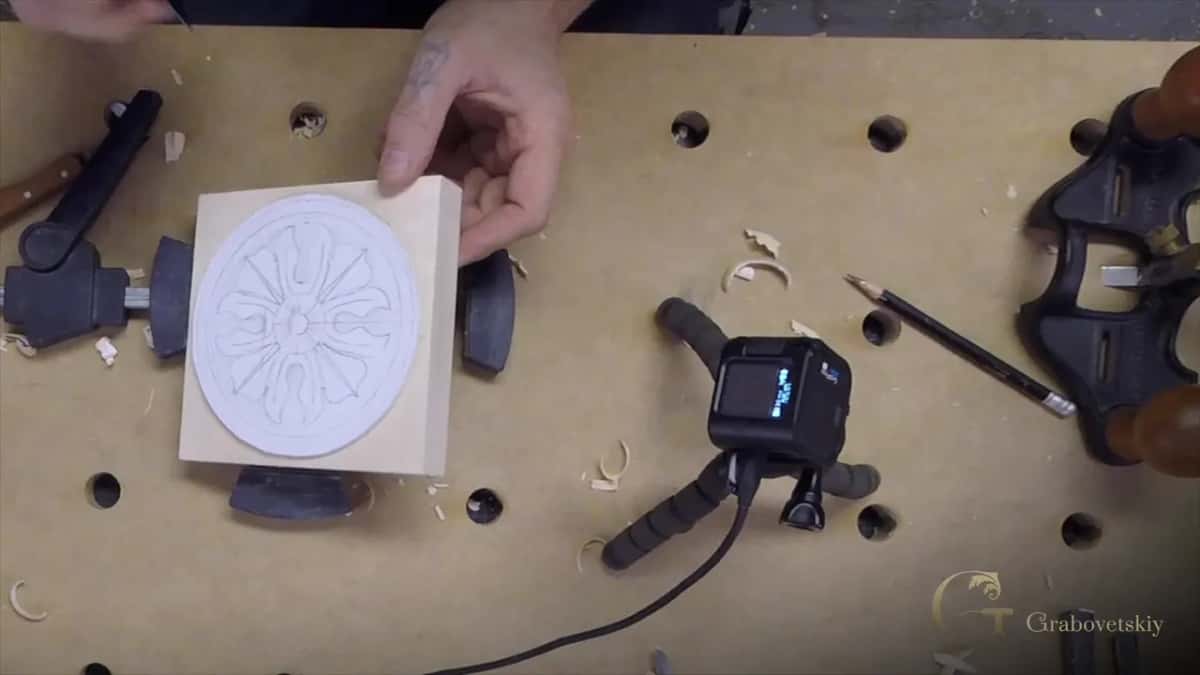
Holding it was solved years ago. I work on Festool multifunction tables and I like the twenty millimetre holes in them, so I took a sheet of twenty millimetre MDF and drilled the same holes across it, roughly four inches centre to centre. Clamps drop in wherever the piece happens to sit.
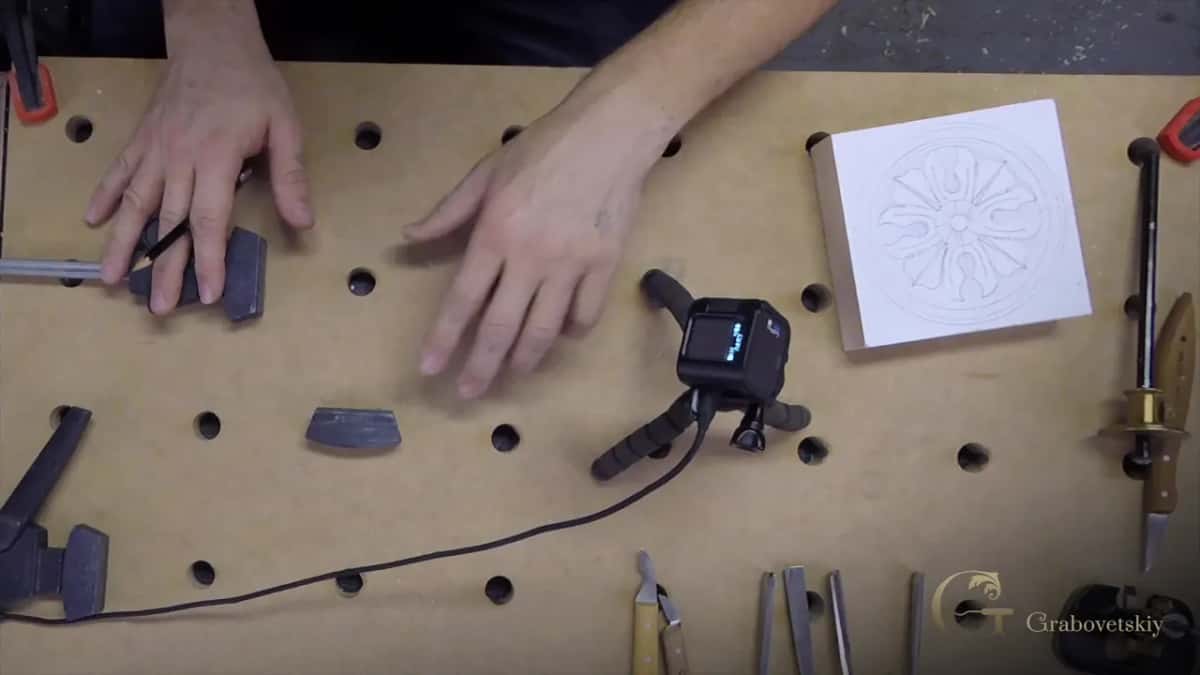
Nothing about that limits the shape you can hold. Small work, big work, an odd outline that no vice would grip, all of it clamps down solid and spins round when you want the grain running the other way.
Repeatability, and only that. A ruler finds that mark perfectly well. Then you put a finger against the face of the block, hold the pencil on the mark, run it round all four sides, and that works too, most of the time.
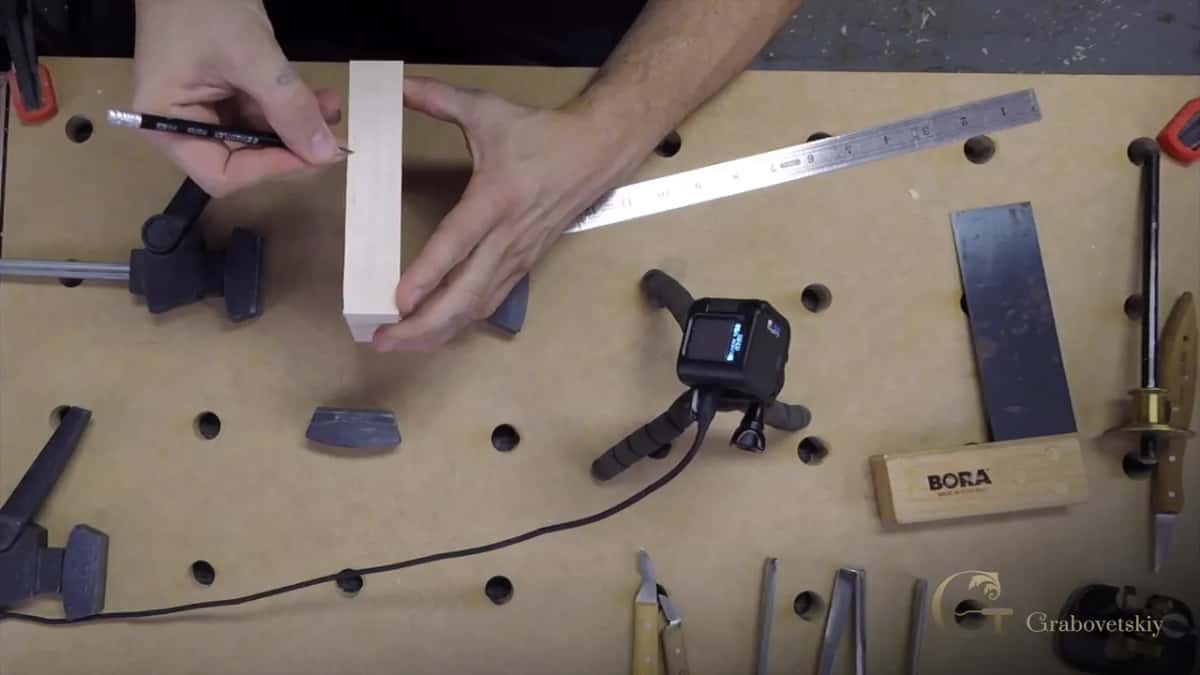
Most of the time is the problem. The finger slips, the line wanders, and on one block out of fifteen you have a ground that is a shade deeper down one edge than the other. Nobody spots it on the bench. Everybody spots it when the fifteen are screwed up side by side.
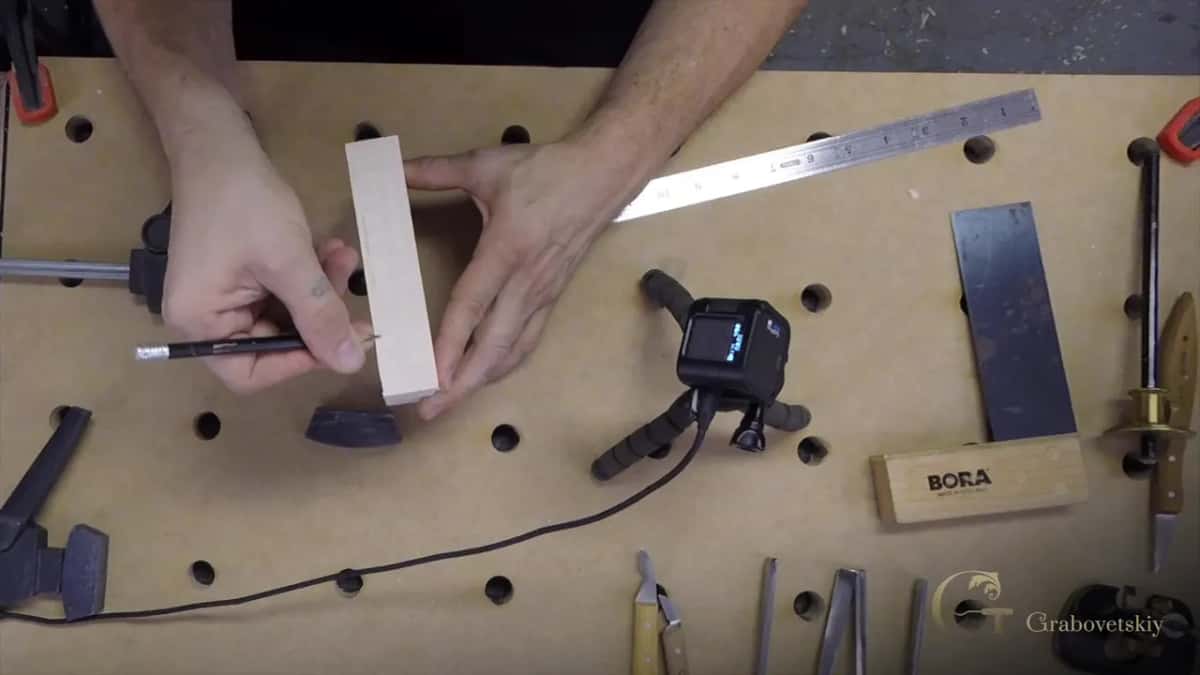
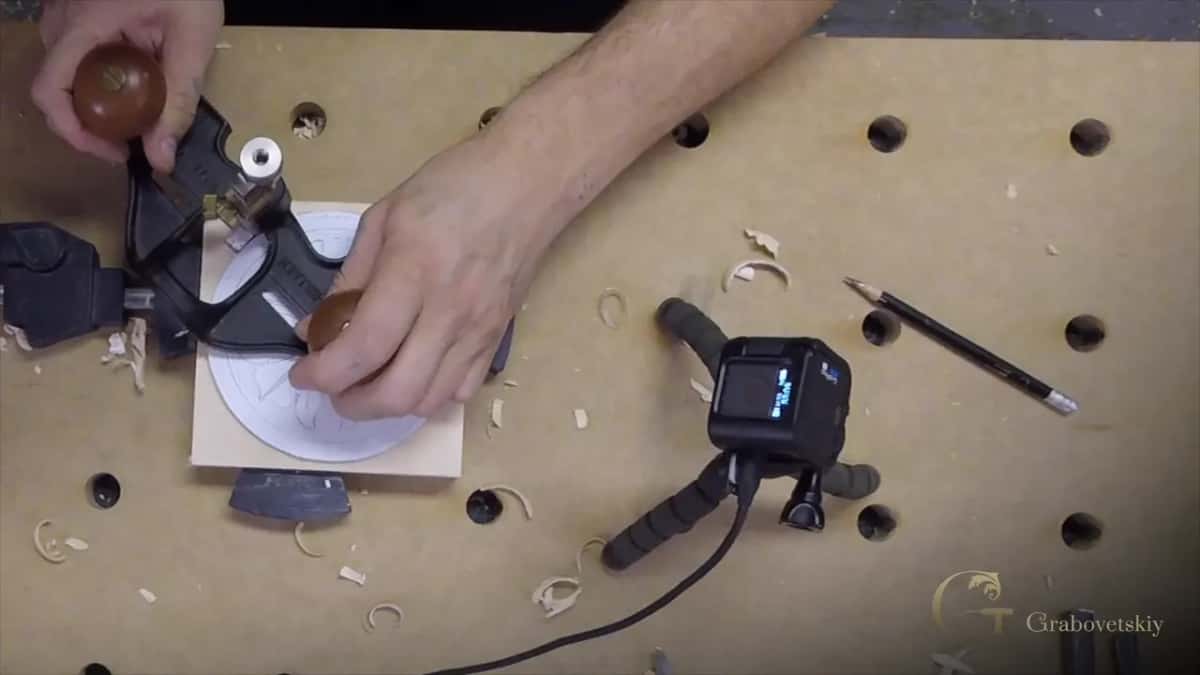
So the gauge comes out. Set once to an eighth, checked against the inch that has to be left underneath, then run round all four faces of every block in the batch. Two or three passes on each line, pressing a little harder each time, until the score is deep enough to stop a chisel wandering over it.
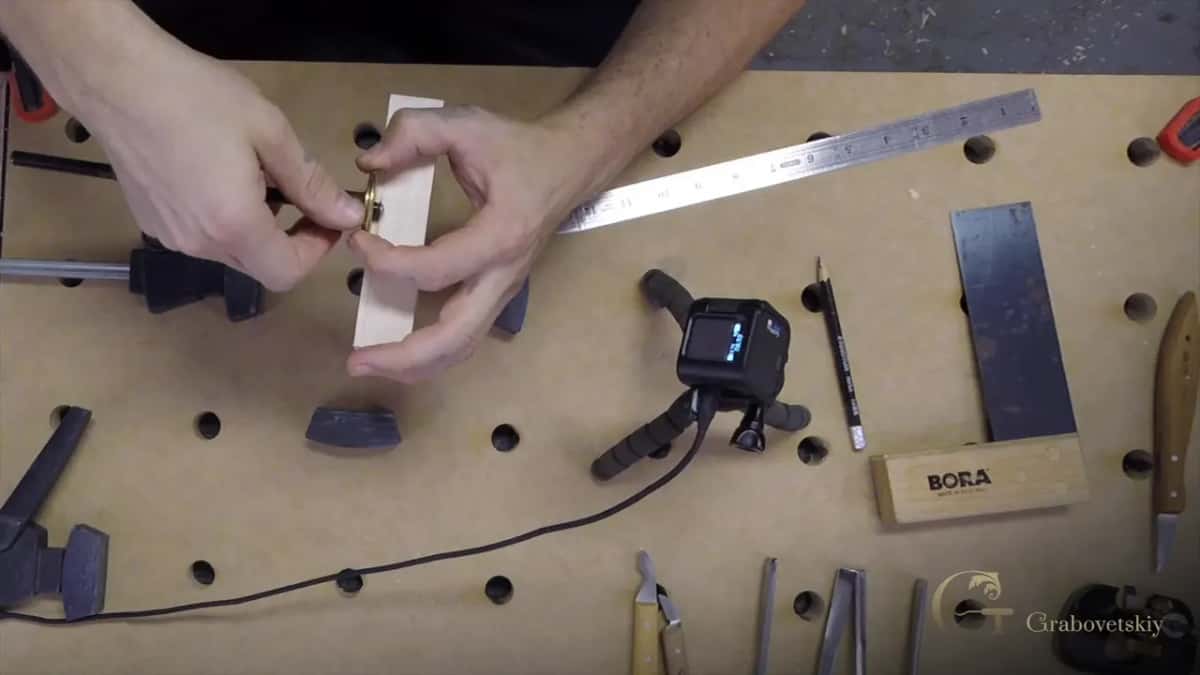
Fifteen identical rosettes need fifteen identical starts. That is the entire argument for the gauge, and it takes about four minutes for the whole batch.
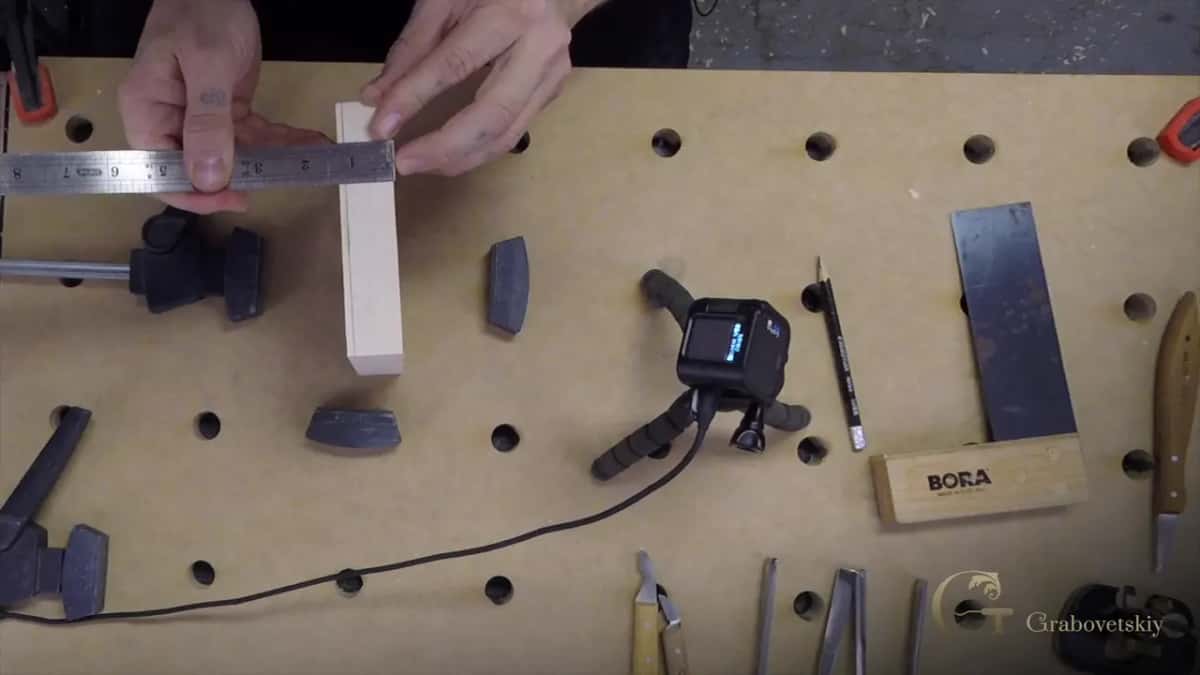
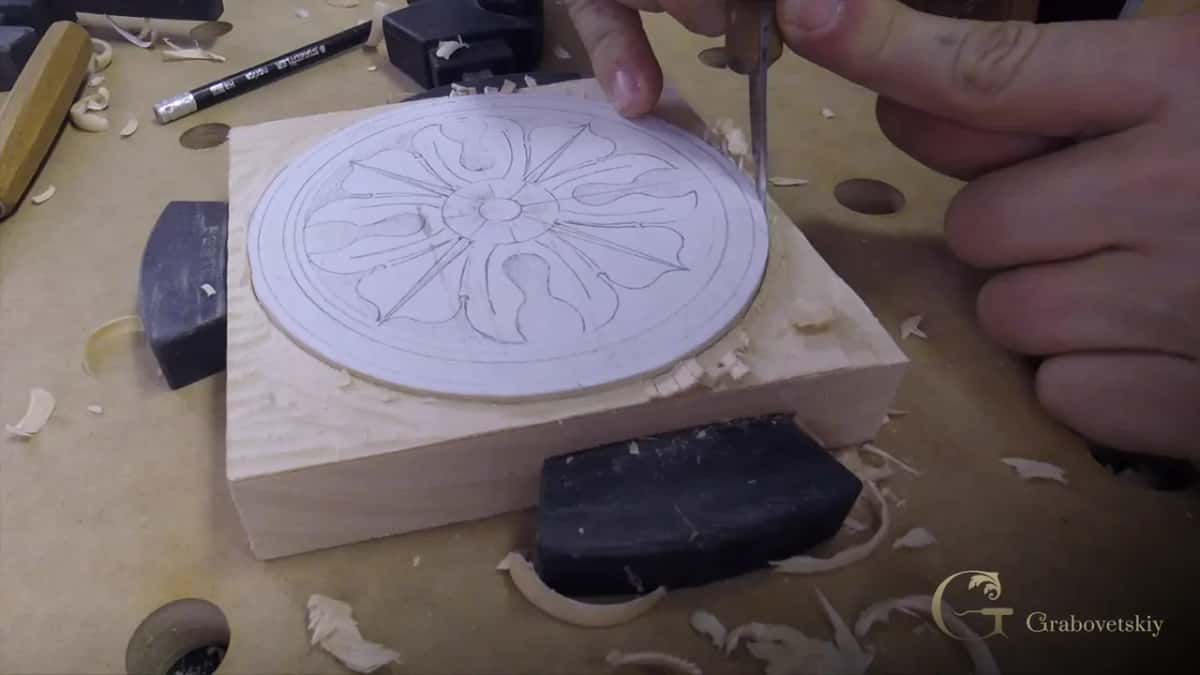
Toward you, and straight down. I use a cheap carving knife for this and it is one of the handiest things on the bench. The blade goes in vertical, with no lean at all, because the moment it tips you have carved a bevel into a wall that was meant to stand square.
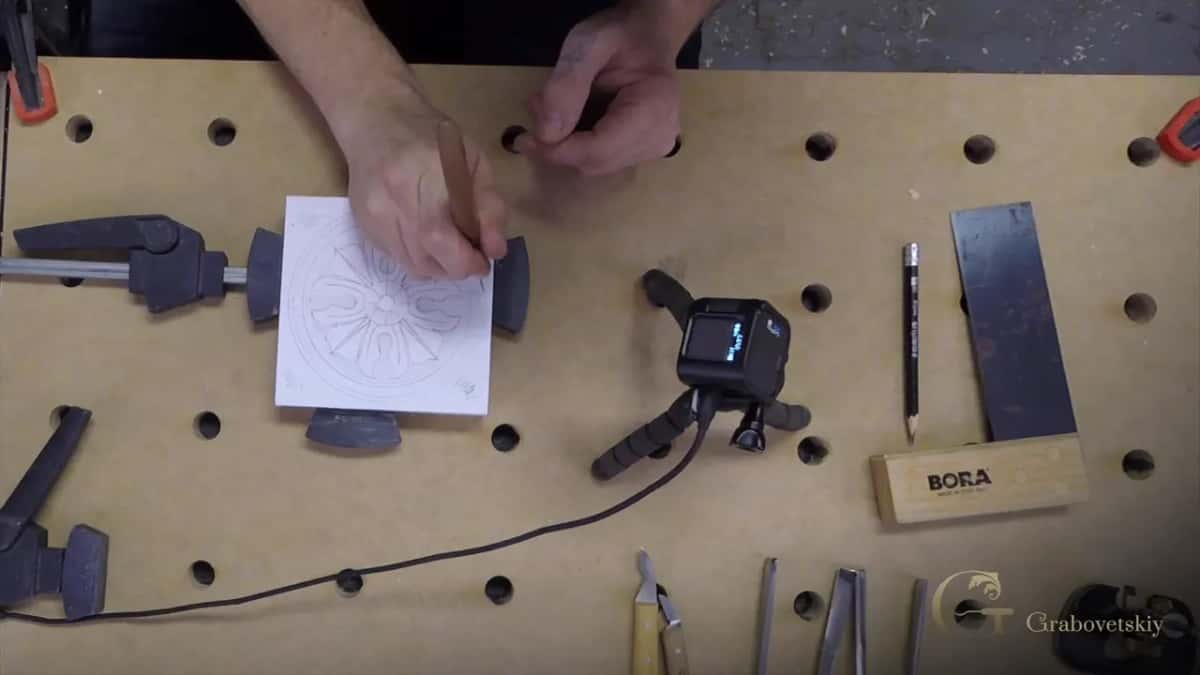
Grip matters as much as angle. The knife sits in my hand with the blade coming back toward my body. I pull the cut instead of pushing it. That sounds wrong to anybody who has only ever held a kitchen knife, and it is the only way I know to keep a curve honest.
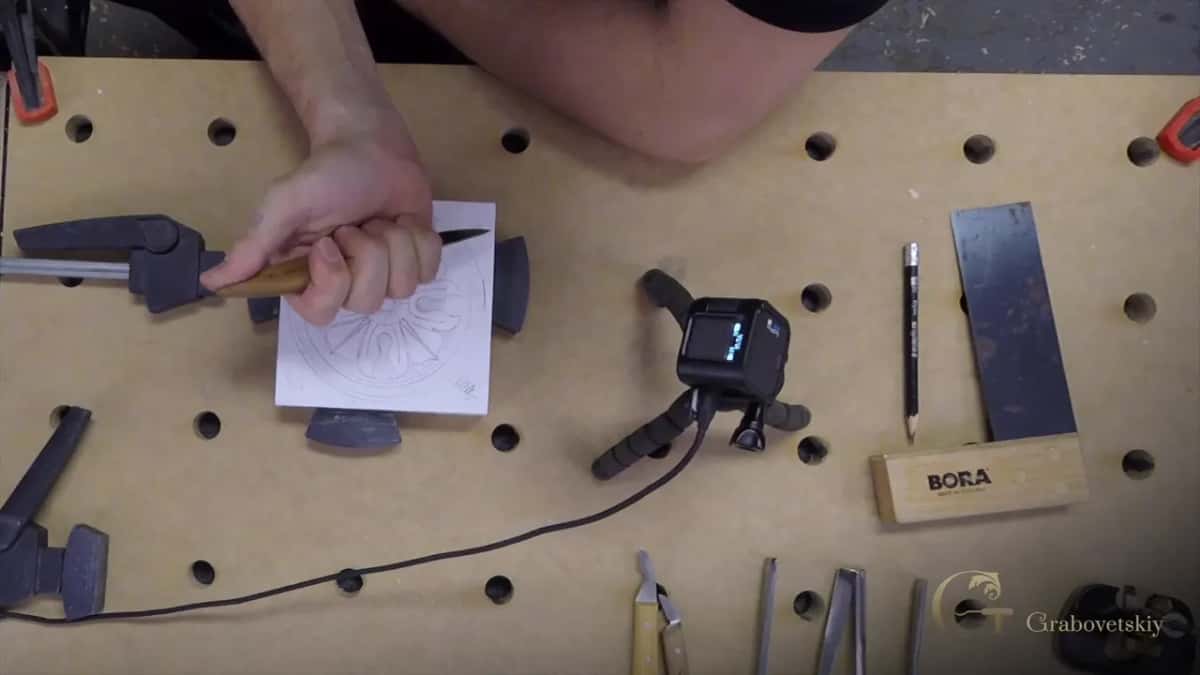
A quarter of the circle at a time, then the block rotates. Four quarters, four comfortable positions, and the wrist never has to do anything awkward. You could send the blank to a lathe and get a circle that is mechanically perfect, and I may yet do that on a few of the fifteen.
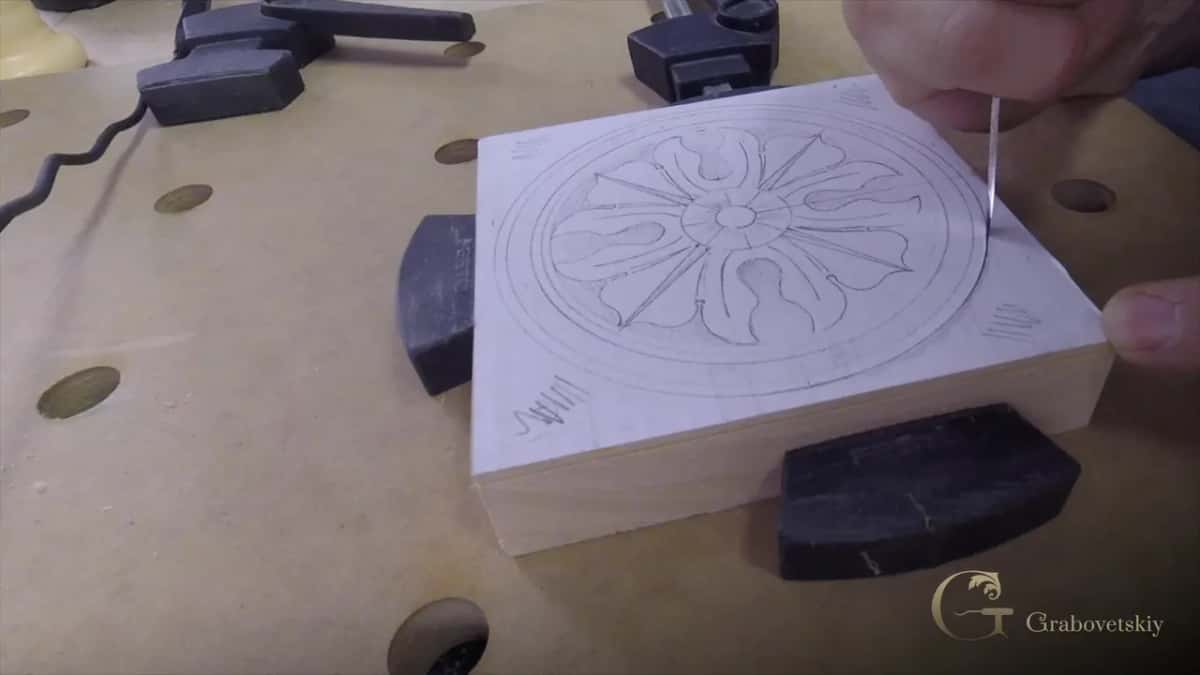
The first pass does not go the full eighth. Score it, take the waste out beside it, then come back and take the knife line deeper once there is somewhere for the chip to go.
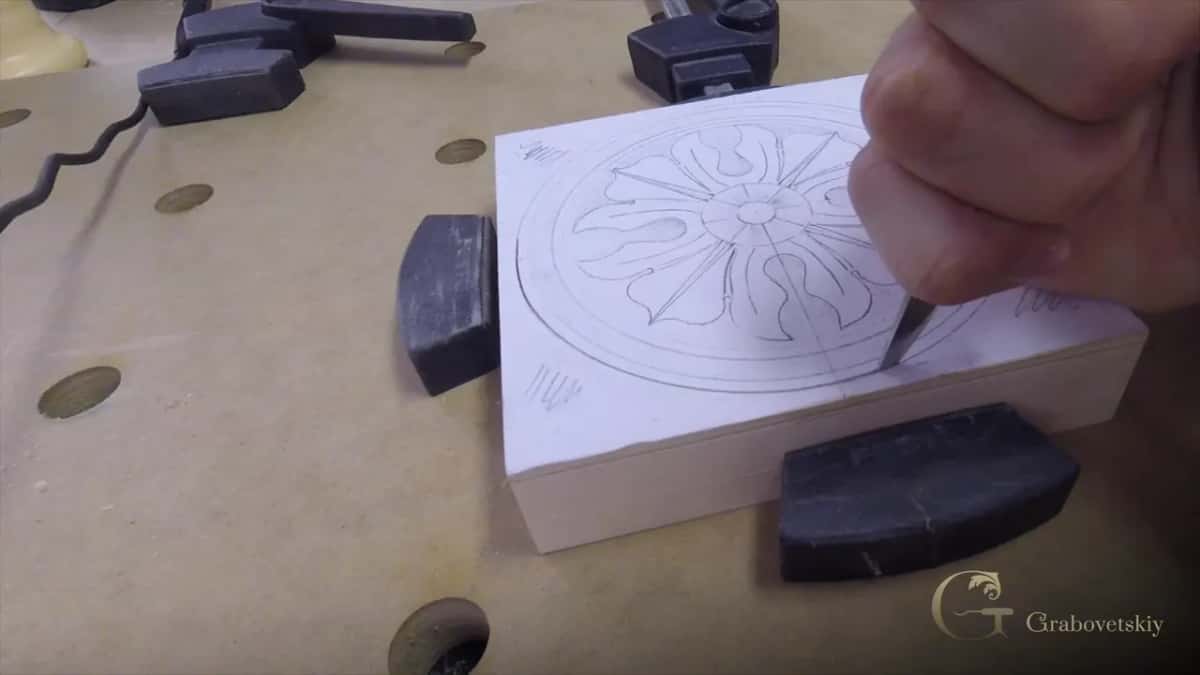
Control. A shaving of basswood comes away under hand pressure with no trouble at all, and I could push the chisel through it and be finished sooner.
A mallet gives me more. Every tap is a decision I can stop halfway through, where a shove carries on until the wood decides to let go, and near a line I have just scored that difference is everything. I stay back from the line on purpose and leave the edge untouched.
| What gets measured | What it comes to on a block this size | Why it is there | What goes wrong when you skip it and simply start carving away |
|---|---|---|---|
| Block face | Five and three eighths each way, square | Fifteen have to sit together | Gaps show along every joint once they are screwed to the wall |
| Thickness of stock | A shade over an inch, an eighth more | Spare wood underneath in case the ground wanders while creeping down toward it | You run out entirely |
| Ground depth, scored round every face before anything else | One eighth | Every later cut is read off it | One side comes out shallow and nothing you do afterwards will hide that |
| Wood left beneath | A whole inch, untouched, holding the whole piece together | Strength where it screws down | It cracks at the fixing, and you only find that out once it is up |
| Knife wall | Vertical, no lean in the blade at any point | A leaning wall reads wrong | Soft shadow where the eye expects a hard line, and it shows |
Grain gets read first of all. This block shows end grain along two sides, so I work the waste out against the grain wherever the cut allows, which is simply safer. A grain direction ignored is a split you did not plan.
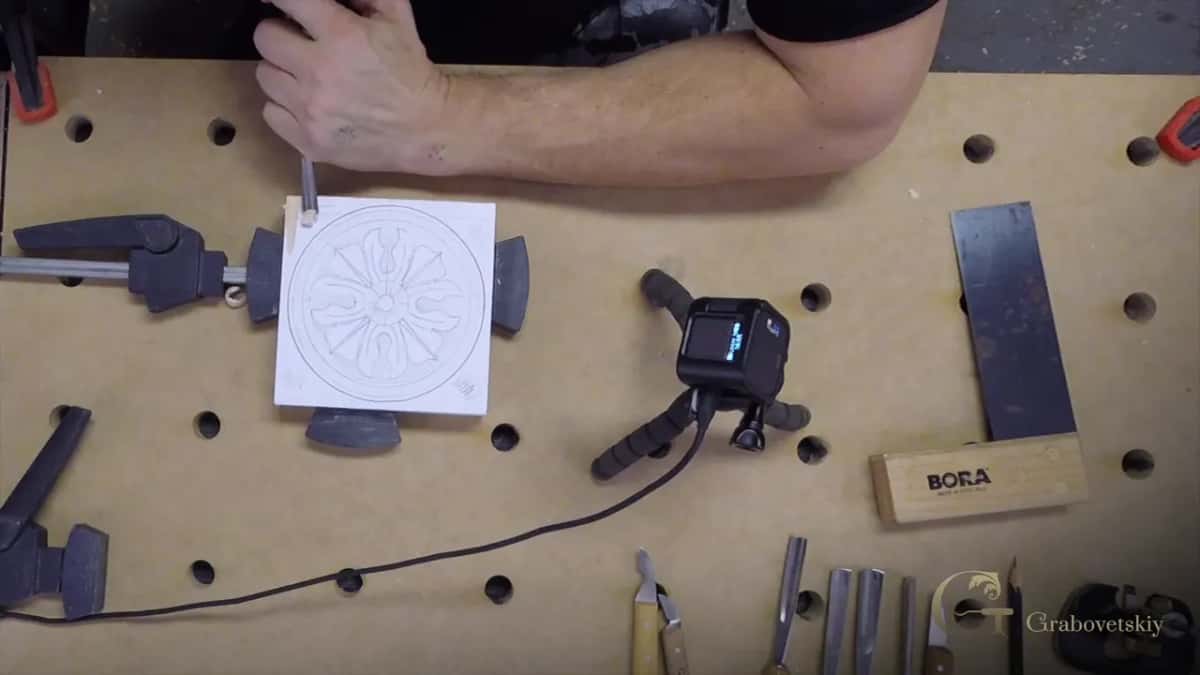
Number eight or number nine, either does it. I reached for the nine, set it slightly above the scored line, and took the bulk away with the mallet. Then the tool lies over on its side and works round the circle, clearing rather than digging.
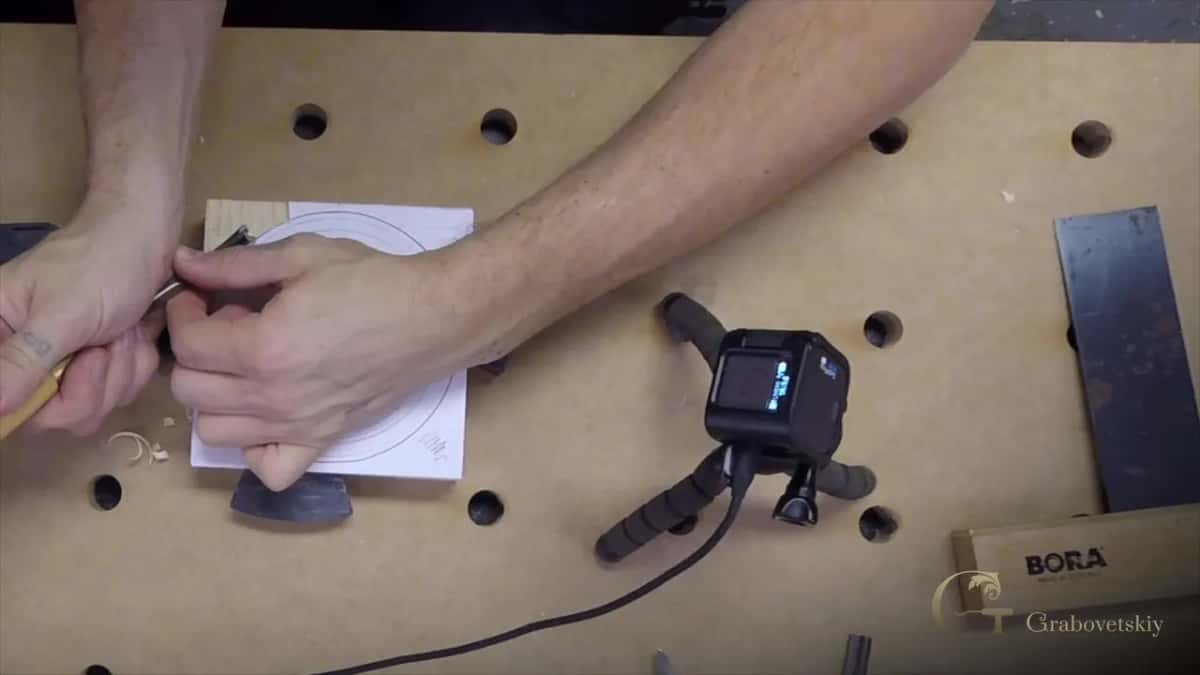
Cleanliness at the edge is the whole point of hanging back. A number seven comes in afterwards and tidies what the nine left, lightly, because overworking a wall this shallow is how you lose the crispness you were protecting. What I want is an edge with no chisel poking into it anywhere round the circle.
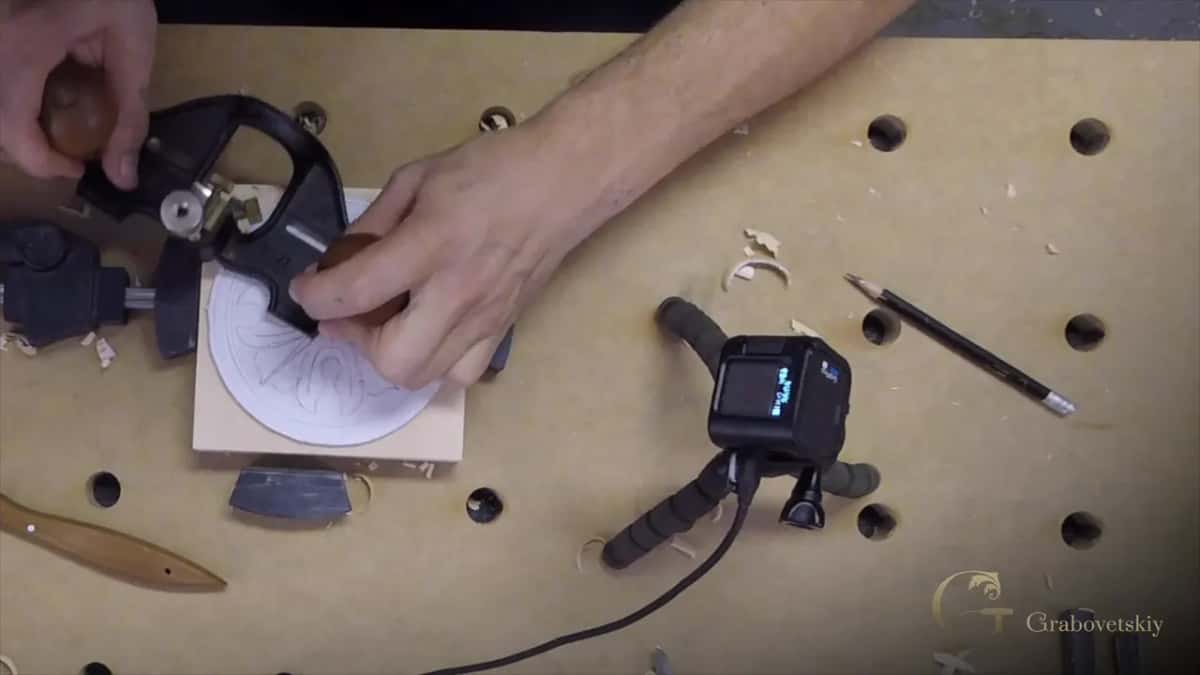
Making fifteen grounds match. A router plane holds its blade at a set height and drags it across the surface, so every sweep cuts to exactly the same depth whether your hand is steady that morning or not.
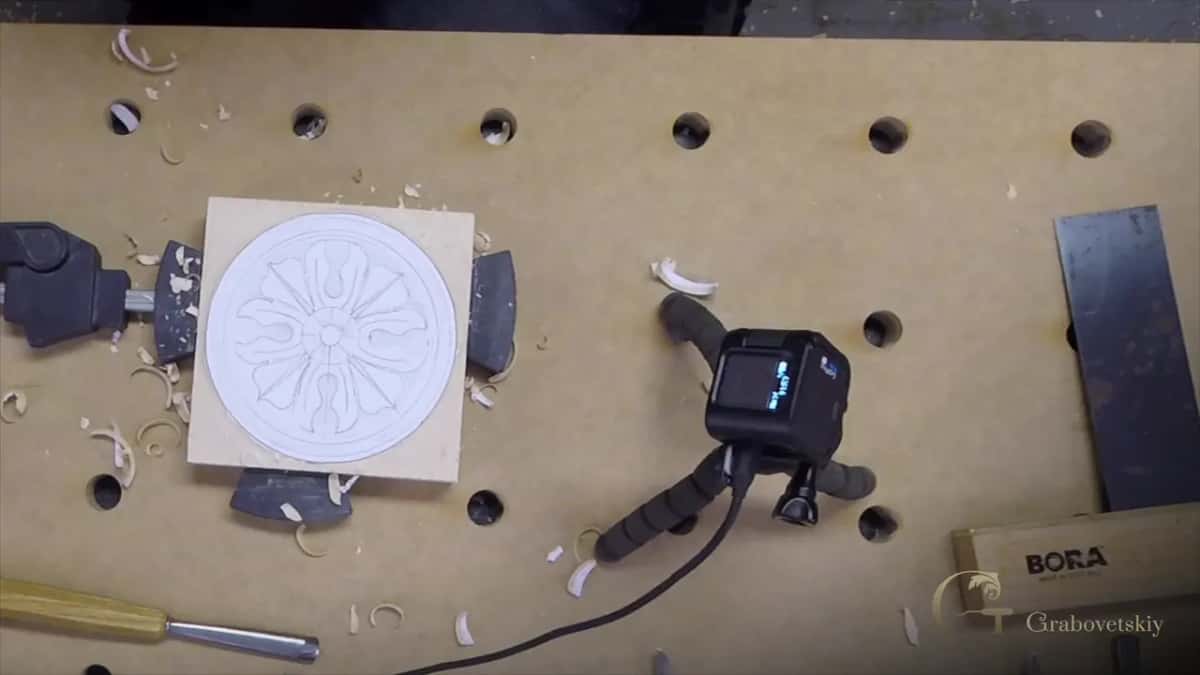
I set it high to begin with, take a pass, lower it, take another, and creep toward the line over three passes rather than one. Referencing on one side of the sole, holding the body down, sweeping across. The last pass is the one that decides how the ground looks.
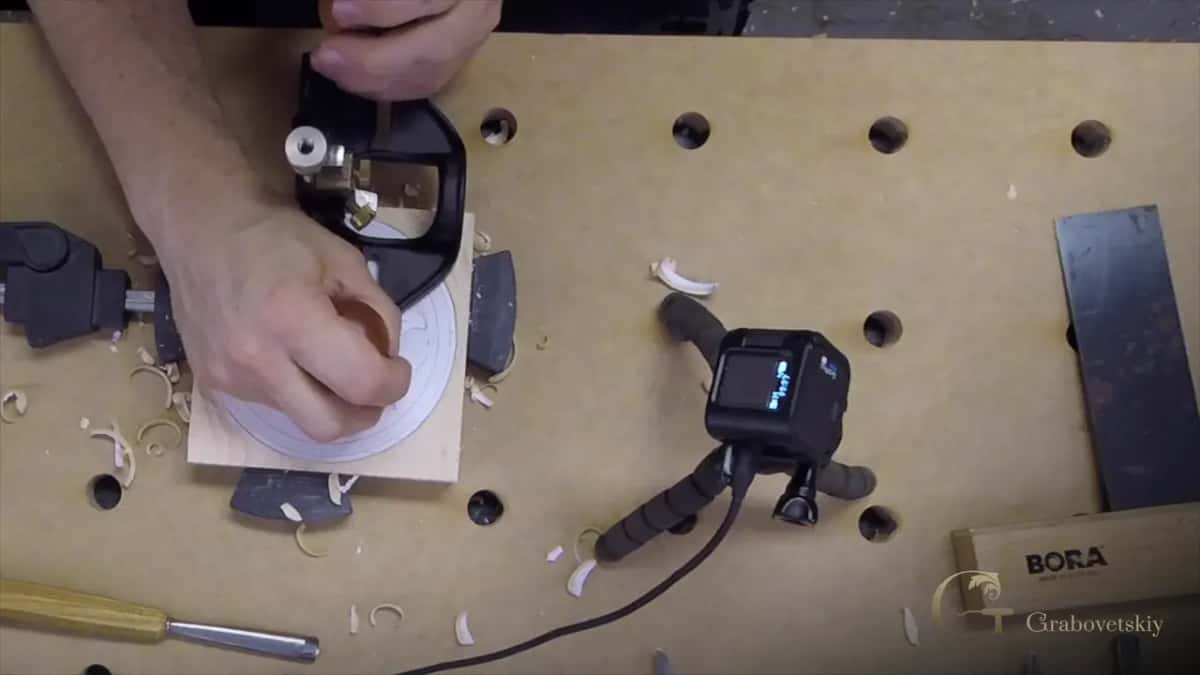
None of this is compulsory. Straight chisels and a background tool reach the same place and plenty of carvers work that way by choice. Fifteen of them is production, though, and production makes you think about speed in a way one piece never does.
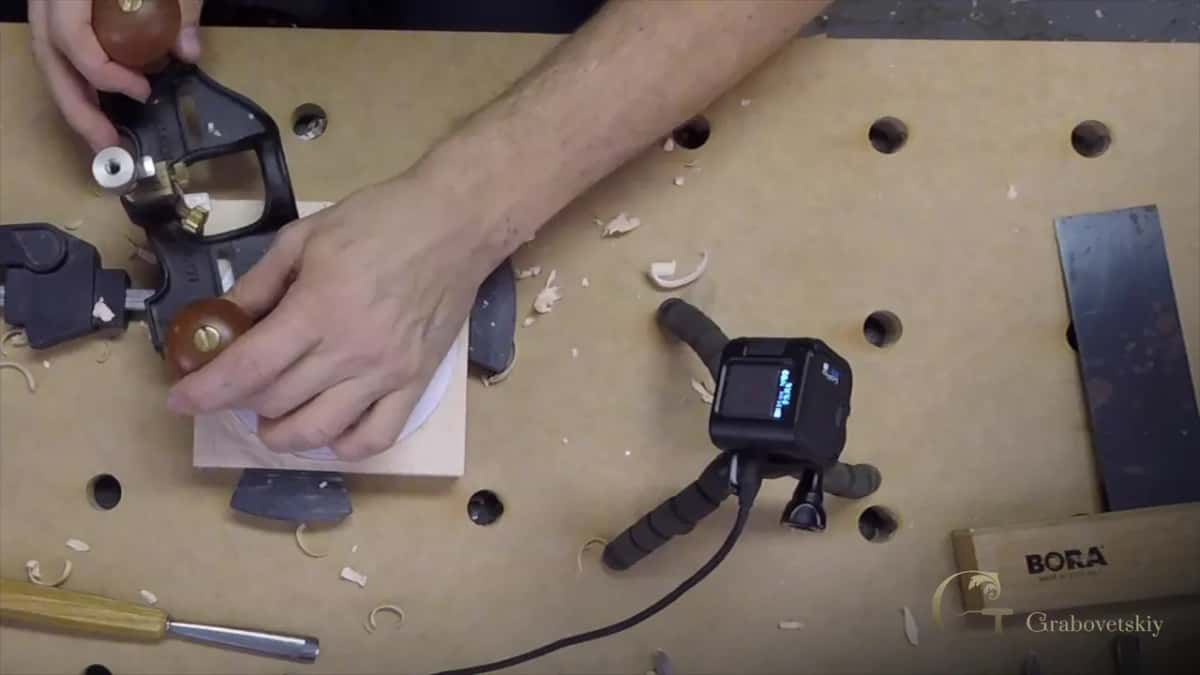
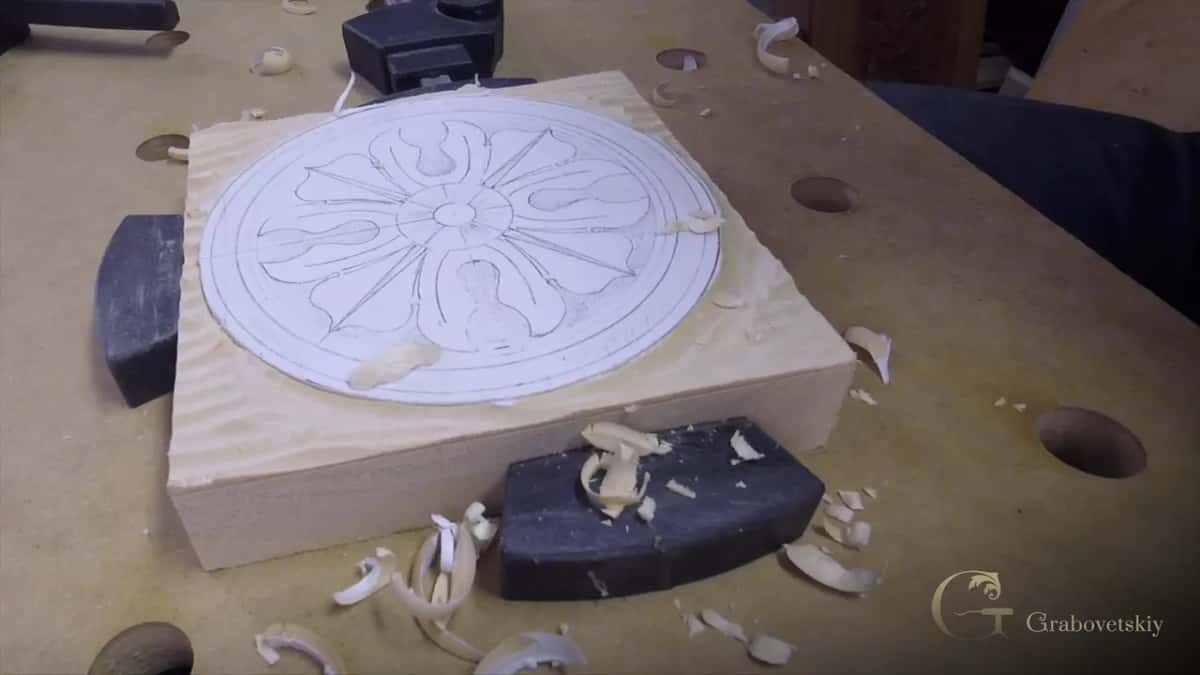
Keep the plane away from the circle until the knife has gone the full depth. Mine had not, so the knife went back in, the cut came down to the eighth, and only then did the plane come close.
Blade sharpness decides the surface. Anything merely adequate leaves a ground you will want to clean up afterwards, and cleaning up is the thing this whole approach exists to avoid.
Lime, linden and basswood are one timber under three names, and for carving there is very little that beats it. Soft enough to cut cleanly, stable enough to hold a corner, and it takes detail as fine as you have the patience to put in.
Sandpaper stays in the drawer. Nothing is wrong with it and I am not going to pretend otherwise, but leaving the work as it came off the chisel is how this was done for a long time, and the surface is better for it.
I used to call that a European tradition and I have stopped. Europe is enormous, every country in it grew its own way of working, and the habits of one workshop in one century are not a rule anybody else signed.
Enough to buy houses outright. Carvers in the fifteenth and seventeenth centuries were paid something like forty times what a man working the fields took home. That multiple means very little until a name is attached to it, and there is a good one. Men did not live long then, in England least of all, so a carver was often only in his forties by the time he had everything he was ever going to have.
Nicholas Stone worked in England at the end of the sixteenth century and into the seventeenth, in wood and in stone, a master mason as well as a carver. He owned five houses. All five bought with cash, because mortgages as we know them did not exist yet, and he was not an old man when he owned them.
Then it turned. Royalty, who were the main customers, worked out that the price could stay agreed while the payment simply did not arrive. I know of one carver who waited two years for a commission to be settled, and any working carver reading this will recognise the feeling.
My own training ran the old way regardless. One master, one student, questions allowed and answered, watching over a shoulder until the hands understood it. I was born in the European part of Russia and that is how it was done for me, and it is the shape I have tried to give this school.
Every master builds his own methods in the end. Mine came from one man and a lot of watching, and what I do now is not what he did, because the hands work out their own shortcuts once they understand why the long way existed. That approach has nearly vanished from Europe, which is a plain loss, and a camera over a shoulder is the closest thing I can offer to standing beside the bench.
Would you rather watch the gauge go round, the knife take the circle and the ground come down to the line, at full speed with the camera over my shoulder? Shall we carve?
This workshop opens the antique rosette series, and tuition opens all six of them. Workshop two cuts the groove that separates the ring, workshop three sets in the petals with matching sweeps, and sharpening decides whether any of it cuts clean. The flower rosette is a softer cousin worth carving after this one, the tools course goes through a rack properly, and design principles sit under all of it. Want me beside you? We teach in person, and a beginner starts here.
A full eighth on this one, with a whole inch of wood left below it. Depth is agreed before carving starts, because every wall, every petal and every shadow afterwards is measured off that one scored line.
Lime, linden and basswood are the same timber under three names, and it is hard to beat. Soft enough to cut cleanly, stable enough to keep a sharp corner, and forgiving of detail finer than most people attempt.
Pull it toward you on a circle like this. The blade stays vertical and the hand controls the curve, where a pushed blade wanders and leans, and a leaning blade leaves a bevelled wall instead of a square one.
Never required, often quicker. Straight chisels and a background tool reach the same flat ground. It holds one depth across every sweep, which matters when fifteen pieces have to match each other.
One drawing, many copies, no accumulated error. Redrawing a pattern by hand on each blank gives you as many slightly different rosettes as you have blanks, and the paper carves away with the first waste anyway.
Handsomely, for a stretch. Fifteenth and seventeenth century carvers earned around forty times a field labourer. Nicholas Stone owned five houses bought outright. Later the commissions kept coming and the payments stopped arriving on time.