
Alexander Grabovetskiy, woodcarver, School of Woodcarving · Published 2021
Should you make a clay model before you carve wood?
Quick answer: Modeling in clay before you carve wood is a quick way to see a form all the way around before any wood comes off. My plastilina model for the bow on a chamomile rosette took a couple of seconds to make, and my lion was modeled at real size, then photographed for a pattern.
A clay model for wood carving is a quick shape in soft clay that shows you the form from every side before a gouge touches the wood. The one I made for the bow on my chamomile and bow rosette took me a couple of seconds. Even so, it gave me a good idea where my gouge was supposed to go.
On the second loop of that bow I looked at it again. If you look at that, I said, I have to create this cavity, and I have to create the opposite side cavity. Two hollows, read straight off a lump of plastilina.
Ever stood over a block with a gouge in your hand and still not seen the back of the thing? Ever found a nice drawing online and wondered how it looks from the side? Then shape it in clay first. I tell people that now, and for a long time I did not do it myself.
You will get the clay I use, how a model turns into a pattern, and the day I went without one.
The clay model in six lines
- A model of my rosette bow took seconds to make and showed me both hollows.
- Plenty of my work was carved with no model, and I made mistakes.
- My clay is a gray plastilina.
- Clay lets you look at a shape from any side, where a drawing online is mostly taken from above.
- Photos of a model, printed full size, became my pattern for a lion.
- A complicated sculpture gets clay first, and the fast piece I carved on one livestream got none.
What does a wood carving clay model look like on a small relief?
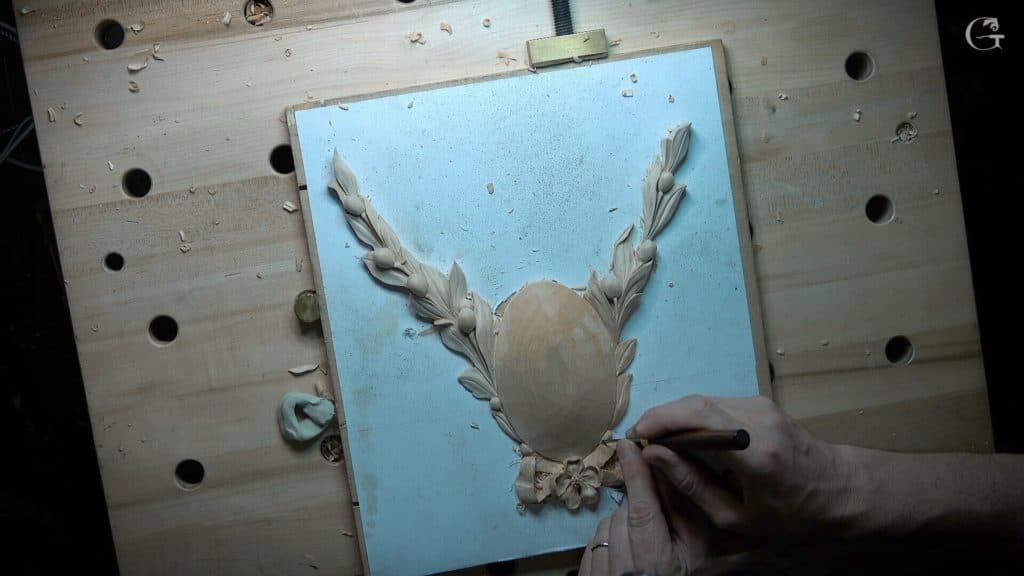
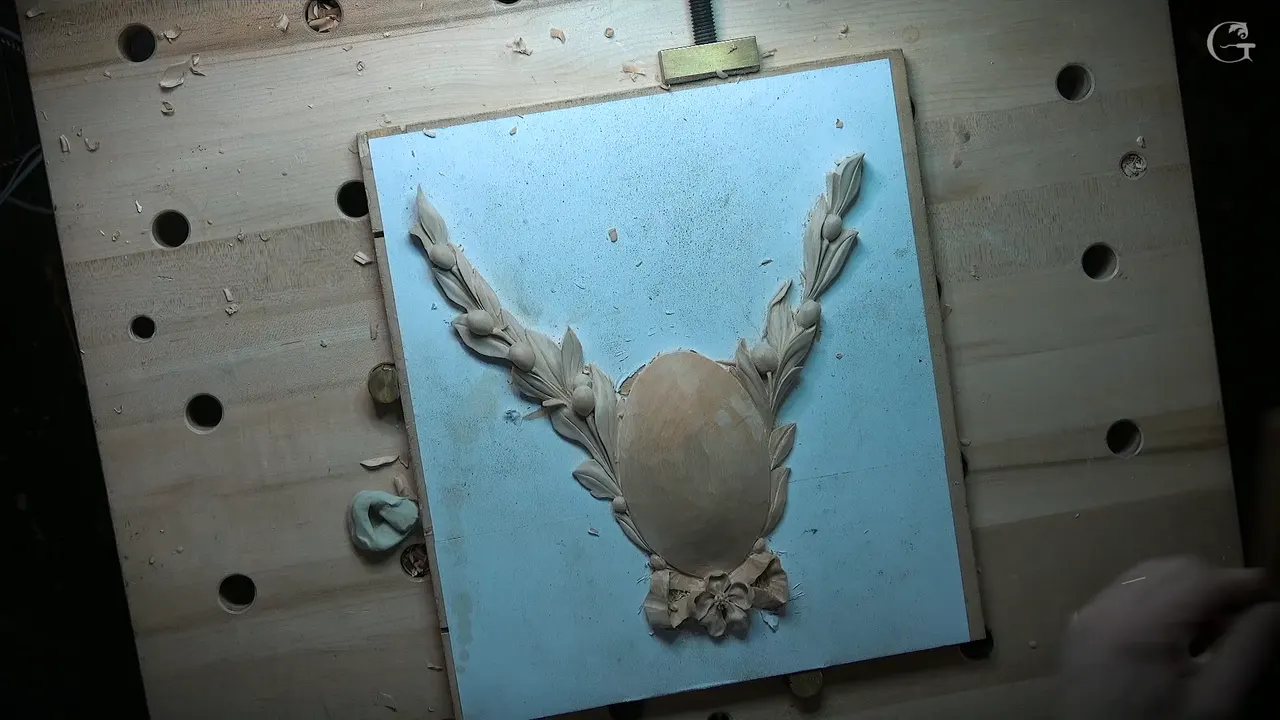
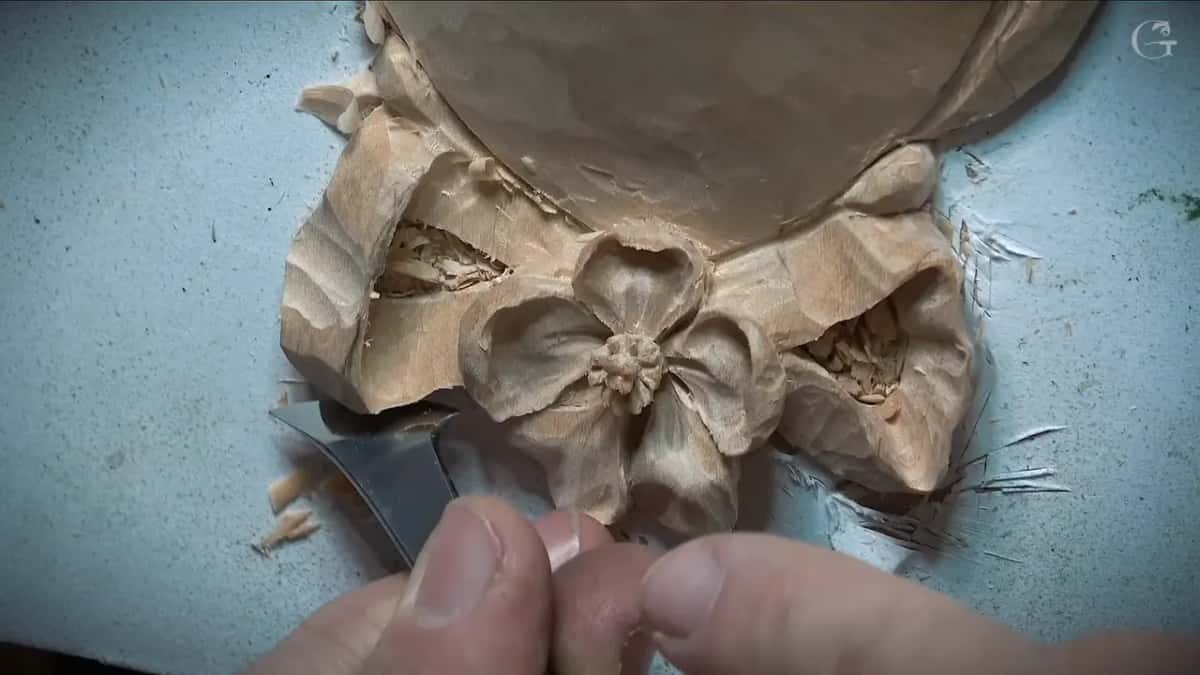
Rough. Mine for the rosette was a small curled lump of clay, sitting right on the board beside the bottom of the piece, where the bow is.
On the first loop I said I didn't need it, and that I was only showing you the way you could work. About four minutes later I said that just because I had a model, it was much easier for me to see where I should start. Both are true. I can carve a bow without one, and with one, finding my starting point is easier.
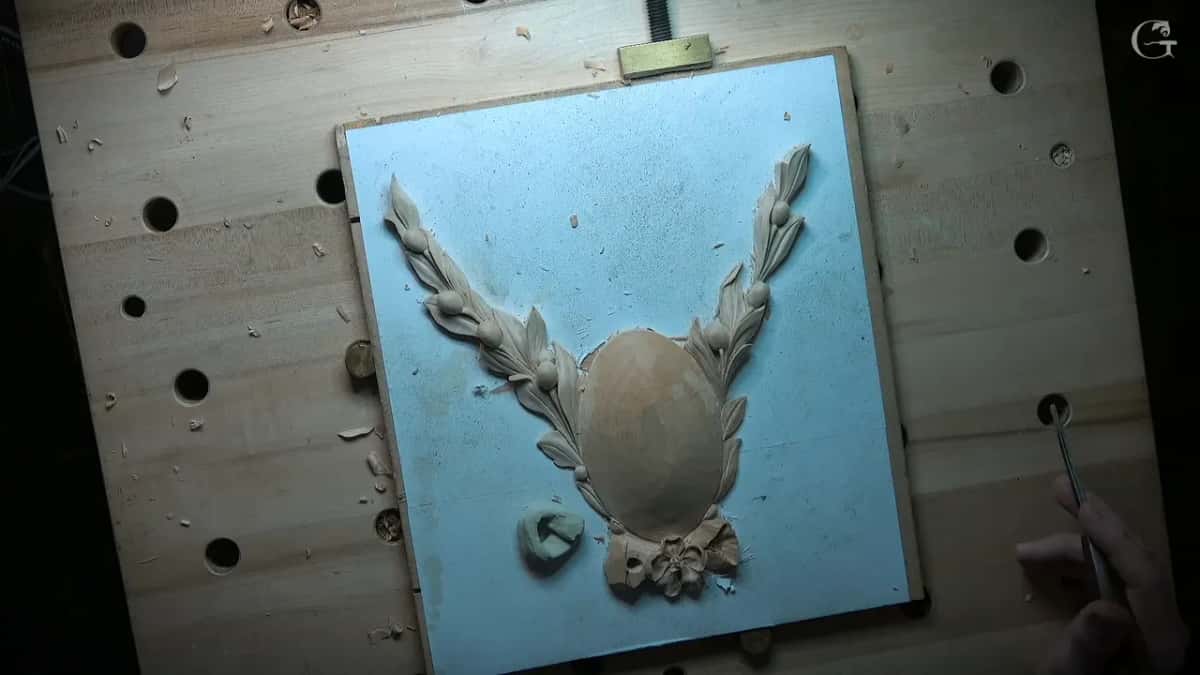
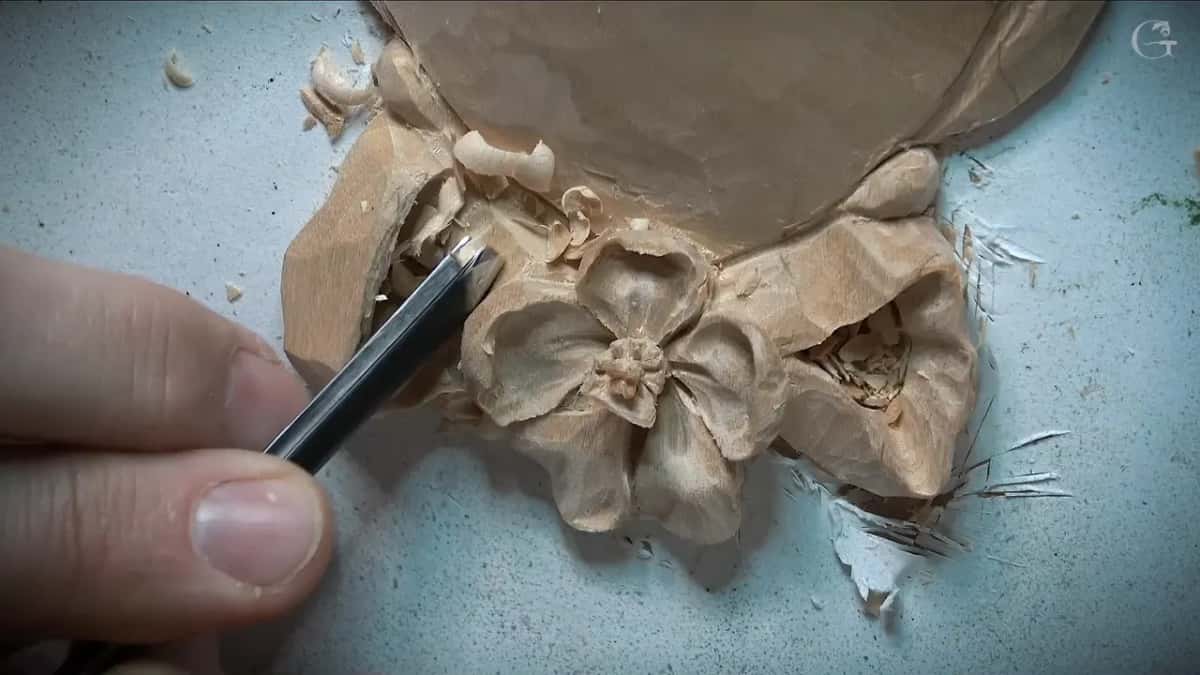
A bow in relief is not a statue. It sits on a piece seven eighths of an inch thick, about 22 mm. But a ribbon still turns over itself, and a twist is the thing some people really struggle to see.
In my livestream about clay I said that if you have a problem seeing in 3D, you take a piece of clay and model just the small detail, like the twisting of a leaf, and now you really see it in 3D. That stream sits with my other livestreams, and it is the one where I made a confession.
Why did I carve so long without a model?
I could see in 3D, or I thought I could. Let me tell you a story.
I have been carving since I was six years old, and the ability to think and see in three dimensions came naturally along the way. So clay stayed off my bench for a long time. I was young, I was ignorant, and I thought that just because I could take a gouge and bang, I could develop the form right there in the wood. I did a lot of work like that, with no modeling at all.
Did I make mistakes? Yes, absolutely. Carving only takes away, and one blow a little too hard on the mallet takes a little too much. That is why I started using clay.
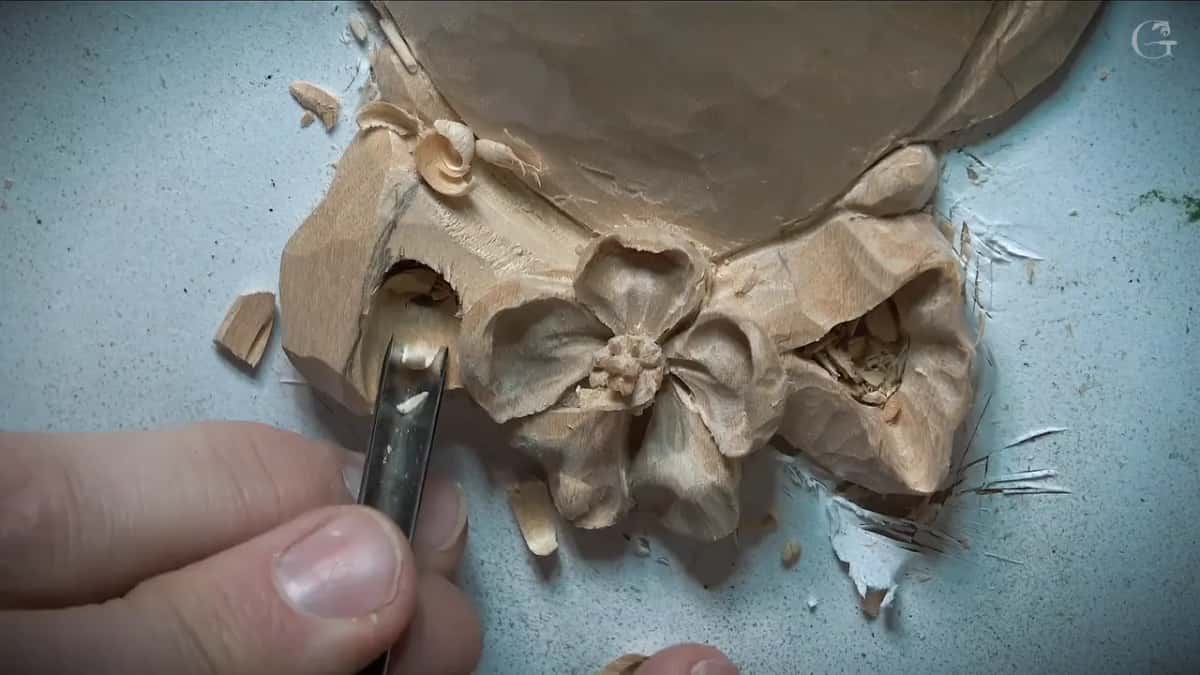
In another stream somebody asked me straight out whether I test a piece in clay first or just go for it. I said I had two periods in my life. During the first, I took a piece of wood and carved it, and I was able to get good results. But the more experience I get, the more I see the mistakes I could make if I take just a chunk of wood.
What can clay show you that a drawing can't?
The side. And the back.
As a young boy I could draw beautiful designs on paper. I knew the laws, movement, rhythm, diagonals. But a drawing limits you to a two dimensional world.
Look up an acanthus leaf online and you will find plenty of drawings, but most of the time they are taken from above, looking straight down. How is it looking on the side? That is the problem. Model it, and you can look from above, from the sides, from the front, even from the back if you want to.
What clay do you use for a carving model?
Plastilina. In Russian we just call it plastilin.
I tried different ones. Even one brand makes it in different colors, different density, softness and hardness, and the gray one I like is really flexible. This is professional grade, not like the Play-Doh children play with. What you get is true clay mixed with some kind of oils, so it never dries, and you can read how modeling clays differ from each other.
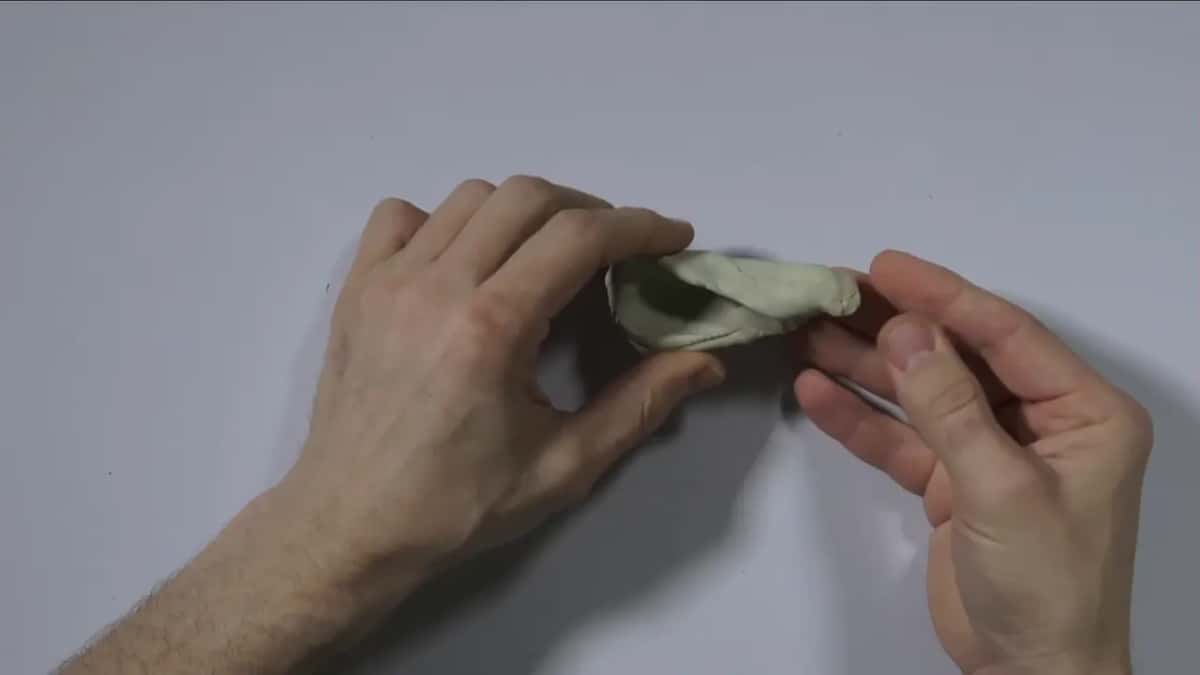
I do not use a drying clay at all. I'm not making models I want to keep, because every job is different, and I don't need more things collecting dust. The soft one I can use again. It is soft enough to shape, it still holds a form, and it does not shrink.
A big job eats a lot of it. After my lion I showed one bag left over on camera, and I had about 50 pounds of it, like 22 kilograms or so.
I promised on the clay stream to say which one I use and why I like it, and then I forgot. I told people the next day, at the start of a stream about mallets.
Is a bought cast better than your own model?
Not for me. You can buy casts, and some are expensive and some are not. But you spend a few days carving from that cast, and then what? It sits on your desk, or in my case on my workbench, and it collects dust.
Your own clay model works like a cast, but it isn't one. You model it yourself, you don't have to pay a lot of money, and you develop your own way. You don't need to hunt a magazine for 3D printouts either.
I'm still working on my organization skills, by the way. All my tools are organized, though.
How does a clay model turn into a pattern on the wood?
With a camera and a printer.
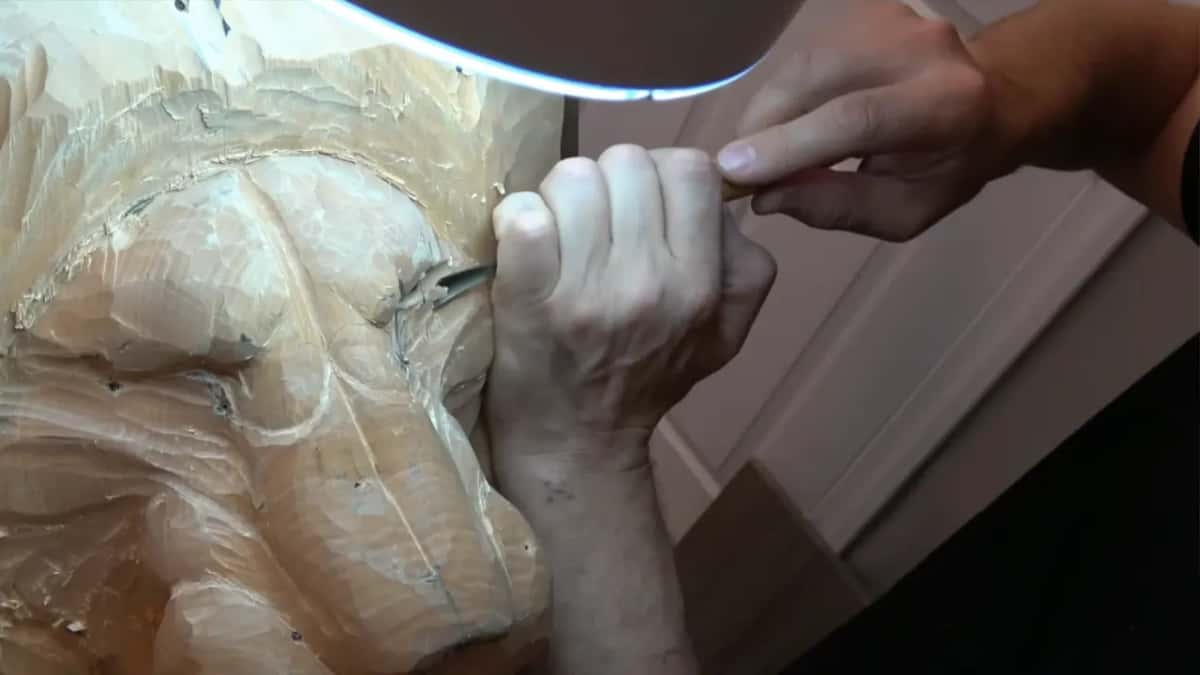
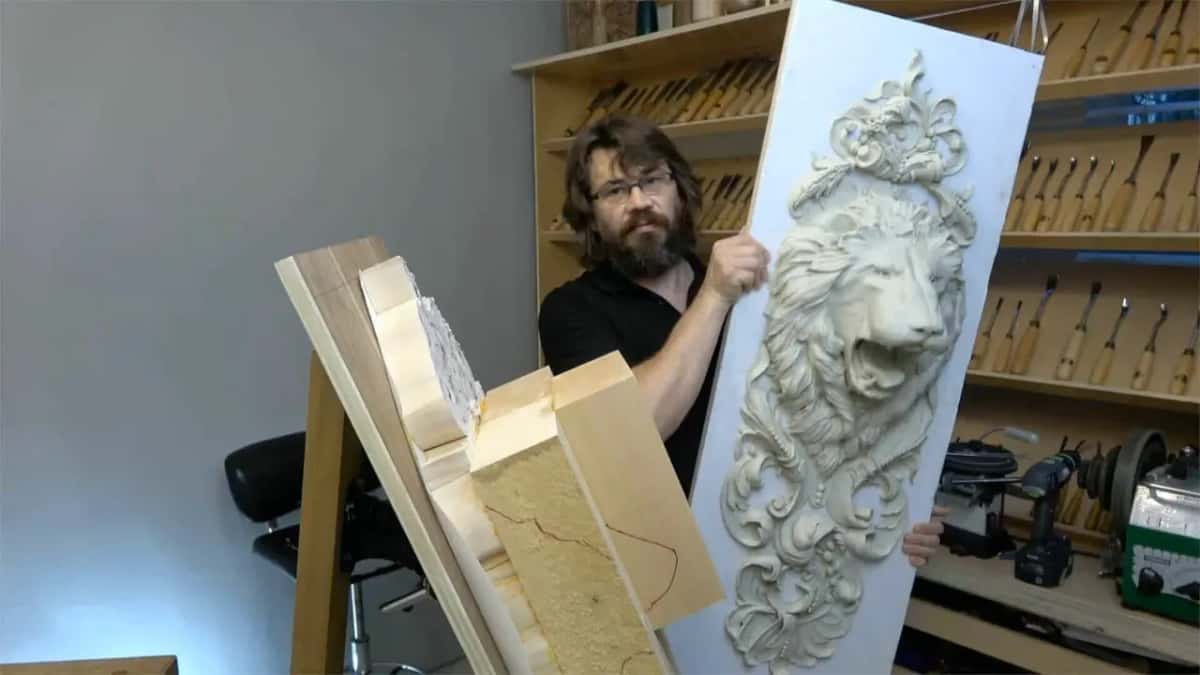
Before I touched my gouge on the lion, I had to model it, for a couple of reasons, and one of them was the customer. I modeled it in real life size. Then I took pictures from the front and the sides, saved them, printed them full size, and I had that pattern for myself.
You can do the same with any model. Take photos of it from different sides and print them out. An app on the phone can scan them, and the one I like does not distort the picture.
Then you print from different angles, apply that on a block of wood, use a band saw or a scroll saw, and you are all set.
When I filmed that lion I had long hair, and one comment I got online said, "Lion carves a lion."
Is a model only for people still learning to see in 3D?
No. That was my second reason. I said there are three reasons, and probably more. I keep it to three because I personally don't like it when people say there are 21 steps to success or seven keys to something.
We wood carvers are a little proud of what we can do. People ask me how in the world it is possible to carve something like that. And I can proudly say that before I take a piece of wood, I already see what is inside, and I am just digging it out. But that is not the fact. Most sculptors, even long ago, used a specific technique.
So even if you can go at a block with a gouge and no problem, it is still a good idea to take a clay before. Think of it as warming up your brain. Walk into a gym and you will see people who never worked out run straight to the barbell and push it up. A lot of injuries happen when people do that without warming up, even with strong muscles. Your brain works the same way, I said, so you really do have to warm up.
Can your gouges reach what the clay shows?
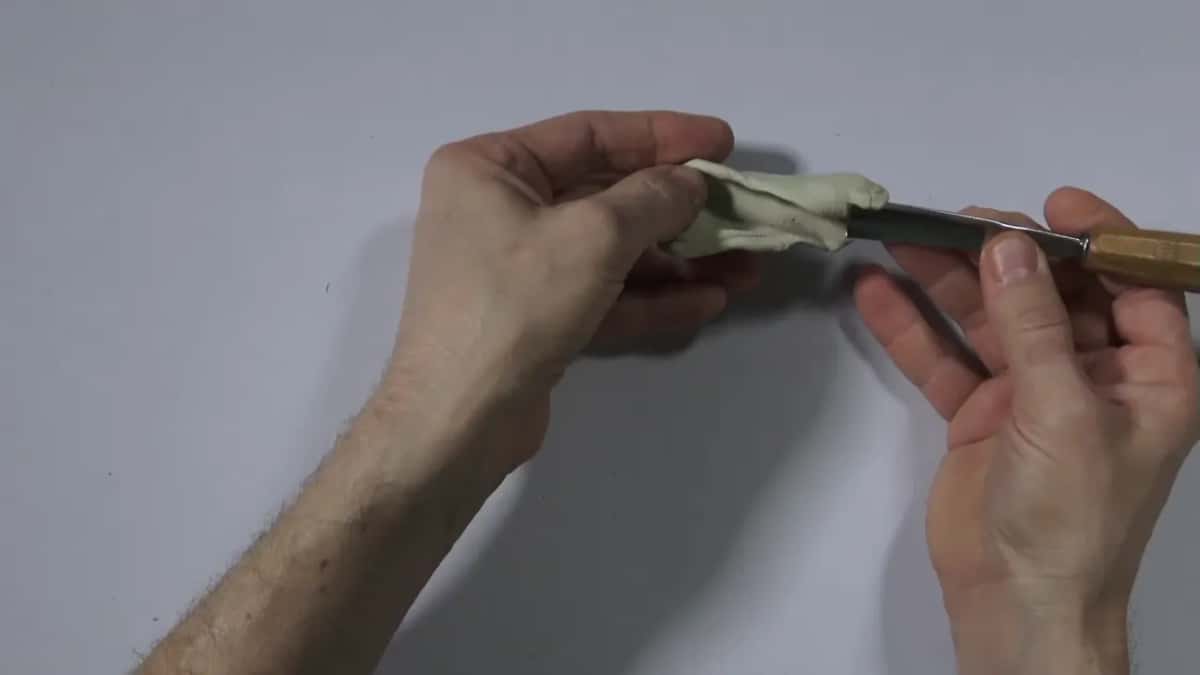
Check before you start. On that stream I shaped something simple in clay right there on camera, and then I took a gouge to it.
My teacher would come to me when I had only drawn something and say, "Think. How are you going to carve it? What kind of tools you're going to use?" That solves it, I said, once you have a piece like this in front of you and a gouge in your hand.
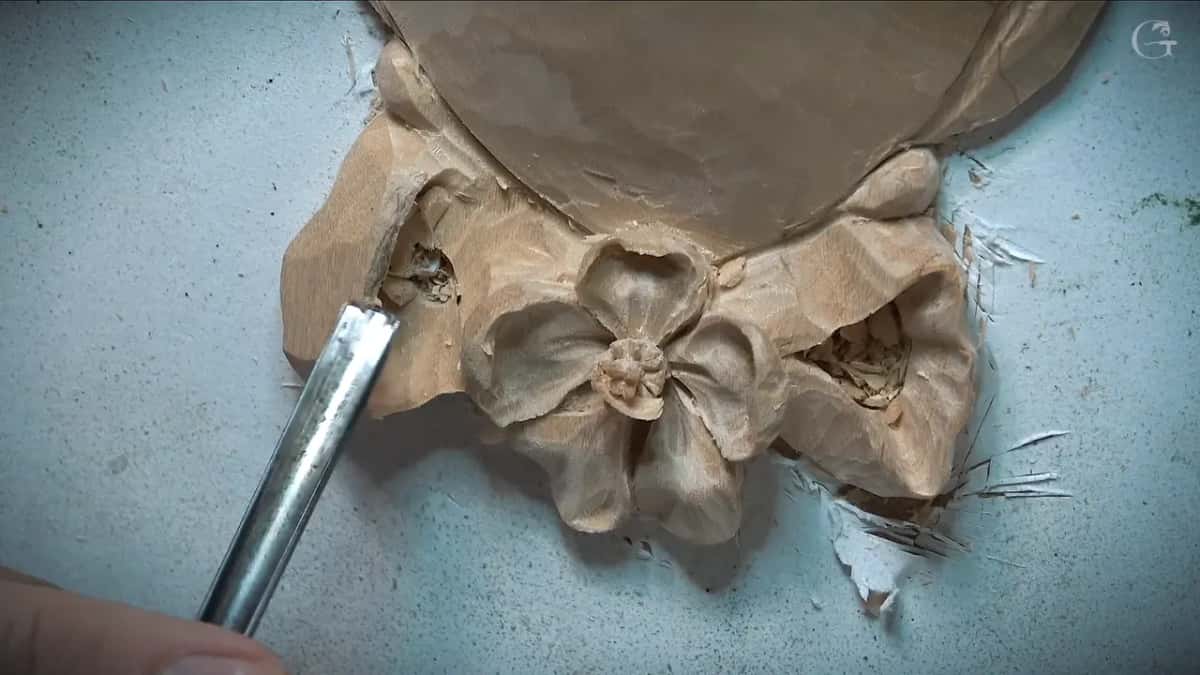
Put a gouge inside the cavity you just modeled, and you will know the limits of the tools you have. Not everybody has hundreds of tools. Own only 20 tools, or even 10, and you really have to check how you are going to carve it with the ones you own.
I am going to be honest with you. I still don't think like a gouge, and I still make mistakes.
Does a clay model cost you time or save it?
It saves it. Time was the biggest of my three reasons.
Carve for a living, and your paycheck depends on the minutes you spend carving. I still have to pay my bills and my mortgage, and I have to feed my children. Otherwise they would be skinny, eating bread without the butter.
The lion went from the clay to the wood with a pointing machine, and the tool has its own lesson on pointing. How much time did I save? I'm pretty sure I saved weeks. Out loud I went back and forth on it, days, maybe weeks, and then asked, can I say that? The lion wasn't my whole day, either. I had several orders at the same time, so I split my day between them.
And mistakes still happen. Even with it right in front of me, I am still able to make mistakes when I take the gouge. Measuring off an original you made in clay does leave a lot less chance of a mistake, as I said in my furniture panel course.
When do I skip the model?
On fast work. When that viewer asked about clay, I said I model first if it is a complicated sculpture, and then I carve from the model. Not the case, I said, with what I was working on right then. I know it is fast carving, I told them. I have to make money.
The clay stream had it the other way round. Use clay first, I said, even if it is a simple detail, even an acanthus leaf. With clay you add on, take out, add on, and if you made a mistake, you don't worry about it. Both lines are mine, from two different streams.
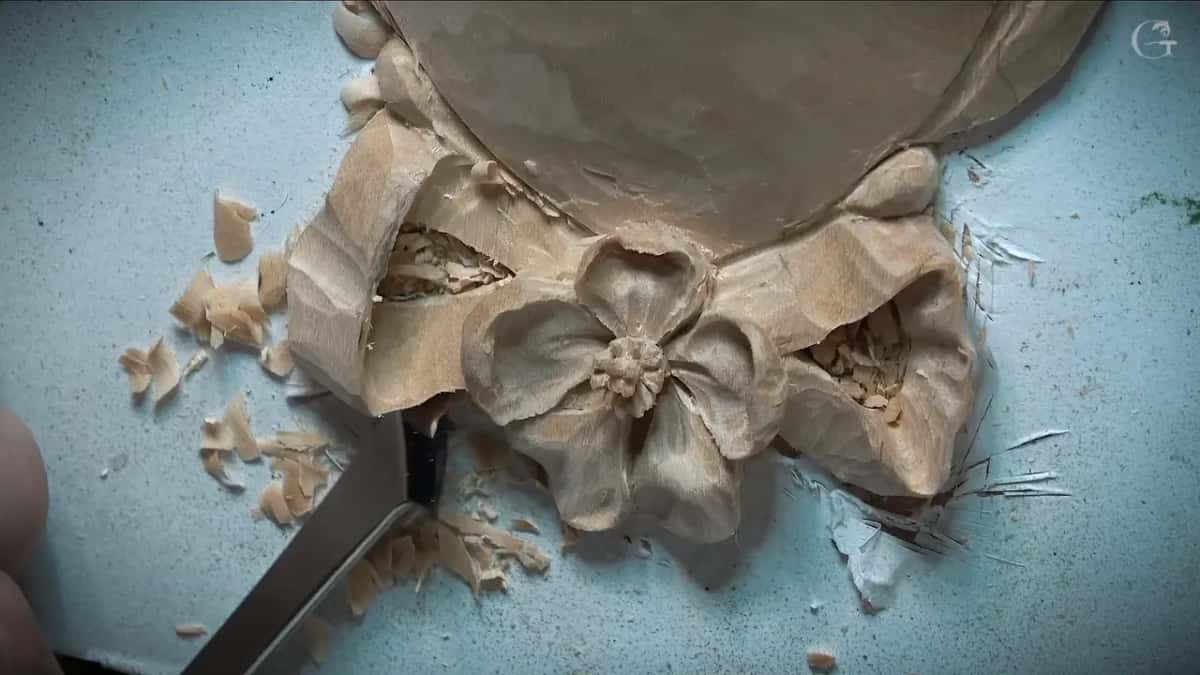
On a Venice Room panel I have worked another way too, setting the main movements and then designing the details inside as I carve, on the go.
And copying a clay form is not carving. Make a form in clay and copy it with a duplicating machine, I said in my dining table apron course, and you can just establish the form. Carving is a lot more than establishing the form.
Here is how it went on four of my pieces.
| Piece | Said | Model | Source |
|---|---|---|---|
| Chamomile rosette bow | Took seconds and still showed my hollows | Quick plastilina | Lesson 3, the bow's second loop |
| Big lion heads | Modeled in real size before any gouge | Full model | Full size photos used as pattern |
| Any acanthus leaf | Clay first, even for a simple detail | Yes, clay | The livestream where I confessed it |
| One livestream piece | Fast piece, and no clay that day | No model | Carved live, just the main form |
What would a lump of clay show you on your next piece?
The side your drawing never showed you.
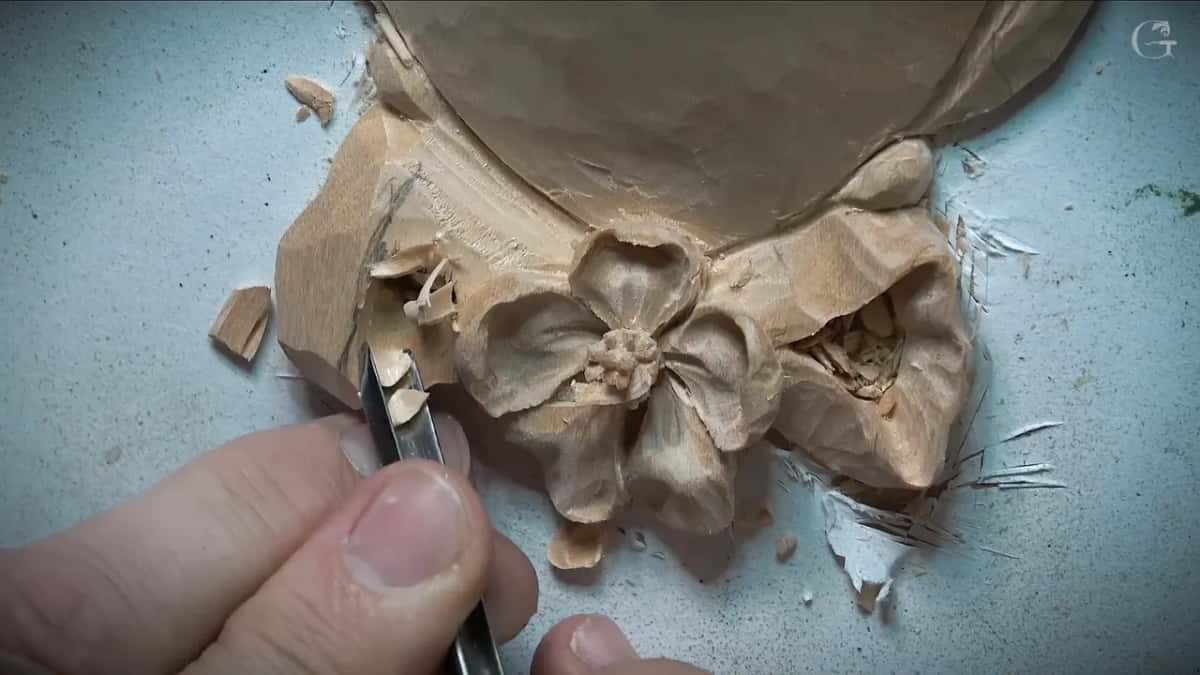
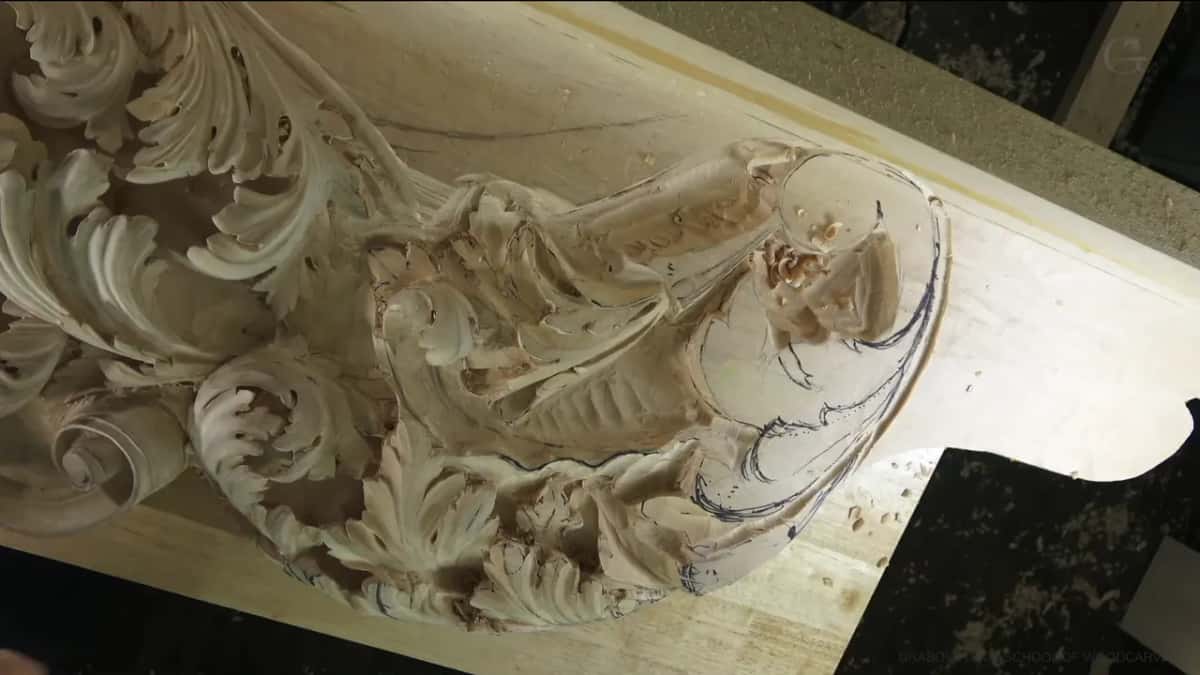
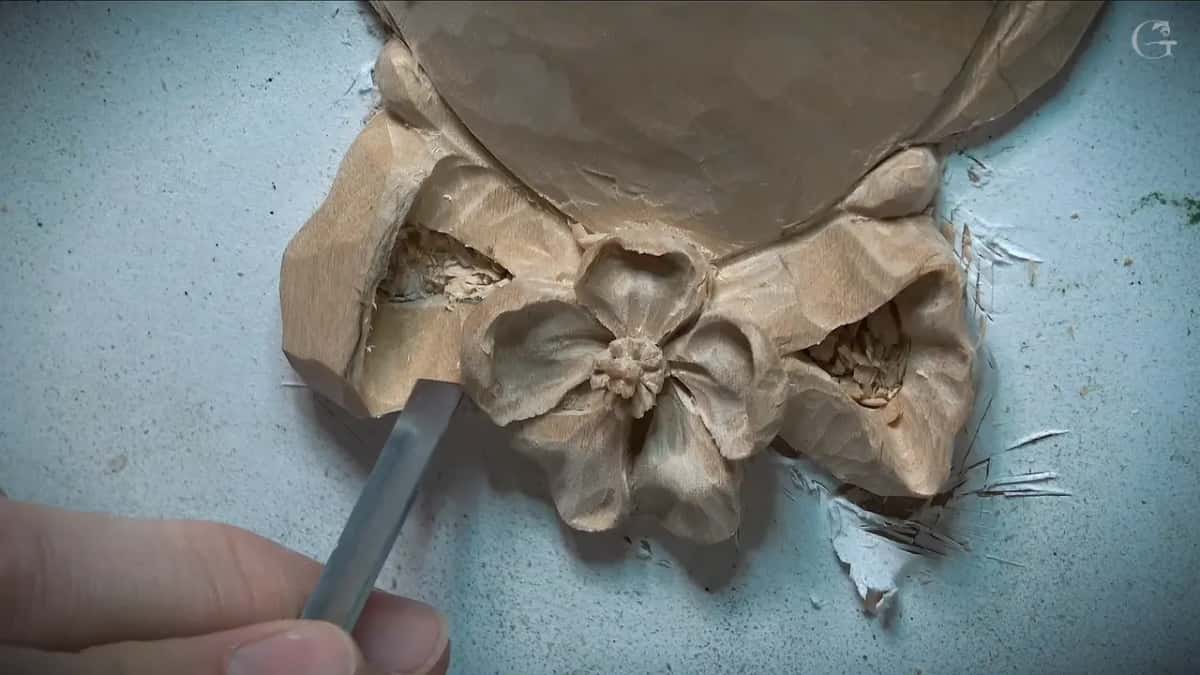
The bow I carved off that little model is in lesson 3 of the rosette. The flower comes in lesson 1, the berries in lesson 2, and the domed flower in lesson 4, and the clay stream sits with my April 2020 livestreams.
Got some soft clay? A gouge you trust? Then shape the hard part first, look at it from the side, and come carve the rest with me, with Tuition and Access on one plan page.
How it's done
- Shape the hard part. Model just the detail you can't see in soft clay, like the twist of a leaf or a ribbon.
- Look from every side. Turn it in your hands and look at it all the way around, as well as from above.
- Try a gouge inside. Put a gouge into the cavity you modeled and see whether the tools you own can reach.
- Photograph it. Take pictures of it from several sides, then print them full size to use as a pattern.
- Keep it by the wood. Leave the model on the bench beside the piece, and glance at it while you carve.
- Reuse the clay. Plastilina does not dry or shrink, so you can use it again on the next job.
Frequently asked questions
Will a drying clay do for a carving model?
I never use one. My models are not kept, since every job is different and I don't want more things collecting dust. Plastilina stays soft enough to shape, still holds a form and does not shrink, and that soft clay I can use again on the next job.
Can a model stop you from making mistakes?
Not completely. Even with mine right in front of me, I am still able to make mistakes once the gouge is in my hand. Measuring off a clay original does leave a lot less chance of one, and I said so in my furniture panel course.
How big should a clay model be?
Mine have gone both ways. My lion I modeled in real life size, and its photos, blown up to full size, served as my pattern. For the rosette bow, a small curled lump of plastilina next to the panel was enough to show me the two hollows.
What to carve next