
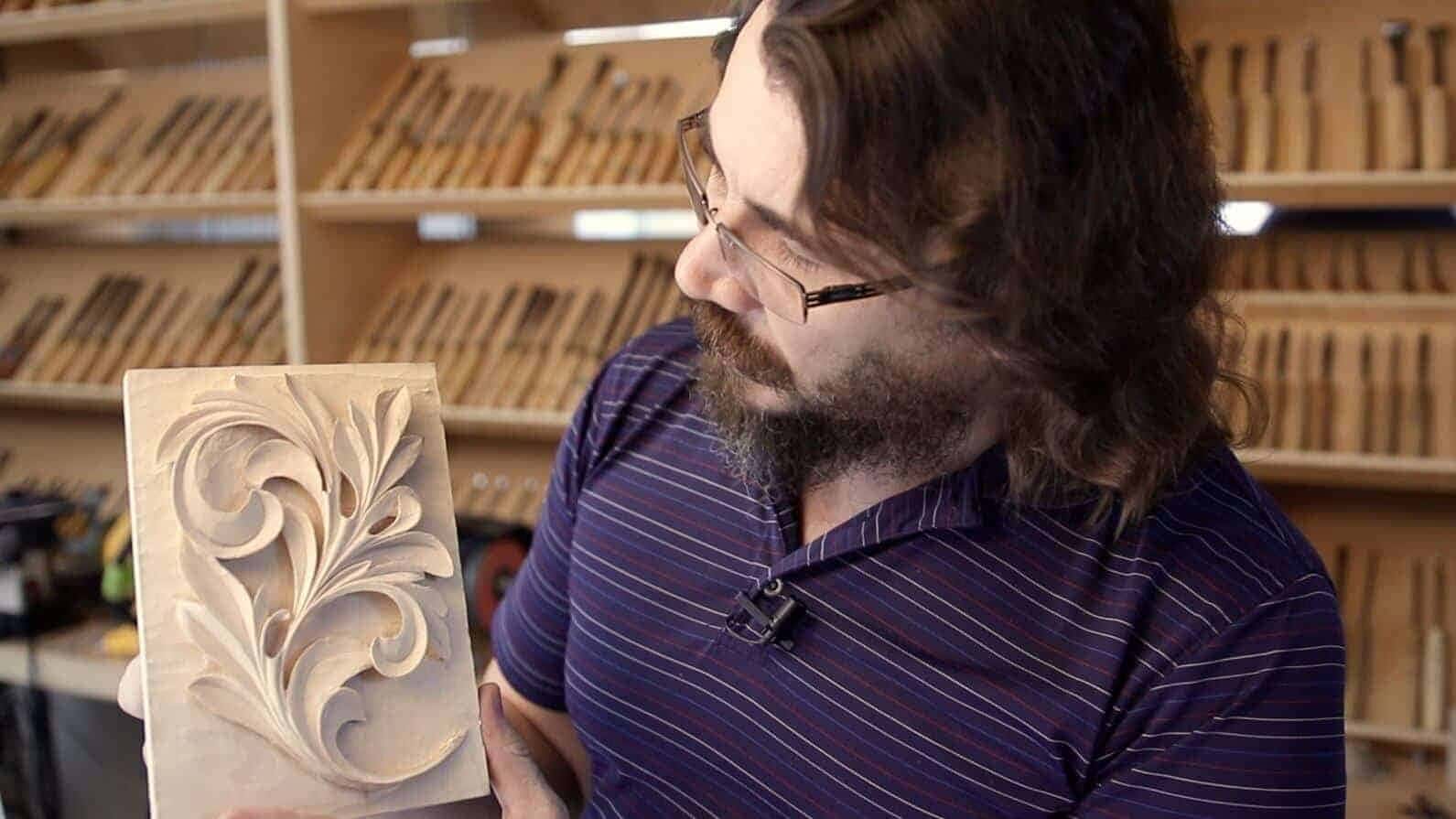
Looking for Wood carving craft school?
How to carve with precision when creating Ancient Greek Acanthus, taught online
How to carve with precision when creating Ancient Greek Acanthus is mostly drawing. You draw it full size right on the board, stop-cut the outline, take the ground away, then shape each lobe from the top down. The Greek leaf sits shallow and it holds a stiff, formal shape, so the layout decides the carving long before the mallet does.
After all these years with this leaf, the first hour is still the same. A pencil and a board. The tools sit tight.
A lot of you land here after typing Wood carving craft school into a search box. Reasonable. So before you judge anybody's course, here is the leaf and the order the cuts happen in.
How to carve with precision when creating Ancient Greek Acanthus starts with a pencil
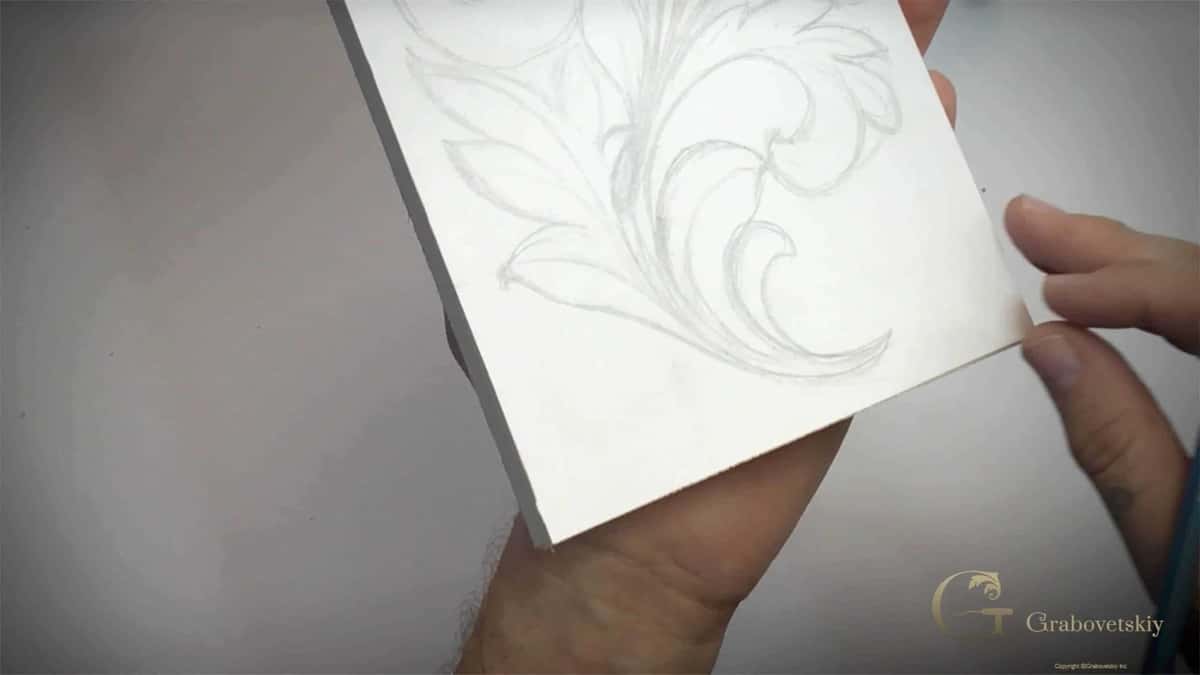
Get the leaf onto the wood at finished size. A pencil, a board, and about twenty minutes before any steel comes out of the rack.
A leaf drawn by your own hand puts the curve in your arm before the steel does. Trace somebody else's line and your hand learns nothing, so the first lobe that fights the grain will stop you cold.
Box, then the center line, then the two arcs. Those three things hold the whole leaf up.

Why draw it full size when Wood carving craft school can hand you a pattern?
Take the pattern. Use it. Then draw the same leaf again from scratch, and keep doing that until you can put one down without looking.
I was sixteen when I started my apprenticeship with a fine art master in Russia, and the thing he beat into me was not how to hold a chisel. Design is not drawing on paper. It is the laws of space, rhythm and repetition, plus knowing exactly what your tool will and will not do. He taught me to think like a tool. Somebody handed me that in a cold workshop and I never gave it back.
A pattern gives you the shape. The drawing gives you the reasons. Both matter, and most people quit after the shape. A printed sheet is usually the very first thing Wood carving craft school will hand you.
Is the Greek acanthus the same leaf as the Roman one?
Same plant. Not the same leaf. Greek stays narrow and pointed, Roman opens and curls and goes deep.
After a class at a woodworking school, one of the men came over. He said nobody had ever put acanthus to him that way. For him, acanthus meant the thing he had seen a hundred times on Chippendale chairs, and that was the end of it.
The differences are small on paper and enormous under a gouge, so they get their own courses. Carving Greek Acanthus Leaf runs 16 lessons. Carving Roman Acanthus Leaf runs 17. There is a Corinthian one at 7 lessons, a Byzantine one, and one built from a design somebody drew in 1903.
Buildings are not the half of it. I went down to St. Augustine in Florida, the oldest city in the country, and walked around the old fort, Castillo de San Marcos. Cannons. Cast iron, sitting outside for three hundred years. Cast into the iron, the same leaf.
A short answer to "How to carve with precision when creating Ancient Greek Acanthus"
Six steps, mostly about depth. Change the order and you will be chasing wood you already cut off.
- Draw the leaf full size, on the wood itself.
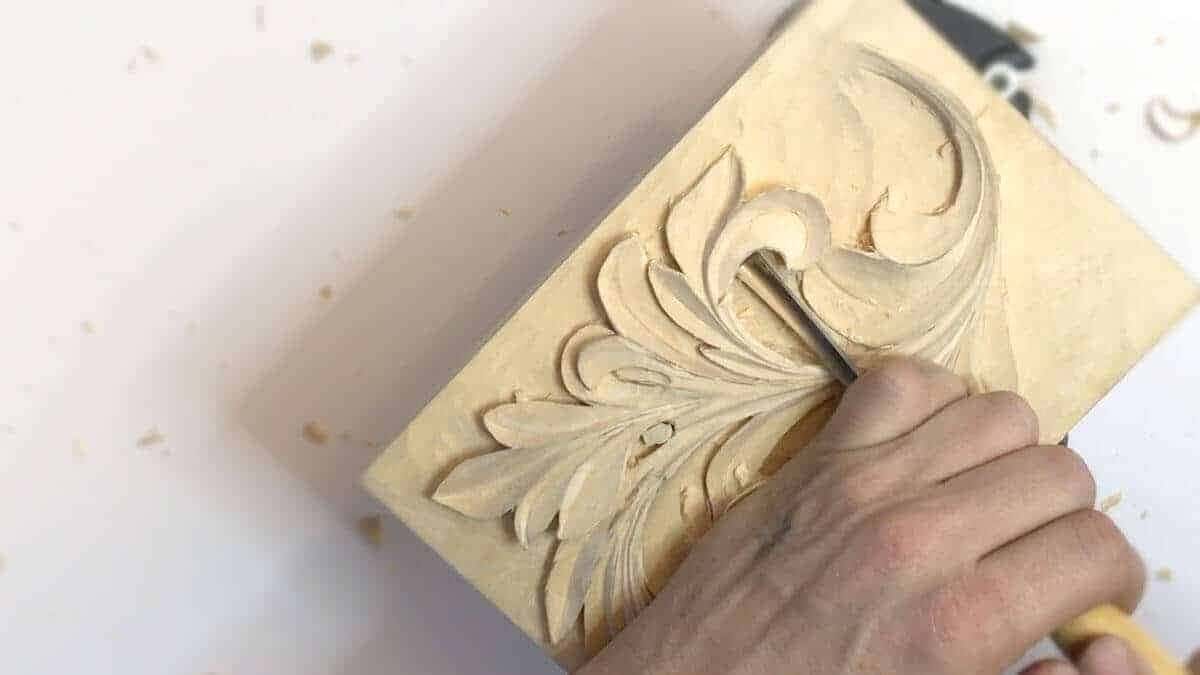
- Cut a stop line right on the outline with a V-tool. Cut beside the line, never through it.
- Take the background down to one even depth. The entire background, level, before anything else.
- Rough the big masses. Begin at the tallest lobe and step down from there.
- Model the pipes and the eyes. The shape comes alive under the gouge.
- Undercut the edges. Last. Undercut too soon and a lobe goes.
Nearly everybody stumbles on two and three. They shape before the ground is flat, and then the ground can never be flattened without eating the shape they just made.
The honest answer to "How to carve with precision when creating Ancient Greek Acanthus" is that list, repeated until your hand stops needing it.
How many gouges do you need before day one of Wood carving craft school?
You need three. A shallow gouge, a deeper gouge, and a V-tool. The mallet is for your wrist.
The sharp tool wins, whatever it cost. I have watched a man with one honed chisel outwork a room full of people holding four hundred dollar sets, and it was not close. Sharpening is the skill that takes years. Nobody enjoys that sentence, so it goes near the front, before you pay a cent to Wood carving craft school.
The wood is where your money should go. Basswood, lindenwood, limewood, whatever your part of the world calls it. Try a construction two by four and you will wreck your edges and give up by Thursday. Real carving wood is pricey and I say so plainly. You have to be real.
Well then. Shall we carve?
What the wood decides for you
Basswood forgives. Oak will not. An acanthus is long thin lobes pointing every way, so half your cuts fight the grain however you turn the board.
Which is why beginners start there. The fibers are short and even, so a lobe that runs the wrong way still slices instead of tearing out. Red oak will hand you back a splinter as long as your thumb.
Later, when your hand knows the leaf, move to walnut. Lovely wood. It will find every shortcut you took. By then you can afford the argument.
What should Wood carving craft school show you before you pay for it?
Ask to watch the drawing. Not the finished panel and not the best bits. The dull stretch where the line gets explained.
A good final photo costs nothing to produce. Teachers and performers part company at the pencil stage. Put that test to Wood carving craft school, mine included.
There are two more things I would check. Does the course go all the way to the end, including the parts that go wrong? And can you see the tool in the cut, close, at the angle the carver sees it?
Ten minutes of anything you found under Wood carving craft school will tell you whether it can really answer "How to carve with precision when creating Ancient Greek Acanthus".
The School of Woodcarving is a 501(c)(3) non-profit. Tuition is $25 a month and it opens all 48 courses and 621 lessons, the entire set. It renews automatically every month and you can stop it whenever you like. Part of it feeds orphans and widows, and that is what I am proudest of.
Frequently asked questions
Can a beginner carve the Greek acanthus?
Yes, and it is a better first ornament than most. The leaf is shallow, the shapes are large, and there is very little undercutting. Start with a panel about 6 by 8 inches.
Do I need the pattern, or can I draw my own?
The course comes with the full size pattern as a download, so you have it either way. Use it for the first leaf. Draw the second one yourself.
What wood should I use for a Greek acanthus leaf?
American basswood, or lindenwood and limewood if that is what your country sells. Avoid construction pine, and leave oak alone until the leaf is familiar.
How long does one leaf take?
Two or three evenings is normal for a first leaf. The drawing is often the longest part of it.
Where is the school?
Online. You watch and carve at your own bench, at whatever hour suits you, so there is nothing to drive to. Alexander also teaches in person at woodworking schools through the year.
What is the short version of "How to carve with precision when creating Ancient Greek Acanthus"?
Draw it full size, cut a stop line on the outline, drop the background to one even depth, then shape the lobes tallest first and undercut them last.
Who teaches these lessons?
Alexander Grabovetskiy, a master carver and International Woodcarver of the Year, who has been carving for over forty years.