Learning the Basics of Wood Carving Techniques for Beginners- Learning the Basics of Wood Carving Techniques for Beginners-Beginner's Guide to Basic Wood Carving Practices
Woodcarving is a fun hobby that can be very rewarding and relaxing. It's wise to learn some basics before starting.

Wood carving can include many types, methods, styles, and techniques in one piece based on various factors such as tools, origin, material, relief depth, and so on, so it's not strictly classified.
Typically, we categorize wood carving techniques for beginners into two classes: easy and complicated (yet achievable). The first category includes the following types of wood carving:
- Spoon Carving
- Whittling
For those who have some woodworking experience or feel confident in their skills, they can begin with more advanced woodcarving techniques:
- Carving in the Round
- Relief Carving
- Chip Carving
So, let's review each carving technique carefully and outline its features.
Spoon Sculpting
Ancient wooden spoons, with their unique colors and designs, first appeared in the past. Spoon carving is a rare chance to link up with age-old crafts. It's also a great method to polish your basic carving abilities.
To carve a spoon out of wood, you'll need a whittling knife, a spoon carving knife, a chisel or curved gouge, and sharpeners. You can get all this in one set to save time and money.
Nowadays, wooden spoons serve more than just cooking purposes. Beautifully carved spoons are cherished as exclusive gifts, original souvenirs, and collectibles.
Whittling
Among woodworking methods, whittling is one of the oldest and the simplest type of wood carving you can start with. You only need a minimal set of tools, even just one good whittling knife, for this method, which involves forming shapes and figures by shaving off wood. The whittling technique allows you to turn a piece of wood into a beautiful art object with intricate designs; the knife's sharp, textured marks highlight the wood's natural color and pattern.
If you love DIY wood projects and expressing creativity, whittling might become your favorite hobby. Beginners should start with a basic kit, which generally includes all the essential whittling tools and supplies.

Relief Carving
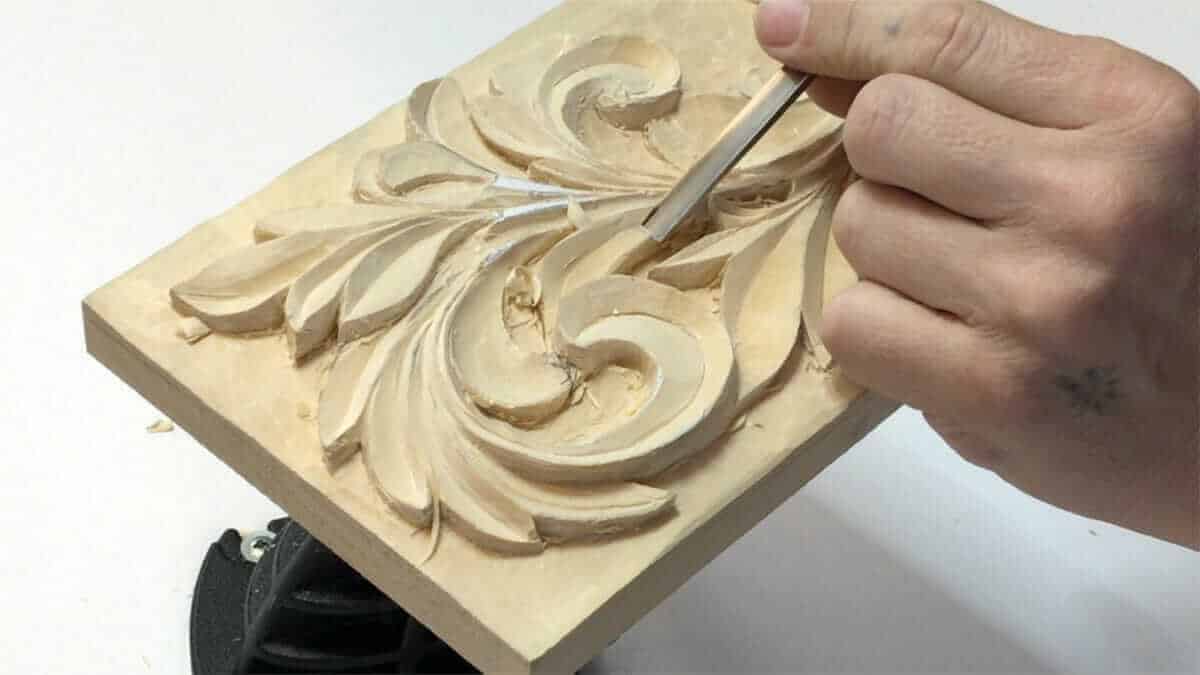
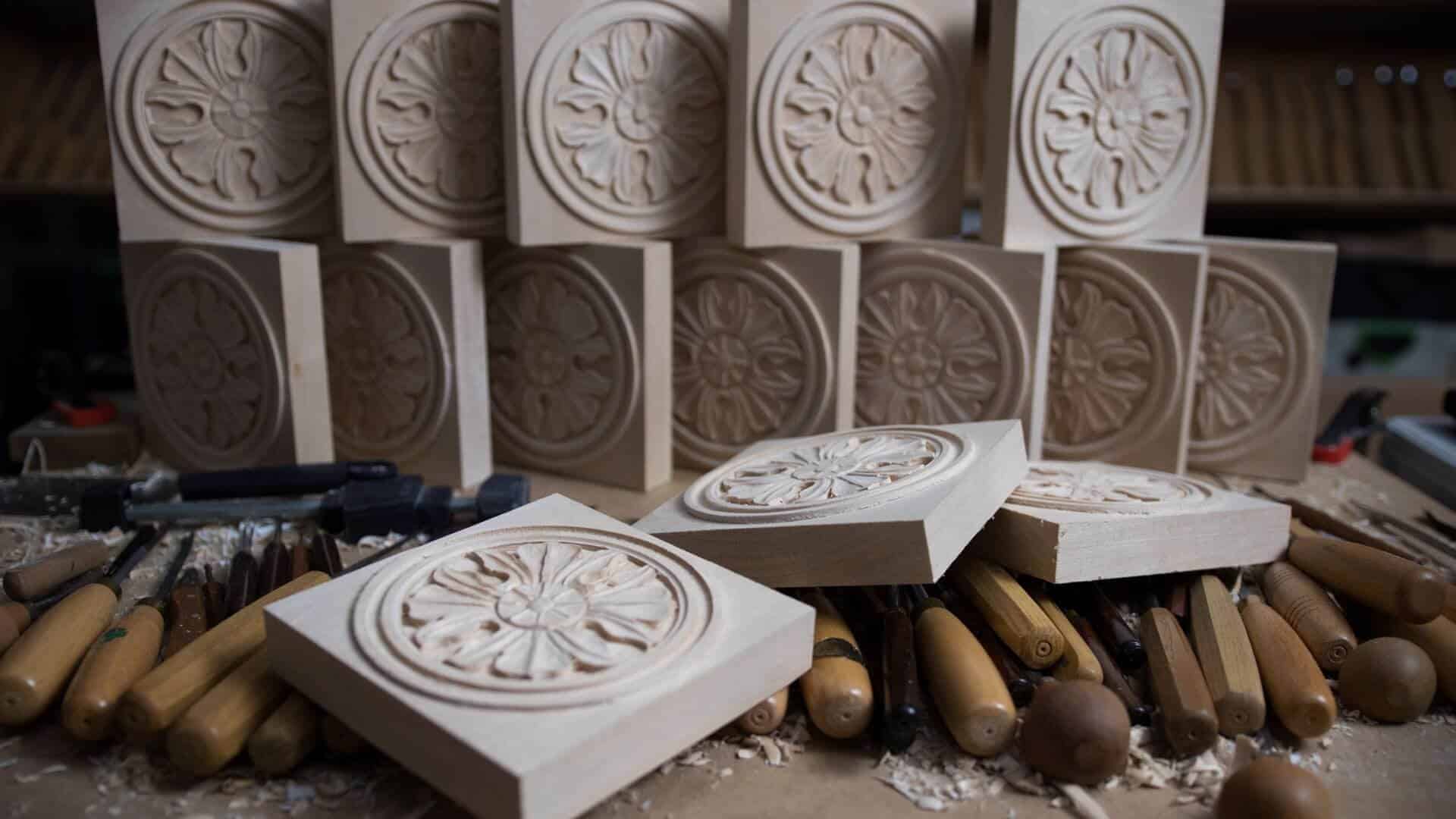
Relief carving is a highly expressive and intricate wood carving technique. Its three-dimensional nature sets it apart, with barely any flat surfaces. Different relief heights enhance the forms of the ornament.
This technique boasts numerous decorative details, expressiveness, and composition richness, covering everything from abstract and floral decorations to bird and animal patterns.
The hardest part of relief carving is maintaining the levels properly. Beginners must be accurate and precise for good results.
For mastering basic relief carving skills, selecting the correct tools and wood is vital. Key tools are chisels and gouges in different shapes (u-shaped, v-shaped), as well as chip carving and spoon carving knives.

Carving in the Round
People learned to carve figures from wood thousands of years ago. Today, this art is as popular as it was at the beginning of human history.
Carving in the round makes three-dimensional figures out of wood, letting you create lovely wooden sculptures and figurines to decorate your home.
To create sculptural miniatures, use wooden blanks of various woods. Basswood is the best, thanks to its uniform color and texture, making it soft and easy to carve.
You need a wider variety of tools for carving in the round, like drawknives, whittling and wood carving knives, chisels, gouges, and abrasives such as sandpaper, to create a smooth wood surface.
With many styles and techniques in woodcarving, beginners should learn one at a time. Begin with the simplest, and as your skills and experience grow, advance to more complicated techniques needing more tools and knowledge.
The type of woodcarving doesn’t matter; what’s important is achieving mastery. You could, for example, concentrate on spoon carving and achieve stunning results.

Chip Carving
Chip carving is a unique art form that can become an exciting hobby for beginners. This ancient method was used to decorate wooden houses, furniture, utensils, and even ships.
This style involves carving out small wood chips and creating narrow grooves that form geometric patterns, including triangles, squares, and circles. The grooves can vary in size, depth, and the geometry of their angles. Each geometric figure in chip carving has its own meaning and symbolism.
To learn chip carving wood, start with simple designs and progress to more complex patterns and combinations of lines. Basic tools needed for this style include chip carving knives of various blade shapes, with some carvers also using chisels and gouges.

Are there more advanced wood carving techniques?
What some people call advanced, we call more passionate. Getting more advanced with carving means wanting to do more than you started with. It involves expanding your vision, trying new things and tools, and being curious about what others share with you. That’s what we call advanced.
It often means exploring techniques you haven't come across before. For instance, do you know about Japanese wood carving techniques? They use different methods to create beautiful results, offering a unique approach that you might find interesting.
Japanese techniques are primarily used for relief or 3-dimensional carving of various decor elements. If you enjoy these types of carvings, you should definitely watch tutorials to get inspired and try something new. The key to Japanese carving lies in the tools—they offer a much greater variety and use many different instruments in a single piece to achieve impressive results.
You may have also heard about Swedish wood carving techniques—explore them if you enjoy creating unique kitchenware utensils like spoons, bowls, and cups. Wille Sundqvist has a book on this topic that is very detailed and intricate but well worth the read. There are many tutorials on YouTube about both Swedish and Japanese styles. Check them out! And don't forget to check our spoon carving knives.
Greatness in wood carving is not a destination but a continuous journey of learning.

Essential Techniques for Basic Relief Wood Carving
The challenge in relief carving often lies in keeping the levels well and separate, to avoid wasting time later.
A “rule of thumb” for relief carving is that the lowest part of the carving shouldn't be lower than half the height of the wood. For a 2-inch block, this means the lowest level should be 1 inch. The other levels are divided similarly. For 6 levels: 1 inch (deepest), 1.2, 1.4, 1.6, 1.8, and 2 inches.
A useful trick for relief carving (and other types) is cutting diagonally, where one side of the v-tool’s bevel cuts with the grain and the other against it. A neat outline is essential, as you’ll carve around it, and sharp, defined lines will give your relief carving a neat appearance.
Pay attention and take your time; create your relief carving carefully, as this thorough whittling style demands a lot of accuracy.
This concludes today's basic wood carving tips. Covering beginner techniques, advanced styles, and relief carving advice, hopefully, this information proves useful and timely for improving your latest projects!

Wood carving is like a journey to greatness. Each stroke shapes your path.
Basic Wood Carving Techniques FAQ
What tools are required for basic wood carving techniques?
Basic wood carving techniques require a few essential tools such as carving knives, gouges, chisels, and a mallet. Additionally, you may need sandpaper, a sharpening stone, and a clamp to hold the wood securely.
How do I choose the right wood for carving?
It's essential to choose the right wood for carving to ensure your project's success. Opt for woods that are dense, straight-grained, and knot-free, such as basswood, butternut, or cherry. Avoid softwoods like pine, which are challenging to carve and prone to splitting.
Which wood carving techniques are suitable for beginners?
For beginners, some basic wood carving techniques include carving with the grain, making push and pull cuts, using a V-gouge to create lines, and carving in the round. It is essential to start with simple projects and gradually work your way up to more complex designs.
What are the steps to properly maintain wood carving tools?
Proper maintenance is necessary to keep your wood carving tools in good condition. After each use, clean the blades with a cloth and apply oil to prevent rusting. Sharpen the blades regularly using a sharpening stone or honing compound, and store them safely to prevent damage.


I’m a woodworker who loves carving. I make fancy carvings for a high end client worldwide. I also teach wood carving. I started the School of Wood Carving, a non-profit to help people learn.
The school’s website has over 3,000 how-to videos. Great for beginners and pros! I’m from Russia but have lived in the USA a long time. Like wood? Join us at the School of Wood Carving. We’d love to have you!