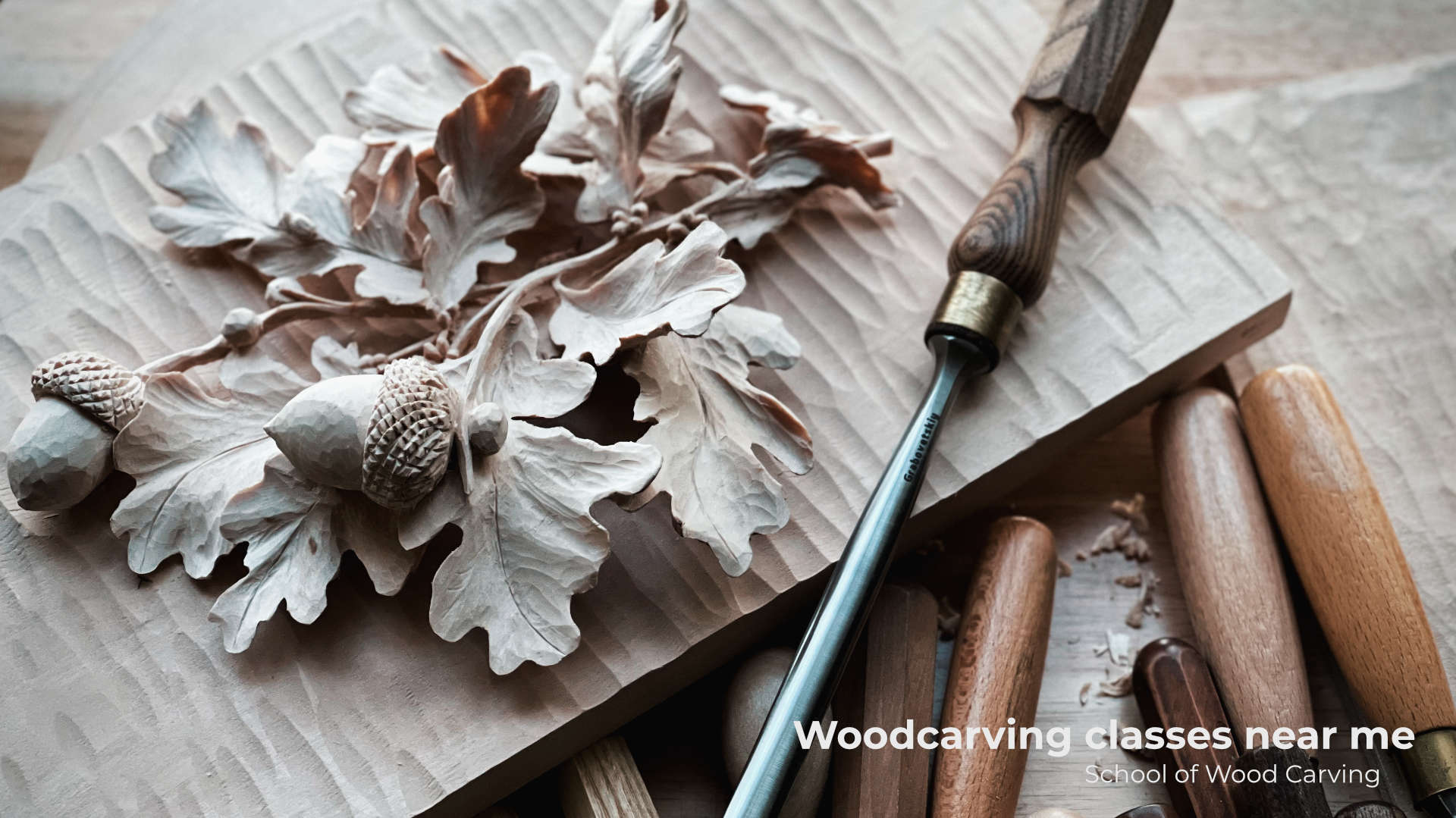
If you’re thinking about taking up wood carving as a hobby but are unsure, you’re in the perfect place. This article discusses the types of carving available and the tools required. We will also touch on safety concerns and give useful advice for beginners in wood carving.
Reasons why hand wood carving is a great pastime
Woodcarving might seem challenging because it uses both the creative and the detailed parts of your brain. Start by working on easy projects and build your confidence. Think about how satisfying it will be to see your completed works, and if you don’t do it now, imagine regretting not starting sooner.
There are many reasons why woodcarving is becoming more popular. They include the:
- Serenity of carving wood. Woodcarvers often work in solitude, in their own workshop or garage. The peacefulness and no use of power tools add to the serene atmosphere.
- Getting into woodcarving is easy. You don’t need a big workshop with thousands of dollars in tools or lots of wood. A basic carving kit, a block of wood, a few accessories, and safety equipment will do.
- Plentiful wood supply. Wood is available in many varieties, is abundant, and grows back. Most people have access to green wood, and suppliers provide specific kinds and sizes.
- Choices abound. As a starting carver, you can choose from whittling, relief carving, chip carving, treen carving, and others. You can create practical items or purely decorative or sentimental ones. Projects can be small or large, matching your skills, style, and time.
- Charm of carved creations. Be it the carving technique, the piece's dimensions, or the type of wood, a finely-carved item is art. Woodcarving appeals to everyone who values beauty.

How to start your wood carving journey
You've chosen to try woodcarving, no matter the reason. Now, you need to know how to start as a woodcarver. Here are some key points.
CHOOSE THE RIGHT TOOLS TO START
This is key. Before you start your first project, get carving tools. Proper tools always make the job easier.
What makes a good set of beginner wood carving tools? Hobby tools should be full-sized with SHARP edges. They should also be easy to sharpen for continued use.
Also, the perfect wood carving tool set for beginners:
- Provides a refund policy for defective tools or those that don't meet your needs. Manufacturing issues sometimes occur, and occasionally the tool isn't right for your task. Having a money-back guarantee gives you peace of mind.
- Has tools with various cutting shapes and sizes. This allows more project variety and gives you the right tool for different cuts. Check for a set including a straight chisel, a V-parting tool, and multiple chisels with different curvatures and widths.
- Features high-quality materials for both handles and blades. Tools with hardened steel blades and hardwood handles are durable and can last long if maintained and sharpened regularly.

When purchasing your first tool set, should you also buy a wood chisel mallet, detail wood carving tools, or fishtail carving tools not often included in beginner sets? Yes, you should buy a mallet; it helps with deep cuts.
About the detail tools or fishtail tools, it depends. If you're sure about continuing the hobby and can afford the extras, getting them is wise. You'll be thankful for the extra tools as your projects become more intricate.
UNDERSTAND THE TERMINOLOGY OF WOODCARVING
There's a unique vocabulary for wood carving. For beginners, it's important to learn these terms before choosing your carving tools. You'll need to know the vocabulary, particularly if you're using videos or books to learn. Understanding the different cuts and the tools for them sets you up for successful woodcarving.
CHOOSE AN EASY PROJECT
Wood carving has a steep learning curve. Holding the tools right, cutting at the correct angle, knowing how much wood to remove, and picking the right tool for each cut are all learned skills. Some people pick it up faster than others, but everyone needs time to master them.
You'll have a better chance of completing your first project if you choose a simple one to begin your wood carving journey, particularly if you're a perfectionist. Simple projects tolerate errors better, cut down on tricky areas, and help beginners create appealing pieces.

ENSURE YOUR SAFETY
Beginners should use wood carving gloves. Until you learn to hold the tools safely, small slips are possible and can cause nasty cuts to your unprotected hands.
As a beginner learning wood carving, safety goggles are very useful. As you cut, chips and pieces of wood will fly around, and goggles prevent them from getting into your eyes.
SELECT THE BEST WOOD FOR BEGINNERS
Basswood, aspen, and butternut are popular softwood choices for new carvers. Because they're softwoods, these three are easier to cut than hardwoods. Butternut is a little heavier than basswood and aspen and has a more noticeable grain. Nonetheless, all three are easy to mark and have relatively straight grains.
Though more challenging to carve, hardwoods produce beautiful carvings with lots of grain. They're not typically recommended for a beginner's first project. However, novice carvers often switch to hardwoods like oak, black walnut, and cherry after completing a few projects.

STAY SHARP WITH YOUR TOOLS
Sharp tools produce sharp cuts. They are simpler to use and give you better results. Although it seems counterintuitive, sharp tools actually cause fewer injuries. Dull tools need more pressure, which can lead to slips and serious accidents.
Using strops and sharpening stones will maintain the sharpness of your wood carving tools. Sharpening tools well is an art, but you can find lots of detailed instructions online. Many companies that sell wood carving tools also provide online guides or videos on proper sharpening techniques.
You can also have your tools professionally sharpened. This can be handy at times. But if you use your tools frequently, you'll find yourself spending too much time taking them for sharpening. A smart woodcarver learns to sharpen their tools themselves.
In summary
Here are the basics of wood carving for beginners. We’ve covered the essential tools and accessories, and highlighted suitable woods for your initial project. Now, it’s time to find your first project and start carving. Happy carving!
———-
Let me help you with Mastering Wood Carving Skills. Learn Old world wood carving skills and techniques through online video lessons. You are going to learn the ways of how Master Wood Carvers work, develop 3D thinking for Wood Carving and perfect your Tool sharpening and maintenance.
Discover the Joy of Wood Carving: An Introductory Guide for Beginners-Online resources for woodcarving

I’m a woodworker who loves carving. I make fancy carvings for a high end client worldwide. I also teach wood carving. I started the School of Wood Carving, a non-profit to help people learn.
The school’s website has over 3,000 how-to videos. Great for beginners and pros! I’m from Russia but have lived in the USA a long time. Like wood? Join us at the School of Wood Carving. We’d love to have you!