
Alexander Grabovetskiy, woodcarver, School of Woodcarving · Published 2017
What wood carving tools should I buy first?
Quick answer: Wood carving tools worth buying first are Auriou, then Ashley Iles, then Pfeil. That ranking comes from carving with all three daily. Hardness separates almost nothing at this level, because every serious maker tempers into the same narrow band of steel. The handle is what you feel after eight hours.
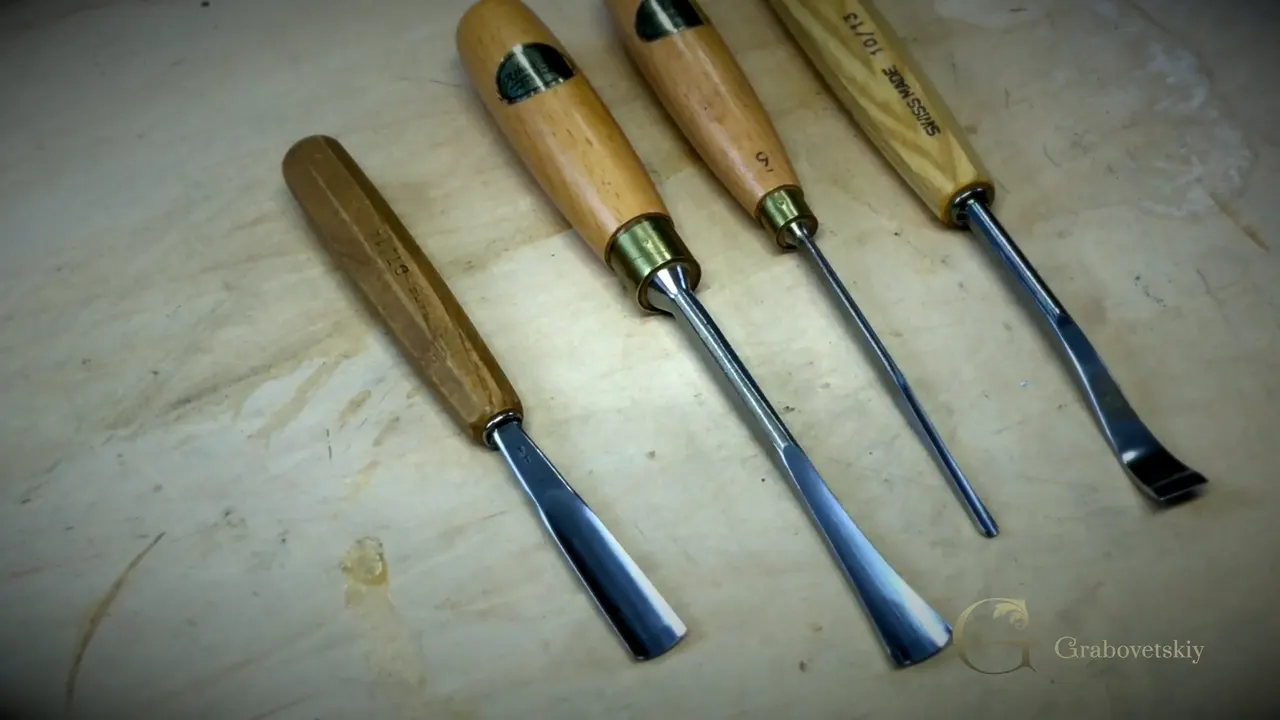
Buy Auriou first if the money is there, Ashley Iles if it is not, and Pfeil if neither is in stock near you. My order, arrived at by carving daily for years with all three sitting on the same shelf. Below: why each earns its place, plus the brand that quietly left mine.
How many gouges do you actually need before you can carve something worth keeping? Do you know what the steel in yours is tempered to? Most people never ask, and then they go and blame their own hands for what the tool is doing.
When I came from Russia I owned one gouge and one knife. That was everything. My teacher gave me the gouge, and the knife I made myself because there was no other way to have one. Then I landed in the United States and found out you can buy absolutely anything here. You need only work out where, and how much the thing is going to cost you.
What the shelf looks like before you know anything
- A shop like Woodcraft carries two or three brands. Pfeil, Flexcut, and some Dockyard miniatures, and that is usually the whole choice.
- Online the world opens up: Ashley Iles, Auriou, Two Cherries, Dastra, Stubai, Henry Taylor, Lamp.
- Hardness barely separates them. Pfeil runs 59 to 61 HRC, Their own literature puts Ashley Iles at 61, with Two Cherries around the same.
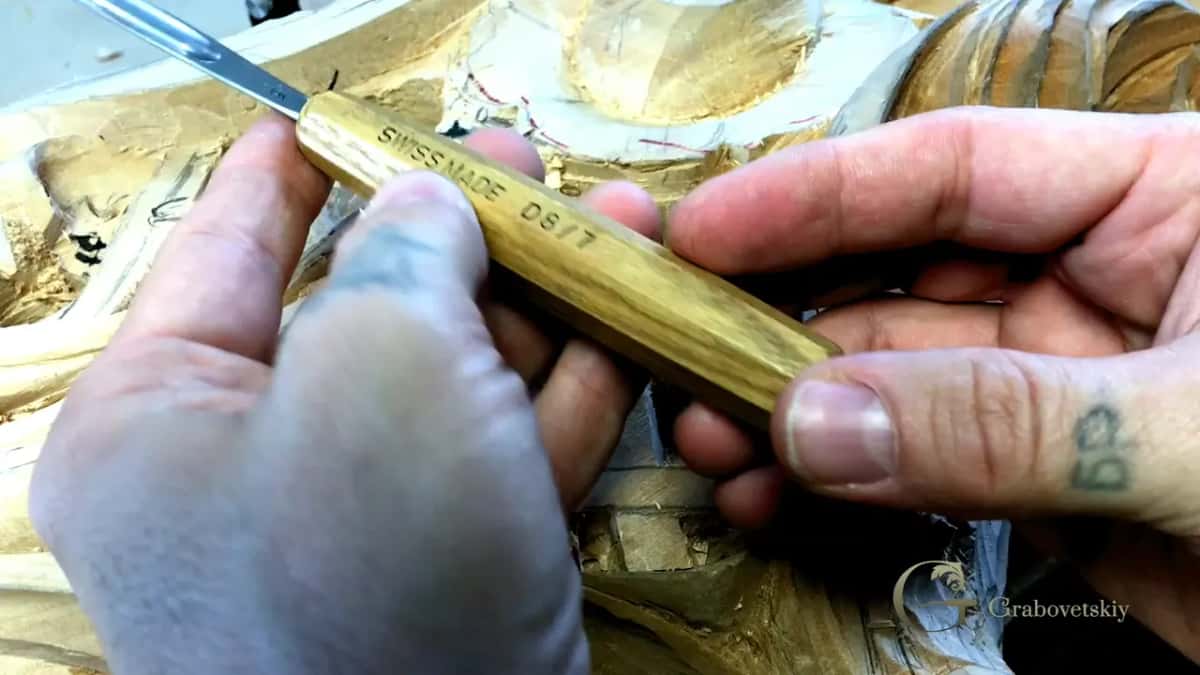
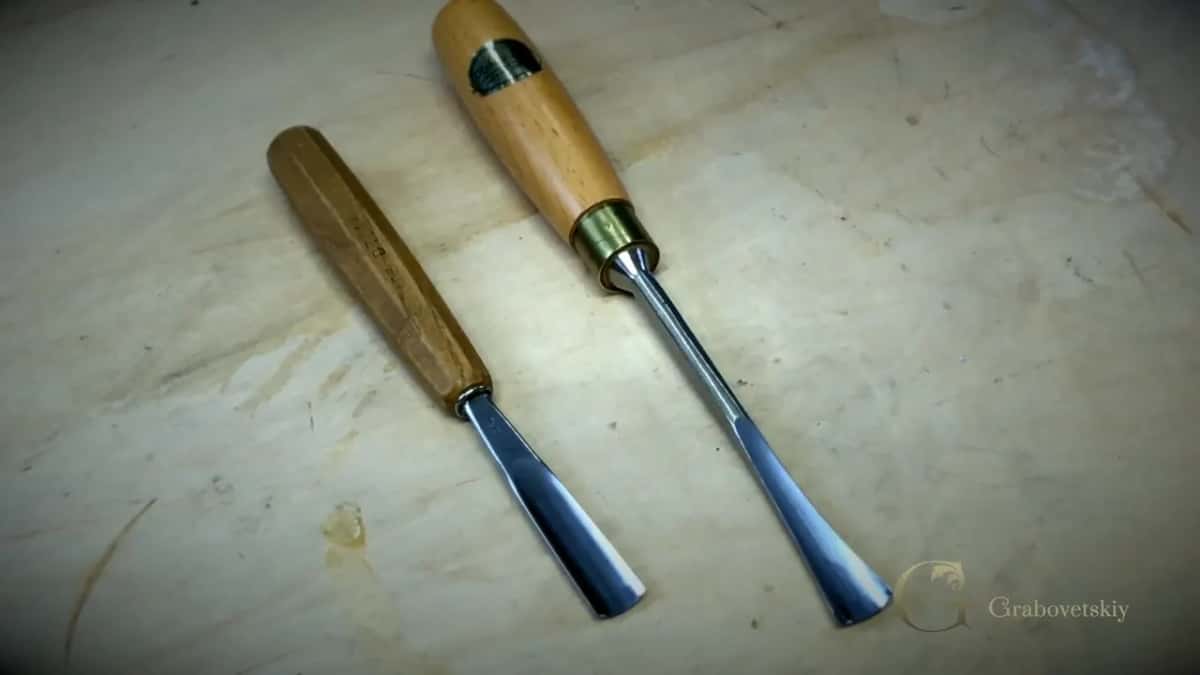
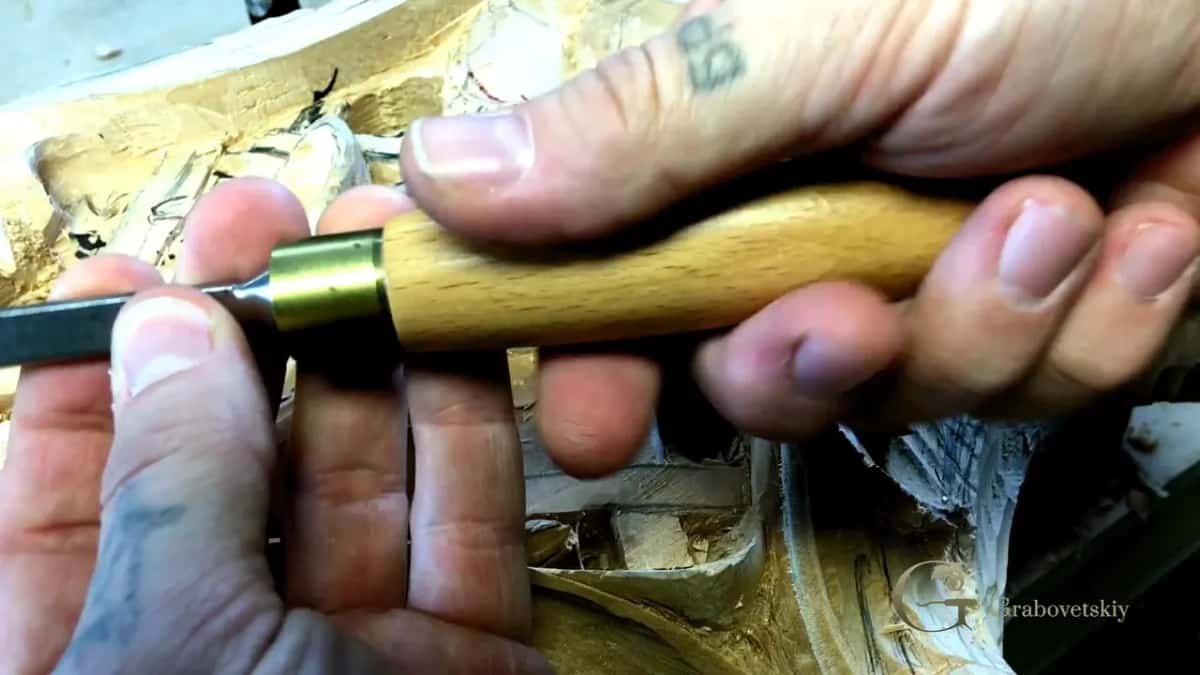
- The handle is where you feel the difference, never the steel. Round against octagonal is a genuine choice, not marketing noise, and you should hold both before deciding.
- My order: Auriou, English tools, Pfeil.
- One brand left my shelf because of rust, not because of how it carves.
What tools can you actually buy in a shop?
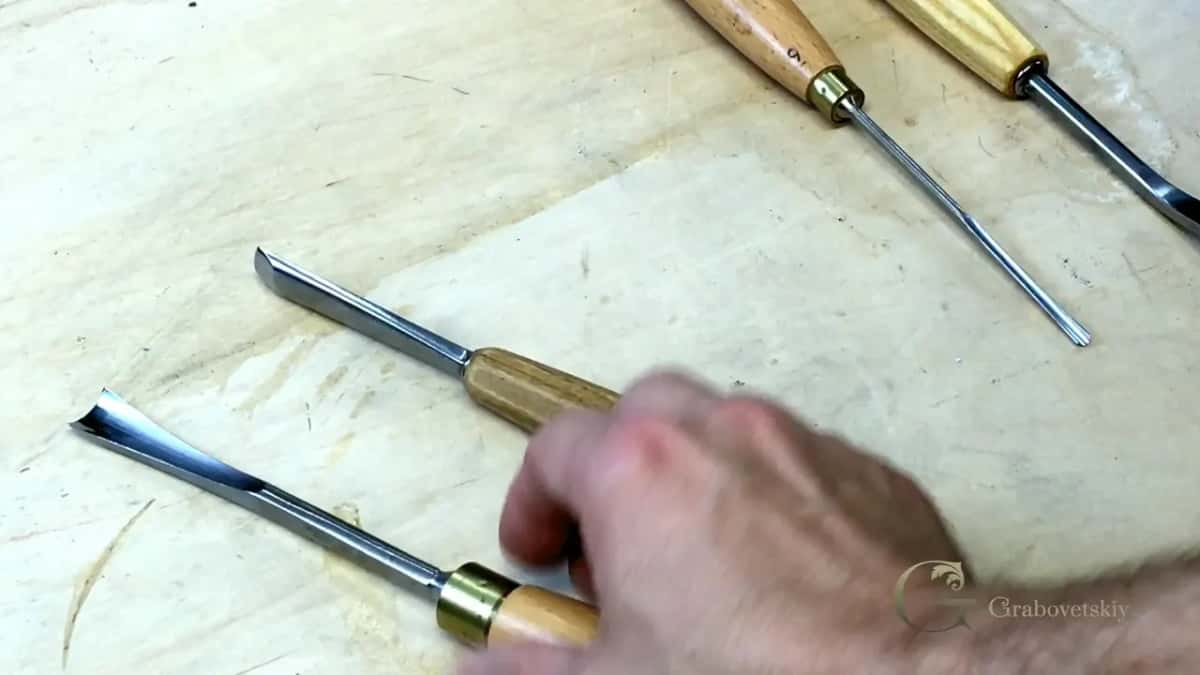
Two or three brands, and that surprises people. Walk into a Woodcraft in the United States and the carving wall holds Pfeil, which everyone here calls Swiss Made, plus Flexcut, plus perhaps some Dockyard miniatures. Then you are done.
Go online and it is a different world. Ashley Iles from England. Auriou from France. Two Cherries and Dastra and Stubai from the German speaking countries. Henry Taylor. Lamp, German steel, sold through Woodcarvers Supply. Most of these sit on my shelf right now, which is the only reason I am comfortable ranking them at all. An opinion about a tool nobody has owned is worth nothing. The internet is full of those.
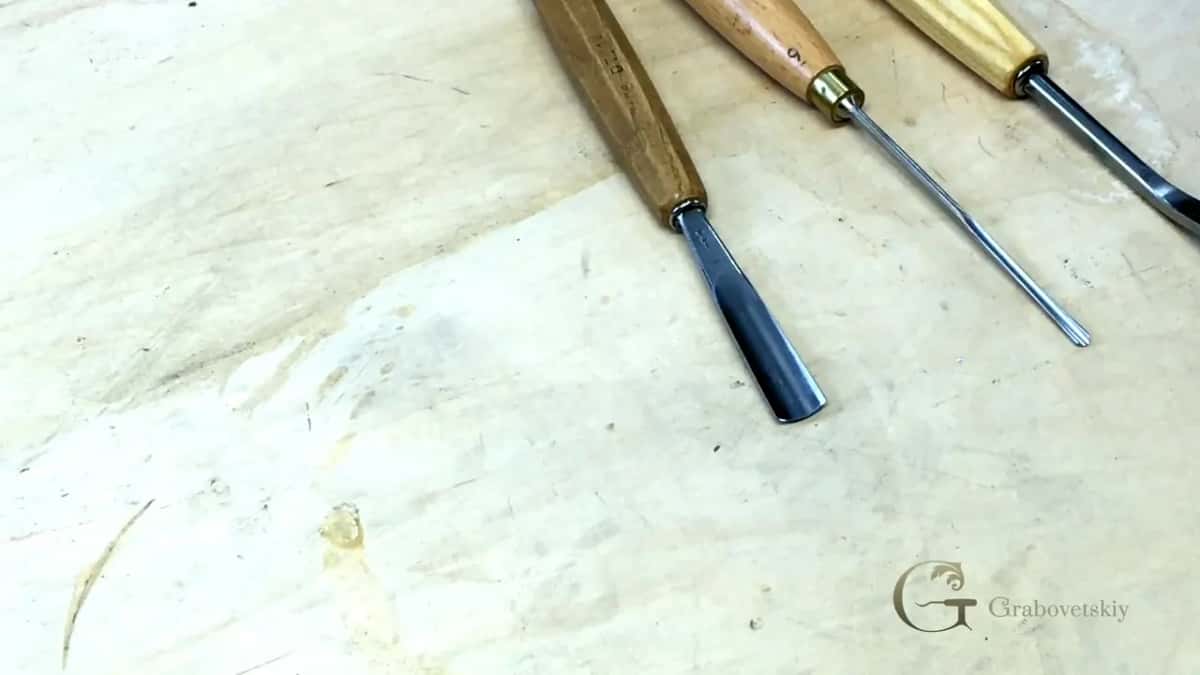
My own first purchase was a Swiss Made set, simply because it was the thing I could get hold of straight away. Good tools. What struck me was how straight they were assembled and how carefully the whole thing was put together, and that matters more than a beginner realises.
How hard is the steel in a carving gouge?
Almost every serious maker lands in the same narrow band, which is why steel is the wrong thing to argue about. On the Rockwell scale Pfeil tempers to somewhere in the high fifties and low sixties. The Ashley Iles figure is 61, printed on their own literature. Two Cherries sits around 61 as well.
So when somebody tells you one famous brand holds an edge and another does not, be careful. They are tempered within a point or two of each other. What actually differs is the thickness of the steel, the shape of the blade, and the thing nobody mentions in a catalogue: the handle.
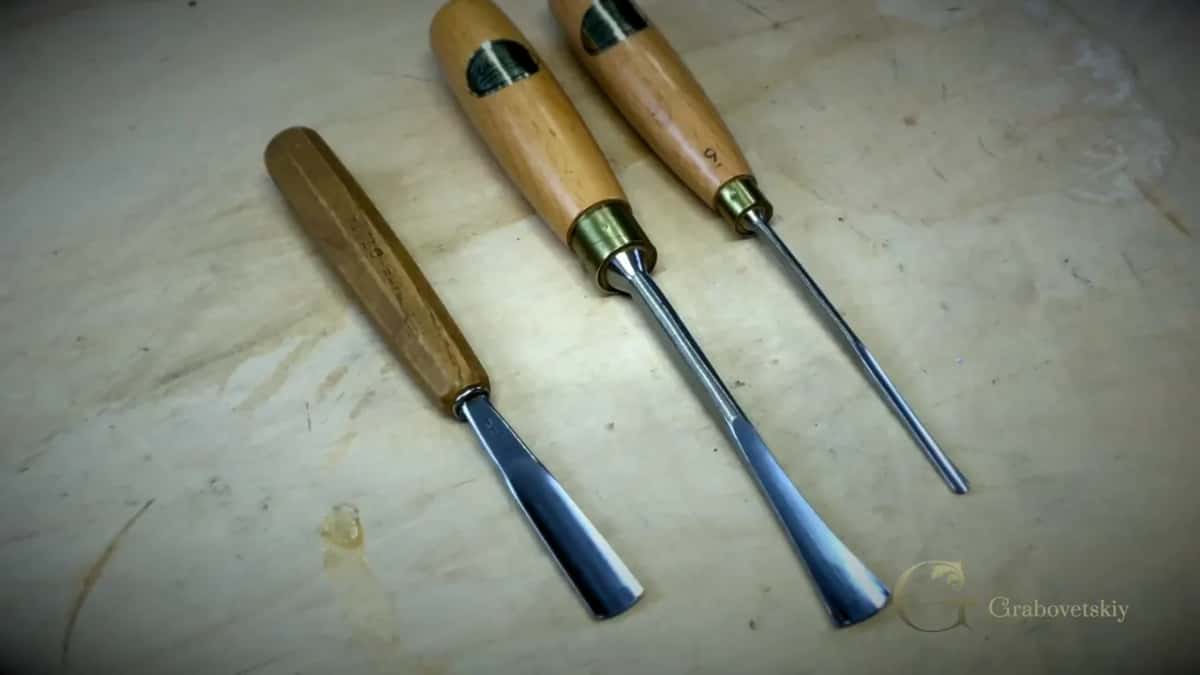
| The maker | Handle it comes with | What earns it a place on my shelf | Rank |
|---|---|---|---|
| Auriou, forged in France | Octagonal | Beautiful, keeps its edge, fills the hand the way an English handle does | First |
| Ashley Iles, England | Round English handle with a satin finish | Thick steel, fishtails | Second |
| Pfeil | Octagonal, slimmer than the other two | Straight, long lasting, and sold in every country I have visited | Third |
| Lamp, German steel | Standard | Genuinely fine micro tools | Micro sizes only, and the next section explains exactly why |
Should a carving handle be round or octagonal?
Round suits my hand for a long day, and I will explain the argument for both, because it is the one real difference between these brands. The traditional English round handle with its satin finish comes from Ashley Iles. Hold a tool for eight hours and those flats on an octagonal handle press into your palm. For me the round one wins, though I would not call the gap enormous.
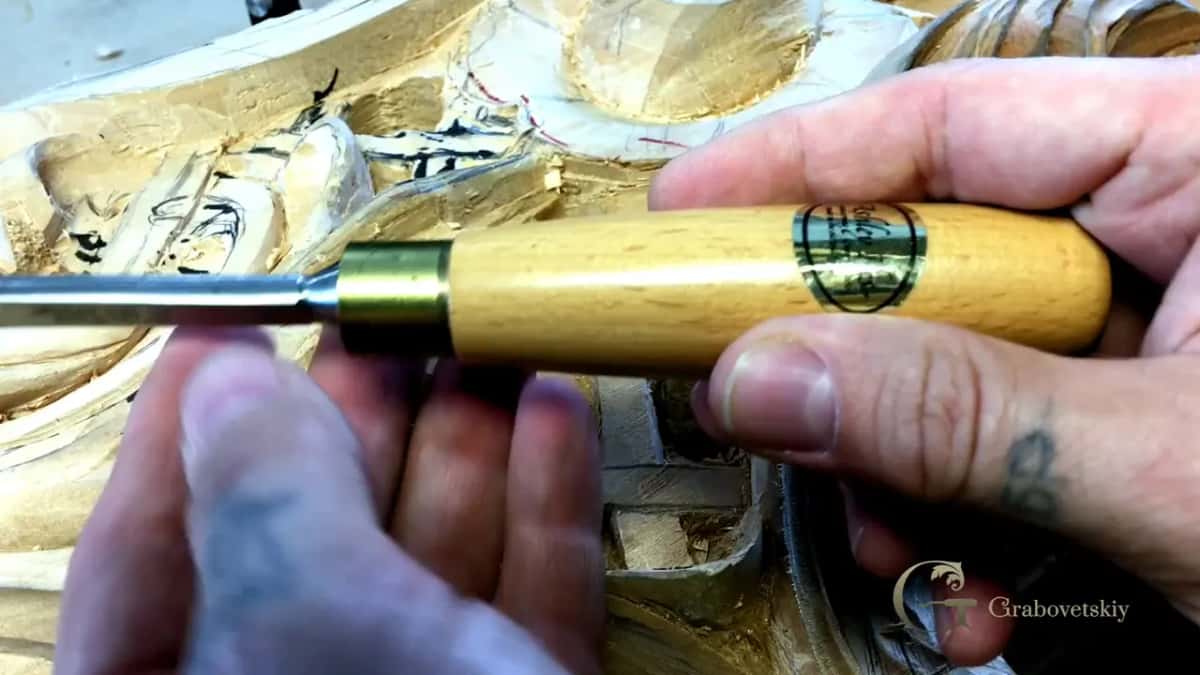
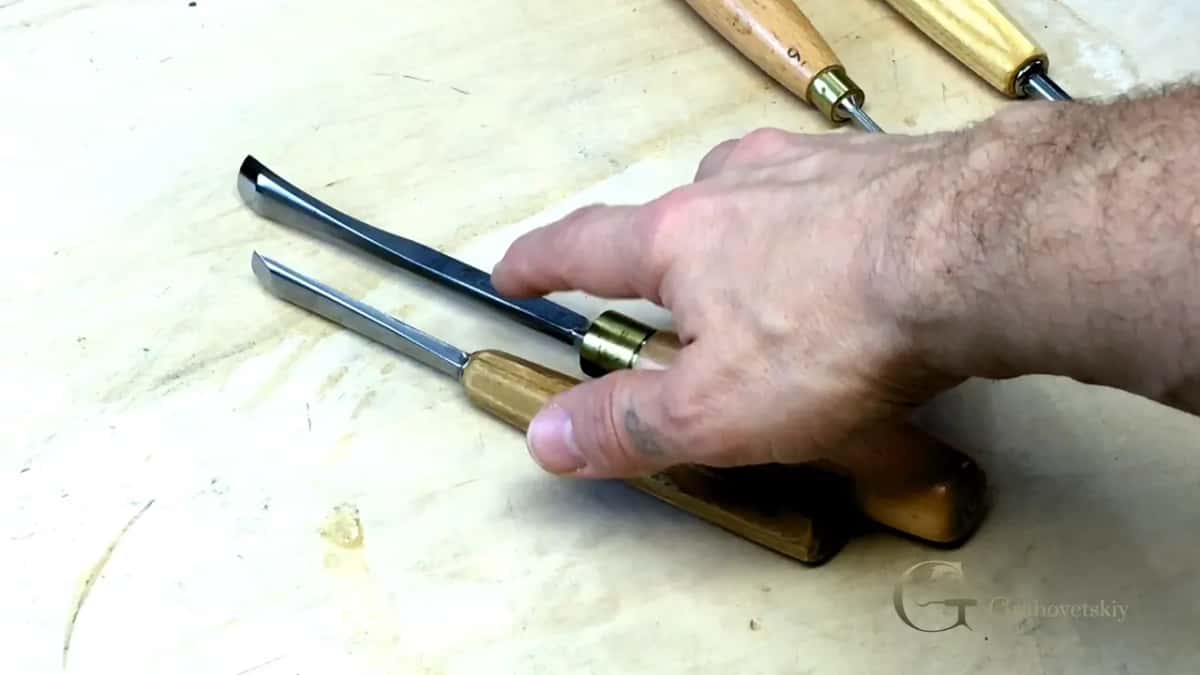
Now the other side. An octagonal handle laid on the bench stays exactly where you put it, and that is perfectly true. Some carvers tell me their small tools have rolled away and hit the floor more than once.
Here is my own experience, for whatever it is worth. I carve every single day, I have owned round handles about as long as I have owned octagonal ones, and not once in my life has a tool rolled off my bench. Not once. If it happens to you, put a mat down on the bench, lay the tools on that, and the problem is over for the price of a rubber sheet. I would not choose a brand around it.
What is a fishtail gouge for?
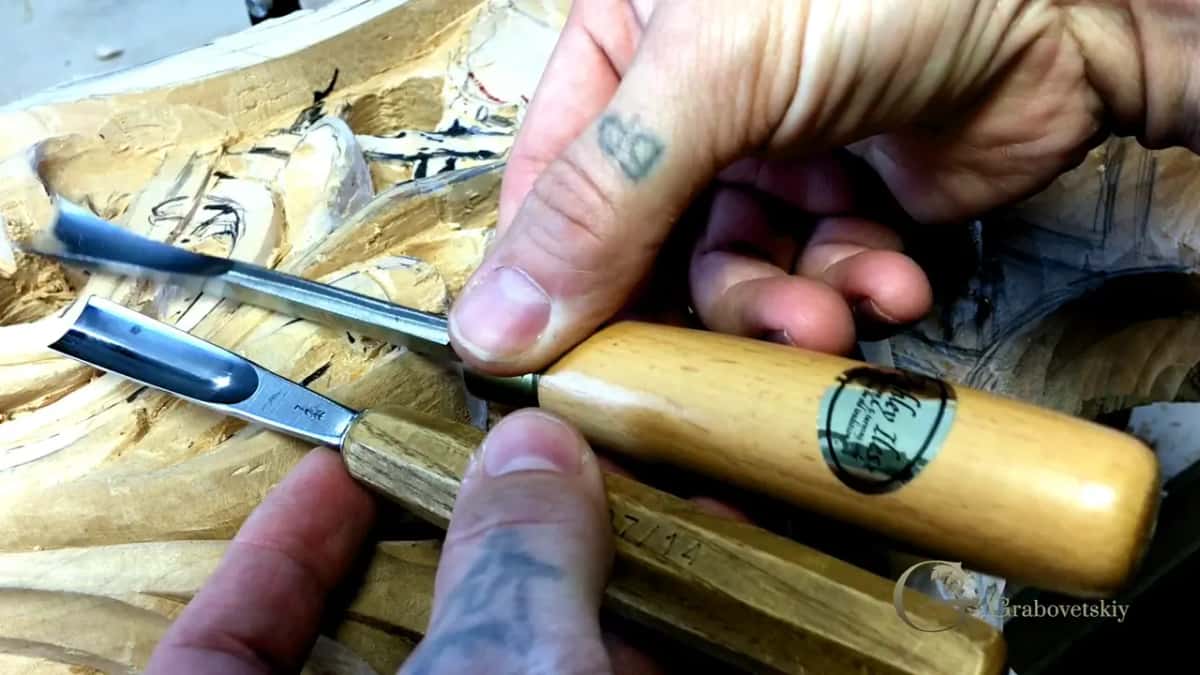
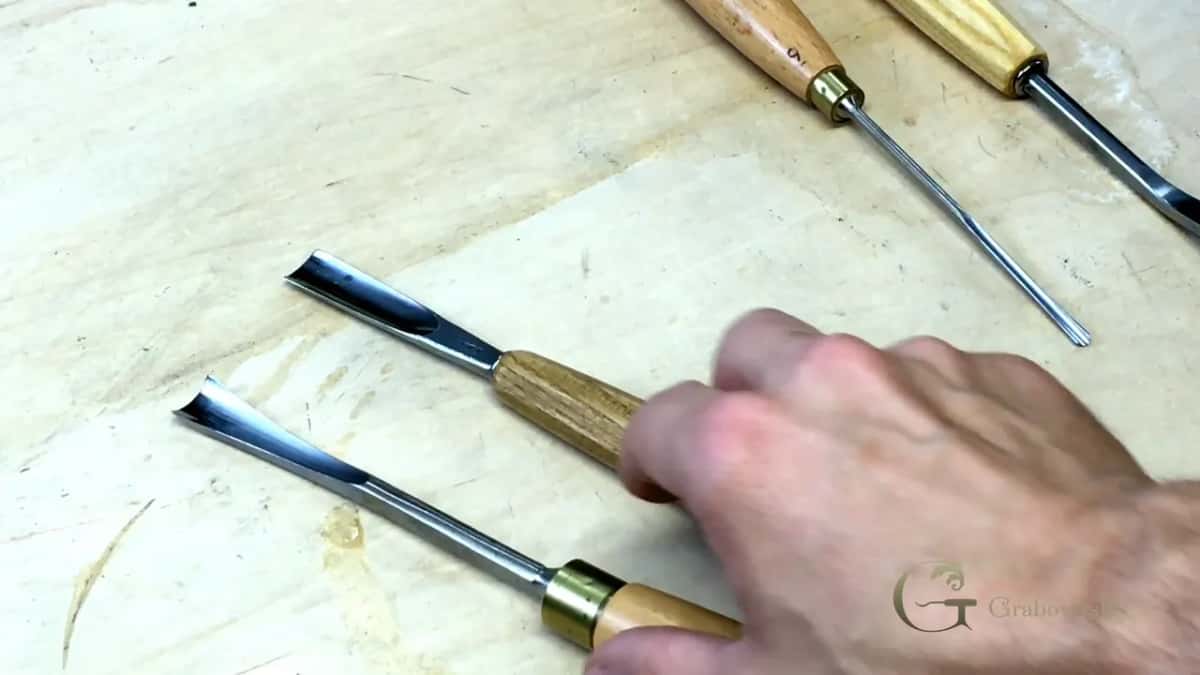
Corners, mostly, and that is why most of my own tools are fishtails. The blade narrows just back from the tip, so the working end can reach into a corner where a parallel sided gouge simply jams against the wall of the cut.
The English maker turns out a great many of them. Lay one beside a Pfeil of the same sweep and something else shows up: the English steel is noticeably thicker. Thickness is strength, and a number 8 from them is a genuinely massive tool. Abuse any gouge and it will break, however well it was made, but there is more metal there to abuse.
How do you check a gouge before you buy it?
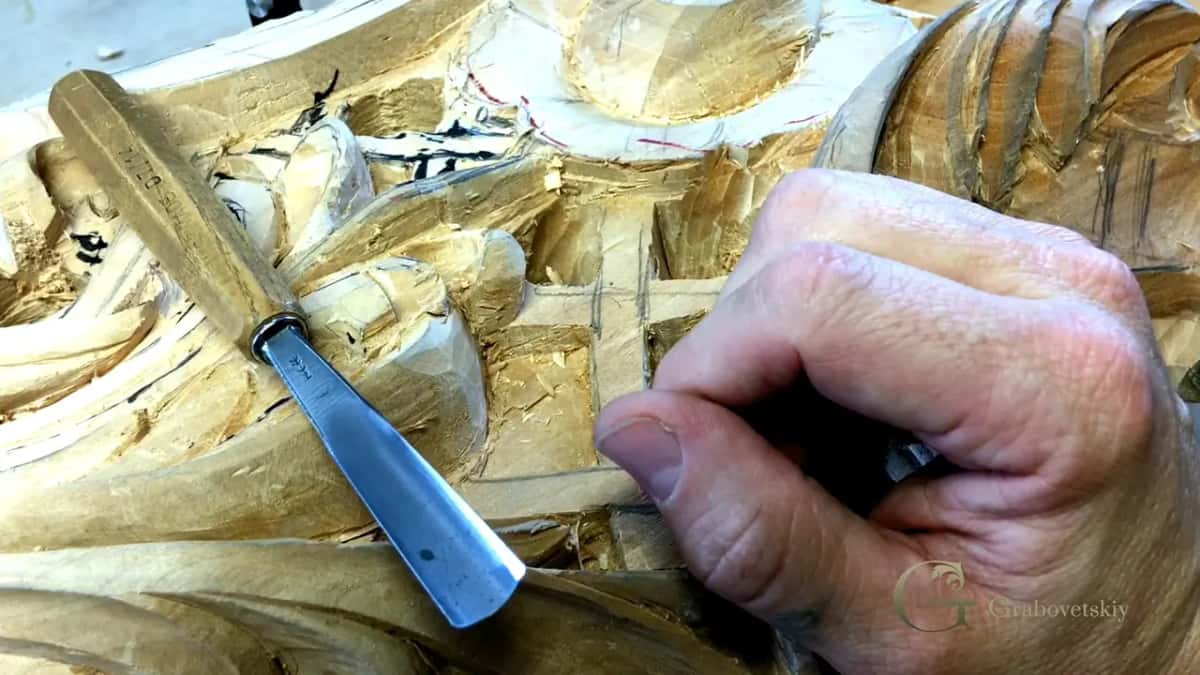
Sight down it and make sure the handle and the blade run true to one another. A tool that leaves the factory with the blade set slightly off the axis of its handle will fight you in small ways forever. Look for it, and then do not lose sleep over it, because it is rarely dramatic.
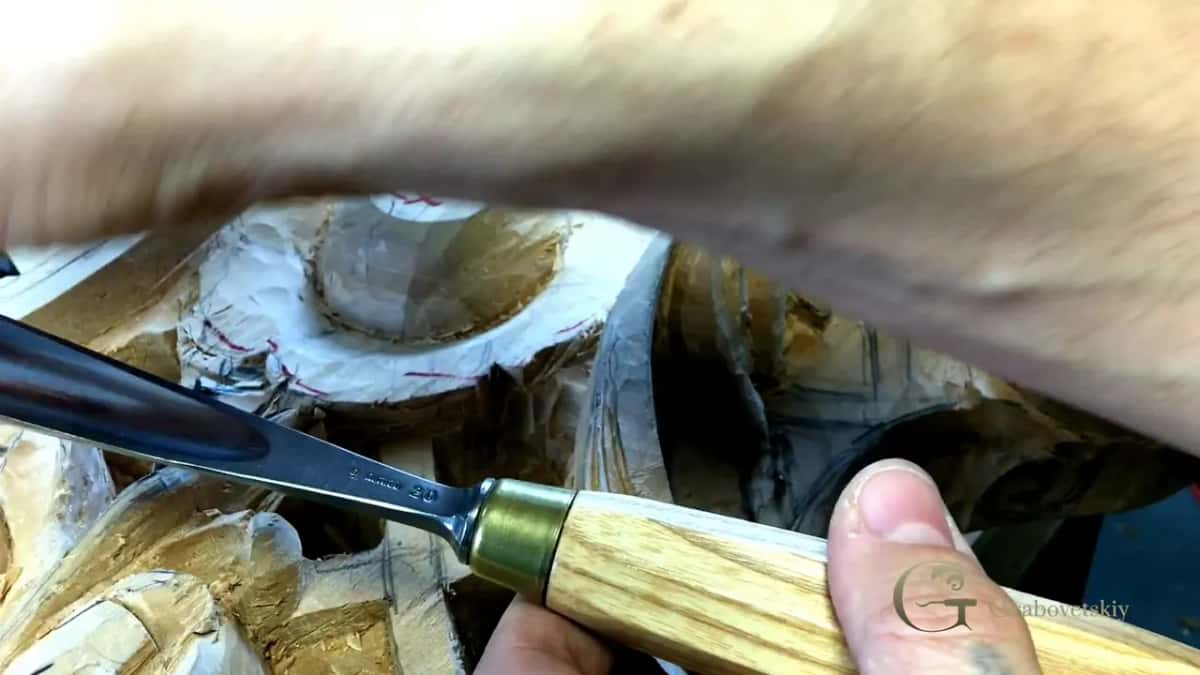
There is a second reason to look. A stamp on the handle tells you the maker and often the sweep number, and learning to read those marks saves you from buying the same shape twice. Beyond straightness, everything worth checking comes back to your own hand. Does the handle fill your palm, or swim in it? And is there enough metal in that blade for the work you actually intend to do with it? Those questions have no universal answer, which is exactly why a shop with three brands on the wall is such a poor place to make the decision.
Why buy professional tools as your first set?
Buying them once is the whole argument, and it changes the arithmetic completely. A professional gouge is not a reward you earn after five years of suffering with a bad one. It is the thing that stops the suffering.
Think about what actually happens with a cheap tool that will not hold an edge. You sharpen it. Ten minutes of carving later you are sharpening it again, and then again after that. Somewhere in there you decide the problem is you, and a lot of people put the gouge down at exactly that point and never pick it up again. That is the real cost, and no price tag shows it to you.
A good gouge will still be carving when your grandchildren own it. Mine have been in daily use for years, and honestly they are nowhere near finished with me yet. Spread the price over that span and the dear tool turns out to be the cheap one, which is a thing every trade knows and every beginner has to learn the hard way.
None of which means you should buy forty of them. Buy three. Buy the three the work in front of you actually needs, and add the next sweep when a carving demands it rather than when a catalogue suggests it.
Which brand would you buy first today?
Auriou, if you can reach the price. The French forge became available in the United States only a handful of years ago, and the design is genuinely beautiful. Octagonal handle again, thicker than Pfeil, and near enough identical in the hand to the English tools, which is the comparison that matters to me.
The steel is tempered to about the same place as everybody else, and the edge lasts a long time. These are professional tools that will outlive you and carve every day in between, which is what my own shelf of tools has been doing for years. Strange as it sounds to recommend a professional tool as a first set, that is exactly what I would do, because you buy it once.
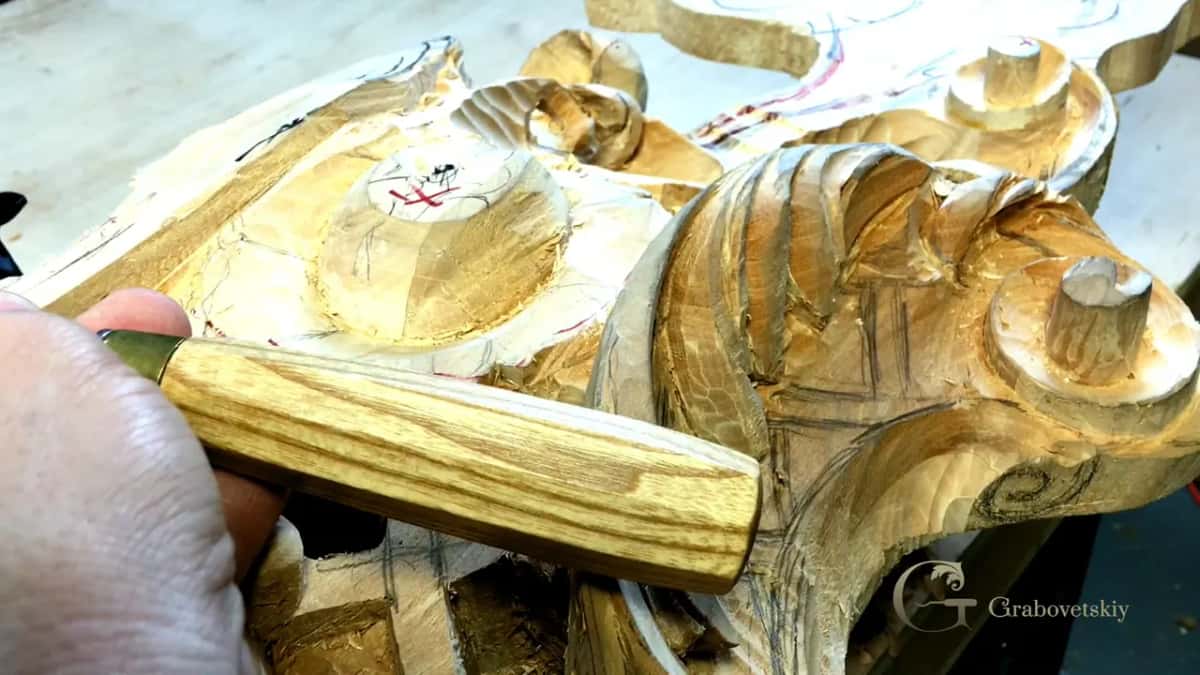
Priced out? Buy the English tools and do not feel you have compromised at all. Nearly everything I own is Ashley Iles, and I have carved acanthus and furniture and architectural work with them for years.
Which carving tools does rust find first?
Mine were the Lamp tools, and I found it out by accident. German steel, sold through Woodcarvers Supply, and I only own micro sizes from them. I would put their hardness somewhere near 58 to 60, though I have never seen the figure confirmed.
They lived on the same shelf as my Pfeil tools, in the same room, in the same air. The Lamp tools showed rust. The Pfeil beside them did not. I cannot explain the chemistry and I am not going to pretend I can, but something in that steel takes up moisture faster, and once you have seen it on your own bench you stop ordering the bigger sizes.
They still carve perfectly well. That is simply not a risk I want on a tool I expect to own for a lifetime.
Can you break a good carving gouge?
Abuse will break any gouge. However beautifully a tool was forged, push it the wrong way and the steel simply lets go on you. Tempered steel is strong in one direction and impatient in the others.
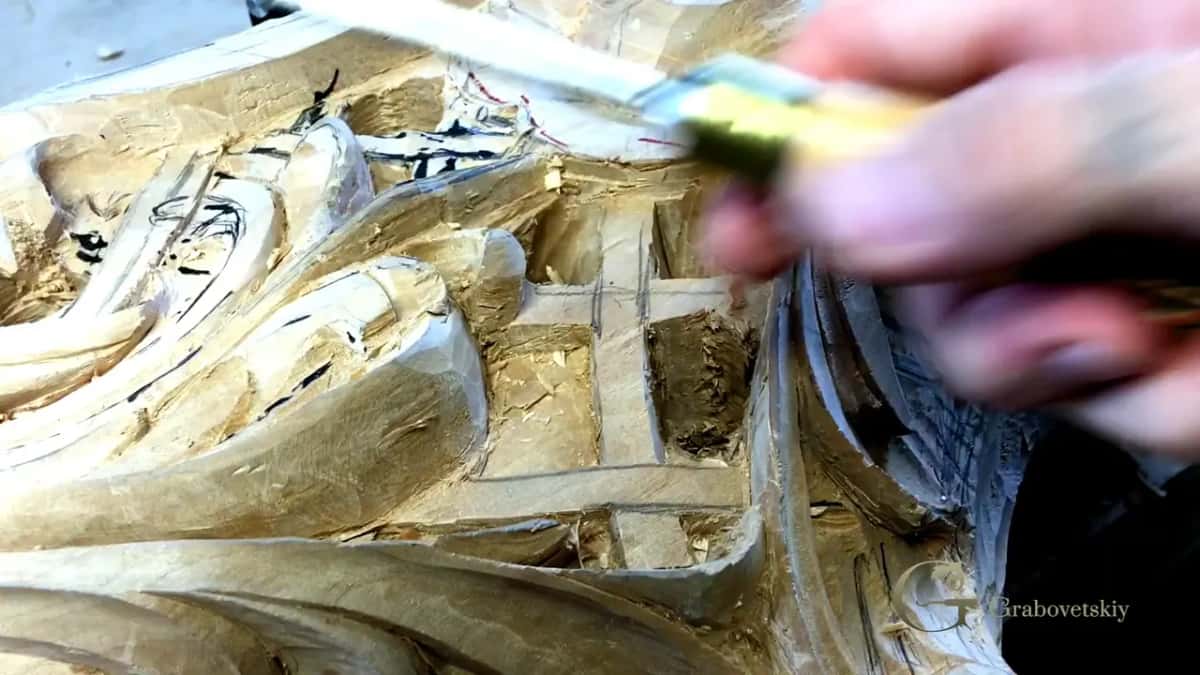
Where thickness does help is the ordinary day. A number 8 from Ashley Iles is a massive thing, and that mass is what lets you drive it through oak with a mallet without any drama at all. Put a thinner blade of the same sweep under the same blow and you are relying on luck more than you would like.
So match the tool to the force. Heavy waste removal and panel work want thick steel behind the edge. Detail near a finished surface wants a small tool and a light hand, and the moment you confuse the two you learn something expensive about tempered metal.
What tools do you use for the smallest work?
English tools again, and specifically the Peter Benson collection made by Ashley Iles. They are not quite micro tools, more a set of small shaping tools, mini chisels and mini gouges, and they will take you into spots your normal sweeps cannot reach.
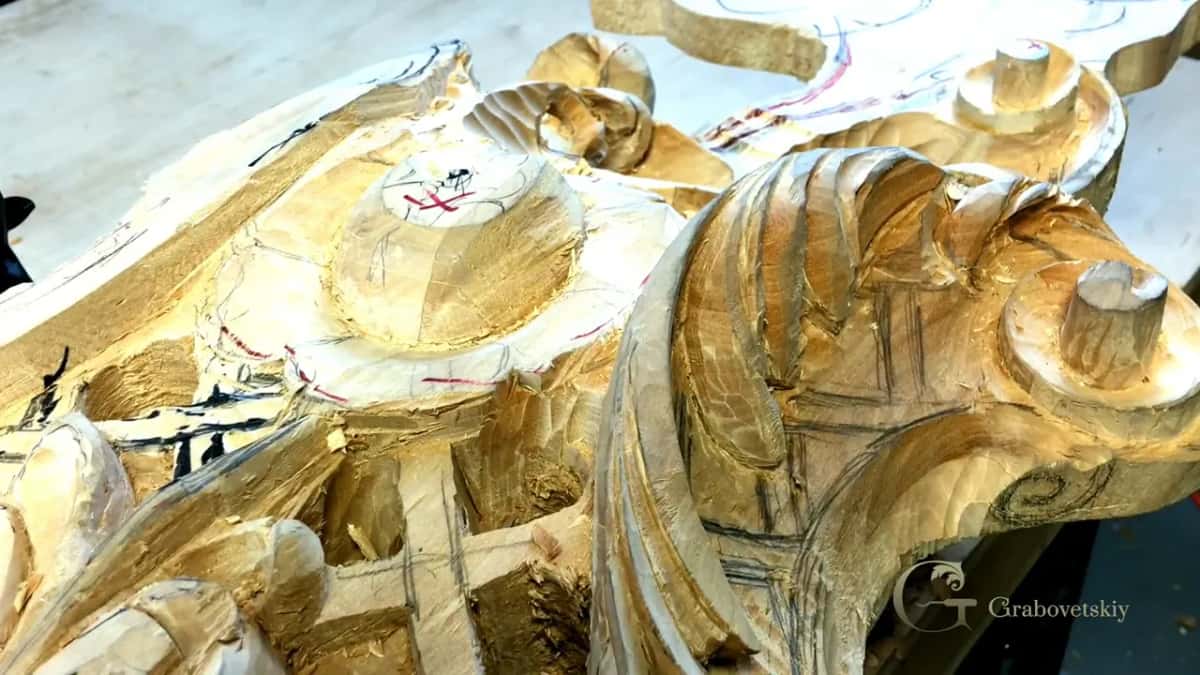
If you are working at that scale, understand that sharpening becomes the whole game. A tool a millimetre wide has almost no steel to forgive a mistake, which is why sharpening micro tools has a lesson of its own, and why the sharpening course comes before the shopping list in my order of things.
Do you need expensive tools to start?
Nothing on this page says you do, and I want to be careful here, because everything above describes what I buy after years of doing this for a living. A beginner does not need my shelf. What a beginner needs is a handful of good tools, sharp, and the patience to use them properly.
If the budget is genuinely tight, there are honest options now that did not exist when I arrived here. I have tested a twelve piece Schaaf set on a real carving and the BeaverCraft gouges and knives on another, and both did the work. Neither is what I reach for daily. Both of them will still carve you something you are genuinely proud to hang on a wall.
Would you buy the same tools again?
Almost exactly the same, yes. If somebody emptied my shop tomorrow and told me to start collecting from zero, the same path would take me to the same three makers in the same order.
Auriou first. Then Ashley Iles, and in practice that is where the money has gone over the years. Pfeil third, and third here is not an insult, because a Pfeil gouge will serve you faithfully for decades and you can buy one in almost any country on earth.
One more thing, and it is the only part of this page that really matters. I owned exactly one gouge when I arrived in this country, and I was already a carver. The shelf came later. It came because the work demanded it, one tool at a time, over years, and not one of those purchases made me better at carving. The design work did that, and the hours did.
So buy carefully, buy once, and then go and use the thing. If you do not know where to point it yet, start here and pick a project.
How it's done
- Sight down the tool. Hold the gouge up and look along it from the handle end. Blade and handle should run true to one another, because a tool set slightly off its own axis will fight your hand in small ways for as long as you own it.
- Close your palm around the handle. An octagonal handle will not roll off a bench; a round one is kinder over a long day. Both claims are true, so hold each shape before deciding which annoyance you would rather live with.
- Compare the steel thickness. Lay two gouges of the same sweep beside each other and compare how much metal sits behind each tip. More steel means more strength under a mallet, and it is the clearest difference between English and Swiss tools.
- Look for a fishtail. A blade that tapers back from the tip reaches corners a parallel sided gouge cannot enter. Most of my own tools are fishtails for exactly that reason.
- Ask what the hardness is. Good makers land in the high fifties to low sixties and publish the number. Anything much softer will roll its edge, anything much harder chips on a knot, and almost every reputable brand lands inside that band.
- Buy few, and buy once. Three good tools beat a drawer of poor ones. Add sweeps as the work demands them rather than buying a large set and then finding you reach for the same four.
Frequently asked questions
How many carving gouges does a beginner need?
A handful will carry you a long way. I arrived in America owning one gouge and one knife, and I was already carving. Sweeps get added as the work asks for them, which is slower and cheaper than a big boxed set.
Are octagonal handles better than round ones?
Round suits a long day at the bench; octagonal will not roll off a surface. Carving daily for years, I have never had a tool roll off mine. A rubber mat solves it completely if yours do.
What hardness should a carving gouge be?
Most respected makers temper into the high fifties or low sixties on the Rockwell scale. Pfeil publishes that range, Ashley Iles states 61, Two Cherries sits close by. Steel is rarely what separates one good brand from another.
What to carve next