
Alexander Grabovetskiy, woodcarver, School of Woodcarving · Published 2021
How wavy should the edge of a carved leaf be?
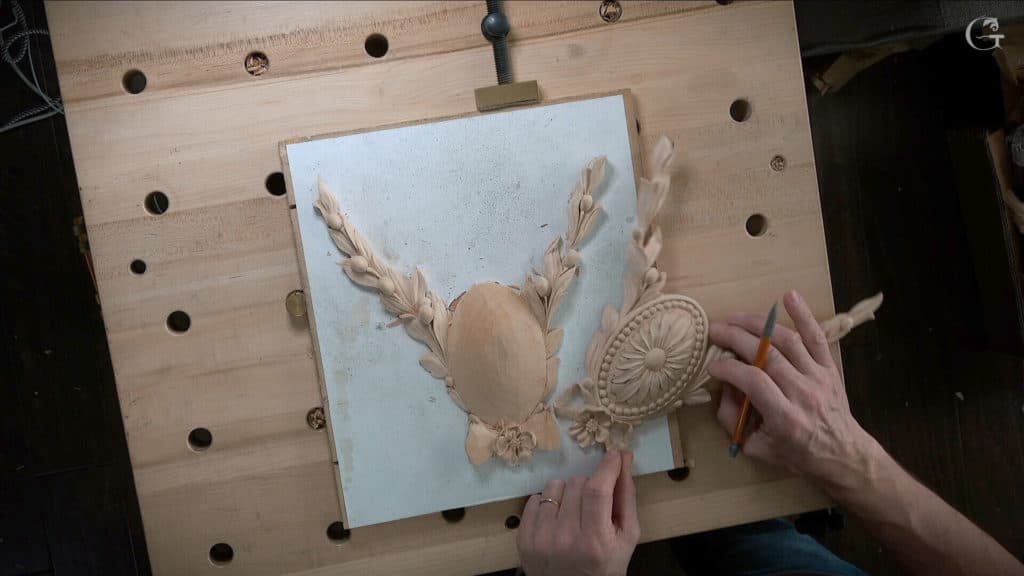
Quick answer: A wavy edge on a carved leaf is a line taken off the perfect arc. On the small leaves of my chamomile rosette, both sides got a slight wave and never a crazy one, because too much would not look nice. My flower petals on other pieces got a lot more.
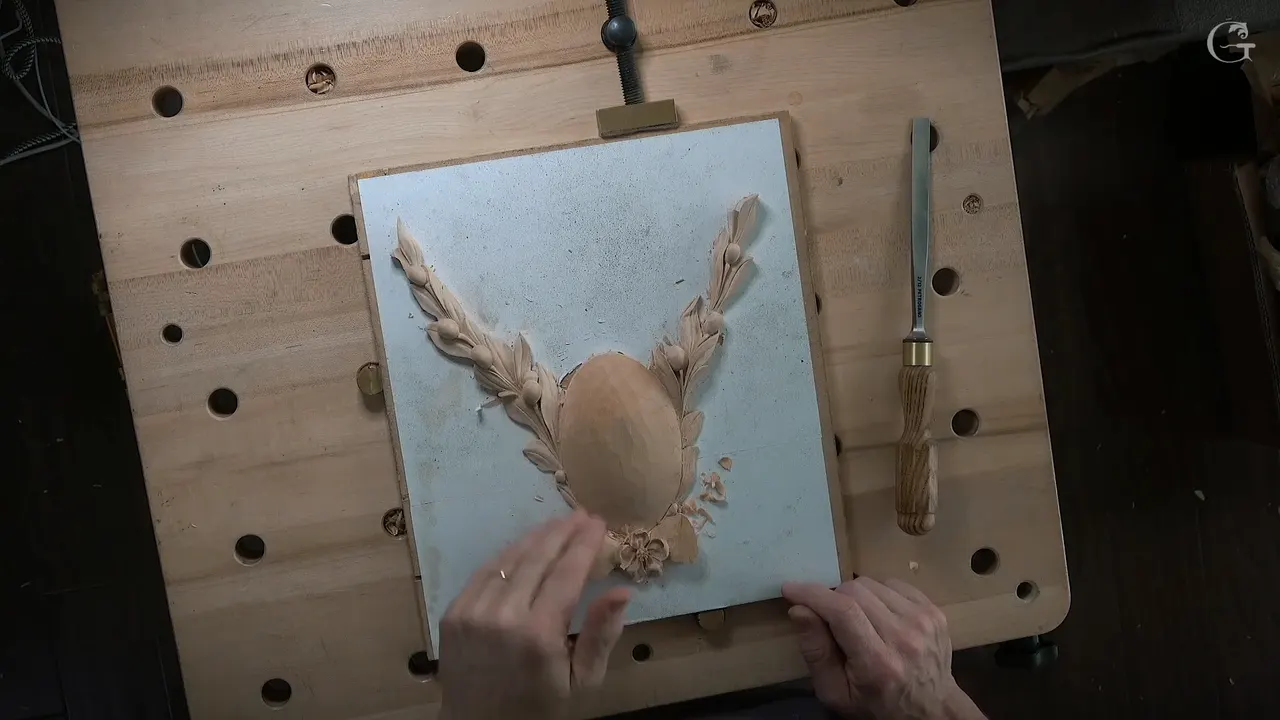
A wavy leaf edge is an outline you keep off the perfect curve, and on the small leaves of my chamomile and bow rosette I kept that wave slight. On wood carving leaves this small, mine got only a little. Lesson 2 is where I said it, going back over the spray for you. That line was no straight arc. I did some waviness, so it looks a lot more natural. Both sides.
Of course, don't be crazy, I told the camera. It's not going to look nice. Just a slight waviness, and a little of it is going to help.
Have you ever looked at a leaf drawn on paper and seen one smooth curve down each side? And have you picked a real leaf and looked at its edge up close? Then the only question left is how far to push it off that curve, and you will get the amounts I used, piece by piece, in my own words.
The core of it comes from that one small rosette. Other pieces of mine fill in the rest, each one named where it shows up.
The amount of wave, in five lines
- Both sides of the small chamomile leaves got a slight waviness.
- I warned that going crazy with it does not look nice, so mine stayed small.
- Really tiny leaves on a lily box got less than the drawing showed.
- Flowers got more, my Hashemi petals most of all.
- A wave can run in the surface as well as along the edge.
How much wave did the chamomile leaves get?
A slight one, on each side of every leaf. My recap came late in this video, after the second spray was done off camera. As far as the leaf goes, it's pretty much straightforward, I told you. That is the shape of the leaf itself. Both sprays carry the same leaf and the same detail, I said.
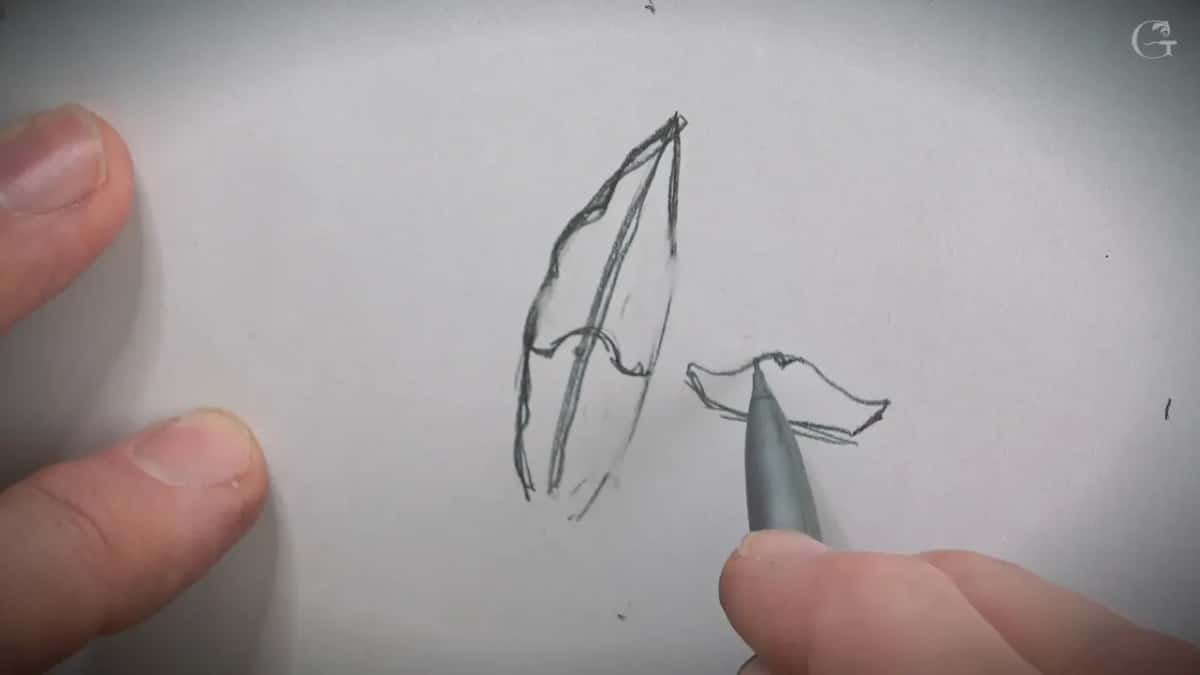
Then I drew one on paper with a pencil. The line was no straight arc, because I did some waviness on it. In the sketch, the wave is a few small bends along the line.
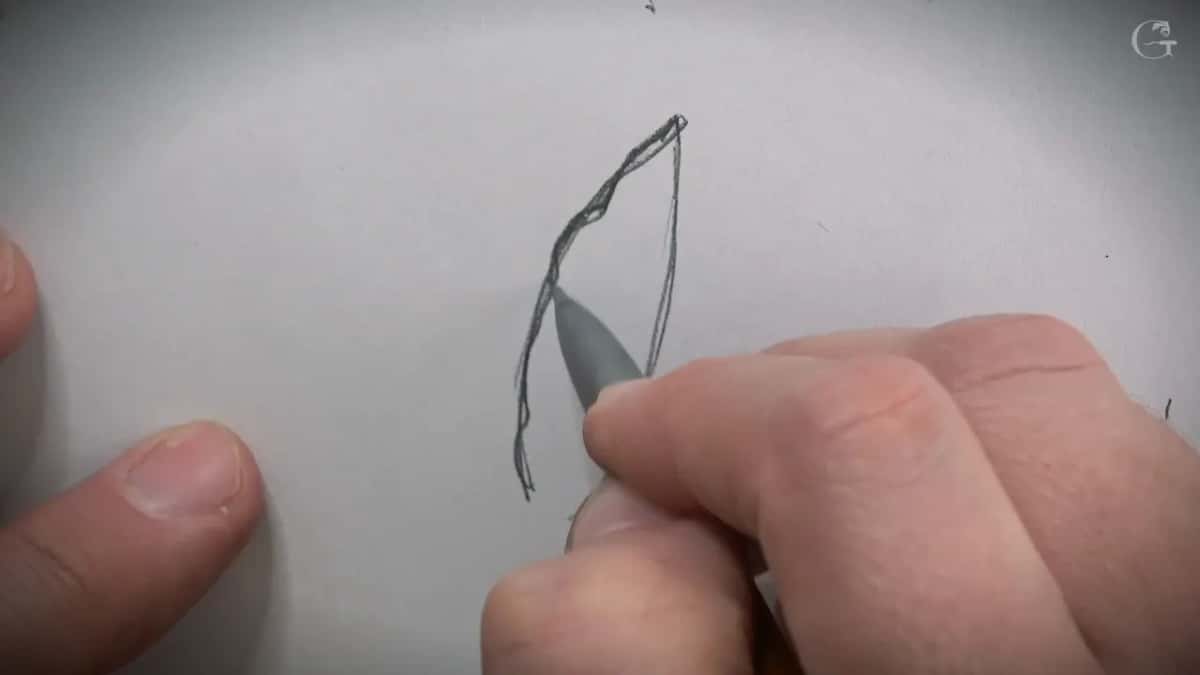
So how much is slight? This video puts no number on it in millimeters, and I won't make one up for you. What the camera shows is a pencil edge that wanders a little.
Next in that recap came the groove inside, a concave cut, and the rest of lesson 2 deals with that part of the leaf.
Why not keep the edge on a smooth arc?
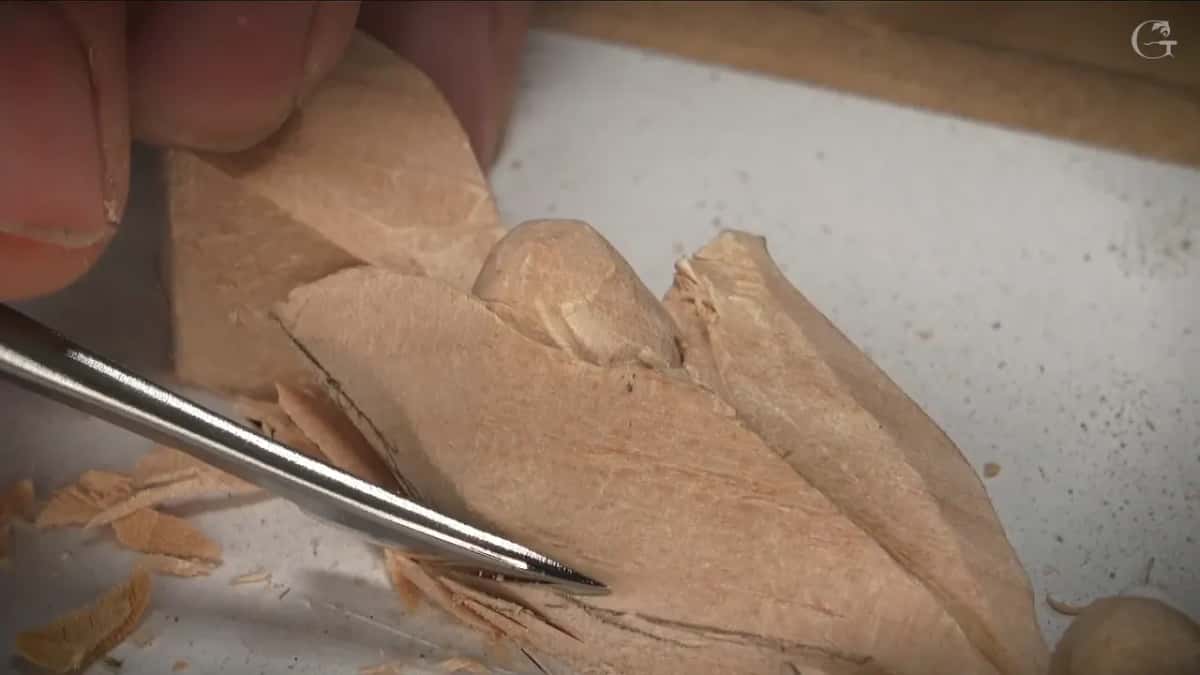
A smooth arc doesn't look natural to me, and natural is the word I used for the chamomile leaves. The same rosette has a middle part, the rosette itself, and I didn't want its edge really straight either. I wasn't going to touch that edge yet, I said, but it would not stay straight. Some movements, some waviness, with a small tool, was what I wanted there. It's going to give me a more lifelike look, I said.
On a Venice Room flower I said it plainly, going around some of the spots on it. It doesn't have to be completely symmetrical all around, because that won't look nice. I really like the idea of being wavy when I'm carving flowers, because you're never going to find any perfect shape in nature, in creation. Waviness is only a plus, I said, so it doesn't have to be perfect. On that same flower I chopped the wavy edge toward the center, and said that makes it a lot easier later on.
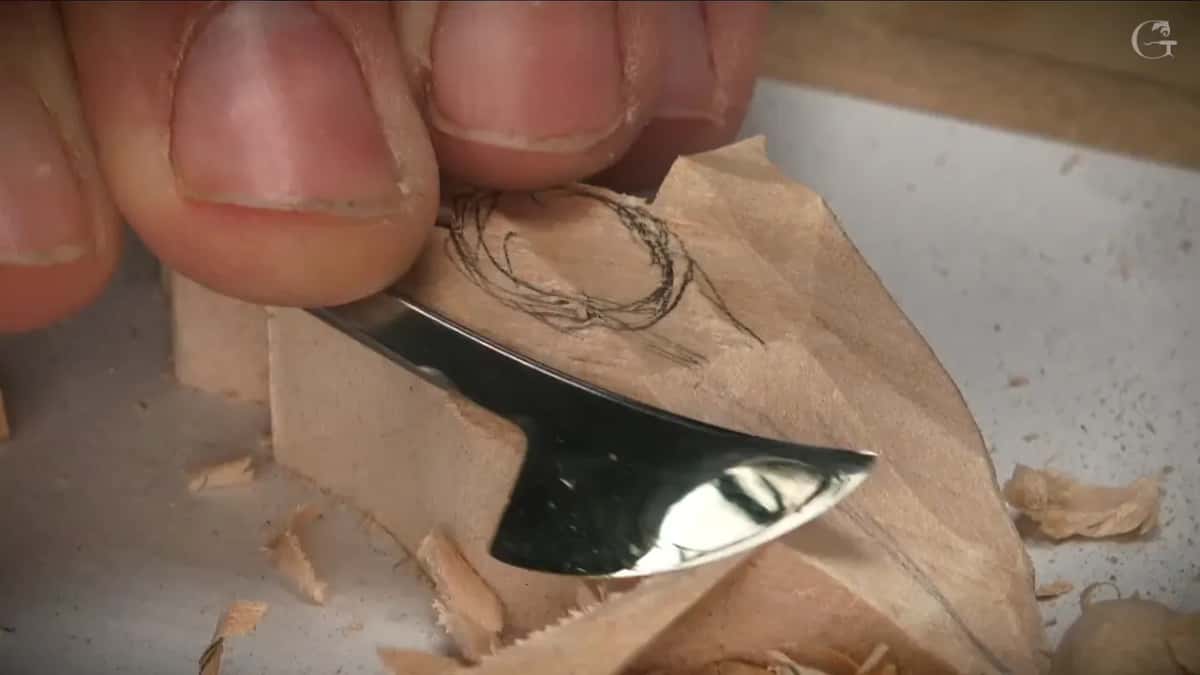
My Gibbons class in Maine heard it another way. I don't really like to see any straight lines. Two straight lines sat right there on that little flower, and I pointed them out. In an earlier Maine class, on a leaf this time, I said I want to see waviness overall.
On a floral panel with a molding, the divisions came in five, and the separations could differ in width. The main idea, I said, is not to make a straight line. Make it wavy. If you make it wavy, it will look nicer, and a number 5 could do it there, carefully, because it was a really tiny spot.
When is it too much wave on wood carving leaves?
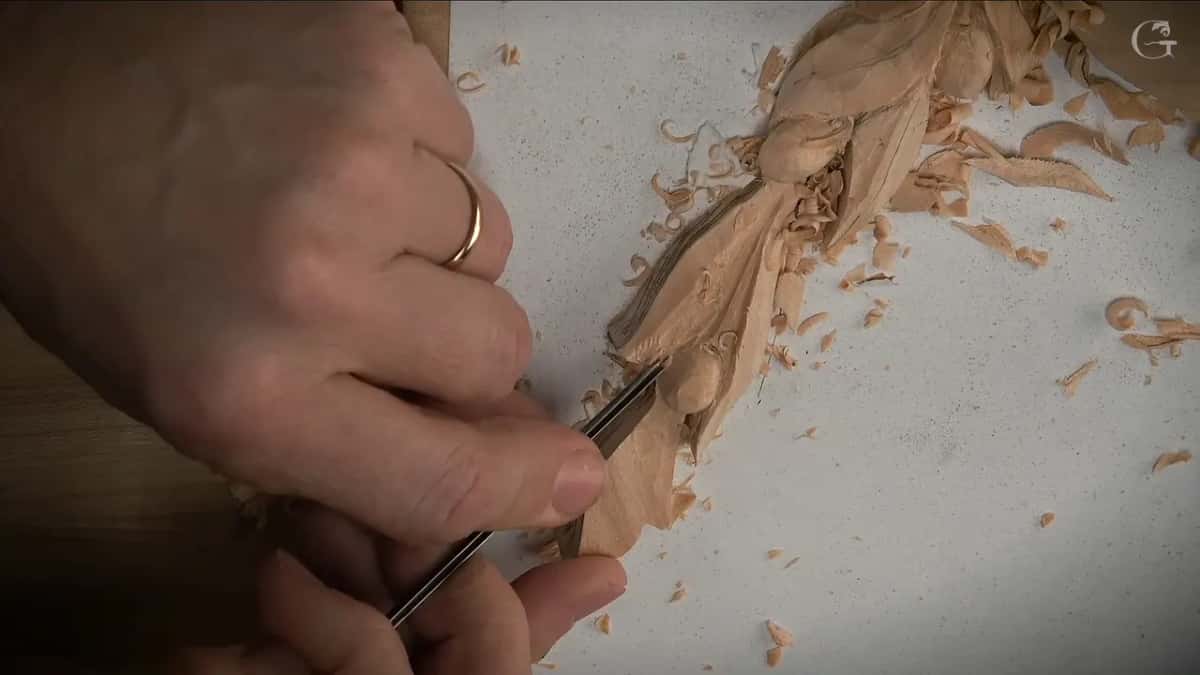
When it stops looking nice, which on the chamomile leaves meant anything past slight. Don't be crazy, I said there, because it's not going to look nice. I meant each side of the leaf, too.
Tiny leaves on my lily box got less. A couple of small ones sat under the flower there, and I said those tiny leaves make a big difference too. Redrawing them, I gave one a small wave, then a separation, then a small wave again.
Later in that same video I was about to recreate the middle line of one with just a pencil, and my drawing showed a little wavy line there. I said I wouldn't do too much waviness, because those leaves are really tiny. I'd make it more tangent to that movement, that direction, I said, and give a little concave on one side using a number 7.
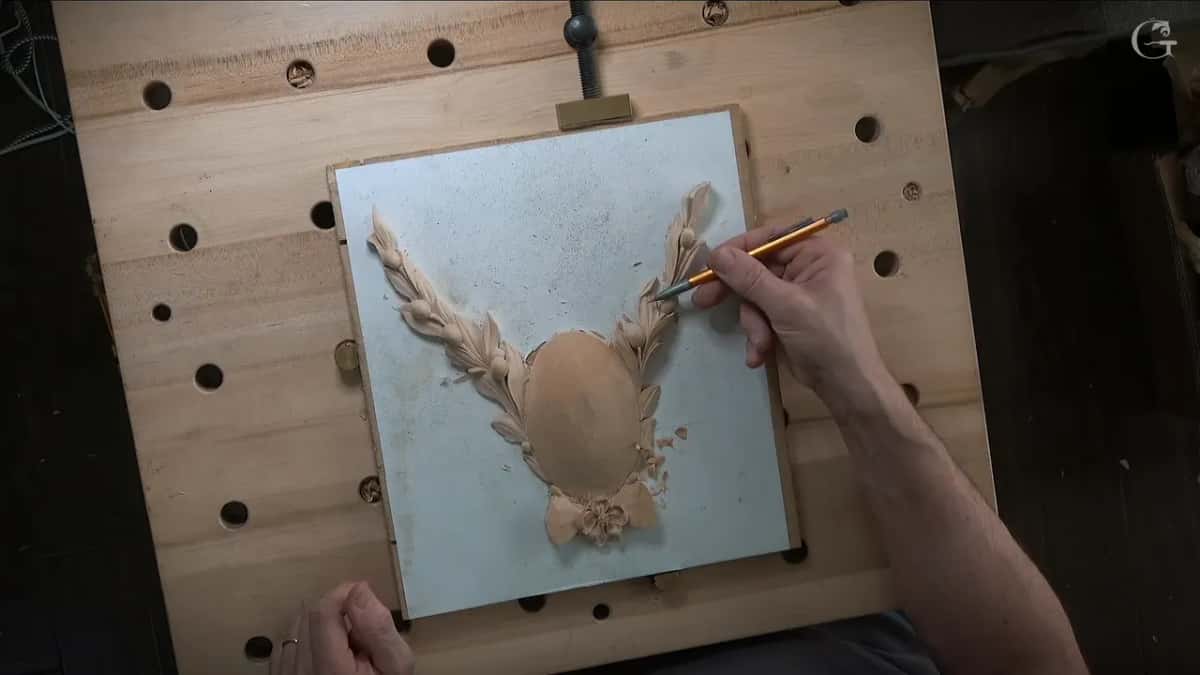
Earlier on that same layer I changed my mind on camera. I'm going to make it some more wavy, I said. Then, well, actually, it would stay approximately the same as I drew, according to the original design. There are not too many waves on that side.
Over a furniture panel, a number 7 made the edge of a flower wavy. Just before that, I said it was really important not to lose the central movement of that flower. Don't overdo it, I said, because you don't want to damage the leaves below. That reason is about the leaves underneath.
Even over flowers I caught myself. Naturally, when you look at the flowers, they're all wavy, I said in my Hashemi flowers course. Well, not all. I shouldn't say all. Some of them are not as wavy.
Do flowers get more wave than leaves?
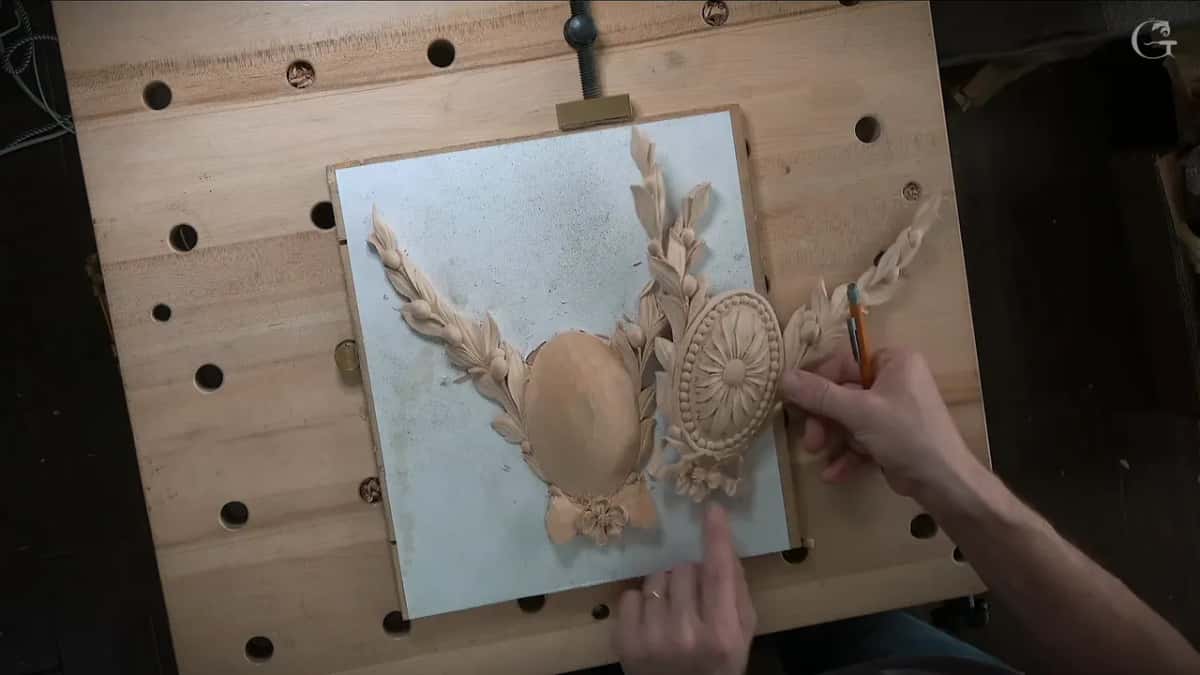
They did on the pieces I'm quoting here, and on one course I made it part of the idea for every petal. Moving on to the next petals of the Hashemi flowers, I said you just repeat the same idea over and over. As wavy as possible, as deep as possible, and as clean as possible. Those three main things.
I kind of like that waviness, unevenness, and so on, I said. It just looks better, in my opinion. To get one petal wavy there, I first took away the petal below it, so a kind of wall would let me take the wave as deep as possible.
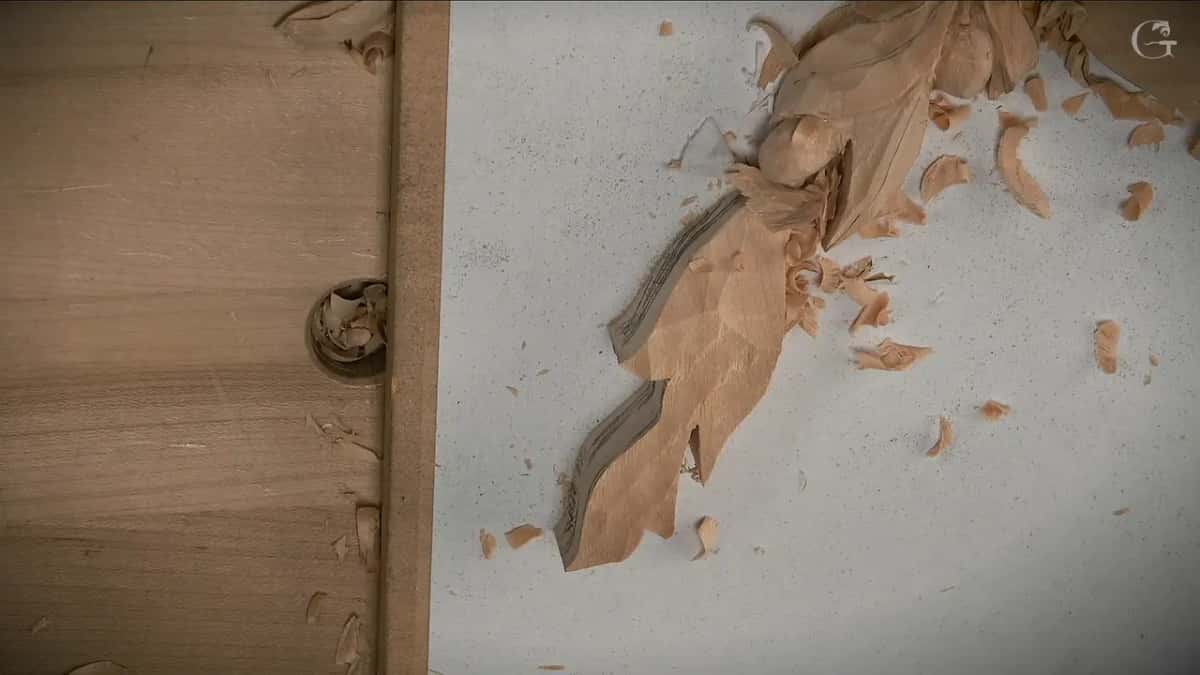
My Venetian Flowers Rosette had a flower line that looked like an arch to me, and I gave it some waviness. Since it's a flower, I said, I need to make sure it looks different from those leaves.
The floral panel had the same thing. Once it's undercut, it'll look awesome, I said. But I didn't like that it wasn't wavy enough, and I put in some waviness a little more. There's no end to what you can create with those flowers.
Put the Hashemi petals beside the chamomile leaves. For one I asked for waves as far as I could take them. For the other, just slight.
Does the wave only run along the outline?
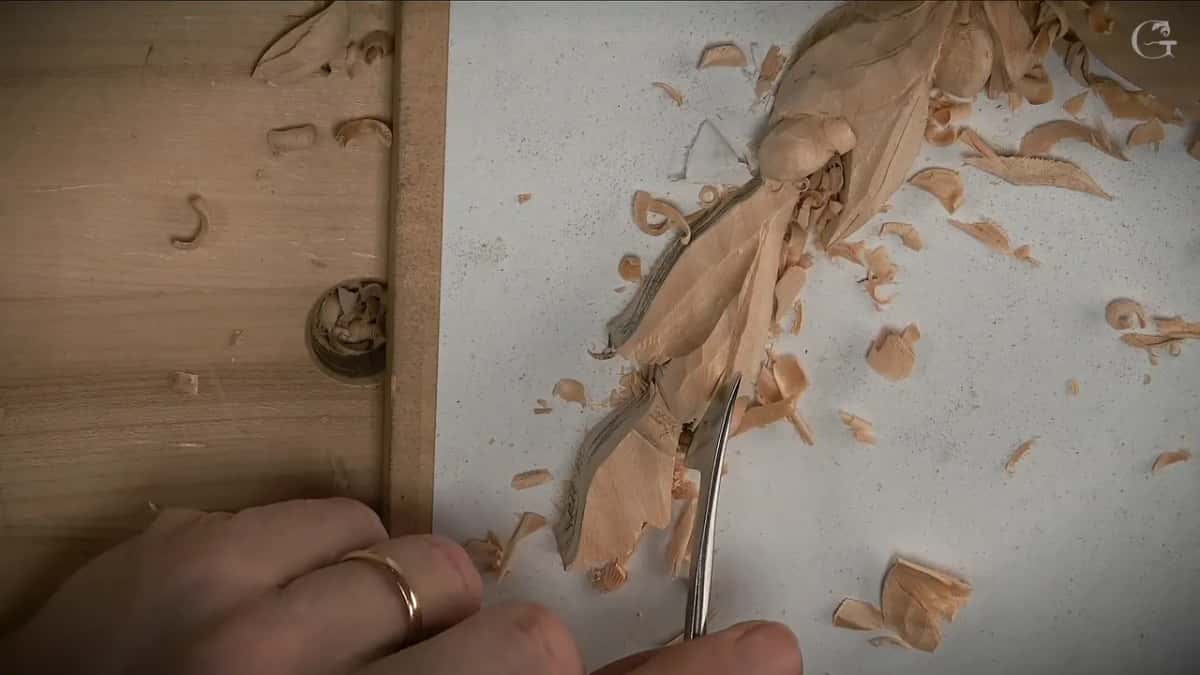
A small flower in my Grinling Gibbons class got a wave in its surface too, along with the edge. Early in that video I said I'd give it the same kind of waviness as the outside of the big one, exactly the same on a small scale. I told you I really like waviness, I said in that Maine class. A micro tool, about equal to a number 8 or a number 9, worked my edge bit by bit to make it somewhat wavy. Can you see that wave, I asked, but also on a level of that surface? The flowers were too small to show it well, I said.
In my first Venice Room workshop, the drawing showed waves on some future leaves. I wasn't even going to worry about that waviness yet, I said, because it would be a big mistake to just outline it. It's going to be three dimensional. Some go downhill, some uphill, and the form will change. Better to work on those details later, I said. Right now it's not that important, because the flowers in that project are more like a free form.
Over a later Venice Room piece, leaves had to feel like they go both directions. They would not be just straight leaves, I said. Some waviness goes on the inside, and the parts that stick out get waviness too. The main stem, I said, would sit somewhere right there on the inside.
On the floral panel I even put some waviness where one leaf was going to touch my acanthus leaf. The chamomile spray already rose and dropped in relief long before my recap, and the next section shows how.
What did the leaves go through before any wave?
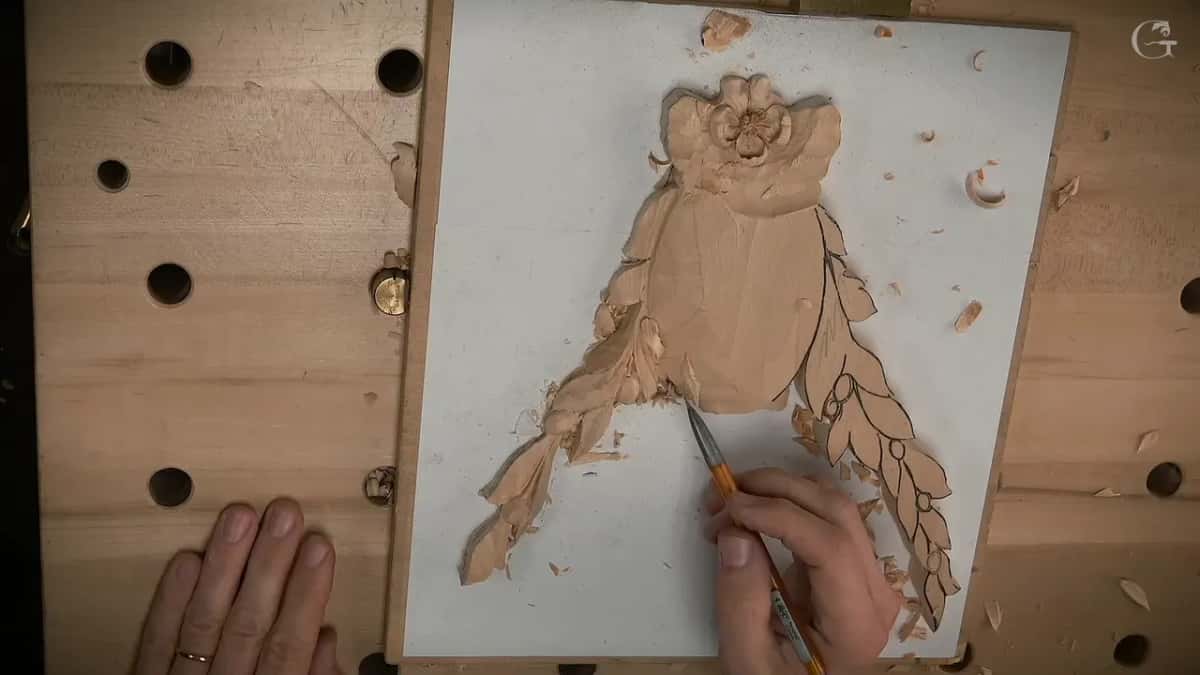
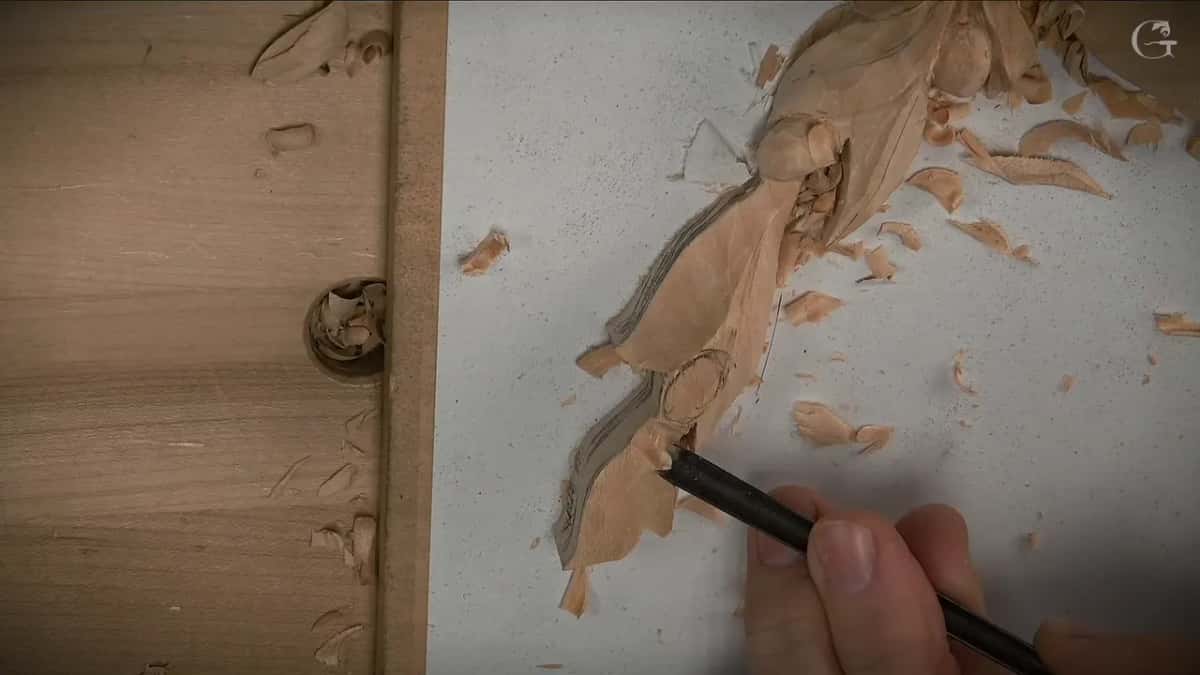
Plain shaping, on the spray's last part. This video opens on that last part, and I said the overall thing would be raised up there, since a molding goes there, and the end has to go right on top of it. A lot of it would come off, I said. Just the middle part would be removed there and the rest would remain, and in my understanding it would look much better. I had already done one like that, so I knew exactly what I was talking about.
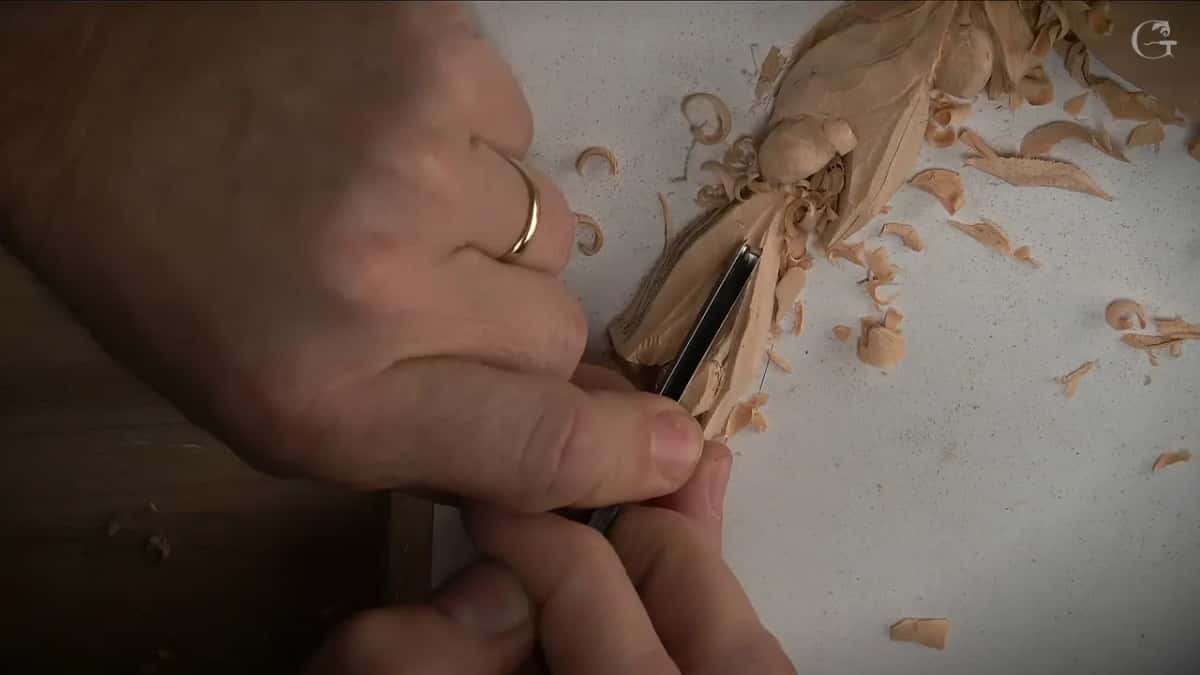
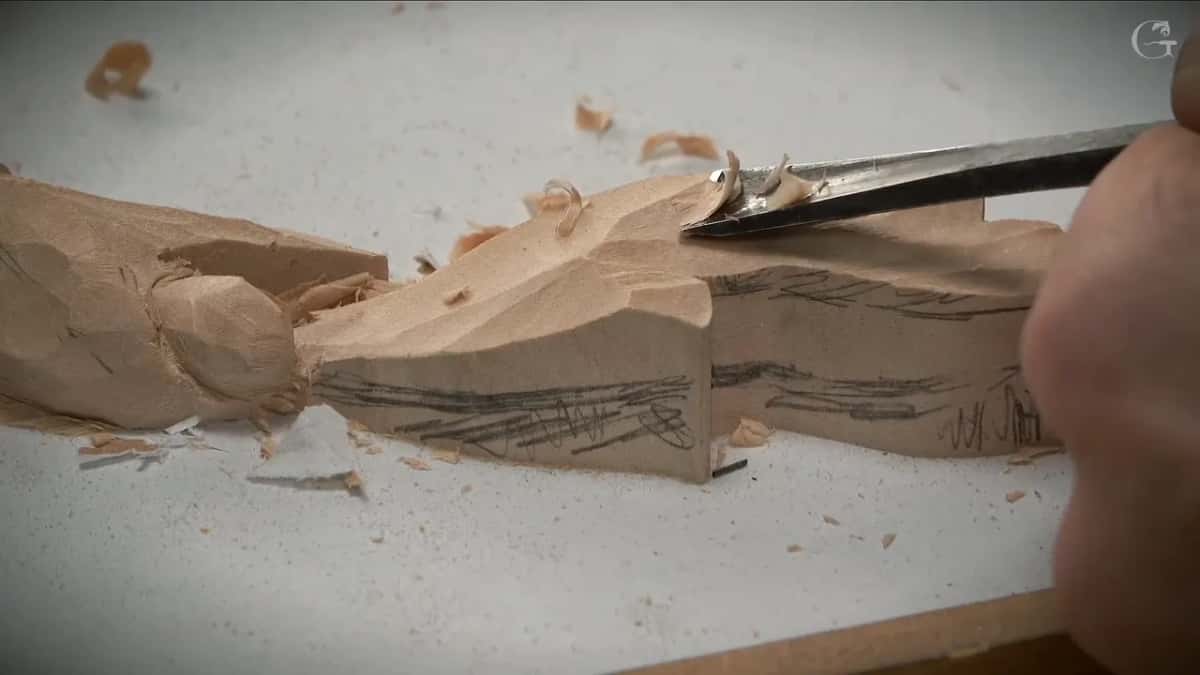
Next, I drew again whatever I lost. I wanted to expose one element and remove the ridge of the next one, so it would drop, and I said I could probably use my skew-like tool to do that. It would help if I attacked from the right position, I said. One went that way, and I did the other in the opposite direction.
Part of it needs to be lower than the main element, I said, so I went in right beside it. After that I outlined the other side. One leaf I could do at almost the same height, I said. That same tool gave it a preliminary shape.
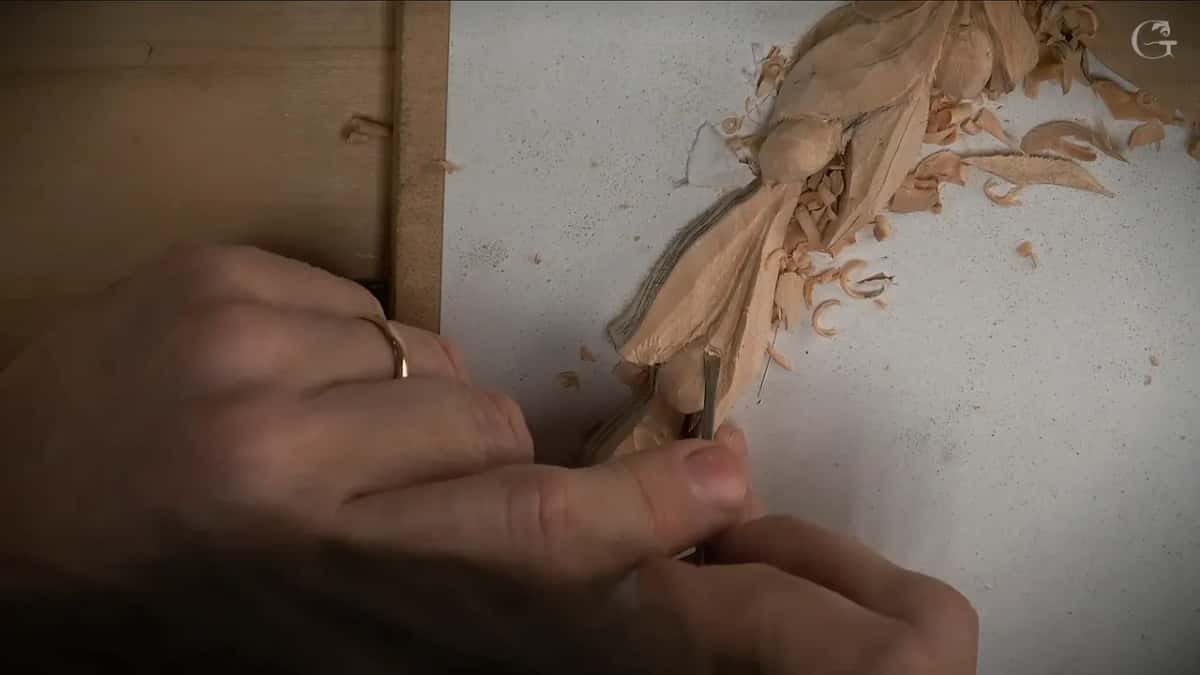
Much later I stopped to decide how that end would look, and then another tool of that kind took out more material. It works like a skew, a kind of chisel, and I said in this lesson that I really like to use the skews. The wave only came up in my recap, once the second spray was done.
Should the waves be in your drawing?
In my Hashemi flowers course I asked for them from the pencil on. I was starting separation cuts using a number 16 V tool, and I asked for as much waviness as possible. Later on we would set different movements in the flower. But even when you draw, I said, don't create a really true arc.
Try to follow whatever you drew, I said, and I meant the natural waviness. And if that's almost impossible for you, that's okay. Don't worry about it. Try your best.
A few minutes later I came back to it. Get the waviness in from the beginning, I said. You can fix it later on, I know, and it's not a big deal, but if you can do that from the first cut, preliminary waviness, why not do it?
Waves helped me on the lily box's first layer. That's wavy leaves, I said, which makes it a lot easier for me. I don't worry about accuracy. Later on, other leaves meant I had to be a little more careful.
Which piece got how much wave?
The Words column holds what I said on camera, cut down to fit, and the full lines are in the sections above.
| Piece | Words | Amount | Reason |
|---|---|---|---|
| Chamomile rosette leaves | I did not keep a straight arc | Slight waviness | It looks a lot more natural |
| Lily box leaves | My drawing showed a little wavy line | Less wave | Those leaves were really tiny there |
| Gibbons class flower | A wave on the surface level too | Edge, surface | I really like waviness, I said |
| Hashemi flower petals | As wavy, deep and clean as possible | The most | Those were my three main things |
| Furniture panel flower | Waving at the edge, but don't overdo | Held back | Don't damage the leaves below it |
The chamomile leaves sit near the gentle end of that list, with a slight wave and nothing crazy.
Where does your own leaf edge start?
With one leaf. Got a small leaf on your board? A pencil in reach? Then wave both edges a little, and stop at slight, the way I did on the chamomile spray.
The whole spray, with its stems and berries, is in lesson 2, and the rest of the rosette is laid out on the course page. Tuition and Access sit together on one plan page.
How it's done
- Get the plain shape. Shape the leaf itself first, the way my recap on the rosette began.
- Leave the arc. Neither edge runs as a straight arc.
- Wave both sides. Each side gets a little waviness.
- Stop at slight. Keep it small, because a crazy wave won't look nice on leaves like these.
Frequently asked questions
Should both edges of a carved leaf get a wave?
Both did on my chamomile spray, and each one got only a slight amount. Going crazy with it would spoil the look, I warned. The recap where I said this came late in the video, once both sprays were carved.
Do tiny leaves need less waviness than the drawing shows?
Mine did, on a lily box. The pencil line I had for the middle of those leaves was a little wavy, and I said I would not do too much of it, because they were tiny. A number 7 was my plan for a small concave on one side.
Are carved flower petals wavier than leaves?
In the Hashemi course I asked for petals with all the wave, depth and cleanness I could get. For the chamomile leaves I asked for slight. A flower on a Venetian rosette got its own waviness so it would look different from the leaves near it.
What to carve next