Part of Let me introduce myself
The full video lesson is inside the school.
Alexander Grabovetskiy, woodcarver, School of Woodcarving · Published 2020
Quick answer: Woodworking against wood carving is, in my own shop, machines against hands. My firm did cabinets, floors and finished carpentry for whole houses on heavy equipment, while I carved for clients beside it. After a few years the carving, done by hand with gouges like the number 11 in this lesson, became my full time work.
Woodworking vs wood carving is a split I lived inside one business, where my firm built kitchens, floors and trim on heavy machines and I carved beside it by hand. I use the two words almost as one, all through this talk. I even named it Lockdown Woodworking, and then I carved through the whole of it while I talked.
So which one is it? For a long stretch of my life it was both, and I'm going to be honest with you about where one stopped and the other one started. By the end you'll know which of the two is going on at your own bench.
My woodworking firm built whatever a house needed in wood.
Carving ran next to it for years, for clients who wanted carved work.
Design for carving is a little different, and I mention a class on just that.
My carving classes started at a woodworking school.
Woodworking in my shop meant anything made of wood that a house needed. I came to the United States with no English, lasted only a little while on my first job, and then had another problem to solve. How am I going to support my family? What am I going to do? After a little while I started a woodworking business.
Kitchen cabinets, flooring, all the trim work and the finished carpentry went through that shop, and for a while we were even building houses. We did good, and we grew in that business world. The firm ended up in the top 4% of woodworking firms up north.
We had to be good in everything, otherwise we wouldn't survive. For years I did whatever pays the bill, if you understand what I mean. If somebody came in and needed a kitchen, I did the kitchen, and it was a really high-end kitchen. So for years I did the cabinetry.
The shop matched the work. It was a big commercial shop full of heavy equipment, and nothing like a small wood carving shop. Think of big sliders for the cabinets and huge belt sanders.
I came first to Grand Rapids, Michigan, then moved to Goshen, Indiana, Amish country, and I became friends with some of the Amish there. I hired highly skilled carpenters and woodworkers who couldn't find good jobs because of the language barrier, so they could feed their families. Some stayed with me until I moved to Florida and had to start all over again. That story wasn't funny either, and I don't tell it here.
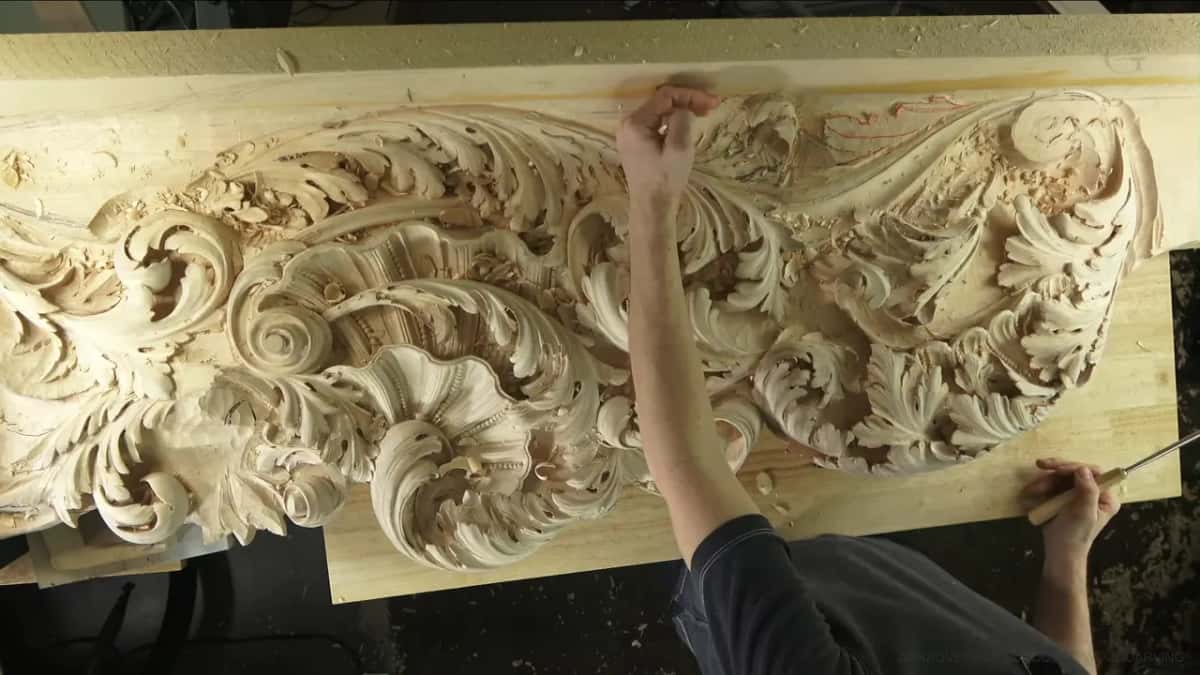
Carving sat right beside the firm for years. While the shop built kitchens and houses, I was carving for clients, and that went on for a long time. Mine was a woodworking business with a carver in it, and the carver was me.
A friend of mine who owns a woodworking business once told me that lots of people in the world can build cabinets, but not too many can carve wood, and he asked why I didn't put the carving first. It still took me a few years to see he was right. Another day a famous woodworker I have known for over 20 years came to my shop and asked why I didn't do just the carving, and how many production years I have in my life, and I said, maybe. I won't say his name, because I didn't ask his permission. The rest of that turn is in the full story of who I am, and the money side of it is in a lesson on making a living from carving.
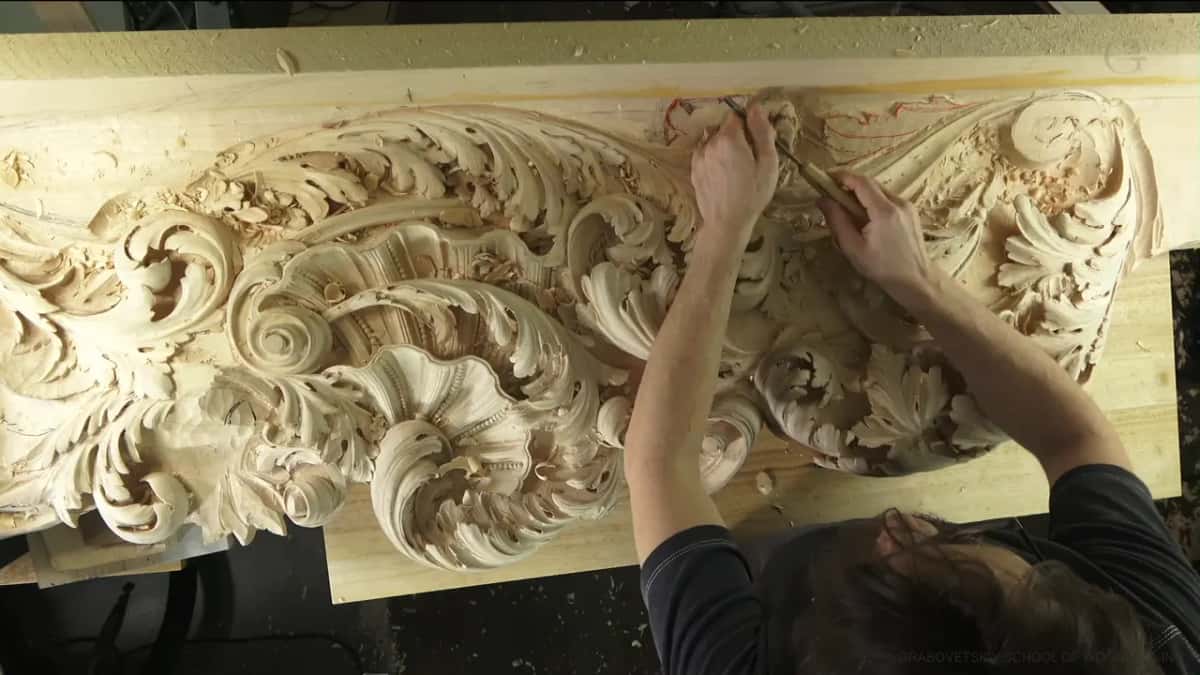
Yes, I am a woodworker, and yes, I had a big shop before. I said it on camera in this lesson. But I guess carving won over all the other woodworking skills I had, and after I sold the heavy equipment I got so busy with carving alone. I believe I became successful in carving too. You can agree or you disagree, and either way is okay with me.
Look at the words I used there. So by my own words, wood carving counts as one of the woodworking skills. The line between carving and sculpture is a different question from this one.
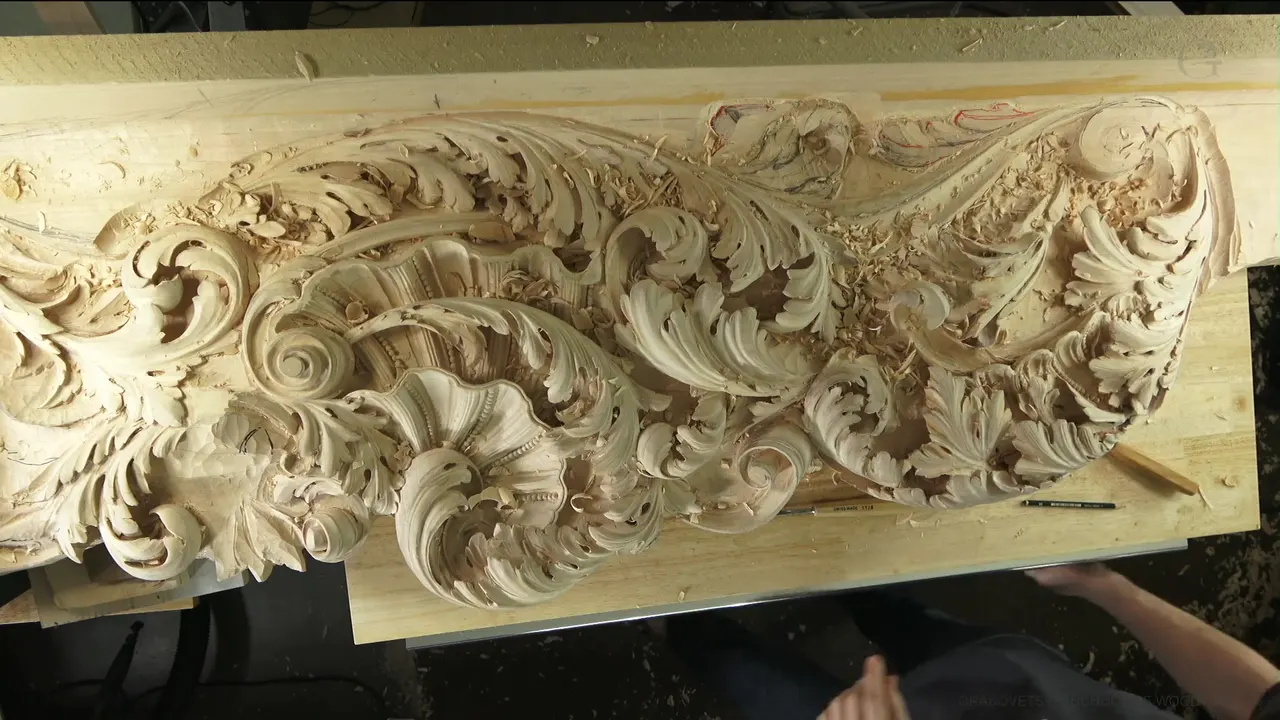
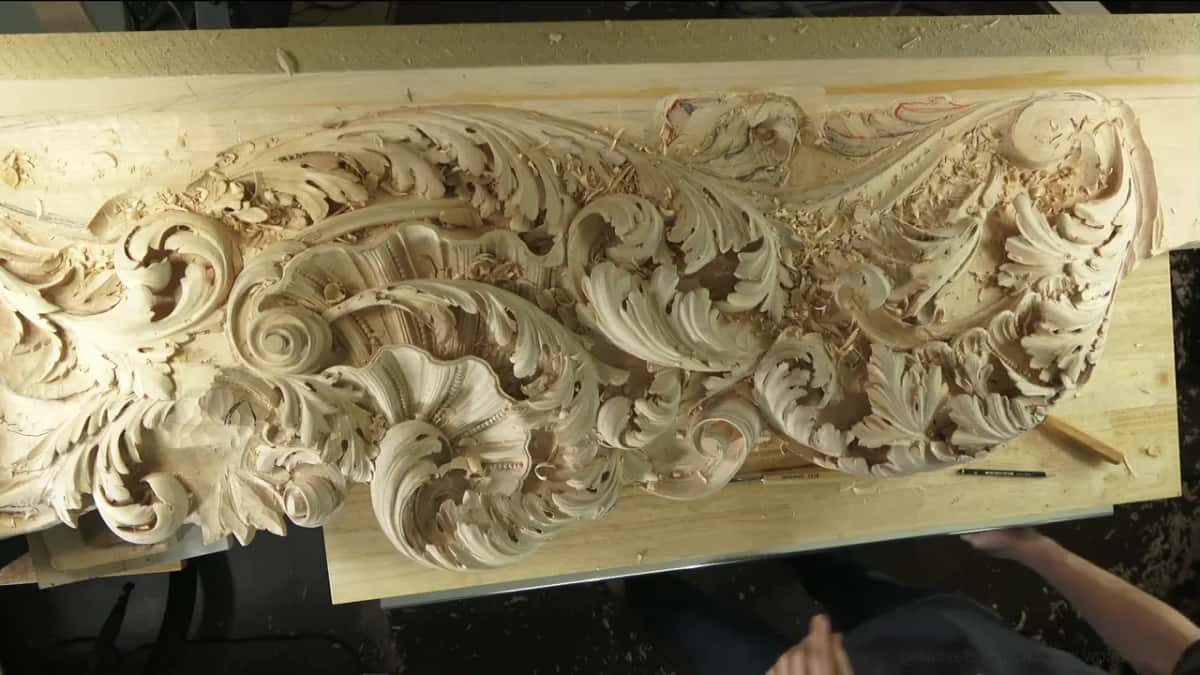
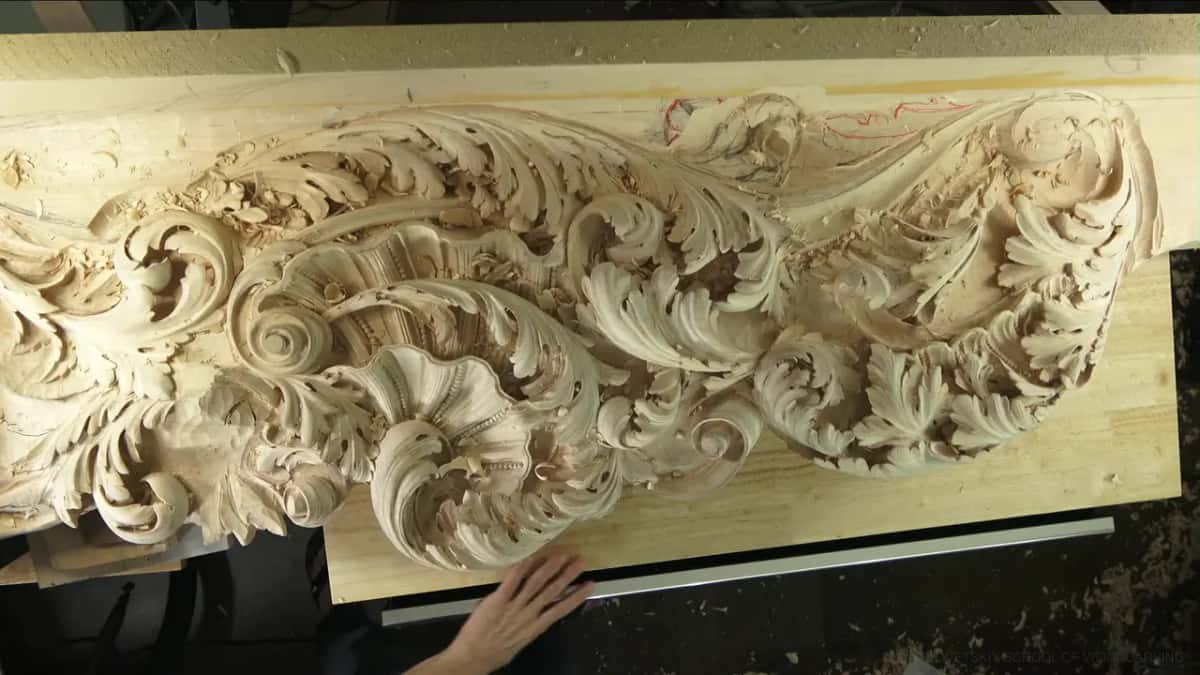
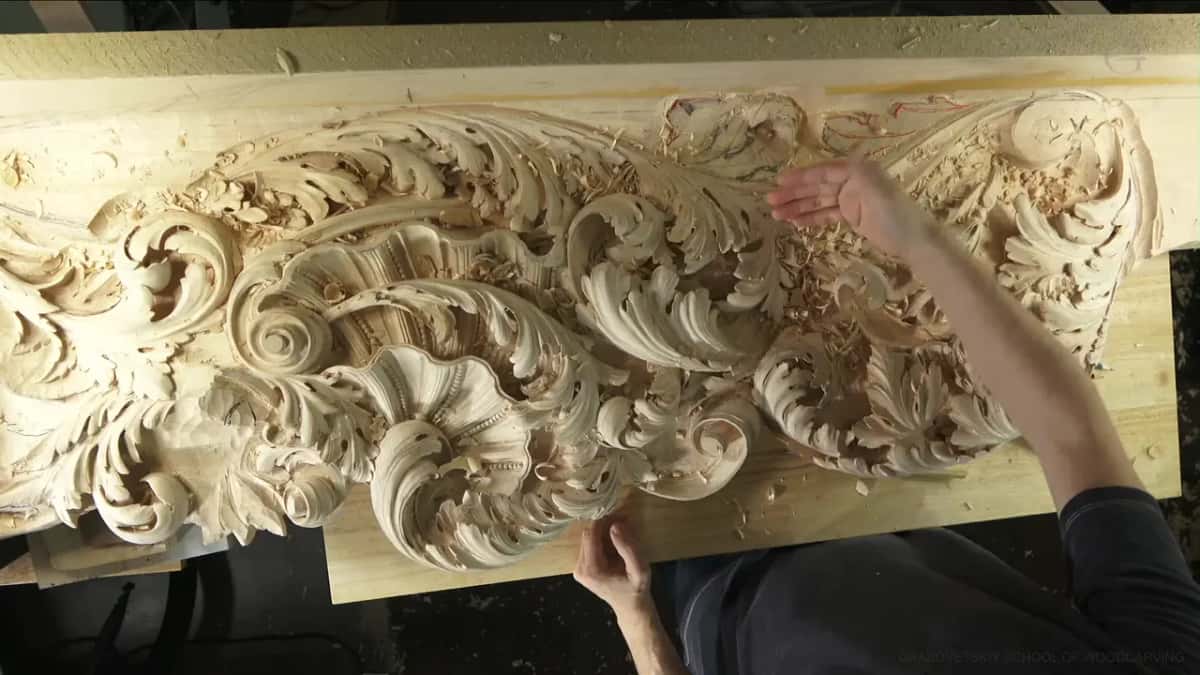
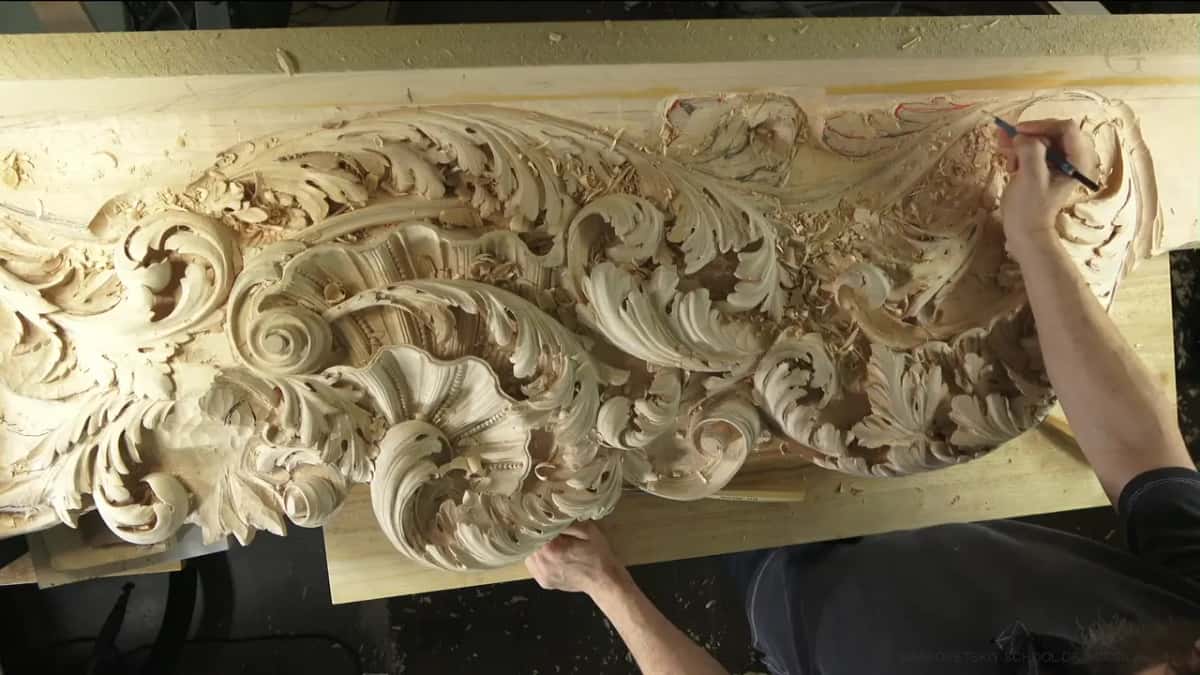
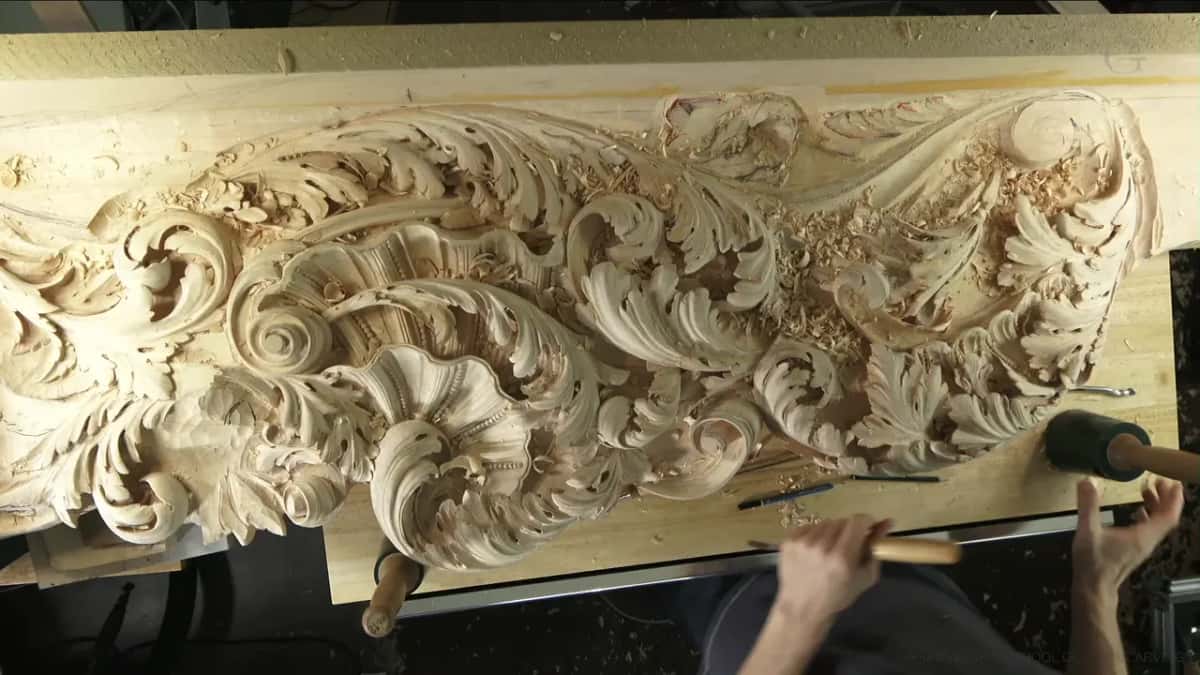
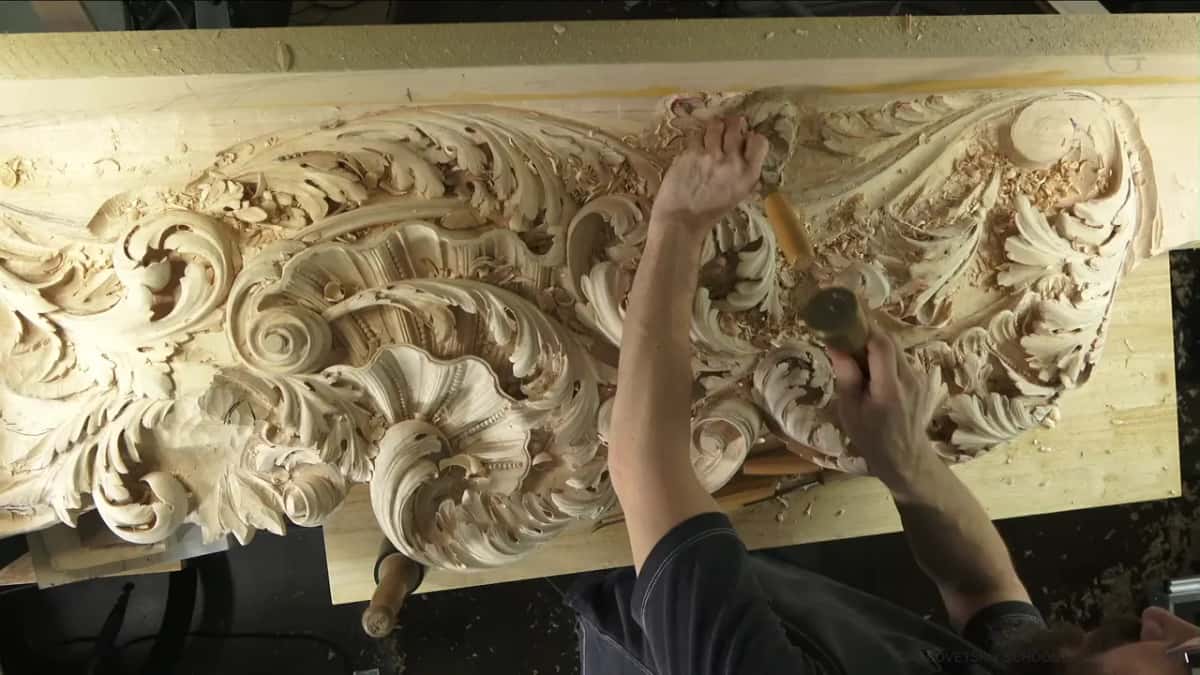
Carving looks like the pieces I show at the start of this lesson, and not one of them is a cabinet. One is the piece that got me International Wood Carver of the Year, a few years before I filmed this. It's about 36 inches, about one meter, a little over, and I called it somewhat complicated work. The panel on my bench in this lesson is a long run of leaves and scrolls with a shell near the middle, carved deep.
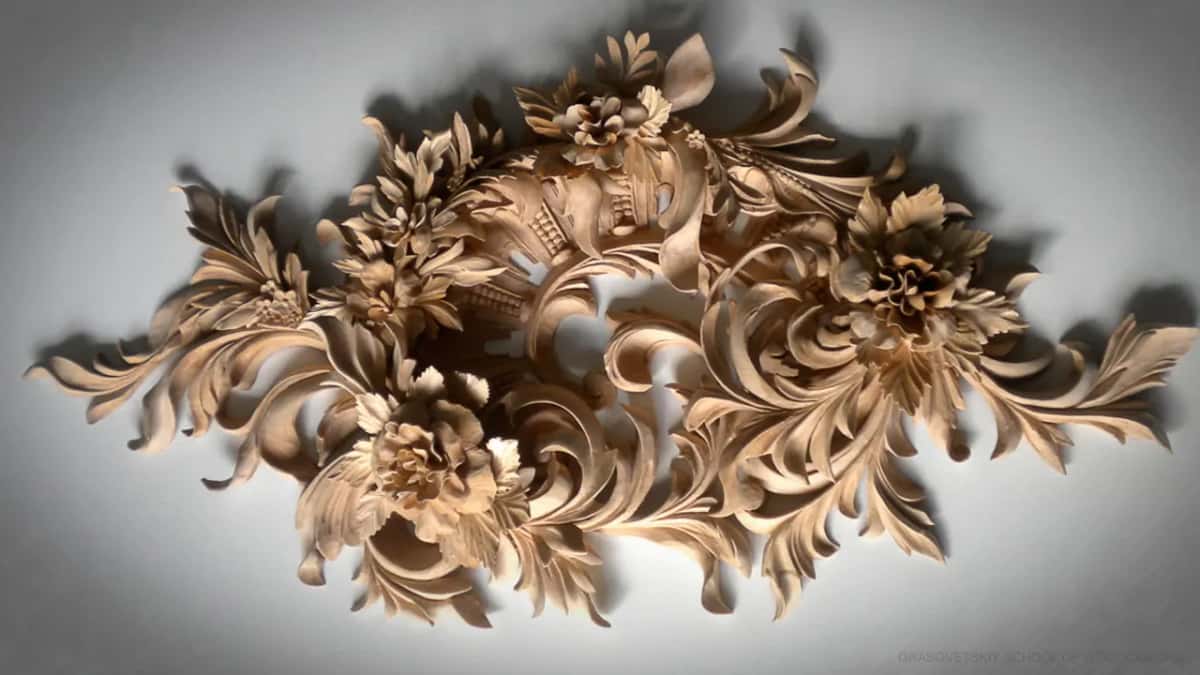
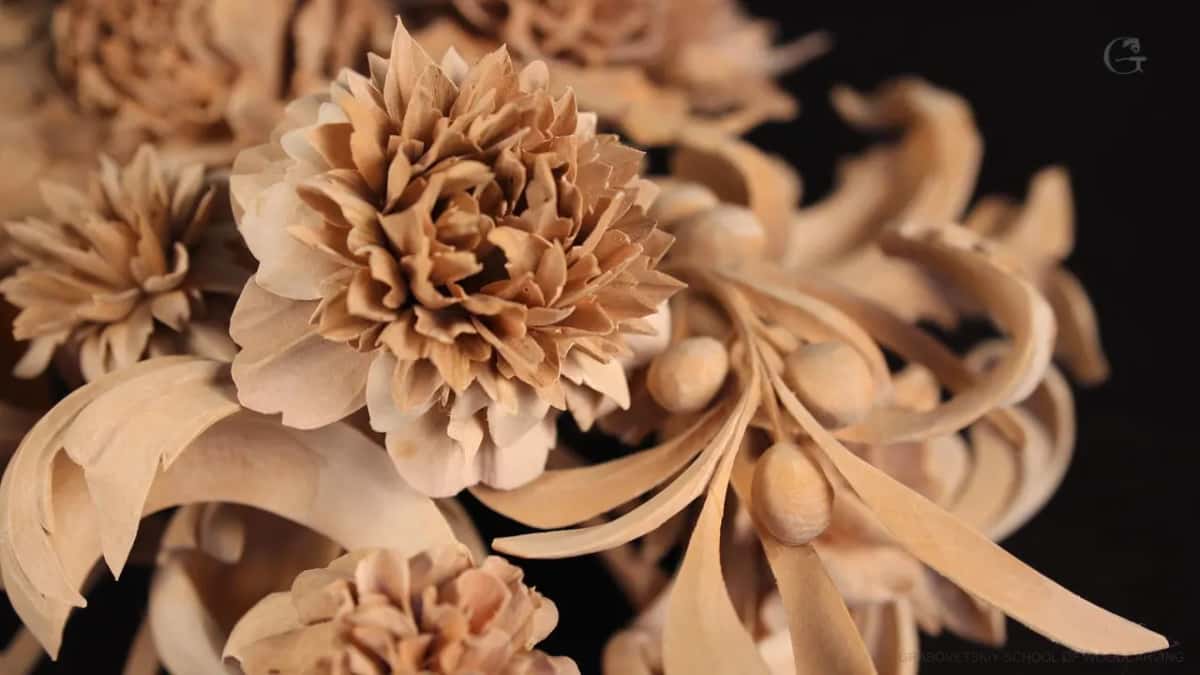
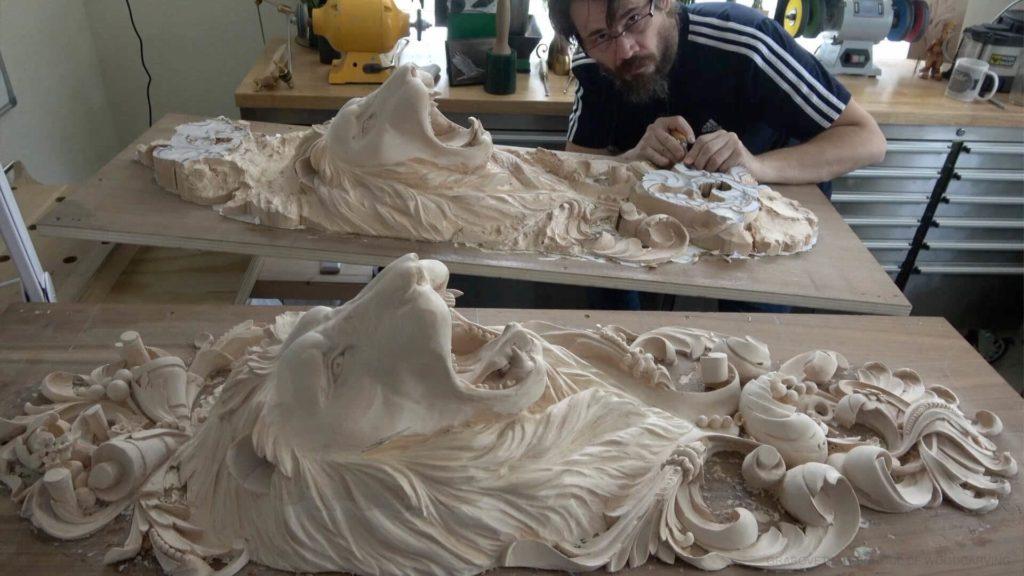
Then there are the lions and the flowers, both projects for my online school, and a little less complicated than the big piece. Look at all the muscle structures, and even the tongue. One lion raises its tongue up, the other keeps it down, and you can see some teeth. They were filmed, but still in editing.
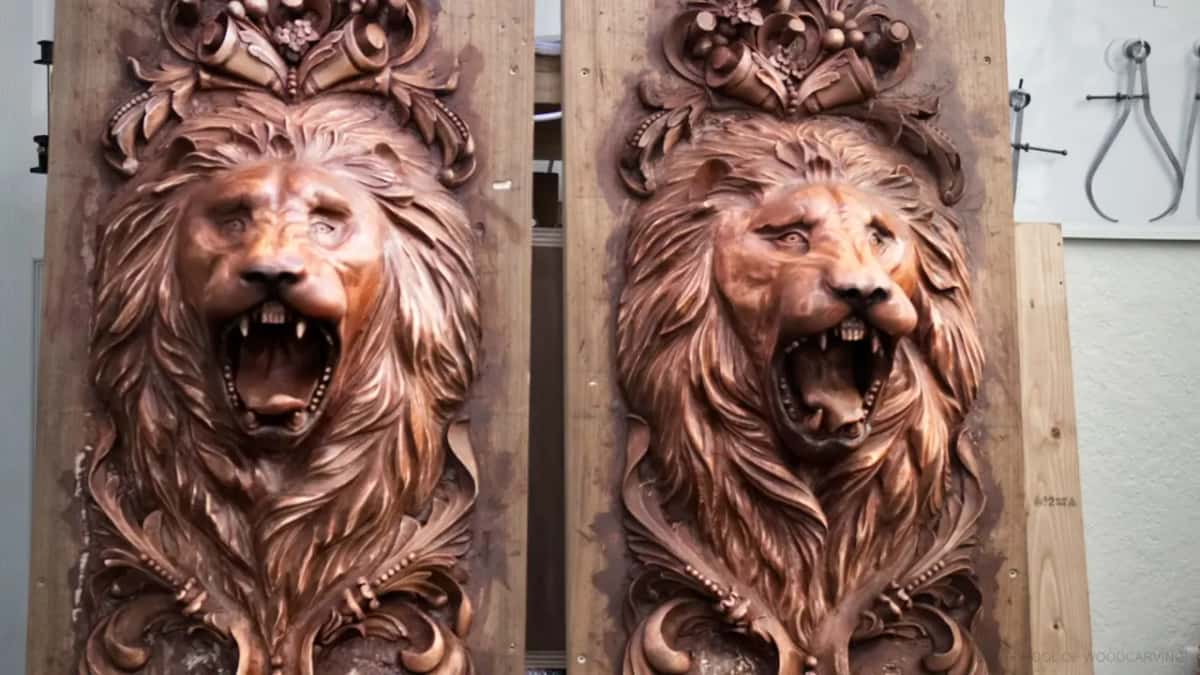
I'm not saying the way I carve is the right way or the wrong way. But I know how to carve.
Here is my own shop laid out in four rows, the woodworking side next to the carving side.
Point | Woodworking | Carving | Detail |
|---|---|---|---|
What gets made | Kitchens, floors and trim for whole houses | Carved panels | like the one in this lesson |
Main tools used | Heavy machinery in a big commercial shop | Hand tools | number 11, 5 mm (3/16 in) |
Who paid me | Whoever needed a kitchen got a kitchen | Commission work | carved for clients beside the firm |
What I'm called | Yes, I am a woodworker, I said | Carving won | and turned into full time work |
None of those rows is a rule for your shop. They are what my shop did, and yours may split the work some other way.
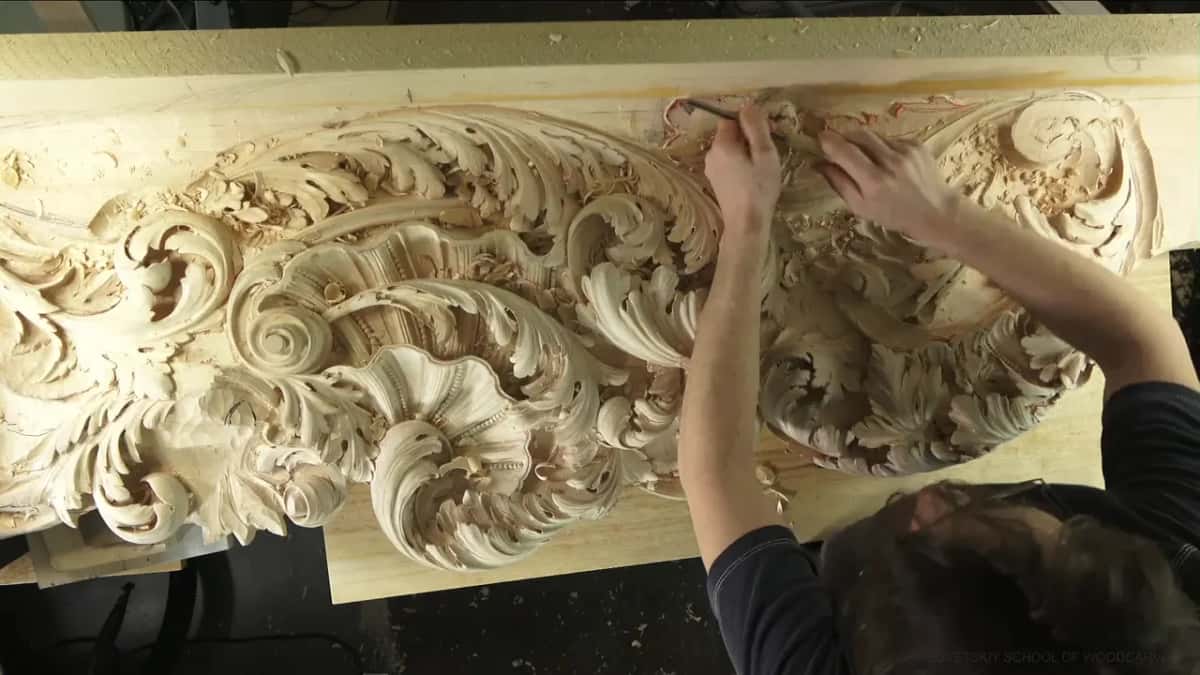
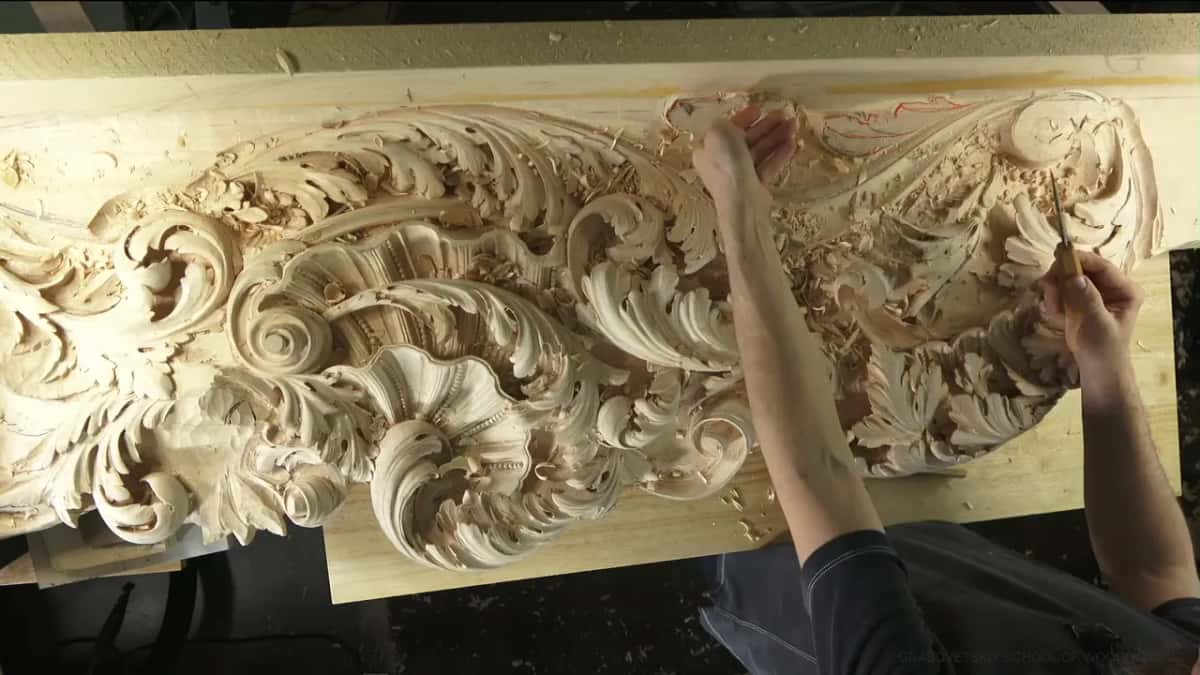
In my shop the tools changed with the trade. Before I start the story in this lesson, I pick up a gouge, a chisel and a veiner. The pictures on this page show the kit. A mallet with a dark head lies on the bench, a few tools sit beside the panel, and chips pile up between the scrolls. On some spots the mallet comes out, and I drive the gouge with it.
Most of the time on this piece it's a number 11, the 5 mm (3/16 in) one. I also reach for a Gonzales tool, because it's so comfortable for me to use, and I said so twice in a row on camera.
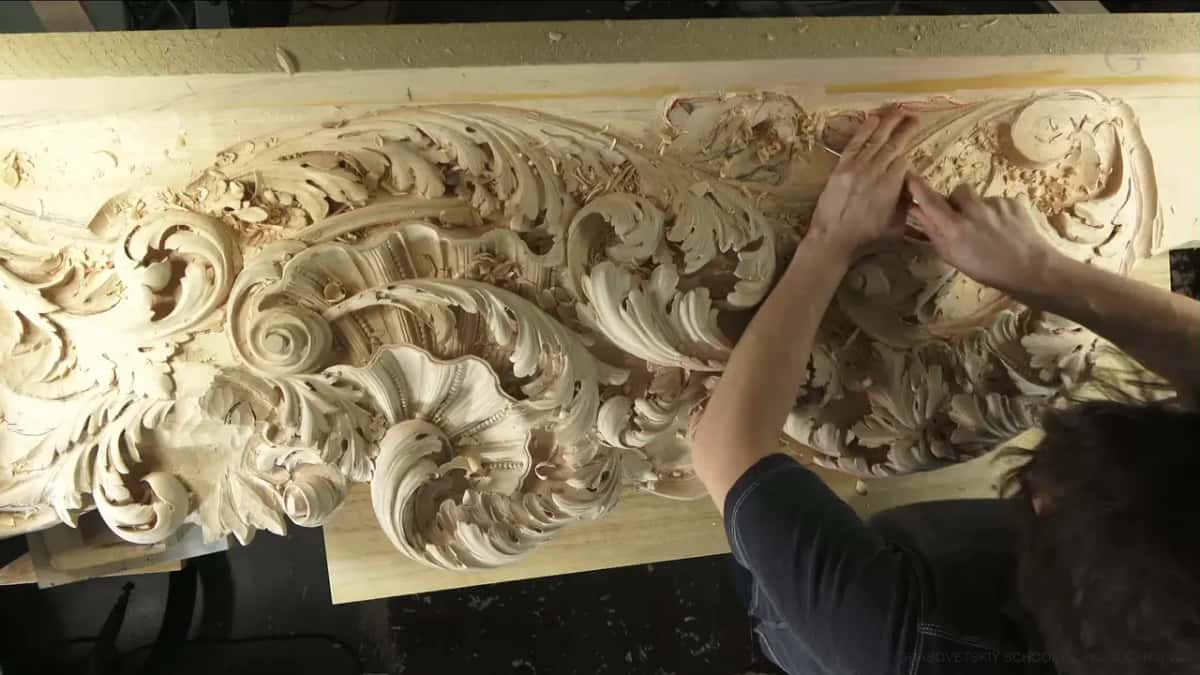
The hard spot is a slope that moves up to a ceiling, an overhang above it, and there my straight tools sometimes just don't work. That's a challenging area, I said. I have to think how I can get inside and make a smooth transition all the way up. When a bent gouge earns its place is a lesson of its own.
Behind bars, years ago, I couldn't have any woodworking machinery or any carving tools, so I made what I could, mostly a knife, and we built simple furniture with carved elements on it. If you want to know what each tool is for before you buy one, All About Tools for Wood Carving goes through them.
A little different, I said in this lesson, and I mention a class at Marc Adams on design for woodcarving alone. The example was right on my bench, one element to place in a weird space with a ceiling and a front, and it still had to look beautiful and fluent. I spent a long time just learning that.
My own teacher was a woodcarver and an artist, not the woodcarver only, and he used to teach fine art. I say he was. Then I fix it to he is, because he was still alive when I filmed it. When he brought one of his pieces to show me what carving is supposed to look like, I kind of dropped my jaw. At 16 I thought, who needs teaching? I said yes anyway. You can do a lot by learning yourself, but it's a little different when you compare your own work with a master's piece. You won't be able to find him, or masters like him. The country was completely locked down then, and people outside didn't know what was going on inside.
For the design side first, there's Principles of Design in Wood Carving. The furniture panel design course draws a carving for a real piece, and the dining table apron course carves one.
The two words ran together in my family long before me. My great-grandfather found his talent in a woodworking world and made furniture, and he traveled pretty much the world before the whole country was locked down after the revolution in 1917. I say here that I got the love to woodwork from him, and in the same breath I fix my own words, to work with wood. I never met him. I also say that by six I already had some passion for woodworking, and before that I was doing some carving in tree branches with a knife.
Even my teaching started at a woodworking school. Marc Adams called me and asked, "Have you ever tried to teach wood carving?" I put the idea off for a couple of years, because English is not my first language and I didn't think of myself as a teacher. I was also super busy with my own projects, and I wondered if I should even invest time in teaching. Will people listen to me, and will they like it or not?
When I finally came, Marc told me not to be afraid. "Those people are nice people," he said, and they were woodworkers, with famous woodworkers from all over the world teaching in that school. I fell in love with it. The online school came later, the old European way, people coming to my shop to watch me work, and that's what you do in this lesson.
I made it because people were joining my school every day, and most of them didn't really know who I am, or why they should learn from me. I had never properly introduced myself, and you didn't know my background or where I'm coming from.
You'll see me carve the whole time I talk. I named it Lockdown Woodworking in the spring of 2020, when everybody felt locked down, and I wanted to tell you what a real lockdown is like. I was locked up at about 18 for what I believe, and even in there wood carving and woodworking helped me survive.
It was a live stream, so now and then I stop to read comments from the people watching and thank them. Early on Siri tries to help me in the middle of a sentence. I open with good morning, good evening, good day and good night, and then I show you the progress of the piece before the story starts. Partway through I ask you, do you see what I'm doing or not, how it develops? I ask it in part 2 as well. I don't explain what I'm doing, because that's not the goal of this one.
At the start of part 4 I ask if you're okay with me just carving and telling a story, and whether it's even interesting to hear. If not, I said, I'll just shut up and finish. A student at Marc Adams tells me every year to write a book about my story. I just don't have time to write one, so I said to take this video as the book, one you can watch and hear, with my work in front of you as a bonus.
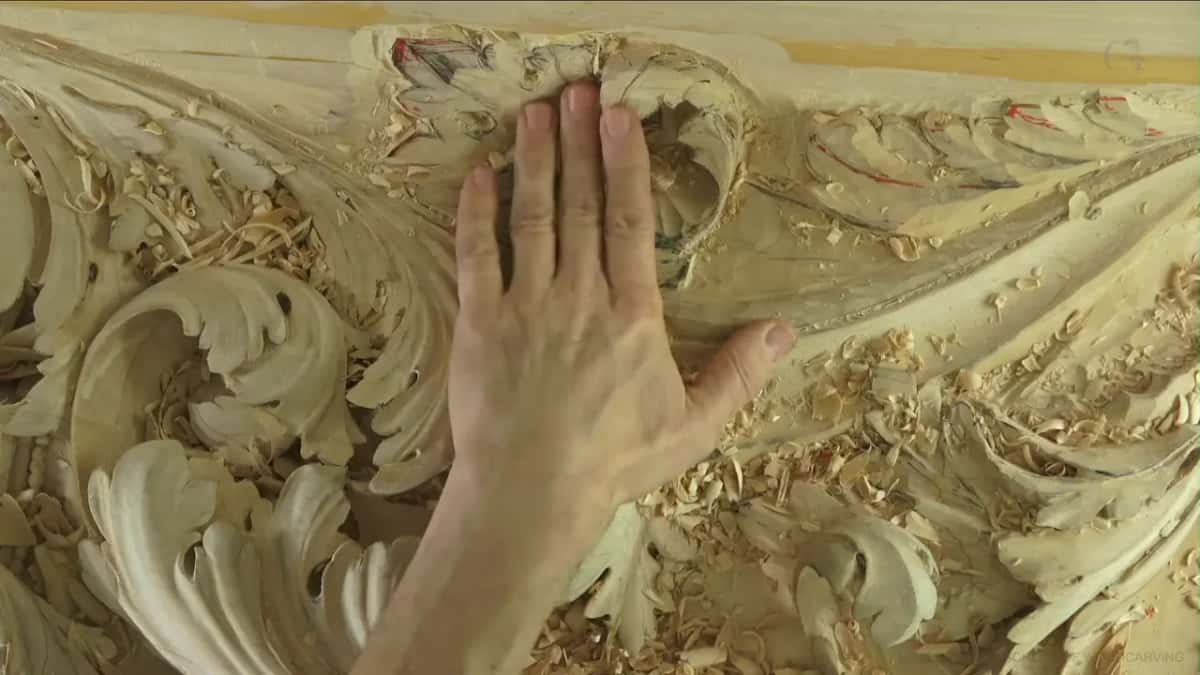
Near the end I bring the view closer, so you can see the development up close. And I tell you plainly, if I make mistakes while I carve, I make mistakes. The same stream also sits in the April 2020 livestreams, and if you'd rather watch over my shoulder in a room, I teach in person too.
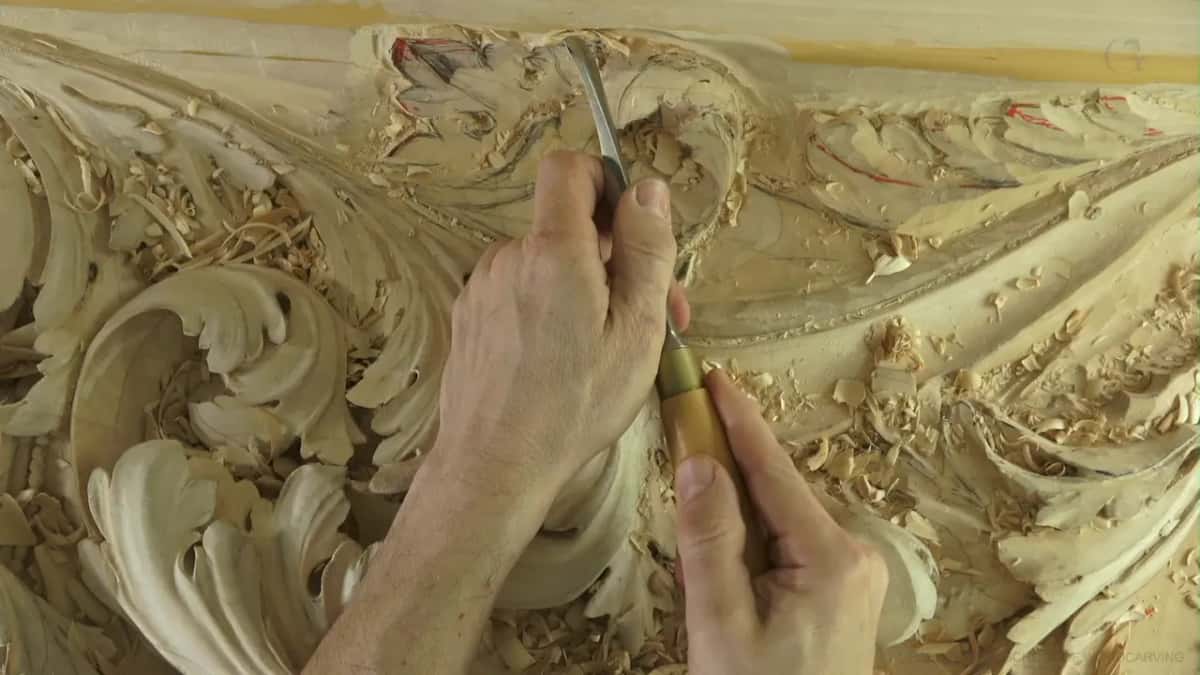
Do you like wood that someone carved by hand? Would you like to see how a carver thinks while the chips come off? Then start with First Cuts for Beginners, and keep this lesson for an evening when you want the story with it. Here is where to begin.
Going by my own talk, yes. Telling the story of my old shop, I said carving won over all the other woodworking skills and abilities I had. I spent years doing both under one roof, the cabinets and the carving, before I carved full time.
Not in my shop. Carpentry there meant the trim work and the finished carpentry around a house, done next to the floors and the kitchens. Carving was the work I did for clients by hand, alongside the firm, and after a few years it took up my whole week.
Mine, yes. Marc Adams invited me to teach carving at his woodworking school, and he told me the people there were nice people, woodworkers. Some of the same students came back the next year, and new ones came too.
I recorded it in April 2020, when everybody felt they were under lockdown. The lesson tells my own story, the lockdown I lived through included, and I carved through every part of it while I talked to the people watching.
