
Classical Wood Carving Class in Michigan, October 11-15, 2027, Sam Beauford Woodworking Institute
About this workshop
Alexander Grabovetskiy teaches a five-day classical wood carving class at Sam Beauford Woodworking Institute in Adrian, Michigan, from 8 AM on Monday, October 11, to 5 PM on Friday, October 15, 2027. Tuition is $1,275. The class takes 8 students, any skill level, age 18 and up, and it counts for 40 AIA learning units.
The video at the top was filmed during a class I taught at the Maine Coast Workshop in Camden, Maine, in 2021. Same five days, same way of teaching, a different shop. You can also watch it on YouTube.
| What you want to know | The answer |
|---|---|
| Dates | Monday, October 11 to Friday, October 15, 2027 |
| Hours | Starts 8 AM Monday, ends 5 PM Friday |
| Place | Sam Beauford Woodshop, Building 41, 1375 N. Main St, Adrian, MI 49221 |
| Tuition | $1,275 |
| Class size | 8 students at most |
| Level | Beginner, intermediate and advanced in one room. No prerequisites. |
| Age | 18 and up |
| Credit | 40 AIA elective learning units, provider 10009739 |
| Tools | Seven Pfeil gouges on the list below. SBWI lends tools. |
| Questions | SBWI office, (517) 759-3070, admissions@sbwi.edu |
Have you ever stood in front of an old carved leaf on a church door and wondered how a man made wood curl like that? Do you want to know how to make a leaf roll over in wood, so it throws a real shadow? Would five days at a bench, with someone standing behind your shoulder, be worth that to you?
Then come to Adrian in October. There are eight seats in one room, for five days.
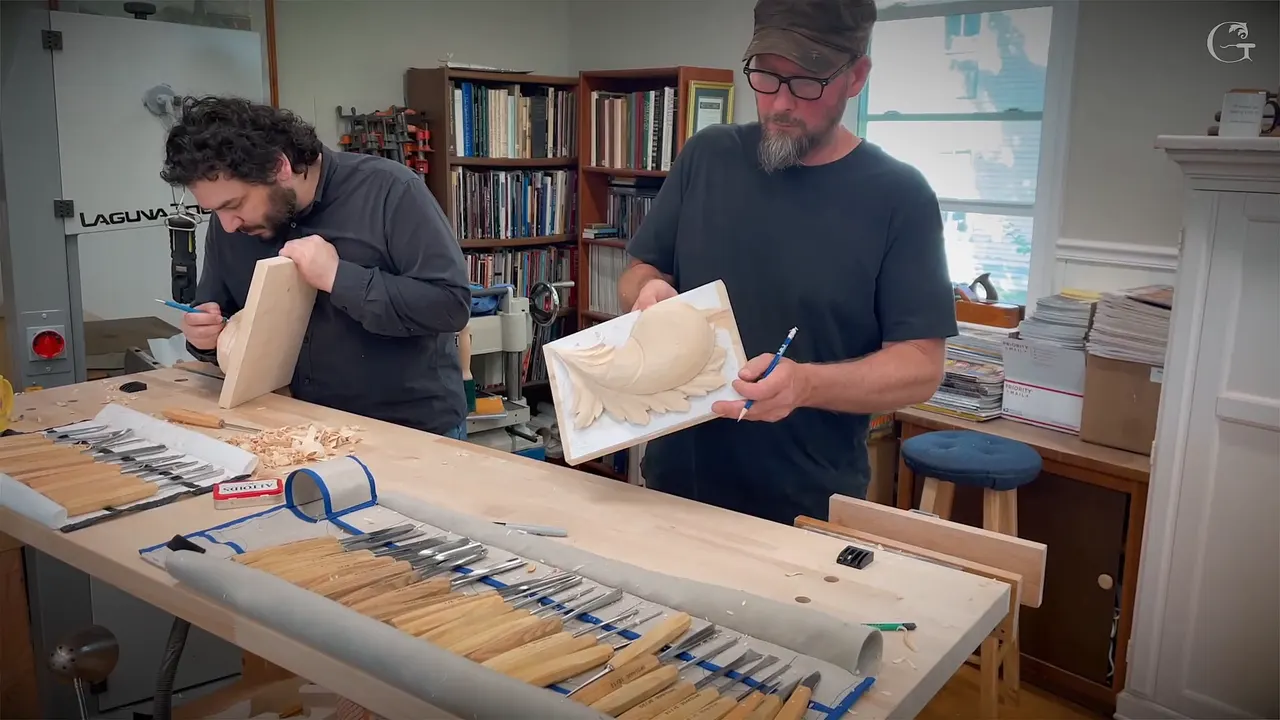
What happens in five days at my bench?
I teach three things, and I teach them in this order: design, then sharpening, then carving. Carving is the most important of the three, but without the first two you are just digging, digging, digging in the wood and hoping.
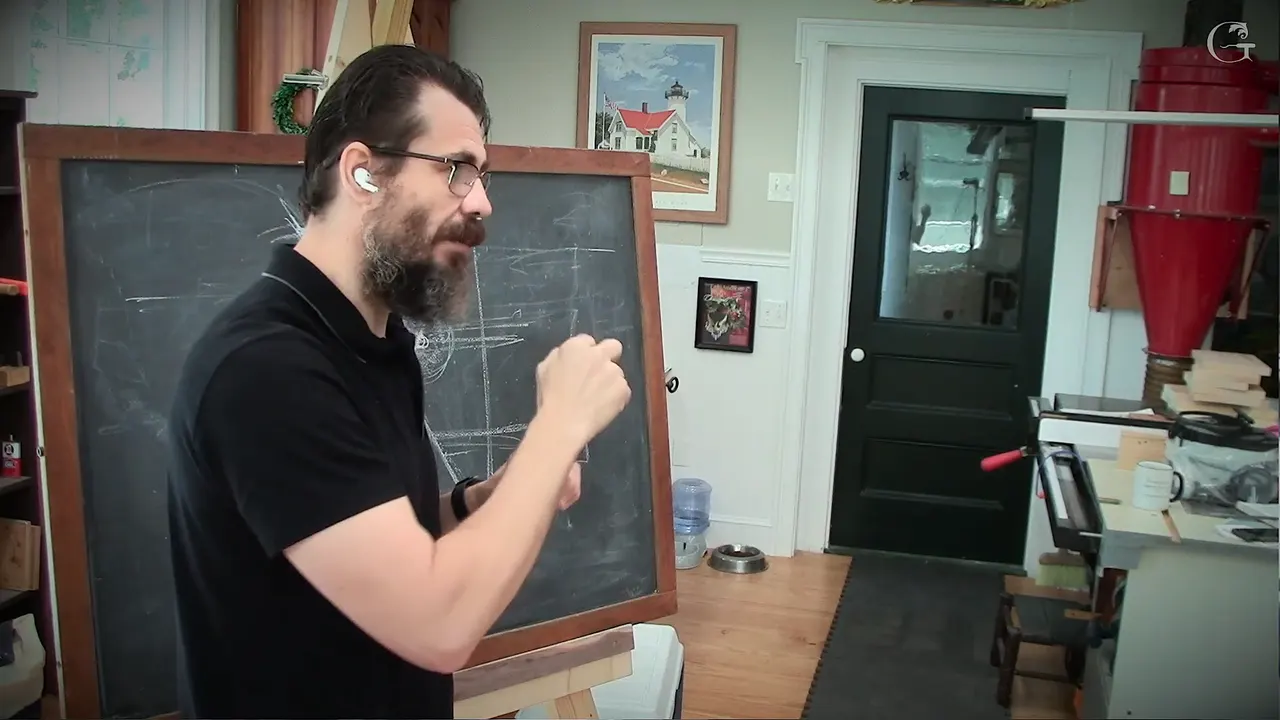
Here is how the week went in Maine. The first day was design. We stood at the board and I drew. When I was 16 and an apprentice in Russia, my teacher told me that design is not drawing on paper. It is the laws of space, rhythm and repetition, and knowing what your tools can do. So we talked about the golden ratio and the Fibonacci spiral, and how a leaf grows in nature. Bill Brown, who owns the Maine Coast Workshop, sat in on that talk in 2021. He told the camera he didn't think you would get a lecture like that anywhere.
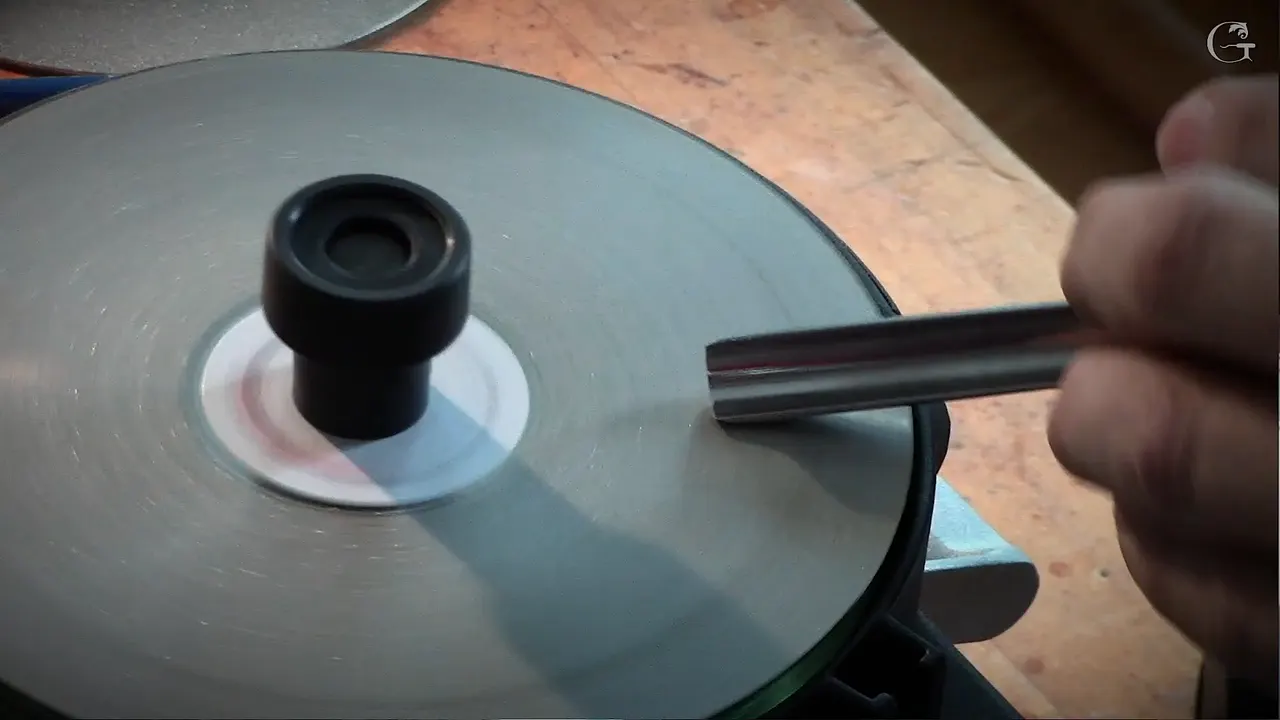
Sharpening came the same day. A dull gouge tears the fibers and you feel it in your shoulder before you see it in the wood. I show you how I sharpen every day, fast, so you spend the week carving and not fighting a stone. If you want a head start, my carving tool sharpening course is the same method on video.
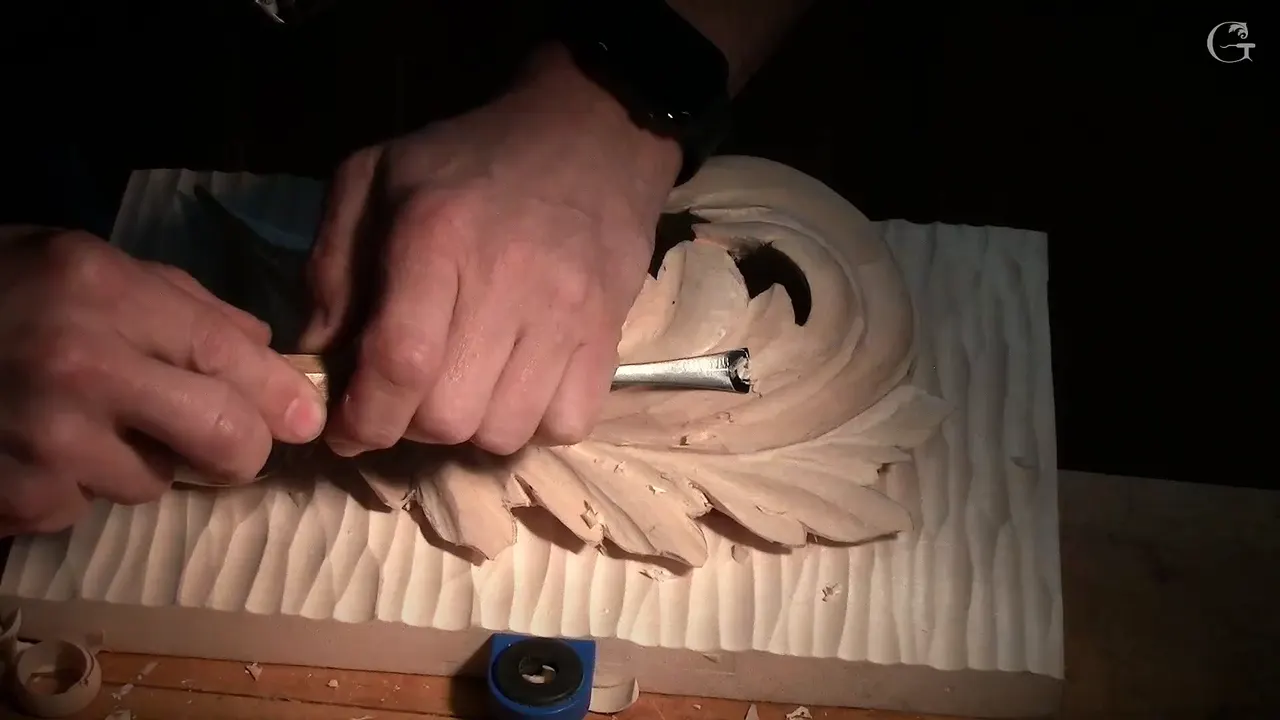
On the second day everyone picked up the gouge, and we started removing mass. I teach you to think in 3D before the first chip comes off: where the leaf rises, where it rolls over, what sits underneath. We worked in layers. Grain will fight you on a curve, so I show you how to read it and turn the tool before the wood splits. On Thursday, day four, the leaves were close, and on Friday we finished.
What will you carve?
I'm going to be honest with you, I don't know yet. Every class carves a different project, never the same one twice. One year it is an acanthus leaf, another year a Grinling Gibbons flower or a bunch of grapes, and once it was something nobody expected, hazelnuts. What I can guarantee is the techniques. Whatever sits on your bench in October will teach you design, fast sharpening and the classical way of carving, and those skills work on furniture, on ornament and on architectural carving.
In Maine, for example, we carved a Byzantine style acanthus leaf, in several layers, on a panel with the background left in gouge marks. Acanthus is the leaf you see on Greek columns and on old furniture.
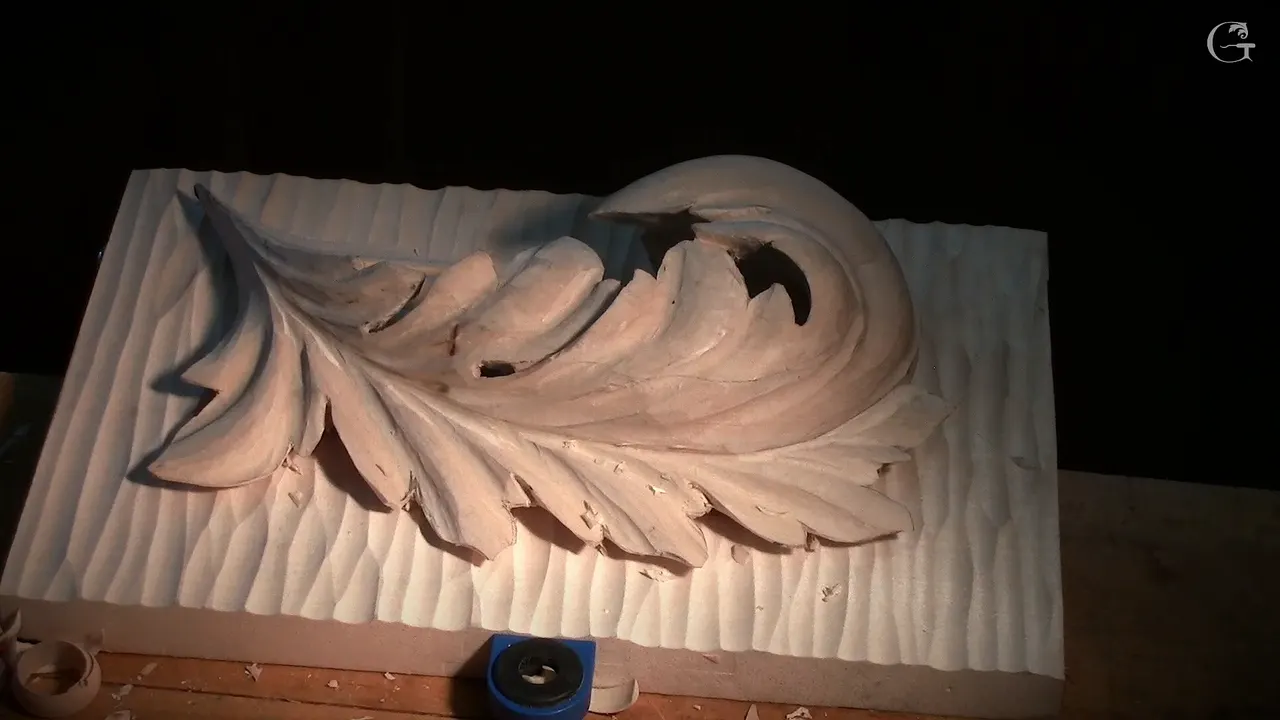
Want to see the leaf before October? The online Carving Byzantine Acanthus course shows it from the first line to the last chip.
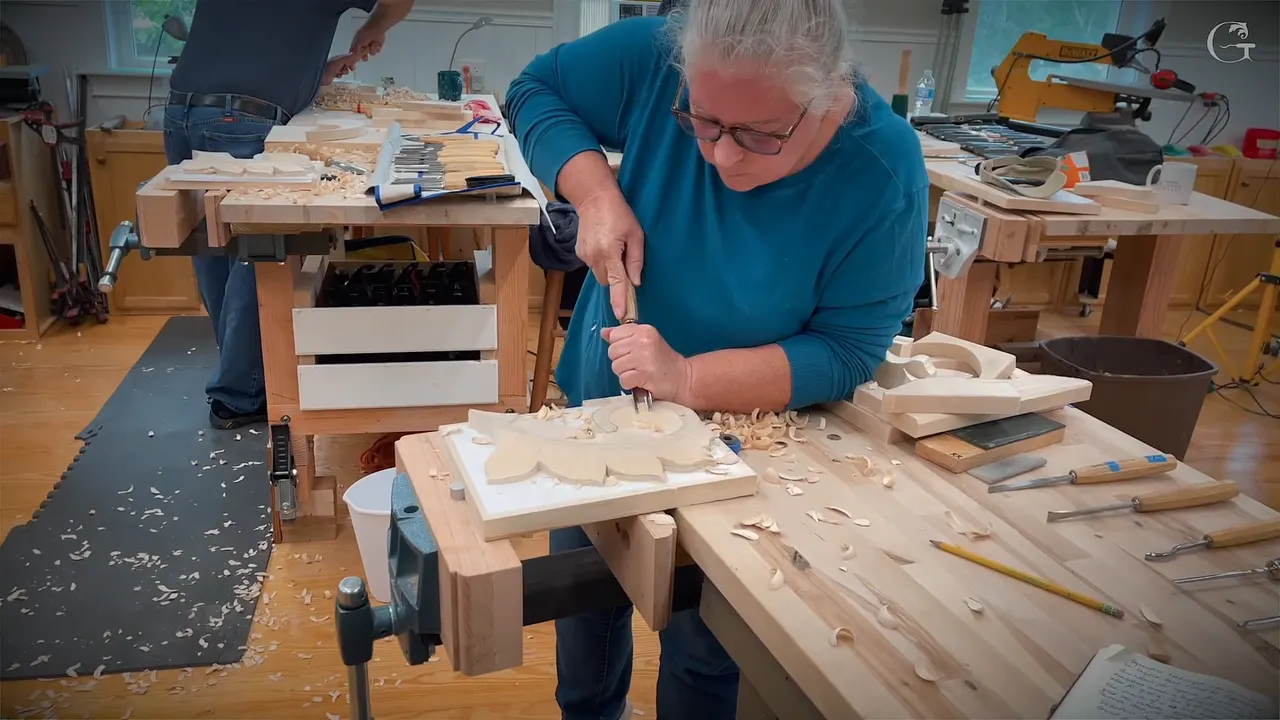
And here is the shop itself. In June 2025 my class in Adrian carved grapes, and this short video was filmed on the fifth day.

One student in it says, "if you're not a wood carver, don't be afraid to take this class." Others in the video say they learned a lot about theory and about how to handle the tools.
Do you need to know how to carve already?
You don't. Nobody checks your skill at the door, and I usually get a mixed group, people who carve every week next to people who never held a gouge.
"I've never picked up a carving tool before this weekend."
One of my Maine students said that on camera. Rebecca, a beginner in the same room, said, "this is what I've done in just a couple of days." At the very end of the video somebody says the week "made my head sizzle with ideas" and put bruises on the body from trying so hard. I believe it. You have to be real, carving is physical work. You stand all day, you push, and you lean your whole body into the tool.
Which tools should you bring?
This is the list SBWI posted for my class. Every gouge is Pfeil, Swiss made. The first number is the sweep, how deep the curve of the edge is, and then comes the width.
| Sweep | Tool | Width | About, in inches | Pfeil size |
|---|---|---|---|---|
| #11 | veiner | 1 mm | 1/32 inch | intermediate |
| #11 | veiner | 3 mm | 1/8 inch | intermediate |
| #2 | gouge | 12 mm | 1/2 inch | intermediate |
| #7 | gouge | 14 mm | 9/16 inch | intermediate |
| #9 | gouge | 10 mm | 3/8 inch | intermediate |
| #9 | gouge | 20 mm | 3/4 inch | full |
| #8 | spoon gouge | 7 mm | 9/32 inch | intermediate |
Don't run out and buy all seven tomorrow. SBWI has loaner tools, so call the office first and ask what they can lend you. If you do buy, Pfeil is the brand on my list, and the sizes above are the ones I reach for in this class.
What do students write after a week with me?
These come word for word from Google reviews of my school, and I did not change a letter. Ruth took her class with me right here in this shop.
"I took the Architectural woodcarving class with Alex at Sam Beauford Woodworking School. As a complete novice this course was challenging and rigorous, but I am really please with what I have been able to accomplish. This class has covered the fundamentals of design and techniques for classical woodcarving methods."
Ruth L., Google review
"I had never carved, even as a hobby, prior to this class. Prior to starting this class I was very concerned that I would be overwhelmed and unable to keep up. However, Alexander explained the proper techniques clearly and assisted as needed. I am amazed at what I was able to create in five days."
Kevin B., Google review
"His in person classes are peppered with humor and stories, serving as much needed breaks from the hard work of imagination required to see and liberate the flowers, tendrils, stems, buds, and more trapped inside rectangular blocks of basswood."
Rob K., Google review
Joe has carved off and on for more than 50 years, with many teachers before me. James took one of my classes in Camden, Maine, at the same workshop you see in the video at the top.
"Alexander Grabovetskiy is by far the best instructor I have ever had the privilege to study under."
Joe S., Google review
"I attended one of Alexander's wood carving classes in Camden, Maine and It was a great experience. I was a beginning wood carver and I was a bit intimidated at first."
James, Google review
Who am I, and why Michigan?
I'm Alexander Grabovetskiy. I was born in the USSR in 1973, and when I was six I took my grandfather's chisel to a brick to carve a face. I ruined the tool. In 1996 I came to America as a refugee. Landed on a Saturday, and by Monday I had a job as a framing carpenter, with no English at all.
Later I built a woodworking company in Michigan and Indiana, so this part of the country is not new to me. Then I sold the machines and kept only the carving.
In 2012 a panel of mine called Wall Decoration took first place, and the Woodworkers Institute named me International Woodcarver of the Year. Five years later, in 2017, I opened the online School of Woodcarving, a 501(c)(3) non-profit. The tuition from that school helps orphans and widows. You can read the long story on my about page, prison and all.
How do you get to Adrian?
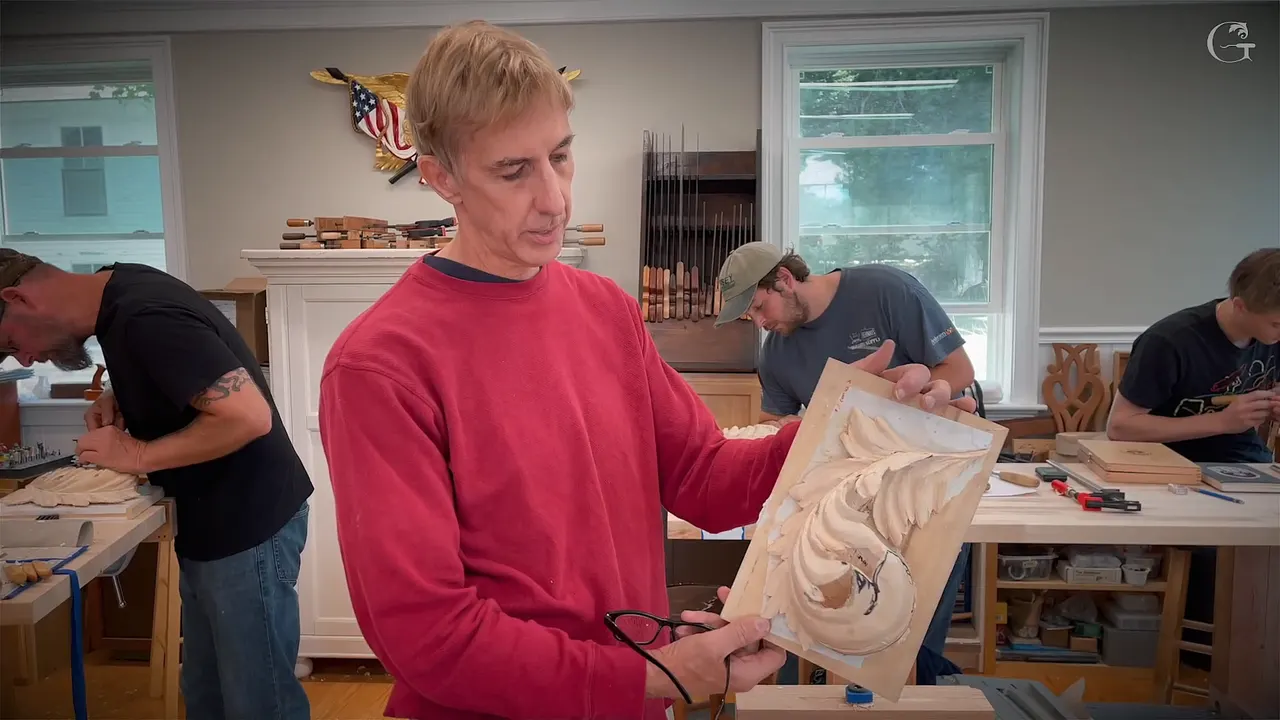
We meet at the Sam Beauford Woodshop, Building 41, 1375 N. Main St, Adrian, Michigan 49221. Adrian is the county seat of Lenawee County, Michigan. SBWI keeps a page on traveling to Adrian with what you need for the trip. SBWI calls it a fully equipped hand tool classroom with real workbenches, so bring your hand tools and your hands.
Eight seats is not many. Some of my in-person classes have sold out in eight minutes. $1,275 is real money, and five days is real time, and I won't pretend otherwise. But if you have wanted to carve a leaf that looks alive for years and kept putting it off, the seat is on the SBWI class page, and you register for the class here.
Shall we carve?
If July works better than October, I also teach a five-day class at Marc Adams in Indiana, July 12 to 16, 2027. All my in-person dates are on the workshops page.
Frequently asked questions
When is the classical wood carving class at SBWI in 2027?
It starts at 8 AM on Monday, October 11, and ends at 5 PM on Friday, October 15, 2027. Attendance is all five days.
How much does the class cost?
Tuition is $1,275. The SBWI class page does not list a separate materials fee, so ask the office if you want to be sure.
What will we carve in October 2027?
The project is not picked yet, and it is never the same twice. My classes have carved acanthus leaves, Grinling Gibbons flowers, grapes and hazelnuts, and every one of them teaches the same classical techniques.
Can a complete beginner take this class?
A complete beginner is welcome. There are no prerequisites, and the group is usually mixed. Beginners in my Maine class carved an acanthus leaf in that one week.
How many students are in the class?
Eight at most. That is why I can stand behind every bench every day.
Do I have to buy all the tools on the list?
SBWI lends tools, so start there. Call (517) 759-3070 or write to admissions@sbwi.edu before you buy anything.
Does the class count for architects?
It carries 40 AIA elective learning units, and SBWI gives a certificate of completion on request. The credit needs the whole week finished.
How old do I have to be?
18 or older.
Can I learn the same things online first?
The School of Woodcarving has video courses on design, sharpening and the Byzantine acanthus, taught by me the same way I teach at the bench.