
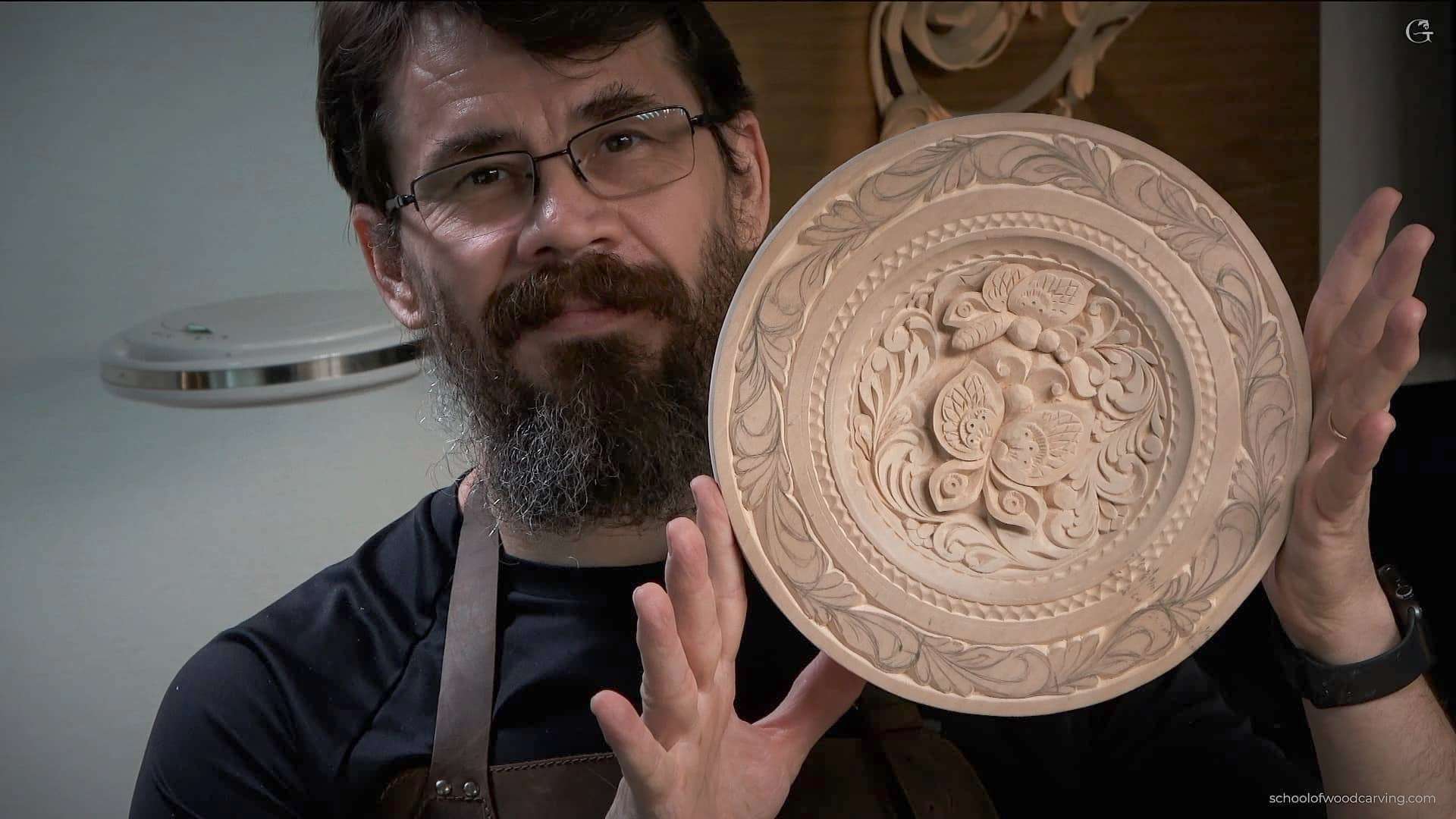
By Alexander Grabovetskiy, School of Woodcarving. Updated August 1, 2026
Quick answer: Alexander Grabovetskiy is a master wood carver. He founded Schoolofwoodcarving.com. His birth year is 1973, back in the Soviet Union, and the state locked him up for two years because of his faith. He reached America as a refugee in 1996. The title of International Woodcarver of the Year came to him in 2012.
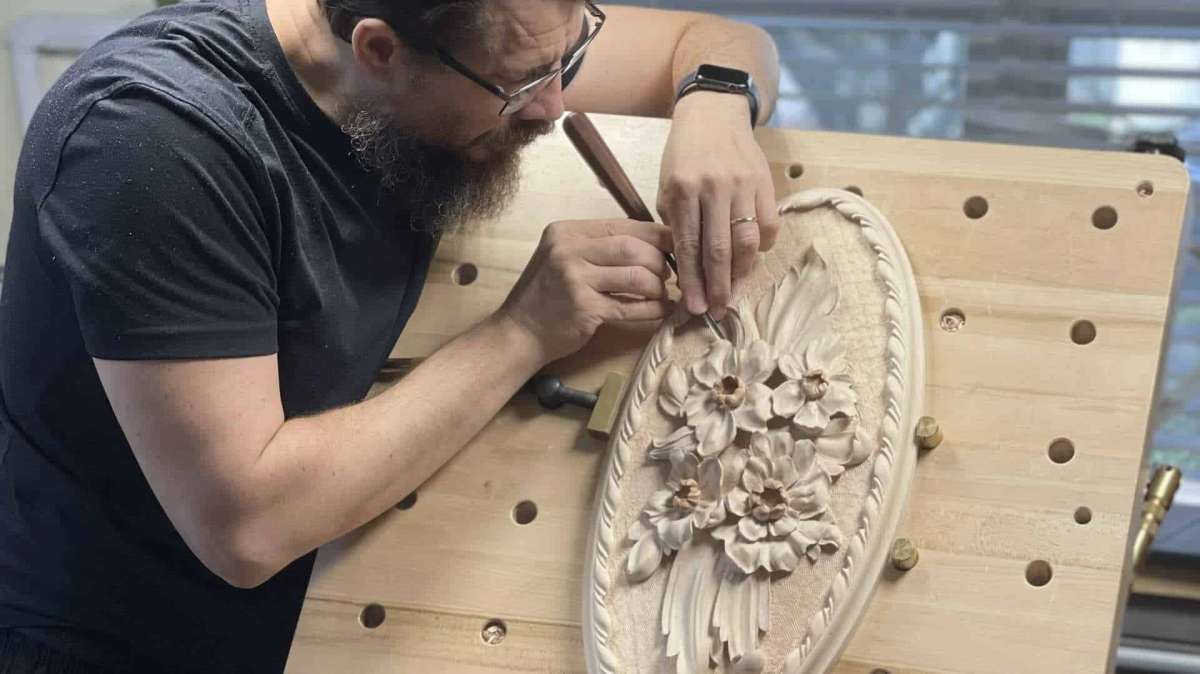
Most people who join my school have never met me. They see lessons on a screen. The man behind those lessons stays a stranger to them.
So let me tell you who I am. Then judge for yourself.
Every word on this page I spoke out loud, on camera, in one sitting, with a gouge in my hand. That talk got the name Lockdown Woodworking. The pandemic had us all shut in, and a couple wrote to me from Italy. Argentina was where they started out. Their message said it felt like jail.
Now I have to be honest with you about that word. They have no clue what jail really is.
I do.
Would you rather watch me tell it?
The whole talk sits on YouTube, filmed in April 2020 in one sitting, while I carved. What you read below is that same talk, typed out, so you can go at your own pace instead of sitting through an hour and a half.
Key takeaways
My birth year is 1973, in Dimitrovgrad, a Russian town inside the Soviet Union. About 120,000 people lived there back then.
Wood runs in my blood, because my great-grandfather built mahogany furniture in the Chippendale style.
My grandfather put a chisel in my hand at six. I put it into a brick, and the tool was finished.
Vladimir Tokarev, a carver from my own home town, took me on at sixteen as his one and only student.
At eighteen the government jailed me for my faith and for turning down the Red Army. I walked free at twenty one.
Carving kept me alive in there. I made my own tools, and they paid me in potatoes, one for a day of work.
On 15 March 1996 America opened the door to me. I had refugee papers and no English. The firm I built there, Aalmark, ranked in the top 4 percent.
Today I carve full time, teach in person, and run a school online.
What is the short version of my life?
Here is my whole life on one page, and then I will fill in what it really felt like.
When it happened | What happened in my life that year |
|---|---|
In 1973 | Dimitrovgrad, Soviet Union, is my birthplace |
At age six | Grandfather's chisel, taken to a brick, ruined |
At sixteen | The only student of Vladimir Tokarev. I gave my life to God, and I met my bride. |
At age eighteen | Arrested for my faith and thrown into army jail. I escaped through a hole in a wall. |
Still eighteen | Arrested again, and tried under a law carrying seven to fifteen years or death |
Inside the prison | The country came apart while I carved furniture, paid in a daily potato |
Age 21 | Walked out under an amnesty, one of 42 men, while Amnesty International pushed for prisoners of faith |
Two months later | We were married soon after I got out |
Same stretch | Refugee status came from the US Embassy in two hours |
15 March 1996 | Flew to America with Nadia and our ten month old son |
On arrival | Landed on Saturday, framing carpenter by Monday |
Back in 1998 | Aalmark incorporated in Indiana, with six to eight men on the payroll by 1999 |
In 2012 | A panel called Wall Decoration takes first place |
Then came 2015 | Popular Woodworking Editors' Choice, Turnings, Carvings and Objets d'Art |
Before teaching | Sold every machine and the whole shop, and carved only after that |
Finally, in 2017 | Schoolofwoodcarving.com opened its doors that year |
Where does the wood come from in my family?
My great-grandfather put it there, and the two of us never met.
Look at my last name. Grabovetskiy. My great-grandfather was born in what is now western Ukraine, and back then that land belonged to Poland. My family were royalty there. Search in Russian for the Grabovetskiy sword, and up comes the oldest sword ever dug out of Polish ground. That sword belonged to us.
Then came the revolution of 1917. The communists took power, and everything my family had went away. The lands, the name, every last piece.
So my great-grandfather found his talent in wood.
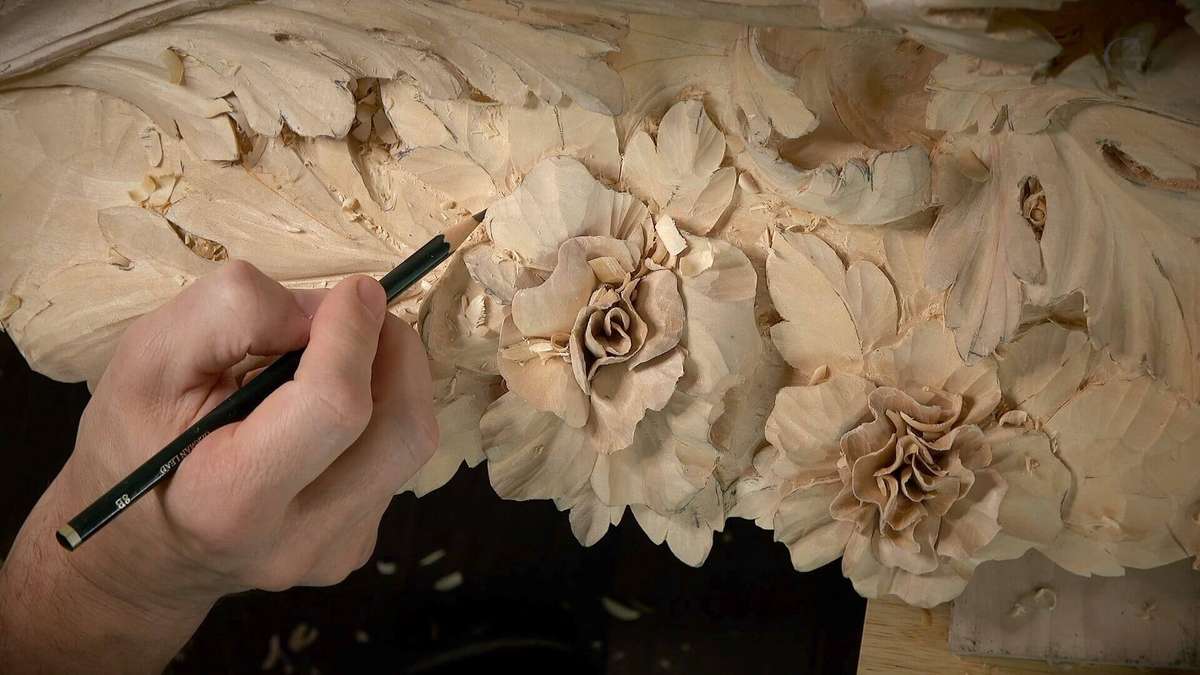
He made furniture. People called him a redwooder, because he worked the red woods, and red wood really means mahogany. Back then mahogany was the wood for fine furniture, above all for Chippendale. Chippendale is mahogany almost all the time.
There is more than one mahogany in the world. You have sapele, you have Honduras mahogany, and you have Indian mahogany. They do not look the same. My favorite of them all is Indian mahogany.
That work made him famous. He traveled the world with it, before the revolution shut the whole country down.
We never met. Of my two grandfathers, one died before I was born. The other one I knew. Still, I believe the talent came down to me through the blood, as if it skipped a generation and landed on me.
When did I first pick up a chisel?
The chisel reached my hand at six, and I wrecked it before that day was out.
Before that I was already trying. A small knife, a branch, and me sitting outside carving away at it. Every boy does that.
Then at six my grandfather gave me a chisel. Well. To be accurate, I took it myself.
And I did not take it to wood, but to a brick. I carved a face into that brick, and the chisel died. Killed it completely.
My grandfather was not happy about it. Yet he never gave me a hard time about it. He let it go.
Everything after it was a normal childhood in the USSR. School ran six days a week. Nothing special.
Who taught me to carve?
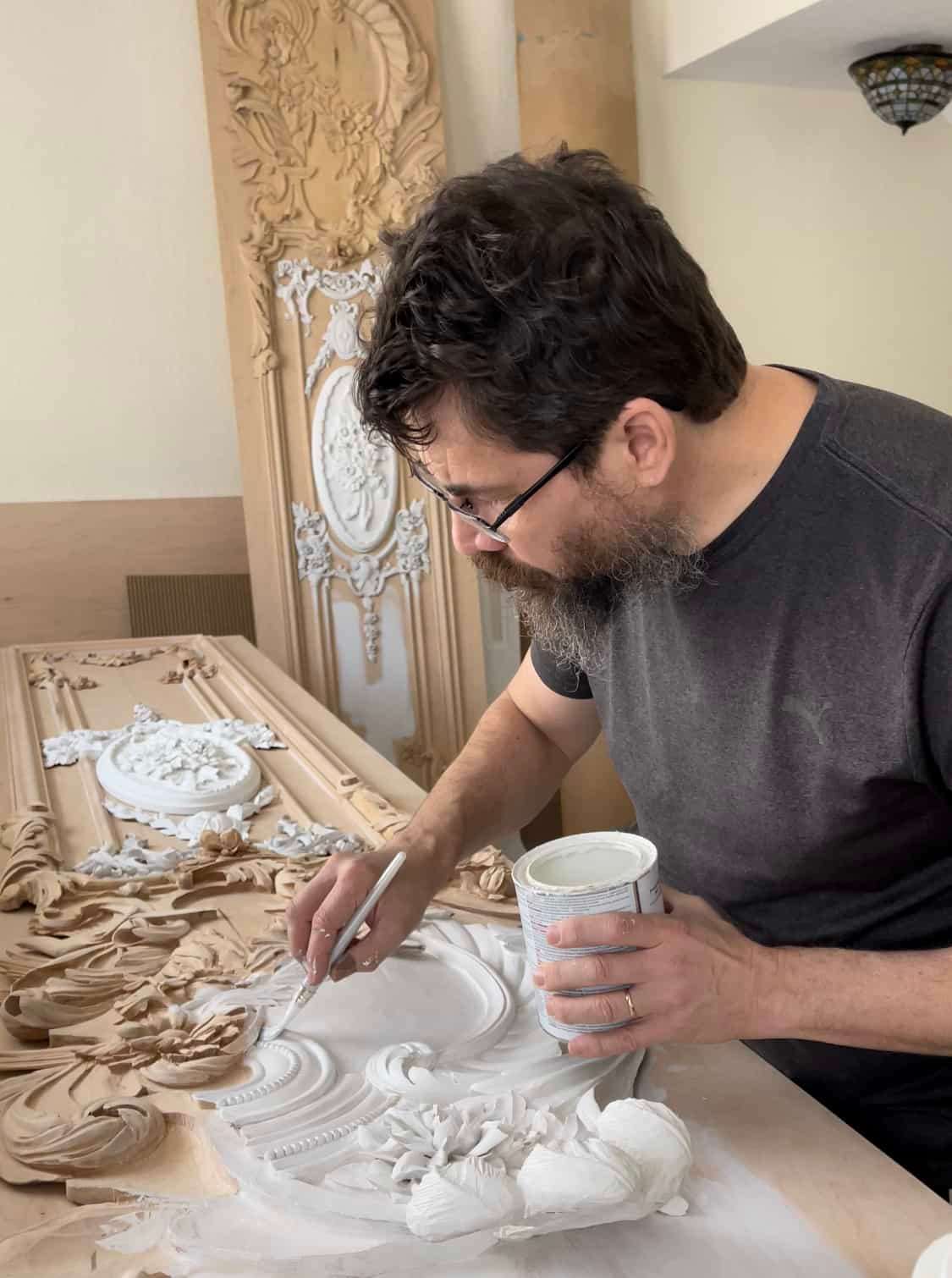
His name is Vladimir Tokarev, he carved in the town where I grew up, and by sixteen I was his only student.
In that video I told people not to bother looking him up. The country was sealed, I said, and nobody outside would ever find him. True then. Not true now, so let me say it properly. Vladimir Tokarev, of Dimitrovgrad.
He carved, and he taught fine art too. A real artist. He is alive today, and still among the most talented men I have ever known.
He knew I had been carving on my own. You can learn a lot alone. One day he brought a piece of his own and set it in front of me, so I could see what carving is supposed to look like.
My jaw dropped. I could not believe work like that.
He said, you are talented, let me teach you how to really carve. Sixteen, and I did not know much. I said yes.
That was a real apprenticeship, the old European way. One master, one student.
And here is how he started me. Not with a gouge. With a pencil and a piece of paper.
Sit and draw something for carving, he said. So I sat the whole day and drew acanthus, and to my own eye it came out beautiful. Then he would come stand over me and say: think. Think how you will carve it. Ask which tool is meant to do that job. And then work out how you will ever reach in there.
Anything can look great on paper. But how do you slide your tool into that corner? Even now, as I write this, I am working in a spot where the surface climbs into a ceiling, and my straight tools simply do not reach. That problem starts on the paper, not at the bench.
Then he would hand me another sheet and say think again. Think like a wood carver. Then think like the tool.
Months and months of my life went into drawing. Design, I learned, is far more than laying a pencil on paper. He taught me the laws. Space has a law. Reading has one, and so does repetition. Others follow after those.
Which is why I teach design online, and also in several woodworking schools like the Marc Adams School of Woodworking in Indiana. Design for carving is its own thing. Start with one element. Where do you put it in space? What goes around it? Make it beautiful there, on that odd wall, under that ceiling. Years go into learning it. The same laws run through carving the Greek acanthus leaf, which is where I send most people first, and through the whole of Principles of Design in Wood Carving.
What put me in jail at eighteen?
Faith came to me at sixteen, and at eighteen the government decided that made me dangerous.
Before sixteen I was like everybody else. God was up there somewhere, and I did nothing about it. I ran with a gang. Some really bad things happened, and I will not dress them up.
Then at sixteen I made my decision and gave myself to Him. Everything changed.
Russia in those years persecuted people for what they believed. Outsiders do not always know that. Two years later they came for me.
Let me say this plainly, and I mean no offense to anyone. I believe what I believe.
What was the first cell like?
Six feet by eight feet, six men in it, no beds, and cold water on the floor so nobody could sit down.
Picture a sheet of plywood. Four feet wide, eight feet long. Our room was barely any bigger than that sheet. Six of us in there.
You stand all day. Sit down on the floor, and the guards poured cold water on it, so you would get sick if you tried that again.
The month was November, and the snow had already come. A small window sat behind bars with the glass broken out, and the cold air came straight in.
Food arrived once a day. I did not eat it. The fasting was a choice I made myself.
Then one army man decided he hated what I believed. He ordered a soldier to shave my head bald with the wire cutter attached to a Kalashnikov. Not a razor. A rough tool for cutting wire, shaped a little like scissors.
How did I get out the first time?
Another soldier who shared my faith showed me a hole in the concrete wall.
After a few days they were moving me somewhere else, and for one day they put me in a regular army room with ordinary soldiers. Those men were expected to abuse a believer. Almost funny, really.
They did the opposite. A soldier in there told me he believed the same thing I did. And he set up my escape.
He showed me the hole in the concrete wall. He helped me get over. Outside, he pointed to a spot where I could hide for a while.
I did it, and I got out.
It is a true story. I am not making any of this up.
A whole platoon hunted me through that city. Not even my home city, by the way, but a different region entirely. Still, believers there knew me, and they hid me.
His name I never learned. I still think about him.
The freedom outside did not last very long. They came for me again, for exactly the same reason as before.
What did the judge say?
One judge heard my story and walked away. The second one laughed at me.
The first judge listened, refused to have anything to do with it, and handed my case to somebody else.
Judge number two was a mean man. He wanted to hear nobody.
Our constitution at the time said I had the right to believe or not believe. Written right there in the text. I said to him, by the constitution I have that right, why am I even standing here?
He laughed. He looked at me and asked, do you believe in the constitution?
After that he read me the law they were charging me under, seven years at the least, fifteen at the most, or the death penalty. Yes, we still had the death penalty. They worded the charge as betraying my country, and my crime was believing in God.
Eighteen years old. None of it made sense to me then, and it makes no sense to me now. When you know you are right and they lock you up anyway, your mind cannot hold it.
What happened when my mother brought me a Bible?
They threw me into a cell of men dying of a disease you catch by touch.
First they put me underground. No windows at all. Concrete on every side, pitch dark, the only light coming from the corridor. They never walked us outside for air. That building was around 300 years old and the walls were wet with mold. The smell is something you cannot put into words.
Then they moved me up into a regular jail. One room, thirty or forty men, no window, the light on day and night. We took turns sleeping. They kept me there a couple of months, and after that underground cell it honestly felt like paradise.
The men in there were good to me. They knew I had committed no crime. Somehow they also knew I was a carver, though there was nothing to carve with.
Then my mother came to visit and smuggled a Bible in to me. Against the law, of course.
I started reading it. And the other men asked to read it, so I passed it around, and the whole cell was reading.
The guards found out. They took the book. The men started banging on the door shouting about freedom of religion.
Somebody had to be punished, and they chose me.
They took me back underground, but this time to a special cell. It held men who were sick and were being left to die. No treatment. Nothing. The outside world did not even know they existed.
A boy lay next to me, eighteen years old, the same age as me. He had something living inside his body. Tiny creatures that crawled in, ate at him, and came back out. His whole body was covered in sores. He could not eat or sleep. He cried out loud, all day and all night.
And it spread by touch. Whatever he touched, you touch, and it is in you. Then you die.
Eight of us in a small room, four bunks stacked in twos, sick men on both sides and a narrow gap between. To climb down, I had to put my hand on his bed.
I put my hand on his bed. There was no way around it.
I stopped eating. Then drinking. No food, no water, for days. Protest had nothing to do with it. A fast, and I prayed, because no human being could get me out of that room. A miracle or nothing.
Even the guards would not walk into that cell. They knew there was no cure for them either.
And I did not get sick.
Everybody saw it. The inmates saw it, and so did the guards. Right there, for the first time in my life, I knew for certain that God is alive and still does what He does.
The guards got scared of me. They pulled me out, ran my clothes through hot air to kill anything on them, and put me back in the big cell.
Forty men. One toilet. Everybody smoking, no window, no air, taking turns to sleep. And nobody fought. In those years, in that place, men did not fight each other. Worth something, that.
Afterward the men respected me, and so did the officials. They gave me my Bible back. I kept it out in the open and not one guard would touch it. Later I carried it into the prison and set it right beside my bed, in front of everybody, and nobody laid a hand on it. Except to ask me to read it. And they did read it, because I could give them the reasons. Most men can name what they believe, and very few can tell you why.
What kept me alive in prison?
A Russian mafia boss protected me and brought me wood. I carved furniture for one boiled potato every day.
A few months later they moved me from the jail to a prison. Prison is easier. In jail you are in one cell and that is your world. In prison there are still many men in a room, but they walk you out into a yard. Fresh air. We called that a little freedom.
And while I was in there, the Soviet Union came apart.
When it did, the food went with it. Understand, there was nothing for the people outside the fence either. Ordinary men and women in their own kitchens, in their own towns, with empty shelves in front of them. And whatever is left over when a country cannot feed those people is what reaches a man inside the zone. That comes to nothing. What they gave us we called balanda, a soup with something black floating in it. Eat that soup and the diarrhea could kill you. Some men ate it and lived. My way had to be different.
There is a passage in Exodus about the man God chose to build the tabernacle. It says God filled him with wisdom and knowledge and understanding, and gave him every craft. Carving is named there specifically. I asked what I should do to stay alive, and the answer was the thing I already knew how to do.
There was a man in there with a big name in the Russian mafia. Fifteen years inside already. He came to me and said, why don't we do something together, I will protect you and you make something for me.
At first I did not understand what he was offering. Then I saw it. He could get me wood.
No machine was allowed, and not one carving tool. So I made them. Mostly one knife, and the blade on it was tiny, maybe ten millimeters at most. I believe I also made a small gouge from a nail. A lot of years have passed and I may be missing a detail, but you get the idea.
With that we built furniture. Simple furniture with carved elements. Coffee tables. Real pieces.
We also used a technique from the fifteenth century that my teacher had taught me. You draw on the wood with natural stains, and you carve, and when it is finished the surface looks like marquetry. Not marquetry, though. It came before marquetry. Maybe one day I will show it in the school.
The mafia man had a deal with the officials and sold the furniture straight to them.
My pay was a potato, one for each day.
One potato. And it was a huge deal.
When I walked out of there I weighed less than a hundred pounds. Maybe eighty.
But that potato was never only mine. Everybody around me was starving too. I would take it and go sit with them, and we boiled it together on a cooktop we made from a couple of twisted wires, and we talked. About God. About everything. One potato, split between several men.
Right there I learned something I still believe. There are no bad people. Plenty of men have made mistakes, and you can find something good in each of them. In jail they are people, and out of jail they are people. A friend can be made anywhere.
What was winter like inside?
Minus forty two Celsius, and not one heat source in the whole building.
A normal winter sat at minus forty two, and for an American reader that is about forty four below Fahrenheit. Some nights went lower, to minus forty five. Alaska gets that. Parts of Canada get that. Some of you know exactly what I am talking about.
But those places have heat. We had none.
So you go to bed in your clothes. Not something you sleep in. The same prison issue you wore all day, which stops nothing at all, and you pull it tighter and lie down anyway.
You wake up covered in icicles.
Not frost. Icicles. Your own breath leaves you, freezes on the way out, and comes back down on your face and your collar all night while you sleep. In the morning you are wearing it.
A lot of men got sick from that. Somehow I did not. Another reason they respected me.
I remember the day of the coup, after the USSR broke apart, when the communists tried to take the country back and went at Moscow and Red Square. The soldiers who guarded our prison took their automatic rifles, pushed every one of us out onto the main yard, and stood there waiting on the order to open fire on us. Nobody knew how it was going to end.
Prison you can get used to. That, no.
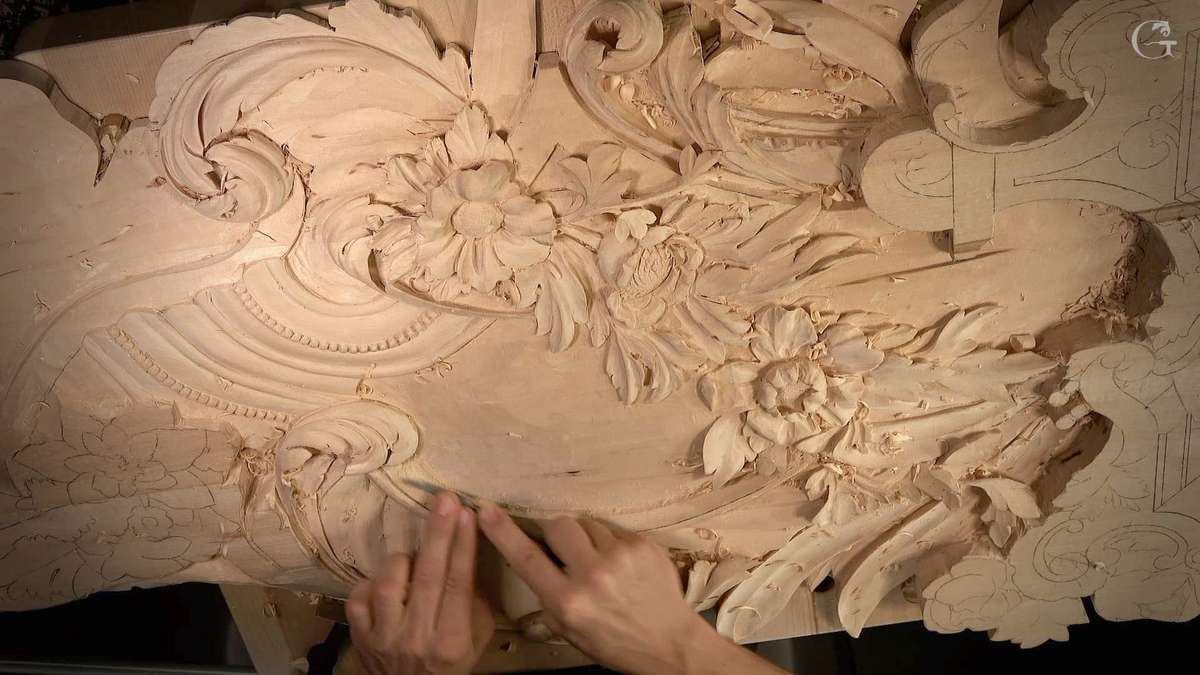
What kind of place was the zone?
We called it the zone. Wire, barracks, dogs, a work quota, and men freezing and starving inside a system that counted them every morning and fed them nothing anyway.
When did I finally get out?
An amnesty came two years in, and a guard disobeyed an order to keep me longer.
The union broke apart. That turned out to be the best thing that could have happened to me. The new government granted an amnesty for men held over political and religious views. Forty two of us qualified, and I was one.
Something else was moving that I could not see from inside. Amnesty International had taken up the case of religious prisoners in Russia and was pressing for our release. Men in offices I will never visit were arguing about me.
Then, the day before we were supposed to walk out, an official locked me up again.
Back into a punishment cell, 4 feet by 8 feet. Rough concrete on every surface, like the inside of a raw block. By then, two years of my life were gone.
He hated me and he wanted me kept. He told me straight out that even if I did get released, they would come and lock me up again. The release, he said, was only for show, so the Western world would think they treat people well. Exactly what that man said to me.
I thought that was the end of it. My faith held. But my hope of walking out was gone.
No sleep came that night. I prayed all night in that cell.
The next day the administration told me I was going home.
At eight the following morning my door opened.
Another official from the jail had found out where they were keeping me. He stood there and told the soldiers to release me. No argument with the higher-ranking officer. He just let me out.
Why he did it, I still do not know.
I walked out that day, twenty one years old.
It was the air of freedom.
How did I get to America?
We married, and then the US Embassy granted us refugee status in two hours.
A couple of months after I got out, I married my wife. We met when I was sixteen. She was my bride the whole time I was inside, and we could not marry until I was free.
At the US Embassy I showed them the proof that I had been imprisoned for what I believed. Two hours. They told me I was under the protection of the government of the United States.
We flew on the fifteenth of March, 1996. Three of us. Me, my wife Nadia, and our son, ten months old.
That, I thought, was the end of the story.
Half a year later, back home, the government came to arrest my brother. They thought he was me. They were keeping the promise that official made me in that cell. But I was already in America.
My mother, my brother and the rest of my family are still there.
Could I build a business without English?
I landed on a Saturday and had a job as a framing carpenter by Monday, and I did not speak the language at all.
First, something about Americans. People here were generous to me and they were kind. They go shopping, they buy food, they worry about the same things as everyone else in the world. People are people. Nothing more complicated than that.
So, a job by Monday, and it did not last. I could not speak more than a couple of words, and you cannot work beside other men that way. A couple of days, maybe a little more. Not much.
Then a real problem landed on me. How do I feed my family?
I started my own woodworking business, and in 1998 it got a name and a state: Aalmark, incorporated in Indiana. By 1999 there were six to eight men on the payroll. First in Grand Rapids, Michigan, then down into Goshen, Indiana, in Amish country. Some of those Amish men became my friends. Wonderful people. We worked all through what we call the Michiana area, south Michigan and north Indiana.
We ranked among the best quality shops around. Top 4 percent. Our ranking was high across three states.
I began hiring the same month I opened. Other woodworkers were coming over as refugees from Russia, Ukraine, Moldova. Highly skilled men who could not get a decent job because of the language, the exact wall I had hit. Back then almost nobody in Russia was learning English.
Money was not why I hired them. Making money is fine, but that was not the reason. They needed to feed their children.
The architectural carving was my share of the work. They did the rest of the woodworking, and that arrangement held for years.
A few of them worked with me for over nine years, right up until I moved to Florida and had to start over from nothing. Another story, and not for this page.
We did entire houses. Kitchen cabinets, flooring, trim, finish carpentry, the whole house, plus the carving. Being good at everything was the only way we would survive.
Why did I sell all my machinery?
Two men I respect asked me the same question, and it took me years to admit they were right.
The first was a friend who runs his own woodworking business. Alex, he said, you are a wood carver. You are a good woodworker too. But think about how many people in the world can build a cabinet. Thousands. How many can carve? Almost nobody, so concentrate on the carving.
I heard him. Years still went by.
Later another man came into my shop. A famous woodworker. Over twenty years I have known him, and I will not give his name because I did not ask him. He looked around at everything I had and said the same thing. How many production years do you have left in your life? Why are you spending them on this?
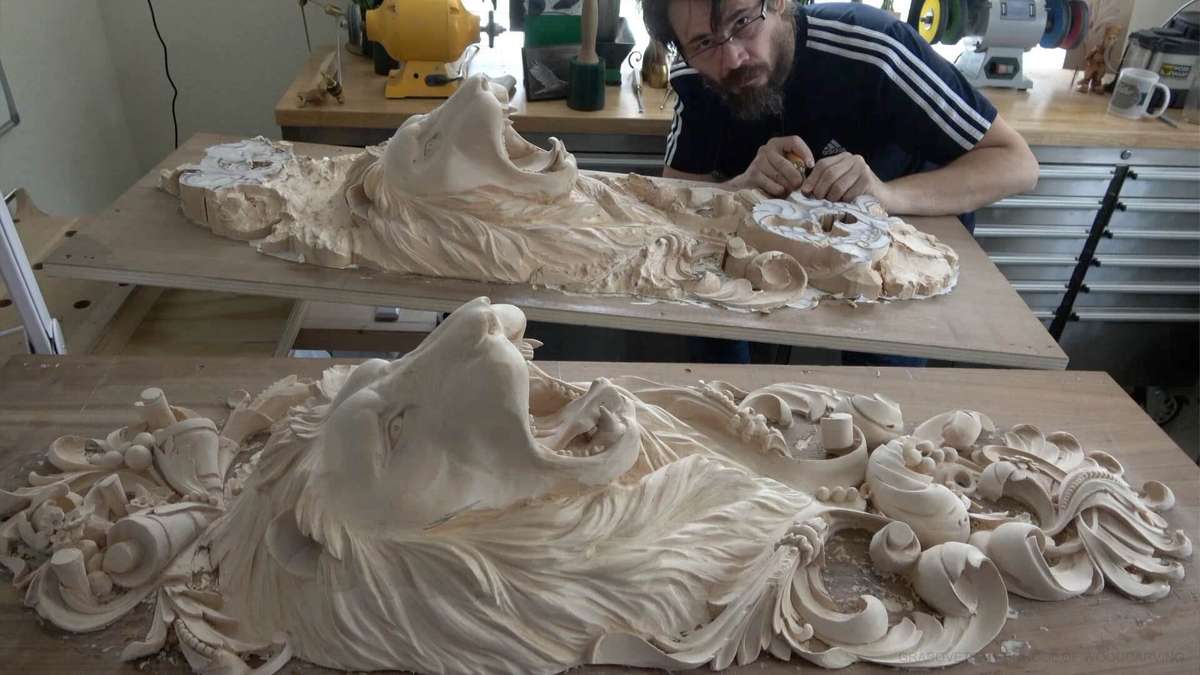
I sold it. The big belt sanders, the sliding saws, the Felder machines, all of it. Nothing about that place was little or hobby sized. It was a full commercial shop, and it went.
Carving only, from then on.
Then I got busier than I had ever been.
Did my neighbor really think I was a spy?
He did, and he said it to my face at his own dinner table.
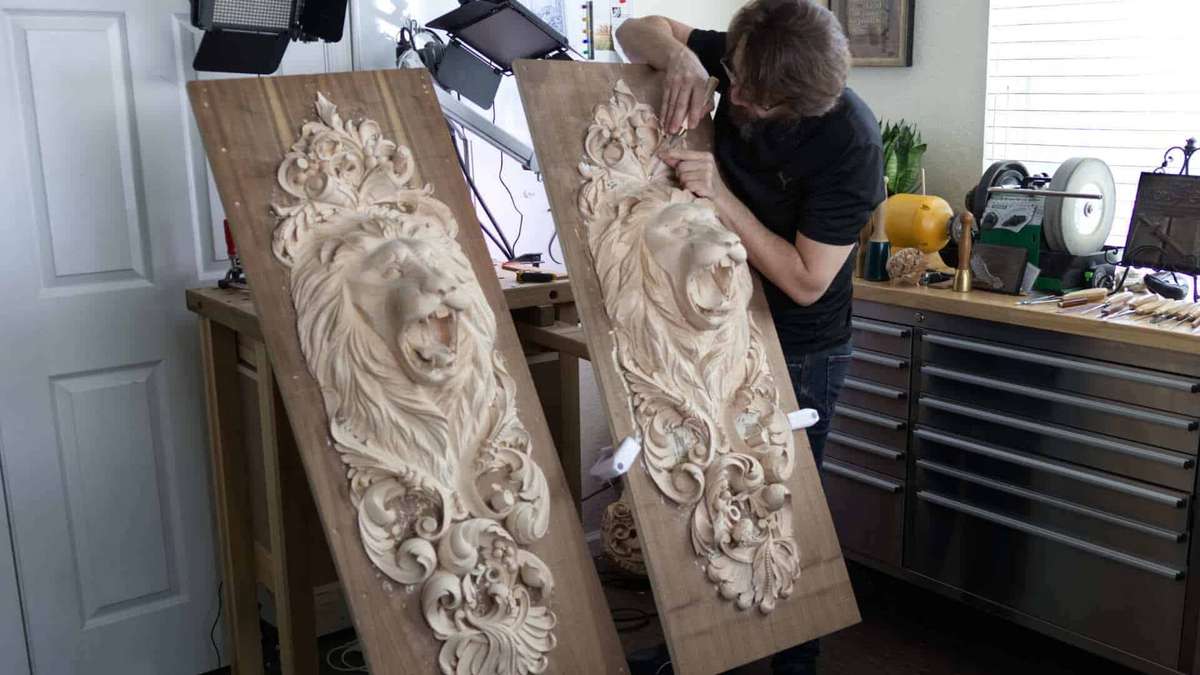
We lived in North Carolina for a few years. Charlotte. My shop was in my house, and the house sat in one of the more expensive areas.
Next door was a successful lawyer. For months, for years even, we said good morning and good evening and nothing more.
Then one day the families got together for dinner at his place. And he told me what he had been thinking the whole time. Nice house, nice neighborhood, and this man never leaves. He must be doing something wrong.
He said, maybe you are a spy.
No, I told him. I came to this country as a refugee.
Who talked me into teaching?
A student named Richard asked Marc Adams to invite me, and then it took me two years to say yes.
The call came from Marc Adams about seven years before that video. He asked whether I had ever tried teaching carving.
Him I did not ignore. The idea I ignored.
English is not my first language, and my own work had me buried. And honestly I did not think of myself as a teacher. Would people listen to me? Would they like it? Two years of going back and forth.
What I did not know at the time was why he called at all. A man named Richard has taken my class every single year since. He is the one who went to Marc Adams and asked him to bring me in. That phone call happened because of Richard. He still does not know how much I appreciate it.
Marc told me not to be afraid. Good people, he said. Woodworkers. If it works, it works, and should it fail, it fails. Nothing to lose.
I came and I tried it.
I fell in love with it, and the people took me well. Next year the same faces came back, and new ones with them, and the class sold out fast. Other schools started calling after that, and they still call. Texas took me to the Austin School of Furniture, and down in Tampa I taught at the Florida School of Woodwork. At Marc Adams the class is called Carving with a Classical Flair. The Sam Beauford Woodworking Institute in Adrian, Michigan lists me under classical carving and Grinling Gibbons style. At Maine Coast Workshop in Camden I run a five day immersion, and one June the Camden Public Library put me on a public talk about the craft.
Whatever is running now sits on the workshops page.
Marc, if you ever read this, thank you for the invitation.
One more thing. It embarrasses me to put it here. When the Maine paper wrote up that Camden workshop in 2021, the man who runs the school told the reporter this:
He has been called the world's finest carver. He also is a fascinating man, from Russia, who gives a colorful and animated presentation.
William Brown said that, not me. I would never write that sentence about myself. It stays in because somebody else said it on the record and you can go and read it.

Why did I open an online school?
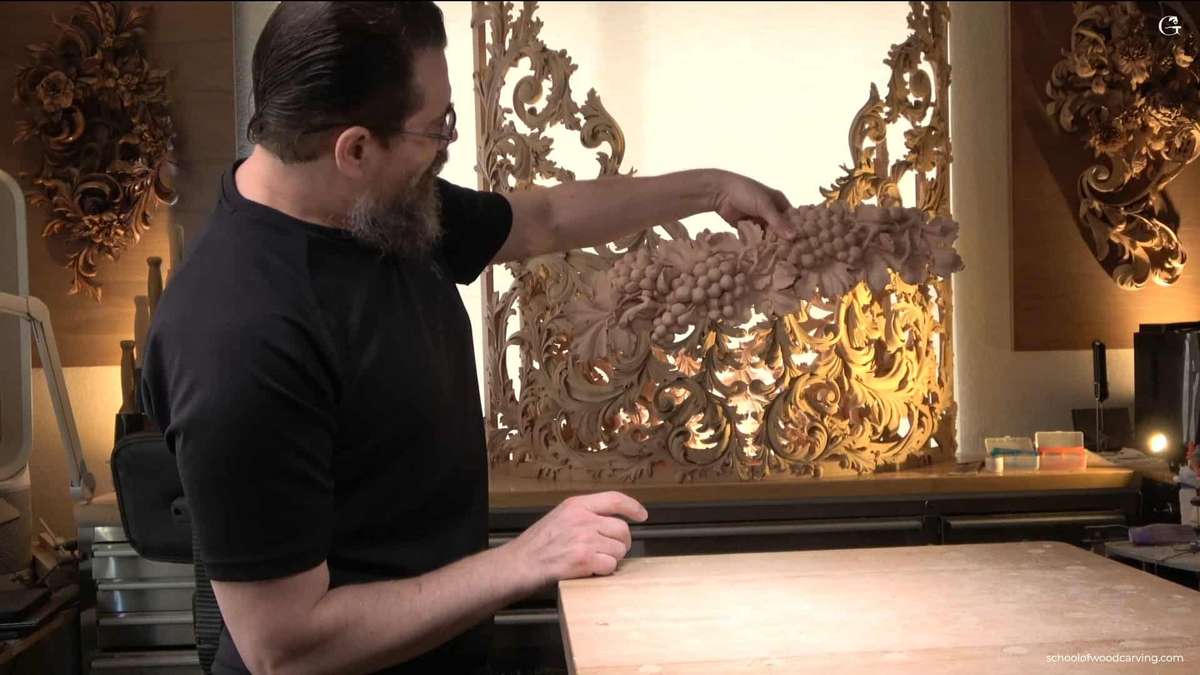
The old European way of teaching was never a lecture. A student stood beside the master and watched.
Exactly how I learned. I stood next to my teacher and I watched.
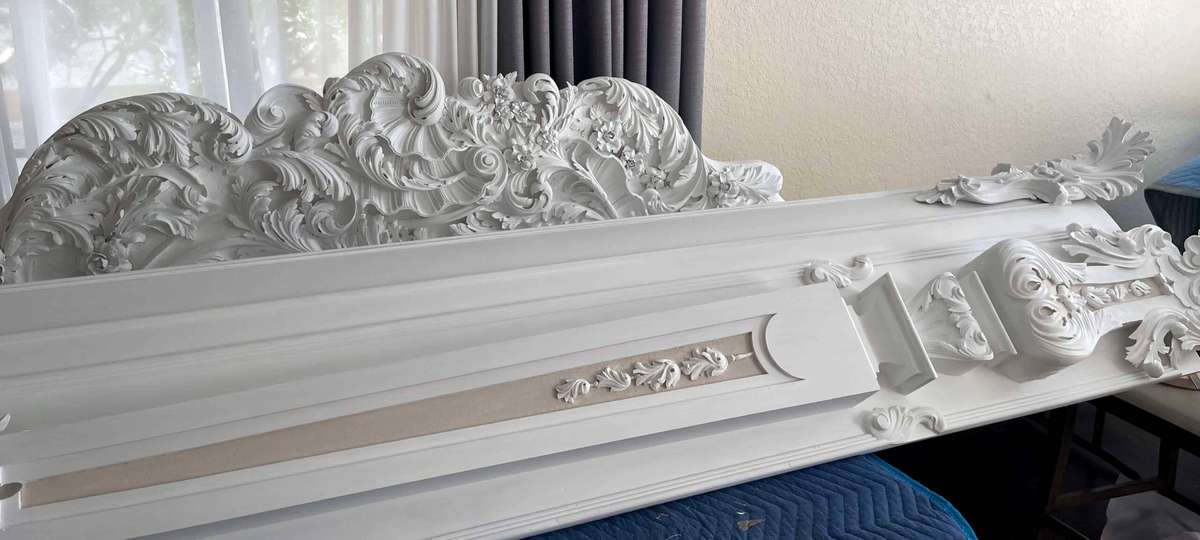
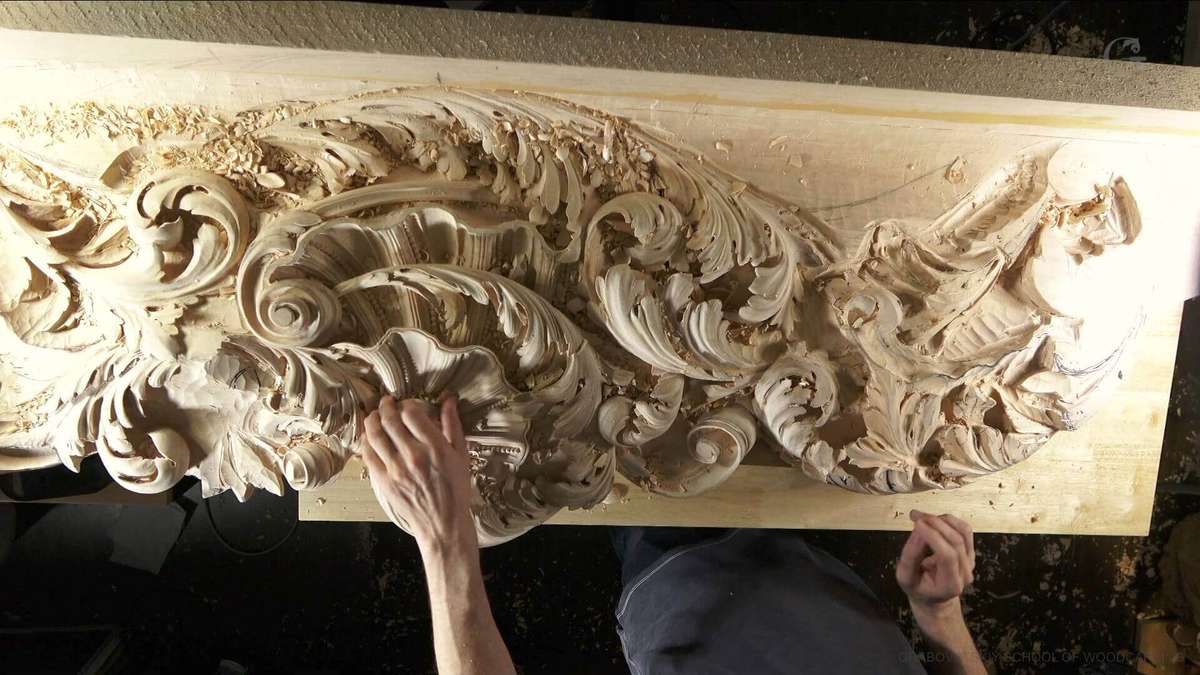
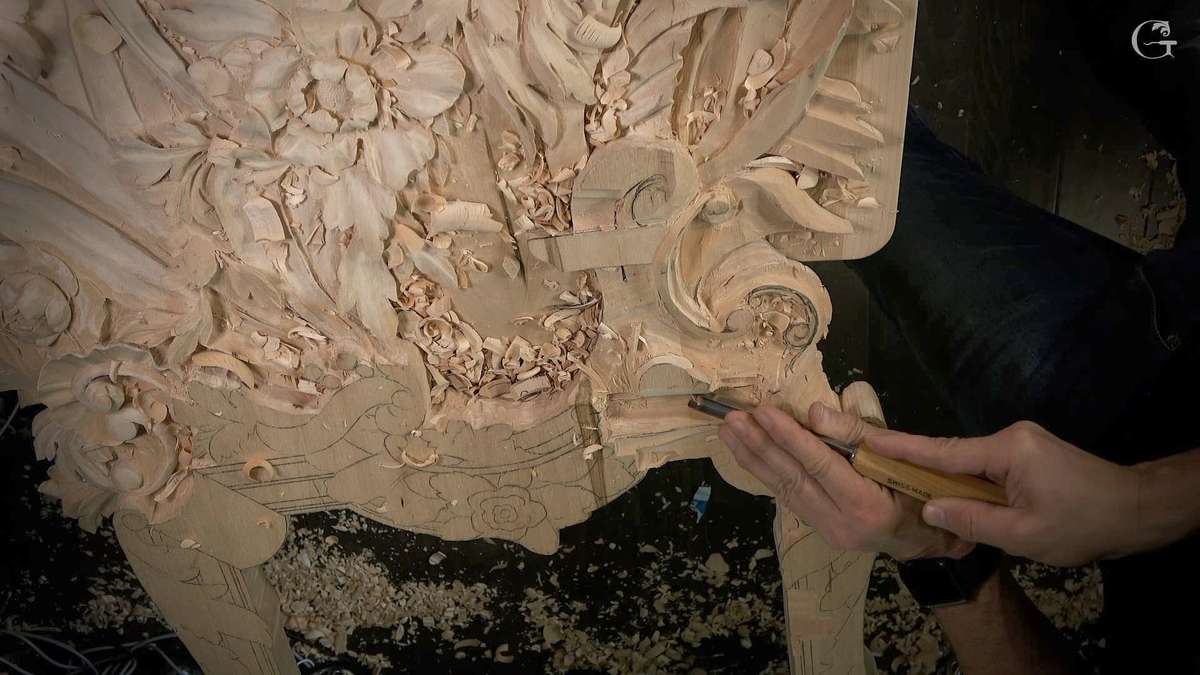
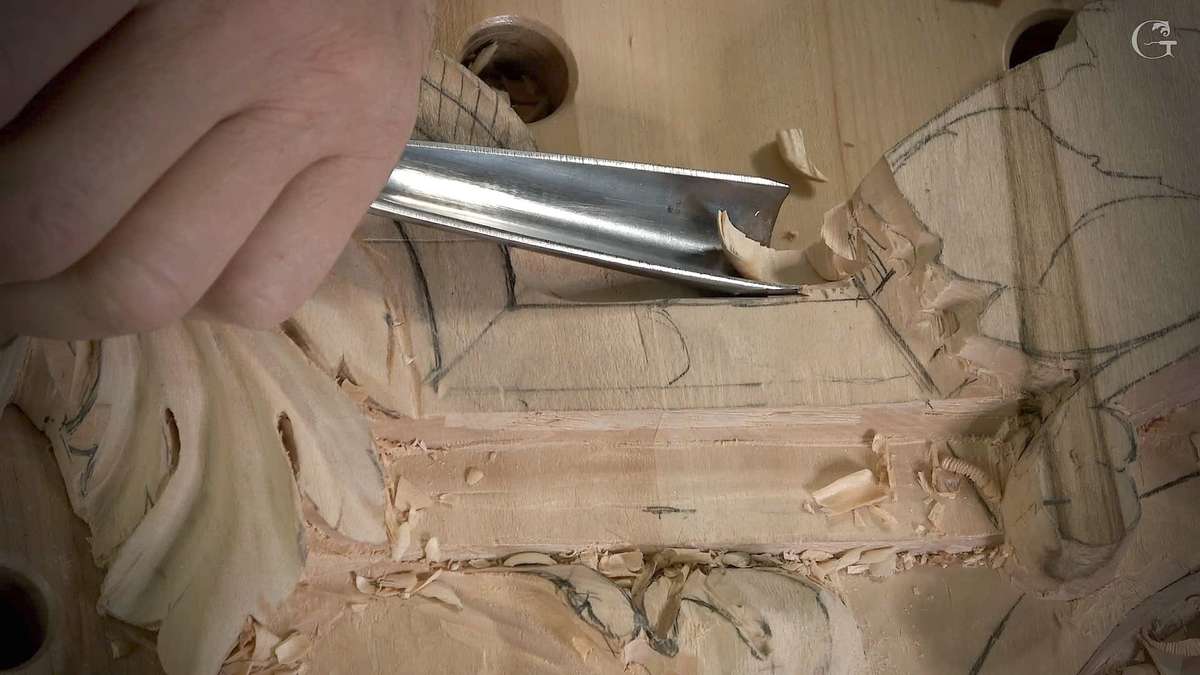
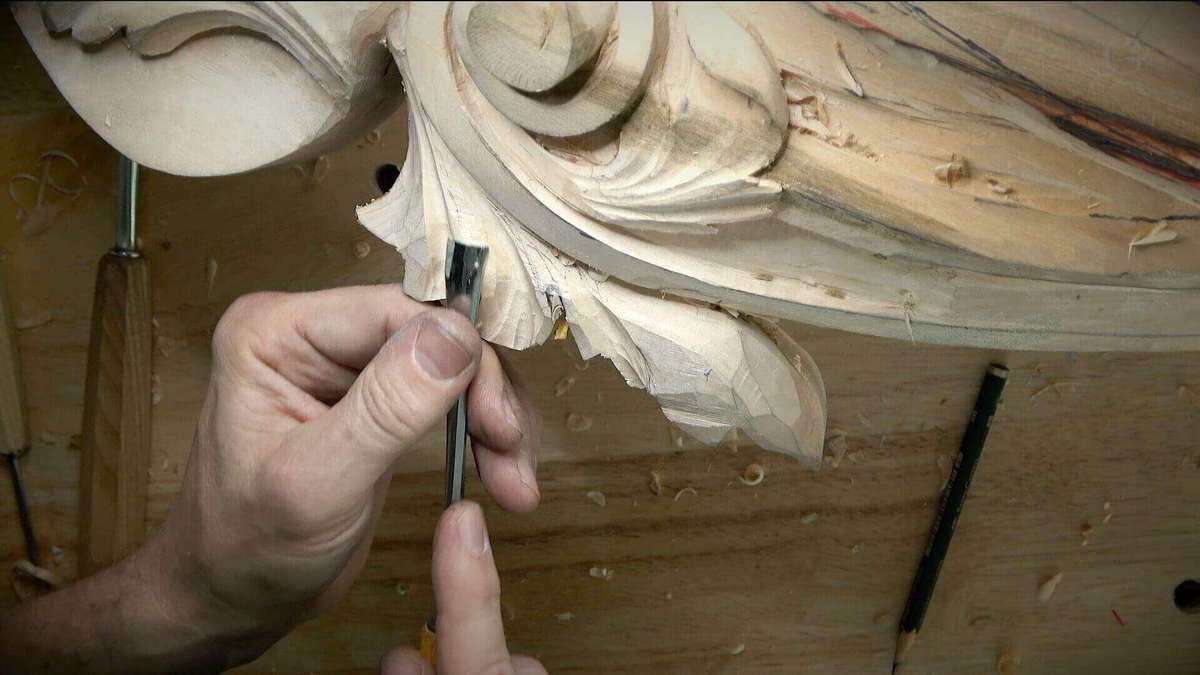
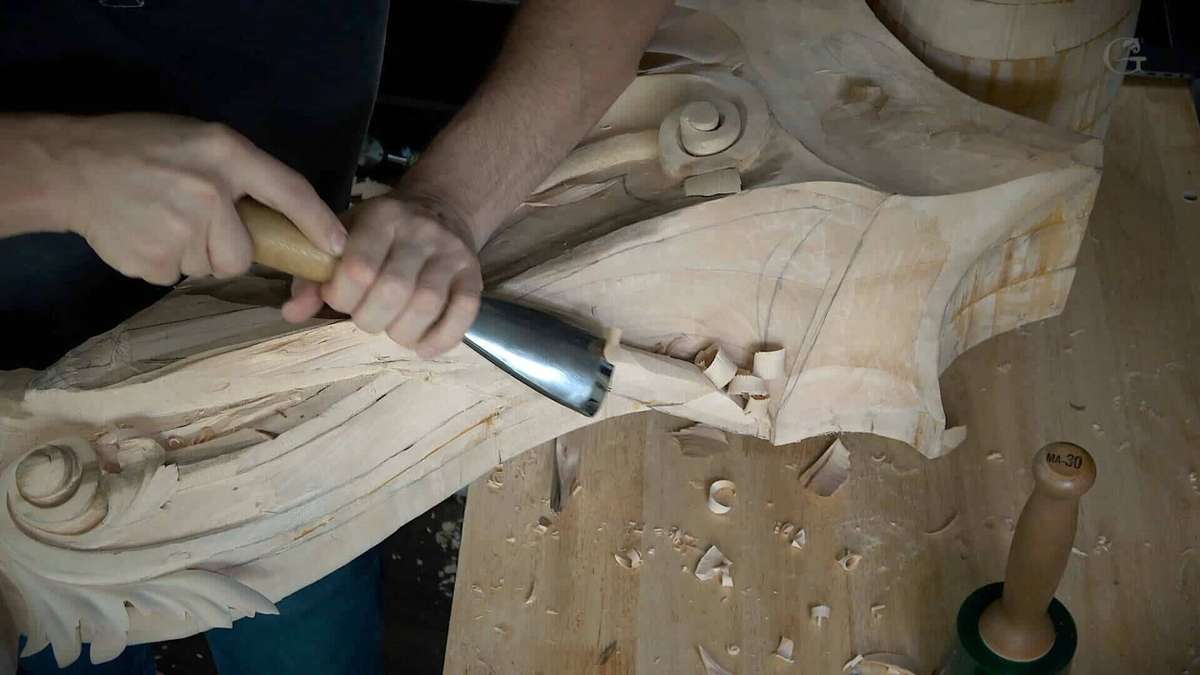
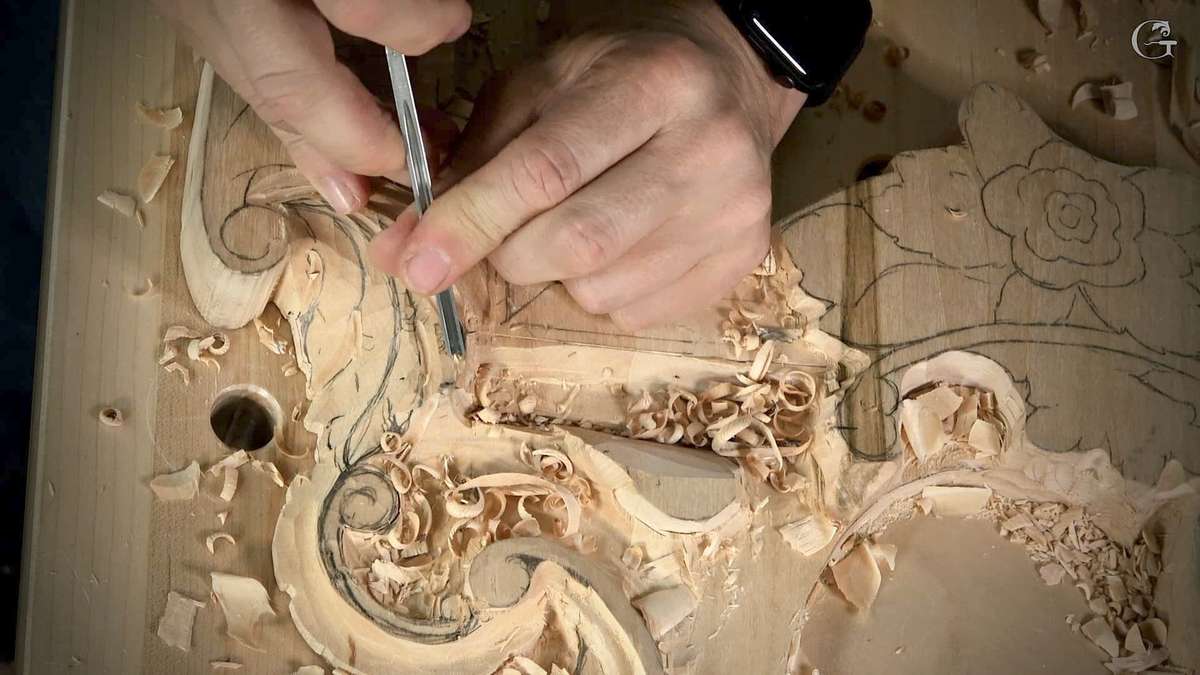
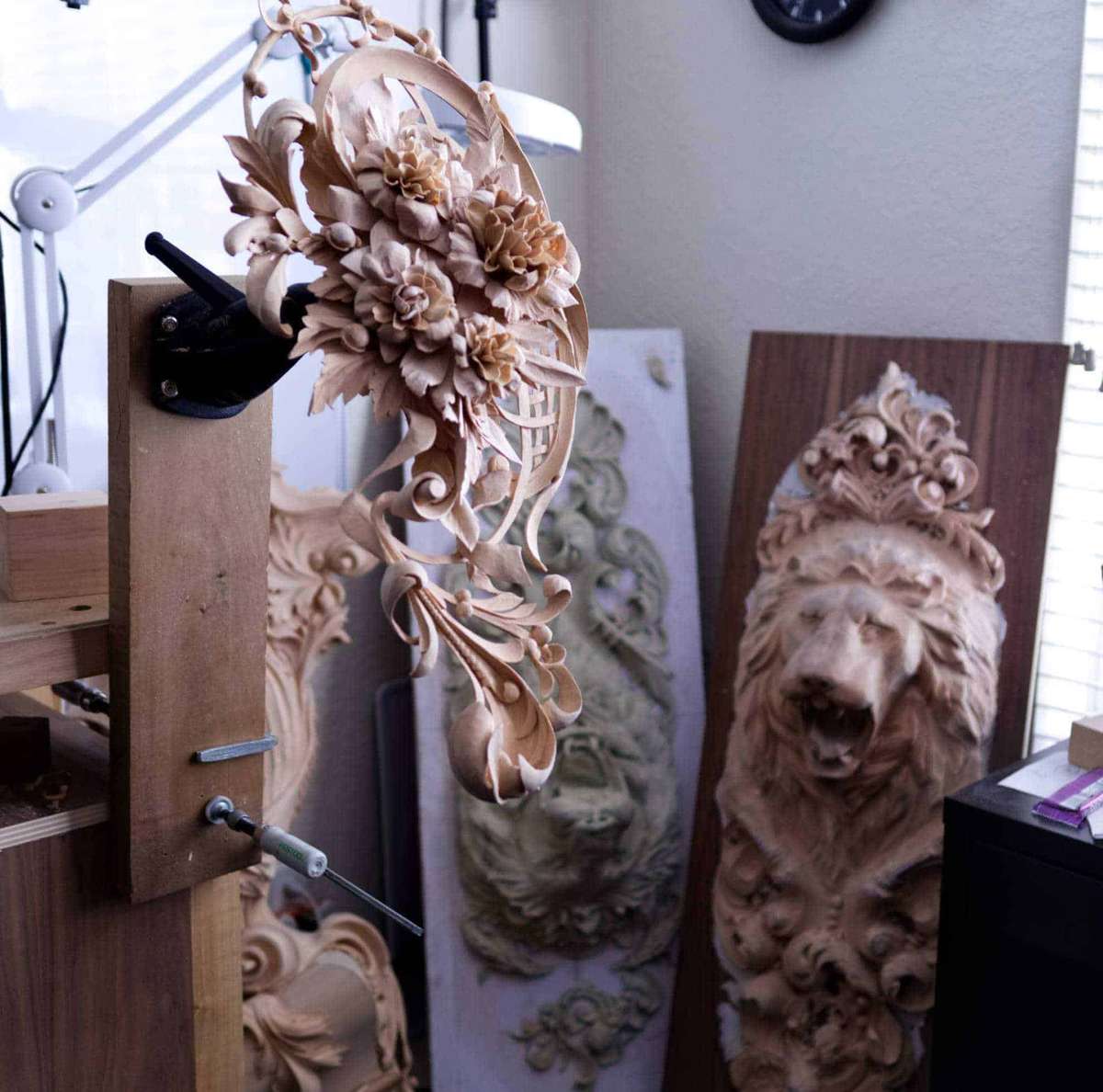
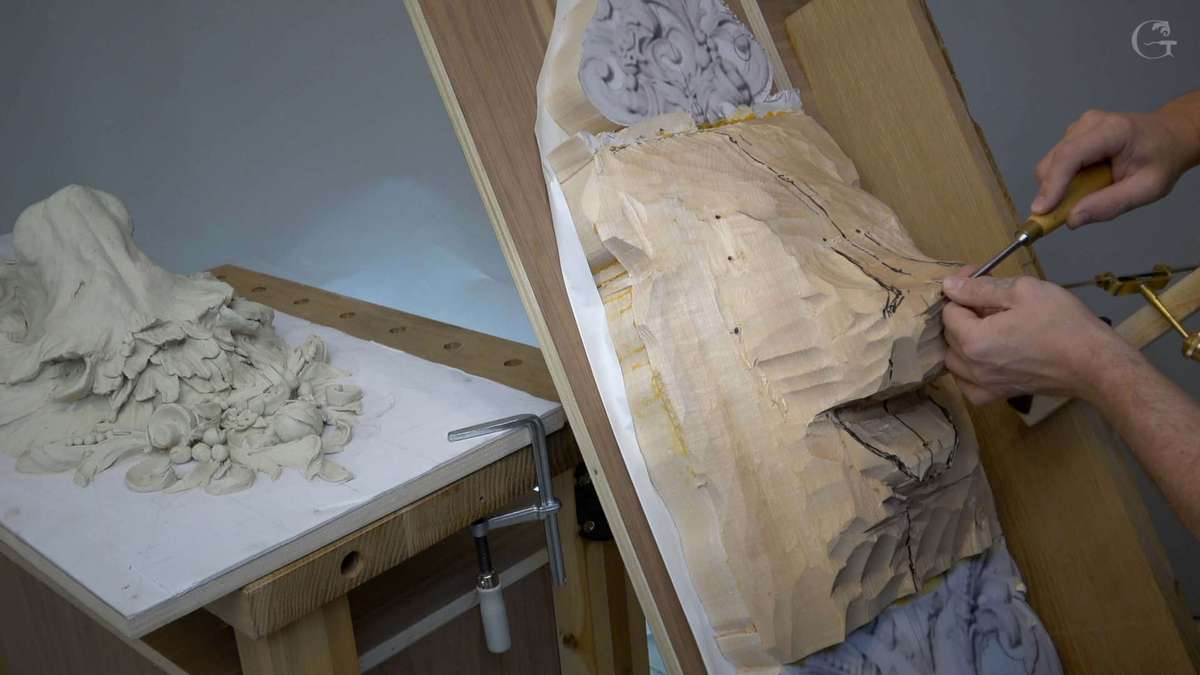
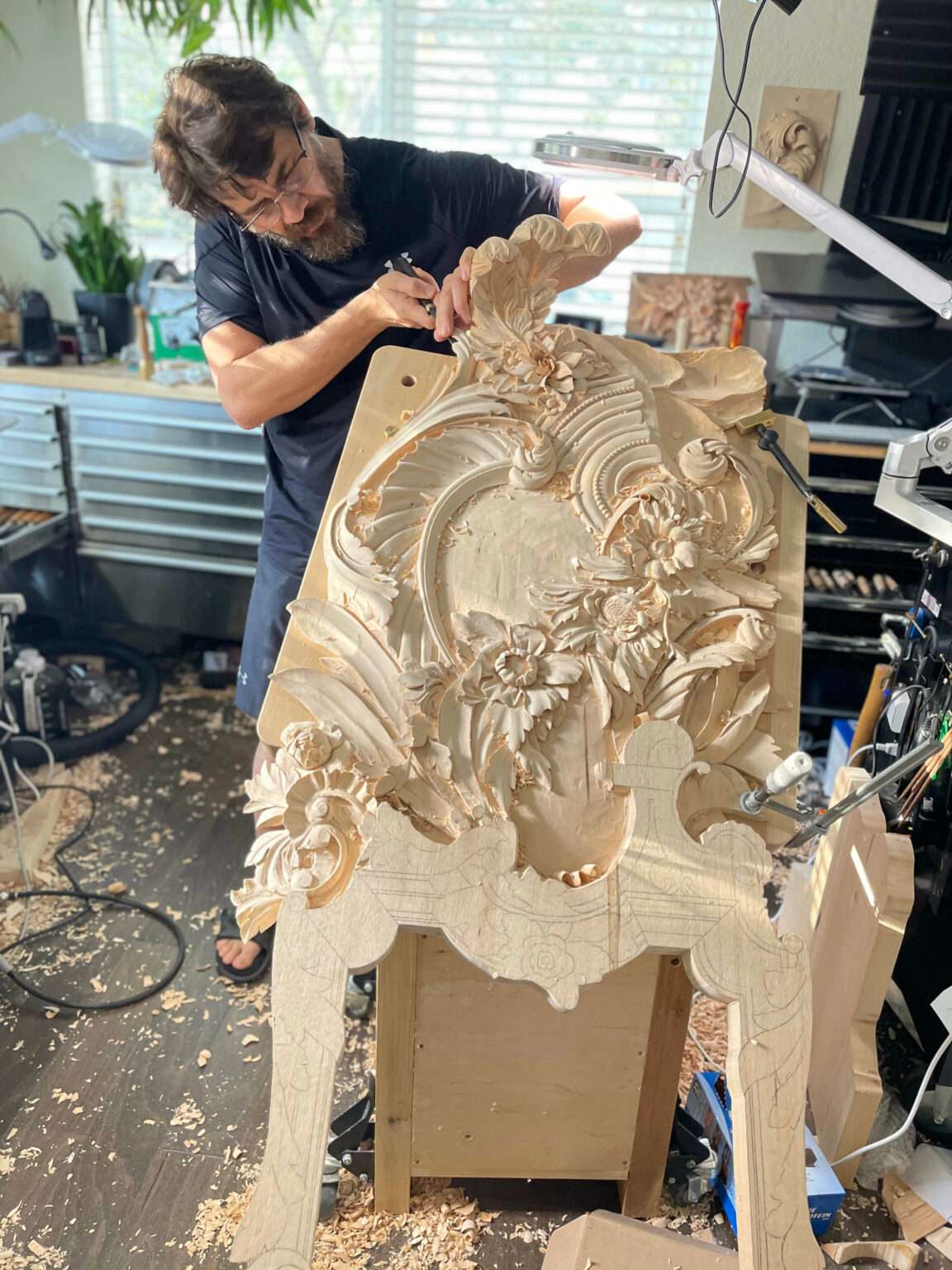
Which is what the school is. You watch me work. Sometimes I stop and explain every cut. Other times I just carve and talk, and you see how the thing actually develops under the tool. A number 11 gouge at five millimeters, digging into a slope that climbs to the ceiling.
Schoolofwoodcarving.com was three years old by the time I recorded that talk, with hundreds of students, and more coming every week. Some weeks it was every day. Never held a gouge? The beginner path is numbered from the first cut. Carved for forty years? The full course list opens on the same plan.
Honesty matters in there. If I make a mistake while carving, then I made a mistake. Pretending otherwise is not something I will do.
What did I win the awards for?
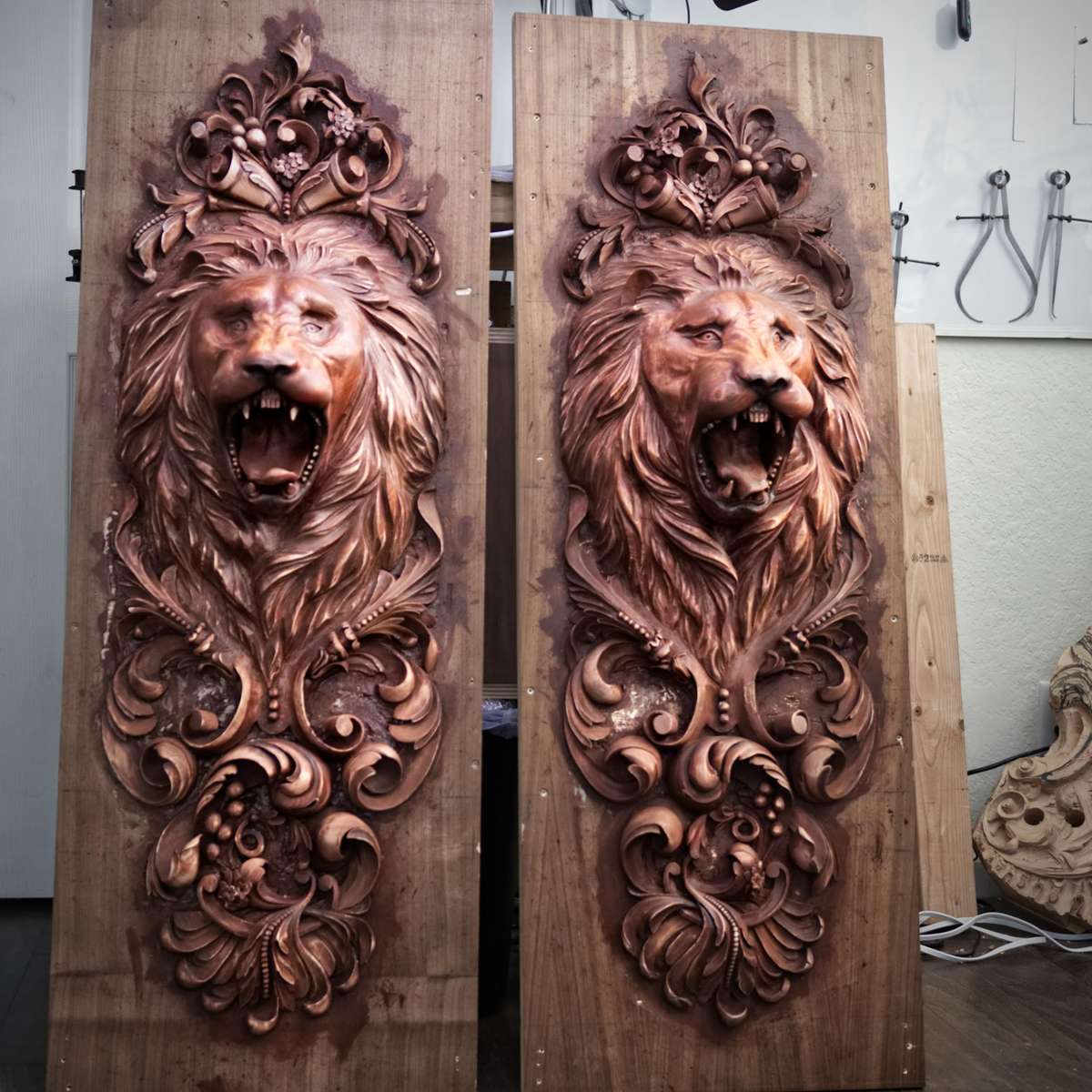
A panel called Wall Decoration took first place and made me International Woodcarver of the Year in 2012.
The record for that one sits with the Woodworkers Institute. Three years later, in 2015, Popular Woodworking Magazine picked my work for its Editors' Choice in Turnings, Carvings and Objets d'Art.
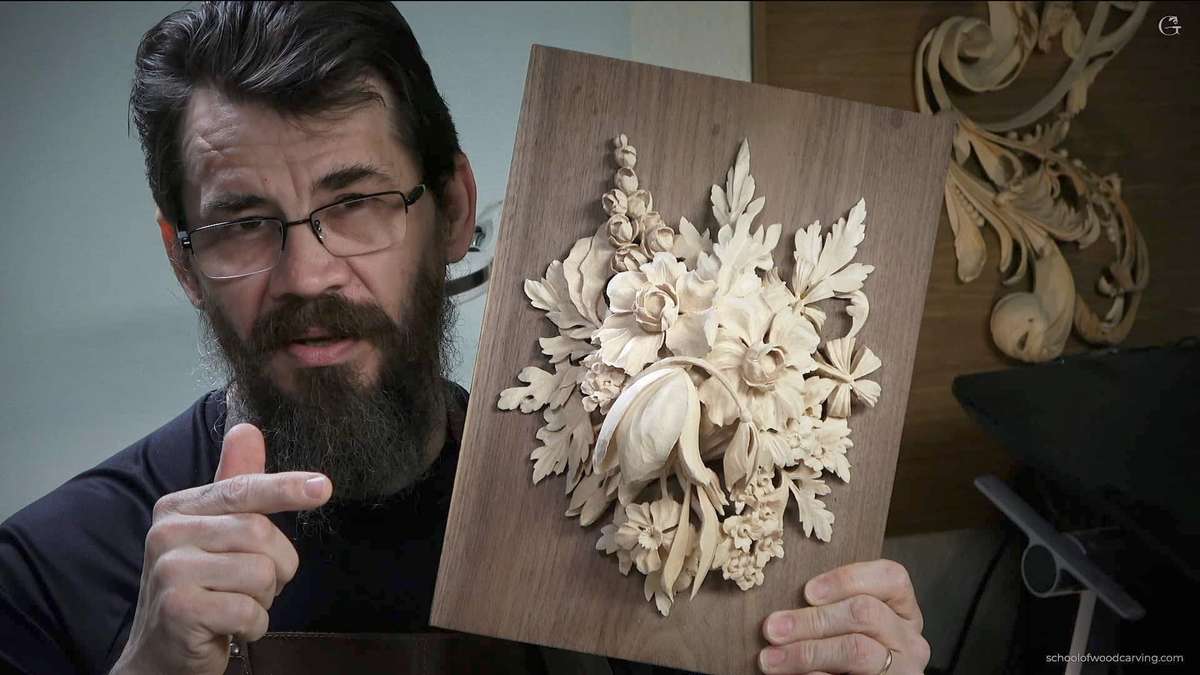
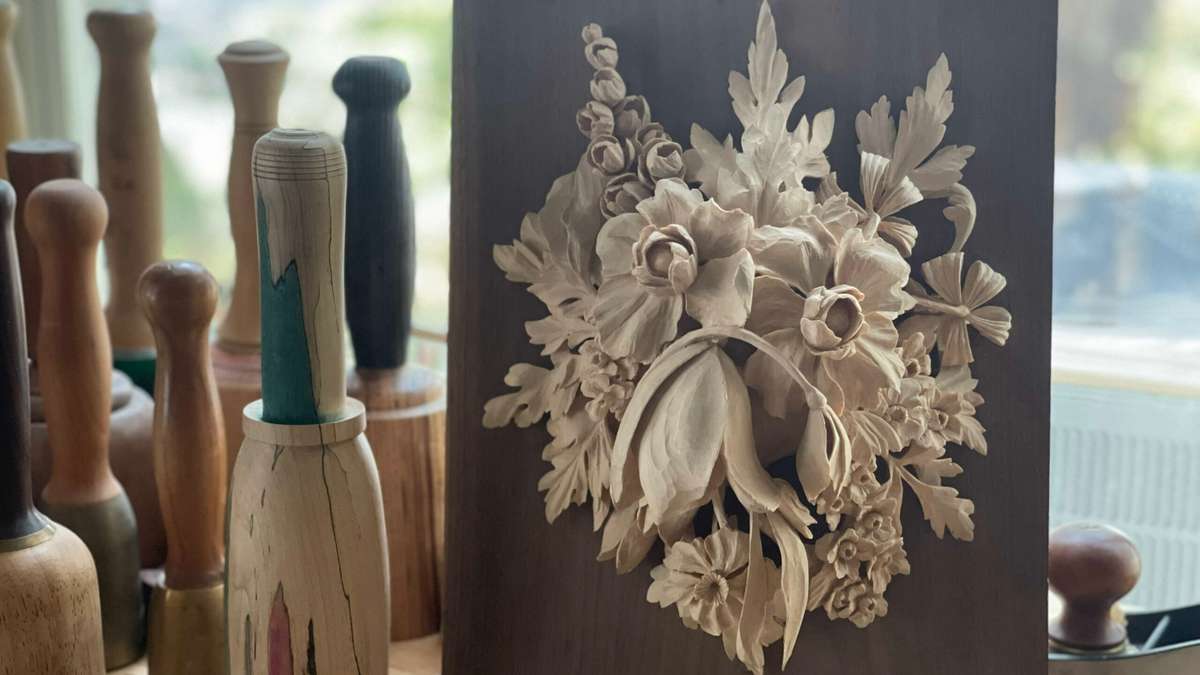
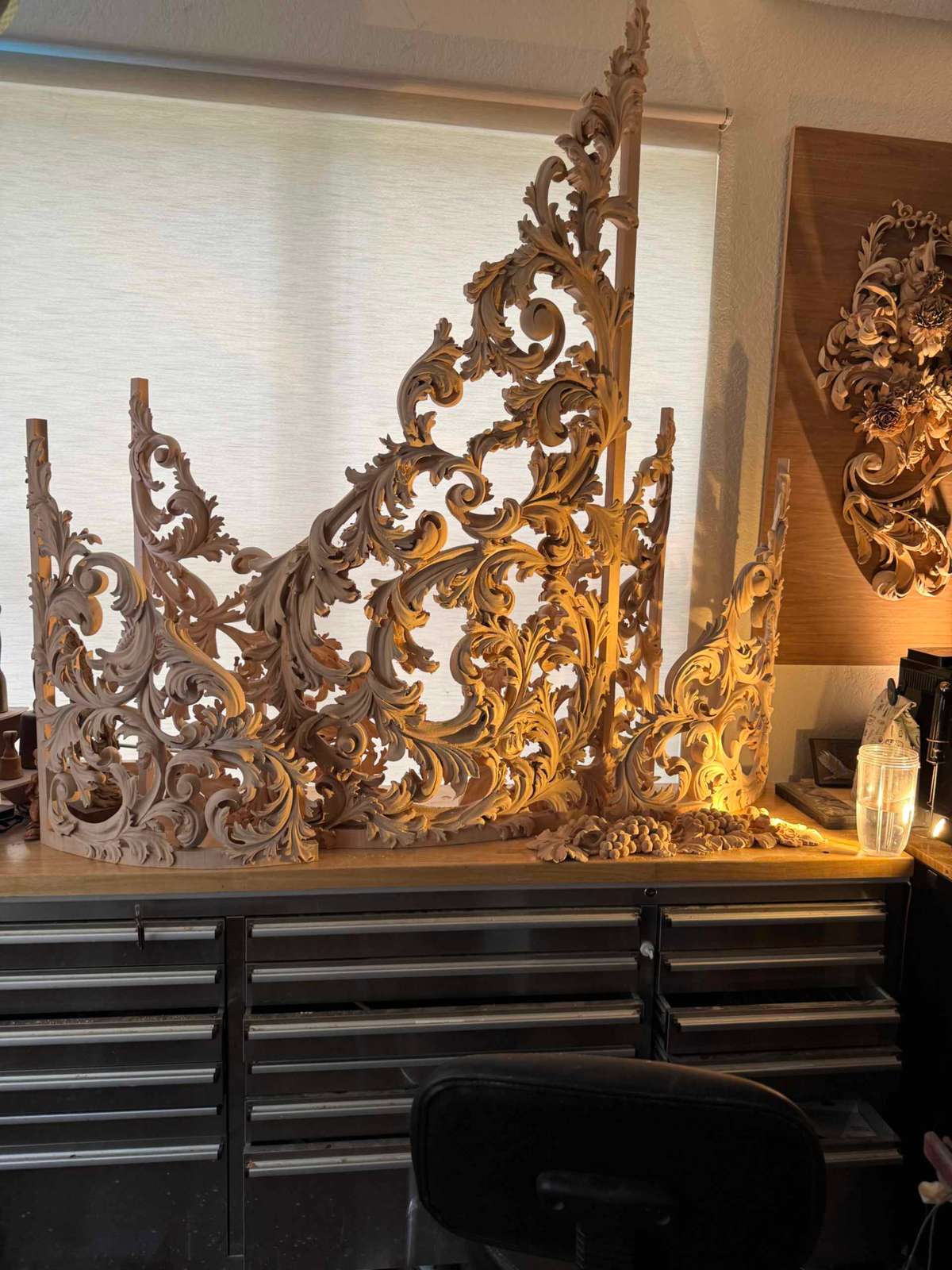
The award piece runs about 36 inches. A little under a meter. Complicated work, and if you get close to it you can see how much is in there.
A second project of mine was picked among the best in the world. Want the dates checked by somebody other than me? Wikipedia has an entry.
Am I the best of the best? No. Plenty of people on this earth can carve, real artists, real masters, and I am not going to tell you I stand above them.
But I know how to carve. My way is not the only right way, and I have never said it was. What I am saying is that the skill is mine.
How do I actually work today?
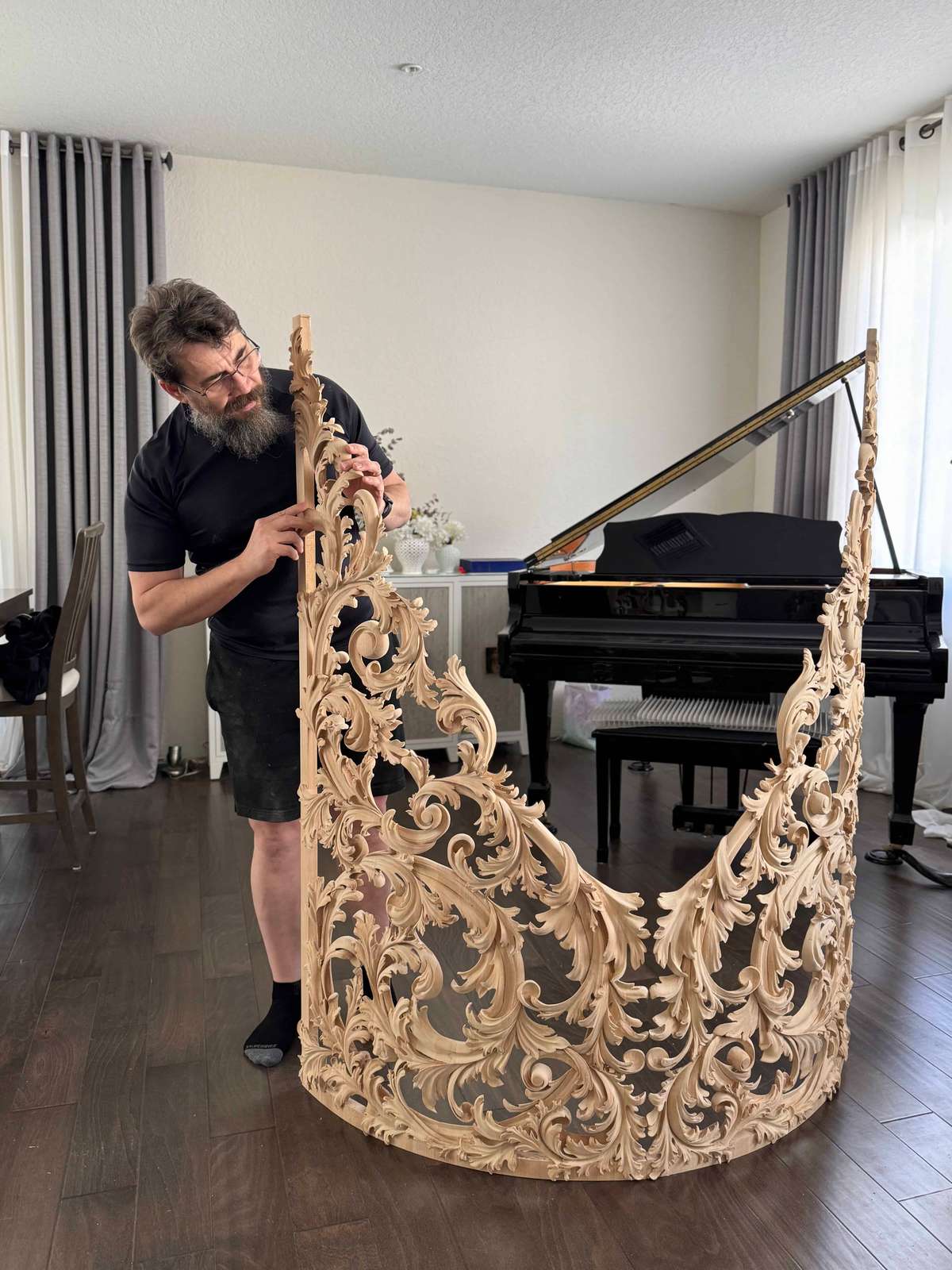
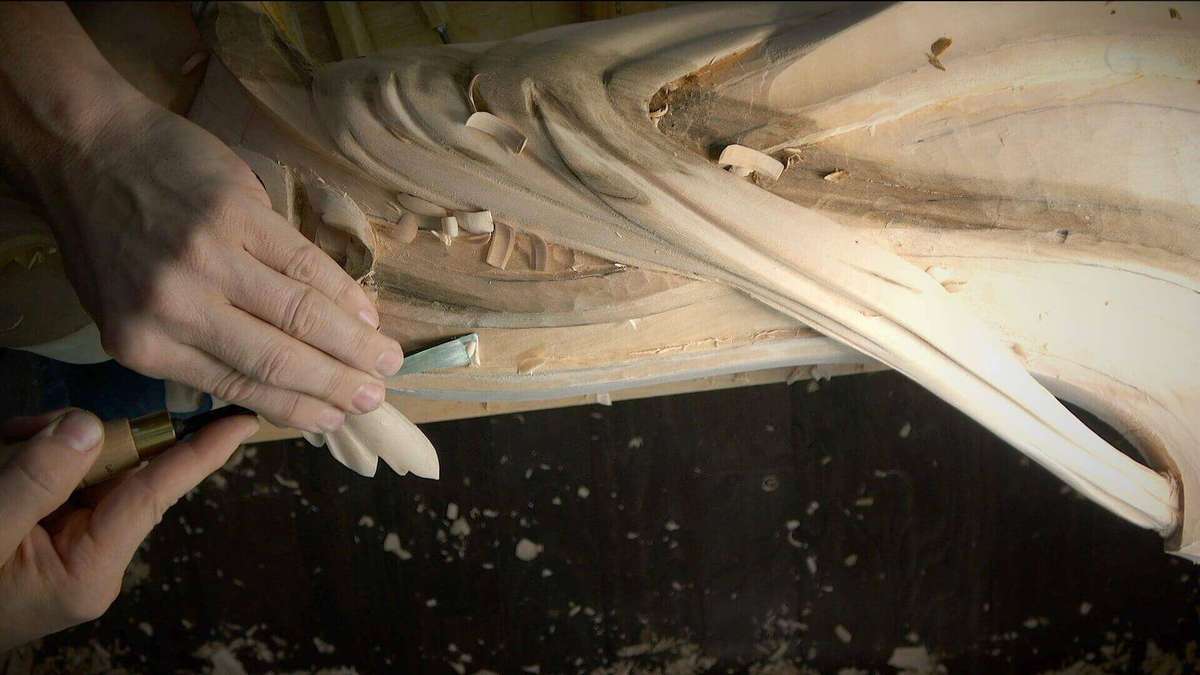
By hand. No machine touches the carving, and that is not nostalgia, it is the only way the surface comes out right.
A gouge leaves a mark. Hundreds of those marks catch light at slightly different angles, and that is what makes carved wood look alive instead of stamped. A router gives you an even surface every time, and an even surface is a dead one. Same reason you can tell a painting from a print across a room.
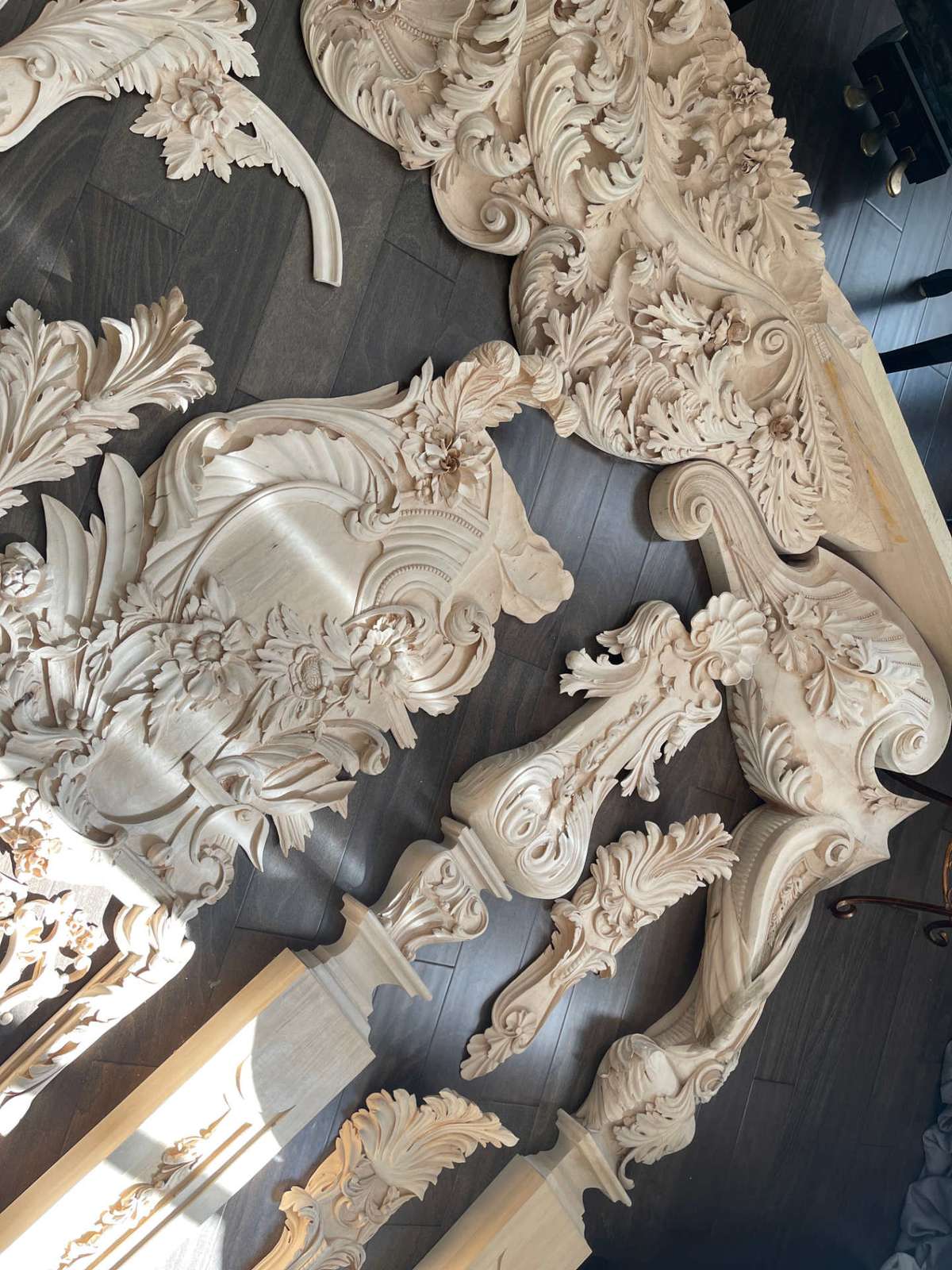
I work in high relief and low relief, architectural ornament, furniture. I also repair. Museums and private collections send me damaged carving off old furniture and old buildings, and I put back what is missing.
The lineage I work in runs back to Grinling Gibbons. Not a style I invented and not one I own. I learned the techniques and I keep using them, the way they were used for three hundred years before me.
Give me wood and I will do anything with it. (Almost)
That is what I wrote in an American woodworking magazine in 2013, and I stand by it. On a good day I carve from six in the morning until eleven at night and never once look at the clock.
Where has my work been written up?
In seven countries and seven languages, across more than twenty years.
Every link below was opened and checked before it went here. Where I could not open a page, it gets named without a link rather than sending you somewhere broken.
The publication | Country, and what language it was in | The story | The year, where there is one |
|---|---|---|---|
USA, English | Their reader gallery ran my architectural carving, with my notes | 2011 | |
USA, in English | The long version of it, written by me | 2013 | |
Revista din Lemn, and its five sister magazines | Romania, Italy, Germany, Spain, France | One profile by Mihaela Radu, run in Romanian, Italian, German, Spanish and French | 2017 |
The USA, in English | A long piece by William Francis Brown, a furniture maker in Maine | 2020 | |
Maine, English | A newspaper story about the Camden workshop, also run by Central Maine | 2021 | |
Maine, in English | Public radio listing the five day immersion in Camden | 2022 | |
English | An article about my work by people who travel to photograph Gibbons carvings | 2021 | |
American, English | Episode ten, an hour on the prison years and on carving for very rich people | podcast | |
England | The people in England who gave me that title | 2012 | |
English | An encyclopedia entry somebody else wrote | ongoing | |
Russian | That very entry, in Russian | ongoing | |
My studio | Commission work, not teaching | ongoing |
Four more sat in print and no live page opened for any of them, so here they are without links. Popular Woodworking Magazine in 2015, and Fine Woodworking again in November 2021. Woodcarving Magazine, issue 180. The Goshen News, back in 1998, when the shop in Indiana was new.
And three schools list me among the people who teach there, which matters more to me than any article, because a school putting your name up is a school staking its own reputation on you.
The school | Where | What they list me under |
|---|---|---|
Indiana | The class is called Carving with a Classical Flair | |
Adrian, Michigan | Classical carving, Grinling Gibbons style, architectural and ornamental | |
Camden, Maine | The class there is Carving in the Classical Style | |
Austin, Texas | Fundamentals of carving, and the classical flair class | |
Florida School of Woodwork | Tampa, Florida | Low relief carving for furniture |
Where does the tuition go?
Part of it feeds orphans and widows, and some pays for talented children whose families cannot afford art school.
Not all of it comes to me. First, a lot goes straight back into the equipment, because the filming has to be good.
Then we give. Donations go through an international organization that supports orphans and widows. Study with me and you are part of that.
And we look for gifted children in families with no money for art school.
That child I know well. When I was eight, my father divorced my mother. He had been in prison a long time himself, and when he got out he simply left. My mother had nothing to send me to art school with. The talent was there and the money was not.
When we find a child like that, we do what we can. Should it come to nothing, at least we tried.
Am I successful?
You be the judge.
Think about Joseph, the one in the Bible. His brothers sold him out. He ended up in the house of a famous man and then he ended up in jail. And right there in that chapter it says God was with him and gave him success.
Sit with that. Joseph is an inmate. And God is the one calling him successful.
Joseph could have said, hold on, look at my pockets, look at these slave clothes. Yet he was successful. He was the example of it.
Measure success in dollars, and there are people making billions who leave me far behind. Measure it another way, and I have had results, some of which you have seen on this page.
I try my best. You be the judge of it, not me.

Who is telling you this
I am Alexander Grabovetskiy. I carve architectural ornament for a living, and the 2012 title up above is mine. Every word above came out of my own mouth on camera in April 2020, and nothing has been dressed up since. My studio work lives at Grabovetskiy.com. Teaching lives here.
That is who I am.
A boy who ruined his grandfather's chisel on a brick. A man kept alive by a single potato each day and a knife he made himself. A refugee who could not order lunch in English.
If any of that is useful to you, come and stand next to the bench and watch. Our Access plans open every lesson we have, and the tuition feeds orphan and widow charities.
Let us carve something your grandchildren will hand down to theirs.
Frequently asked questions
Was Alexander Grabovetskiy really in prison?
Prison was real. I was eighteen when the Soviet government arrested me for my Christian faith, not for any crime. They tried me under a law: seven to fifteen years, or the death penalty. An amnesty freed me after the Soviet Union broke apart, and it covered 42 men. I was one of them.
Did he really carve while he was in prison?
My tools were homemade: a knife whose blade ran about ten millimeters, and I believe a small gouge out of a nail. A Russian mafia boss brought wood and protection. We built furniture with carved elements and a fifteenth century staining technique that looks like marquetry. He sold it to prison officials. The wage for it was one boiled potato, handed over daily.
Where is Alexander Grabovetskiy from?
Dimitrovgrad, in the Russian part of the Soviet Union, is where I was born in 1973. My family roots are Polish, from an area that is now western Ukraine. The United States took me in as a political and religious refugee.
What wood does he prefer?
Indian mahogany is my favorite of the mahoganies. More than one mahogany exists, and they are not the same. You have sapele, Honduras mahogany, Indian mahogany. Mahogany in the Chippendale style was my great-grandfather's trade, and Chippendale is mahogany almost every time.
Does he teach in person?
In person I do, at the five schools in the table above: Marc Adams in Indiana, Sam Beauford in Michigan, Maine Coast in Camden, Austin in Texas, and Tampa in Florida. Most of my teaching, though, sits in the online school right here, and always has.
What is the hardest part of carving to learn?
Design. Most people think design means drawing something pretty on paper. Wrong. Design means knowing the laws of space, of reading, of repetition, and knowing how your tool is going to get into that corner before you ever draw the line. My teacher spent months making me think like a tool.