
August 30, 2024 · Updated August 18, 2026
By Alexander Grabovetskiy — Master Woodcarver · Founder, School of Wood Carving · 18 min read
What makes wood less dense?
Wood is a bundle of hollow fibers, and density is the ratio of solid wall to empty space. What makes wood less dense is wider hollows, thinner walls, and water that has already left. I have felt three different woods in one basswood board in three days.
Most people pick the lighter board at the yard and expect the gouge to have an easier afternoon. I have watched that go wrong many times. Weight and softness travel together often enough to fool you, and then the light plank fights back while the heavy one slices clean.
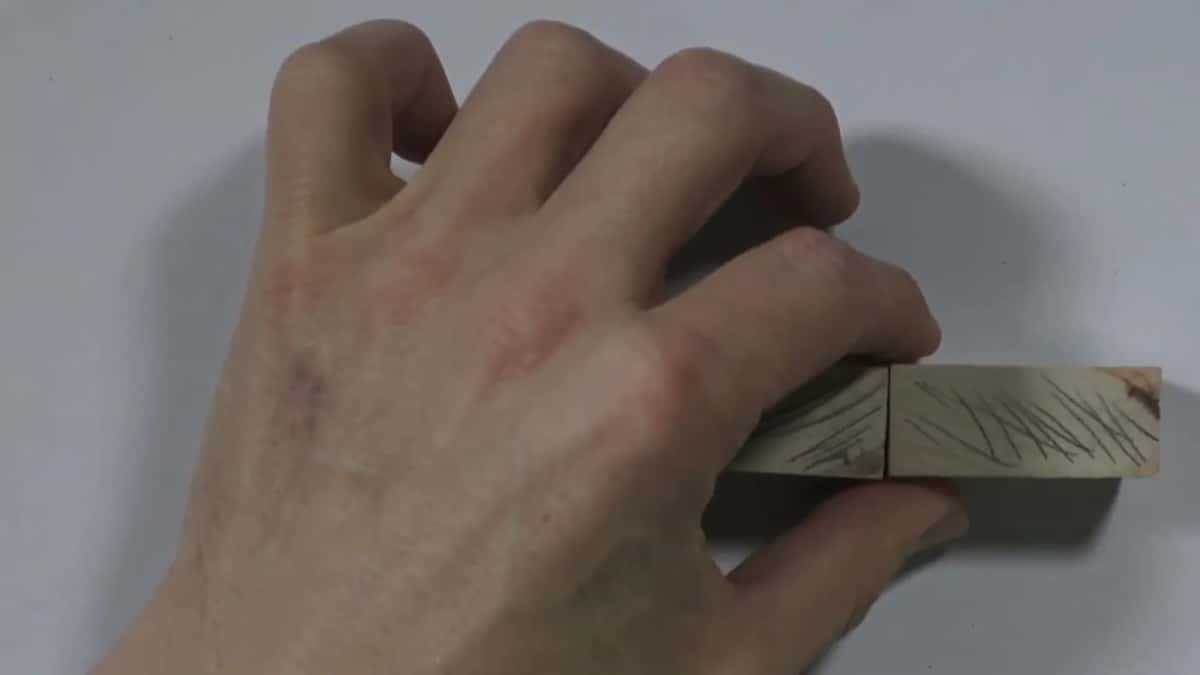
This page has two jobs. First it says what density means inside a board, in figures you can check against the USDA. Then it says what a carver watches for at the bench, which comes down to color, water and the rings on the end of a plank.
Two things the old version of this page told you were wrong. Cedar was filed as a hardwood. Its oils were credited with making the wood light. The measurements below are why both of those had to go.
- Cell wall material weighs the same in every tree, so density is only a question of how much hollow sits inside.
- Water changes week to week. Every board trades it with your shop and gains or loses weight while it does.
- Drying takes weight out and puts hardness in. Basswood reads 250 on the hardness test green, then 410 once dry.
- Hardwood and softwood are botany words. Douglas fir outweighs basswood by six pounds in every cubic foot.
- Color is a hint inside one board and a liar across two species.
- Oils, resin and gum are extra material, and anything that fills the hollow adds weight rather than taking it away.
What is density in a piece of wood?
Density is the weight of the solid wall material divided by the room the board takes up. The wall itself weighs the same in every tree on earth. What changes from species to species is how much of the board is hollow.
Hardly any page says that out loud. The USDA Forest Service handbook puts the specific gravity of the cell wall at 1.54 and calls it constant across species, which means a walnut wall and a balsa wall are the same stuff at the same weight. As a wood gets denser, the hollow middle of each fiber has to shrink, because the wall substance itself cannot get any heavier. The chapter on why one wood weighs less than another lays it out.
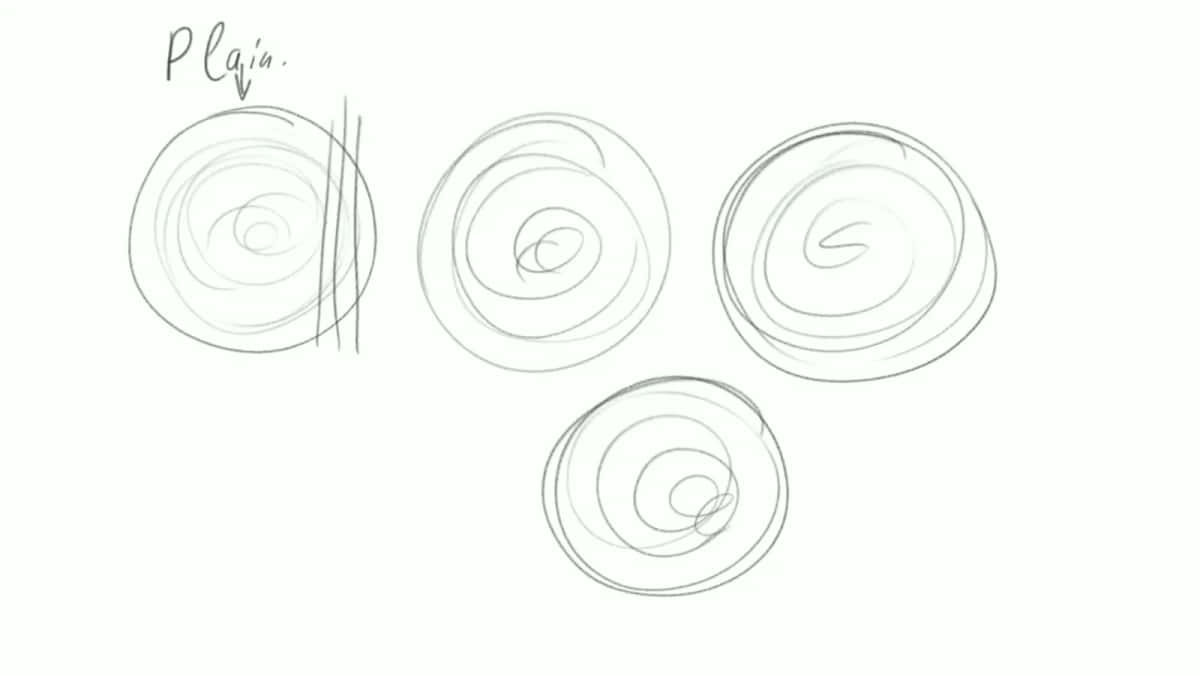
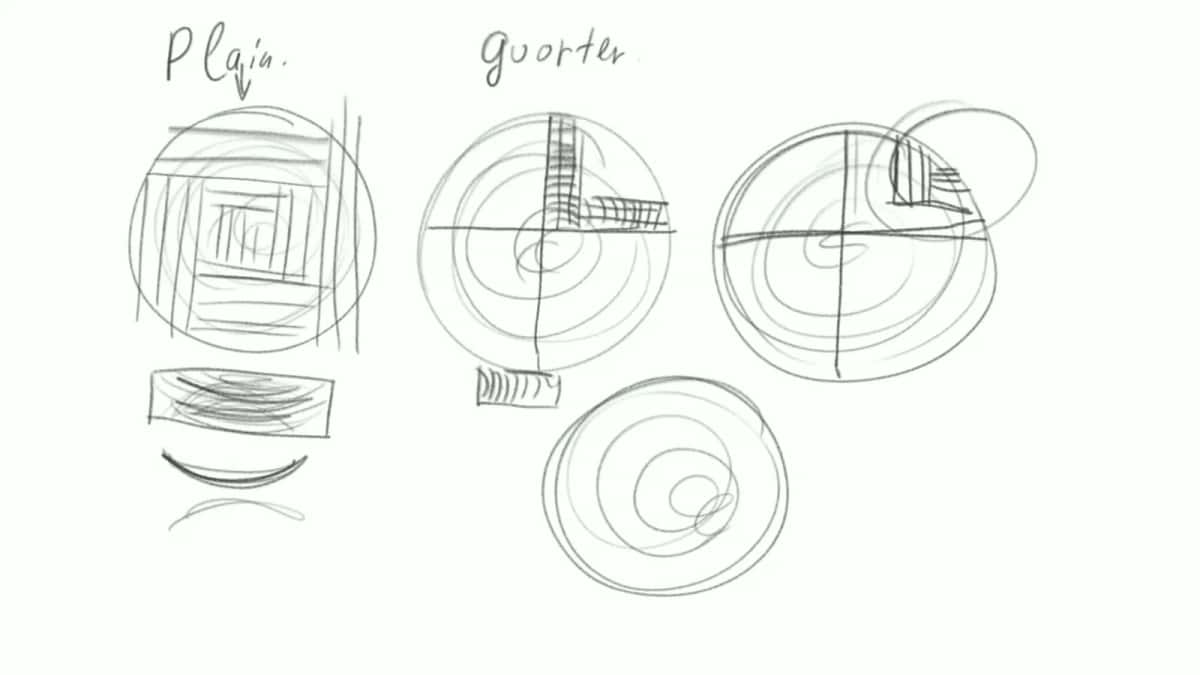
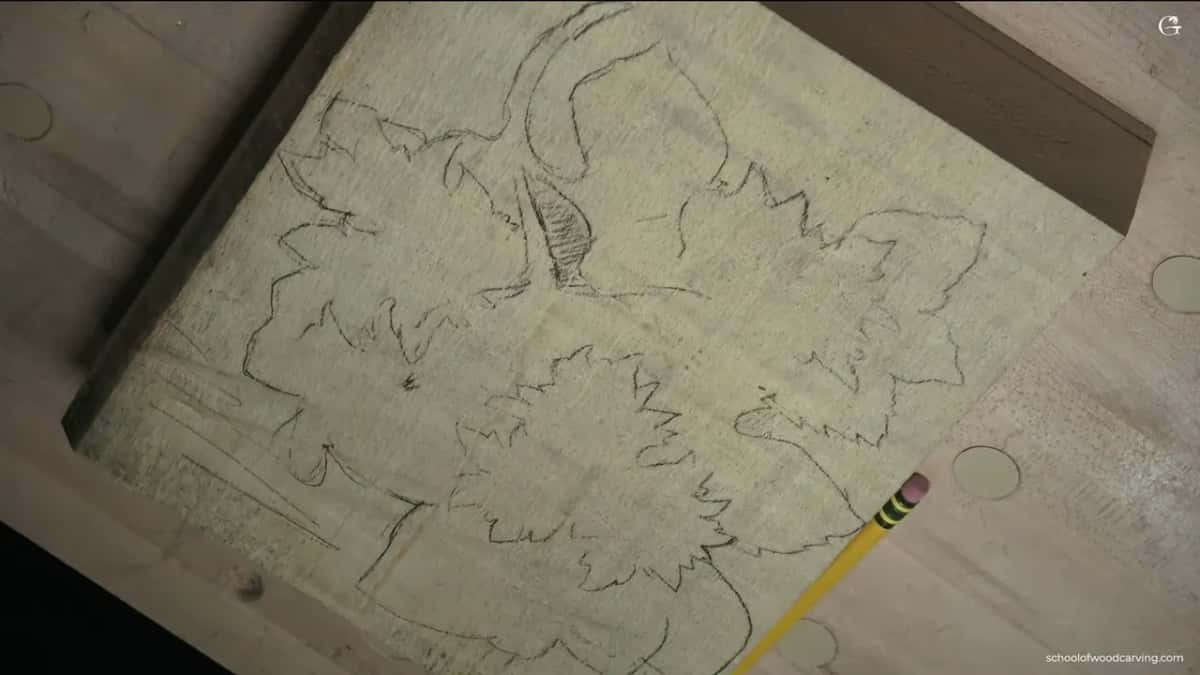
My own sketch. The rings tell you where a board came out of the log.
Here is how I say the same thing to a class. Please understand what a piece of wood is. I like to say it is a bunch of drinking straws compacted together, and that is exactly what it is. Those straws are not really consistent, and they are where the juice goes.
Wide straws with thin walls give you a light board. Thick walls make a heavy one. That ratio is what a scale weighs. Color and smell are separate readings, and the section below says what they are worth. For the formal version of the same idea, what specific gravity means covers the theory and how density gets measured covers the arithmetic.
Why do two boards of the same species weigh different amounts?
Water. A board keeps trading water with the room it stands in, and the water it holds has real weight. Two basswood planks off one pile can read differently in your hands inside a single week.
Please do understand, it is not because the wood is bad. Wood is alive, and it is a living thing that sucks the water in, swells, and then shrinks. There could be more water inside the fibers, or less water inside the fibers, and the board will be more dense or softer and more mushy.
The movement is there because wood is like a sponge. It takes water. If there is moisture in the air it pulls that water in, and once it takes the water in, it expands. It puffs out. Give it a really humid summer with a lot of rain and it will puff, and you cannot prevent that. Give it a dry winter and it shrinks back down.
One day it carves normally. The second day it becomes mushy. The third day it could feel absolutely different, like it is not even basswood any more. Same plank the whole time.
My own answer to that is dull and it works. I keep the humidity really low, I run a dehumidifier, and I hold it at roughly 35 percent even though I live in Florida. Still 35 percent. That is the common humidity for my environment, so a board that has been here a while stops changing its mind.
I went through all of this on a livestream in April 2020, drawing the log on paper while I talked. If your boards keep changing shape on you, what causes warping and cupping is the same physics seen through the damage, and how much a board shrinks puts figures on it.
Does drying a board make it easier to carve?
Drying makes a board lighter and harder at the same time. Basswood reads 250 pounds of force on the hardness test when green, and 410 once it reaches twelve percent. Lighter in your hand, tougher under the edge.
That single pairing kills what this page used to say, which promised that drier wood carves more easily. Nearly every strength and hardness property climbs as the water leaves, and the USDA records it in the chapter on what happens to wood as it dries. A light board is no promise of an easy day.

There are two drying methods in the trade and they hand you two different woods. One is kiln drying. The mills and the lumber yards all use it, because they have a big stove, to keep it simple, and they fry it. They really fry those boards. You can dry it quickly and sell it, and the water does come out.
Air drying is the other method, and that one was always my preferred method. It just takes time, drying naturally. Those fibers, when you cut the tree, are still alive, and they suck water much quicker. The longer ago that tree was harvested, the more the fibers dry out, and they stop taking that water.
Kiln dried stock carries a catch. It is dry, but it is pretty fresh yet, and wood has a tendency to adapt to its environment. Bring a board from the yard into a damp shop and it will absorb that moisture and swell. Two weeks on a shelf tells you more than the label did. For the patient road, how long drying really takes and drying green wood at home are the two pages I point people at, and whether you must dry it first answers the question underneath both.
Where in the log does a light board come from?
Rings near the bark move far more than rings near the heart. Movement is a separate matter from weight, and it decides which light board stays flat for you and which one turns into a shallow dish by August.
Look at the log and the rings inside the log. Closer to the outside it is going to puff a lot more. It will expand a lot more out there. Inside the log, those central rings are not going to move too much. Those straws are compacting, they get really close to the center, and they kind of shrink together.
It applies to pine, and it applies to other trees, to basswood. You have to understand those straws, because that is where the juice goes.
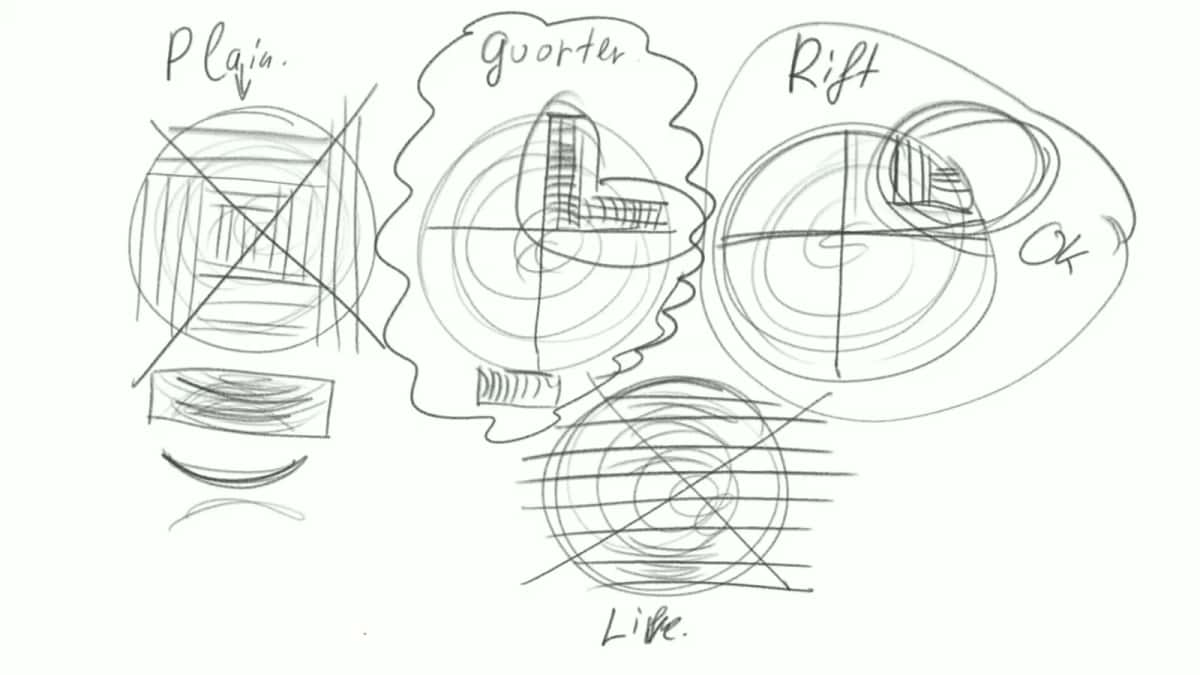
Plain and live sawn are crossed out for a reason. The rings decide it.
The best of the best is quarter sawn material. The closer to the center you get, the tighter the rings, and a lot less movement in the finished board. When I am buying wood I get one of those two, quarter sawn or rift cut. Weight is a different question entirely, and this is the one that saves a carved panel.
A wide plain sawn board off the outside of a log holds more of that argument inside it than a narrow quarter sawn one does. Same species, same weight, two futures.
Can you read density off the color of a board?
Color tracks density inside a board you have already carved, and it tells you nothing about a board you have not. I use it every week. I would not hand it to you as a rule that travels.
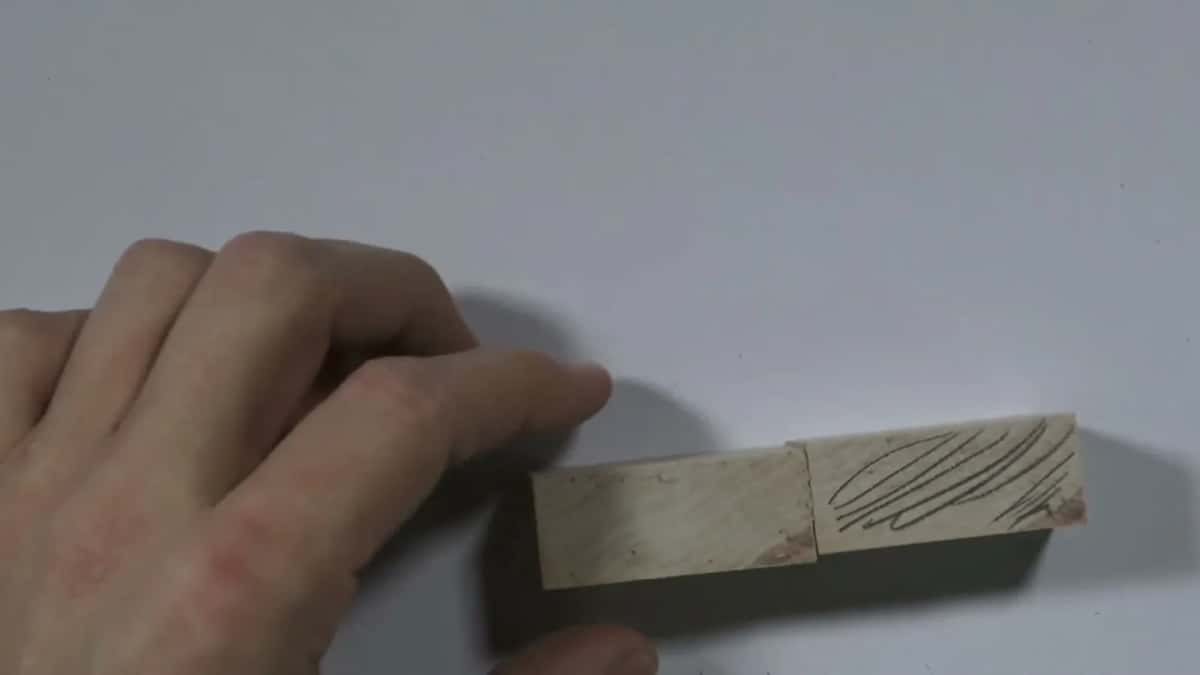
Here is the honest mess. Sometimes the wood itself, the density or softness of the wood, changes even if it is the same species. I am talking about the same lime wood. Even with the same lime wood you can see variations of softness, and you can see the color changing. This is a lighter color against this darker color, and on the darker color, in my case, the wood is a little softer.

Now olive wood, where the arrow points the other way. That is the nature of olive wood. In some parts you can see the variation of color, and it is harder to carve on the darker wood and easier on the lighter wood. So the density is different.

Read those two paragraphs again, because they disagree with each other on purpose. Darker limewood is softer. Darker olive wood is harder than the pale parts of the same board. Both readings are mine, both are true of the board that was in front of me, and they will not fold into one law about dark wood.
Color is a measurement you take on the plank you are holding. On a plank you have never carved it is worth nothing at all.
Do cedar's oils make the wood lighter?
Oils are extra material, so they add weight instead of removing it. This page claimed the opposite for years. That sentence had it backwards, and it is the error I most wanted gone.
The chemistry runs the wrong way for the claim. Oils, resins and gums sit in the hollow parts as extractives, which means material laid down on top of the wall structure. Among the species where extractives are especially abundant, the USDA names western redcedar, and it records that a wood's measured specific gravity reflects the gums, resins and extractives inside it, which is what cedar's oils actually do. Something you remove to lose strength was never the reason the board felt light.
Cedar is light for the ordinary reason. Thin walls, wide hollows. Western red cedar measured comes in at 23 pounds a cubic foot, or 370 kilograms per cubic meter, with a hardness reading of 350 lbf. That same page notes it dents and scratches very easily because it is soft. The smell is a bonus and not a mechanism.
While the correction is open, cedar is a softwood. Calling it a hardwood is a category mistake and not a rounding error.
Are softwoods always lighter than hardwoods?
Those two words are botany and they carry no weight information. Softwoods come from conifers. Hardwoods come from flowering trees. The USDA writes plainly that "not all softwoods have soft, lightweight wood".
Take the three woods that embarrass the rule. Douglas fir is a softwood at 32 pounds to the cubic foot. Yellow poplar is a hardwood at 29. Basswood is a hardwood at 26. So the softwood in that group is the heaviest of the three, and it beats the basswood every carver calls soft. Hardwood and softwood, defined properly is the chapter that settles the words, and Douglas fir against the hardwoods holds the figure.
Trade names cause the second half of the confusion. What a yard sells as poplar is usually yellow poplar, Liriodendron tulipifera, which is no true poplar at all. The wood the trade calls poplar gives it a medium texture, and this page used to call that texture fine. One word on a label. Two different trees, and a beginner paying for the one he did not want.
Which woods are actually light, by the numbers?
Ten species cover the whole light end of the shelf. Every weight below is measured at 12 percent moisture, in pounds for each cubic foot and again in metric, with the species page named underneath.
| Wood and species | Weight in pounds by the cubic foot | In metric | Side hardness in pounds of force |
|---|---|---|---|
| Balsa (Ochroma pyramidale) | 9 pounds, the lightest wood normally sold | 150 kg/m3 | 67 lbf, the softest one here |
| Paulownia (Paulownia tomentosa) | 18 pounds, exactly twice the balsa above | 280 kg/m3 | 300 lbf, four times the balsa |
| Cedar (Thuja plicata) | 23 pounds, a softwood with wide hollows | 370 kg/m3 | 350 lbf, and it dents easily |
| Pine (Pinus strobus) | 25 pounds, and one genuinely light pine | 400 kg/m3 | 380 lbf, just above the cedar |
| Basswood (Tilia americana) | 26 pounds, the reference point for carvers | 415 kg/m3 | 410 lbf, the carving school standard |
| Spruce (Picea sitchensis) | 27 pounds, and heavier than the basswood | 425 kg/m3 | 510 lbf, used in instrument soundboards |
| Poplar (Liriodendron tulipifera) | 29 pounds, above the basswood by three | 455 kg/m3 | 540 lbf, a medium textured hardwood |
| Hemlock (Tsuga heterophylla) | 29 pounds, matching that yellow poplar exactly | 465 kg/m3 | 540 lbf, the same as poplar |
| Fir (Pseudotsuga menziesii) | 32 pounds, heavier than two hardwoods here | 510 kg/m3 | 710 lbf by USDA, 620 elsewhere |
| Mahogany (Swietenia macrophylla) | 37 pounds, where the light shelf ends | 590 kg/m3 | 900 lbf, softer than black walnut |
Here are the sources, row by row. balsa measured, paulownia measured, cedar above, eastern white pine, named properly, basswood measured, why spruce goes into soundboards, yellow poplar above, hemlock measured, Douglas fir above and mahogany measured. The two reporting conventions behind those figures are explained at how density gets reported, and you can sort the library yourself with the filter that compares densities.
One oddity in that hardness column bothers me and I cannot resolve it. Balsa is printed at 67 lbf on its own species page and at 90 lbf on the same site's ranking of the softest woods. Nobody has told me which figure is right, and it makes no difference to anything I do.
Balsa sits at the bottom of the table. It is a poor carving wood, and balsa under a gouge goes into why. Basswood sits four rows down and carries most of the relief work in this school, and basswood for carving is the reason. If you want the two extremes named, the lightest wood there is and high density wood take opposite ends, while the heaviest woods on the list and the softest woods hold the rankings.
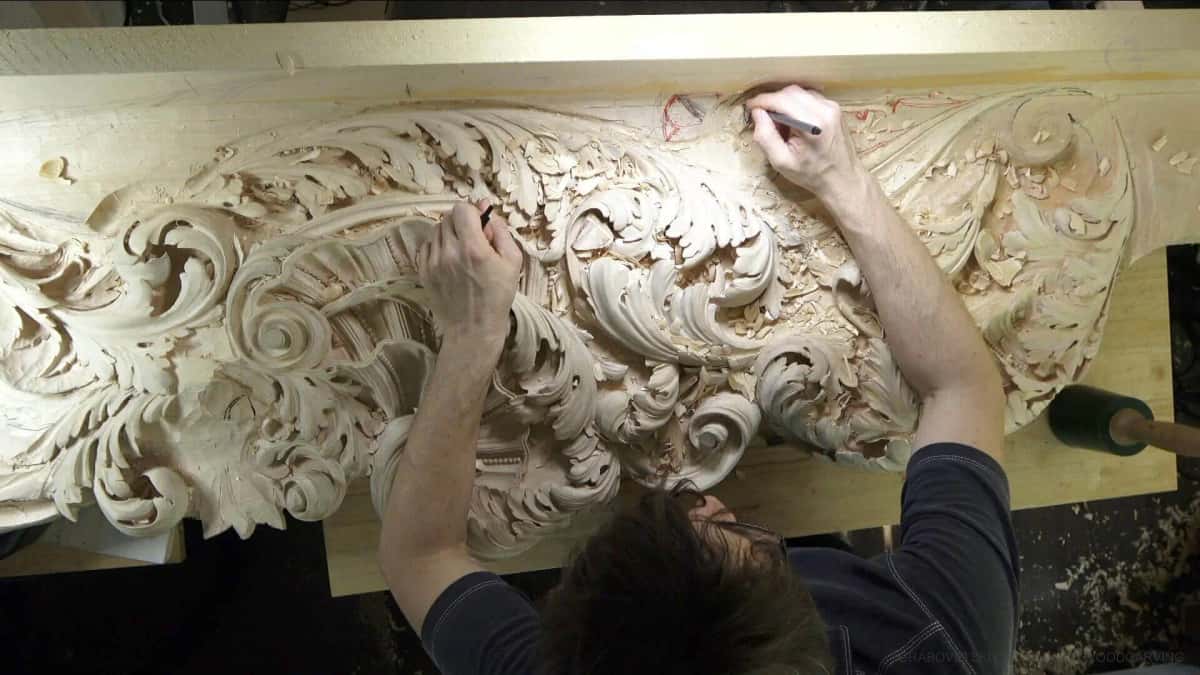
What does a light board cost you at the bench?
A light board bruises. Thin walls and wide hollows crush under a dull edge instead of parting, and every soft wood in that table shares the habit.
The fuzzy edge is the first bill. On cedar the maker's own page records denting and scratching very easily, and basswood is not far behind it. A sharp gouge slices those thin walls and leaves a face you can polish. A tired one folds them over. No amount of sanding will bring that surface back to you.
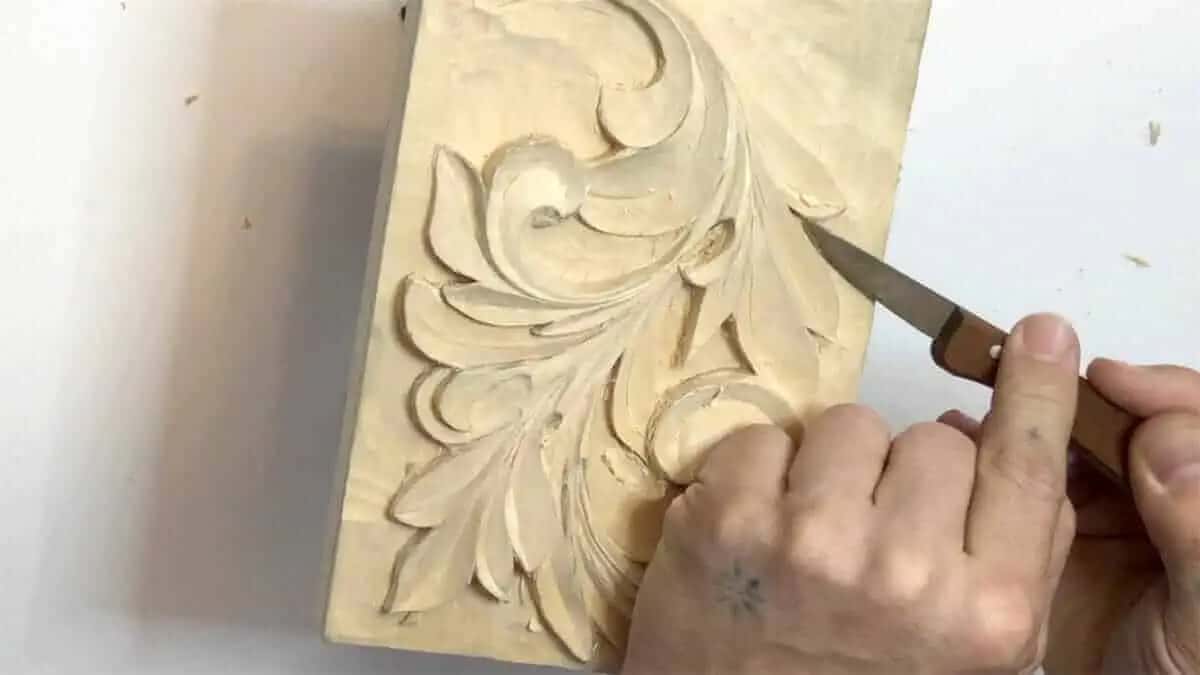
Fuzz along an edge is a sharpening problem wearing a wood problem's clothes.
Bill two arrives at the ends of the fibers. Carve across the straws and you are asking thin walls to stand up alone, which a light wood does poorly. Slice along them and the same board behaves. Pass direction matters more on a soft wood than on a hard one, and this is where beginners blame the plank.

Bill three is a finish that disappears. Wide hollows drink oil, so a light board takes more of it and takes it unevenly. Pour it on and watch where it goes in fast.
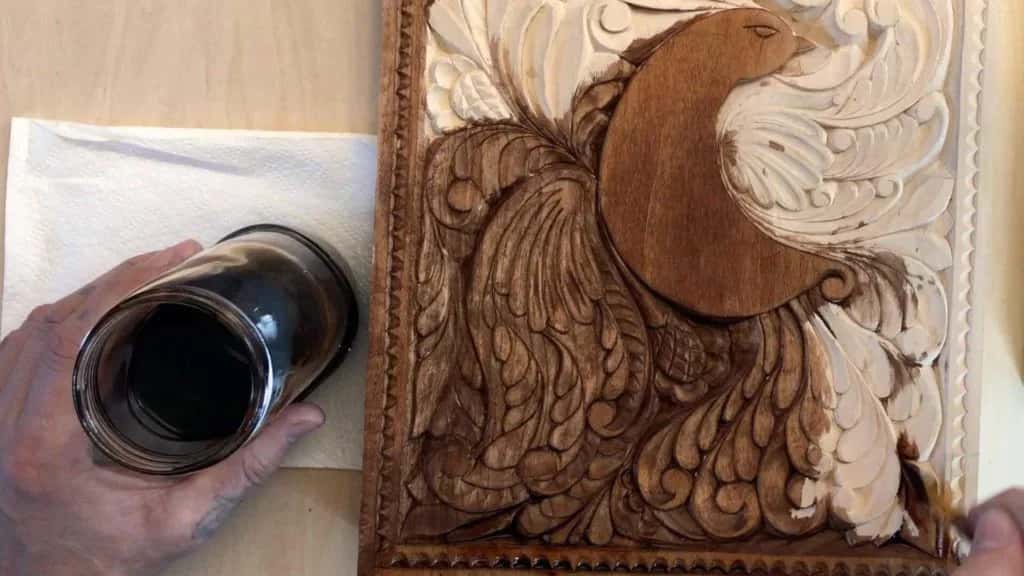
None of that argues against light wood. It argues for a sharp edge, and for a plan before the first pass. If the board you already own is fighting you, softening a board that is too hard lists what honestly works, and what low density actually means covers the whole trade.
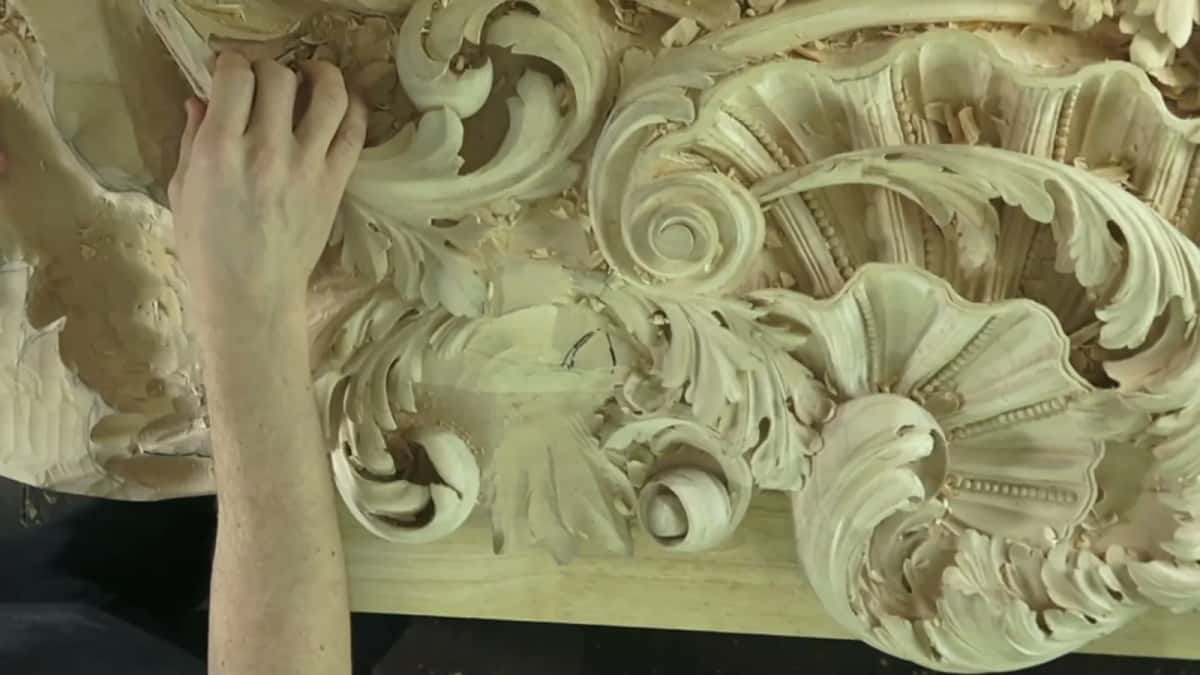
Strength is its own question, and weight only hints at it. Whether denser wood is stronger takes that head on, the elastic modulus of a panel covers stiffness, what it takes to snap it covers breaking, and crushing strength along the grain covers the squeeze. The old bucket trick has a page of its own at the float test.
How do you judge a board's density before you carve it?
Five minutes at the rack will save you a wasted Saturday. Work through these in order and the weight in your hand starts telling you something true.
Step 1, lift two boards of one species
Ask for two planks of the same wood and hold one in each hand. What you feel is water and hollow, nothing else. Buy the one that suits the job, and write down which it was.
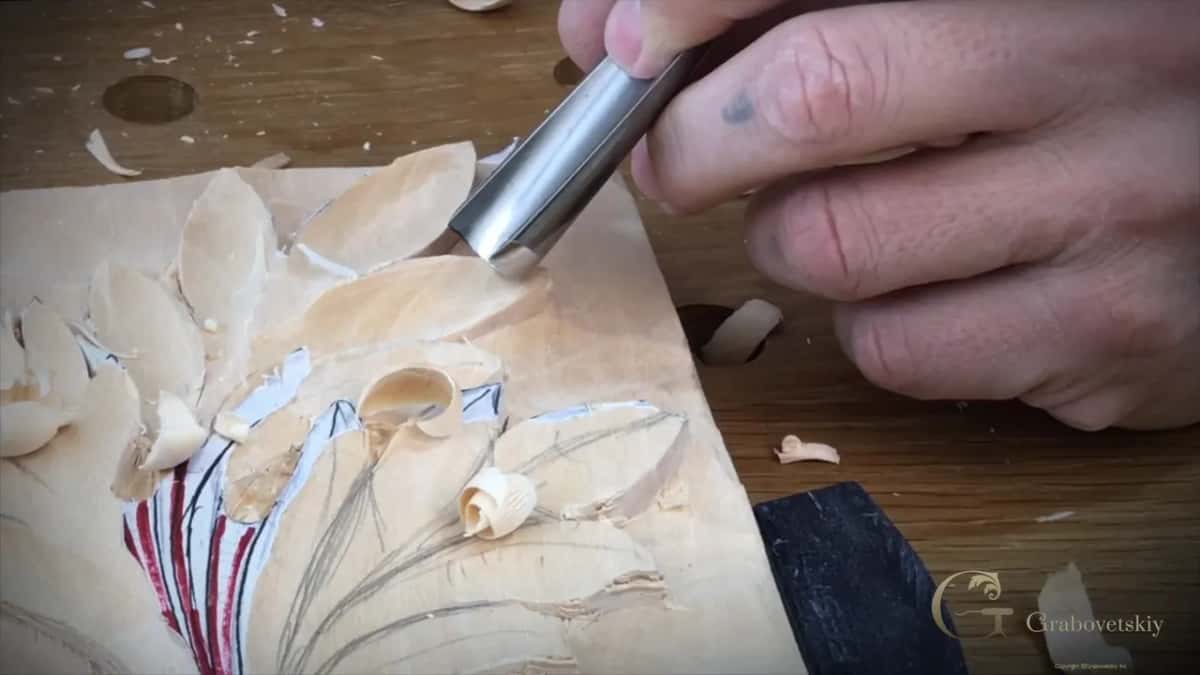
Step 2, look at the sawn end
Tight rings running straight across the end mean quarter sawn stock from nearer the heart. Wide arcs mean the outside of the log. The end of a board is the only honest label on it.
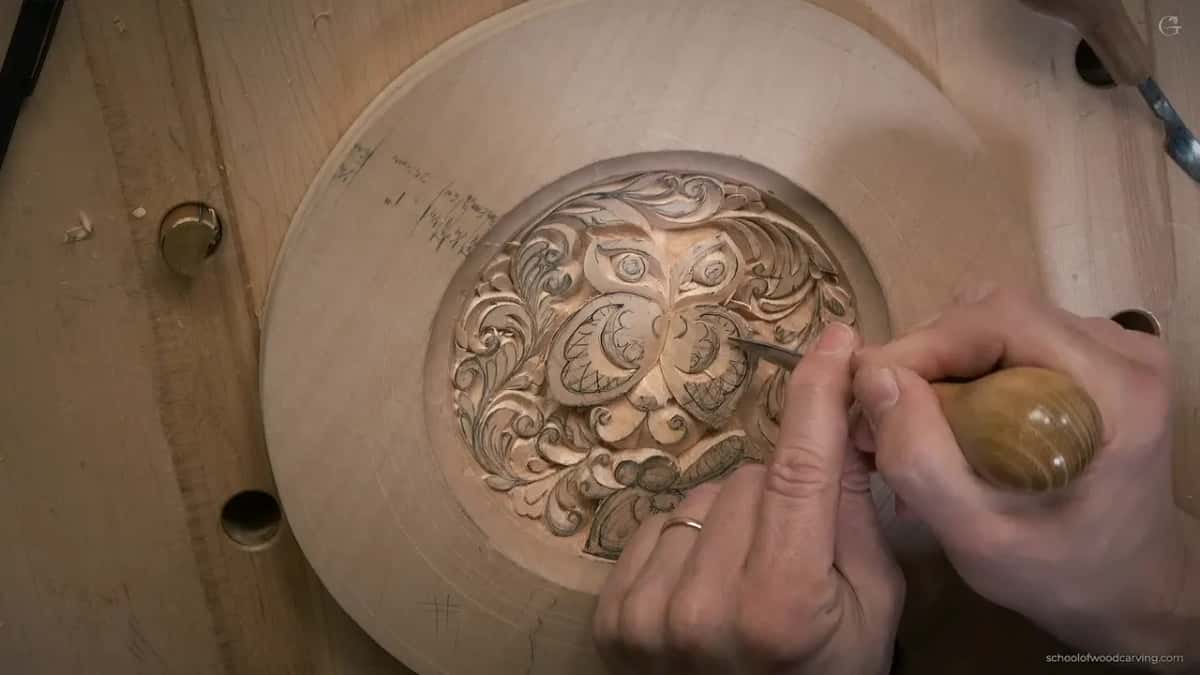
Step 3, ask how it was dried
Kiln or air, and how long ago. A yard that cannot answer is a yard selling you a surprise. Kiln dried stock is dry today and still fresh, so it will move again once it reaches your bench.
Step 4, put a hygrometer in your own shop
The number on the wall matters as much as the number on the wood. Mine sits near 35 percent all year with a dehumidifier running. Stock that has already settled at your own humidity stops arguing with you.

Step 5, carve one pass where nobody will look
Take a single slicing pass on the back or an edge before you commit a design. A weight figure cannot feel a soft patch. Your gouge finds one in four seconds.

Step 6, let it sit two weeks and lift it again
Stand the board on edge in the shop and leave it alone. Wood adapts to its environment, so the weight you feel a fortnight later is the weight you will carve.
The handbook carries one figure I have never once used. Wood can hold water up to 267 percent of its own dry weight at the light end of the scale, dropping to 44 percent at the heavy end. That figure comes out of the USDA Wood Handbook, and it has never once changed a decision at my bench. Volume shrinks as the water goes, not just weight, and that side of it sits at what drying does to a board.

If you want somebody at your shoulder while you learn which board to buy and how to read the end of it, that is what First Cuts for Beginners and the tools course are for. There are also classes for Alexandria, DC if you would rather work through it with a class around you. Shall we carve?
Frequently asked questions
What makes one board lighter than another of the same species?
Water and hollow. A plank trades water with the room it stands in, and two planks off one pile can hold different amounts. Hollow width inside each fiber also varies within a species, which is why one limewood board carves softer than the next.
Does drying wood make it easier to carve?
Lighter, but firmer. Basswood measures 250 on the hardness scale green. Dried to twelve percent it reads 410. Most strength properties climb as water leaves, the USDA records, so a dry board weighs less and resists your edge more.
Is basswood a softwood?
Basswood is a hardwood. The word means the tree flowers, and it says nothing about how hard the timber is. Cedar and pine are softwoods because they are conifers, and Douglas fir is a softwood that outweighs basswood by six pounds per cubic foot.
Which wood has the lowest density?
Balsa, at roughly 9 pounds in a cubic foot, or 150 kilograms per cubic meter at 12 percent. Published ranges run 8 to 14 pounds, so treat any single figure as a snapshot. Under a gouge it crushes rather than slicing.
Do cedar's oils make it light?
Oils add weight. They sit in the wood as extractives, laid on top of the wall structure, and the USDA records that a wood's measured specific gravity reflects the gums and resins inside it. Cedar is light because its walls are thin and its hollows are wide.
Can you make a heavy board lighter for carving?
Drying sheds some water weight, and raises hardness while it does. Nothing you do at home changes the wall to hollow ratio the tree already grew. Pick a lighter species instead, and let a sharper edge do the rest.
Filed under
- benefits of using pine wood
- best type of wood for crafts
- best wood types for delicate projects
- can you carve balsa wood
- Carving blocks for beginners
- comparison of wood densities
- hemlock for lightweight projects
- how density affects carving
- how to choose light carving wood
- is poplar suitable for light carving
- lightweight woods for crafts
- light woods for carving
- properties of cedar wood
- spruce wood carving advantages
- top woods for easy carving
- Understanding Wood for Carving
- using fir for carving projects
- what factors make wood less dense
- what makes wood light
- why is balsa so light