

Alexander Grabovetskiy, woodcarver, School of Woodcarving · Published 2017
Why is patience important in wood carving?
Quick answer: Patience in wood carving is, as I put it on this Corinthian acanthus video, a skill that matters a lot. The pull to finish a piece fast is always there, and giving in to it can cost you a mistake. On this leaf it means coming back to a ridge, carefully, until it sits where it should.
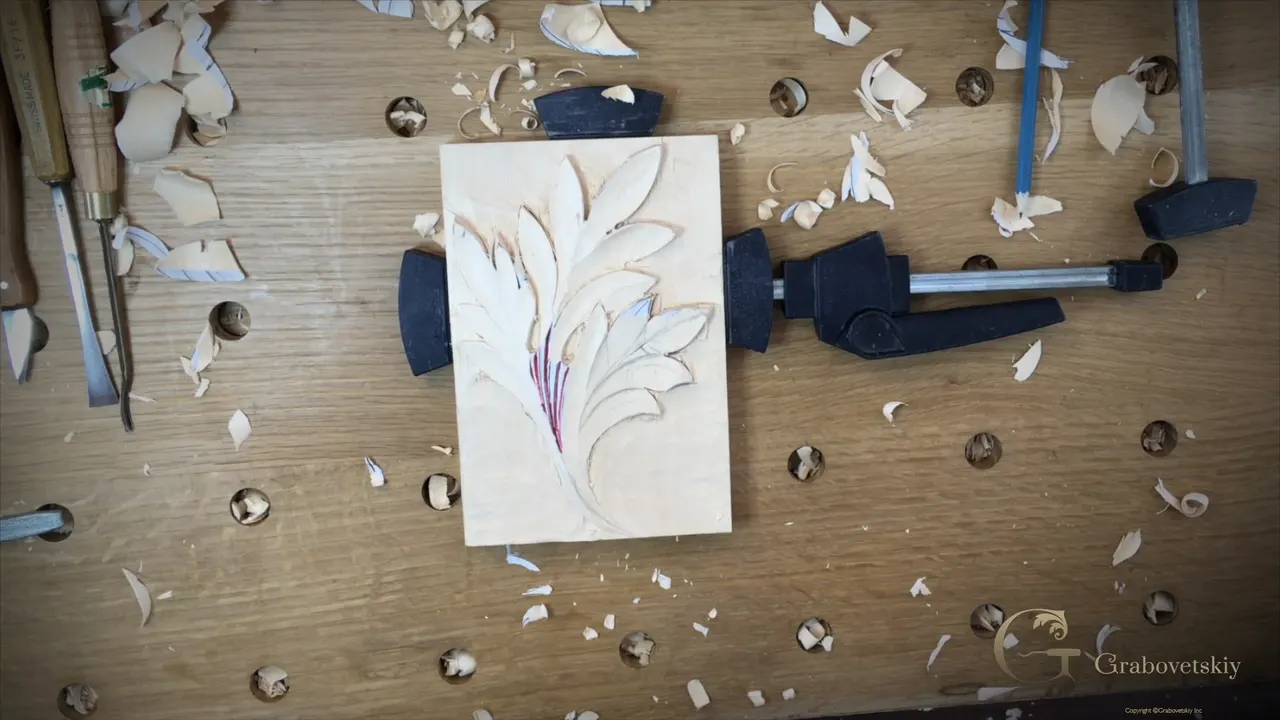
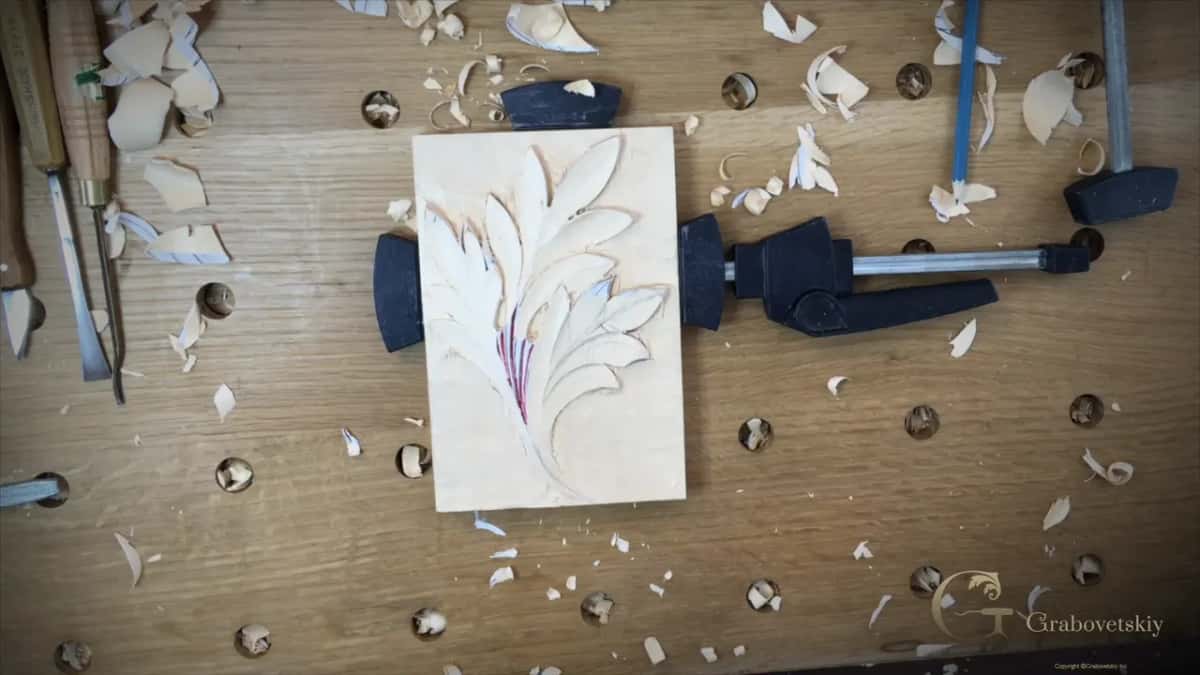
Patience in wood carving is a skill, and in this video I call it a really important one. It comes in part 4 of lesson 3 of my Corinthian acanthus course, a minute and 49 seconds in, right after I turn the block. There is always a temptation to hurry it, I said, and it's not always helping.
You want to know how to get better at wood carving, right? You'd like a leaf to come off your bench one day with every point still on it? Then look at the skill I named on camera that day. I'll show you what it looked like in my hands on this leaf, and what it cost me the day I rushed.
Patience at my bench, in five lines
- Patience, I said in the middle of this leaf, is a skill, and a really important one.
- That pull to finish fast never goes away.
- Here on the Corinthian leaf, patience looks like coming back to a spot, carefully, until the ridge sits right.
- I rushed one pass with a number 5 in the Venice Room, and a piece broke.
- A power router with a sixteenth inch (1.59 mm) bit can do a background for you, and I won't judge you.
Why is patience important in wood carving?
Hurry is always on offer at the bench, and it doesn't always help. I said it right after I turned the block.
"Really important also in wood carving, I would say, really important is patience," I said. "So there is always temptation to get it done as quickly as possible, and it's not always helping."

Then came the cost. You can make mistakes, I said, and you can mess up. And then the line I closed on, which is the one I'd like you to take home. "So just patience is a really important skill in wood carving."

Look at the last word again. Skill. In another course I went further and said carving wood actually trains you, though I took part of that back in the very same breath, and you'll read that bit below.
Where does the temptation to hurry show up?
In more than one place, and in three of my courses I used the same word for it. Temptation. Here, on the acanthus, it was the temptation to get it finished fast.
My furniture panel, lesson 18, has another one, from the background stage. I do have that temptation sometimes, I said, just to jump and start carving those flowers and all the details. But I found the best way is to work the background first, as nice as possible, and then the details, all the flowers and all the movements.
My reason was plain. For me it's a lot easier to judge things, and to play with the depth of all the moldings, before I start digging inside the flowers.
The third one came on my grape onlay, lesson 1. In real life you don't always see those connections, I said, and you have a temptation to just cut straight down. But think about how you're going to clean inside those triangles. Ninety degrees was the mistake there. It always has to be an angle.
What does patience look like in my hands on this leaf?
It looks like coming back. Watch the last part of this video and you'll see me go back to wood I had already carved, mostly with one gouge, and work the same places again.

"Come back and clean this side," I said at 7 minutes 31. Less than a minute later the word carefully comes out of my mouth twice in about twenty seconds. One line wasn't where it belonged. This line should be somewhere right here, I told you, so I came back with my gouge and carefully reestablished my line, my ridge, I should say.

After that I said I thought it looked good. Good wasn't the end of it. I took my big gouge to check, used a different one, reestablished my edge for a cleaner look, and cleaned it just slightly.
Not one of those moves is a new technique. Each one is a return to wood I had already carved. If you'd rather see patience than hear about it, watch those last two minutes, from the clean side at 7:31 to the last light pass at 9:31. Earlier, at 6:11, I said just go around with the same gouge, just keeping an eye.

Can wood teach you patience?
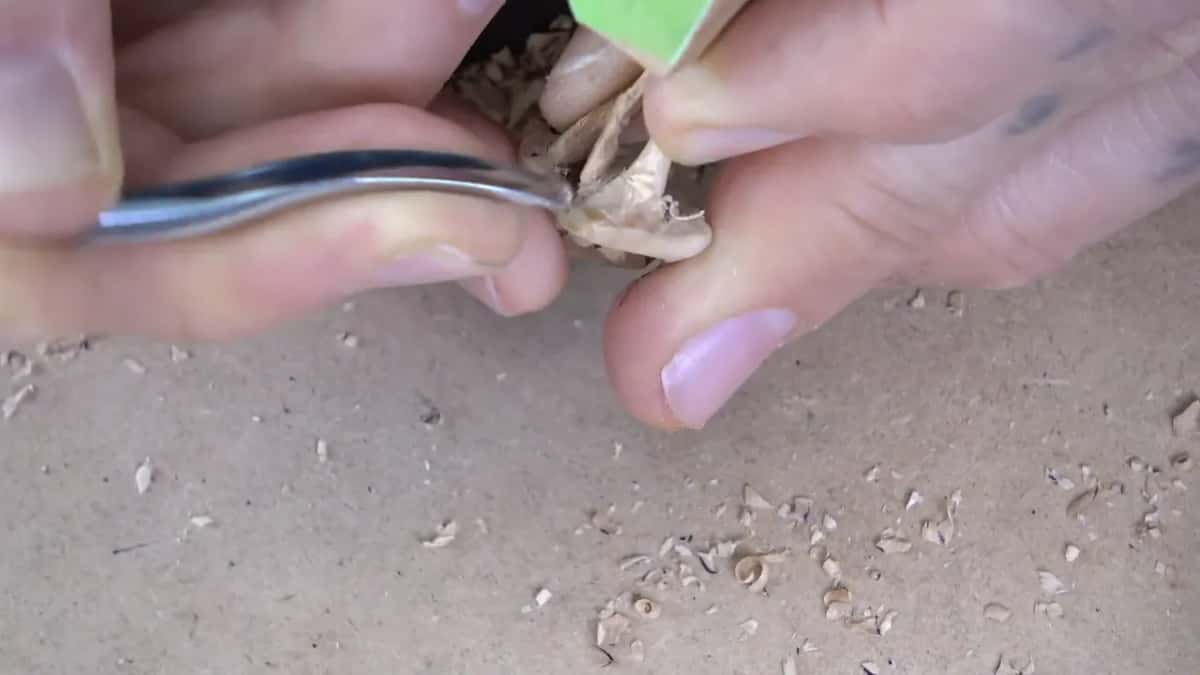
A little, and not always. On my lily box I was working with my tool upside down, getting into the tiniest spots, and I said it doesn't take too much. All it takes is just a lot of time. That's it. And patience, of course.
I went further than that, and these are my exact words, start to finish. "And if you're carving wood, it actually trains you. You're becoming better person, more patient, kind of." Two seconds later I took half of it back, word by word. "I wish, but not really. Not always." It's all in lily box lesson 11.
And sometimes I have to say it out loud. During the main flower bouquet, in lesson 25 of the furniture panel, with a tool only one millimeter (0.04 in) wide, a number 8 or a number 9, I said it plainly. "And just be patient. All I have to tell it to myself."
"I have to be patient. I guess it's one of the benefits of wood carving." I also added that maybe you were the one becoming patient, with me.

What did one rushed pass cost me?
A piece of the carving. Workshop 65 of my Venice Room has it on camera. I was going around one spot with a number 5 and a number 6, and one of them was a little too big, so I took the number 5.

"Number five that way," I said, "and I just broke that piece right here. No good." And then I judged myself, out loud, as it happened. "I didn't do the right thing. Just rush it. I did rush it, and I shouldn't. I should not." Those are the last words in that video.
Workshop 79 of the same room has the other side of it. I was double-checking an outline and said I was trying to be as careful as possible. In the same breath I named the tool and the pace. "It's better for me to use just the number seven and 14 millimeters and take little by little than to just try to rush it and make the mistake, which I don't really want to do." That number 7 is about 9/16 in wide.
Two workshops in one room. In one I rushed. In the other I said out loud that I wouldn't. If you'd like to know whether speed has any place in carving at all, I took that question on in Hashemi flowers lesson 18.

Why does tiny work need more of it?
Small work hides how long it takes. On the lily box I was bringing a small piece underneath the main movement, carefully, and I admitted it looked like it's not that complicated. No. And it's not.
"Don't get me wrong, but it takes a lot of patience. Just try it if you don't believe me." I said why, too. Your fingers are holding the piece up the whole time, and your head is busy with not breaking it, with the next pass, with the angle.
The camera was on, too. I still had to think about not covering the camera, and I said that without the camera I might have been done already. I called it a blessing anyway, that I'm able to film everything.

Back in workshop 24 of the Venice Room, using a number 11 one millimeter (0.04 in) wide, I went down to dig much deeper and get a beautiful shadow. "And yes, this operation takes time and patience because I really don't want to force my edges." They break easily, I said, and I wanted it anyway, because I wanted to be true to the original.
And I said what I was after. Someone would stand right close to it, I said, and say oh, man, no way it's done now. They would just say it's definitely done in that period. And no, I added right away, it's not forgery.
How does patience meet the grain?
From two sides, without force. In workshop 9 of my beginner course, on a curly kitchen cutting board, you could see where my grain ran.
If I push it too hard, I said, I'm going to destroy that edge. So I started from one side, then moved to the other side to make my cleaning cut until I met those grains. "So it just takes patience. Don't force it."

It took more than one go. I needed to do it multiple times, just shaving, until those two grains were meeting together, and at the end of it I was somewhat happy. Somewhat.

The same lesson has my line about wood shapers and wood carvers. A carver leaves the tool marks, unsanded.
Is a slow pass the same as a patient one?
Patience, the way I put it on a floral molding, is being okay when a pass takes longer than you thought it would. In lesson 13 of the floral molding for my panel I was wiggling the tool a little without pushing too hard, using just the sharpness of the edge.

"Again, I'm not taking a lots of material at once." Then the line. "And I have to be patient because sometimes it just takes a little longer than what you expect, but I'm okay with that."
Next I argued with myself about a smaller tool, on camera. Maybe yes, maybe no. I don't know. Let me do one more pass, I said, and then I liked how it looked, with a movement already going uphill, and I still talked about a smaller number 9 of two millimeters (about 5/64 in).
Short on patience for a background?
Then use a router, and I mean that. For the background of my furniture panel, in lesson 17, I said if you don't have that patience and you want to use just a normal power router, you could definitely do that, and I've done it also.

Small bits help. There are ones about a sixteenth of an inch across (1.6 mm), I said, and they get really close to almost everywhere. "And I'm not going to judge you for that. Go ahead and do that."
But for some reason it's just so satisfying to use a router plane, I said. First of all, it does not create dust. I really don't like dust in my shop, and I know what I'm talking about, because my shop sometimes gets really dusty.
What do I keep telling you at the bench?
Here are three times I told you on camera to slow down, and what was in my hands each time.
Halfway into one spot on my grape onlay, lesson 4, I dug in from two sides, a little more from the opposite side. "Take your time by the way," I said. Don't rush it, please do not rush it. A few seconds later I said I was airborne right there too.
In Venice Room workshop 45 I didn't need that big of a chunk of wood in one place, so I took a little off. "So the idea is to take your time, okay? That's the idea. And not rush anything."
And my plate with butterflies, lesson 9, had me taking plugs out. Again, don't push too hard, I said, and that day the slow way meant rotation and a clean removal of each plug.
Where patience came up, and what my hands were doing
| Where it was | What my hands were doing right then | What I said |
|---|---|---|
| Corinthian lesson 3 | I had just turned the acanthus block around. | Really important is patience. |
| Venice Room 65 | Going around one spot, a number 5 in hand. | I did rush it. |
| Venice Room 79 | Double-checking my outline before a 14 mm (0.55 in) number 7. | Trying to be as careful as possible. |
| The lily box | Bringing a small piece under the main movement. | Don't get me wrong. |
| Kitchen cutting board | Shaving from the other side until the grains met. | Don't force it. |
| Floral molding 13 | Wiggling the edge, taking little wood at once. | But I'm okay with that. |
| Furniture panel 17 | Talking about a power router for the background. | Go ahead and do that. |

Where does part 3.4 sit in lesson 3?
It's the last of four parts. The first three open the eyes, take the main form down with one big gouge and put the flow lines back on the wood, and the hollows inside each lobe come in lesson 4. The whole leaf, start to finish, is on the course page, with the plain Corinthian form of this ornament.
Would you like a leaf on your bench one day with every ridge sitting right? Would you like to watch my hands go back to one ridge until it does? Then come carve it with me.
How it's done
- Take less wood at once. I take only a little material at once, the way I did on a floral molding, wiggling the edge a little without pushing too hard and using the sharpness of the tool.
- Pick the tool over the rush. I double-check my outline, then take a number 7 of 14 mm (9/16 inch) rather than rushing into a mistake.
- Finish from the other side. If pushing would destroy an edge, I start from one side, move to the other for the cleaning cut, and shave until the two grains meet, with no force.
- Come back to the line. When a line or a ridge is not where it should be, I come back with my gouge and carefully reestablish it.
- Check once more. Even when I think it looks good, I take my big gouge and check, then clean the edge slightly for a cleaner look.
Frequently asked questions
Does carving wood make you more patient?
Carving wood trains you, I said while working the lily box, and you become a better person, more patient, kind of. Then I took part of it back with I wish, but not really, not always. On a furniture panel bouquet I still had to tell myself to be patient, and I said so on camera.
Can you use a power router if hand carving the background feels too slow?
A power router works, and I have done it too. One with a small bit, about a sixteenth of an inch (1.6 mm), gets really close to almost everywhere, and I'm not going to judge you for that. I still find a router plane so satisfying, and for one thing it makes no dust.
What happened when you rushed a pass?
I broke a piece. A number 5 went that way in Venice Room workshop 65, the piece came off, and I said I rushed it and shouldn't have. For workshop 79 I said a 14 mm (9/16 in) number 7 was better for me than rushing into the mistake.
What to carve next