

Alexander Grabovetskiy, woodcarver, School of Woodcarving · Published 2017
Why do you buff a gouge in the middle of a carving?
Quick answer: Buffing a gouge in the middle of a carving is a short stop at a felt wheel or a strop when the wood shows marks or the tool drags. I give the inside bevel more, then go back to work. On this acanthus my 20 mm (0.8 in) number 9 was buffed a little before it went into the leaves.
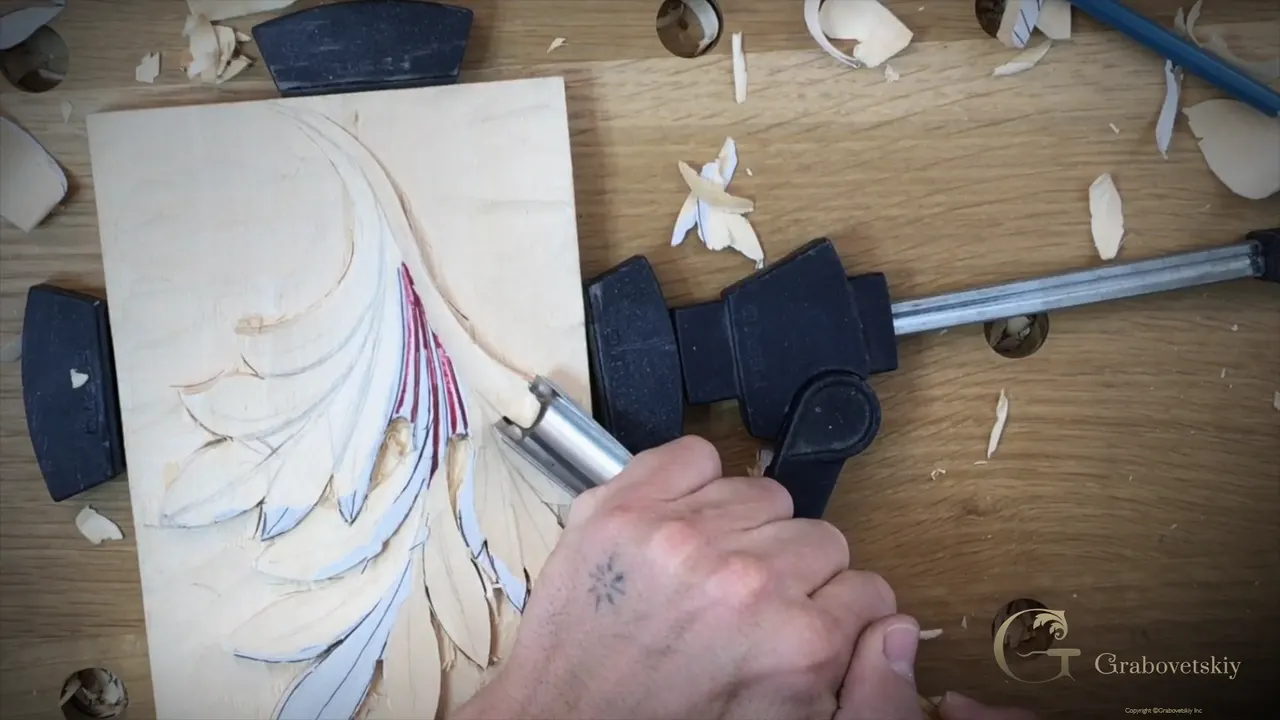
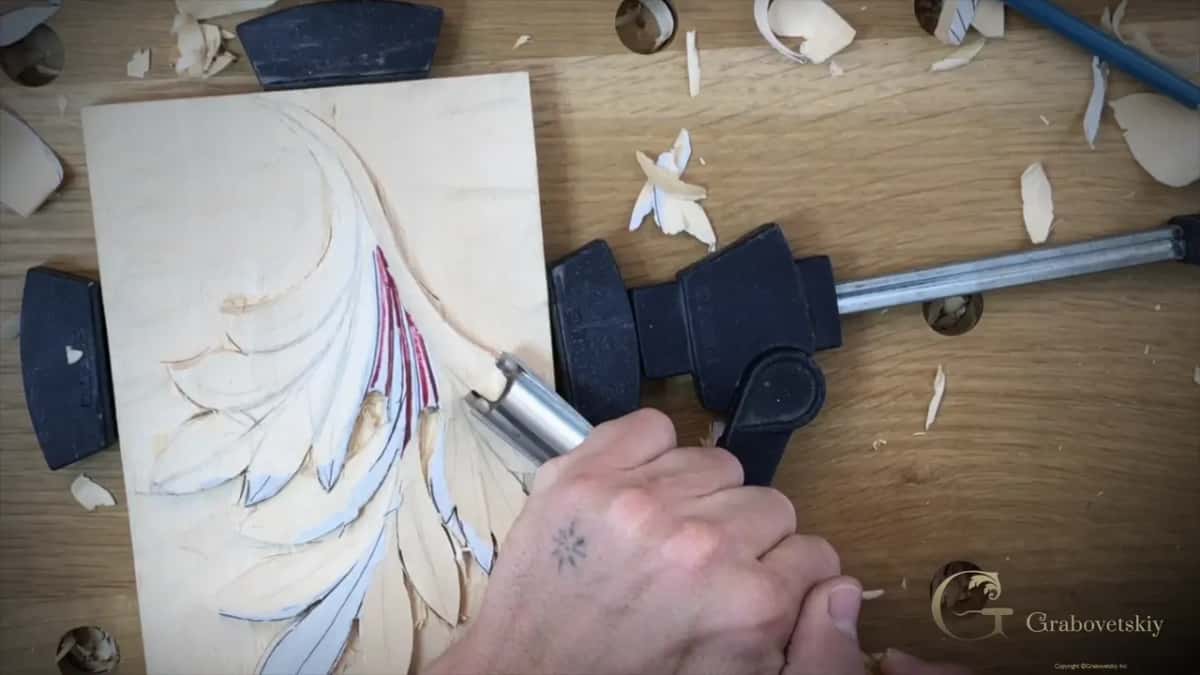
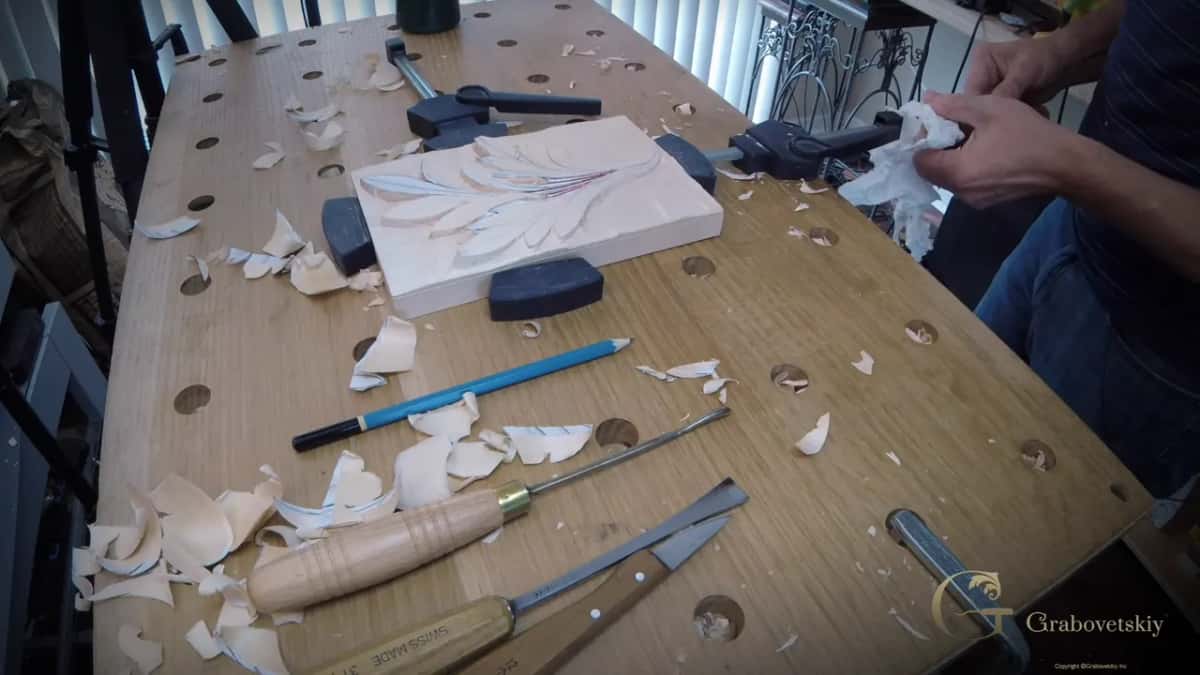
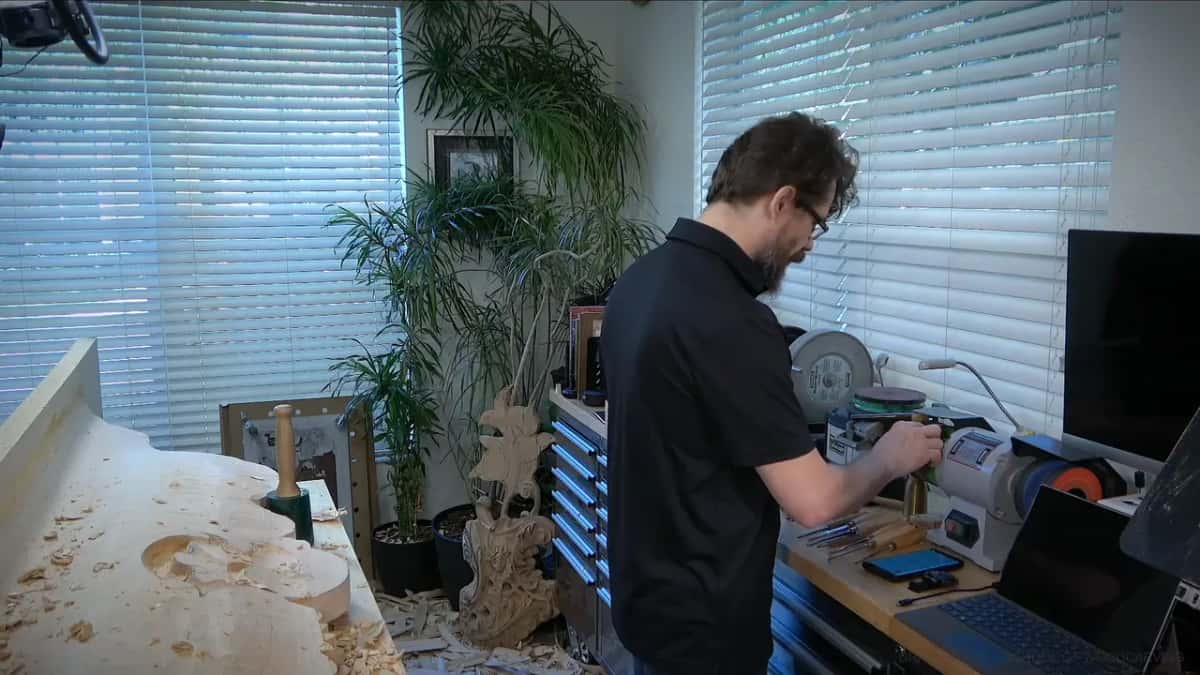
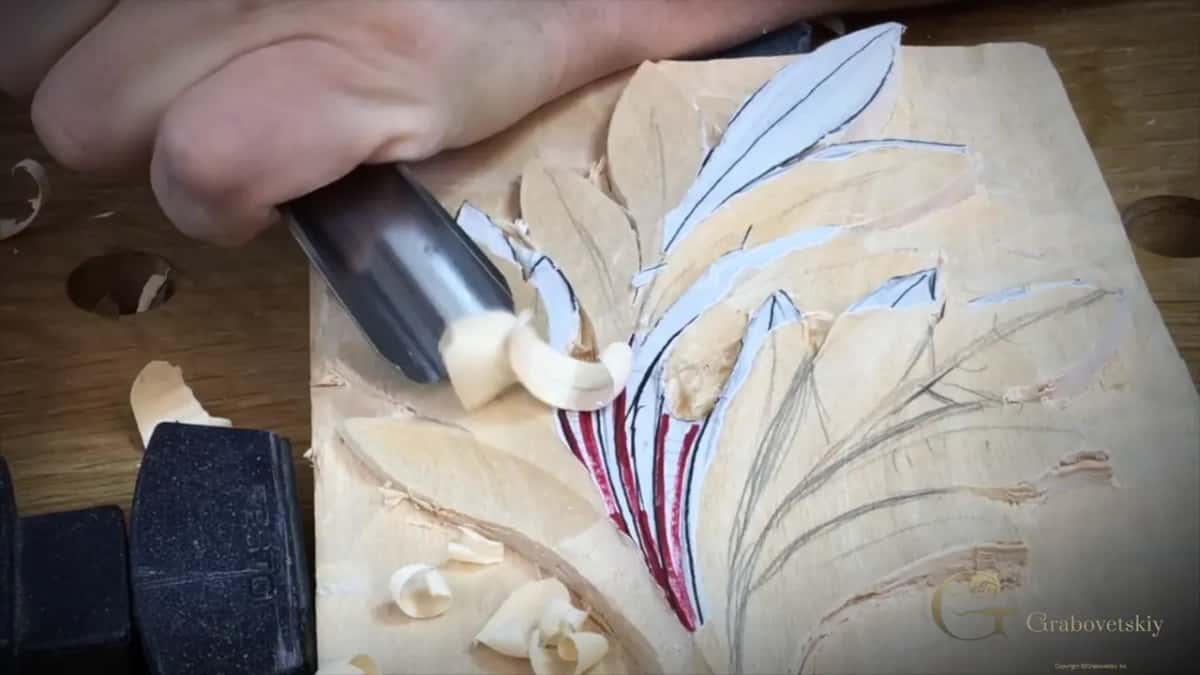
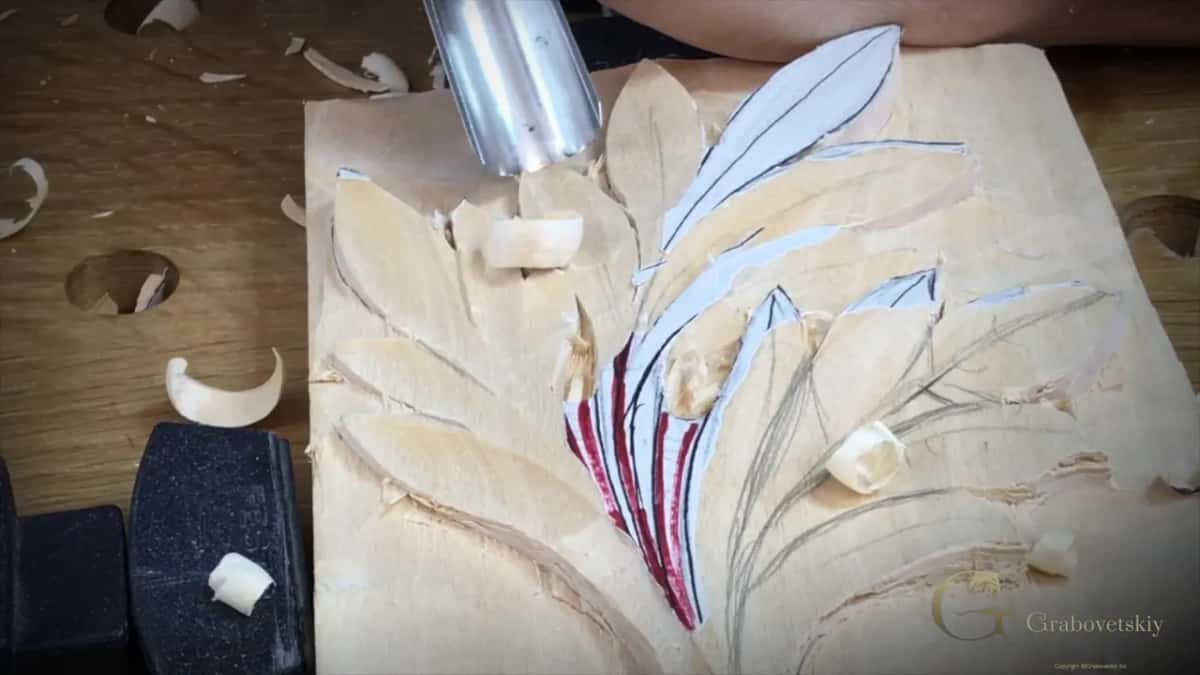
Buffing a gouge mid-carving is a short stop at a felt wheel or a strop to bring the edge back, and then I go right back to the wood. On this Corinthian acanthus it comes in part 3 of lesson 3. My lines were back on the leaf, and it was time for the details. I picked up the number 9 again, 20 millimeters (about 3/4 in), the same tool as before, and it got a little buffing first. That small stop is how I keep wood carving tools sharp while a job is still on the bench.
Ever had a gouge that carved clean start to drag on you? Seen thin lines show up on a surface you meant to leave smooth? Then you know the moment I mean. Below are the places on camera where I stopped to buff, what told me to stop, and which side of the edge I favor.
What I do when an edge gets tired
- Marks on the wood, or a tool that drags, tell me to buff.
- My inside bevel gets more than the outside.
- Most of my buffing happens on felt, and plain leather works too.
- A little is enough, and right after it I test the wood.
- Once in a while I see it, keep carving anyway, and come back to buff a bit later on.
- Scraping dulls a gouge.
When did I stop to buff on this leaf?
Right before the leaves got their detail. The gouge in my hand went back, and I redrew my lines on the wood. Then I said it was time to work on those leaves in more detail, and for this we're going to need a couple of gouges.
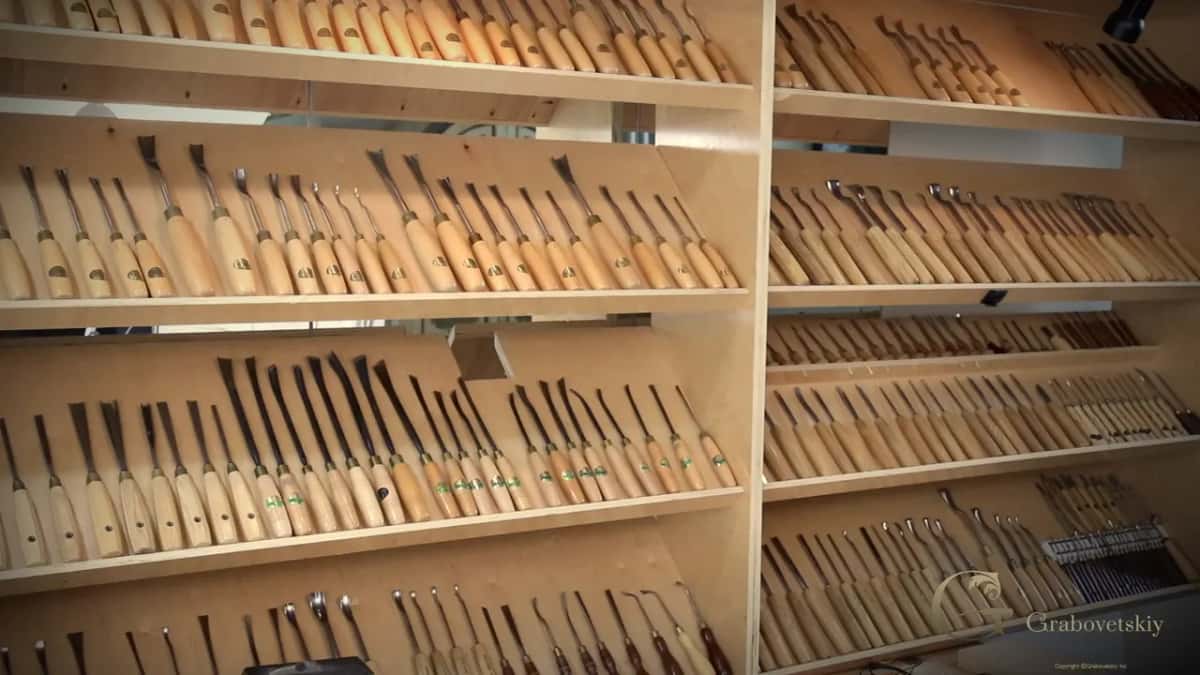
I'm going to take first number 20, I said, and caught it right away. I'm sorry, number 9, 20 millimeters (0.79 in). The 9 on a carving gouge is the sweep, and the 20 is the width.
The same gouge I had before, I said. Let me buff it a little bit. No reason comes with it on camera, and I won't invent one.
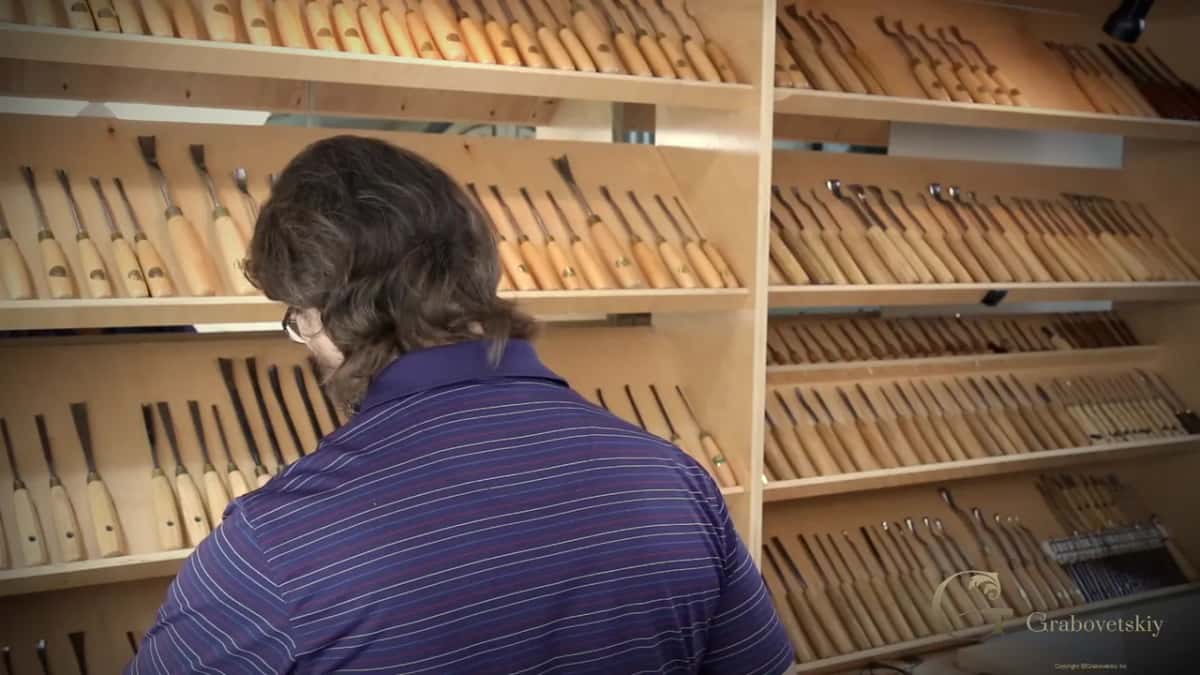
After that, for a while, the camera facing my tool wall shows mostly my back. No wheel shows in the frames of this stretch, so I can't name it. Then the bench camera finds my hands again, with a crumpled paper towel, right beside the clamped leaf.
Roman acanthus lesson 16 shows the part this video skips. There I buff, then I say let me wipe it, and then I try the tool again. So the rest of this page is what I do say, in other lessons, about when I buff and how.
What tells me a gouge needs a buff?
The wood does. In that Roman lesson my tool started leaving a really rough surface, which means I have to buff it. Further on, some area still showed marks. That's not good, I said, and it wanted more buffing.
Even with the tool turned upside down, the marks told me the same thing. Earlier on that leaf the tool just didn't work the wood the way I wanted, and I buffed it then too.
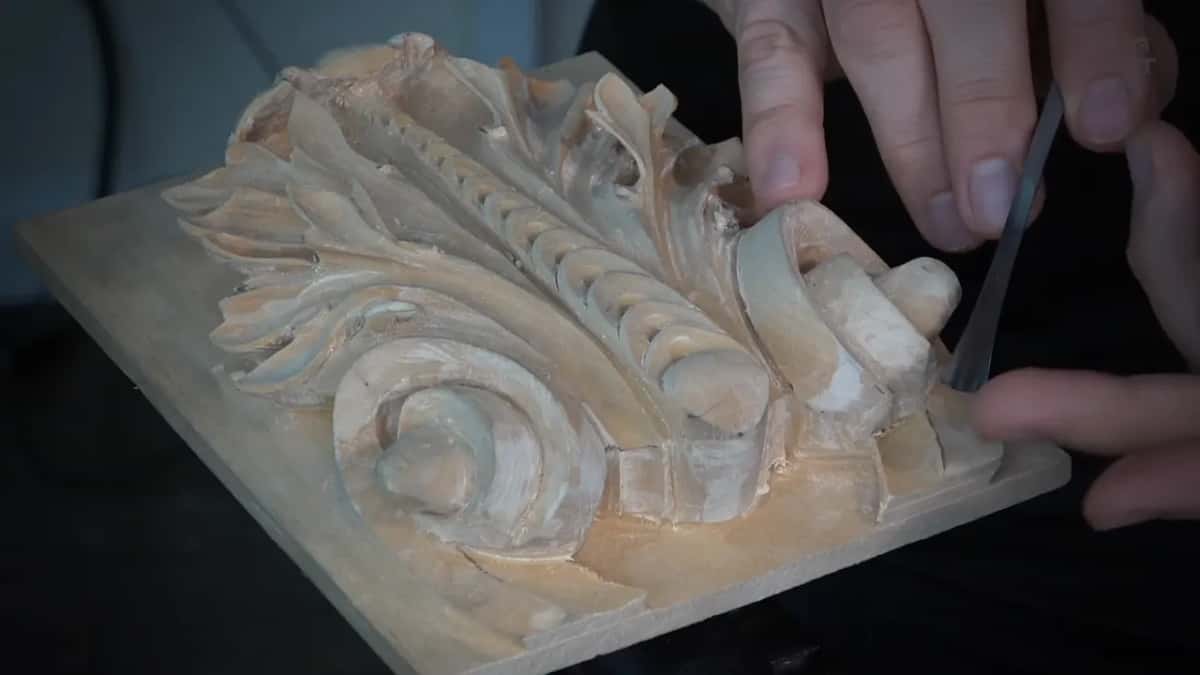
How do I know it's time? On my Greek acroterion, lesson 5, that was a question I answered. When I take my tool, I'm always checking with my finger for any burr at the end of it. Otherwise, look really close. If it leaves some marks on the surface, that means there is a burr, a micro burr, and you have to take it out. The finger check itself has its own page, Acanthus over Moldings 4.
A burr is a raised edge of material left hanging on a piece after it has been worked.
There are two more signs, one you see and one you feel. On end grain in my floral and molding panel, lesson 3, the color shows the difference between a super sharp tool and one that needs to be sharpened, or buffed, I should say. I could feel the resistance of the tool, and that is not good.
And sometimes it's plain. It's already dull, I said once in the workshop 67 of the Venice Room. After a little buffing, or honing, it was much better.
Why do I keep correcting the word sharpen?
I catch myself. In workshop 45 of the Venice Room I said it looks like I need to sharpen a little bit, and then I changed it to buff my tool. Workshop 59 went the same way. So did lesson 16 of the Roman acanthus, where I said or just sharpen it, and then, I'll just buff it.
The words go the other way too. In workshop 128 I said I need to buff a little bit my tool. Strop it, that's what I should say, and I'm using just leather.
Shop language is loose here as well. In metal finishing, polishing and buffing are told apart by the abrasive, glued to the wheel for polishing and loose on the wheel for buffing.
Once on the Roman leaf I said it plainly. It left a black mark, which means my steel, my metal, is coming out. It's actually sharpening, I said. Really sharpening.
Sharpening means taking metal off the tool with an abrasive harder than the tool itself, and in a machine shop, honing means scrubbing a stone along a metal surface to make it precise. What each of the three words means as I teach it is on the stropping, honing and buffing lesson. This page stays with the habit of the quick stop at the bench.
What do I buff on?
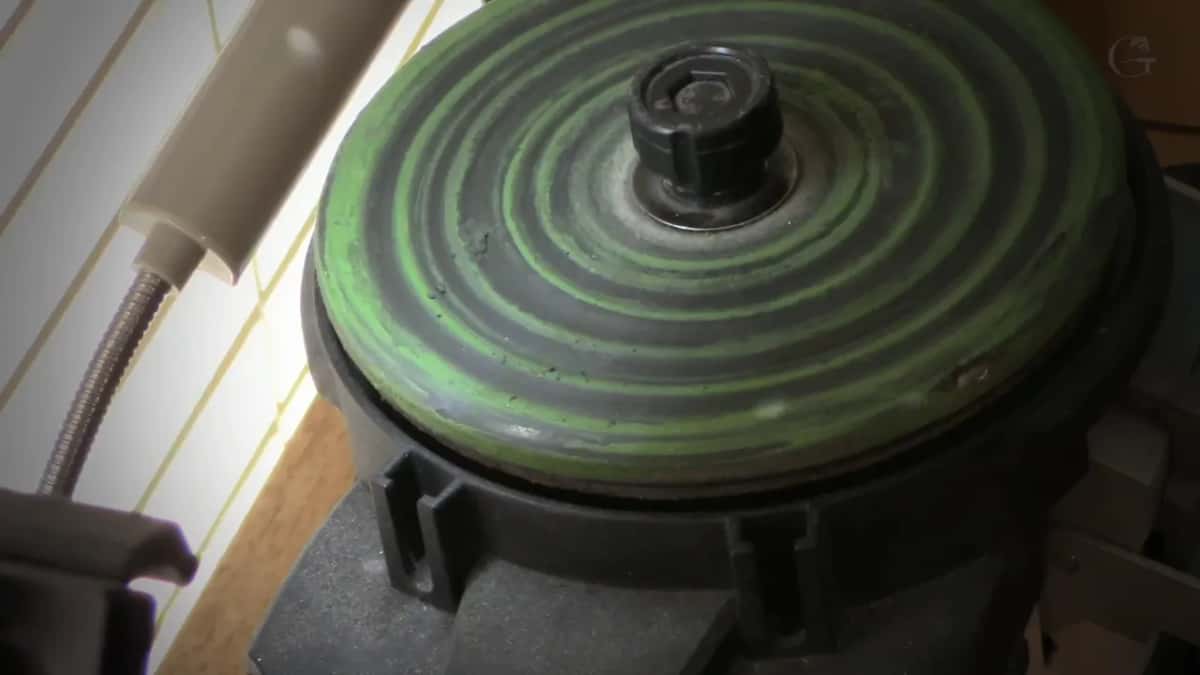
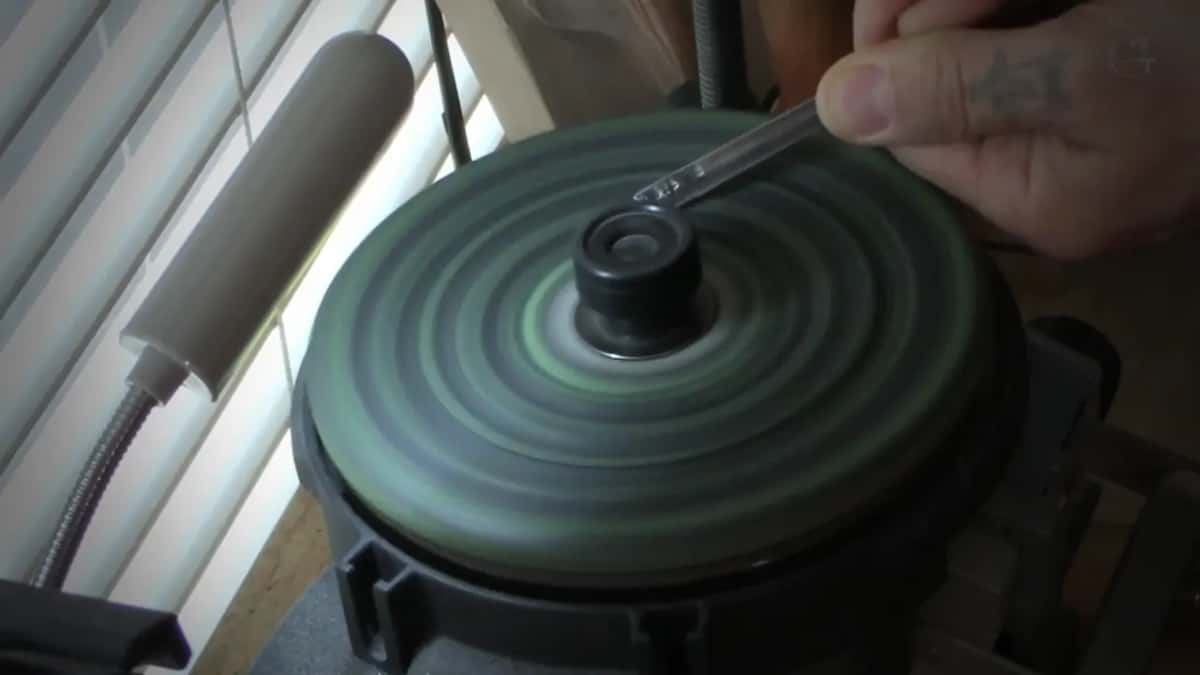
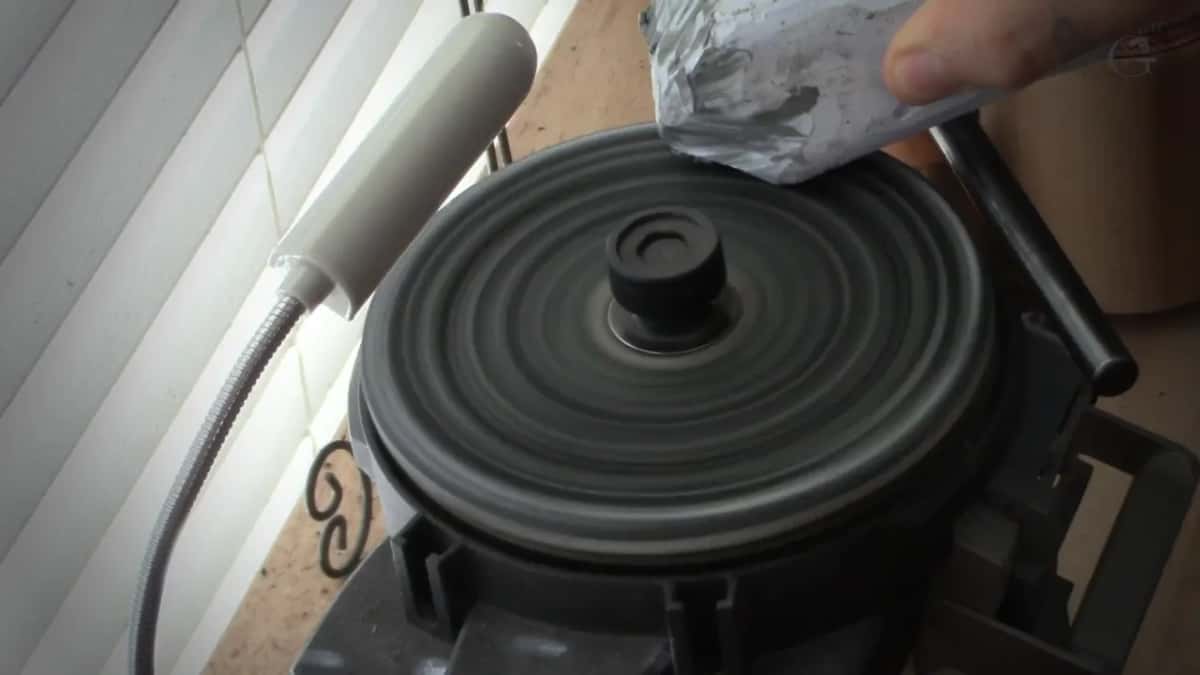
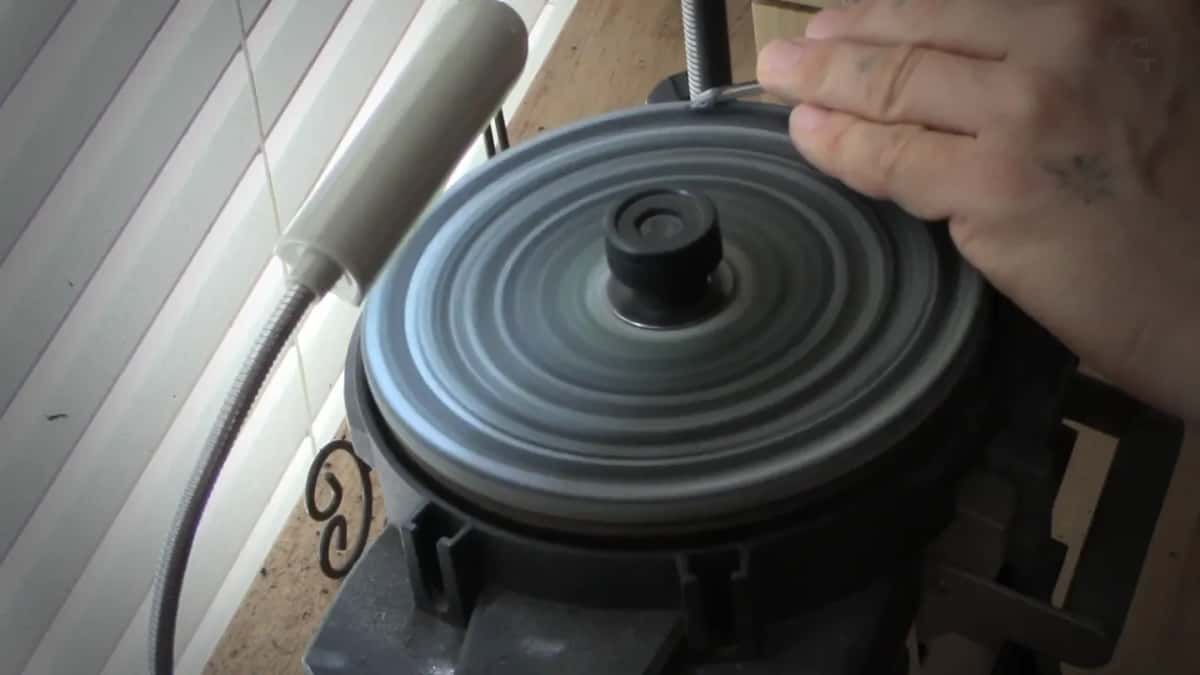
Mostly a felt wheel. In lesson 16 of the Roman acanthus I said I'm using just a buffing wheel, which is a felt wheel with the green paste by Koch. That's a German brand, and I kind of like it. The next video of that lesson had my number 17 needing it too, on a buffing wheel that's actually a felt, and only a little.
Back in workshop 59 I named the machine. To buff it, I'm always using the same machine, I said there, the Work Sharp, with just a felt wheel. Then, that should be enough.
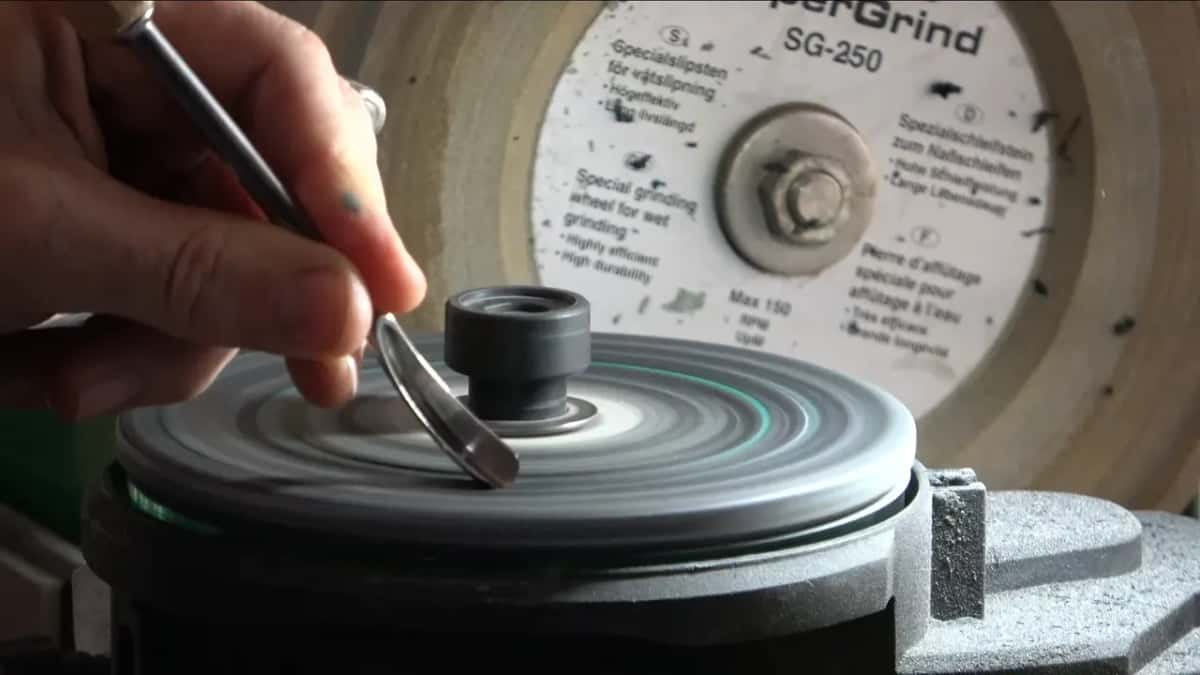
The other machine shows up in workshop 1 of the Venice Room. Koch is German, and I called it more like a buffing system than a sharpening system. It has four paper wheels, and it doesn't sharpen it, it just pretty much buffs with the paste.
Why that one while I film? The sound in the background of workshop 56 is that machine, buffing my number 11. The reason, I told you, is that it's not as loud as other machines while I'm filming.
My knife gets the same felt and green paste in that Roman lesson. One side, then flip it. For a knife stropped by hand on leather, counted stroke by stroke, see the curly cutting board, workshop 5 page.
A strop is a flexible strip of leather or another soft material, used to straighten and polish a blade or a chisel. Felt is fiber that has been matted and pressed together. The big stone behind one of my frames is a grinding wheel, the kind that holds its abrasive inside the wheel itself.
My number 8 of an eighth of an inch (about 3 mm) needed one too on the Roman leaf. You can pretty much buff and sharpen any small or large tools on the machine I use there, I said. There are some limitations, of course, like any other machine has.
Which side of the edge do I buff more?
The inside, for me. In lesson 16 I said I'll do it from inside, because for me the inside bevel right now is more important than the outside. The outside got only a touch after it. Further into that video I said it again, I'll do it from inside first.
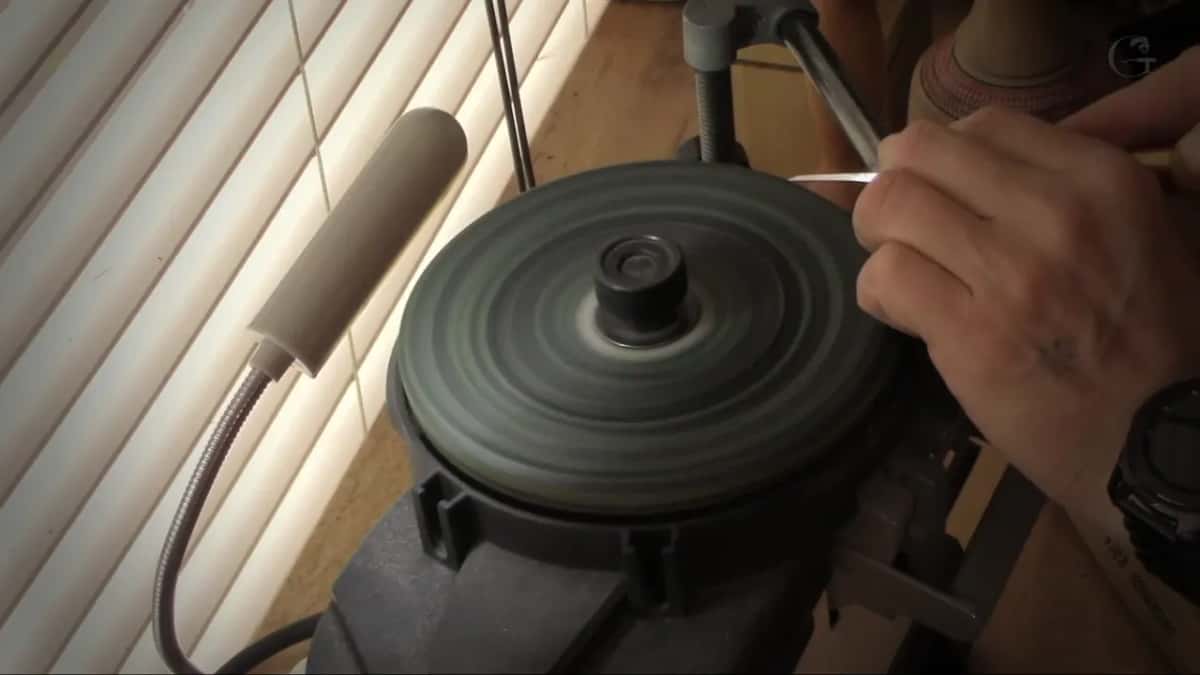
I kept saying it in that lesson. On a number 4 of 10 millimeters (about 3/8 in), I always like to buff more on the inside bevel than on the outside. Later still, I'll buff it from the outside bevel, and the main idea is to buff a little more on the inside, because inside in my case is more important.
In those lessons I give no reason for the inside, so I won't invent one. The bevel is the slanted face at the edge, the part that is not square to the faces of the steel.
How much buffing is enough?
Just a little bit, I said at the felt in lesson 16. In the Maine class, lesson 15, I said just buff it a couple times, and then I put my tool right in the center.
After that I test it on the wood. Let me try if it's more sharp now, I said on the Roman leaf. Yeah, much better. Right after that came a warning. Be careful, because you easily can slip, and it's kind of a dangerous area, so it's better not to rush anything. Work your way in.
On a livestream in October 2020, my number 7 of 14 millimeters (about 9/16 in) needed buffing. Later in that stream I said, see? I just buffed that with the mirror paste, and it's just absolutely gorgeous.
My Hashemi course, lesson 35 had a tool that wanted sharpening or just buffing. Okay, it's much better, I said after it, and it let me excavate deeper right between them.
Do I always stop the moment I notice?
Workshop 70 went like this. It looks like my tool needs to be buffed or honed, I said, which is okay. I'll take care of it a little later. And I went on to a really sharp ridge I didn't need.
In my Maine class, lesson 2, a gouge needed to be sharpened, I said. Whether to do it right then was up to you, and I would just probably buff it, for now. Otherwise you're going to be behind.
And not every buff makes it into the video. My furniture panel, lesson 20, had me constantly checking, and the tool needed a little buffing. I buffed it off the camera, so I don't want to spend my time.
None of these lessons gives a clock time for it. Hashemi lesson 33 is where I put it this way. Constantly check if your tool is sharp, and if you need to buff it, if you need to strop it, just do it.
Does scraping with a gouge dull it?
Scraping dulls it. Furniture panel lesson 21 is where I answered a question about it. It's going to dull your tool, I said. Not as much as you think if you've got really good tools. But still, yes, it will. You can always buff it, or get a really cheap set of imported tools and use them for scraping. A card scraper is the usual woodworking tool for that job, made to take off small amounts where a plane would tear the grain.
Later the same lesson I scraped a really tiny detail with the same tool. If you're afraid of making your tool dull, you shouldn't be, I said. Yes, absolutely, it dulls your tool. I'm not going to lie. But if you are a wood carver, you have to resharpen your tools anyway. At least buff them constantly, and on the next buff it's going to be good again.
Do small tools need buffing too?
The small ones get it too. On the lily box, lesson 7, I picked up a number 11 of one and a half millimeters (about 1/16 in), and it got a buff first.
In lily box lesson 10 I compared brands of micro tools. One is a little softer, I found, and I have to constantly buff it and resharpen it. Another brand I use a lot for micro tools has harder metal, and I don't resharpen it as often. That's my experience, I said. If yours is different, that's absolutely fine. Sharpening tools that small has its own lesson, sharpening micro tools.
Where I stopped to buff, lesson by lesson
| Where | Happened | Tool | Notes |
|---|---|---|---|
| Corinthian lesson three | Picked up again, then a little buffing. | Number nine | Twenty millimeters (close to 3/4 in) wide, same as before. |
| Roman acanthus sixteen | Felt wheel, and the inside got more. | My four | Ten millimeters (close to 3/8 in), with some green paste. |
| Venice Room fifty-nine | I corrected sharpen to buff right away. | Number eleven | Seven millimeters (0.28 in), on a felt wheel. |
| Lily box seven | One and a half millimeters (about 1/16 in), I said. | Tiny eleven | Buffed first, before I used it. |
| Furniture panel twenty-one | At least buff them constantly, I said. | Same tool | Used for scraping a tiny detail. |
What did the buffed gouge do next on this leaf?
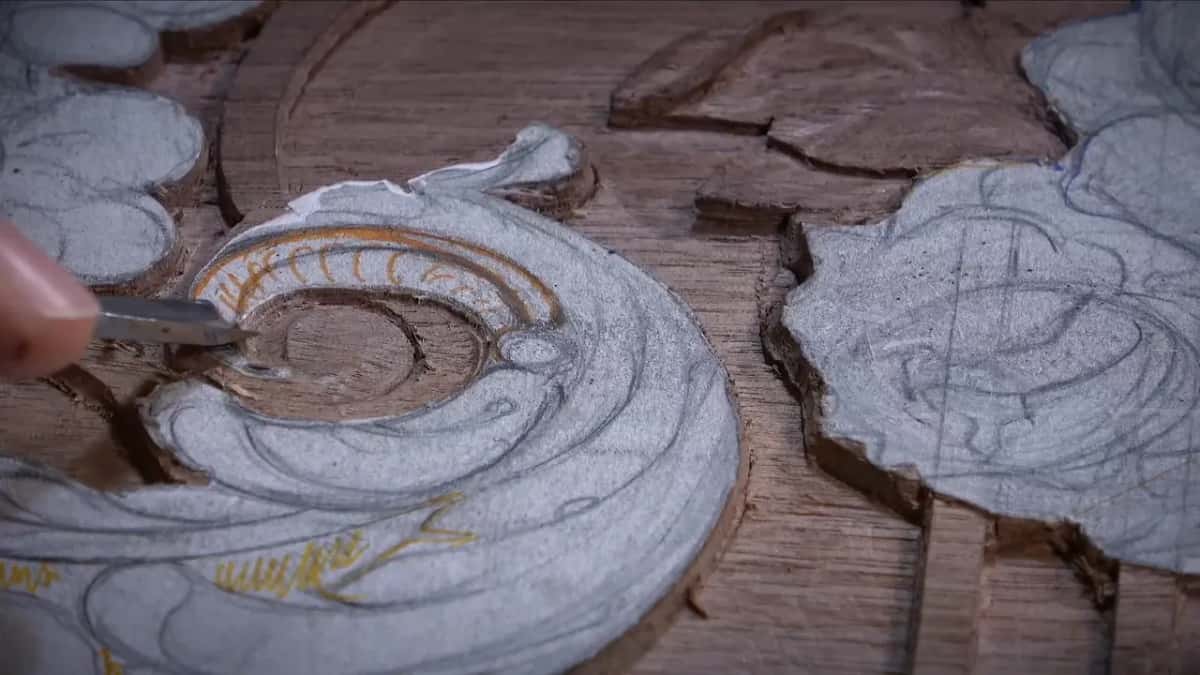
Straight into the leaves, as the frames show. What it carved there belongs to the lesson 3 page and to lesson 4, so I won't retell it here.
Got a gouge on your bench right now? Did it carve clean the last time you picked it up? Then look at the wood it left, and buff it when it asks. The whole leaf, drawing and all, is in my Carving Corinthian Acanthus Leaf course, and Access to the school opens the door.
How it's done
- Read the surface. When the wood shows marks or the tool drags, I stop.
- Go to the felt. A felt wheel with a little paste on it, the way I buffed on the Roman leaf.
- Inside bevel first. I give the inside more and touch the outside a little after it.
- Keep it short. A couple of times on the felt.
- Wipe it and try it. I wipe it, then return to the wood carefully, since you easily can slip.
- Back to the same spot. My number 9 went right back into the Corinthian leaf.
Frequently asked questions
How often should you strop carving tools while carving?
As often as the wood asks, and none of the lessons on this page puts a clock on it. I check while I carve. When marks show on the surface or the gouge starts to drag, I stop for a quick buff, and once in the Venice Room I noted it and took care of it a little later.
Which bevel of a gouge gets more buffing?
My inside one does, in my case. In the Roman acanthus lessons I go to the inside first and give the outside only a light touch afterward. More than once there I said the inside matters more to me, though I gave no reason, and I'm not handing you one.
Is a felt wheel quicker than a leather strop for gouges?
For me, yes. Working my Greek acroterion I said the buffing wheel on my Work Sharp is much quicker than even stropping by hand. Even so, I do have a leather stropper and still use it a lot, sometimes, and in one Venice Room workshop plain leather did the job.
What to carve next