
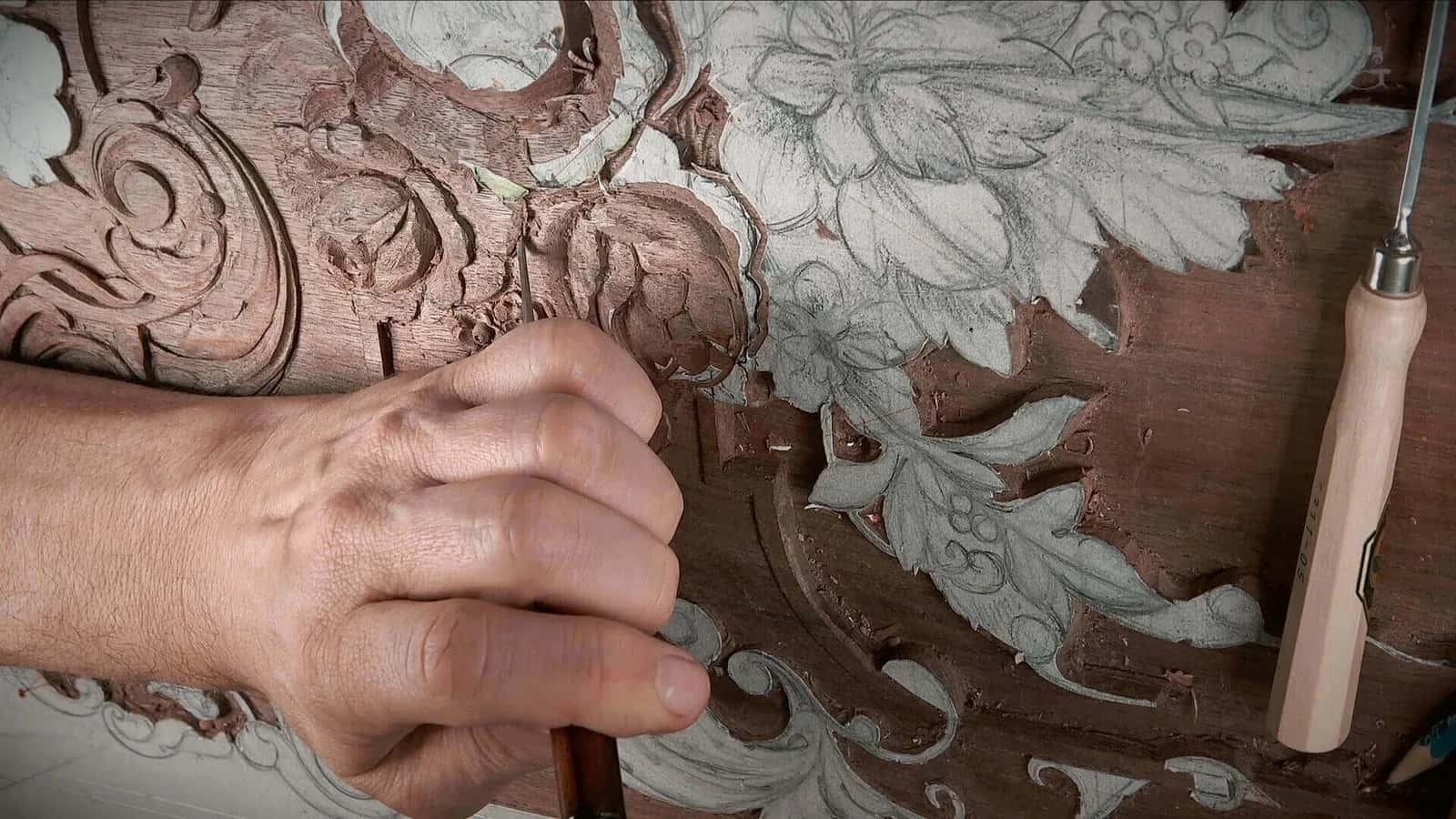
Online and in person wood carving classes for Big Lake, TX
Learn wood carving at your own bench in Big Lake, TX
I teach Woodcarving Tutorials online, and you can start with me tonight. You watch my hands from up close, you make the same cut on your own board, and you play it again if it went wrong. Ask around Big Lake, TX and nobody will point you to me. That part is true. I can give you the one thing I needed most at sixteen and could not have bought at any price.
Somebody hands you a piece of lumber and something in you wants to cut into it. When you searched for Woodcarving Tutorials near Big Lake, TX, you were hoping a real person would turn up. Have you watched a carving video, understood every word, and then made a mess of it at your own bench an hour later? Do you want to draw your own ornament instead of tracing somebody else's forever?
Then sit down, because I want to tell you something. My name is Alexander Grabovetskiy. I have carved for over forty years and I was named International Woodcarver of the Year. The title is not the point of this page. What matters is how I got here, because it is the one thing standing between you and a carved leaf.

What I got at sixteen that you cannot buy in Big Lake, TX
At sixteen I became the only apprentice of a fine-art master, the old European way, one student and one teacher at one bench. He handed me nothing to read, ever. He cut, I cut, he told me what I did wrong. Then again the next morning, and the morning after that. He kept using the word design until I was sick of hearing it. Not drawing, he would say, and then go quiet and let me sit with that for a while. He meant the laws of space, rhythm, repetition, and thinking like the tool in your hand. It took me about two years to hear what he was actually saying.
Everything I can do came out of those years. That kind of teaching has almost vanished. There are not enough masters left. The ones still working are carving, because carving is what pays, and teaching one student at a bench for years does not, so it has more or less stopped.

Then the world had other plans. I was arrested at eighteen for my faith. In prison I carved furniture with a knife I made myself, ten millimeters of steel, and a small gouge I made out of a nail. My pay was one boiled potato a day. One potato. I shared it with other men and we talked about God, and I got down under eighty pounds.
I do not want you feeling sorry for me. A nail and a scrap of steel were enough, because somebody had already shown me how to hold them. Years later I landed in America on a Saturday and had a framing carpenter job by the Monday, with no English at all. Nobody there cared what I could carve. Give me a nail and a teacher's voice in my head and I can work.
Why the videos have not taught you to carve yet
By now you have probably tried. You found a video, you watched a man finish a beautiful leaf in nine minutes, and you understood every word he said. Then you sat down at your own board and it went wrong, and you could not say why.
The reason is simple and nobody says it out loud. You were shown the RESULT of a cut. Nobody showed you the cut itself. You saw a carver, and a leaf, and nothing in between. You cannot copy what you were not allowed to see. Every person who ever typed Woodcarving Tutorials into a search box was really asking for the same thing. Somebody to show them the cut properly, once, from the right angle.

A weekend class near you has the same hole in it, only more expensive. Eleven people, one pair of hands, one chance to see it. Then everybody drives home and works from memory, and memory is a liar about angles.
How I rebuilt that apprenticeship for you
The camera moved to the only place that teaches, right above the work. You see the bevel, the grain and the chip lifting, blown up across your whole screen. And you can watch that one cut nine times. My master could not do that for me. He was one man with one afternoon. That is the difference between Woodcarving Tutorials on a screen and a master at your shoulder, and I have spent years closing it.
I teach it in the order he taught me, and I will not shuffle it to make it easier to sell. First a pencil, then a gouge. He would not let me skip it and neither will I. Look at the Principles of Design in Wood Carving course and you will see what he meant about the laws of space.

Then carving, which is heavier work than people expect. You are digging inside the wood and removing mass, and your shoulders will tell you about it the next day. Then sharpening, which takes the longest to learn and which almost nobody teaches properly. Honed steel hides a great deal of inexperience. Which is why a whole course exists on Carving Tool Sharpening, and not one buried video.
The order matters, and I have seen the cost of ignoring it. The shopping is fun, the tracing is easy, and the drawing gets postponed for life. Ten years later he can reproduce anything and design nothing, and he cannot understand why his work looks like a copy. His hands are good. His eye was never trained. I would rather cost you one uncomfortable week of drawing than ten years of that.
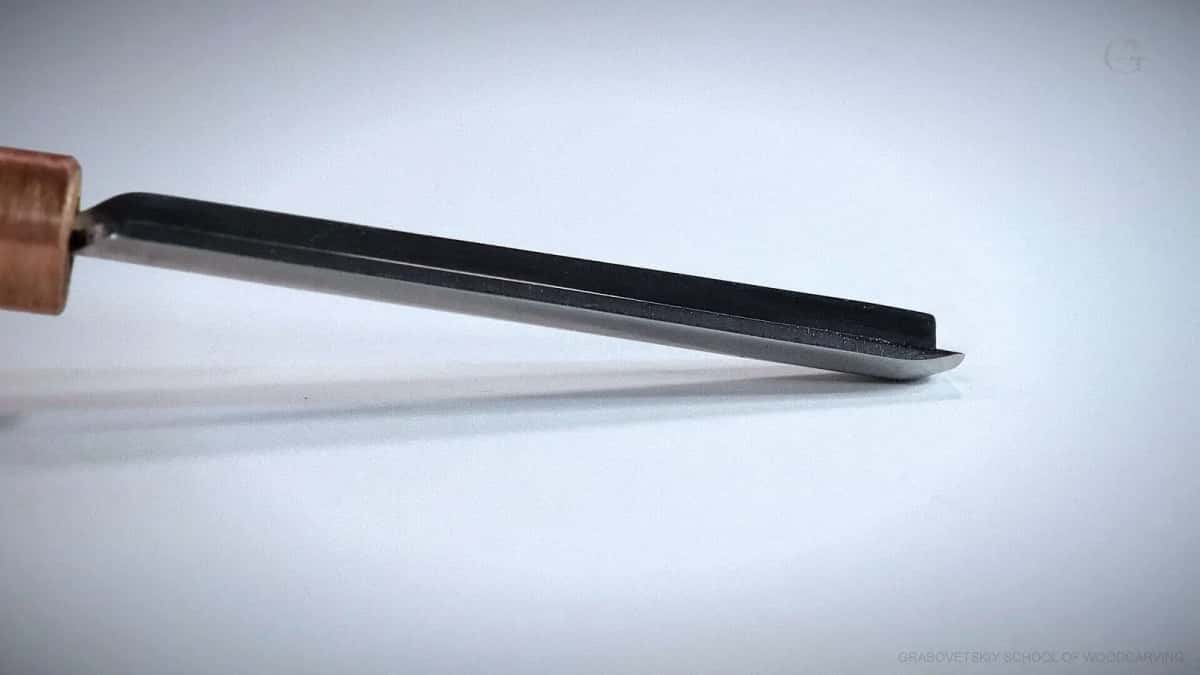
Behind one login I have put 46 courses, 618 lessons and 3,036 video parts. What took me years of standing at his elbow is sitting there waiting for you.
Your first month of Woodcarving Tutorials, honestly
Nothing about the first month should surprise you, so here it is laid out. Week one you draw. A pencil and a lot of bad leaves. Welcome to week one.
Week two you sharpen, and you find out that your tools were never sharp. Week three you make your first real cuts on a small board, and they will be rough. In four weeks you own a leaf you carved. Good is not the word for it, and good is not the point. Keep it on a shelf, because in a year you will pick it up and see how far your hands have come.

The work is slow and I would be lying to promise speed. Sharpening alone took me years to learn properly. The difference is that you will know what you are doing wrong.

Something for you right now, whether you ever pay me or not
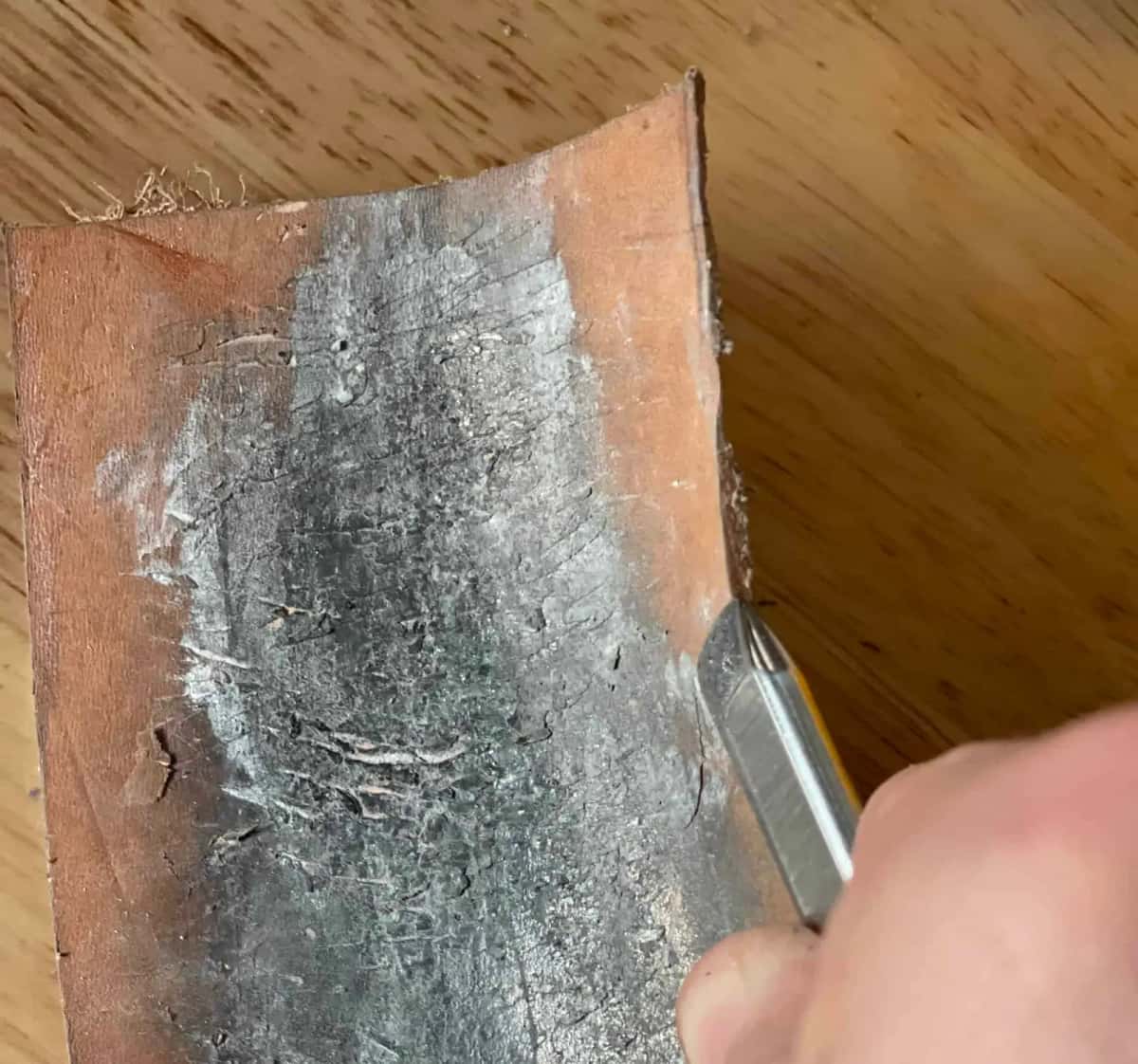
I am going to give you one true thing before you decide anything. Take whatever soft material you have and fix it to a board so it cannot slide. Rub honing compound on it, lay your gouge bevel flat, and pull the tool backwards toward you. Twenty strokes. Never push.
Now cut a curl in a piece of basswood. Shiny means you are there. A fuzzy surface means your bevel is rounded, and no new tool will fix that. More money on steel is the wrong answer nine times in ten.
The wood around Big Lake, TX, in one paragraph
Texas will hand you mesquite, pecan and live oak, and every one of them will fight a beginner. Pecan tests about 1,820 lbf on the Janka scale. American basswood is 410. You will push far harder to learn exactly the same thing, and your edge pays for all of it. So buy basswood for the learning years, and save the pecan for when you can do it justice. None of that is me being soft with you. A tool that goes dull in ten cuts will tell you that you have no talent, and it will be lying.

You do not need more than that from me today. Your problem was never which tree it came from. It is that nobody has ever stood behind you and shown you the first cut. That is the only thing I am actually offering, and it is the only thing Woodcarving Tutorials should ever have meant.

I do teach in person, and it is not enough
I still teach live a few times a year, and the Austin School of Furniture has hosted one of my classes. Those weekends happen when somebody organizes a room and a bench for me. They sell out in about eight minutes, and even so I am telling you they are not the answer on their own.
You come, you learn a great deal, you go home, and the real work starts. Repetition is the only thing that has ever made a carver, and repetition is exactly what an apprenticeship gives you and a workshop cannot. If you want Woodcarving Tutorials that actually changes your hands, you want the thing that repeats.

What it costs, and who should not join me
$25 a month opens all of it, and a year of Access is $200. Access renews automatically each month, and cancelling is one click on your own account page. A single good gouge costs more than a month with me, which should tell you where the money in this craft really goes.
Money tight? Then hold off, and I mean that kindly. Get a pencil and paper and draw leaves for six months. Drawing is free, and it is the part that matters most anyway. Saying that costs me a student and I will say it anyway.
Do the arithmetic, because it is not close. One weekend workshop is the tuition, plus the flight, plus two nights in a hotel, plus the days off work. A wonderful weekend, and no Tuesday. A year with me is $200 and I am there every Tuesday night in November when the leaf goes wrong and you cannot see why.


Who comes to me for Woodcarving Tutorials
Some are still in school. Some retired thirty years ago. Woodworkers who want ornament, and men who just retired and finally have time.
One more reason, and it is the one I did not see coming. Carving in three dimensions builds new brain cells and works parts of your mind that drawing and painting never reach. You keep a whole form in your mind and remove wood until it matches. Nothing else I know does that. I train my body every day too, weights and walking, because I do not just carve wood. I carve myself.

You are stepping into a line of people who did this properly. And part of what you pay leaves this school entirely. It funds orphans and widows, and it sponsors children with talent whose families cannot pay for art education. Nobody was paying for my education, and the talent sat there with nowhere to go for years.

So here is what I am really offering you. Not videos. My teacher's method, filmed from his angle, waiting in Big Lake, TX. Start with the beginners course and one board of basswood, and carve something the size of your hand before you go near a door panel. If that sounds like your kind of work, shall we carve?
And if it does not, close this page with my blessing. This is slow, physical, expensive work that takes years, and I am not going to dress it up as anything else. But if you have wanted it since you were a boy, and nobody ever showed you how, then I know exactly where you are standing. I stood there too.

Frequently asked questions
Are these classes actually held in Texas?
The lessons are online, so nothing happens in a Texas classroom. You watch from home, wherever home is. I run in person workshops only a few times a year and they are announced separately. Austin has had one, at the Austin School of Furniture.
Is this too advanced if I have never carved anything?
The beginner courses start at how to hold the tool and which way the grain runs. Students have arrived here at fourteen and at ninety, and both of them learn. Go slowly and finish something small.
What do I need to buy before my first lesson?
Six gouges, one American basswood board, and a leather strop with compound on it. Months of work sit in that list. Buy known steel like Pfeil or Ashley Iles instead of a cheap boxed set of twenty.
Can I carve mesquite or pecan instead of basswood?
You can, but not in your first year. Pecan is about 1,820 lbf on the Janka scale and basswood is 410, so you fight more than four times as hard for the same lesson. Learn the cut in basswood and carve pecan in your second year.
How long before I carve something worth keeping?
Most of my students finish a small relief they are happy with in the first month or two. One carved leaf you can close your fist around is a real thing to own, and a better start than a panel you never finish.
What if I want to stop paying?
You end it yourself on your account page, any time you like. Access renews automatically every month until you do that. Nobody has to be called and no notice period applies.