
Alexander Grabovetskiy, woodcarver, School of Woodcarving · Published 2020
Does the same acanthus carving rule work for every style of acanthus?
Quick answer: Acanthus style differences mean a rule belongs to one style, not to all. In part 7 of workshop 22, I carved a wave and said it may not suit every style, because the one I work in is Venetian.
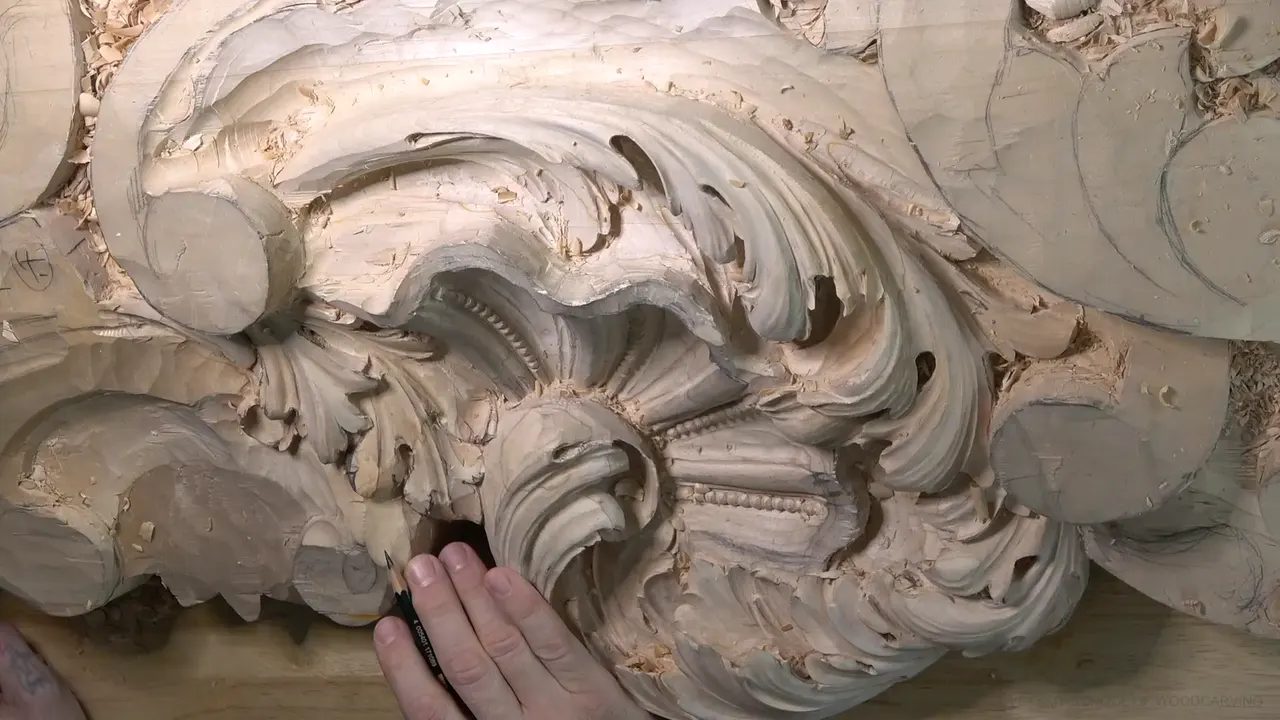
No, one carving rule does not fit every style of acanthus, and in part 7 of workshop 22, I say it on camera: "there is absolutely no rule to all because they're all different styles of acanthus." That wave on the leaf is tied to the Venetian style I work in, and so is the micro eye I mention from the original.
Ever carried a carving move over to a new leaf and watched it fail? Do you wonder which habits can travel with you and which ones stay behind? Part 7 gives the Venetian answer. After it come my own words from eighteen other lessons and one livestream, where Greek, Roman, Byzantine and French leaves each ask for something else.
What did I carve in Venice Room 22.7?
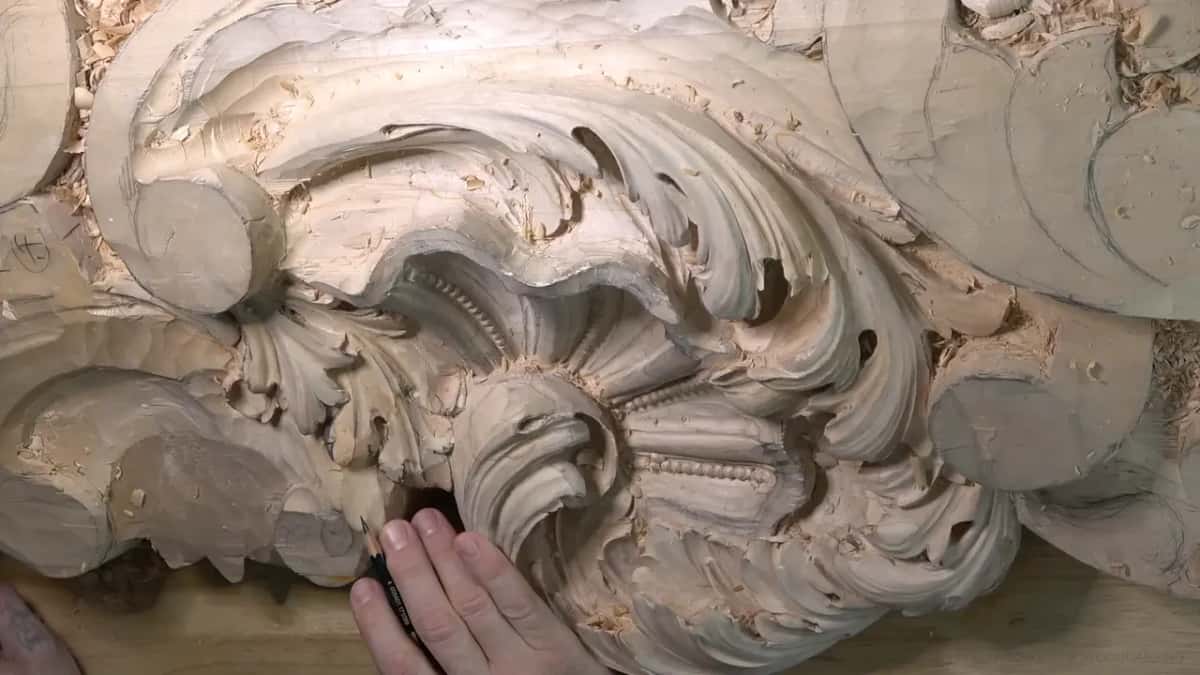
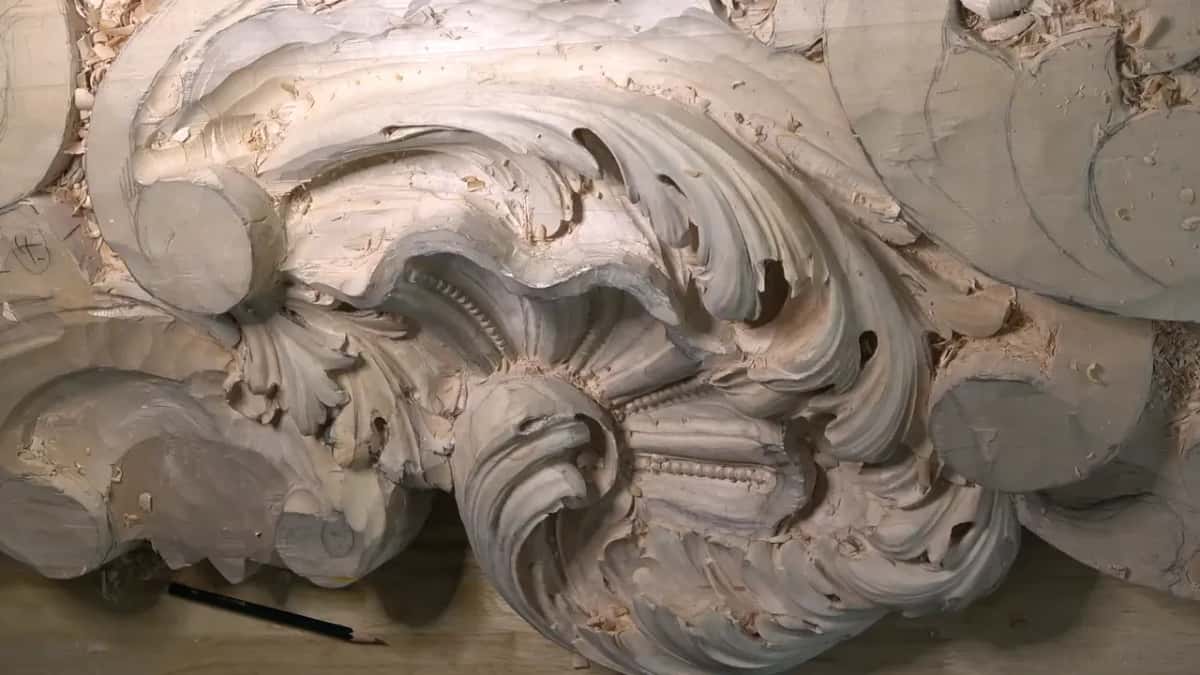
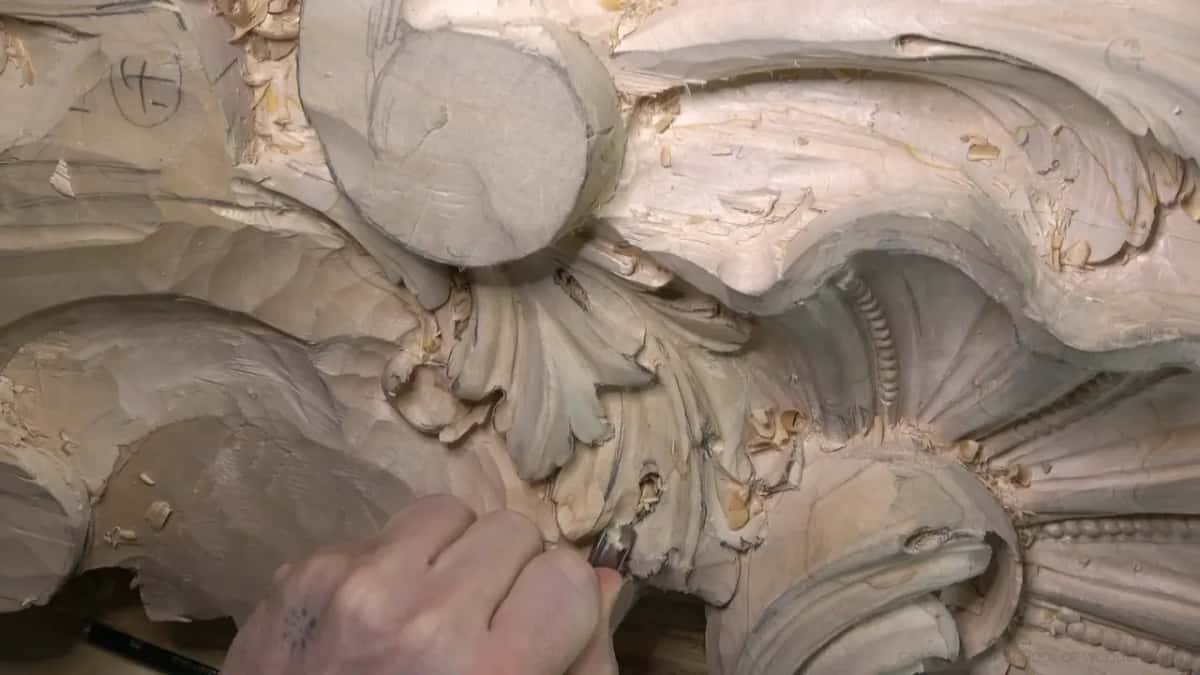
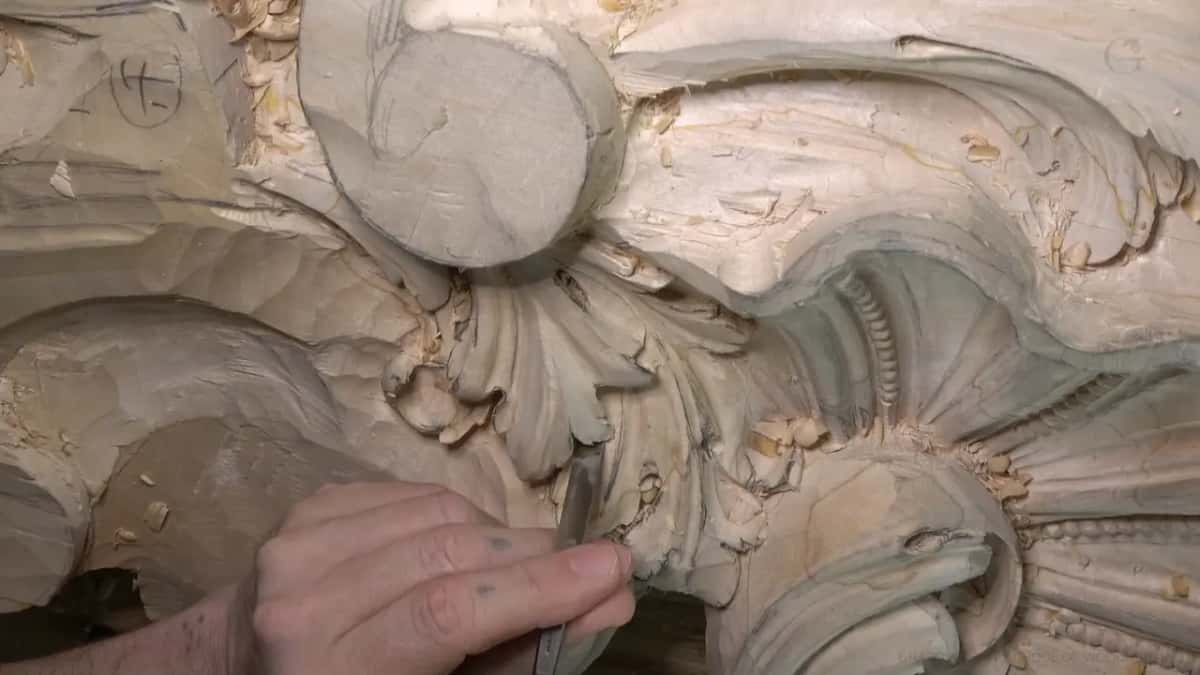
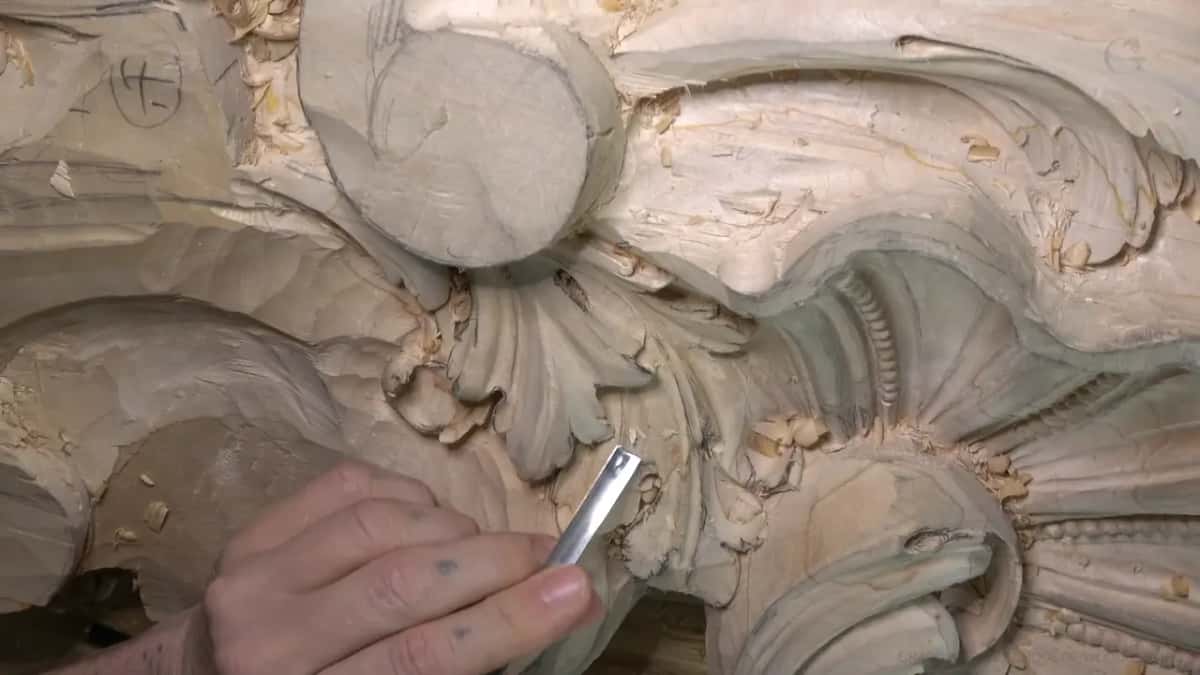
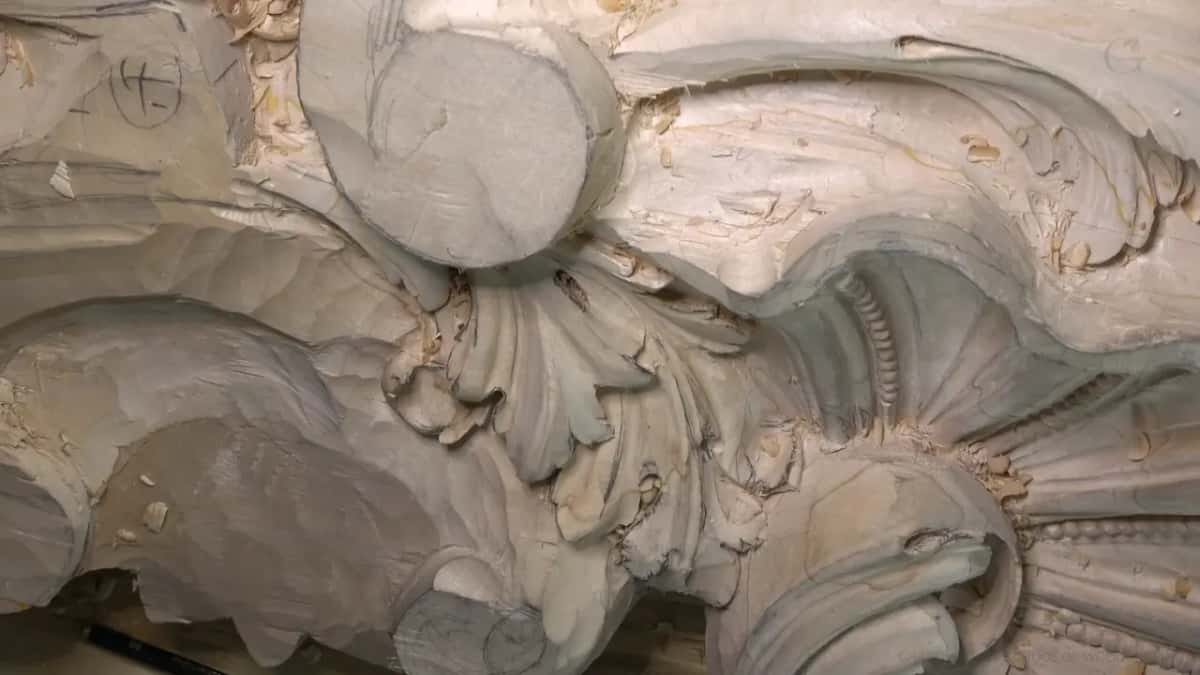
I open with a plan. I'm going to create more details and "start probably with separations and so on." This leaf is "kind of high above, closer to the ceiling," and the upper part will connect to the ceiling.
I put a question to myself: "should I create so many curls and stuff like this? I could." One option is to take a spot down and curl it a little on the inside. "If you look straight to it, you're not going to see it. But from the bottom, you're probably going to see it." Maybe I curl one all the way for a nice excavation, but "before I do that, let me do the separations."
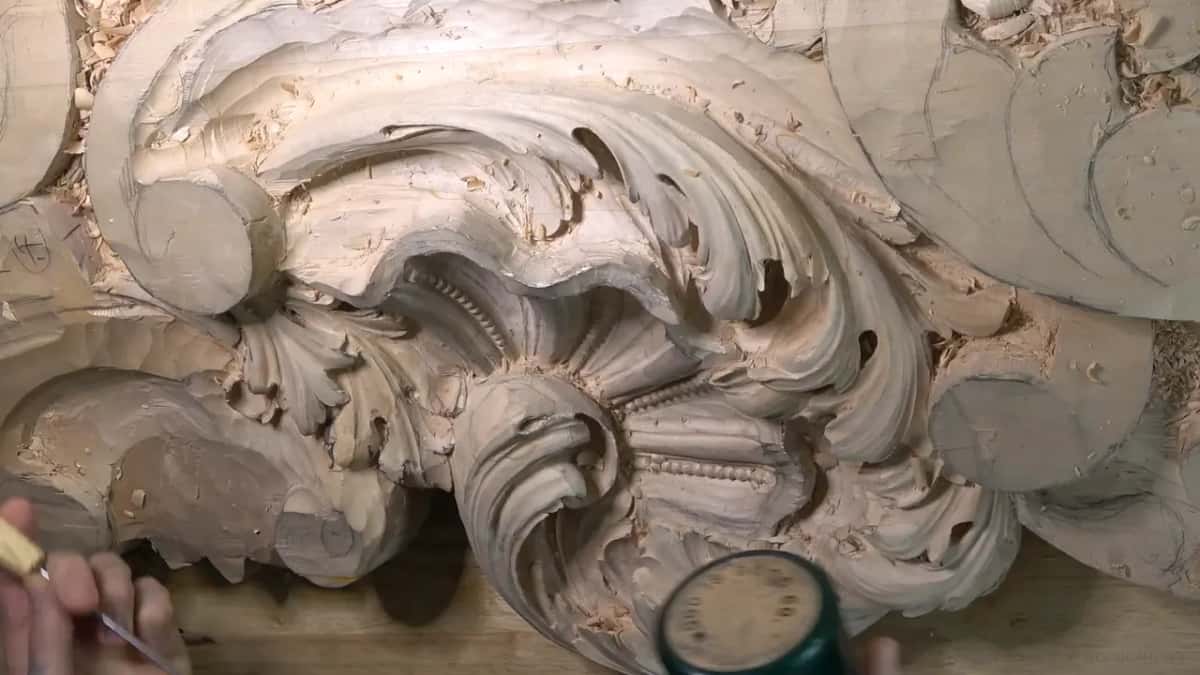
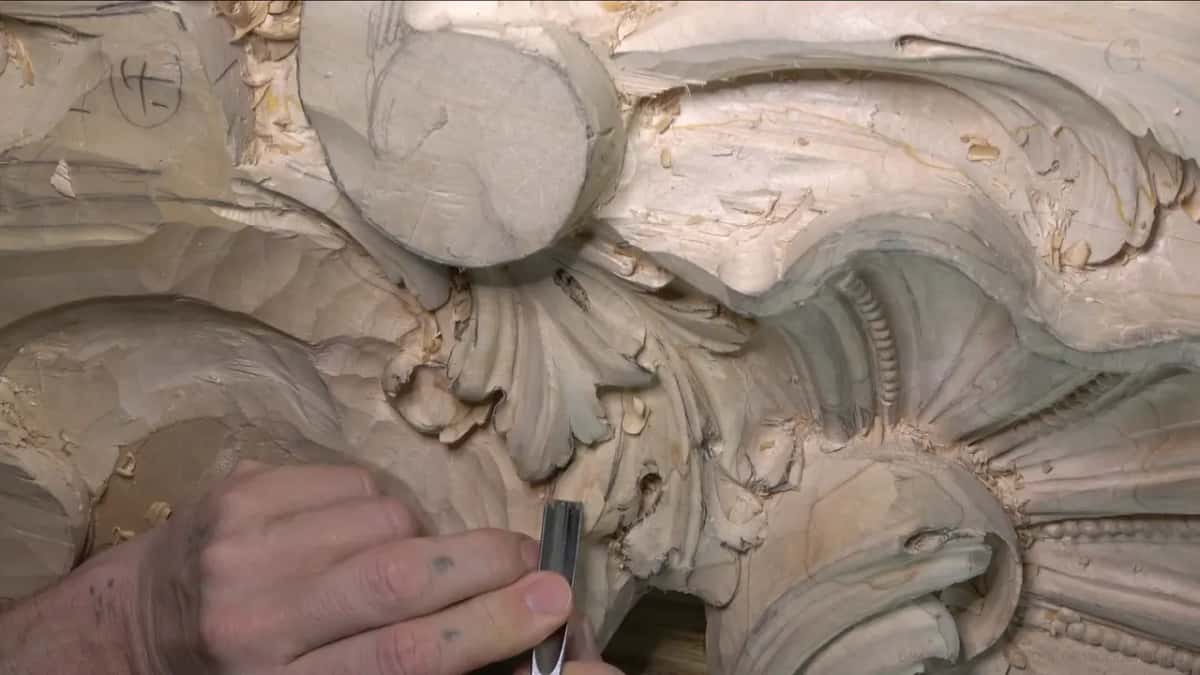
For the separations I plan a number 11 of probably two millimeters (5/64 in), then preliminary relief cuts. Some of those I could do right there, "pretty much right away," and that is going to save me a little time. To fix the overall movement I use a number five, "a 12 millimeters number five" (about 0.47 in).
One line in this part matters for the whole page. "I don't want to see really sharp triangles inside," I say, because on the original, "you often see also like a micro eye in just that case." I repeat it: "Just in Venetian style, okay?" And a moment later: "Sometimes when you're working with the different styles, they're going to look a little differently."
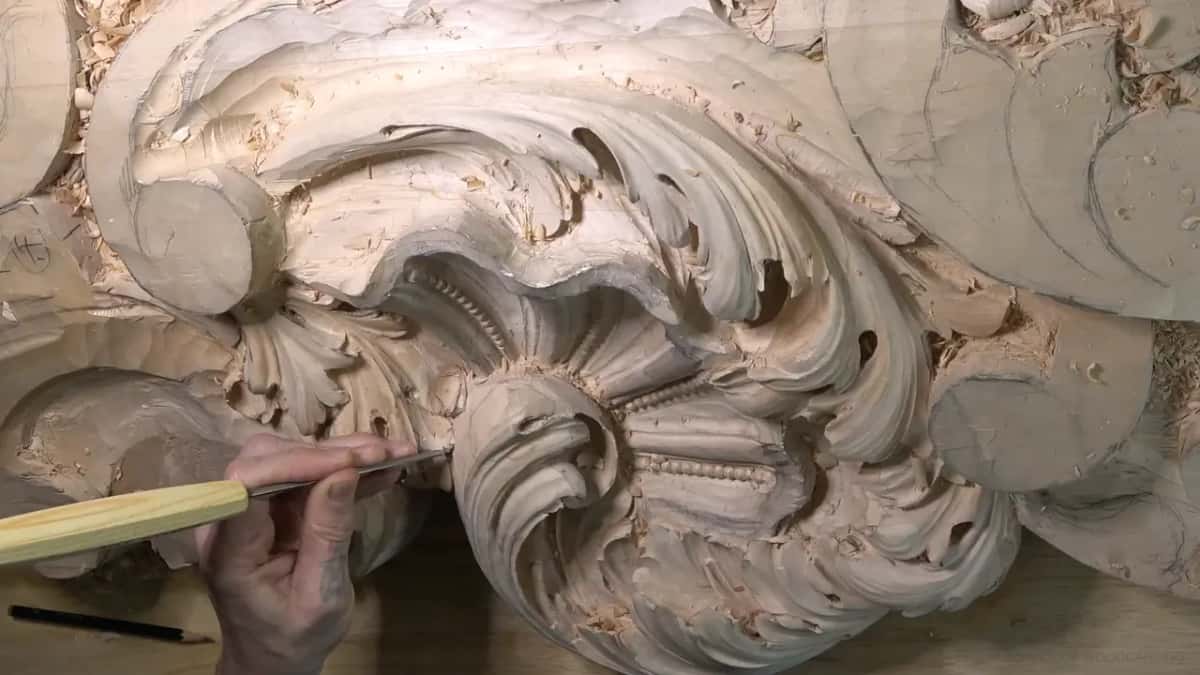
The concave starts next. I need "nice movement, a concave," and this side "also needs to be a concave a little." I want to raise a little bit of one part and then another part, "which is also commonly done." For the hollow itself I say I can use something bigger, "maybe number nine and ten, three-eighths of an inch" (about 9.5 mm).
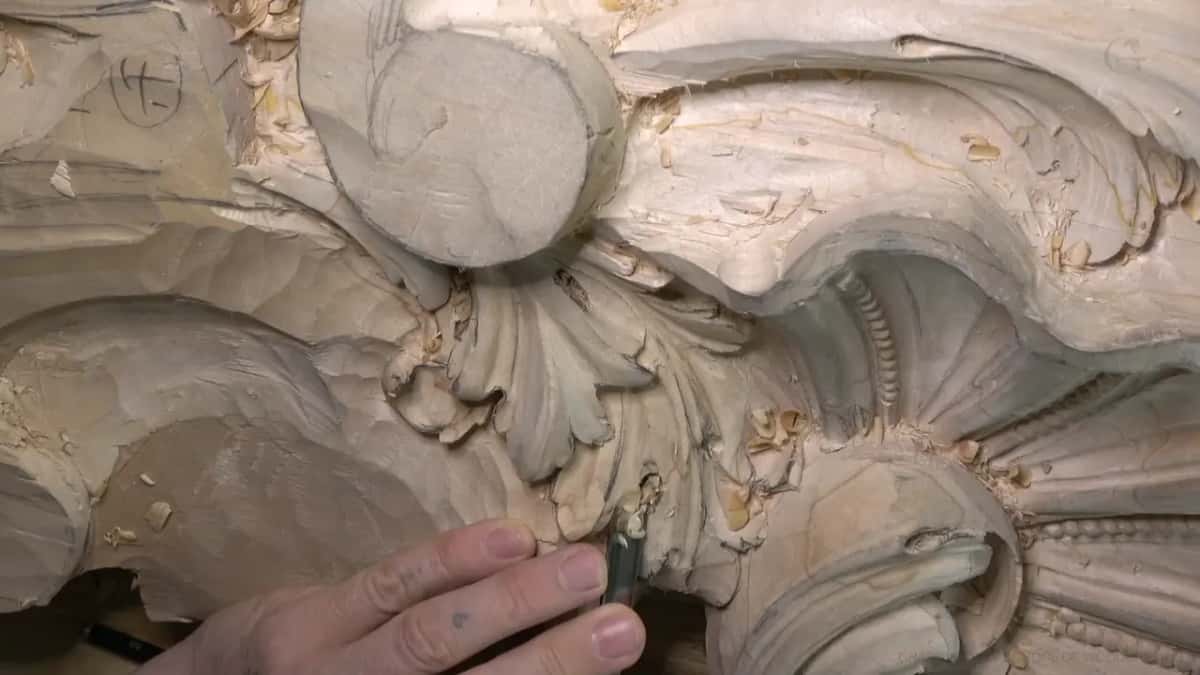
Here is the picture I give you. "I want to create a wave going like that, going down, and go back again." That's going to give me "really interesting movement." The right-hand side gets "exactly the same idea," and I get closer to the eye. At 05:07 I sum it up: a wave, "and go down, and again, up." I can get "really close to the edge of this separation."
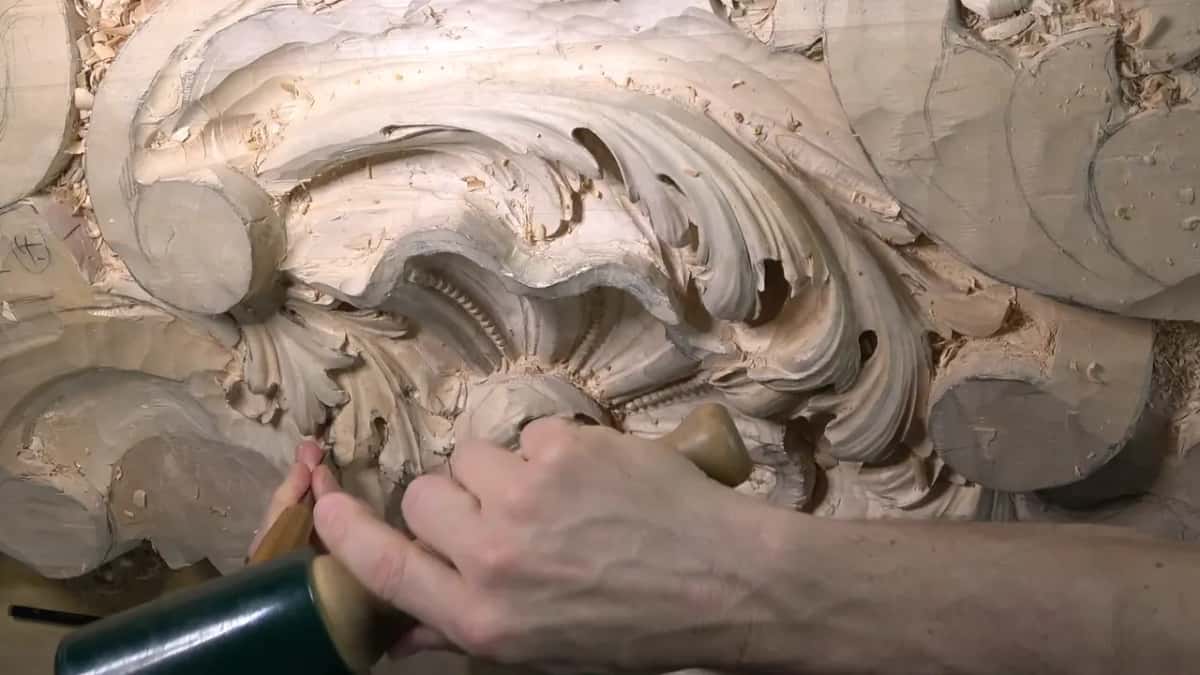
Now the rule. "Please understand, this technique, the wave like that, it doesn't necessarily apply to all of the styles of acanthus." The one we work in is, as I put it, "just in Venetian style."
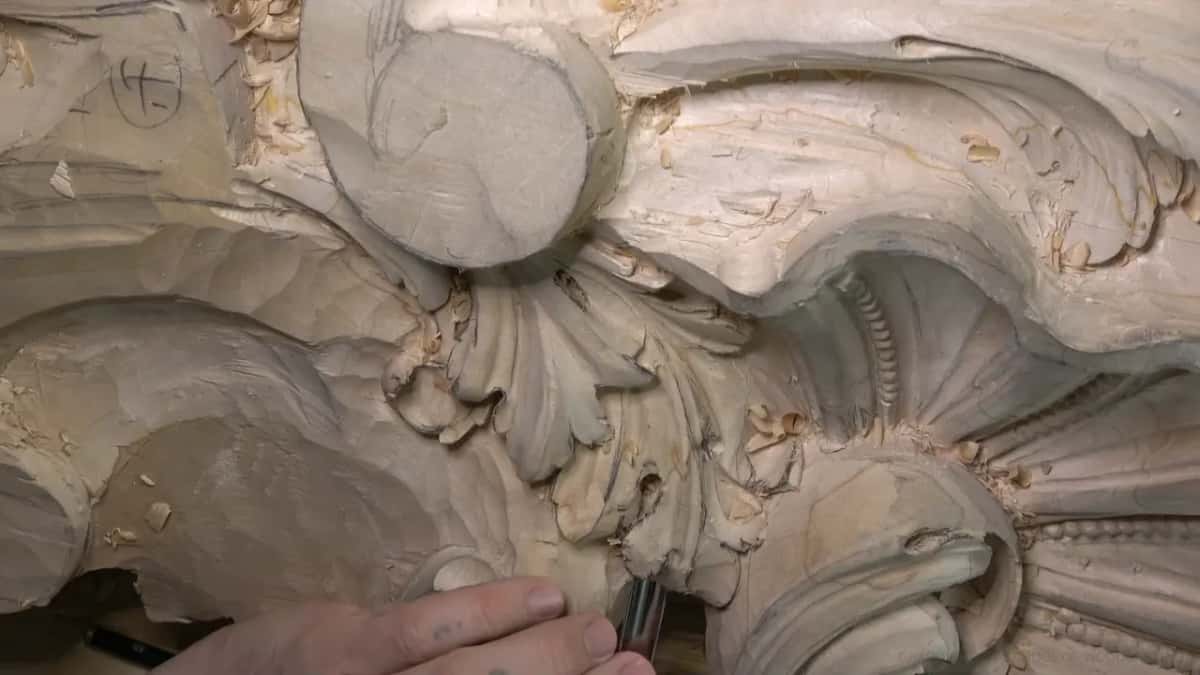
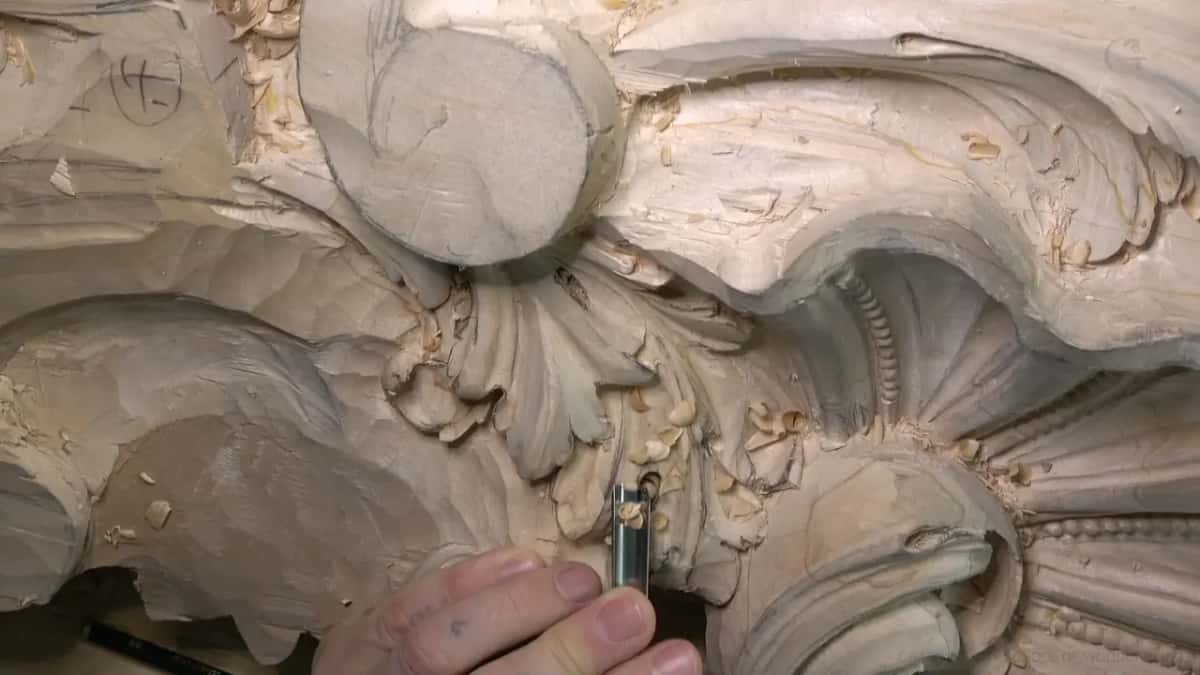
The ridge is the next small decision. "I am getting rid of a ridge, just a tool mark. I really don't need to because I could keep it just because I'm going to need anyway to draw attention just to those lines." "But it's okay. I'll just get rid and I'll just get the right movement later."
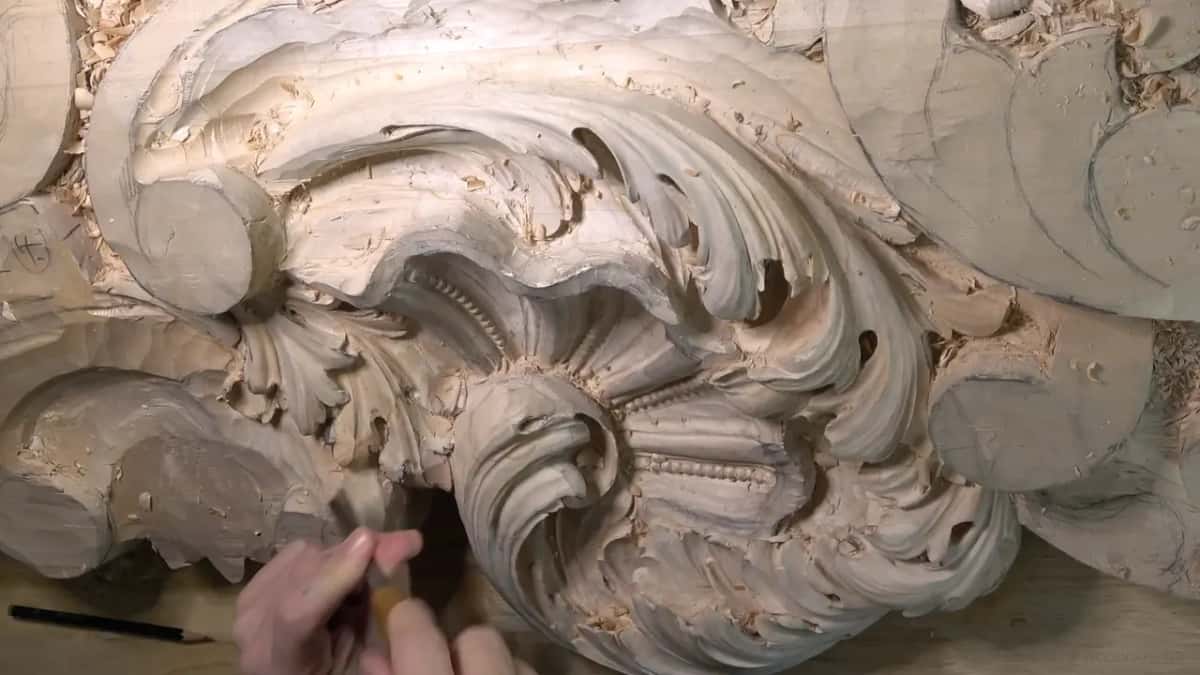
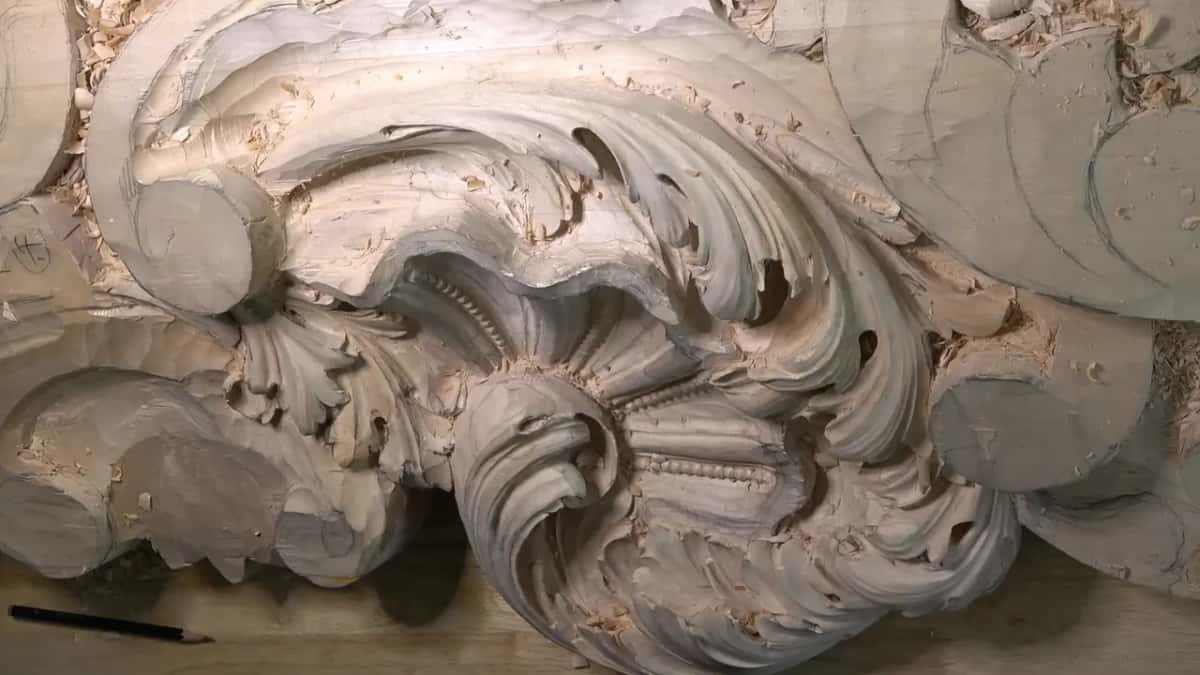
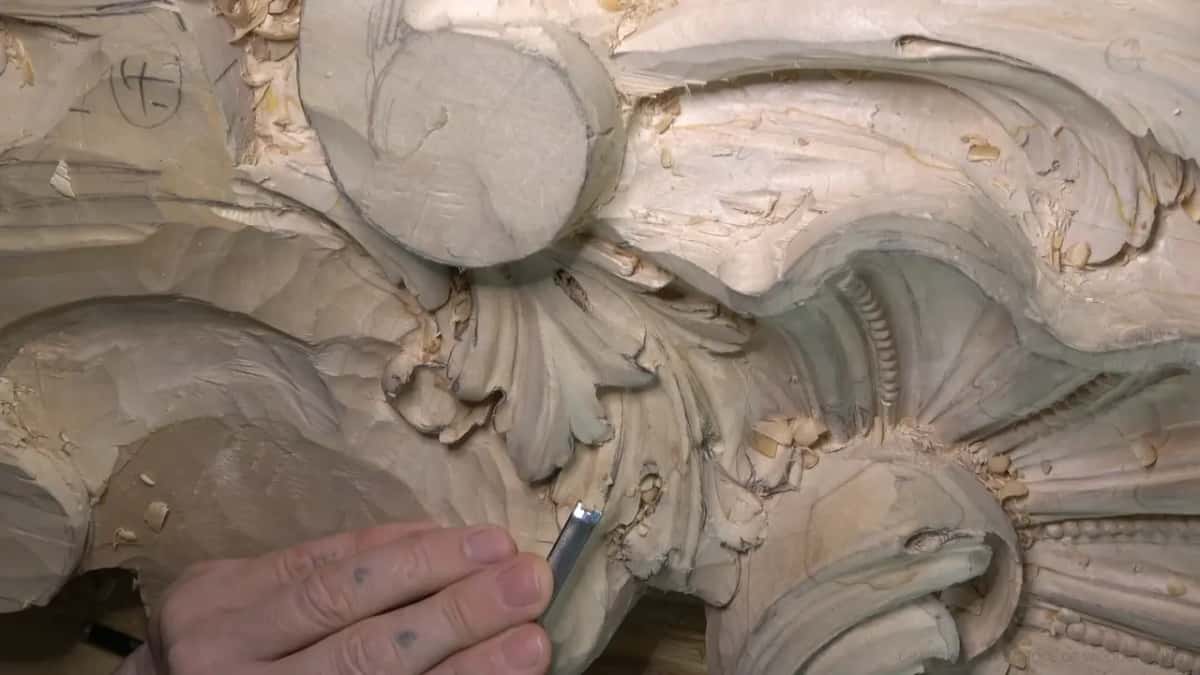
I round the part a little, because right now "it's not too roundy." The tool is a number five in the eight millimeters (about 0.31 in), "just a little bigger than a quarter inch." It doesn't have to be, "but that's what I'm using right now." Underneath, I'll clean right away, and then you "should be able to see overall movement, how it moves like that." The video ends on a plan. "Let me excavate inside a little."
Does a Greek acanthus carve the same middle line as a Venetian one?
It does not. Lesson 5 of the Greek acanthus course has the answer, in part 4: the Greek leaf carries a V cut on the inside, and we need to be "accurate to the history." Any V tool will work, I say there, "like any 60-degrees V tool or 45-degrees V tool."
The 22.7 video shows a number 11, a number five, and maybe a number nine or ten. A different set of tools.
In Byzantine acanthus, lesson 3, part 3, I put three leaves in one breath, and each one gets a middle of its own, which the table lower down sets side by side. The Greek leaf gets "a sharp V cut on inside." That would be "just like with the knife." The Roman leaf takes "a concave on inside," and the Byzantine leaf "a raised up convex."
I warn against mixing them. A Roman style with that twist would look "really weird," with "too many lines," and it would not be "good for the gold leafing." Gold leaf is one of my reasons.
Venice has its own answer in workshop 84, part 8. A second concave is what I need there, one that goes "all the way and blend in," "because I need to make that middle part of acanthus convex." And I stop to warn you: "Please understand, it's not always the case." It's just particular Venetian style. The Byzantine style, I say, is "more convex inside of the middle part."
The count sits in workshop 74, part 9. "If you have an eye, you always have a convex." Three divisions mean two eyes, and "two main convexes" come out of the eyes. For Venice the line is: "you will have also convex, convex, and a convex. Five total."
Why keep a ridge on one leaf and take it off another?
The 22.7 ridge was a tool mark, and I took it off even though I could have kept it to draw attention to the lines. In that same Greek part I come back to the ridge. Of the Corinthian leaf I say "we left some higher ridge on the inside of the leaves."
On the Greek side, "there is absolutely no ridge, just a pure V cut," a lot of times. And right away: "But you could. It still would be authentic if you would leave a ridge on inside." A ridge is a choice inside a style, and the style sets how big that choice is.
Stripes are another case. Part 2 of Byzantine lesson 5 points at furniture-style, low relief acanthus, where "there's going to be stripes." A book on acanthus shows that, I say. "Byzantine didn't do that because, keep in mind, Byzantine acanthus leaf never left as a bare wood or finished wood or stained wood or whatever, shellacked wood. It was always gold leaf."
My reason comes next: "those cavities, those channels, it creates the big problem for the gold leafing back then." So gold decided what the leaf could carry. Later in that part I say it will be "a different style," and I name it, "18th century Italian style," so "it's a little different approach."
How do eyes and pipes change between acanthus styles?
An eye is the part of a leaf that overlaps or opens between two leaves. I define it that way in Byzantine lesson 5: "it's overlapping, and sometimes it's not even over. It could be open, but the space between two leaves, that's called eye." And then: "in the Byzantine acanthus, they used huge eyes."
A Venetian eye shows up in 22.7 as a "micro eye" on the original, next to my dislike of "really sharp triangles inside." A second look comes from workshop 11, part 4. They "really didn't have too many sharp triangles on inside back then." And "there is a lot of different acanthus designs that we are trying to be authentic to the original Venezia."
Pipes shift too. A pass felt deep to some of you at first in Byzantine lesson 8, part 3, "and it was deep, but now it's actually created the beautiful pipe." It is "what I was talking about on Byzantine style and also Italian style." Of the Baroque I say, "the most beautiful work in the Baroque style, it's Italian style," with a "big pipe. Over-exaggerated pipe, if you wish to call that name."
The pipe has to be "really smooth and nice." Wherever you see an eye, I say, "we're going to have huge pipe like that." A pipe wraps in workshop 65, part 3. I bring my concave in, "not always, but in this case," because "there's different types of acanthus." Then: "Not every acanthus is the same."
Can you mix acanthus styles in one design?
You can mix them, I say, and the warning comes in the same breath. Workshop 5 of the dining table apron course has me talking about "many different designs of acanthus leaf," including Moroccan, Greek and Roman ones. "Nobody's going to know if it's Roman plus Greek."
A correction follows. "Well, I shouldn't say nobody's. There is plenty of people who do understand the big difference." I also mention "some German Gothic acanthus leaf style" in the same list.
A furniture panel gave me a French leaf to weigh. In part 3 of lesson 8, I say I could develop "the Louis XVI acanthus leaf" in one area, and that it is "a more French-looking one." In lesson 21, part 5, I call the carving style of that furniture "more North European, more, I would say, French late 18th century style."
I follow it with "I want to be authentic to what I designed." The Venice Room says the same in workshop 72, part 6. With another style you "can just do a lot of different twists and moves," but "I have to be, again, really true to the Venetian period," and I say "at least as much as I can."
How many kinds of acanthus are there?
Many, and I list them in the Corinthian acanthus course, lesson 1, part 1. "There's two types of Greek Acanthus leaf. The first one, the most ancient, which is found, is a Corinthian Acanthus leaf." After it come Roman, Byzantine and Moroccan leaves, and "it travelled to European culture," where you find Gothic, Renaissance, Belgium and French ones.
The line I hold onto is the last one: "those all Acanthus leaf still represent one leaf, which is the Acanthus plant." Roman acanthus, lesson 1, part 2, says it about two of them. The Roman leaf is "exactly the same like Greek acanthus, just more beautified," and "more elaborated." Then: "the idea is still the same. The plant is still the same."
Another reminder sits in Roman lesson 15, part 3. The leaves we work on will not all carry that much exaggeration, and they are "not the same even if it's acanthus leaves, but they all have different characteristics."
Roman lesson 6, part 1, goes back to the middle: "I would like to establish again concave cut" between two pipes, and I say "they always use concave on inside." A plan for later: European acanthus leaves, "we're going to carve it in different lessons, more European, more modern, and so on."
The October 2020 livestream has my answer to a viewer at 38:08: "there's different styles of acanthuses." We carved three of them online by then. They were Corinthian, Greek and Roman. The one I was carving was Italian, "but that's a particular 15th, 16th century." A Moroccan one comes up too, and a German one, and "they're really different."
I put it more gently in workshop 49, part 4. "There's not just acanthus only one type," I say, and there were different periods "when people worked on those acanthus."
What do acanthus style differences look like side by side?
The table uses my own words from the lessons above, one row for each leaf. The Venetian row is the one that workshop 22 owns.
| Style | Middle line | Where |
|---|---|---|
| Greek | A V cut inside, often with no ridge | Greek course, lesson 5 |
| Roman | A concave on the inside, they always use | Roman course, lesson 6 |
| Byzantine | A convex raised up in the middle part | Byzantine course, lesson 3 |
| Venetian | Five convexes in all, two main ones from the eyes | Venice Room, workshop 74 |
| French panel | More North European, French late 18th century style | Panel lesson 21 |
Each row has its own middle line, and each one comes from a different lesson.
How do I stay true to one style while I carve?
Out loud, more than once, I say it. In Venice Room 62, part 8, I call one movement "a Venetian style acanthus," three times in a row. Over in the Byzantine course, lesson 3 calls for what is "authentic to the true Byzantine." And the Greek course wants "accurate to the history."
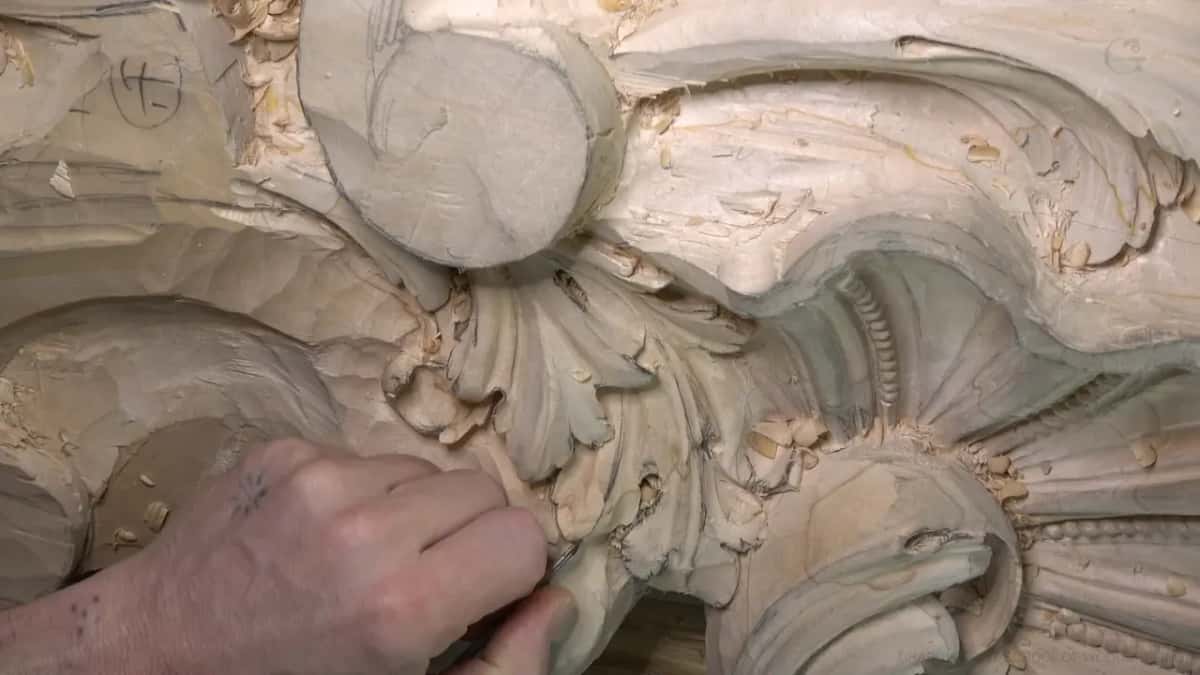
In 22.7 the wave went down and then up on both sides of a separation, and I carved it with gouges. It is not a rule for all.
Wikipedia has short pages that give the plant and the styles a wider frame than mine: the acanthus plant, Ancient Greek art, Byzantine art, the Corinthian order and Gothic art. There are pages for the Baroque, Louis XVI style and Moroccan art too.
Two more pages cover the Republic of Venice and gilding, and the craft has pages on relief, wood carving and the gouge. The workshop sits in Venice Room workshop 22, and the whole course is Advanced Carving: Venice Room, Part 2.
Which style is on your bench right now?
How it's done
- Plan the separations first. Part 7 has me planning a number 11 of probably 2 mm (5/64 in) for the separations, with preliminary relief cuts.
- Fix the overall movement. A number five of 12 mm (about 0.47 in) fixes it, and I say I want sharp triangles kept out of the inside.
- Raise two parts and start a concave. Part 7 has me raising a little of one part and then another, with the concave planned to start somewhere right there.
- Carve a wave down and up. It goes down and back again, and the right-hand side gets the same idea.
- Take off the tool mark ridge. I get rid of the ridge, and I say I'll get the right movement later, then round with a number five in the 8 mm (about 0.31 in).
Frequently asked questions
Does the wave I carved in Venice Room 22.7 work on every acanthus?
No. In 22.7 I say the wave technique doesn't necessarily fit all of them. The style we work in there is the Venetian one, and different styles, I say, look a little differently. The wave itself goes down, then back up, on both sides of a separation.
What sets the Greek, Roman and Byzantine middles apart?
Part 3 of the third Byzantine lesson sorts them. The Greek middle takes a V cut, the Roman a concave, and the Byzantine a convex raised up. Doing a Byzantine leaf in a Roman style would look really weird, I say there.
How many convexes does a Venetian leaf carry?
Workshop 74, part 9, gives the count for a leaf with three divisions. The two eyes give two main convexes, and three secondary ones sit inside the divisions. Five total, I say, if it's Venetian style.
What to carve next