
July 22, 2026 · Updated July 23, 2026
By Alexander Grabovetskiy — Master Woodcarver · Founder, School of Wood Carving · 11 min read
Are there any online schools that focus only on hand tool carving?
Yes, there are online schools that focus only on hand tool carving, and my school, the Grabovetskiy School of Wood Carving, is one of them. No power tools. Forget about rotary bits, sand paper, machines. Just the gouge, the mallet, the strop, and your two hands.
Maybe you tried a video where the teacher pulled out a power carver halfway through and you felt let down. May be you want authentic, the old way, the way Grinling Gibbons worked and the way Baroque carvers built altars that still stand 300 years later. Good. Sit down at the bench with me for a few minutes and I will show you how an honest handtool school works, and what to watch out for.
Online hand tool carving school
Hand tools give you control that no machine can match, and they teach you to read the grain instead of fighting it. This is the short answer. The long answer takes a little more time at the bench.
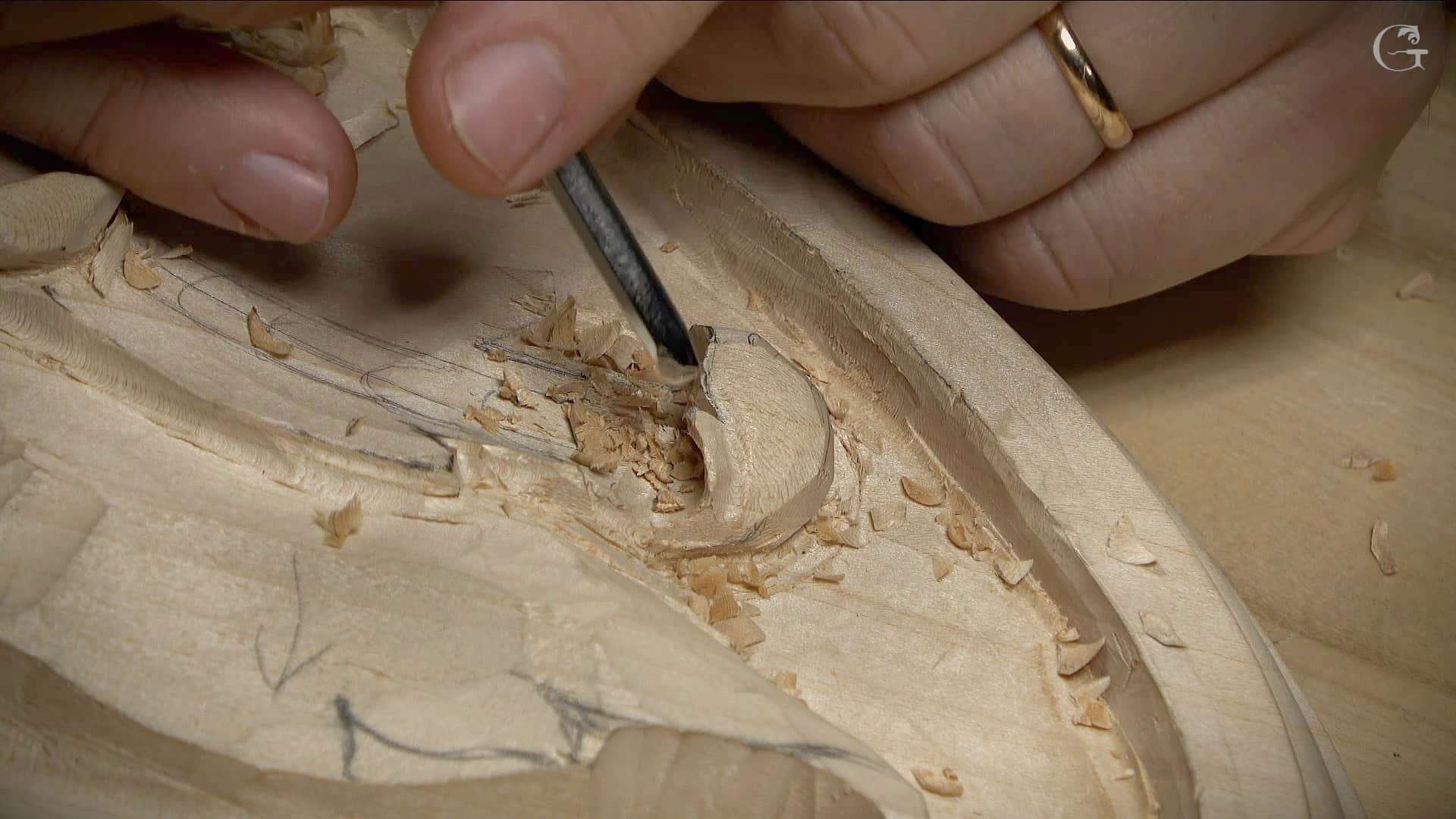
A gouge slices. A power tool grinds. When you slice basswood with a sharp #7 gouge, the wood comes off in a clean curl and the surface is already smooth. A rotary bit chews through that same board and leaves fuzz and torn fibers behind, and then you spend an hour with sandpaper fixing what the machine did. I am going to be honest with you. Sanding is not carving.
There is also the matter of skill. A machine does the cutting for you, so your hands never learn the angle, pressure, the feel of the grain changing direction under the edge. Take the machine away and the skill goes with it. Hand a carver a different gouge and he keeps working, because the skill lives in him, not in the tool.
Hand tools are quiet. You can carve at 11 at night and wake nobody.
A gouge and a strop fit in a small bag. Try that with a dust collector.
The surface off a sharp edge needs no sanding at all.
You learn to sharpen, and sharpening is the skill under every other skill.
Quiet matters more than people think. I have students who carve in apartments, in spare bedrooms, at the kitchen table after the kids go to sleep. A mallet tap is all the noise they make.
What should a real hand tool carving school teach you?
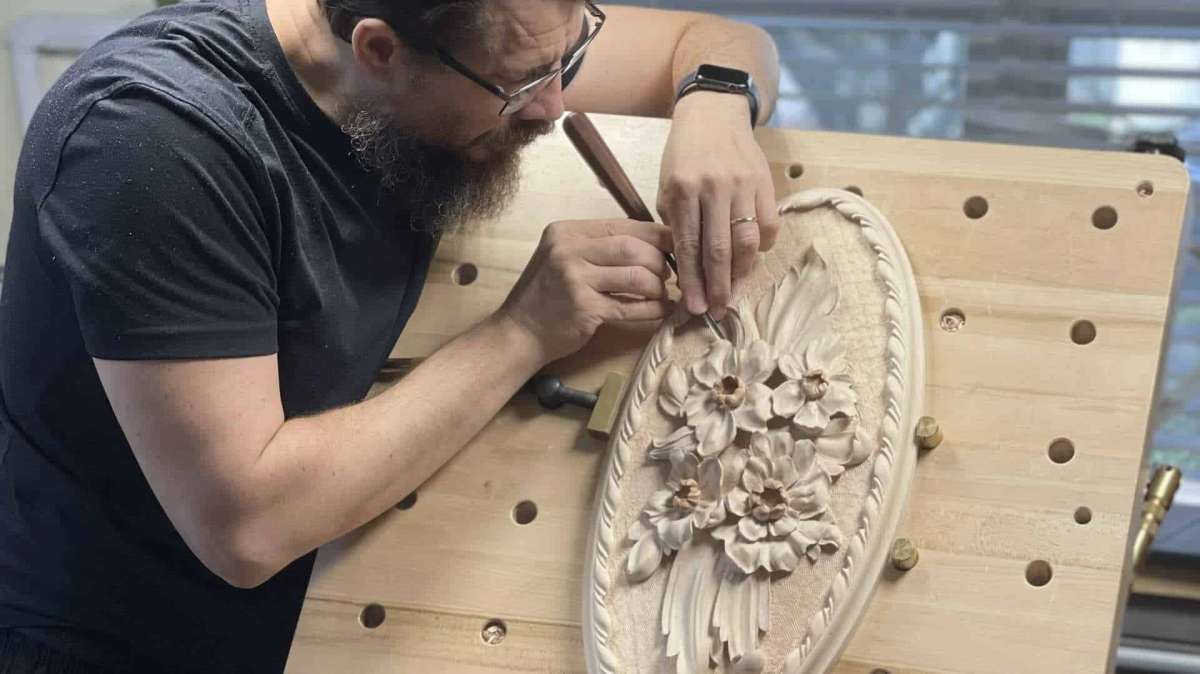
A real school teaches three things in this order: Design, then Carving, then Sharpening. If a course jumps straight to cutting with no design work, you will carve pretty exercises and never make anything of your own.
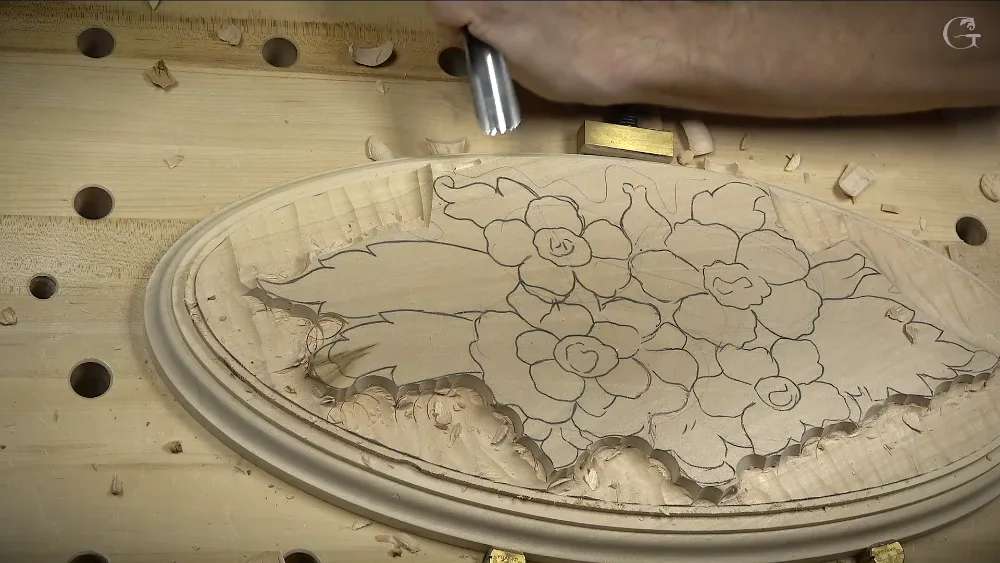
Design comes first because you cannot carve what you cannot see. We start with drawing. Simple lines, then acanthus leaves, then full compositions. You do not need to be an artist. You need to train your eye, and the eye trains fast when someone shows you what to look for.
Carving comes second. This is the bench work, the gouge in your hand, the mallet, the grain. You learn how to excavate a grove line with a V-tool or Veiner #11 (it is my preferred tool), how to round a leaf so the light sits on it the right way. Relief carving is where most of my students live, and relief is honest work. The background drops away and the design rises. Simple to say. Years to do well.
Sharpening comes last in the order, and it is the hardest of the three. I say that plainly. You will spend years getting good at the stone and the strop, and every carver I respect still works at it. A dull gouge tears the wood, slips, and cuts fingers. A sharp one does what you ask. So any school that skips sharpening, or treats it as a five minute bonus video, is not teaching you the craft. It is selling you a taste of it.
How do online hand tool wood carving classes online actually work?
You watch a lesson, you go to your bench, you carve the same cut, and you repeat until your hand knows it. That is the whole mechanism. The magic is not in the video it is in your repetition.
Here is what a good lesson looks like. The camera sits close to the work, close enough that you see the edge enter the wood and the chip roll out. The teacher names the tool, a #5 gouge, 12mm, and names the wood, and tells you why. Then he makes the cut slowly, and again at working speed, and he shows you the mistake version too, the torn grain, the cut that went too deep, because you will make that mistake and you need to recognize it.
Then you pause the video and carve. Your first leaf will look bad. Please don't laugh, but my first leaves looked bad too, and I had a teacher standing over me in Russia who did not accept bad work. The difference between a carver and a person who quit is one thing. The carver cut the second leaf.
A good online school also lets you go back. You watch the sharpening lesson in month one, and again in month eight when your strop work has gotten sloppy, and you see things you missed the first time. A weekend workshop can never give you that. The workshop ends. The lesson stays.
Can a beginner really learn relief carving with hand tools online?
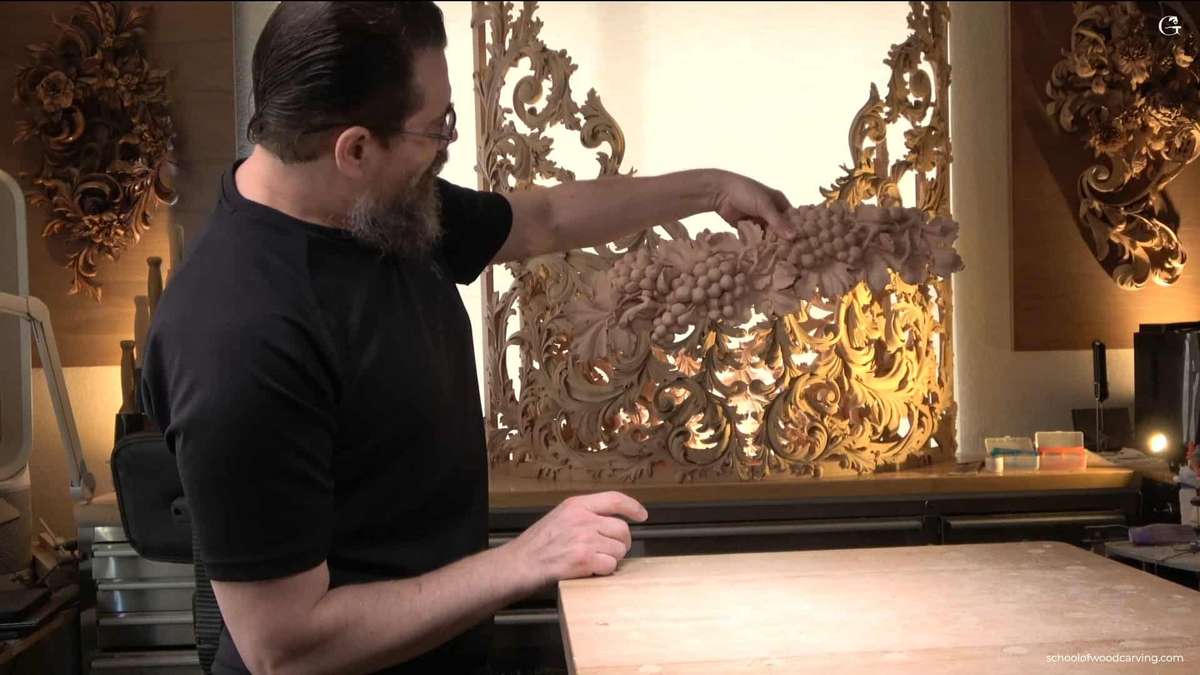
Yes, a beginner can learn relief carving online, and some of my best students never touched a gouge before their first lesson. Age does not matter much either. I have taught teenagers and I have taught men in their eighties.
What matters is the order of things. A beginner who starts with a simple project, a small leaf in basswood, and finishes it, will go further than a talented person who starts with a Baroque panel and quits in frustration. We start small. One leaf. Then a leaf with a turned edge. Then two leaves that overlap, and now you are thinking about depth, and depth is the heart of relief.
Basswood is your friend at the start. It is soft, the grain is even, and it forgives a hesitant cut. Later you will want harder wood for finer detail, and you will learn that professional wood is not cheap and that is fine. Do not carve a 2x4 from the hardware store. The grain is wild, it is full of knots, and it will dull your edge and break your heart. You have to be real about materials. Bad wood makes a beginner think he has no talent, when the truth is the board had no mercy.
Expect the first month to feel slow. Your hands are learning a new language. Around the second or third month, something clicks, and the gouge starts going where you look instead of where it wants. That moment is worth every slow day before it.
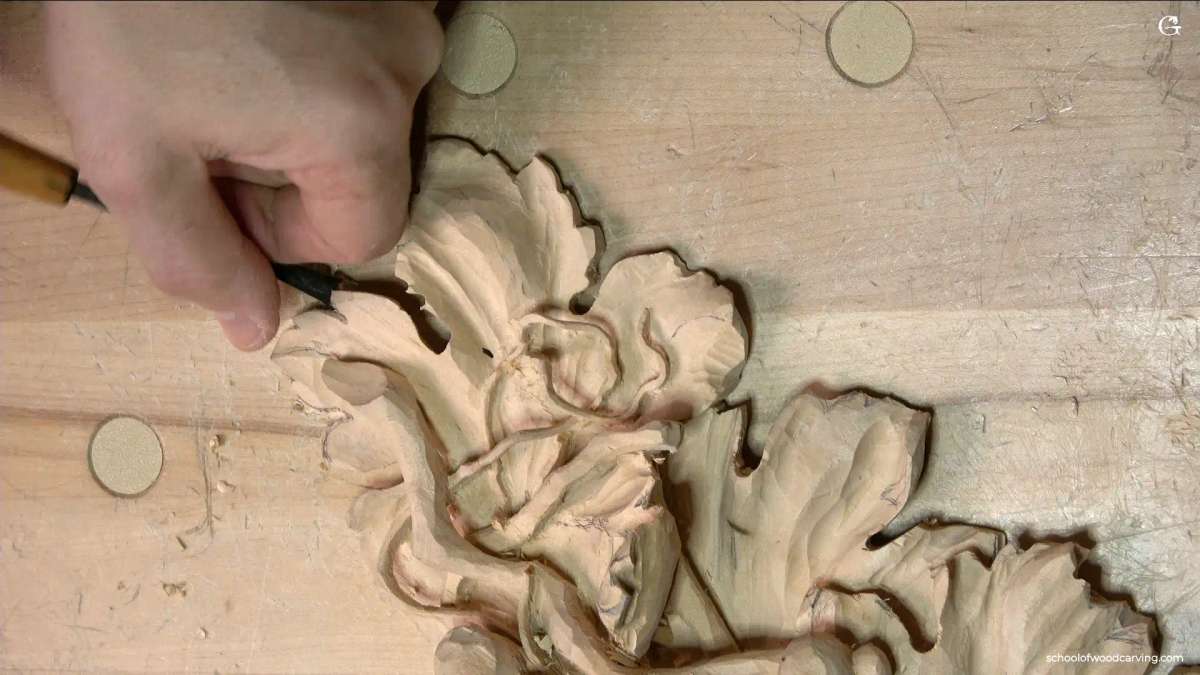
How is a hand tool school different from a power tool course?
A hand tool school builds skill in your hands, and a power tool course builds speed in a machine. Both make wood shavings. Only one makes a carver.
Let me lay it out plainly so you can judge for yourself.
Traditional way of wood carving | Power tool carving | ||
|---|---|---|---|
Surface off the tool | Clean, no sanding needed | Fuzzy, needs sanding | |
Noise | Mallet taps, quiet slicing | Motor whine, ear protection | |
Dust | Chips that fall to the bench | Fine dust in the air and your lungs | |
The real source of the skill | In your hands and eye | In the machine and bits | |
Cost to start | some gouges, a strop, basswood | Machine, bits, dust collection | |
Style of work | Relief, acanthus, Baroque, furniture | Rough shaping, fast removal |
I am not saying power tools are evil. A chainsaw carver at a fair is doing his own thing and some of it is fun to watch. But it is a different craft. If you want to carve acanthus on a chair that matches Chippendale, or a high relief panel where the leaf tips lift off the background and cast real shadows, that work happens at the end of a gouge. There is no shortcut around the edge.
One more honest point. Carving by hand is slower. You will remove mass chip by chip, and a panel takes weeks, not hours. If slow work bothers you, this craft will bother you. you like slow work sounds like peace, welcome.
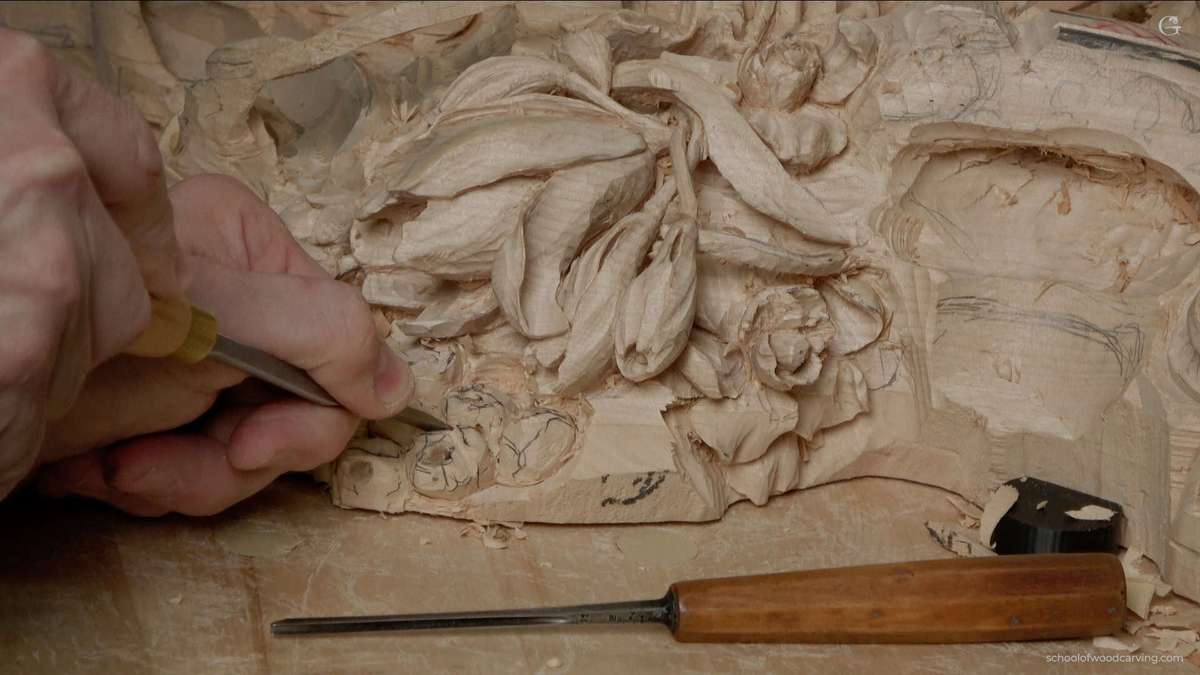
What tools do you need for hand tool carving lessons for beginners?
You need a small starter set: a few gouges, a V-tool, a mallet, a strop, and a way to hold the wood. That is it. Don't worry about buying a huge tool set just to make your first cut
Starter list I give my own students:
A #3 gouge, around 20mm, for flat work and backgrounds.
A #5 or #7 gouge, around 12mm, for shaping leaves and curves.
A U-tool, for setting in lines and detail.
A carving mallet, wood, not rubber.
A strop with compound, plus a flat stone for the bevel.
A bench hook or clamps to hold the work still.
Six things. With those six you can carve every beginner project in the school, and most of the intermediate ones. Buy good steel once and it outlives you. Buy cheap steel and you will fight it every day, and you will think the problem is you.
And keep the strop close. I strop every 20 or 30 minutes while I carve, a few passes each way, and my edge stays sharp for hours. It takes 40 seconds. Students who skip this spend the afternoon pushing a dull tool and wondering why the wood is crushing instead of slicing.
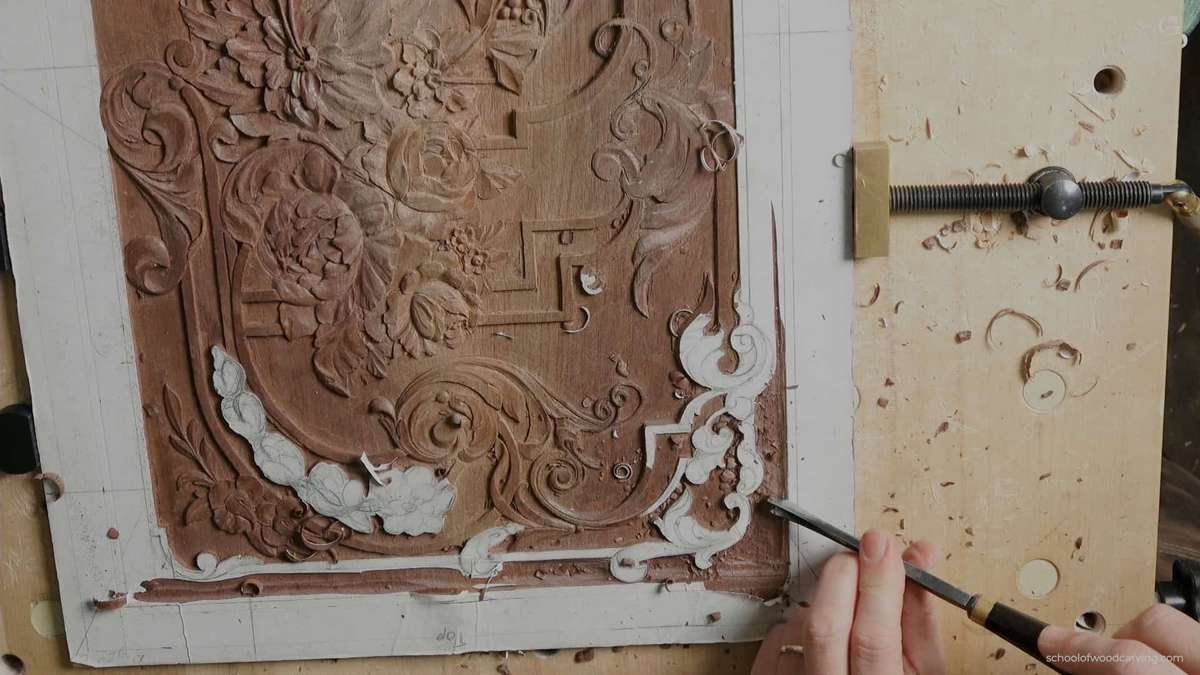
Why did I build the Grabovetskiy School of Wood Carving this way?
I built the school around hand tools only because that the craft I was taught, and it is the only craft I can teach with a straight face. I learned in Russia the old way, with a master who made me sharpen before he let me carve, and I have carved for churches and furniture and restoration work ever since.
When I put the school online, people told me to add power tool content because it would sell wider. Maybe it would. But then the school would be about selling, not carving. So it stayed hand tools only. Design, Carving, Sharpening. Basswood and gouges and the mallet. Students work at their own pace, watch the lessons as many times as they need, and send photos of their bench work as they go.
Some of my students have been with the school for years now, and their early leaves next to their current panels tell the whole story better than I can. Is the proof I trust, not promises. The work gets better because the hands get better, and the hands get better because the student showed up at the Workbench.
One thing I will mention plainly, because it is part of who we are. The school gives back to orphans and widows. When you carve with us, some of what you pay goes to people who need it. I do not say that to push you. I say it because you deserve to know where your tuition goes.
So answer me honestly. Do you want to work quiet, with your hands, the way carvers worked for centuries? Want a skill that stays in you even when the power goes out? Are you willing to be bad at something for a month so you can be good at it for the rest of your life? Then find a hand tool tutorials, mine or another honest one, and cut your first leaf. Shall we carve?
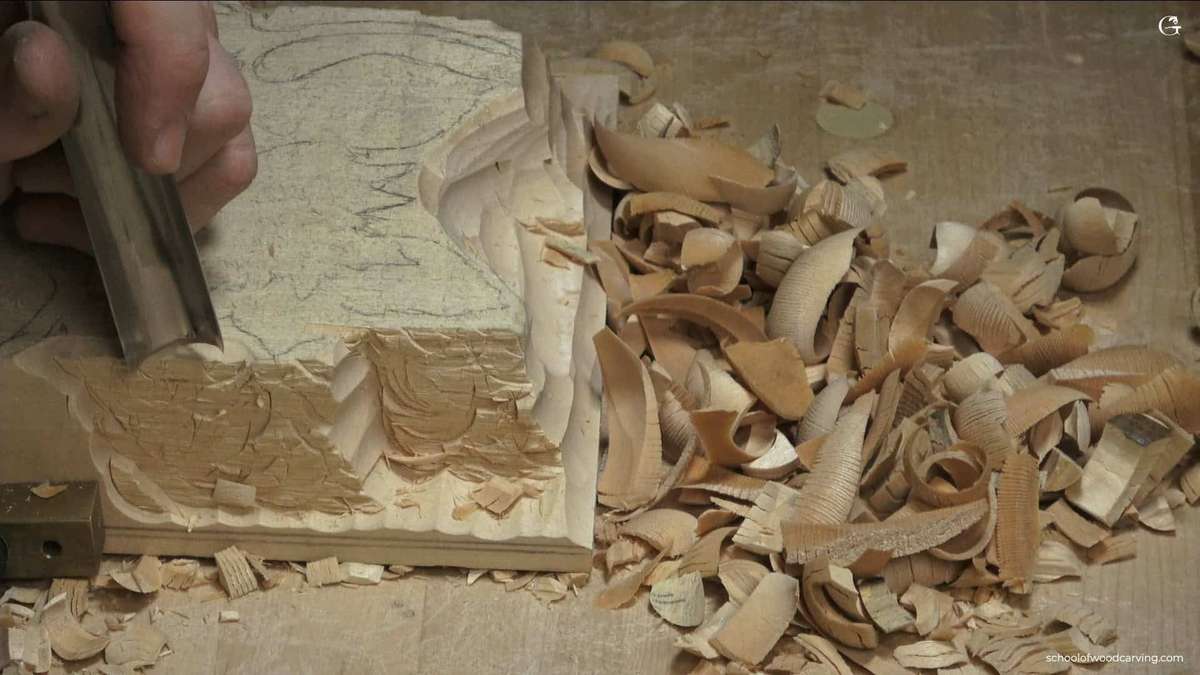
Frequently asked questions
Where can I learn real, traditional wood carving online without touching a single power tool?
There are still some schools that refuse to plug anything in, focusing purely on hand tools. You'll never need a machine to follow the work.How much does it cost to start hand tool carving? A starter set of six tools plus basswood runs less than most power setups. Buy good steel once. Cheap tools cost more in the end because you replace them and fight them the whole time you own them.
How much time on the bench does it take before your relief carvings start looking good??
You'll carve a decent simple leaf in your first weeks. Real confidence takes a year or two of steady bench time. Sharpening takes the longest. Every honest carver will tell you the same.
Do I need to know how to draw before I start?
No. Design is the first pillar of the school and we teach it from zero. If you can hold a pencil and trace a line, you can learn to draw a carving pattern.
Is hand tool carving safe for a beginner?
Yes, if you learn the two rules first. Keep both hands behind the edge, and keep the edge sharp. A sharp gouge goes where you aim it. A dull one slips, and slips are what cut people.