
Alexander Grabovetskiy, woodcarver, School of Woodcarving · Published 2020
Why keep extra wood on a carving instead of carving every detail you already see?
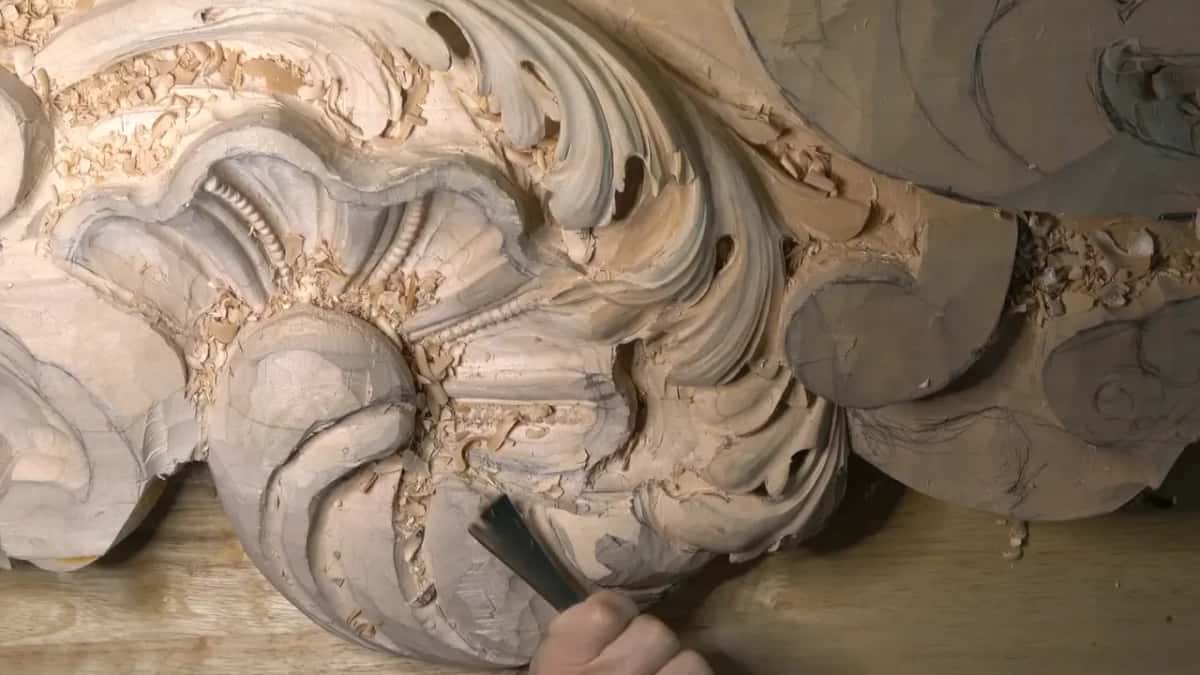
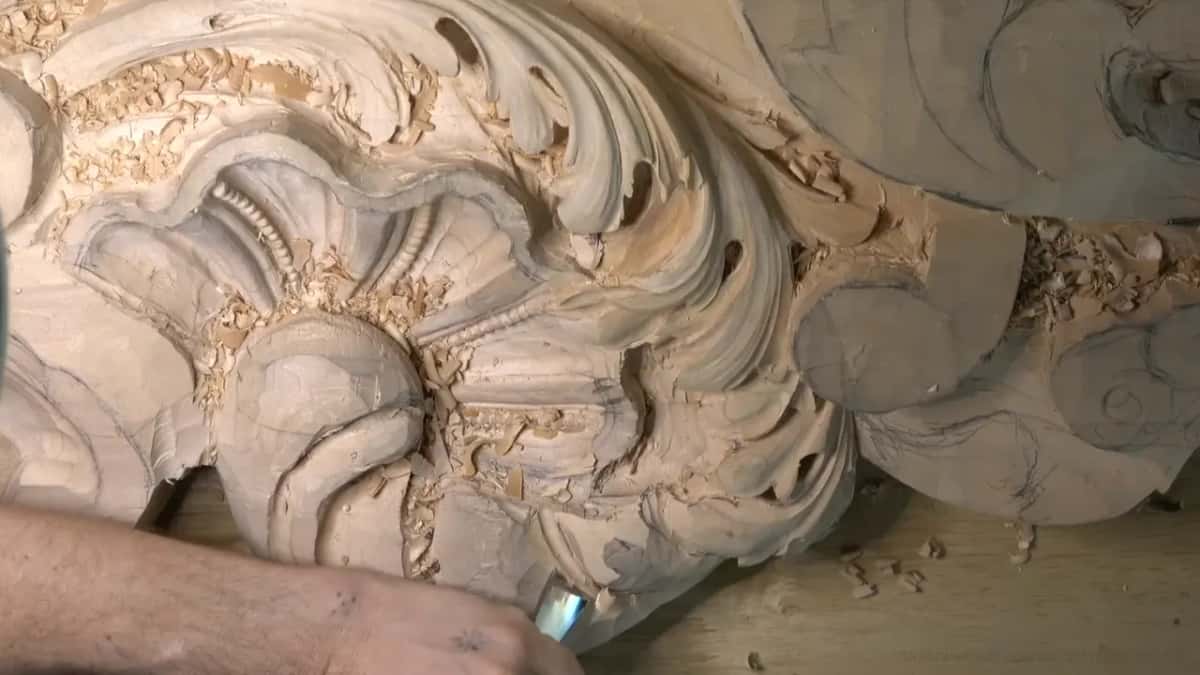
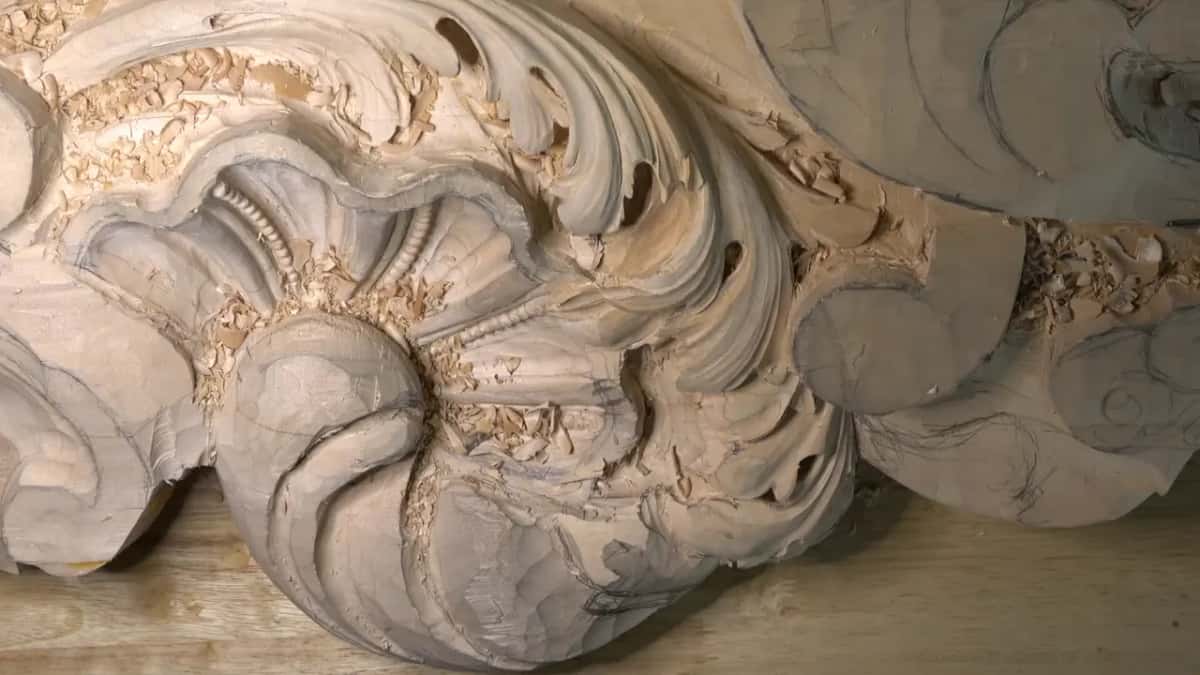
Quick answer: Extra wood is spare material I leave where the design isn't settled. On my Venice room panel I liked having some by an acanthus element, and I still wasn't sure I would carve a subdivision there. The part ends with that doubt still open.
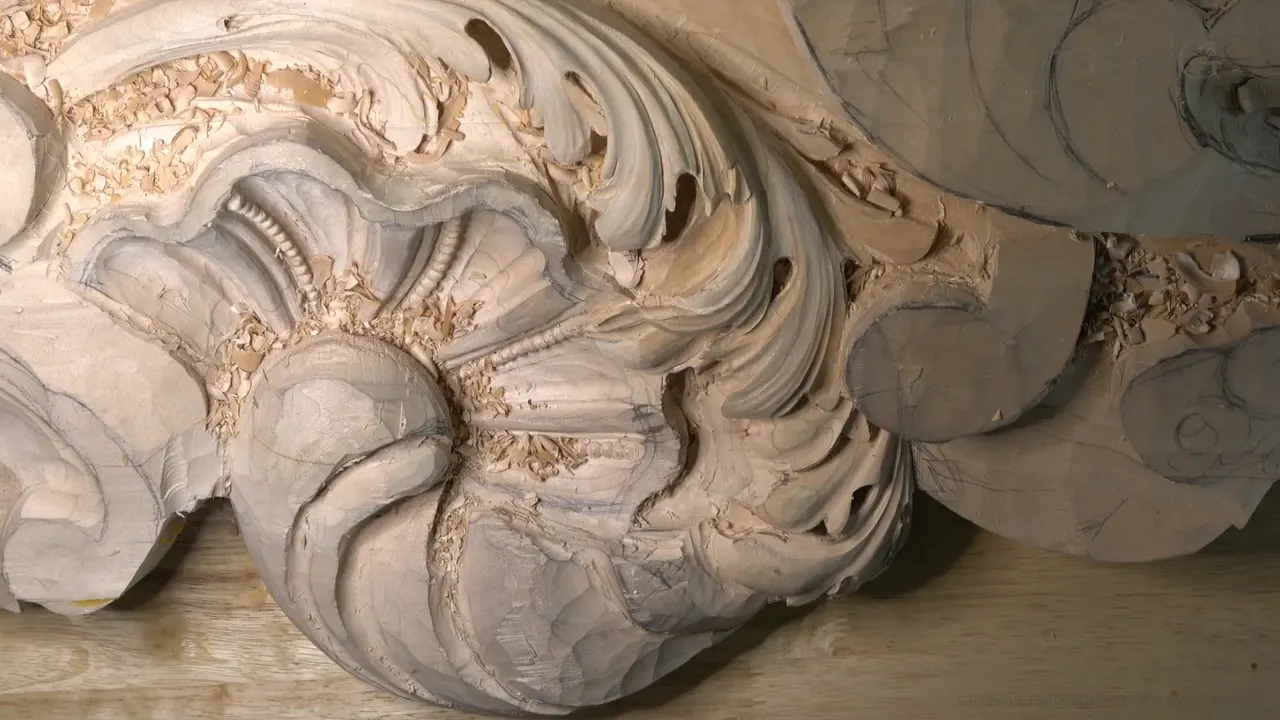
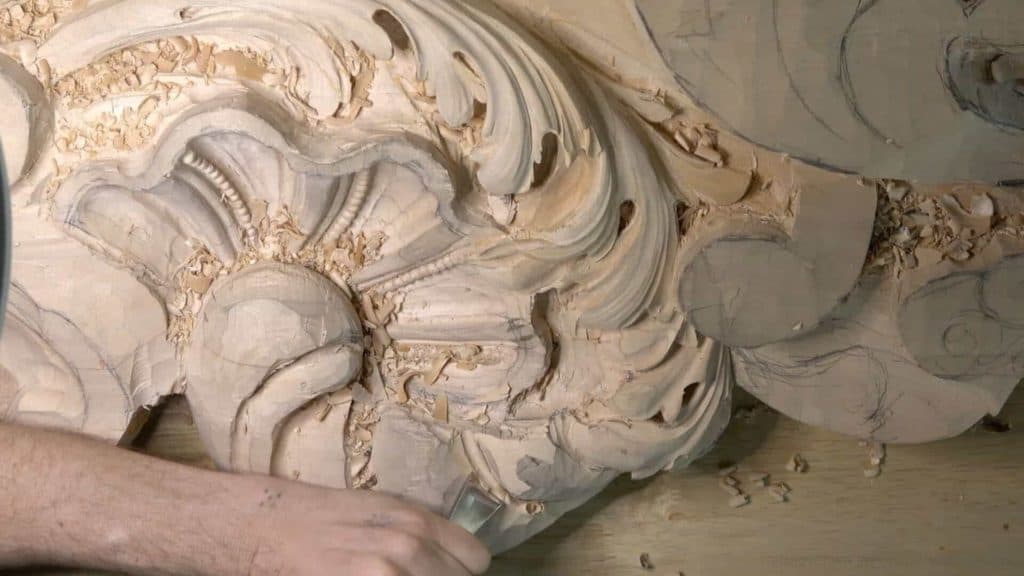
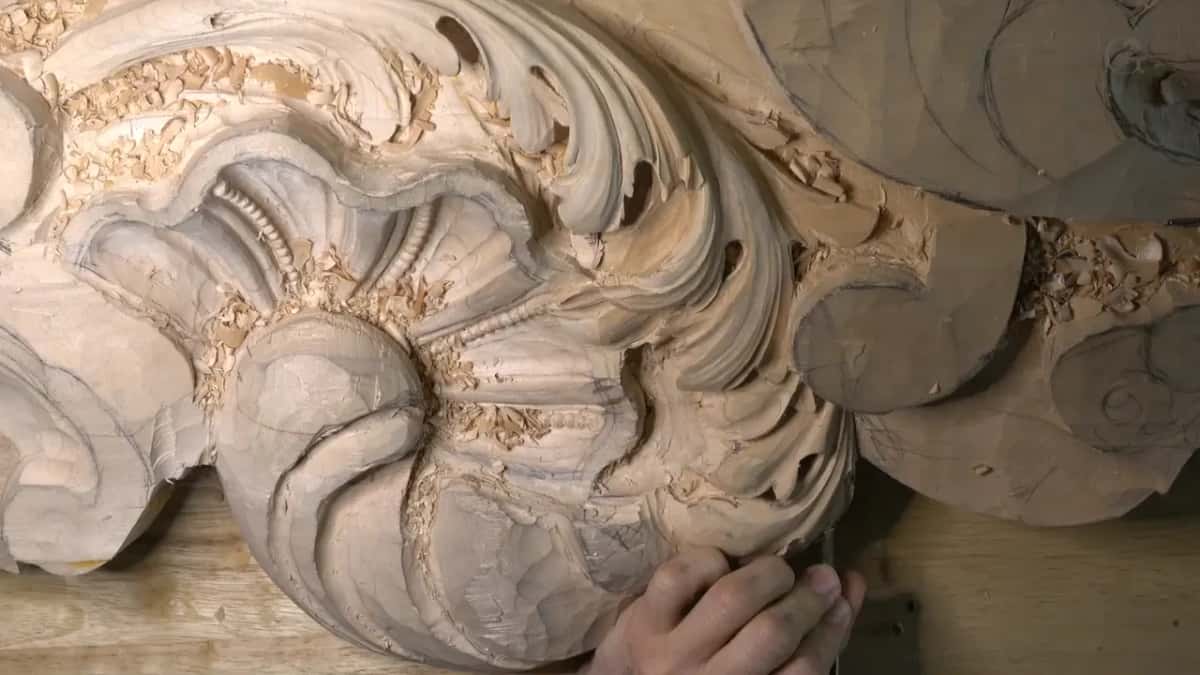
Extra wood on a carving is wood I leave standing beside a detail I have not decided on, so a later pass still has something to work with. Over the panel in workshop 13, part 9, I said it: "I kind of like that I do have extra material right there, and that is going to be my subdivision of that detail." A little later I was still debating that very detail.
Have you ever stood over a panel with a gouge in your hand and seen three details you could carve right now? Did your hand start toward the first one before you knew whether it belonged? Then this part of workshop 13 in the Venice room course is the one to watch.
I'm going to be honest with you. This part is short, and most of it is me thinking out loud over a panel of acanthus leaf ornament, carved in the Venetian style. You even hear my granddaughter in the background, and I said sorry if she was distracting. My thinking out loud is how I treat the wood. Next to it I'll set the spots on other panels where I said the same thing differently.
What I keep and what I take down
A detail I can't decide on keeps its own wood while I think it over.
Where the plan is settled, I go big.
A spot gets only light cleaning while other work can still reshape the carving.
Deeper can wait for later.
A margin lets me move an eye.
My margin on the furniture panel was about a millimeter.
Why keep extra wood beside a detail you might not carve?
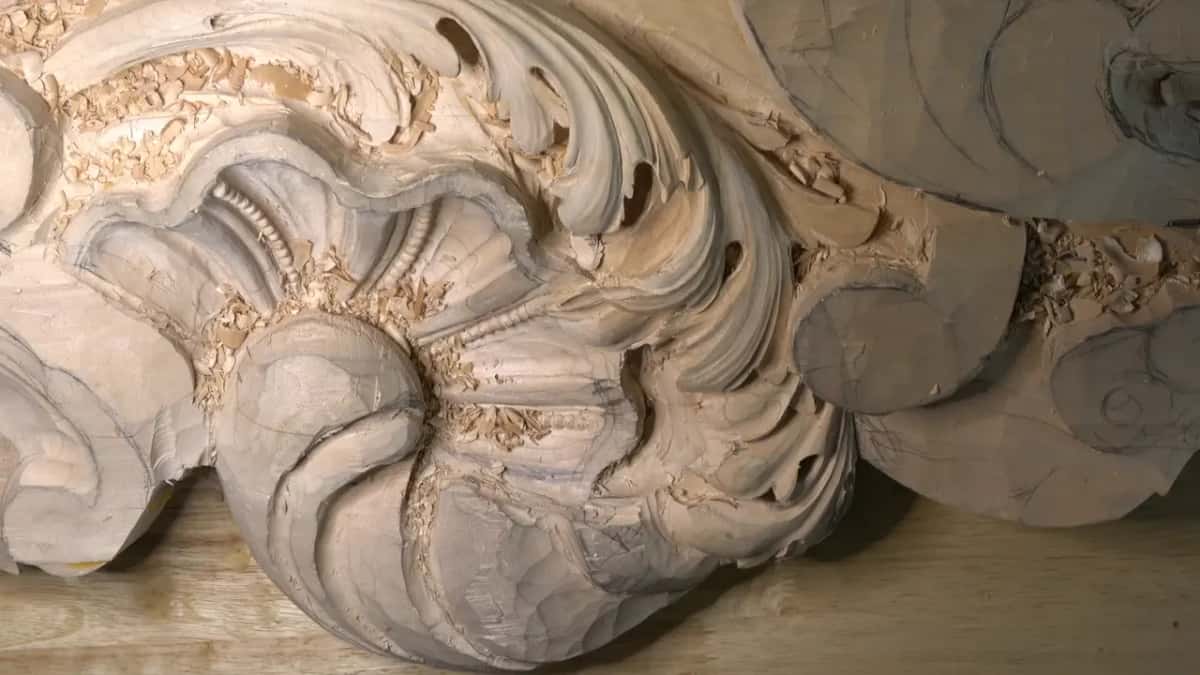
Standing there, the wood costs me nothing. The decision isn't ready. One element in part 9 came from underneath, and I said I could add another beside it, maybe some type of acanthus movement, to repeat the first. That one, I told you, would come later, since I still had to work on that side.
Then came the wood. I liked having it right there, I said, since it was my subdivision of that detail. That detail could go "like that," I said, and another subdivision would follow. Nothing complicated.
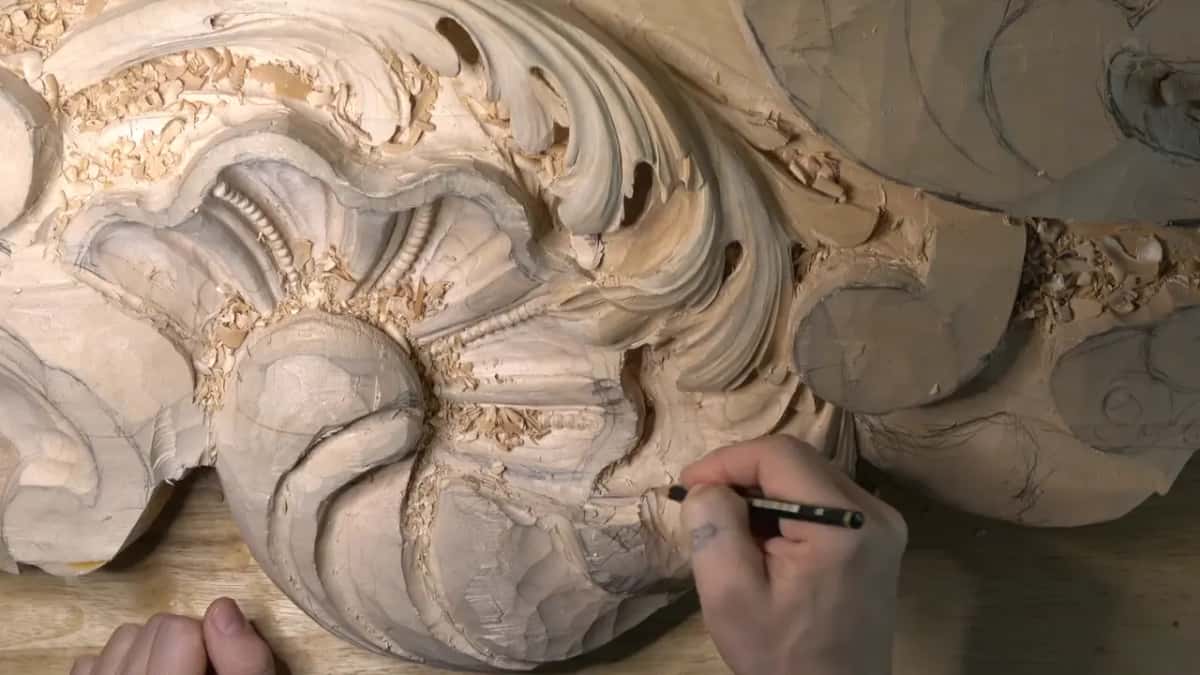
My doubt came out in plain words. I called it a big subdivision and said I had to add probably a little bigger one right there, too. "Maybe yes, maybe no." That pair came twice in a row. Next came "let me think. Maybe not," and then maybe not again, before the plan: that part would grow from underneath.
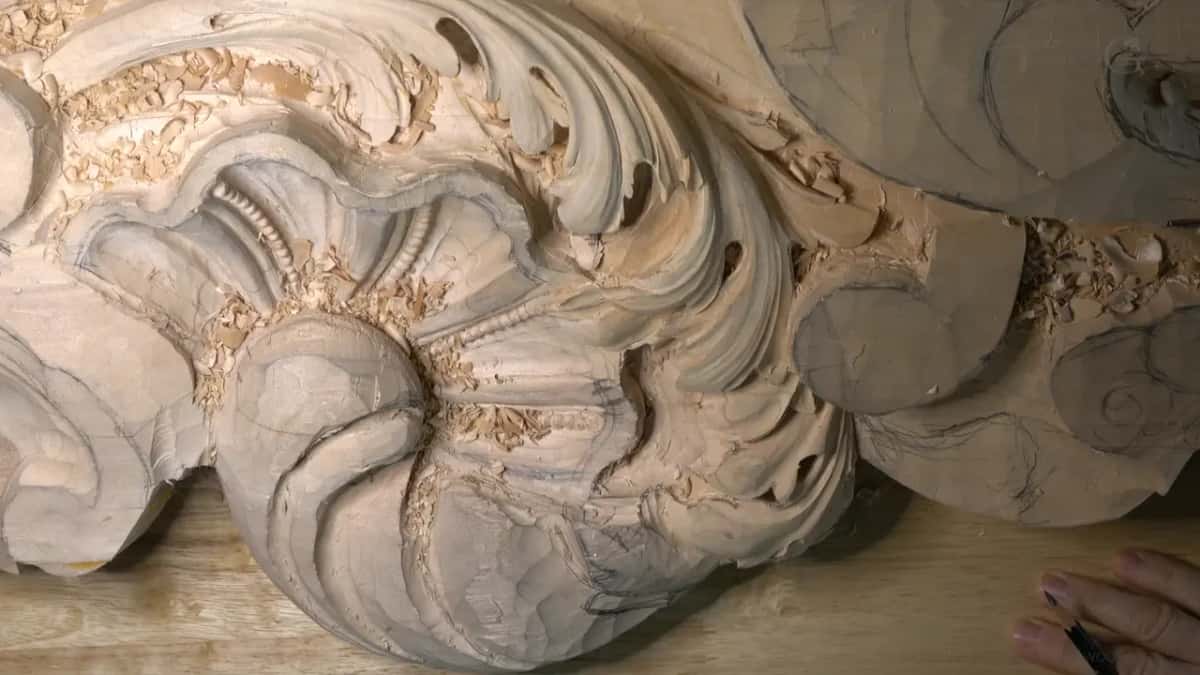
Later I came back to it with the same worry, and said, "I'm not sure should I or should not." I'm still debating about that detail, I told you. The recording ends with me saying, "let me double check. Let me think."

Which wood could come off early?
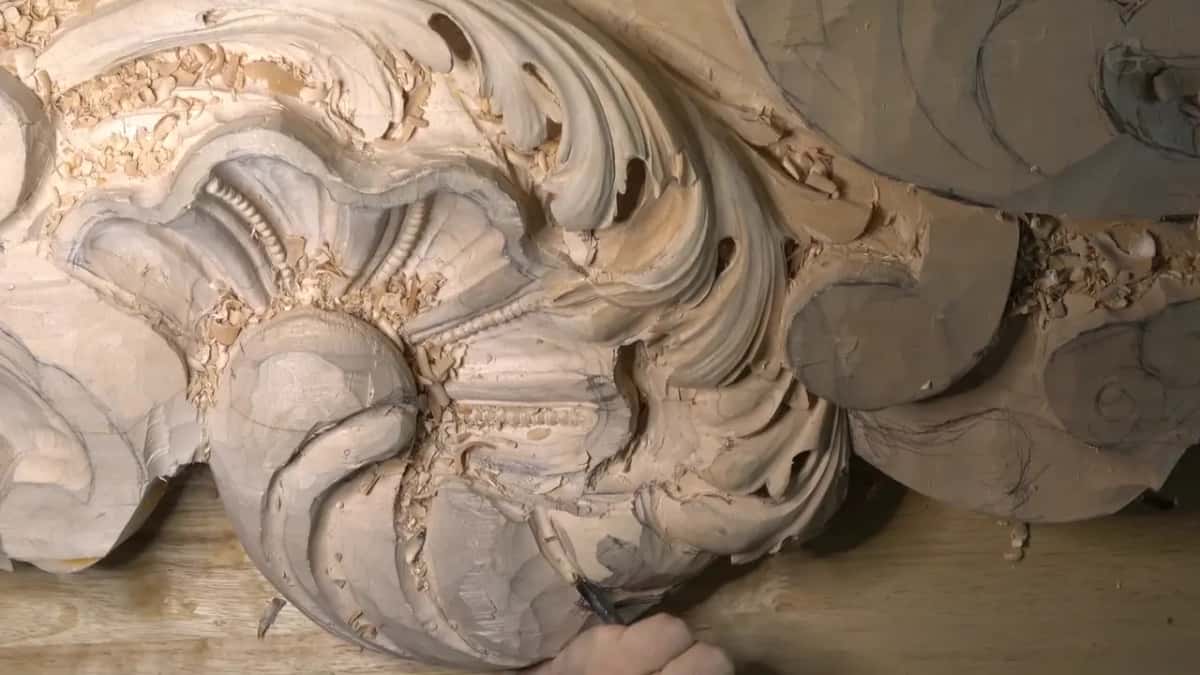
The wood I know I won't use. I named it right in the middle of the doubt. "Maybe I should undercut right away," I said, so I wouldn't be tempted by something else. "I could take some of it down right there," I said next, "because I'm not going to need that."
So one video holds two moves. One keeps wood until I know, and the other is a plan to take wood off so I'm not tempted to do something else. I won't pretend they fit neatly, and both happened on this panel on the same day.
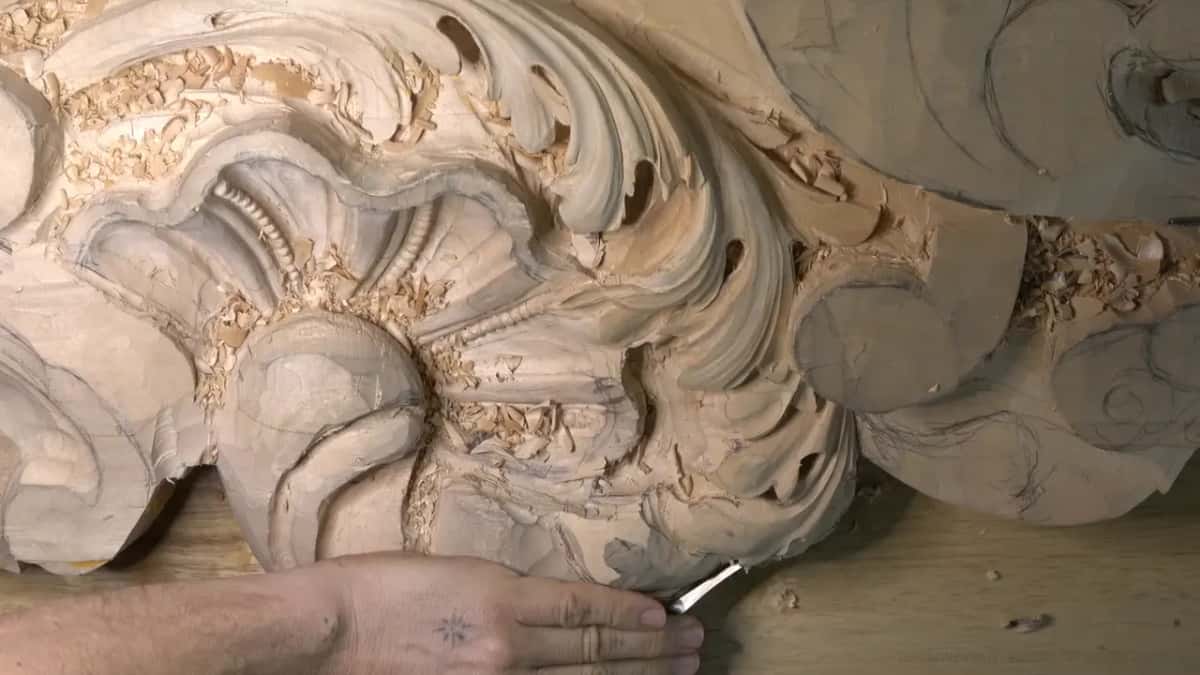
Then came a deeper spot. "I probably want to go really deep right here." Soon after, I told you, by the way, that I was using a number 9, a quarter inch (6 mm). The recording gives no figure for the spare wood itself.
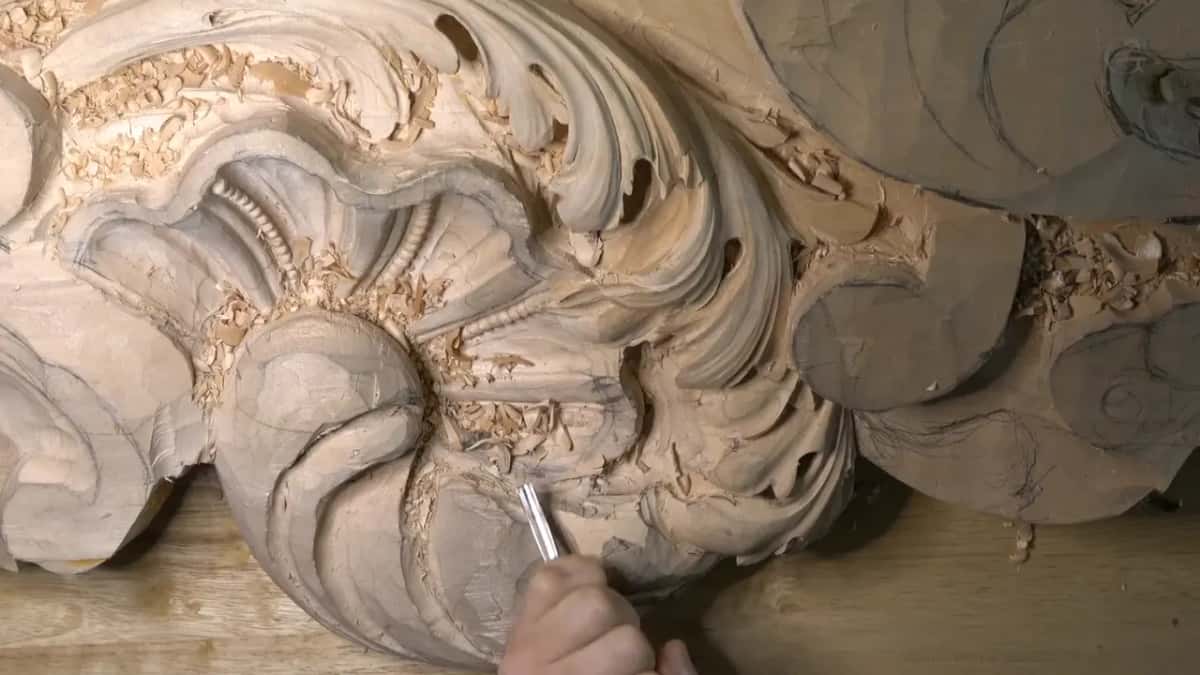
Should you clean a spot before the rest of the carving is settled?
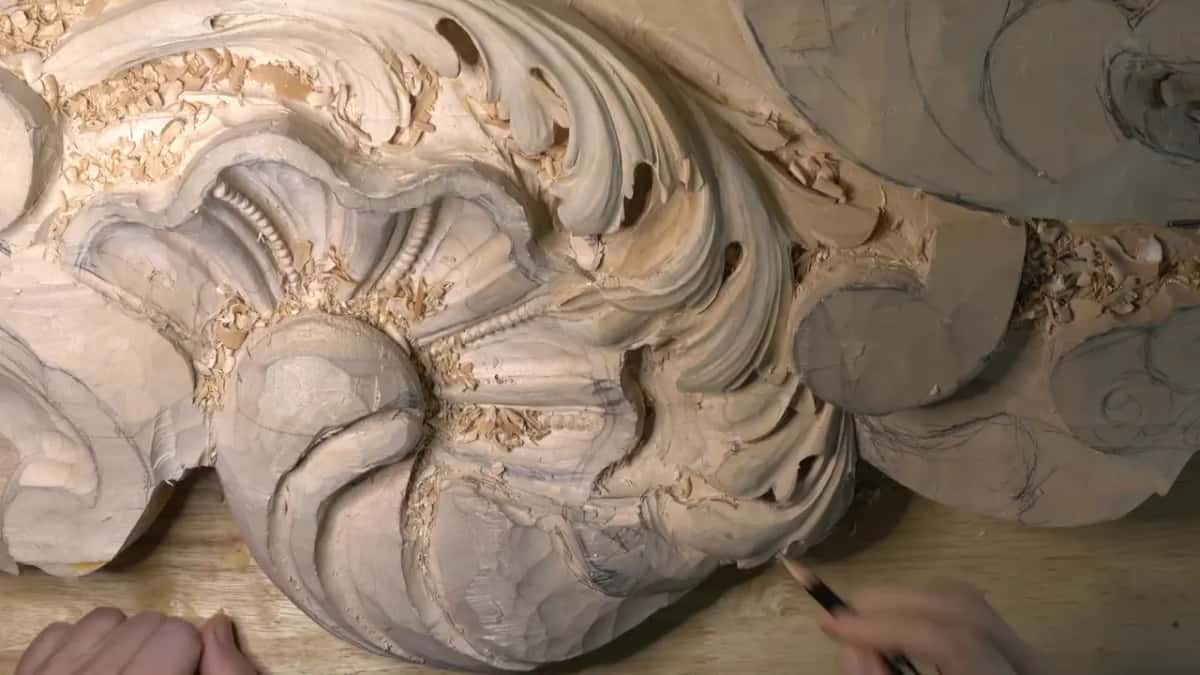
Only a little. Near the start of part 9 I said I would use a flatter gouge, clean a spot that didn't look good, and go closer to the eye. The pencil marks were next to go, I said. Then I held back. I didn't have to work on it right then, I said, because we still had other work to do, and that could change the overall carving a little.
Just cleaning a little bit, I said again.

Other panels say the same thing differently, and I'll take them one at a time. Workshop 57, part 9, had a lot of mess I didn't like to see, and I said, "I'm never attacking right away all that mess before I finish the main movements and the main establishments." Details underneath could wait. I gave a reason too: I sometimes crank against the edges, and I need solid spots for leverage.
Part 9 of workshop 6 put it as a line about the shape: "the outer shape is not the final shape yet. So I left extra material." We were still to make the decision about what we want to see, I said. A number 3 was my plan there for a smooth transition, and I pointed out a chip in one area.
Why does a detail look wrong from the side?
The side is a poor place to judge it, and I opened part 9 with that. "I know it's almost impossible to see from the side," I said, and I pointed the camera at the element, which was repeating the previous one and goes downhill. From there, I told you, it doesn't really make sense. The camera went back to the one I use, and we kept working.
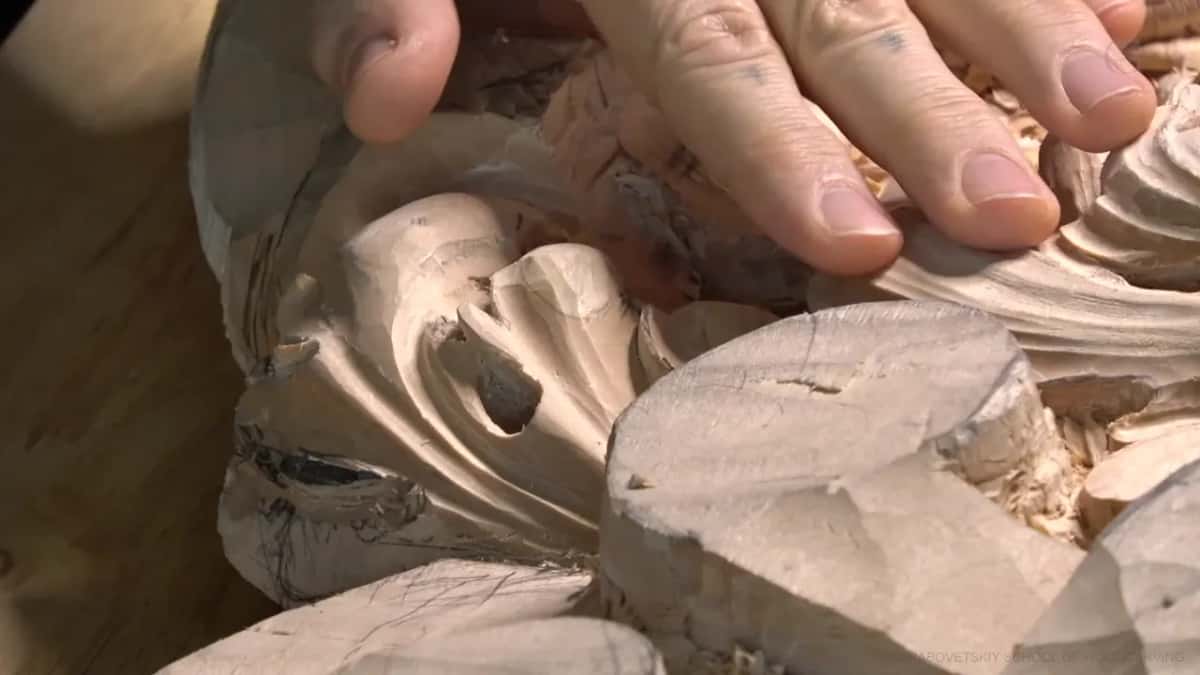
A second remark in that part is about distance. I wanted to move slightly in one direction, not much, because you will see that point from far, but not as much. Over in workshop 60 I talked about a transition to the ceiling that would be visible from below, from up, from straight on, from another point of view. Really hard, I said.
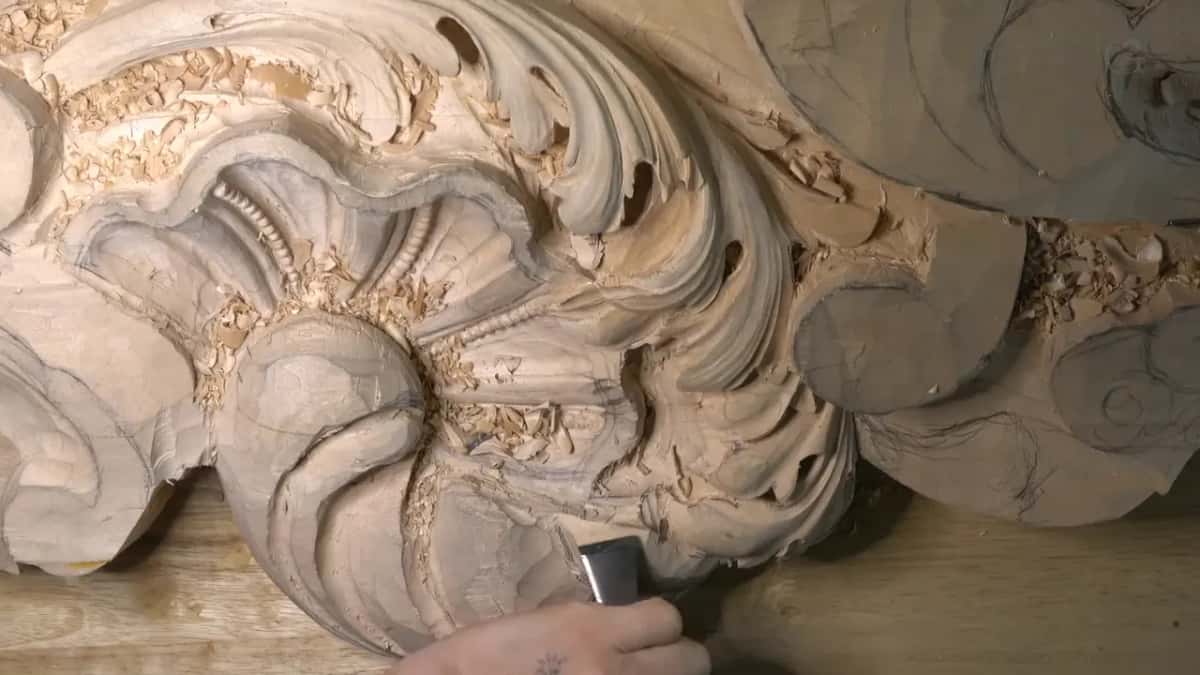
How deep is too deep, too soon?
Deeper than the shape can carry yet, as I said in more than one workshop. My line in workshop 59, part 3, was "I can always go deeper." Then, "but if I'm going to go too deep, too soon, I can be in trouble. And I don't want to be in trouble." Workshop 67, part 12, says nearly the same: I can do deeper later, and going too deep right now would be a mistake for me.
Part 7 of workshop 66 shows the flip side. I hadn't undercut one spot right away, and I said why: I really needed that depth, and an undercut can come later. That is the opposite of part 9, where I did say to undercut early. Different spot, different moment, different answer.
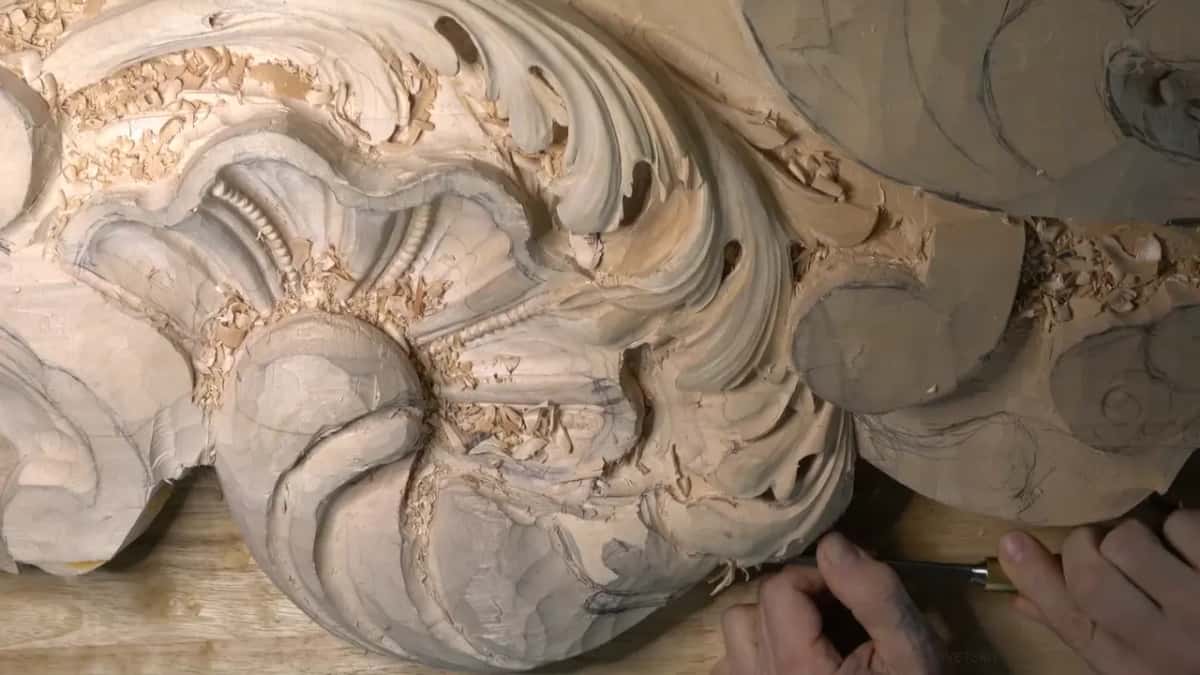
What does the extra wood buy you later?
A deeper shadow. Or a better place for an eye, if the first one turns out wrong. Down in workshop 52, part 11, I had already dug deep, and I said so. Then I said one area could get even more three-dimensional, just because extra material was still standing in that spot. I could go deeper with that acanthus movement and make an even deeper shadow.
Right after, I said what I think carving is, and the line is short: "all wood carving is about the light and the shadow."
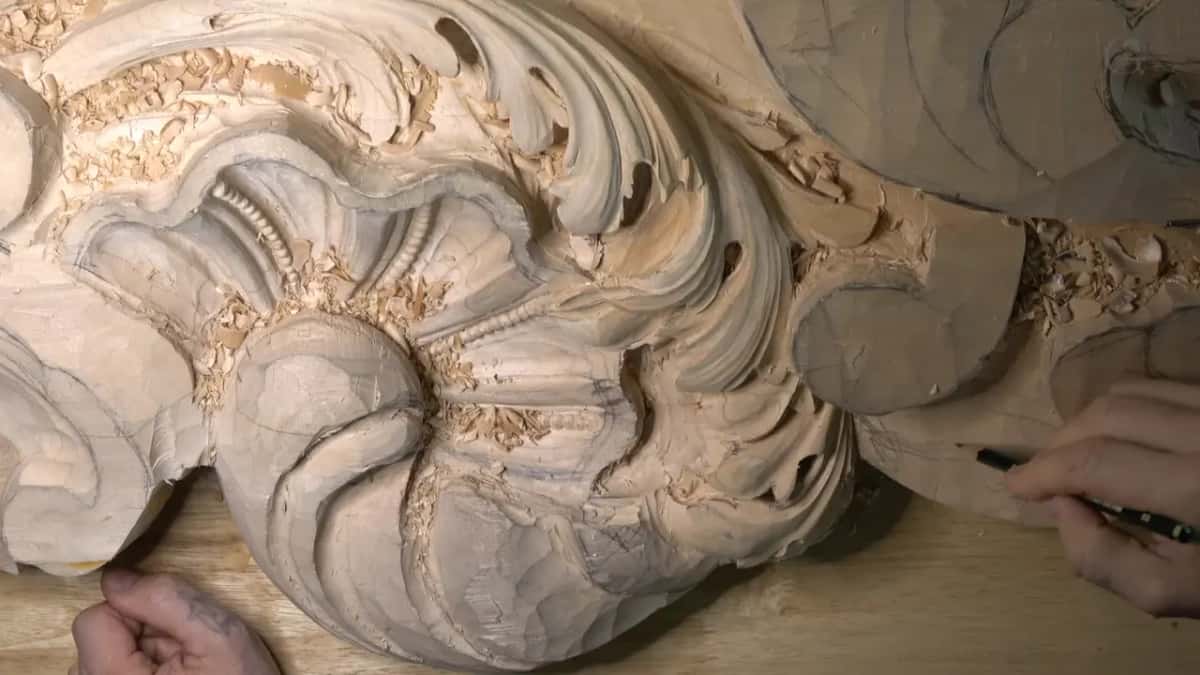
Wood played another role in part 7 of workshop 66. With extra material, I said, I was able to create something beautiful and get this eye. Next came a worry: I wasn't too happy about it. "Maybe I can just move it slightly this way. Not too late yet." Moving it would give me more chunk, I said, with a smaller tool coming next, maybe about three millimeters (1/8 in).
From workshop 38, part 4, comes this line: "see how important it is to keep extra material for the later times." Details, I said, you can always work on a little later. I had outlined a part with a number 11, 5 mm (3/16 in), so it looked like it lay underneath the one above it.
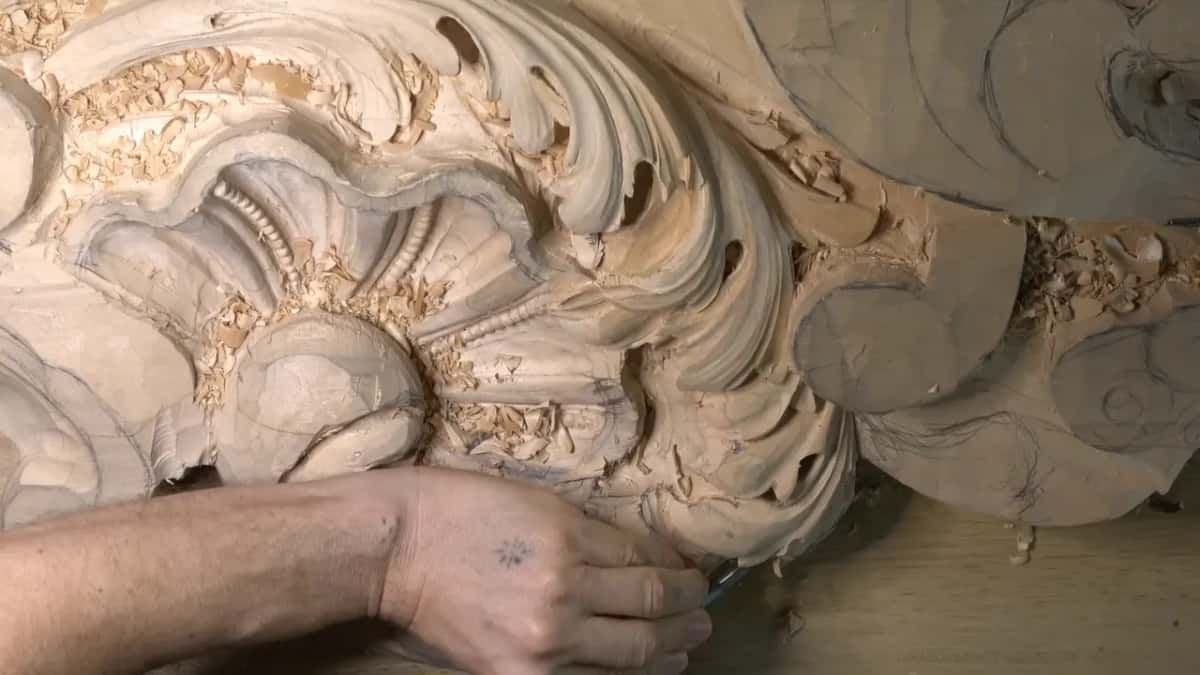
A matching job came up in workshop 79, part 6. Time to move it again, I said, since one side wasn't matching, and I'd readjust slightly. With some extra material in hand, I said, I was pretty sure I was safe to go all the way along that section. Back in workshop 12, part 12, I told you I would save more material, since I think it's a smart way to do it. That chunk would be my movement in one direction.
How much extra wood should you leave?
I gave no number in part 9, but the furniture panel gave one. In lesson 16, part 2, I wanted to leave a little more than I was going to need, and later I could make it narrower. My figure was about 3/32 of an inch (about 2.4 mm), "a couple mills." Some spots might be a 16th of an inch (1.6 mm).
In lesson 18, part 8, I stayed away from a curly detail by approximately a millimeter (about 1/25 in) on both sides, maybe less. It would be a tiny movement at the end, I said, but I needed the extra material for now. And I didn't want to carve it right on the line.
The floral and molding course holds the same thought on a bigger piece, since lesson 10, part two, has me leaving some of the material, like a wall, until the overall shape is established.
What if the first mark turns out wrong?
I fix it while it is still early. Back in workshop 63, part two, I stopped and said I wanted to be sure I was doing the right thing, since maybe I wasn't. One concave had to run a little on top of another, "so not too late to fix it." The new concave would run much deeper, a number 11, like a channel.
Another one, workshop 76, part 3: I said I would try a number 7, 14 mm (about 9/16 in), straight down at first, and that I could always undercut this way. And in lesson 15, part two, of the furniture panel course, I outlined a spot in case I had forgotten some process I had in my head. "I can always remove it later if I need to."
When does the extra wood finally come off?
I carve a side big once I am pretty sure of it. On one side in part 1 of workshop 60 I wasn't going to do too much, because maybe I'd change it a little. On the other side, "I'm pretty sure I want to do that big." Some of the extra material I didn't need there could go, I said, and I could excavate a little deeper if I wanted.
It looked like an easy decision, I said, "but it was a really hard decision." I'd had to work out the transition to the ceiling.
A barrel needed exposing in workshop 62, part 10. One spot was getting lowered first, I said, and then I needed to take away extra material around the side. A number 11 would excavate much deeper there. I decided to get more aggressive on that side because I needed that movement, and I added, "maybe I got too aggressive, but it's okay."
One more case sits in part 4 of workshop 38. One bit I didn't like in this context in the overall design was going, I said, and that would give me a more open spot for a shell.
Where I kept wood and where I took it away
| Spot on panel | What I did with the extra wood | Main tool | Which workshop and part says it |
|---|---|---|---|
| Extra beside eye | Kept it for a possible subdivision there | Tool unnamed | Venice room, workshop 13, part 9 |
| Deep spot here | Planned a really deep pass, quarter inch | Number nine | Same video, but a later minute |
| Eye I moved | Planned to move the eye for chunk | Smaller tool | Workshop 66, part 7, Venice room |
| Details for later | Kept extra wood so details could wait | Number eleven | Over in workshop 38, part 4 |
| Deepest shadow spot | Could go deeper since wood remained there | Number nines | Taken from workshop 52, part 11 |
| Sure side only | Would remove extra wood I didn't need | None named | Said in workshop 60, part 1 |
| Wood around elements | Left extra, planning to narrow it later | Unnamed tool | Carving Furniture Panel 16, part 2 |
My own part 9 belongs in that table too. Near its end I said I'd clean a ridge a little, since it was under my way and I didn't want to see it just like that. Right after, I admitted I still had doubts about how I should develop this one.
How it's done
- Find the detail you can't decide on. In part 9 it was a place where I could add an acanthus movement, and I couldn't say yes or no yet.
- Keep the spare wood. I liked having that material right there, and I said so out loud.
- Clean lightly. A flatter gouge was my plan, with a little cleaning near the eye. More work was still to come, which could shift the whole carving, so I held back.
- Plan to take down the wood you won't need. Some of it could come down, because I wouldn't need it.
- Go deep at a spot you've picked. At one spot I said I probably wanted to go really deep, and I used a number 9, a quarter inch (6 mm).
- Decide when you're sure. Part 9 ended with me still thinking. Elsewhere I made the call once I was pretty sure of a side.
Frequently asked questions
What does extra material mean in wood carving?
Extra material is spare wood left standing where the design isn't settled. I had some by an acanthus element on the Venice panel, and I liked it. I stayed undecided about adding a subdivision there.
Should you undercut a detail right away?
In the video on this page I said maybe I should undercut right away, so I wouldn't be tempted by something else. Workshop 66, part 7, went the other way, because I wanted to keep that depth. Both calls were mine, on different spots.
Can you go deeper later on a carving?
On my panels, yes, and I said it more than once. Workshop 59: I can always go deeper. Workshop 67: I can always do deeper later. I also said too much depth, too early, could put me in trouble, and I didn't want that.
What to carve next
- Advanced Carving: Venice Room, workshops 13 to 25
- Venice Room workshop 13
- Venice Room workshop 38
- Venice Room workshop 52
- Venice Room workshop 57
- Venice Room workshop 63
- Venice Room workshop 76
- Venice Room workshop 59
- Venice Room workshop 60
- Venice Room workshop 62
- Venice Room workshop 66
- Venice Room workshop 67
- Venice Room workshop 79
- Venice Room workshop 12
- Venice Room workshop 6
- Carving Furniture Panel, lesson 16