
Alexander Grabovetskiy, woodcarver, School of Woodcarving · Published 2020
Is it okay to carve the main form first from an awkward position and fix the details later?
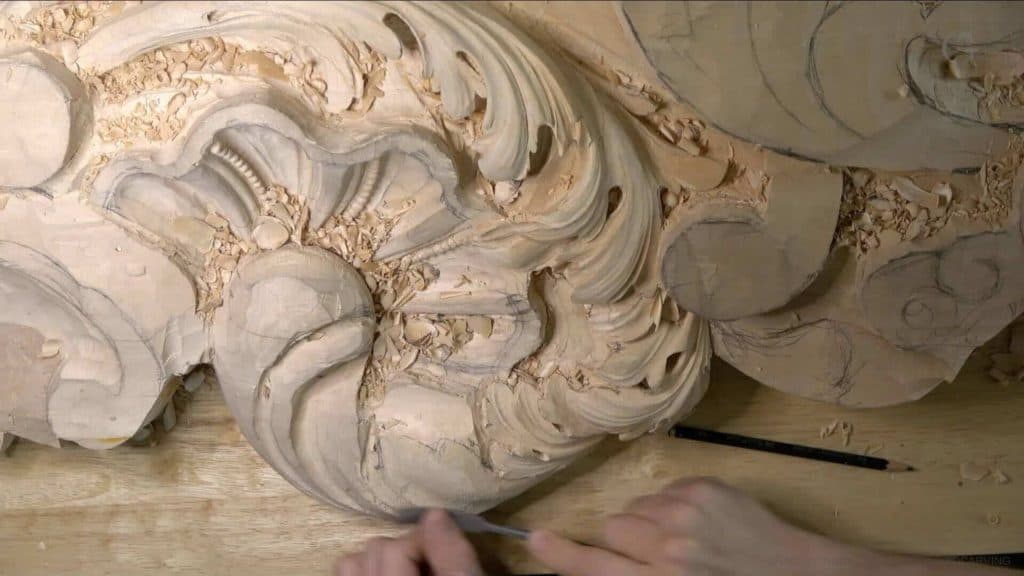
Quick answer: Carving the main form from an awkward position is a first pass that sets the shape before any smoothing. In Venice Room workshop 14, part 12, I said the position was wrong, that it was okay, and that I was only setting my form at first.
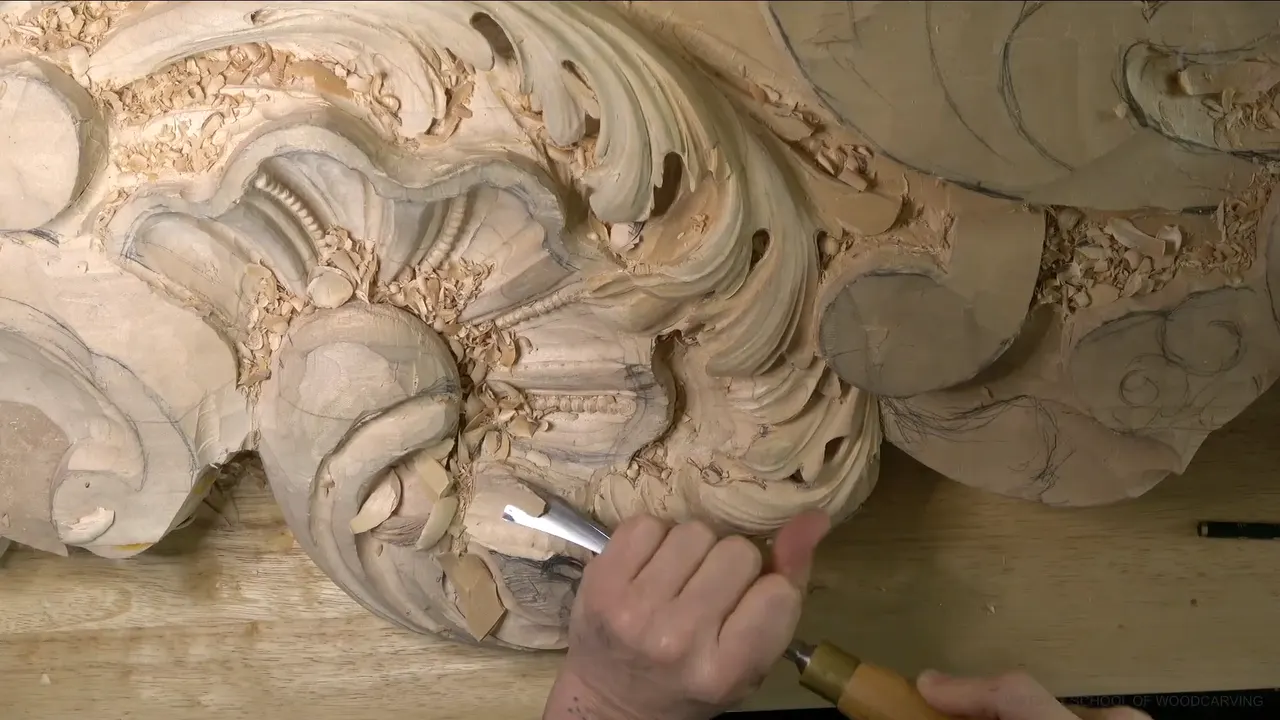
A first pass in the wrong position is rough carving that sets the main form before any smoothing. I put it in my own words in part 12 of workshop 14: "I am working from the wrong position, but that's okay," at 02:43, and then, at 02:51, "I am just trying to establish my form at first."
It runs short. The transcript stops near the eight-minute mark, so I added my words from other lessons, and each one sits in a public lesson that I link.
Ever reached across a bench to a spot where the gouge would not go in square? Did you stop and rebuild your setup, or keep shaping? Here is what I did, and the words that went with it, in this video and in other lessons where I said much the same thing.
What happens in part 12 of workshop 14?
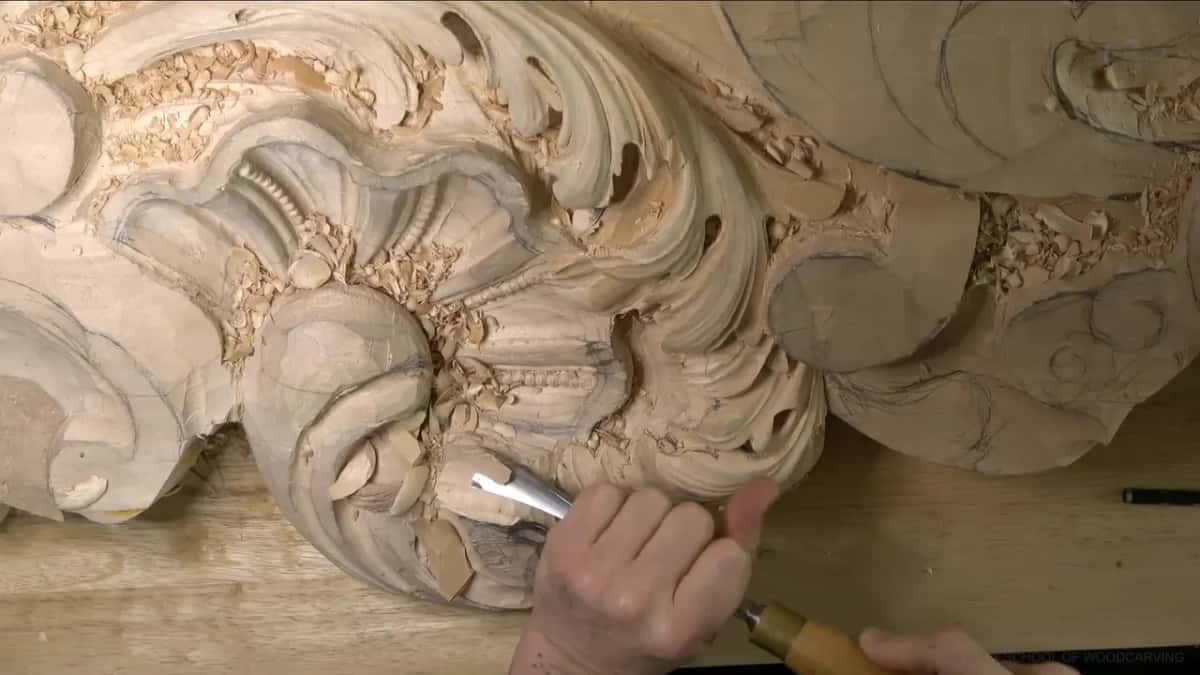
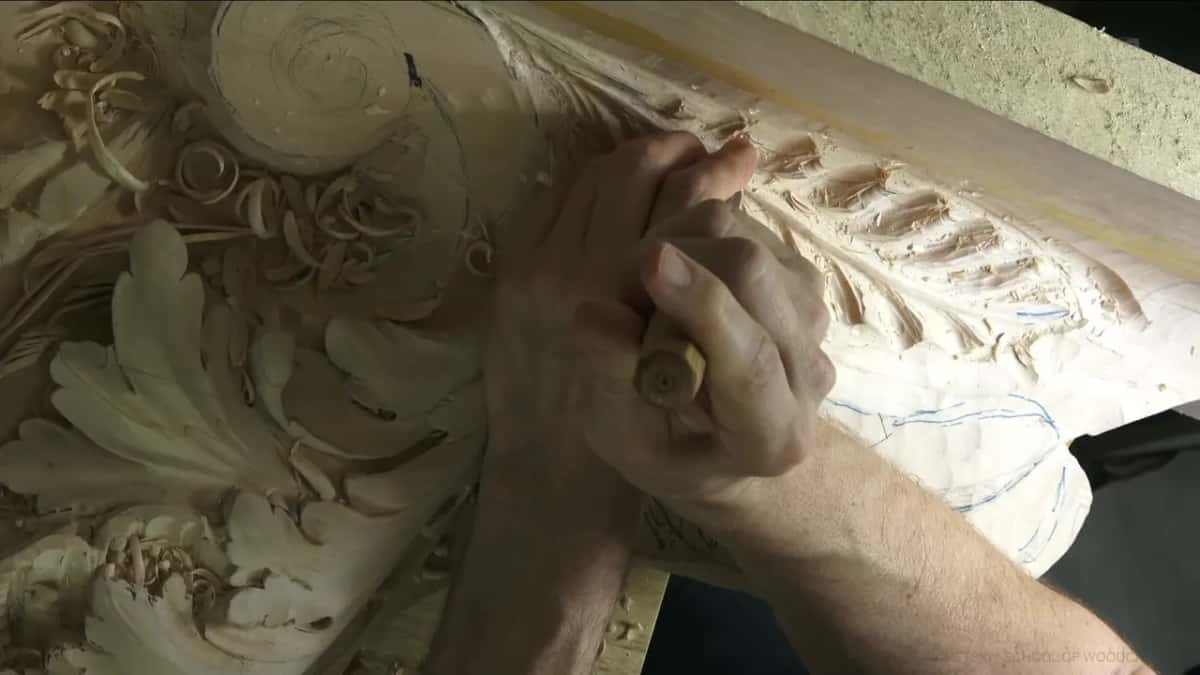
The video opens on a piece I wanted gone. "This one needs to be chopped out a little bit too," I said at 00:13, because right now it was just distracting my eye. At 00:34 I said I should create a concave right there, and at 00:58 came a note to self: make it clean in that direction.
Then came a check. "Double-check because it has to look from all points of view really nice and flowing," at 01:14. Thirteen seconds later came another maybe: a concave right here too, because I really like to see really good movement.
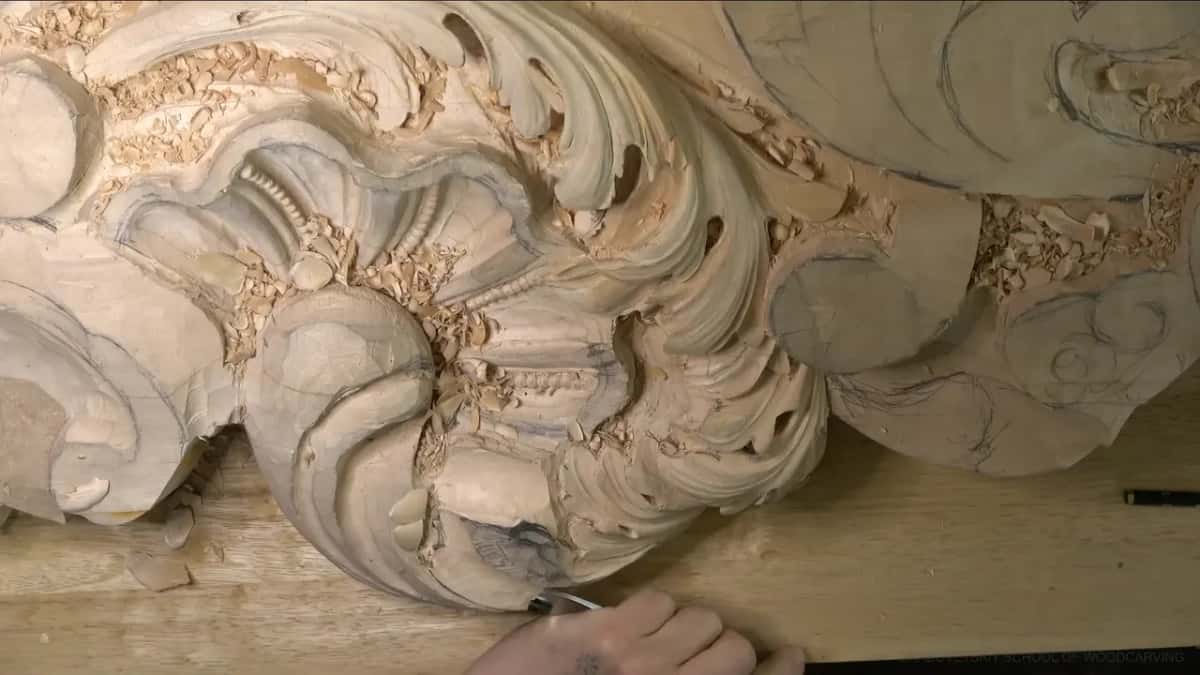
The convex side followed, and it needed a little cleaning. Number five or number three? "We'll see if number five will be sufficient," I said, and a little later, "Maybe number three." Back in part 5 of this lesson I had said number five is 5/8 of an inch, 16 millimeters. Clean it, I said at 02:20; it would go a little in this direction.
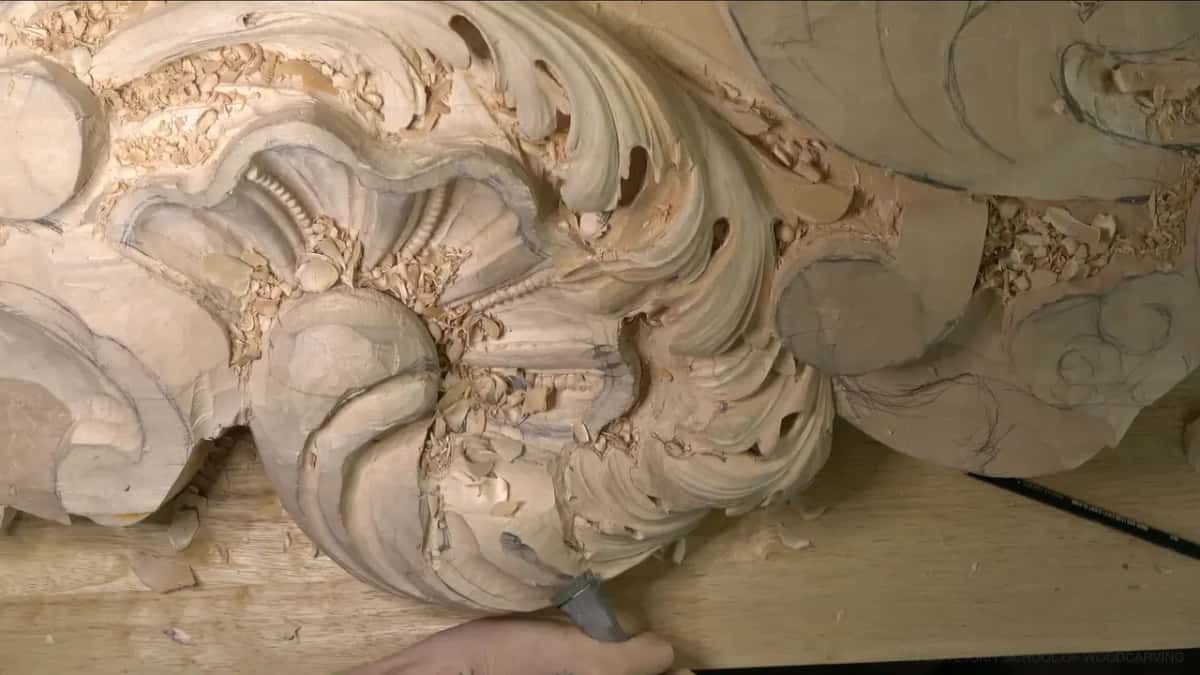
What part 12 shows about a first pass
- Chop out what distracts.
- Double-check how it looks from all sides.
- The position can be wrong while the form is still being set.
- The eye stays undecided.
- A spot I don't like gets a bigger tool, and a high spot gets smoothed before I raise an edge.
Can I carve in the wrong position?
I called it okay in part 12, and went on to the pipe: it was going to be part of a movement, I said at 02:59. At 03:07: this part "needs to be going like that to the pipe."
The eye was still open. "I still have to create the eye," came at 03:23, and then, "I could create eye or I could take it all the way down if I need to." Two "We'll see" lines closed that thought.
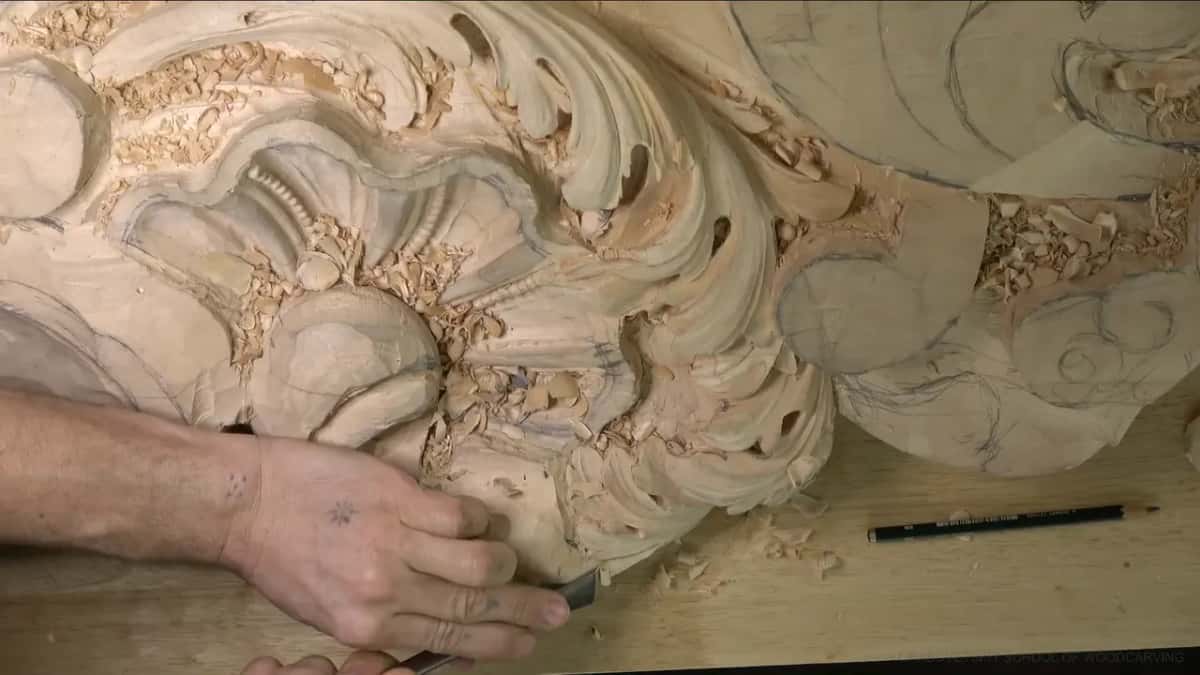
Next, a quiet stretch. That part was good, at 04:20, and maybe this part wanted to be smoother. Then I stopped to think. How did I want to see it? Still with that side a little higher, and the undercut underneath right there.
Overall I liked how it moved, except for one spot, at 05:29. "Maybe I should use a little bigger tool." At 05:51 came "Blend with the bigger movement." The plainest line of the video comes at 07:04: "I'm just giving the main shape."
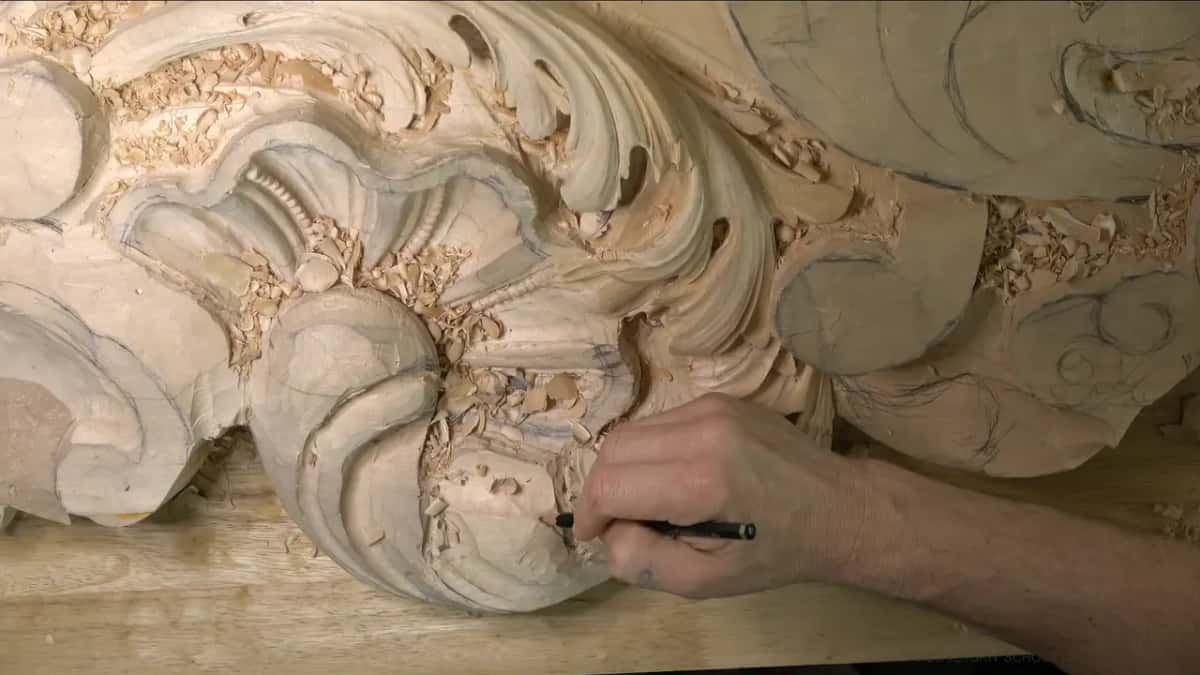
One more order shows up in the last minute. A much bigger concave still seemed right to me at 07:45, and that edge should rise even more. Before raising it, though, I would hit that bit and make it "really nice and smooth," where it doesn't have any high spots.
What does wrong position mean when I say it?
It means the side I attack from, and I say it when things go fine and when they go badly. In Maine class 16, part 1, I was using a number 16 to remove wood, "but I gotta be careful," and at 06:27 I named "the wrong position" and then added: "But I'm okay." I could use a different tool, I said, probably a number 11, "which I really love," but I had this tool in my hand.
Floral and Molding for the Panel, lesson 11 has the same words, with a reason. Around 07:42 I said that sometimes I really have to attack that from a wrong position, "if you wish." It was not really convenient for me, so I had to be really careful. Keeping that part higher mattered to me.
Seen from the side, it looked a little too straight, and I did not like it. A number seven, "the big one," I guess, would establish a really smooth transition, and flowing too, I said at 08:32.
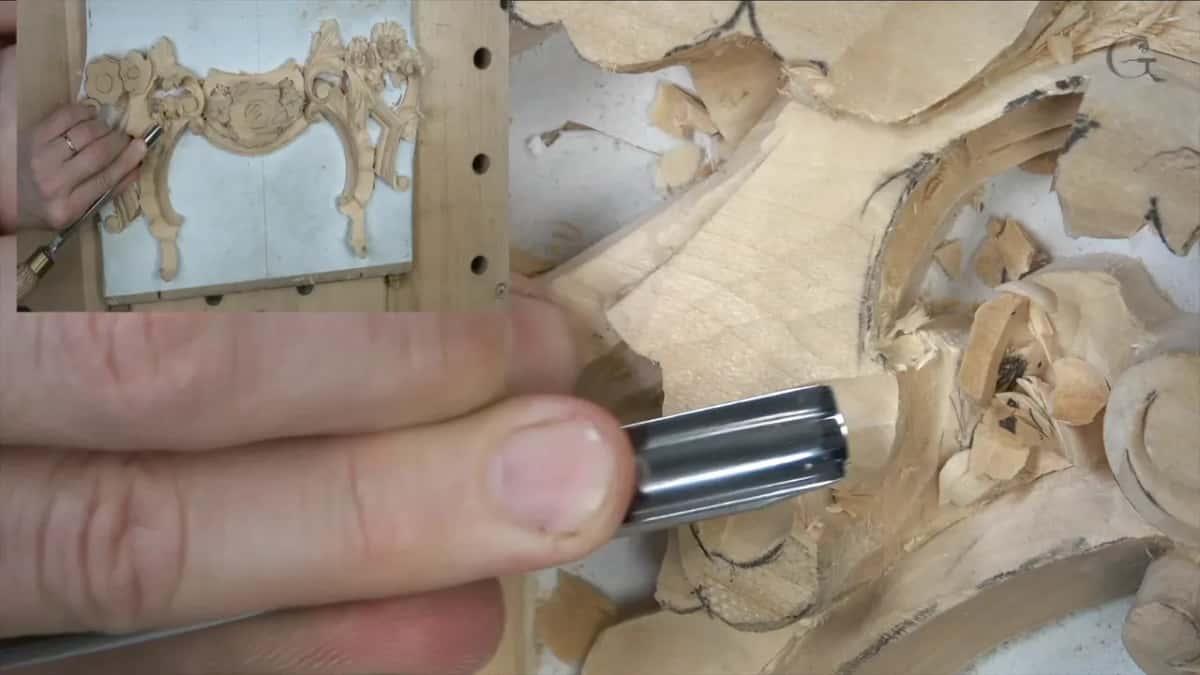
Over in workshop 11, part 9, a number nine goes on the side of a piece. "I know I'm using my tool from the wrong position, and I guess it's all right," at 03:18. A moment later I took it back: it was not all right, but not the end of the world, and I would not go too deep.
And what do I mean by wrong? Workshop 60, part 4, asks it out loud. The wrong side, at 04:44, though it all depends on what you mean by that, because one side was clean and the other was not. The left side mattered a little more to me, so I wanted it cleaner.
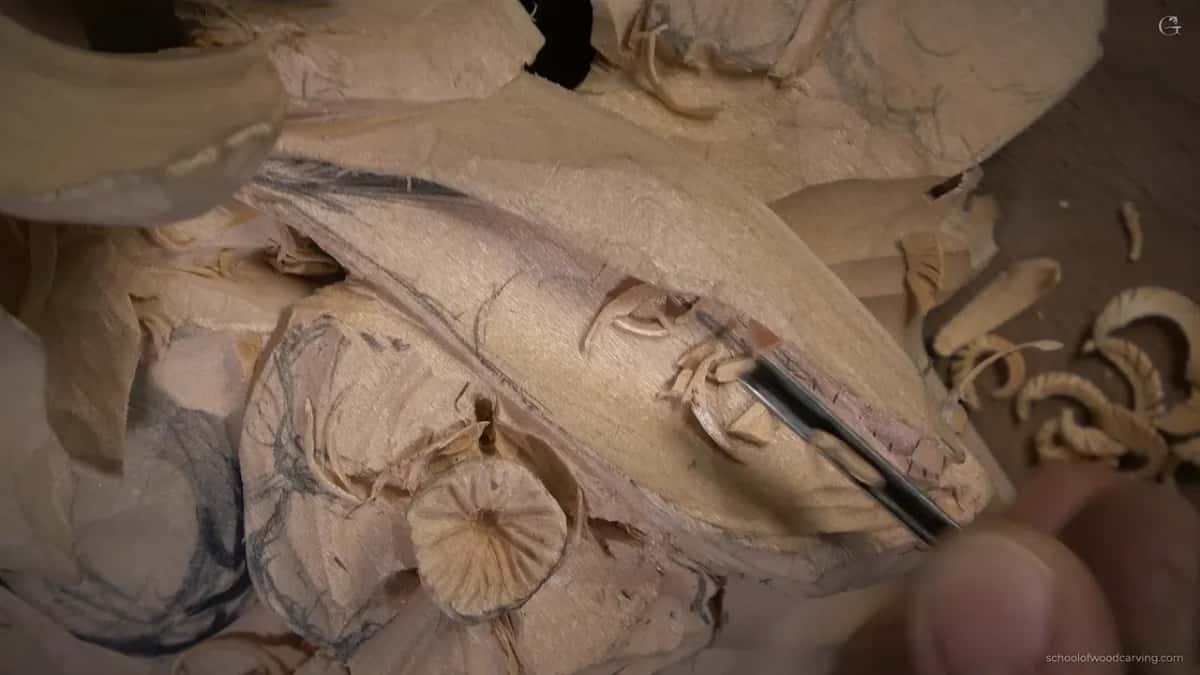
A 3 mm number 11 (about 1/8 in) went carefully underneath in workshop 133, part 2, near 05:28, and I named the wrong position again. With the sharp tools, "I should be safe," came at 05:40.
Why not turn the piece around?
The camera is one reason. Another one sits in workshop 84, part 10, right at the start of that video. There I guessed that I had to stay in the wrong position because I was covering the camera with my head. Part 11 of workshop 14 has a sorry near 01:52, if I was covering it, because there was no other way I could do that.
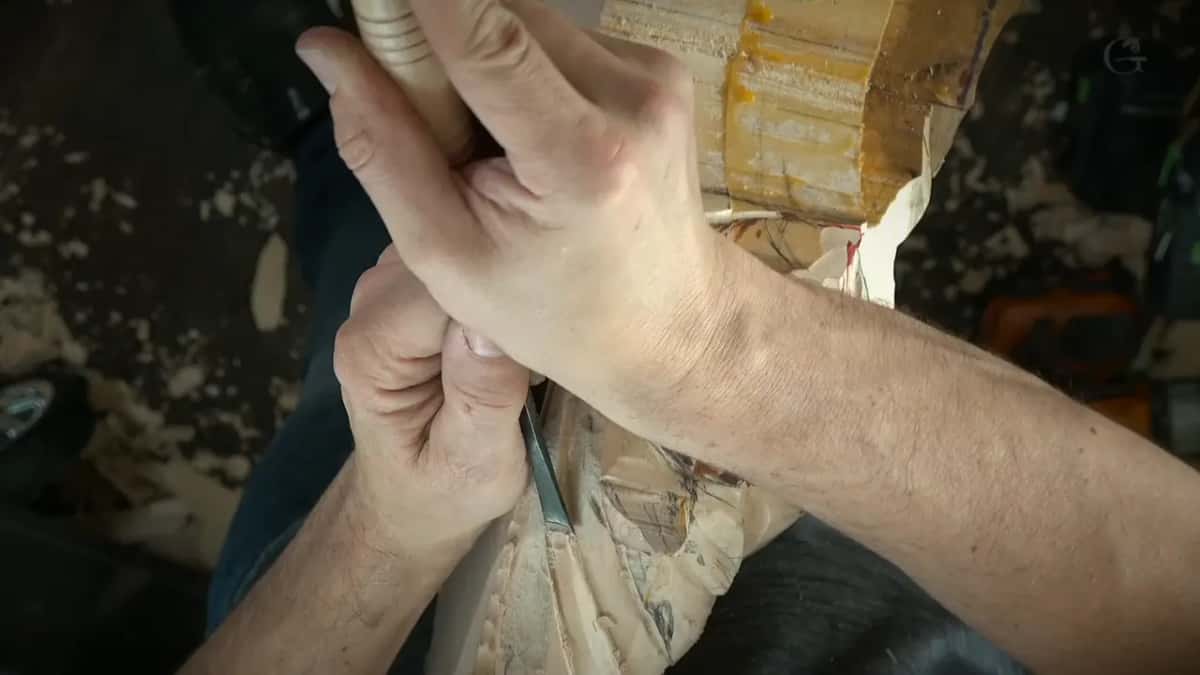
Hazelnuts, lesson 3, part 2, shows me deciding. At 12:16 I guessed I had to attack from the opposite side, just to make sure I was not covering anything. At 12:34: "No, it's the wrong direction." A spoon gouge was probably the better idea in that case. And at 12:52 I was just roughing in overall motion, "kind of like overall idea."
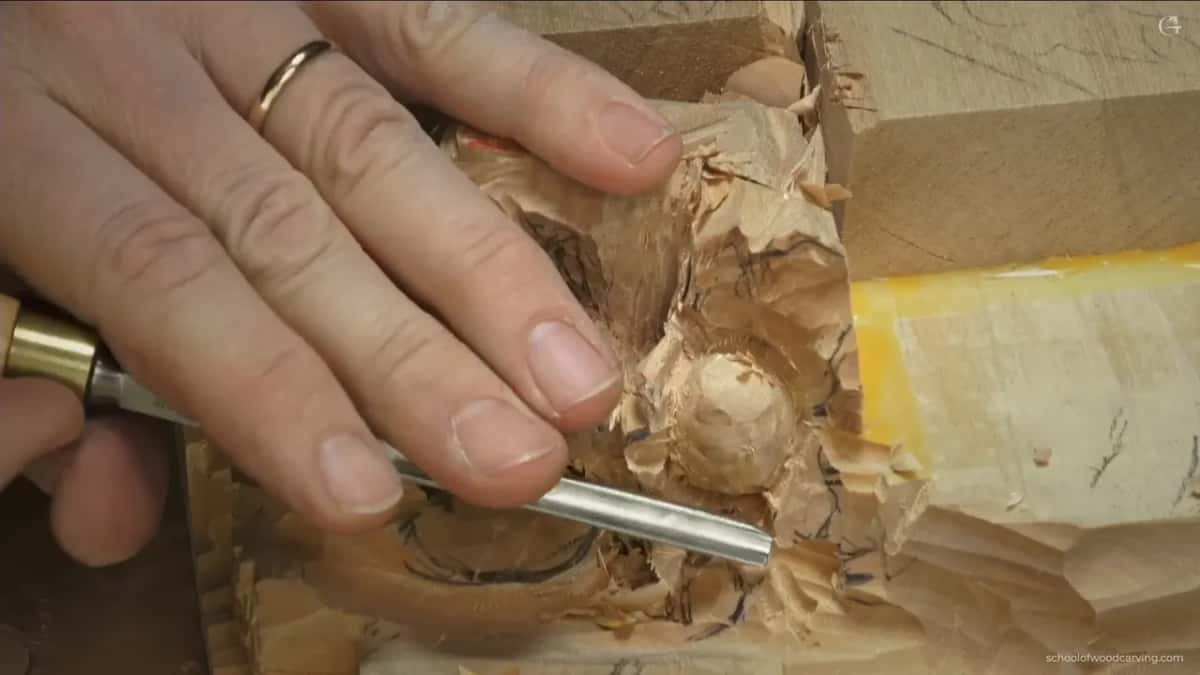
The plainest reason of all sits in Grape Onlay, lesson 10, part 2. I came in on the wrong side, I said at 04:50, because I did not want to move my workbench just because of the cameras. Usually, without cameras, I would obviously just rotate the piece and attack that way.
Does the wrong side cost anything?
It can. In that same video, at 04:01, the wrong direction felt awkward for me, "but it's okay." Next, at 04:07: "See, it's moving. It's fragile." Earlier, at 03:37, came two millimeters, number 11 (about 5/64 in).
The break came at 04:39: "Oops. And I just broke that thing," and that meant a change of design. "Just the change of the design," I said, absolutely fine, and said I still wanted my idea. And then, near 05:16: "I'm not gonna tell no one. I mean, I told you, but you're the only one who's gonna know that."
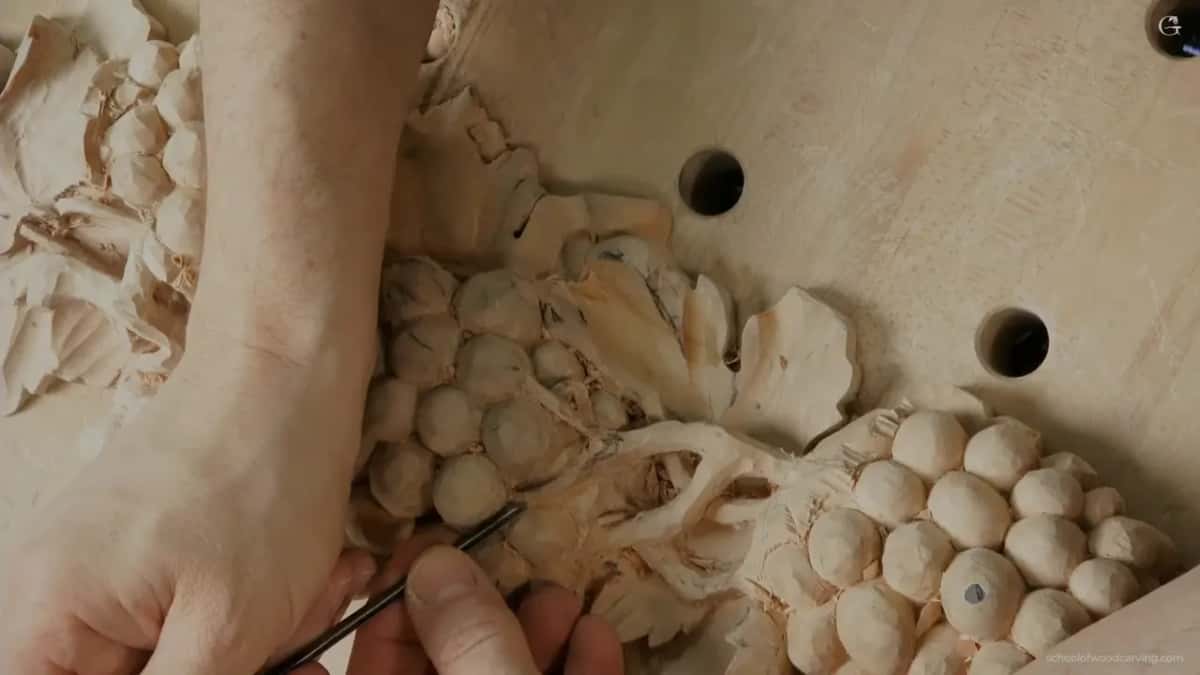
Hashemi Flowers, lesson 11, part 7, tells it the same way. At 04:43 I owned up: I attacked it from a wrong position. Not a good mistake, but still fixable.
I gave two ways out at 05:09. With enough wood, I could remove everything and go deeper. Or I could follow the nature of what just happened and make another subdivision, "just like that," as a micro detail. That was probably what I would do. "I'm not going to hide if I made a mistake, I made a mistake," I said near 05:58. On the final piece, though, nobody will actually know that was a mistake.
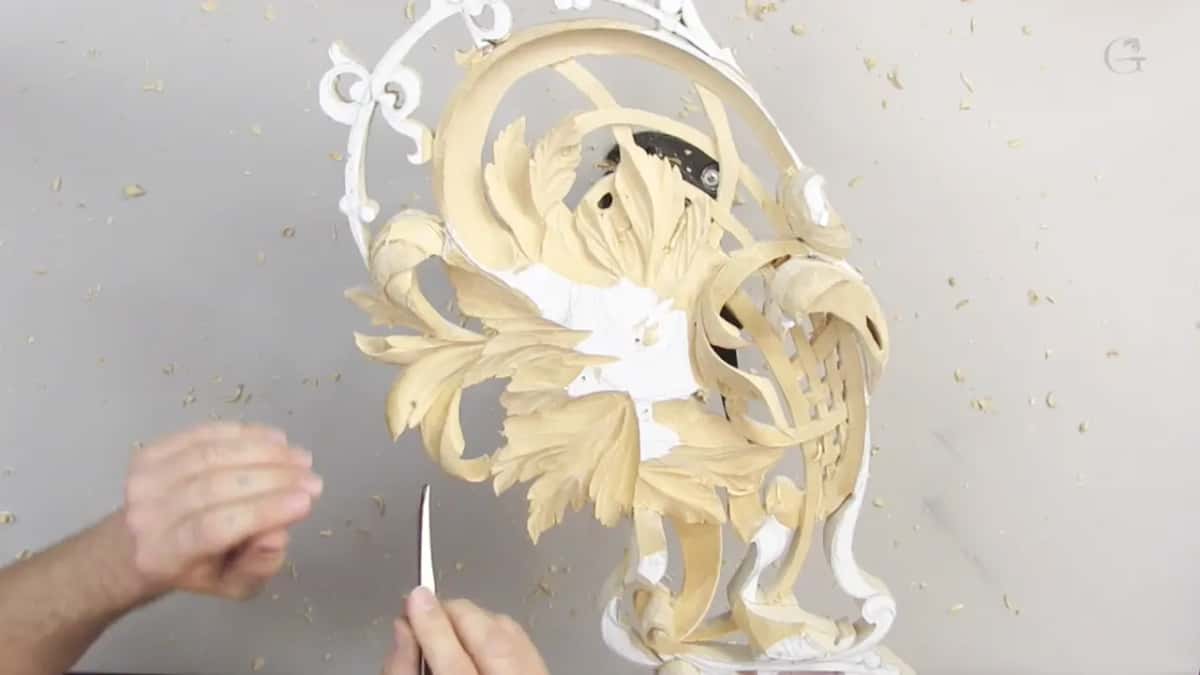
The other side of the coin is in workshop 61, part 6. Back at 03:17 I wanted no mistake from attacking in the wrong position, so the right position was "this way," toward myself. After that, I had established the middle line. Next came shadow. Near 03:37 I really wanted to see one casting. "I could leave it like that, but it is not what I'm after," I said, so I had to establish more of it.
Speed shows up in part 2 of workshop 14 too. "That's what happens when you're trying to run ahead," came right at the start. Horses come into it in part 7, near 01:42: I really did not need to run ahead of mine.
What counts as the main form?
"The main shape of the movement," I said in workshop 20, part 3, at 04:40: "That's the main big idea." I hoped you could start seeing what I was actually doing. A little later one side was too high, so I could probably take a flatter gouge and start my movement that way.
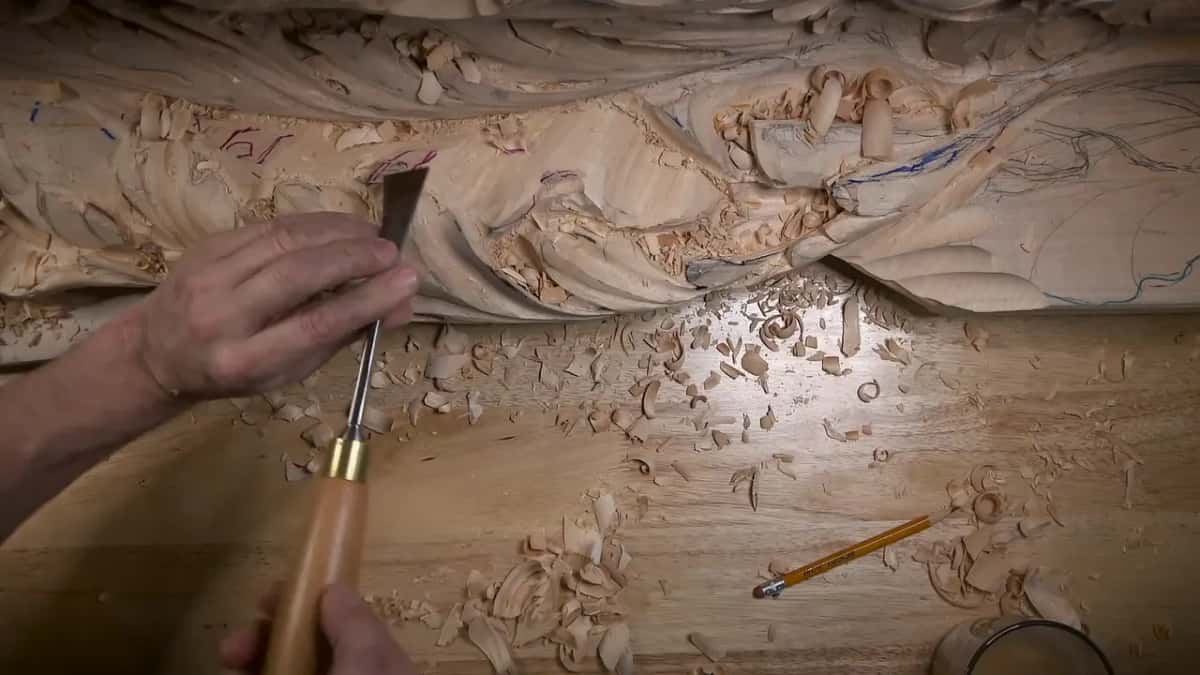
The same words show up in workshop 71, part 12, for a piece that looked heavy. "I know it's looking really big right now, convex and concave, but that's okay," I said at 06:37. "We're going to establish extra movements. I need just the main shape at this point."
Over in workshop 48, part 8, it went like this at 01:07: catch the main shape, and I thought I did. Eyes and divisions underneath were still ahead, "but the main form is there."
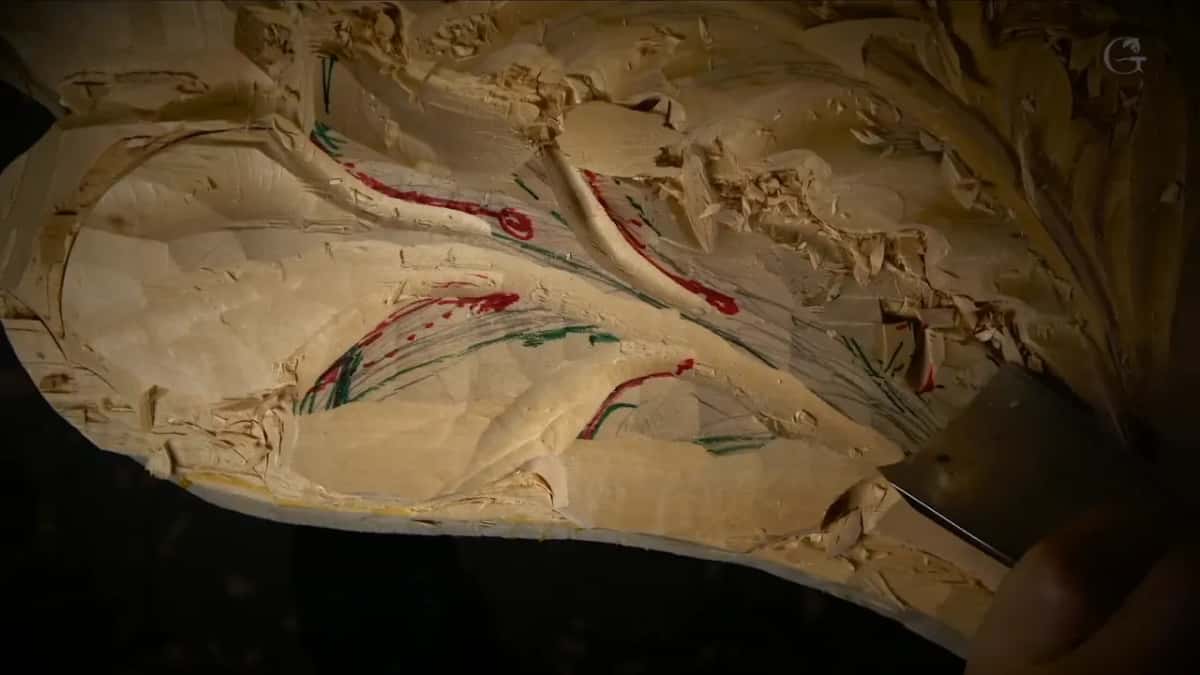
An approach gets named in Grape Onlay, lesson 3, part 2: "get the overall shape, like block in overall motion." Near 01:12, you see how it all blends together. In Furniture Panel, lesson 27, part 2, at 19:18: get the main form, the main shape. "I can always refine later." Part 11 of workshop 14 has a short line for it too, near 01:21: "Just indication of overall movement." And: "I think it looks good, except right there, I don't like."
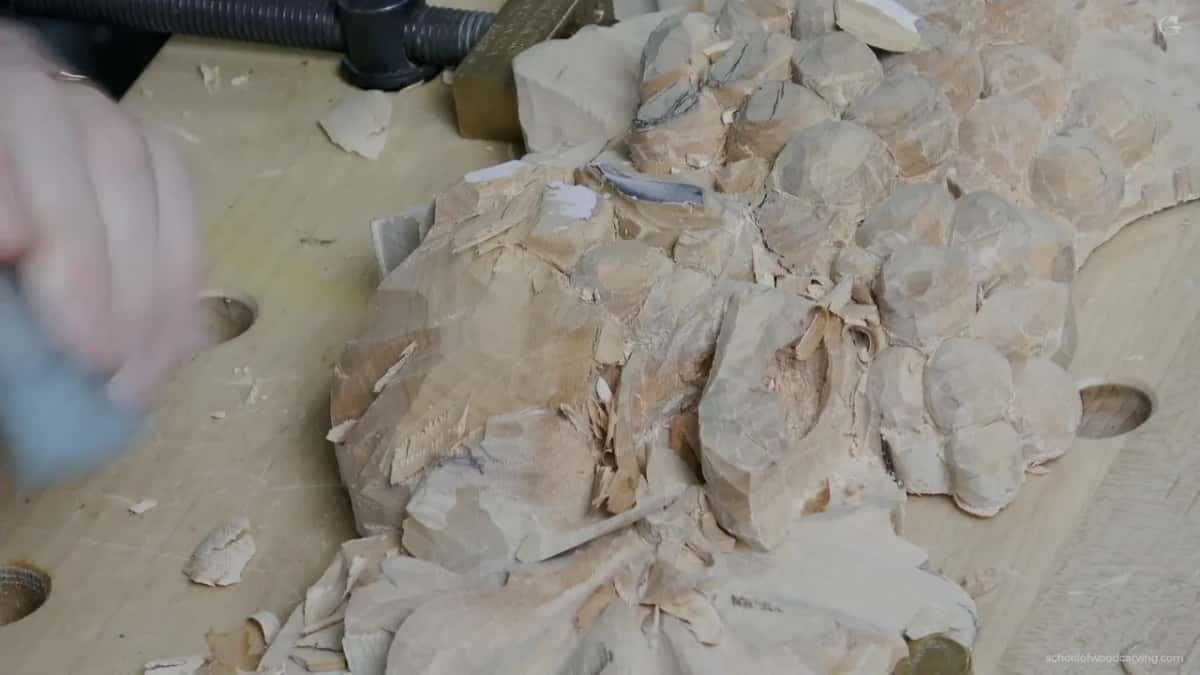
The stage gets a name in workshop 1, part 13. "You can call this stage as roughing in," I said near 05:35, because we are roughly trying to get the overall design in. Even if it doesn't look too appealing yet, "it's absolutely okay." Near 06:04 there would be a point when my straight gouge would not work anymore, and I would switch to a front bent, maybe a short one. Going underneath at that point would be a big mistake.
Next, workshop 68, part 6, borrows a word from carpentry. At 02:56 I was not finishing completely until all the roughing in was done, like rough carpentry. "Don't finish until you frame it." The overall feel made me happy, with the middle part kind of raised and going both directions.
A short record, lesson by lesson
These rows come from the lessons above, in the order I used them.
| Where | Said | Next |
|---|---|---|
| This video, part 12 | Working in the wrong position is okay | The pipe, then the eye |
| Workshop 71 | Looking really big, but only the main shape for now | Extra movements later |
| Workshop 48, part 8 | I thought I caught the main shape | Eyes and divisions underneath |
| Workshop 68 | Not finishing until all the roughing in is done | Frame it first |
| Onlay lesson 10 | Awkward to attack that way, and the piece broke | A change of design |
When do the details come?
After the form, and some of it in the same video. Smoother came up in part 12 at 04:26, and near 07:53 the high spots were to go before I raised an edge. In Floral lesson 11 the smoothing was a number seven and a really smooth transition, once the side looked too straight.
The rest lives in workshop 14. Part 7 has me near 01:26 able to go underneath if I needed to, but at 01:33 that was probably a little too early, because I still had to develop that side. And in part 2, at 04:47, a part too weak was not what I wanted, with a beautiful shadow still to come at 05:04.
What could you try on your own leaf?
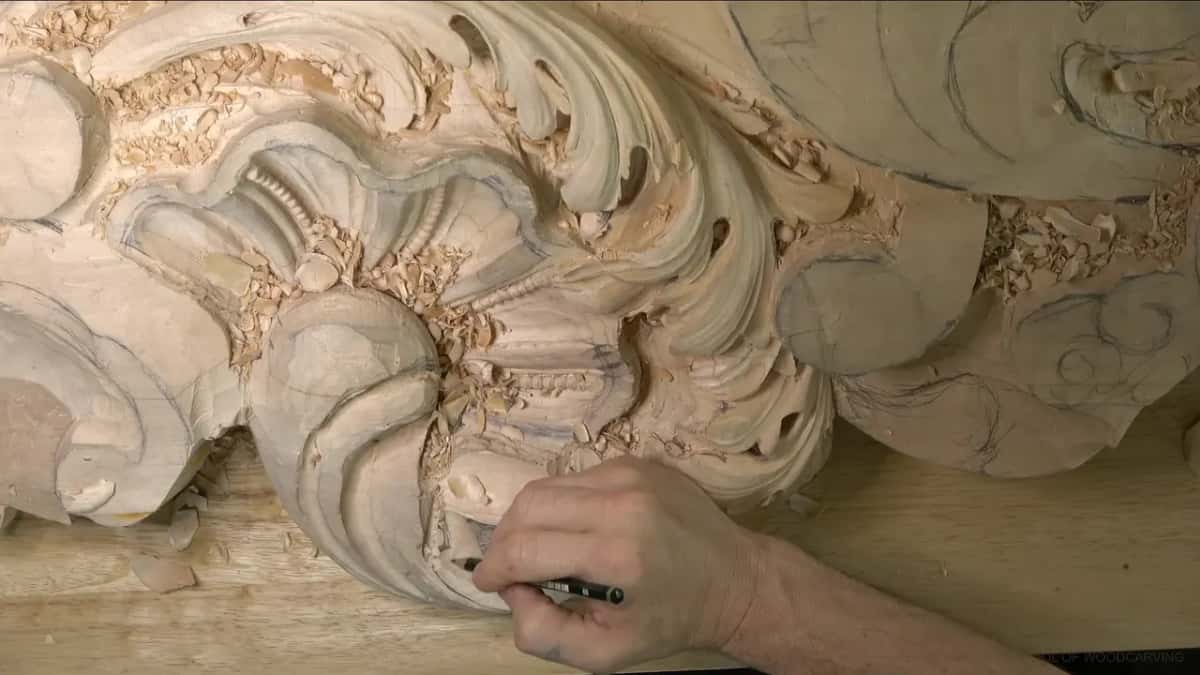
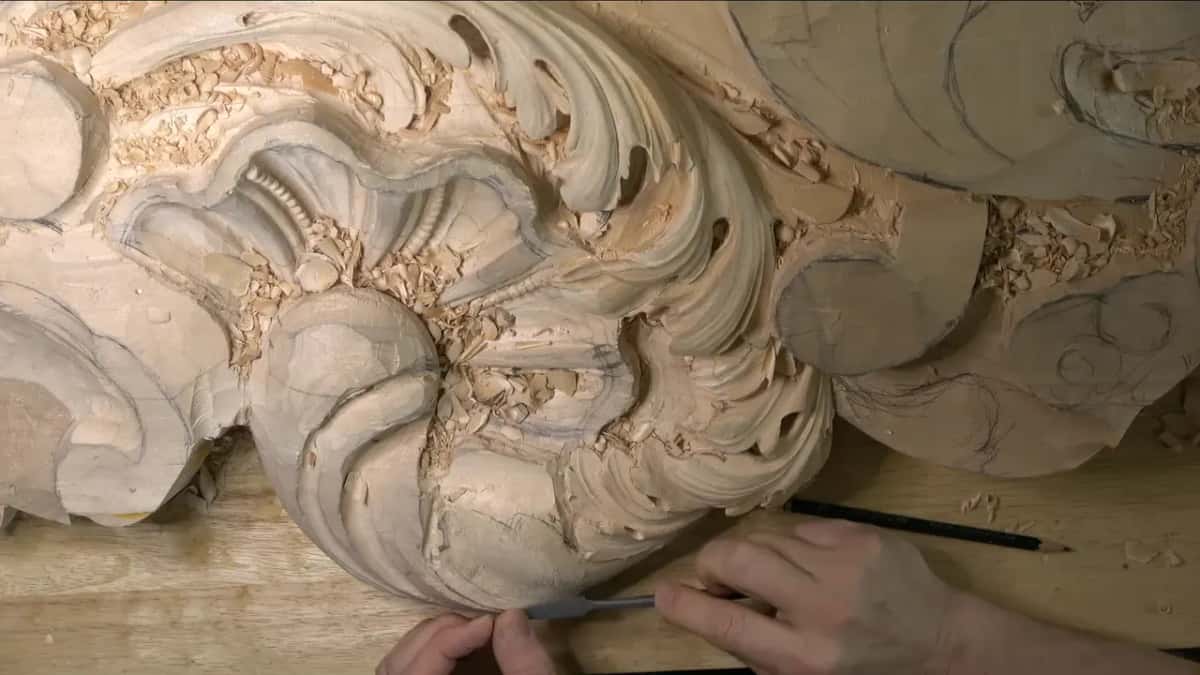
Here is the order from this video. I chopped out what distracted my eye, checked the look from every side, and gave the main shape. Last, I said I would smooth the high spots before raising an edge. The wrong position came with the first pass.
The video is one piece of its lesson. Workshop 14 holds the other eleven, and the course page is Advanced Carving: Venice Room, Part 2. The craft is wood carving, a branch of woodworking. A gouge belongs to the chisel family, and the fibers I talk about are the wood grain. A relief is carved on a flat background, and an acanthus leaf holds shadow in its hollows. The room is in the style of Venice, my sizes are in millimeters and inches, and the camera is the one I keep covering.
Which spot on your piece is the awkward one?
How it's done
- Chop out what distracts. At 00:13 I said a piece needed to be chopped out, because right now it was just distracting my eye.
- Check every point of view. At 01:14 I said to double-check the look of it, from every angle.
- Set the form first. Near 02:51 I was setting my form first, and at 07:04 I called it giving the main shape.
- Use a bigger tool on a bad spot. Near 05:40 I said maybe I should use a little bigger tool, and at 05:51 to blend with the bigger movement.
- Smooth before you raise an edge. At 07:53 I said I would smooth that bit where it doesn't have any high spots, before I raised the edge.
Frequently asked questions
Does the wrong position ruin a first pass?
In part 12 I called it okay, since the form came first, and I went on to the pipe. Hashemi 11 calls it a mistake with a fix. Grape lesson 10 shows the cost: a fragile part moved, then broke, and I changed my design.
Why not turn the piece around instead?
In Grape Onlay 10 I left the workbench where it was, just because of the cameras, and said that without them I would just rotate the piece. In Venice 84 I guessed I had to stay put, because I was covering the camera with my head.
What did I mean by the main shape?
In workshop 20 I called it the main shape of the movement. In workshop 71 I said a piece looked really big, but I needed just the main shape at that point. Extra movements came later.
What to carve next