
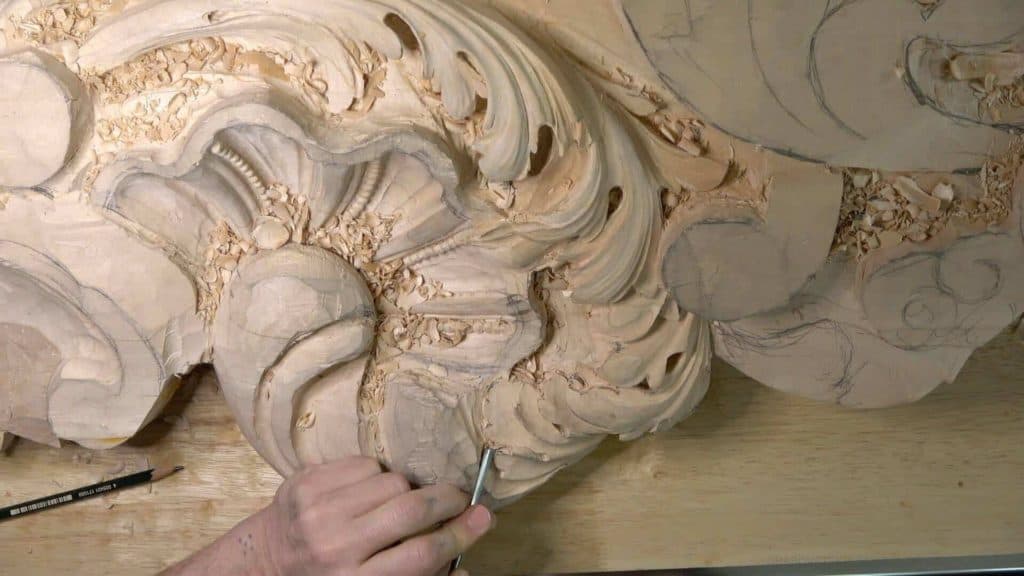
Alexander Grabovetskiy, woodcarver, School of Woodcarving · Published 2020
Should you sharpen a dull gouge on the spot or switch to another one?
Quick answer: Switching gouges is what I did in Venice Room workshop 14, part 6, when a tool got dull in the middle of a concave. The tool needed sharpening, I said, so I picked a different one and called the concave good. Other workshops show me stropping briefly, or sharpening a little later.
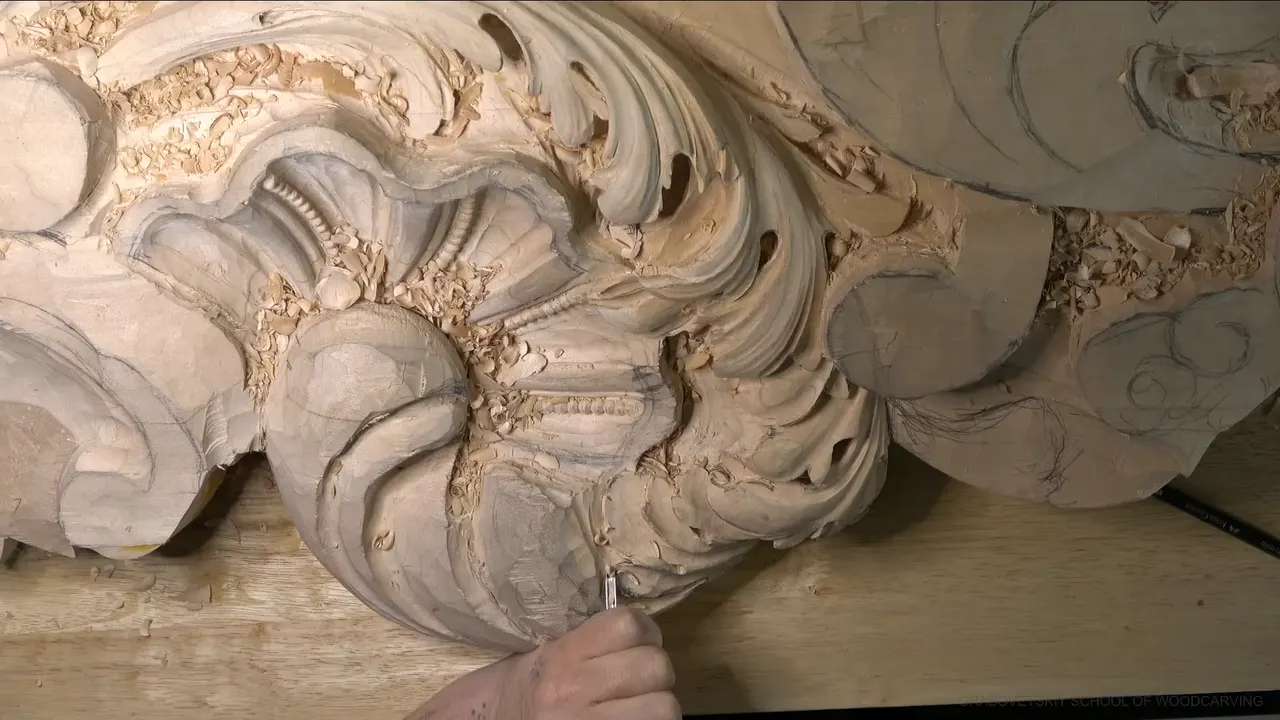
Switching gouges is the move I made in part 6 of workshop 14 when a tool got dull in the middle of a concave, and other workshops show me sharpening or stropping instead. My words on the video were "Dull tool. Let me use a different one."
Ever had a gouge start to drag halfway through a pass? Did you head for the stone, or grab the next tool on the bench? Here is how that choice went each time it came up on camera.
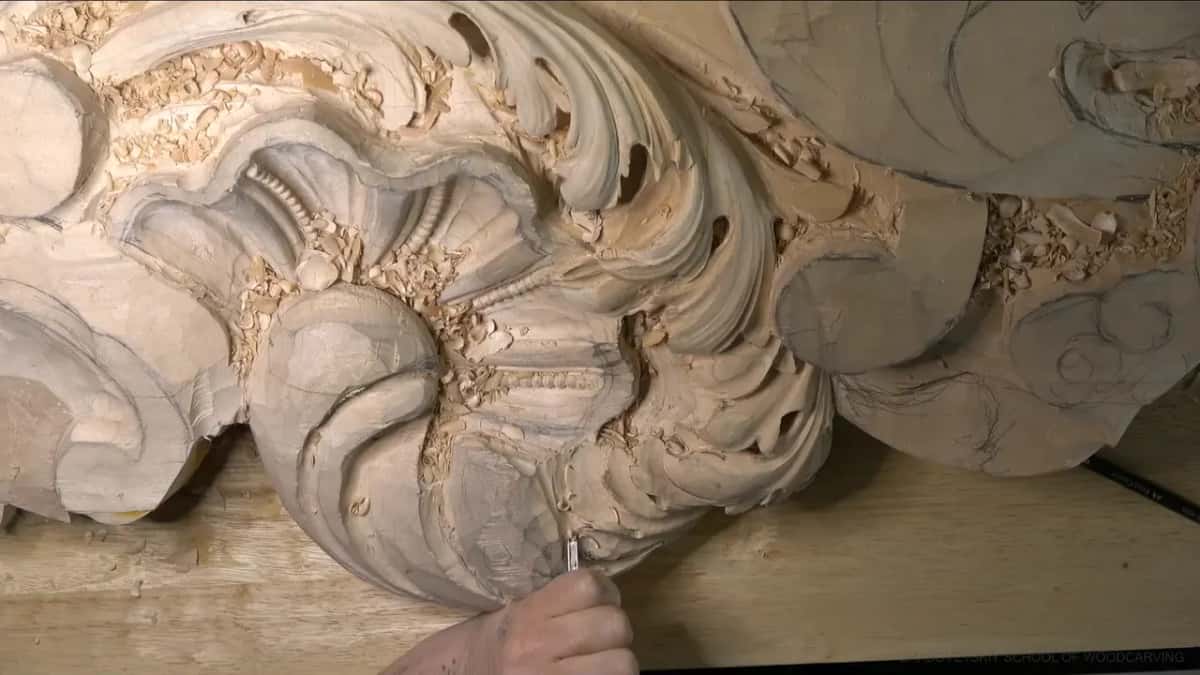
Sharpen a dull gouge or switch to another one
- Switching tools is what happened in part 6 of workshop 14.
- Sharpening came up in parts 4 and 8, and I kept carving a little longer.
- A strop shows up in workshop 85 instead.
- A dull gouge in workshop 87 still carved, but it needed real force.
- Sometimes the wood is the trouble and the steel is fine.
- I check the edge many times a day, and I do not fear a dull one.
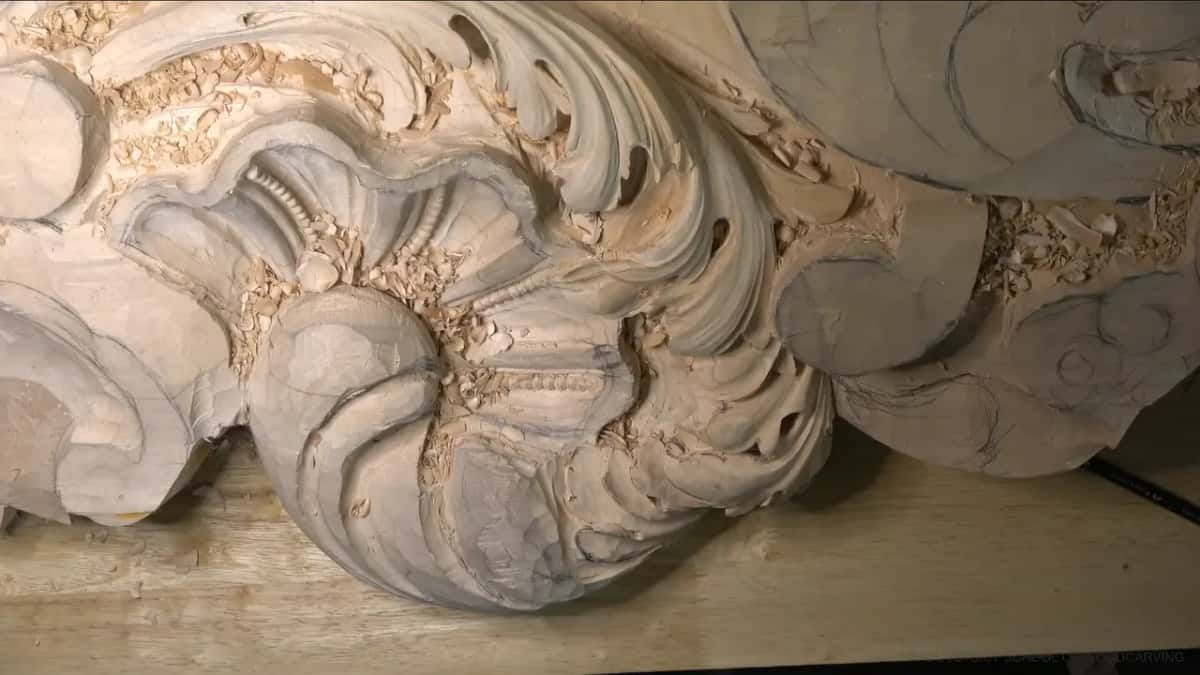
What did I do in part 6 when my gouge went dull?
I switched. The overall concave right here needed fixing, I said at 02:03, and then came the line that matters: "And this one needs to be sharpened. This one is dull." Seven seconds later I said the short version.
I gave no reason after that, and I will not make one up. What I can tell you is what followed. "So that is good. I like that concave," I said at 03:15, and a few seconds on: "So that was number seven, and now I can start developing my separations."

In between, I spent about half a minute talking about the style of the leaf. That has its own page in this room. For this page the order counts. The tool went dull, I changed it, and the concave got finished.
Did I switch every time?
No, and the same workshop shows two other ways. Take part 4. At 00:17 I said it needed sharpening, and what comes next is me cleaning a little bit with the 1 millimeter (about 0.04 in). I did not say I stopped to sharpen.
Clearer still is part 8. Mid-carve, at 03:14, I said this tool became a little dull and needed a fix, and I would "sharpen it a little bit." One breath later: "let me try to put some of the concaves in some other spots." So the work moved to other spots on the leaf, and the sharpening waited.
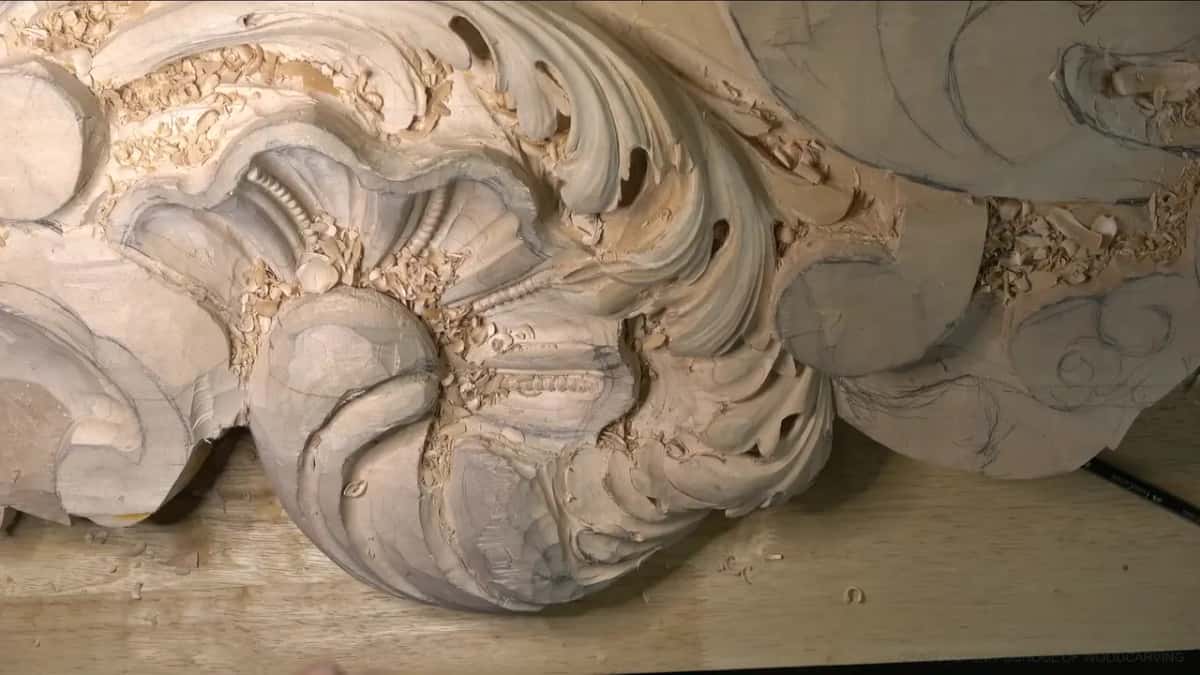
Did that cost me anything? Half a minute on, I said "that is not the concave I want to see," and a little later, "that is better blending mode, but still not exactly what I want to see yet." The dull tool got no blame from me on camera, so it gets none here.
Which other Venice Room workshops show a dull gouge?
Quite a few. My own words keep coming back, so here are the ones where I also say what happened next.
The plain swap is in workshop 64. My favorite number nine was dull now, I said in part 9 at 02:24. I weighed a number eight for a second, then said I would use nine. A few lines later I admitted I was kind of breaking a rule, since everything was in my way and the tool "must be super sharp." A micro tool went in next, and it gave me "a nice cut."

Workshop 85 goes the other way. My gouge in part 10 became "a little dull" at 01:10, and I kept working, really close, "just about 1/32 of an inch or so" (about 0.8 mm). By 02:39 it "became really dull. Let me just strop it for a couple seconds."
A trail on the wood in part 7 got the same remark: the tool became dull, "so I need to sharpen it first or just buff it pretty much." Both words came in one breath.
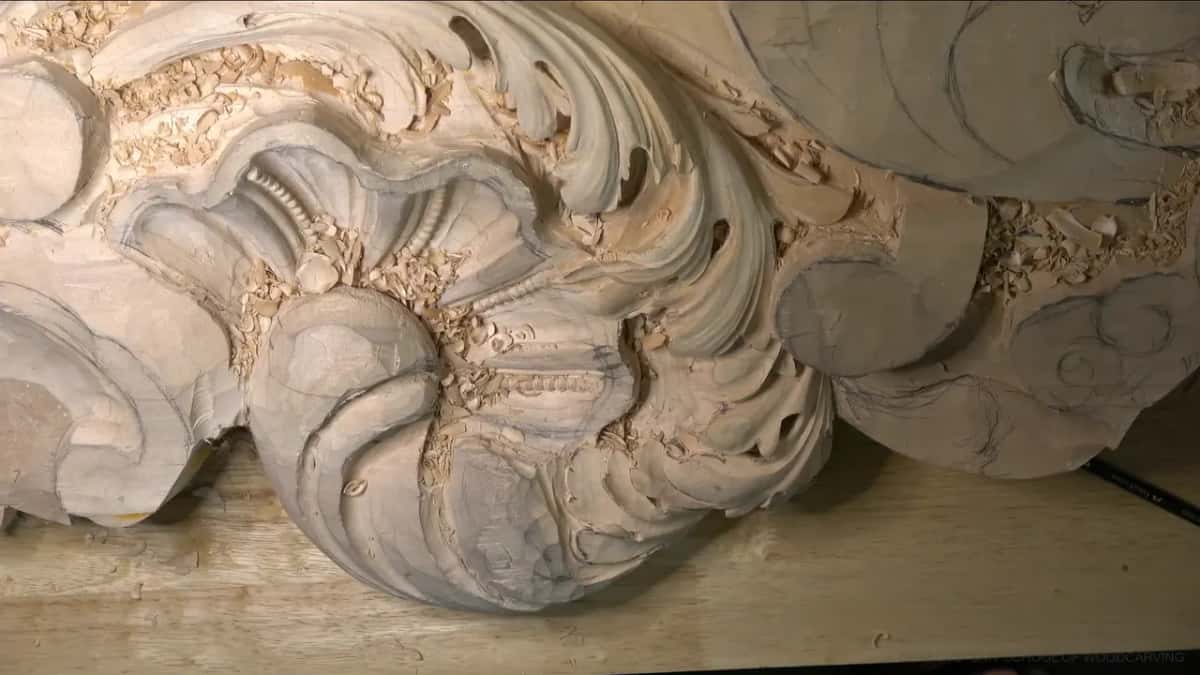
Before and after sit side by side in workshop 67. Near the end of part 8, at 07:30, comes "My tool becomes a little dull." Part 9 opens with "It's already dull," and a few seconds later: "I just buffed a little bit, or honed, and it's much better now." Soon after, "That is absolutely wonderful."
A wide number seven looked "really dull" in workshop 92, part 4, and I said sharpen it. And in workshop 87, part 12, a number nine "needs to be sharpened now."

The 87 line goes on, and I like it best of all of these: "Yeah, it still cuts, but I have to create a lot of force to create my cut. And that is time to buff it or sharpen it."
Two small ones sit in workshop 54. Maybe my 4 millimeters (about 5/32 in) "is kind of dull," I said in part 1. "I need to spend time and sharpen it." The concave went on regardless. My number nine in part 2 "is dull," and a few lines later I picked a quarter-inch number nine (about 6 mm).
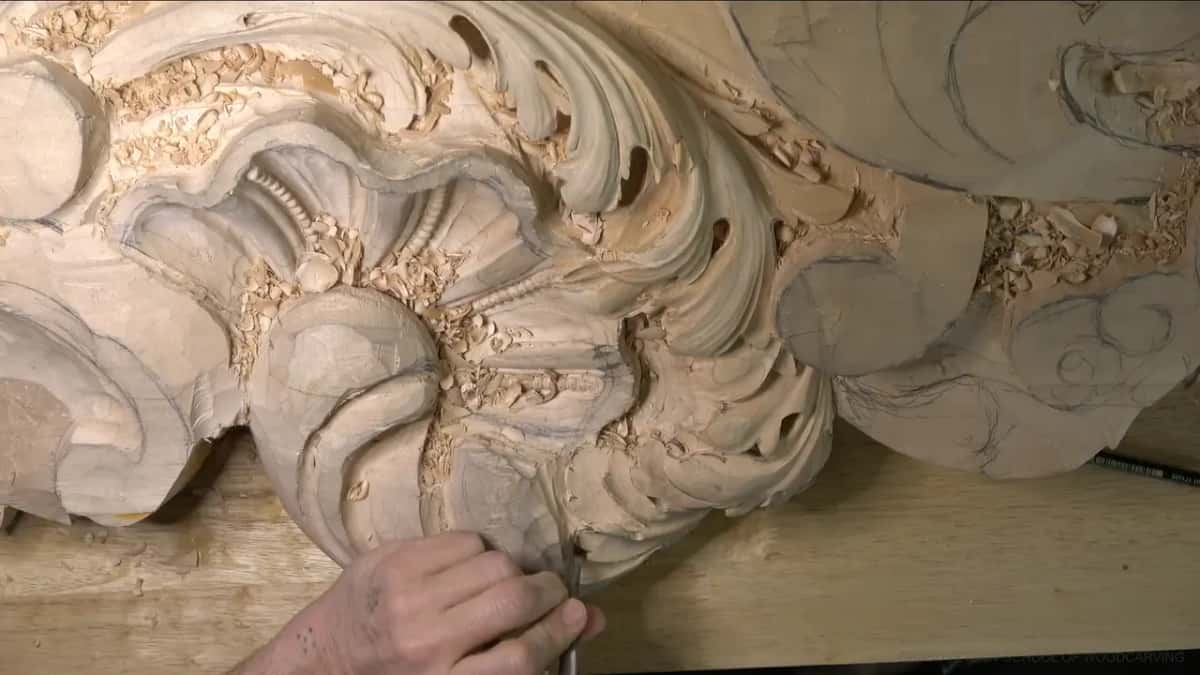
How do I tell a dull tool from a bad piece of wood?
I test it. The best example is lesson 11 of my lily box course. My 1 millimeter (about 0.04 in) was catching some grain. That could be two things, I said: "Either my tool is dull or the section of wood is not really good."
So I sharpened it a little bit and said I would be right back. Back again, I said "Sharpened, I should say." The edge was fine, and the trouble sat in the wood itself.

A few Venice Room lines carry the same doubt. "Maybe it's dull is what it is," I said in workshop 83, and then "this area is kind of denser. A little harder to carve." My tool in workshop 62 was "a little too dull for this operation," I said, and I had just chopped too much, and that was okay.
Furthest of all is workshop 91. It felt like "almost there is abrasive on inside." I made a couple of passes and the tool "becomes dull," and I told you I had stropped it a second ago. "When I start, it's absolutely sharp and clean." And then: "when I continue, it becomes dull right away."
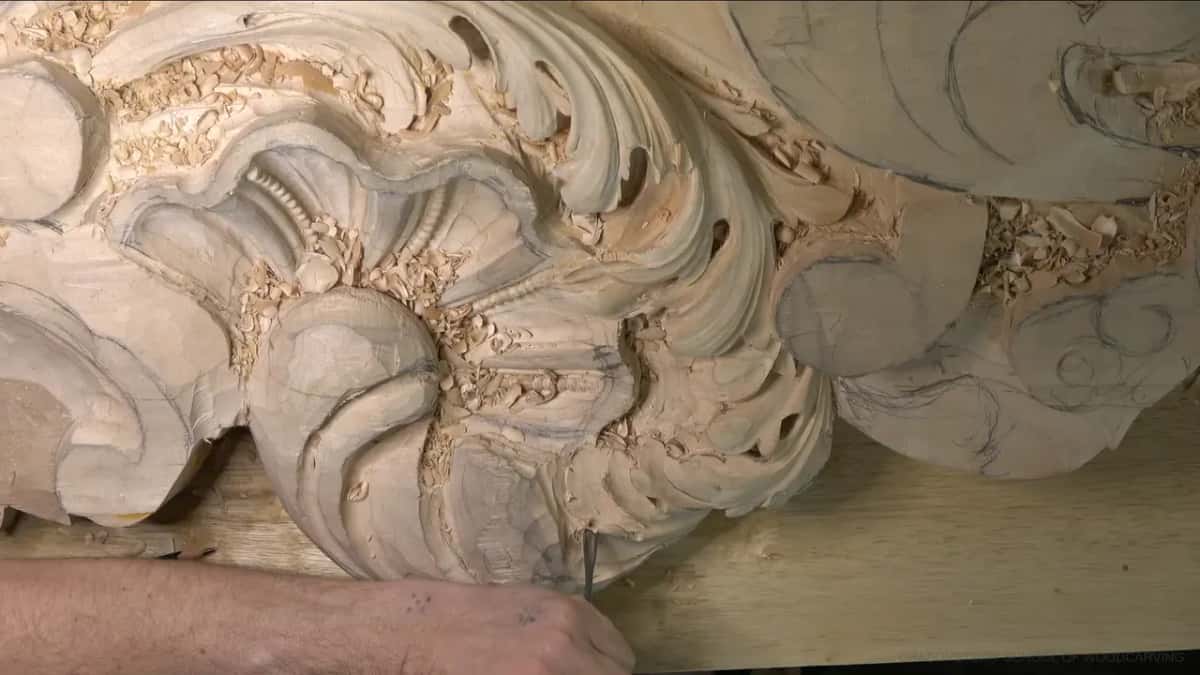
My answer on that video was short. "Sometimes it happens with some of the woods. I guess I have to sharpen my tool more often in this section." That is a third way to handle a dull edge: when the wood does it, I sharpen more often and do not blame the steel.
My teacher had a shorter version, and I tell it twice. As a student, I told him he gave me a bad piece of wood, and he said there is no such a thing as bad wood. The in-person sharpening class ends it with "It's a dull tools." Lesson 10 of that Roman course tells it again, and I add that some species of wood are almost impossible to carve.
How long does a sharp gouge last?
For a brand-new tool, the sharpening class has a line. I check the bevel, and "if it's sharp, I'll use it until it's dull, and I don't hone it, okay? I wait until it's dull. Usually it lasts couple days, three days." Then came a line about what follows: "Once it's becoming dull, I want to reshape." That is about a new tool, so I will not stretch it to every gouge on my bench.
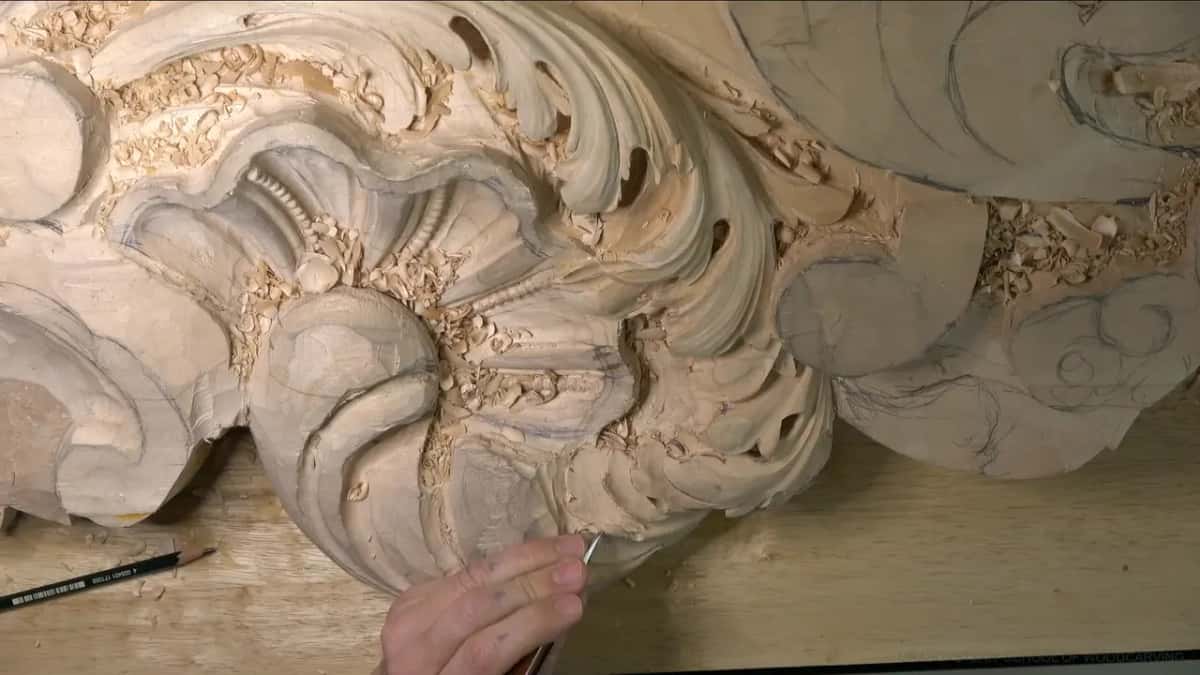
The daily habit is in the Roman lesson 10, part 4. My habit is constantly checking my edge for a wire, and "if there is, then I just have to re-strop it, rebuff it, or even resharpen that. Okay? And I do that multiple times daily."
Some people say the best wood is a soft wood, so your tools shouldn't get dull. My reply: "That's not necessarily truth. It is soft wood, but your tools, for some reason, still get dull, and really quickly sometimes."
The wire edge shows up in workshop 19 too. Part 7 adds that you can tell a tool needs sharpening because a dull one "develops some kind of wire sometimes, wire edge." For the how of stropping, this site has a lesson and I will leave it there.

What does carving with a dull gouge cost you?
Force comes first. After that comes mess. Lesson 13 of the Roman leaf course says the fibers are so close that "if your tool is dull, it's going to just smoosh together those fibers, and they're not going to look nice."
Hashemi lesson 9 has me telling you, "believe me," that with the dull tools you will not manage what I was doing right then. In Hazelnuts lesson 3 the tools "do have to be absolutely sharp because we do an in-grain carving, and with the dull tools, I don't know how it's even possible to carve."
Furniture panel lesson 17 adds a tear. "your blade really has to be sharp, okay? So don't make the mistake and use your tool with a dull blade. It's not good." The result, I said, is a lot of tear.
The last cost lands on you. Back in lesson 12 of that same course I said "it's a lot more dangerous with dull tools because you create a lot more force," enough to penetrate your skin. Then came my favorite line: "It's a dull for wood, but it's not really dull for your skin."
What wears an edge faster than the wood?
Sandpaper does, on my account. Modern acanthus lesson 7 talks about the trouble with cheap sandpaper: "if you're using a tool again, it's gonna make it dull really quickly and you have to resharpen it." I added, "That's number one thing why people don't like to use a sandpaper."
Another lesson of that course, number 4, gives a reason: "sandpaper leaves abrasive inside of the wood fibers, and your tool is going to become dull really quickly."
The carving side is in workshop 15. I hold the sandpaper back in part 9 because "I don't want to affect my tools. And every time you use a sandpaper, the problem is tools become dull."

A check can come back clean, too. In furniture panel lesson 20 I said "if you want to check if I destroyed my tool or not, I'm talking about if it's dull or not, I'll show that to you just in a moment." When I checked, my answer was "Nope, it's still really sharp."
Does soft wood keep an edge longer?
Not on my bench. The dining table apron course, in workshop 9, has me calling basswood softer wood, "but for some reason my tools getting dull a lot quicker on basswood than on oak." My teacher tried to explain it to me, and I still did not get it.
I wondered about abrasives in the wood. "There is some woods that are really abrasive," I said, but basswood "doesn't look like abrasive wood." Basswood is really nice and smooth, I said, "but the tools are getting dull quicker for some reason." So I cannot give you a reason, only what I saw.
Should you fear a dull edge?
I do not. Ask me if I am afraid of my knife becoming dull, and lesson 3 of that course has the answer: "It's just wood. It's going to become dull anyway, just because from carving." I can always buff it, I said, and "resharpen it if I need to."
The first lesson there has the same mood in fewer words. A carving knife was in my hand, and I was okay with that: "Nope, it's not going to dull it. And if it will dull it, I'll just resharpen it. That's it. That's the way."

Where I met a dull gouge, in one table
Seven rows follow. Each shows what I said, and what came next on the video. The gouge column holds just the names I said out loud.
| Where | The words I said on camera | Gouge | What came next |
|---|---|---|---|
| Room fourteen, part six | This one is dull, so use another | Switched tools | Next I called the concave good |
| Part four, fourteen | It needs sharpening, I said out loud | Not named | Next I cleaned with 1 millimeter |
| Eight, workshop fourteen | I need to sharpen it a little | Unnamed gouge | Next concaves in some other spots |
| Workshop sixty-four, nine | My favorite number nine is dull now | Number nine | Then a micro tool went in |
| Eighty-five, part ten | It became really dull, so a strop | Name unsaid | I planned only a couple seconds |
| Ninety-two, part four | Looks like my gouge is really dull | Number seven | Sharpening was the plan, I said |
| Eighty-seven, part twelve | It still carves but needs much force | Number nine | I named buffing and sharpening both |
What would I try at your bench right now?
What follows is what I did on camera, and nothing else. When the gouge caught the grain in lesson 11 of the lily box course, I asked whether the tool or the wood was at fault, and gave the edge a small touch to find out. Another gouge was ready in part 6, so I switched. The 87 answer ended up as buffing or sharpening.
The rest of workshop 14 is on its own page, and the school's course page is Advanced Carving: Venice Room, Part 2. The craft is wood carving, a branch of woodworking. A gouge is a curved chisel, and sharpening takes steel off its bevel on an abrasive such as a whetstone. A strop polishes the edge afterward, sandpaper is made of grit, and grain runs through the wood and decides how a tool behaves.
Which gouge on your bench is dull right now?
How it's done
- Catch the dull gouge. Say so out loud, as I did at 02:29 of part 6.
- Ask if it is the tool or the wood. My lily box lesson shows a light touch on the edge, and the problem sat in the wood.
- Switch if another gouge fits. Part 6 carries the line let me use a different one, and then the concave got finished.
- Or put the sharpening off. Part 8 took me to concaves in other spots, and the sharpening waited.
- Strop it when force climbs. When the tool still works but needs hard pushing, I said buff it or sharpen it.
Frequently asked questions
Should I sharpen the moment a gouge dulls?
Not every time. Part 8 of workshop 14 has me saying I needed to sharpen, then moving to concaves in other spots. Workshop 85 has a quick strop, and part 6 has a switch to a different gouge.
How can I tell my gouge is dull and not the wood?
Touch the edge up a little and carve again. In the lily lesson I caught some grain, sharpened a little bit, and found it was not the tool. The trouble was in the wood.
What does a dull gouge do to the wood?
It takes real force. In workshop 87 mine still carved, but I had to push hard. In lesson 13 of the Roman course I said a dull tool smooshes the fibers together, and they do not look nice.
What to carve next