
Alexander Grabovetskiy, woodcarver, School of Woodcarving · Published 2020
Is it okay to take your time and think when something about a carving bugs you?
Quick answer: Pausing to think when a spot bugs you is part of how I work out an idea on a carving. On part 8 of lesson 16 in my second Venice room course, I called thinking hard worth it, then I named my next tool and went back to the piece.
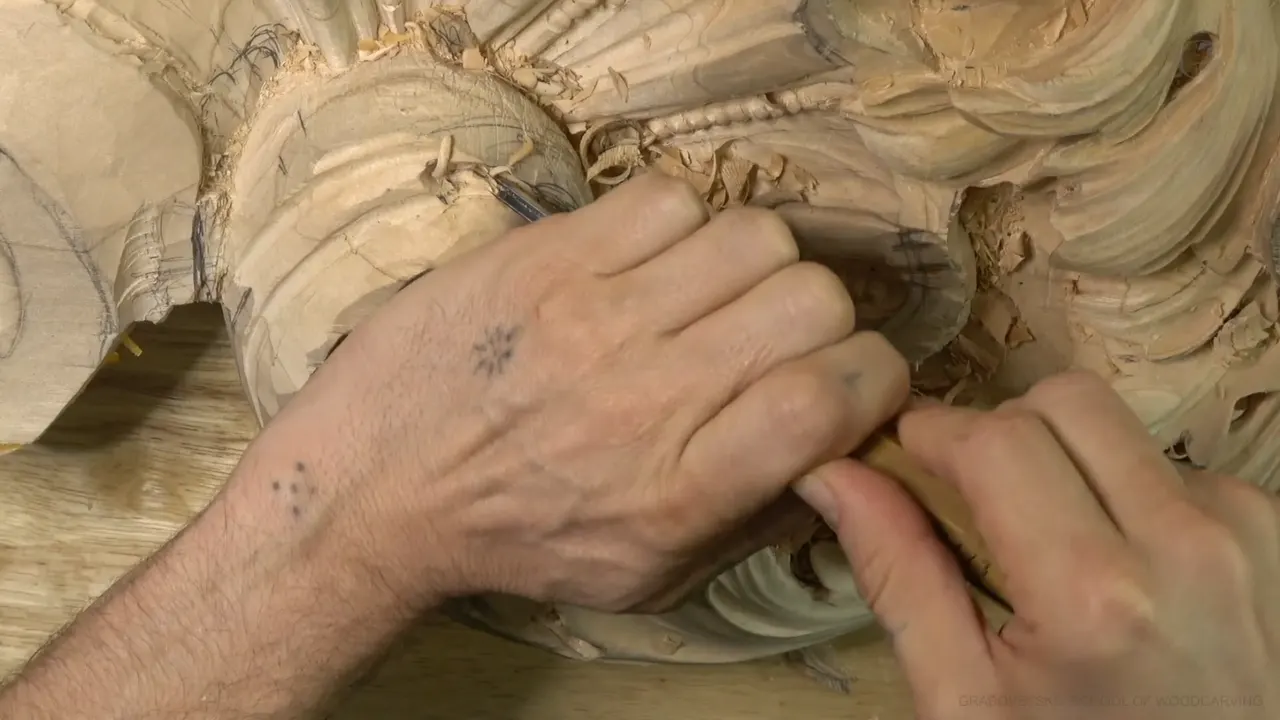
Pausing to think when something about a carving bugs you is okay, and in part 8 of Venice Room workshop 16 I called it worth it. The line comes at 06:57: it is worth it sometimes to think hard.
The video is short, and its last caption sits at 09:37. To fill out the page, I went through other lessons where the same trouble came up, and each lesson I use gets a link.
Ever stood over a carving that looked fine and felt wrong? Could you say out loud what you did not like? Then this page is for your bench.
The short list from part 8
- The leaf was already flipping at 03:53, yet something bugged me.
- Number 7 shaved the high spots from 04:43.
- Between 05:54 and 06:04 the same complaint came out three times.
- A little element flipping right on top of that piece came to mind at 06:21.
- I talked about thinking hard at 06:57 and said it was worth it.
- I explained my method at 08:35.
What was I carving before anything bugged me?
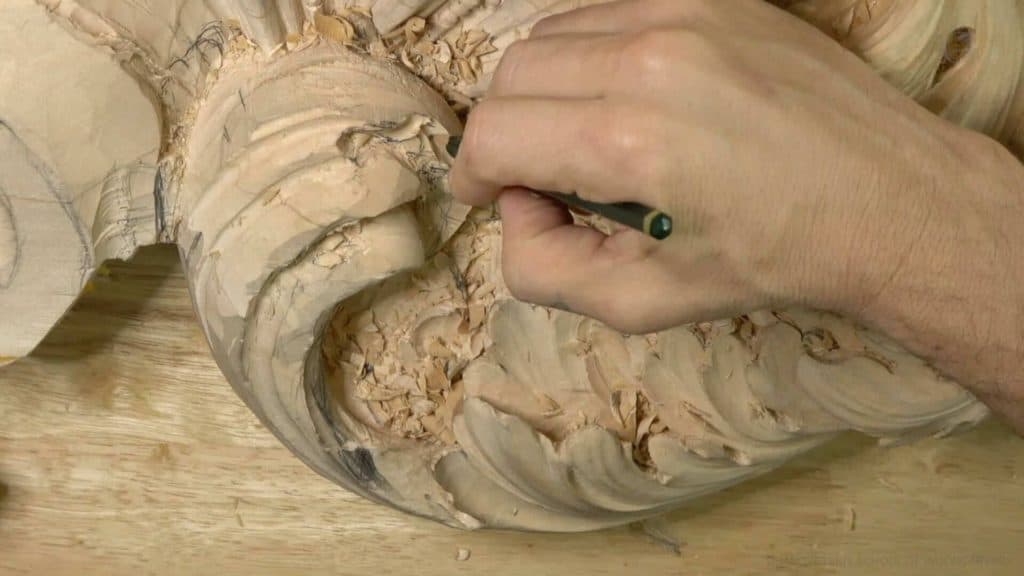
"Remove some of that stuff" opens the video at 00:06, along with a reminder to myself that I was going underneath. A number 11, 3 millimeters (about 1/8 in), was my probable pick for the beginning (00:23), and I would excavate underneath a little bit.
A really deep excavation was possible right there (00:56), because it would be visible when you look from another part of a room. Careful, though. I did not have too much space.
Another separation was on my list, this one on the inside, but I wanted to finish the first one before moving on. Maybe a bigger excavation would serve better, bigger than 3 millimeters, maybe a quarter inch, 6 millimeters. Shortening that side a little was fine with me if it came to that, because I thought it would look better and create a lot better shadow.
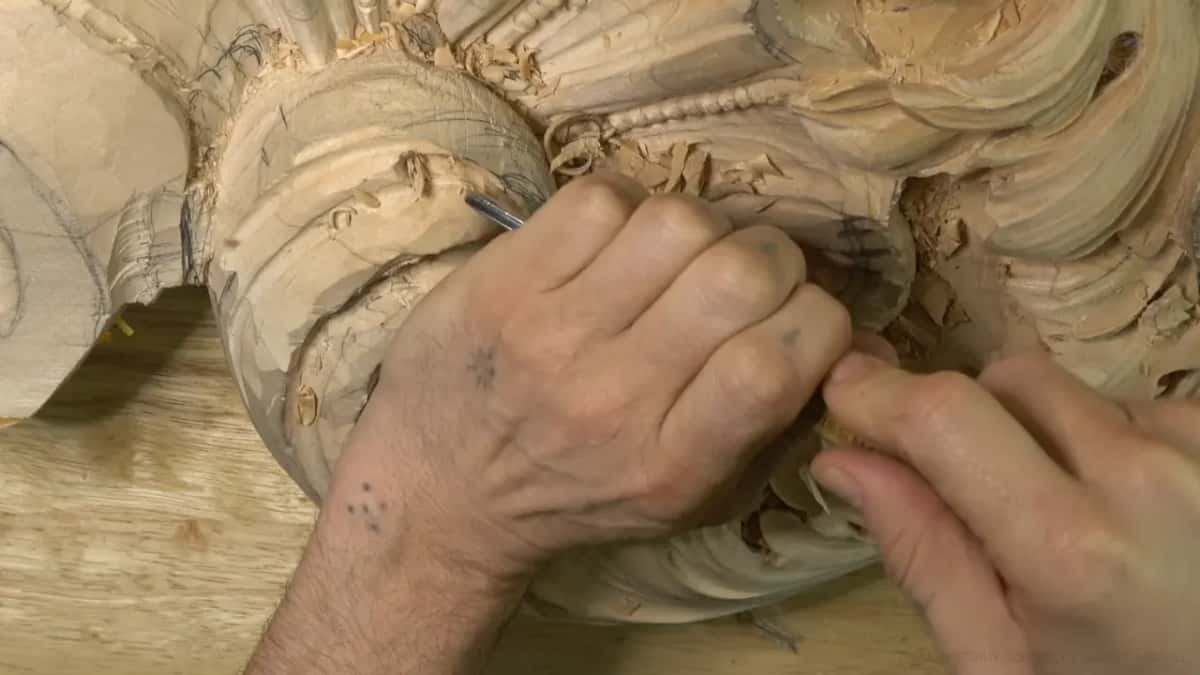
Three short lines on care follow. I have to be careful how I approach it (02:06). I should take my time and not force it (02:19). A little challenging area, I called it (02:33), though not impossible, and I just wanted it to look really nice.
Doubt crept in. Had I done that the right way? I asked at 02:51, since I could do something more interesting there. Anyway, it was all right, I said around 03:05, and I should be fine. The captions go quiet from 03:07 to 03:41.
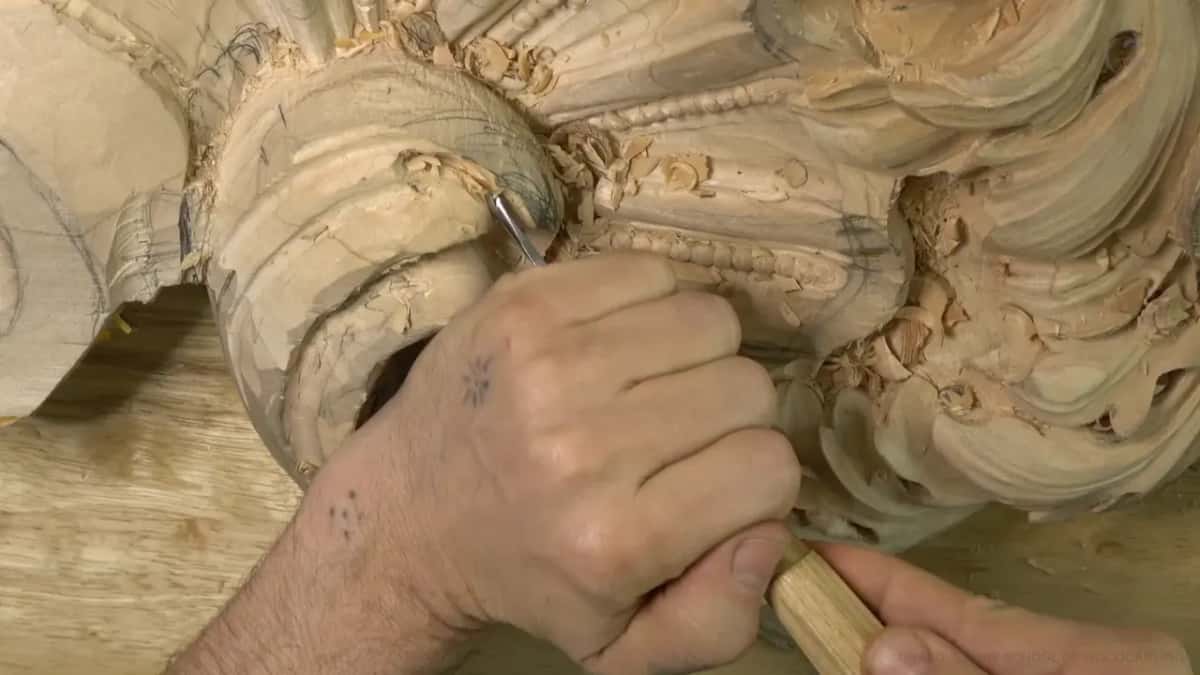
The moment it bugged me
I told you at 03:44 that I was still not too happy with what I saw. Visually it was already flipping (03:53), but something about it bugged me.
Next came a middle line going all the way like that, which I mentioned at 04:09. An extra separation could go right there at 04:16, but the spot had to be excavated first, I said.
Excavating on the inside too much was not what I wanted (04:25). Seven seconds later: "Maybe I should." A lot of excavation inside would mean really cleaning that part first.
Next came a big number 7, 8 millimeters (about 5/16 in), to shave a little. Not much, because concaves and convexes were still ahead of me. A semi-clean surface with the overall movement in it was all I was after. How clean it looked, or how nice the shape was, did not matter yet. High spots were the only thing to remove.
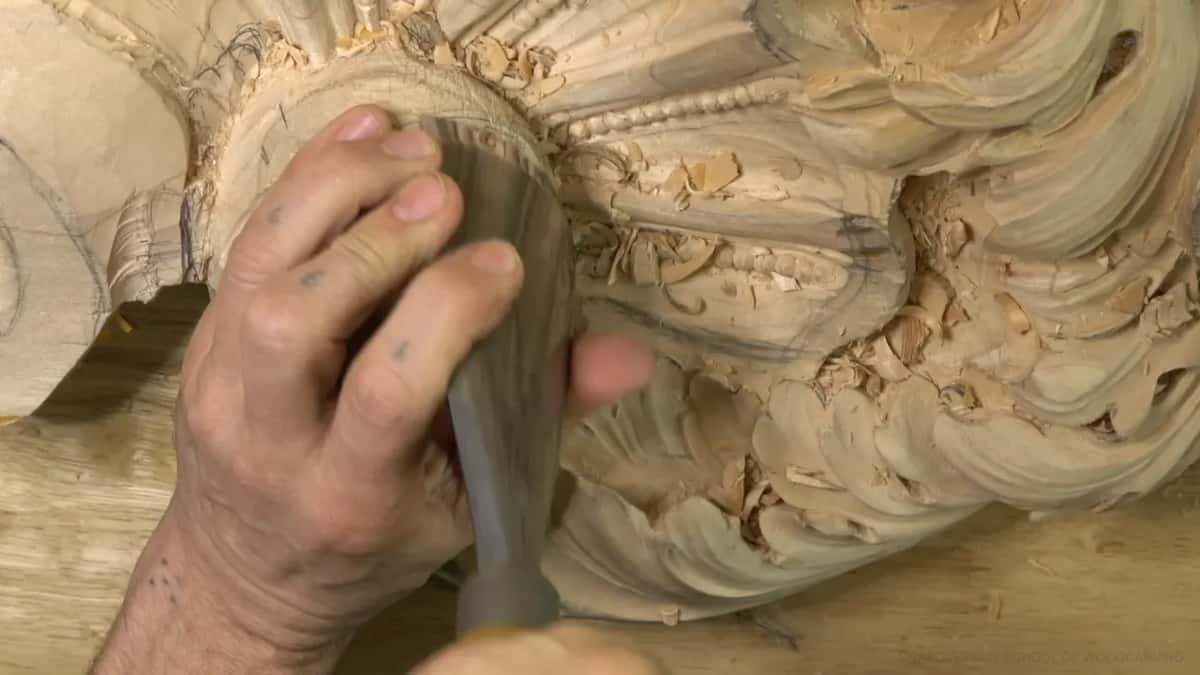
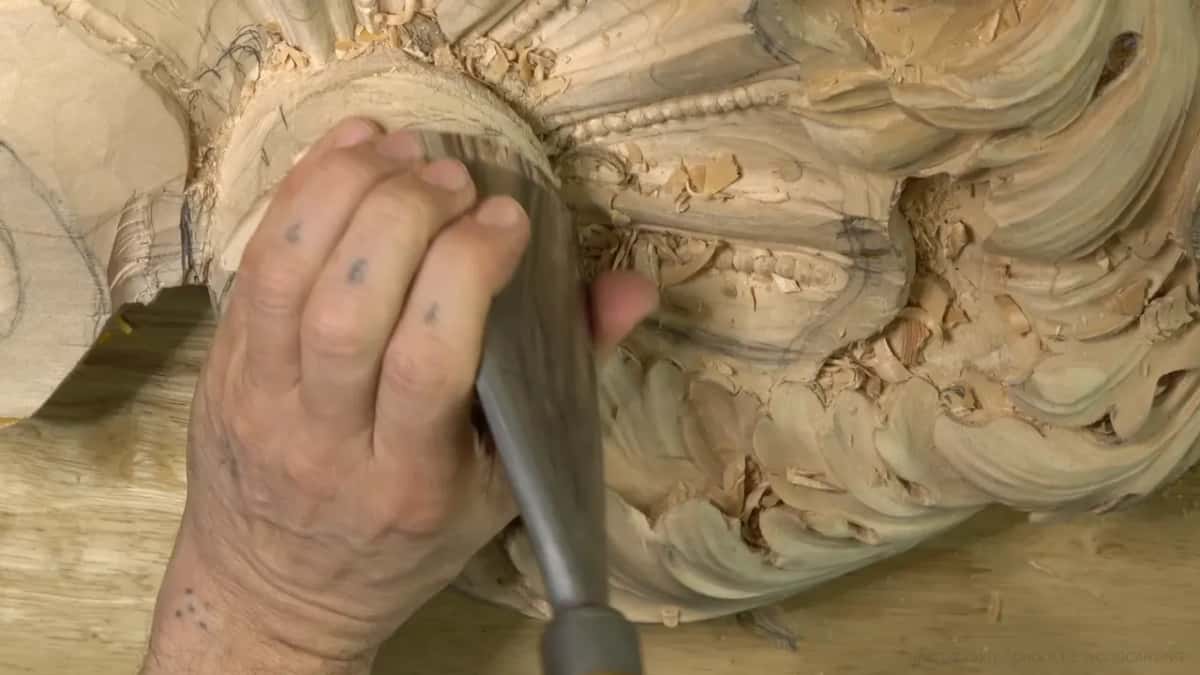
Where each pass fell in part 8
Three tools show up in that stretch, and each one comes with a line I said when I picked it.
| When | What I said I would do | Tool |
|---|---|---|
| Early, near 00:23 | I started excavating underneath, a little bit | Number 11, 3 mm |
| Later, near 01:45 | I wondered about something bigger than that | 6 mm, quarter inch |
| By then, 04:43 | I shaved a little, taking only the high spots | Big number 7, 8 mm |
| Soon, around 06:27 | I wanted a small element flipping on that piece | None named |
| Close to 08:23 | That piece needed to be chopped down | The quarter inch again |
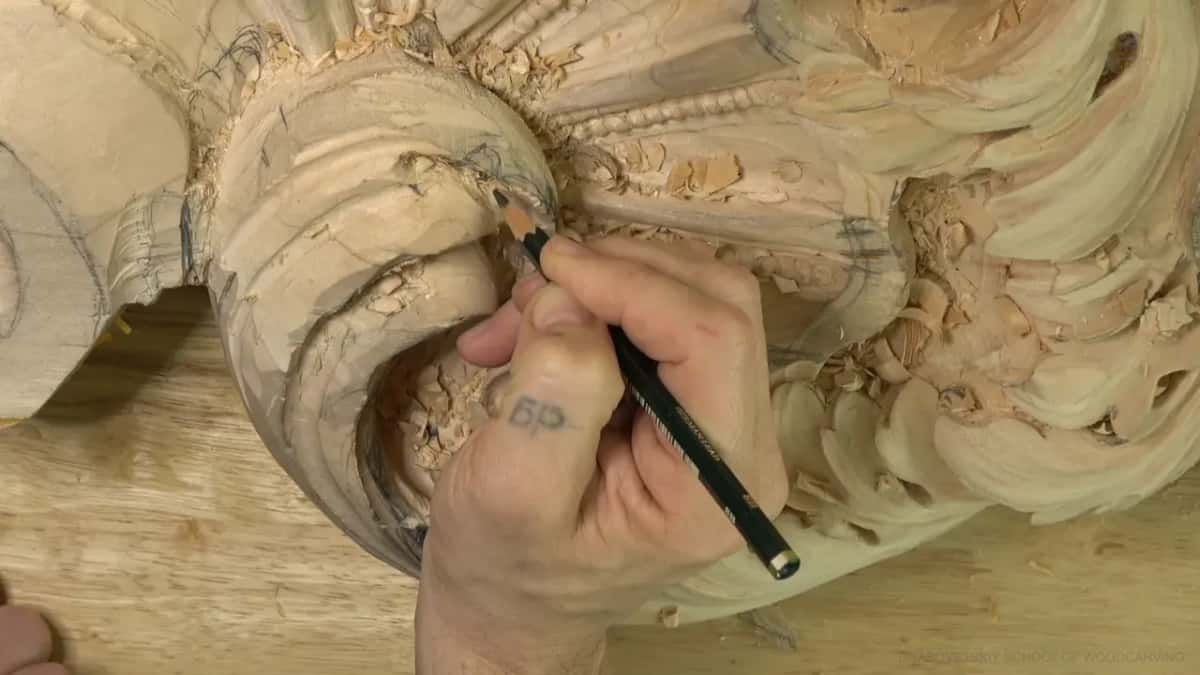
Saying out loud what I do not like
Something bugged me, something I don't like (05:54). Six seconds later the words were back, "Something I don't like," and again at 06:04.
"Let me think," went the next line (06:14). Making something interesting was the aim at 06:16, because right now, in my words, I just don't like how it looks.
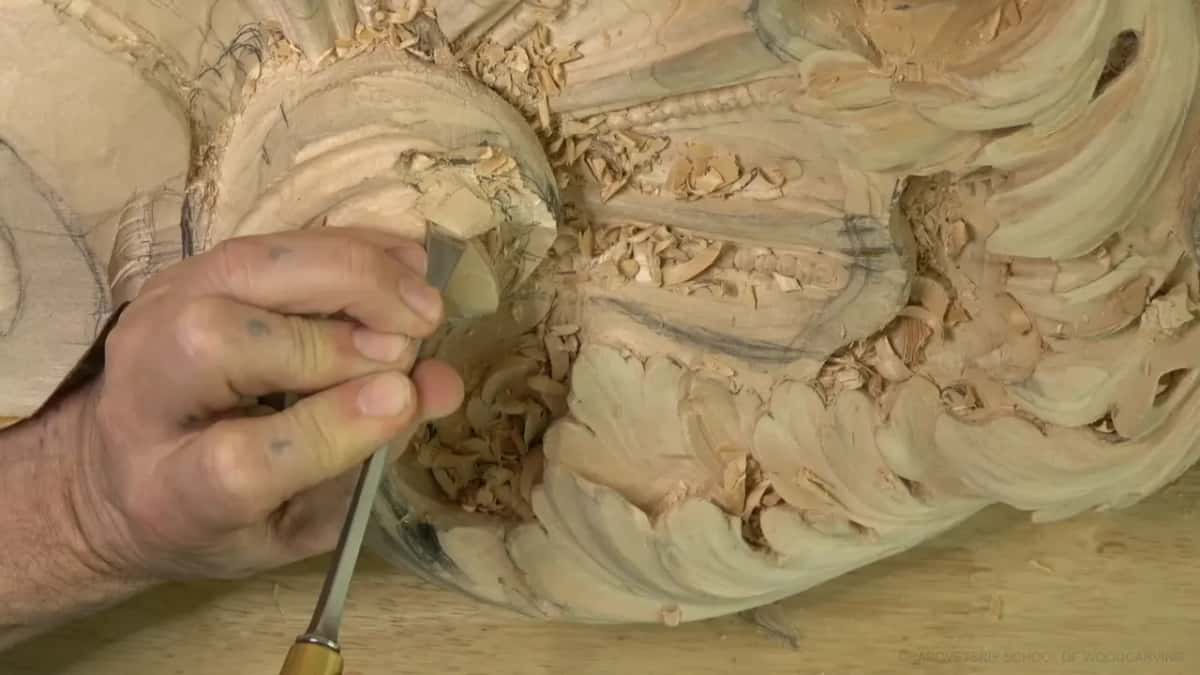
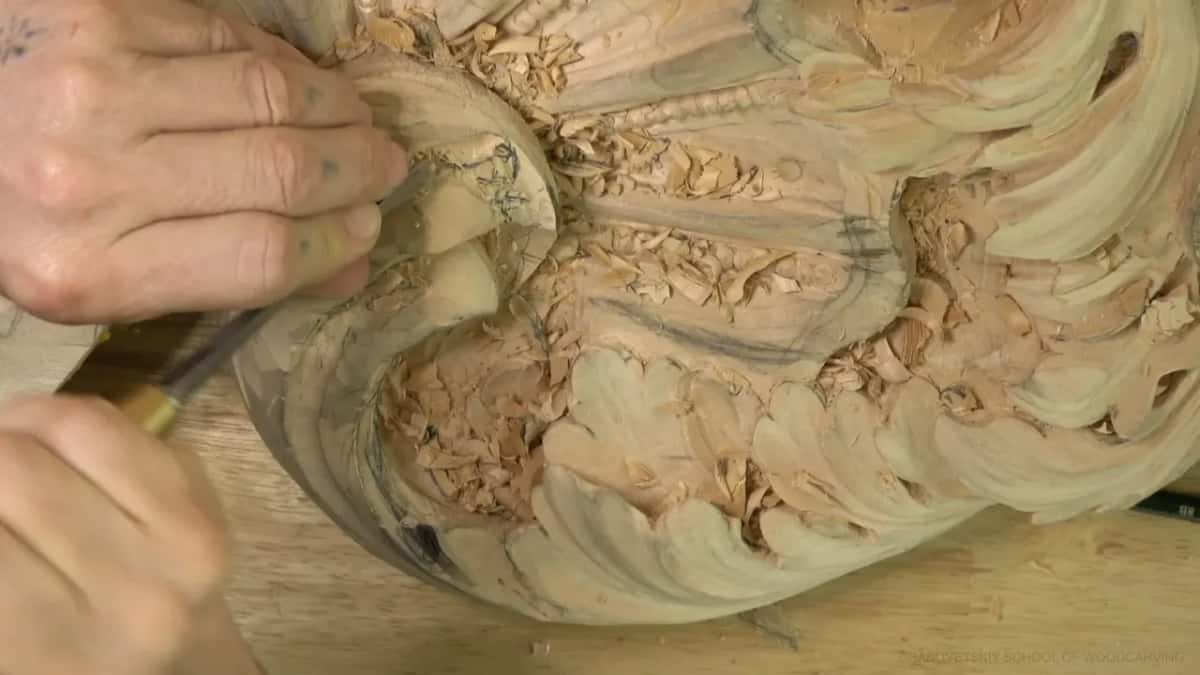
One idea came at 06:21: a little element flipping right on top. "Create this one longer on the side" (06:36), and at 06:46, "Let me try."
How long can the thinking last before the next pass?
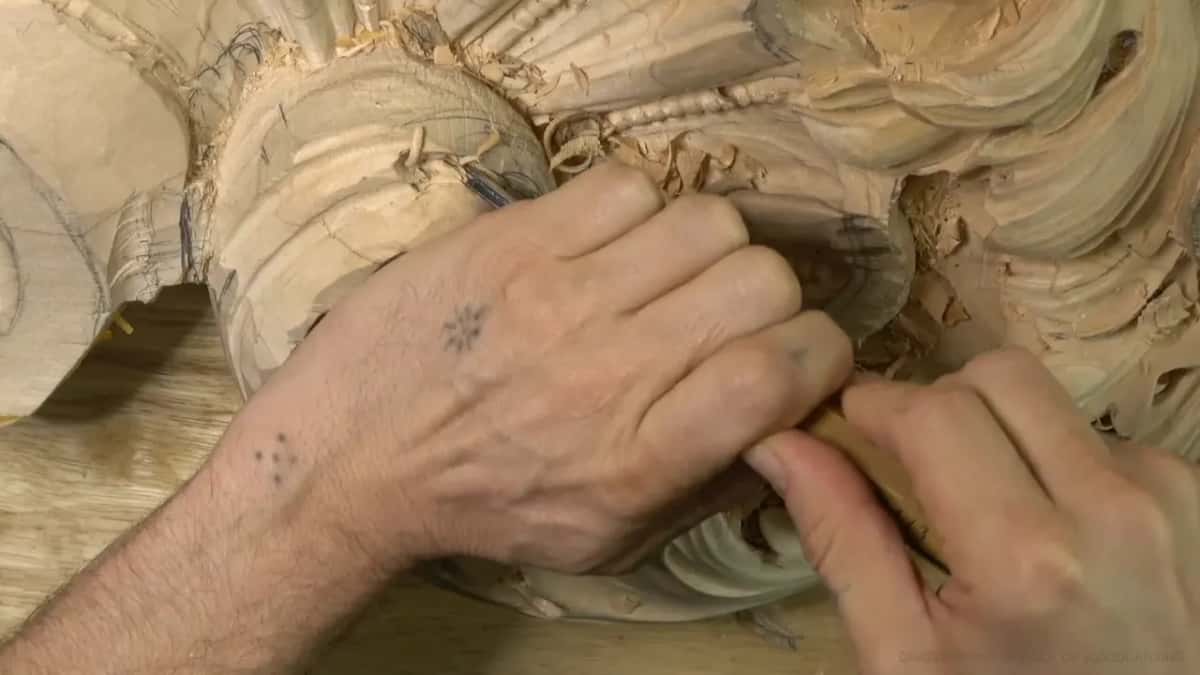
"I know I'm taking my time to think" (06:48), and right after it, "I think it's worth it." Nine seconds on came the line from the top of this page: "It's worth it sometimes to think hard."
Chopping a little at the side was needed for that idea (07:01). Losing the overall movement was not going to happen. "Don't panic" went out loud at 07:13, with the words that I would still have that overall movement.
From the eye I wanted some kind of flip on top (07:19). Not too appealing yet, was how it looked at 07:35, and maybe a little more chopping was due on that piece.
A kind of interesting look stayed on it at 08:06, which meant a piece needed chopping down. The quarter inch would go to work again (08:23).
From the first complaint at 03:44 to the line at 08:52, the video runs five minutes and eight seconds. Two tools get named in that stretch, the number 7 at 04:43 and the quarter inch at 08:23.
My words about working this way in my shop
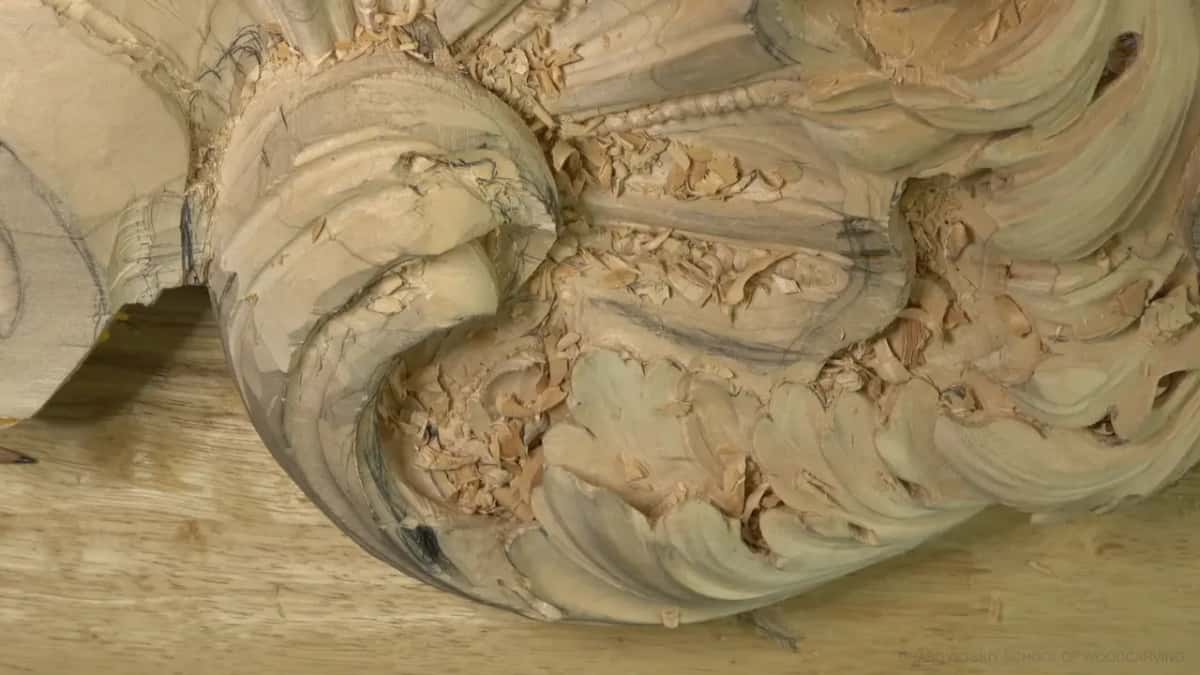
"My apology that I'm taking my time, but that's the way I develop the idea," I said at 08:30. And then: "So you're actually watching me real work."
Plainly, at 08:44: "When I'm in my shop, that's without even the cameras. That's exactly the way I work."
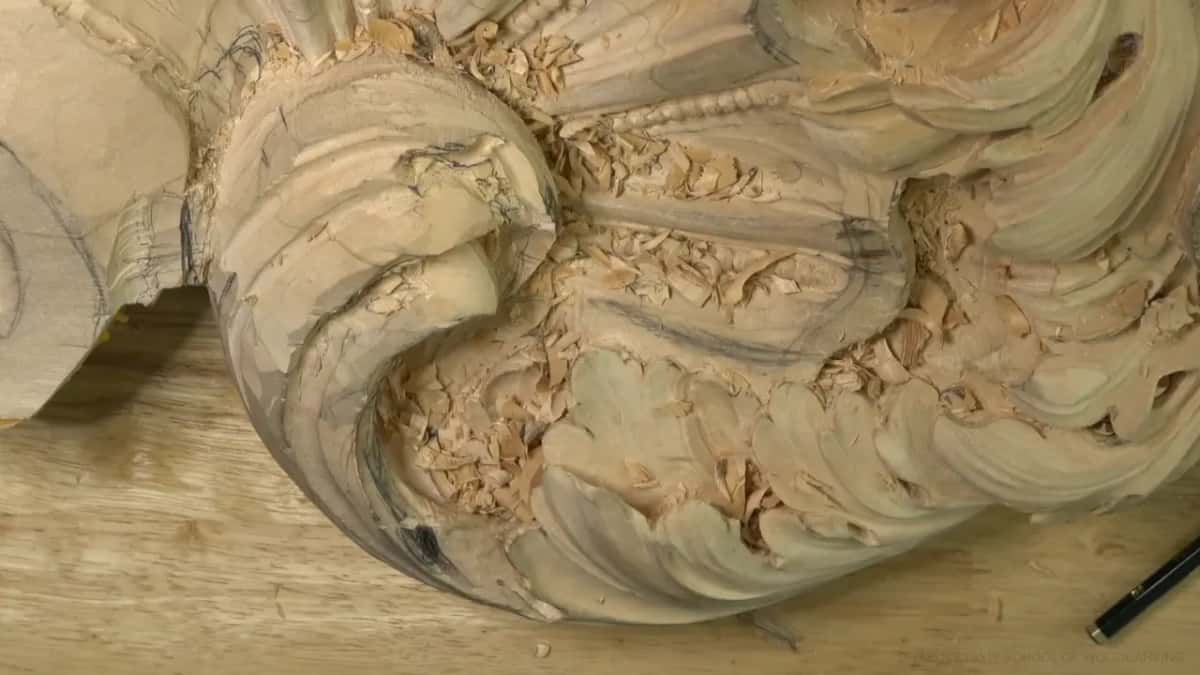
I would just go around like that (08:55), and I made this a little lower (09:01). Chopping too much was not needed, I said, since I still wanted to think how I wanted to see it. A bigger separation might be right (09:12).
Where the parts next door say the same
Part 7 of the same workshop holds a short version of this. I would probably exaggerate that pipe even more and get a little bit in (01:22), to create some shadow if the light at night comes from the ceiling. Going deeper still was a question I left open (01:50).
Part 10 brings the thought back. "For some reason, I still don't like what I see," I said at 04:16. A smaller concave was my plan, and if something did not please me I would just chop it out. By 05:21 the piece was much better, but I was not there yet.
Does a bug need a fix?
Over in workshop 79, part 10, it shows up at 01:54: something did not make sense. "Something just bugs me," I said at 01:57. It felt like some kind of mistake, and I felt it inside, but I did not know yet what I was feeling. That is why I was not going all the way to the edge. Deep in one place, not too deep in another. One more side needed deepening too.
Measuring came next, since I wanted to get as deep as another spot that went in. Drilling was one way, though I was not sure of the angle. The other was to start digging in, one step at a time, and the closer I got to that point, the tinier the tools had to be. At 04:12 I named a pointing machine as one of the tools I really, really like.
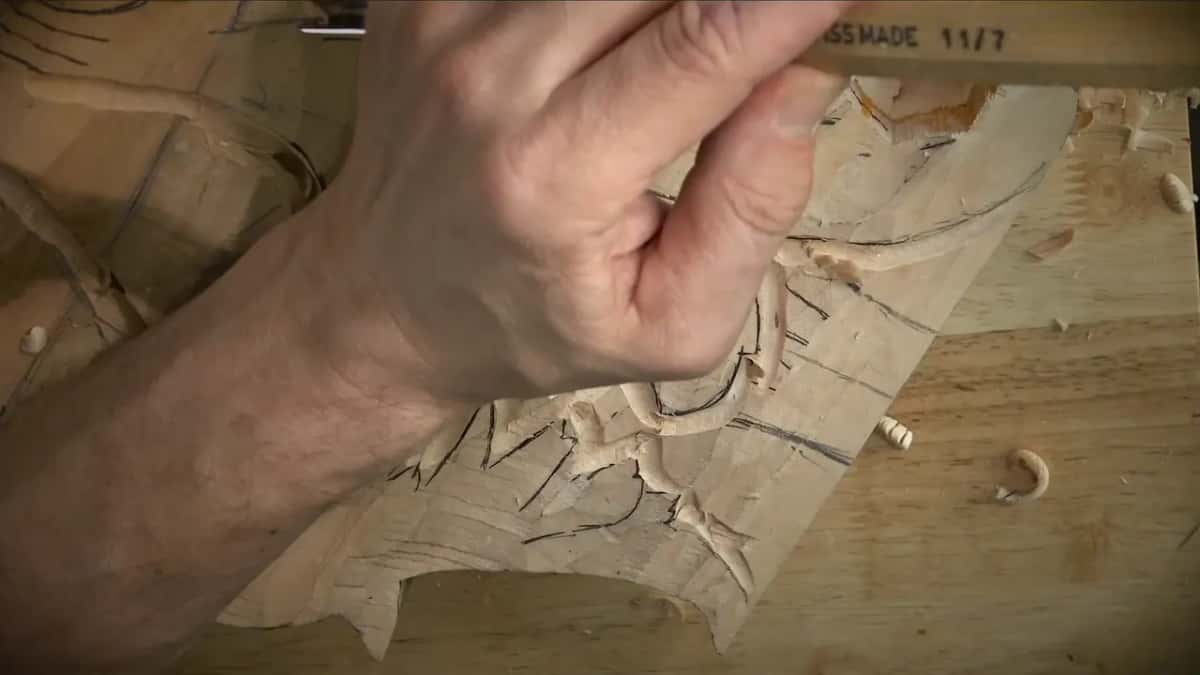
Workshop 63, part 12, has it at 02:26. Not fully happy about a finish, I said, and for some reason I really wanted to fix it with just the gouge. "Something really bugs me," went the line at 02:32. Maybe a number six would work a little better (02:51). Number six came out, and then I wondered if that was too much. By 03:13 the piece was left alone.
One line from that video I want you to hear: "I could spend all day long in one area, but do I want to?" My answer, at 03:21, was "No, I don't." Later, around 03:56, I saw that I could develop extra beautiful movement, which could be just a convex movement.
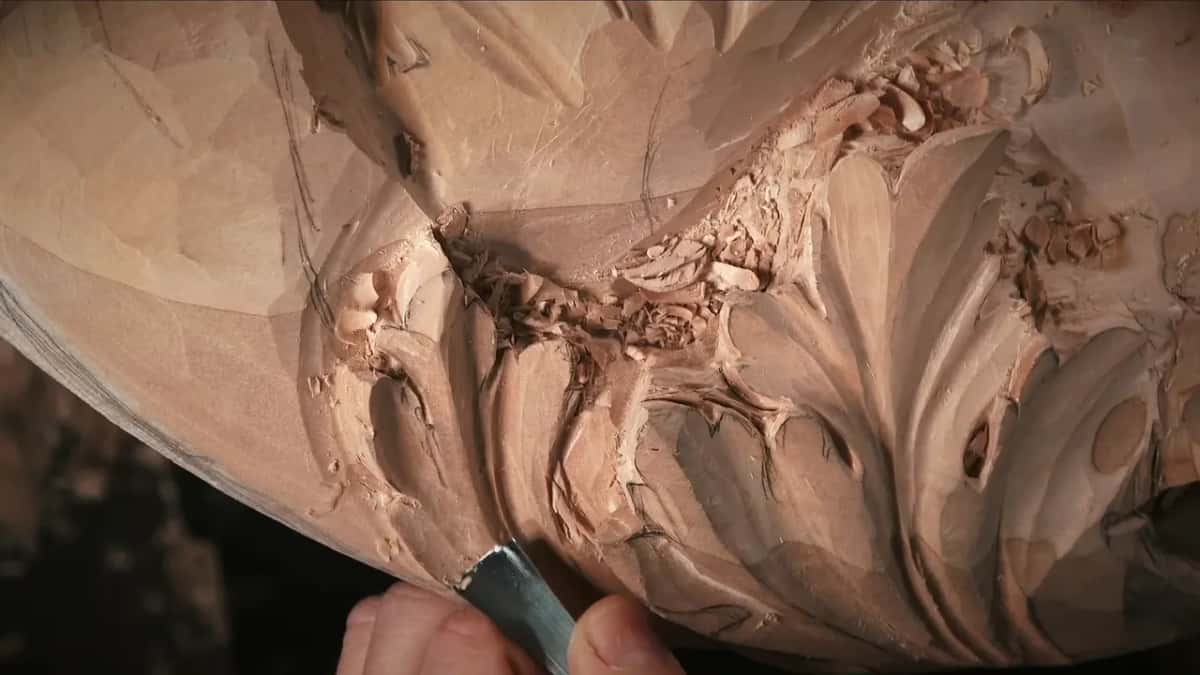
In workshop 62, part 2, at 07:17, I excavated a little deeper but not too deep, because maybe something else was going to develop right there. That area bugged me still, and it did not look too good (07:24). Maybe that part had to go uphill, with the eye much smaller.
Next, in workshop 78, part 2, at 03:40, the words were: "this one, it just bugs me." Gluing was one thought, and getting rid of that part to use just the small part was another. Cleaning it up and a more dramatic curl were the plan. Extreme curl was my word at 05:07, and I thought it was going to look really good.
Can the thing that bugs me wait?
Take workshop 68, part 12. A ridge left me not too happy yet at 03:03, and it still kind of bothered me a little. Then again, I had not developed that side yet, so I should not be bugged yet. "Maybe it's a little too early to be bugged," I said at 03:18. A back bent was probably the most logical tool for the next pass. My point was a concave, a convex and another concave, so it would catch the light.
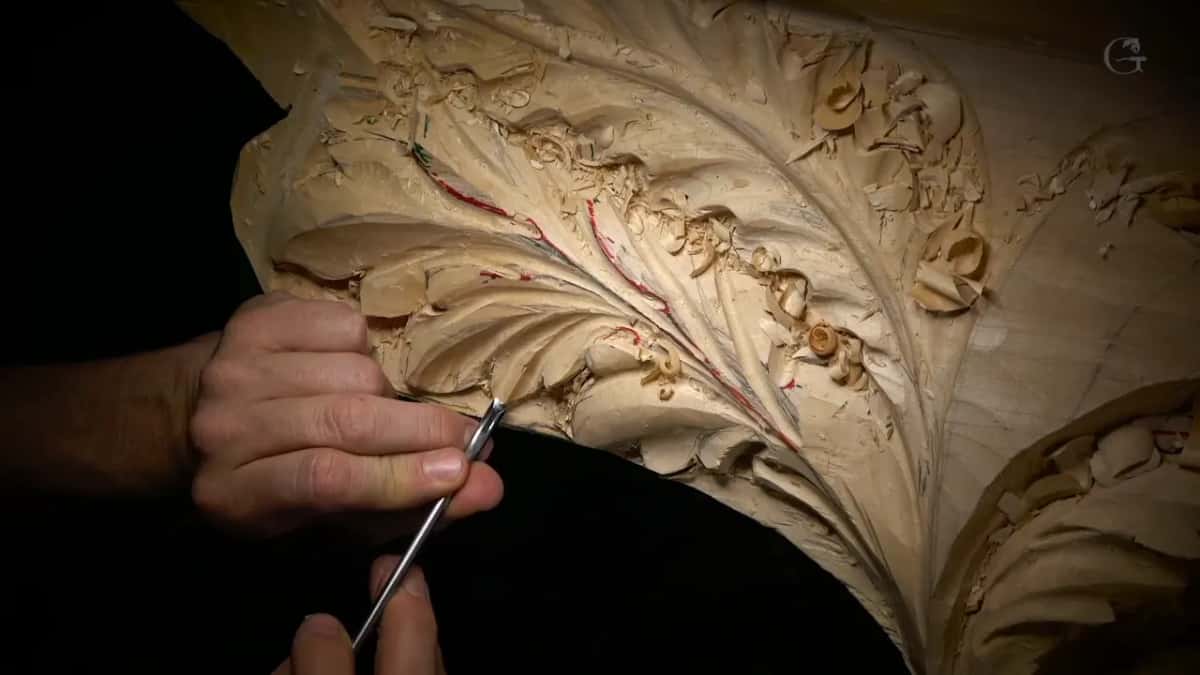
Workshop 64, part 12, has a happier moment. "Now I'm super happy, actually," I said at 02:27. It was exactly what I was trying to achieve, apart from one spot that still bugged me a little. Maybe I should use another tool there to bring in the shadow, I said, though there would not be too much shadow. It was already much better. After that I jumped to the other end to excavate, because I wanted a deeper shadow there. One pass would not do it, I said, and I needed a plug cut again, with a number nine, 6 millimeters, a quarter inch.
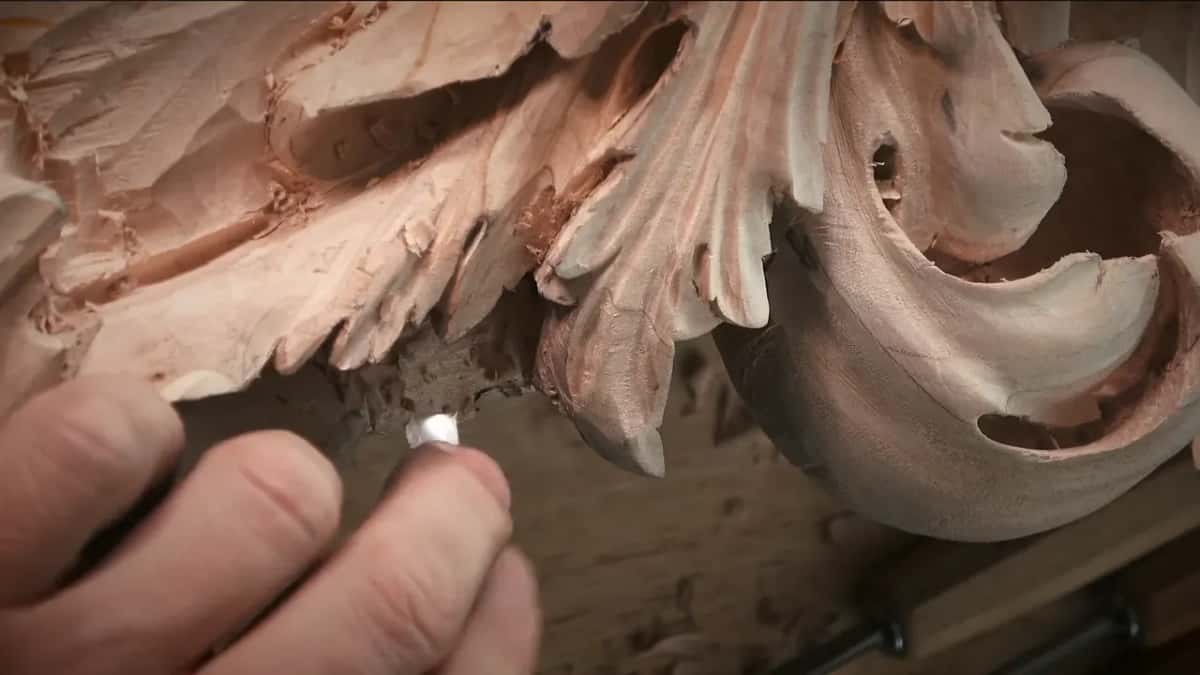
"This bugs me, that is wiggling too much," I said at 05:26 in workshop 81, part 9. A few seconds later I said it did not bug me, but it bugged me that you could see it wiggling, and please forgive me, it is just the way it is. The same wiggling shows on the lines, I said, if you watch how I carved the line heads. A number 11 spoon came next, maybe 7 millimeters (about 9/32 in), and that was enough for now. Later I would get in and clean it a little better.
Small tool again, in workshop 71, part 6, at 06:28, to clean a little bit inside, where you do not see it. It bugged me, I said, because it did not look so clean. Some of that cleaning, I said at 06:44, I can do off camera, and you do not have to watch it.
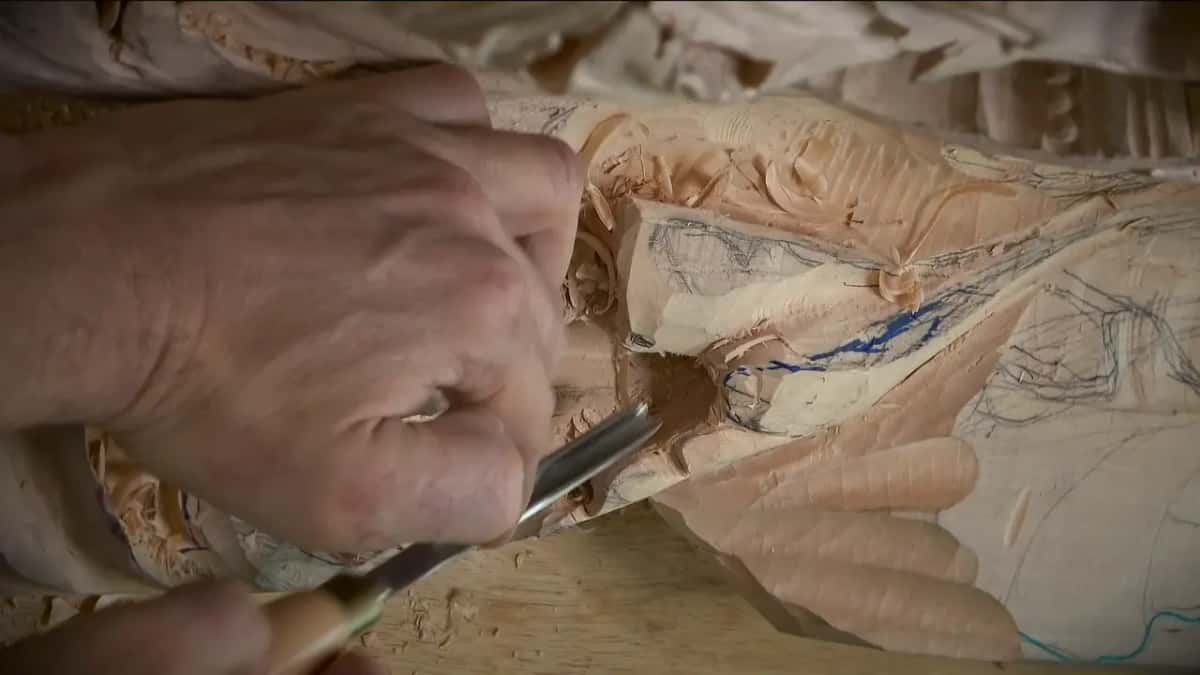
Hashemi Flowers, workshop 14, part 4, goes like this at 06:08: I just did not quite like something, so I would leave it for now. A piece would come off, the pipe would go in, and a nicer movement would come into that area. Something about it bugged me, and I said so at 06:27.
What do I do with a small bug?
Inside workshop 10 of Venice Room Part 1, part 7, the trouble came back at 01:39, and by 01:46 it was better now. One spot somewhere was the idea, an extra cut with 1 millimeter (about 0.04 in), but first I had to decide where. "It's just 1 millimeter cut," I said at 02:45, "but it makes a big difference."
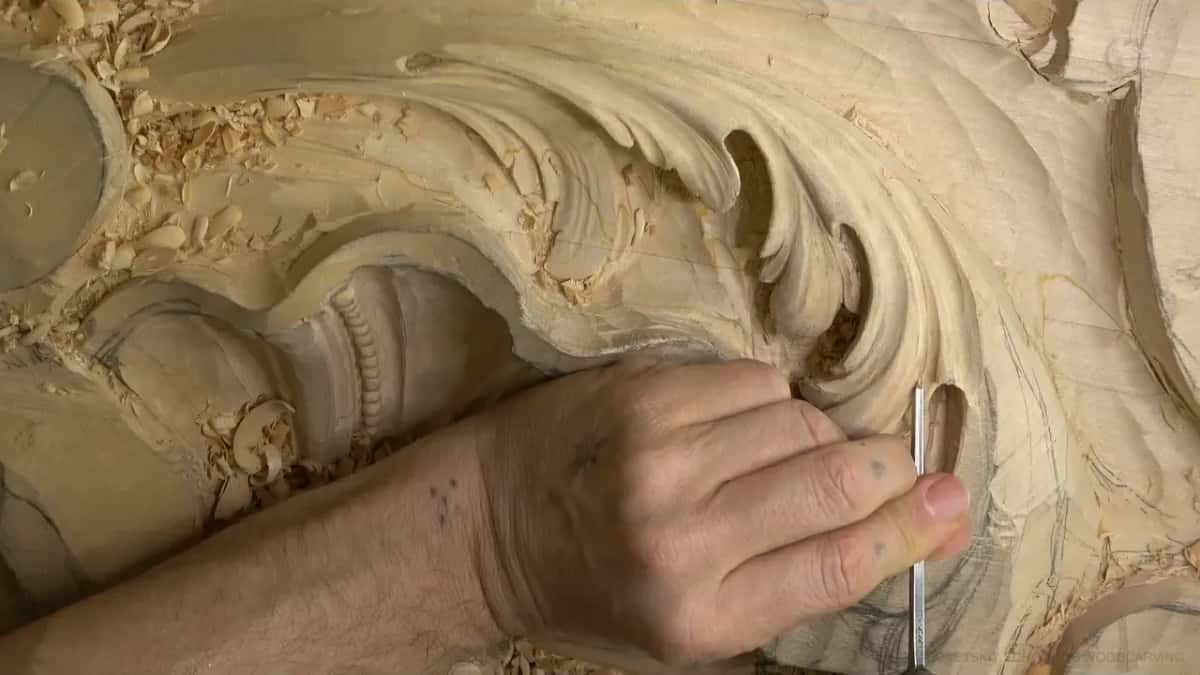
Carving Roman Acanthus, workshop 16, part 3, has a gentler version at 16:49. I can always attack on the inside, I said, when a spot bugs me, and in that case it was just some rougher areas. A moment later I told you not to overdo it, because you can always overdo.
Furniture Panel workshop 9, part 3, at 02:10: "Still this kind of bugs me. Those micro pipes." Then, "Let me just make some shadows." At 02:30, "Now it's good."
Near the end of a live question and answer in April 2020, at 53:28, I said I just can't stop when something bugs me. I can't stop.
What I would try on your bench
Is there a spot on your carving that bugs you? Could you say what you do not like about the look of it, the way I did in part 8? Try one small idea on top of it, as I did. Give it the time it takes. If it still bugs you, leave it for now, as I did on the Hashemi flower.
The craft behind all of this is wood carving, a branch of woodworking. A gouge belongs to the chisel family, and a mallet can drive it. Relief work rises from a flat background. The acanthus leaf is a very old ornament, and a deep hollow gives shadow. The Italian art word for light against dark is chiaroscuro. This panel is sculpture for a room in the style of the Republic of Venice and the Renaissance, and the view from below is a matter of perspective.
The rest of this workshop sits in workshop 16, and the course page is Advanced Carving: Venice Room, Part 2. The course picks up from workshop 15 and carries on into workshop 17.
Which spot on your piece bugs you most?
How it's done
- Start the excavation small. I began with a 3 millimeter (about 1/8 in) number 11 and started to excavate.
- Consider a bigger one. I considered a bigger excavation, maybe 6 millimeters wide, and said I was ready to shorten a side for a better shadow.
- Shave the high spots. Number 7, the big one, took off the high spots. A semi-clean surface was all I needed.
- Make something interesting. Make something interesting, I said, because of how it looked to me right then.
- Try one idea on top. A small element to flip on the piece was what I went looking for, and I wanted one of the pieces longer on the side.
- Chop it down and look again. That piece needed to be chopped down, and I kept thinking how I wanted to see it.
Frequently asked questions
Can you slow down and think in the middle of a carving?
On camera I said so. I talked about thinking hard (06:57), and at 08:35 I called it the way I develop the idea. Between those two lines I named the quarter inch again (08:23). Seven seconds after that tool came an apology for going slow (08:30).
What did you say when a leaf looked wrong?
The leaf already looked like it was flipping, but it bugged me. At 06:14 I said let me think. At 06:16 I said right now I just don't like how it looks, and by 06:21 a flip on top of that piece was on my mind.
How clean should a carved surface be before you start on the concaves and convexes?
Only semi-clean, I said in part 8, just overall movement. The number 7 at 8 mm (about 5/16 in) shaved the high spots, and I did not have to worry how clean or nice in shape it was yet. The hollows and the humps came after that.
What to carve next