
Alexander Grabovetskiy, woodcarver, School of Woodcarving · Published 2020
How can a shallow concave leave a ridge the eye follows without losing the overall shape?
Quick answer: A shallow concave is a gentle hollow that leaves a small ridge beside it and keeps the shape of the leaf. Part 2 of workshop 21 has me picking a number five. The eye follows the ridge, I said. My other lessons say the same.
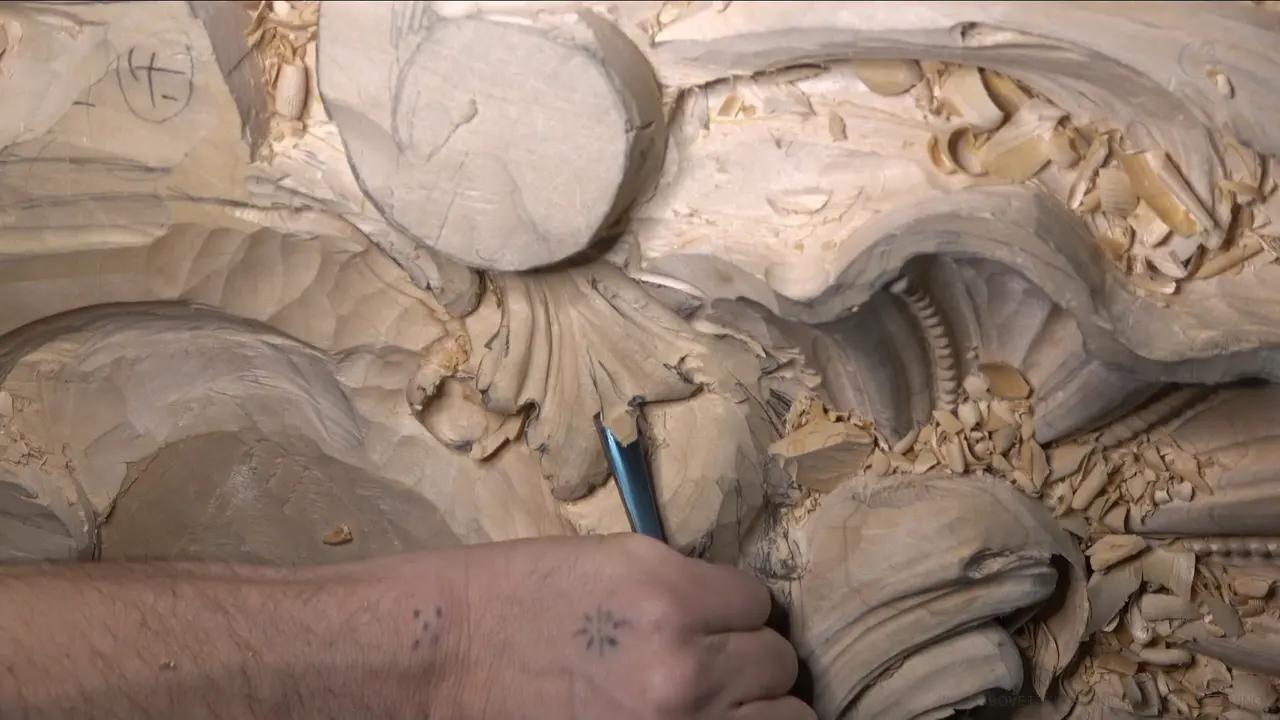
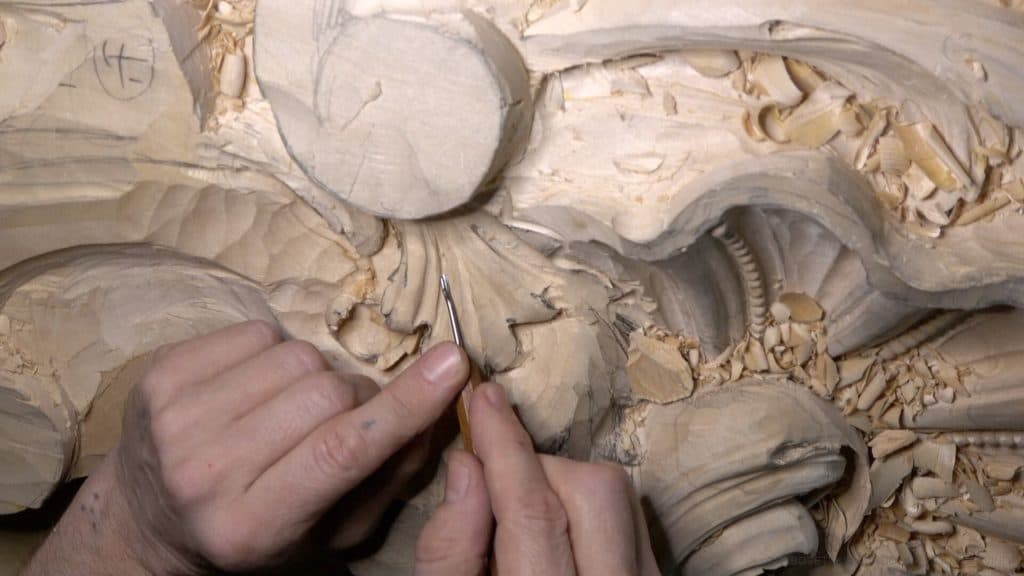
A hollow so gentle that the leaf keeps its shape, and still leaves a ridge beside it, is what I call a shallow concave. Part 2 of Venice Room workshop 21 has me picking a number five to start one, and I said: "with those shallow concaves, I'm not losing overall shape" (05:53 to 06:06). The next line is the one this page grows from. Still, I was creating a beautiful ridge, and your eye follows that ridge (06:06 to 06:14).
Ever dug a hollow into a leaf and watched the whole form sink with it? Ever wanted a line the eye can follow? Watch the minute and a half from 04:40 to 06:14 of this part. I stop and think first. A gouge comes next, and after it I tell you plainly what I want to see in the wood.
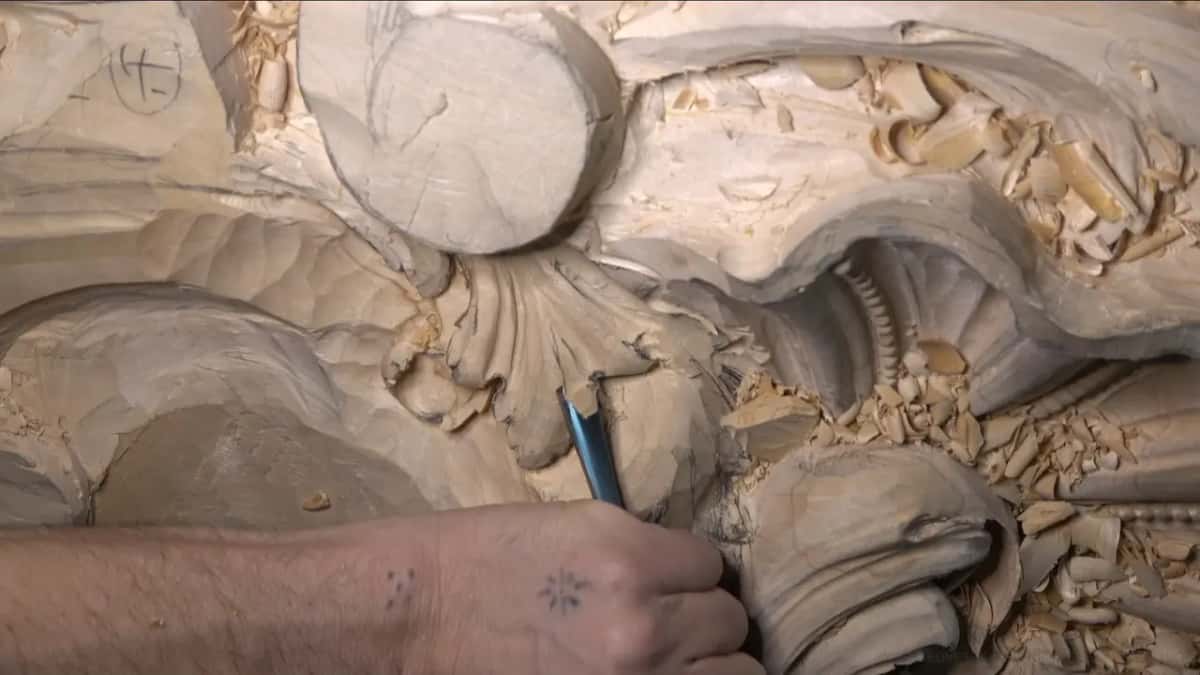
What does this part of workshop 21 show?
- A rough area inside the carving, cleaned with a bigger number 11 after a smaller one.
- A pause out loud before the choice.
- Five named for the job, with three as the maybe, and a small ridge as the goal.
- A second look at the movement, followed by a change and a last clean of the concave.
How did I clear the mess before the concave?
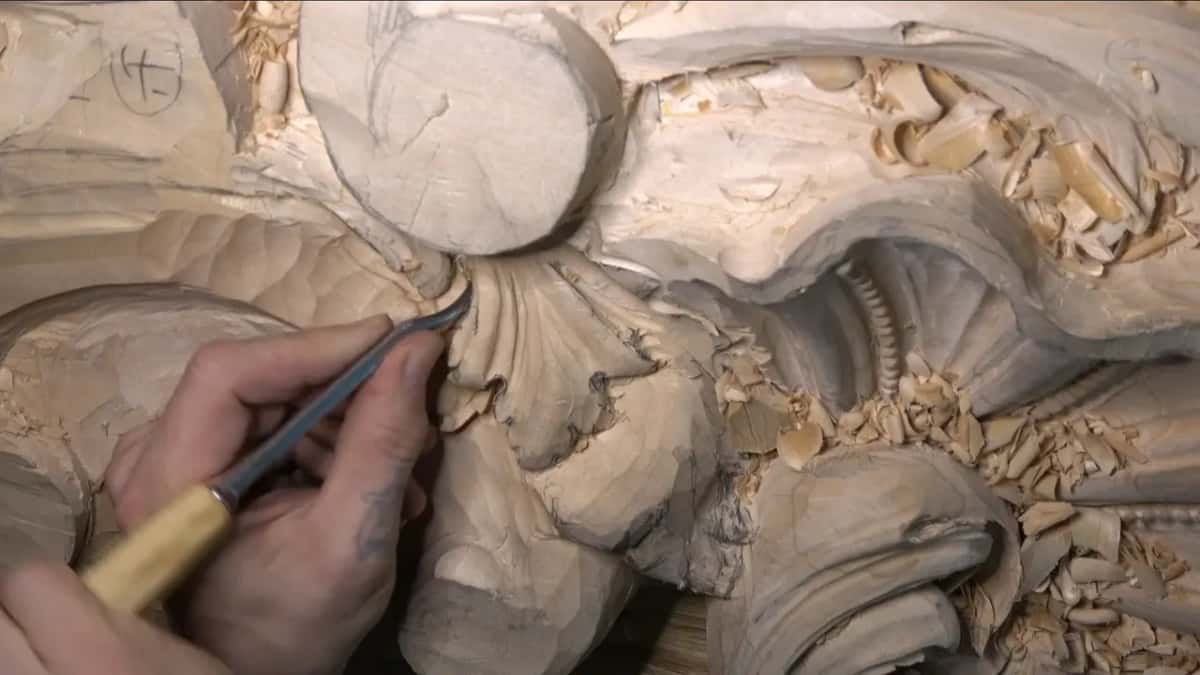
Too much mess sat inside the area, and I said that was absolutely okay (00:17 to 00:27). The number 11 could always clean it, I said, and the one I held was two millimeters (0.08 in) (00:27 to 00:35). Then I changed my mind. "I could use actually bigger," I said, and "it's going to be quicker" (00:35 to 00:41).
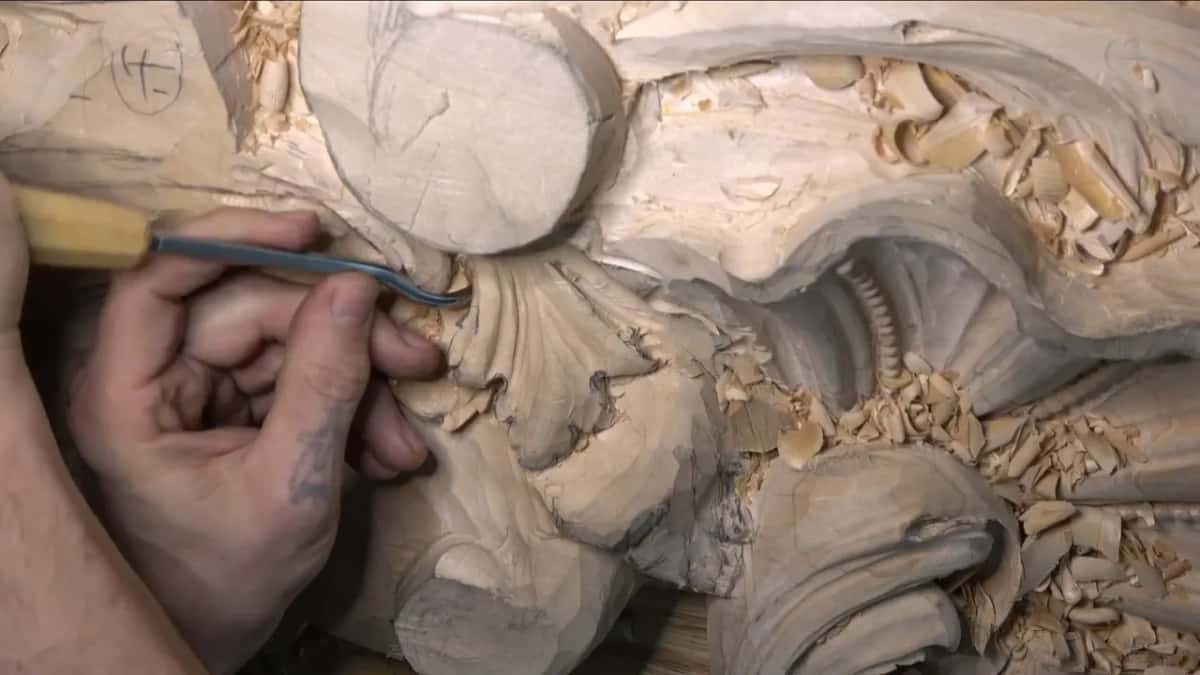
The bigger one was four millimeters (0.16 inch), and I liked it at once: "With the four-millimeter I can swoop a lot more right away" (00:57 to 01:01). I joked about the word, saying "or scoop" and then "whatever," and I called it "scoop, swoop" (01:10 to 01:16). The job, in my words, was to get rid of what I don't need (01:16 to 01:39). After that I said I had a really nice and deep excavation, and that I was happy (01:39 to 01:51).
What did I fix between the deep hollow and the shallow concave?
A deep hollow was not the end of it. I wanted a more pronounced separation in one area, and a number seven, maybe, could clean a little of that movement (01:51 to 02:19). I only said maybe, so it stays a maybe here. Some ridges I had made still bothered me, and so did one movement, and I said it should be cleaned (02:19 to 02:31).
Under the leaf came a number 11 of two millimeters, "and go in just like that," followed by a rotation downhill (03:08 to 03:40). I wanted to excavate really cleanly (03:40 to 03:53). My next words were "let me use again micro tools and get closer to the eye, and create beautiful shadow" (03:53 to 04:09).
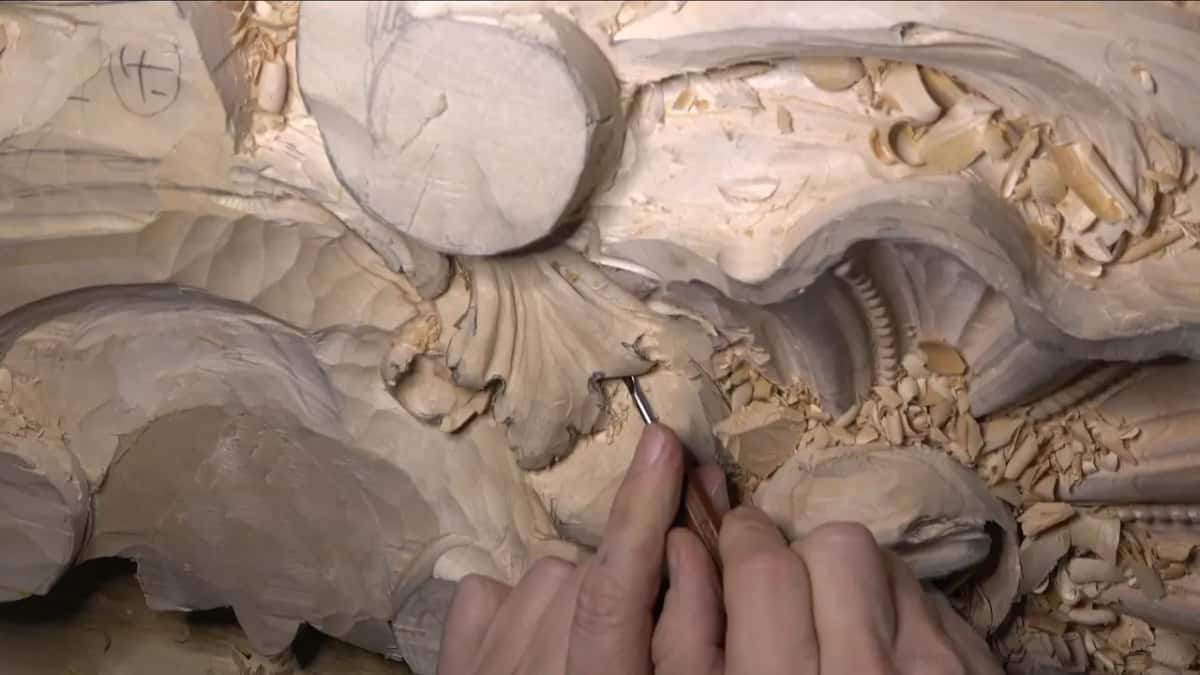
"Okay. It is good." One side still needed a little more, and I wanted to get in from both sides (04:09 to 04:40). That is a big job, but it sits upstream of the quiet one this page is about.
How did I pick a gouge for the shallow concave?
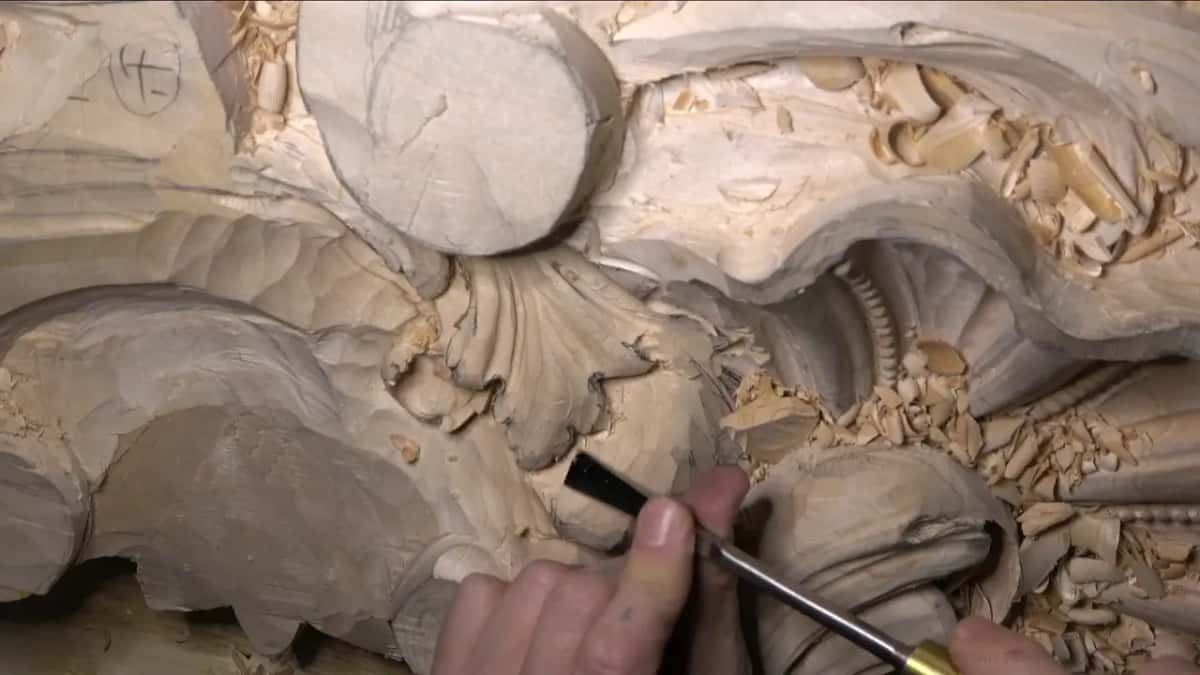
I thought it through out loud and asked whether I should or should not (04:40 to 04:50). Right there, I could probably create a shallow concave, I said (04:50 to 04:59). The gouge came next, and I gave two numbers, "shallow, like maybe a number five or number three even" (04:59 to 05:07). Three stayed a maybe, while "let me use number five" was the pick, and I added that it should be all right (05:07 to 05:12).
A couple of passes would be needed, I said (05:12 to 05:35), and then came "go this direction" (05:35 to 05:40). Those are all the words I spoke about the passes in this part, so I add none.
Why does a shallow concave keep the overall shape?
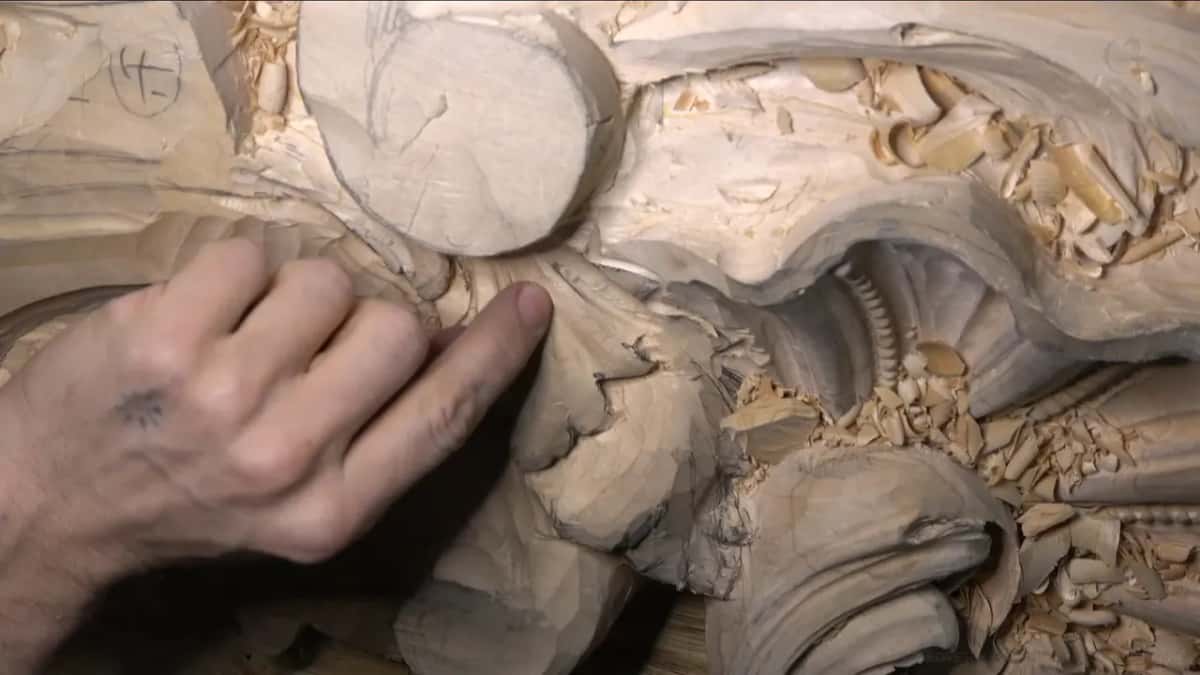
The word shallow is the only reason I gave on camera for keeping the overall shape. "What I'm after is just this little ridge" (05:40 to 05:48). Another small concave was next, I said (05:48 to 05:53). Shallow ones, I said, still create a beautiful ridge without taking the form, and the eye follows it (05:53 to 06:14).
A live stream clip at the end of Venice Room workshop 49 says nearly the same. The tool there, I said, was a number three, and my words were: "I'm still not losing overall shape, the roundness, because almost no concave, but it's still concave" (01:35 to 01:55). Two points come out of that. The roundness is what stays. And what you see depends on the light, I said (01:48 to 02:03).
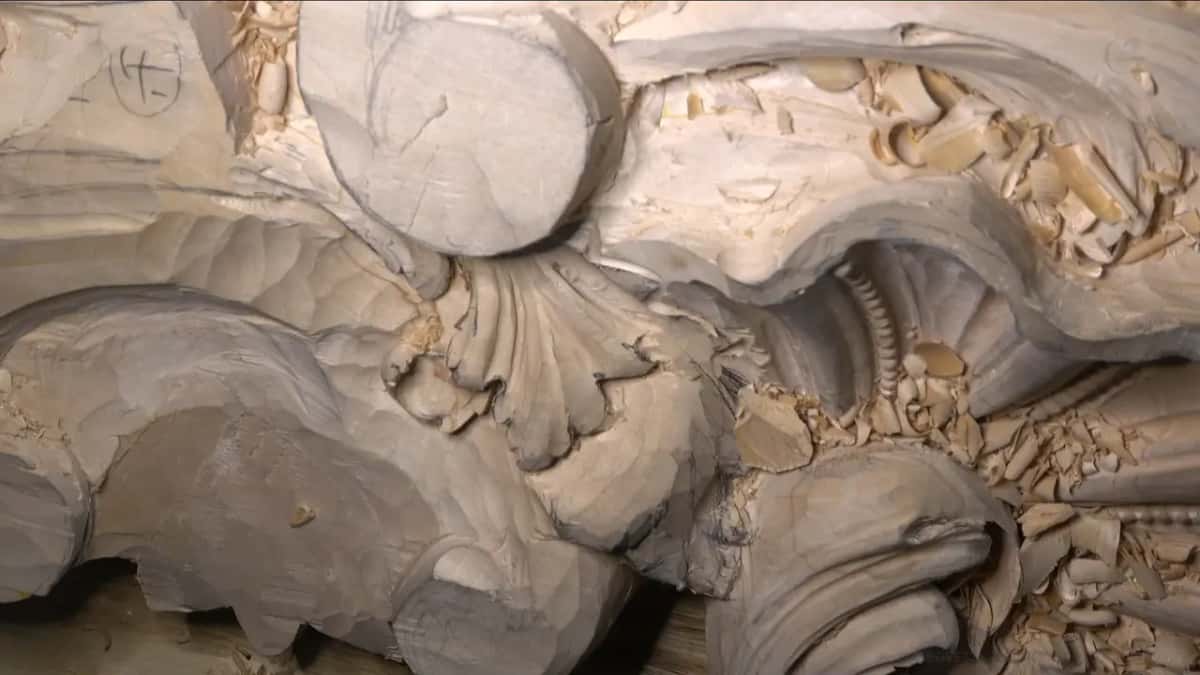
What did I do when I did not like what I saw?
"Kind of don't like what I'm seeing right here" (06:16 to 06:28), I said, and then "a little too much movement on this side" (06:28 to 06:32). I softened it with "maybe it's not too much, but for my taste" (06:48 to 07:07). My verdict was short and came right after: I think it's better (07:07 to 07:10). The part does not say which pass changed it.
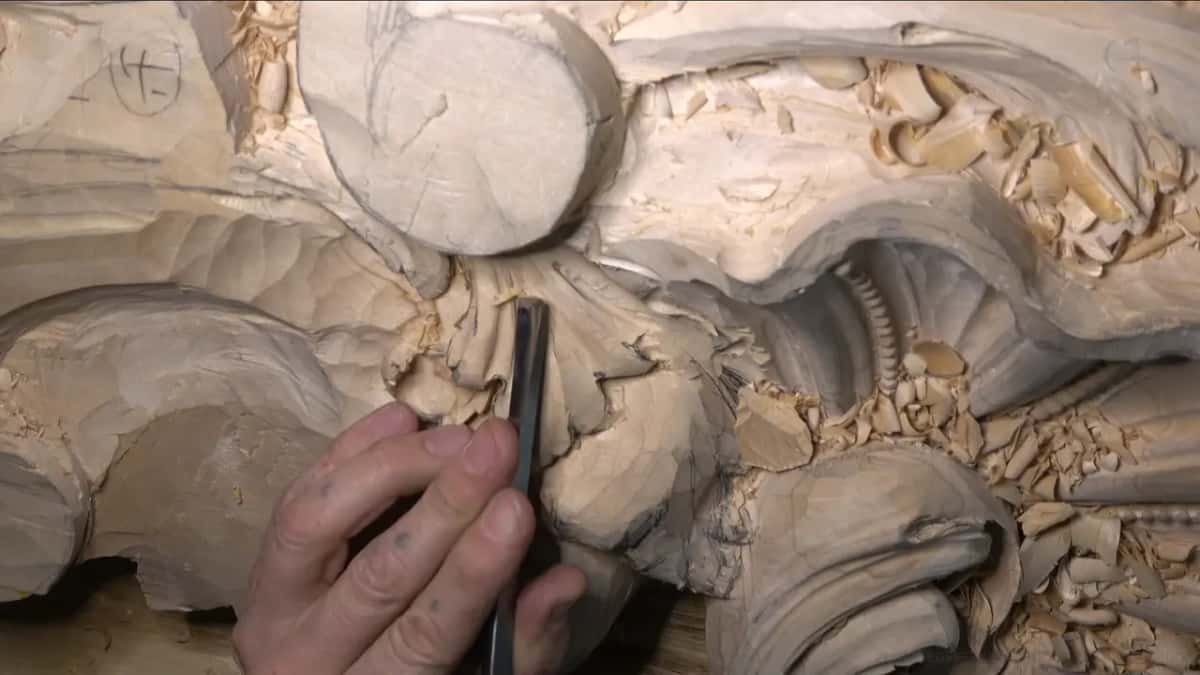
One job was left, and I named it: go back and clean my concave again (07:10 to 07:27). I gave the size twice, "sixteenth of an inch, one millimeter and a half" (07:27 to 07:33), and then "that's what I'm doing." A sixteenth of an inch is 1.6 mm, so my two figures sit within rounding of each other. I did not say if that figure means the tool or the depth, and the tool in this frame is very thin.
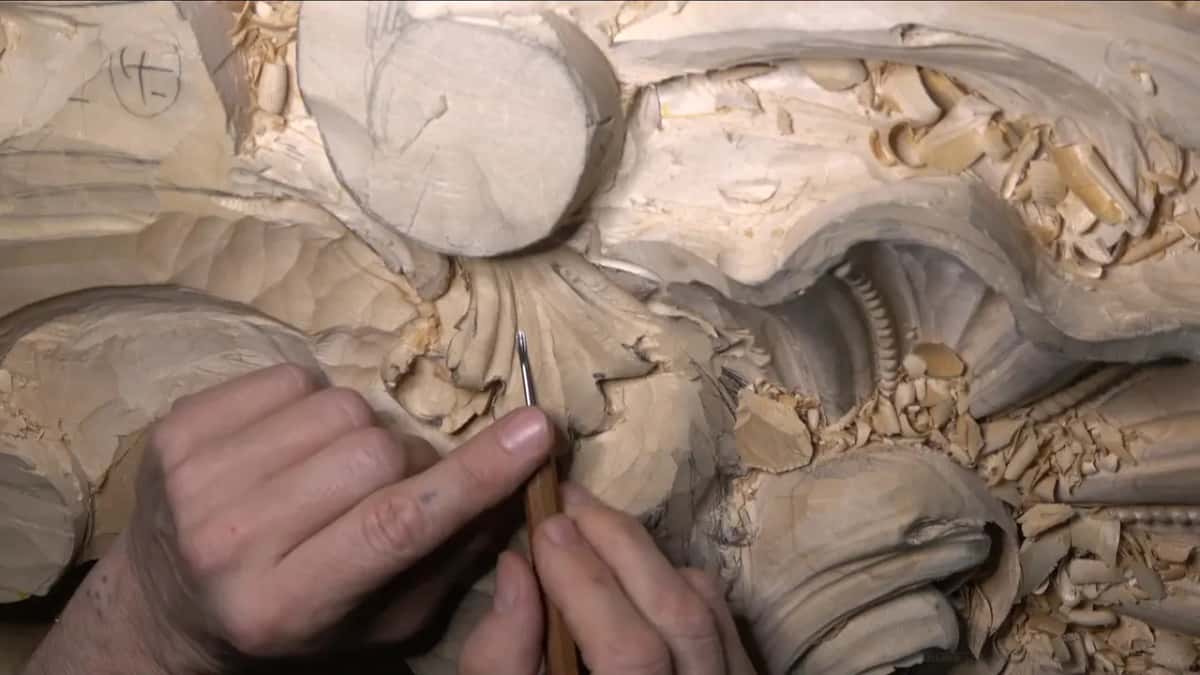
A doubt like this one is in workshop 15, part 5. Afterward I said, "I kind of don't like how it looks right here," and wondered about an extra couple of separations, or bringing that one in (02:37 to 02:50).
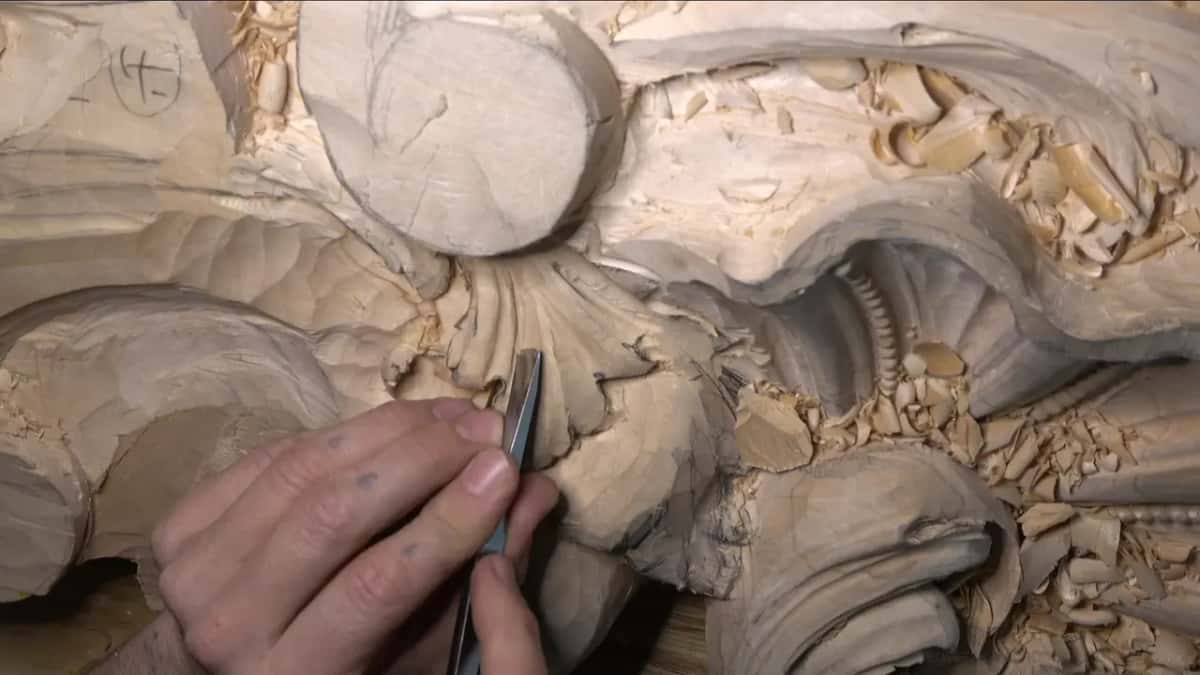
How deep is too deep for a shallow concave?
Workshop 28 says it plainly. Part 7 has a shallow concave beside the center line, "but still concave," plus a number five (02:13 to 02:54). "It would be big mistake for me to go too deep" (02:54 to 03:07). A smaller spoon gouge, a number seven maybe, could follow, I said, and I could use a little deeper where the concave was almost blending and I could not see the movement (03:07 to 03:36).
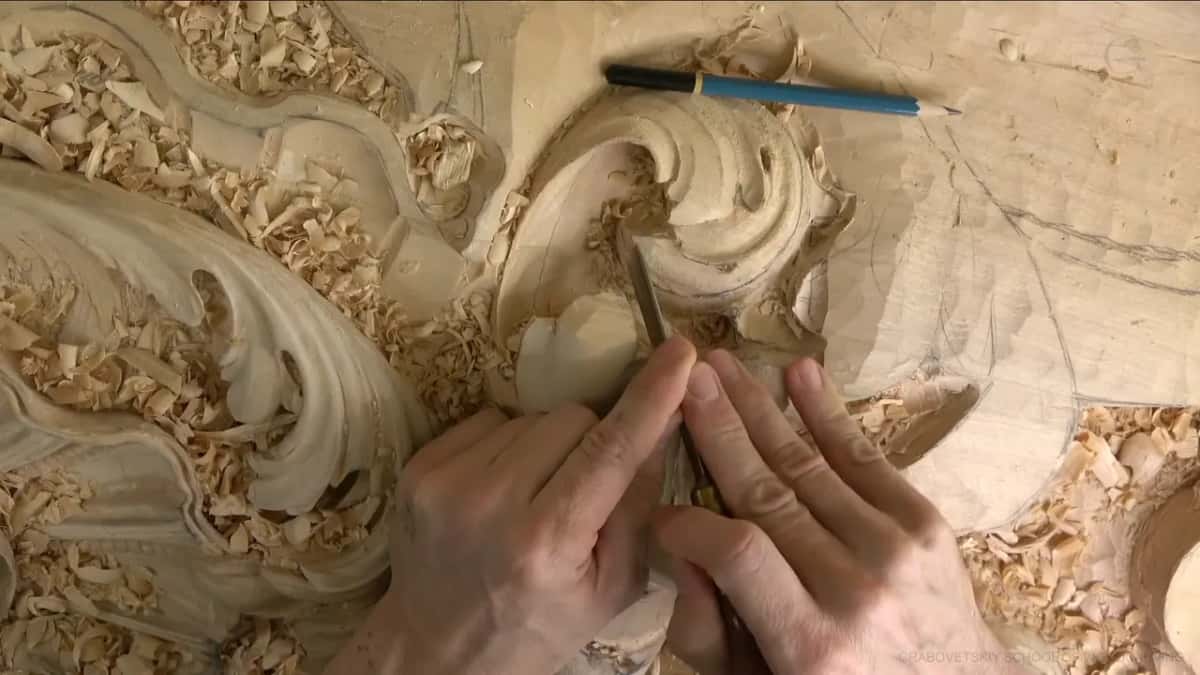
Workshop 26, part 2, is the other side of the coin. "See, I'm doing a shallow concave" came first, and then "I could actually create a deeper concave if I wish" (05:55 to 06:10). A deeper one would look nice too, and it would raise the ridge higher, but then I asked whether I needed to, and said I did not know yet (06:10 to 06:23).
The part before this one gives a limit too. Part 1 of workshop 21 says I wanted to be sure I was not creating too weak details, and "I've done it too many times, overdoing it." Sometimes it's okay, I said, and sometimes it's not, and it all depends on how the piece will be used (02:13 to 02:56). Part 3 repeats that I wanted to avoid a weak spot, but still thought I could get a deeper shadow (02:53 to 03:11).
Will the ridge show in every light?
The ridge shows when the light hits it right, and I said so in workshop 22, part 10. A few small concaves in number seven had already drawn attention to the middle line, and I made one more, really shallow, on its side (04:22 to 04:49). "You're not always able to detect this concave. It depends how the light hits" (04:49 to 05:15). Still, I said, I was able to make an extra ridge (05:15 to 05:29).
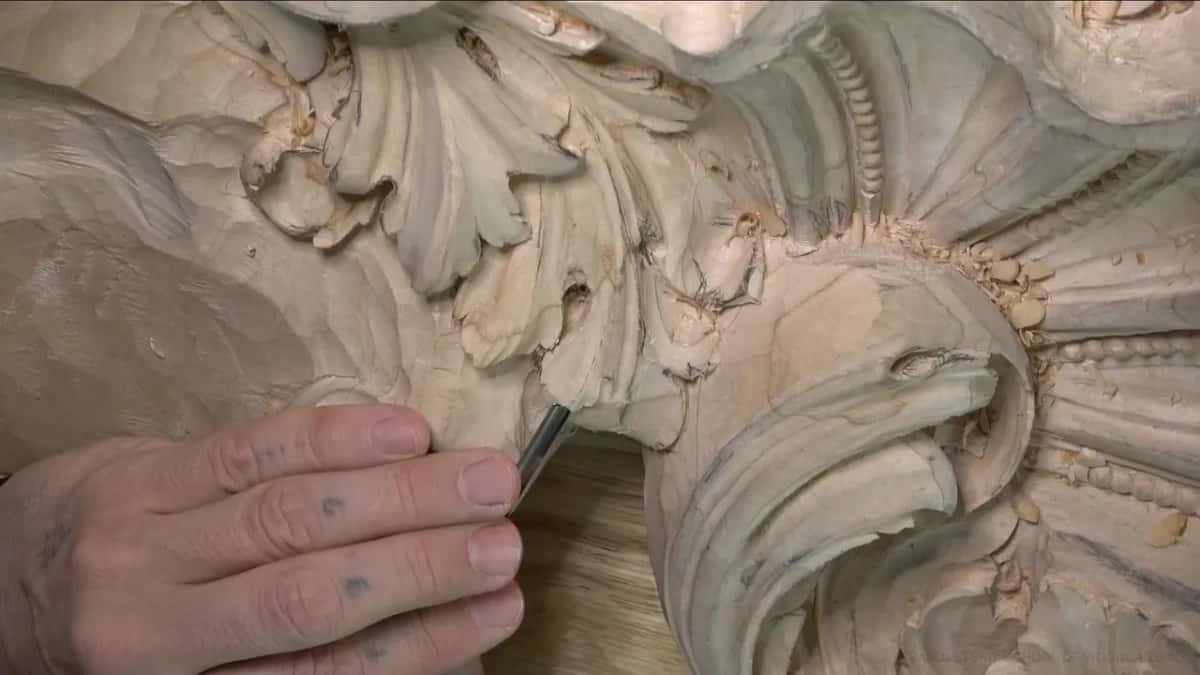
Workshop 72, part 4, gave a second version. I first thought about a slope, and then about a shallow concave. It would not make a really visible pipe, I said, but it would still give a tool mark or a ridge, and the light would show it (04:52 to 05:21). "Just number 3 is what I'm going to do" (05:21 to 05:40).
How do shallow concaves lead the eye?
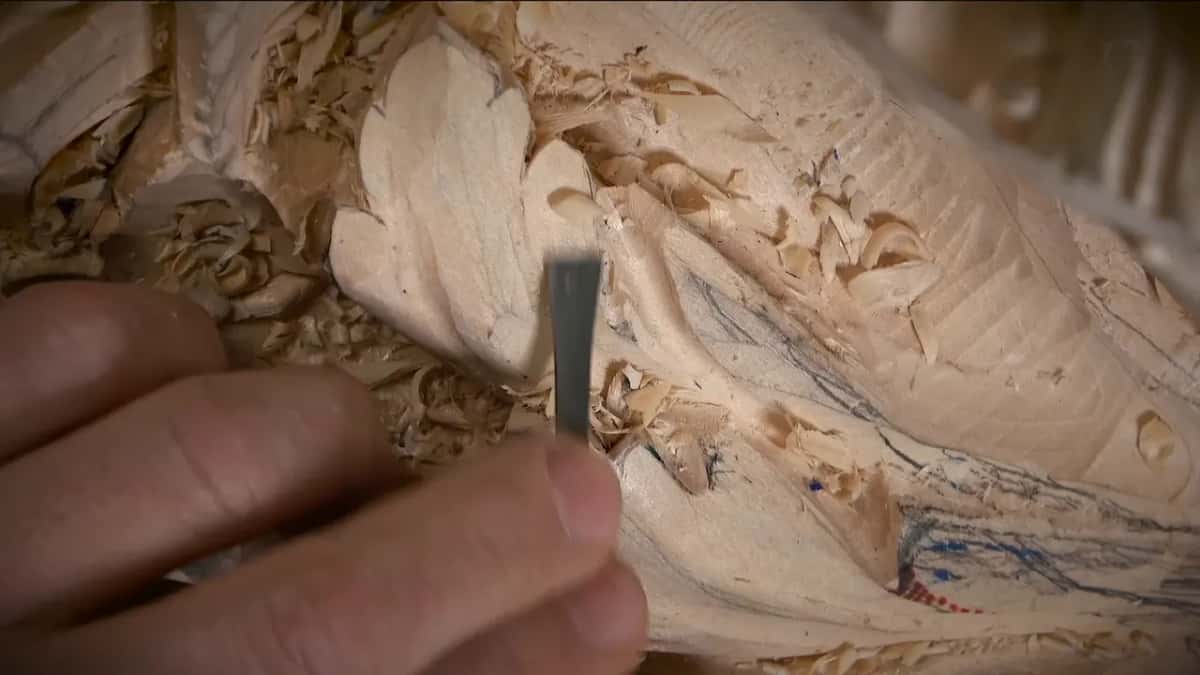
The plainest version is in workshop 23, part 6. "To just give eye direction," I said, all I needed was "concaves, really shallow concaves," and maybe on one side only (04:12 to 04:37). Its tool was a number seven, 4 millimeters (0.16 in). It is not quite 3/16 of an inch (4.8 mm), I said, and a little bigger than 1/8 of an inch (3.2 mm), and I would not go technical on the smaller fractions (04:33 to 05:09).
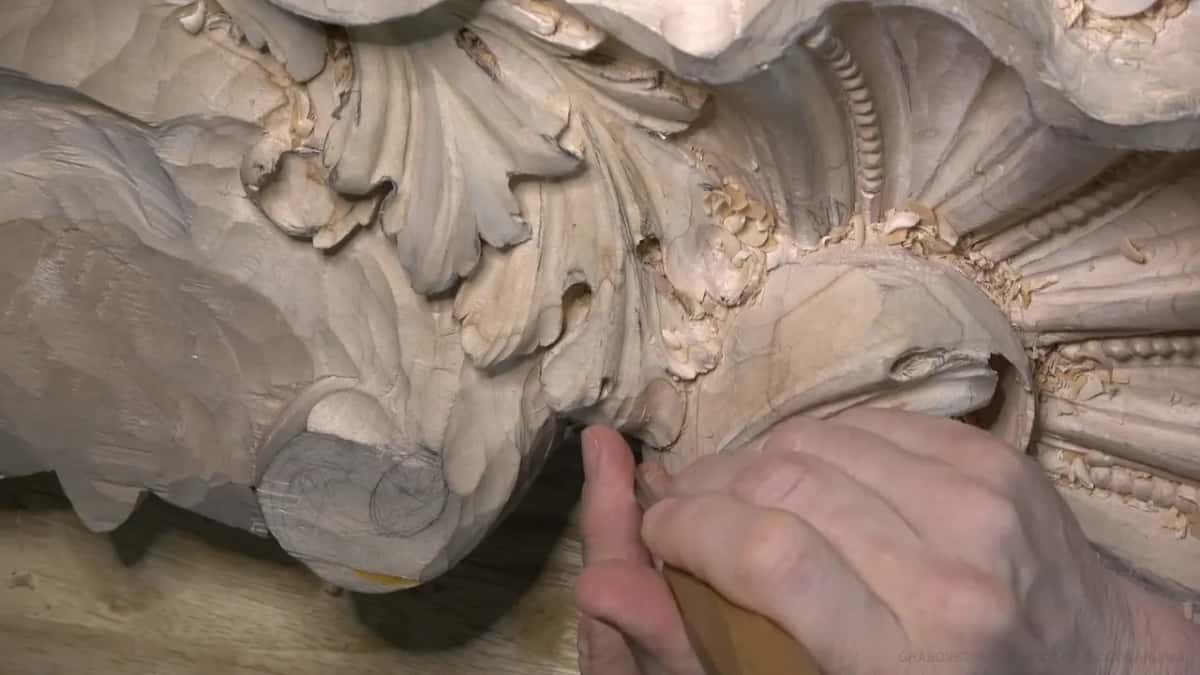
Another one went on the side of the ridge, to give that movement (05:20 to 05:41). I compared it to drawing, "the same idea as people use when they draw with the pencil" (05:41 to 05:54). Place multiple lines, and you draw attention (05:54 to 06:08). Part 4 of that workshop is shorter. I made my middle line and gave it "little small concaves on the side, just for the sake of the human eye," and I said I was not going to go deep (05:20 to 06:03).
Over in workshop 17, part 3, I wanted a concave so the eye could follow that line. I named the tool, a number seven, quarter inch (6.4 mm), and the start, "from almost nothing" (07:44 to 08:34). Workshop 12 has two moments. Part 2 has a long, shallow concave, and I said the right direction would help me and that the concave "is going to die" (06:40 to 07:30). Then I said I might get a little closer to the ridge (07:30 to 07:45). Part 8 has "not really deep," and I said it was meant for the eye to draw attention, and "that's it" (05:28 to 05:40).
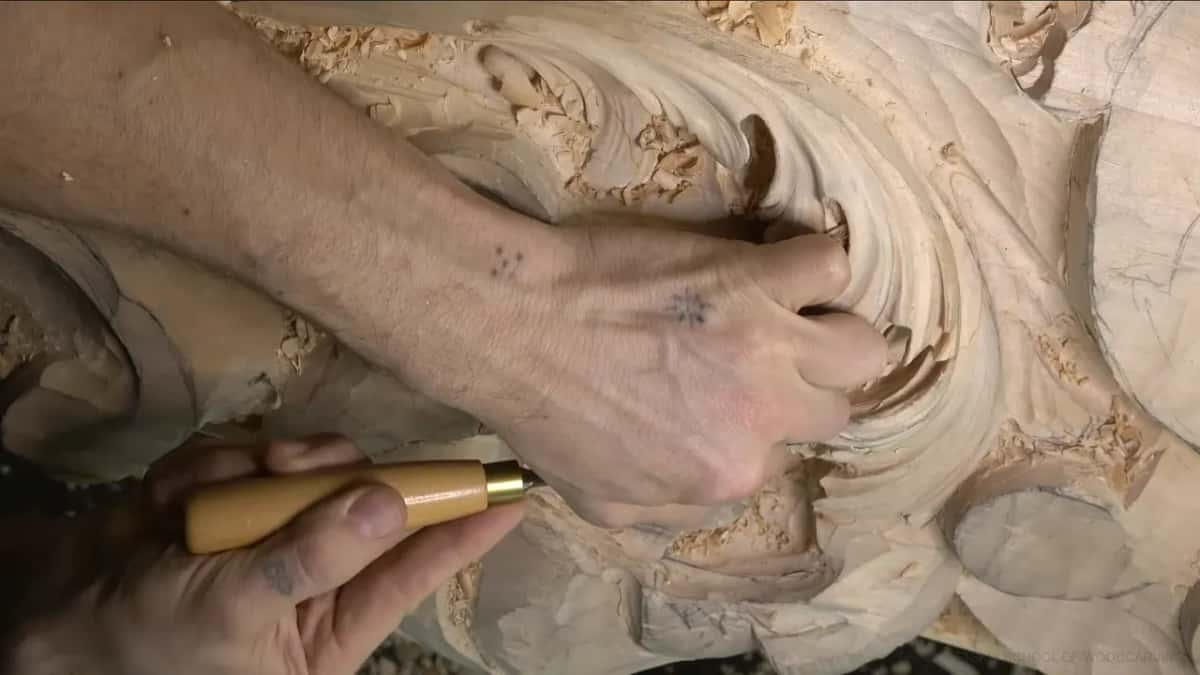
Workshop 25, part 9, adds a reason. Too big of a concave was not what I wanted (03:24 to 03:39). Next came "I want to do just a shallow concave," with "maybe number seven, I would say" and "no more than that" (03:39 to 03:52). The reason came a little later: I really wanted to raise a little the side of that eye opening (04:37 to 04:50).
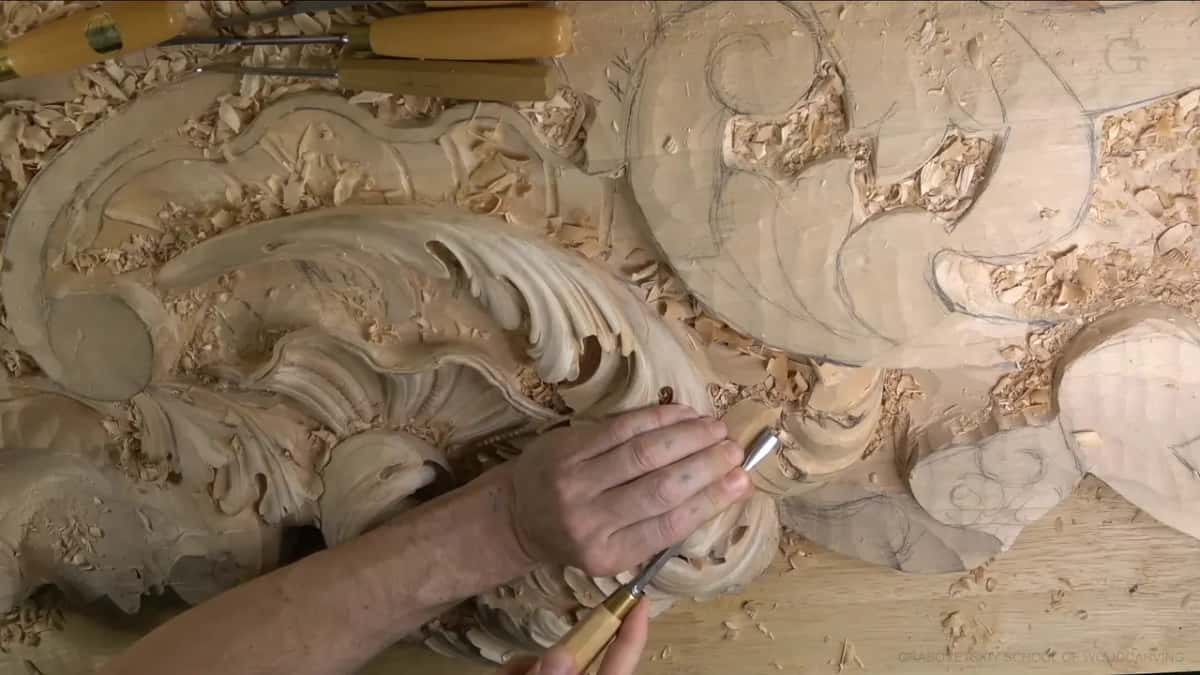
Which gouge makes a shallow concave?
The answer moves between a three and a seven, and the size follows the spot. Here is where each one landed.
| Lesson | Tool I named | Why |
|---|---|---|
| Part 2, workshop 21 | Number five, with three as the maybe | Little ridge |
| Lesson 15, part 5 | Five, going all the way to the edge | Exaggerated edge |
| Room 17, part 3 | Number seven and quarter inch (6.4 mm) | Eye movement |
| Venice 23, part 6 | Seven, of 4 mm (about 5/32 in) | Eye direction |
| Class 28, part 7 | A five beside the center line, seven maybe | A little movement |
| Live clip, workshop 49 | Number three, used right on the side there | Keep the roundness |
| Series 72, part 4 | Three, for a little concave there, I said | Tool mark or ridge |
| Session 91, part 2 | A three beside a section, as I said it | For the shadow's sake |
| Lily Box 5, part 11 | Number seven, or you could use a five | Micro pipe |
Part 5 of workshop 15 is where I said the name out loud, "shallow concave," to exaggerate the edge, with the number five (01:13 to 01:38). The line was "it's not going to be deep concave" (01:13 to 01:25). Later I asked myself to go farther and change direction (02:01 to 02:24).
Inside workshop 91, part 2, I could make a convex or a concave next to a section, "but a shallow concave," and I named a number three (06:04 to 06:30). Why? "Just for the shadow's sake" (06:44 to 07:19). Afterward I said I would need four or five millimeters (about 0.16 or 0.2 in) to clean up inside.
Lesson 8 of the Lily Box, part 7, begins a separation with a shallow concave. A number seven would do for a start, I said (03:02 to 03:29). The grain of the wood was changing direction, so I said I needed to change my position (03:29 to 03:48).
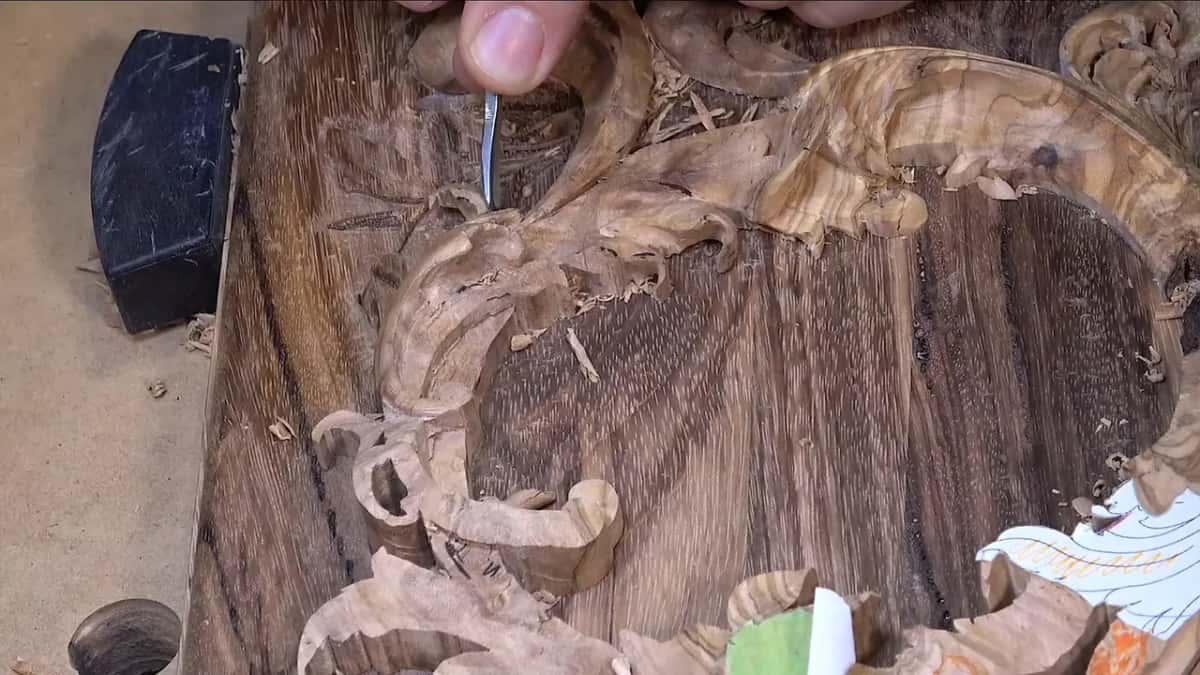
Lesson 5 of the Lily Box, part 11, has another concave, a shallower one. Seven would work, or a five, "because it has to be a really, really shallow concave" (10:08 to 10:30). "I want to see that ridge as a micro pipe," I said (11:05 to 11:23).
Where can you watch the rest?
Workshop 21 holds the whole lesson, and the Venice Room Part 2 course holds the rest of the panel. My comparison in workshop 23 came from drawing with a pencil, where lines pull the eye. The hollow itself is made with a gouge, and the ridge it leaves throws a shadow when the light is right. This is wood carving, a branch of woodworking, and the grain decides how each pass behaves. Venice gave the room its name, and the leaf is an acanthus. Every tool named on this page is a hand tool.
Which hollow on your carving could be shallower and still give your eye a ridge to follow?
How it's done
- Clear the mess first. I cleaned the rough area, first with a number 11, then a bigger four-millimeter one (0.16 in) to take out more at once.
- Stop and think. Before the concave I asked myself out loud whether to go ahead.
- Name a shallow gouge. Five or even three came up, and I went with the five.
- Look for the little ridge. What I was after was a little ridge, and I made a second small concave.
- Check, then clean the concave. What I did not like got named out loud, and then I went back to clean the concave.
Frequently asked questions
What is a shallow concave in wood carving?
Mine is a hollow I keep gentle on purpose. Workshop 21, part 2, has me naming a number five for one, and a three as a maybe, and saying it left a little ridge.
Which gouge should you try for a shallow concave?
My answers moved between a three and a seven, and a five came up most often. Workshop 23 had a seven at 4 mm (about 5/32 in), workshop 91 a three. The spot decided it for me.
Does a shallow concave change the overall shape of a leaf?
On my acanthus I said it did not, because the shape stayed and the ridge still showed. Workshop 49 adds that the roundness stayed too, because there was almost no concave.
What to carve next