

Alexander Grabovetskiy, woodcarver, School of Woodcarving · Published 2022
Can you round the top of an acanthus leaf with a number 7 gouge turned upside down if you do not own the special tool?
Quick answer: Rounding the top of an acanthus leaf with a number 7 gouge turned over is how I told my class to do the job of a tool I call my secret tool. Without that tool, I said, flip the number 7 over and carry on the same way.
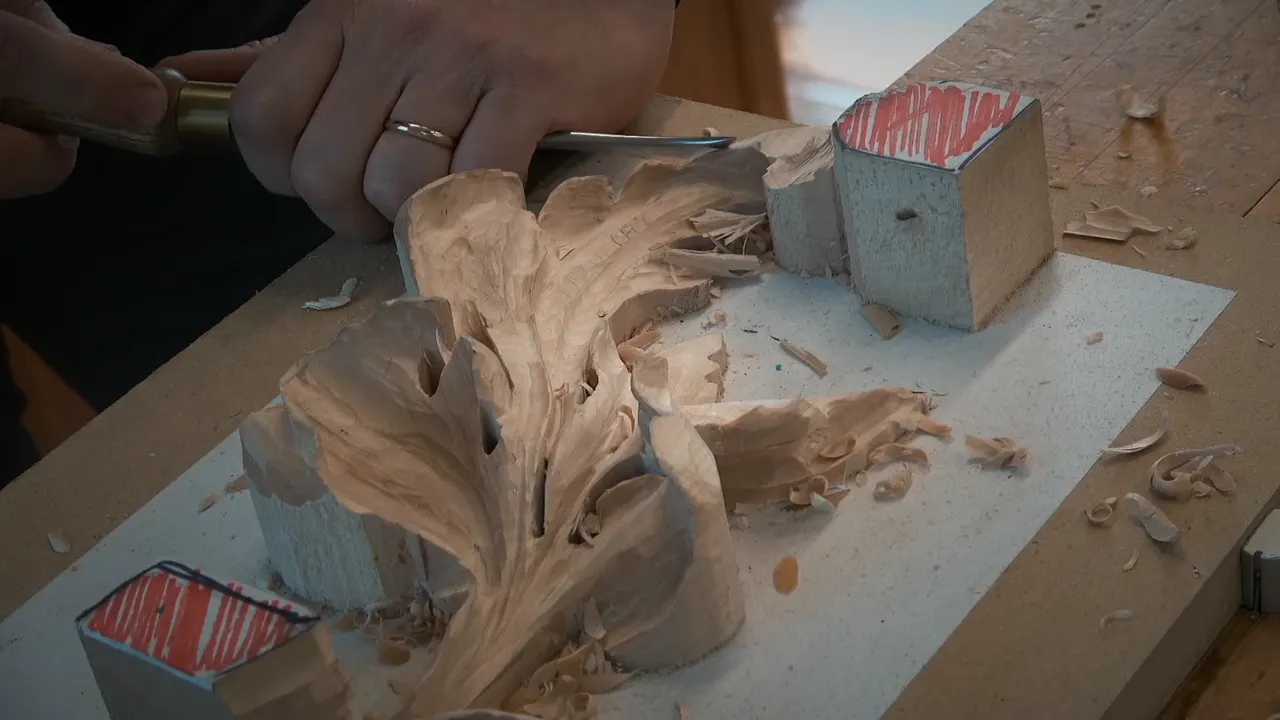
You can round an acanthus leaf top by flipping a number 7 over, and in lesson six I told my class to do exactly that when they did not have my special tool. This is one short moment in the first video of lesson six of Carving Modern Acanthus. Around it came concaves, a raised ridge, the roll, and one small flip.
Is there a gouge in your set that you pass over because it looks too plain? Could it stand in for a tool you lack? A flipped 7 is worth a few minutes, and I will show you every place I did it.

Can a number 7 turned upside down replace the special tool?
In class I called it my beautiful secret tool, and I took it out when the roll on top was next. You can do that with any tool, pretty much, I said. If you lack it, just use number 7. Use it upside down, and do exactly the same as I did right there.
Same idea, I said. The top of the leaf rolls, and the part beside it goes lower. Just to prove the point, I still used my secret tool, because you can do the same operation with different tools. I am pretty much just rolling that thing, I said.

What does rolling the leaf top mean here?
What I was creating, I said, was just the motion, overall like a sphere, if you want to put it that way. Earlier I had sent the class to the picture. Look at that detail, see this overlapping motion, rolling this way, and this part going below. Down it goes.
So I recreated the drawing, and I told everyone it does not have to be perfect, by the way. Once rolled, I had the overall shape. Next came the number 11. More than once I asked if the class could see what I was doing. When you do not understand it, take a picture, just to look at it.

What did I carve before the roll?
Lesson six opens with concaves. I picked up the same spoon gouge from before and worked my way in, little by little. I wanted the ridge raised up too. Everything will be in this style, even on a small scale.
Why is that important, I asked, and I agreed with the answer that came back: shadows. A concave gives you a shadow, and a book I mentioned says it gives you the best one. That is why, on furniture, they carved lots of concaves in those acanthus movements.
I was against the grain at one point, so I changed position and worked in the opposite direction. The rest took only blending, with just the number 7 presented at an angle, to blend the whole thing.
I asked if you could see that as a bulging.

What came after the roll?
My most beautiful tool, the number 11, went in right inside. The detail I was after is supposed to go somewhat underneath, and you can see I flipped it slightly uphill. Optional, I said. I think it is going to be beautiful.

With the same tool I began undercutting right underneath that motion. My hands stayed solid on the board, with a finger or thumb as my leverage point. Please do not be too crazy about it, I said, because it is really hard to get deep without the proper tools. At home I would go really deep, but in class we were limited.
Then I made that little thing flip backward slightly, closer inside than even what I drew. I asked if you could see how I am creating that motion. Motion is good, right? I would drop it almost all the way to the background. I would leave maybe about 1/8 of an inch (roughly 3 mm).

The next video of this lesson blends a concave using a number 7 of 14 millimeters (a little over 1/2 in), held upside down. Not a number 11 of 3 millimeters (about 1/8 in) for those concaves, I told them. It would not look as nice. All three videos sit on the lesson six page.
Now for the other places I flipped a number 7: ten of them, from many lessons of mine.
Is a flipped number 7 a good way to round other work?
In the Venice Room I wanted one part more roundy. The number 7 upside down was my try, I said, because it gives me really good roundness. It worked. I called it not the final form, but exactly what I wanted. After that I could clean everything and develop more, I said, until I was happy with the look. A smaller tool took care of the ridge, a number 3 upside down, all the way. See Venice Room workshop 13.

Does a rolled top need some concave too?
Another workshop in the Venice Room had me saying I had to be careful not to overdo it. My seven, flipped over, created that rolling effect. The undercut could wait a little. And the roll does not need to be plain, I said. It could have some concave also, otherwise it is not going to look nice.
Then a number 11 of 10 millimeters (about 3/8 in) went extreme, almost laying flat on that surface. That way it is a lot easier to create the true rolling feel, and I can always undercut from there. The video is workshop 136 of the Venice Room.
How much movement does a flipped seven give an edge?
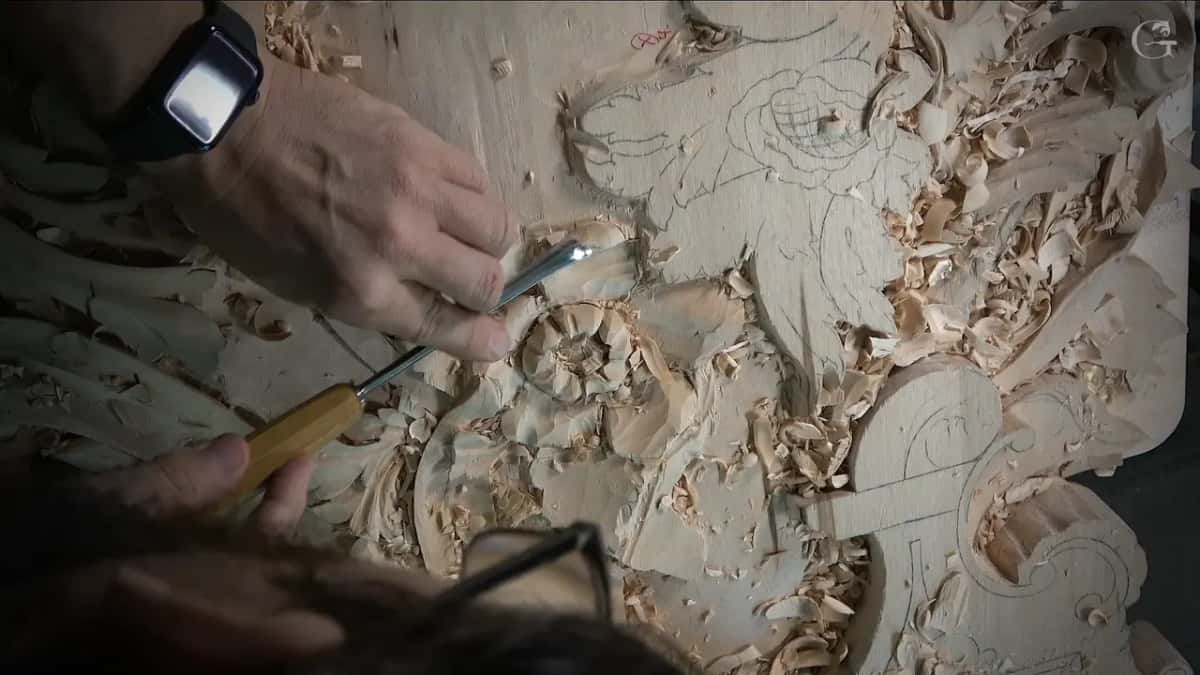
For the furniture panel I took a number 7 of a quarter inch or 6 millimeters and held it upside down to give an edge some movement. Give it some curliness, I said. Just a corner of a tool came next, although it is not always possible to do that without damaging. A half millimeter is better, I said, to remove all that waste.
Even deeper was possible, I said, for a beautiful shadow in some of the spots. Right then I was about 3 millimeters (close to 1/8 in) in. Be really careful with that, I said, because you still could break it. Find the lesson at Furniture Panel lesson 20.

What if the tool feels wrong when you turn it over?
The Byzantine leaf got the tool flipped over, and I blended the transition. Next, with that tool, I took the ridge out slightly and made it really smooth, and I said we are going to repeat that on every one of those areas. Stay on the right side of the tool. If upside down does not feel comfortable, use the normal way. The goal is to make it feel like it is overlapping. One part right there overlaps another, I said, and asked if the class could see it on the screen.
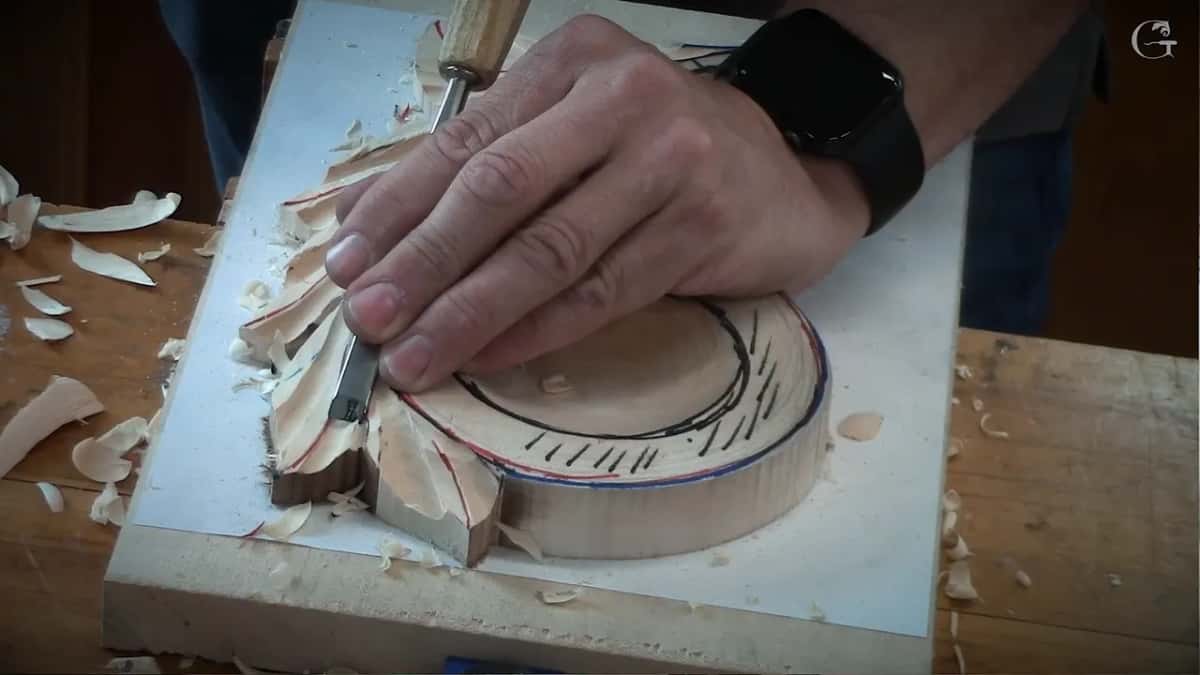
A furniture panel gave me the same advice from the other side: when you cannot blend upside down, just blend with the normal position. In lesson four of this course I said that even if I am not able to flip the number 7, I still use it the normal way. Find them on Byzantine Acanthus lesson 3, Furniture Panel lesson 29 and Modern Acanthus lesson 4.
Which size of number 7 works best turned over?
On the grape vase I said it was already casting a shadow, and that is going to apply to those pipes. But my goal was a really good concave. Flipping the 7 came first to mind, although probably a smaller tool, like a number 5, or a seven but smaller. I said the seven will work much better, at 4 millimeters (about 5/32 in). That one needed to be sharpened or buffed.

The grain ran across there, so I had to be really careful, and the small number 3 was the fix, with a change of direction. Elsewhere in that lesson, a 7 for a convex looked possible, but maybe it was not the best idea in my case, because the pass was not too deep. A number 3 was my next try, I said. See Vase with Grape Leaves lesson 2 for the whole lesson.
Which sharp edges can a number 7 blend?
In workshop 22 of the Venice Room I wanted to round a pipe. A little deeper was possible right there, I said, with a bit of an exaggerated pipe. A seven with a little bit of upside down movement was going to help me at the beginning, I said, and a small gouge could fix the shape of the pipe. It came out almost a perfect pipe. Later in that workshop I could see the light at the end of the tunnel, and it was coming to life, I said. There were too many sharp edges, so a flipped seven blended them all together. See the Venice Room 22 page.
Will a flatter gouge fake an undercut?
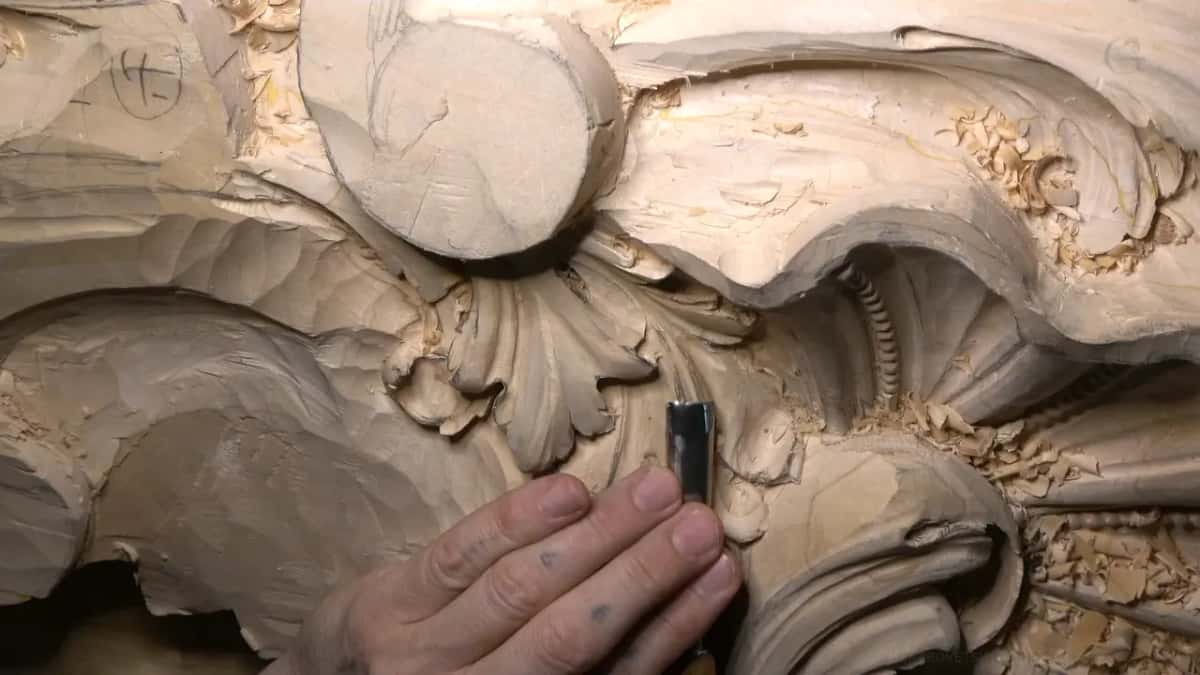
A flatter gouge came out in one more workshop, flipped to blend. See how nicely it blends, I said. Not a deep pass, but it still feels like it is going underneath. A smaller tool could probably clean it a little better, I said. Right there I did not need to go too deep with the undercut, and I said so. The page for it is workshop 50 in the Venice Room.
What does a number 3 upside down do on a flower?
A petal on the Hashemi flowers had a lot of facets, and I did not want to leave too many. There are many techniques, I said. I could take just a number 3, move it upside down, and make my rotating movements to blend all of those passes. Micro moves, I called them. Still a facet, I said, and I am not sanding anything. That way I am taking care of the smallest facets. Just not as rough looking.

I do this off camera many times, because it takes so much time and there is no reason to watch it. I have nothing to say while I am doing the cleaning. Find it on Hashemi Flowers lesson 49.
Will a flipped seven blend into the grain?
The hazelnuts had pencil marks that make my work look really dirty, so I wanted them gone. Blending nicer with a 10 millimeter (about 3/8 in) seven turned over was my plan, and so was starting the cleaning, keeping the same 7 the whole time. I said I would get that curl going the right direction. Challenging, I said, because we are working into the grain. But still, not impossible. The lesson is Hazelnuts lesson 3.
Where does the roll show up later in this course?
Lesson seven brought a huge wall in a triangle on the leaf. My goal, I said, was to bring everything to the edge, or to the rolling motion. This one is supposed to roll like this. So I said I would blend it with the number 7 flipped over, tool upside down, of course, to create that rolling motion. It sits on lesson seven.

Where does each number 7 turn come from?
The table puts each moment next to the course it came from.
| Course and lesson | The work I was doing on it | Tool held | What I said about it |
|---|---|---|---|
| Modern acanthus 6 | The leaf top, beside a lower part | Number 7 | Same job as the special tool |
| Venice Room 13 | A part I wanted to look more roundy | A seven | Really good roundness, but not final |
| Workshop 136 (Venice) | A rolling effect that I wanted to create | Seven again | Be careful not to overdo it |
| Furniture Panel 20 | An edge that needed some movement and curl | Quarter inch | Give it some curliness, just upside down |
| Byzantine acanthus 3 | A transition and a ridge on the leaf | Flipped over | If uncomfortable, use the normal way |
| Grape vase 2 | A really good concave in a vase | Smaller seven | The seven works much better smaller |
| Workshop 22 (Venice) | A pipe and then the sharp edges | Little bit | Blend all together, almost a perfect pipe |
| Hashemi flowers 49 | Facets on a petal of a flower | Number 3 | Micro moves, and I am not sanding |
| Carving Hazelnuts 3 | Pencil marks that looked really dirty | Same seven | Challenging, but still possible, I said |
What will you look at on your own leaf?
Which part of your own leaf should roll, and where does the part next to it drop? Is that neighbor lower, the way mine was? Would a flipped seven do the job on your bench today, and which of the ten places above looks most like your own work? If the answers sound like yes, the video I described is waiting for you.
The video is the first of three, and the sixth lesson page holds all of them. The craft behind it is wood carving. A gouge belongs to the chisel family, the shapes it leaves are convex and concave, and a relief lives on them. An acanthus reads through its shadow, and the tool leaves shavings behind. Open the video with your Tuition and watch the number 7 turn over.
How it's done
- Create your concaves. I used the spoon gouge from before and worked my way in little by little, with the ridge raised up.
- Blend the bulging area. Just the number 7, presented at an angle, took care of blending the whole area.
- Roll the top. I rolled the top with my special tool, and said that a number 7 held upside down does the same operation.
- Let the neighbor part go lower. That part sits lower, I said, while the top rolls like an overall sphere.
- Go in with the number 11. Next my number 11 went right inside, and I undercut underneath the motion with my hands solid on the board.
Frequently asked questions
Is a number 7 enough in place of the special tool?
In my modern acanthus lesson I told the class that if they lacked that tool they should use number 7 turned over and do exactly the same thing. I still used my own tool to prove the point, because you can do the same operation with different tools.
How does the leaf end up looking once rolled?
I called it just the motion, overall like a sphere, if you want to put it that way. The top rolls, and the part beside it is lower. The overall shape came first, and then I went on to a number 11.
Does a flipped seven work everywhere?
On my grape vase I said it maybe was not the best idea, because the pass was not too deep, so I tried a number 3. For the Byzantine leaf I said that if flipping it is not comfortable, go with the normal way.
What to carve next
- Carving Modern Acanthus, the course page
- Carving Modern Acanthus lesson 6, with all three videos
- Carving Modern Acanthus lesson 4
- Carving Modern Acanthus lesson 7
- Venice Room workshop 13
- Venice Room workshop 136
- Furniture Panel lesson 20
- Byzantine Acanthus lesson 3
- Vase with Grape Leaves lesson 2
- Venice Room workshop 22