
Alexander Grabovetskiy, woodcarver, School of Woodcarving · Published 2017
Do you need talent to learn wood carving?
Quick answer: Talent for wood carving is found by trying, and nothing tells you sooner. I began to realize I had one at four, yet on camera I only say I hope so. Carving a pipe on the Venice Room panel, I told people to try first and stop limiting themselves.
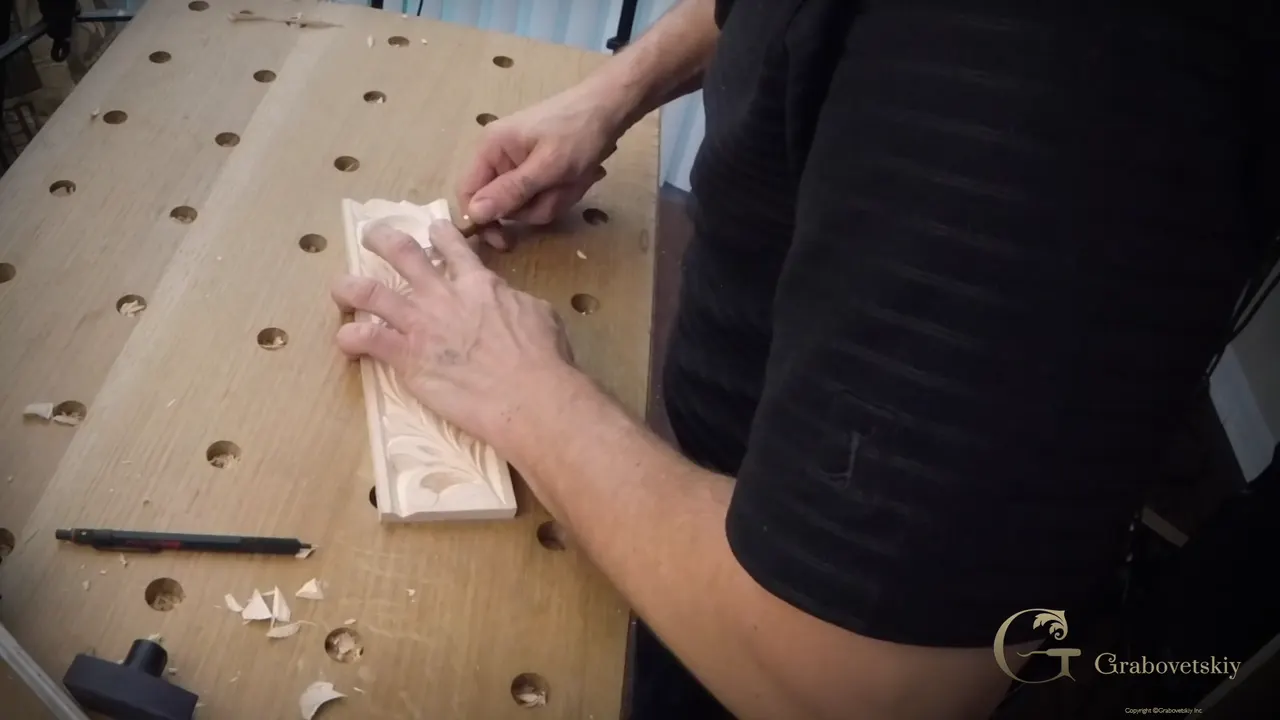
Talent for wood carving is a thing you find out by carving. I said so on the Venice Room panel while I worked a long pipe: you can't know until you try. My own started to show when I was four. On camera I only go as far as hoping I'm talented. So if you want to learn wood carving and you have no proof of a gift, start anyway. Trying is the only test there is.
The first video of this course says it outright. Not every one of you wants to become a master, but who knows? Maybe there's a talent in you that you didn't even know about, and there are a lot of artistic people on planet Earth who never exercise theirs.
Have you ever held a pencil and drawn a line across a sheet of paper? Ever held a knife by its handle at a kitchen table? Then your hands already know the two tools my first workshop puts in them. I will give you the lines I have said about talent on camera, where I said it, and what my hands were doing at the time, and I will not dress any of them up.
Six lines about talent from my own videos
Trying is the only test, as I said over a long pipe for the Venice Room.
I began to carve at six.
At 16 a teacher took me on, and I was his only student.
I only hope I am talented.
Even with a talent, the biggest frustration I have seen is the sharpening.
Stay with it long enough and you can go all the way to the top.

Can anyone tell before the first try?
Even you can't, and I said so in the middle of carving a pipe. Let me tell you a story. In Venice Room workshop 60 I was carving a long pipe, going deeper and deeper, and my goal was to exaggerate it. The gouge was really sharp, and I keep it super sharp. Right in the middle of it, I spoke to the people watching.

When I say not every one of you feels able to do that, I told them, just try to be a child again. When you were children, you didn't even know what talents you had. Say one of your parents asked you, "Can you play piano?" A child answers, "Well, I don't know. I didn't try yet." Of course you can't know until you try. So please don't limit yourself. Just try.
About the room itself, I was just as honest. The whole project, I said, I don't think you're going to do, because it is not cheap, in material or in shop setup, and I don't know how much space you have. Take a chunk of it, try it on a piece of wood or a section, and embellish some furniture. Yes, it is possible.

Where did my own wood carving talent show up?
Around my grandfather's razor, at four. I told this in the stropping lesson of the sharpening course. My grandfather shaved with an old style razor, and every day he stropped it on a leather, a hide. That razor was the scariest thing in his toolbox, because it was so sharp. It scared me to take it, and he was afraid I would take it and start shaving.
I was four years old when I started to realize I do have a talent, and I really wanted to get to the tools. By age six I started to carve. My grandfather gave me the first chisel, and I carved stone, to be exact. And I carved a face, a human face, and that was good. His strop was probably used before him, too, and he was taught by his grandfather, and his grandfather by his grandfather.

Who noticed the talent after that?
A teacher did, when I was 16. The story is in my Let me introduce myself course. Before 16 I was no master's apprentice. At 16 I met my teacher, a really talented woodcarver and artist, not a woodcarver only, and he used to teach fine art. He saw some talent in woodcarving in me, and he knew I had already tried some carving.
You can do a lot by learning yourself. But it is a little different when you compare your own work with a master's piece, and he brought one of his pieces to show me what woodcarving is supposed to look like. I couldn't believe it. "Well, you are talented," he said, "let me teach you really how to carve." So I agreed to be his apprentice, the old European kind of apprenticeship, and I was his only student. If you try to find those masters from Russian land, you won't be able to, because the country was completely locked down.
Do I call myself talented?
I hope so. I said that in Hashemi Flowers workshop 12, right before I picked up a gouge. It is a privilege for me to talk with people like you, and I know there are lots of talented people from all over the world, maybe even more talented than me. Not that I'm saying I'm talented. But I hope I am.
My tool was a number 7 gouge, one inch (25 mm) wide, an Ashley Iles by the card on the screen, and I worked what I call my rounding cut. I made that word up myself. It works every time, and when I use that word, I know exactly what I am talking about.

Is some carving really out of reach?
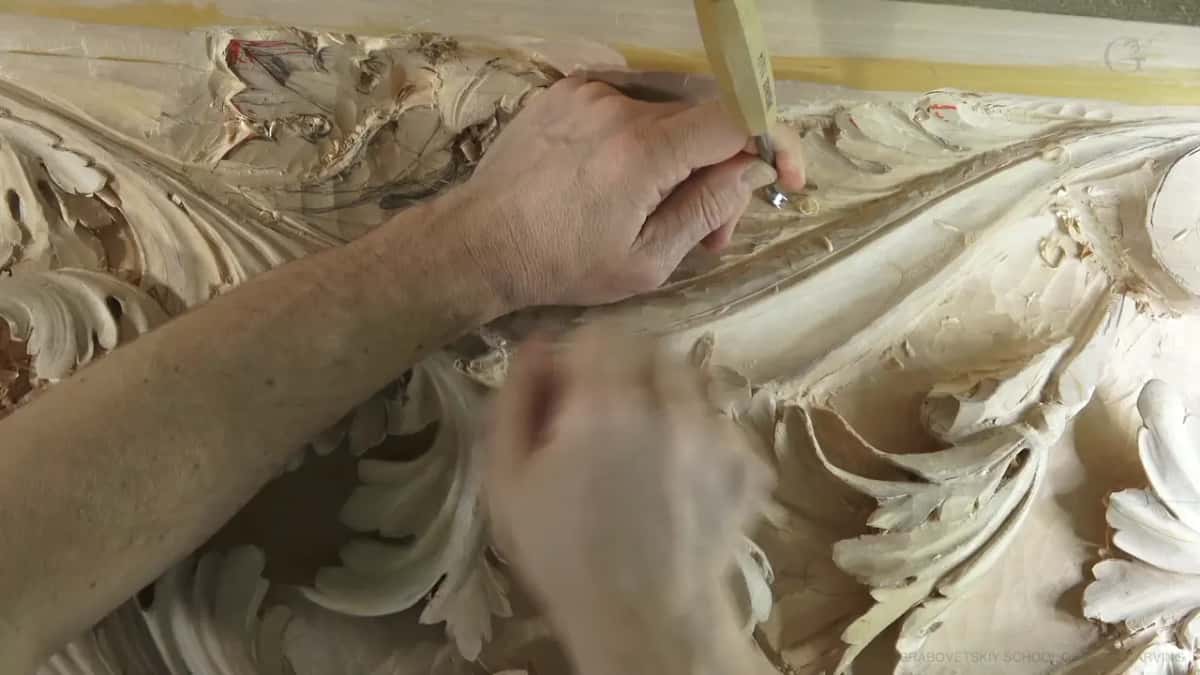
A few areas are really hard, and I say so out loud. On that same Venice Room pipe, I showed my hands first. I use my middle finger as a leveraging point, a cranking point, which is not the way a lot of people use it, and cranking against that finger gives me a lot of control. One long pass was not the goal there, because that area is really challenging. For some of you, I said, it is an almost impossible area, and I am not saying that to put you down.

Some of you write me emails about areas like that. You watch me develop one, it looks so complicated, and you say you would never manage it. I say, well, not true. If you watch carefully what I am doing, it is still possible.
See how I exaggerated that smaller pipe too? That one is smaller than the main pipes, but still exaggerated. A little later I took a sweep number 8, 6 mm, one quarter of an inch. It also carries a number 2, and I told you not to pay attention to it, since I don't know why all those manufacturers mark differently. I went in little by little, from what looked like the wrong side. Well, it all depends on what you mean by wrong side.

How much does being artistic matter?
Certain work needs some artistic abilities, I said on the lily box. That day I was carving the second layer of the lily box, from the acacia and olive wood course, and I looked at my reference to recreate some of the lines I needed to carve. Although if you can be as close as possible, I added, you should be fine.
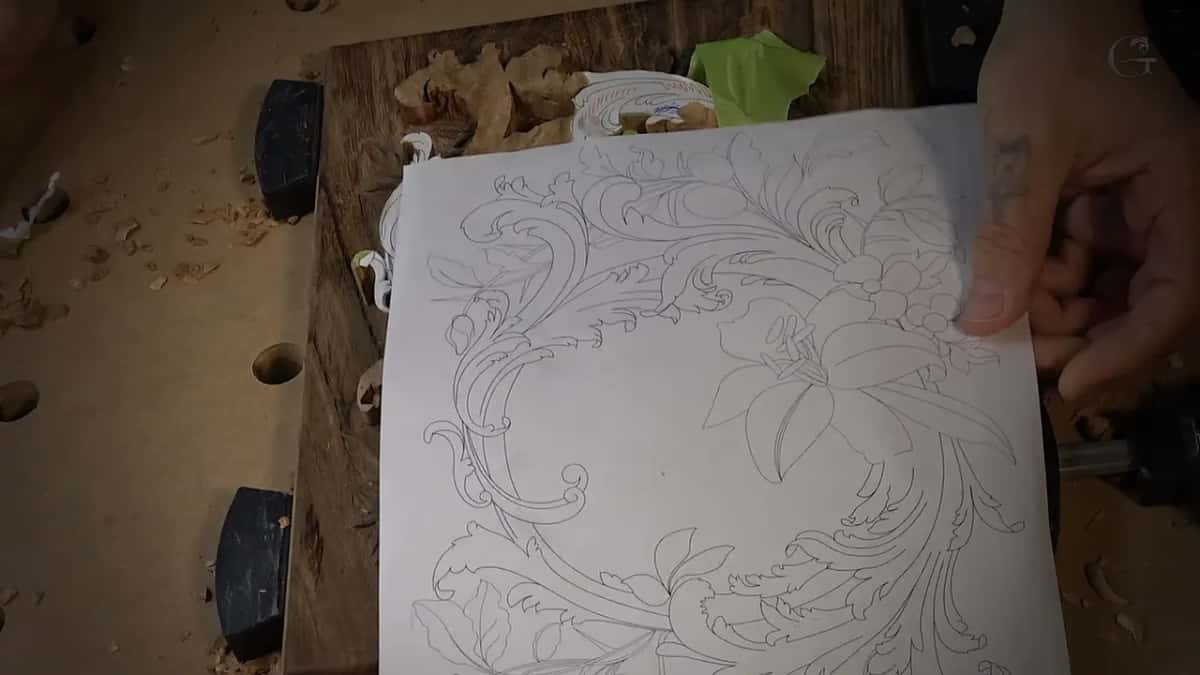
On a livestream in April 2020, a viewer said sharpening is very difficult. I didn't agree. A person can have a talent, I said, and be able to design something and even carve, and the biggest frustration I have seen is the sharpening. It is easy when you know what you do.
Sharpening is one of three main things in wood carving you have to learn. Number one, you train your brain in a three-dimensional world, which is the design process, and I think everyone is able to do that if they know some rules and laws of design. Number two is sharpening. Number three is how you carve, meaning angles, movements and the position of your hands on a tool.
| The video | What I said about talent on camera | What I was doing |
|---|---|---|
| First Cuts, video 1.1 | A talent might be in you that you never knew about | talking to the camera before any carving |
| Stropping lesson, sharpening course | Realizing at four that I had a talent and wanted the tools | telling how my grandfather stropped his razor |
| Let me introduce myself | At 16 my teacher saw it and took me on | telling my own story on camera |
| Hashemi Flowers, workshop 12 | Lots of talented people, maybe even more talented than me | picking up a number 7, one inch |
| Venice Room, workshop 60 | Just try to be a child again, so please don't limit yourself | carving a long pipe with a gouge |
| Lily box, second layer | Some artistic abilities, and then close is fine | checking my reference drawing before I carve a line |
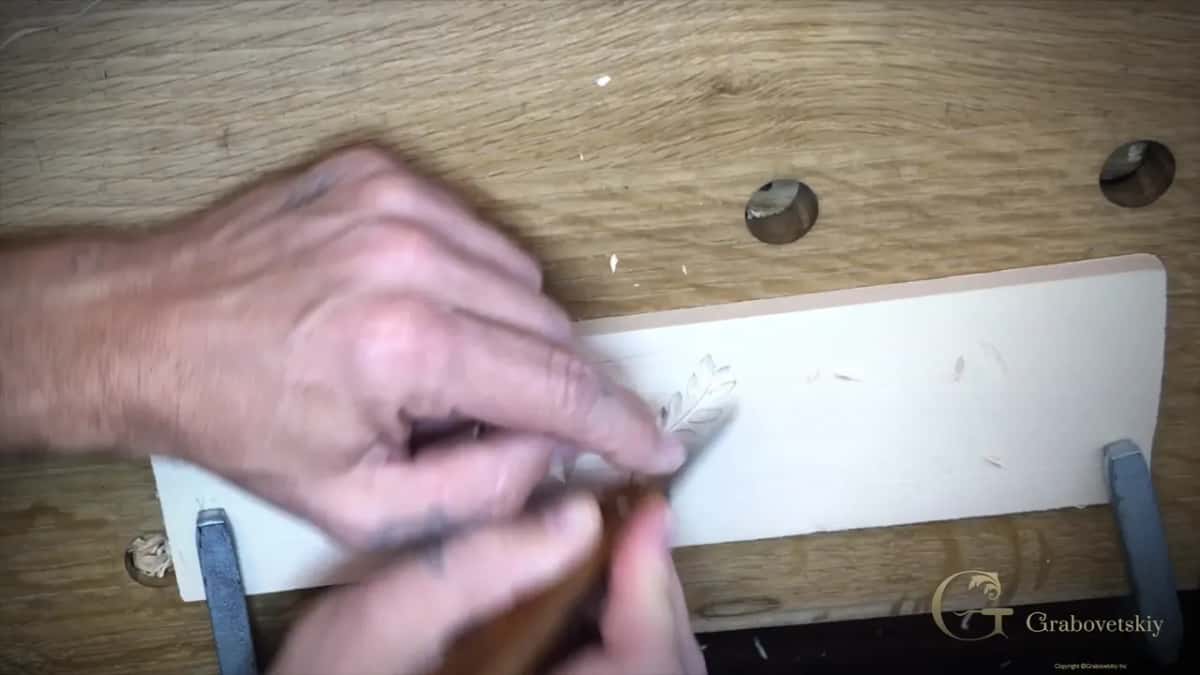
| First Cuts, workshop 2 | I think it's really good, especially for the beginner | refining the leaves on the practice board, knife in hand |
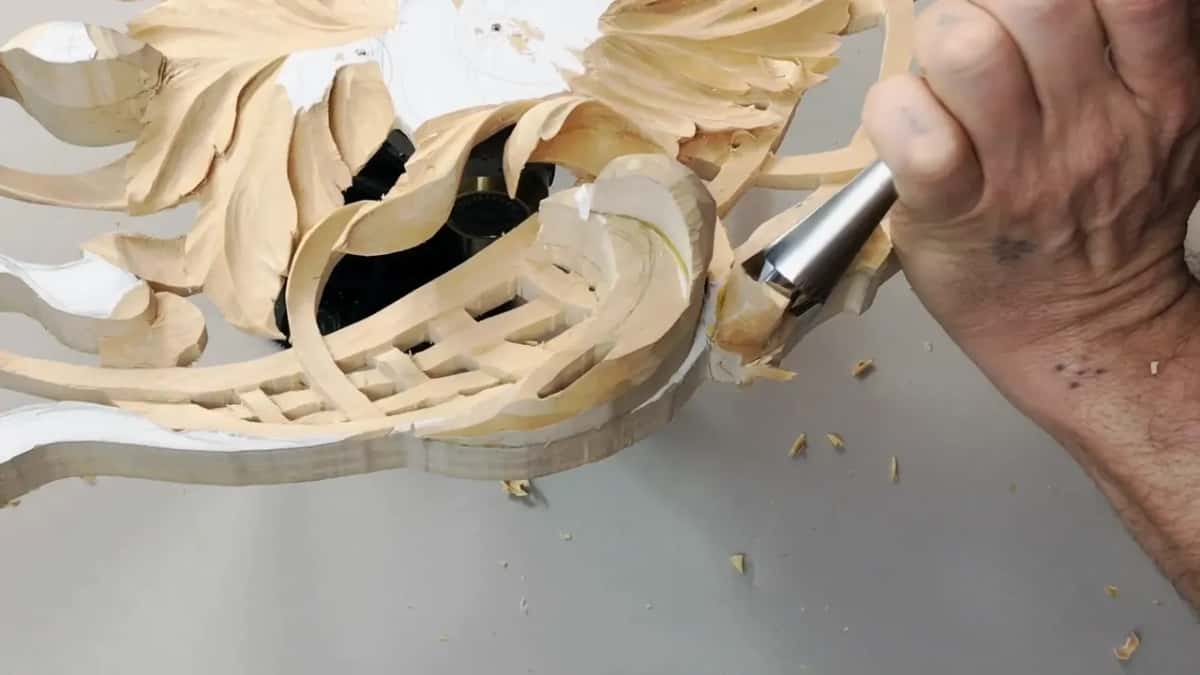
What did the beginner boards look like?
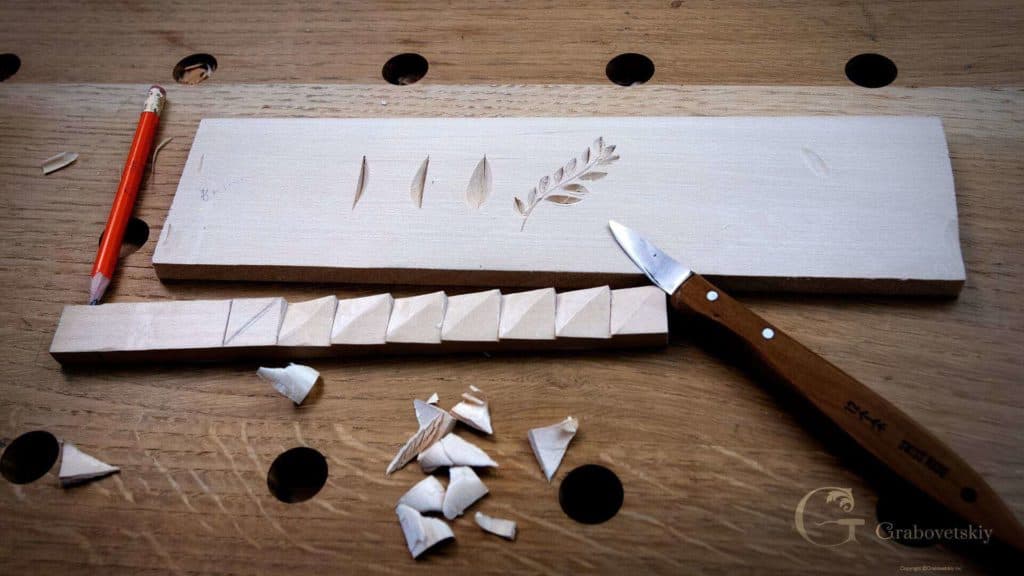
Carving, already, on the very first board. In part 1.4 I drew a stem and a few leaves freehand, took a right angle and then a left angle on each leaf, and said you can call it carving, there is some carving done. On the little molding strip in part 1.5, I told you the skewed pass is not the easiest.
If the line is not really straight in the middle, I said, don't really worry about it. That is not a big deal at all. And if you have to make multiple passes to reach a point, that's fine also. At the end of that video I asked for the results by email, so I could assess each of you on the way.

The last video of Workshop 2 is where I said it straight. Don't get frustrated if it's not the same result at the first try. You just keep trying, and the worst thing that can happen is you buy a new piece of wood. A few minutes later I looked at the finished leafage and was plain about it. I don't think it's bad. I think it's really good, especially for the beginner, if you can manage that.

Why do some people never find out?
Time and fear, as I said on a livestream about clay modeling. A lot of books never got written, and a lot of pieces of fine art never got painted, because people either never had the time for it, or they were afraid of something.
I had a much bigger shop once, with employees and big machinery, thousands of square feet, making high-end cabinetry and furniture. It wasn't a one-man shop. I built houses with crews, and by money, I was really successful. Then Eric, a friend I used to do business with and a man I really honor and respect, said there are a lot of people who do cabinetry, custom furniture, crown molding, doors and windows, and a lot of builders. Not too many people are able to carve wood.
Another famous woodworker came to my shop and asked how old I was. And a man I have known for 20 years asked how many productive years I had left. He was 45 when I met him and 65 by then, and he said those 20 years just flew, like yesterday. He wished he had invested his talents and abilities in what he really had a passion for. In my case, that is wood carving.

My teacher divided wood carvers into two types. Artists really love what they do, and they usually rise up really high. Tradesmen are also really good carvers, but all they do is for money. History shows it too, I said, in the time of Grinling Gibbons in England, where he was an artist and there used to be a lot of tradesmen.
What does sticking with it get you?
All the way to the top, if you stick long enough. That is the last line of the first video in this course, and I said it twice. Right before it, I asked you to go one step after another, and said we start from really beginner steps with the basic tools. I named it the really beginner course in that first video, and said it is for more than the real beginners.
Earlier in that same video I was blunt about who does the work. It all depends on you. I show what to do. But if you are not working on it, you are not going to get any results, and the goal is to get results. Tuition opens the courses I named here, the Venice Room and the lily box included, and the first video is where your try begins.
Is there a table in your house? A pencil in a drawer? Then add one knife, a clamp and a piece of basswood, and the first video is waiting for you.
How it's done
- Watch the hands closely. Watch carefully what my hands do in a hard area. When people wrote that they could never manage a tricky Venice Room spot, my reply was that it is still possible.
- Take a chunk, not the room. Pick one section, try that part by itself first, then use it to dress up some furniture.
- Begin with the basic tools. Go one step after another from really beginner steps, as the first video of this course asks.
- Practice three moves. Straight line, right angle, left angle. On small leaves, right and left alone, with the straight line put back in the middle whenever that feels more comfortable.
- Let a wobbly center line go. A center line that wanders is no big deal, and several passes to reach a point are fine.
- Keep trying. When the first result looks different from mine, try again on fresh wood.
Frequently asked questions
How hard is the very first board?
The skewed pass on the molding strip in the fifth video of the first workshop is not the easiest, and I said so plainly. A crooked middle line there is no big deal, I told you, and taking extra passes is fine too.
Is wood carving a cheap hobby?
My first board in this course was a leftover from another project. Near the end of the second workshop, I said the worst outcome is buying a fresh piece and starting over. A whole Venice Room is another story, though, because the material and the shop setup cost real money.
When did you know you had a gift for carving?
At four, by my own telling in the stropping lesson, when I wanted to get to the tools and my grandfather's razor frightened me. By six I was carving, with a chisel my grandfather gave me, on stone, to be exact. A human face came out of it.
What to carve next