
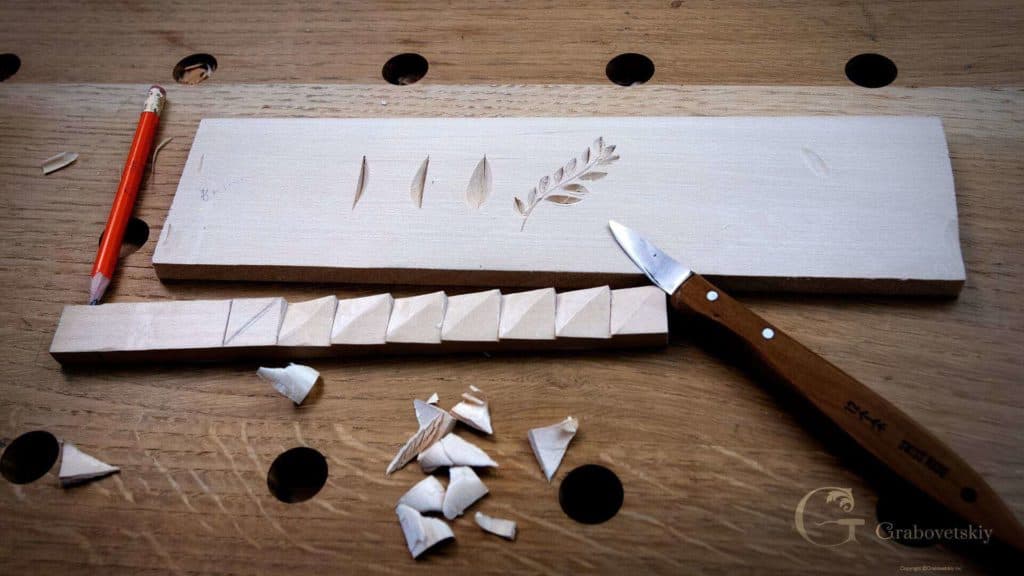
Alexander Grabovetskiy, woodcarver, School of Woodcarving · Published 2017
Why do you carve across the grain when you practice?
Quick answer: Cross-grain carving is the direction I called the safest way while clearing wood, and it is where the three practice lines go in my first knife lesson. Going with the grain, I said, part of a leaf can break off. Crosswise is easier for my hands and gives better control.
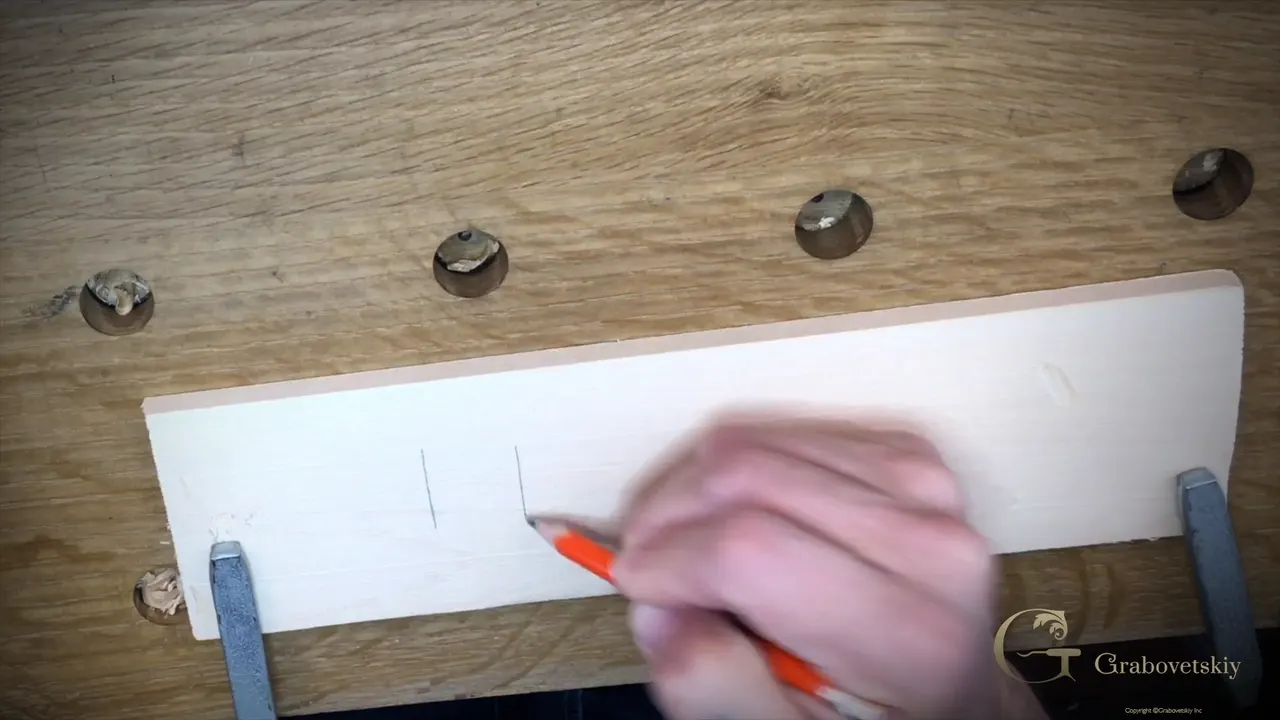
Carving wood across the grain is what I ask of you on the very first board, and on other pieces I have called it the safest way to take wood out. In the third video of Workshop 1 I draw three straight lines and ask you to run yours crosswise if you can. I never say why on that video. So I went back through six pieces where I did say something about it: lily box, furniture panel, Greek acanthus leaf, Hashemi flower, oak table apron and one Venice Room piece, including two spots where I warned it can go wrong.
Is there a board on your table? A pencil next to it? Then draw your three lines over the fibers before you ever pick up the knife. Each line below carries the lesson it came from, so you can go and watch my hands do it.
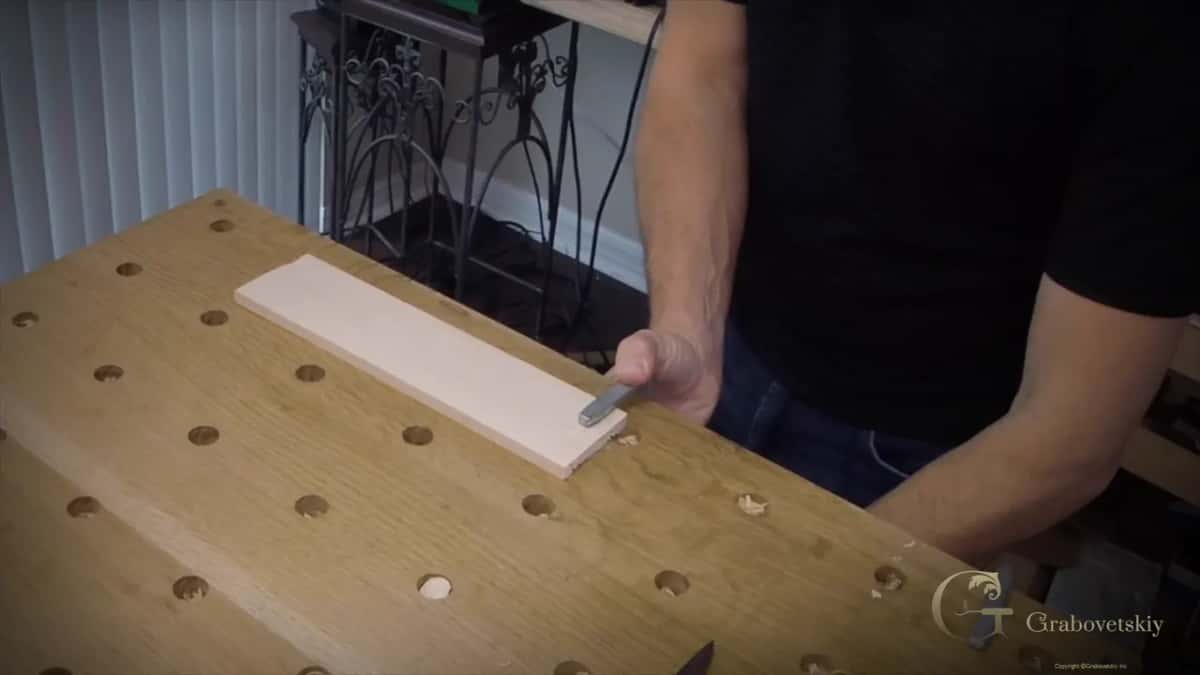
Cross grain in six lines
- Three crosswise lines go on a first board, with no reason given.
- Safest way, I said on the lily box.
- Lengthwise on a Greek acanthus, I warned, a part can break off.
- For my own hands it is always easier, and on a Hashemi flower I said a spoon gouge going crosswise gives me much better control.
- Rough walls are fine for now.
- Attack it harshly and the grain can catch, or chip.
Where do the first practice lines go?
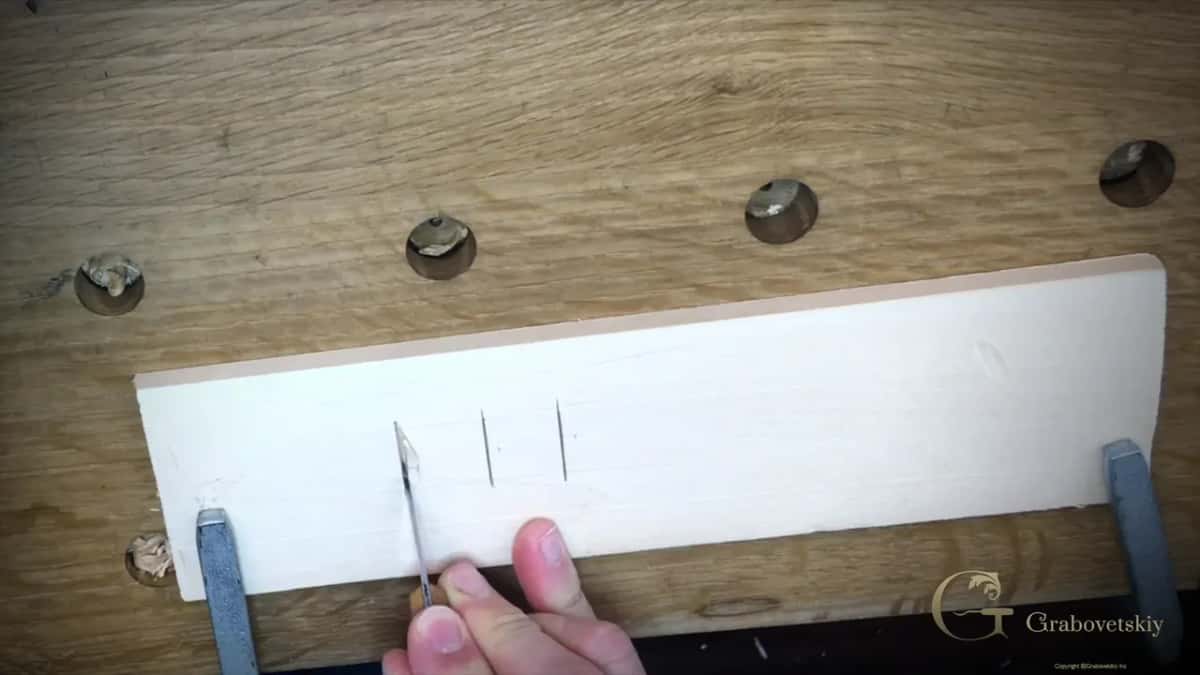
Crosswise, three times. On that video I take a board, draw a simple straight line in three different spots and ask you to do the same. Then I add that it would be nice to have each line run crosswise to the fibers. If the grain of the wood goes this direction, I tell you, the line goes across it. I called the whole exercise the first steps in wood carving, the first moves.
My piece that day was a leftover from another project. I had just told you to buy basswood, and to me it is one of the best woods, soft enough and still holding the detail. You can hardly see any grain in it, and you can still get great results. Of course there is a grain, I said, just no visible grain, and The Wood Database calls that grain straight, with a fine, even texture.

Next comes the straight-down pass at 90 degrees, the knife tight in your palm, pulled toward you along each line. The angled passes and the chip that falls out belong to the First Cuts course itself. One thing I left out on that video is a reason for the crosswise lines. I only asked.
Later in that workshop, in the leaf video, I promised we would talk about the grain and the direction of the knife later on. The second workshop keeps that promise. If the grain goes one way, you start at the top and follow the line down, and I said that is much easier than going against it, although you could.

Why is crosswise the safer way?
Clearing background on the first layer of the lily box, I called going crosswise the safest way, actually. In my hand was a number 5 gouge, a quarter inch (6 mm), to pull chunks of wood out, and I said even a number 7 would work there. Next, a number 11 at 3 mm (1/8 in) went around my outline.
That layer had thorns in the design, and at one of them I made sure I wasn't losing it. Then a number 4 made the background smoother. Please don't overdo it in the small sections, I said. Be careful by the edge, I said, so you don't take too much there, because it will be too noticeable. As long as it blends together, it should be fine.
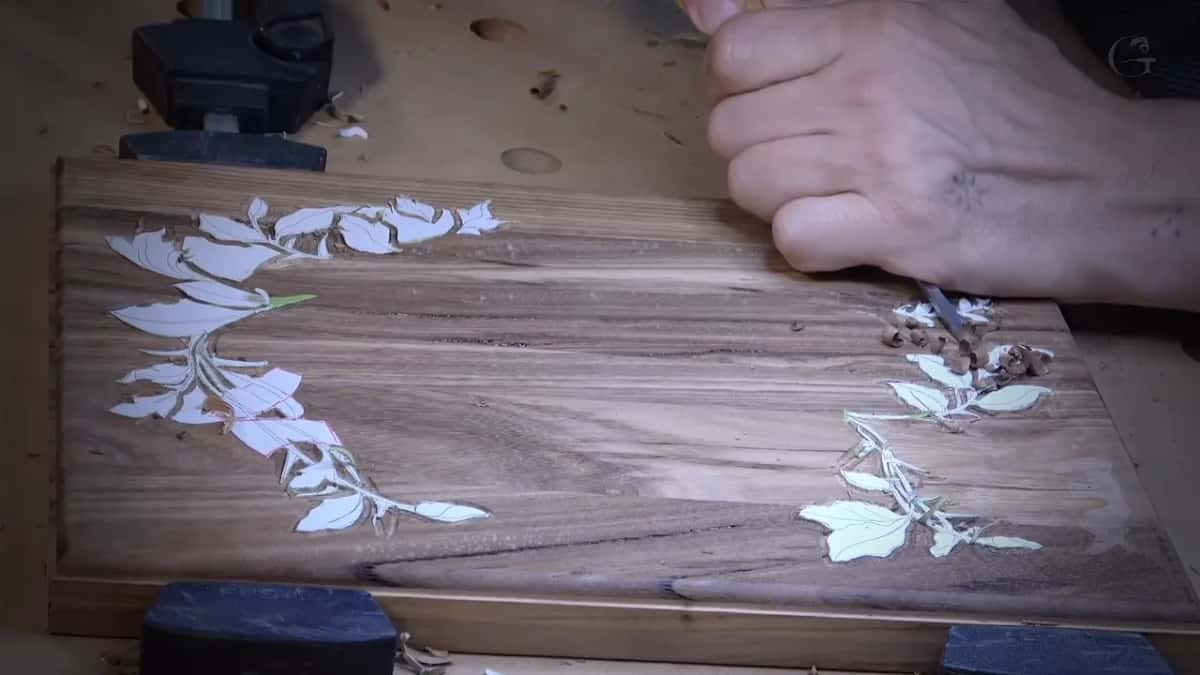
Two videos later on the same box I was at it again with the number 5. A number 7 might do an even better job, I said, so I could go deeper right away. And once more I went crosswise, because it is really much safer, I would say. Near one flower I said I was safe to go that direction, and that direction too.
Workshop 18 of the furniture panel had a small spot, and I kept the same tool for one plain reason: it was already in my hand. The key, I said, is to take it crosswise. Much safer. Then a 3 mm number 11 went a little deeper, right on the line.
What can happen if you carve lengthwise instead?
A section can break. On the Greek acanthus leaf, in workshop 3, I took a number 7 at 14 mm (9/16 in) to clear waste and went crosswise, because I didn't want to risk it. Go lengthwise there, I said, and you can easily dig inside that section and break it out, or break it off.

Next I set my V tool at 90 degrees on one side and laid it flat, using that part like a chisel, to lift the waste away. My acanthus was still too early for undercutting, so I warned you not to dig in on the inside.
Carving a Hashemi flower, workshop 21, my V tool barely touched one spot, and I gave two reasons. First, that part ran along the fibers. Second, it was getting weak. You don't want to put on too much pressure if you don't have to. I brought the V tool to the line. The inside could wait. Right now, I said, I am only concentrating on bringing that main movement to the line.
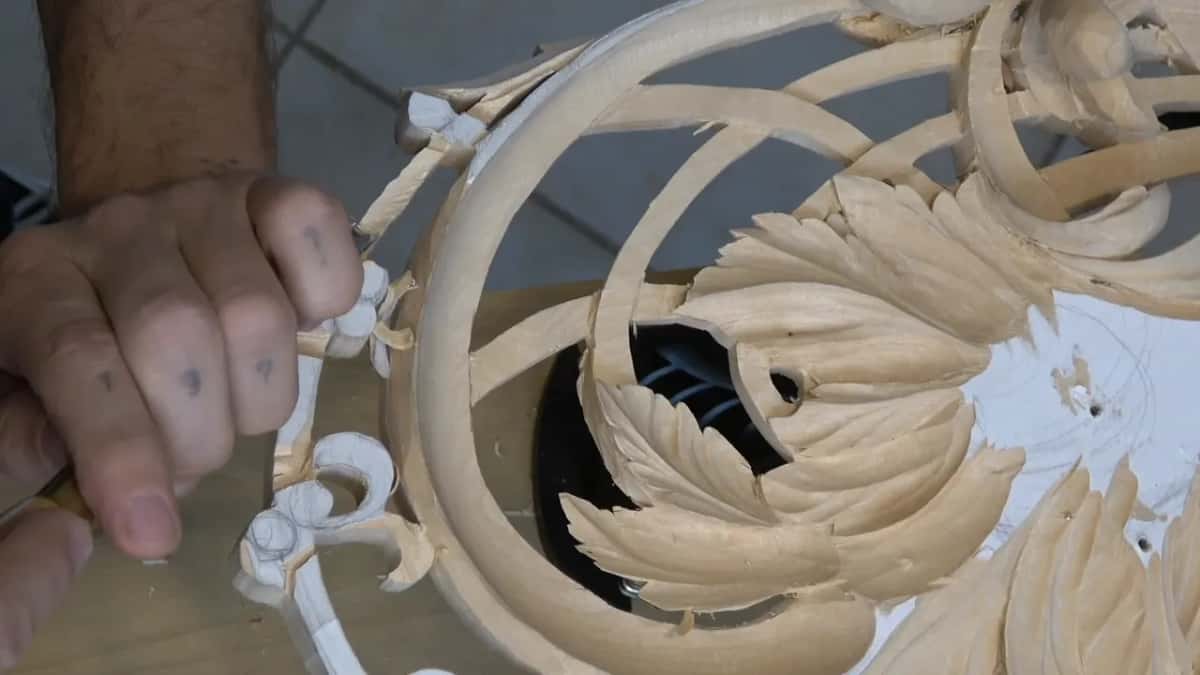
Is cross grain easier on the hand?
For me it is, and I said so on that same Hashemi flower before the V tool came out. I picked a number 7, 5/16 of an inch (8 mm), to take the waste, and told you it is always easier for me to work crosswise. I also owned up to a habit. I do have a tendency to attack it a different way, and I don't like it. I was not going to force it, I said. A little later I admitted I wiggle the tool sometimes, though you're not supposed to. I think it's all right.
Earlier on those flowers, in workshop 13, a spoon gouge did the job, a number 9 at 5 mm (3/16 in). Working cross grain is the same as using a straight gouge, I told you. You can control it much better. Our article on carving in the direction of the grain reads the fibers more slowly, if you want that side of it.

Does a cross-grain pass leave a clean wall?
Not always, and I told you not to worry. In the first video of the Greek acanthus workshop 3, I said any small gouge would work to remove the waste. If there's a way to approach the piece crosswise, it is better, even if some passes look not really clean. Those are not a big problem.
My gouge left a lot of marks inside the walls that day. Good thing we had made the bevel first, I said, because the undercut later on would take all of it away. Stay above your line while you do it, and don't overdo it.

The lily box says it another way. I don't worry about all that junk yet, I said. I will have time to clean it. Keep a reference picture close by, too, and I drew a shaded drawing for that box you can download.
When can cross-grain work go wrong?
When you attack it hard. Workshop 19 of the furniture panel had me on a molding where the grain ran one way, and I said I didn't want to attack crosswise harshly, because I can catch the grain and leave it rough. So I used just the point, the corner of my tool, and went carefully, carefully, carefully.
No rush. I kept the left side as my reference and made what I called semi-rotation moves. About a minute later I showed the result and called it really nice and clean, then took a pass from the opposite direction for a smoother surface that comes out shinier. My preliminary pass there was made with the knife, so I could spot imperfections along it. A couple of deeper passes followed, and I said we would refine that spot later on.
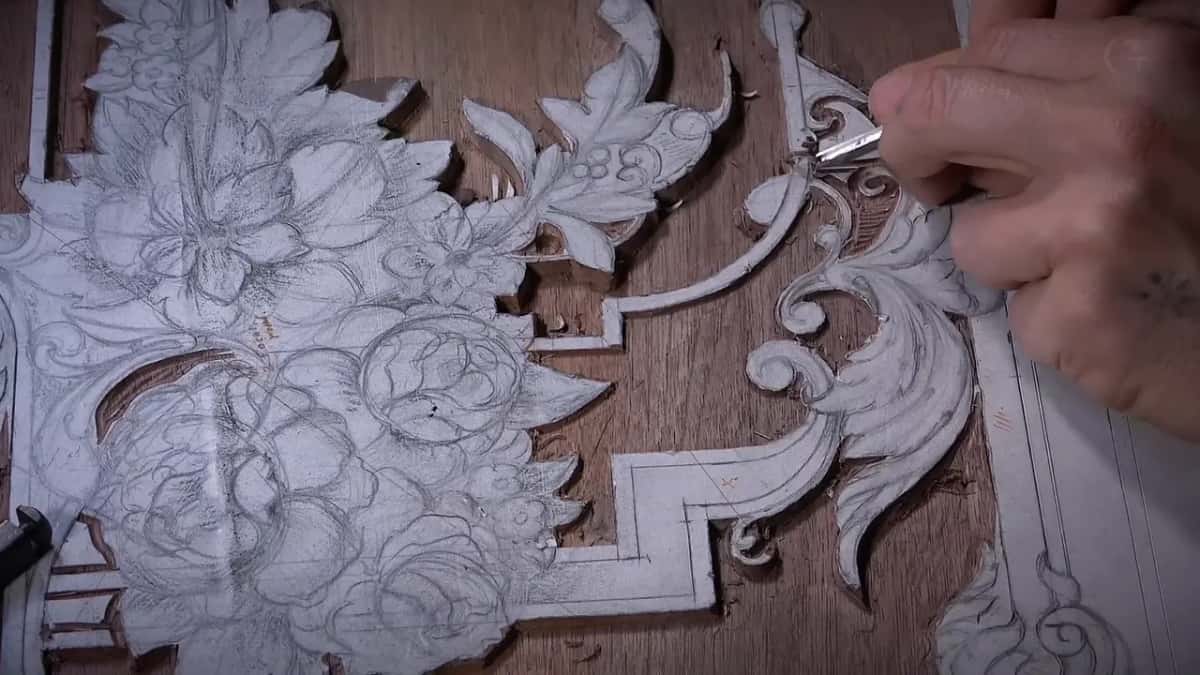
Over in workshop 105 of the Venice Room I warned that going straight across can chip, so I angled the tool slightly. Straight on was not the safest way there, I said, but angled it becomes much safer. Little by little, chip by chip, that form would come.
So two of my lessons can sound opposite, and both are on camera. Crosswise was the safest way on the lily box. At that Venice spot, straight across was not, and I tilted the tool. Each line belongs to its own spot on its own piece.
Does the knife follow the same rule?
It did on the oak dining table apron. In workshop 8, after I set up a wall, I took a knife to clean the area and said, like I said before, it is better to go crosswise and not force it. No more than an eighth of an inch deep (3 mm). A smaller number 5 fit that spot perfectly afterward.
First Cuts starts with a board that is all knife work, and its three lines run crosswise too.

Three workshops later on that apron I gave the rule for direction. I would not carve one way there; I turned around, started at my upper point and went downhill, from the top down. Going crosswise, I added, it doesn't really matter how you do it. That is the rule, I said, but sometimes you have to break it. Just be really careful when you're breaking it.
How deep do you go when you clear crosswise?
Shallow, on most of these pieces. One lily box area had its deepest point at about 3/32 of an inch, a couple of millimeters, and with the same tool I could go straight down there and pretty much clean it.

For workshop 16 of the furniture panel I went crosswise again and warned you not to dig too deep into the background. What the gouge leaves has to stay a little higher than the router plane goes. I know it sounds redundant, I said, but believe me, you don't want to make that mistake. Two workshops on, I could knock down the high ridges with a bigger gouge, or take the router plane and start planing.
That Venice Room job went much deeper. I had about an inch and a half of material (38 mm), had taken three-quarters of an inch (19 mm) already, and thought 30 mm (1 3/16 in) at the edges would look good. I hope it's going to look good, I added.

Does cross grain take more force?
Sometimes a little. Back on the oak apron, workshop 7, I was only removing some of the waste at first, going crosswise, and said I could use my mallet to help myself a little bit. Just be really careful, I told you. That was only an early pass, I said, since the main outline still had to come before any cleanup.
None of that is needed on a beginner board. With the knife especially, I said in that first lesson, you don't use your mallet, and you don't use really heavy movements. You need one knife and a pencil, then a clamp to hold the board down on a kitchen table.

Where did I say each of these?
| Where | My own words about the grain there, shortened | Tool |
|---|---|---|
| First Cuts, Workshop 1 | Draw each straight line crosswise, if possible | One knife |
| Lily box | Crosswise is the safest way, actually, then later much safer | Quarter-inch number 5 |
| Furniture panel 18 | Again, I said, just do it crosswise | Whatever was in hand |
| Greek acanthus 3 | Lengthwise, I warned, a section there can break out | Number 7, 14 mm |
| Hashemi flowers 21 | Always easier for my own hands crosswise | A 5/16 inch gouge |
| Oak apron 8 | Better crosswise, and never force it | A knife |
| Same panel, 19 | Attack it harshly and the grain can catch | Just the corner |
| Venice Room 105 | Straight across can chip, so tilt it slightly | The same number 11 |
A short question and answer video of mine covers carving with the grain, the other half of this.
What should you carve first, then?
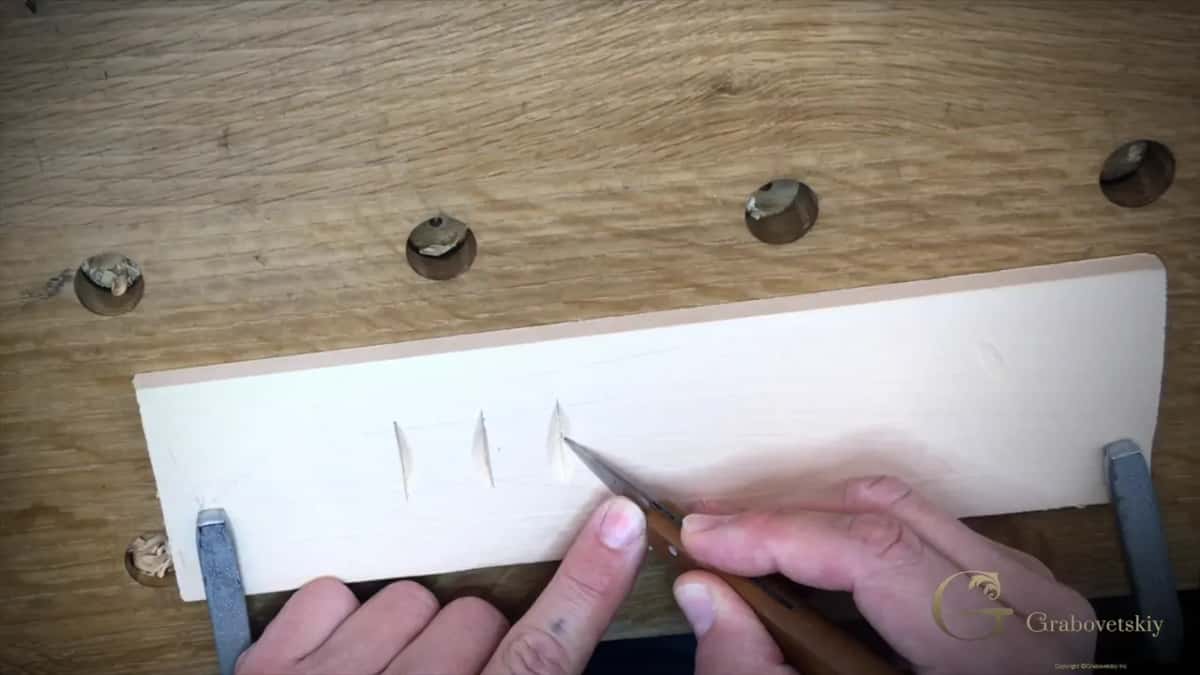
Do you have the board? The pencil? One knife? Then draw three lines crosswise, the way I ask in Workshop 1, and make your straight-down pass along each one. The angled passes come next in the course, and the downhill rule waits in the second workshop.
Tuition opens Workshop 1 and every course I named here, the lily box and the Venice Room included. You will be carving over fibers you can barely see. My board in that video was a leftover from another project.
How it's done
- Draw three lines crosswise. Pencil a simple straight line in three different spots on your board, each one running over the fibers, as the third video of Workshop 1 asks.
- Make the straight-down pass. Hold the knife tight in your palm with the blade facing your body, stand it straight down on each mark and pull.
- Clear waste crosswise. When a gouge has to take wood out beside a shape, come at the piece crosswise whenever there is a way to.
- Go carefully, without force. Do not force it, as I said on the oak apron and on a Hashemi flower, and keep the pressure low where the wood gets weak.
- Stay above the line. Keep the waste work above your drawn line and stop before you dig too deep into the background.
- Ease off where it can catch. Where the grain might catch or chip, use just the corner of the tool, tilt it slightly, and take your time.
Frequently asked questions
Does basswood have a grain you can carve across?
Yes, though you will barely see it. I call basswood among the best woods to start on, soft enough and still holding detail. A grain is there, of course, as I said in that first lesson, just not a visible one, so the board looks almost plain.
Is going crosswise always safe?
Not on every piece. On one Venice Room spot I warned that a pass straight across could chip, so I tilted the tool a little. On a furniture panel molding I slowed down and used only the corner of the tool, so the grain would not catch.
Which gouges cleared the lily box background?
A quarter-inch number 5 pulled the chunks out, and I said a number 7 would work too. The outline and the junk got a number 11, 3 mm wide, and in a smaller area I switched to a 1 mm number 11.
What to carve next