
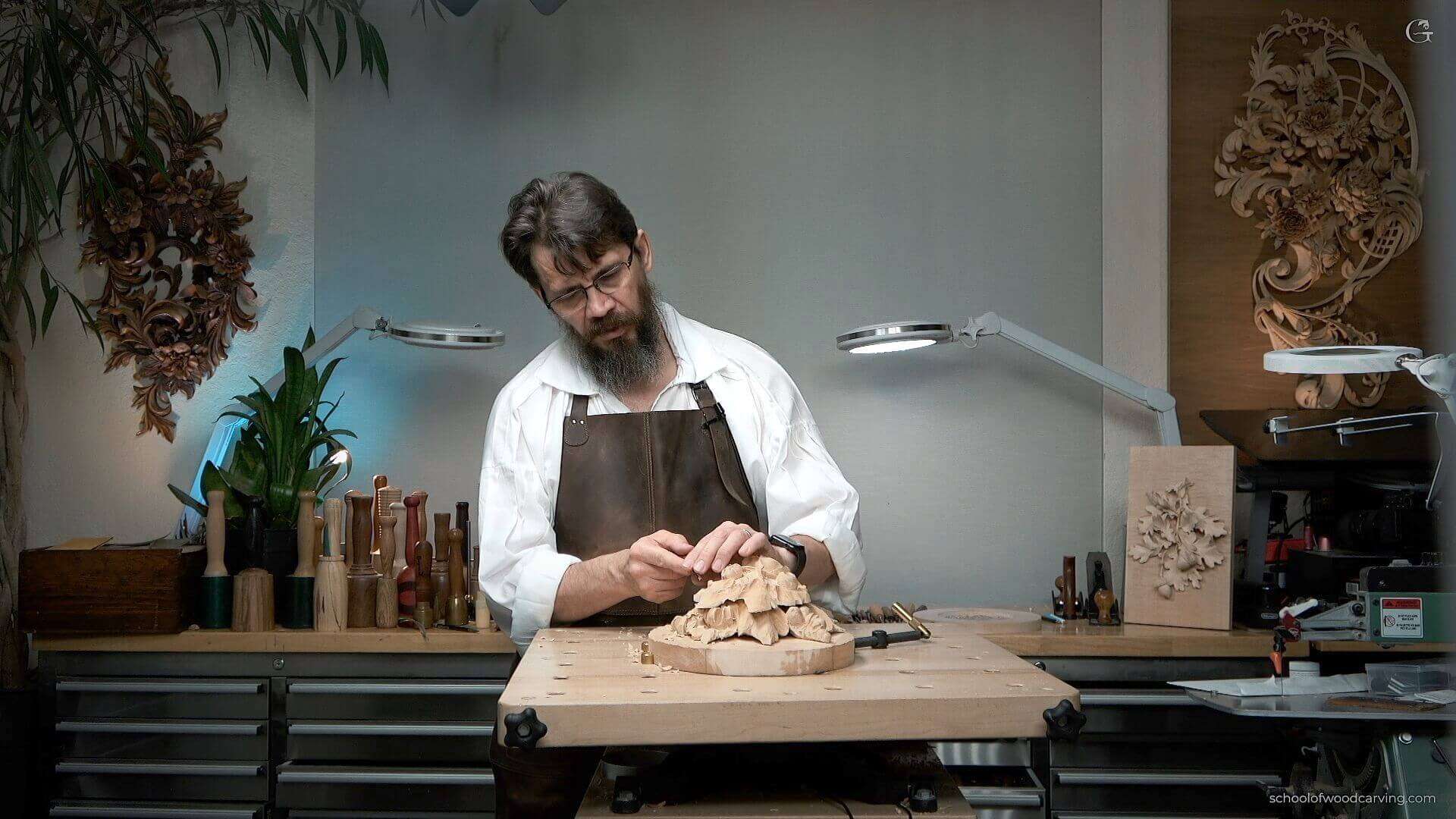
December 7, 2023 · Updated August 2, 2026
By Alexander Grabovetskiy — Master Woodcarver · Founder, School of Wood Carving · 10 min read
From Russia to America, and What I Carve Now
By Alexander Grabovetskiy, School of Woodcarving
Quick answer: Alexander Grabovetskiy is a master wood carver born in 1973 in Dimitrovgrad, Soviet Union. He trained under the carver Vladimir Tokarev at sixteen, reached America as a refugee on 15 March 1996, built a woodworking firm in Indiana, then sold every machine to carve full time. His online school, Schoolofwoodcarving.com, opened in 2017.
My great-grandfather made mahogany furniture in a country that later took everything his family owned. I never met the man. The wood came down to me anyway.
People write and ask me how a boy from a closed Soviet town ends up carving acanthus for houses in America. So here is that part of my life. The two years I spent in prison sit on my full story page, and I am not going to tell all of it twice.
Key takeaways
Wood runs in my family. Mahogany in the Chippendale style was my great-grandfather's trade.
My grandfather's chisel came to me at six years old. I ruined it on a brick that same day.
At sixteen I became the only student of Vladimir Tokarev, a carver in my home town.
He started me with a pencil, not a gouge, and months went into drawing before I cut anything.
America took me in on 15 March 1996, a Saturday, and by Monday I had work as a framing carpenter.
In 2012 a panel called Wall Decoration won first place and made me International Woodcarver of the Year.
Where did the carving come from in my family?
It came down from my great-grandfather, who built furniture in the Chippendale style, and I believe the talent skipped a generation and landed on me.
Look at my last name. Grabovetskiy. He was born in what is now western Ukraine, though back then the map said Poland, and my family were royalty there. Search in Russian for the Grabovetskiy sword and you will find the oldest sword ever dug out of Polish ground. It was ours.
Then 1917 came, the communists took power, and all of it went away. The lands. The name. Everything.
So he found his talent in wood. People called him a redwooder, because he worked the red woods, which really means mahogany, and Chippendale is mahogany almost every time. That work carried him around the world before the country was sealed shut.
We never met. Of my two grandfathers, one died before I was born.
What did I do with my first chisel?
I took it to a brick at six years old and killed it in an hour.
Took, not got. My grandfather owned it, I wanted it, and I carved a face into a brick with it because a brick was what sat by the door. The edge was gone by supper. He was not happy about that, and he never once gave me a hard time either.
The passion was born right there.
Everything after was an ordinary Soviet childhood. School six days a week.
Who taught me to carve?
Vladimir Tokarev, a carver in my own home town, and at sixteen I became his only student.
He carved, and he taught fine art as well. Word had reached him that I was cutting on my own, so one day he brought one of his own pieces and set it down in front of me, and my jaw dropped. Something like that I did not know a person could make. He told me I was talented and offered to teach me how to really carve.
Then he handed me a pencil.
Not a gouge. Months of drawing. I would draw acanthus all day and think it was beautiful, and he would come stand over me and say one word. Think. Think how you will carve this. Which tool goes in there. How does your hand reach that corner when the wall slopes up to a ceiling.
Design means the law of space and the law of how an eye reads a surface, and under all of it sits one hard question, which is whether your tool can even get in there. Drawing something pretty on paper is a different job. He taught me to think like a tool. I still teach it that way, and it is the part students fight me on hardest.
That was a real apprenticeship, the old European way. One master and one student, standing at the same bench.
How do you learn from carvers who died 300 years ago?
You repair their work, and the wood tells you the rest.
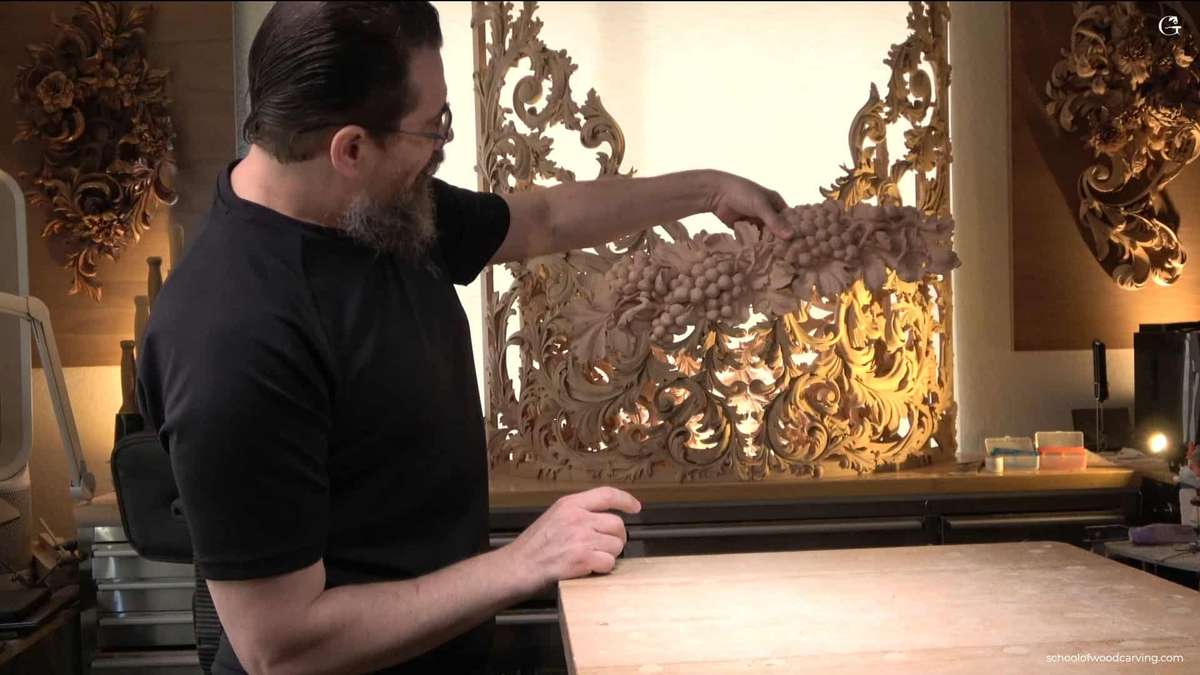
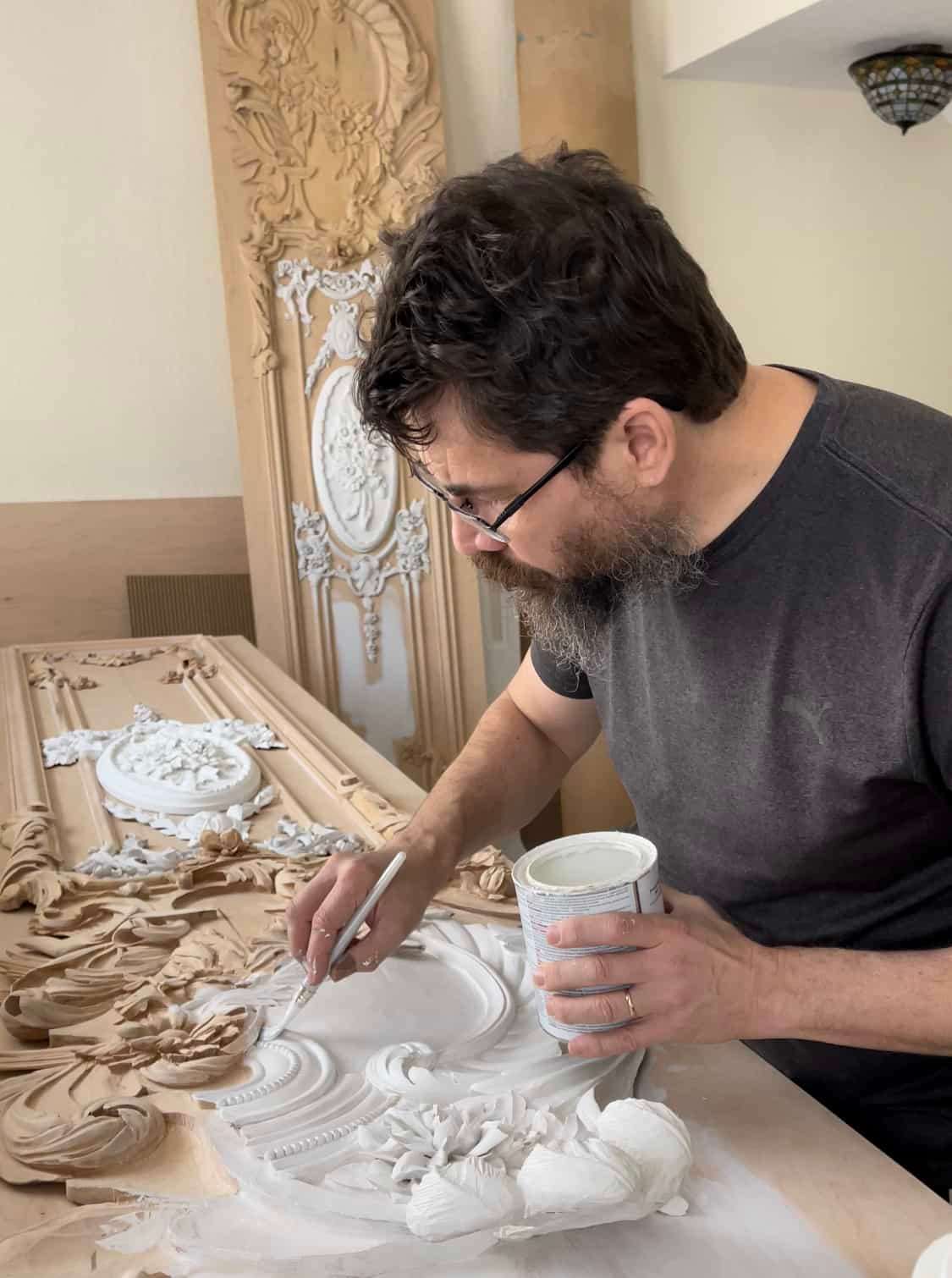
Museums and private collections send me damaged carving off old furniture and old buildings, and I put back what is missing. There is no faking that job. The old carver left his tool marks in the surface, and either you match them or the repair announces itself from across the room.
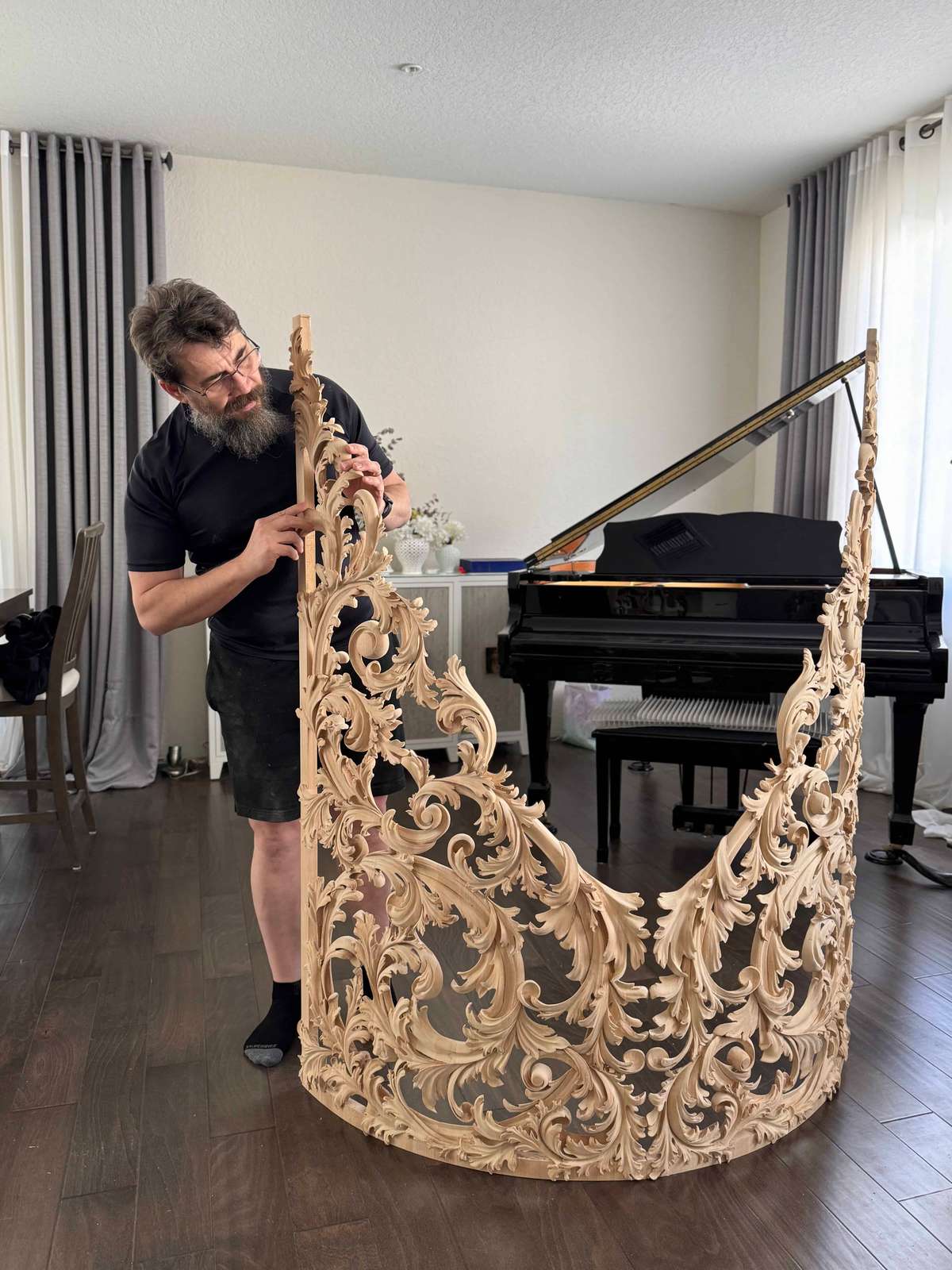
Everything I do sits in a line that runs back to Grinling Gibbons. Not a style I invented, and not one I own. I learned the techniques and I keep using them the way they were used for three hundred years before me. Tokarev also gave me one method out of the fifteenth century, where you draw on the wood with natural stains and then carve, and the finished surface looks like marquetry without being marquetry.
What happened after I landed in America?
I landed on a Saturday in March 1996 with almost no English, and I had a job as a framing carpenter by Monday.
The US Embassy granted us refugee status in two hours, because I had proof of the prison years. Three of us flew. Me, my wife Nadia, and our son, ten months old.
Year | Where I was | What I was doing |
|---|---|---|
1973 | Dimitrovgrad, Soviet Union | Born, about 120,000 people in that town |
1979 | Same town | Ruined my grandfather's chisel on a brick |
1989 | Same town | Became the only student of Vladimir Tokarev |
15 March 1996 | Flew to the United States | Refugee, with my wife and our ten month old son |
1998 | Indiana | Aalmark incorporated. Six to eight men on the payroll by 1999 |
2012 | England, by post | Wall Decoration takes first place. International Woodcarver of the Year |
2017 | Online | Started Schoolofwoodcarving.com |
That carpenter job lasted a couple of days. You cannot work beside other men on a wall when you have twenty words of their language.
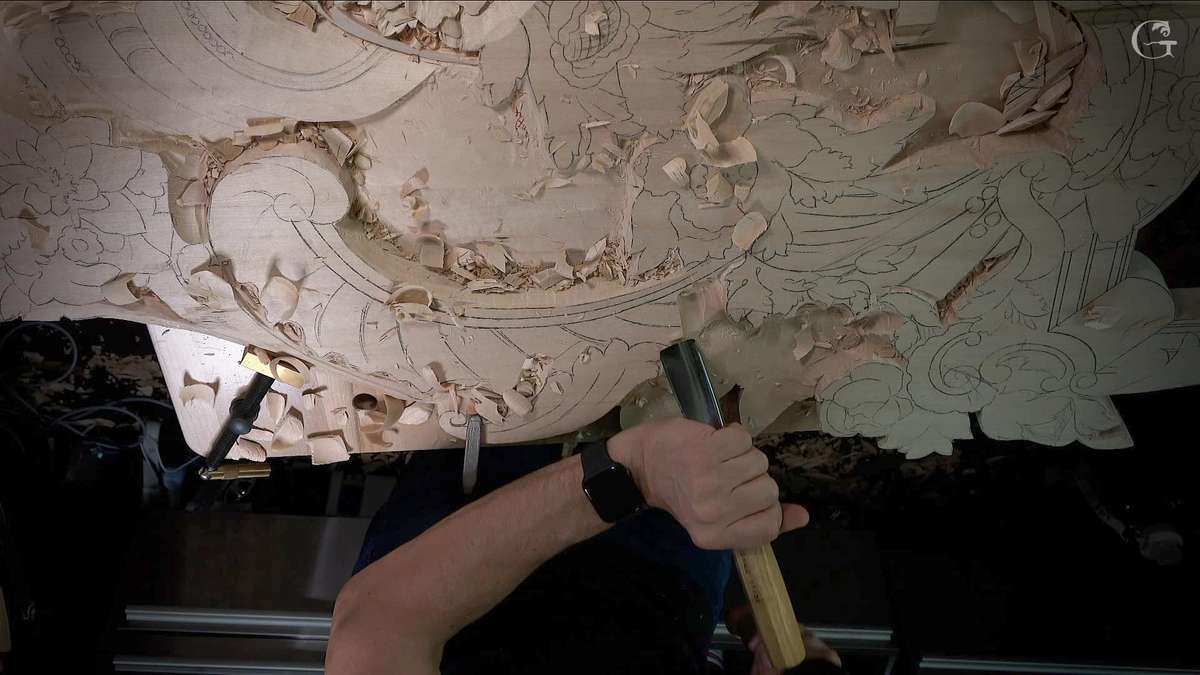
So I started my own shop. Aalmark, incorporated in Indiana in 1998, six to eight men on the payroll the following year. Grand Rapids in Michigan first, then down to Goshen, Indiana, which is Amish country, and some of those Amish men became my friends. We got the shop into the top 4 percent for quality across three states. The Goshen News wrote us up that first year.
And I hired refugees from the day I opened. Russians, Ukrainians, Moldovans. Skilled woodworkers who could not get decent work because of the language, which was the same wall I had walked into myself. Money had nothing to do with it. Those men had children to feed. Architectural carving was my share of the work, and they did all the rest of it, and a few of them stayed with me more than nine years.
Why did I sell every machine I owned?
Two men I respect asked me the same question, and it took me years to admit they were right.
The first was a friend with his own woodworking business. Alex, he said, thousands of people on this earth can build a cabinet and almost nobody can carve. Concentrate on the carving.
I heard him and did nothing for years.
Later a famous woodworker walked into my shop, looked around at the whole operation, and asked how many production years I had left in my life and why I was spending them on this. So I sold it. The Felder machines, the sliding saws, the big belt sanders, the whole commercial shop.
Then I got busier than I had ever been.
Why do I still carve by hand?
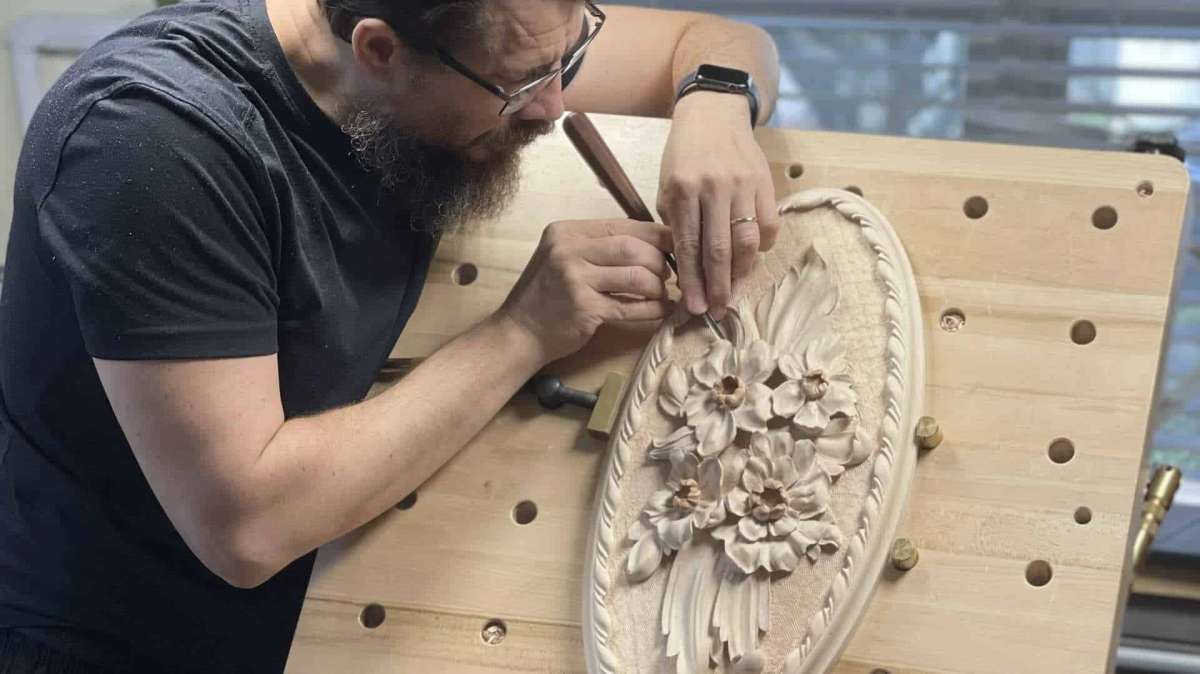
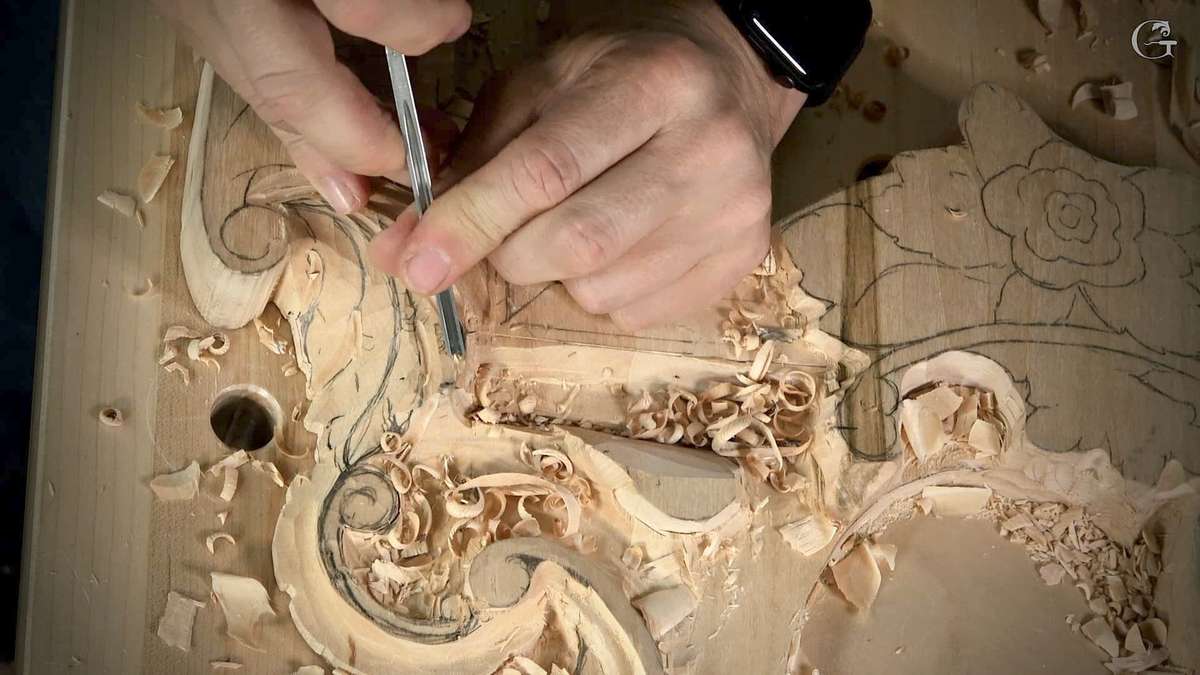
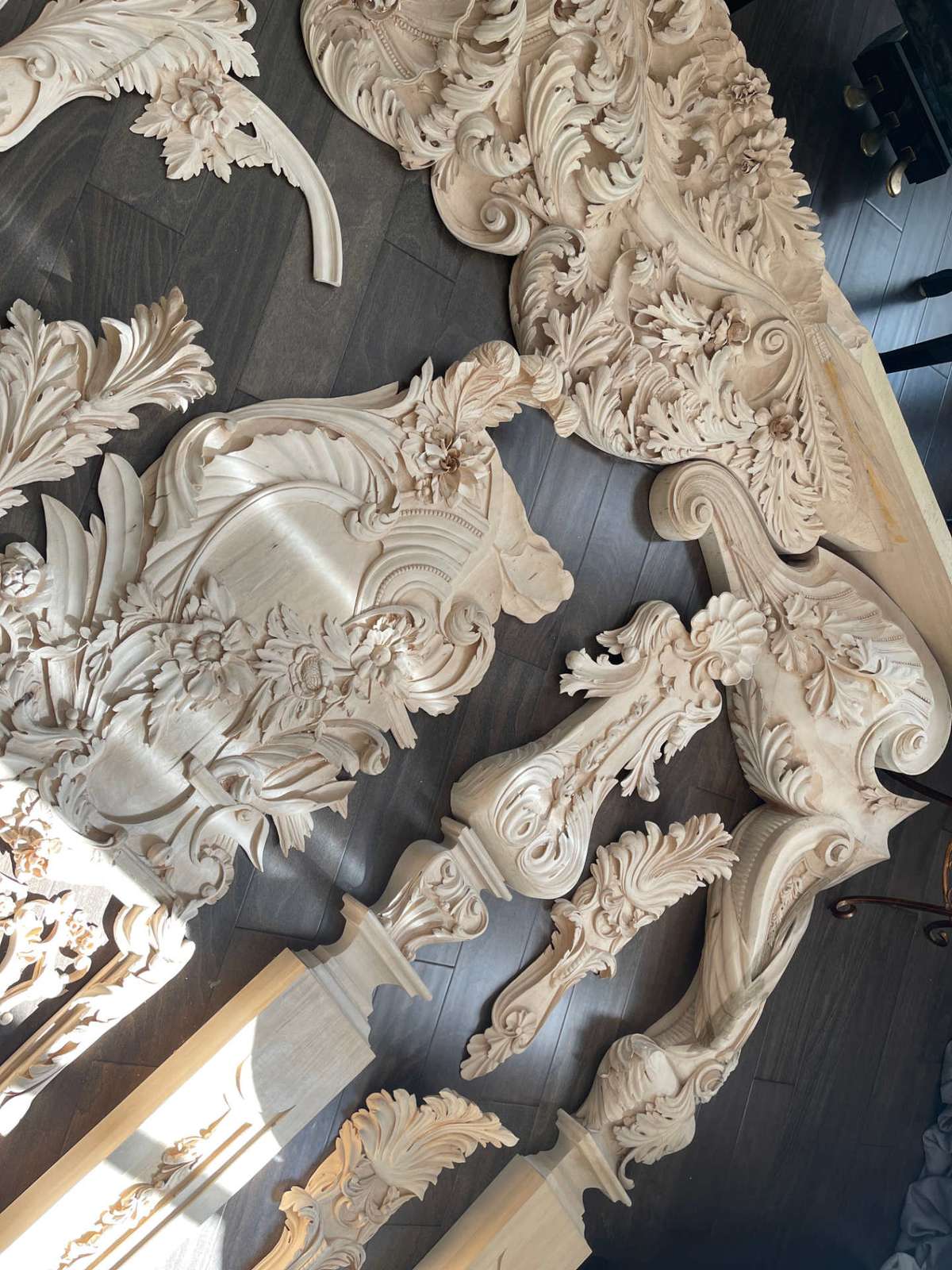
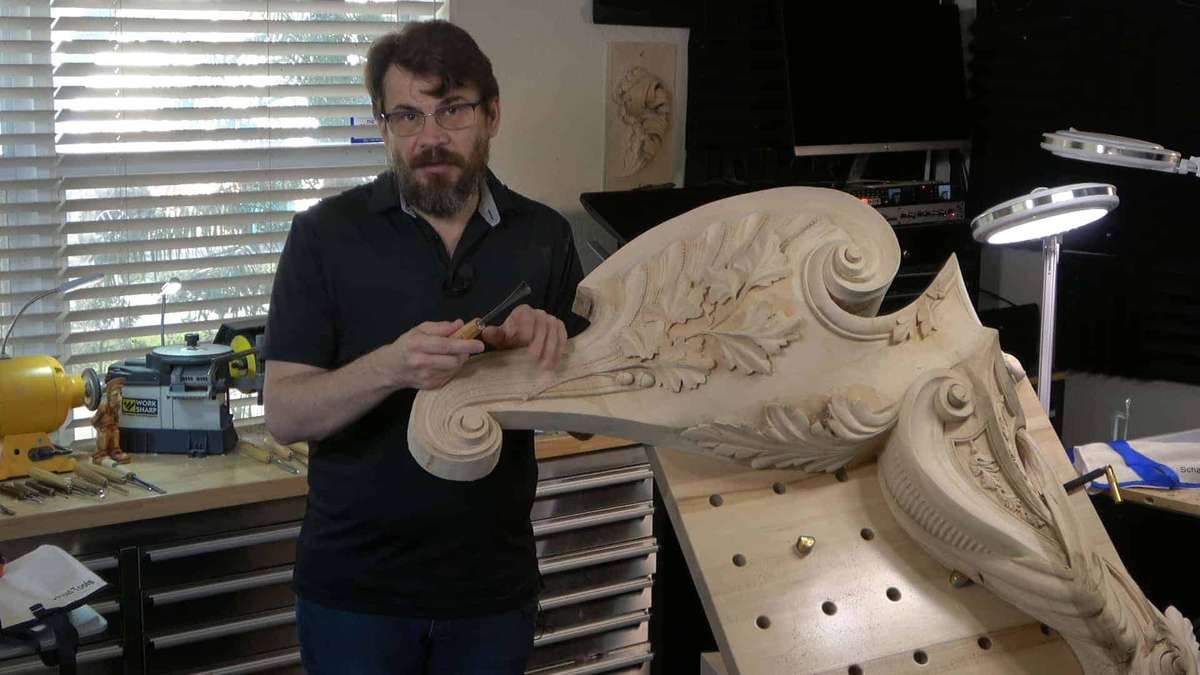
A gouge leaves a mark, and hundreds of those marks catch the light at slightly different angles.
That is what makes carved wood look alive instead of stamped out. A router gives you an even surface, and an even surface is a dead one. You can tell a painting from a print across a room for exactly the same reason.
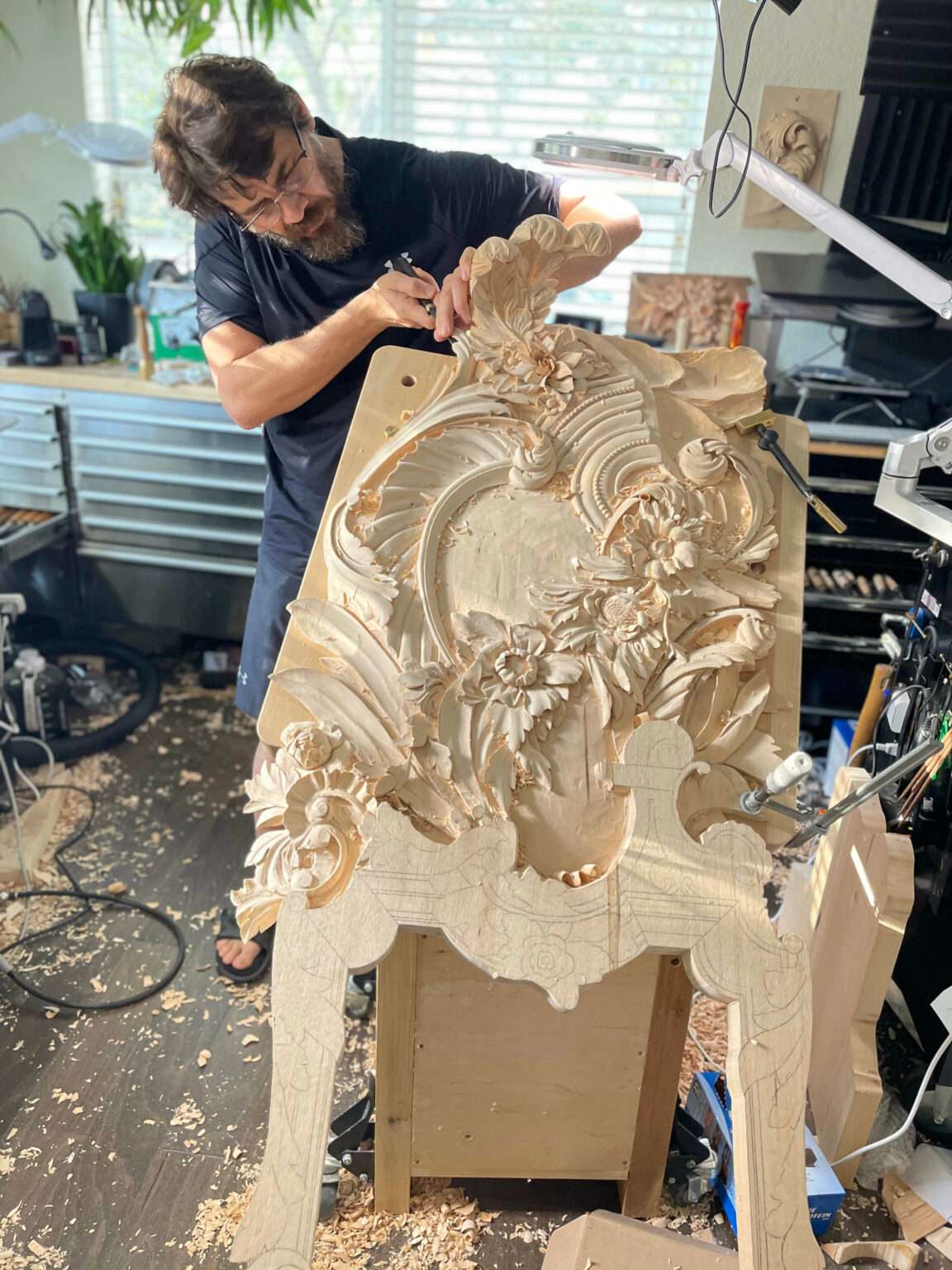
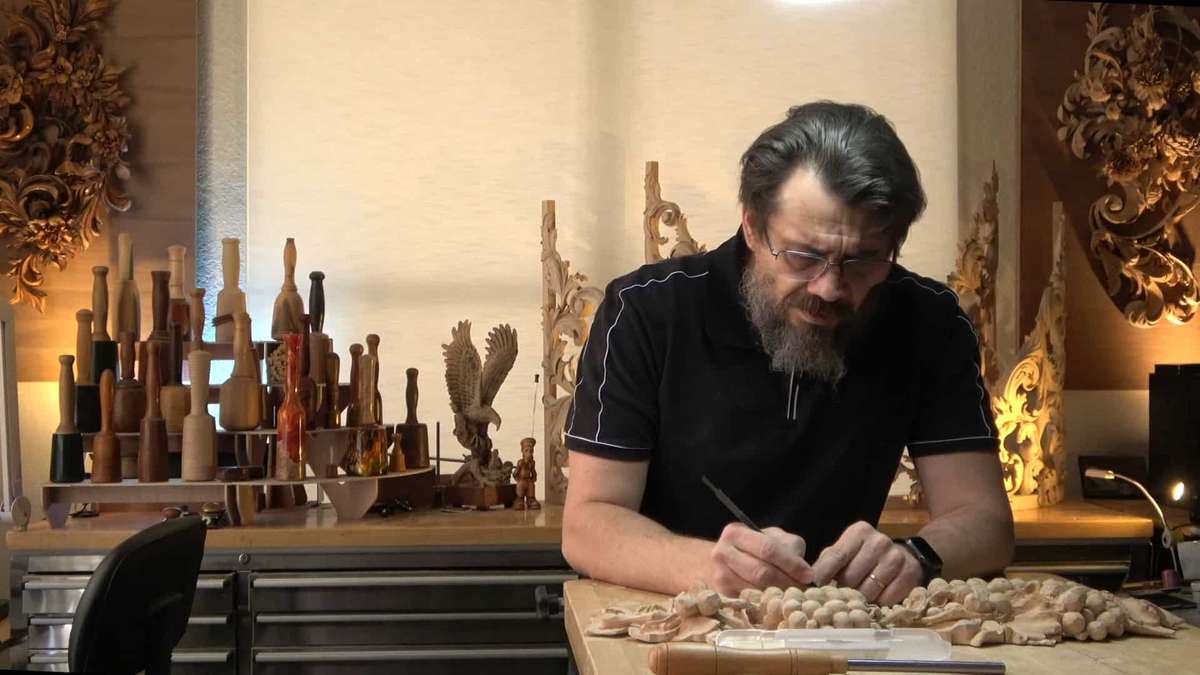
I work in high relief and low relief, architectural ornament, and furniture. On a good day I start at six in the morning and stop at eleven at night without once looking at the clock.
Why did I open an online school?
The old European way of teaching was never a lecture.
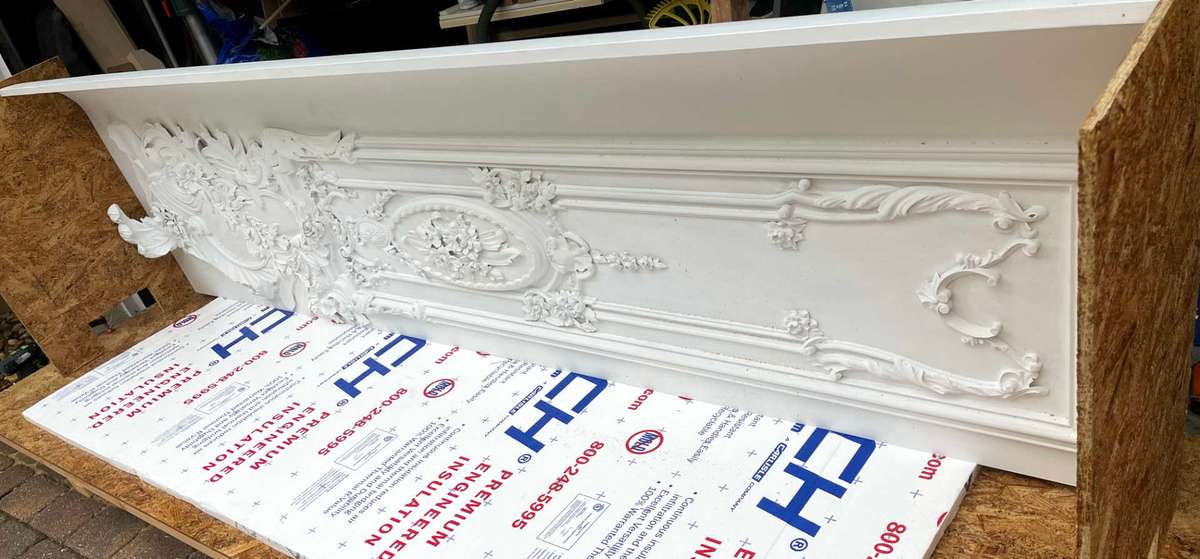
A student stood next to the master and watched him work. That is how Tokarev taught me, so that is what the school is. You watch the cut happen. Sometimes I explain every move, and other times I just carve and talk while a number 11 gouge at five millimeters digs into a slope that runs up to a ceiling.
The beginner path is numbered from the very first cut, so a new carver never has to guess where to stand. Everything else lives on the full course list, and one plan opens all of it. My hands on classes run at several woodworking schools in the United States, and those seats go fast.
If I make a mistake on camera, then I made a mistake. I leave it in.
What has the work won?
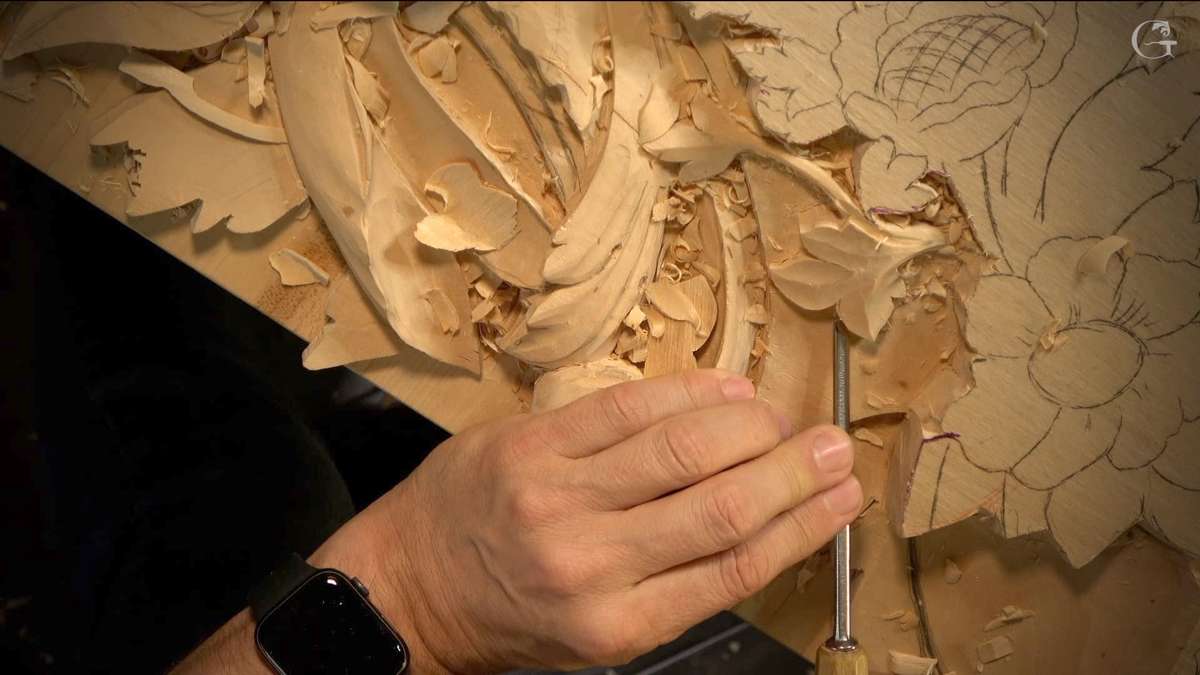
A panel called Wall Decoration took first place in 2012 and made me International Woodcarver of the Year.
That record sits with the Woodworkers Institute in England. Three years later Popular Woodworking Magazine picked my work for its Editors' Choice in Turnings, Carvings and Objets d'Art. The award panel runs about 36 inches, a little under a meter, and there is a great deal packed into it.
Fine Woodworking put my architectural carving in its reader gallery in 2011. In 2017 a Romanian trade magazine, Revista din Lemn, ran a profile written by Mihaela Radu, a wood finishing engineer with twenty years behind her.
I am not the best of the best, and I will not pretend otherwise. Real masters are carving right now in workshops I will never visit. What I can tell you is that I know how to carve.
Frequently asked questions
Where is Alexander Grabovetskiy from?
I was born in 1973 in Dimitrovgrad, in the Russian part of the Soviet Union. My family roots are Polish, from land that sits inside western Ukraine today. The United States took me in as a political and religious refugee in 1996.
Who taught Alexander Grabovetskiy to carve?
Vladimir Tokarev, a carver and fine art teacher in Dimitrovgrad. I became his only student at sixteen, in a traditional European apprenticeship. He is alive today and he is one of the most talented men I have known.
When did he come to America?
We flew on 15 March 1996, with refugee status the US Embassy granted in two hours. That was a Saturday, and by Monday morning I was framing walls with almost no English in my head.
What is Aalmark?
The woodworking firm I built after that carpenter job fell apart. It was incorporated in Indiana in 1998 and ran with six to eight men. We did whole houses, cabinets, flooring, trim and the carving, and we ranked in the top 4 percent for quality across three states.
What did he win the award for?
A carved panel called Wall Decoration, about 36 inches across, which took first place in 2012 and carried the title International Woodcarver of the Year. In 2015 Popular Woodworking Magazine gave my work an Editors' Choice.
Does he teach in person or only online?
Both. Schoolofwoodcarving.com holds the filmed courses, and I still teach hands on classes at woodworking schools in the United States.
Who is telling you this
I am Alexander Grabovetskiy, International Woodcarver of the Year, and I carve architectural ornament for a living. My studio work lives at Grabovetskiy.com. The teaching lives here.
Shall we carve?
A boy ruined a chisel on a brick, and thirty years later a panel he carved took first place in England. In between there was a language he could not speak and a shop he had to sell.
Come stand next to the bench and watch. Our Access plans open every lesson we have, and part of the tuition goes to orphan and widow charities.
Filed under
- acanthus
- Alexander Grabovetskiy
- Alexander Grabovetskiy
- apprenticeship
- architectural ornament
- Chippendale style
- fine art
- furniture restoration
- gouge
- Grinling Gibbons
- hand carving
- Indiana
- international award
- mahogany
- refugee
- relief carving
- school of woodcarving
- Soviet Union
- traditional craftsmanship
- wood carving
- Wood Carving
- woodworking