
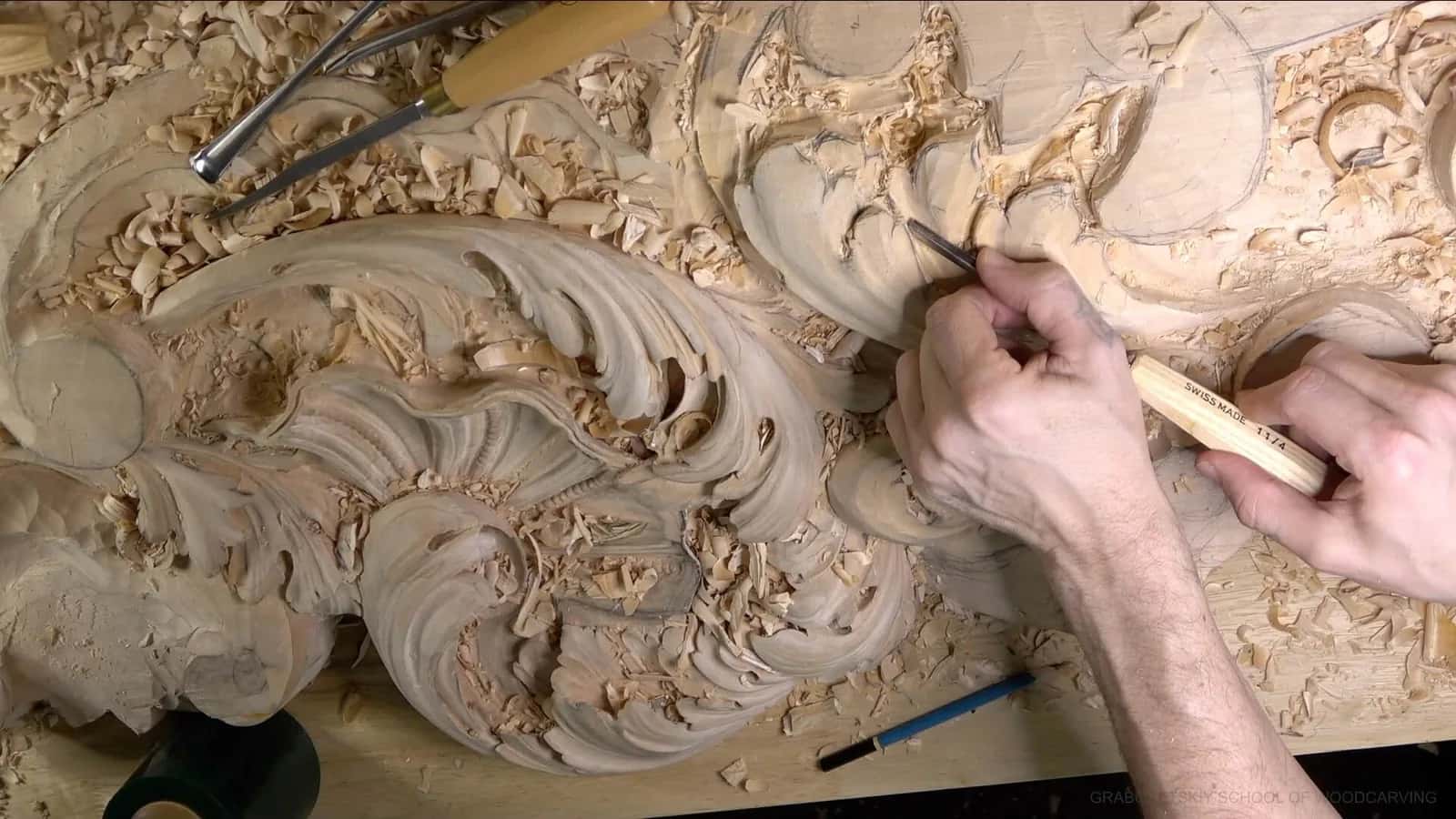
August 27, 2024 · Updated August 16, 2026
By Alexander Grabovetskiy — Master Woodcarver · Founder, School of Wood Carving · 10 min read
How Long Does It Take to Learn How to Carve Wood, Hour by Hour
Wood carving is learned in stages, so how long does it take to learn how to carve wood depends on the stage you name. A clean stop cut takes about 10 hours at the bench. A finished rosette takes 40. An acanthus leaf that still holds its shape takes 200.
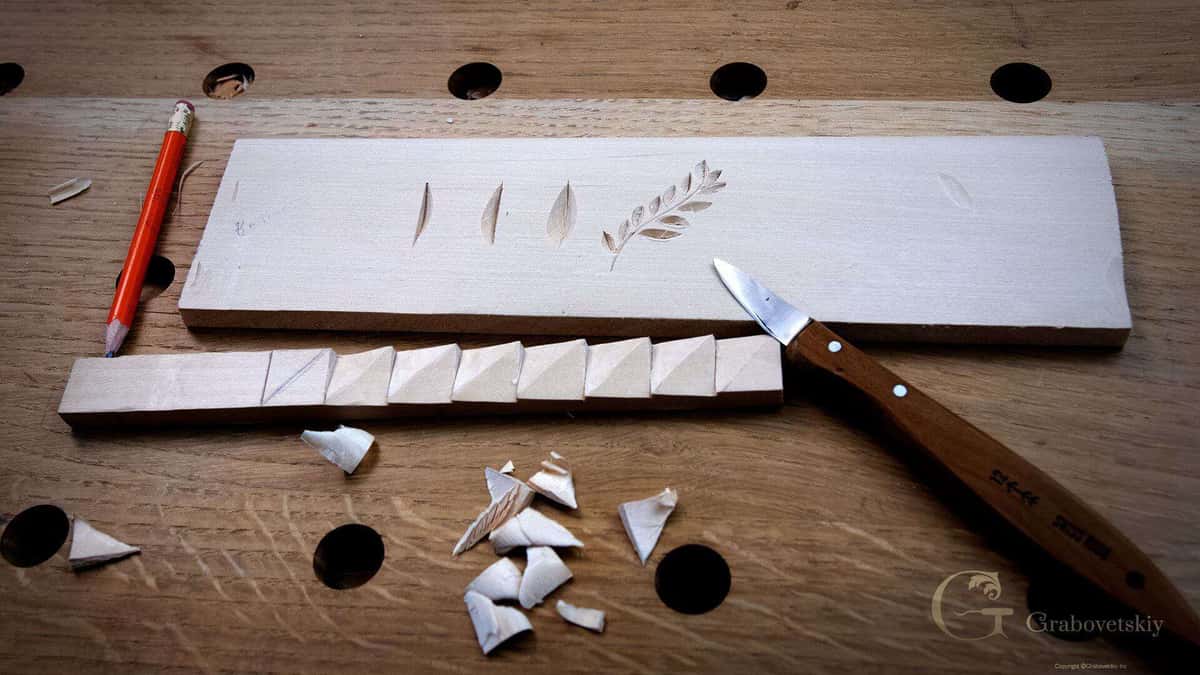
Every one of those little grooves cost the same beginner about four minutes.
I get this question every week, and most answers online are a pat on the back. Here is the clock instead. I started to carve when I was six years old, and I did not know anything about wood carving then. So I have watched the hours pile up on myself and on hundreds of students since.
The numbers below are what I see in my own shop and in my classes. They are not a study, just a teacher counting.
- Ten hours buys a single stop cut whose wall stands straight.
- Forty hours carries a small rosette all the way to a finished carving you would keep.
- Two hundred hours puts a real acanthus leaf on the bench.
- Six hundred hours makes a panel that belongs on a piece of furniture instead of a shelf.
- Sharpening decides how fast every other number falls.
What do the first ten hours of carving actually buy you?
Ten hours buys one clean stop cut with a straight wall under it, and nothing else. That sounds thin. That cut is the whole foundation. A stop cut which leans is a stop cut you will chase for the rest of the piece.

My beginner course on first cuts for beginners says this plainly. If you train your hand from the very beginning to carve clean in this type of carving, you are not going to have any limitations on what you can do later on. That habit is worth more saved time later than any tool you could buy.
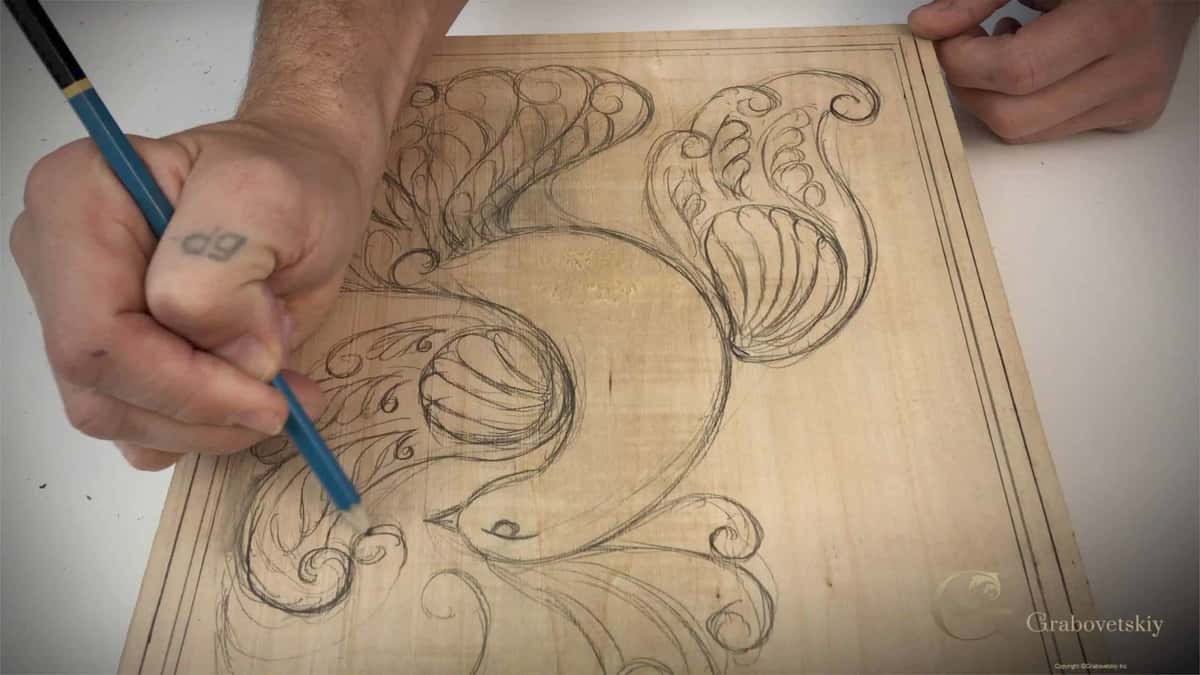
A line drawn wrong here costs a minute. Carved wrong, it costs an hour.
Hour one through hour three go to the pencil. Hour four through hour ten go to a mallet and one gouge. Most people want to skip the drawing part. They pay for that in hour forty, and they pay with interest.
How many hours until a first finished relief carving?
Forty hours of bench time carries most people through a small rosette, pencil line to finished carving. Two or three weekends, for a person who shows up. A low relief carving is small enough to finish and honest enough to teach you something.
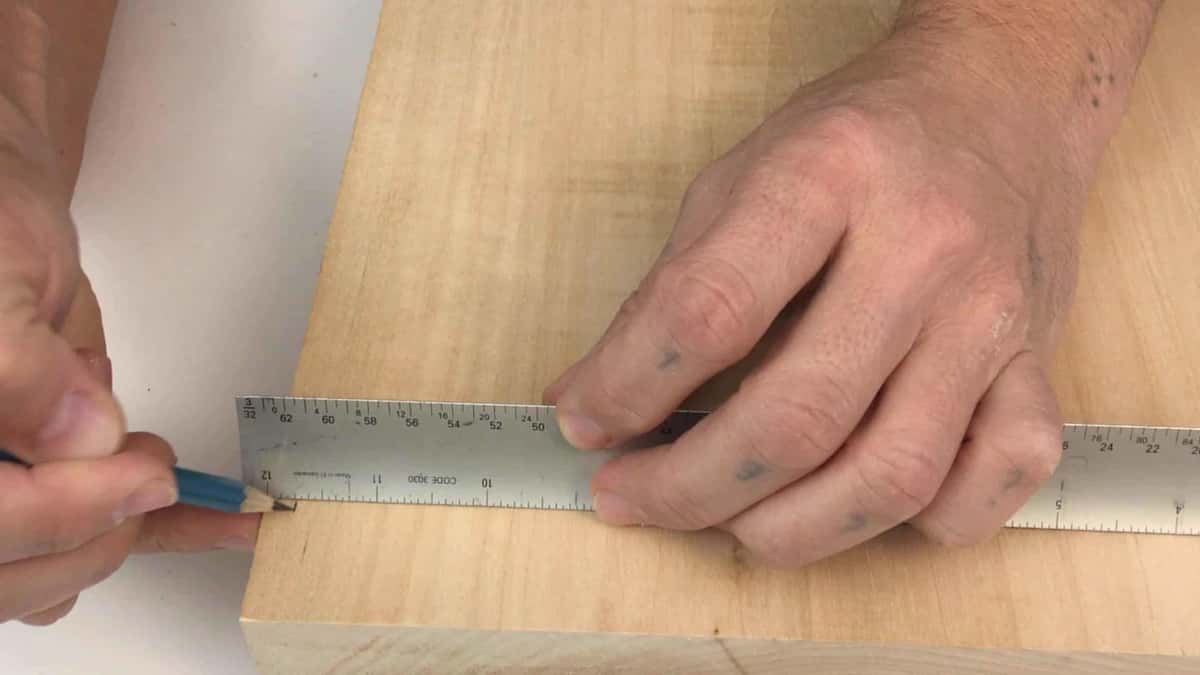
People who join my school call themselves beginners, and they never carved before, and they already get really good results on the projects we work on. That is not flattery. It is what forty focused hours does to a hand.
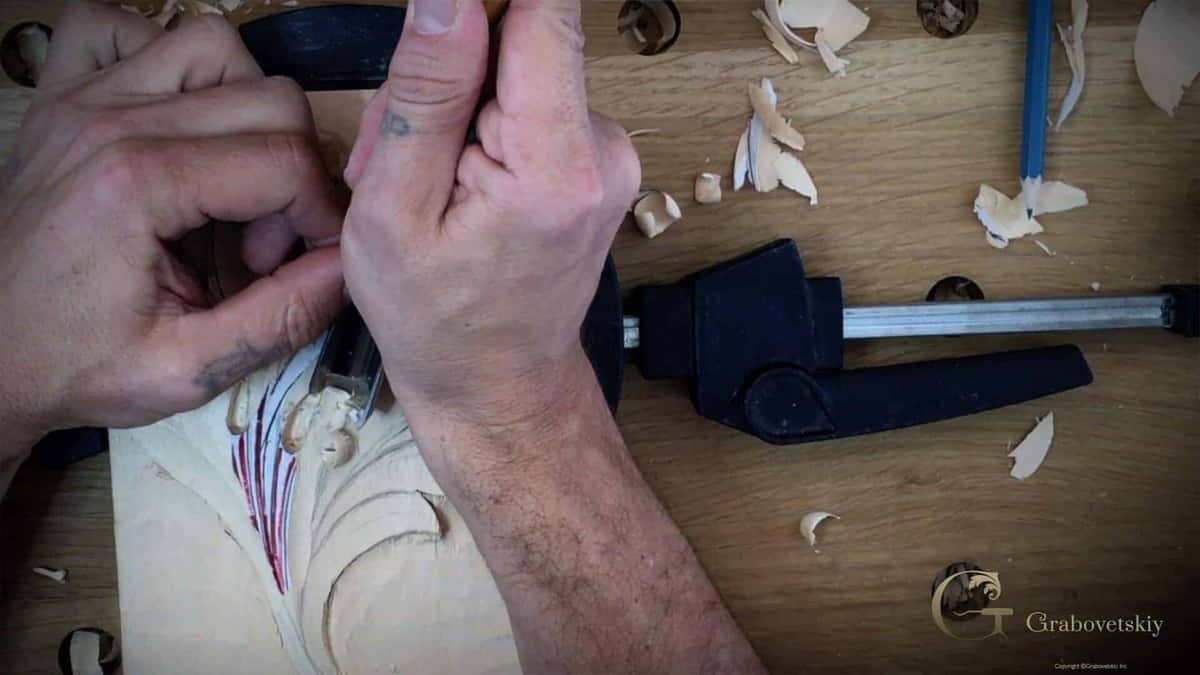
Nothing has been removed yet in this frame, and two of the forty are already gone.
| The milestone | Hours at the bench, my count | How it looks |
|---|---|---|
| The first stop cut, wall and all | About 10 hours | The wall stands straight and the chip pops |
| A small finished rosette | Around 40 hours across two or three weekends | Nothing wobbles |
| An acanthus leaf holding its shape | Roughly 200 hours of patient repetition on a single motif | The lobes read from across the room |
| A furniture panel | Around 600 hours spread over one steady year | It belongs on furniture |
| A commission grade panel that a customer pays for | Around 2,000 hours | The hand stops asking permission first |
| Your own design | No number, because design never stops growing | Still learning |
Between hour ten and hour forty the change happens in your eyes. Your hands are not what improved. You start to see the shadow a cut will throw before you ever make it, and you stop being surprised by your own wood. Ask a student in week three what changed and they point at the tool. Ask again in week six and the answer is the drawing.
Wondering whether the craft itself is difficult is a different question, and I answer that one over on whether carving is hard to learn.
When does an acanthus leaf start to hold its shape?
Two hundred hours is my honest number for an acanthus leaf which still reads as a leaf from across the room. Before that you get a shape. After that you get a leaf.

The gap between those two words is where most people quit. In my Corinthian acanthus leaf course I say it plainly. It is tempting to finish everything in half an hour, but wood carving is not that type of trade where you can do your work quickly.

Blue pencil, never graphite, so the line survives the chips and my thumb.
Those hours are not spent on one leaf. Call it roughly forty leaves. Each one teaches the same lesson in a slightly worse piece of wood than the last, and that is exactly the point.
What does a week at two hours look like against a week at ten?
Two hours a week moves you one milestone a year, and ten hours moves you one milestone a season. The clock is not linear. Long gaps between sessions cost you the warm-up again.
My own joke about the one week promise, filmed in May 2022.
The light carver spends the first twenty minutes of every session remembering where the piece was. The heavy carver sits down already warm. Same 100 hours on paper, and the heavy one reaches the rosette five months sooner.

Do not read that as a reason to carve until your arm dies. Taking a break every 20 minutes is good practice, because you get really tired, and tired hands make the cuts you have to fix. In my Maine class people carve better in bursts than in one long grind.
How do you carve faster without carving worse?
Four habits save my students more time than any new tool ever has. None of them cost money. All four are boring, which is why people skip them and then wonder about the clock.
Step 1, sharpen before you carve anything
Ask yourself how long you are going to carve with pre-sharpened tools. A new gouge out of the box is ground, and ground is not sharp. My tool sharpening course exists because this one skill takes the longest to learn and pays back the fastest. A Tormek wet grinder or a leather strop both work. Doing nothing does not.

Two minutes on the wheel, and the same gouge that was tearing starts slicing.
Step 2, stay on one species for the first year
American basswood is soft, even and forgiving, and the basswood entry in the Wood Database shows why. When the wood keeps changing under your gouge, your hand never builds a memory. Pick one board and stay there. The long argument for that lives in my piece on the best wood for carving.
Step 3, carve the same leaf ten times
Repetition is the shortcut nobody sells. If you carve acanthus every day, you get used to it, and then you start to see acanthus movements everywhere. Ten leaves in a row beats ten different projects, and it is not close.
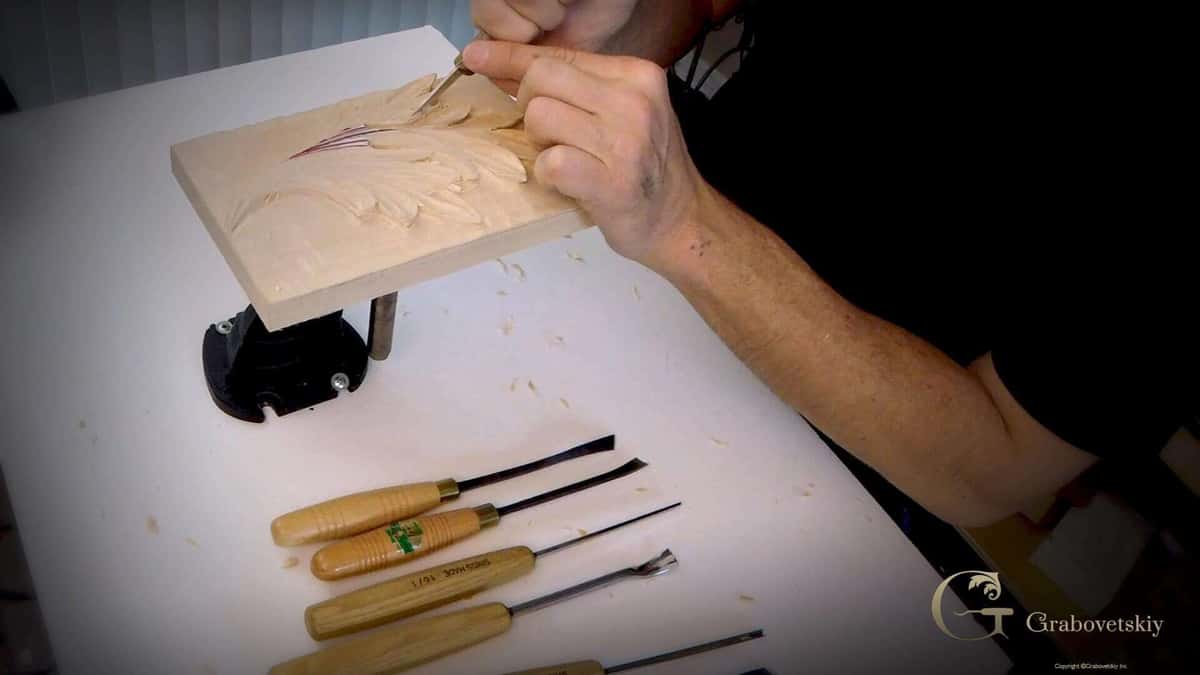
Step 4, let someone watch your hand
A carver watching your wrist catches in ten seconds what a video never will. The old apprenticeship model worked exactly that way, and I still teach in person at the Marc Adams School of Woodworking for the same reason. Anyone who wants the method itself rather than the clock should read how to learn to carve wood.
What stretches the clock and adds years?
New tools instead of practice will add years, and a fresh project every week will add more. I have watched both happen for thirty years. Neither one feels like a mistake while it is happening.

Shopping wears the costume of progress. My flower rosette course pushes people to attempt something they believe is impossible with limited tools, and once they start doing it they see it was never true at all. A carver with nine gouges rarely needs a tenth one. What that carver needs is a strop.
Fixing costs more than doing. It takes much longer to fix the mistake than to make the first cut right at once. One careless minute in hour three can cost four hours in hour twelve, and the wood never gives that back.
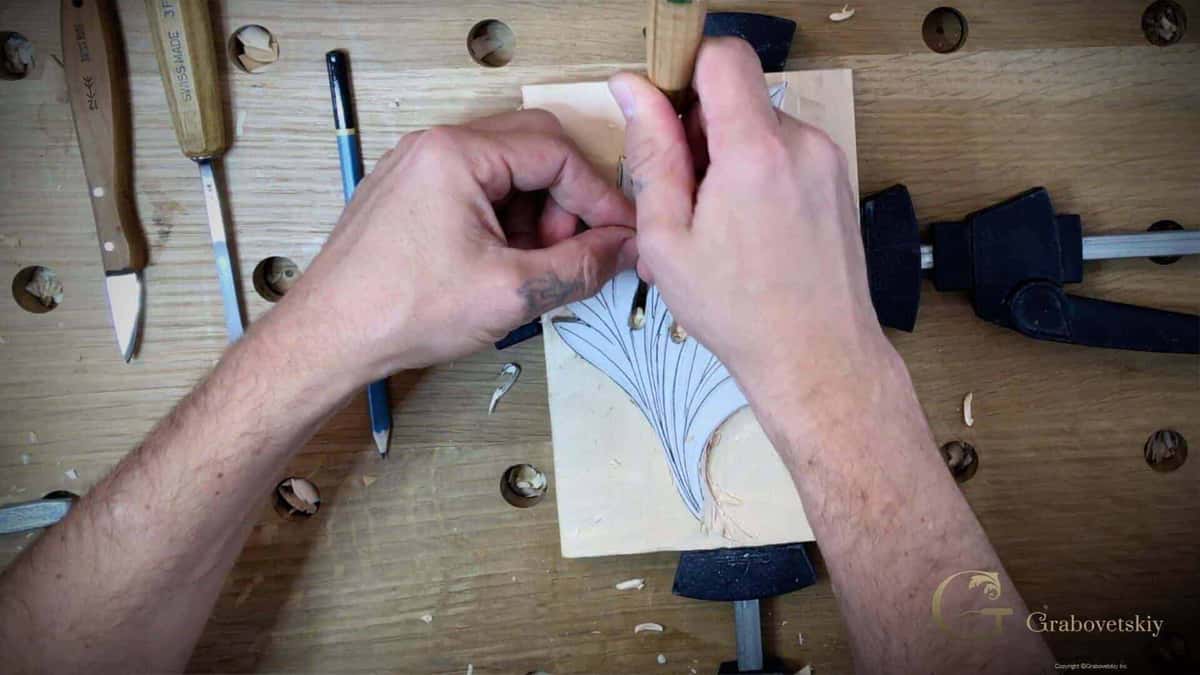
A beginner in my school took about six weekends over this one.
I tell a story in my furniture panel course about a man who spent seven years with one master, then seven with a second who called the first one a fool, then seven with a third. Twenty one years. The point of that story is there are no perfect masters. You learn from all of them and still build your own approach.
The other clock stretcher is money. The honest budget lives in what wood carving costs as a hobby, while the tool list belongs in which carving tools a beginner should use.
How long until a carving belongs on furniture?
Around 600 hours a panel starts to belong on furniture instead of on a shelf. One steady year at ten hours every week. Two thousand hours gets you a panel somebody actually pays for.

I had one piece I worked on for ten years. I could have finished it in one month, but other work kept coming and it waited. So the hour count and the calendar are two different animals, and only one of them sits under your control.

Nobody in that Maine class reached this in week one, and nobody expected to.
There is a ceiling past all of these numbers. You cannot become a master until you learn how to design for wood carving, and design has no hour count at all. Grinling Gibbons drew before he carved, and so did every carver whose work outlived him. Slow hours have their own reasons, which I dug into in why wood carving takes so long for beginners, and the wider beginner path lives on learning wood carving as a whole.
My advice after forty years of carving stays plain. Count the hours, and stop counting the months.
Frequently asked questions
Can I learn wood carving in one week?
One week of full days gets you a straight stop cut and one small finished piece. That is real progress, and it is also the end of week one. The 40 hour rosette milestone is reachable in seven full days at six hours daily.
How many hours should a beginner carve each week?
Four hours, split into two sittings, beats one long Saturday every time. Short sessions keep the hand warm and the mistakes small. I take a break every 20 minutes myself, because tired hands make the errors you then spend the next hour repairing.
Does age change how long wood carving takes?
Grip strength matters less than most people fear, because sharp tools do the work for you. I have taught students in their seventies. Eyesight and good light change the clock far more than birthdays ever do. A bright lamp over the bench is worth more than a young wrist.
How long does sharpening take to learn?
Sharpening took me longer than carving itself, and I would give it two years before it feels automatic. A working edge is possible in one afternoon. The distance between working and razor sharp is where those two years quietly go.
Is softwood faster to learn on than hardwood?
Basswood shortens the first hundred hours because it forgives a dull edge. Oak and walnut punish that same edge and slow everything down. Start soft, then move up once your stop cuts stand straight without you thinking about them.
When can I carve without a pattern at all?
Carving with no drawn pattern usually arrives somewhere past a thousand hours. Until then a pattern is not training wheels, it is a plan. Design is the skill that takes the longest, and it keeps growing long after your hands settle.
Filed under
- basswood as the best carving wood
- beginner wood carving tools to buy
- best types of wood for carving beginners
- best wood for carving projects
- carving wood blanks for practice
- choosing wood for carving as a beginner
- getting started with wood carving
- how long to learn wood carving basics
- how to practice wood carving skills
- learning wood carving for beginners
- online resources for learning wood carving
- safety gear for wood carving beginners
- safe wood carving tips for new carvers
- setting up a wood carving workspace
- simple projects for wood carving beginners
- small wood carving projects for practice
- starter kits for wood carving tools
- tips for purchasing carving supplies
- types of wood that are easy to carve
- Wood Carving Basics
- wood carving techniques for newcomers