
September 3, 2024 · Updated August 16, 2026
By Alexander Grabovetskiy — Master Woodcarver · Founder, School of Wood Carving · 11 min read
How expensive is wood carving as a hobby in your first year?
Wood carving is cheap to begin and expensive to collect. How expensive is wood carving in your first year? Four gouges, a strop and one basswood block came to $78.38 the day I priced them. The Swiss set most beginners buy first runs $539.99, and you carve the same leaf.
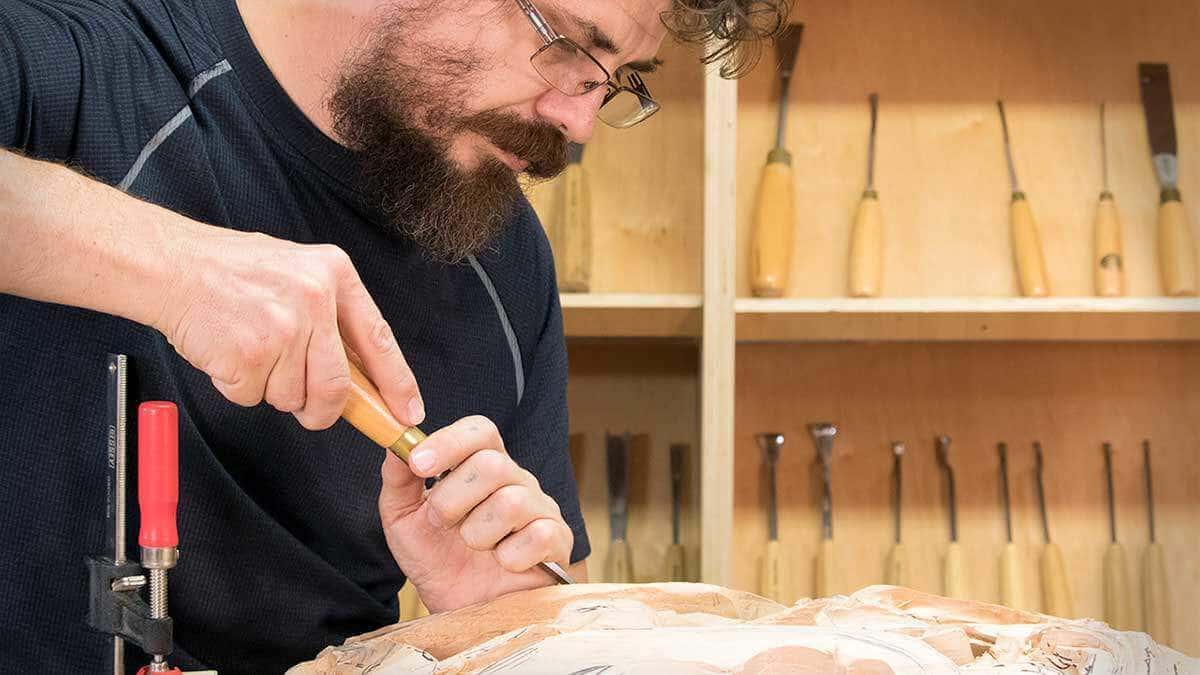
You are standing in a store with a tool roll in your hand, wondering if you are about to waste five hundred dollars. I know that feeling well. When I came from Russia I owned one gouge and one knife, and I made the knife myself. My teacher handed me the gouge. In my course on carving tools and brands I tell that story on purpose, because the block of wood has no idea what your steel cost.
- The whole starting pile, steel and leather and a block, was $78.38 this month.
- A twelve-tool Swiss set runs $539.99, and nine of those tools stay rolled up.
- Nobody budgets for sharpening, and sharpening is where beginners quit.
- Wood barely registers. A block of basswood costs under twelve dollars.
- Carve twice a week all year and your steel runs 39 cents an hour.
What does the first year of wood carving really cost?
Two honest numbers bracket it. A working kit of four gouges, one strop and a block totals $78.38 at the prices I read off the live pages this month. The twelve-tool Swiss set beginners reach for first totals $561.37 once the same leather and the same block go in.
Both kits carve the identical acanthus leaf. Look at that gap before anyone sells you the second one. Say you carve two evenings a week, two hours each evening, and you take a fortnight off somewhere in the middle of it. So 200 hours in the year, and every figure below is divided by 200.

| What you buy | The starter kit, priced from live pages | Swiss set | What the extra money is buying |
|---|---|---|---|
| Gouges on day one | BeaverCraft SC01, four gouges and a strop, $66.99 | Pfeil Brienz twelve | Twelve edges, and you sharpen all twelve |
| Cash at checkout | $66.99 plus a basswood block at $11.39 | Right around $540 | The same first carving, either way |
| Tools you actually use | Three, on the acanthus leaf I carve in Maine | Also just three | Nine tools stay rolled up and unsharpened |
| Cost per tool | $16.75 each, and the strop rides along free | $45.00 each | Per tool you use, $180 against $22 |
| First year, tools and wood | $78.38 in total, which works out to 39 cents | $561.37 in total | The identical leaf comes out, for less |
Where does the money in wood carving actually go?
Steel takes most of it. Sharpening takes the rest, and the wood takes almost nothing, which surprises everybody I teach. A gouge is forged, ground and fitted by hand, so one Pfeil tool from the Swiss workshop costs more than a month of lessons.
I own a wall of tools, and I am not going to pretend otherwise. You do not need one. Every gouge on that wall arrived because a commission demanded it, not because I woke up wanting more steel. For the history of why these shapes exist at all, the Wikipedia survey of wood carving is a fair place to start.

Whether carving can pay for itself is a different question with a different page, so I will point you at whether you can make money carving wood and stay on the spending side here.
How many gouges does a beginner really need?
Three will carry you further than you believe. In my Grinling Gibbons class in Maine I stopped halfway through a leaf and asked the room whether anyone had noticed we used only three tools on that project. Three tools, and we were already there.
A single Pfeil number 9 sweep gouge at Woodcraft starts at $47.99. Three of those is $143.97. That is real money. It is also the entire toolkit for a first relief carving, with change left over for wood, and Gibbons himself, whose limewood work in English houses nobody has beaten in three hundred years, was not working off a rack of forty.
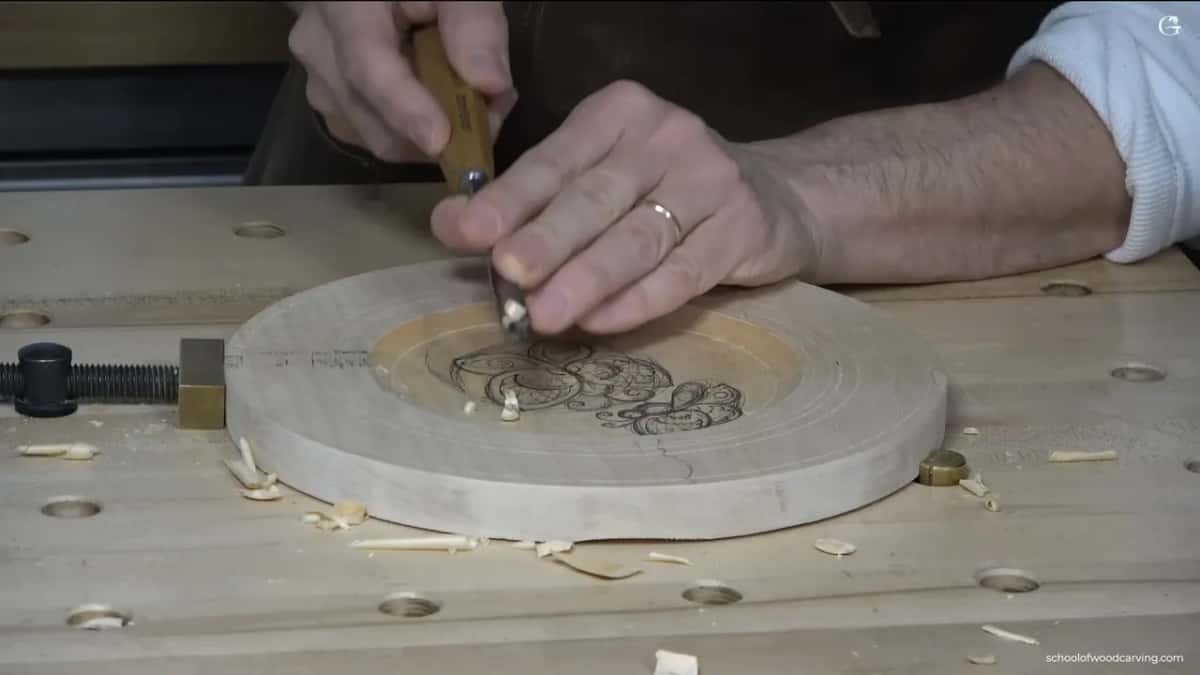
Which brand and which sweeps belong in that first three is its own argument, and my answer lives on the best woodcarving tool set. Buy the sweeps your first project draws, and no others.

Why does a boxed set of twelve waste your money?
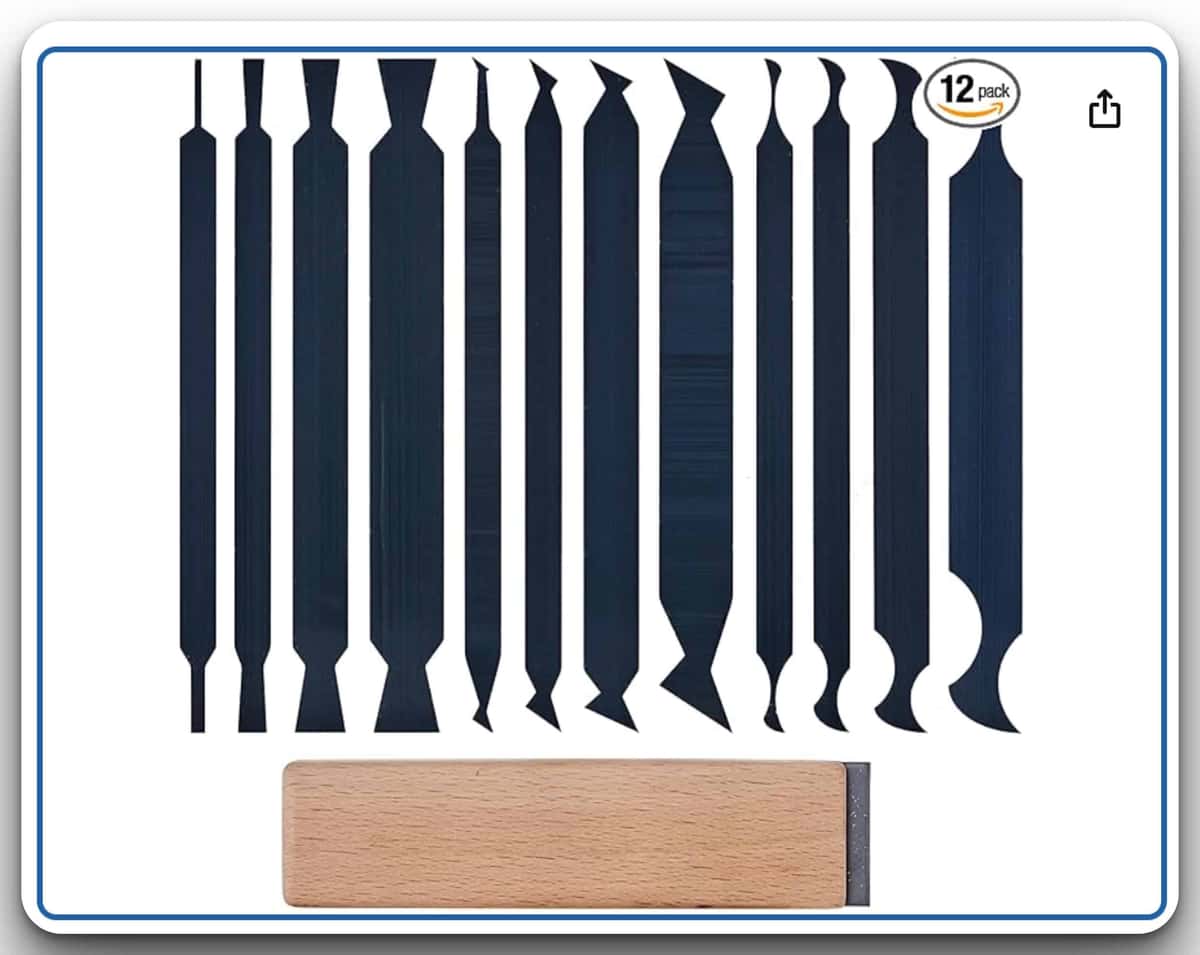
You pay for nine edges you never touch, and every one of those edges still needs sharpening before it will carve. When I reviewed a budget set of twelve on camera, I said plainly that some of my own gouges cost twice as much as that whole box, one gouge against twelve.
The box price looks kind until you count the ones you use.
Run the division. The twelve-piece Pfeil Brienz set at $539.99 is $45.00 a tool, which sounds reasonable until you carve your first leaf with three of them and the real figure turns out to be $180 per tool used. Its intermediate twelve-piece sibling at $409.99 does the same arithmetic to you, just more quietly. Meanwhile the BeaverCraft four-gouge kit at $66.99 arrives carrying leather and compound in the box.
I have no money coming from any of these brands. The arithmetic is the point, because a beginner who spends $540 in week one and then hates the V tool in week three has bought himself an expensive drawer.
How much does it cost to skip sharpening?
More than every tool you will ever buy. A leather strop with compound runs $9.99, and it is the difference between a $47.99 gouge that carves and a $47.99 gouge that tears the fibres and sits in a drawer.
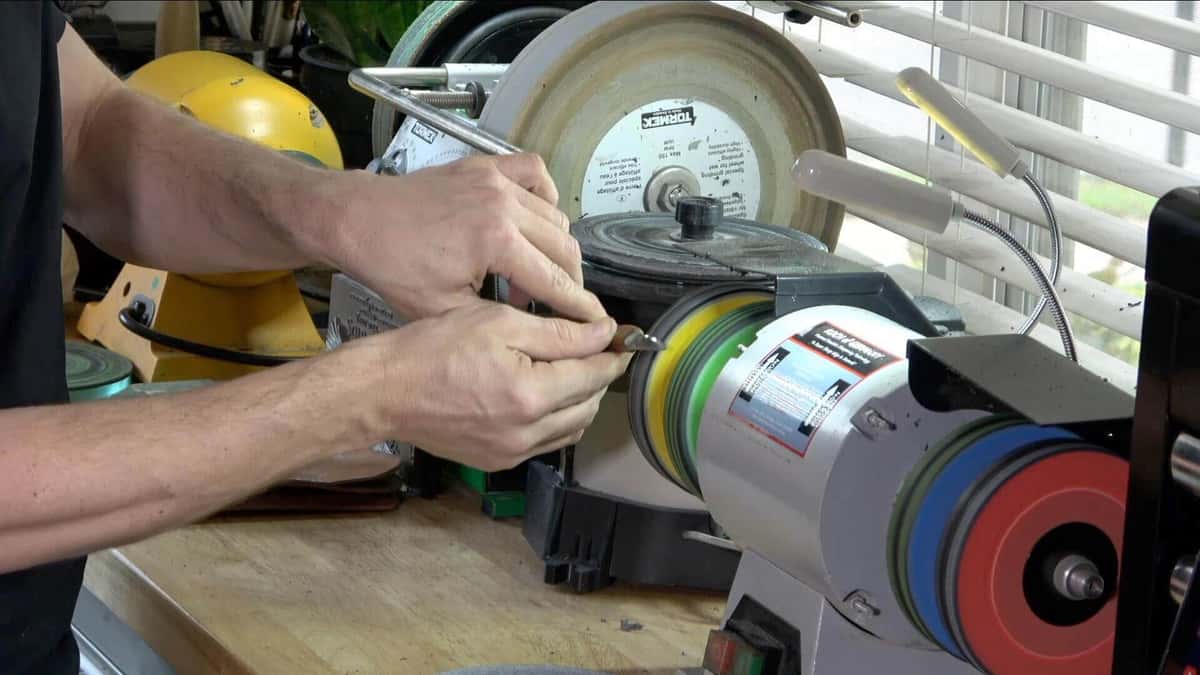
Read the honest warning printed on the budget sets. If you are not planning to sharpen your tools, do not buy them. I say the same thing in my own words at the start of my sharpening course for carving tools. A carver who cannot sharpen gets frustrated. The price of the steel changes nothing about that. Carving that small grape panel on camera, I stopped and buffed every tool three or four times.
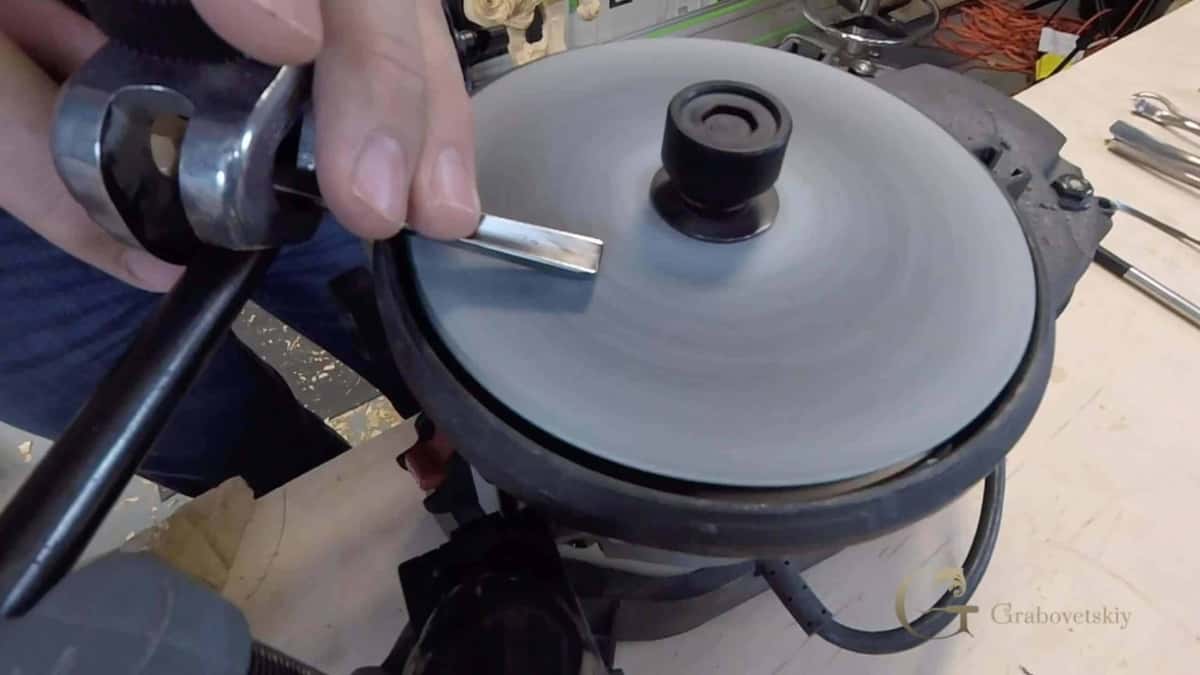
This is the shape that sends beginners back to the store.
Then there is the V tool. One student brought a brand new set to a class, spent a couple of hours fighting to resharpen the V, and gave up. Many people who try carving quit over that one tool, and no purchase fixes it. A $9.99 strop and twenty minutes does.
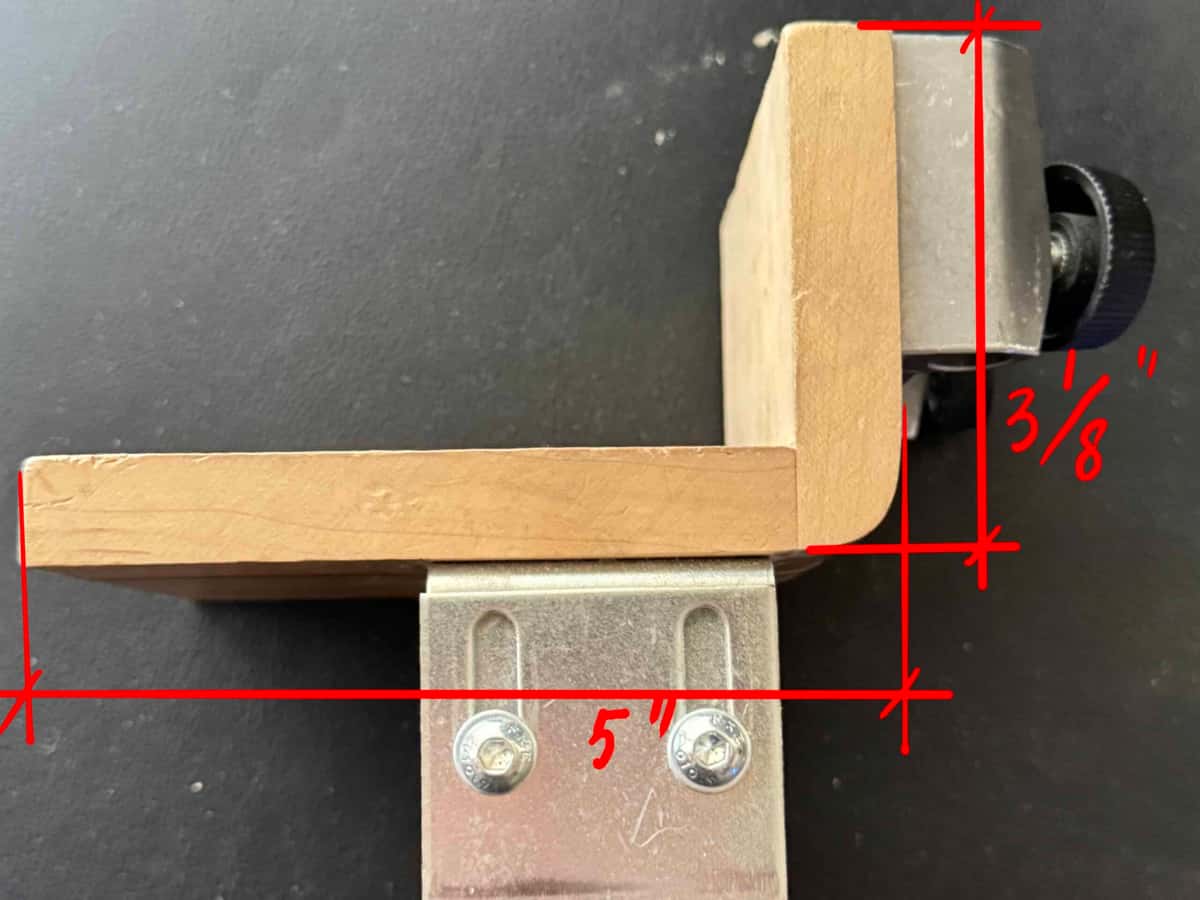
I built this jig out of scrap rather than buy the factory one.
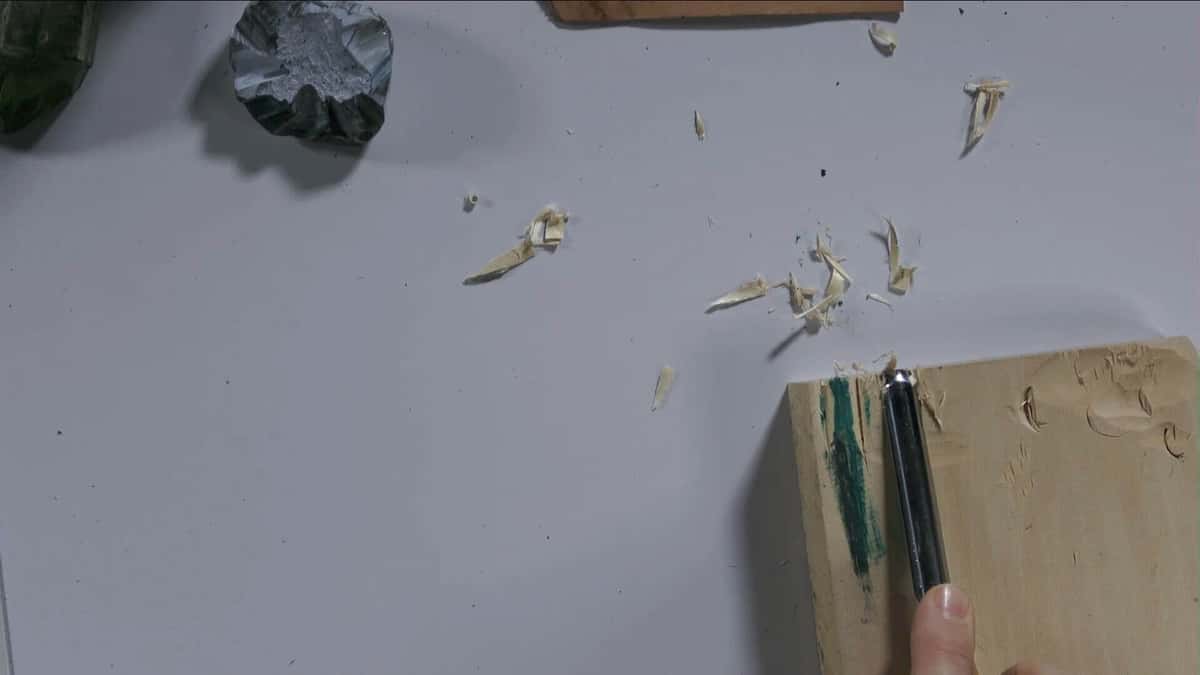
Which part of the bill is the wood?
Less than you spend on one gouge. A basswood carving block at Woodcraft starts at $11.39, and American basswood is the species I hand every beginner because it slices instead of fighting back.
Look up the numbers yourself. The Wood Database entry for basswood puts it near the soft end, and the Janka hardness explainer shows you exactly how far under oak that sits. Species choice has its own page, the best wood for carving, so I will not re-argue it here.

Paper and a pencil cost you nothing and save the block.
The mounting is nearly free too. I glue my work to a scrap of two by four with a sheet of paper between, and that two by four is the cheapest block in my shop. Super glue comes from the dollar store by the handful. A carving needs to be held down; it does not need a $300 vice to be held down.

What should a beginner look for before spending?
Straightness, steel you can sharpen, and a handle your hand agrees with after four hours. I filmed a full answer to this question in 2021, and nothing in it has aged, because the metal has not changed and neither has the hand holding it.
For a second opinion in print, Woodcarving Illustrated magazine reviews beginner steel constantly. Knives are a whole conversation of their own, covered on what a carving knife is, and the mallet question sits on whether you need a mallet at all.
How do you carve for a whole year under $100?
Five decisions do it, and four of them are decisions to not buy something. I have watched beginners follow this exact order and finish a relief panel inside a season, which is roughly the pace described on how long learning to carve takes.
Step 1, buy four gouges and leather instead of twelve
One small kit that ships with its own strop and compound costs $66.99. Those four are your steel for the year, and the leather is the part that keeps them working.
Step 2, buy one block of basswood and nothing else
Eleven dollars and change. Draw on paper first, glue the paper down, and your total spend stands at $78.38. Now go carve. A beginner course such as first cuts for beginners needs nothing more than that.
Step 3, learn stropping before you learn anything else
Twenty minutes on the strop teaches you more than a hundred dollars of new steel. Do it before every session, not after the tool stops working.
Step 4, repeat one design three times over
The second one is better and the third one is good. Repetition costs you one more block, about eleven dollars, which is the cheapest teacher you will ever hire.
Step 5, add one tool only when a carving stops you
When a shape defeats every gouge you own, then buy the gouge that shape needs. A real toolkit grows that way, one honest problem at a time.


What is one hour of carving costing you?
Thirty-nine cents, if you buy the small kit and put in two hours twice a week. Take $78.38, spread it over the 200 hours we counted at the top, and carving costs less per hour than almost anything else you could do with those evenings.
Add teaching and the number moves a little. A year of Access at the School of Woodcarving is $200, so tools, wood and every course together come to $278.38, or $1.39 an hour. Buy the Swiss twelve first and the same year costs $761.37, which is $3.81 an hour for identical carving. The mistakes that actually cost people money are collected on common beginner mistakes in carving, and buying steel instead of skill is near the top.

Difficulty is a separate worry from cost, and if that is really what is stopping you, read whether carving is hard to learn instead of shopping. Money is rarely the true obstacle. Fear of the first block usually is.
Access runs $25 a month or $200 for the year, it renews on its own, and one click ends it. Bring the small kit, the leather and a single block, and I will show you the rest.
Frequently asked questions
Can I really start carving for under $100?
You can, and I would rather you did. A four-gouge kit including its leather is $66.99, wood is under twelve dollars, and that leaves you room for glue and a pencil. Everything afterward should be bought because a carving demanded it.
Do I need a mallet in my first year?
Most beginners do not. Relief work in basswood goes fine with hand pressure alone, and a mallet mainly earns its place in oak or in deep grounding. Wait until your hand tires before your tools do, then buy one.
Will one basswood block finish a relief panel?
One block. A piece two inches thick, four wide and twelve long runs $11.39 and covers a small panel with offcuts left for practice. Buy two if you plan to repeat a design, which I strongly recommend.
Is a $540 Swiss set ever worth buying?
For a working carver, yes, and mine have paid for themselves many times over. In month one, that same money buys nine edges you have not learned to sharpen. Earn the set by wearing out the small kit first.
What should a beginner spend on sharpening gear?
Ten dollars will get you started properly, and I am not being cute about it. A leather strop with green compound is $9.99, and that plus twenty patient minutes holds an edge through a whole project. Machines come later, and plenty of carvers never buy one.
Do carving tools wear out and need replacing?
Good steel outlives the carver. I still carve daily with gouges I bought decades ago, because stropping removes almost nothing and a properly ground bevel lasts. Overheat one on a grinder, though, and you have thrown that money away.
Filed under
- affordable wood carving kits
- basic wood carving toolset prices
- beginner wood carving supplies
- best wood carving tools for beginners
- cost of wood carving gloves
- costs of different wood types for carving
- expenses for wood carving projects
- finding cheap wood carving tools
- how much does a wood carving knife cost
- how much to spend on wood carving
- how to budget for wood carving
- neededs for beginner wood carving
- prices for custom wood carving designs
- prices for wood carving chisels
- starting wood carving on a budget
- Understanding Tools for Carving
- wood carving knife reviews
- wood carving mallet prices
- wood carving sharpening stones
- wood carving starter set
- wood carving tools cost breakdown