
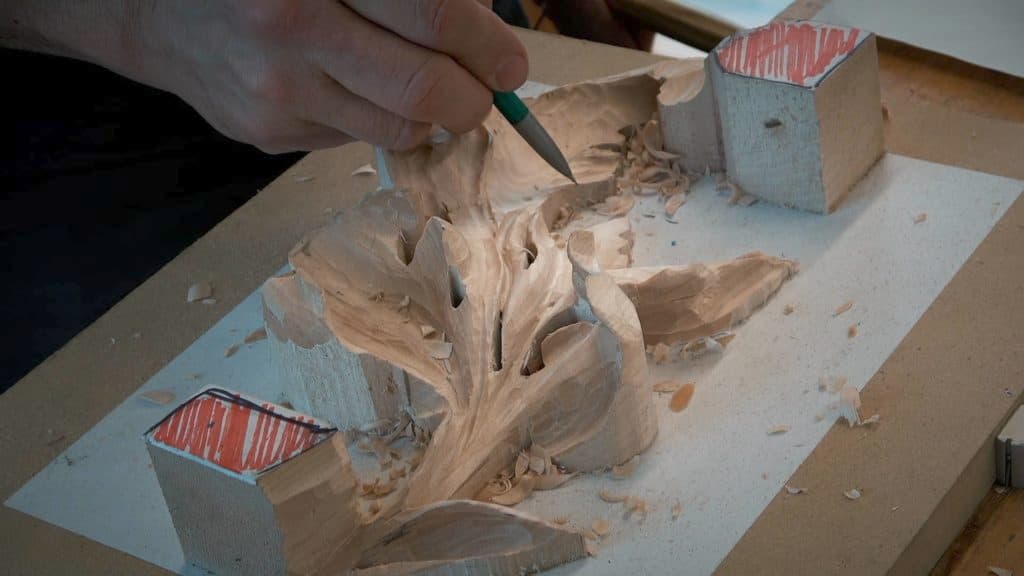
Alexander Grabovetskiy, woodcarver, School of Woodcarving · Published 2022
How do you blend a marriage line without breaking the wood?
Quick answer: Blending a marriage line means reaching the spot from both sides. Where the grain meets, a tool pushed straight across the spot breaks the wood. In my modern acanthus lesson I came at it from different points and blended it until happy, with no need to be perfect yet.
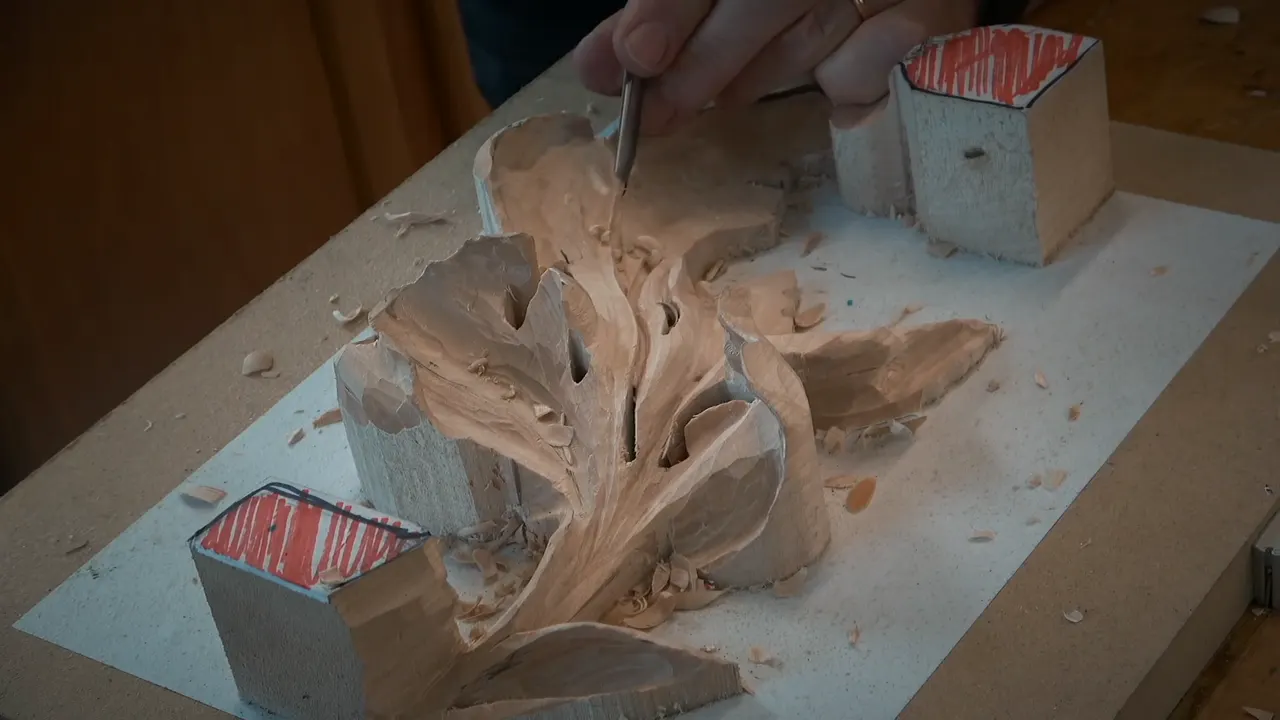
A marriage line is the spot where the grain meets, and I blend it by carving up to it from one side and then moving to the far one. The third video of lesson five of Carving Modern Acanthus is where I said it, with a big #9 in my hand and a class of students in the room. The same spot kept coming up in my other courses, so this page lines them up side by side.
Have you ever pushed a gouge across a spot in a carving and felt the wood start to tear? Did the fibers lift right where your pass ran out? The spot has a name, and there is a way through it. Here is what I told my students.
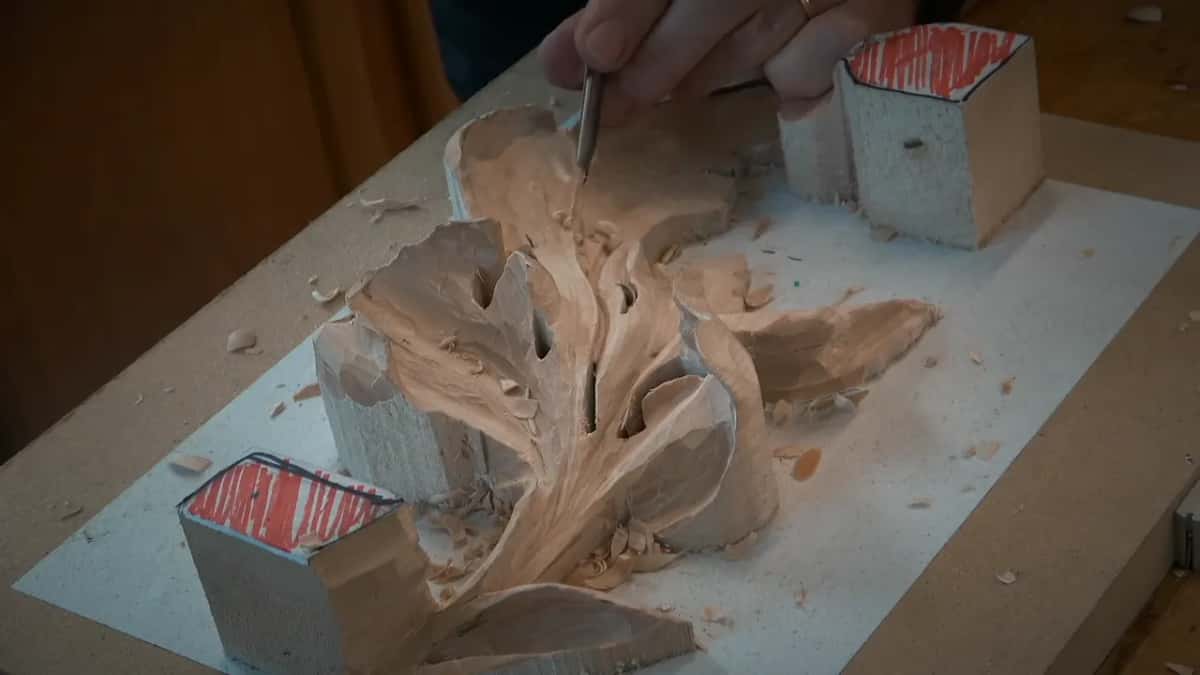
How do you blend a marriage line in a carving?
I reach it from different sides and blend the meeting spot together. I do not push across it. It comes straight from the lesson itself.
I had picked up the big #9, the 20 mm one (about 3/4 in), and warned the class that it would show some limitations. Look right there, I told them. See what happens? We call it a marriage line.
One short sentence about how the grain behaves covers it all. The grain does not change direction. The cut is what changes direction, and the grain meets at that point. Push there and I will break the whole thing.
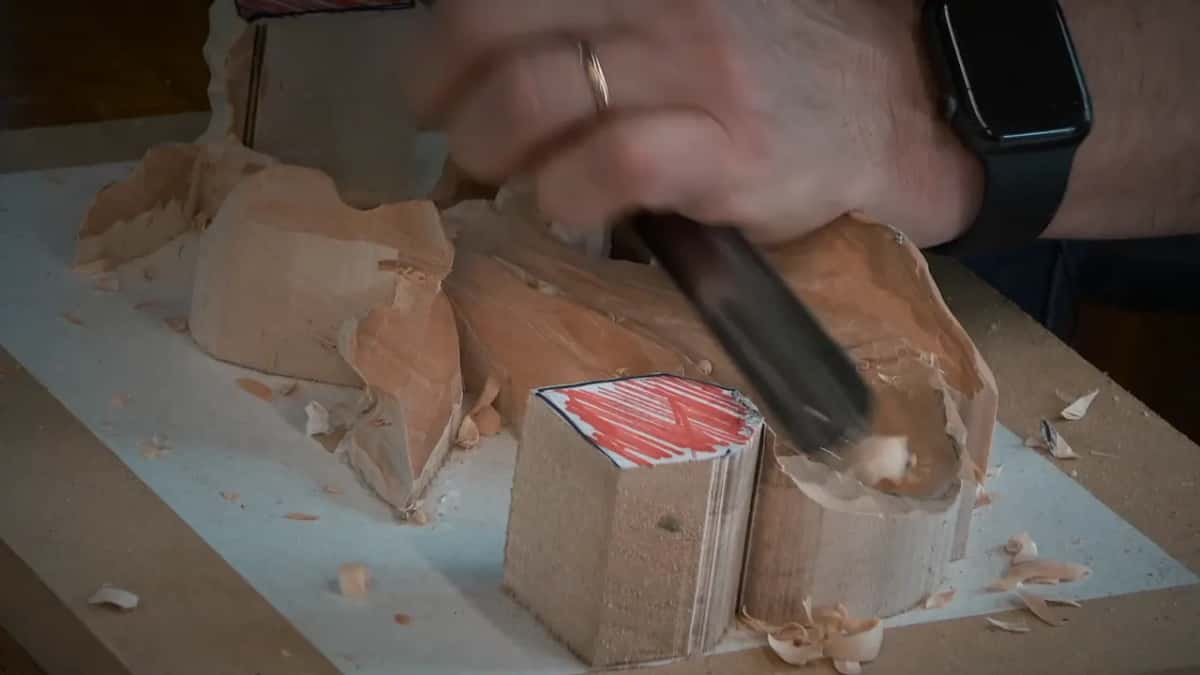
Which side should you carve a marriage line from?
The opposite one, and in my case that was kind of hard, and it was probably the same for the students, since they were working on the same design.
So I blended that spot together, approaching it at different points. I worked until I was happy, and I told them I did not have to be perfect at that point. Around there I was not taking really long passes. For me it is better to be careful.
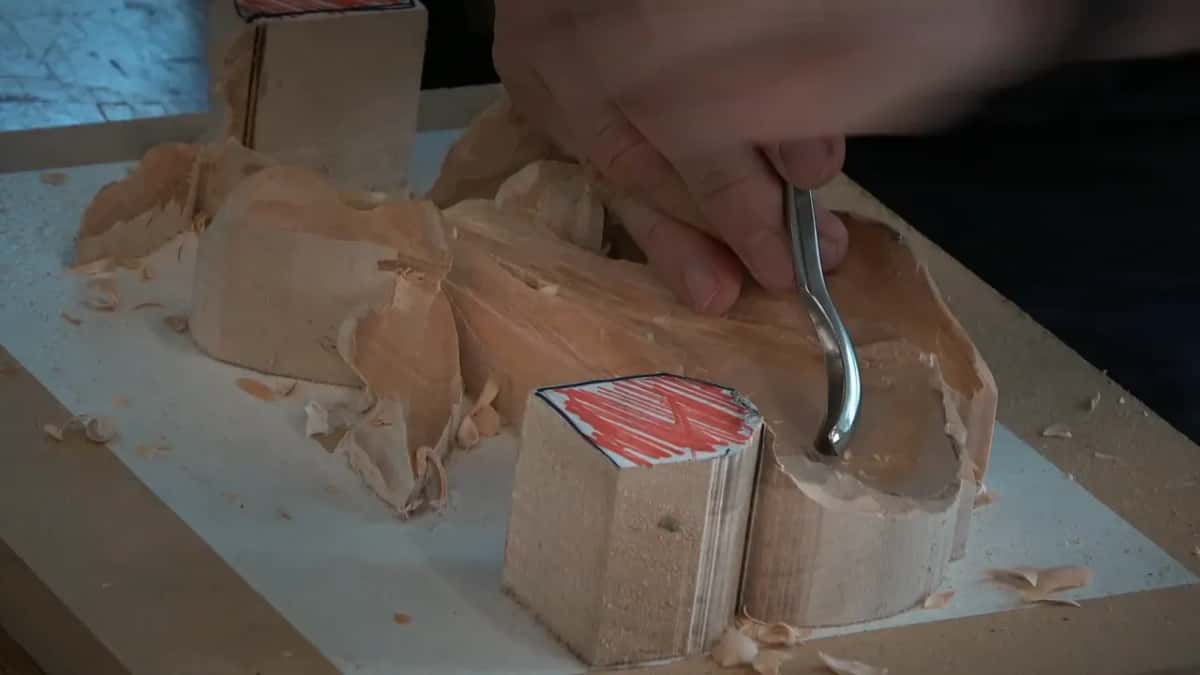
Later in the same video I gave it to them in one plain line: if you have to attack from the opposite side, do it just like that. The leaf comes from an acanthus design that we carve in relief, and lesson five holds all three of its videos.
What did I leave in the wood before the marriage line?
Over in the Hashemi flowers course I left wood inside a leaf on purpose. I was not forcing it, because a marriage line would sit inside when the grain meets. I did not want to rush. "It's better not to rush," I said, so take the time and make the right movement.
Extreme work, and I knew it. Part of what makes a design like this beautiful, I think, is leaving no more than a 16th of an inch (1.6 mm). Yes, it can break. Mine has, multiple times, and once you master it, it just makes you happy.
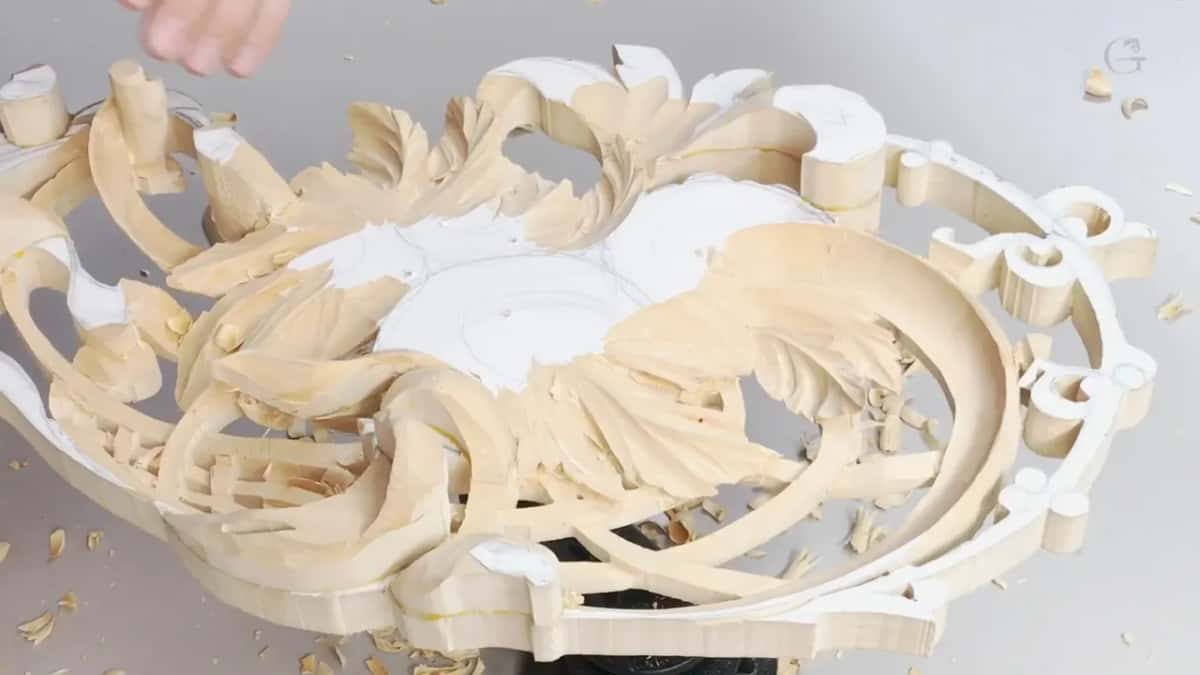
I was constantly rotating. When the line showed up again, I worked it from both sides, this one and then that one. After that I repeated the movement on the inside of the leaf, starting on the far side, and an undercut was waiting. The video is in Hashemi Flowers lesson 8.
How does the tool move on the line itself?
In Hashemi Flowers lesson 10 my tool turned sometimes right to left and sometimes left to right, and I was not pushing too far.
My name for it, I explained, is marriage line, the meeting spot of the grain. Both sides get the same treatment, and I clean it just like that until the line disappears. Next came the thickness of the leaf, which I had to watch. It looked like I had plenty yet.
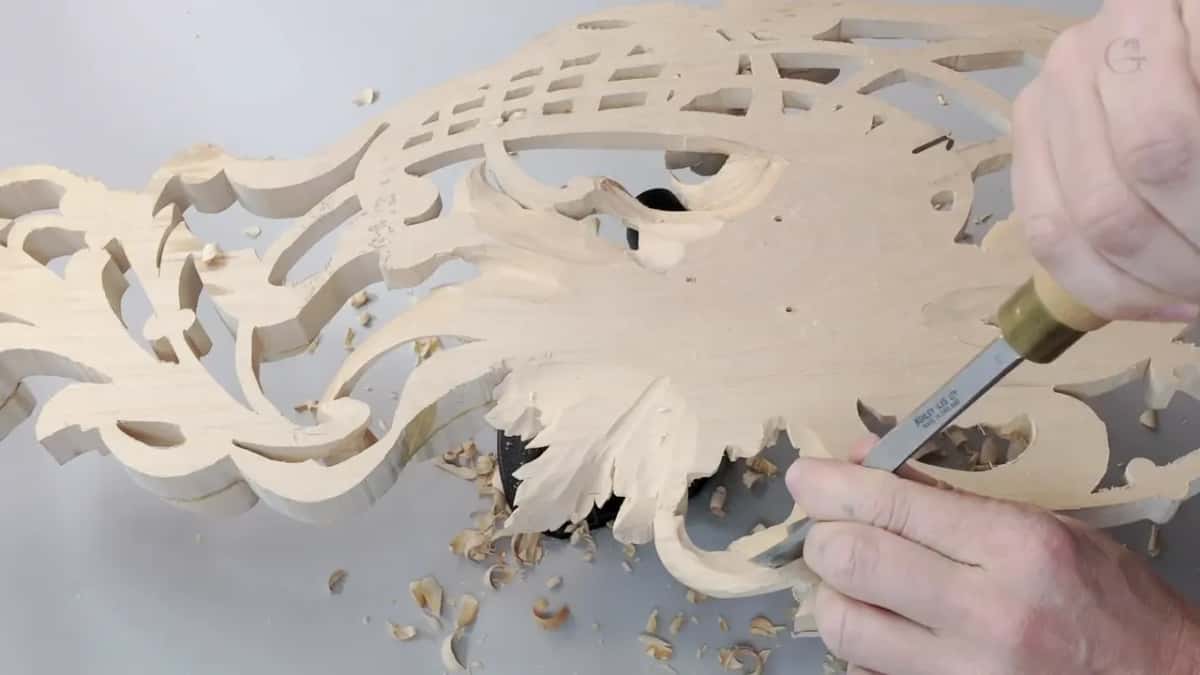
Another Hashemi video, lesson 12, shows the habit in a shorter shot. My sweeping cuts were made with the tool just rotating, and I was not forcing anything because a marriage line sat there. I still had to reach both sides.
Where does the name marriage line come from?
The name comes from marrying two cuts, and I explained it in a part of Venice Room workshop 125. Ahead sat a marriage line, so I planned to take my time. Force it and it breaks, which is not good.
Before that I wanted a really good concave, and I was using only part of my tool, three quarters of it, if I come in with this corner. I could start undercutting a little bit underneath. Once more the grain was not in favor of my tool, and I turned to the opposite side.
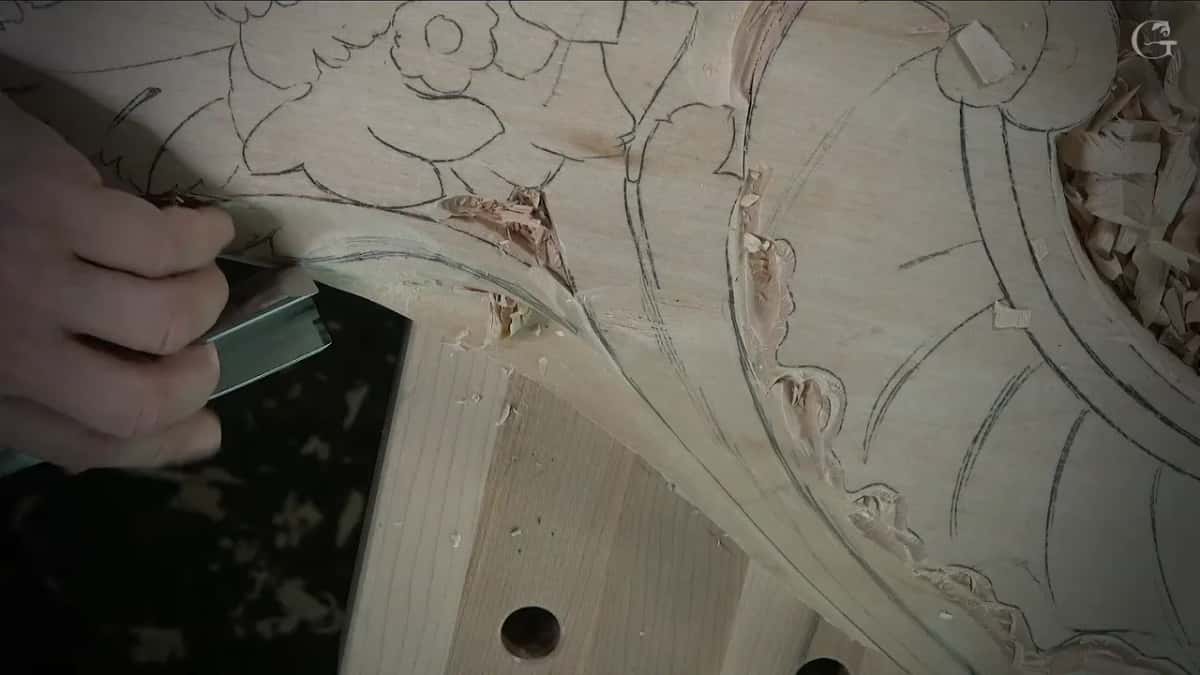
So the name fits: I am going to marry that spot, those two cuts. Carefully, I worked both sides until it blended nicely.
Where do I stop before the line, and what comes after?
In Venice Room workshop 142 I took the same #7 as before, about an inch (25 mm) in my case. Right there sat a marriage line, so I had to be careful how I approached it. That became my stopping point, at least in that direction.
I went maybe about three millimeters (about 1/8 in) from the line, no more. Later I would undercut a little to make a shadow, at about one-eighth of an inch (3 mm) to the final surface. A couple of passes went in.
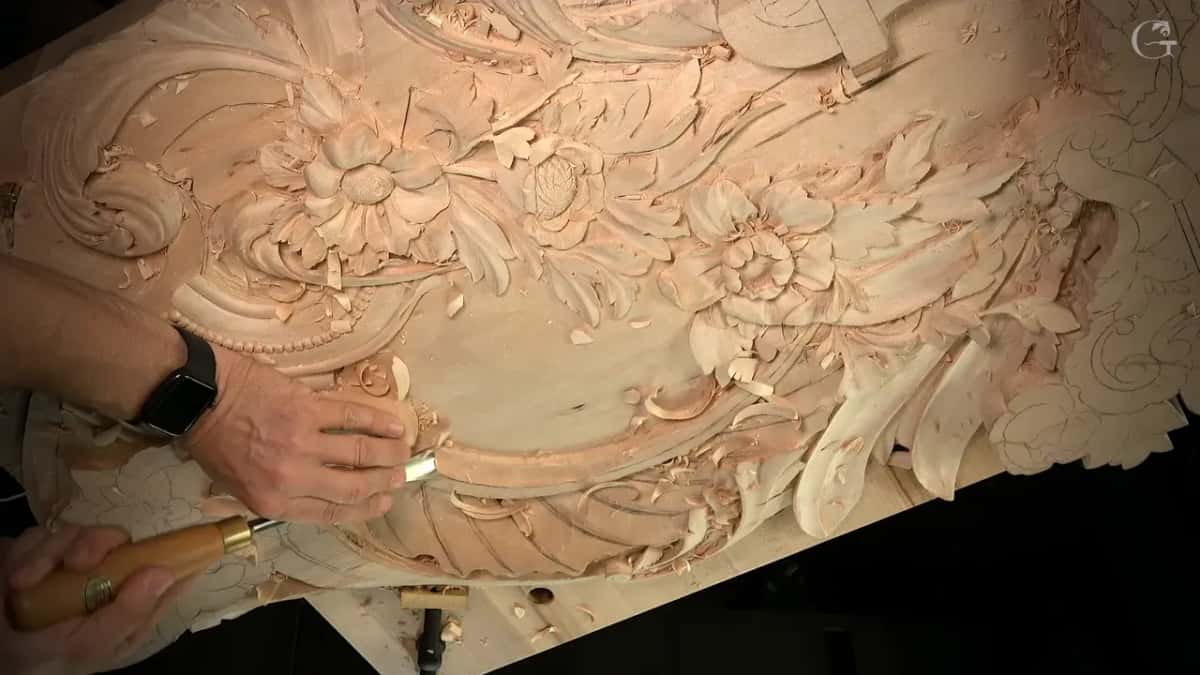
Then I walked around to the opposite side and carved against the grain. To get it smooth you slice, even when the grain is not on your side, and a really nice, smooth result is still possible. The other side got the same tool and the same work, all the way up to the line. I took my time and did not push too hard.
Slicing is my habit, by the way. Watch me start on one side of the tool, then the movement carries across. At the line itself, all that remained was a blend. There you go, it is blended, and it does look good.
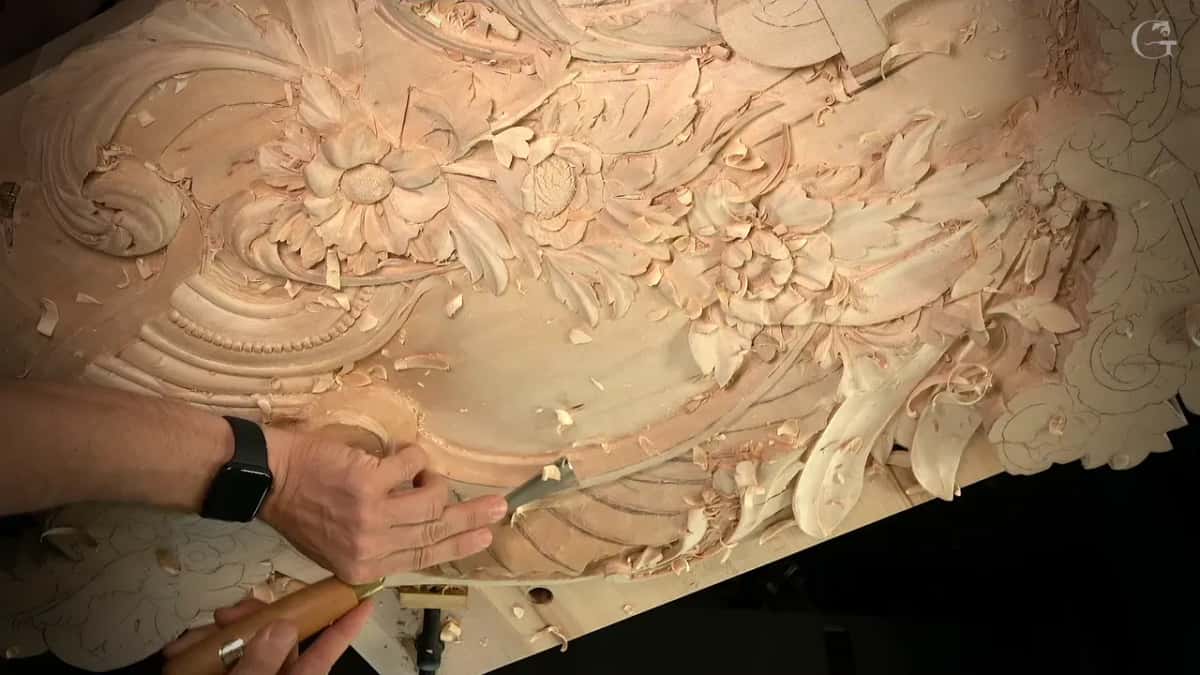
The area got more attention a little later, but a concave was coming for sure. Soon another one appeared. Let's marry it, I said, and blend it in. Wonderful.
What about a deeper concave in the Venice Room?
In workshop 88 the hollow was getting deeper, and I knew some rough spots would need care. Fine by me. I named one spot right there. Grain runs certain directions and I have a pass around that grain, so I gave that spot its name.
At some points I start from one end and then take the reverse direction too, The point at which the grain actually catches is the one I call a marriage line. In that area I have to reach both sides and really blend it in. A smaller #7 came a little later, to clean it and shape the concave.
Does one side come out rough on an acanthus leaf?
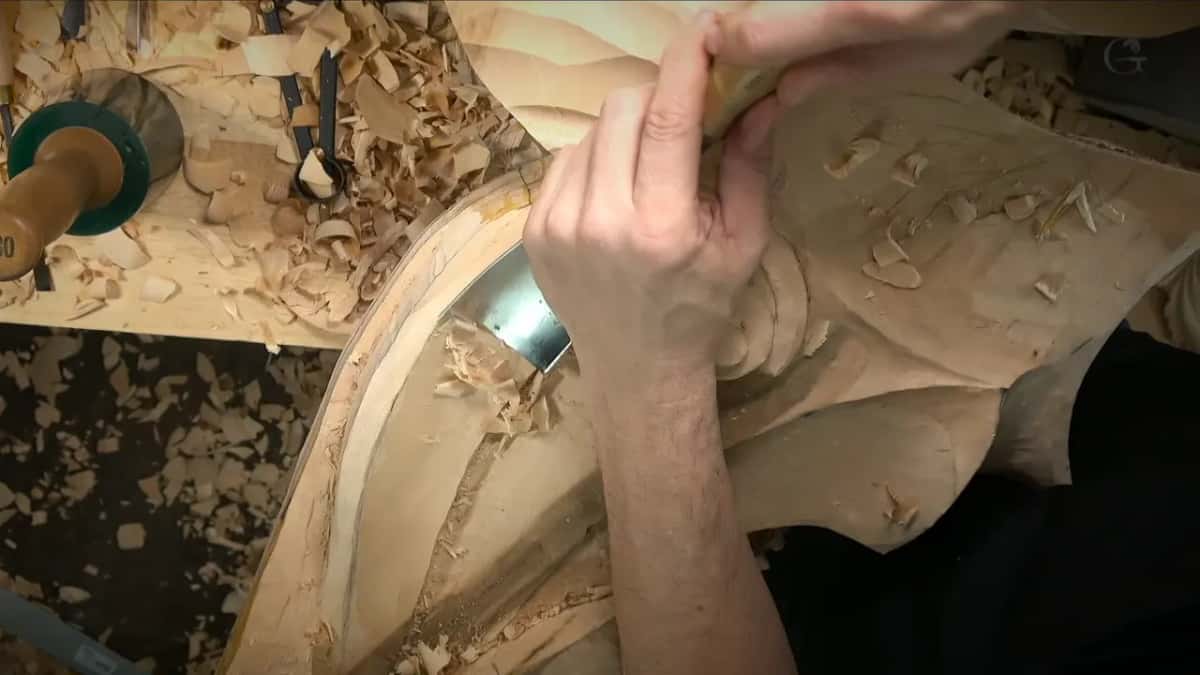
On my Roman acanthus, one side is always going to be clean and the other is going to be rough when you work with a gouge or a veiner. That came with a #11 of 5 mm (about 3/16 in) for a spoon effect, and a note to be careful. The lesson is Roman Acanthus lesson 15.
You can see it, a clean side beside a really rough one. Clean it carefully, I said. Again I attacked it, picking one side. I call it marry two cuts, like a marriage line. The spot next to it got the very same treatment.
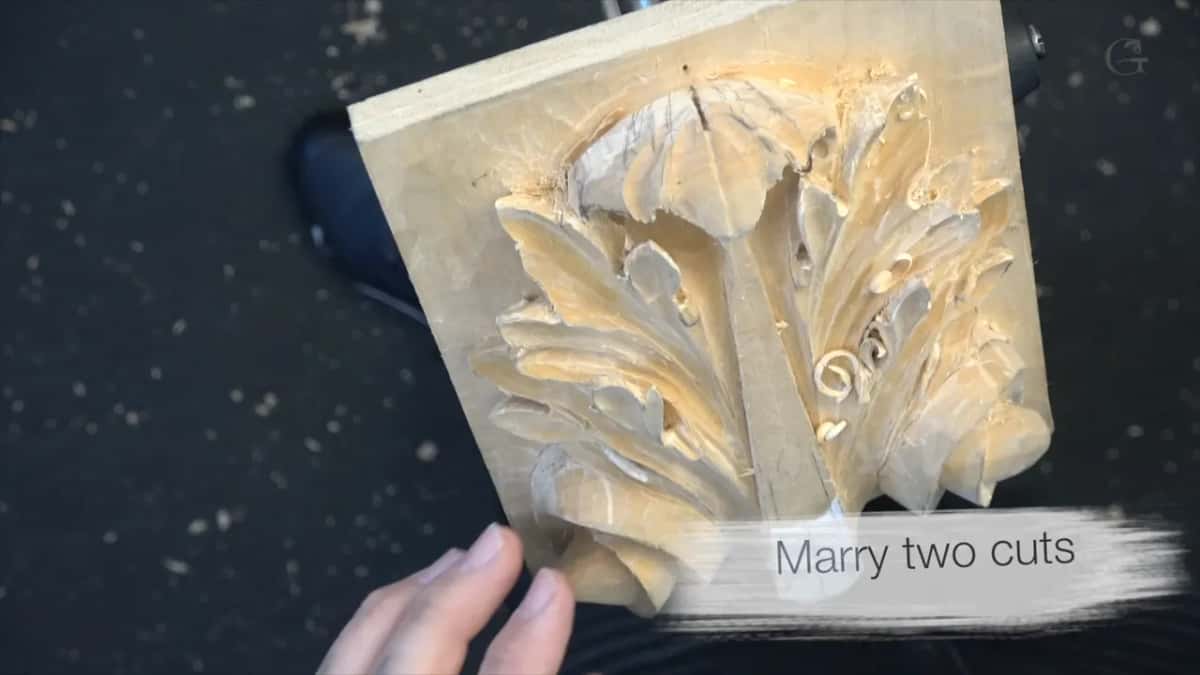
Not every acanthus leaf will have that much exaggeration, I added, since the styles are absolutely different. They are not the same even when they are all acanthus, and each one has its own characteristics. A Moroccan one, I said, looks absolutely different.
How small can a marriage line be?
Tiny. In the Greek acanthus course I used the side of my V tool as a chisel, and a small micro one showed up. Those are what I call the marriage lines, grain meeting grain. That side made me happy, so I moved to another part. See Greek Acanthus lesson 6.
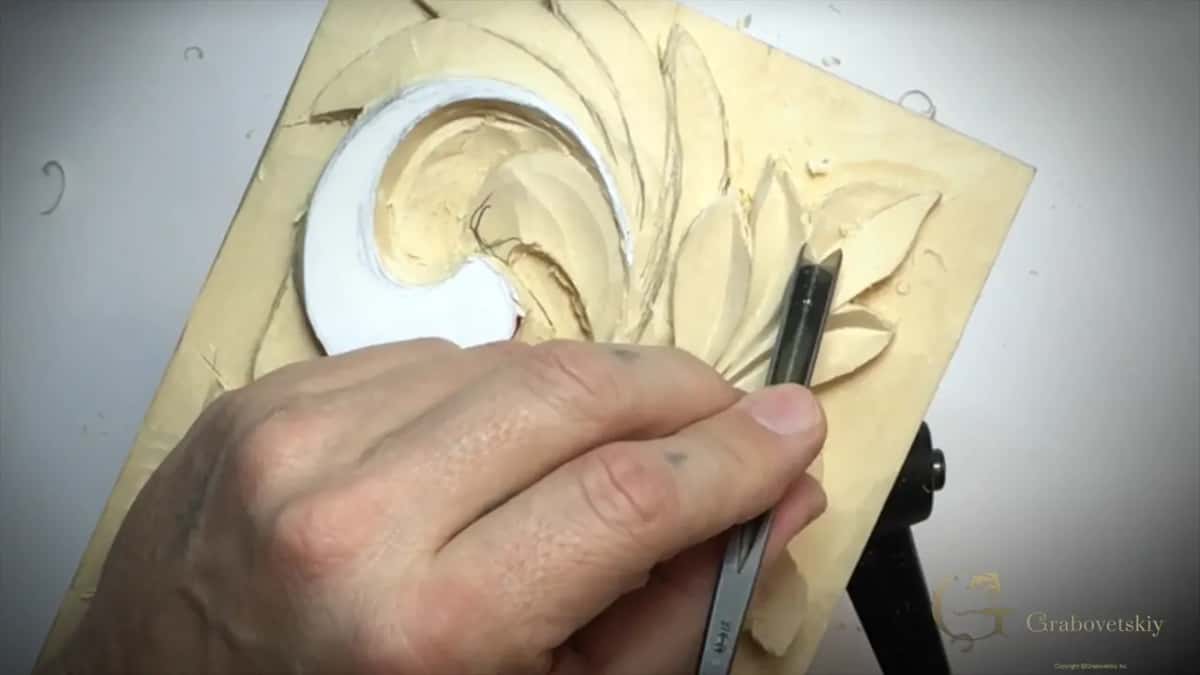
Is yours a big one or a small one? Would you spot it by running your thumb along the edge of your hollow before you leave it? I did not say that on camera, so take it only as a question for your own board.
Should you change your position at a marriage line?
With my Corinthian leaf I said you really have to. I used just the edge of my tool until I met what I call the marriage line of the grain, and I kept at it until I removed it completely. Right there the line shows up, and the position of your tool has to change. That way the pass is really clean.
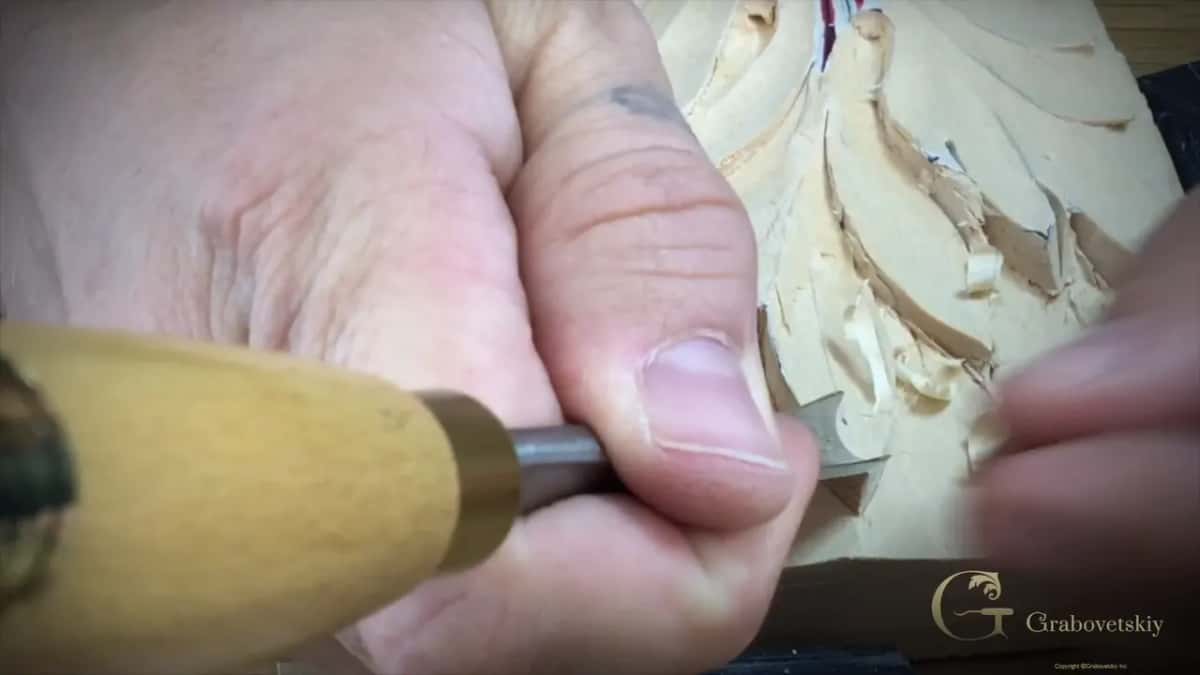
In that same video I was making a concave between the center line and the end edge of the leaf. I flipped it over and did exactly the same on the far side. See Corinthian Acanthus lesson 4.
What did I do on the Greek acroterion?
In Greek Acroterion lesson 3 I cleaned the spot, rotated again, and came in from the new side. I stayed on it until all of the line was completely removed. The tool was a #7 of 5/8 in (about 16 mm), a number seven sweep, and then I cleaned that side a little more.
Is a marriage line a normal thing?
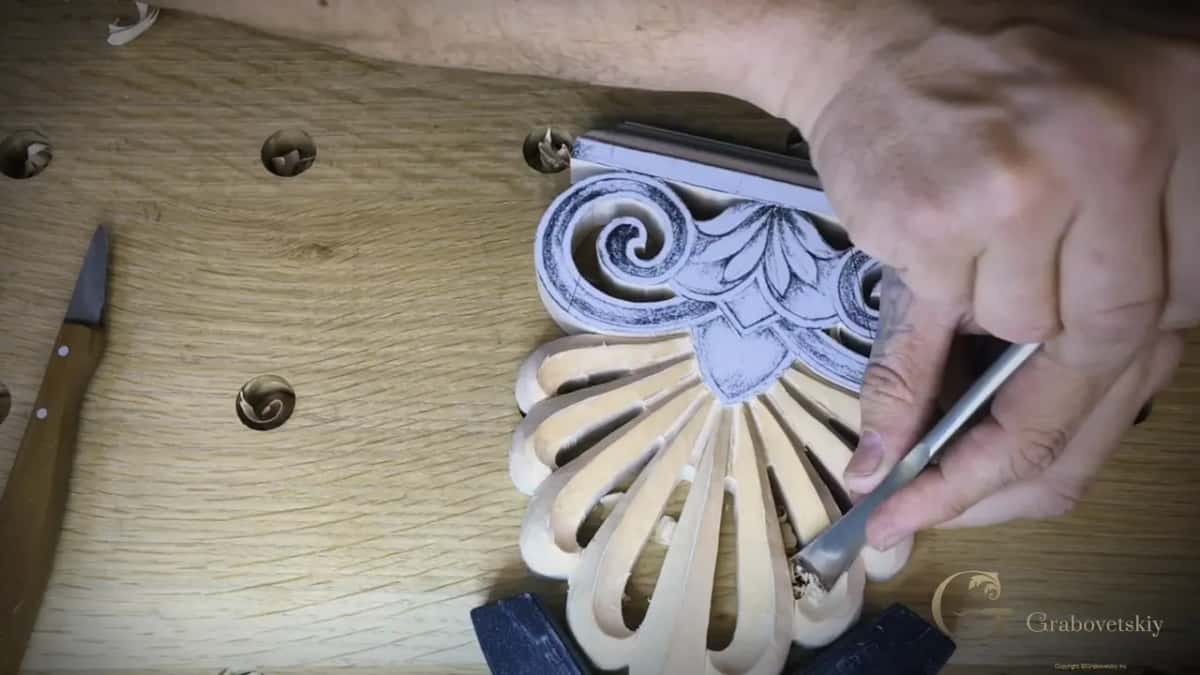
It came up again on a leaf over a molding. In Acanthus over Moldings lesson 5 the area needed me to be super careful. There it is, I told the class, a marriage line, and if I went in that direction now I would catch the grain and make a problem. An interesting area, it is always like that, and it is a normal thing.
Next I blended the pipe right away and took the reverse direction, with the same idea.
Must a marriage line be cleaned right away?
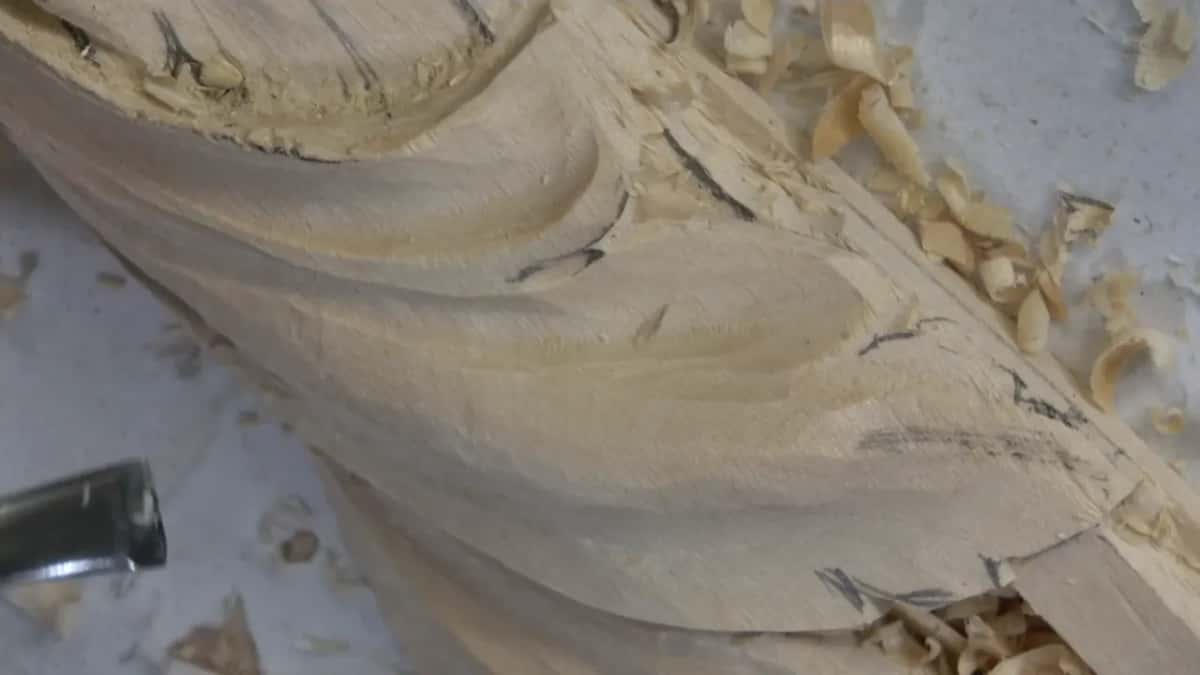
A rough spot can wait. In the butterflies plate course I had a rough area, and you can always come back and clean it, I said. I said the same goes for a marriage line. Later on I would clean everywhere.
What worried me right then was how the whole piece would look overall. After that I would go back and clean everything. Even before that you could see it casting some light and shadow, and to me it looked good.
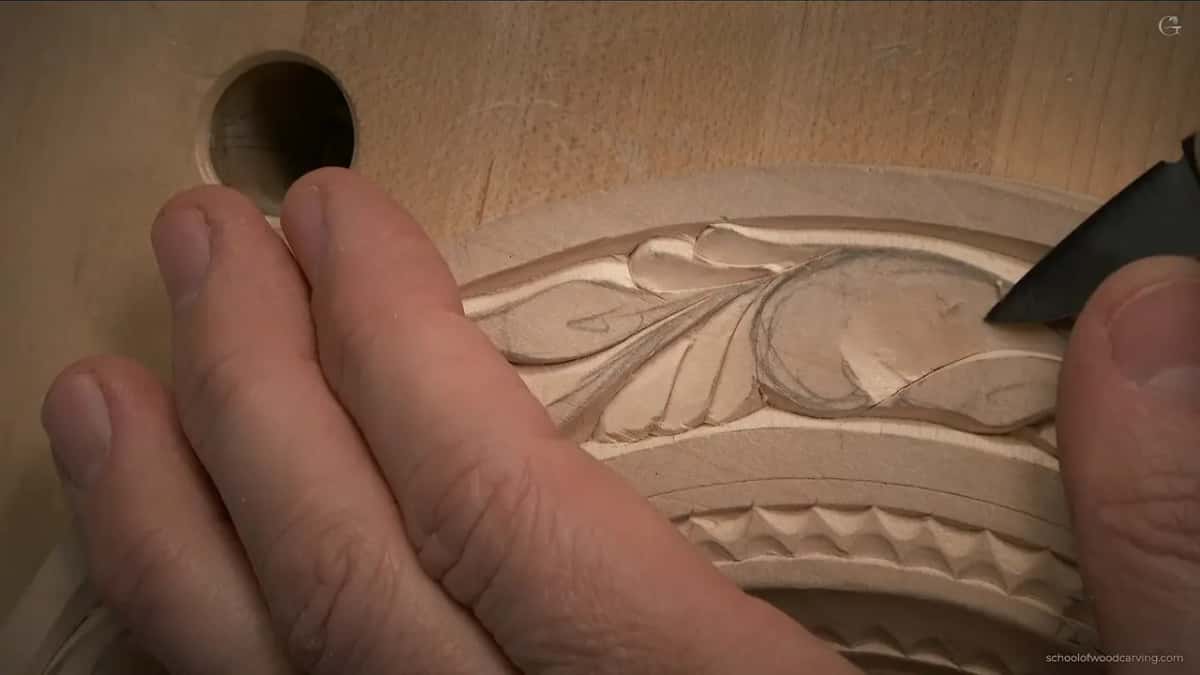
What does a marriage line look like on a beginner board?
The beginner cutting board course had me make a deeper cut around a swirl, and I had to meet two grains, or as I can call it, a marriage line, when those two grains meet together. It has to be done from two sides, I said. Otherwise the result is not going to look clean, and it is not going to look nice.
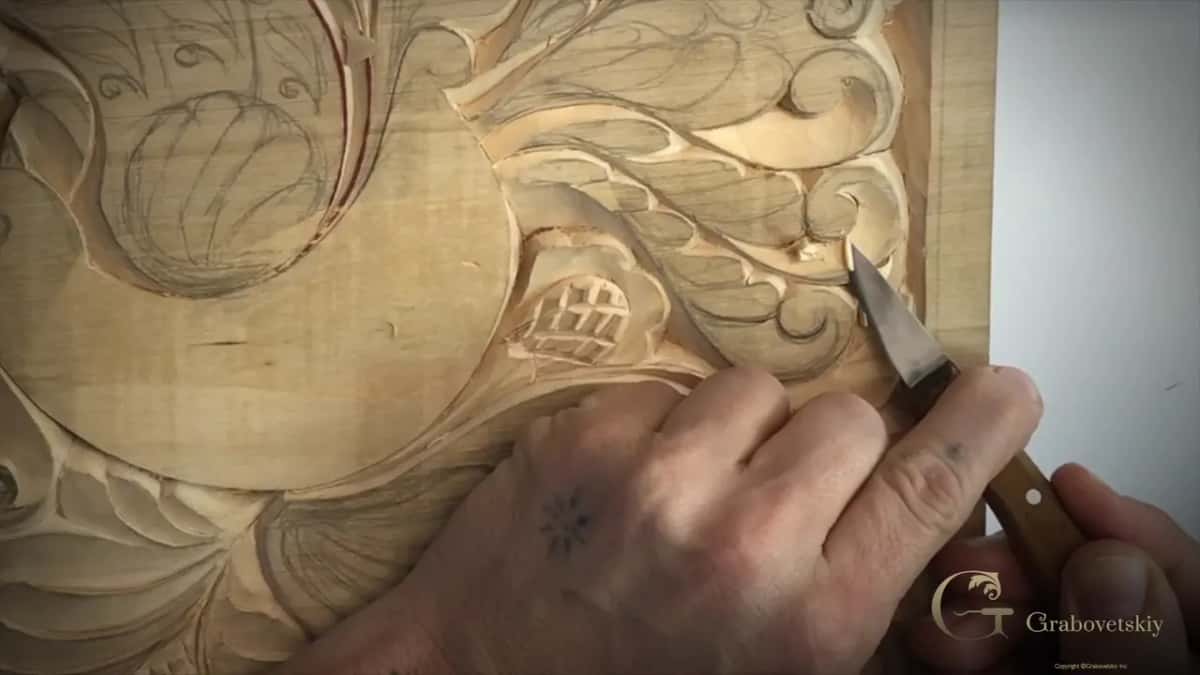
What about carving a bowl?
In a talk on carving with the grain I described a bowl with a marriage line. Start carving, I said, and the grain changes direction, so you have to switch to the reverse direction. An exaggeration, of course. Sometimes there is almost no sweep, and the marriage line still shows up. Keep carving and you split it. So you work both sides.
It does not hold every time, I added. In a complicated carving you sometimes have to work against the grain no matter what, and sometimes you have to go up. No way exists to attack from the upper side. The only way is sharp tools, I said, sharp tools. That video is Carving with the grain.
Where did each marriage line show up?
Here is the list, with what I did at each spot.
| Course and lesson | What I did at the marriage line | Tool held | What I said to the class |
|---|---|---|---|
| Modern acanthus 5 | Blended the spot at several points until happy | Big #9 | Pushing it breaks the whole thing |
| Hashemi flowers 8 | Left wood inside and worked both sides | Tool unnamed | Take the time and avoid rushing |
| Hashemi flowers 10 | Reached both sides until it disappeared | Rotating tool | I am not pushing too far |
| Venice Room 125 | Took my time and turned to the far side | Tool corner | I am going to marry those two cuts |
| Venice Room 142 | Sliced the far side and blended it in | Same #7 | Keep roughly 3 mm back, no more |
| Roman acanthus 15 | Cleaned the rough side carefully from the other | Spoon #11 | A clean side and a rough one |
| Corinthian acanthus 4 | Changed the position of my tool at the spot | Tool edge | Then the cut is really clean |
What will you look for on your own board?
Where does the grain meet on your leaf, and what does it do to your tool? Does the wood lift when your gouge reaches that spot? Would a pass from the far side, with a sharp tool, leave it clean? If the answers sound like yes, then the video I described is waiting for you.
This one is the third of three in lesson five, and the lesson page holds all of them. The craft behind it is wood carving, and the grain decides which way your gouge can go. Open the video with your Tuition and watch the two sides meet.
How it's done
- Stop before the grain meets. Slow down near the spot and take your time. On a Venice Room panel I stopped short of the line by about 3 mm (1/8 in).
- Carve up to it from one side. Use a sharp gouge, and rotate the tool or slice.
- Go to the opposite side. Take the same spot from the far side, even if the grain is not in your favor.
- Blend the two passes together. Work the spot from a few directions until the line disappears.
- Clean it later. You can clean a rough spot later, once you see how the whole piece looks.
Frequently asked questions
What does the term marriage line mean in wood carving?
The meeting spot of the grain is what I name with those words. In lesson five I explained that the grain does not change direction, because the cut is what changes direction, and the grain meets right there.
What happens if you push a gouge through a marriage line?
You are going to break the whole thing. That is what I said in lesson five of the acanthus course, with a big #9 in my hand. I blended it from different points instead.
Do you have to carve a marriage line perfectly the first time?
Back on the butterflies plate I said you can return to a rough area and clean it later. On the acanthus leaf I did not have to be perfect yet.
What to carve next
- Carving Modern Acanthus, the course page
- Carving Modern Acanthus lesson 5
- Hashemi Flowers lesson 8
- Hashemi Flowers lesson 10
- Hashemi Flowers lesson 12
- Venice Room workshop 125
- Venice Room workshop 142
- Venice Room workshop 88
- Roman Acanthus lesson 15
- Greek Acanthus lesson 6
- Corinthian Acanthus lesson 4
- Carving with the grain