
Alexander Grabovetskiy, woodcarver, School of Woodcarving · Published 2021
What does carving with the grain mean?
Quick answer: Carving with the grain is steering every pass so the edge moves the way the fibers lie, from short grain into long grain, with longer fibers underneath holding up the ones you cut. Outside curves obey that. In a bowl, a channel or a Gibbons style undercut the rule breaks, and a sharp edge carries you instead.
To carve along the grain is to push the edge the way the fibers already lie, so they part instead of lifting. On the outside of a curve you begin where the fibers are short and finish where they run long. Inside a bowl that rule falls apart, and a sharp tool is the only rule you have left.
Has a board ever let your gouge slide through one wall of a cut and then torn the other wall to pieces? Did you type the question into Google and get back three rules that seem to argue with each other? You are not slow. Nobody understands grain until the wood fights them first.
That is why I keep quiet about it on the first day of a class. In the class in Maine where this lesson was filmed, I waited until day three, when everybody had felt it in their own hands and the question came up by itself. How do I approach the grain if it just fights me? Here is the simple way I explain it, as I understand it.
Key takeaways
- Wood has grain and stone does not, and that one difference is why a carver owns so many tools.
- Outside a curve, start short and finish long.
- A hollow has no short end to find, so each wall gets its own direction.
- A fiber on top needs a longer one underneath to hold it up.
- Every channel has a clean wall and a rough one.
- Where the direction flips, at the marriage line, work toward it from both sides.
- In Grinling Gibbons work none of these rules survive, and only a sharp edge does.
Is stone easier to carve than wood?
In one way, yes. I talked about stone carving on the first day too. People ask me sometimes which is easier, wood carving or stone carving, and I ask the class what they think. Stone. Stone carving is much easier, because stone has no grain, so there is nothing to fight. It takes far fewer tools, and a lot of the surface comes from sanding and polishing.
But it is harder on your lungs. Whatever you pick, marble, soapstone or limestone, the dust gets inside you unless you work in real protection all day long. And stone is heavy, any kind of stone, and I don't like stone carving just because of that dust.
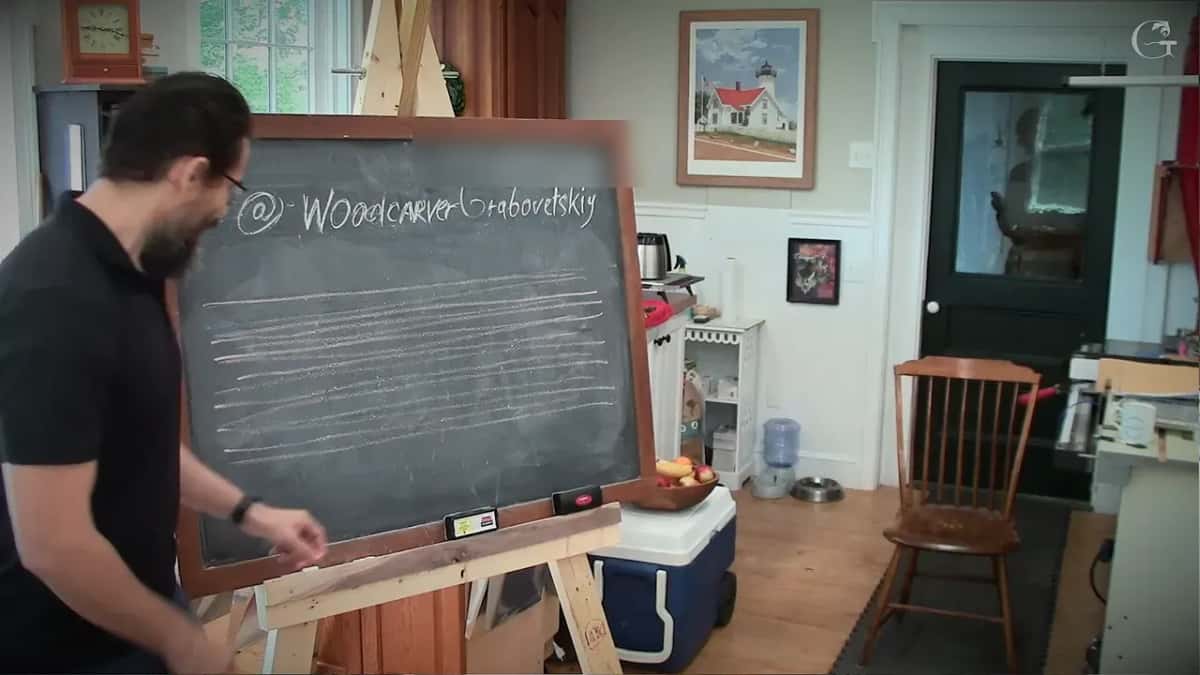
I love wood because of what it is. It is warm. It is beautiful. And it has grain, which changes the whole job, because in wood carving we need a lot more tools to deal with it. I look at my tools as my army. Each one is a soldier, and the army is on my side. You can go on and on about grain. But yes, wood has grain, and when I draw it on the board I call it my grain. Not migraine, the grain of the wood.
What does short grain to long grain mean?
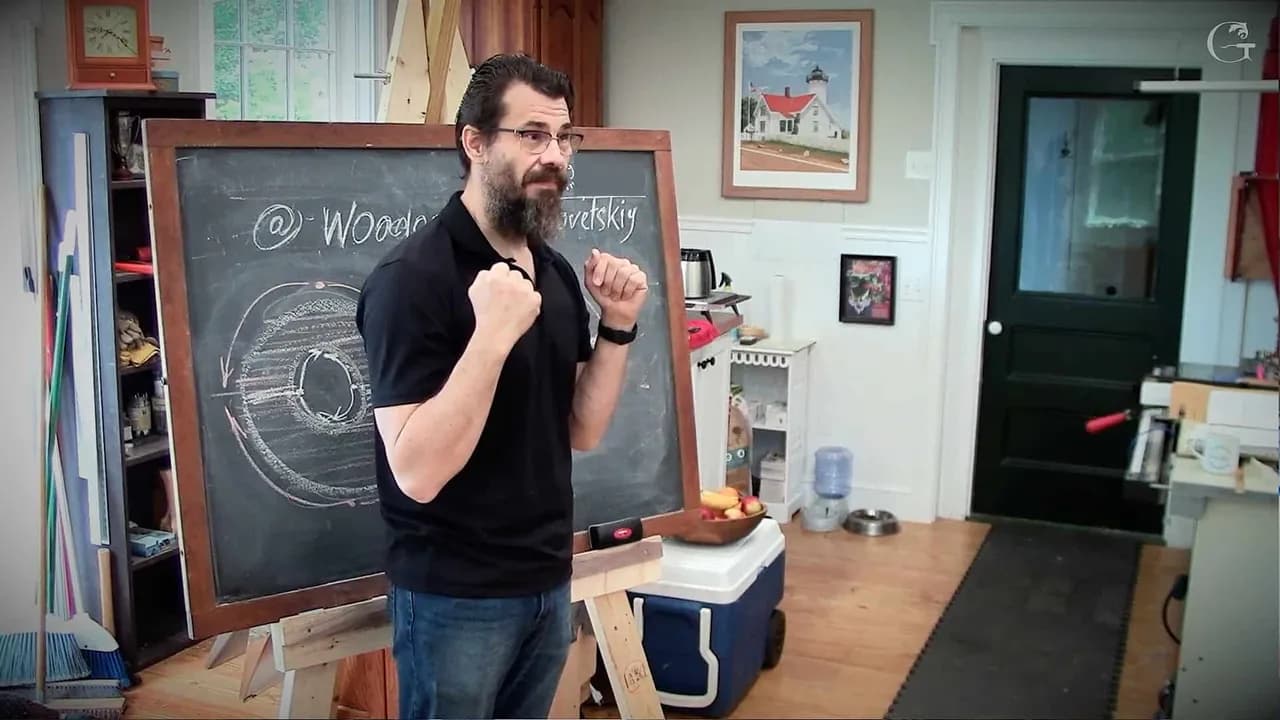
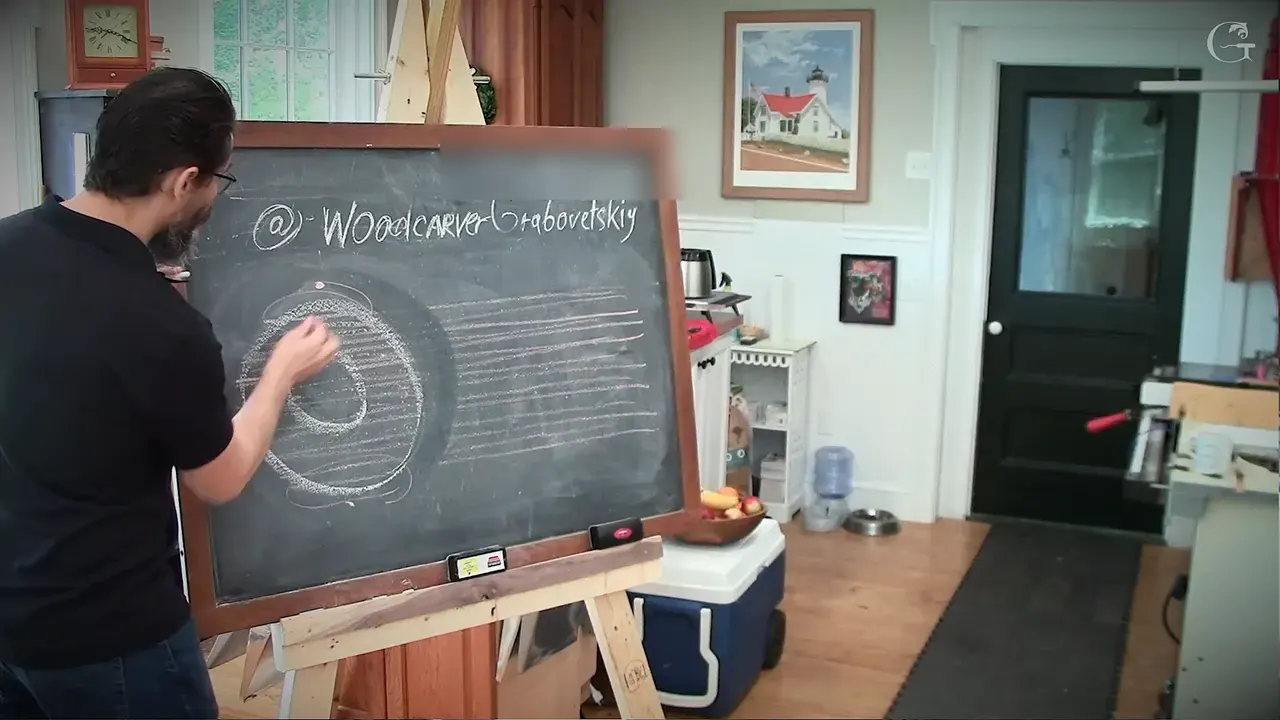
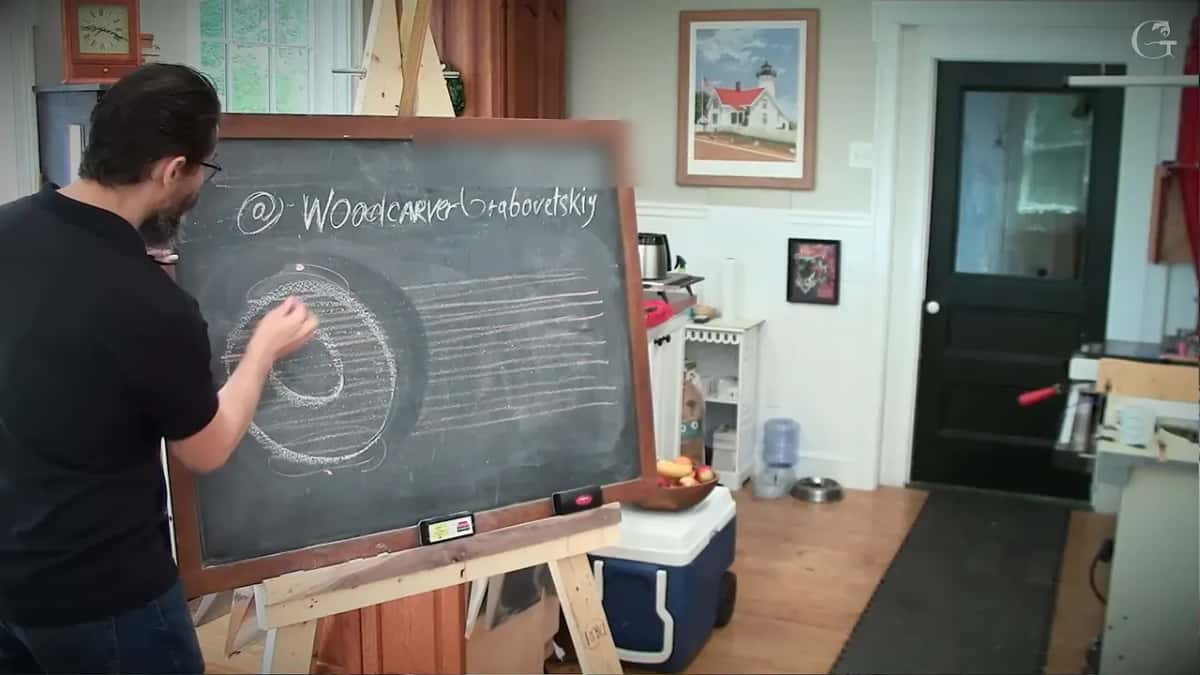
It means the pass starts at the cut ends of the fibers and runs out along their length. In class I draw it on the chalkboard. First come lines for the grain of a board, then a donut on top of them. That is picture number one. There are several places on it where you could start carving.
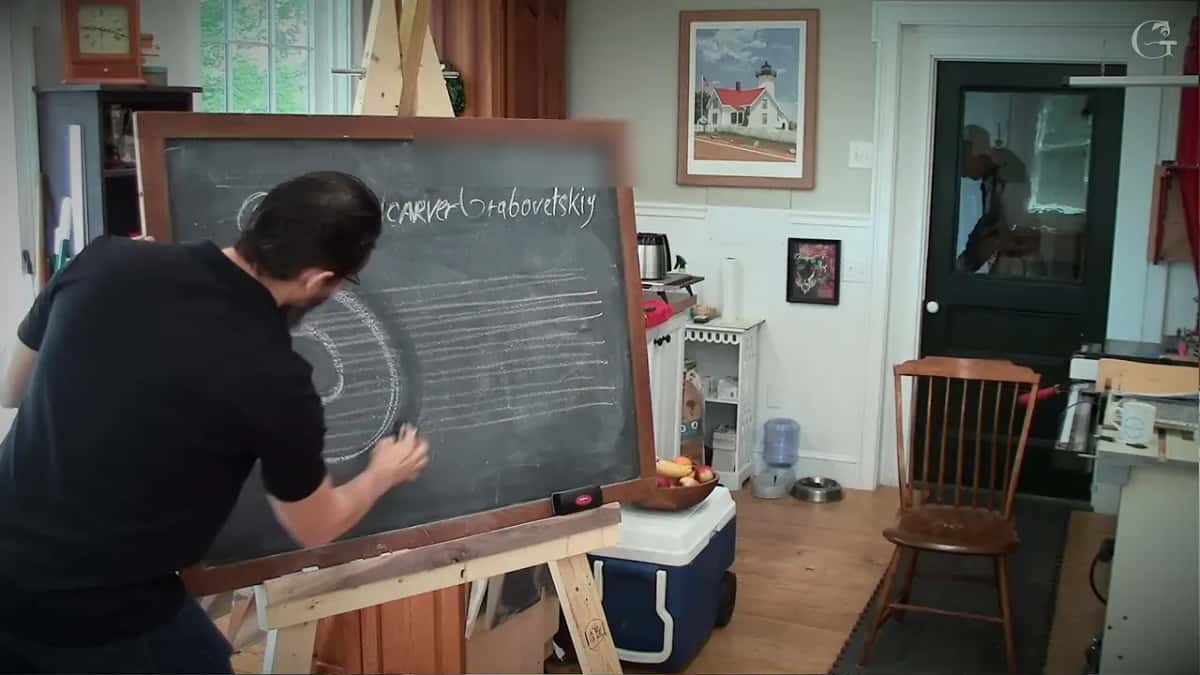
Google the idea and you get all kinds of terminology, and honestly it is somewhat confusing. Take the first term. That donut has short grain at two points on its ring, and the long grain runs between them.
You start at one of the short points and carve toward the long part, and that is how you create the round shape. From the other side it is the same story. You cannot go from long to short, so you walk around, find the short grain again, and finish into the long. Around the outside of that ring, the rule holds.
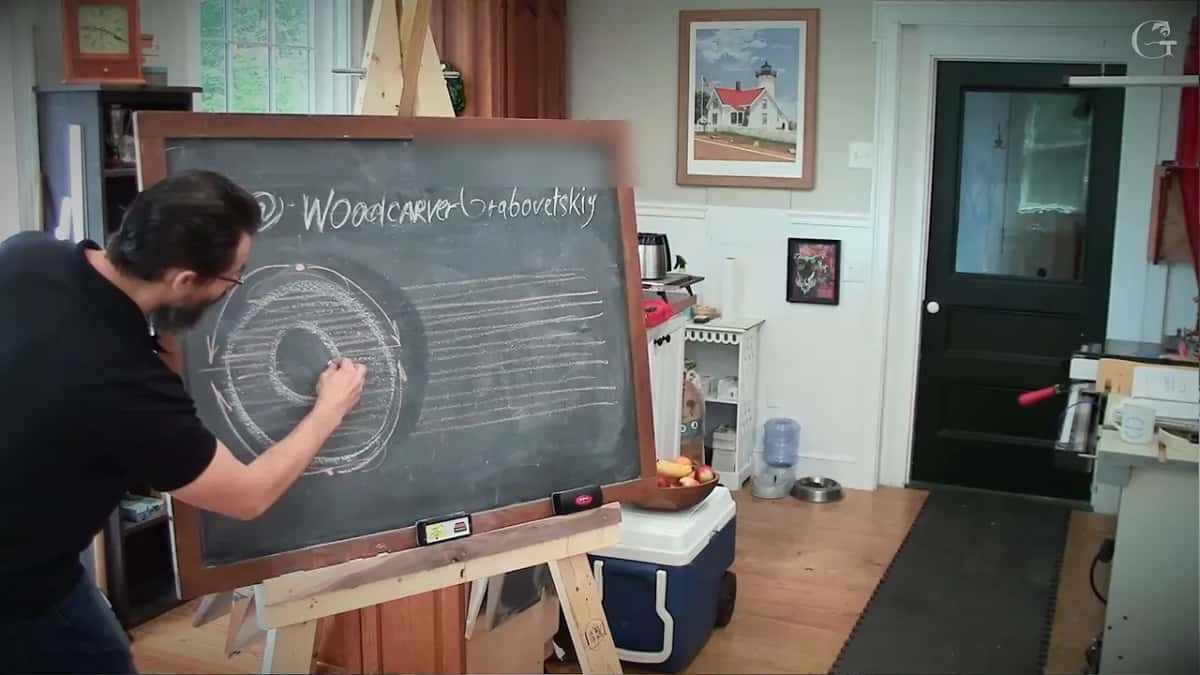
Why does the rule stop working inside the ring?
Inside the donut you can't tell where the short grain is and where the long grain is. They all look the same. So that terminology is probably not going to work anymore, and the second idea kicks in, which is to follow the fibers.
Here the shortest part of the hollow is on one side and the longest part is on the other, and the two walls want opposite directions. You carve one wall this way. Its partner goes that way, and each wall keeps its own direction.
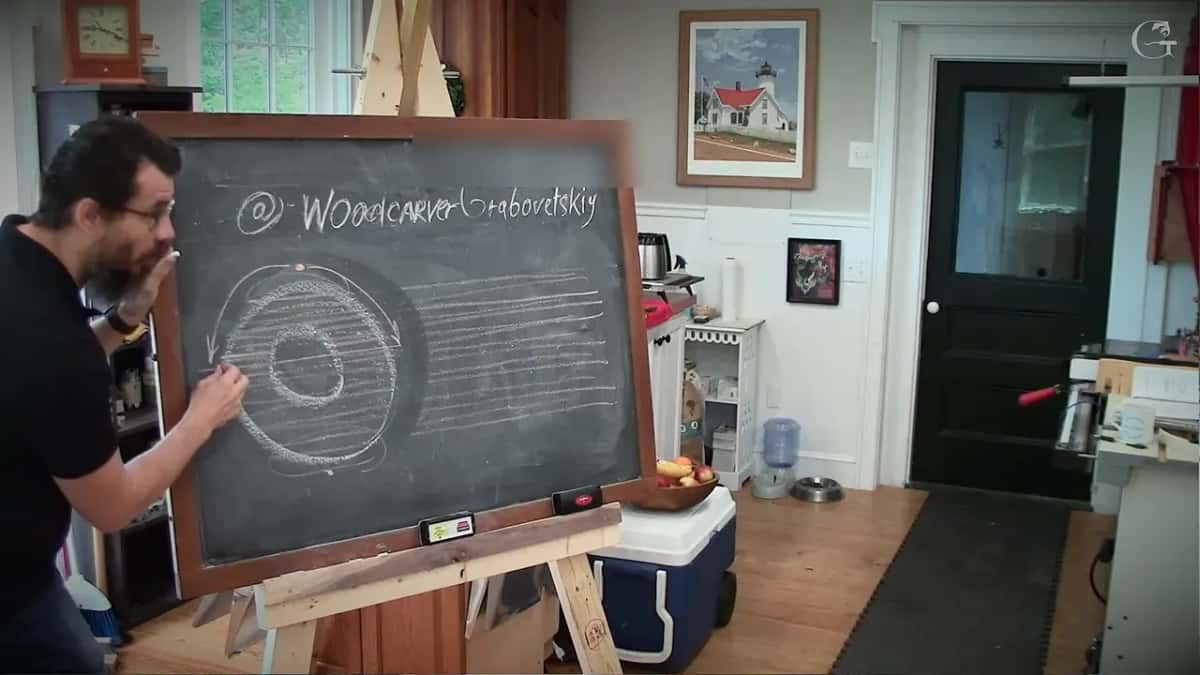
What is supported grain?
Supported grain is a fiber with a longer fiber lying underneath it and holding it up. Exaggerate the grain in a drawing and you can see it. Each upper fiber sits on a supporting one below, that one is longer still, and the one under it is longer again.
Start your cut from the end where nothing supports the fibers and they rise up. They fight. Take a bunch of drinking straws, the kind you get at McDonald's, hold them in that shape and rub your hand across them from each side. One way they lie down flat. Rub the opposite way and every straw lifts. If you have a dog, try petting him against the fur and watch what happens.
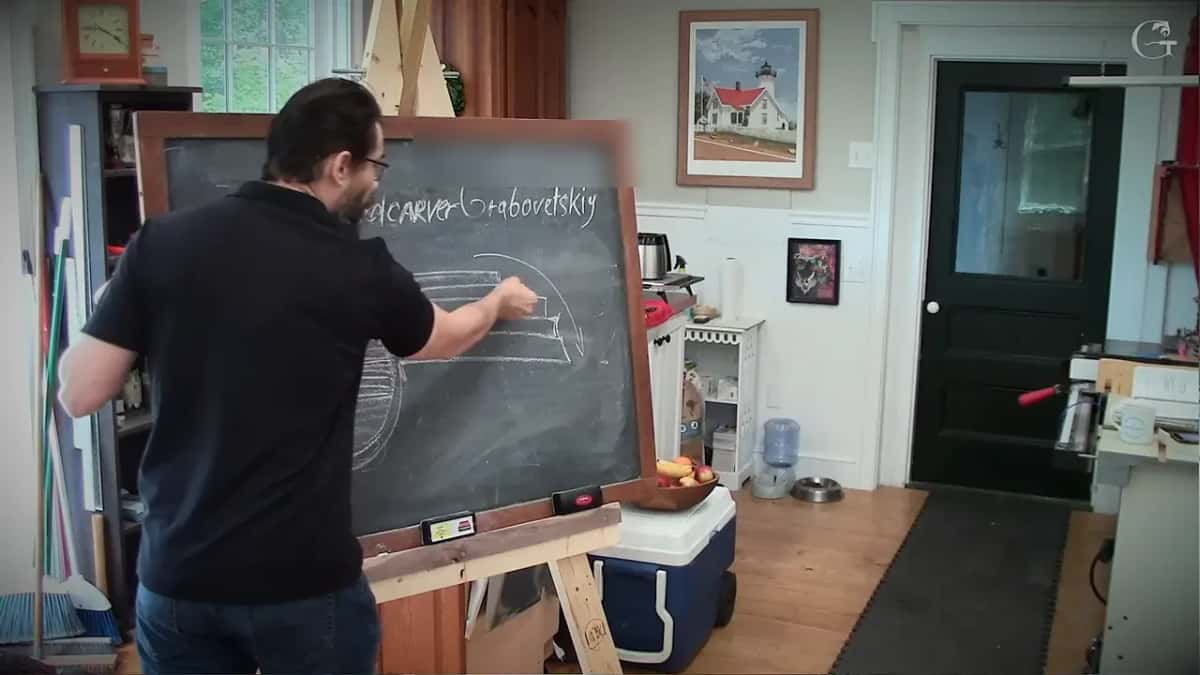
Supported grain is another way to explain the same cut. Follow short to long on that donut and you are cutting fibers that still have support underneath them.
Why is one wall of a channel clean and the other rough?
Grain is easy to explain on a chalkboard. The trouble starts when you have to make a channel, because how do you go short to long on both walls at once? A channel has two walls, and the grain can only favor one of them. Run a groove with a gouge or a veiner and one wall goes with the fibers while its partner goes against them. The good wall comes off clean. The other comes off really rough, and sometimes it splits. My class found that out on day two, and on a molding in another lesson I had to choose which wall mattered. The grain ran one way, the side people would see had to stay clean, so I attacked from the position that kept that wall clean and did not worry about the right hand side. I show both walls side by side in the lesson on why one side of a cut comes out rough.
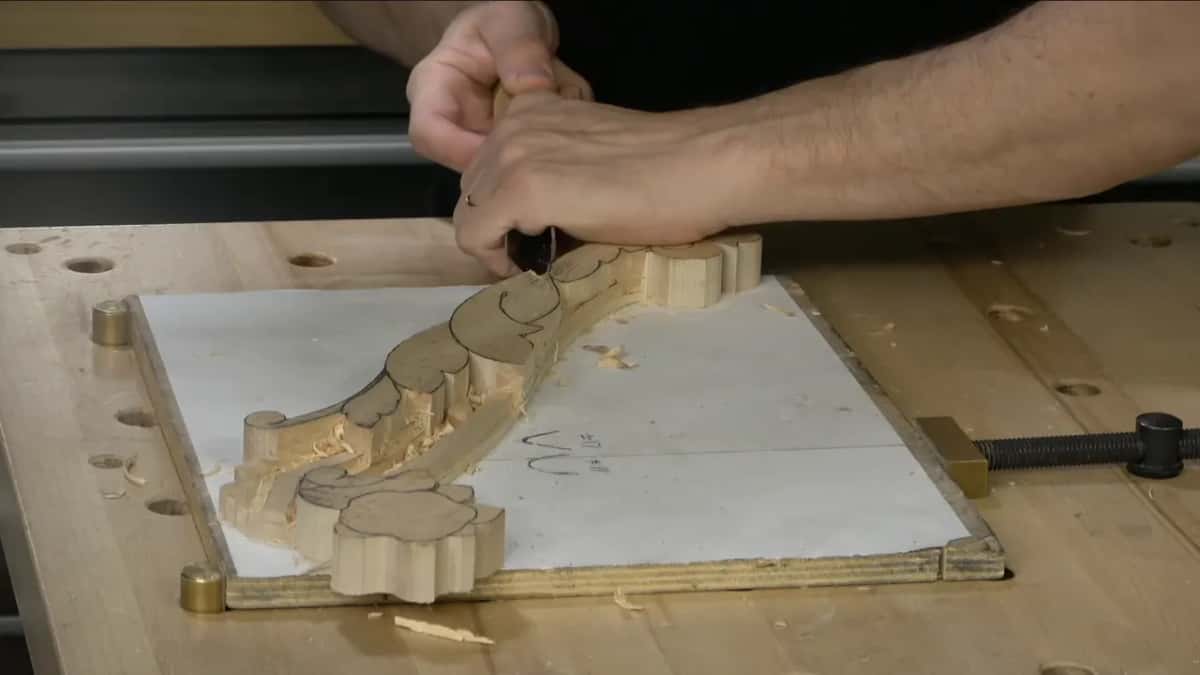
What can you do about it? When the channel is wide enough, attack one wall from one side and then come around and attack the other wall from the other side. That works. You also spend twice the time, because every cut turns into two, and on a really tiny spot there is no room to turn around at all.
What then? Sharp tools, and break the rules. One of my students said it before I could, and it was the right answer. Short strokes help you feel where the direction turns before you commit, which is the idea behind short strokes first, long ones later, and a slicing cut keeps only a sliver of the edge working at a time.
Does it help to wiggle the gouge?
Sometimes I do, on a small, tiny cut. Just a little wiggle inside the groove while the edge moves forward. A student in that class told me that circling the hand very gently worked for them even against the fibers. Sure, it can. The answer that works everywhere is still the sharp edge. There is more on the rocking motion in whether to wiggle a gouge as it cuts.
Is there any grain rule in Grinling Gibbons work?
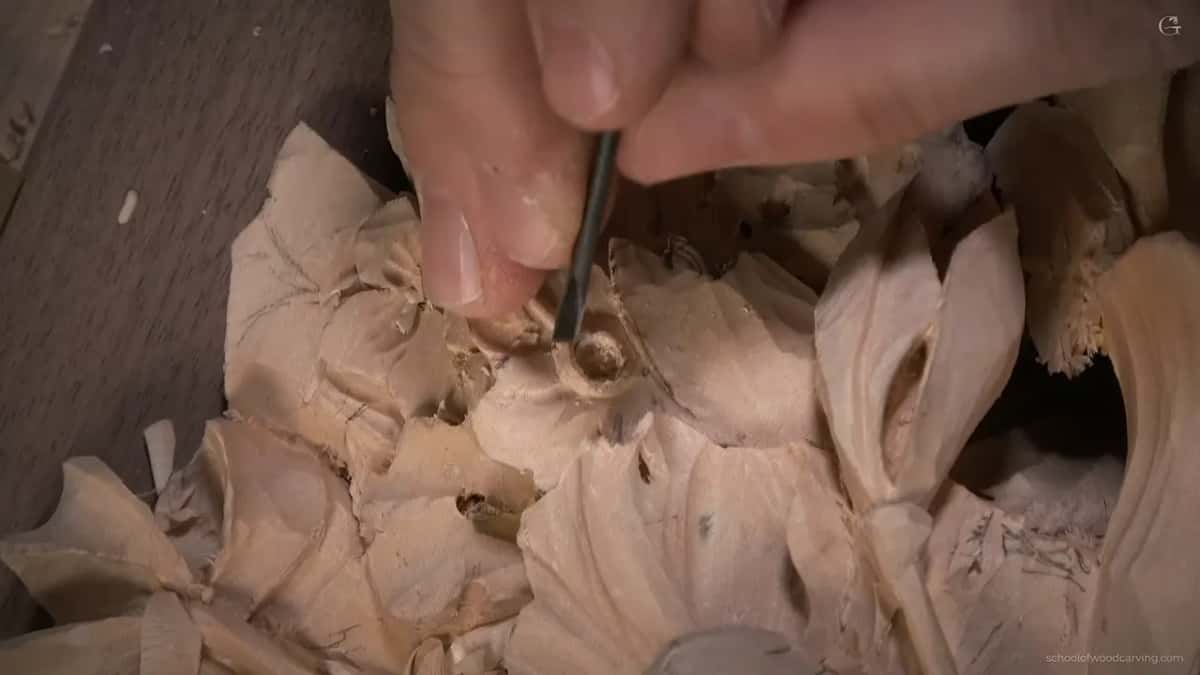
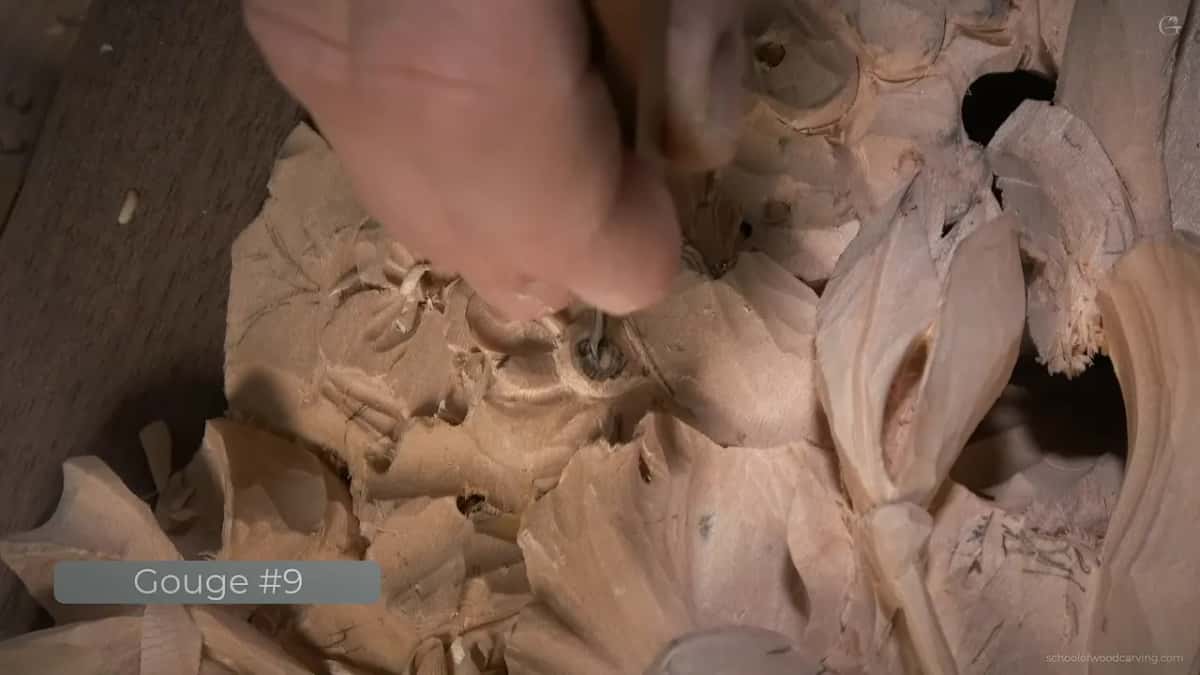
No. Absolutely no. When you carve in the style of Grinling Gibbons there is no such thing as following the grain. You attack from whatever angle the shape leaves you. When the form turns in every direction at once, how would you even find the grain? The only solution is to keep your tools sharp.
The wood he used matters too. Gibbons carved in lime, which we call basswood in America, and the wood he chose is its own lesson. Pale, fine grained Tilia still has grain, though.
End grain is another story with rules of its own, and carving detail in end grain goes through them.
People ask whether I still struggle after all these years. No. I feel it in a second, immediately, the moment the edge goes in.
What is the marriage line?
The marriage line is the place in a hollow where the grain changes direction. Draw a bowl on the board and you can see it. As you carve down one wall the fibers turn, and past that point you have to attack from the opposite side.
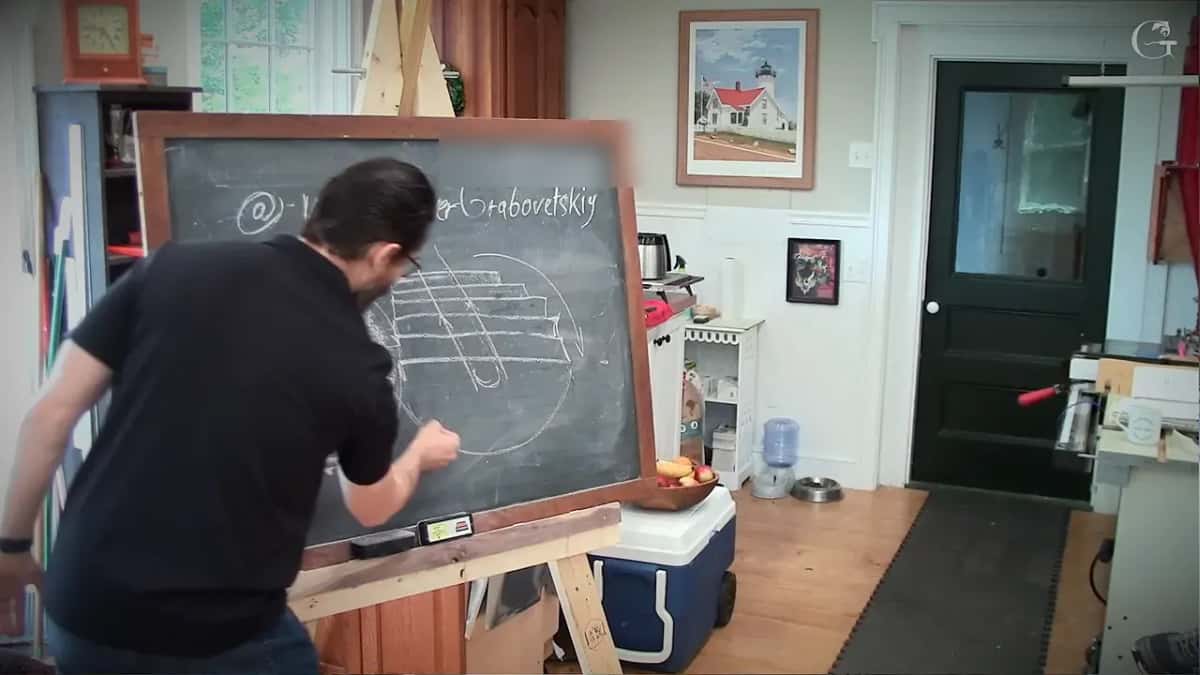
I exaggerate it on the board, of course. In real wood there is sometimes almost no sweep at all, and there is still going to be a marriage line. Keep carving straight through and you split the wood. You come in from both sides instead and meet there.
Even that is not always the case. In a complicated carving you sometimes have to work against the grain no matter what, and sometimes the only way in is to go up the slope, because you can't reach the spot from the upper side. What gets you through? Sharp tools, really sharp ones. The longer version is in carving against the grain without tearing the wood, and when a thin part does break on short grain, a break becomes a change of design.
Why do I keep telling students not to overcomplicate it?
Don't think too hard about it. Don't stand at the bench asking what angle you should attack from. If it fights you, sharpen. That's it.
My own teacher said the same about sharpening, and it was the first thing he taught me. Don't overcomplicate things unless you have enough money to invest in stones. One stone can cost 200 bucks, and that is really expensive. Get sandpaper, lay it flat on a bench, and just like that you are sharpening.
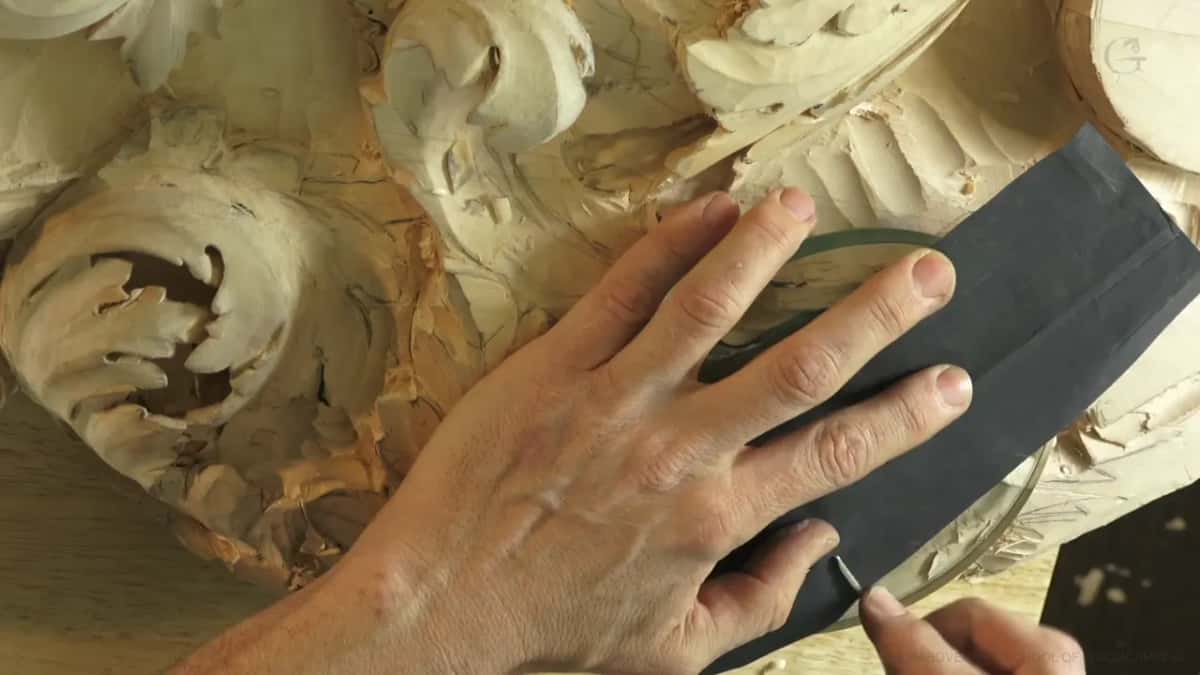
How do you sharpen a half millimeter veiner?
Very carefully. A good answer, and the true one. I have one tool at one and a half millimeters, one at a millimeter, and a number 11 at half a millimeter. Big tools I showed my class the day before, and the tiny ones are a different problem.
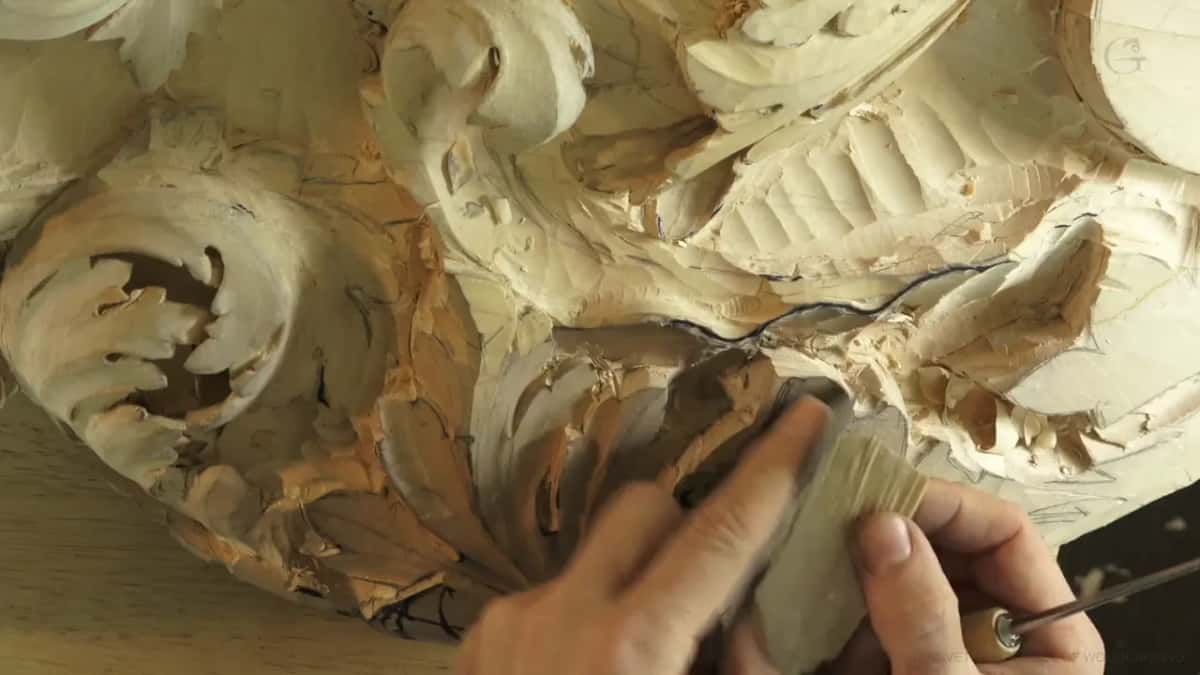
The hard part is the inside. When you work the outside of the sweep, you raise a micro wire edge on the inside, and you have to get rid of it. Somebody suggested a piece of string, a guitar string or fishing line. Will a string sharpen the inside? No. And if you want that edge to be strong, you still need a super small steel bevel in there.
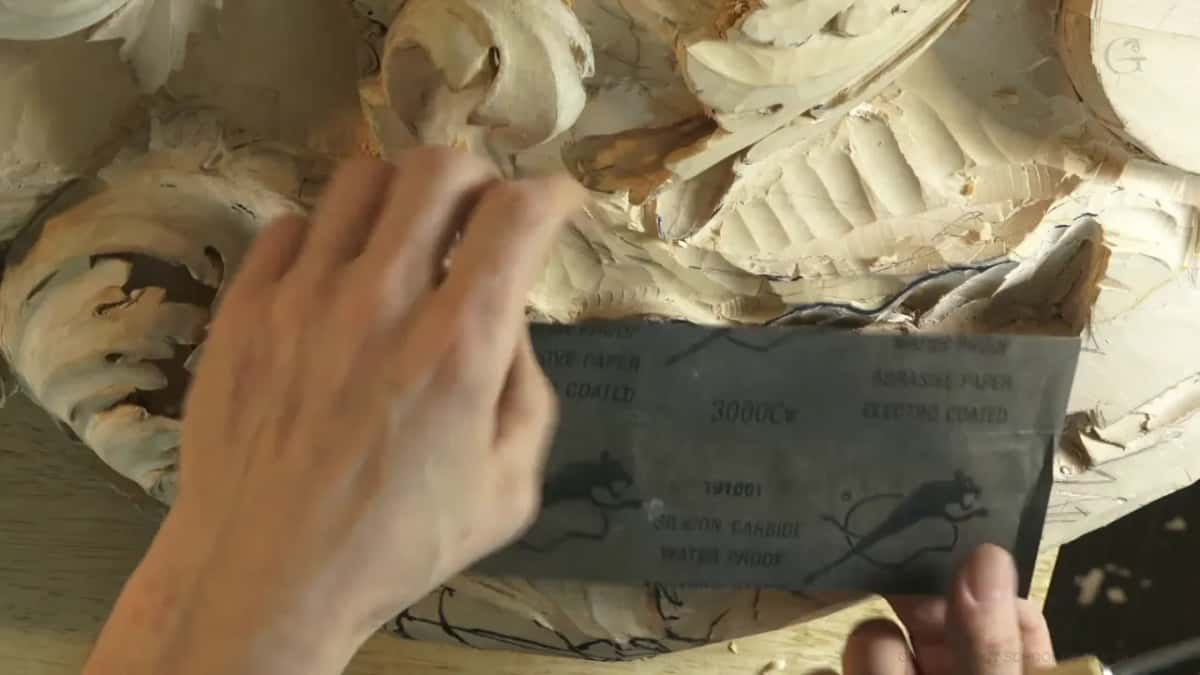
Sandpaper on the inside. That's the solution. Go to Home Depot and buy automotive sandpaper, 6,000 grit, the kind sold for wet polishing and buffing. They go up to 8,000. Take it inside the sweep the old way and sharpen. In the micro tools workshop I wrap it around a chip of wood to reach in.
The same paper sharpens everything else too, if stones are not in your budget yet. A few different grits cost about $5. Lay them on the bench and work through them. I still keep sandpaper in the kitchen, and when my wife asks me to sharpen the knives I put it on the countertop. She always has the sharpest knives. The rest of the routine lives in the sharpening course.
Which way do you cut in each spot?
| The spot | What the fibers do there | My move |
|---|---|---|
| Outside of a round shape | Short at two points and long in between | Start short, finish long |
| Inside the hollow | Every fiber there looks the same length, so the rule has nothing to hold on to | Each wall its own way |
| A fiber with nothing under it | It lifts | Turn around and cut from the supported end |
| A narrow channel | One side polished and the other side torn to pieces | Two passes if the channel is wide, otherwise a sharper edge |
| The marriage line | The fibers turn and run the other way | Work in from each end |
| A tight Gibbons style undercut, twisting every way at once | No rule survives | Sharpen |
If you want somebody watching over your shoulder while you learn to read a board, that is what we do inside the school, and the rest of these tips live in the techniques course. You can see more of my bench on YouTube.
Is there a board on your bench right now that tore on one side? Pick it up tonight, find the short grain, and look at it again.
How it's done
- Draw the grain first. Sketch lines for the grain of your board, then put the shape on top of them.
- Start at the short points. On an outside curve, begin at the short points and finish where the fibers run long.
- Split the hollow. Carve the two walls of a bowl in opposite directions, each from its own side.
- Watch for lifting. Fibers that rise mean nothing is holding them from below, so turn the cut around.
- Pick the wall that shows. Attack the side of a channel that people will see from its good direction, and the other side from its own when you have room.
- Sharpen when the rules run out. At the marriage line, approach it from both directions. In tight Gibbons work nothing else matters but a sharp edge.
Frequently asked questions
Which is harder to carve, wood or stone?
Wood, because of grain. Stone has none, needs fewer tools and gets much of its surface from sanding and polishing, but its dust is hard on your lungs and the material is heavy.
Where does short grain sit on a curve?
Short grain sits at the points where fibers end at the edge you are carving. A ring drawn over the grain has two of them, and each pass starts at one and runs out along the long grain.
Why does wood tear out when I carve?
Tear out comes from cutting fibers that have nothing underneath holding them up. They rise and fight. Turn the cut around, or keep the edge sharp enough to slice through anyway.
What to carve next