
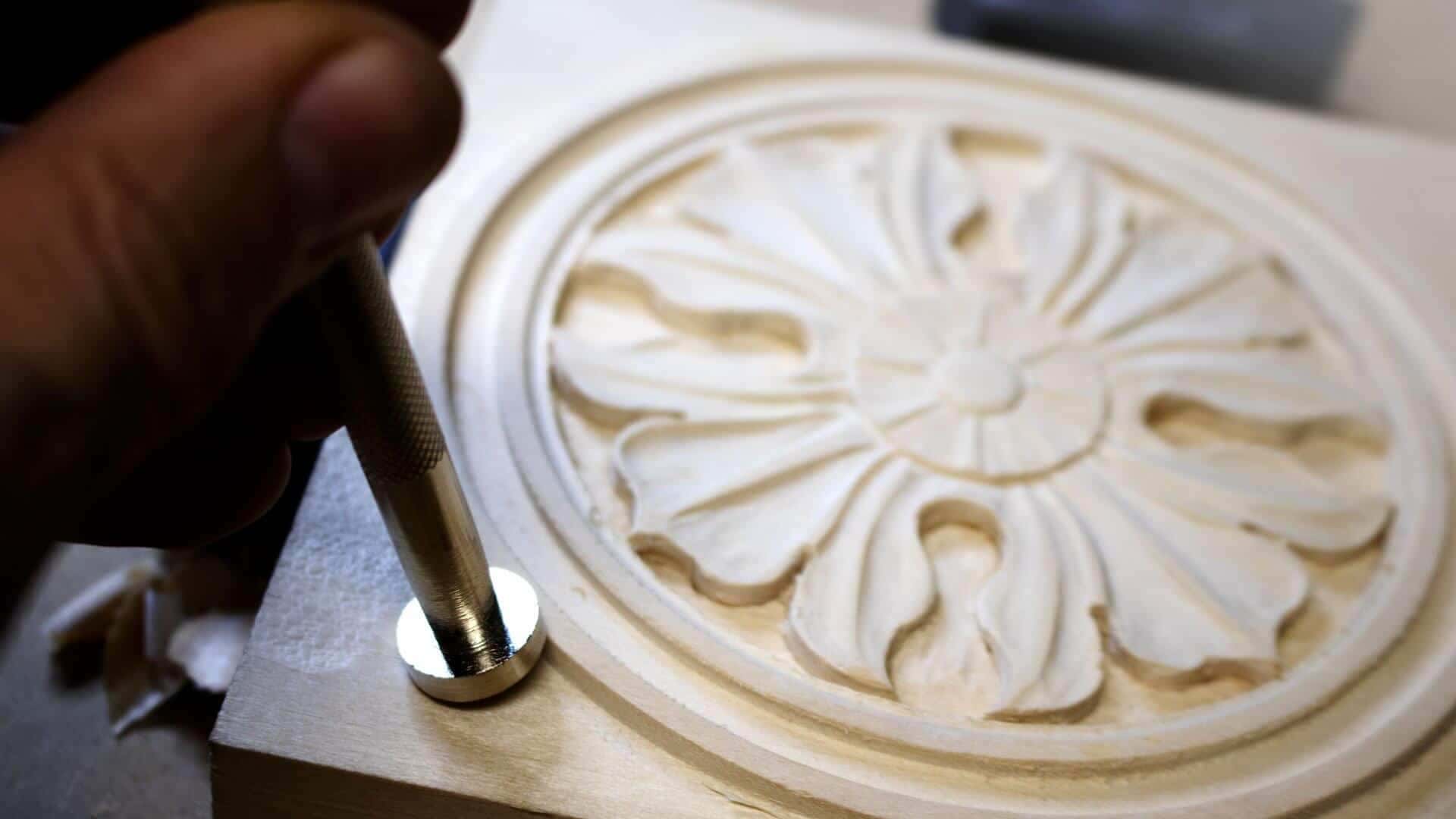
September 15, 2024 · Updated August 21, 2026
By Alexander Grabovetskiy — Master Woodcarver · Founder, School of Wood Carving · 15 min read
Fun Side of Wood Carving
The fun side of wood carving is the part no photograph catches. You lose four hours and never feel them go, your shoulders drop, and a flat board turns into something with a front and a back. I have chased that feeling for forty years and it has not worn out yet.
People assume this is a patience hobby. The truth runs closer to the opposite.
You bought a knife because a video looked calming, then your first cut tore, your thumb ached, and the calm never showed up. Right there is where most people put the knife in a drawer and decide carving is not for them.
They quit about two weeks before the good part starts.

That board took a week, and I still carry it around the shop to show people.
So here is what the fun actually is, when it arrives, what the research says about your brain while it happens, and the small projects that get you there fastest.
- The pull is a flow state. Six in the morning to two at night, and you never saw the clock.
- Craft work carries real numbers. A study of 1,929 older adults measured a 28 percent lower rate of mild cognitive impairment among people who made things.
- Three quarters of people showed a measured cortisol drop after forty five minutes at a craft, beginners included.
- The frustration ends when your edge gets sharp. Almost nothing else causes it.
- Start small. A palm bird or a whistle beats a grand plan you abandon.
What makes wood carving fun?
Watching a flat surface grow a front and a back under your own hands. Nothing else in a normal week does that.
Carving adds a lot more than digging inside the wood. It comes down to thinking in a three dimensional world, seeing what two dimensional people never see.
That sounds grand until you feel it. Then it is just fun.

One whole curl coming off in a single pass. That is the sound people mean.
I design pieces so that I stay entertained. On one floral panel I deliberately broke the symmetry, because a mirrored version would not be so interesting to work on, and I want to make sure the carving stays fun while I am doing it. A professional saying that out loud should tell you something about how central the enjoyment is.
Some projects simply refuse to get boring. On a grape onlay I caught myself saying I could just go on and on and on. That is kind of fun. Kind of a fun project, and there is no end to it.
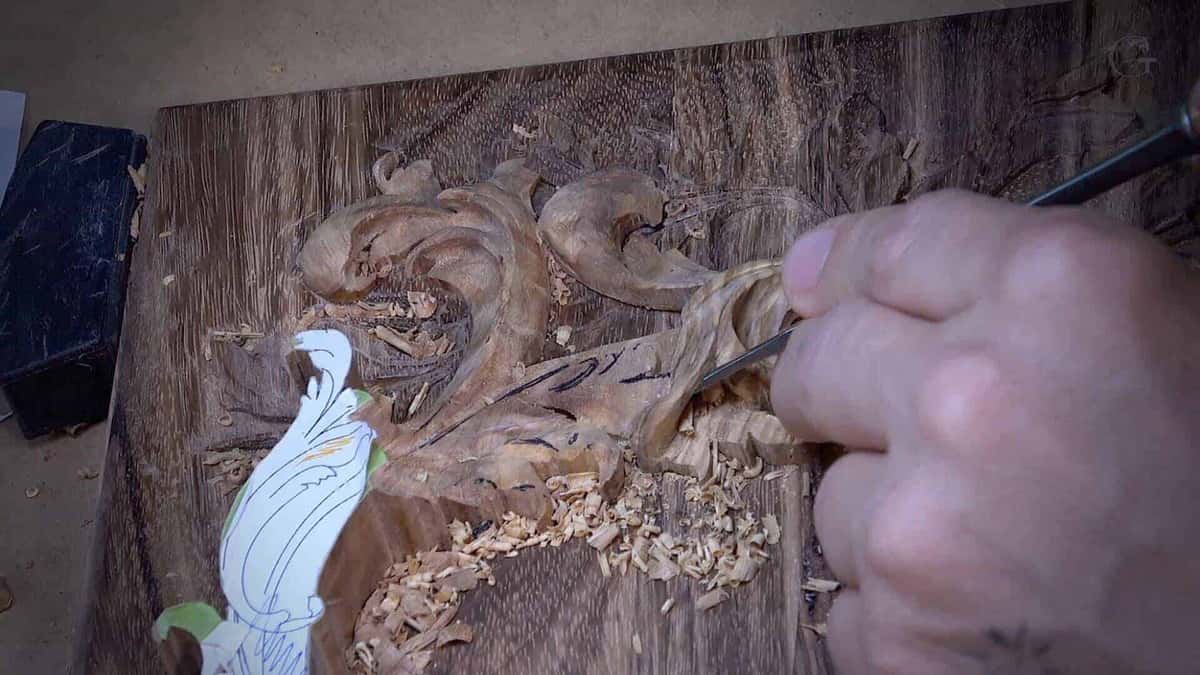
Chips build up under the scroll faster than you notice, and so does the afternoon.
Why does carving make time disappear?
Your hands end up working right at the edge of what they can currently do. Psychologists call that a flow state, and carvers just call it Saturday.
When you carve, you know you are losing sense of time. You start at six in the morning and you finish at two in the morning, and you did not even see how much time passed already. It just flies.
That happens because carving occupies every channel at once. You are carving with your hands and your brains and your ears and your eyes. You concentrate on the carving, but it is like a turning off, like automatic mode.
I used that mode for something. You have a choice, and you can listen to music or audiobooks, but I chose to listen to university courses, and I passed multiple courses just because of wood carving.
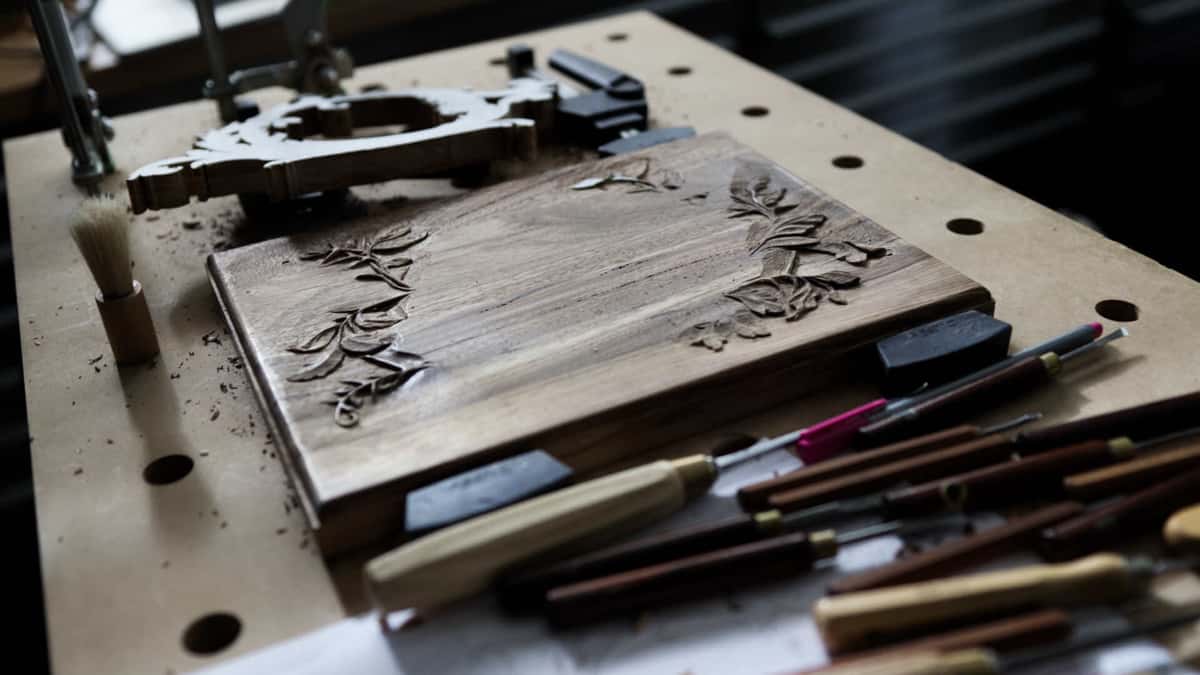
The bench at the end of a quiet evening.
David Esterly, who rebuilt the Grinling Gibbons carvings lost in the Hampton Court fire, described the same rewiring in The Lost Carving:
Fortunately, carving changes not just the way your muscles work, but the way your mind works, too.

Rounding the ribbon. My hands know this part now and my head goes somewhere else.
Is wood carving actually good for your brain?
The research on craft work is real, consistent, and more careful than the internet version of it. Let me separate what I believe from what has been measured.
What I say in class is that carving builds new brain cells, because you train your brain to work in 3D. My belief and my own experience are talking there, not a study. Here is what the studies actually found.
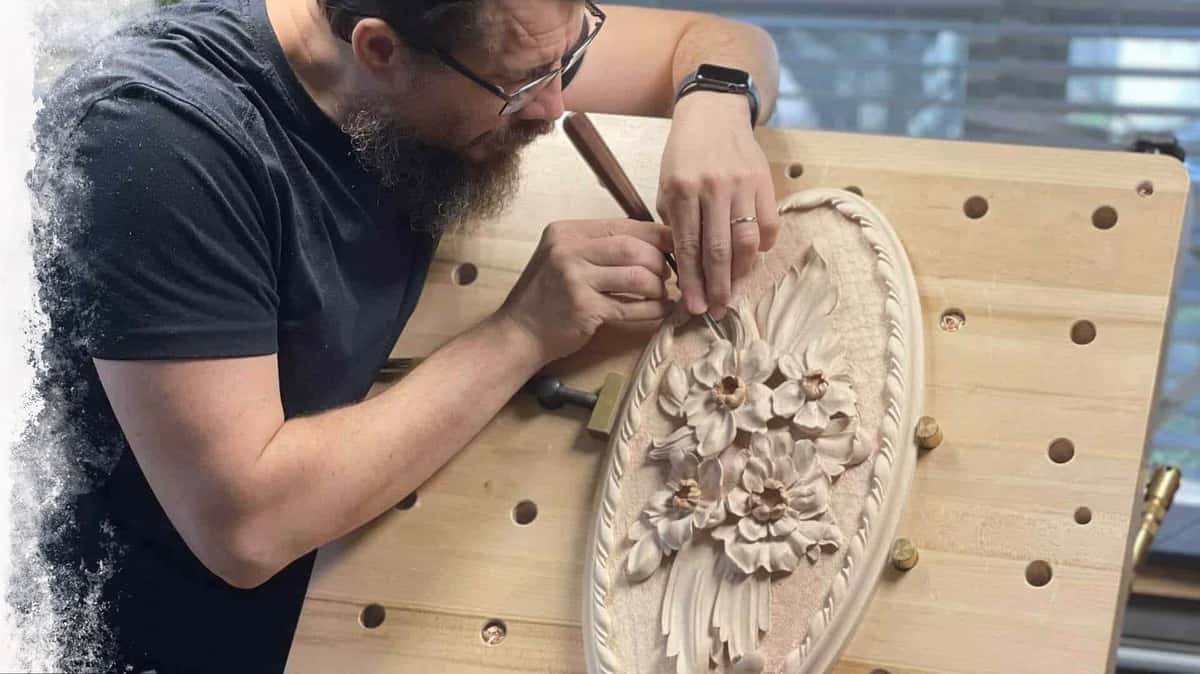
Five flowers on an oval. This is the kind of work my older students ask for.
The Mayo Clinic Study of Aging has looked at craft activity three separate times. In a 2011 paper covering 1,321 people aged 70 to 89, craft activities such as knitting and quilting carried an odds ratio of 0.66 for the same condition. A 2015 follow up tracked 256 people with normal cognition for a median of four years, and craft work done in both midlife and later life came in at a hazard ratio near 0.55.
The biggest of the three is a 2017 JAMA Neurology paper on 1,929 adults over seventy, which put craft activity at a hazard ratio of 0.72 for developing mild cognitive impairment.
Read those carefully. They say craft work travels with better outcomes. They do not prove that a gouge causes it, and I am not going to pretend otherwise.
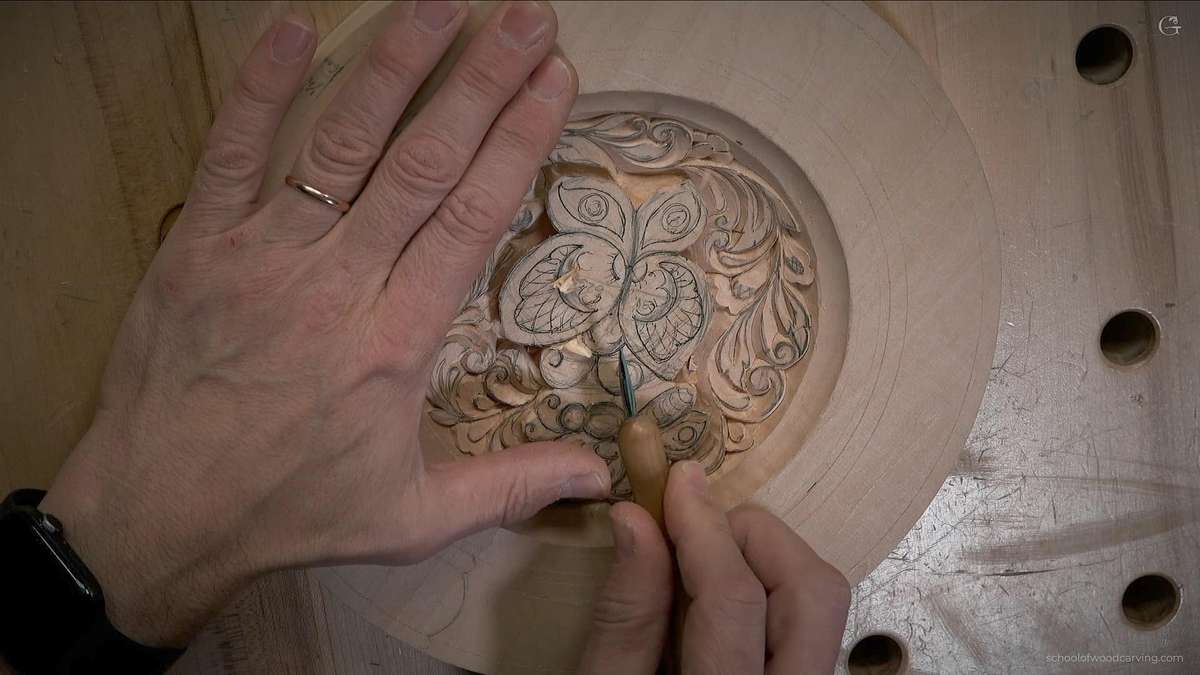
Left hand holds, right hand cuts. That split takes a few weeks to feel normal.
The stress finding is cleaner, because it was measured before and after. Girija Kaimal and colleagues at Drexel took saliva from 39 healthy adults, gave them 45 minutes of hand making, and watched mean cortisol fall from 17.85 to 14.77 nanograms per millilitre. Roughly three in four saw it drop.
One detail in that paper matters more than the number. Prior experience made no significant difference. Your first clumsy hour counts the same as my four hundredth.
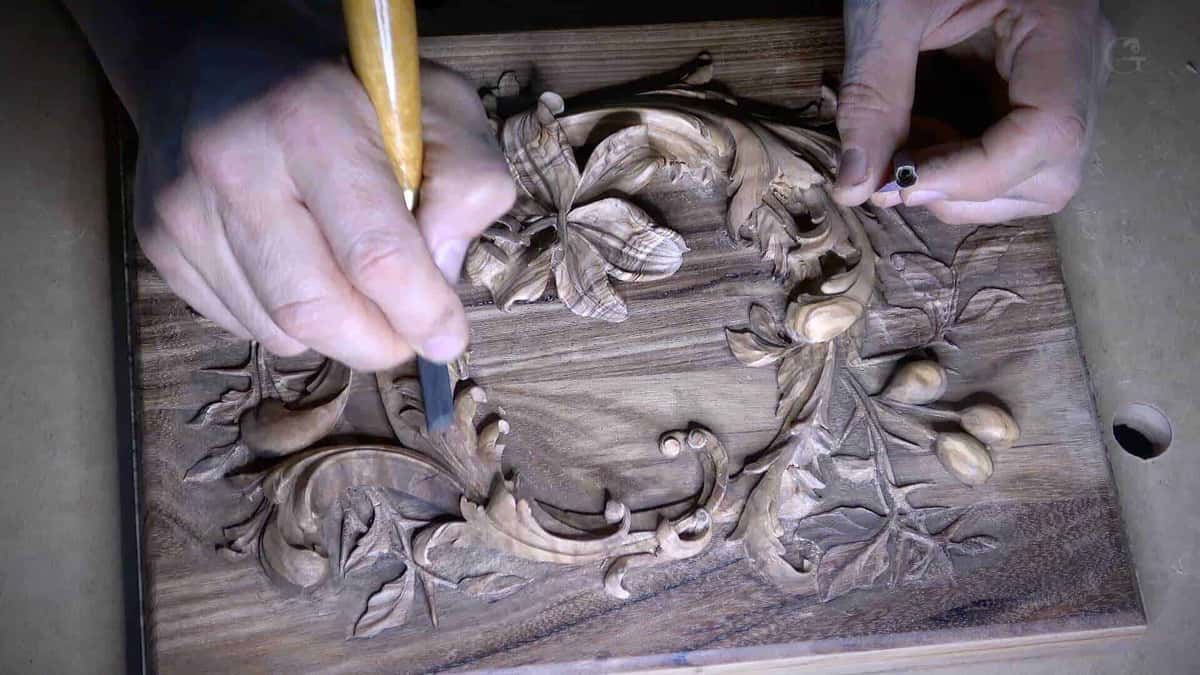
One gouge, one punch, and lilies coming up out of walnut.
Wider still, a 2023 Nature Medicine study of 93,263 people over 65 across sixteen countries found having any hobby tied to fewer depressive symptoms and higher life satisfaction. A review of 52 Men's Sheds studies found the same, and there the activity is literally woodwork. A ten year English study of 2,148 adults found monthly or more frequent creative engagement sitting with a 48 percent lower risk of developing depression. And the World Health Organization pulled over 3,000 studies together in 2019 and concluded the arts play a major role across the whole span of health.
My students in Florida are mostly in their fifties and sixties, and they tell me why they came. They know they are in a second part of life, and they know they have to do something with the brains to stir it up, because they do not want to lose memories.

The board from a class I taught at the Marc Adams school. We work through golden ratio, movement and rhythm before anybody picks up a gouge.

Drilled holes and marker lines. Nothing pretty yet.
Why is the sound of carving so satisfying?
Almost every carver notices it, and almost nobody talks about it. The sound is a real part of why people keep sitting down at the bench.
When I am really quiet, all I can hear is just the sound of my gouge. The sound it produces when you are carving, that slicing through the fibers, is really satisfactory to your brains. It triggers some production of hormones, like endorphins, and you experience euphoria, a tingling effect. Those are their words, and I am repeating them as I heard them rather than as proven science.
What I do know is my own retention numbers. On videos with no music at all, retention was absolutely tremendous. People just kept watching and watching. Something like hypnosis, I think.
I have a better word for what is happening between the tool and the board. I call it a dance, a waltz between metal and the wood.
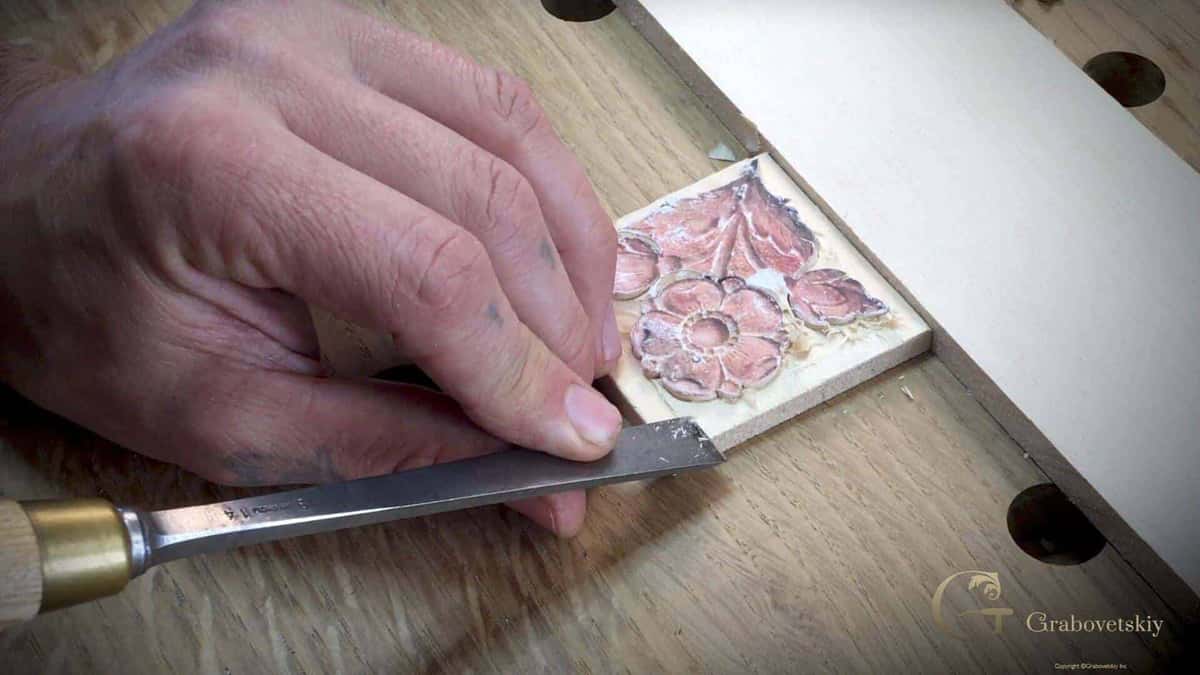
One flower, two leaves, a printed pattern still stuck to the tile.
Thirty five minutes of the work itself, no music, if you want to see where the hours go.
Which projects are the most fun to start with?
The ones that finish before your enthusiasm does. Evenings, not seasons.
| The project, named | Why this particular one is actually fun | Tools needed | How long a first one takes |
|---|---|---|---|
| A comfort bird | It sits in your palm and invites stroking | One knife | Two evenings, or three at first |
| A willow whistle | You blow it the same afternoon | Knife | One sitting, blank to first note |
| Small flower rosette | A flat tile turns round | Three gouges | One weekend, if the edge holds up |
| A butterfly plate | Wings that catch the light from clear across a room | Knife, veiner | Four or five sittings, with no rush on you |
| Kitchen cutting board | Somebody puts it to work every single day after | Knife, gouge | About a week of short evenings |
| One acanthus leaf | The one shape that taught every old carver his trade | Five gouges, minimum | Months, and that is exactly the point of it |
Imagine yourself living a long time ago, ninth century, on a Viking boat, far from home, and you have only one knife with you that you can use. What beautiful things you can get done with one knife. Nice and relaxing.

Every rosette starts here. Pencil on a block, and not one cut made yet.
Buy basswood for all of it. The Wood Database puts it at 410 lbf on the Janka scale and calls it perhaps one of the most suitable species for hand carving, which is a polite way of saying it will not fight you while you are still learning. More on that sits in what wood to use and in what to carve first.

First pass on a sawn blank.
How do you get a fun first hour at the bench?
Remove every source of frustration before you sit down, because the first hour only happens once. Most miserable beginnings come down to logistics rather than any lack of talent.
Step 1, clear a real surface
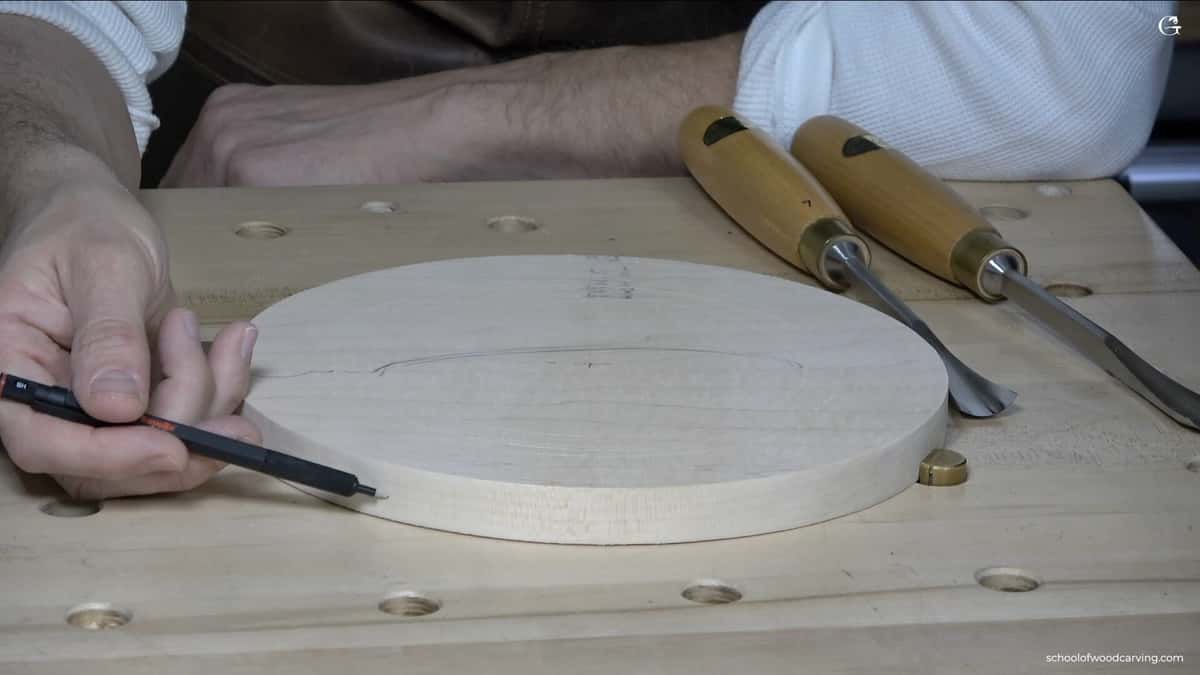
A plain round blank and two gouges is a whole evening if you want it to be.
You need some kind of table. If you do not have a dedicated space in your house you can just use your kitchen table, and I have done plenty of projects on a kitchen table. A bench can wait.
Step 2, sharpen before you start, not when it stops working
A dull edge is the single reason people decide they hate this craft. Strop the knife until it shaves hair off your forearm, and if that sounds extreme, it is nevertheless the standard every carver works to.
Step 3, draw the shape on the wood

Every line drawn first.
Pencil lines turn a scary blank into a coloring book. Now you are not inventing and cutting at once, which is two jobs stacked, and it is why first attempts wander.
Step 4, cut shallow and stop early
Take small bites. Leave the piece unfinished tonight and come back tomorrow, because the second session is where the pleasure actually lives and beginners rarely get there.
Step 5, put something on the surface
A wipe of oil doubles what you can see, and seeing your own cuts is the reward the whole evening was building toward. The full picture is in finishes and sealants.
When does carving stop being frustrating?
The week you learn to sharpen, and not before. I would put money on that in almost every case.
People buy tools, carve for a month, then the tool becomes dull and they get really frustrated. They blame wood, saying the wood is bad, or else they blame themselves. My own teacher put it to me straight when I complained about a board. There is no such thing as bad wood, only dull tools.

Roughed out and ugly. This is the stage people photograph least and learn most from.
One of my students, Paul, said it best in a livestream chat. Carving is my meditation until I break something.
Yes, absolutely, I know that feeling. And when you break something, you glue it, and you keep going. Nothing about a snapped petal is unusual.

Same board, days later, petals separated.
Free sharpening lessons live at the sharpening page, and the whole path from grinding to stropping is in the sharpening course. If you are still deciding whether the difficulty is worth it, my honest answer on how hard this is covers it.
What do you do with the things you carve?
You give almost all of them away, and that turns out to be most of the pleasure. Very little of what leaves my bench stays in my house.
A carved box outlives everybody who touches it. Holding that thought on a Tuesday evening is strange, and it changes how carefully you cut.
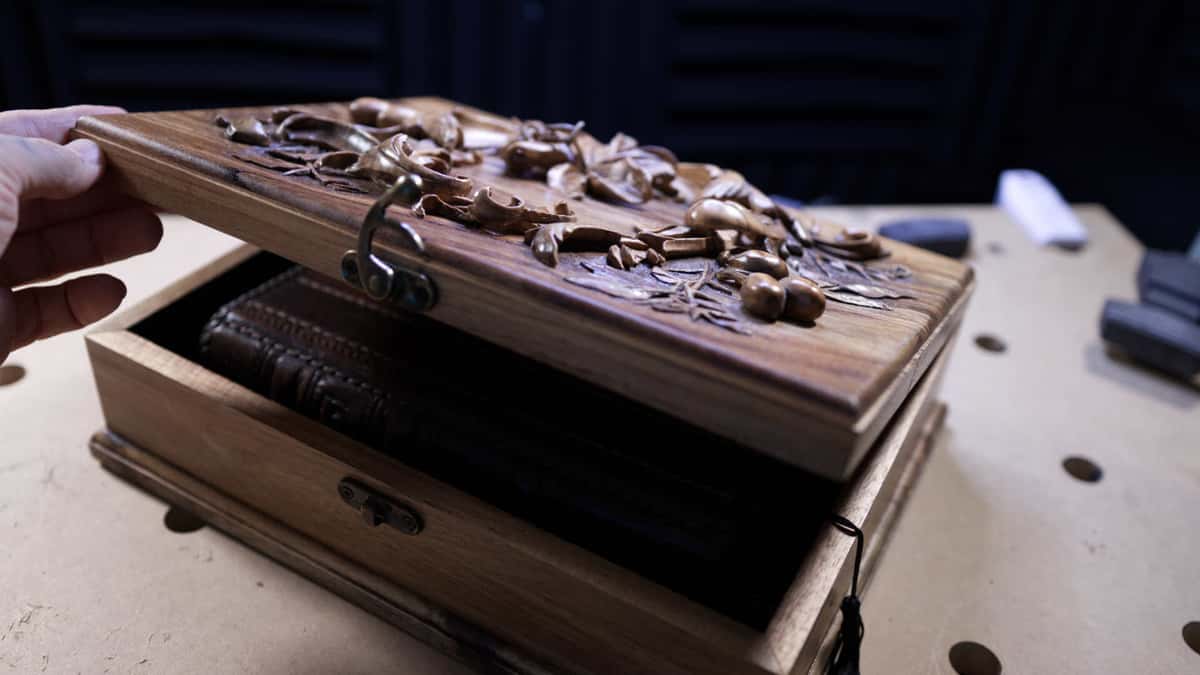
This box holds a book somebody reads every morning.
Having children around, and grandchildren, is a real joy. I can say it is one of the biggest blessings in my life. Making things that those children will still have when I am gone is not a marketing line, it is the reason the workshop light stays on.
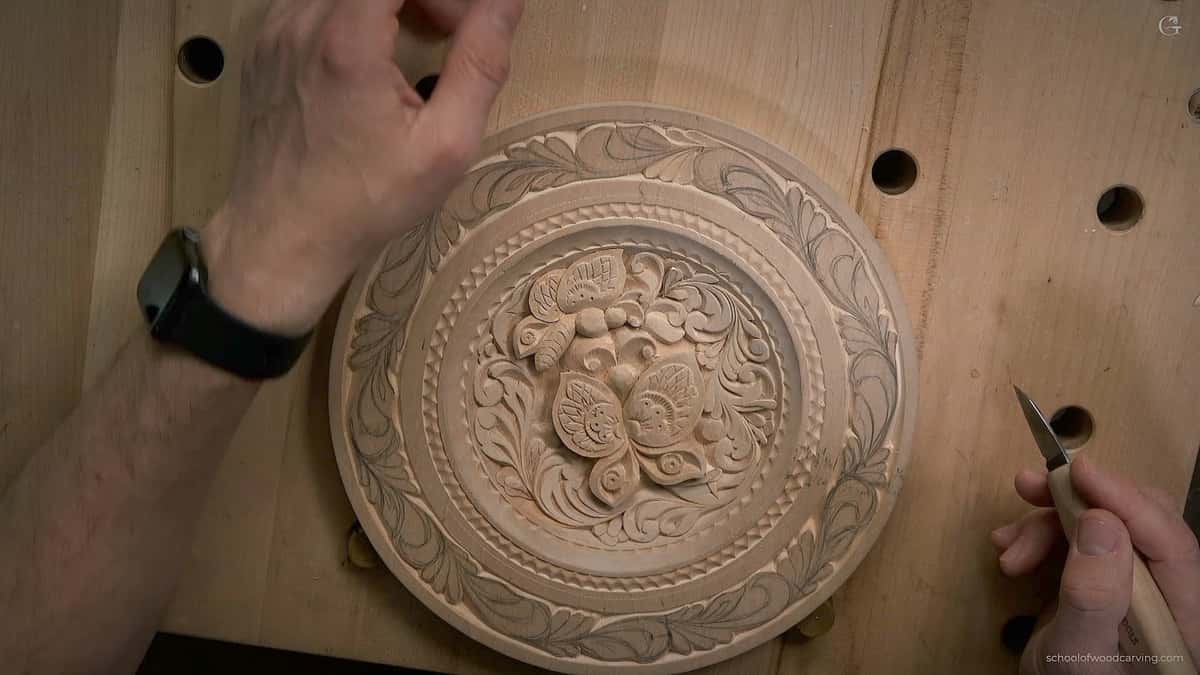
Nearly done. Those wings read from across a room, which was the whole point of them.
Robert Greene, in Mastery, gets at why the giving feels the way it does:
Real pleasure comes from overcoming challenges, feeling confidence in your abilities, gaining fluency in skills, and experiencing the power this brings.
Even watching carries some of it across. At least you can watch, and it is really interesting. It still gives you an effect. When you are watching and hearing those sounds by the tool, it gives you satisfaction, and it almost feels like you are doing it, not me.
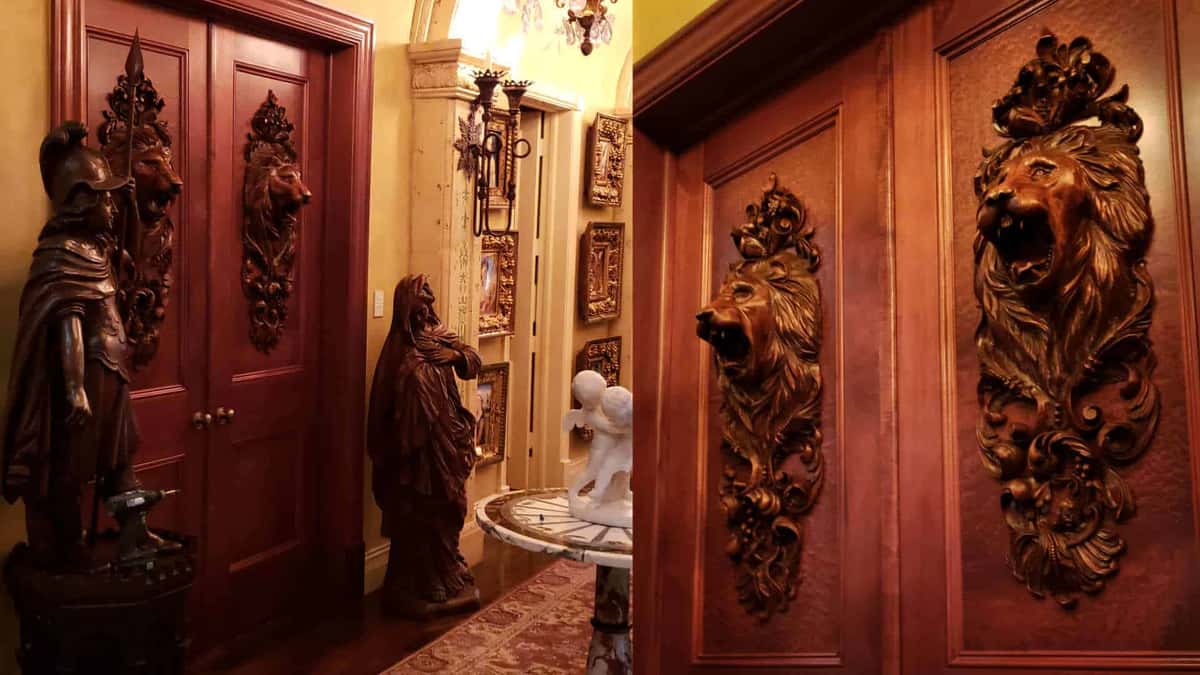
Lions on a client's mahogany doors, photographed after the crew left.
Is it still fun when you carve for a living?
Less than you would think, and that is worth knowing before you turn a hobby into a job. A student once asked whether he was more relaxed over his work than me.
Maybe more relaxed, yes, because I am carving for a living and it creates a lot of tension. Deadlines. And you cannot expedite with carving.
There is a router sitting in my shop that would clear a background in minutes. I mostly refuse it, because you are kind of losing the fun of it, and on a historical repair I have to make sure it looks exactly like it was done by the same hand.

A laurel swag on pale blue, worked with two hands and no rush available.
Still, the joy breaks through the job constantly. An architect once emailed me about a seventeenth century English mantel and my honest reaction was that I have no problem carving it, and that would be a joy for me to carve that chimney.
Esterly told a story that settles the question better than I can. Somebody asked Stravinsky whether he enjoyed composing, and Stravinsky answered by asking whether you enjoy waking up in the morning.
I watched some of my own videos a couple of days ago and found myself just watching them. It is still fun. You feel like you are doing it again.

A pierced panel with a sunflower at the middle.
When did four hours last go past without you checking a phone? Would you like your hands to have something to do that leaves a real object behind at the end of it? Willing to be bad at it for two weeks? Then pick up one knife and one soft board and start inside the course library, where the first cuts are filmed slowly on purpose. Tuition keeps this school and its charity work going.
Frequently asked questions
Is wood carving a relaxing hobby for beginners?
It becomes relaxing once your tool is sharp, which is usually week three rather than day one. Before that it is mostly fighting. Measured cortisol fell in about three quarters of people after 45 minutes of hand making, and prior experience made no difference to that drop.
What is the easiest fun thing to carve first?
A comfort bird or a willow whistle. Both need one knife, both fit in a palm, and both finish inside an evening or two. Finishing something is what makes you come back, so pick size over ambition on your first three projects.
Does carving help with anxiety or low mood?
The evidence points that way without proving cause. A ten year study of 2,148 adults tied monthly creative activity to a 48 percent lower risk of depression. Carving is not treatment, and anyone struggling badly should talk to a doctor rather than a woodworker.
How much does it cost to start wood carving?
One decent knife, a strop, a bar of compound, and a basswood blank. Call it a small evening out, not an investment. Skip the twelve piece set until a cut in front of you genuinely needs a tool you do not own.
Can kids carve, and at what age?
Mine were around the bench young, watching long before cutting. Supervised carving with a fixed blade suits many children by ten or eleven, with a cut glove and short sessions. Sharp tools are safer than dull ones, because a dull edge slips.
Do I need artistic talent to enjoy this?
No, and that belief stops more people than any tool ever will. Every human being is able to develop the ability to see in three dimensions, because we have the same brains. Start by carving somebody else drawing and let the seeing catch up.
Filed under
- beginner wood carving tools
- best types of wood for carving
- community for wood carvers
- creative wood carving patterns
- easy wood carving projects
- easy wood spirit carving
- fun wood carving ideas
- fun wood carving templates
- getting started with wood carving
- how to carve caricatures
- making clean cuts in wood carving
- painting wood carvings
- projects for new wood carvers
- simple wood carving techniques
- therapeutic benefits of wood carving
- tips for symmetrical wood carving
- using patterns in wood carving
- ways to finish wood carvings
- Wood Carving Basics
- wood carving for stress relief
- wood carving project inspiration