
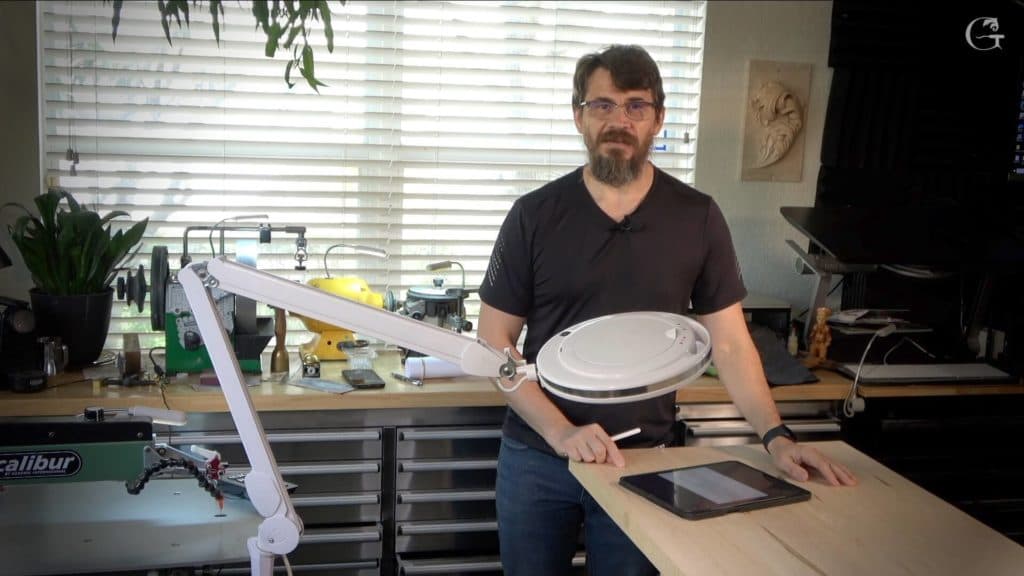
Alexander Grabovetskiy, woodcarver, School of Woodcarving · Published 2021
What does a wood carver mean by "cheap"?
Quick answer: Workshop 104, part 2, has the line "Don't buy cheap one" beside a jigsaw I name and a print that cost $27. My other lessons say cheap beside a ball pen, brushes, a scraper and diamond ones at $12 each. Two lessons use the word for a kind of carving, not a price.
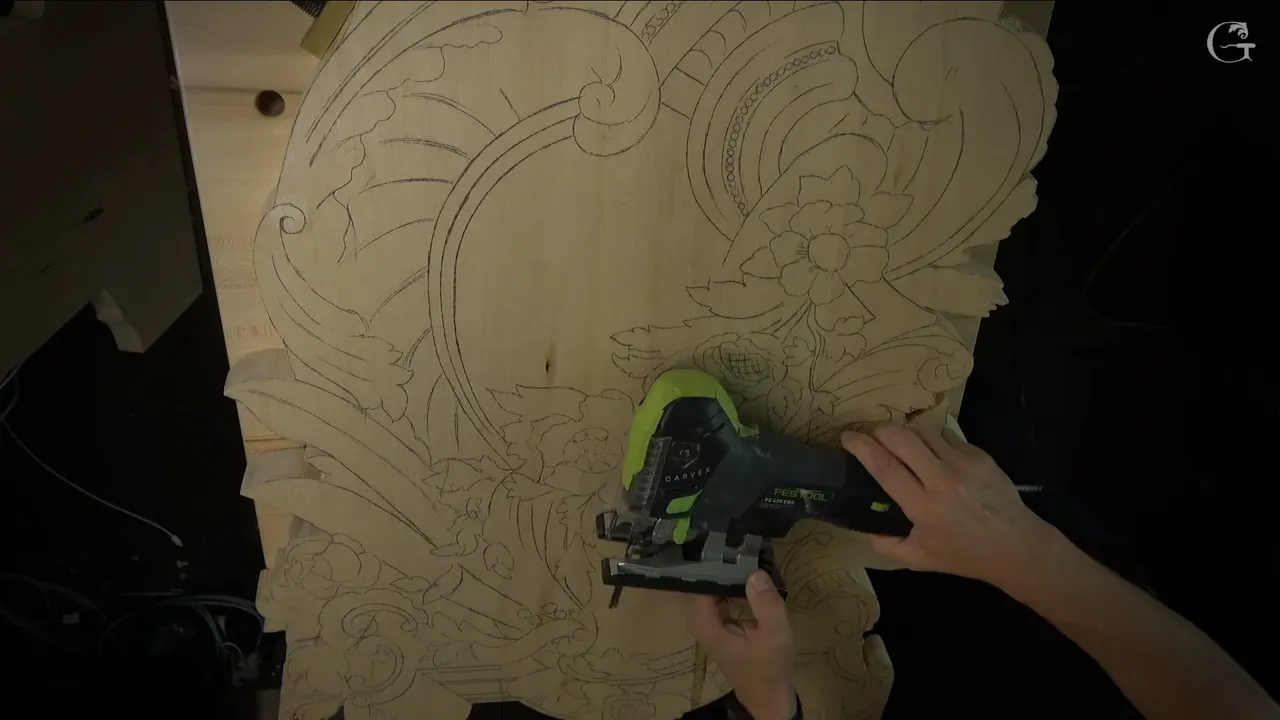

In workshop 104, part 2, I tell you to buy a good jigsaw and not a cheap one. My other lessons put the same word beside a brush, a ball pen, scrapers and sheets of plastic, and I read each passage with the lines around it.
Ever stood at a tool shelf and wondered which one is worth your money? This page starts with one saw and one $27 print from my Venice Room Part 9 course. After that it goes through the lessons where I say cheap, and the two where I mean something else by it. Every size comes in two systems, my own figure first.
Which saw is my pick in Venice Room 104-2?
The line comes near the end of the part, after the iPad talk, the print shop and carbon paper. My line is "if you want to buy a jigsaw, buy a good one. Don't buy cheap one, okay? So buy really good one." I name "Bosch" and "DeWalt" among "multiple brands" and my pick is "the best jigsaw would be Festool, okay, because it just gives me absolutely 90 degrees."
Just before that, at the end of the drawing talk, I say I will start tracing and "I'll use just the jigsaw." I say I won't show how to use it, because "I already showed that before." The next part opens with the sawing done. "I transferred my pattern and cut all around by using just the jigsaw I mentioned in previous segment."
I like that saw. The name I like is "Carvex," I say, and it "sounds like it is almost made for wood carvers." A piece of tape gets a mention too, "I used some tape just to get that guard out of my view, because it just blocks the view."
What did the print cost, and why no plotter?

The extra details for this project were drawn on my iPad, but they did not print from there. "I wanted to make sure it actually fits perfectly to the millimeter, okay, to the board." So I exported a plain picture, a JPEG, to my computer and opened SketchUp, where I "scaled to the perfection," because "I really want to make sure I hit the right lines, the right distance, because it's really important." A PDF came out of SketchUp and went to a FedEx store. For the scaling I have a video. "If you look in the courses under tips and tricks wood carving tips and tricks. There's going to be SketchUp for woodcarvers or for wood carving, something like that."
The sheet was 36 inches by 120 inches (914 by 3048 mm), and "If you would ask me how much I paid, I paid $27." I had asked myself "Should I buy plotter" and I describe it as "the big printer, for I would just print myself those big pieces." My answer was "I really don't need it" and I add "If you do have a UPS, if you have a FedEx or any other printing companies around you, it doesn't cost as much as you think."

The size shows again as "we're talking about 10 feet long, and I printed that for $27" and a shop may charge more, "Maybe it's a little more expensive." Another line says "You can find probably little cheaper companies specializing in construction, and they print layouts and so on."
A change costs time too. About 10 years ago, maybe more, I had a headboard project about 10 feet (3 m) long and drew it on one piece of paper. The client asked me to get an acanthus leaf higher, and I "had to take a razor and erase everything", after "hours and hours of drawing." On the iPad it goes the other way, "I can change in a second. If I don't like something, I just click and undo and redo."
The program I like is Procreate. "There's multiple programs you can use," I say, but this one draws to scale, and "you can just print that thing right to scale, one-to-one." For a project that size I set the canvas in inches. "300 DPIs is actually pretty high for the print, so you can go actually higher than that. Okay? So you can go like a 400 DPIs. I wouldn't go more than 400 DPIs." The program is going to say "too large", and I answer "don't worry about it. I've done it, okay?" A smaller canvas in my list is 36 by 48 inches, or 914 by 1219 mm, and the pencil I like in the sketching set is "peppermint."

The paper then goes on the board. I plan to lay it down and "use just the carbon paper" and you could use graphite paper and "just trace it on a piece of wood." A second board comes next, because the piece has two sides, and for it "I'm going to lay plastic, the garden plastic, just the transparent plastic, and I'm going to redraw that." My summary is "It takes just a few minutes versus hours and hours of work."

Where else do I warn against a cheap one?
In Lily Box 11, the third part, I say "let me give a 220," which is "220 Festool from one of my sanders." I add "I really like the Festool sandpaper. Please don't be cheap on a sandpaper. Okay? Cheap sandpaper leaves a lot of abrasive inside of the wood, and you're really going to dull your tools." A last line says "cheap one's going to leave a lot."

Modern Acanthus 7, part 2, goes from "cheap sandpaper" to the tool, "if you're using a tool again, it's gonna make it dull really quickly and you have to resharpen it." Of sandpaper in general I say "That's number one thing why people don't like to use a sandpaper."
Plastic gets a warning in Grinling Gibbons, Maine class 2, part 2. "If you're gonna buy a plastic by the way, don't be cheap on that, don't buy really thin one, get that the true Garden plastic. Okay, so that is a good one." Of the roll I say "I've paid like I don't know 10 bucks" and "It's Gonna Last me lifetime" and "That's a big roll because it's a garden one." Workshop 104 names garden plastic too, for the second board.

A livestream from April 2020 gives the price from the other side. "And the plastic is cheap." I say I placed the links in the description, "Like $13 and it's going to last you, I don't know for how long." It is "a big chunk" and "one of the probably most useful tool in wood carving."

The first beginner workshop, part 2, is about a knife, and I say "This is the knife I would probably suggest to buy. And don't go with the cheaper options, okay?" The cheaper ones probably won't last as long, I say, and the reasons I give are "the quality sacrificed, the metal itself is not really stable." My advice is "I would suggest to buy a really good tool from the beginning" and the knife is "number one tool in this course. So that's a number 12 Swiss Made."

Where is a cheap one good enough?
A pen comes next, and in the same livestream I draw with "just normal ball pen. And there's a link actually to the cheap ones." Later, beside the carbon paper, I say "you just use just a normal ball pen, really cheap one. You don't have to get expensive stuff. It's also wood carving tool."

Acanthus over Moldings 2, part 1, has me using a mechanical pen, and of it "those are cheap ones" and "I do have some expensive ones" and "I really don't need expensive ones." About the line it draws, "it gives me good result."

A brush is next. For Lily Box 3, part 3, I say "any brush will do, even just a cheap painter's brush, like $1 brush." In Venice Room 23, part 11, I show "a little more expensive one, but feels good for me to have this one" and add "any cheap, inexpensive you can find." Of the one-dollar kind I say "that's also going to work. But it's not going to look good. But it still gives you results."

The thirteenth Lily Box lesson, part 10, takes a cheap brush where adhesive is involved. I plan to use "just a cheap brush" and it costs, I think, "99 cents" in the United States. I also say "this is a throwaway brush, so I'm not worried about destroying it with adhesive." In Vase with Grape Leaves 3, part 12, I talk about applying a base color first, and I use "cheaper brushes because sometimes I'm just rubbing with them." I don't want "expensive brushes to do that operation."

A scraper is where cheap tools earn a place on my bench. Furniture Panel 21, part 4, has me say "to answer your question, I know I've already tried to answer before, it's going to dull your tool. Not as much as you think if you've got really good tools. But still, yes, it will dull your tool, but you can always buff it or get some cheap tools, really cheap set, like imported tools, and they use as a scraping."

A little later in that part comes "I do have a cheap tool like that. I paid $15 for the set of 20 or something." I am not carving with that set, I say, and "You are able to, okay? Don't get me wrong. You're able to carve with those tools, but it's a good tool to have just for scraping if you need to scrape it a little bit."
Two parts of that lily box lesson scrape with cheap ones. Part 6 has "I'm just going to take a number one, really cheap chisel, and I'll just use it as a scraper and scrape high spots a little bit." Later, in part 9, I name a knife, a gouge and even a skew chisel, and I say "I'm using just the cheap ones, okay? So I'm really using cheap ones as a scraper" and "I really don't want to use the really good ones."


Some diamond ones sit at the cheap end too. In Venice Room 17, part 12, I decide to "order just the cheap diamond ones, which has some curvatures also." I add "I know it's not going to leave any abrasive in the wood, and that's what I'm using, and it's little finer grit."

The Maine sharpening class has cheap lines in its first workshop. Its third part says "And bunch of diamond cheap ones. Cheap ones, like $12 each." Then, "Chinese, yes. I have no problem with that because it's cheap. But I really don't have to replace it." A line on sandpaper comes in part 6, "Sandpaper lasts a long time, really long, and it's cheap also. Get the same result."
Another story is about a woodworking store a few years ago, where I saw a machine. "Cheap, like $200, Chinese-made." It was wobbly and "just felt so cheap," I say, and I asked myself "Is there a place in my shop for the cheap tools?" I walked back and forth a few times, and "It took me long before I bought the thing. Because I saw the idea is a beautiful idea."

Is cheap about the price, or about something else in my lessons?
No. Two lessons say so in my own words. In Roman Acanthus 16, part 3, I name a number 3 knife, Swiss made, and tell you the word is about "the style of carving, chip carving" and not the price. In Hashemi Flowers 39, part 4, I say of a knife "It's actually pretty expensive" and of the word "It's about the style." That is why this page keeps only passages where a price is named or the lines around the word are plain.
What does cheap mean when it is about my work?
I describe what clients want in Dining Table Apron 9, "they want to get it done cheap, they want to get it done quick. It has to be done yesterday." Then comes "So it's quick, fast, and cheap."
Greek Acroterion 5, part 4, has this about the hours a carving takes. "They would still spend about the same amount of hours to do exactly the same piece we're working on. And you can't make it quicker. You can make a mistake that way." Right after it, "We live in society of quick and cheap, so we need it quick, and we need it cheap, and I don't think it's right."
A livestream from April 2020 about charging for a carving has this. "I would rather not to do any project at that moment than I would just to do really cheaply, and it hurts me." In the same livestream I also say "Yes, you can always find somebody's cheaper. There's a lot of people who would willing to do that probably for a much cheaper, but just expect what you're going to get. So you get what you pay."
In a livestream from October 2020 I talk about the mentality in the United States, "get it quick, and get it cheap, okay?" I also say "Don't get me wrong, okay" and "I'm not judging, by no way."
Where do the frames come from?
Every picture here is a frame from a lesson named on this page. The first comes from part 3 of workshop 104, then four from part 2, and the rest from other lessons, each beside the lines it matches.
Lesson by lesson, where I say cheap
| Lesson and part, Venice Room unless a course is named | What I say about the word |
|---|---|
| Workshop 104, parts 2 and 3 | A good saw and a 10 foot (3 m) print that came to $27 |
| Lesson 11 of Lily Box, part 3 | Abrasive stays in the wood and the tools go dull |
| Modern Acanthus 7, part 2 | A tool dulls really quickly and you have to resharpen it |
| Grinling Gibbons Maine 2, part 2 | Thin plastic is the wrong one and a big garden roll is the right one |
| Livestream, April 2020 | A really cheap ball pen, no expensive stuff, and plastic at like $13 |
| Beginner workshop 1, part 2 | Skip the cheaper options for the number 12 knife |
| Acanthus over Moldings 2, part 1 | Cheap mechanical pens give me a good result and I have expensive ones too |
| Part 3 of Lily Box 3 | Any brush will do, even a cheap painter's brush at $1 |
| Venice Room 23, part 11 | A $1 brush still gives you results, I say |
| Vase with Grape Leaves 3, part 12 | Cheaper brushes for rubbing, and no expensive ones for that job |
| Furniture Panel 21, part 4 | A $15 set for scraping, and I do not carve with it |
| Parts 6 and 9 of Lily Box 13 | A number 1 chisel, really cheap, scrapes the high spots |
| Venice Room 17, part 12 | Cheap diamond ones, some with curvatures, and a little finer grit |
| Sharpening in Maine, class 1 | Diamond ones at $12 each, and a cheap sandpaper that lasts long |
| Dining Table Apron 9 | Clients want it cheap and quick, and that gets you quick, fast and cheap |
| Greek Acroterion 5, part 4 | In a society of quick and cheap, I don't think it's right |
| Livestream, April 2020, on charging | I would rather not do a project than do it really cheaply |
| Roman Acanthus 16 and Hashemi 39 | Here it is a style of carving, not a price |
Is there a tool in your shop you bought only to say you own one? Everything in these lessons sits inside one tuition plan. For a first look, try the full workshop 104, the Part 9 course page, or the scrapers lesson.
How it's done
- Pay for the saw. Workshop 104 says to pay for a jigsaw, and my pick was a Festool.
- Print the big drawing at a shop. The whole sheet cost me $27 at a FedEx store, and I say I don't need a plotter.
- Pick plastic that is not thin. The Maine class says to get the true garden plastic, and a thin one is the wrong choice.
- Pay for the sandpaper. A cheap one leaves abrasive, I say, and your tools go dull.
- Keep a cheap set for scraping. A $15 set is for scraping, I say, and I am not carving with it.
Frequently asked questions
Which jigsaw is my pick?
A good one, I say in the second part of workshop 104, and not a cheap one. I name Bosch and DeWalt, and my pick was Festool, because it gives me absolutely 90 degrees. In the next part I say I like the name Carvex.
What did the 10 foot print cost me?
I paid $27 at a FedEx store for the whole sheet, 3 feet by 10 feet (914 by 3048 mm). I had asked myself about a plotter, and my answer was that I don't need one. The print shops near you may cost less than you think, I say.
Where do I call a cheap one the wrong choice?
On sandpaper in Lily Box 11, part 3, and on plastic in the Maine class. Workshop 1 of the beginner course says "don't go with the cheaper options" about the number 12 knife. The jigsaw line sits in workshop 104.
What to carve next