

Alexander Grabovetskiy, woodcarver, School of Woodcarving · Published 2017
Do wood carvers still use the same tools as the old masters?
Quick answer: Carving with the old masters' tools is still how I work, for the most part. On this acanthus leaf I said a carver of the 15th, 17th or 19th century would need the very same tools, the same time and almost the same setup. A few of mine came later.
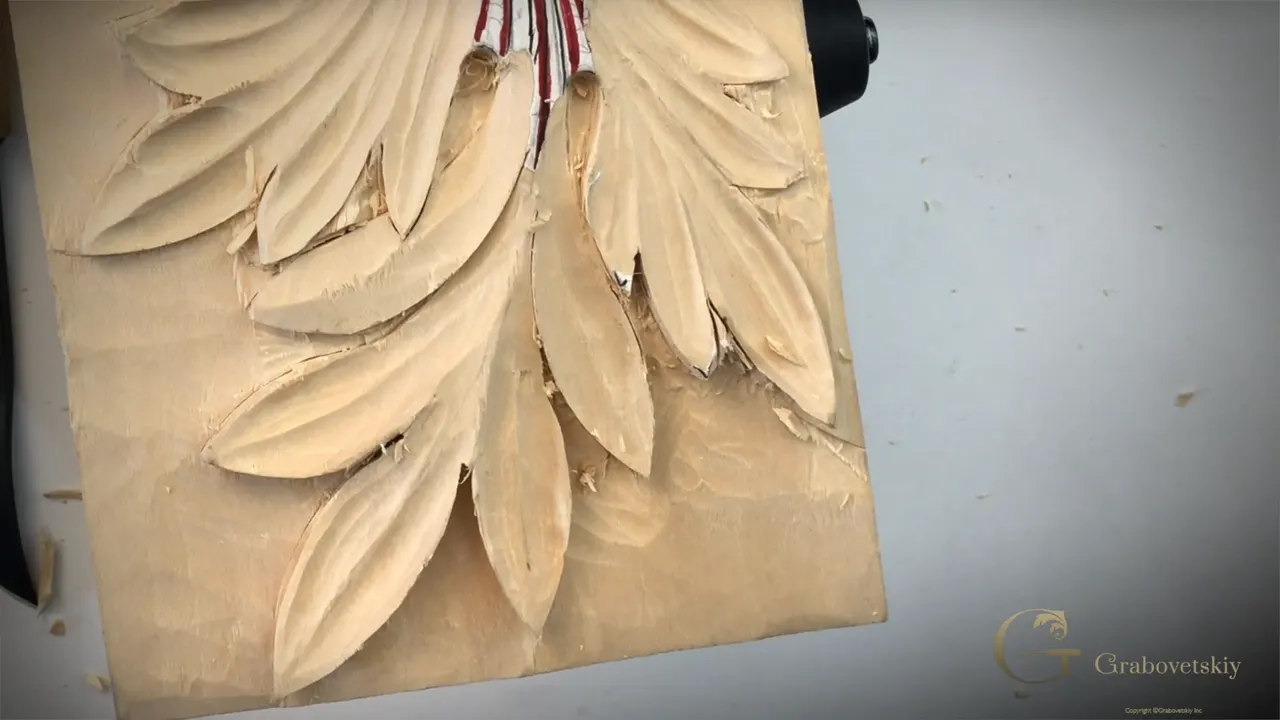
Traditional wood carving tools are the knives, chisels and gouges carvers have used for many centuries, and I still carve with the same kinds today. In part 4 of lesson 5 on my Corinthian acanthus leaf, I went one step further. A wood carver from the 19th, 17th or 15th century, carving a piece like ours, would need exactly the same tools as we do. The same time, too, and nearly the same setup. So I called carving a skill that is preserved.
Do you own a gouge? A knife, maybe, or a flat chisel? Then you already hold the kind of steel a 15th century carver would reach for. A few tools did change, and some old shapes are hard to find now. Below I give you what I said about old and new tools in several courses, the place I said each thing, and the four tools I took under this leaf.

Traditional wood carving tools, then and now, in six lines
- Carvers of the 15th, 17th and 19th centuries would take the same tools to carve this leaf, I said in this part.
- Knives, chisels, gouges and hand planes are still much like the ones carvers used long ago.
- In the 18th century they used a number 11 where you might take a V tool, I said on a furniture panel.
- A router plane like mine was not in their shops.
- Some old shapes, like a very short bent gouge, are almost impossible to find today.
- Under this leaf I used a V tool laid on its side, a small number 9, my number 12 knife and a V of one millimeter (a little over 1/32 in).
What did I say about old tools in part 4 of lesson 5?
I said a carver from long ago would pick up the same tools we pick up. For most of that talk the camera showed my hands under the leaf, and the talk began with a warning. Make sure you don't rush anything.
I know it's tempting to finish everything in half an hour. But wood carving is not that type of trade where you can do your work quickly, and sometimes it takes a really long time. One of my works took me a few years to finish. That's a few years! I don't think I have any photos of it, because it sits in a customer's house.
Then I stopped on the trade itself. If you can call it a trade, I said. Or a profession. Well, I don't know, this skill of wood carving. Like I said before, probably, it's one of the oldest skills on the planet Earth, and in thousands of years it did not develop too much.
So a carver from the 19th century, or the 17th, or the 15th, would take exactly the same tools to carve a piece like what we do. He would need the same time. And his setup would barely differ from ours. It's one of the skills which is preserved, I would say.

And I meant true carving. A machine can do some carving, of course, and I come back to that further down. Most of what follows comes from my other courses, where I said it differently.
Have knives, chisels and gouges stayed the same all this time?
On the Greek acroterion, lesson 5, I said they have. Knives, chisels, gouges and hand planes are still the ones carvers used for thousands of years. A story from the Bible came next.
The Bible calls one man a wise man, filled with the spirit of knowledge, understanding and wisdom. He was a carver, and he could work with stone and wood and metals. His name is Bezalel, and the book of Exodus has him make the Ark of the Covenant. In my mind he was using the same tools for that Ark. Same knives. Same chisels.
The only difference between those men and people doing the same work right now, I said, would be who's better. Thought process, time, tools and setup would all be about the same. They didn't have Festool clamps. That's not so critical. You could use plain old bench blocks.
People ask me how the old carvers made all that furniture, with its curves and its moldings. Lesson 1 of the same acroterion course is where I answered that some of it you can do with molding planes. But an ogee on a radius, or a complicated Rococo form? For that, the only way is with your gouges and your chisels. They just carved it.
How do I carve the way the old carvers did on a period piece?
I study their tools and try to use the same ones. On a live stream in October 2020 I said that a carving authentic to 15th and 16th century Italian style sent me to study what they used back then. I try to use the tools they used, and they used a lot of gouges and veiners.
A number 11 is a U-shaped tool, a veiner, and the veiner was developed pretty much for carving acanthuses. My number 7 is one of my favorite tools. And of course all of the number 11s. They are my go-to tools.
On lesson 15 of my furniture panel I was trying to be authentic to whatever they did. That way I feel exactly what they felt, I said. Same process, same mindset, same tools. Then I corrected myself. Almost the same tools, because they did not have the type of router plane I had. Theirs was made of wood, but the idea was the same.
In lesson 33 of my furniture panel series I didn't want to overcomplicate a petal. Still, I wanted it authentic to whatever they did in the 18th century, and the 16th and 17th did the same thing.

Which tools did the old carvers not have?
A V tool, in some places and times. On that same lesson 33 I told you I'm absolutely okay if you use a V tool there, any V tool. I like my number 16, at something like 35 degrees. But I would probably prefer a number 11, used the normal way. It's what they used in the 18th century. Really. They didn't have that V tool. The 11 gives about the same result there, even better. That's what I think.
I had to take care of a separation, so over on lesson 26 I reached for a V tool anyway, probably the number 16. They really didn't use V tools in some of the countries back then, I said, but that's okay.
In workshop 21 of the Venice Room I planned the undercut for later. Probably a number 11. Why no V tools in that project? I could use one, don't get me wrong, and I love V tools, by the way. But back then not every country used the V tool.
In workshop 51 I said no, they did not have one kind of tool I use today. But they had similar tools, just called a skew chisel, much the same idea.
And sandpaper? Some of you asked me on the beginner course about finishes back then. They definitely didn't have any sandpaper, I said.
| Tool or habit | What I said about the old carvers | Where I said it |
|---|---|---|
| Knives and chisels | Still the same kinds the oldest carvers held, I said | Greek acroterion, lesson 5 |
| A number 11 | Used in the 18th century where I might take a V | Furniture panel, lesson 33 |
| The V tool | Back then, not every country used one, I said | Venice Room, workshop 21 |
| A skew chisel | Carvers had one then, with a similar idea | Venice Room, workshop 51 |
| My router plane | Theirs was wood, and the idea did not change | Furniture panel, lesson 15 |
| Short bent tools | Antique, and almost impossible to find, I said | Chamomile and bow rosette |
Was the knife a main tool of the old carvers?
It was, as I said in workshop 93 of the Venice Room. A knife can do a lot of stuff, and they used it a lot back then. The knife is a main tool of the trade, at least.
Not in England, though. In England they didn't use the knife too much. Well, I shouldn't say that, I said. They used it in the countryside, but not for the palaces, so there it wouldn't even be considered a wood carving tool. And what else was I doing with it? Of course I was carving. You can call it wood cutting, I said, because I make cuts with the knife.
On the beginner cutting board, workshop 8, one single knife did a lot of the work. I could have used different gouges. But I really like the knife idea, because first of all it's ancient, and that's what they had back then. You don't need to collect the whole set of tools you see behind me for that type of carving, and you can still do beautiful things.
Did the old carvers work with simple tools?
Don't get that simple idea, I said in workshop 50 of the Venice Room. They had tools. Really complicated tools. I studied a little about ancient Egypt, and what they were able to do back then, without any electricity, is just amazing to me.
Some of their tools people wish to have today, but they lost the technology, how they did it. Go to Machu Picchu, I said, and see how they worked with the stone and cut the granite. They had some complicated machinery back then.
Can you still find the old shapes today?
Hardly, for some of them. During the chamomile and bow rosette I showed you two antique tools with a really short bend. I don't use them when I'm filming most of the time, because they're hard to find, almost impossible. I doubt anybody can find them, I said.
One says on it, if you can read it, double extra extreme bend. That tiny one is about a millimeter and a half (about 1/16 in) at the most, and the other is maybe about 4 millimeters (5/32 in). With them I get really inside and make my twists for the flowers. I didn't have to use specialty tools, though. You saw one I had done with just the regular tools.
Still, if you come across a bend that short on eBay or at a flea market, just buy it. Even if it's super expensive.

For lesson 3 of that rosette my tool was an old number 3 or number 5, something like that. It had no markings, and I called it really good steel, an antique tool.
In class 14 of my Gibbons course in Maine a fragile part needed a flat gouge, maybe a number 1, with a bevel on both sides. Mine was the old one, the antique tool. The antique ones were really good, I said, and that one was really sharp. It went almost all the way through everywhere.
Which tools did I take under the leaf in this part?
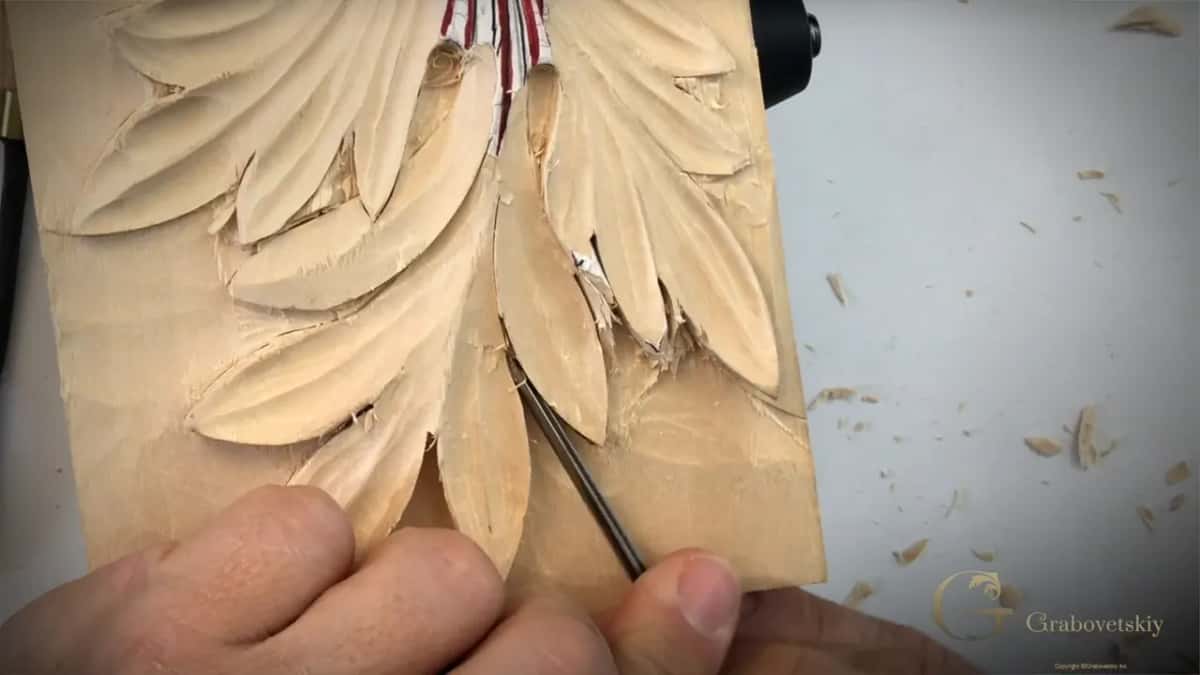
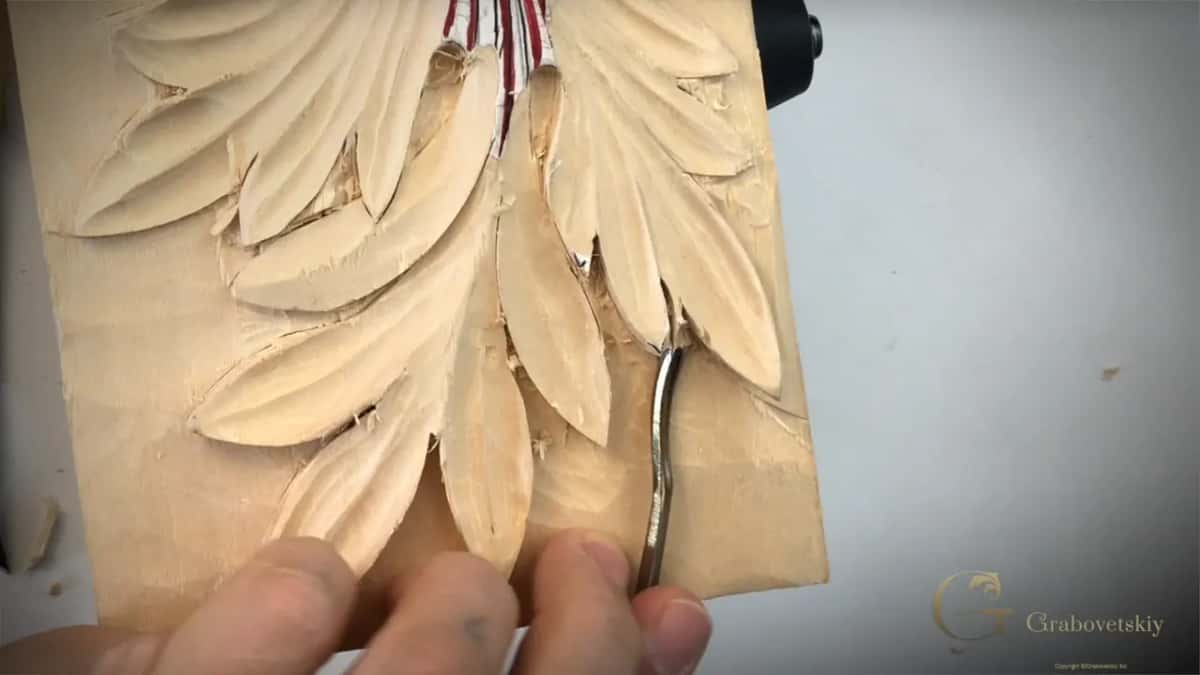
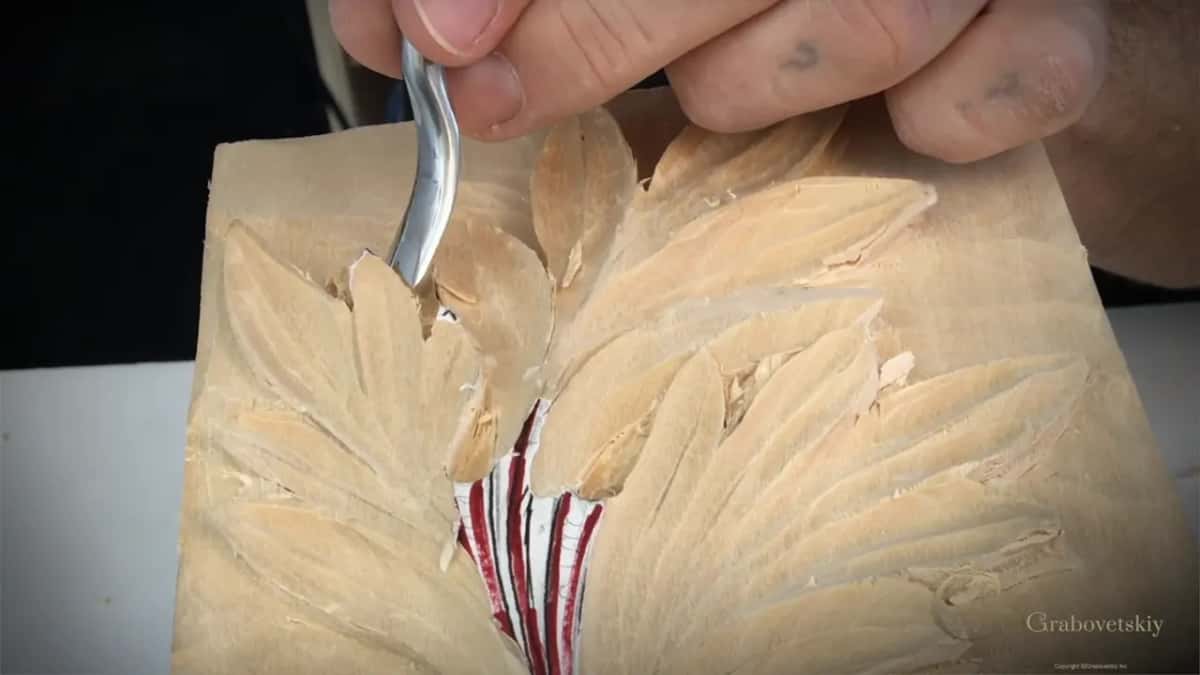
A V tool came first. I took it again and carefully worked my way in. Just watch how you're controlling your tool, I said. Really important. All about control.
This side was going to look really nice, because these leaves sit really high above the background. That makes a beautiful move. Removing material under those leaves, that's undercutting.
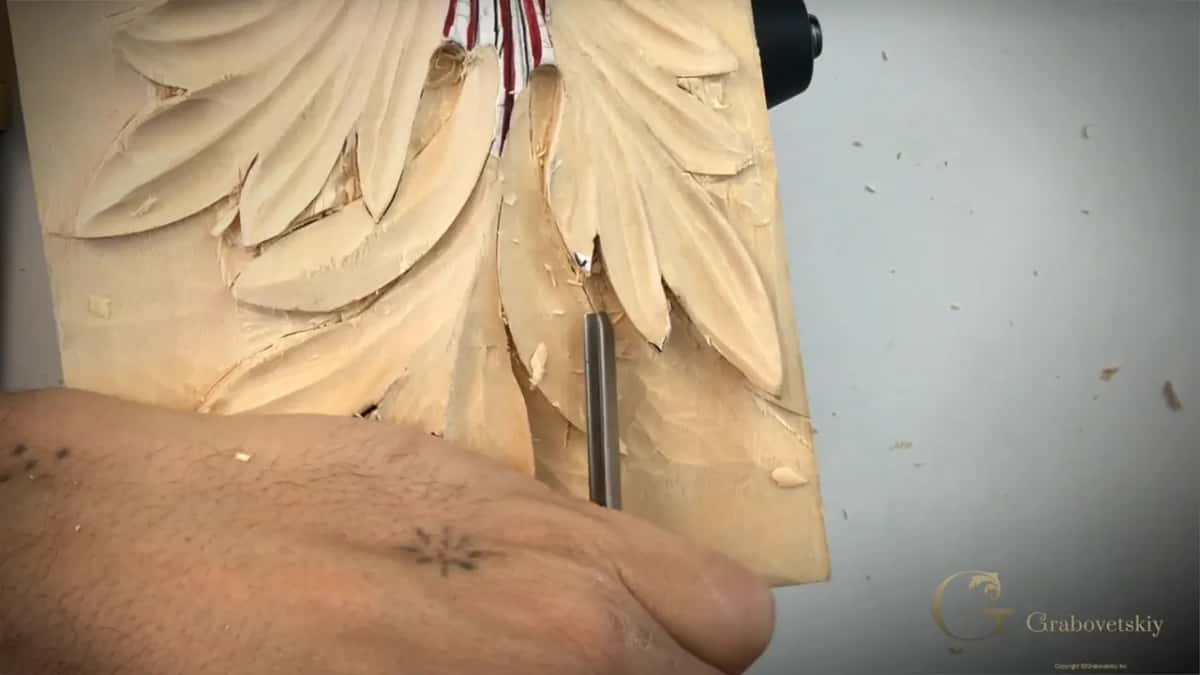
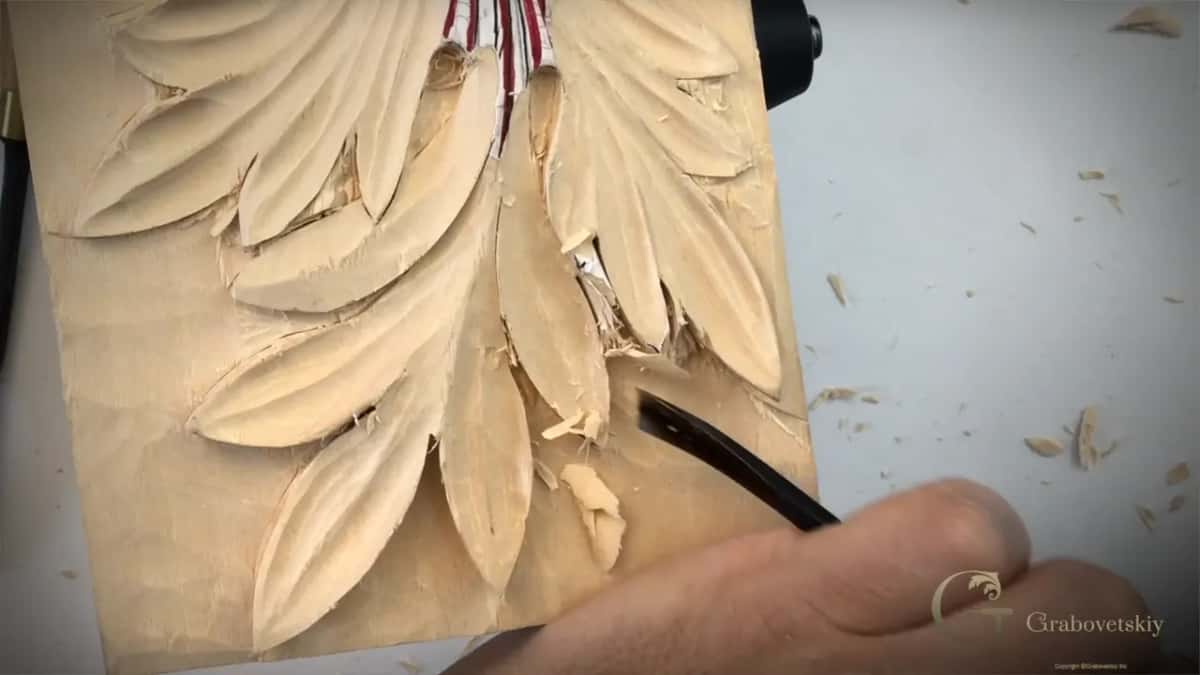
Be careful here, because it's easy to break your tools. I know some of the most professional carvers, and they would never break a tool in any other place, only when they're doing undercutting. Don't rush it. I laid the V tool on its side and went carefully, in multiple steps.
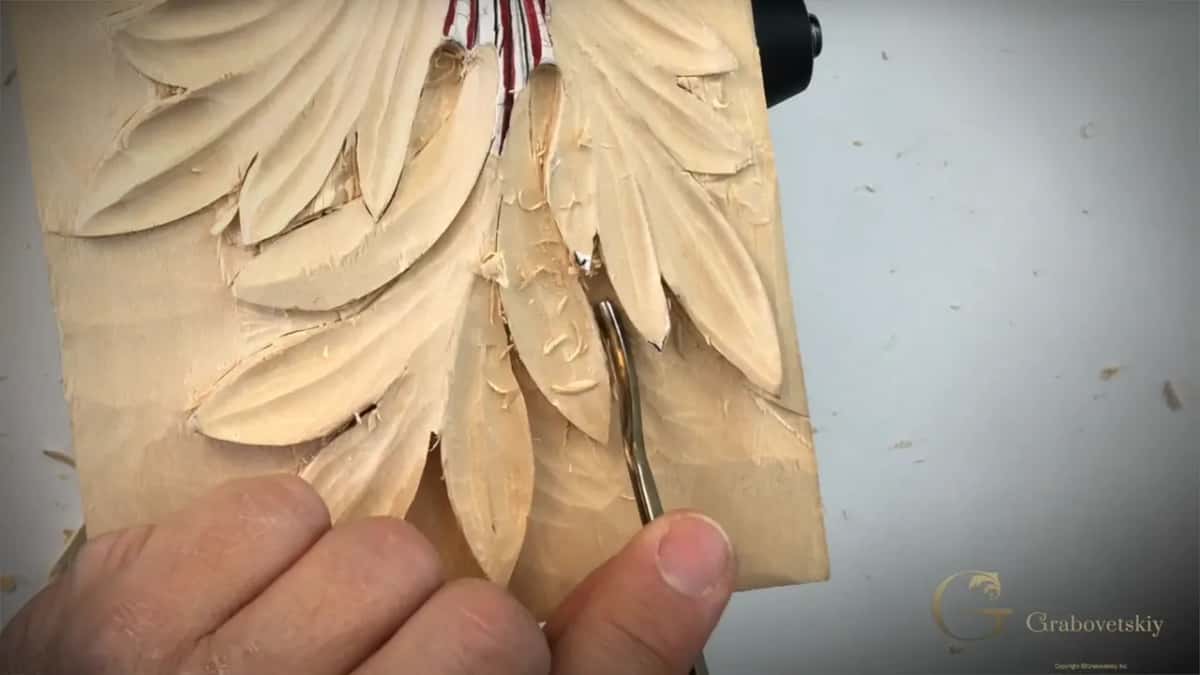
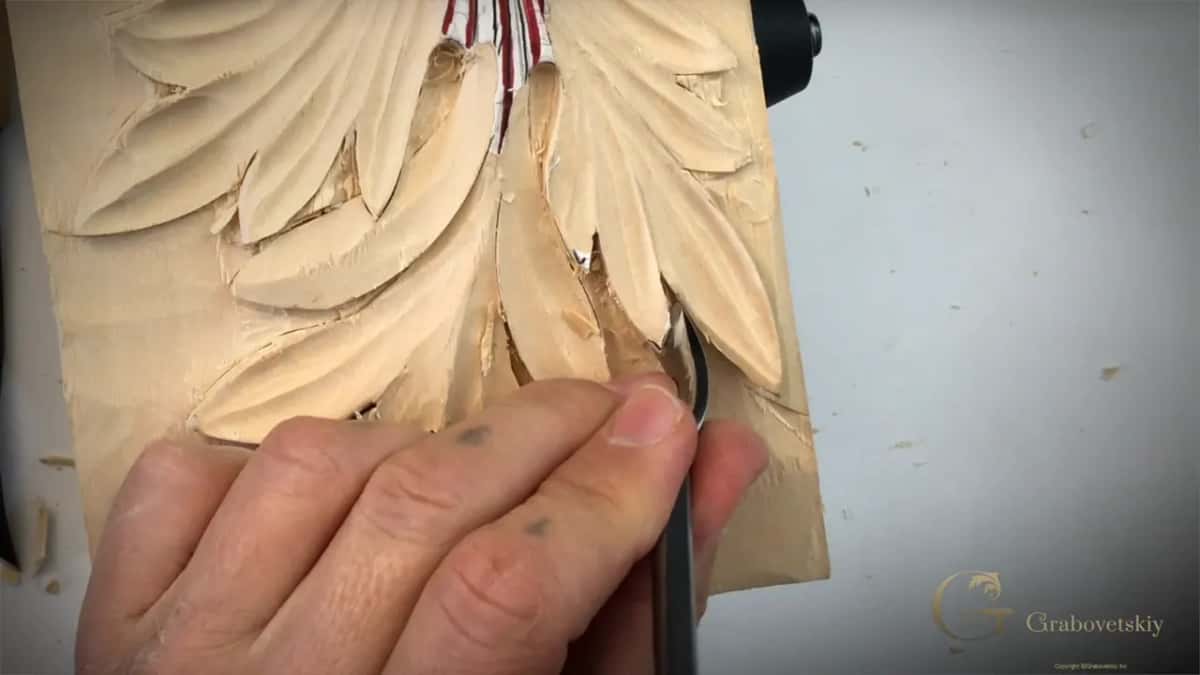
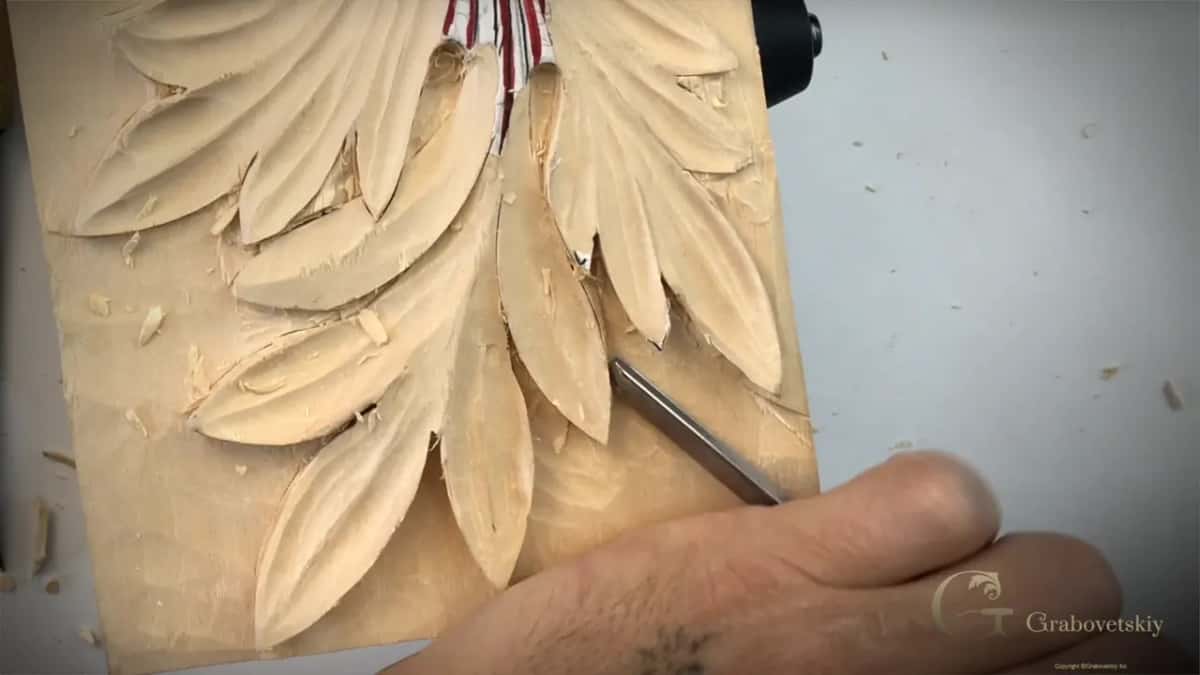
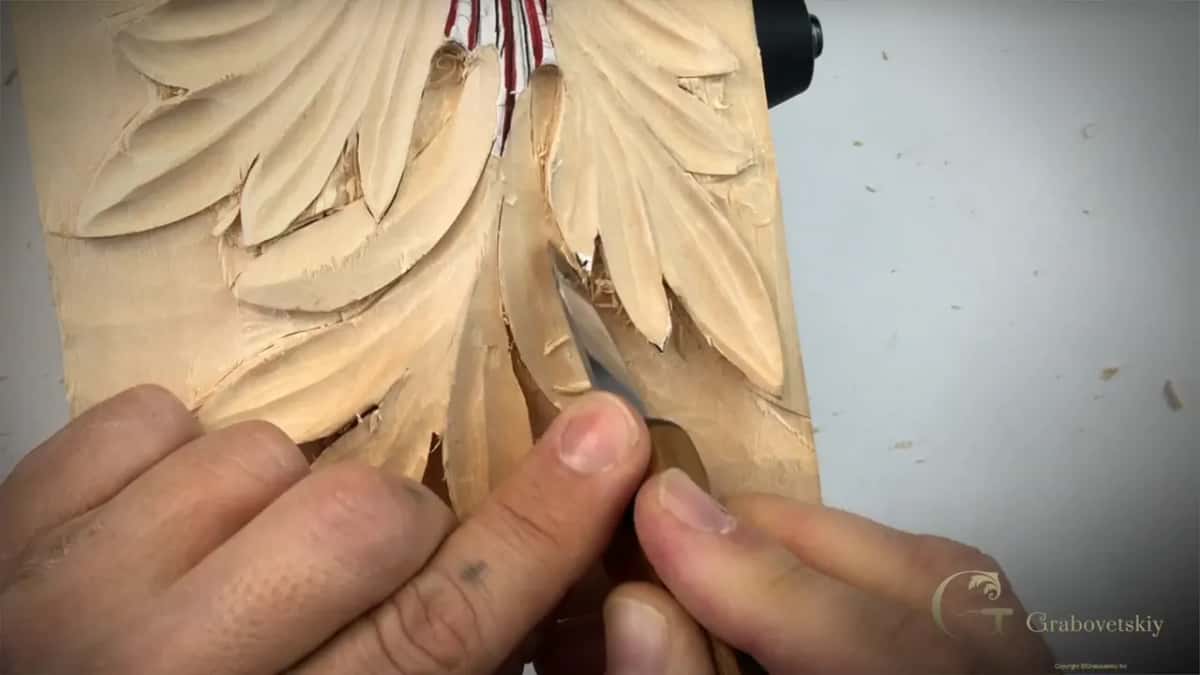
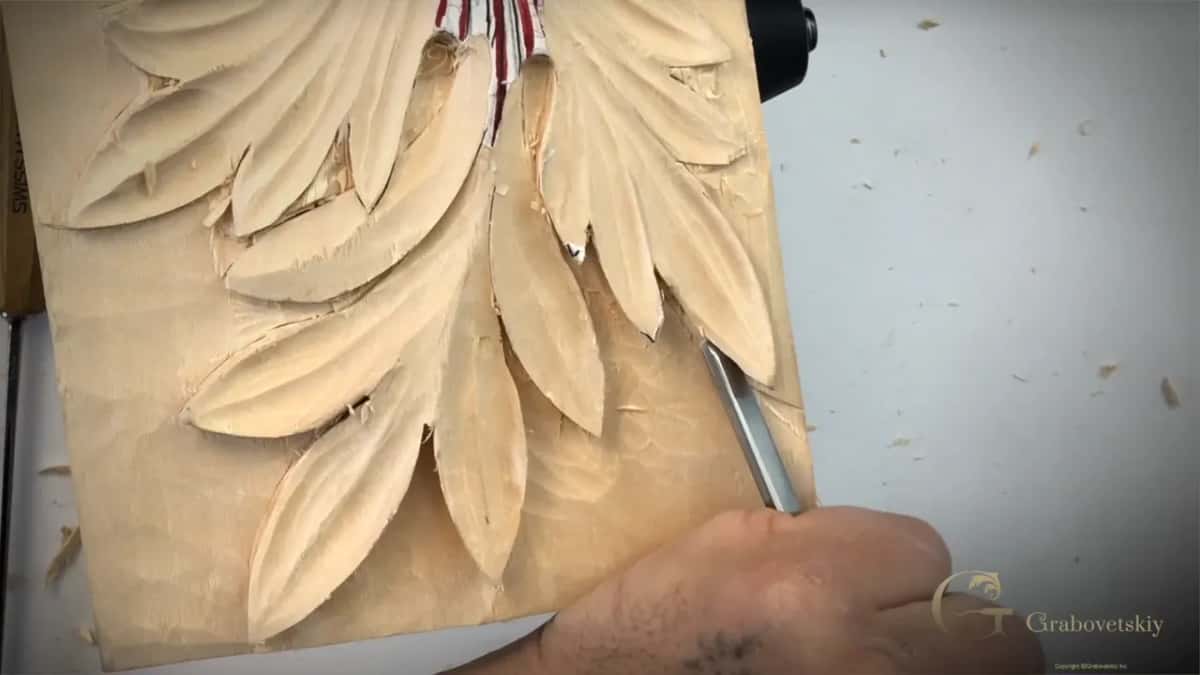
Next came a small number 9. I used the side of it to remove the extra material left in those corners. Then my number 12 knife, because sometimes it's just much easier to do it that way, and quicker.
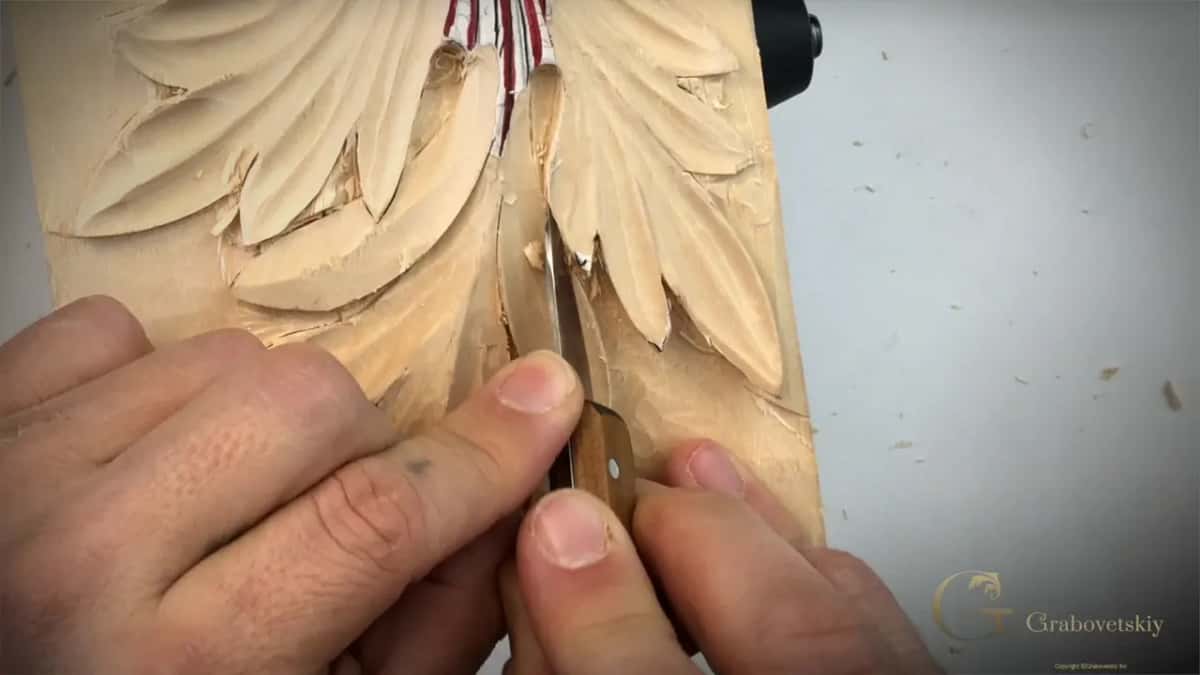
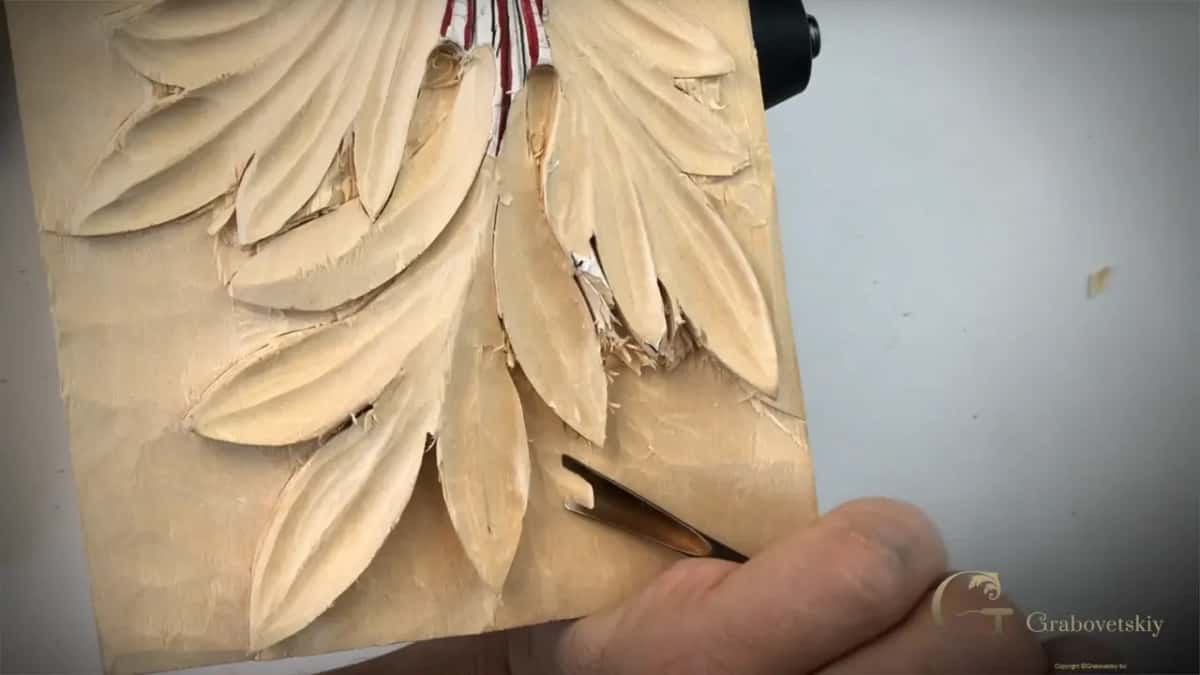
Last, a small V tool. It's only one millimeter (0.04 in), my number 16 by Pfeil. I hooked it in carefully, and I said to be careful when you hook it.
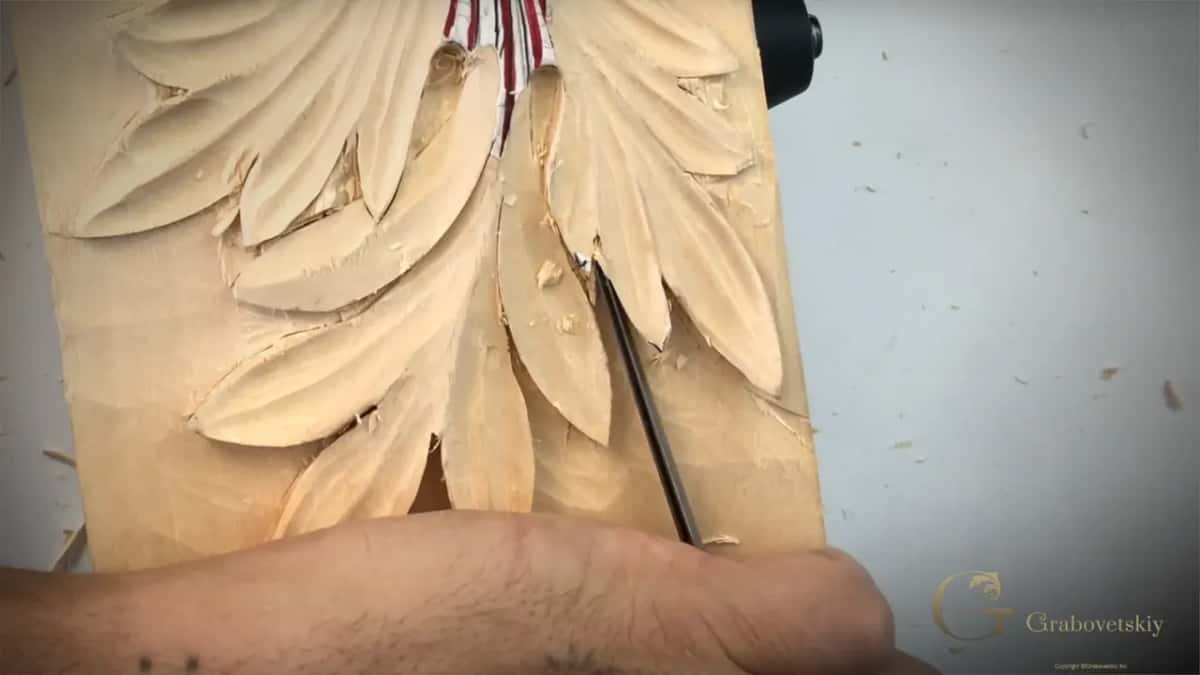
You can already see how beautiful the shadow is, and we didn't even remove the background yet. We're going to remove it deeper, but the shadow is already visible. It creates just a beautiful look.
Can a CNC machine carve like the old masters?
Not for really complicated carving. Some carving you can do on a CNC, of course. But for really complicated work in the style of Grinling Gibbons, the style of our Gibbons course, there is absolutely no CNC on the planet Earth that can do that.
Some people are really excited about 3D printers, and they can probably print something close to it in the future. It's not going to be the same, I said, and it won't be a solid piece. And it's going to lack the most important part, the human touch.
When you see the marks, you know a human hand did it, and that human touch is what makes wood carving a really unique skill, I said. A machine carving looks more plasticky. Customers sometimes expect me to price a piece as if a CNC did it. But a really complicated piece might take one week with a CNC, design and files included, with the machine itself sometimes running 20 hours or longer. By hand it takes probably at least one month, and it looks a lot better. Hand work is hand work.
Is sharpening by hand the old way?
Sharpening by hand has been done for hundreds of years, even thousands, and there's nothing wrong with it, I said on a live stream in April 2020. But I'm in production. In 2020 I had about half a thousand gouges, veiners and chisels, and reshaping one could sometimes take hours, because they pretty much all come with a bevel that is wrong for carving.
What comes after this part?
Lesson 6 does. In lesson 6 the background comes down around the leaf, deeper, as I said it would at the end of this part. This part is the last of four in lesson 5 of the Corinthian acanthus course.
Got one gouge and one knife on your bench? Then you hold tools a 15th century carver would know. If you want to carve this whole leaf along with me, part by part, the plans are on the Tuition and Access page.
How it's done
- Lay the V on its side. I took the V tool again and worked my way in carefully, in multiple steps, under leaves sitting really high above the background.
- Watch your control. Control is everything here. Go carefully, since a tool breaks easily while you undercut.
- Clear the corners. The side of a little number 9 took out the extra material left in the corners.
- Switch to the knife. In some spots the knife was easier and quicker, so I used it there. Mine is a number 12.
- Hook the one millimeter (about 1/25 in) V. The one millimeter (0.04 in) V, a Pfeil number 16, went in last. I hooked it carefully under the lobes.
- Look at the shadow. Before any background came down, the shadow under the leaves already showed. The background comes down deeper later.
Frequently asked questions
Did carvers in the 18th century use a V tool?
On a furniture panel I told you the 18th century carvers didn't have that V tool. The number 11 did that job. In my opinion it gives a similar result, even better. Any V tool will work there too if you prefer one, and I like the number 16 for it.
Is a knife a real wood carving tool?
For me it is. The old carvers used the knife a lot, except for the English palaces. When I work with mine I am carving, whatever name you give it. One knife did a lot on my beginner cutting board.
Should you buy an antique bent gouge if you find one?
If the bend is really short, yes, even if it's super expensive, from eBay or a flea market. That's what I told you on the chamomile rosette, where I doubted anybody can find mine today. You don't need one, though. I did one with just the regular tools.
What to carve next
- Carving Corinthian Acanthus Leaf, the course page
- Corinthian lesson 5, undercutting the leaf
- Greek acroterion lesson 5, the same tools for thousands of years
- Furniture panel lesson 33, the number 11 of the 18th century
- Venice Room workshop 93, the knife back then
- Chamomile and bow rosette, antique short bent tools