
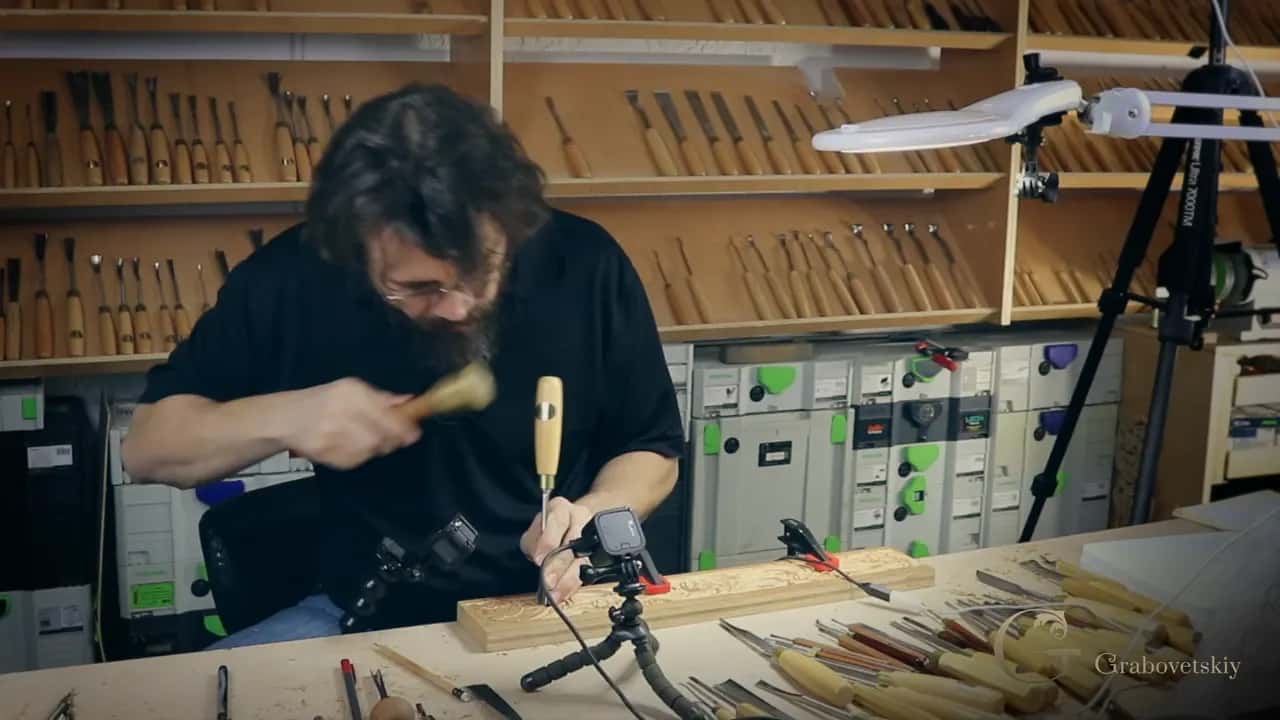
September 3, 2024 · Updated August 16, 2026
By Alexander Grabovetskiy — Master Woodcarver · Founder, School of Wood Carving · 13 min read
Do you need a mallet for wood carving?
A mallet is not a requirement for wood carving, and plenty of good work gets carved with hand pressure alone. It earns its place when the tool is wide, the wood is hard, or the ground is deep. So do you need a mallet? Not on day one. By month three, once your gouges get wider than 20 mm, yes.
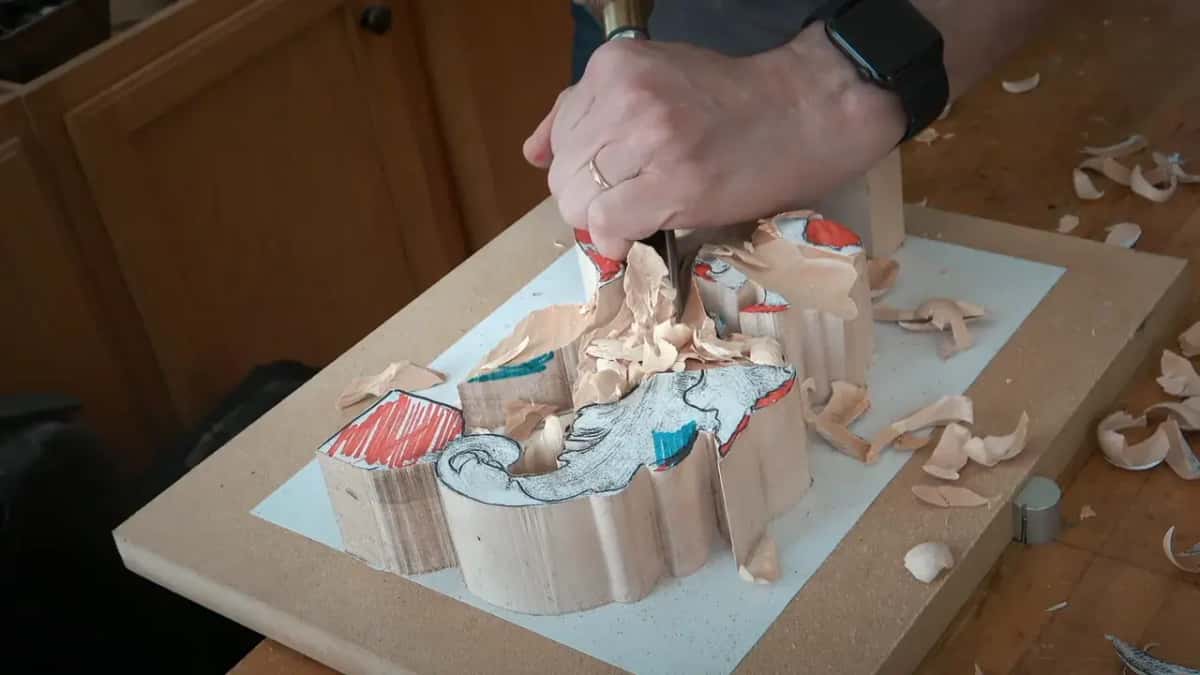
Chips come off fast at this stage. The colour marks hold the high spots, so I always have something left to carve down to.
Almost every beginner asks me this after watching one video. They see me swinging a mallet at a panel and they think the mallet is doing the carving. Wrong. My hand is doing the carving. The mallet only tells the gouge how far to travel and when to stop.
I have carved for over forty years, and I still spend whole afternoons without picking one up. Then a 30 mm gouge goes into a walnut ground and the mallet is back in my left hand inside a minute.
- Your two hands handle small tools, shallow work, and the last hour of any piece.
- Repeatable depth is what you are buying, and hands are worst at exactly that.
- Wide gouges above roughly 20 mm want a mallet in hard wood, whatever your grip strength is.
- One 16 to 20 ounce round mallet covers a beginner for years.
- Banging harder is the mistake. Control, not force, is what the tool is for.
Do you need a mallet on your very first day carving?
Not on your first day. Give a new carver a 12 mm gouge, a piece of basswood, and a sharp edge, and both hands will do everything for weeks. The wood is soft. The tools are small. Nothing you are carving yet goes deeper than a few millimetres.
What changes is the ground. The moment you start clearing background around a leaf, you need the same depth in every square inch of that field, and a hand cannot hold that. Fatigue creeps in around the fortieth push and your depth drifts. Nobody notices while they carve. Everybody notices when the finish goes on and the light rakes across a floor that waves.
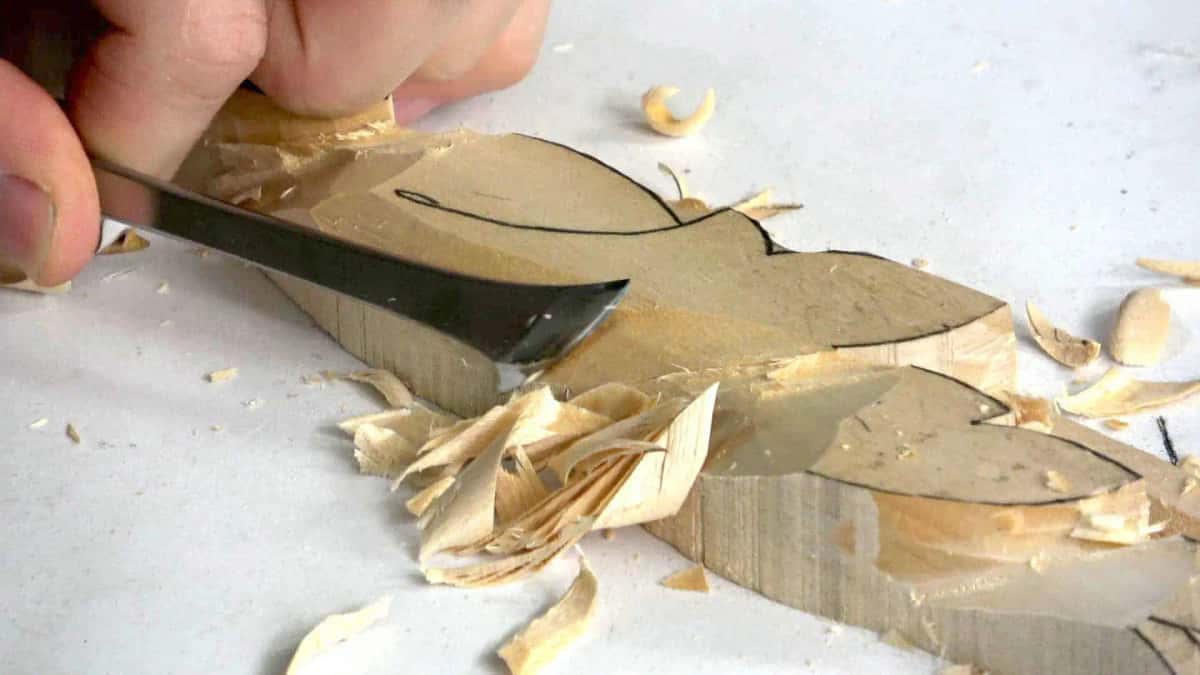
Students write to me at exactly that point. Their leaf looks fine and their background looks like a bad road. If you are still choosing your first tools, read what I look for in a beginner set of carving tools before you spend money on a mallet.
What does a mallet do that your hand cannot?
The same push, at the same angle, forty times in a row. Your arm cannot do that. It took me years to say it that plainly, and there is the whole argument.
In my Greek acanthus leaf lessons I say it out loud while I work: actually, you control a lot better with the mallet. Students hear that and look confused, because a mallet sounds like the opposite of control. It sounds like a hammer, and it is loud.
Think about what a hand push really is. You lean, the tool moves, and it keeps moving until something stops it. Sometimes that something is the drawn line. Sometimes it is the middle of your leaf. Each tap is a measured amount of energy that runs out on its own. The gouge goes in two millimetres and quits. Then you look at what actually happened, and only after that do you decide about the next two.
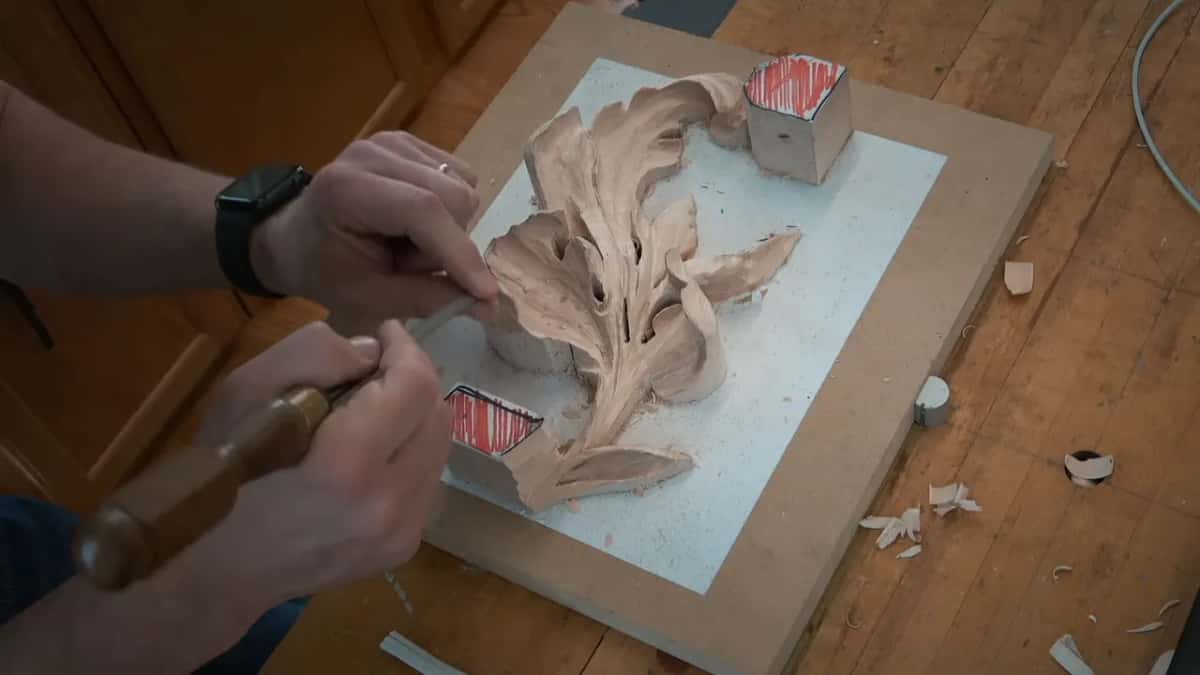
Small mallet, small gouge. Every pencil line is still readable under the tool, which is exactly how a leaf should look at this stage.
There is a physics word for this and I never use it in the shop. What I say to students is that the mallet turns one long slide into thirty small decisions.
When do I put the mallet down?
I put mine down the moment the wood gets thin. On the second layer of a Byzantine leaf, where the shape floats above the first layer, I worked on hand pressure because one careless pass would have snapped it. Wood that thin does not forgive a tap that lands slightly wrong.

Small tools are the other case. In the Roman acanthus leaf course I tell people it is better not to use a mallet on really tiny tools. A 3 mm veiner has almost no shaft to absorb the shock, and the handle will crack near the ferrule long before the blade does.
And sometimes the tool itself refuses. Some of my long bent gouges are impossible to strike, because the shape puts my knuckles right where the mallet wants to be. When that happens I stop arguing with the tool and push.
Mallet or hand pressure, which one for which job?
Depth and tool width decide it, and skill level has nothing to do with the answer. The choice falls the same way in my shop every time.
| The job at hand | What the mallet gives you on that job | Tool width | Which one I actually pick up here |
|---|---|---|---|
| Clearing the ground | Even depth across a wide flat field | 20 mm | Mallet every time, and no argument |
| Roughing out high relief | Force that my shoulder alone could not make safely | 30 mm | Big mallet, swung right from the elbow |
| Carving across grain | A clean start where the fibres would tear | 14 mm | Mallet, but only in light taps |
| Shaping the leaf itself now | Almost nothing, and the pencil line vanishes under it | 8 mm | Both hands, slow and slicing pressure only |
| Undercutting for shadow | Mostly risk, since the wall there is already thin | 5 mm | Hands only, and I hold breath |
Read the width column again. Width is doing more work here than the job column. An 80 mm gouge is going to need a big mallet no matter what you are carving with it, and a 5 mm veiner never wants one.
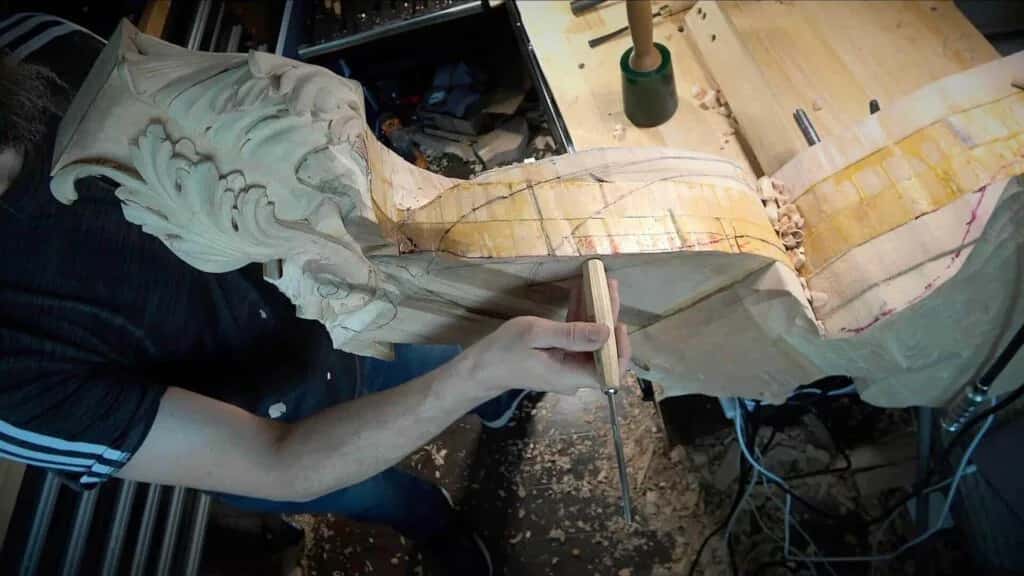
A scroll this size gets moved to trestles so the swing has somewhere to go.
Which mallet should a beginner buy first?
Buy one round mallet between 16 and 20 ounces and stop shopping. Round means you can strike from any angle without turning your wrist to find a face, which matters more than the material does.
Mine has a plastic head, and the steel I strike is Pfeil, and I say in class that you can use any type of mallet. Beech, lignum vitae, brass, urethane, they all work. European beech has been the traditional head for centuries because it is dense enough to carry weight and soft enough not to chew handles. Lignum vitae is the heavy old-world choice and it is beautiful, and it is also expensive now.
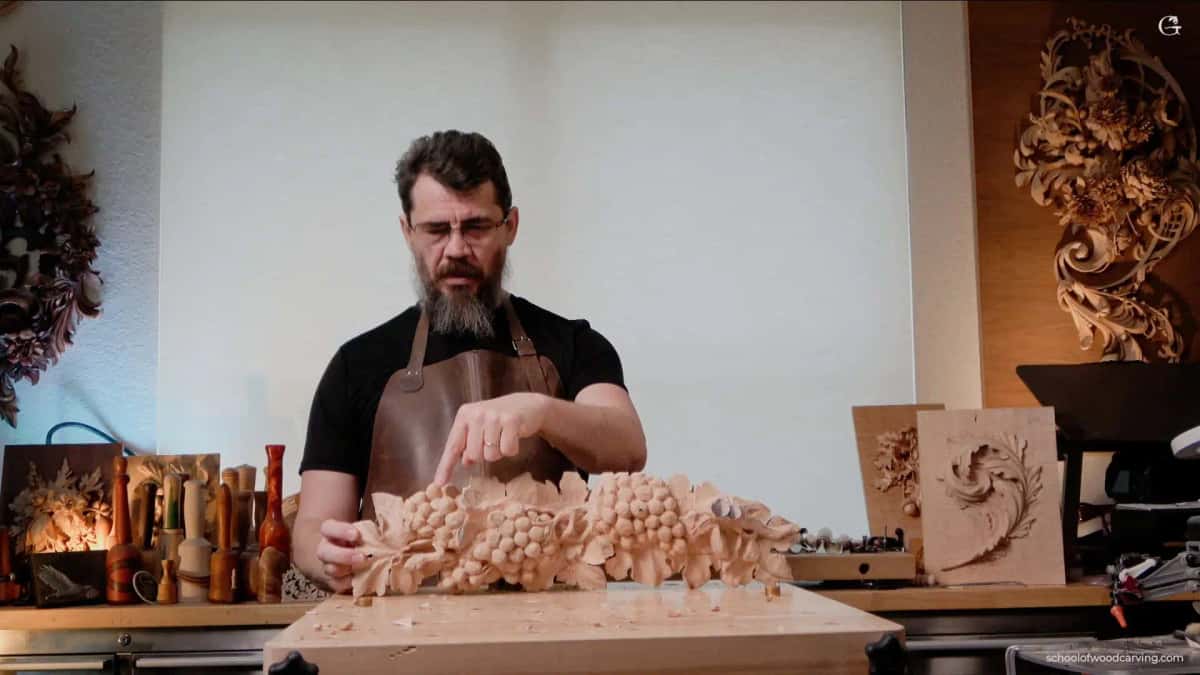
Weight is the real decision here. Too light and you tap all day and get nowhere. Too heavy and your elbow tells you about it at 2 a.m. Heads, weights and shapes get their own page on what a wood carving mallet is so this one can stay on the question you asked.
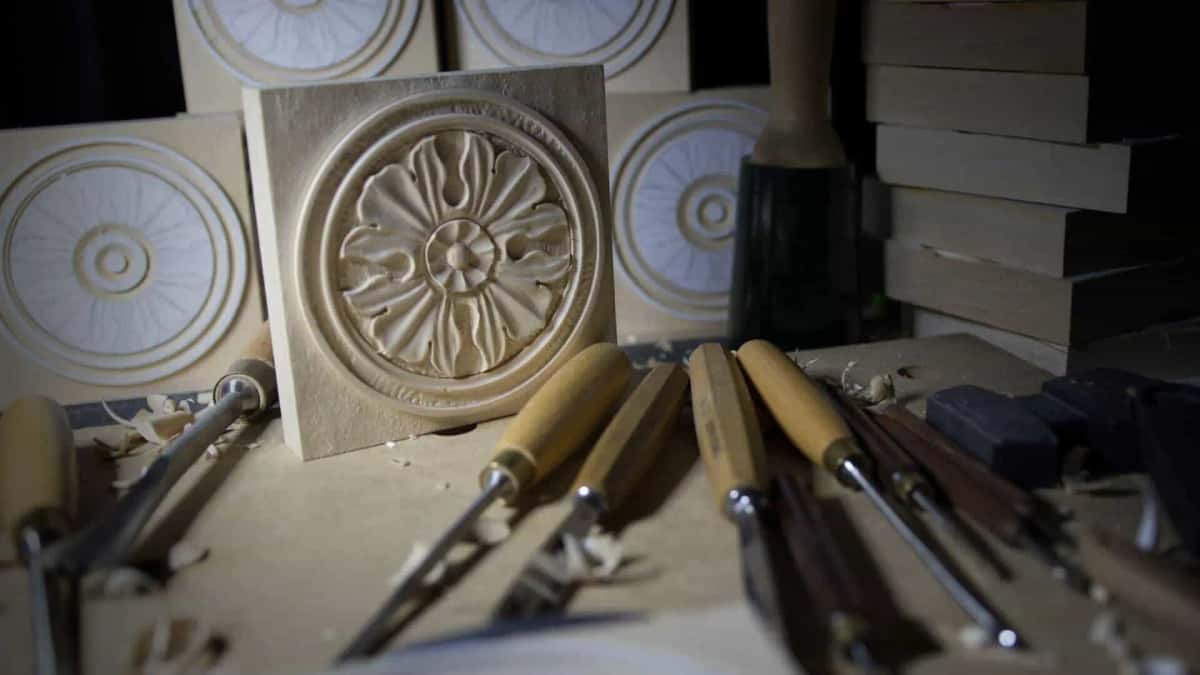
One more thing nobody mentions. The head goes dead after a few years. The face mushrooms, the strike stops feeling clean, and you start hitting harder to get the same result. Replace it then, not when it looks ugly.
How do you swing a carving mallet without wrecking your elbow?
Short taps from the wrist. Let the weight of the head do the travelling. Students who hurt themselves are almost always swinging from the shoulder like a framing carpenter.
I spent thirty four minutes on this one subject on my channel, because the elbow damage creeps up on people over years.
Step 1, set the gouge before you lift the mallet
Stand the edge on the drawn line and feel it bite before you go anywhere near the mallet. If the tool wobbles, no amount of tapping will save the carving.
Step 2, grip near the head and stay loose
Keep the hand up by the head, not down at the end of the handle. Watch how my hand sits on it in the videos: the fingers are relaxed, and the thumb never wraps hard.
Step 3, tap twice and look
Two light taps, then stop and read the wood. A beginner who taps ten times before looking has already gone through the line.
Step 4, follow the sweep, do not fight it
Pick the gouge whose curve matches the curve you drew, then drive it straight down. When the sweep fits, the mallet does almost no work.
Step 5, put it down when the wood thins
Once a shape is standing free, switch to hand pressure for the rest. There is no prize for finishing a leaf with a mallet in your hand.
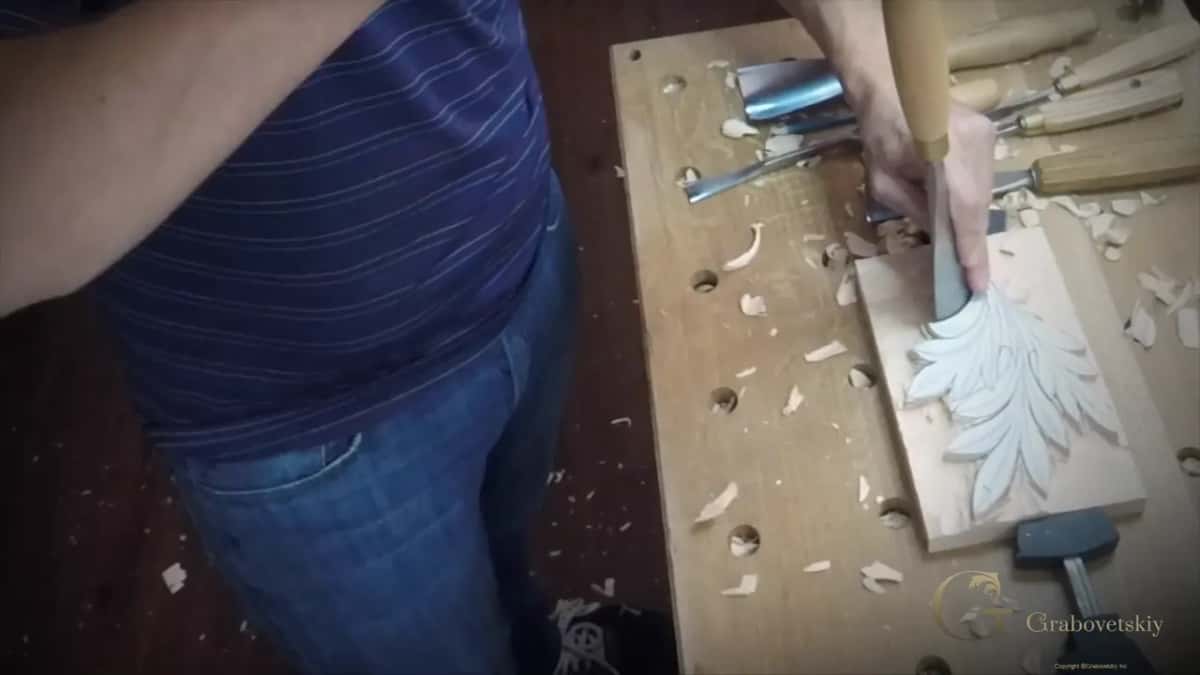
The sweep of this gouge already matches the drawn curve, so the tap only has to send it down.
If your edge is dull, none of these five steps help. A blunt gouge needs three times the blow and it crushes fibres ahead of the edge instead of slicing them. My tool sharpening course exists because more people quit over dull tools than over anything else.
Can you use a regular hammer instead of a mallet?
A steel hammer will destroy your handles and your wrist. The face is hard and small, so all the shock comes straight back up your arm instead of spreading into the head.
The mallet as a tool type exists precisely because a soft, heavy, wide face moves an object without marking it. That is why carvers, sculptors and stone masons all landed on the same shape independently.

Pfeil number 7, 14 mm wide, and the mallet parked on the bench because this pass did not want one.
A rubber mallet is the other bad substitute. It bounces, and the bounce steals the energy you meant to put in the wood. You end up hitting harder to make up for it, and hitting harder is the whole problem.
Will a mallet make you carve faster?
Speed is the wrong thing to measure, and it is where beginners go wrong with this tool. Roughing does go faster with one. It also removes wood faster in the wrong place, which costs you the whole panel.
I said this in workshop 55 of the Venice Room and I will say it here. If you are just banging with the mallet, it is not real carving. The sound of a shop where good work is happening is not a steady hammering. It is a few taps, then quiet, then a few more.
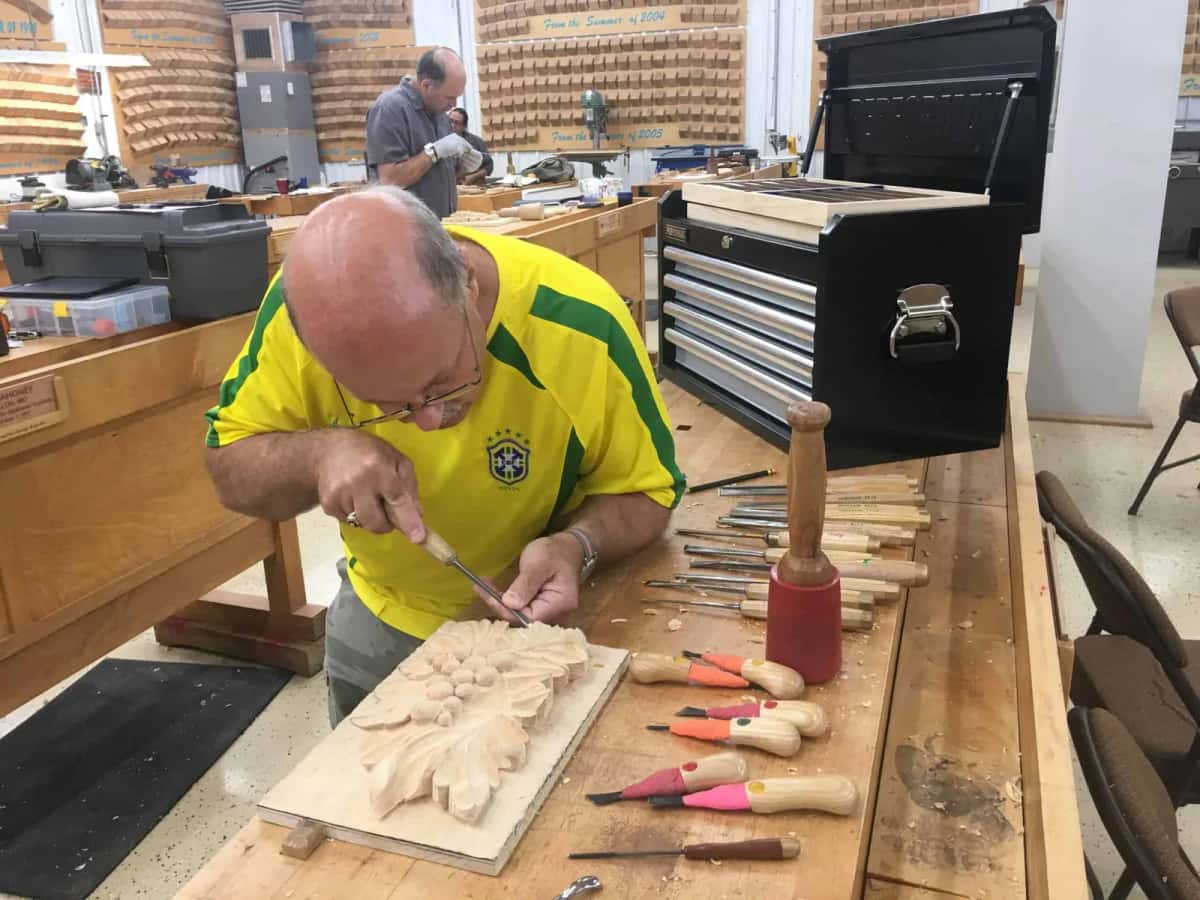
A student's bench in Maine. Gouges out, mallet standing, and the panel being read rather than hit.
Grinling Gibbons carved the limewood at work now held by the V&A without a single machine, and that work is still standing after 300 years. He had a mallet. He also had the sense to know when the mallet was the wrong answer.
What happens to your carving when you get this wrong?
You get bruised wood and a background that will not take a finish. Over-strike a soft wood like American basswood and the fibres compress under the edge instead of parting. The damage does not show until you oil the piece and a grey shadow appears where the crushed cells drink moisture differently.
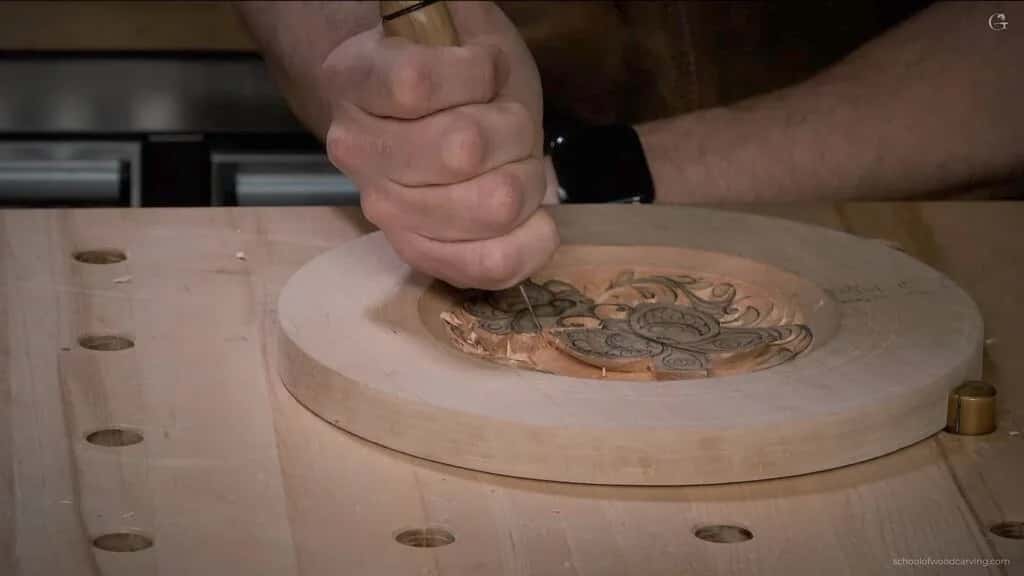
The other failure is splitting. Drive a wide gouge across the full width with force and you can find a micro crack in the board and open it into a real one. I have lost a panel that way. It was going to be an apron for a dining table and it split along a line I never saw, and the client waited another three weeks.
Carving across the grain under a mallet is still correct, and I do it most weeks. The difference is that I attack across the grain in stages, taking a few millimetres at a time, rather than trying to take the whole depth in one swing.

Beginners also underestimate what a mallet does to a piece that is not held down, and a first year of beginner carving is full of them. Clamp your work. A panel that skates across the bench under the first tap is going to teach you a lesson you can read about instead in the dangers a beginner runs into.
Where does the mallet fit in learning to carve?
It fits third, after design and after sharpening. A student with a perfect mallet technique and a dull gouge carves badly. Someone with a sharp gouge and no mallet at all carves beautifully, just slowly.
That order is the reason my course on tools for wood carving spends more time on edges than on mallets. The USDA Wood Handbook will tell you what the fibres do under load, and the numbers are real, and none of it helps if the edge is rounded over.
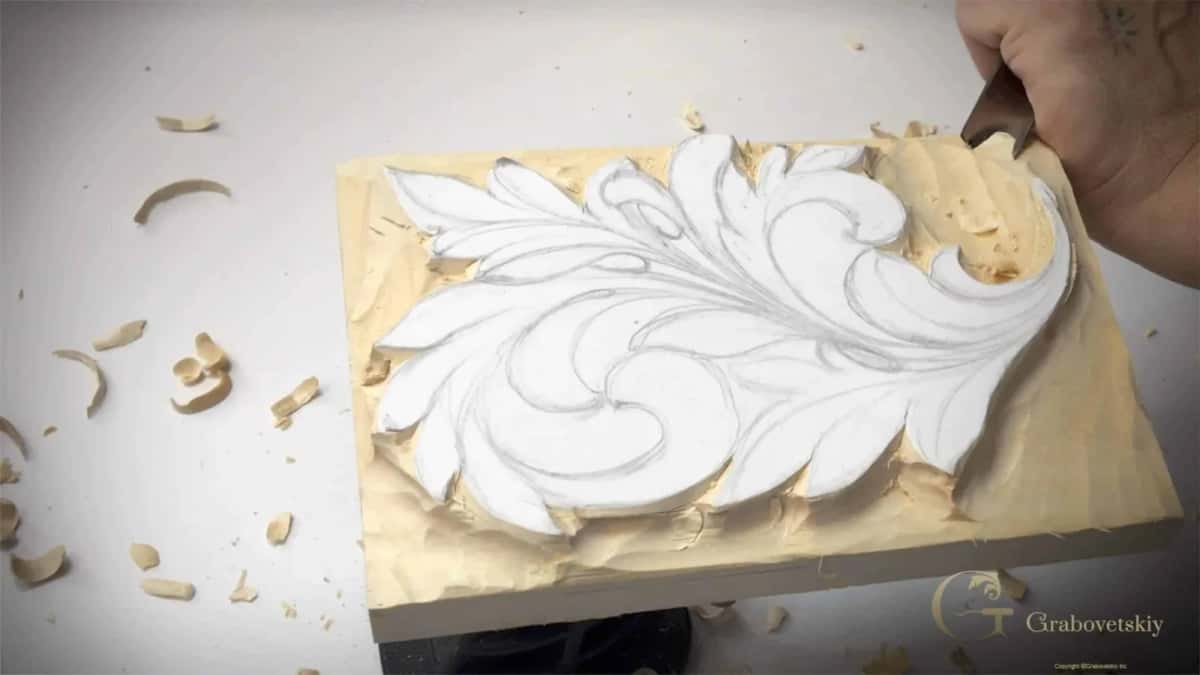
Ground down, leaf standing. Most of this panel was mallet work, and the last four hours were not.
So keep the order. Draw it, sharpen it, then decide whether the tool in your hand wants a tap or a push. In the Greek acroterion course you can watch me switch between the two about nine times in one lesson, which is closer to how the work really goes than any rule I could write down.
Buy the mallet when your gouges get wider than 20 mm. Not before, and not because a video made it look important.
Frequently asked questions
How heavy should a wood carving mallet be for a beginner?
Between 16 and 20 ounces suits most adults starting out. Lighter heads make you swing more often, which tires the shoulder faster than a heavier head does. Try a friend's before buying if you can, and back issues of Woodcarving Illustrated run honest tool reviews.
Is a turned beech head better than urethane?
Both work, and I use a plastic head myself. Beech and lignum vitae give a firmer, louder strike that some carvers read better. Urethane is quieter and gentler on handles, which matters if you carve in an apartment.
Can you carve an entire relief panel without a mallet?
You can, and people did it for centuries in softer timbers. Clearing a deep background by hand will take roughly twice as long and the work will take longer and your depth will vary. Small panels under about 8 inches are genuinely fine by hand.
Why do my gouge handles keep cracking when I use a mallet?
Either the handle has no ferrule, or you are striking small tools that were never meant for it. Check that the metal ferrule at the top of the handle is still tight against the wood. Palm tools and 3 mm veiners get pushed, never struck.
Do hard woods like oak and walnut need one?
It helps more there than anywhere else, because hand pressure alone rarely starts a clean carve in timber this high on the Janka scale. Red oak in particular tears along the ray fibres if the tool enters slowly. A firm tap gets the edge under the fibre before it can lift.
Which hand should the mallet go in?
Most carvers keep the mallet in the non-dominant hand and steer the gouge with the dominant one. Steering is the harder job, so give it the better hand. Left handed carvers simply mirror the whole arrangement.
Filed under
- Benefits of using a mallet in wood carving
- Best mallets for beginners in wood carving
- Can a mallet reduce carving fatigue?
- Carving depth control with a mallet
- Carving techniques with different mallets
- Choosing a mallet for wood carving
- Do I need a mallet for carving wood?
- Hand fatigue in wood carving tips
- How does a mallet affect carving speed?
- How does a mallet improve wood carving?
- Improve wood carving skills with a mallet
- Is a mallet needed for chiseling wood?
- Mallet meaning in wood carving context
- Mallet vs hammer for wood carving
- Precision carving with a mallet
- Types of mallets for wood carving
- Understanding Tools for Carving
- Using a mallet for detailed woodwork
- Why use a mallet for chisels?
- Wood carving mallet materials
- Wood carving tools needed list