

Alexander Grabovetskiy, woodcarver, School of Woodcarving · Published 2020
What does "pay attention" mean when a wood carver says it?
Quick answer: I said it about a mistake of mine on the live stream, in video twelve of Venice Room workshop 49. In my other lessons I say it before how I hold my hand or tool, the grain or a ridge, and I ask you to skip a pencil mark or a rough spot.
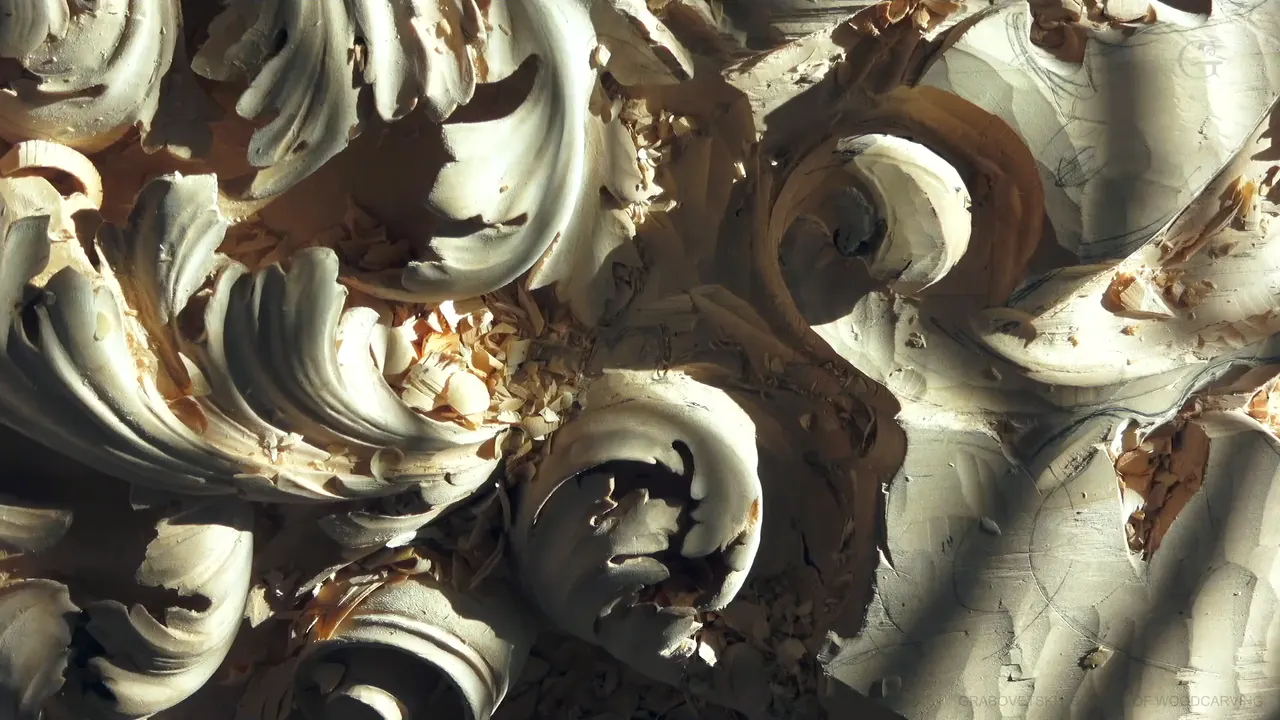

In video twelve of Venice Room workshop 49 I said "pay attention" about a slip of my own from the live stream. Some of my other lessons use the same words about my hands. Others use them for the grain, a ridge or a tool's corner.
Ever watched a carver and wondered where to look? I tell you where, and I tell you what to skip, and each line below comes with the lesson it is from.
The short version
- Video twelve is about a slip in the live stream, and I said I need to attack it and address it.
- Before a hand or a tool, I ask you to look at how I hold it.
- Grain, a ridge and a tool's corner get a line of their own.
- Some marks get a line too, because I want you to skip them.
- Every quote has its lesson and a link, so you can check my words in wood carving.
What did I say in video twelve?
The part opens on "Let me just do more divisions, nicer movements a little bit." My way of doing it was smaller cuts with the number 11 veiner, "just the one millimeter right now" (about 0.04 in), and "a couple long cuts just like that."

Then comes the slip. "And I believe I made a mistake when I did the live stream." I said I need to attack it and address it. "The mistake was, I really wanted to get this piece underneath of that one."
Here is the sentence this page is named for: "I don't think it's too late to fix it, but I should pay a lot more attention what I'm doing." Right behind it came "But again, that was the first time I live streamed, and hopefully, it was good."

A blend came next. "Let me blend that in for it to feel like it's going underneath." This one would go the opposite direction, I said, "because I really want to make it look good."
What did I mean by "not good"? "This side has to go underneath of that. That would be more logical. Doesn't have to, don't get me wrong, but I think it's going to look better." And "That way, I can create a really nice movement right here."

A maybe followed. "Maybe. Maybe yes, maybe no." Another maybe, a longer one: "Maybe I can leave it like that." Then, "But let me sharpen it. I mean my pencil." I might leave it as it is, I said, "just to fix overall movement."
Divisions came up. "I'm not sure if I should make more divisions. I could divide, but I don't have to." And later, about another spot: "And right here, I probably also don't have to. Just maybe just clean it and go underneath."

One long part needs an idea first. Before I excavate on that side, I said, I have to "create the idea because it cannot have a long part like this without any subdivisions." "Logically, there's supposed to be somewhere middle line." If that is my middle line, I said, it goes underneath and "continues on the backside like that." Divisions are needed, I said, or it won't look good.
Shades next. "Let me close my shades." The color would be readjusted, I said, "so please my apologies. So I didn't want to disturb anyone."

People had left comments too. "I didn't have a chance to read those comments people left while I was-- Not all of them." I would read that later, I said. Of the stream itself: "I don't know if it's a good idea, if it's not a good idea to do the live streaming. I think it's a good idea. So we'll see."

My goal, in my words: "I'm not going to go too deep, but still, I'm going to create some really interesting movement. That's my goal, at least." After it, "Relieve little more downhill like that. And right here also. We want to create some curliness."

Two doubts come up, and the first is about going downhill a little bit. "I could actually go a little bit downhill, but I'm not sure if I should or not." "I don't want to lose the overall feel of those movements," I said. I also said, "Let me clean a little bit. Create a cleaner look."

Where do I want you to watch my hand?
In workshop 4 of my Modern Acanthus course I said, "Please pay attention how I am holding my hand." I place my hand really solidly and use just the fingers. I was "not holding like this," and that was "not the right way to do it," I said. "You're not going to be able to see what you're doing right now."

My tool sits "between two fingers." The force is "the force of the tool. I mean sharpness of the tool, I should say, not how much I pushing it." And "that's going to give me really clean cut."
The Floral and Molding course has it in workshop 2, where I said I'm staying away from the line. "And pay attention how I'm holding my hand." "Note how I'm holding my left hand."

A plain picture of it follows: "I'm laying my tool on my finger like that and my thumb laying on top, but I still keep controlling the whole hand by solidly placing that on a block of wood. And that way, I'm having great control of the tool."
Byzantine Acanthus workshop 8 has a different hold. I asked you to pay attention, and one hand is "still holding on something," so "that hand is solid." The other "is just almost does nothing," and then, short and plain, "Don't air carve."
What do I tell myself to watch?
Grain is one. In workshop 76 I said I would take probably just number nine and 20 mm (about 0.8 in) to start removing and create the main shape. Later in that video: "Again, I am carving with the grain. Have to be really mindful. Have to be really careful and pay attention grain direction."

The Venetian Flowers Rosette course ties the grain to a plan. My plan there was to go one-third of the way from the background, which is still not all the way to my cut. "So you really have to pay attention. When you create the cut, just because the grain going to change the direction, so you really attack that slowly without rushing." If it creates the problem, "you just attack from opposite side."
Workshop 50 gave a ridge its line: "pay attention not to lose this ridge right here because this movement is a part of that development." After it: "I would love to not to make mistake."

Workshop 60 has a slip of the tongue. Carefully going underneath of this pipe was the plan, "like two pipes close to each other." Then: "pay attention that I'm not excavating my eyes. Eyes of Acanthus, not my eyes." And "Sorry. So I've got to work on my language."

The corner of a tool comes up in Roman Acanthus workshop 16. "Also, pay attention not to dig with this corner on inside too deep, otherwise you're going to destroy that nice smooth transition we just created." Then "Try to control your tool, and stop before you hit with the corner, the round part."
The Tray of Blessing course has the corner too. "I'm actually using the same tool, but, uh, pay attention. I'm using only corner of the tool." And "just a corner, okay?"
A few of these are slips of mine, like the next one. Workshop 15 of the Furniture Panel course has one. I stopped: "Okay, hold on. I made a mistake, which I should not." The cut in my molding was too deep, and my next words were about paying attention to that thing. I checked it. "I've got about 1/32 of an inch" (about 0.8 mm).
A near miss is in workshop 38. In the panel's carving stage I said to find the right sweep, "put it close to the line." Then: "Okay, that is good." Next came the near miss, in my words: "I almost messed up right here. I didn't pay attention." Then, "I'm gonna need the flatter and I'll use just the knife."
Workshop 14 of the panel's design stage says it plainly: "Sometimes I just need to pay attention a lot better, more." I like the overall movement, I said, "the feel of it," but I still have to tie those lines with that movement. Workshop 11 has it for a sketch line. Once I carve it, I said, "I'm going to pay attention a lot more to the detail. Or should I say, to the details."
One more, from the Modern Acanthus course's second workshop: "that is what the step we're gonna work on right now, please pay attention. It's really important." My next words: "I would like you to understand the logic. Okay, so you have to feel it."
What should you skip?
Pencil marks first. Workshop 47 has my words: "Don't pay attention to those pencil marks. I know they are kind of distracting sometimes." Then "That's why it's better not to use pencils. And I started to use those pencils only when I started school."

A form that is not final is another. Workshop 42: "Now it looks good. Don't pay attention, that is not the final form yet." "Close to final, but not final yet, okay?"
Junk gets the same treatment. Workshop 44 has a spot I called "all junk," and I told you to skip it. Right after: "I love the movement so far."
A number on a tool does too. Workshop 38 says I need to get a little bigger number one, like 10 millimeters (about 0.4 in), and I told you to skip the zero. "So it's still absolutely flat like a chisel."
A rough side is the next case, in workshop 66. A veiner laid on one of its sides gives "a much shallower cut on this side and much deeper on that side." Of the rough spot I said, "that is a little rough on this side. That's okay." It is like that with veiners and gouges. "One side is clean and another side is not too clean."
There is also a cut I warn you about before you see it. Excavating that deep shadow with the half a millimeter (about 0.02 in) was next in workshop 65. "But pay attention. Right now, there's absolutely no dark spot. But in a second you will see." I added a line to myself: "But I have to control. Don't want to break anything."

The V-tool problem lesson is about something small. One side of my tool is much thicker than the other, I said. "Pay attention, see really, really closely." Then "Not much, but it makes huge, huge difference."
Workshop 1 of the Modern Acanthus course has spots that will curl, and my words about them were "Do not touch it. Don't even think about it. Okay, stay away." Later: "Okay, just pay attention stay away from those areas."
Who else pays attention to detail?
Workshop 17 of my dining table apron course has the number one type of wood carver in England, who carved for boats, for big ships. "They didn't pay attention too much to the detail. It's a more rough carving."
The coach carvers were the second type. Their work was "not as detailed as the other ones", I said, because they knew that on the road there is dirt and some abuse.
A focal point is another place. Workshop 6 of the first Venice Room course has me trying to be as careful as possible with all areas, "but this area is a focal point. People are going to pay attention to it." I corrected myself: "Oh, I shouldn't say people."
Old work comes up too. Workshop 8 of that course says that on the original Italian work, "they never had the sharp points" on the acanthus points. "So that is also one of the details you have to pay attention if you want to be really close to the original design."
Side by side
Each row is my own wording from the lesson in the last column, so you can open that lesson and check it.
| What I wanted you to see | My words | Lesson |
|---|---|---|
| My hand | I'm using the force of the tool | 4.2 of Modern Acanthus |
| The grain | really careful and pay attention grain direction | Venice Room 76.11 |
| A ridge | not to lose this ridge right here | Workshop 50, video 11 |
| A mark | I know they are kind of distracting sometimes | 47.11 in the Venice Room |
| My own slip | I almost messed up right here | Furniture Panel 38.2 |
| Ship carvers | It's a more rough carving | Dining table apron, workshop 17 |
What am I planning to do in video twelve?
This is workshop 49 of the Venice Room Part 4 course. My plans in video twelve were divisions, a middle line, curliness and a cleaner look. If you want to watch my hands the way I ask, the tuition opens the whole Venice Room, one video at a time.
How it's done
- Watch my hand. Modern Acanthus lesson 4: I place my hand really solidly.
- Check the grain. Workshop 76 asks for being really mindful and really careful of the direction it runs.
- Keep the ridge. Workshop 50: the movement is a part of that development, so I keep the ridge.
- Skip what I name. Workshop 47 calls the pencil marks distracting sometimes.
- Own your slip. The panel's carving stage has a near miss that I told you about.
Frequently asked questions
What was the slip in workshop 49, video twelve?
It dates to when I did the live stream. I wanted a piece underneath of the one beside it, I said, and I don't think it's too late to fix it.
Which lessons show how to hold a tool?
Modern Acanthus lesson 4, Floral and Molding lesson 2, and Byzantine Acanthus lesson 8.
What should I watch for in the wood itself?
Grain direction is in workshop 76 of the Venice Room and in the Rosette course. A ridge is in workshop 50, and a tool's corner is in the Roman Acanthus course.
Which marks can I skip?
What to carve next