

Alexander Grabovetskiy, woodcarver, School of Woodcarving · Published 2020
When do you stop carving for the day?
Quick answer: In video eleven of Venice Room workshop 49, I called the live stream done after a number three gouge on the side of a ridge. I went on carving, with the work from there on visible only on my school site. My Furniture Panel and Hazelnuts lessons show what I leave rough, or plan next, before stopping.
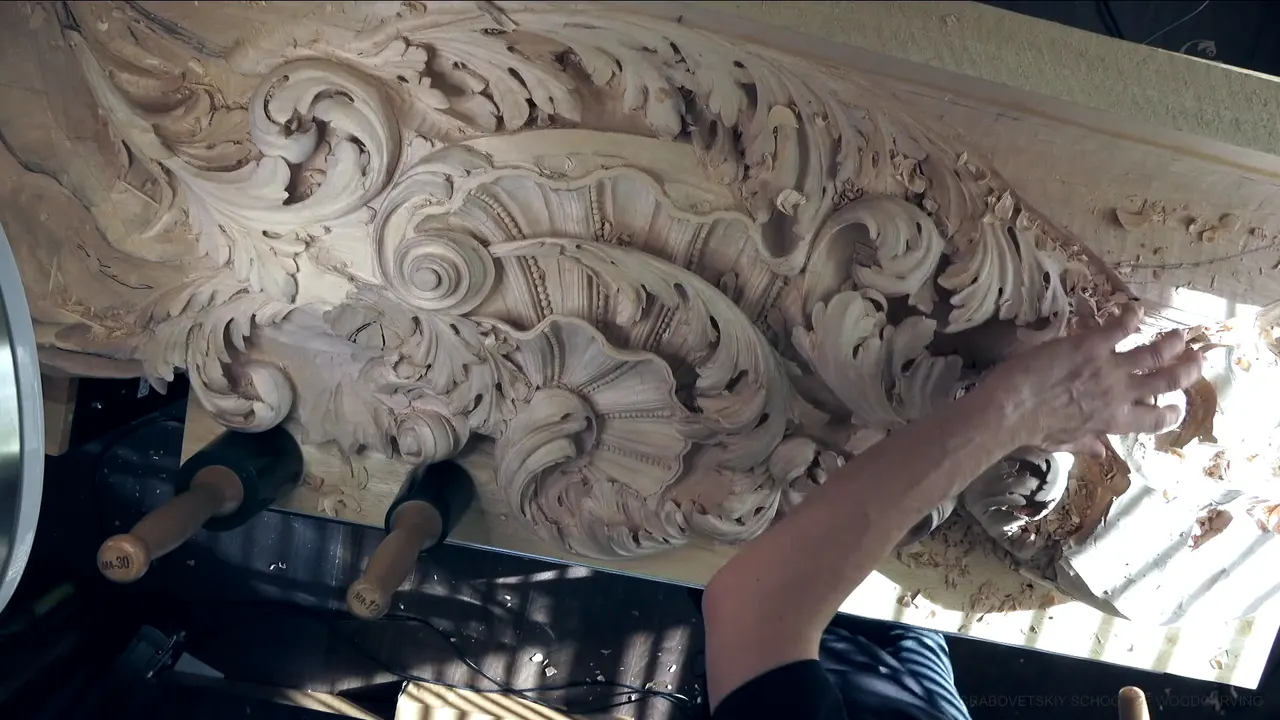

Stopping for the day is, in my lessons, a short line I say over wood that is still unfinished. Video eleven of Venice Room workshop 49 has me saying it about the live stream. I kept carving after it. Other lessons show what I was doing in the minutes before I said it, and what I left for next time.
Have you stood at your bench with one spot still bothering you? Did you keep going, or did you stop for the day? Both happen in my lessons. Every lesson below is open for you to check my words in wood carving.
What I did before I stopped
- My last step before I ended the stream was a number three gouge on the side of a middle ridge, with almost no hollow.
- The stream was close to an hour.
- The rest of that movement would be on the school's site, and I went on carving.
- Other lessons have me leaving a sore spot for next time.
- Some lessons give a reason for a tool, like a weak area that a bigger tool could break.
What did I do before the stream ended in video eleven?
I began by showing how it looks in overall design. My plan came next. It had "a lot more divisions," then excavating underneath, and then "a really nice and smooth transition underneath." Finishing it was part of the plan.
The finish was for next time. You would probably see it finished then, I said, and "we are still going to work on all of it, and you'll see all the details." The piece was "a huge project," and it would take "a long time." Even so, "snippets of it you will see."

I mentioned the time: "I don't want to take too much time." "It's already an hour that I'm live streaming. In two minutes, it's going to be an hour."
That one more thing was the middle ridge of the piece, and "I want to see that line," I said. There were "a few different ways" to get it. For that I took a gouge, and it would be "a concave, but it's almost no concave." Next I said, "So this is a little too big of a tool. It's a number three. That's what I'm using right on the side."

Clean cuts were for later, "really clean cuts," and for now "it's not, and I don't worry about it." Of course, I said, "I can do same movement on the other side."
Why so little hollow? "I'm still not losing overall shape, the roundness," I said, "because almost no concave, but it's still concave." What you see depends on how the light hits, and the ridge will be a little raised.
Next, the end of the stream. "Okay. That's good. That's enough for today live stream."
What came right after I called it enough?
Comments, first. "People, if you like it, if you like that idea, I would appreciate if you can comment." My site came next. And I added a word on my accent, my Russian one: "by the way, keep my accent. I like my accent. It makes me unique, I guess."

Where the rest of the carving would go was plain: "I'm going to continue to carve, and the rest of this movement is going to be visible only probably on my school site." Thank you very much, I said, and "let's continue to work on that."
For anyone watching online, I said I'd live streamed part of it, "but I'm not going to do all the details in live streaming. But that is probably good practice." About chat: "I probably have to figure out how to answer those questions in chat because it's not convenient yet for me."
My tool stayed the same: "same number three, about half an inch" (about 13 mm). And a small note about my day: "I've got a lot of sunshine going on today. That's why I love Florida because I have a lot of sunshine daily."

More carving followed. "So let me finalize movement right here." A little more blending was needed "right on this side," I said, and "I need to fix overall shape of this movement. I still don't like how it looks."
Number six, I believe, was next in my plan, with a cut this way, and then "it's much better, more unified." A maybe followed: "And maybe I can create semi-final shapes to those sides."

The sun came up last in that video, and I said, "My apology if it's just too much sun." "So let me probably just close my shades." It would be a better view, I said.
Will I put the tools down with a spot that still bugs me?
My Furniture Panel workshop 26 shows it. I said I'd use a number three spoon gouge to blend a spot downhill "until you don't really see any transition," and that I could scrape it with a utility knife blade too. Of what I could still see: "It's kind of ragged right now yet." Care for it would come "with the magnifier magnifier glass," and for then it was enough, and "next time you're gonna attack more."

"But you know what, it still bugs me." Number three was "too big. Gotta get something different," and I said "I need to use number two." Next: "it's better, but it's still not there yet." Magnifiers were my plan. After "Here you go," I wrapped up. Rain was falling outside: "yes, I do have a rain outside. It's just pour rain."
The Greek Acanthus course, workshop 8 has a cluster that bugged me too: "I kind of feel I have to refine the cuts right here on this cluster, because it just doesn't look as nice as I want it to look." That could wait. With the same tool I'd make a V cut between two details, and on the opposite side "use it like a chisel."

The next detail needed care, I said, because it "kind of goes underneath of another one, but at least we can start." The day was done after that.
On the Plate with Butterflies, workshop 11 I made one more pass between two I'd already made, going toward the first line. "Obviously, it's already looking like something." With a smaller gouge, in my case 1/8 in (3 mm), I could carve smaller still, and a second cut on the inside was possible too. "But I'm not going to do it, probably. I can always do it later." As things stood: "for now, I think that is good."

The sore spot came after that. My plan for next time was "some more of the detailing." Then: "I'm not too happy when you look on inside, especially the area right there, you can see the damage."
In Grinling Gibbons workshop 12 I said I'd make long concave cuts using a number 16 V tool, about six millimeters (0.24 in) wide, and blend them right underneath, and it was "gonna give me that feel," and "the separation is deeper." Of the result, "Can I say that I like it? Yes, I do." Then "now I'm happy," and the day was done. I added, "I'm gonna spend a little longer. And clean everything. But for now, it's good."

Which parts do I go easy on before I stop?
An example of that sits in Grape Onlay workshop 13: "I should excavate much deeper in this section. It's gonna gimme a much better shadow." Half a millimeter (0.02 in) would be the best tool, I said, but "I don't know what I'm gonna do with this section yet," and "it's raised up and I like it."

To get a little bit deeper, a big skew would do. Later, "I wanna make it like a paper thin almost." For now, about five millimeters (0.2 in) of thickness stays, and "I'll see you the next time."
In Hazelnuts workshop 3 I made "really tiny, small cuts all around," carving into the grain: "I have to be really careful how I do that." One part was getting "more fragile," and I did not want to break it. A mistake from before came up too. I did not leave enough space right there. "But now looks like it should look okay," I said, and "it does look chunky." "I'll see you next time," I said.

A slope got my attention in Hazelnuts workshop 5. A big number seven, "about an inch and one-eighth" (about 29 mm), was my pick, and I could "safely undercut" on one side. My reason for the slope was too much space undercut underneath. "Because people are going to look from the side also," I said, and too much down "could create a problem." I thought it was enough for the day, and the three bunches looked good, "my opinion."

A weak area is the reason in Hashemi workshop 21. I was using a small tool, 5 millimeters (about 0.20 in), number seven. "It does look like the area is weak," I said, and a bigger tool could break it. Sometimes, I said, "I just have to feel if it's too dangerous or not."

Bigger tools are quicker "if there is enough strength," but "it's not always the safest." Then "we brought that almost to the line," and I could bring it all the way to the line with no problem. The day ended there.
What do I leave for next time?
The end of Hazelnuts workshop 2 brings a plan and a warning. "I'm probably going to end as of now at this stage," I said, with no wish to overdo it. Like I said, "don't take too much material at once. Keep some extra material, and you should be okay." Another rule was about center points: "Keep an eye on those center points. Also important not to lose them."

It looks like a mess, I said, which was fine with me. Chunks of about one inch (25 mm) were what I had when I stopped. About the details: "Don't need to worry about it. That's too early."
A pencil shows up in workshop 6 of the Hazelnuts course. "If you place a pencil, you can see it's pretty much straight line, and you should not have any straight lines." A number 11 veiner of 7 millimeters (0.28 in) was my plan, and "I know it's kind of extreme right now, but once we're done, by the time we're done, it should look good."
A warning followed: "Don't excavate too deep in the spots like that. It's going to give you a big trouble later on." I wrapped up there. "We established one more location for the knot and some of the husk movement, and we're going to continue next time."

Roman Acanthus workshop 16 had me keeping an eye on my final line. "I'm really, really close to it." I called it for the day, and "we'll pick next time, just to clean all the background."
You could go ahead of me, I said: "you take a flatter gouge, like number three, and you just clean those facets." Another video of that workshop has a deeper hollow, with a number 11, 5 millimeters (a fifth of an inch) long, "like a U channel." Of that hollow: "You really don't have to do that if you don't have those tools. The only person who's going to know about it is probably you."

"But believe me, those little things, they make huge difference." A number 23 of 4 millimeters (about 5/32 in) was next in my plan, "and just bring it like that," and then I was done for the day.
The kitchen cutting board, workshop 9 was gentler. "I'll be happy with this flower." That was the stop, and "we've got an outside, and next time we're going to work on the bird itself."

Workshop 5 of that board was about a clean cut. "Don't force anything. If you need to recut, just recut, and make a cleaning cut right away." And my test: "When I'm just blowing on a piece of carving and everything flies out, that means the cut is clean if nothing stays right there." "Okay, let's do this one," I said, and that should do it for the day.
Is it the same on a live stream?
The April 2020 live stream gives a close match. "The wood carving is all about the shadows," I said, and "use the most helpful tool." A little smaller number nine, maybe, and then deeper underneath. I damaged it a little bit, I said, which was fine. Then: "much better separation right here."

Cleaning would wait. "Off-camera, of course," I said, I would spend "a little more time and clean inside and stuff like this and get rid of all those facets." And "I need to go that direction also," probably with a back bent.
The end reads like video eleven: "Okay, wonderful people, that's it. It's enough for today." Carving would go on, I said, but only "for my school people material." More would come for school, of course, "but not for the live stream."
Side by side
Each row below is my own wording from the lesson in the last column, so you can open that lesson and check it.
| Where I stopped for the day | My words | Lesson |
|---|---|---|
| A blended spot | next time you're gonna attack more | Furniture Panel 26.3 |
| A cluster of cuts | it just doesn't look as nice as I want it to look | Greek Acanthus 8.3 |
| A raised section | later on I wanna make it like a paper thin almost | Grape Onlay 13.3 |
| A weak area | I'm afraid if I'm going to use a bigger tool, I can break it | Hashemi 21.4 |
| The hazelnut chunks | I don't want to overdo it | Hazelnuts 2.3 |
| The inside of a cut | I'm not too happy when you look on inside | Butterflies 11.3 |
Where does workshop 49 go from here?
This is workshop 49 of the Venice Room Part 4 course. My plans in video eleven were more divisions, excavating underneath, a smooth transition, and a finish for next time. To watch where the rest goes, the tuition opens the whole Venice Room, one video at a time.
How it's done
- I say what is still rough. In workshop 26 of the Furniture Panel, the spot is "ragged right now yet," and a magnifier comes next time.
- I leave a part thick when I'm unsure. Roughly five millimeters (0.2 in) stays for now, in the Grape Onlay course.
- I use a small tool on a weak area. The area looks weak, I said in Hashemi workshop 21, so the tool stays small.
- I watch the slope of an undercut. Too much undercut, I said in Hazelnuts workshop 5, could create a problem.
- I name the next job. Next time, "just to clean all the background," in Roman Acanthus workshop 16.
Frequently asked questions
What did I say before the live stream ended in workshop 49?
The middle line was what I wanted to see, and I worked a number three on the side of it. I also mentioned that the stream was close to an hour. Next I said it was good, and I ended the live stream part of the day.
Did I stop carving when the stream ended?
Carving went on, since I said I would continue to carve. The rest of that movement, I added, would be visible only on the school's site. Later in the video I said I needed more blending on one side, and number six for a cut, so the carving did go on.
Which lessons show a spot I was not happy with?
A spot bothered me in Furniture Panel workshop 26. In Greek Acanthus workshop 8 a cluster fell short of what I wanted, and in Butterflies workshop 11 I said you can see the damage inside a cut.
What to carve next