
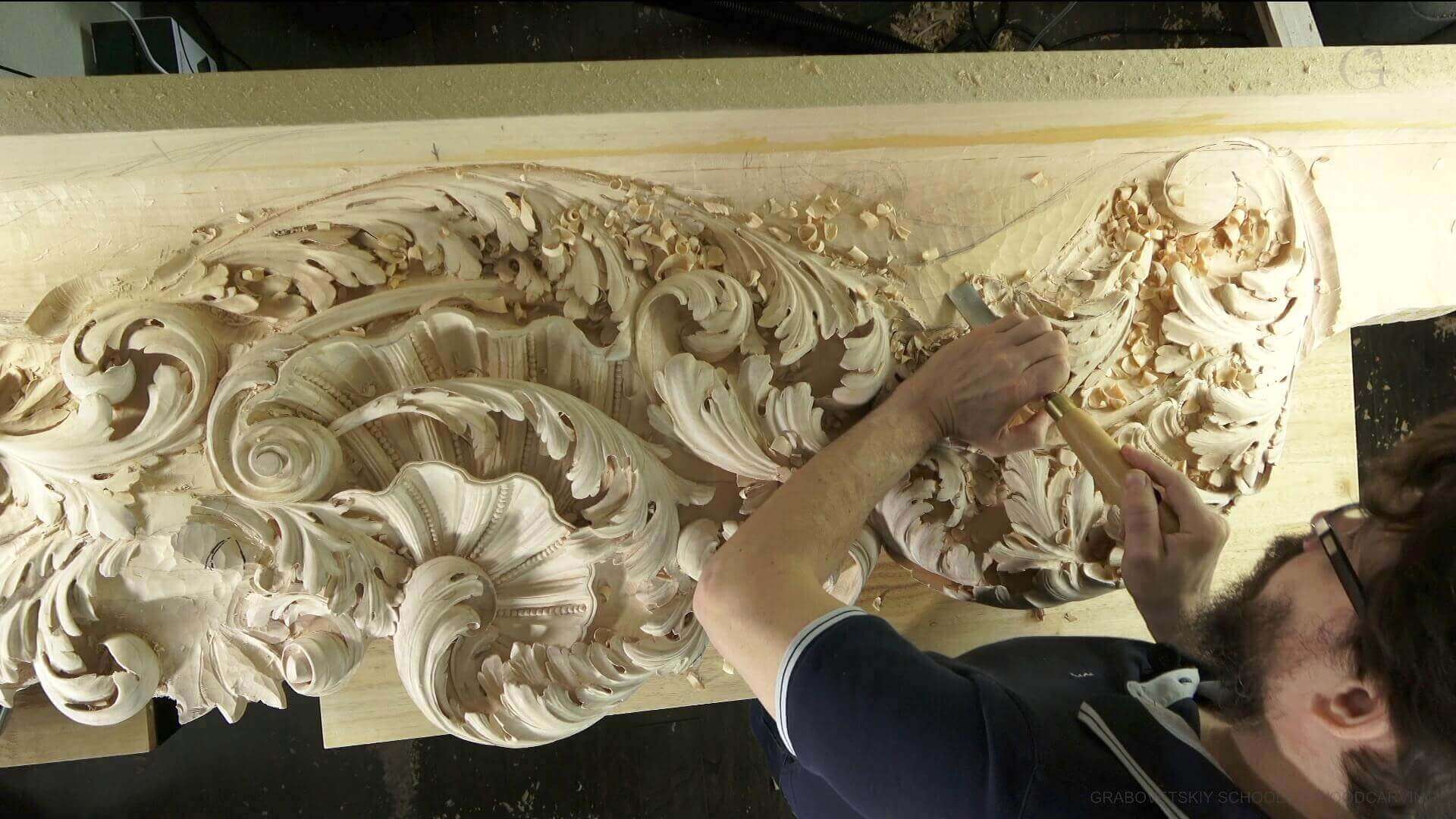
July 30, 2026 · Updated July 31, 2026
By Alexander Grabovetskiy — Master Woodcarver · Founder, School of Wood Carving · 12 min read
How Can I Learn to Carve Acanthus Leaves in Wood?
By Alexander Grabovetskiy · Updated July 30, 2026
Acanthus leaf carving is the craft of carving the classical leaf of Greek and Roman ornament into wood with gouges. You learn it in three stages: draw the leaf, carve it in basswood with six or seven tools, and keep those tools sharp. Plan on about 20 bench hours for a clean first leaf.
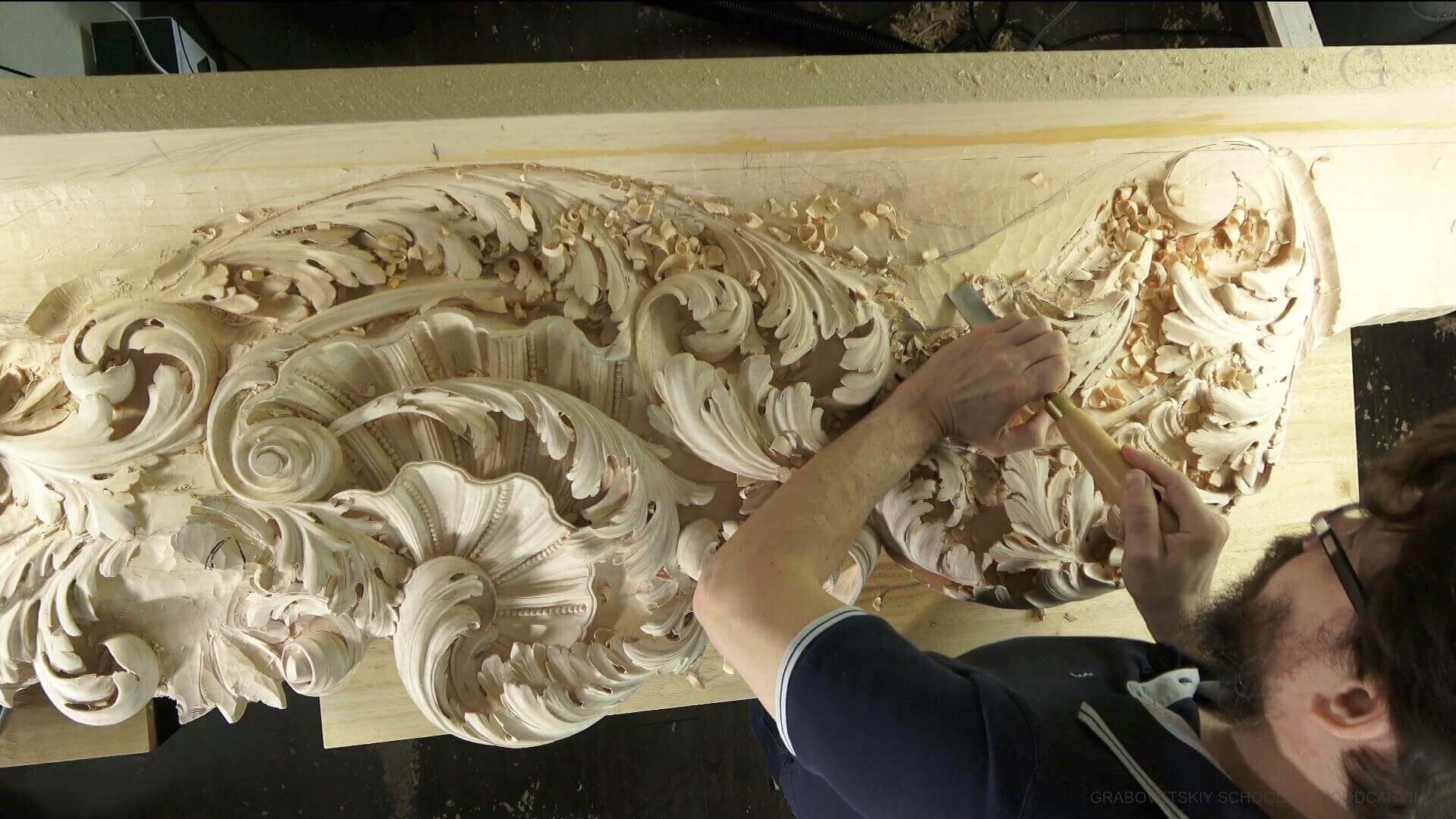
Key takeaways
Anyone who can hold a gouge can learn the acanthus. It is a sequence, not a talent.
Basswood, Tilia americana, is the wood to learn on. Limewood is its European sister.
Six or seven tools carve a full leaf. A 60 degree V-tool, a #3, a #5, a #7, and a small #9 do most of the work.
Design comes first. Put the leaf on paper ten times before you cut wood.
A dull gouge tears basswood instead of slicing it, so the strop matters more than any new tool.
Let me guess what happened. You saw an acanthus leaf swinging across a Chippendale chair or a church column, you printed a pattern, and you tried to carve it. The leaf came out flat and dead, like a cookie. Every carver on earth has that first leaf hiding in a drawer. Mine was worse than yours, I promise.
Here is the good news. At sixteen I became the sole apprentice of a fine art master in Russia, and his first lesson was not about gouges at all. Design, he told me, is the laws of space, rhythm, and repetition. He taught me to think like a tool. That lesson is the whole secret of the acanthus leaf, and this page hands it to you: the history, the five parts of the leaf, the tools, the wood, eight steps, and an honest timeline.
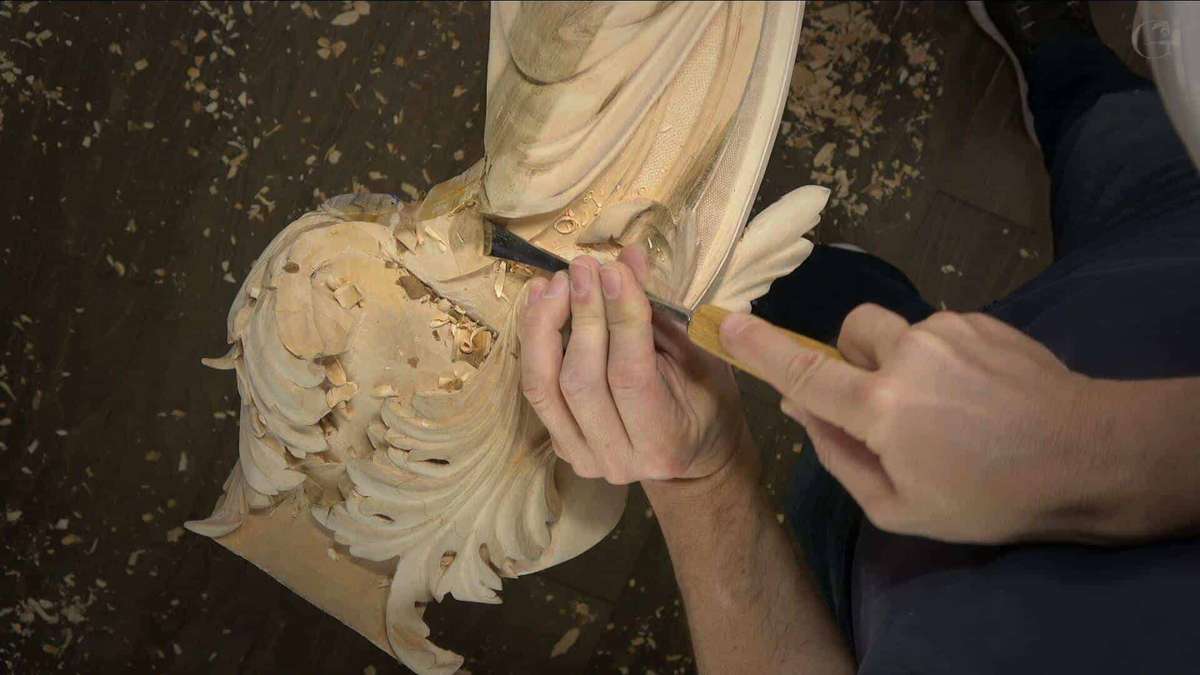
What is an acanthus leaf in wood carving?
The acanthus is a Mediterranean plant whose deep cut leaf became the most carved ornament in Western art. Around the 5th century BC, the story goes, the Greek sculptor Callimachus saw acanthus growing through a basket on a girl's grave in Corinth and carved what he saw into the top of a column. The Roman writer Vitruvius wrote the story down, and that column top became the Corinthian capital. Out of Corinth the leaf traveled across the Roman Empire, into Byzantium, through every cathedral in Europe, and onto the mahogany furniture of Thomas Chippendale.
Carvers stayed loyal to this one leaf for 2,500 years because it teaches everything at once. Flowing curves. Levels that overlap and dive under each other. Deep shadow against a crisp edge. Learn the acanthus and nearly every other ornament opens up to you, since nearly every other ornament borrows from it. Wikipedia's page on the acanthus ornament follows the same leaf across Greek, Roman, and Renaissance art.
This leaf carries meaning too. It stands for long life and rebirth, because the plant returns from its root every spring no matter how hard it was cut back.
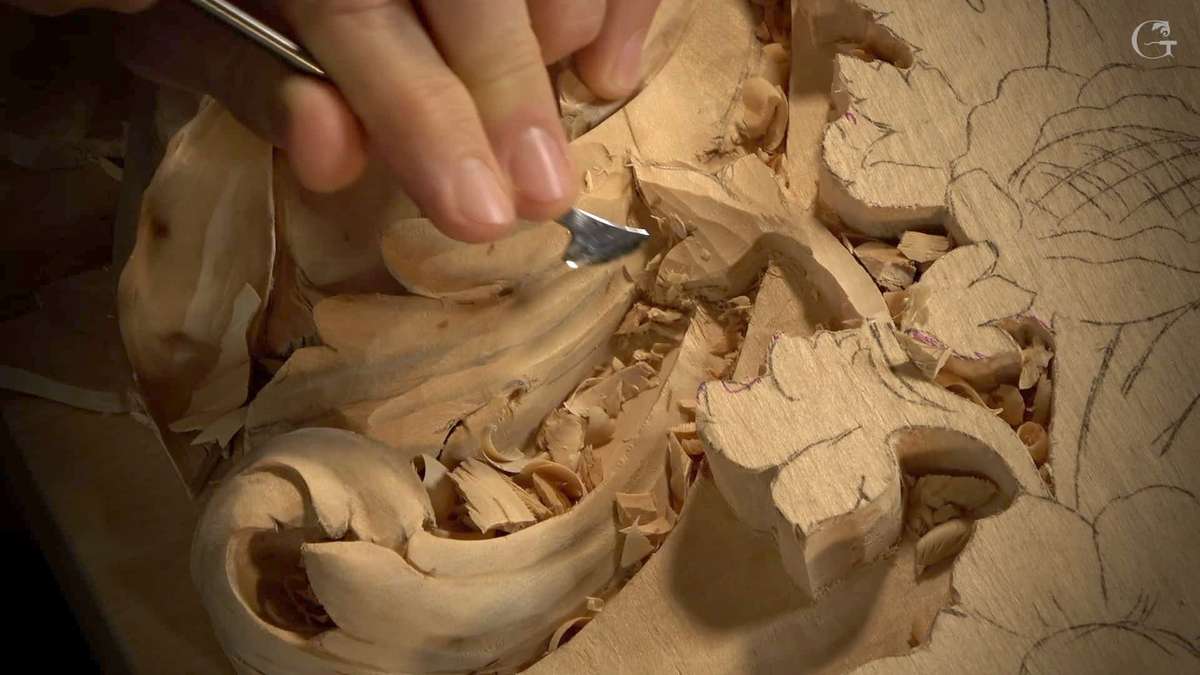
What are the five parts of an acanthus leaf?
Every acanthus in history, Greek or Roman or Baroque, is built from five parts, and you should know their names before you pick up a tool.
Part | What it is |
|---|---|
Midrib | The center spine the whole leaf grows from |
Lobe | A group of leaf fingers branching off the midrib |
Eye | The small deep hole where two lobes part ways |
Pipe | A raised rib that flows from a lobe down into the stem |
Overturn | A tip that folds back and shows its underside |
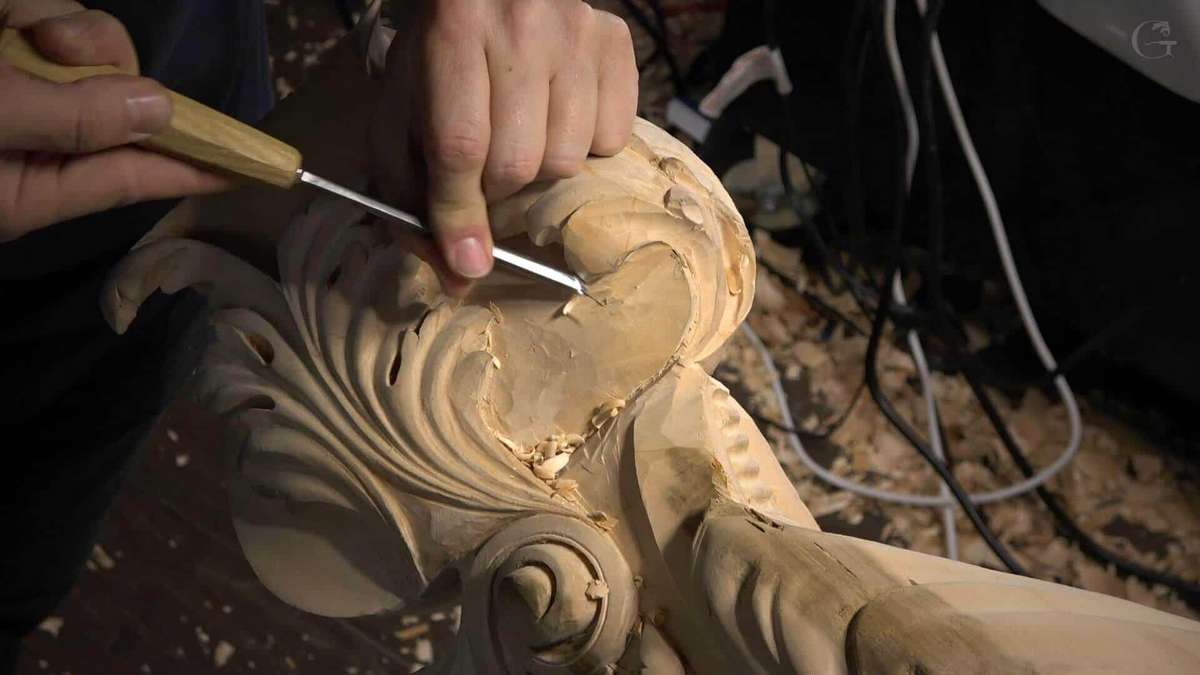
Say the five words out loud while you look at a photo of a carved leaf. Once your eye can find the eyes and follow each pipe to its lobe, the pattern stops looking like lace and starts looking like a map.
Can a beginner learn to carve acanthus leaves?
Yes, a beginner can learn the acanthus, and I would call it the smartest first ornament you can pick. You do not need years of carving behind you. What you need is a pattern you understand, wood that cooperates, and tools that are sharp for real. Notice what is missing from that list. Talent is not on it.
Drawing is the step people skip, and skipping it is why their leaf dies. Your hand learns the rhythm of the lobes with a pencil for pennies. It learns the same rhythm with a gouge at ten dollars a mistake. Ten drawings, then wood. I wrote a full lesson on how to draw the acanthus leaf, and it is the true first step.
What tools do you need to carve an acanthus leaf?
Few carving tools carve a complete acanthus leaf, and nobody needs a hundred piece set to start. Gouges are numbered by sweep, and the higher the number, the deeper the curve of the cut. My students carve their first leaf with a kit close to this:
Tool | Size | Job on the Acanthus |
|---|---|---|
#11 Veiner | 6 mm | Outlines the drawing and separates the lobes |
#3 gouge | 14 mm | Levels the background and shapes the big planes |
#5 gouge | 12 mm | Models the lobes and the overturn |
#7 gouge | 10 mm | Cuts the hollows of the pipes |
#9 gouge | 4 to 6 mm | Opens the eyes in one or two clean cuts |
#3 fishtail | 8 mm | Reaches corners the straight tools cannot |
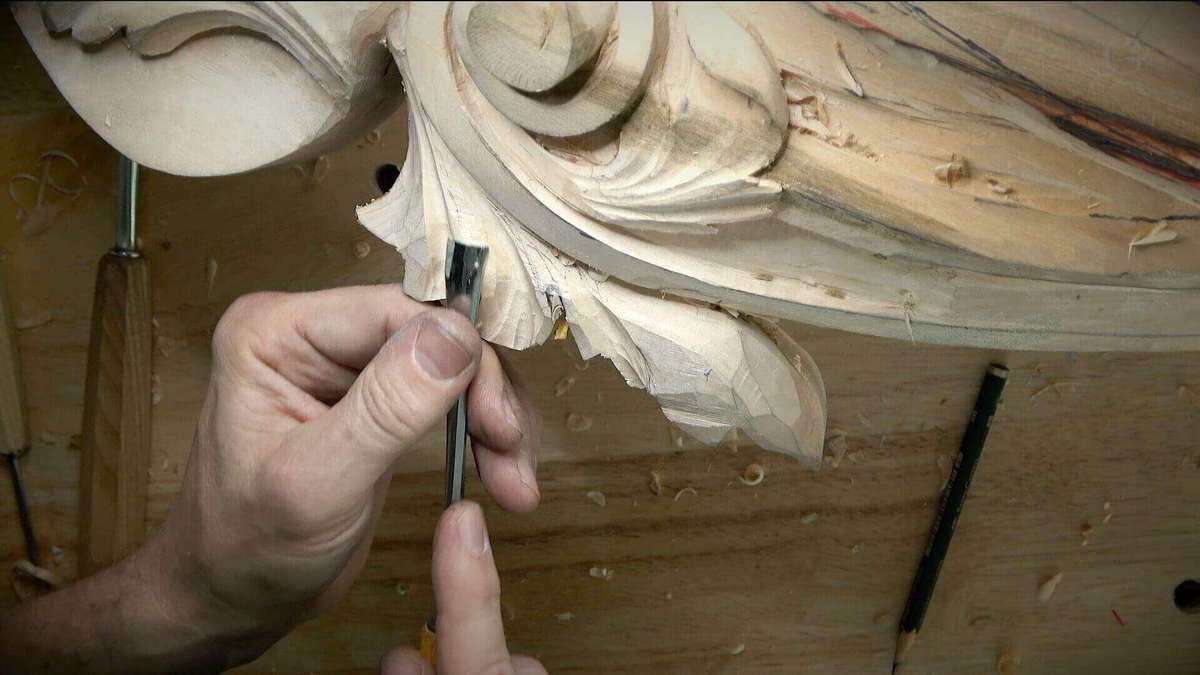
My rule from the bench, and I repeat it in every course: if you can get the job done with a bigger tool, grab the bigger tool. Some gouges in my shop run three inches and an eighth wide. Carving is not a fight with the wood either. I tell my students it is a Tango between the metal and the wood, and the big tool is the best dancer.
One thing outranks everything in that table. The strop. Basswood shows every tear, so each edge must slice end grain and leave it shiny. Strop every few minutes at the bench, not every few hours. Sharpening scares most new carvers, which is exactly why I filmed a full tool sharpening course that takes the fear out of it.
What wood should you learn acanthus carving on?
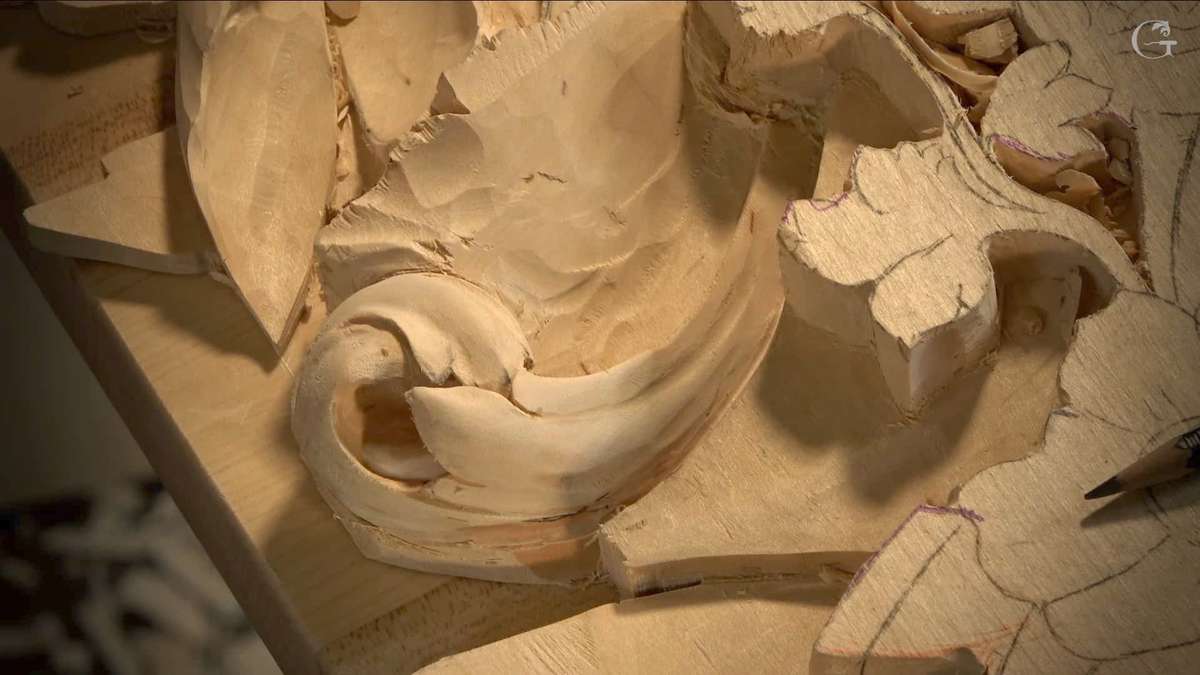
Basswood is the best wood for your first hundred acanthus leaves. Botanists call it Tilia americana. European carvers cut its sister species and call it limewood, the same wood Grinling Gibbons used for foliage so deep and so alive that visitors tap it to check it is not plaster. Basswood is soft, about 410 on the Janka hardness scale, with a tight, even grain that holds a crisp edge on the eyes and overturns without crumbling.
Butternut runs a little harder at 490 Janka, carves sweetly, and glows a warm brown if you want your finished leaf to have color. Walnut and oak are for later. Both carve well and both fight a beginner the whole way.
Now a warning, because I watch this mistake every month. Do not practice on a construction 2x4. Framing spruce is grown fast for house walls, and its grain is coarse and stringy. Carve a 2x4 and you are going to get so frustrated and kill your tools. Buy real carving basswood from a carving supplier. It costs more than scrap. You have to be real about that, the same way you are real about the cost of good gouges.
How do you carve your first acanthus leaf?
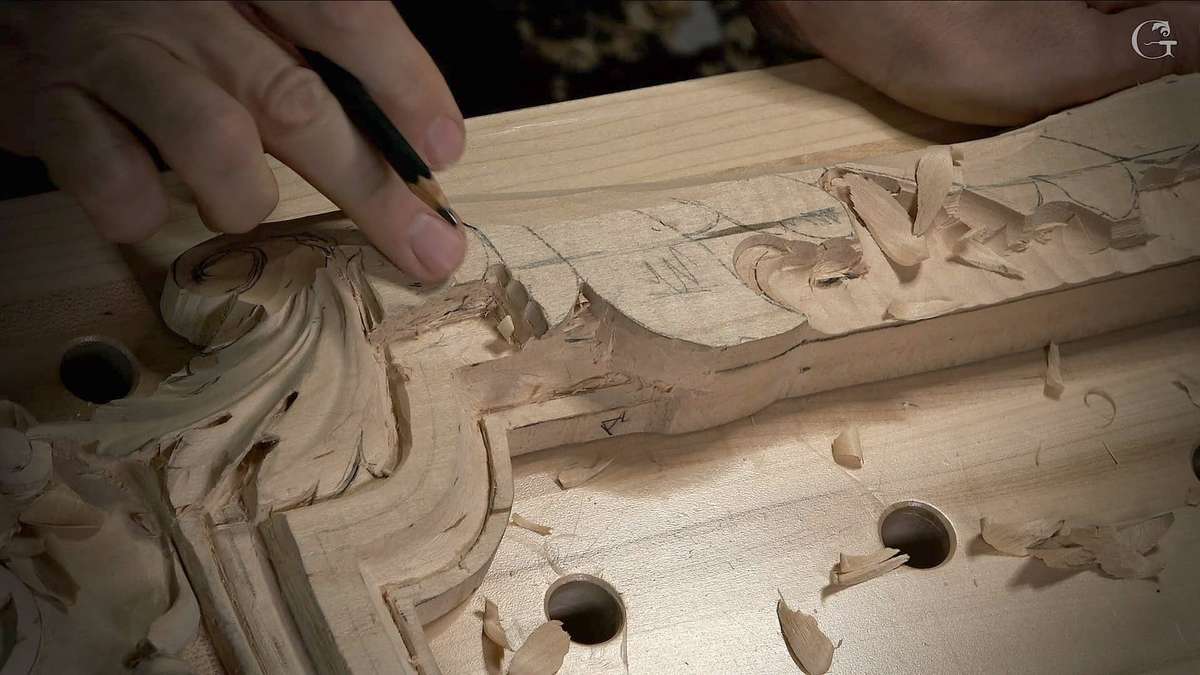
Eight steps turn a drawing into a finished leaf, and the order never changes. Use a basswood board about 8 by 10 inches and at least 3/4 inch thick, held to the bench so both hands stay on the tool.
Step 1. Draw the leaf until your hand knows it
Ten times on paper, midrib first, then the lobes, then the eyes. By the seventh drawing the pencil starts to swing on its own. That swing is what you will carve.
Step 2. Transfer the pattern onto the wood
Carbon paper under the drawing, tape it square to the grain, and trace with light pressure. Keep the midrib running with the grain so the fragile tips stay strong.
Step 3. Outline everything with the #11 Veiner
Run the the Veiner a hair outside every line. Stay shallow on the first pass. Deep first cuts wander, and a wandering outline haunts all eight steps.
Step 4. Ground down the background
Take the background down about 1/4 inch with the #3 gouge and leave it flat. A clean, even ground makes a modest leaf look professional, and a lumpy ground makes a good leaf look chewed.
Step 5. Set the levels
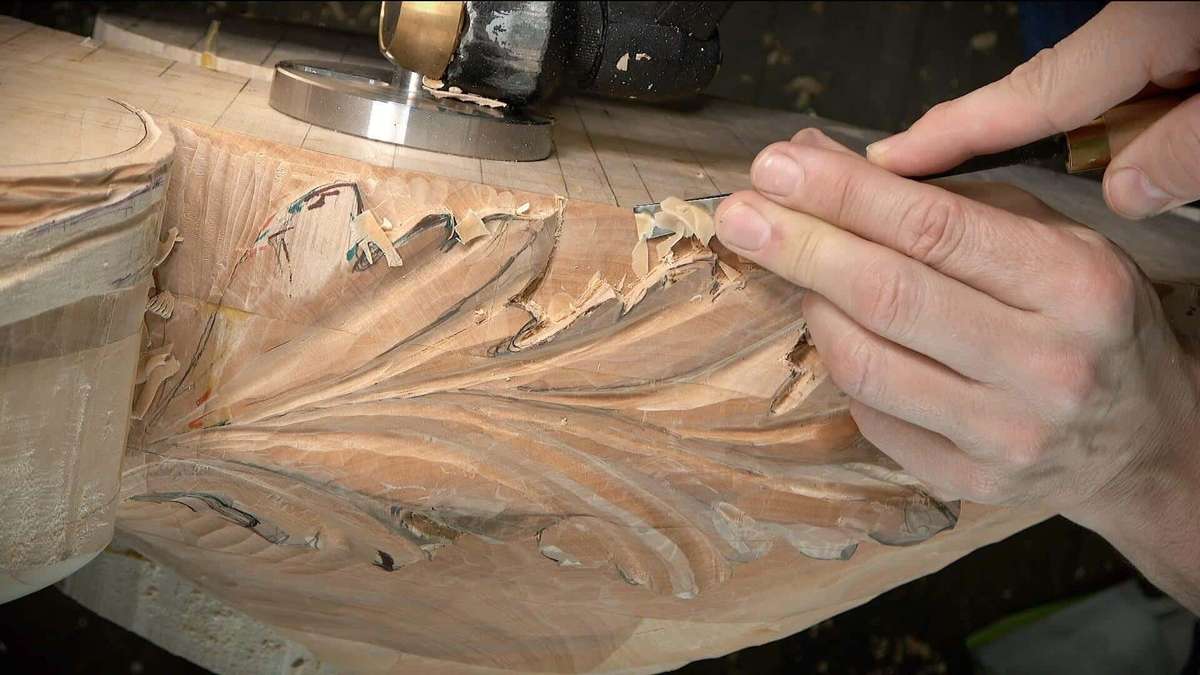
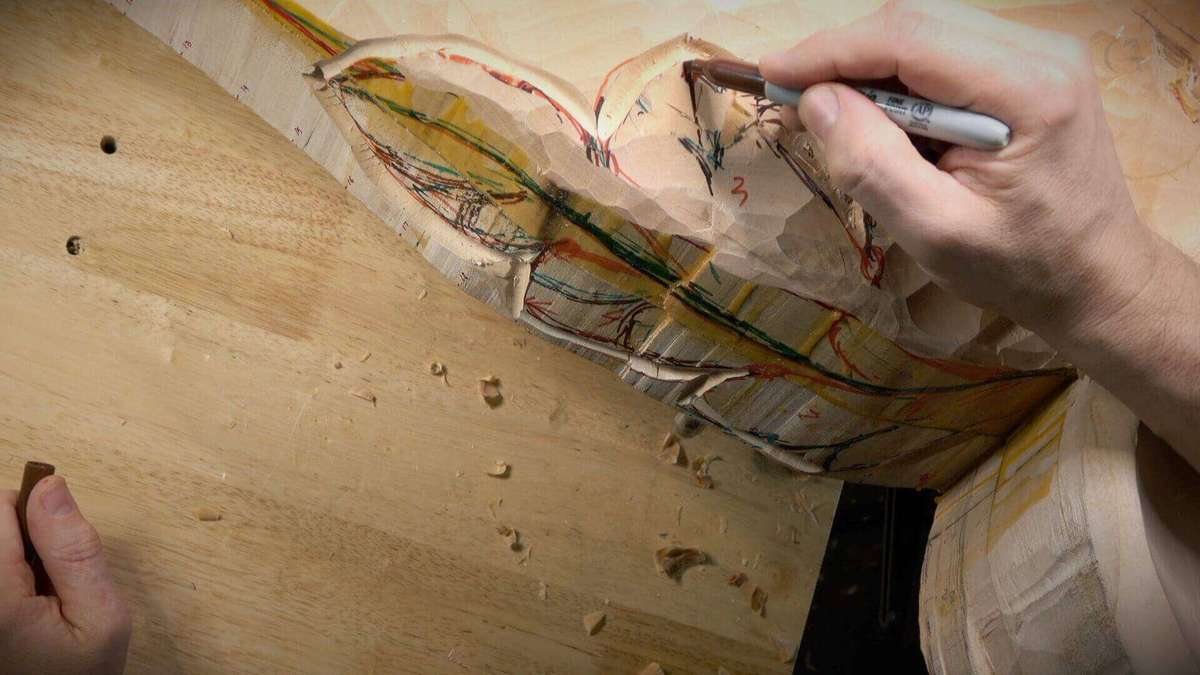
Decide what is high and what is low before any detail. The overturn rides highest. Lobes that dive under a neighbor drop lowest. In my Modern Acanthus lessons I mark this with two colors before cutting: orange for the high spots, blue for the low ones. Orange means do not touch it, do not even think about it. Blue is the ocean, and the ocean sits low. This one step is the difference between a leaf and a cookie, so slow down here.
Step 6. Model the lobes and pipes
Hollow each lobe with the #5 and run the #7 down every pipe toward the stem. Old English shops called this rough shaping stage bosting, and it eats most of the bench time. Let each cut flow the full length of the shape. Short, timid cuts read as noise in the finished leaf.
Step 7. Open the eyes
Push the small #9 straight down at each eye and pop the chip with one clean cut. Fuzzy eyes kill the whole carving. Sharp eyes make even a plain leaf sparkle.
Step 8. Crisp the edges and finish with the tool
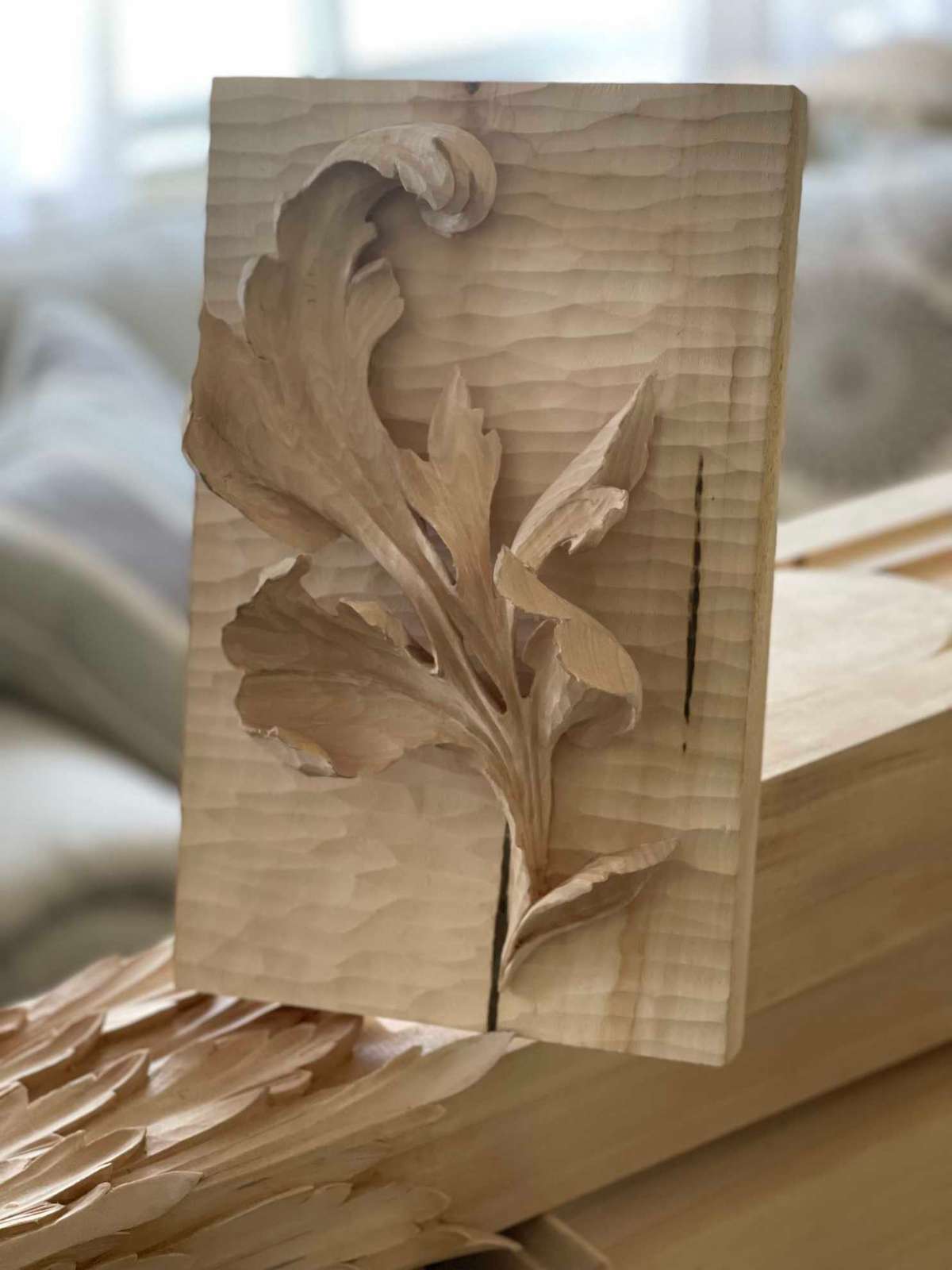
Slice every edge clean, add the fine veins with light V-tool passes, and stop. No sandpaper. Sanding rounds the exact edges you spent seven steps building, and a gouge finish catches light the way 300 year old work in Europe still does.
What is the difference between Greek, Roman, and Byzantine acanthus?
The styles copy different plants and carry different moods, and a serious carver learns to tell them apart at a glance.
Style | The leaf | The look | Where you see it |
|---|---|---|---|
Greek | Acanthus spinosus, narrow and pointed | Crisp, stiff, disciplined | Corinthian capitals, the Monument of Lysicrates in Athens |
Roman | Acanthus mollis, wide and rounded | Full, soft, swinging | The Ara Pacis in Rome, temple friezes |
Byzantine | Flattened and stylized | Sharp, lace-like, drilled shadow | The capitals of Hagia Sophia |
Baroque | Windblown and free | Deep, pierced, dramatic | Grinling Gibbons, Chippendale furniture |
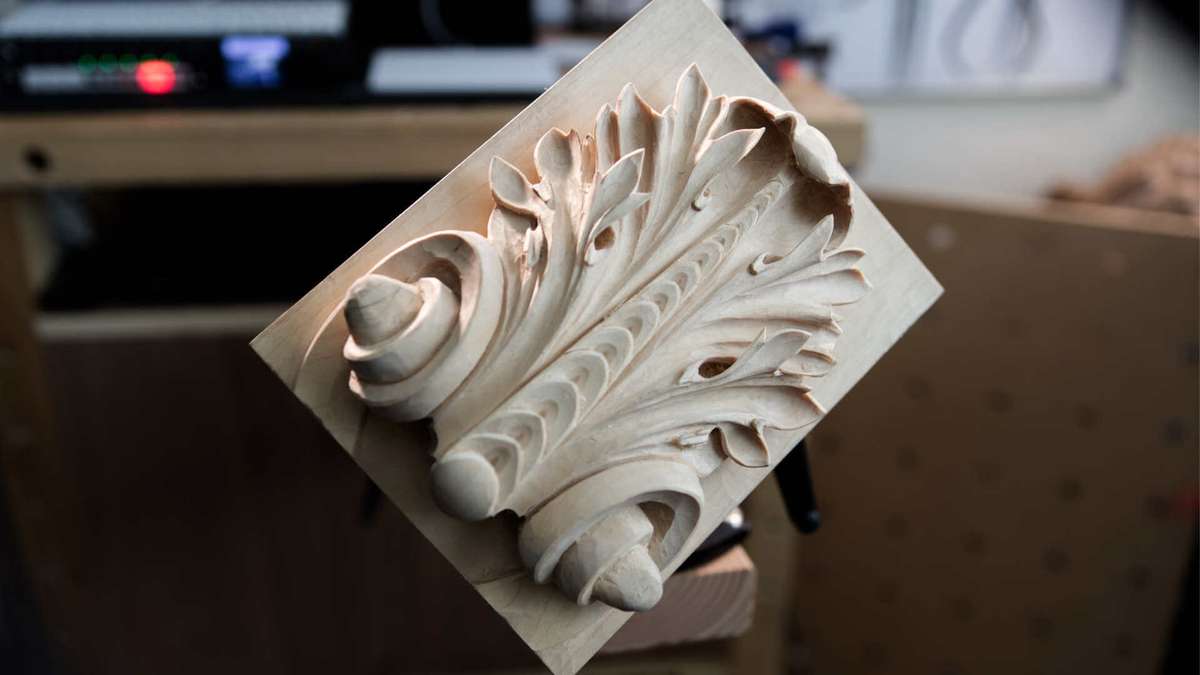
Start with the Greek leaf. Its discipline trains your eye, and the Roman and Byzantine forms then feel like dialects of a language you already speak. Grinling Gibbons, the Anglo-Dutch master of the 1600s, pushed this same leaf into limewood foliage inches deep, and his choir carvings at St Paul's Cathedral still stop carvers cold.
How long does it take to learn acanthus carving?
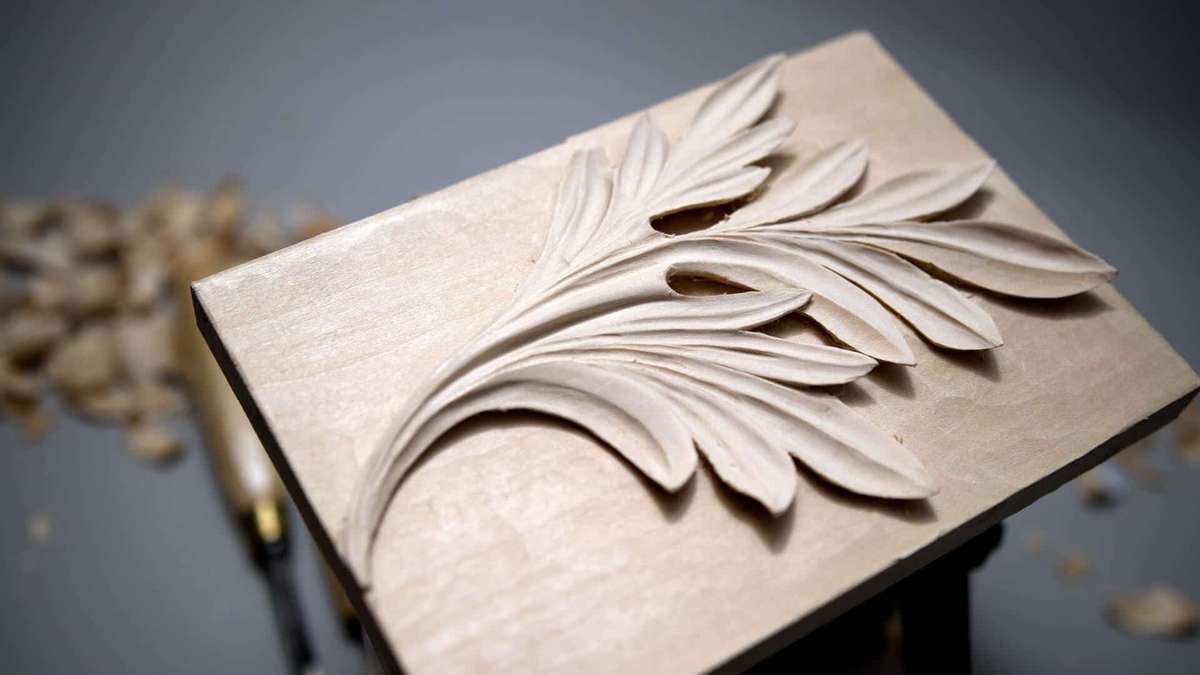
Plan on about 20 bench hours for a clean first leaf, and about ten leaves before the cuts feel automatic. At one evening a week that is a couple of months, not a weekend and not a decade. Your pace depends less on your hands than on your habits, because carvers who draw first and strop often move about twice as fast as carvers who do neither.
There is a moment worth waiting for. Somewhere around leaf eight or nine you stop watching your hands. The gouge starts finding the line on its own, the shavings come off in long curls, and an hour disappears. I put on Vivaldi when that happens and let the bench go quiet.
Where can you learn acanthus carving online?
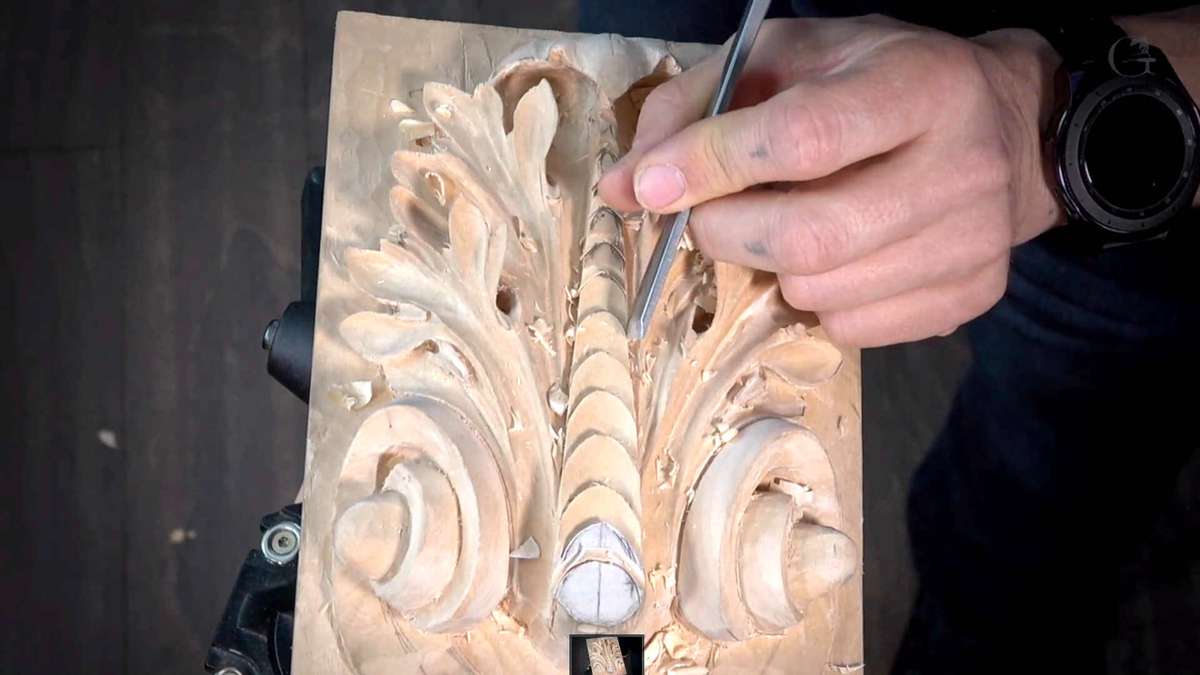
You can learn every classical form of the leaf at School of Woodcarving, where I teach the acanthus on video, cut by cut, with the camera close over the work. More than 3,000 video lessons live at the school, and the acanthus has its own line of courses: Carving the Greek Acanthus Leaf, Carving the Roman Acanthus Leaf, Carving Byzantine Acanthus, Carving Corinthian Acanthus, Carving Modern Acanthus, and Acanthus over Moldings for furniture work. Start Greek, then follow the styles in the order history did.
Let me introduce myself
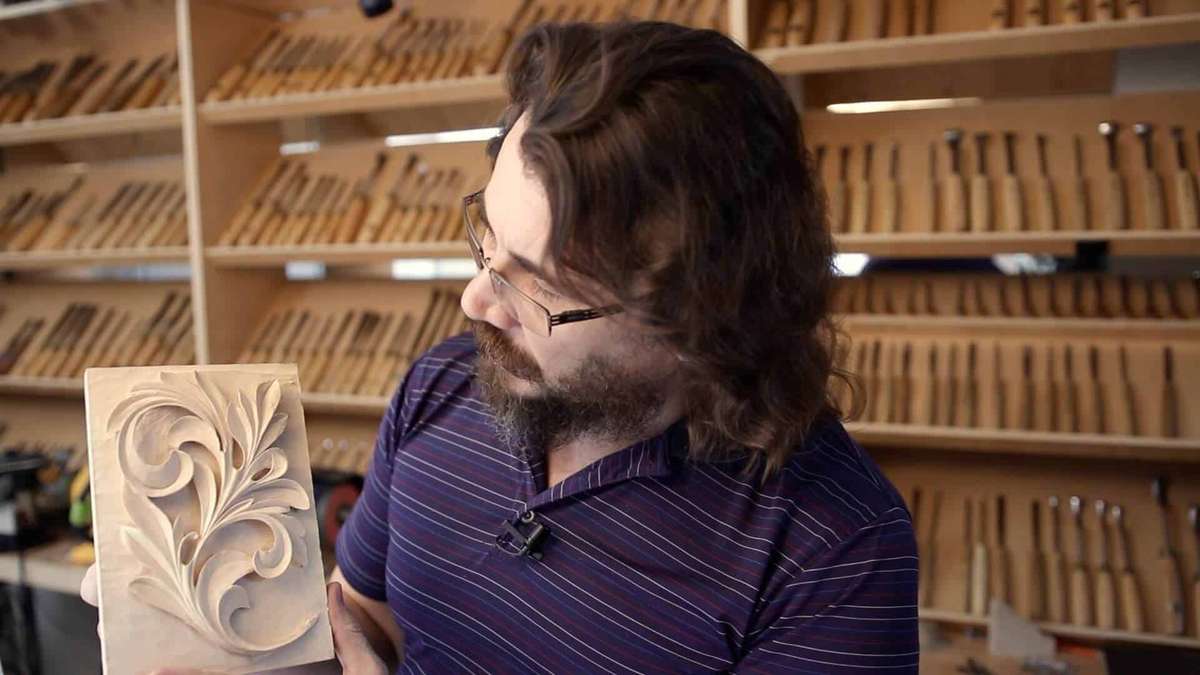
I am Alexander Grabovetskiy, a master wood carver and International Woodcarver of the Year. Wood is in my blood. My great-grandfather was a famous cabinetmaker who worked mahogany in the Chippendale style, and my own studio carves high-end architectural ornament, where an acanthus that does not flow is not a lesson, it is a rebuild. My school, Schoolofwoodcarving.com, is a 501(c)(3) non-profit, and tuition supports orphans and widows around the world.
Frequently asked questions
What does the acanthus leaf symbolize? Long life and rebirth. The plant grows back from its root every spring, even after fire or drought, so Greek and Roman artists put it on graves, temples, and anything meant to outlast its maker.
Who invented the acanthus ornament? Tradition credits the Greek sculptor Callimachus in the 5th century BC. Vitruvius tells how Callimachus saw acanthus growing through a basket on a grave in Corinth and turned that sight into the first Corinthian capital.
What wood did Grinling Gibbons use? Limewood, the European Tilia. Gibbons glued limewood in layers and carved through them, which is how his flowers, birds, and acanthus foliage stand inches off the wall at St Paul's Cathedral and Petworth House.
Do I need to know how to draw before carving an acanthus leaf? Enough to copy the pattern freehand a few times, and no more than that. Drawing teaches your hand the rhythm of the lobes for the price of a pencil, and every hour on paper saves three at the bench.
Can I carve an acanthus leaf with a knife? A knife alone cannot do it, because the leaf is made of hollows and a flat blade cannot cut a hollow. You need gouges. Five or six of them cover the whole leaf, and the tools table above lists the sweeps and sizes.
How deep should an acanthus relief be? For a first leaf, take the background down about 1/4 inch and get the drama from the levels inside the leaf. Byzantine panels sit near 1/8 inch, while Baroque foliage builds up several inches high.
Shall we carve?
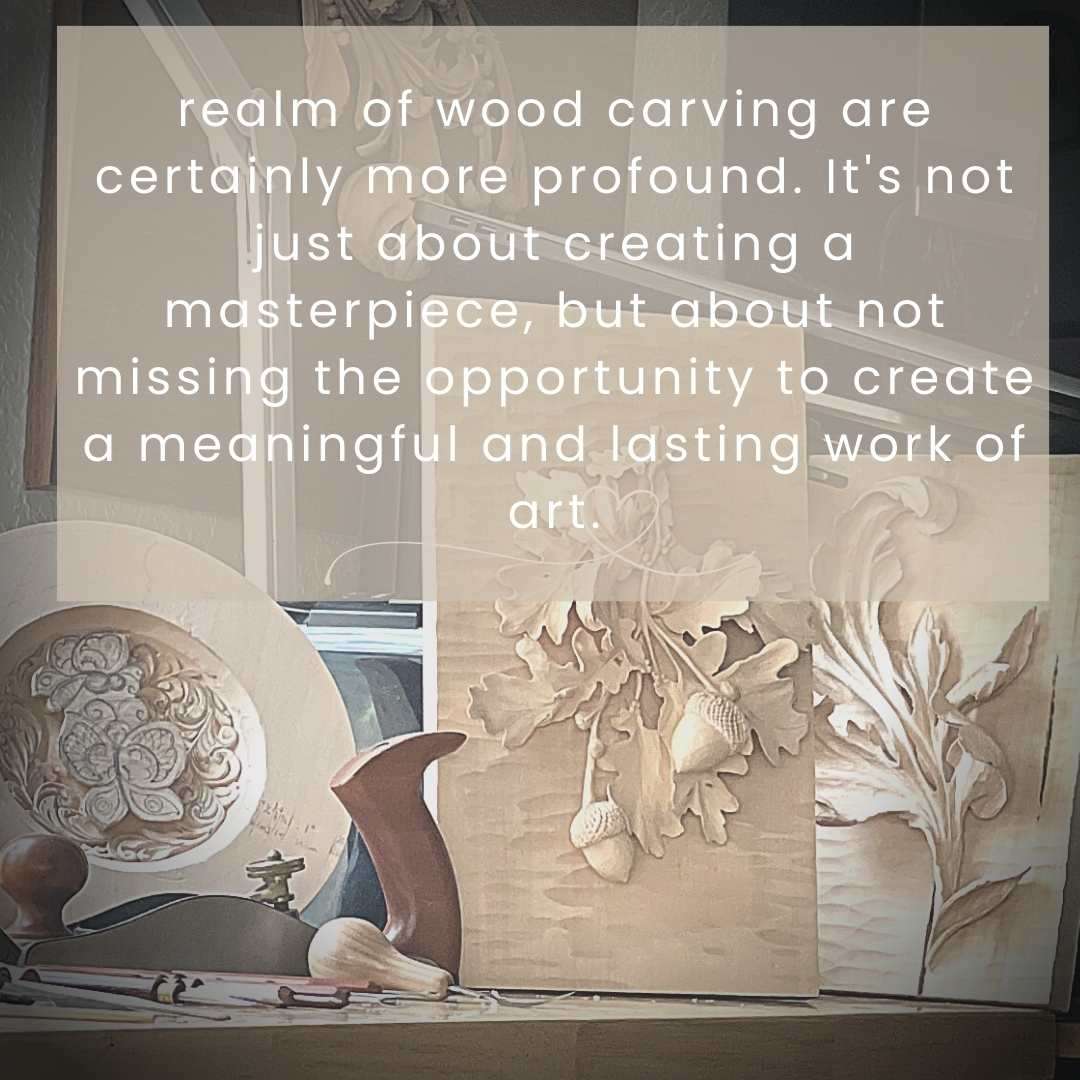
Ever look at a blank piece of basswood and see a leaf hiding in it? Do you want your hands to know a form that connects you to Corinth, to Hagia Sophia, to Gibbons in his London workshop? Stop reading about the leaf and cut one.
Sketch the leaf ten times this week. Order a basswood blank. And when you want someone at your shoulder showing you every cut, the course is here: Carving the Greek Acanthus Leaf. Shall we carve?
Filed under
- acanthus leaf carving
- Acanthus Leaf Carving
- acanthus leaf tutorial
- architectural wood carving
- Architectural Woodcarving
- Baroque Woodcarving
- basswood carving
- Basswood Carving
- Beginner Woodcarving
- Byzantine acanthus carving
- Byzantine Ornament
- carving gouges
- Carving Patterns and Design
- Carving Tutorials
- Chippendale carving
- Chippendale Style Carving
- Classical Ornament
- classical ornament carving
- Corinthian capital carving
- Corinthian Capitals
- Furniture Carving
- gouge sharpening
- Gouge Sharpening
- Greek acanthus leaf
- Greek Ornament
- Grinling Gibbons carving
- limewood carving
- Relief Carving
- relief wood carving
- Roman acanthus leaf
- Roman Ornament
- school of woodcarving
- Traditional Woodworking
- V-tool carving
- Wood Carving
- Woodcarving Courses
- Wood carving for beginners
- wood carving patterns
- wood carving Tools
- Woodcarving Tools