

Alexander Grabovetskiy, woodcarver, School of Woodcarving · Published 2020
What does a wood carver mean by "queen of woods"?
Quick answer: Queen is my name for basswood, the wood that is limewood in Great Britain, linden in Germany and lipa in Russia. In part 4 of workshop 52 I said it carves easily, holds form and has no grain that distracts. I also said it falls short for furniture used every day.
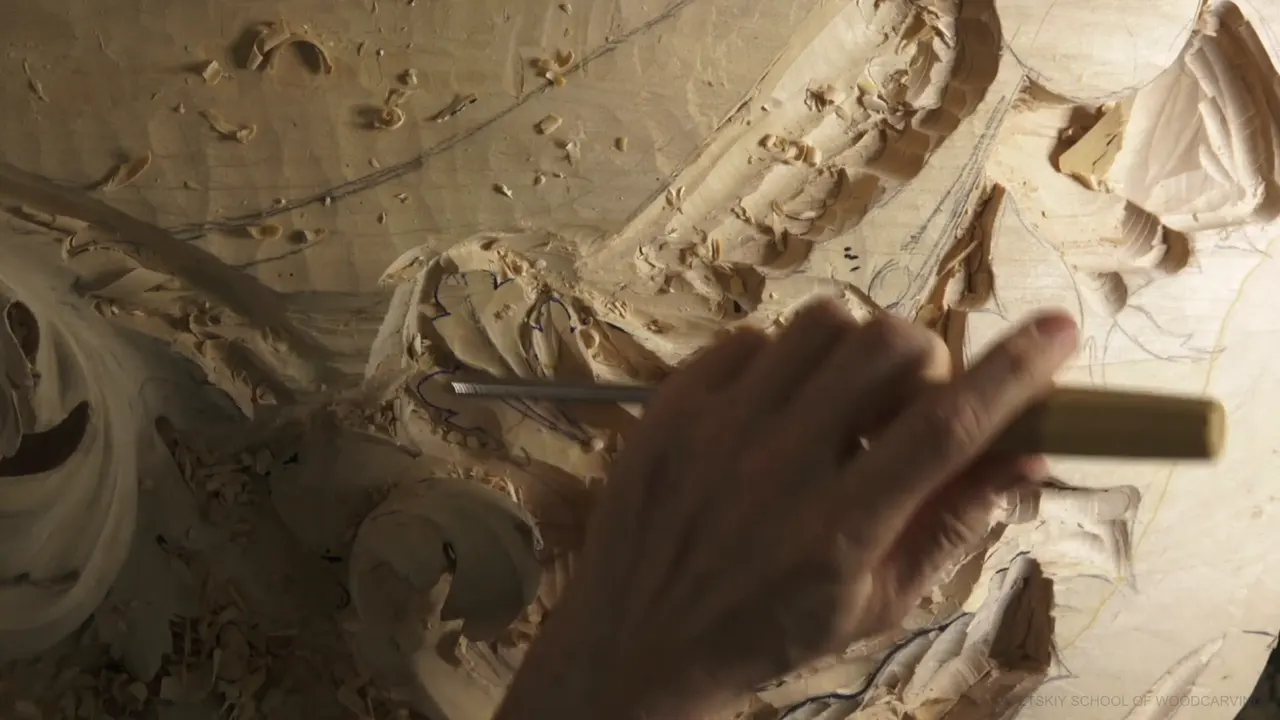

Queen is my name for the wood I carve, which is basswood in the United States. In Venice Room 52, part 4, I said it is easy to carve and holds form, and that its grain is not distracting. That part gives it a limit, and below are the courses where I talk about this wood.
Have you ever stood over a stack of boards and wondered which one is worth your time? Does the name on the label change with the country you live in? For this wood it does, and part 4 gives the names. After them come my own words from the beginner course, the rosette course and a few more, each with the place I said it.
What did I call basswood in part 4?
A question about wood arrives in part 4, and the answer starts with a count: "Three times I already did the live stream, and that's the same question." Then the name. "The wood I'm using, I call it queen of woods." And a plain claim: "It's one of the best woods for wood carving."

The names follow the map. "If you are in USA, it is a basswood." In Great Britain "that wood would be limewood." In Germany "it would be linden wood," and in Russia "that would be lipa." My summary: "that's pretty much the same wood."
"That's a beautiful wood and carves easily and it holds form." Furniture is where I set a limit: "It's not the best for the furniture, I would say. All depends what kind of furniture you do." For a piece used every day, I said, this is not the best wood for wood carving. Big pieces and hobby work are another story, with "no better wood than that." And I added, "Well, it all depends. I really like to carve walnut also."
What do carvers in Australia do when they cannot get basswood?
Australia comes into part 4 too. "I do have multiple people from Australia in my school, they don't have basswood." Their only route is a shipment: "they have to ship it from you." The cost follows. "It's a big problem. They have to pay a premium for that." Their other choice is a different wood, with a name "I can't even pronounce. It starts with J." Of that wood: "Also softer wood."

Why does grain matter more to me than softness?
On a live stream in October 2020 a viewer asked what wood I was carving, "the same question almost every live stream, I'm guessing." My answer began, "Whenever I can, I use lime wood." On softness, my words were "it's not because it's soft" and "There's other woods also soft." What I point to instead is the grain, and this is how I put it that day: "If you look at it, it doesn't have a grain. It does have a grain, but it's not visible. And that is good. You can just do any type of curvature, and it's still going to look really, really nice."

Part 4 says it another way. It carves easily, I said, and "it doesn't have too much visible grain." The grain is there, I said, and it does not distract. Oak is the comparison: "If you have a wood with a lot of grain, let's say like oak or other wood, and even sometimes walnut, it just distracts. Too many stripes, too many lines, and it doesn't look too good."
This wood gives "a uniformed look. Nice color. A color exactly the same like maple." Color can change, too: wood stained to any color still shows the grain, but it is not "as distractive as the other wood."

The beginner course, workshop 1, part 3, lists what you will need. "I suggest to use basswood. It's one of the best." In European culture it is lime wood or linden wood, "because it's a beautiful wood. There is no grain in it, almost no grain visible." "And you can achieve great results. It's soft enough, and it still holds the detail."
Is this wood soft or hard?
Both words are in the Antique Style Rosette course, workshop 2. As I carved I said, "there is no limit what you can do with that. Almost no limit." I caught myself: "Of course, there is a limit, but I shouldn't say that." The material is "soft enough, but still stable."

Then something about old Europe. "At least in old European culture, it wasn't considered as a soft wood. It's considered as a hardwood." A soft wood, I said, "would be like a pine."
In Carving Greek Acanthus Leaf 5, part 2, one person watched my carving online and decided to repeat it. He shaped the wood and sanded the details, and "nothing wrong the way he did." Just lime wood, I said: "And yes, it's soft, like he mentioned in the video." That wood was "used actually in the palaces in the UK, in England, which was 300 years ago, even more than 300 sometimes."

In Europe it ran longer: "300 years ago, 400 years ago, 500 years ago, 600 years ago." So lime wood is among the oldest known woods for the carving. And on soft: "They call it soft wood, but it's not really soft. You'd be surprised, actually, how nicely that wood keeps the detail if people don't damage it." Any wood can be damaged, oak and walnut and cherry included. "I don't know why would you do that, but I really love lime wood."
Where else did I call it a queen?
The Greek course, part 2, puts the same crown on the wood: "Some people call it a queen of the woods." Then comes "Let me refine this detail right here."
In Venice Room 49, part 4 of that workshop, a viewer asked what type of wood it is. I gave the same name. "It's lime wood if you're in Europe, and if you're United States, it's just the best wood. It's the best for the wood carving." And then: "But let's start."

In the Rosette course I said a carver brought that idea of limewood to England from old Europe, from Holland, to be exact. He "called this wood as a queen of all woods."
What did English carvers use before lime wood?
In workshop 2 of the Rosette course, English carving gets sorted by price and by wood. "In Europe, at least in England, the cheaper carvings would be done in pine. And the more expensive carvings would be done in oak at the beginning, and after 17th century, it would be limewood."
German churches got the same wood. "All the church carvings, they were done in limewood, a linden, basswood, if you are in the United States." Of the old work: "if you go to palaces in England and see all the work there, or if you go to Germany, in old churches with some old 15th and 16th century carvings, so you'll be surprised. It's all done in limewood, and it looks really nice and fresh."

Part 5 of workshop 52 tells the English side. Before that carver came, English carvers used "only oak, pretty much English brown oak, which is beautiful wood. I carved some of it, and I love it." Then: "But he introduced, actually, lime wood, same wood what I'm carving."
The Dining Table Apron course, workshop 7, gives the sound of oak against limewood as "absolutely different. It's more crunchy sound." And: "you can do a lot more, actually, with limewood than what you do with oak. Oak is more crunchy, and it has a lot of grain."

Does the queen dull your tools?
Mine, yes. Workshop 9 of the same course has this: "you probably noticed that I don't go to my sharpening station as often as I do when I'm carving on basswood." I called it a paradox. "For some reason, the basswood is a much softer wood," yet "my tools getting dull a lot quicker on basswood than on oak."

"My teacher tried to explain me. I still didn't get it." Some woods have "some abrasive inside of the fibers," and basswood "doesn't look like abrasive wood." It is "really nice and smooth, but the tools are getting dull quicker for some reason." Then: "At least my tools. Maybe in your case, it's not the case."
Which other woods do I name beside it?
Walnut is the wood I name beside it, in part 4 and on a live stream from April 2020. A viewer asked about my favorite carving wood, and there are two. "My favorite for carving, it's limewood, which is the best wood," and in Russia we call it lipa. "This is the preference number one." Behind it comes walnut: "the second after that is walnut. I really love walnut."
Acanthus over Moldings 1 adds paint to the picture. I used basswood there, limewood in Europe, "a furniture grade pretty much." On furniture you can use walnut, cherry or other woods. One warning: "Some people think if it's going to be paint, great, it's okay to use poplar." And: "I highly suggest not to use poplar." As to feel: "it doesn't feel good when you carve that. Much better to use cherry or even oak."

Which boards did I use in other courses?
The Curly Kitchen Cutting Board course, workshop 3, has a block of basswood from my shop, "kind of thick. It's two inches," about 51 mm. A cutting board doesn't need that much: "you can use whatever, 20 millimeters if you have. That would be sufficient." That is 0.79 in. The thicker the piece, the more stable it is, "so it's not going to warp as much." For the Acanthus over Moldings board I used "the seven-eighths of an inch, 22 millimeters," and 7/8 in is 22.2 mm.
Where can you buy basswood?
The beginner course says planks you can probably get "in some craft store in your town." If you're in England, "it would be called lime timber." I'm from Russia, and there we call it lipa. Some other cultures call it "just a tea tree because the linden flowers you can actually use for brewing teas, and it's beautiful tea." On the October 2020 stream I said tilia is "actually Latin word for the basswood."

A full answer is in the Questions and Answers course. Someone asked me for a good supplier of basswood blanks. "It all depends where you're located." One online supplier is expensive, and the reason I gave was "all the expenses, how expensive is to ship it to them and from them." A seller on a big shopping site is another idea. Find out who is selling the planks, then "contact them directly" and "ask them for the discount." Most of the time, "they just business people, and like everybody else in the business, they're really open to it."

One more source is a local lumberyard, though not any one. "You have to go to the lumberyard who's actually selling to the furniture makers." Google "hardwood lumberyard" and ask whether they have basswood. A yard that sells to cabinet makers is "usually able to get" it, and that route is "much cheaper," with one catch: "they cannot sell just one board. They usually require minimum." I usually buy lots of material because I'm working on projects like that. And "they can send the semi truck to my shop, and I don't have to pay for the shipping."
The April 2020 stream has "I do have a preference between Eastern and Western." And even United States versus Canadian: "I like more Canadian side of basswood because there is a lot more forest, a lot less pollution, and that's a really good quality of lumber." South Carolina and Wisconsin basswood are my picks.

What does the queen need on top of it?
Near the end of part 4 comes a "wonderful question about the treatment, how to conserve the beautiful work," and what kind of finish you should put, "lacquer or something else." My answer: "let me tell you a little deeper explanation about it." The story is about England, and it runs into part 5. The carver who brought lime wood "never applied any type of finish on it," not wax and not shellac, and he "left just the bare wood."
Other carvers worked in oak, and "most of the time, they applied bee wax to preserve it," or shellac later on. Today, "without even finish, without applying any finish, 300 years later, it still looks beautiful and nice without any finish." One point I called controversial: "you can see a lot more aging on oak, which is controversial, than you can see on lime wood."

"I have some pieces I carved long time ago, 10 years ago or so, and I did not apply any finish on that, and it's just beautiful. It's just naturally developing colors." So: "up to you." For this piece, "I will apply authentic 15th century paint," which "sounds really complicated." It will be a chalk paint, which "was really common and still common in some European parts."
What was I carving while I talked about wood?
The carving in part 4 begins with "So that is complicated. Right, just the relief cuts. I'm always doing those relief cuts." I planned to outline "this way" and make an eye there, and of one area I said, "I have to excavate much deeper this area." A division was planned too, with a center line, and "hopefully, you can see overall picture how it looks."
"I did the relief cuts, and now I'm going to just chop. Chop to approximate form." That is not the final form yet. Some concaves and convexes are still ahead on the side, "but at least I have something to work from." My tool was a number 11 veiner, 3/16 of an inch, about 4.8 mm.
Where did I say it, line by line?
The table gives each lesson and the words I said beside the wood, from Venice Room Part 5 and my other courses.
| Lesson | Words | Topic |
|---|---|---|
| Venice Room 52.4 | that's a beautiful wood and carves easily | Easy carving |
| Names, part 4 | in Germany, it would be linden wood | Local names |
| 52.4 on furniture | big pieces like that or even hobby | Hobby work |
| Venice Room 49.4 | United States, it's just the best wood | Viewer question |
| Greek Acanthus 5.2 | how nicely that wood keeps the detail | Keeps detail |
| Rosette Workshop 2 | material is soft enough, but still stable | No limit |
| October 2020 stream | whenever I can, I use lime wood | My choice |
| Apron workshop 9 | my tools getting dull a lot quicker | Dull tools |
| Apron workshop 7 | do a lot more, actually, with limewood | Oak comparison |
| Moldings workshop 1-1 | I highly suggest not to use poplar | Poplar warning |
| Curly Board 3.1 | the blocks of basswood in my shop | Thick boards |
| April 2020 stream | it's limewood, which is the best wood | Favorite wood |
| Questions and Answers | who's actually selling to the furniture makers | Local lumberyard |
How it's done
- Learn the local name. Basswood is the American name, and I gave three more for the same wood: limewood, linden and lipa.
- Look at the grain. Oak has more grain to distract, I said, and this wood stays quiet.
- Match the wood to the job. Large carvings and hobby projects suit this wood, and furniture for daily use is the limit I gave it.
- Check your supply. Where the wood is missing, as in Australia, it has to be shipped, and the buyer pays extra.
- Decide on a finish. For the finish I gave a choice between bare wood and paint, and I called it up to you.
Frequently asked questions
Is basswood the same wood as limewood?
Mostly. The apron course says you can call it basswood or limewood and it is the same. Linden and lipa are the German and Russian names. Tilia is the Latin word for it, I said on a live stream.
Is this wood soft or hard?
Both words came out of my mouth. I called it kind of soft on a live stream. In Greek Acanthus 5.2 I said they call it soft wood, but it is not really soft. In old European culture, I said, the wood counted as a hardwood.
Which pieces suit this wood?
Large pieces and hobby projects, I said, where no other wood beats it. Furniture for daily use is where I set my limit, and I said it all depends. I like to carve walnut too.
What to carve next