
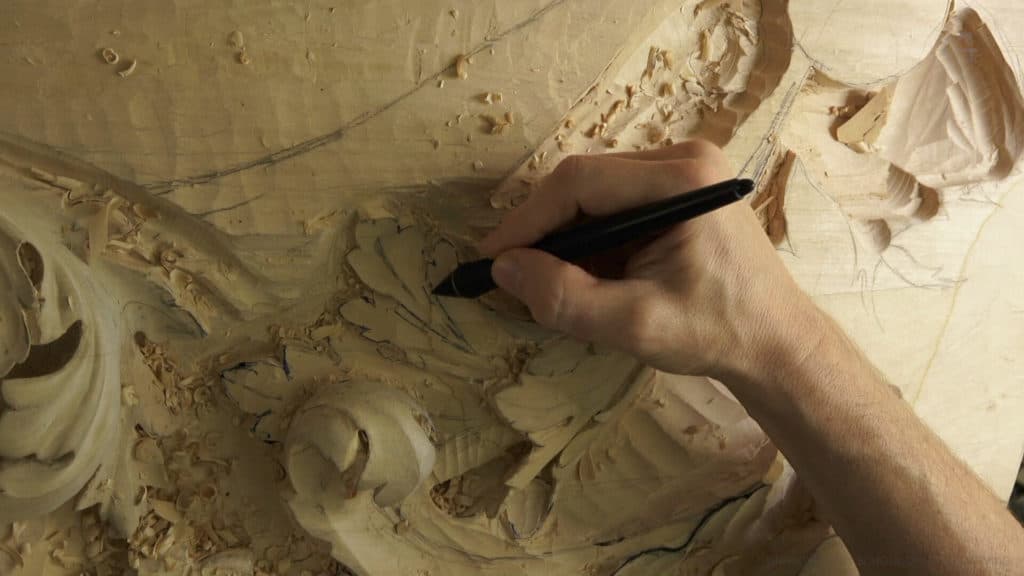
Alexander Grabovetskiy, woodcarver, School of Woodcarving · Published 2020
Who was Tilman Riemenschneider?
Quick answer: Riemenschneider was a famous carver from Germany in the Middle Ages, just before the Reformation. In my lessons I say he worked in lime wood, that his work looks brown, and that he made good money. I also tell what he answered about working where nobody looks.
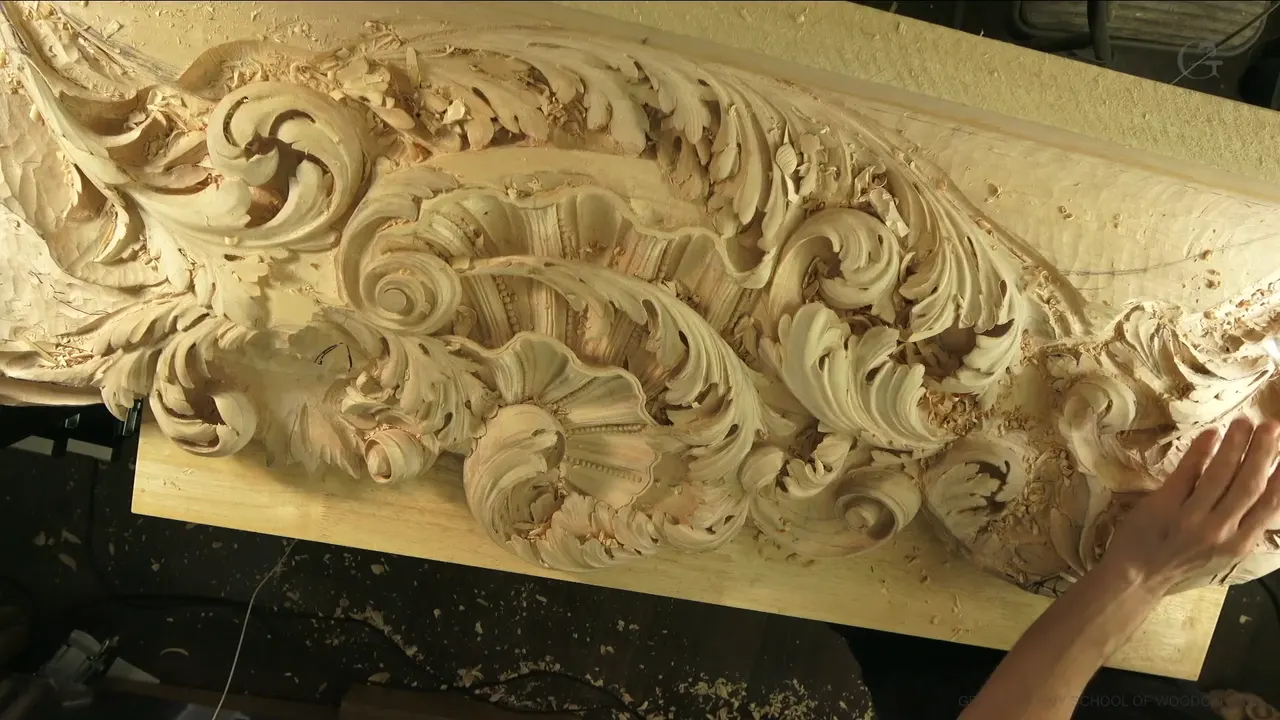

Tilman Riemenschneider was a German wood carver from the 15th and 16th century, named in a book I own about lime wood carvers. I bring him up in Venice Room 52, part 5, while I talk about the wood I carve, and in several other courses. Below are the places, one lesson at a time.
Have you stood under a carved figure in an old church and looked up? Did you think about the back of it, where nobody looks? A carver of the Middle Ages answered that, and I tell his answer in my lessons. So read on, and I will give you each version with the lesson where I said it.
Who was Tilman Riemenschneider?
His name comes up in part 5 of workshop 52 while I talk about the wood. Lime wood, I said, "is a common wood in Europe, even in 15th century, 16th century in Germany." Then came the book: "There is a book, actually, I have about lime wood carvers. One of them was famous Tilman Riemenschneider. So he was a famous wood carver in that period." After that line I added, "And they carved lime wood. They carved bass wood."

Carving Hashemi Flowers 7, part 7 of the Hashemi Flowers course, brings him back. It starts with "some wood carvers in the 15th century, 16th century, especially a German carver, Riemenschneider." My comment was short: "I really like what he would say." What he would say was about the backside, and that waits further down.
Then there is Furniture Panel 20, part 2 of the Furniture Panel course, where I name my favorites: "one of the favorite wood carvers in history, because I have a couple which I really admire." Grinling Gibbons comes first in that sentence, and Riemenschneider is "another one." Of him I said "German wood carver in dark ages, I should say," and I fixed myself right after: "Not the dark ages, but just right before Reformation happened."

What wood did he carve in?
He used lime wood. The Curly Kitchen Cutting Board lesson, part 1 of the beginner course, says it in my words: "If you look at the work of Riemenschneider in Germany, it's Middle Ages, and he used lime wood, same wood exactly what we use today."
In Venice Room 18, part 6, I widen the view to Germany. "At the same period, Tilman Riemenschneider used to live at the same time," I said, and "they did not have any skilled stone carvers. But they had a lot of skilled wood carvers." Much of that work came "before the Reformation," and I put it plainly: "we're talking about before Martin Luther." The wood was lime: "they used a lot of lime wood, exactly the same wood which we're using right now."

England is the other half of the story in part 5. English craftsmen, I said, "used only oak, pretty much English brown oak, which is beautiful wood. I carved some of it, and I love it." One carver changed that: "he introduced, actually, lime wood, same wood what I'm carving." Further on I named him, Grinling Gibbons.
Nobody carved lime wood there before him, and I added, "They do have that wood, don't get me wrong. It still grows right there." But people did not see it as beautiful, I said, and Gibbons "was first who carved the lime wood pretty much in England." The story is already running when part 5 opens: "there was a time when the whole London was burned down, and he was a carver."

Did carvers in his Germany sand their work?
Not the way Italy did, I said. German carvers "did not have in the culture, sanding or making smooth surfaces idea. They didn't sand anything." A test for your own eyes follows: "if you look at the original 15th-century carving in Germany, you will see they never used any sanding, pretty much. And you can see all the cuts and stuff like that, but not the case in Italy. Everything was really smooth."
That reaches beyond the Venetian style, I said, to "other parts of Italy." My reason was a guess, and I put it plainly: "I think it's just probably even in the blood. They really like a smooth look." Of the Italian work itself: "it's just absolutely gorgeous." And on Italian style furniture, "there's more smooth than rest of the European furniture."

What color was his lime wood work?
Brown, I said. That lesson is about finishing a board so it is "absolutely food safe," with no chemicals involved, using "two ancient ways, actually, how the ancient people would use colors and staining." My wondering about his work follows: "all his work has a brownish color. And definitely it looks like some color was applied to it." They had no chemicals like ours, I said, "and the color looked beautiful, actually."
Color on wood is old. The use of stains in woodworking "was known long time ago. I would say at least about 4,000 years," because woodworkers "even in ancient Egypt, would use some color on the wood." The first stain I showed had onion husk in it.

What finish did the old carvers use?
The other side is in part 5, a carver who left lime wood bare. The question behind it arrived in part 4: how to "conserve the beautiful work," lacquer or something else. My answer started in Great Britain. Gibbons, I said, "never applied any type of finish on it. He did not apply any wax," and he "left just the bare wood."

Other carvers worked in oak and did it another way. "Most of the time, they applied bee wax to preserve it," or shellac "later on." Go and see the old work today, I said, and "you will be surprised. Without even finish, without applying any finish, 300 years later, it still looks beautiful and nice without any finish."
One opinion was my own, and I flagged it: "you can see a lot more aging on oak, which is controversial, than you can see on lime wood." Then my conclusion. "Doesn't matter if you're going to apply finish or even if you're going to leave fresh like that, it's going to stay for 300 years with no problem." I also said I have worked in the style of Gibbons for a long time and have pieces done in it, though "I still can't say his name correctly because my accent."
My own pieces point the same way. "I have some pieces I carved long time ago, 10 years ago or so, and I did not apply any finish on that, and it's just beautiful. It's just naturally developing colors." So it is "up to you." In this case, though, I said I will apply "authentic 15th century paint." It "sounds really complicated," and I said it is not: it is chalk paint, "which was really common and still common in some European parts, just using chalk as a media."

What did he say about the back of a carving?
His answer is in the Hashemi lesson. He "would always make it look nice from the backside," I said. When people asked why he worked in a spot that "never going to be seen by human eye," he would answer, "Yes, human not going to see that, but God will see it." I added, "That was his answer."
Over in Venice Room 65, part 8, I give it again. Of one spot I said "it's going to be covered with the flowers," and "I don't need too deep." My next words: "I have to be wise. I really have to be wise. I could spend too much time in an area I don't need to." And I raised his name: "if you would say, how about Riemenschneider?"

My line was that "I mentioned multiple times that he was working even on the backside and made it to the perfection." His line came out another way this time: "People will not be able to see it, but God will." My comment: "And that's true." The two versions differ a little, and I keep them apart, because each belongs to its own lesson.
I put the difference between his time and mine this way: "We live in a different century right now, and people expecting everything done pretty quick. I don't have that luxury of what they had in 15th century." This is how they worked: "when they worked on a project, they had to move to the location of the project, and they could spend years in just one location."

Was Riemenschneider paid well?
The Apron lesson says so. Workshop 17 of the Dining Table Apron course gives what the books say: "wood carving was a really royal trade, and they were making a really good living." As a wood carver or master wood carver "you could actually make a fortune," and I said it "applied to Germany also, especially end of 15th century. End of 15th century, beginning of 16th century."
Then the dates. "More specific, it applied to only 50 years, German wood carving. It's 1475 to 1525." That is "right before Reformation," and I called it "a glorious time for German wood carvers." Of Riemenschneider: "he actually was making good money with just wood carving." And: "He was able to live like some royalty."

England came up too, and I said that "some of them never made a fortune. But some, they actually were paid really good." Against a worker "on the field, on the countryside," I said a wood carver would make "30, 40 times more in wages." There was a title in England, Master Carpenter, and most master carpenters "knew how to carve it." Then: "there was, of course, Master Wood Carver. It was a separate title, also somewhat royal title."

On the April 2020 live stream in my livestream events I took up whether one project could pay off a house, and I went to history. "We know him just because he left a lot of beautiful wood carving projects in the churches." I called him "a really wealthy man" who "made his fortune just by carving wood."
Other carvers had trouble getting paid. "The clients did not want to pay them, like Chippendale." He "did beautiful work when he used to live and produce furniture and so on, but he never was paid well enough." Of Gibbons I said "he experienced a problem with the payments from a clients, but I could not say he's not successful." He had a shop and "multiple people who worked for him," and without money from carving wood, "he would not be able to pay apprentices."
Shops ran in levels, I said, in what I called a wood carving guild. "Different levels of craftsmen used to work in one shop." Level one was rough carvers who chopped big chunks of wood, and level two outlined and found the best shape. At level three the master himself would take "a knife and gouge, or any other woodcarving tools, whatever he thought is the best for the job," and "clean everything." I named Gibbons there.
In the Part 6 lesson with the flowers I put a limit on what I know about him: "As far as I know, of course, and nobody's able to ask him now."

Where did he carve?
Churches, mostly: "he carved pretty much most of the time for churches," I said on that live stream. My Part 2 lesson 18 says German carvers did a lot of wood carving for churches, "which used to be just Catholic churches back then in Germany."
One more place is Venice Room 55, part 4, where I switched to a different camera to find a photo. "I installed those lion heads in residence," I said, lions that I carved, on doors. "See those two statues right on the sides of those double doors? If you know a little bit about wood carvers, and I just mentioned about Tilman Riemenschneider. Those two statues actually done by the Tilman Riemenschneider, 15th century."

What else is in part 5 of workshop 52?
The carving. My next job in this part is a pipe: "I'm going to do a pipe," a "raised part, how I explained before." In this case, "I can do probably exaggerated pipe."
To make it I "need to create concaves on both sides." I did one concave with the number 11, and "the second concave, I going to create with the number eight." Of the number 8: "it's 10 millimeters, about three-eighths of an inch." I asked, "can you see this raised part?" and answered, "So that is a pipe."

To rephrase it, I drew on the board: "A pipe is always a raised part, just like that."

"To create that, what I have to do, first, I need to create concave on one side and a concave on another side." The middle stays a flat surface, which on my carving is "that part right here." My words: "I created concave and I created concave."

Next I need to get rid of those wings and "just kind of blend it." Whatever the concave, I said, it will go "a lot farther, so we need to get rid of those ridges." On the carving I pointed one out: "you can see this ridge from the concave I left." After that, "I have to chamfer those sides." "Just a chamfer." The chamfer is "usually chopping like that."

Rounding uses a back bend, a tool I "really love." You can make the pipe round with it: "Pretty much round it. All right?" In part 6 the next problem is a convex that I planned to handle with a back bend.

The last check is from above. Looking "straight from above at your pipe," I said, "it should not be parallel lines." And: "A lot of people making mistakes. First of all, it's just the two parallel, so it's not good." My pipe is "supposed to go like that" and "to narrow down," and "it shouldn't be straight line, so it always has to kind of bow."
Where did I say each line?
The table gives each lesson and the words I said, from Venice Room Part 5 and my other courses. Each row comes from a different video.
| Lesson | Words | Topic |
|---|---|---|
| This part 52.5 | there is a book, actually, I have | The book |
| Hashemi Flowers 7.7 | he would always make it look nice | The back |
| Venice Room 65.8 | they would get paid really well, actually | Good pay |
| Venice Room 18.6 | they never used any sanding, pretty much | No sanding |
| Curly Board 17.1 | it looks like some color was applied | Brown color |
| Dining Apron 17 | making good money with just wood carving | Good money |
| April 2020 stream | he made his fortune just by carving | Wealthy man |
How it's done
- A concave on each side. To raise a pipe I said I need a concave on one side and a concave on the other. A number 11 made one here, and I planned a number 8 for the second.
- Leave a flat between. A flat surface stays between the two hollows, and on my carving it is the part I pointed to.
- Blend away the wings. Wings and ridges left by the concaves have to go, and I said I would blend them.
- Chamfer the sides. A chamfer comes next, chopped along each side, and I said I have to do it.
- Round it. A back bend can make the pipe round, I said, and I love back bends.
- Check it from above. From above the pipe should narrow and bow, and two parallel lines are the common mistake.
Frequently asked questions
Which wood did Riemenschneider carve, and what did I say?
The same wood we use today, lime wood, I said in the cutting board lesson. In my Part 2 course I added that German carvers of his time used a lot of it. A book I own on carvers of that wood names him among them.
Did carvers in Germany sand their work?
Not in the 15th century, I said. German carvers had no habit of making surfaces smooth, and you can still see their cuts on the old carvings. Italy was different, where everything was really smooth, and I put that down to blood, as a guess.
What was his answer about the backside?
When people asked why he worked where no eye would go, I said, he answered that people would not see the spot, but God would. The Hashemi lesson has the line a little longer, and the Part 6 lesson keeps it short. Each version keeps its own lesson.
What to carve next