
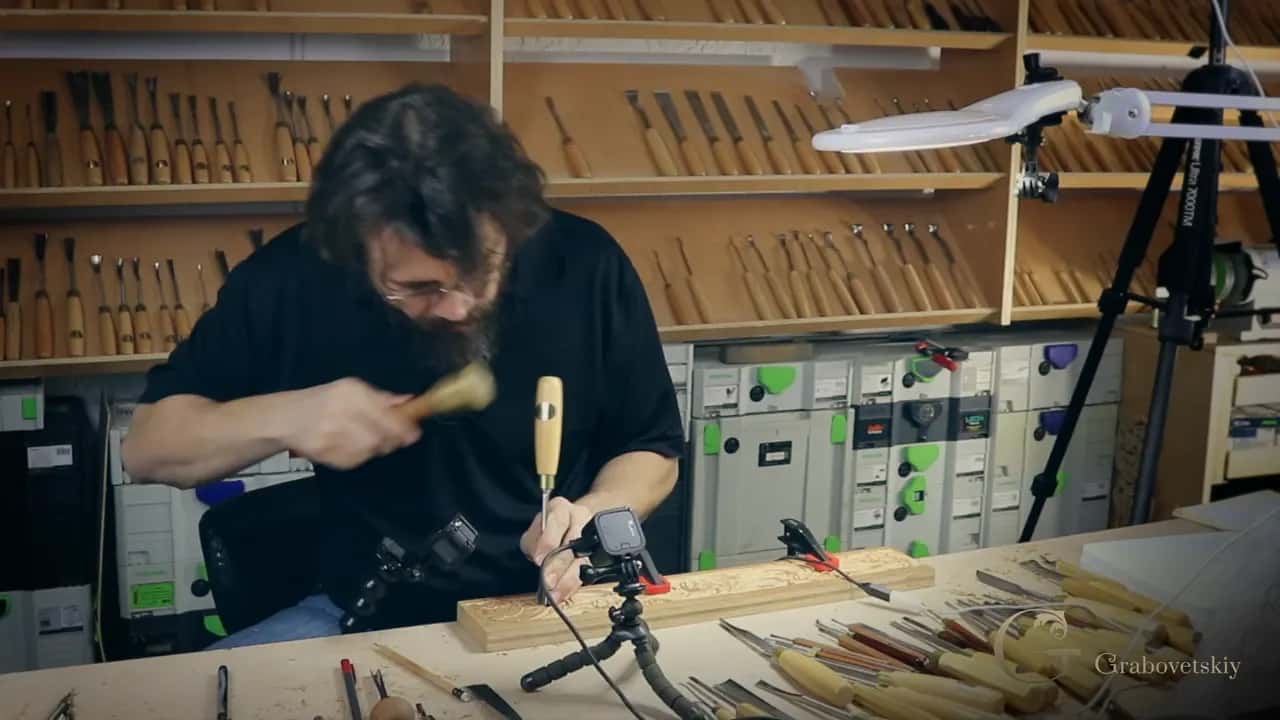
September 3, 2024 · Updated October 8, 2026
By Alexander Grabovetskiy — Master Woodcarver · Founder, School of Wood Carving · 17 min read
What is wood carving mallet
A wood carving mallet is a weighted head on a short handle, used to drive a carving gouge through wood. I keep three within reach of my right hand, and I pick one up the second hand pressure stops moving a clean chip. The head carries the blow instead of your shoulder.
Most people buy a beautiful turned mallet, hit a gouge with it all afternoon, and finish the day with a sore wrist and a handle already going soft. For years I did the opposite. I pushed. My fix had nothing to do with a stronger swing. What changed was the head I was hitting with, and where my hand held it.

For a long stretch my mallets sat on the shelf, because I thought I would just push and that would be enough for me. Hand pressure works right up to the point where the wood runs deeper than your hand is strong. Then you lean in, the whole body goes behind the tool, and the gouge runs on past the line you meant to stop at.
- Any part of the barrel that lands on the handle becomes the striking face for that blow.
- Rubber soaks up its own shock.
- Brass is small and dense and loud, and over a few years it marks the butt of a handle.
- Turned hardwood looks best on a shelf.
- On a soft board, working shallow, my hands carry a whole panel with nothing swung at all.
- Cup it in your palm, never in a fist, and raise it about as far as a door key turns.
What is a wood carving mallet?
A carving mallet is weight you borrow so you never spend muscle. Steel goes into wood because something behind it is heavier than the wood is stubborn. Your arm can be that something for twenty minutes. A small brass head can be that something until dark.
The tool itself is nothing clever. A cylinder, a barrel or a squat drum of dense material, fixed on a handle short enough that your fingers reach the head. Pfeil sells mallets as their own product line, sitting beside the gouges a mallet exists to drive. You buy it on purpose. It is not a hammer you already own.
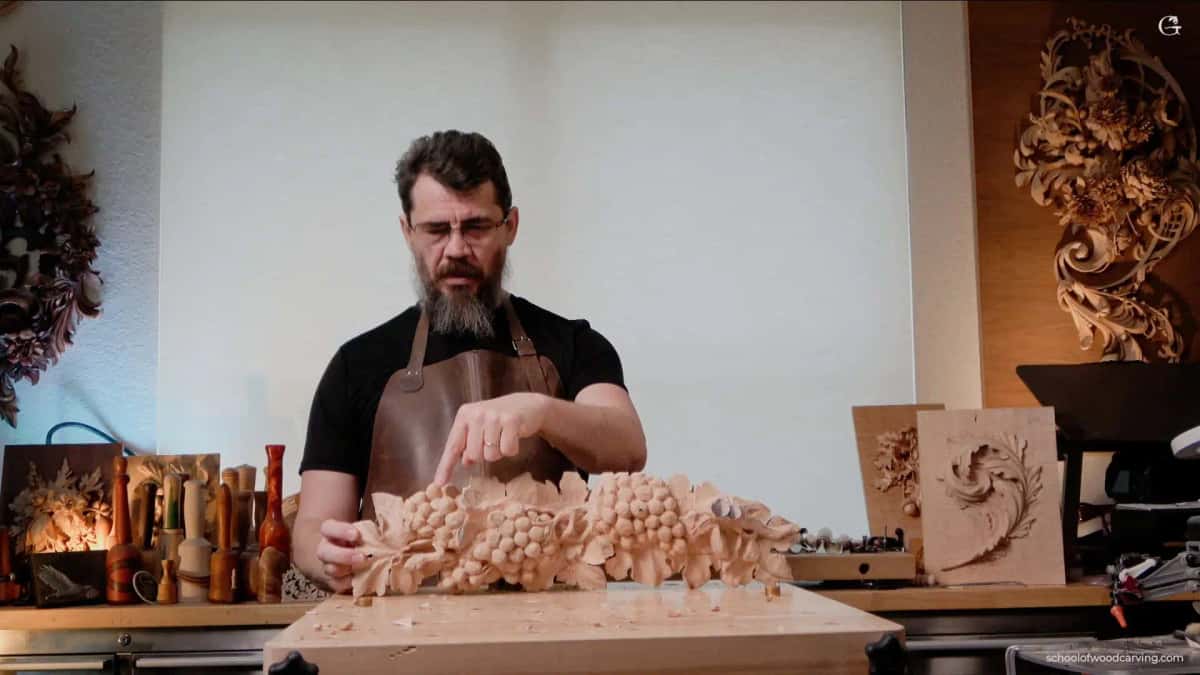
Those shelves hold twenty years of collecting, and two plain ones off camera do all the work.
Yes, I love good looking mallets and I love collecting them. But pretty much all the time I am using just a simple rubber head mallet. A couple of them, actually, plus the brass ones. Nothing else gets touched. A whole separate page argues whether you need a striking tool at all. Start there and come back.
Why is a carving mallet head round instead of flat like a hammer?
Roundness means you never have to aim. A hammer has one small flat face, ground for one job, which is the head of a nail sitting still in front of you. Your eye goes to the nail and the face follows.
Carving works nothing like that. The handle you are striking moves every few seconds, because the tool is following a line and your wrist turns with it. A barrel has no single face. Whatever part of that circumference arrives first becomes the face for that blow, so your eye stays on the edge in the wood where it belongs.
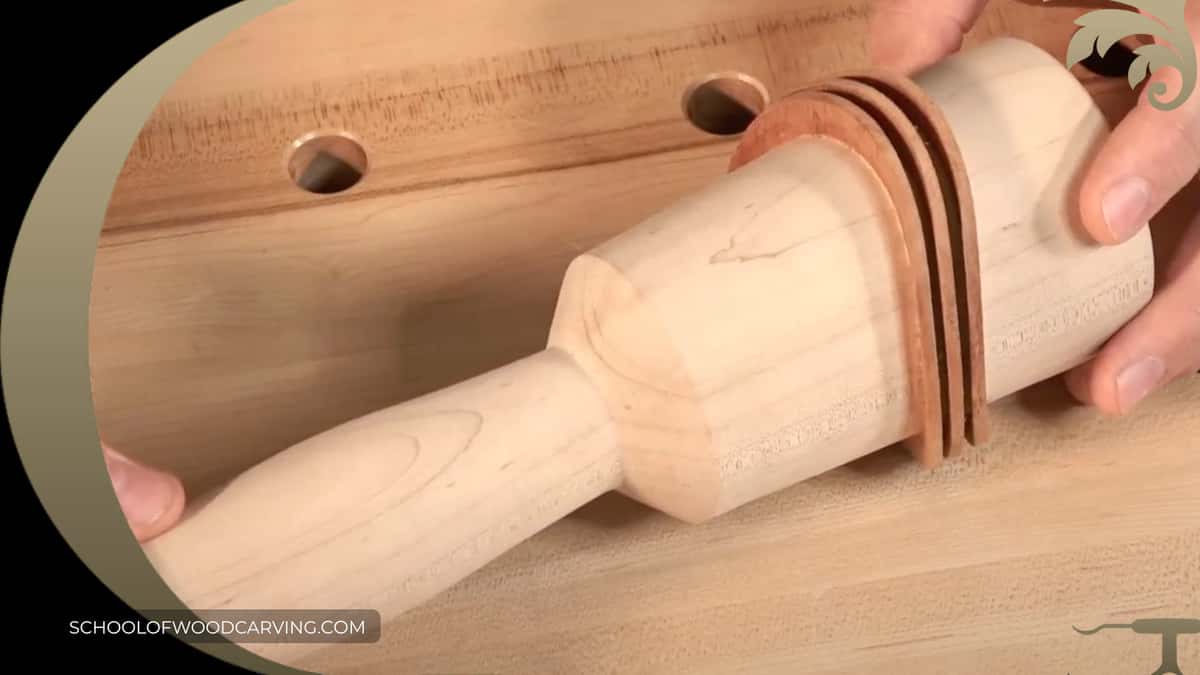
One more reason took me years to work out. Sometimes a mallet arrives with finish on it, and that is not a good thing to have. Protecting the wood sounds sensible. But when you hit the tool, if the head carries some kind of slick finish, it tries to jump out sideways. Nothing grabs. So whenever you plan to turn your own, always better to leave the finish off.
Bare wood grips a bare handle. Two dull surfaces meeting is the whole trick, and any slick finish undoes it.
Wood, brass or rubber, which mallet head should you own?
Three materials cover everything, and looks had nothing to do with why I own all three. Most days the rubber mallet does the work, and sometimes brass. My reason is simple. I am saving the handles, and rubber is not destroying them.
| The head material | What it does to a gouge handle | Noise level | When this one comes off the shelf |
|---|---|---|---|
| Rubber, or rubberized | Saves handles, and absorbs the stroke itself | Quietest one | Everyday work, all day, every day |
| Solid brass head | Marks the end grain of a handle | Sharp crack | Hard oak, and the micro moves |
| Turned hardwood, unfinished | Mushrooms a handle if you keep going | Loud enough | Beautiful on a shelf, mostly there |
| Carpenter's plastic face | Fine on a punch, not on steel | Dull thud | Punching a background, texture work only |
| Any steel hammer | Wrecks a handle fast, and dents steel | Ringing clang | Never on a gouge, though a punch can take it |
The hardness tables put the heavy, tight woods at the top, though a table says nothing about who builds mallets out of them. European hornbeam runs 46 lb per cubic foot and 1,630 lbf. Beech measures 44.3 pounds and 1,450 lbf, picked for hardness and wear resistance, while hard maple lands at 44.0 pounds and the same 1,450. At the far end sits lignum vitae, 78.5 pounds and 4,390 lbf, and its own uses list still names mallet heads and pulley wheels. To see how those figures get made, the ball test behind every hardness number explains it in a page, and ASTM D143 is the standard the laboratories follow.
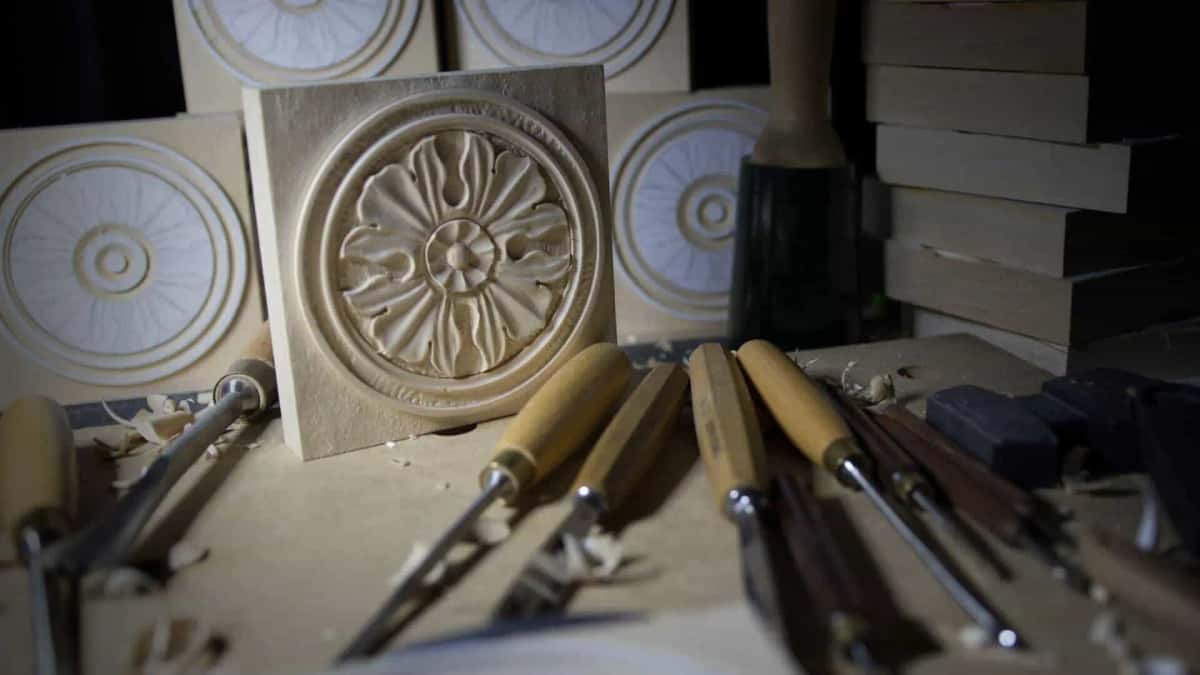
You will read that soft woods make specialty mallets. Basswood reads 26.0 pounds and 410 lbf, a quarter of hornbeam's hardness. That board is what you carve. Swinging it would be like driving a nail with a loaf of bread, and no maker I found sells one.
Brass earns its place differently. On the harder woods, oak especially, brass turns out much easier. Heavier and smaller, both at once. And sometimes with that brass mallet, needing only a micro move, I barely touch the handle, and the edge still carves better than rubber does under the same force.

An honest argument against brass exists, and I know carvers in England who never touch one at all. Metal against wood is the objection. It damages the handle end, and they are not wrong about that. I decided the trade was worth it on oak, and I hold the brass one differently, which is the part most people skip.
Some carvers swing brass the same way they swing rubber, and brass was never made for that. You will destroy it. Cup it in your palm and tackle little by little. Stroke little by little. That is how a brass mallet gets used.
When do you need a mallet at all instead of hand pressure?
Depth and hardness decide it, and the wood tells you long before your shoulder does. On soft board, working shallow, two hands will carry a whole panel. Go deeper than a couple of millimeters and the same pass turns into a shove.
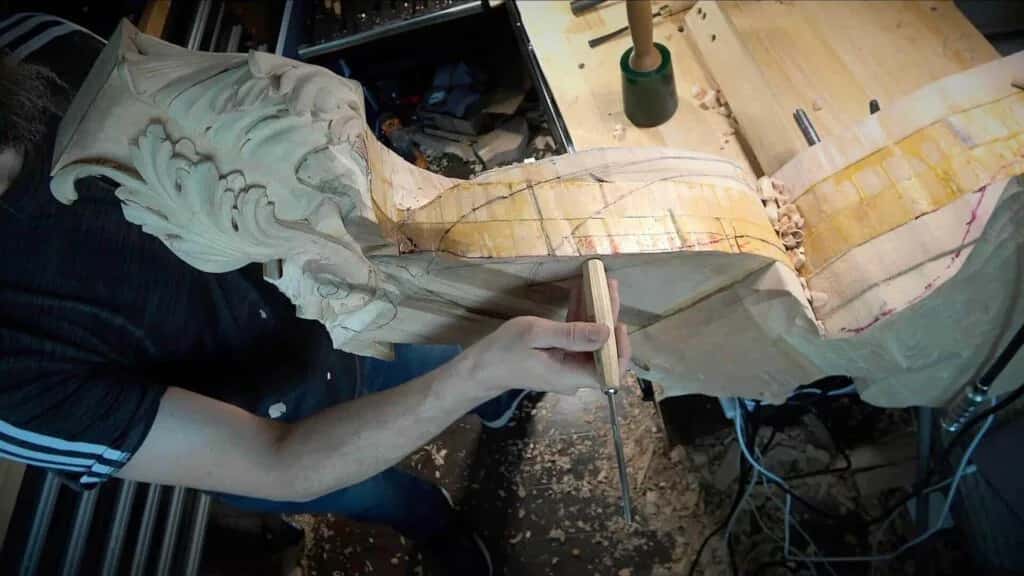
Hardness is the honest predictor, and the numbers are public. Black walnut sits at 1,010 lbf. White oak reads 1,350, and red oak a little under at 1,220. Honduran mahogany measures 900 lbf, softer than walnut, whatever the old lists tell you. Basswood at 410 sits in another world. What those figures mean at the bench is set out in what a Janka figure tells a hand carver, alongside what high density wood means.
Control brought me back to the mallet, and that surprises people. Personally I found a lot more control with it. Push with your tool alone and the whole body goes behind the steel, momentum builds, and that pass can slice on and destroy the next detail. Pushing by hand also leaves you far more tired.
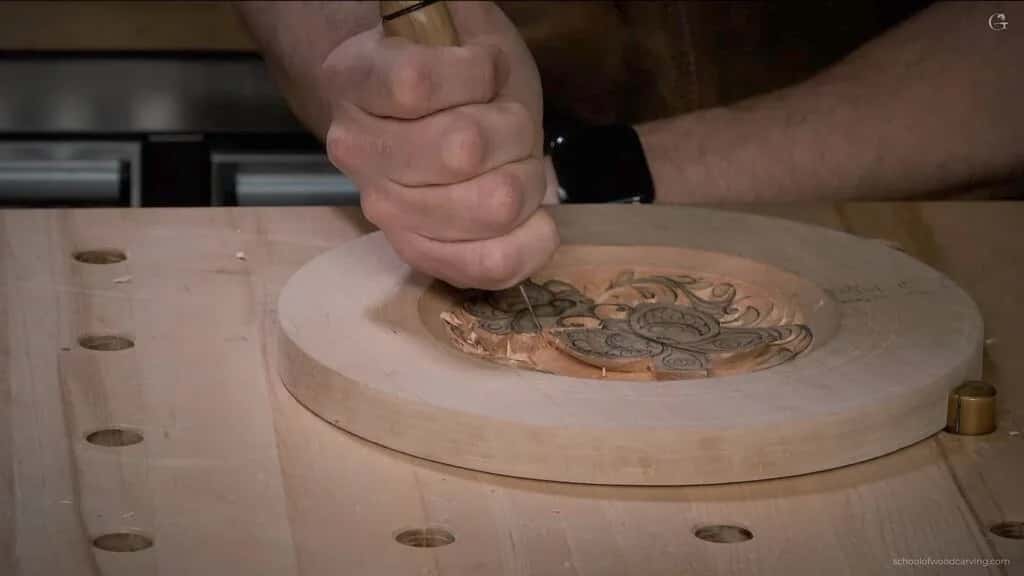
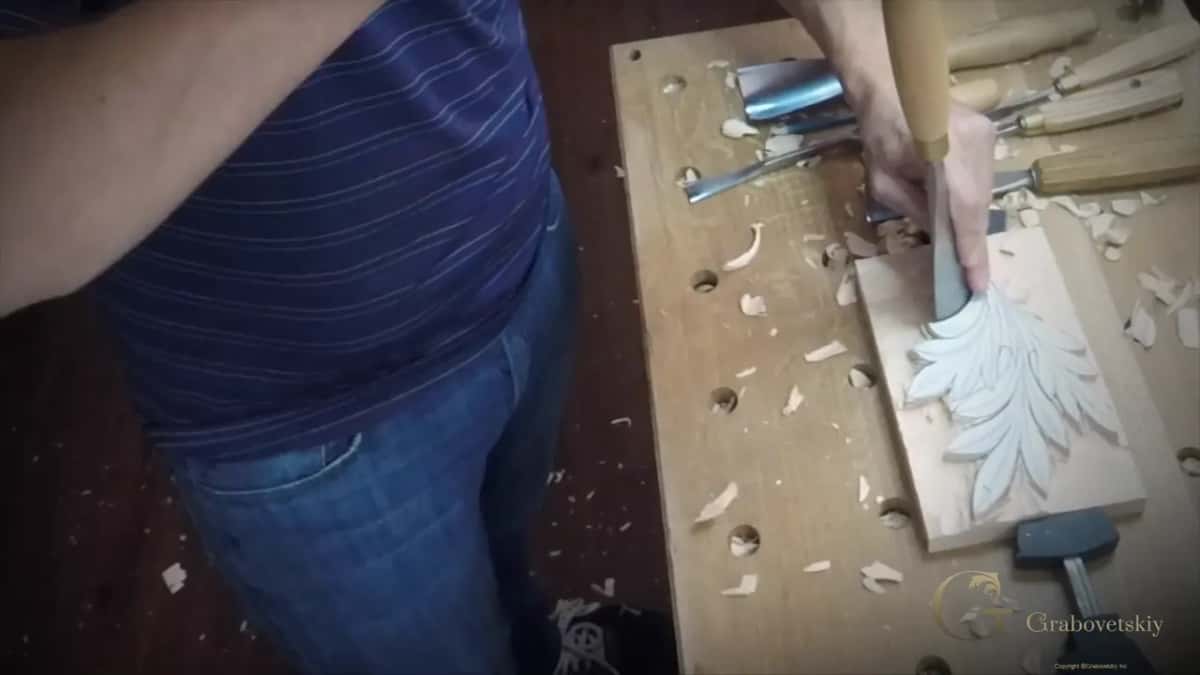
Nothing here needs a blow, because the plate is soft and the pass is shallow.
Students still look at me sideways when I say this at the bench. I really do not have to use that mallet, but I have said it many times, a mallet gives you a lot more control. To some of you it sounds strange, and once you try it you will see.
Wood is the other half of the answer. The woods that fight back will have you striking on nearly every pass, and white ash at 1,320 lbf is a fair example. Grain matters as much as hardness, so reading grain direction saves more blows than any mallet buys you. The USDA chapter on mechanical properties is where the American figures come from, and its anatomy chapter sorts hardwood from softwood properly.

And a point comes where you put it down again. That second layer above is thin enough that one careless blow snaps it, so my mallet went back on the bench and the rest came off on hand pressure.
How hard should you hit a carving gouge with a mallet?
Barely. A new carver hears the word mallet and thinks about force, which makes this the hardest thing to teach. I am barely hitting with the mallet. Barely, barely, because tool marks in the background are the last thing I want.

Grain sets the ceiling on any given pass. Be careful where the grain runs the wrong way, because that part is weak, and keep an eye on how hard you strike. You can break it easily.
A tap that moves a chip is enough. When the chip refuses to come, a harder blow is almost never the answer, and a duller edge or a sweep that fights the curve almost always is.

What weight of carving mallet should you buy?
Mine are 12 ounces and 32 ounces, and you deserve to know where that figure comes from. I went looking for a published weight I could point you at, and came back with nothing.
The maker's own mallet page names the product line without printing an ounce I can quote, and the catalogue was no better. So every figure below is mine, off my own bench, and not a specification out of anybody's factory. Take it as one carver's habit rather than a rule.
Mallets come in 12, 16, 20 and 32 ounces. Two get used most days, a light one at 12 ounces and a heavy one around 30 or 32.
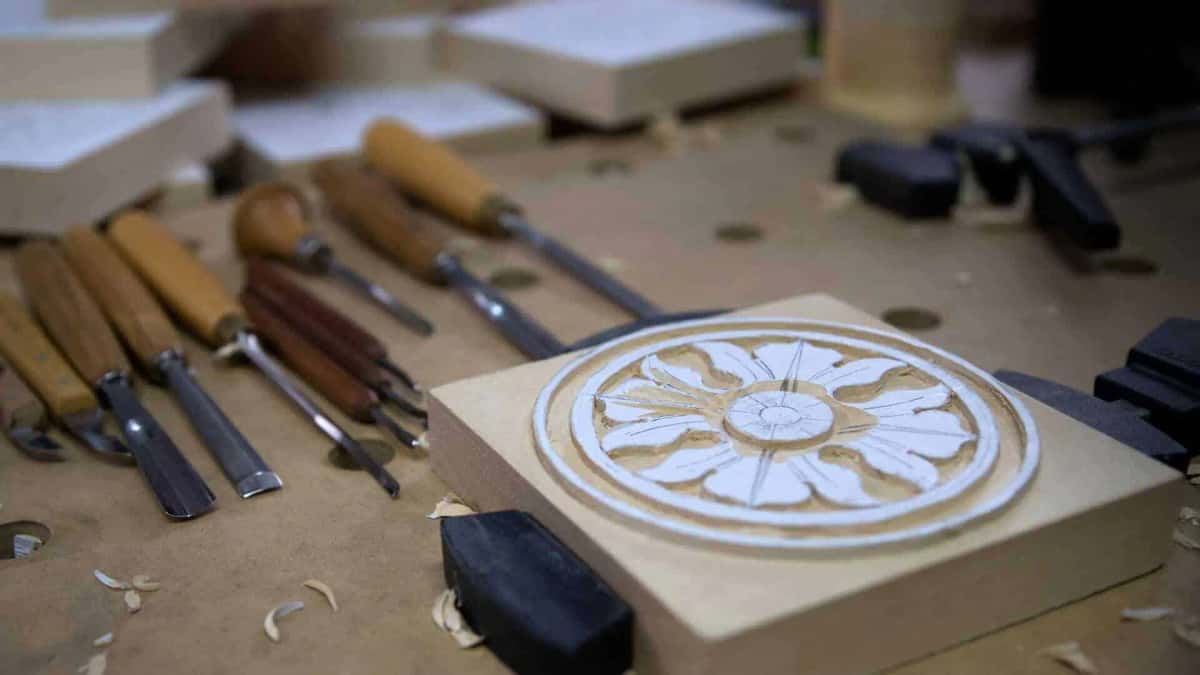
My everyday mallet is a rubberized one by Wood is Good, still heavy at 32 ounces. Some of my tools are really old and they go on working every day, looking like I bought them yesterday. Credit belongs to the mallet. You protect the edge and the handle together, and mine gets used really heavily.
The brass pair are smaller than people expect. One weighs a pound and one about half a pound, and the half pound one is really my favorite. Hard wood usually wants a heavy head, so on oak I reach for two pounds, 32 ounces, a really heavy one.

A plastic or rubber face suits a punch, though a plain hammer drives one too.
Costing out a first kit, weight is the cheapest decision in it. The rest is in what a first year actually costs, and the short list of what you honestly need puts a mallet in its place beside the tools.
What does a mallet do to the handle of a gouge over time?
Wood fibers at the top of a handle crush a little under every blow, until the end spreads out flat and wide. Carvers call that mushrooming, and it turns ugly long before it turns dangerous.
Hardwood mallets stay off my bench for a couple of reasons. First, to protect my handle. Smashing it is not the plan. A handle that looks like a mushroom is not the plan either. Second, a hardwood head is just too noisy sometimes. Rubber wins on both counts.
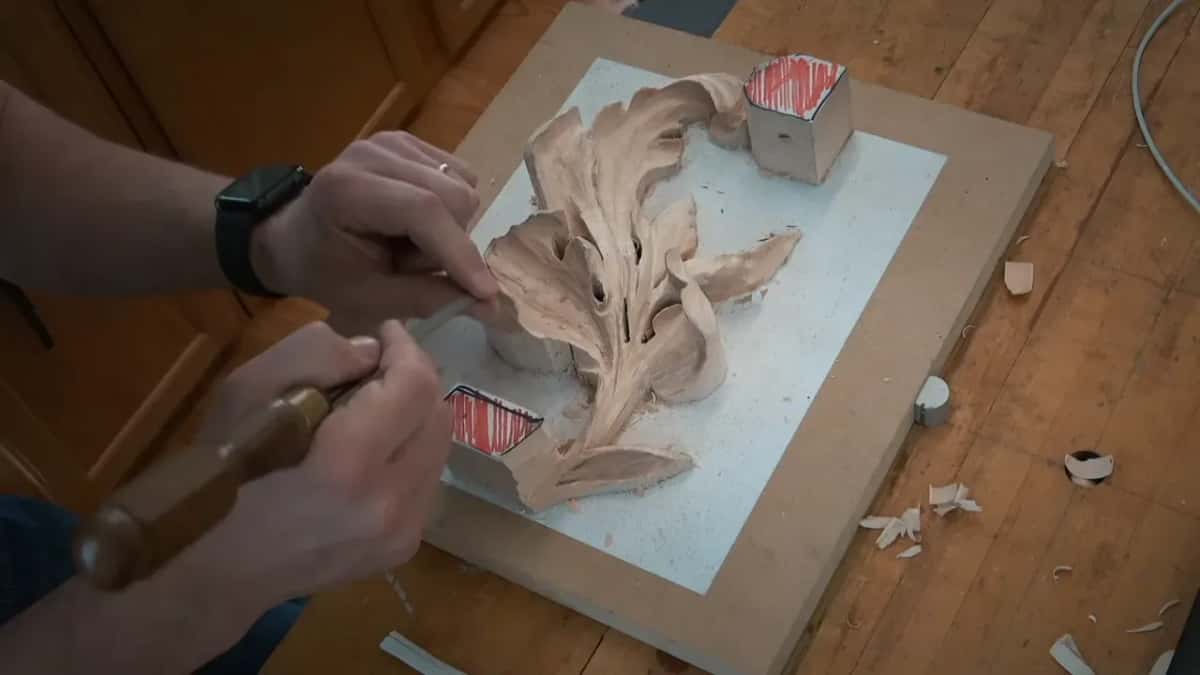
My reason for a rubberized mallet is that the ends of my gouges need protecting. Hardwood I avoid because of the noise, and brass I avoid on heavy duty work while a lot of material is coming off. Just a rubber one, then. That way my tools stay the same for many years.
Metal on a gouge is the line I will not cross. On a punch I use a normal carpenter's mallet with plastic at the tip, and any type of mallet does that job. A hammer works on a punch too.
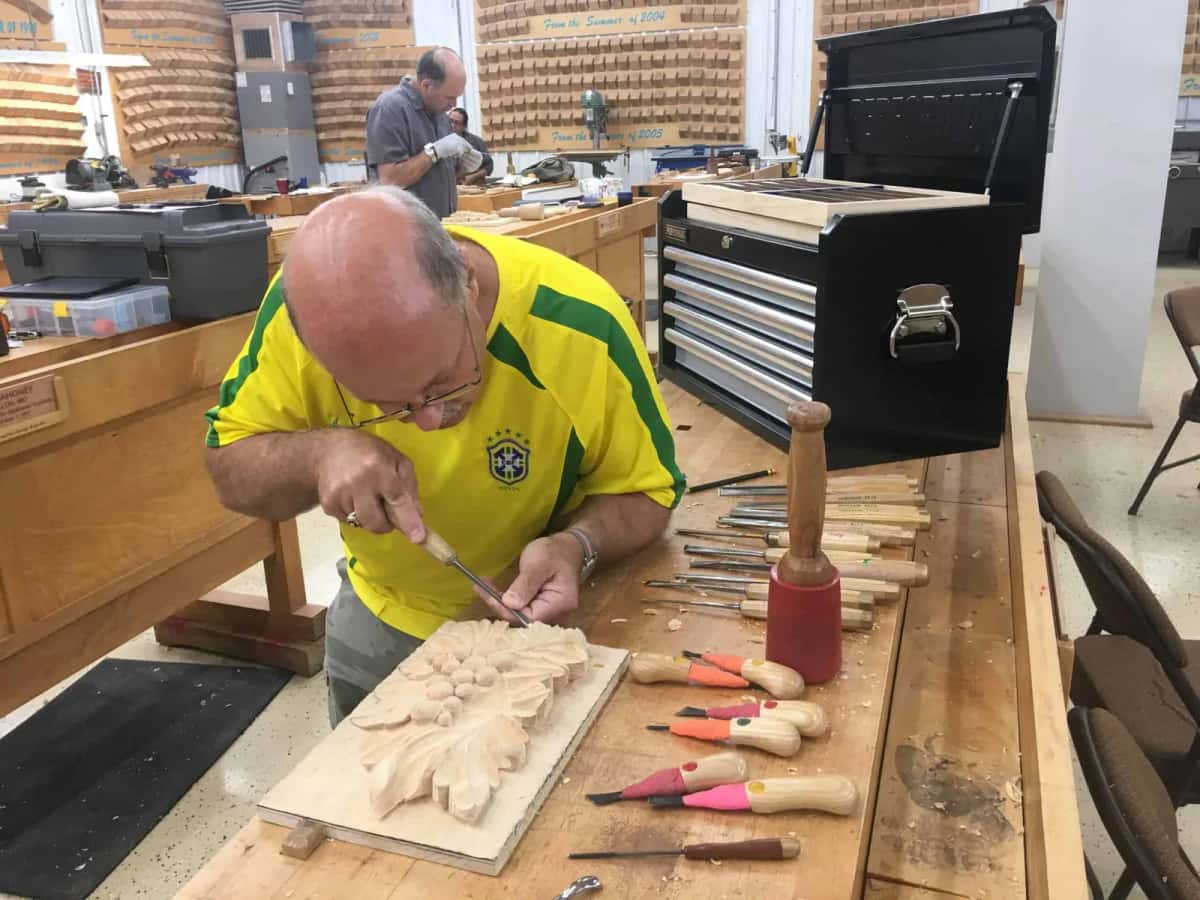
Handle quality is part of this, so what to look for in a tool set matters more than the count on the box. A cheap handle goes soft in a season under any head at all. Choosing a first set, the four tools that do most of the work and what a beginner should hold first will keep you out of the twelve piece bargain bin. For the tool with no handle to ruin, there is the knife I put in a beginner's hand.
Why does your hand hurt after an hour of mallet work?
Your palm is absorbing a blow the mallet head should have absorbed for you. Materials cause half of that and technique causes the other half. Both halves are fixable in an afternoon.
Take the materials half first. Rubberized mallets are a lot easier on your hands, because the head absorbs the stroke on its own. With a hardwood mallet, all the stroke goes inside of your hand and you feel it. Anyone who has worked huge pieces, or a sculpture, banging away with hardwood for a whole day, knows those strokes go inside the hand and create pain.
A whole livestream went to this in April 2020, and I called it stop hurting yourself.
Technique is the smaller half and it matters more. Using a normal mallet, you really have to eliminate the mistake many people make. When you bang on the tool, the whole body is not supposed to move, and neither is the whole hand. Your palm does it. Working from the palm keeps the stress out of your arm and your shoulder. Otherwise it gets to you. Really painful after a whole day, and tiring very quickly.
Noise is the third cost and nobody counts it. Hardwood gets to your ears, because it produces a not too pleasant sound. Bang away all day and your ears pay. Switch to rubber and hear how much quieter that same stroke lands on the handle.
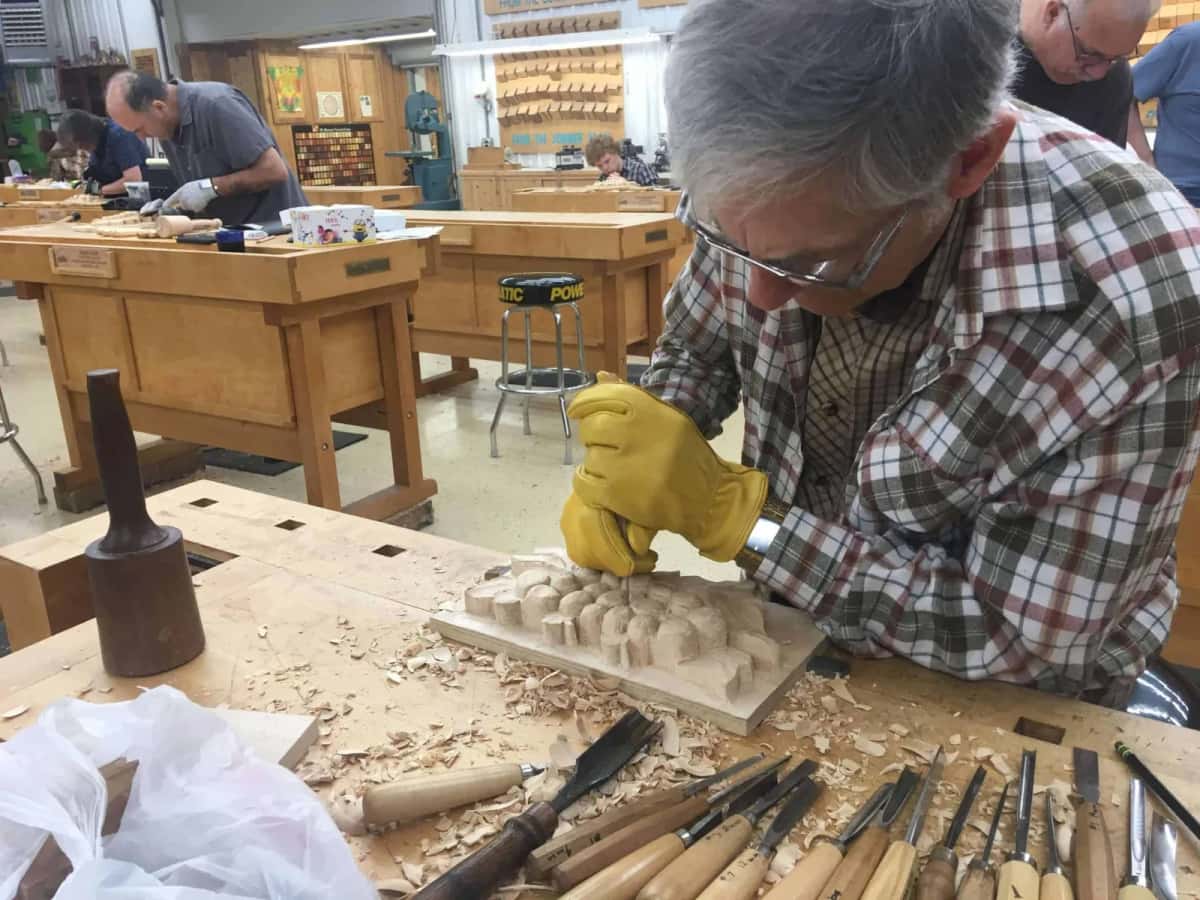
Bench height belongs here too, though people never put it in this section. A bench that will take mallet work without walking across the floor lets you keep the lift short, and short lifts save the shoulder. The rest of the ways beginners get hurt is worth twenty minutes of your evening.
Can you use a mallet on micro carving tools?
Micro tools arrive with a label telling you not to, and I do it anyway. Somebody told me once that mallets are great for fine cuts, and my answer was amen.
Mine goes onto the small micro tools nobody is supposed to strike. Buy micro tools and the box says do not use mallets on them. But I do. Maybe I am breaking the rule, and no problem has ever come of it.
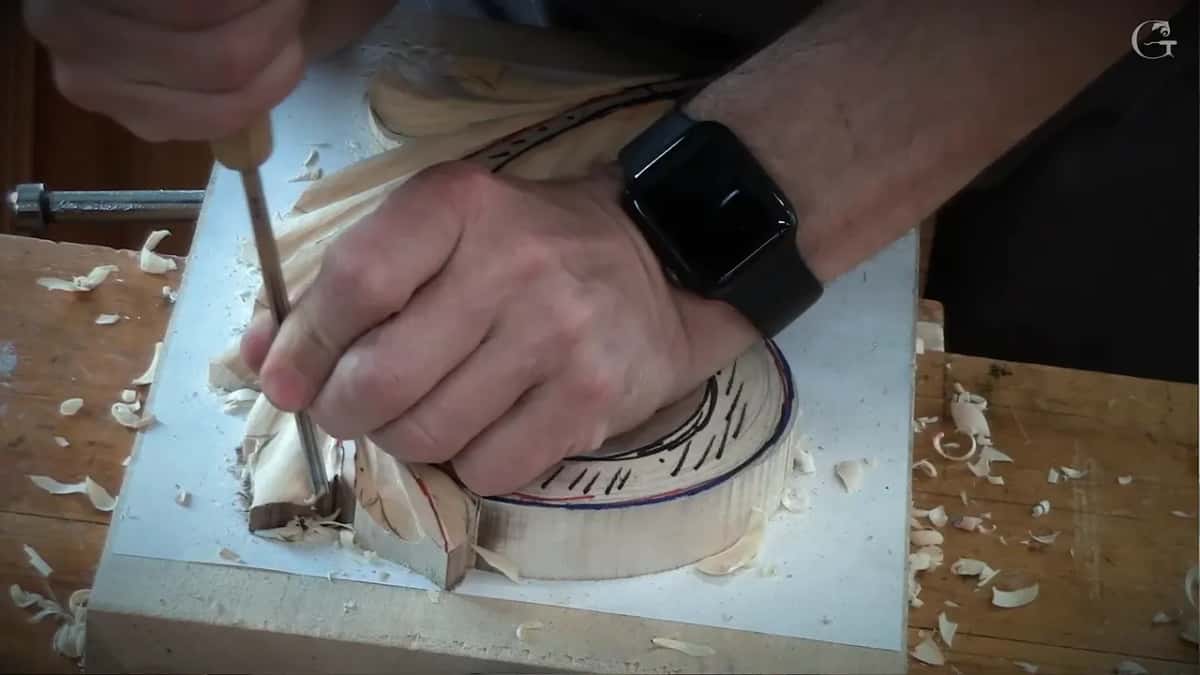
Read that carefully before you copy me. A half pound brass head lets me barely touch the tool, which is gentler than the push my whole hand would otherwise put into a 3 mm veiner. Force is rarely what breaks a small tool. A shove is.
Which carving problems does a mallet not fix?
Sharpness, grain and the wrong tool all sit outside its reach. Weight multiplies whatever the edge is already doing, so a sharp gouge gets faster and a dull one gets worse.
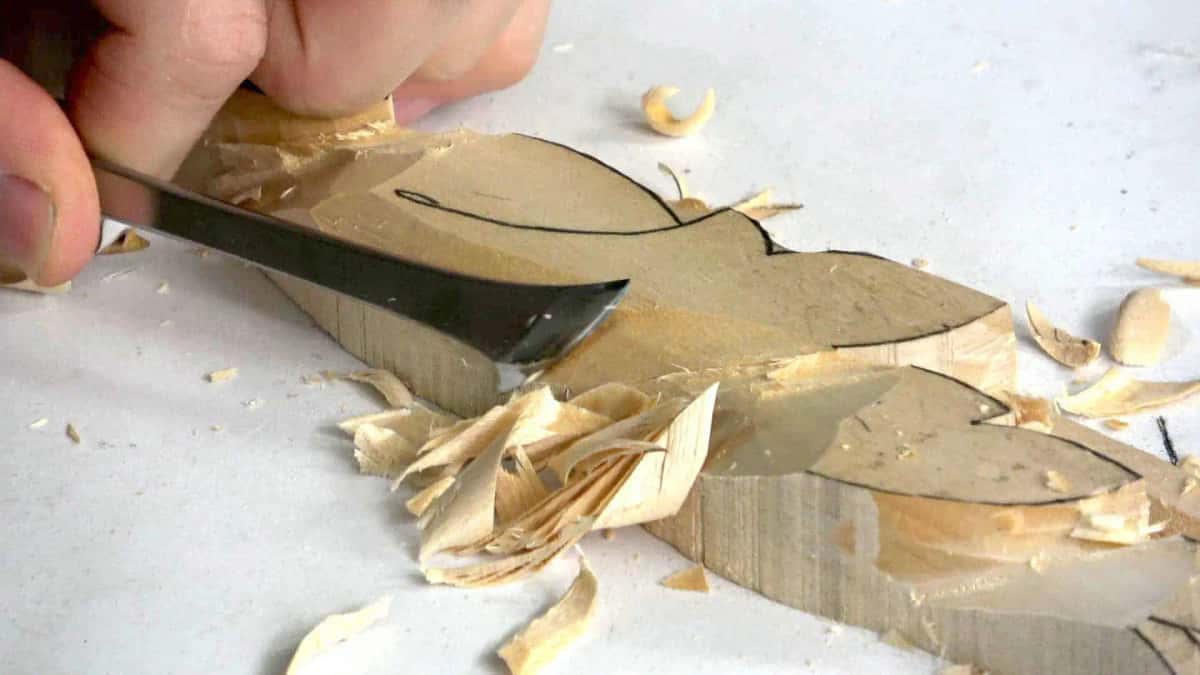
Sharpening comes before all of it in the order I teach. When a chip stops lifting, the strop answers more often than any mallet, and cleaning up your technique answers more often than either. Compare candidate woods yourself in the density and hardness filter, or look over the hardest woods on record to see where a mallet stops being optional. Behind all those numbers sits the USDA Wood Handbook, and the makers themselves are worth a browse at Pfeil of Langenthal.
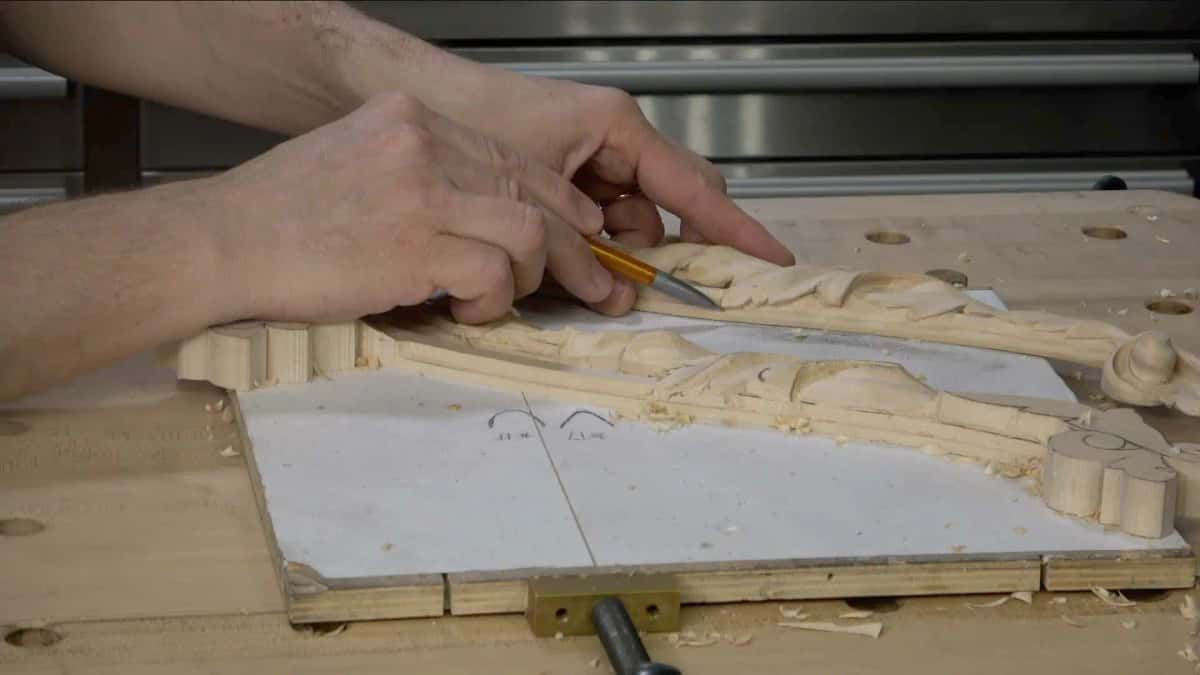
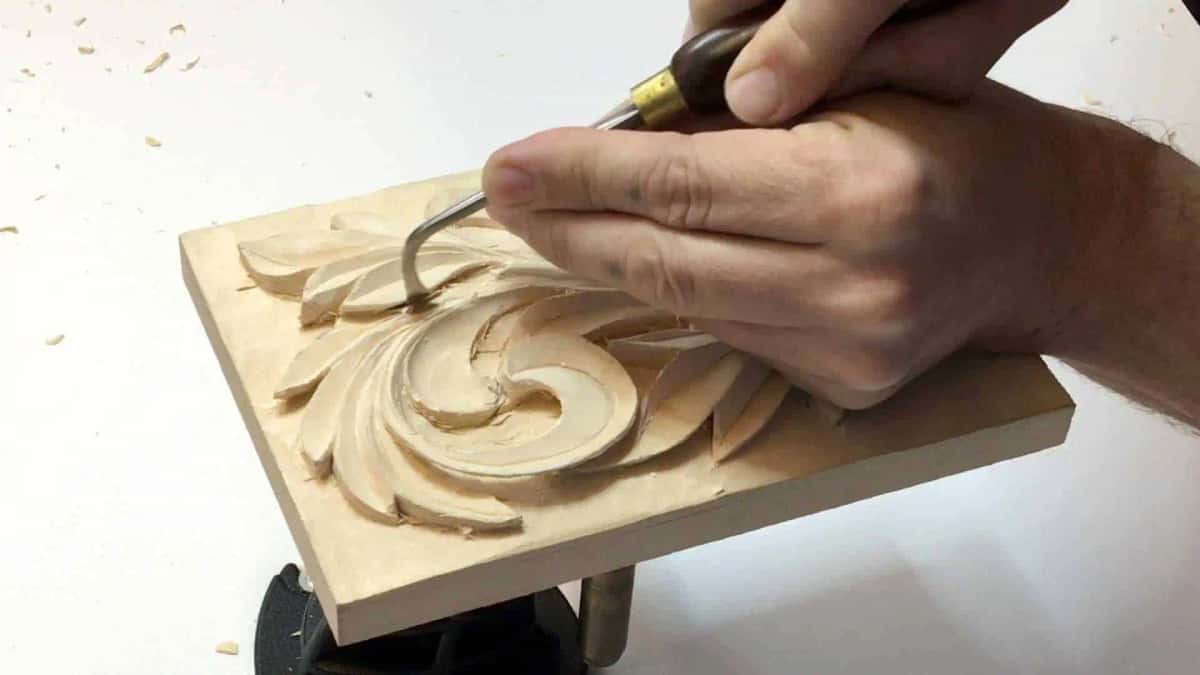
An undercut like that one takes no blow at all. Neither does most of the modeling that makes a panel look alive, which is a strange thing to admit halfway through an article about mallets.
How do you use a carving mallet without hurting yourself?
Six habits carry the whole thing, and strength is in none of them. Work through them in order and your first long session will end with your hand still working.
Step 1, pick the head before you pick the weight
Rubber for the handles you own, brass for oak and small moves, hardwood only if you like the sound. Get the material right and the ounces stop mattering nearly as much.

Step 2, hold it in your palm and not in a fist
Let the head rest in the cup of your hand with your fingers loose around the handle. A fist locks your wrist, and a locked wrist sends everything up into the shoulder.
Step 3, stand the tool up where it will actually carve
Set the gouge on the line first and check that its sweep matches the curve you are in. A mallet cannot correct a tool in the wrong place, and it drives the mistake deeper than your hand would.

Step 4, tap once and read the chip
One light blow, then look. A clean chip means the weight is right, a crushed one means the edge is gone, and no chip at all means your sweep is fighting the curve.
Step 5, keep the lift short all afternoon
Raise the head a few inches, no more, and let it fall. Watch my hand in any of my videos and see how little it travels, because that short lift is the difference between four hours and one.

Step 6, put it down when the wood gets thin
Undercuts, thin edges and the last modeling pass all want hands. Reach for the mallet again once you go back to removing mass, and leave it alone while you are finishing.
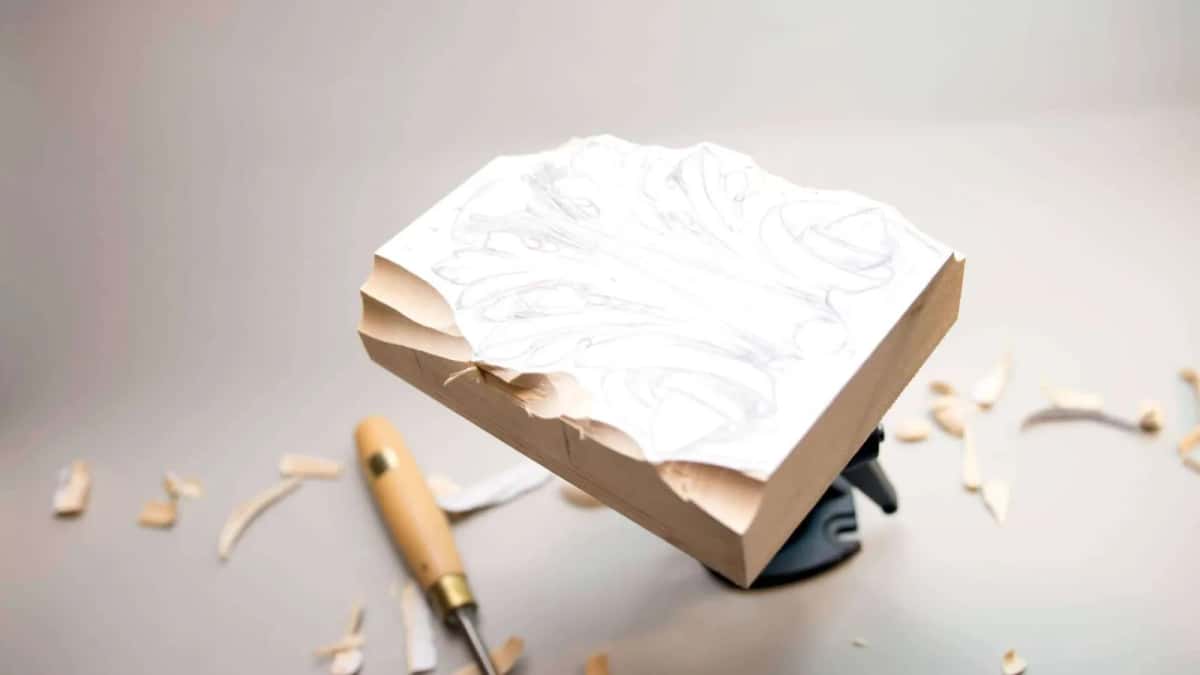
One thing I will not pretend to have solved. Turned mallets keep arriving that I never work with, and a shelf full of them stands behind me in every video I have ever filmed.
Want somebody standing beside you while you learn how little force this really takes? That is what All about tools for Wood Carving and Carving Tool Sharpening are for, and there are classes in Arlington, Virginia if you would rather put your hands on a real bench. Shall we carve?
Frequently asked questions
What is a wood carving mallet used for?
It drives a gouge or chisel through the board when two hands alone cannot move a clean chip. That covers roughing out, lowering a background, and any deep pass on a hard board. Weight in the head replaces the shove of your arm, which is why the pass lands where you aimed it.
Can I just use a normal hammer for wood carving?
A steel face crushes the top of a handle and dents a tool socket, and it rings loud enough to hurt after twenty minutes. For punching a textured background a carpenter's plastic faced mallet is fine. On the handle of a carving gouge, pick rubber, brass or a turned hardwood head instead.
Is a rubber mallet or a hardwood mallet better for carving?
Rubber for daily work, because the head swallows its own shock and leaves your handles alone. Hardwood is louder and slowly spreads a handle top into a mushroom. Both carve; only one lets you work six hours without feeling every blow in your wrist.
How heavy should a carving mallet be?
Published figures worth quoting were not to be found, so here are mine. I keep one at 12 ounces for detail and one near 32 ounces for removing mass, plus brass at half a pound and a pound. Start light. A heavy head tempts you into swinging from the elbow.
Why do carving mallets have round heads?
A round barrel gives you no single striking face to line up, which means your eye can stay on the edge in the wood. Handles move constantly while a curve is being followed. Whichever part of the barrel gets there first does the job, and that is the point.
Do you use a mallet on every cut?
Not even close. Roughly half my day is hand pressure, and every undercut and every final modeling pass gets done with nothing swung anywhere near the bench. Weight helps while you are moving mass. It gets in the way once the wood is thin.
Filed under
- adjusting grip for wood carving mallet
- benefits of using a wood carving mallet
- best practices for wood carving mallet use
- best wood carving mallet for beginners
- can you use a regular hammer for wood carving
- choosing the right wood carving mallet
- common materials for wood carving mallets
- comparing wood carving tools
- differences between wood carving mallet and hammer
- how to maintain a wood carving mallet
- how to use a wood carving mallet
- making your own wood carving mallet
- techniques for using a wood carving mallet
- tips for effective wood carving with mallet
- types of wood for carving projects
- Understanding Tools for Carving
- using a mallet for detailed carving
- what is a wood carving mallet used for
- wood carving mallet safety tips
- wood carving mallets buying guide
- wood carving mallet weight considerations