
September 6, 2024 · Updated August 25, 2026
By Alexander Grabovetskiy — Master Woodcarver · Founder, School of Wood Carving · 19 min read
What are the best types of wood in Iceland for beginners to practice carving?
The best types of wood in Iceland for a beginner are lime and its other names, basswood and linden, if you can order some, and otherwise small pieces of whatever the island grows or washes up. Every Iceland fact here is somebody else's, with their name on it. What I own is the board and the tool.
Most wood lists written for a country come from somebody who never stood in that country's lumberyard. I will not pretend to know yours. So here is my offer. Every wood I praise on this page I have carved with my own hands.
What I do own is the board and the gouge. Over forty years of chopping into lime, walnut, oak, cherry and one nightmare piece of hard pine taught me how a board behaves before I have taken three passes off it. That knowledge travels. Grain does not care which passport you hold.
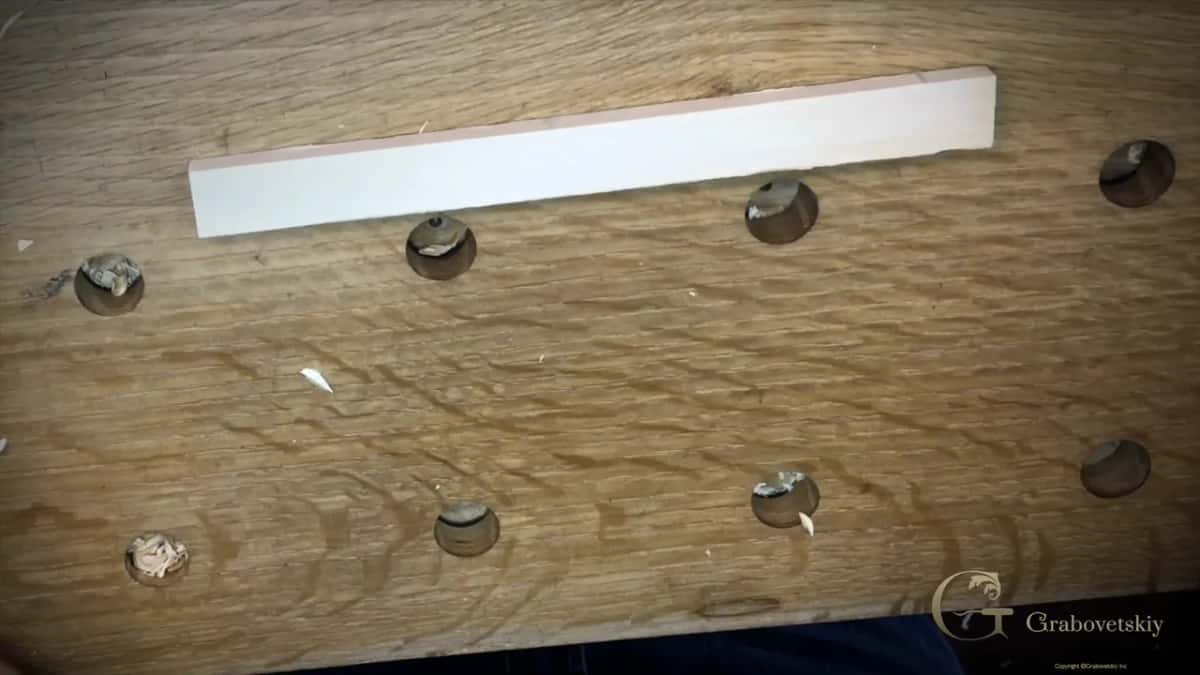
One thin strip of pale wood alone on the bench, dog holes around it.
So this page does two jobs. It reports what Land and Forest Iceland, the FAO and the National Museum say about wood there. Then it hands you my own check for any board.
- Lime is the answer nearly everywhere, and it wears a different name in every country. Basswood in America, linden in Germany, lipa where I grew up.
- Iceland grows almost no timber of its own, and three agencies have each put a number on how little.
- One little board will teach you more than a stack of big ones. I have tried a rosette on a piece of scrap and it just works.
- Read the end grain first.
- A dull gouge ruins a beautiful board faster than the wrong species ever will, so sharpening beats shopping.
Can I get basswood in Iceland at all?
Lime and basswood do not grow there, so a beginner on that island is looking at an order from abroad or a substitute. That is not a dodge. The same answer goes to students in Japan, in Finland and in Argentina.
Here is what I say in the first lesson of the beginners' course, and I have said it the same way for years. You will need some type of wood, and I suggest to use basswood. It's one of the best. In European culture, it's called lime wood or linden wood, because it's a beautiful wood. There is no grain in it, almost no grain visible. Of course, there is a grain, but no visible grain. And you can achieve great results. It's soft enough, and it still holds the detail.
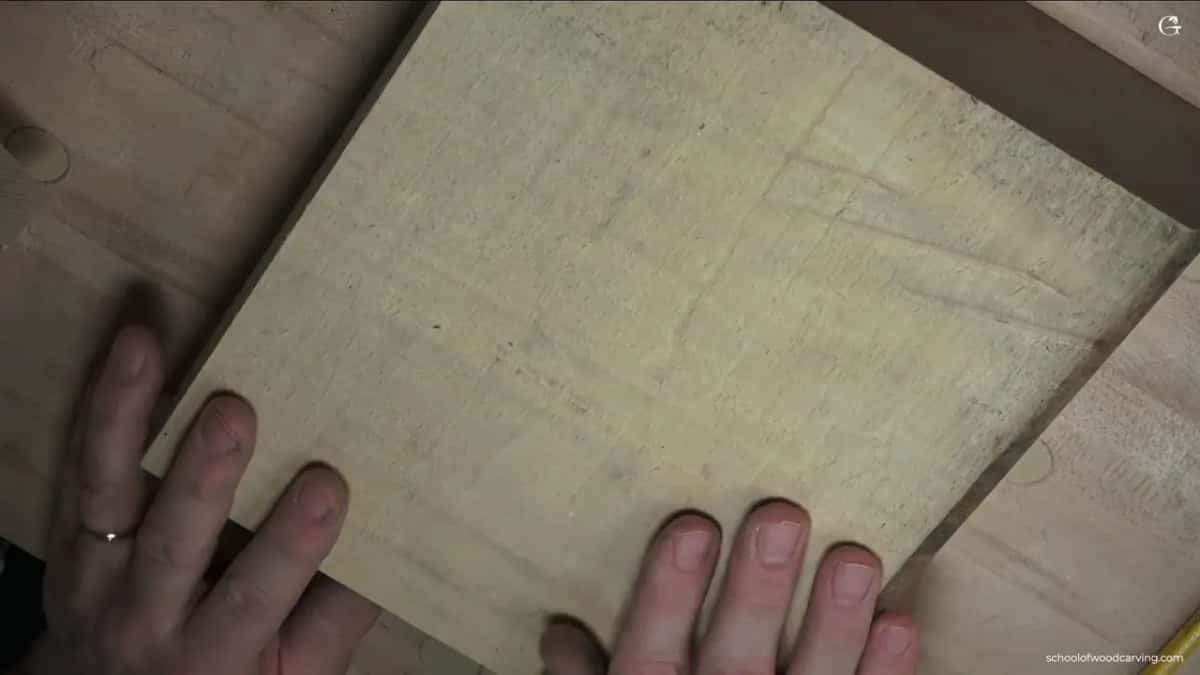
Two hands hold a small square blank flat, and both saw marks and grain show.
In the United States I send people to a craft store called Michaels, or to woodcraft.com. Then, in that same lesson, I say the part that matters to you. If you are in a different part of the world, I'm pretty sure you can find some suppliers who would supply you. That is as far as I will go. I will not name a shop in Reykjavik.
I keep a whole lesson about buying wood inside my techniques and questions course, and it opens by refusing to answer. Someone on Instagram asked me whether I knew a good supplier of basswood blanks. Yes, absolutely I do. It all depends where you're located. By the way, where are you located, the guy who asked me?
The instruction underneath it works anywhere. Go to a lumberyard that sells to furniture makers, not a construction yard. Google hardwood lumberyard. And if you live near a big builders' merchant, walk to the pro desk where the contractors shop and ask them to search their vendors for you.
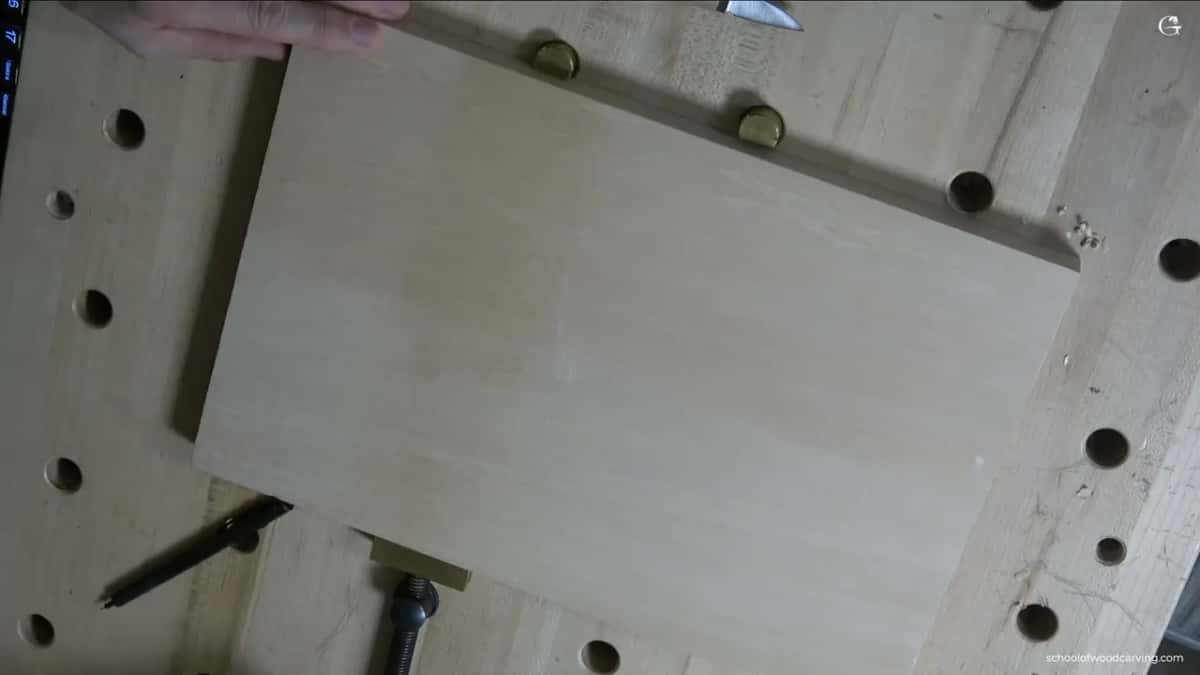
A clean pale board between brass bench dogs, pencil and knife beside it, nothing carved yet.
I answered this exact question before. The problem is in Australia and New Zealand, I do have some students from Australia and New Zealand, you can't get basswood. But jelutong, I think I'm pronouncing that correctly, it's another wood for wood carving. The same reasoning sits behind the Australian version of this question.
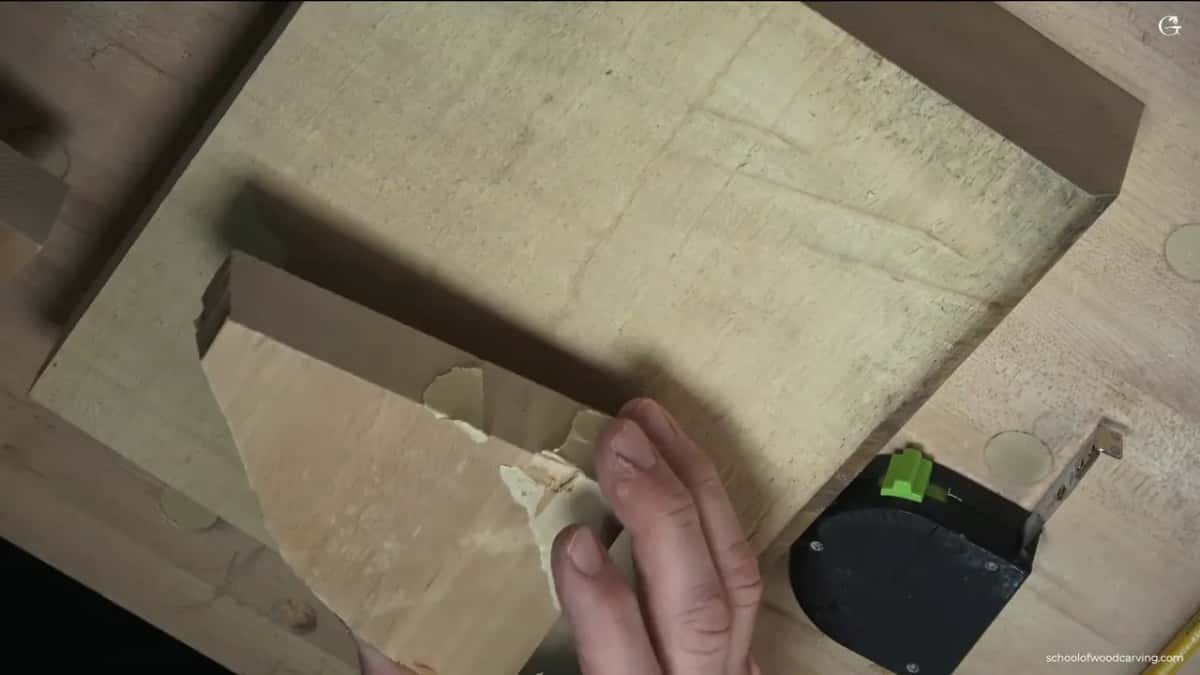
A hand lays a small pale offcut beside a larger board, a clamp head at the right.
One warning about ordering small. The smaller piece you buy, it's going to become more expensive. Yes, you spend less money, but it's more expensive. My own supplier's minimum order sat at $300 for years and now sits at $500, and that is a Florida yard, not an Icelandic one.
What does Iceland actually have growing on it?
Iceland's forest cover is very small, and nearly all of the native woodland is one single tree. The published figures run from one to two percent, and the older the source the lower the number.
Land and Forest Iceland's geospatial page says forest land currently constitutes slightly more than two percent of the nation's land area, and it counts both natural birch woods and cultivated stands inside that figure. The Wikipedia page on the Icelandic Forest Service, an agency since folded into its successor, says about 40% of the land was forested before the medieval deforestation, that the country is about 2% forested now, and that the goal is 10%.
Two very fine scroll saw blades across a pencil drawing of acanthus leaves.
The FAO's Unasylva article on Iceland is blunter. Writing in 2001, it put forest at only 1.4 percent and said there was no forest industry there yet. The FAO's 2020 country report for Iceland carries the raw returns behind that.
Read that as a woodworker. Two percent forest is still not a blank supply, so the boards you find will be small.
The native tree is downy birch. Wikipedia's page on Betula pubescens calls it the only native tree to form woodland in Iceland, and says its timber is pale, with a fine even texture, and goes into plywood, furniture, matches and toys. Ten birch woodlands were recently named as special, and island.is puts their 7,396 hectares at approximately 5% of Iceland's total birch woodland.

Hands lay a steel ruler along a small pale blank, measuring against pencil marks.
One of those ten, Vaglaskogur still works as a national forest, and its new shelter is built entirely of wood grown in Iceland. The agency leans on the same tree in its Hekla Forests restoration project. Birch is what that country plants to get ground back.
For planted wood, that same FAO article names Siberian larch and native birch as the most common, with Sitka spruce, Norway spruce and lodgepole pine among the conifers people put in the ground. A conifer offcut would not be my first choice for a beginner. Still, it is wood, and wood under a sharp edge teaches.
| Where the wood comes from | What the source says | What it means at your bench |
|---|---|---|
| Native downy birch | Wikipedia names it the only native tree that forms woodland in Iceland | Small stock, and grain you will see. |
| Planted stands | The FAO names Siberian larch and native birch as the most common planted trees | Conifer offcuts, mostly, and knots. |
| Driftwood on the beach | Hakai Magazine traces it to felled trees in central Siberia and reports a forecast of no deliveries by 2060 | Ancient timber with a salt-water past. |
| Imported timber | The World Bank trade profile shows which countries Iceland buys its wood from | Freight is the real price, so order once. |
| Your own offcuts | My bench, and forty years of it | The cheapest teacher you will ever have. |
For the raw numbers, The World Bank trade profile lists Iceland's wood import partners and Statistics Iceland publishes the country's external trade.
How much can a small board teach you?
A single small board can carry a full lesson, and small pieces have been my teaching material for years. One of my rosettes is only one-eighth of an inch deep. Depth like that will sit happily on a scrap you were going to throw out.
Please make sure you keep all offcut pieces. There's absolutely not going to be any waste. I say that in class because students throw away the exact board they should be practising on, and then they buy a big one and freeze in front of it.
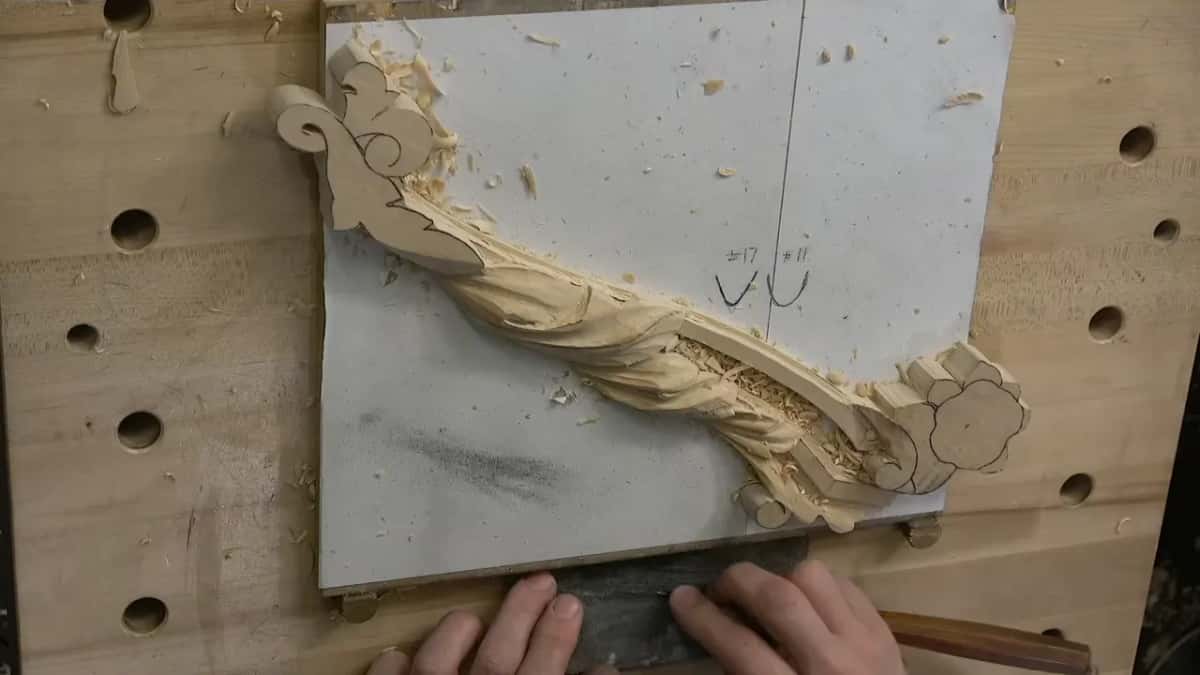
Straight down on a thin pale board between two bench dogs, a carved scroll along it, chips unswept.
Now the practical version. Print the pattern full size, glue it on, and carve it. When one end of a board is finished and the other end is still pencil lines, you can read your own progress off a single object, which beats any grade I could hand you.
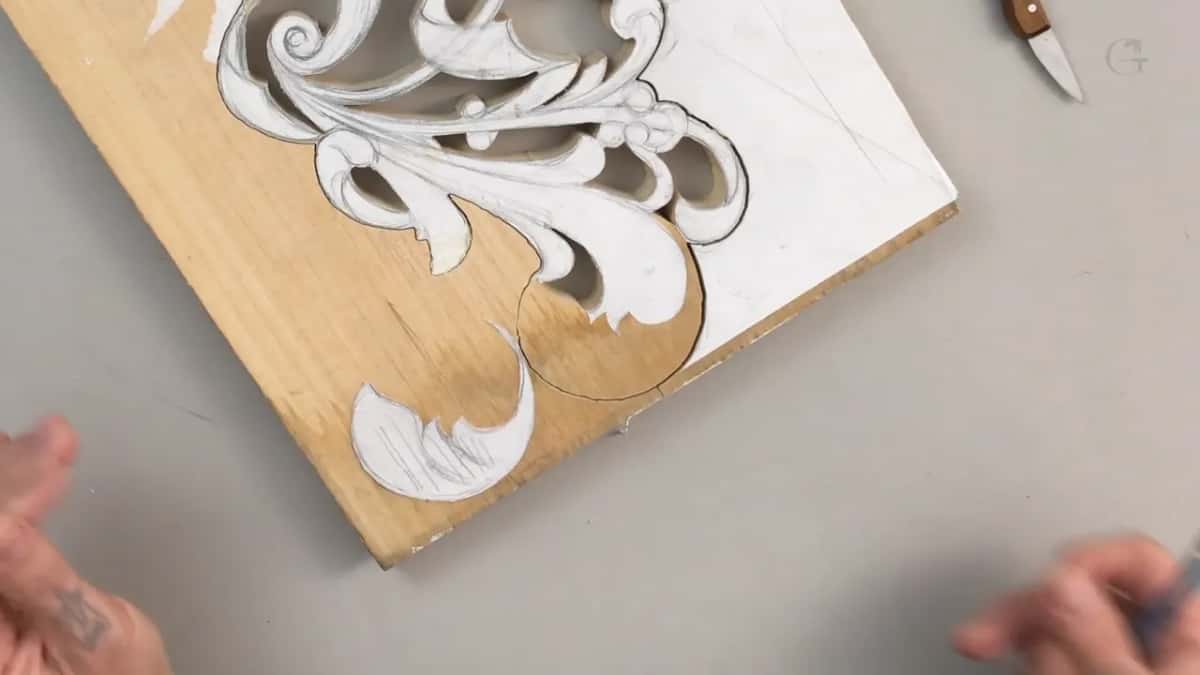
A corner of a small offcut, paper pattern glued on, part of it already carved through.
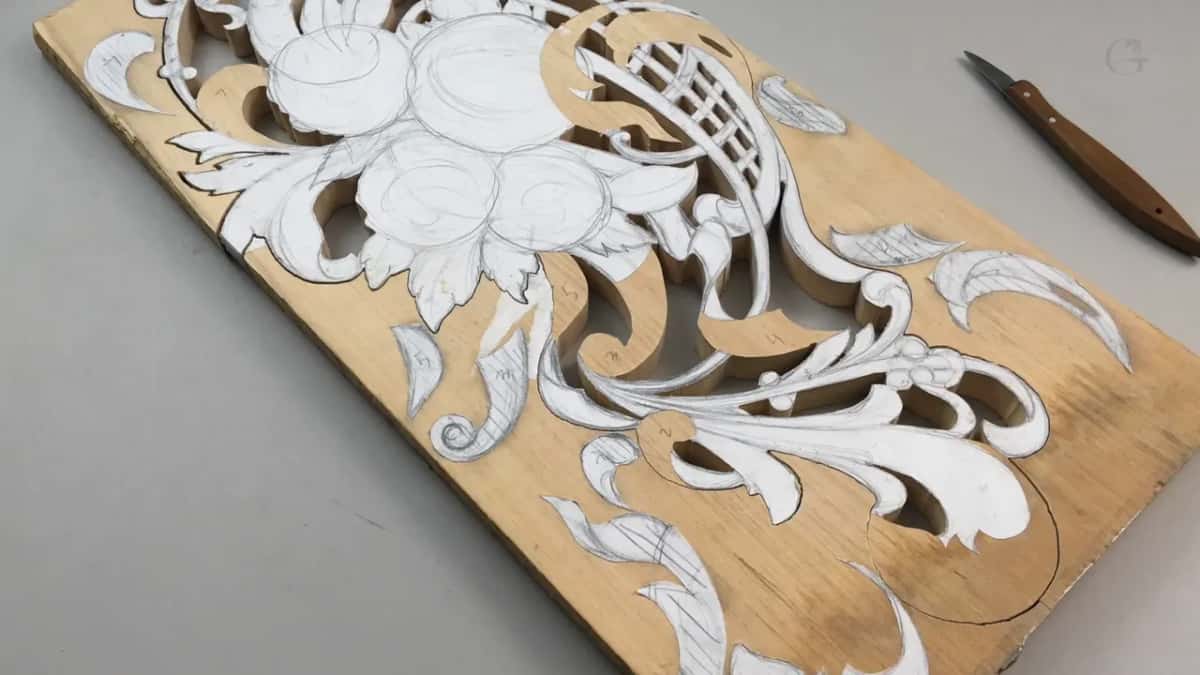
The whole narrow board under a paper pattern of flowers and scrolls, depth numbers penciled between.
Thickness is the usual worry and it is solvable. You can get just the four quarters material, which is three quarter of an inch material. And again, just laminate together. And here you go, you got a thicker board.
Room is the other worry. Students ask about space, and my answer runs like this. If you don't have a dedicated space in your house, if you don't have a workshop, you can just use your kitchen table. And I've done lots of projects, actually, on the kitchen table. So all you need is just pretty much surface. My notes on carving without much space go further if a rented flat is all you have.
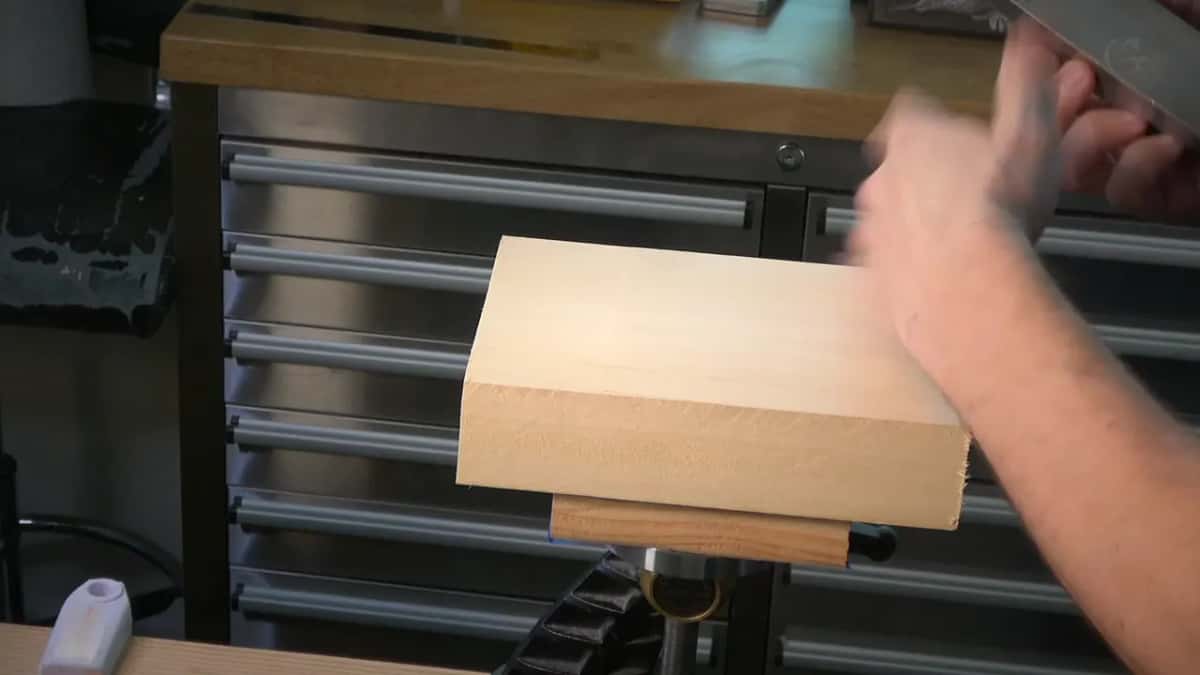
The small pale offcut block sits on a carving post, a hand moving above it with a tool.
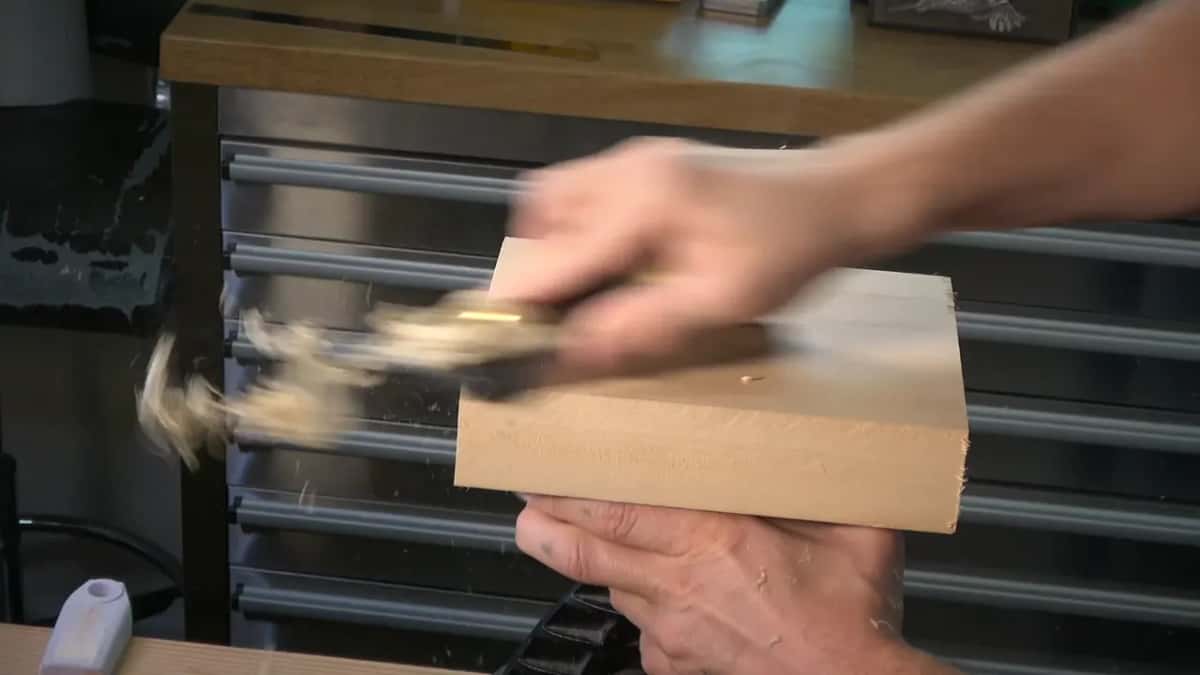
Same block, shavings spraying off the top face as the tool crosses it.
A thin blank also breaks more easily, and breaking one is a skill rather than a reason to quit. I keep notes on holding thin carvings together and on whether a thicker board is really better. Small first. Then bigger.
Is Icelandic birch worth carving?
Birch will carve, and it behaves differently from lime under the same gouge. Birch I know. Icelandic birch I do not know, so the local half of this section is a report from named sources rather than my own verdict.
Somebody on a livestream asked whether I change a design depending on the wood. Yes, absolutely I do. I have to understand the property of the wood I'm carving. It's not the same when you're working with the lime wood or the basswood, and then the harder woods like oak, walnut, mahogany, birch even. Birch is not that hard, but still it's a little different.
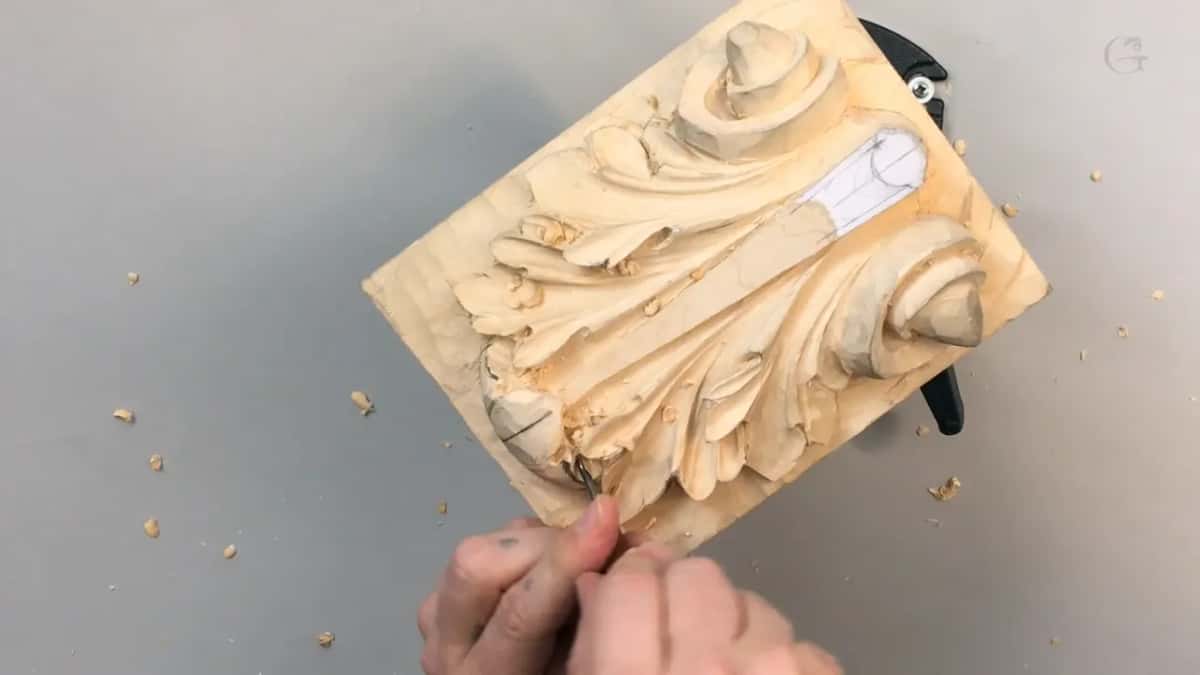
This small board is clamped at one edge and carries a full acanthus leaf.
Two things follow from that little difference. Harder wood wants a different grind, and my rule is short. Short bevel, I use harder woods, like oak. Grain that shows will fight your eyes while you read a shape, and lime shows less of it than anything else on my bench. Which is exactly why I reach for lime.
On the local side, Richard Sima's report in Hakai Magazine describes Iceland's own trees as too small and sparse to use in construction. Sima is writing about house frames. For a carver it reads as good news wearing bad news clothes, because small is all we need.
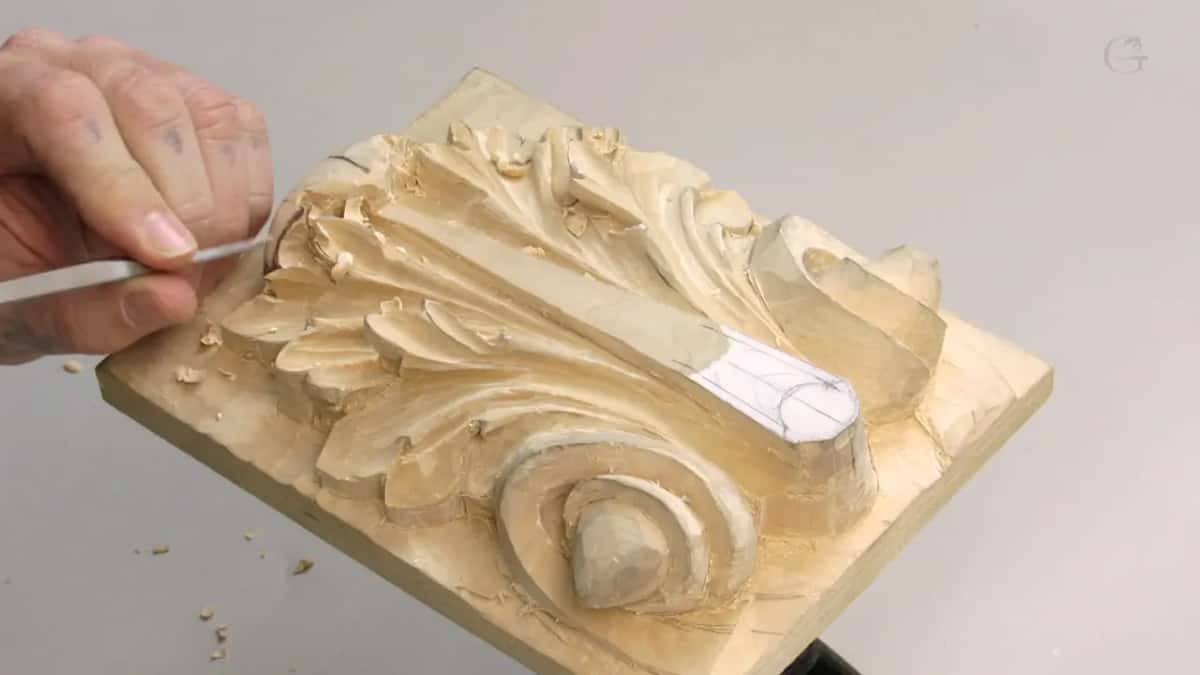
Closer and lower on the same board, where the depth of the leaf reads clearly.
My sister pages run the same argument over other timber. Start with the wood a British beginner can buy, then what a South African beginner can carve, then what a Cameroonian beginner can carve.
How do I check a board before I pay for it?
Start at the end grain, then the face, and only then ask how the board was dried. Five checks, in order. Four of them happen in the yard and the last one happens on your bench at home.
Step 1, read the end grain before you read the face
When I buy wood, I look at the edge. My preference when I look at the cut, I look for a quarter sawn or rift cut. If it's a straight cut, it's also dangerous. It's going to cup. I try not to buy it. Those two boards, the quarter sawn and the rift cut, are the ones I would definitely buy.

Overhead bench, no hands. One small pale blank, two clamps, two cauls, a row of gouges.
Step 2, hold the board up to the light and count the grain lines
Lime is kind to a beginner's eyes. It doesn't have too much grain, so you don't distract your eyes. Pine sits at the other end of that. I don't like to carve on a pine, because all of the grain really visible, and it distracts. Count the stripes. Fewer stripes, easier first month.
Step 3, ask whether it was air dried or kiln dried
When you usually get that from a lumberyard, usually it's a kiln-dry. But I found that it moves a lot more. When it's air-dried, so you eliminate that movement. Some of the wood I did not touch for over 10 years. Some of that, actually, I still have some of 20 years still in my shop I did not touch. My wood is all seasoned, and that is why a big panel does not frighten me.
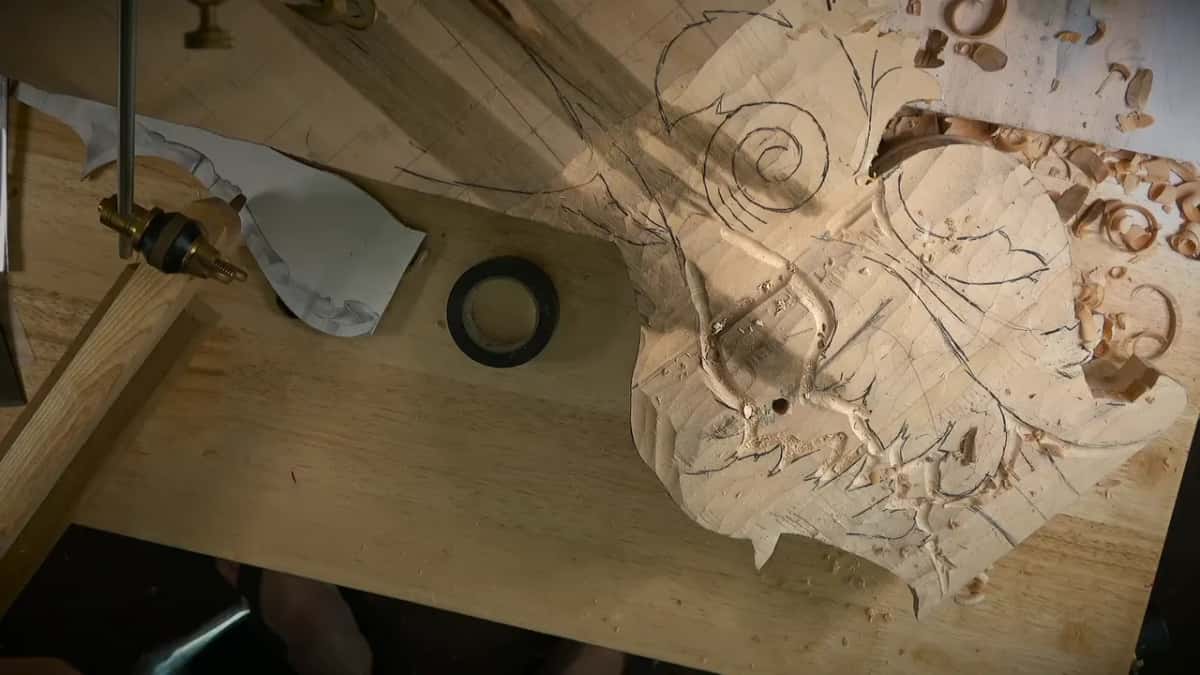
Overhead, with a small sawn out scroll shape roughed in beside its paper pattern and a tape roll.
If the answer is kiln dried, nobody has cheated you. You simply know the board will argue with you a little more, and I wrote a longer piece on how long wood takes to dry for carving plus a short one on whether drying is needed at all.
Step 4, buy one small board before you buy a stack
Buy one. Carve it. If it fights you the whole way, you have lost the price of a sandwich instead of the price of a stack. And judge the board rather than the label, which is the whole argument in how you know whether wood is good for carving.
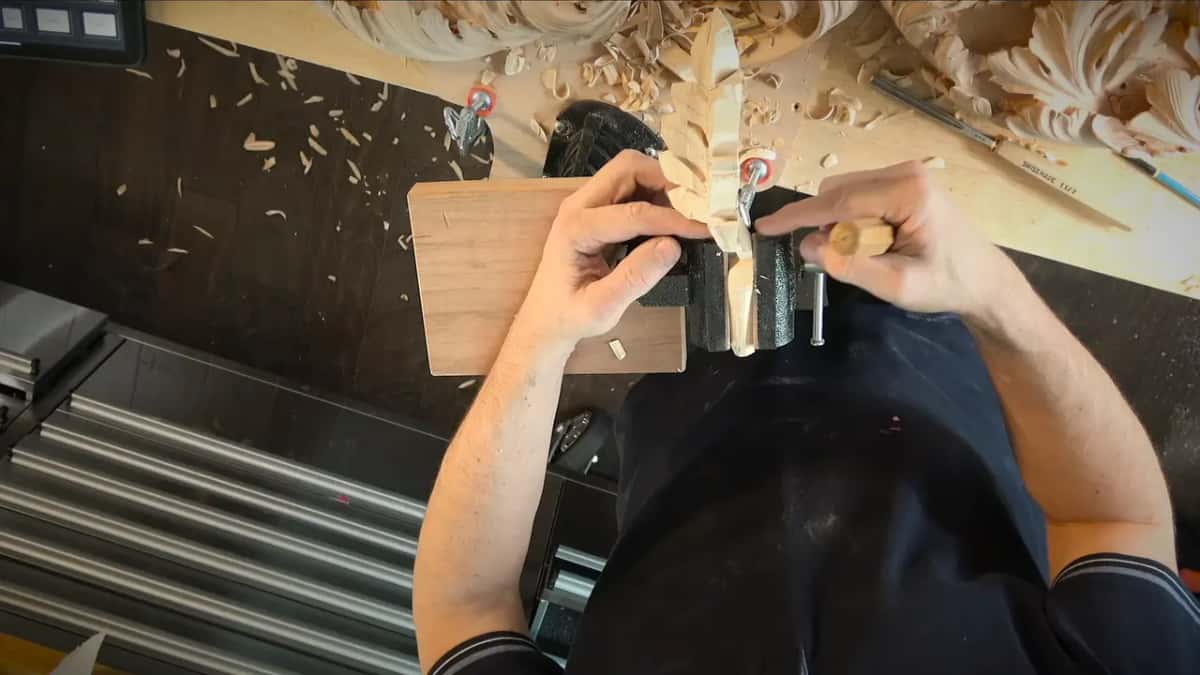
Down onto a small carved leaf gripped upright in a bench vise, both hands on it.
Step 5, carve one hollow in a corner and listen to the sound
Every species sings differently, and oak is more crunchy. It's just absolutely different sound. Take one small hollow out of a corner with a sharp gouge and listen to what happens. If the wood fights, I pick up a smaller tool so I can remove smaller chunks of wood and not worry about fighting the wood.
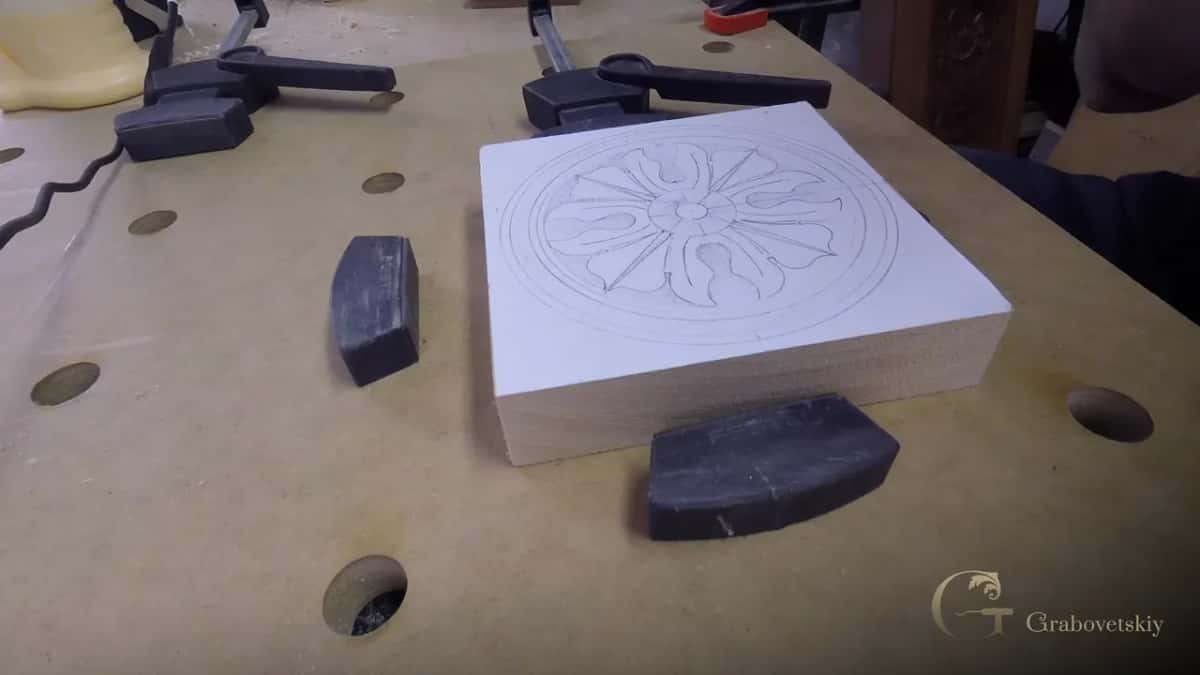
One square block, face primed white, a rosette drawn on it, two dark cauls either side.

A slim gouge working the outer ring of the drawn rosette, two dark cauls pinning the block.
Those five checks work in Reykjavik and in my own Florida shop, because they read the board and ignore the country. A deeper piece on preparing raw wood for carving waits after that.
What about driftwood off the beach?
Driftwood is real timber with a real place in that island's building history, and an Icelandic research project documents it better than any carving blog could.
Hakai Magazine reports that much of Iceland's driftwood originates from far across the Arctic Ocean, from felled trees in Russia's central Siberian region. Settlers built houses and longships out of it. By 2060 the delivery is expected to stop as the sea ice goes.
The Rekavidur research project says it plainly. Driftwood was a resource Icelanders could not afford to waste, and it went into construction timber, boat building and everyday objects. A companion page by Olafur Eggertsson tracks where those logs began.
The one piece of medieval Icelandic carving I can point you to is a door. Wikipedia's entry for the Valthjofsstadur door dates it to about 1200, says it is carved in pine, calls it the only medieval Icelandic carved door in existence, and places it in the National Museum of Iceland.
Stay on that for a second. The national forest agency puts the country's forest land at slightly more than two percent today, and somebody there still carved the object the nation keeps behind glass. In a softwood. Pine is the one wood I say plainly I don't like to carve on. Whoever held that gouge beat it anyway.
Does the wood matter more than the tool?
A sharp gouge beats a good species every single time, and I have watched that decide a class. Let me say it twice, because beginners get it backwards and then blame the board. Sharpening beats shopping. It really, really does.
Here is the correction I make most often in class. Some people saying the best wood is a soft wood and your tools shouldn't get dull, that's not necessarily truth. It is soft wood, but your tools, for some reason, still get dull, and really quickly sometimes.
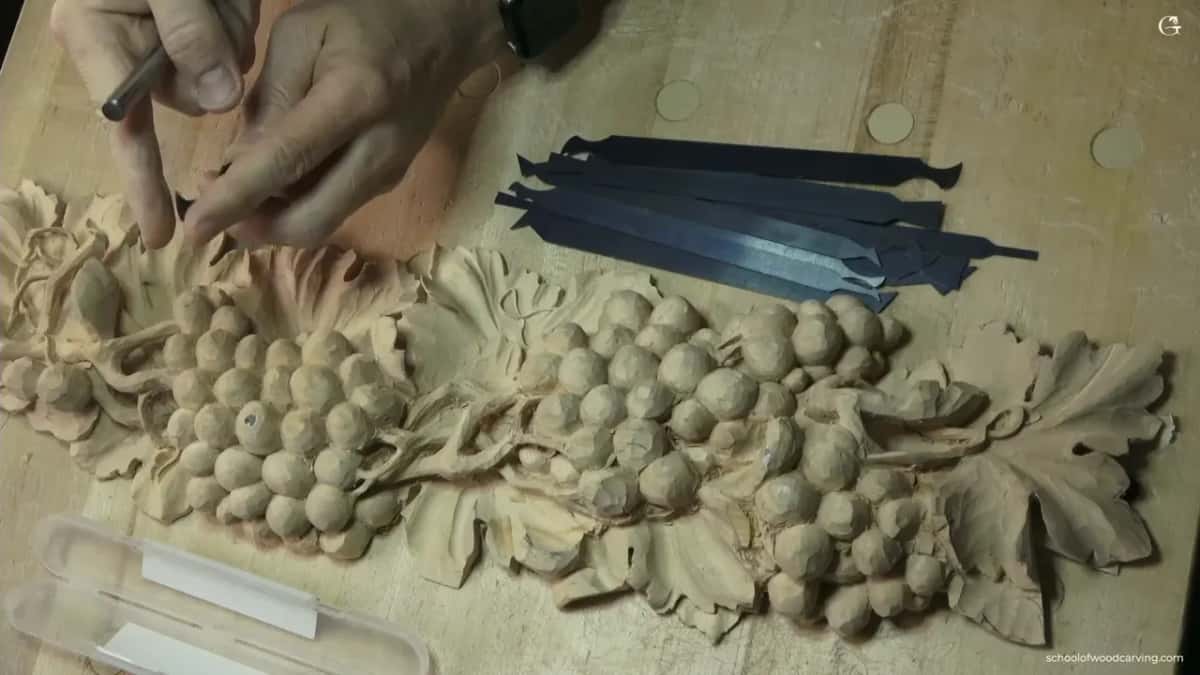
A long narrow board with a swag of carved grapes and leaves, thin steel scrapers beside it.
Somebody in the room answered this for me once, in an in-person class, on day three, which is when I finally explain grain. I asked them all what the solution was. Sharp tools, came the answer. I said it straight back. Sharp tools. Break the rules. And that changes the whole question, because if you do have sharp tools, really doesn't matter. You can go against the grain, along the grain. You're not going to split.
Even the reference books land in the same place. The Wood Database's page on European lime puts it at 700 lbf on the Janka scale and 33 lbs per cubic foot, calls it easy to work, and then warns that sharp cutters must be used. Their basswood entry covers the American cousin, which it rates softer at 410 lbf, and the Sitka spruce entry covers one of the conifers Iceland plants.
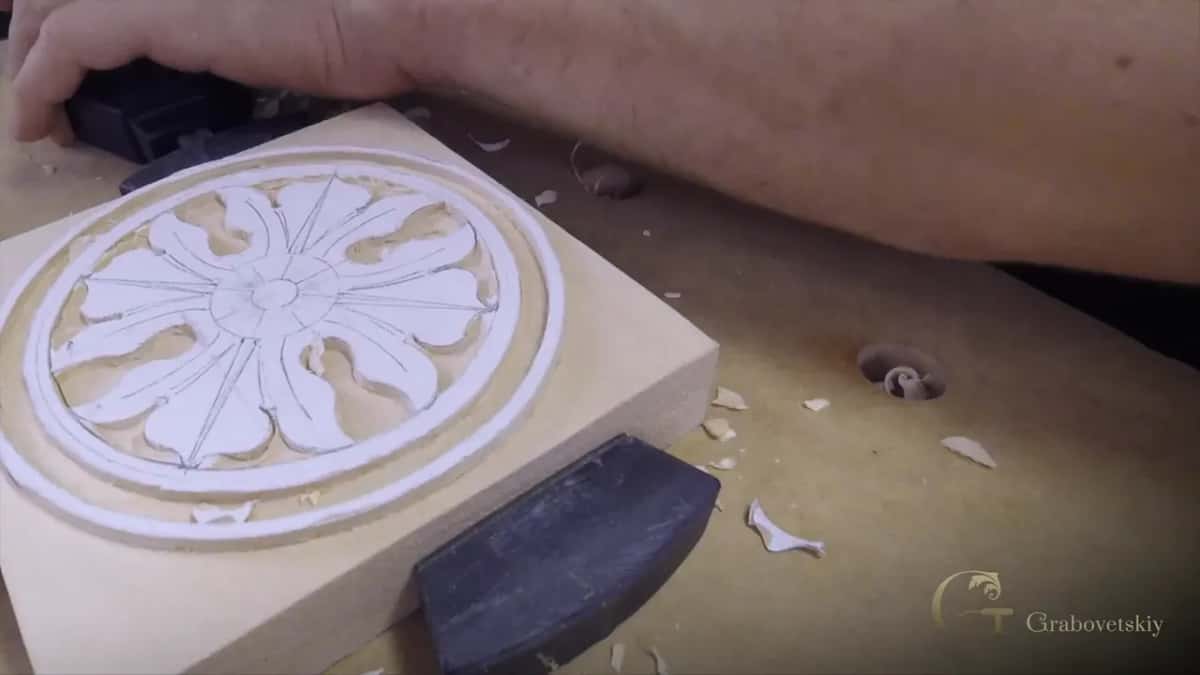
A rosette part carved into its own small square blank, petals shaped, the ground still rough.
Numbers on a chart take you only so far, which is why I wrote about what a Janka number means to a hand carver and about the woods that are genuinely hard to carve. A chart cannot hear your gouge.
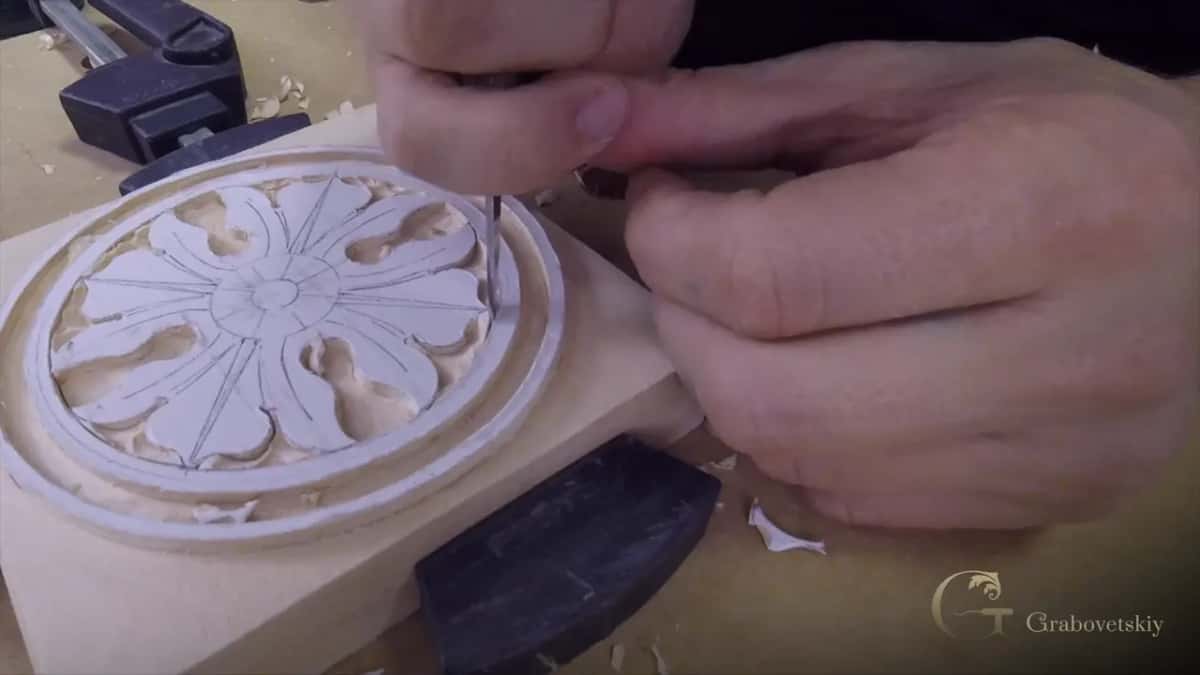
Same rosette, both hands steering a slim tool into the petals, a bar clamp from the left.
Grain direction is the other half, so I wrote why grain direction decides where wood tears, plus a companion on handling several grain directions in one piece. Read both before you blame your birch.
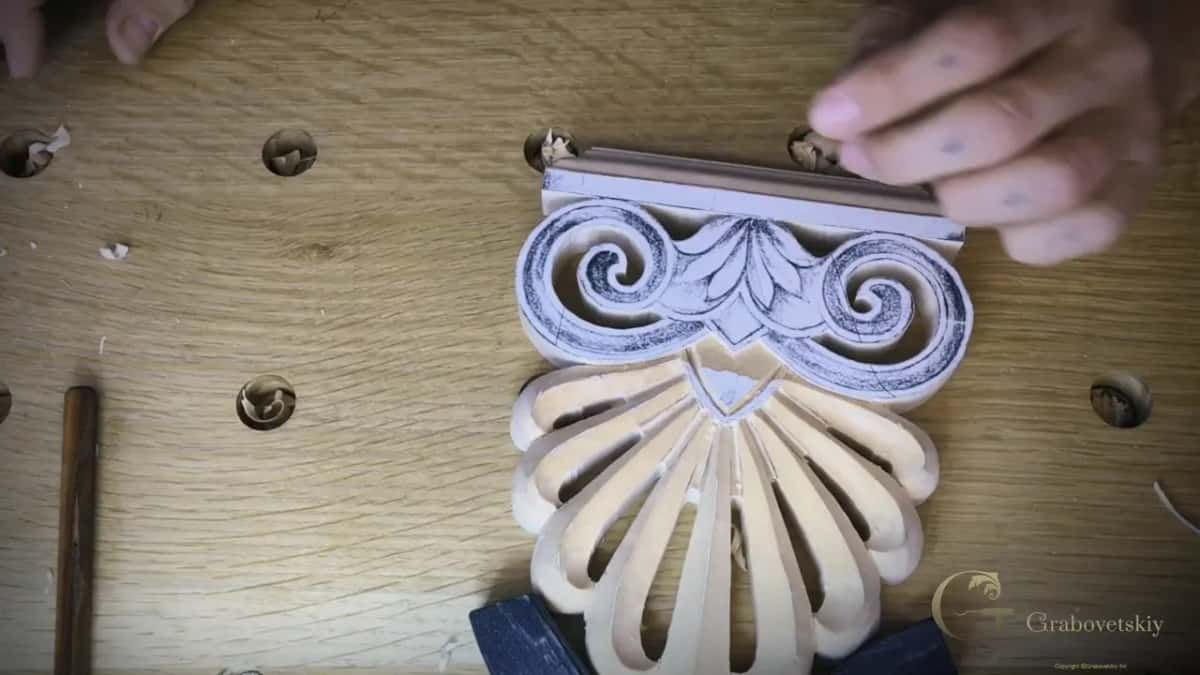
The palmette is small. Its lower half is shaped and the upper half is still pencil.
What should a beginner in Iceland make first?
Pick one small thing, finish it, and then put it on something real. A rosette one eighth of an inch deep will teach you more than a big panel you abandon in week three. Those rosettes go on a box, a frame or a door.
Depth is the part people over-buy for. On one of my rosettes the whole carving runs only one-eighth of an inch deep. On another I set the highest point at about the 7/8 line. None of that needs a thick, expensive, imported board.
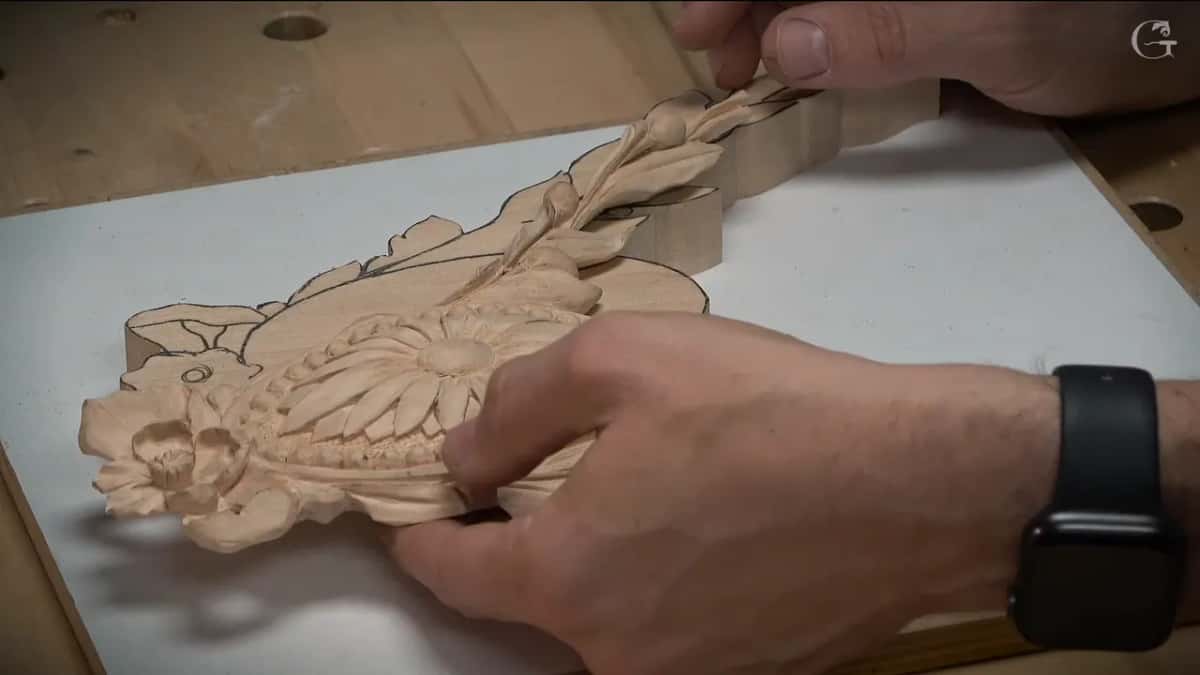
Hands tilt a small sawn out piece to the light. A carved daisy, leaves, a thin edge.
This is what I tell students who feel short of material, that if you go to 10th century Norway, we're talking about Norman, okay, people, Vikings. They used some acanthus movements on their boats. All they had is pretty much just a knife and axe. But they did a really great job, actually, with the knife and axe in wood carving. How did they even know that idea without traveling far? I still wonder.

The rosette block with its square corners trimmed round, drawing intact, a shaping tool sweeping past.
A knife and an axe, on a longboat, in North Atlantic weather. Your kitchen table and one small board are a better starting position than that, and my first cuts course for beginners starts there. Beside it sit the softwoods a beginner should try, small carving ideas you can finish with one knife and the mistakes almost everybody makes.
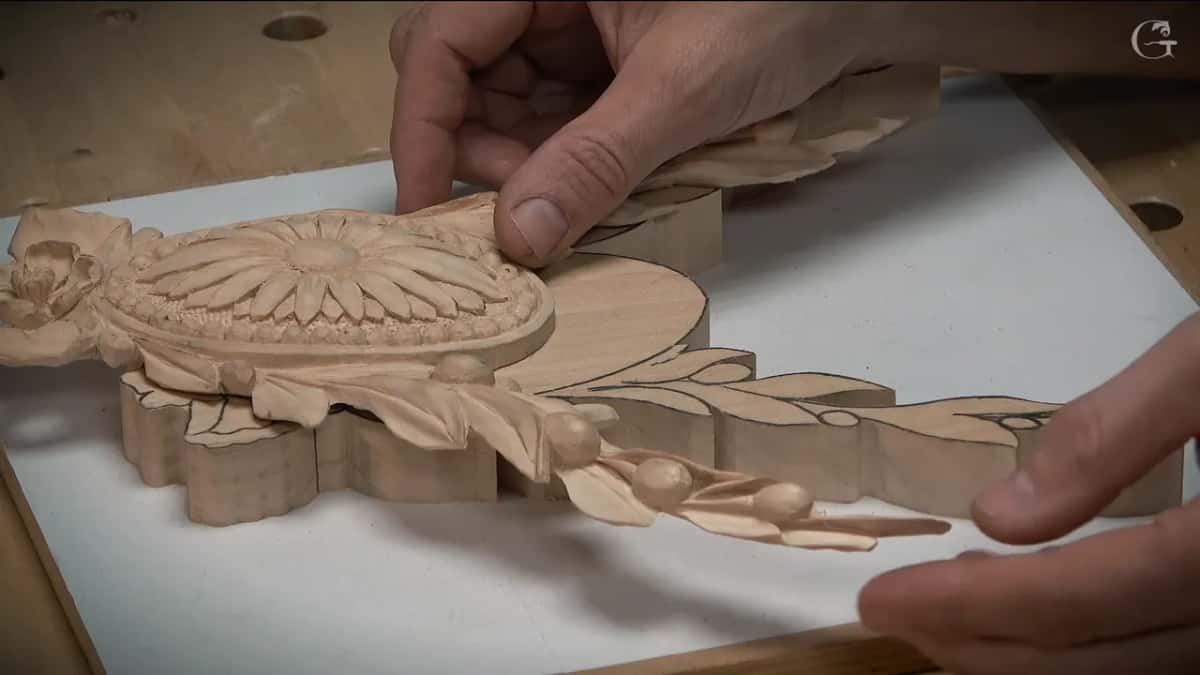
Close on the same piece. The daisy and leaves are finished at one end, the other end still flat.
Somebody standing behind you while you learn where to put the tool is what this school is for. Shall we carve?
Frequently asked questions
Can a beginner in Iceland carve local birch?
Birch will take a tool, with two adjustments. It is harder than lime, so grind a shorter bevel and take smaller bites. Start on a piece the size of your palm.
Where would I order lime or basswood from?
Look for a hardwood lumberyard that supplies furniture makers, never a construction yard. Ask a big builders' merchant's trade desk to search their vendors. My own students in Australia cannot get basswood at all, so a carver in Reykjavik is in familiar company and should ask early.
Is plantation spruce any use for carving?
The Vaglaskogur report has Icelandic Sitka spruce framing a building and Norway spruce on its roof, so the stuff is sawn there. That report is theirs, not mine. I teach on lime and I will keep pointing you there, and if a spruce offcut is what you can reach, a sharp gouge and a small piece still apply.
How dry does my board need to be?
Dry enough to stop moving. Air dried stock settles better than kiln dried, and some wood in my shop has gone untouched for twenty years. If kiln dried is all you can get, use it and expect a little more argument from the board.
Do I need a workshop to start?
A kitchen table is enough, and I have finished real projects on one. All you need is a flat surface, some way to hold the work still, and one sharp tool. Save the money you meant to spend on a bench and spend it on steel.
Which hurts a beginner more, the wrong wood or a dull tool?
The dull tool, every time. Soft wood does not protect your edge, and my own tools go blunt on lime, sometimes very fast. A sharp gouge on ordinary wood out-carves a blunt one on beautiful wood, which is why sharpening comes before shopping.
Filed under
- beginner wood carving Iceland
- best trees for wood carving in Iceland
- best wood types for carving in Iceland
- carving techniques for Icelandic woods
- easy woods to carve for beginners
- finding suitable wood for carving in Iceland
- how to start carving in Iceland
- Iceland carving workshops
- Icelandic carving with driftwood
- Iceland wood carving tools
- locally grown hardwoods in Iceland
- making beginner wood carvings
- pine wood availability for carving
- popular imported woods for carvers
- rowan wood for carving in Iceland
- tips for beginners on wood carving
- top trees for carving practice
- Understanding Wood for Carving
- using willow wood for carving
- where to find birch wood in Iceland
- wood types for beginners in Iceland