
Alexander Grabovetskiy, woodcarver, School of Woodcarving · Published 2026
Do you need antique wood carving tools?
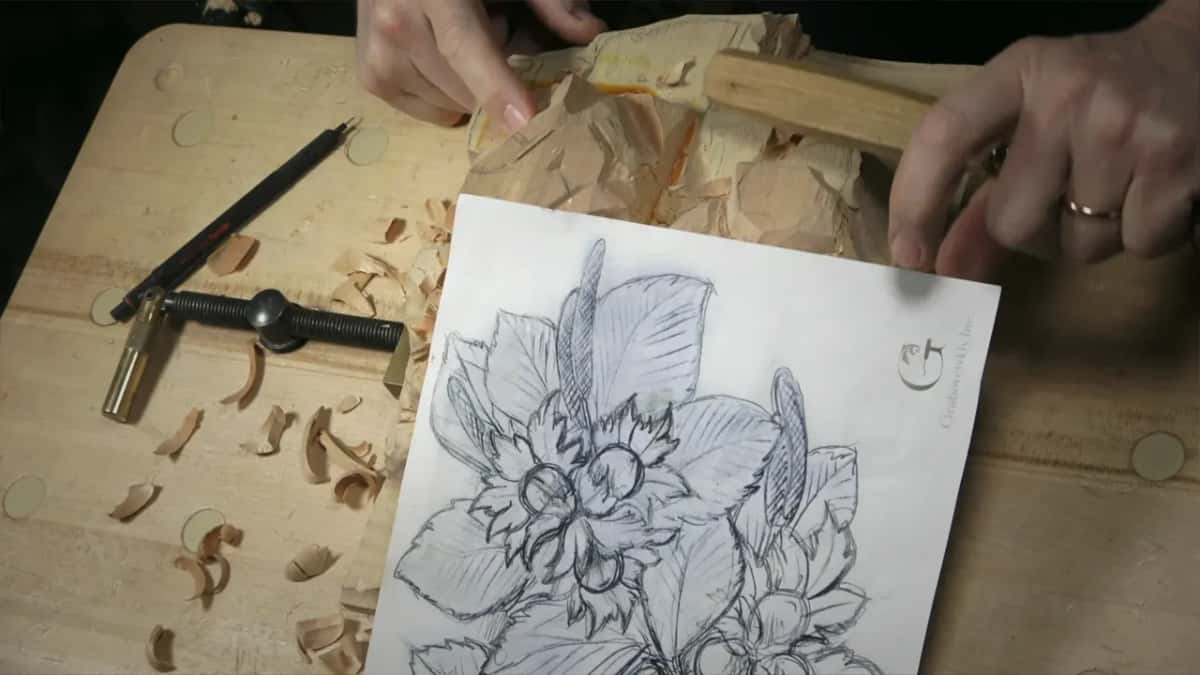
Quick answer: An antique carving gouge is a pleasure on my bench, not a must. On my hazelnut panel an old number 3 of 10 mm made the first chop, and an Ashley Iles and a Pfeil carried on from there. You don't have to have antique tools, I told my class in Maine.
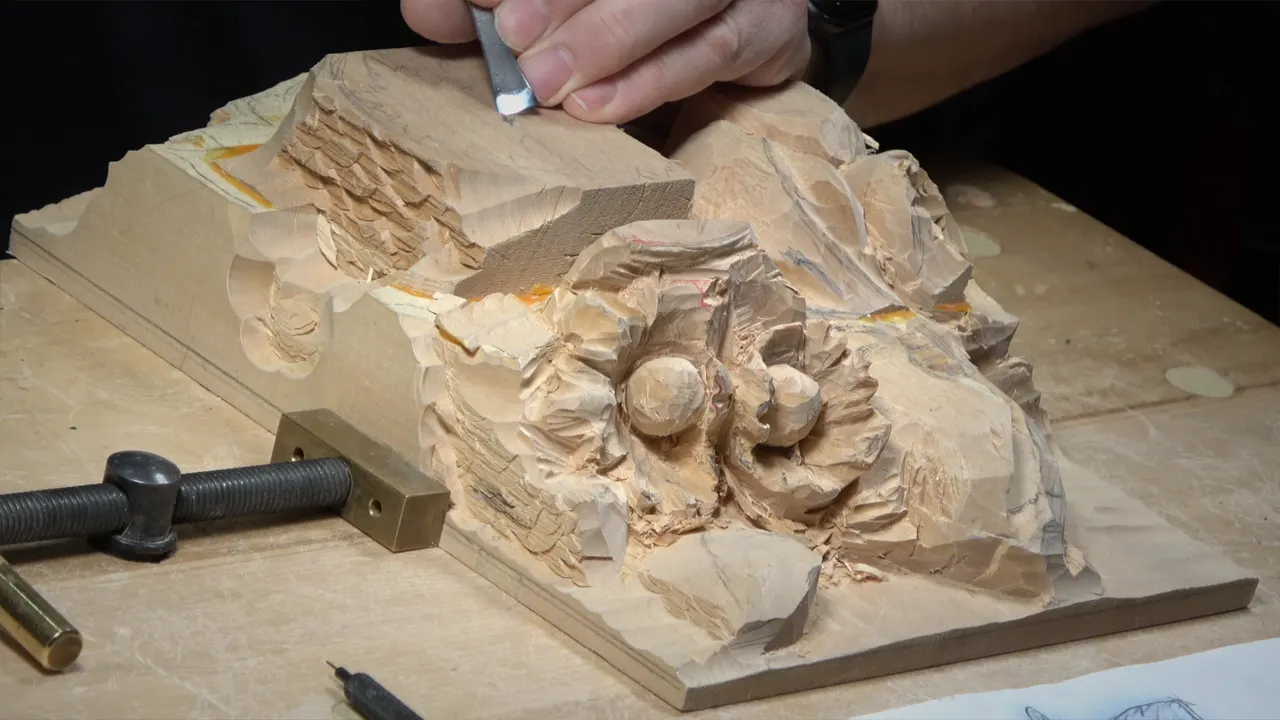
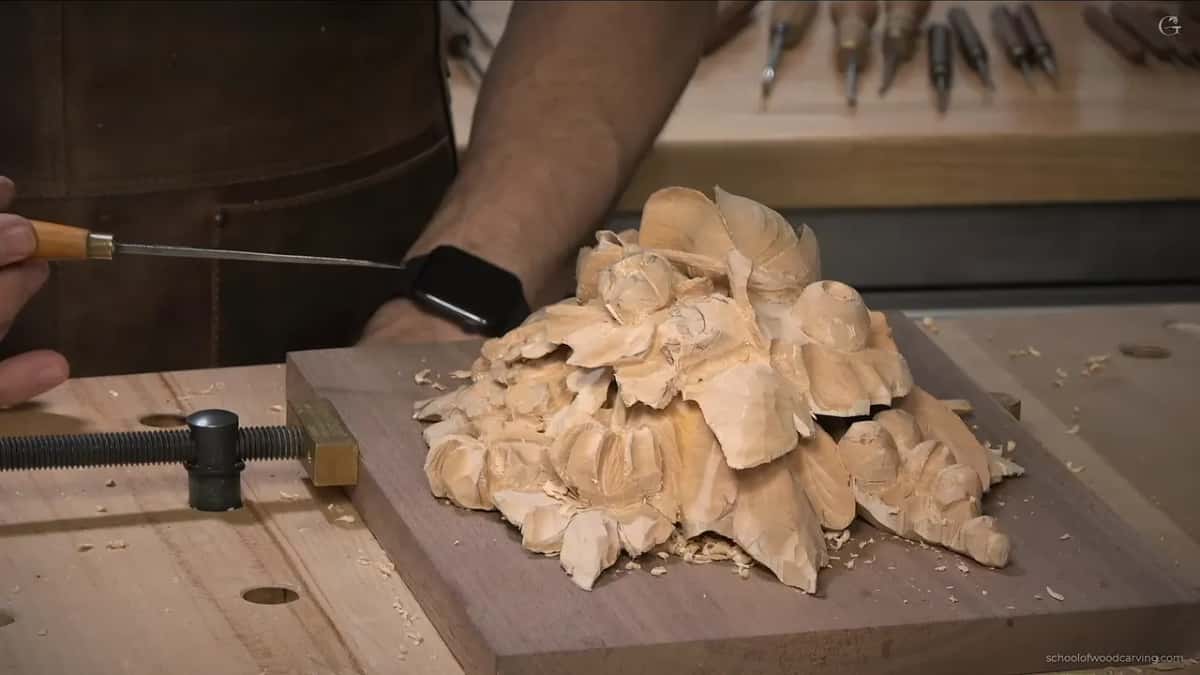
Antique wood carving tools are old gouges some carver used before me, and on my bench they work right beside new ones. And you can carve without them. In part 5-1 of my hazelnut course the first tool I picked up was an old number 3, about 10 mm (3/8 in) wide. A big Ashley Iles number 3 and a Pfeil number 11 took over from there, on the same bunch of nuts.
Do you want a gouge that carves clean? Would you like to know if an old one carves any cleaner? I'll give you what I said on camera in several classes, and what my hands did on this bunch. Below are the old tools I named and the jobs they did, then how I read one that has lost its number.
My old and new gouges, in six short lines
One old gouge made the first chop.
A wide Ashley Iles 3 near 1 in (25 mm) and a 15 mm Pfeil 11 carried on from it, on the highest bunch of the panel.
I told my Maine students that old tools are not a must.
I collect them because using them is a joy, and I said they are no better than any other ones.
When a gouge has no number on it, I read the sweep by eye.
A few tiny spoon shapes are hard to buy new, and twice I sent viewers to look on eBay for them.
Which gouge went in first on the hazelnuts?
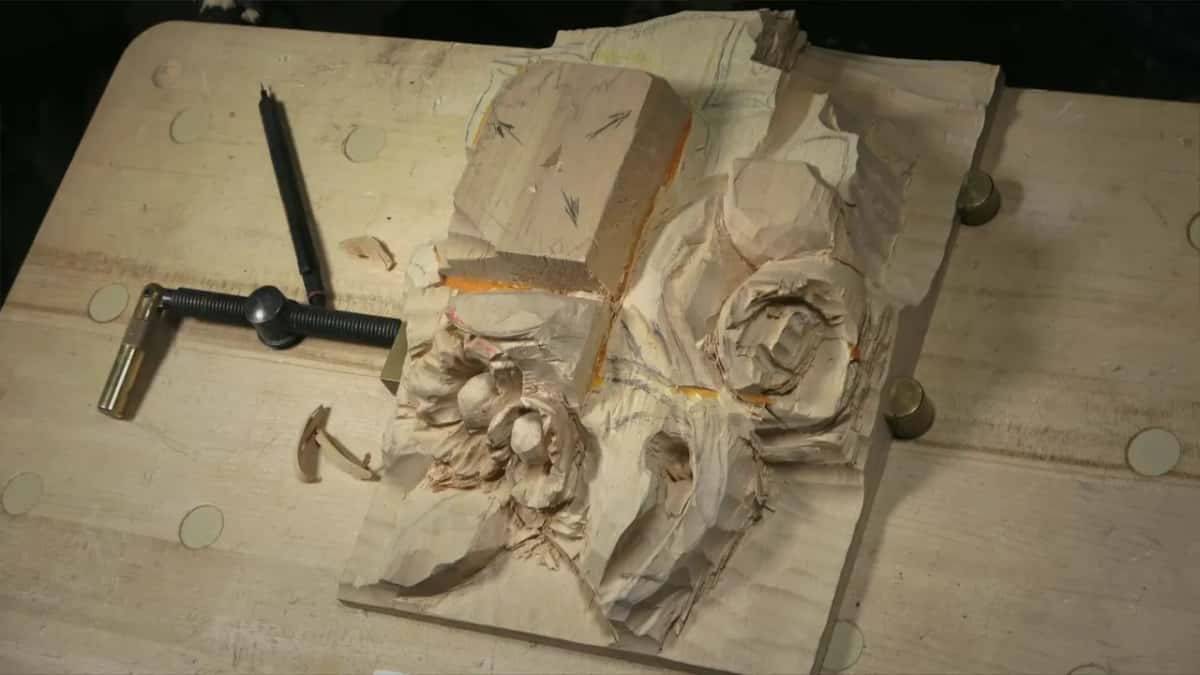
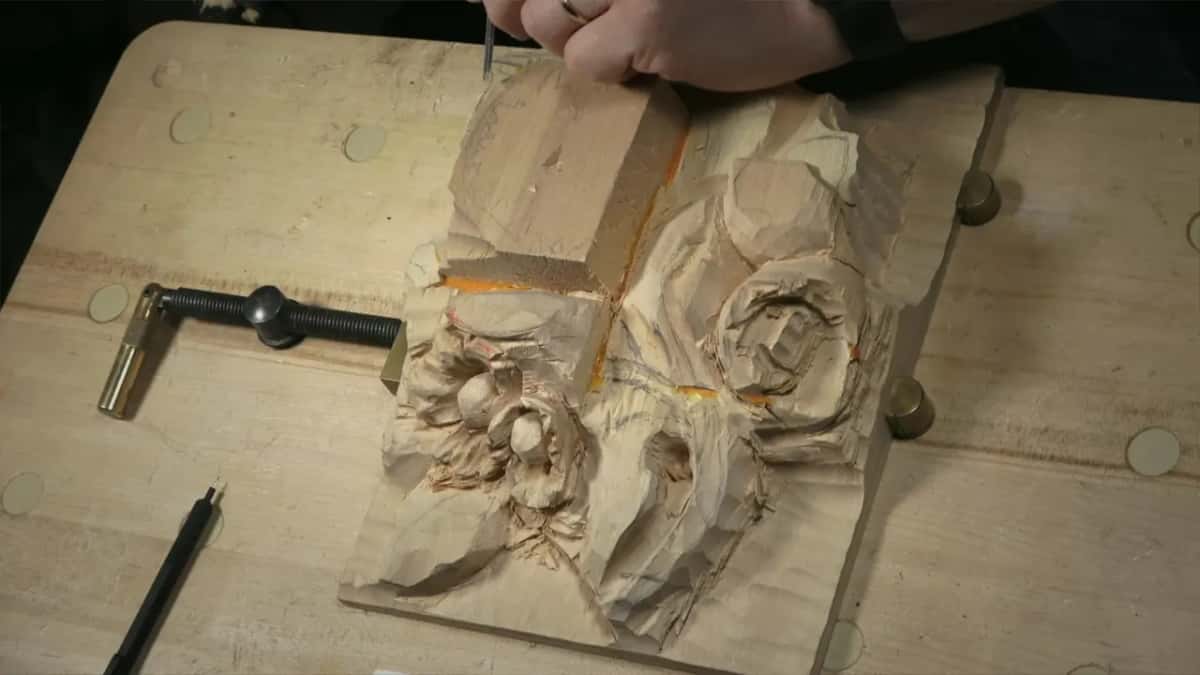
A small antique number 3 did. Part 5-1 opens on the third bunch of hazelnuts, the highest one on my panel. Where that bunch starts still needs some accuracy, I said, and that point became my center.
Then the old gouge came out. About 10 mm or so, I said, about three eighths of an inch. It was an antique, and I kind of like it. What I was after was the triangle, again. With that little gouge I went for it, and after that I could freely chop one side.
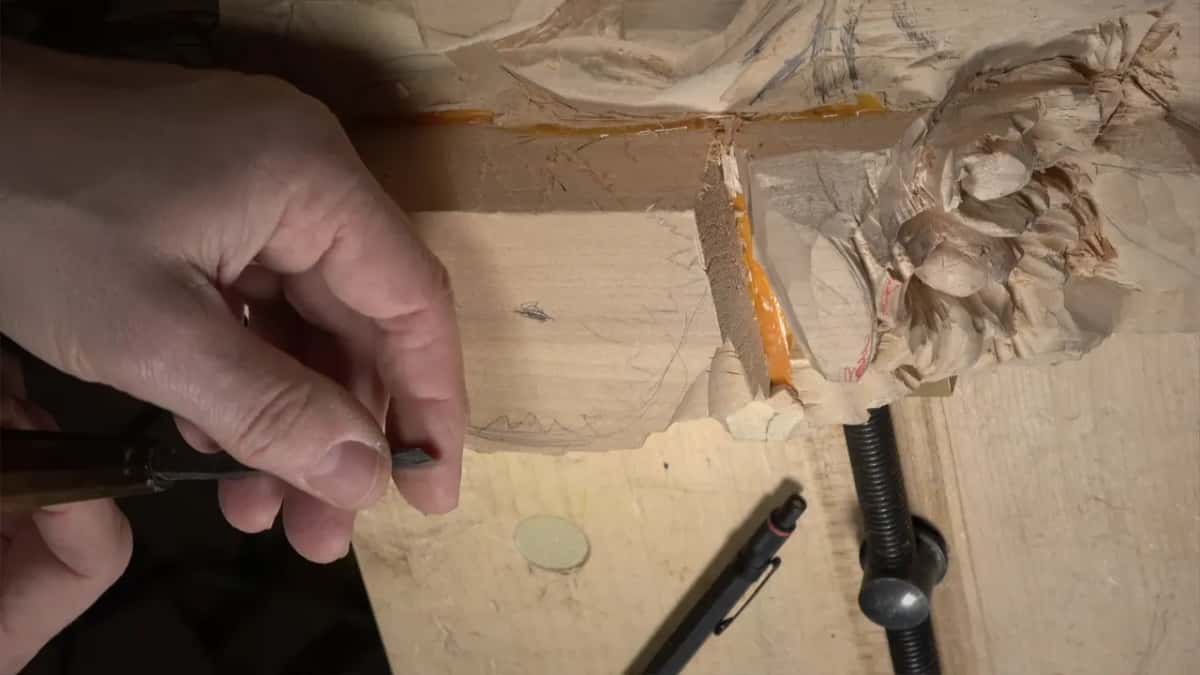
On camera, liking it was the one reason I gave for picking it. That's all.
What did the other gouges do on that bunch?
Most of the work. To slope the sides in toward the center I wanted a bigger gouge, still a number 3 but a big one, approximately one inch, 25 mm. That one is an Ashley Iles. In Ashley Iles it's a number 3, I said, and it equals a number 2 if you like to use Pfeil, the Swiss made one.
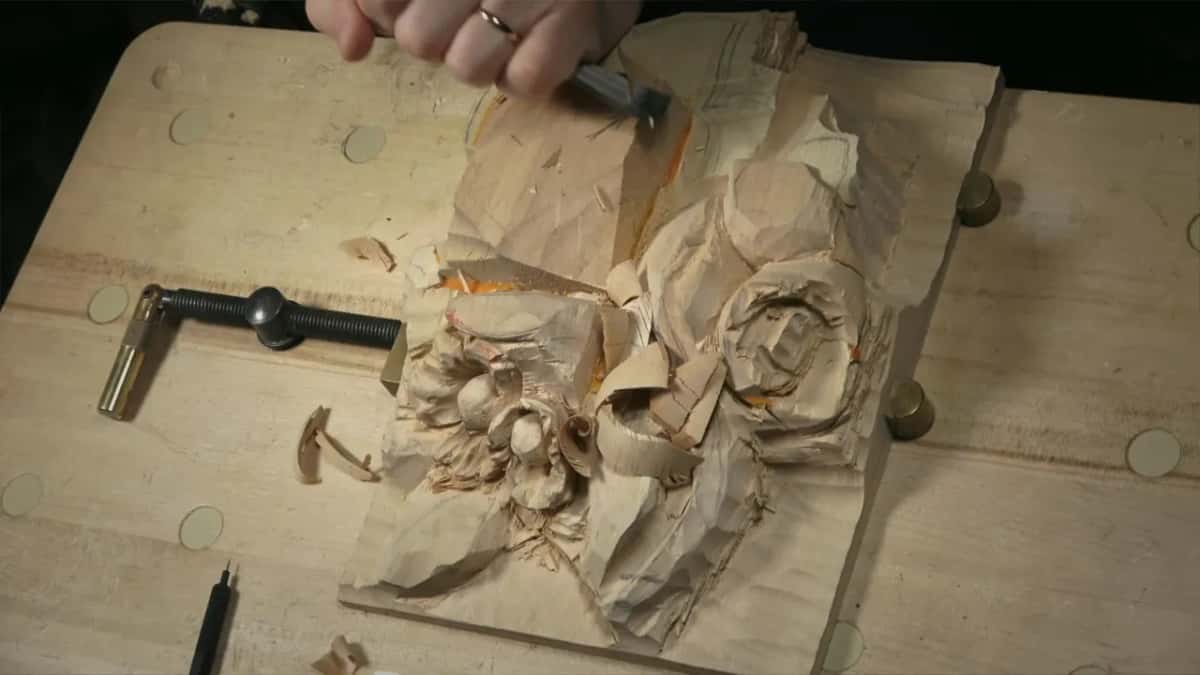
Between the two tools I set the ends by eye. The end of one nut came to about one inch, 25 mm, out from the center, and two other points sat about an inch and a quarter away, maybe about 35 mm or so. I'm just eyeballing it, I said. Up to you.
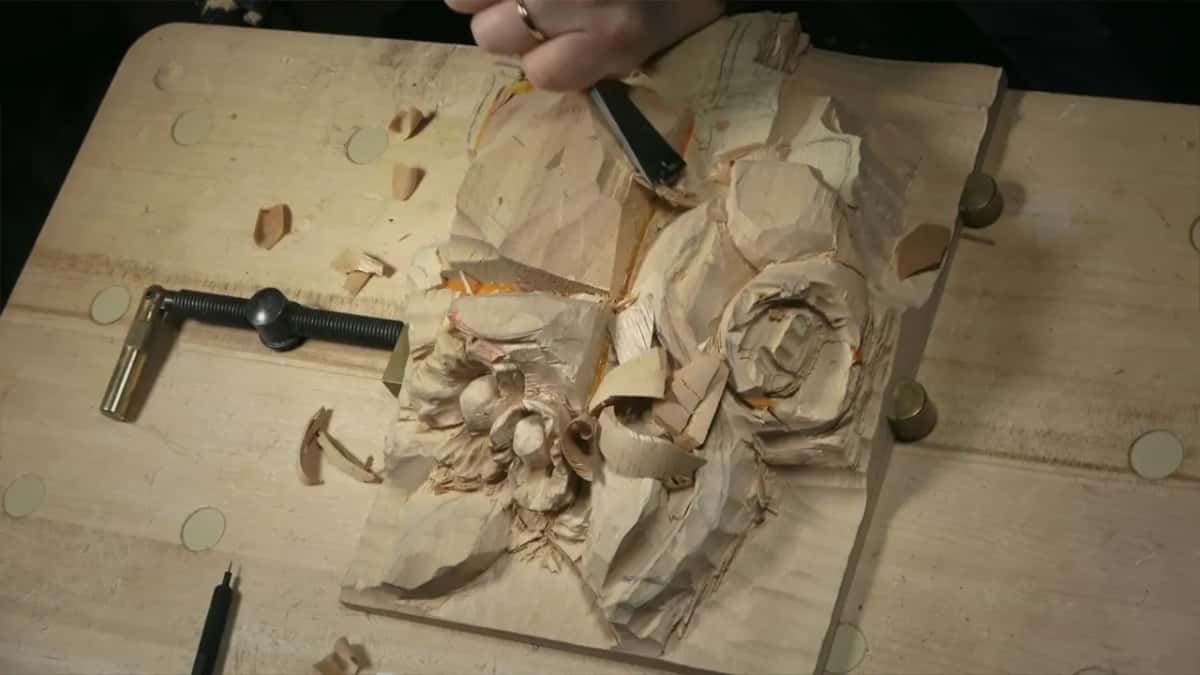
I had to be careful not to take too much with the big one. Next a little number 11, about 3 mm (1/8 in), outlined where the nuts and the husk would sit, and then a Pfeil number 11 of about 15 mm (5/8 in) took out some waste and started a roundness.
It needn't be the true roundness, I said, but still.
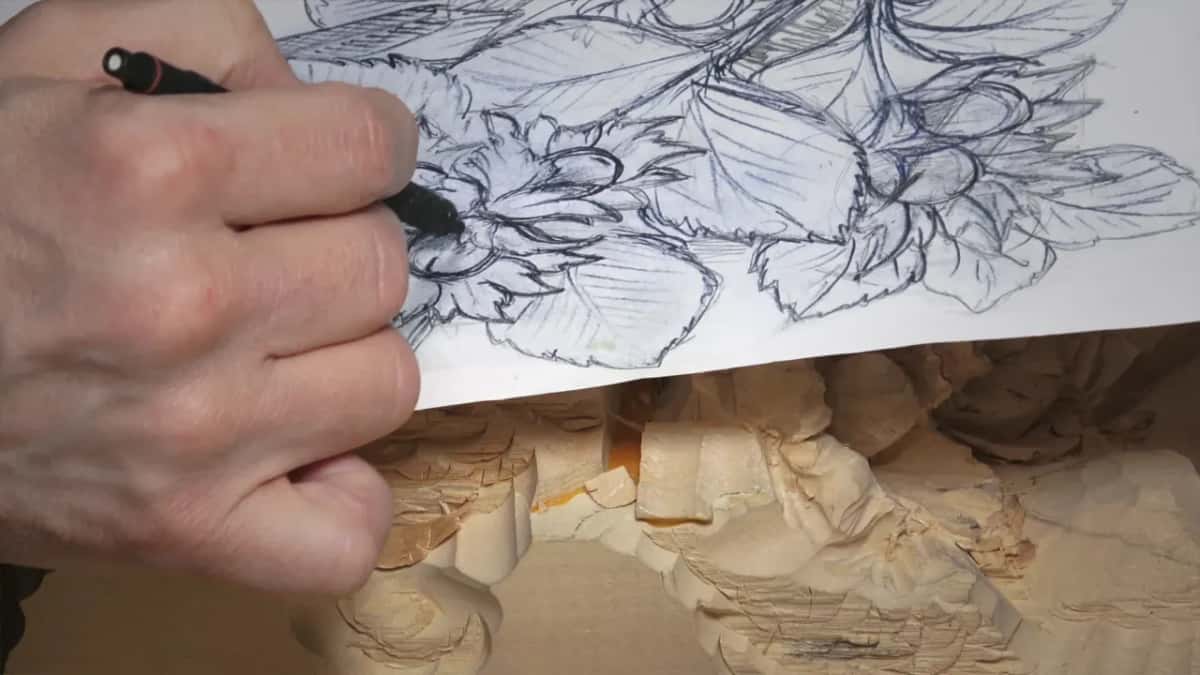
With that same Pfeil I lowered one side so my nut would have space. The nut itself is about three quarters of an inch, 19 mm. At the very end of the part I used the same tool to show where each nut goes.
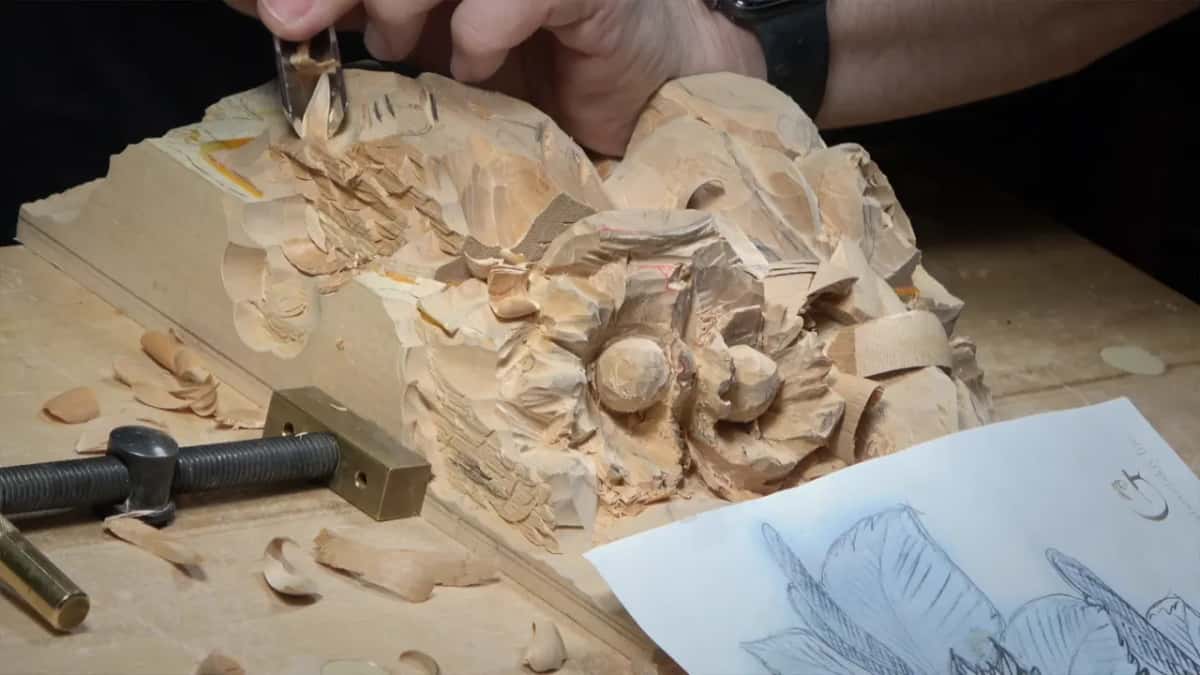
So one old gouge made the start. The Ashley Iles and the Pfeil, from makers that still sell tools today, did the heavy part of the relief.
Is an antique tool a must for carving?
I answered that in my Grinling Gibbons class in Maine, while I worked with an old number 16 V tool. It is antique, I said. But you don't have to have antique tools. You can buy a Swiss made one, and Pfeil does have a number 16. About the old maker of the one in my hand I said I love those tools, really nice.
Later in the Maine class I reached for a little number 11 of 2 mm (about 1/16 in) and called it antique. I stopped there and corrected myself. It's actually not antique, it's a German one, and a good one. A 2 mm one doesn't have to be antique, I said, you can just use any 2 mm number 11, and I love number 11 in small spots like that.
On my butterflies plate it was a spoon gouge, a number 3. Mine was antique, and what I like about it is that the spoon part is really, really small. Any spoon gouge will work, though, I said. The modern one also.
Why keep collecting old gouges, then?
For the joy of it, as I said on the floral and molding panel. I carve every day, and I get tired of using the same tools over and over, so it's always a joy to use some other tools. That's why I'm still collecting the old antique tools, something that was used before.
In the same breath I showed a new tool. My new toy, I called it, and I said I like to play with my new toys.
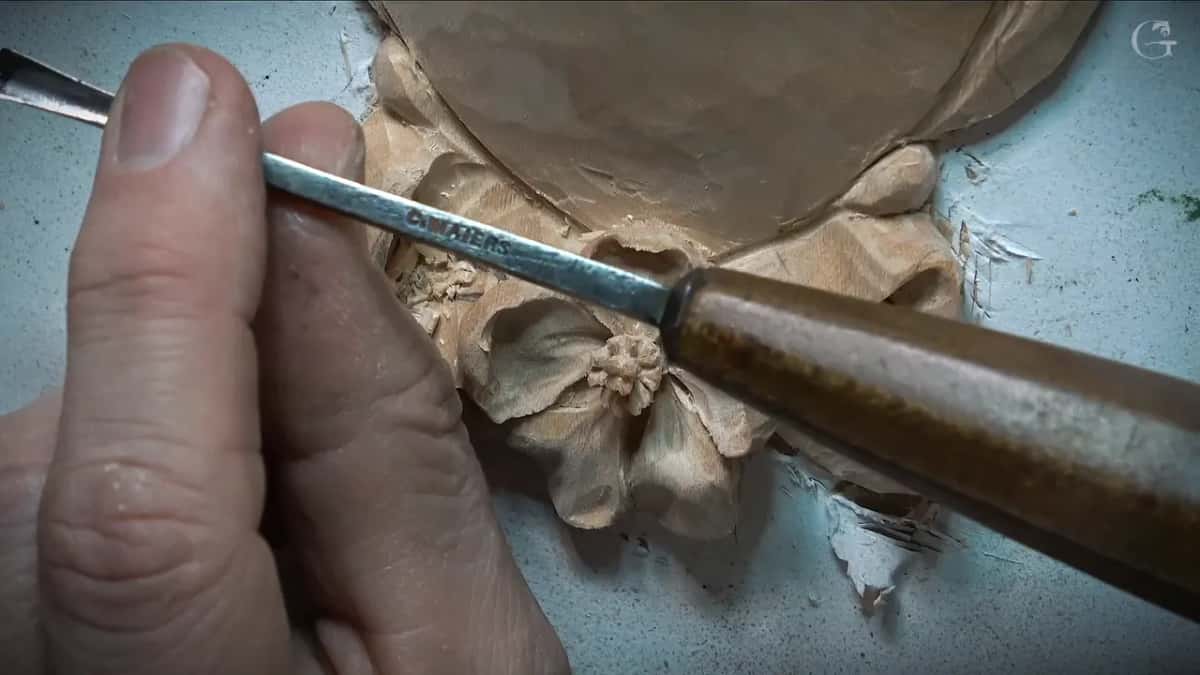
In Maine I put it plainly. Picking up an antique number 1 by Marples, I said I just like antique tools in general. It's nothing like it's better than any other ones, I said.
The grape onlay brought out an antique 2 mm veiner, a number 11, and I said I really love that one. It took me much closer to the outline.
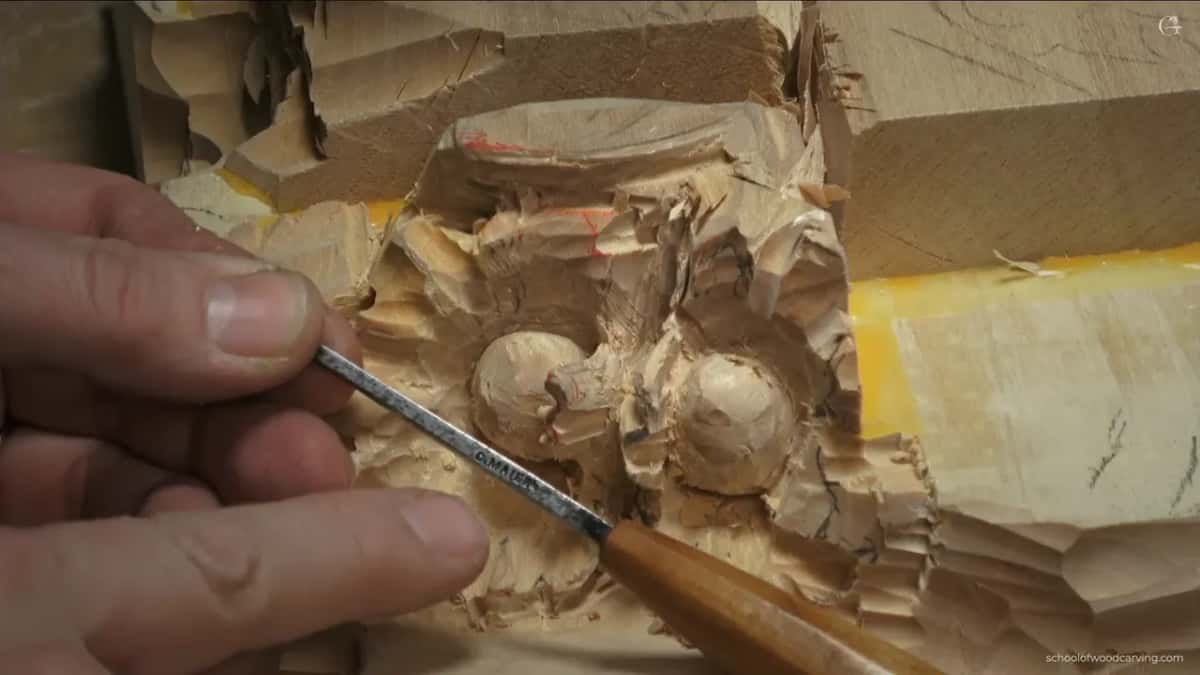
In lesson 3 of the hazelnuts it was an antique number 5, an eighth inch (3 mm) wide, cleaning around the husk. I really like those tiny tools also, I said. The steel is wonderful.
How do you read an old gouge with no number?
By eye, and by its width. On the acanthus over moldings I used an antique tool of about half an inch (13 mm). It doesn't have the marking of a sweep or of how wide it is, I said, but just visually I look at it and I know it's number nine and a half.
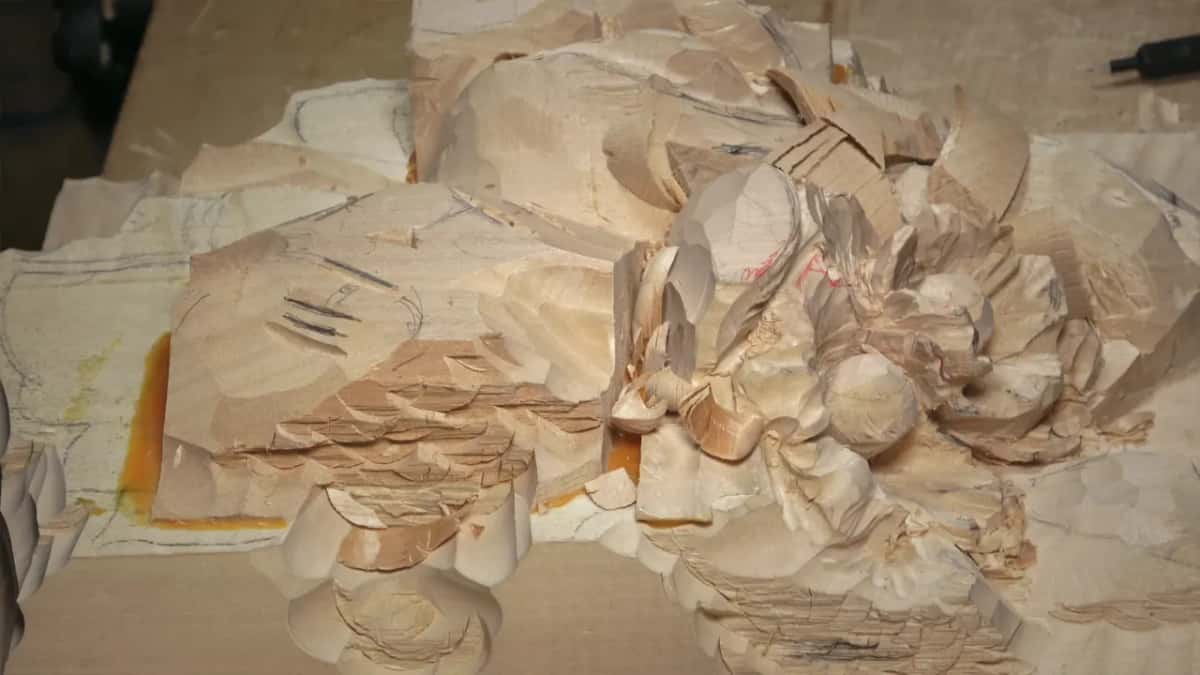
Back in lesson 2 of the hazelnuts an old number 5 had no writings on it either. It's about 16 mm, I said, and by the size of it, about five eighths of an inch. I added that it doesn't have to be five eighths. Any will do. Although, I said, I also like to use bigger tools for the shaping.
My antique Marples fishtail, used on the furniture panel, had no marking at all. Not really a 7 and not really an 8, I said, a 7 and a half almost. I don't know why they didn't mark it. Any number 7 will do, any number 8 will work, and a number 9 will work too. So don't overcomplicate.
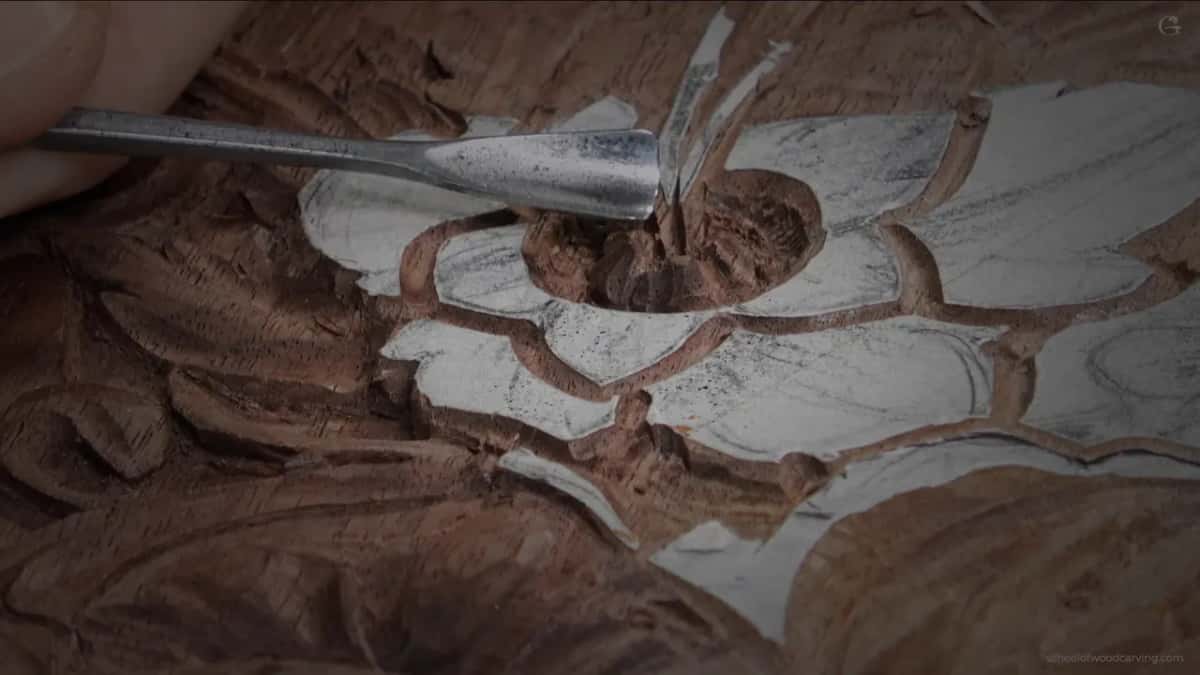
And on the chamomile and bow rosette I held an old one and called it a number 3 or a number 5, something like that. Really good steel in it, I said, and it's an old one.
Are some old shapes hard to buy new?
A few tiny spoons and bends are. For a little better cleaning on the furniture panel, lesson 36, I said in this case there's no better tool than a really tiny spoon gouge. Unfortunately no modern manufacturers do that one. They don't make them anymore, but you can check on eBay. Mine is a number 3, approximately 3 mm, one eighth of an inch.
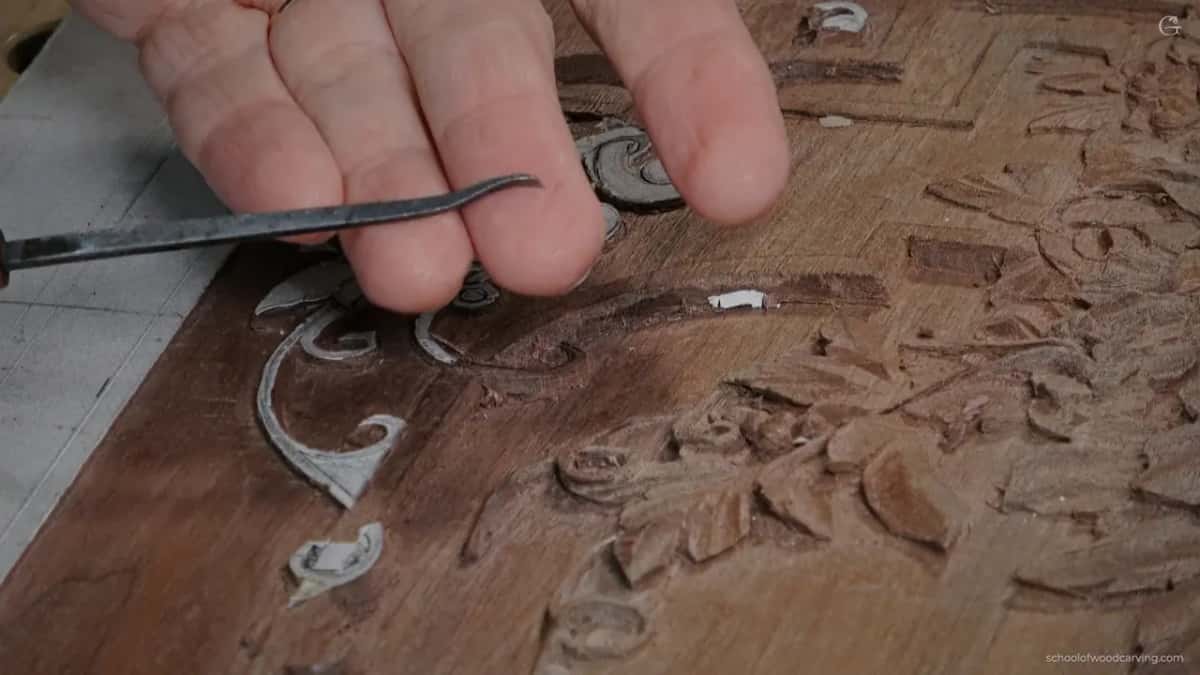
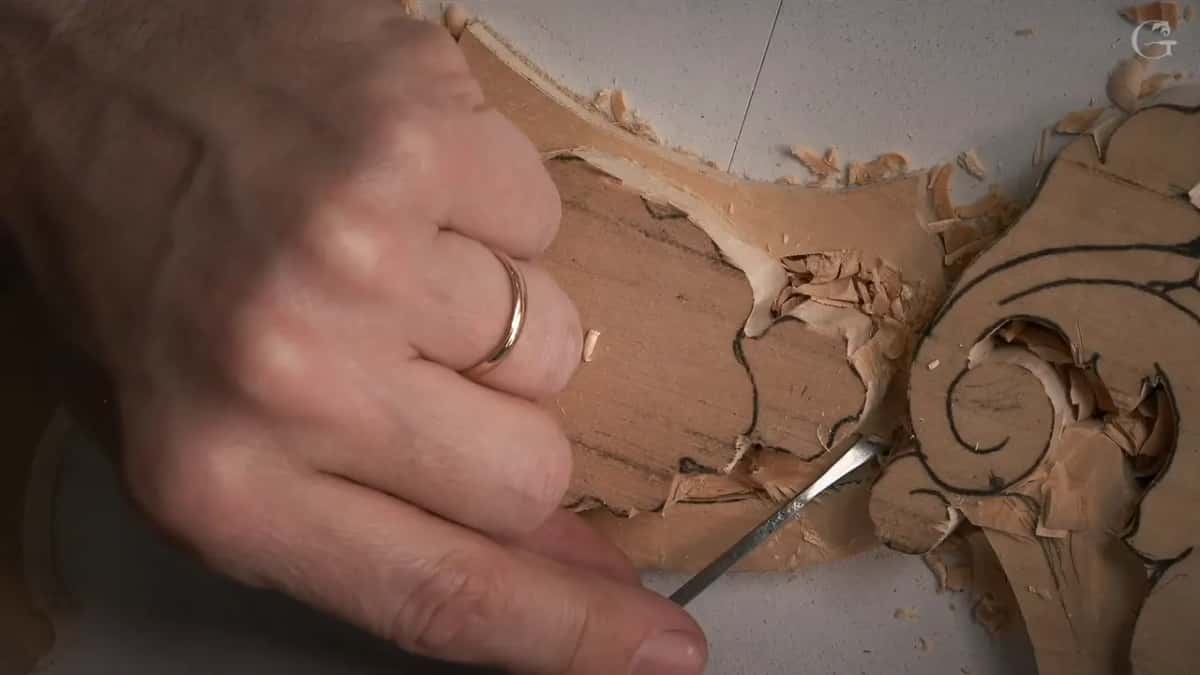
Earlier on that panel I went underneath with a tiny number 9 spoon that has a small hook. The new manufacturers don't do that, I said, but it was a common tool in the 19th century, and sometimes you can find one on eBay. I added the other side of it too. Not that you can't do it with the other tools, I said. You're still able to get that undercut with a straight one.
Two tools I showed on the chamomile rosette are hard to find, almost impossible, I said. Those ones are antique tools, and I doubt anybody can find them. The tiny one is about a millimeter and a half (1/16 in) at most, the other maybe 4 mm (5/32 in), and with them I get really inside and make my twists for the flowers of the rosette.
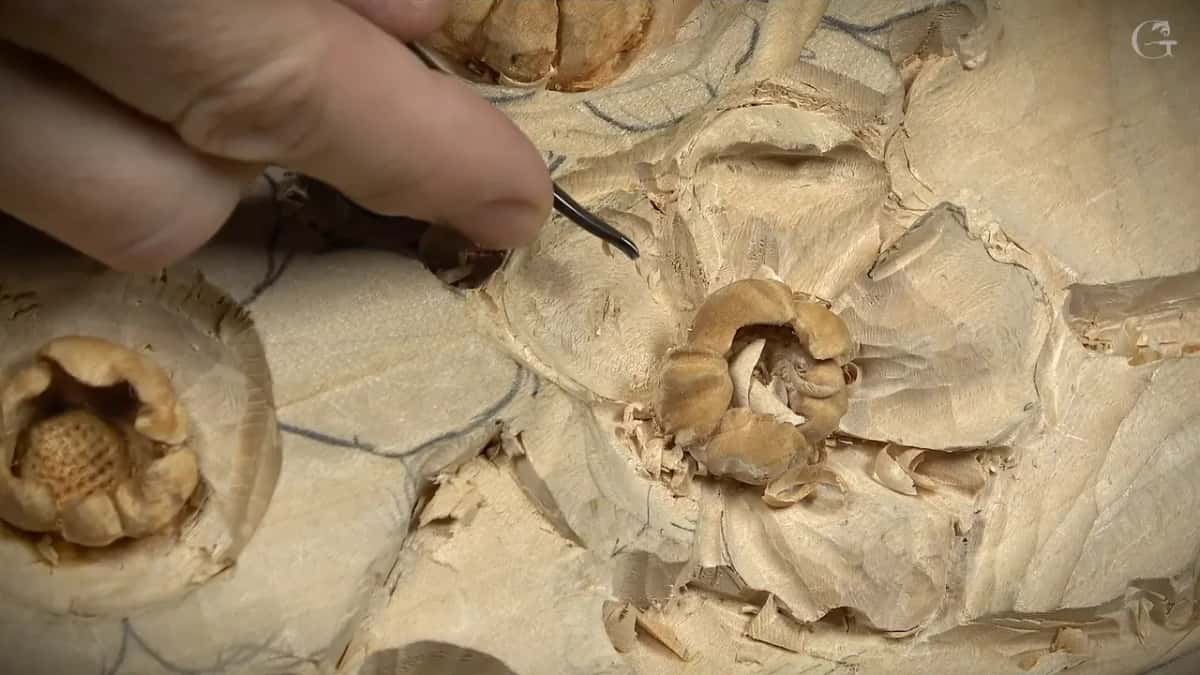
And on the Venetian flowers rosette a tiny antique tool, about a number 9, that curves only about 5 mm (3/16 in) cleaned a spot that's not easy with just the normal tools. See how small that is, I said, and it's just like it's supposed to be, nothing broken. For me a tool like that is just like a lifesaver. Tiny tools in general get their own page, the micro tools from the Venice Room.
Which makers did I name on camera?
Marples comes up again and again. On lesson 7 of the moldings course, I took a number 7 just 3 mm wide, an eighth inch, the old Marples and Sons from when they just started, and said I really like the quality of the tools they made. It was already used when I bought it.
I'm not a fan of just the one brand, I said in that lesson. I prefer some brands more, but even in the ones I don't prefer I still find some tools other brands don't make. Who trained whom among the old English makers is a story from lesson 9 of that course.
An old Marples flat gouge, a number 1 with a bevel on both sides, came out in Maine. Antique ones were really good, I said, and that one was really sharp. It went almost all the way through everywhere.
Working on the floral and molding panel, lesson 4, I hesitated first. I do have some antique tools, but I don't know if I should use one or not, I said. Then I took one of the Herring Brothers, a bit more than one eighth of an inch, and said I kind of like that brand. It fit perfectly.
Earlier on that same panel I first thought of a number 3, a really small one, then changed my mind. I used a number 1, a small tiny one, an antique dovetail that's still a spoon. With it I removed some of the material right there.
A quarter inch number 3 on the grape onlay, about 6 mm, was antique and a really good one, I said, an American brand. Another antique 3 there came to 11 mm, a little bigger than three eighths, and it probably used to be half an inch before.
Where do old carving tools turn up?
I got one of mine as a gift. I was teaching at the Marc Adams School of Woodworking, and one of the guys brought a whole bag of old antique tools. He got that at a garage sale. A woodcarver died, and the tools went to this guy for really cheap.
You're welcome to get any one of them for free, he said. I found one which I really love, a really beautiful tool, a number 9 gouge. I told that story on a livestream about sharpening the number 11 veiner.
Old tools from seven of my lessons, side by side
Seven of those old tools sit together below, with the job each one did and my words about it at the time.
The old tool | What it did on that one piece | Which lesson | What I said about it then |
|---|---|---|---|
Small number 3 | chopped the triangle at the highest bunch | Hazelnuts 5-1 | 10 mm, and I like it |
Old V tool | shaped a wave, coming from both sides | Maine 10-3 | nobody needs one, I told them |
Old dovetail spoon | removed some of the material right there | Floral 2-3 | an antique by Marples, I said |
Unmarked half inch | attacked the sides first, taking them low | Acanthus 6-1 | by eye, nine and a half |
Tiny hooked spoon | went right underneath to make the undercut | Furniture 27-3 | new makers don't make this one |
Tiny antique 9 | got underneath and dug really deep there | Venetian 3-3 | just like a lifesaver, for me |
Antique number 11 | brought me much closer to the outline | Grape 6-1 | really love that one, I said |
Want to watch these tools at work?
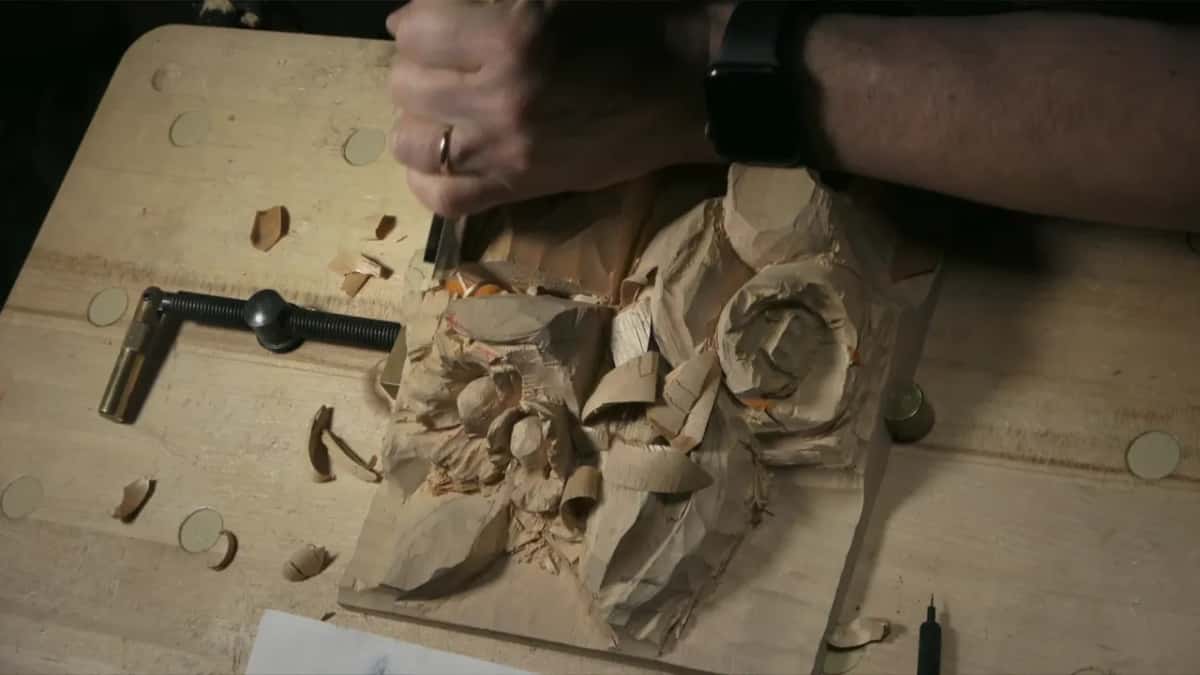
The whole hazelnut panel is in Carving Hazelnuts, and this bunch is lesson 5, in three parts. The tools themselves get their own course, All about tools for Wood Carving, and sharpening has its own too. Every lesson is wood carving by hand. The Maine class takes its name from Grinling Gibbons, and the moldings course from the acanthus leaf.
If you want to carve along, Tuition and Access opens every lesson. It renews automatically, monthly or yearly, until you stop it.
Got an old gouge in a drawer, or a new one still in its box? Either one will start a hazelnut.
How it's done
- Name the sweep by eye. Look at the old gouge and call the nearest number. I read one of mine as 9 1/2 without any stamp on it.
- Judge the width. Size it up. The number 5 on my hazelnuts came out at about 16 mm.
- Round it to a number you know. A 7 and a half can work as a 7. I said an 8 or a 9 would work there as well, on the furniture panel. Don't overcomplicate.
- Give it a job. Use it where it fits, the way that 10 mm (3/8 in) antique chopped the first triangle on the highest hazelnut bunch.
- Buy new where you have no old. No antique V tool? Pfeil makes a number 16, as I said in Maine.
Frequently asked questions
Can you carve well with only new gouges?
Yes. In my Maine class I worked with an antique V tool and said nobody needs to own antique ones, and that Pfeil makes a number 16 too. After one small old gouge, an Ashley Iles gouge and a Pfeil carried most of the work on my hazelnut bunch.
How can you tell the size of an unmarked old gouge?
Look at it first, then at its width. I named one a 9 1/2 just by looking at it. The antique 5 on the hazelnuts I judged by its size, near 16 mm, and for a fishtail with no stamp I said a 7 will do.
Where can you find antique carving gouges?
A man in my class at the Marc Adams school once brought a whole bag from a garage sale and let me take one for free. Tiny spoon shapes nobody makes anymore turn up on eBay sometimes, I told viewers twice.
What to carve next