
August 30, 2024 · Updated August 18, 2026
By Alexander Grabovetskiy — Master Woodcarver · Founder, School of Wood Carving · 18 min read
What wood is the strongest?
Strongest wood is not one species, because strength is four different tests and the winners disagree. Ask what wood is the strongest and the honest reply is another question: strongest against dents, against bending, against springiness or against crushing? I carve for a living, and the winner of the dent test is often not the one that survives a load. Ipe wins three tests out of four. Lignum vitae, harder than all of them, loses three.
You came here for a name. One wood, one answer, done. I understand that, and the names are coming in a minute. But this question breaks apart the moment anybody looks at real numbers.
Somebody sold you a sentence somewhere, in a lumber yard or a video, and it went like this. Mahogany and walnut are the toughest woods you can carve. Or the other one, where lignum vitae is the hardest wood on earth and must therefore be the strongest. Both sentences float around and get repeated, and neither one answers what you asked, because hardness and strength are two separate properties of the same board and they do not rank species in the same order.
The short version
Five lines, if you only came here for the answer.
- Four separate laboratory tests hide behind that one word, and nothing tops all four.
- Bending, springiness and end grain crushing all go to ipe. Only the dent test escapes it.
- The biggest dent number here belongs to lignum vitae, which then drops to fourth for bending.
- Boxwood beats hickory at the surface and loses to it on springiness, and that pair is the whole argument.
- Europe's oldest carvings sit in oak and lime, both soft on paper. Dry timber outlives a chart position.
Here is my plan. I will lay out the four measurements the wood people use, put all four side by side for twelve species in one table, then name which one wins which test. After that comes the part no chart shows you, what a hard wood costs your hands and your tools. I have paid that price. And I will finish with the wood that outlived every other one in Europe, which is not near the top of any column.
What does "strongest wood" actually mean?
Strongest wood means four separate tests, and a species can top one of them while sitting in the middle of the other three. Wood is not steel. It is a bundle of long tubes glued together with lignin, and that bundle can be loaded four ways, so people wrote down four numbers.
Plain words for each one.

Janka hardness is the dent test. A steel ball gets pressed into the face of the board until it sits halfway buried, and whatever load that took becomes the number. One question, one answer. Will a dropped hammer leave a mark. I wrote out the whole procedure on the page about what Janka hardness of wood means, and there is a short technical version at the wood database plus a longer history on Wikipedia.
Modulus of rupture is the bend test. Lay a stick across two supports, push down in the middle, keep pushing until it snaps, and work the breaking load out per square inch. The test setup is explained here better than I could explain it. This is your number for a shelf, a mantel bracket, anything carrying weight across a span.

Elastic modulus is the spring test. Push the same stick, stop before it breaks, and watch how far it bows. A stiff board barely moves. A springy one sags and comes back. Two pieces can fail at the same load and feel completely different on the way there, so it earns a column of its own, and the database calls it the deflection number. My longer piece on what the elastic modulus of wood means goes deeper.
Crushing strength is the squash test, and it runs the long way down the grain. Stand a short block on end, press straight down on top, record what it takes to buckle the fibers. Table legs live and die by this, and so do the posts under a stair.
Dents, bends, springs, crushes. Four questions with four answers, and no rule anywhere says one species has to win all of them. The Forest Products Laboratory Wood Handbook lists them as separate mechanical properties for exactly that reason.
Which wood is the strongest?
Ipe takes three of those four tests, and the only column it loses is the dent test. Every figure below came off the species page linked under the table, and all four sit together so the running order comes apart as you read across.
| Wood by name | How much load it takes to dent | Bending strength | Stiffness, how far it springs back | Crushing strength lengthwise |
|---|---|---|---|---|
| Ipe, which gets sold as Brazilian walnut | 3,490 lbf | 25,740 psi, best on this table | 3,089,000 psi, highest | 13,160 psi, and nothing here comes close |
| Lignum vitae | 4,390 lbf, hardest on this table | 17,970 psi only | 2,481,000 psi, second only to ipe | 12,380 psi |
| Gaboon ebony, the black African wood | 3,080 lbf here | 22,930 psi, which beats lignum vitae easily | 2,449,000 psi | 11,060 psi, third on this column |
| Shagbark hickory, American | 1,880 lbf, well under boxwood on hardness | 20,200 psi | 2,160,000 psi, stiffer than boxwood is | 9,210 psi here |
| Boxwood, European box, a slow growing tree | 2,940 lbf | 19,800 psi, under hickory despite hardness | 1,779,000 psi, lower | 10,334 psi, above hickory but under ebony |
| White oak | 1,350 lbf, well down the list | 14,830 psi still | 1,762,000 psi, within a hair of boxwood | 7,370 psi |
| Black walnut, the American furniture wood | 1,010 lbf only | 14,600 psi, which white oak just beats | 1,680,000 psi | 7,580 psi, a touch over oak |
| Hard maple, sugar | 1,450 lbf, a hundred over white oak | 15,800 psi | 1,830,000 psi, above walnut and oak | 7,830 psi here |
| Basswood, the carving wood in most shops | 410 lbf | 8,700 psi, near the bottom here | 1,460,000 psi, low | 4,730 psi, and a mallet is optional |
| Douglas fir | 620 lbf, a softwood used structurally | 12,500 psi here | 1,765,000 psi, almost exactly white oak's figure | 6,950 psi |
| Butternut, sometimes sold as white walnut | 490 lbf only | 8,100 psi, the weakest bend listed here | 1,180,000 psi | 5,110 psi, above basswood but barely |
| Eastern white pine | 380 lbf, softest surface on this table | 8,600 psi | 1,240,000 psi, under basswood on stiffness | 4,800 psi here |
Sources, one page per row: ipe, lignum vitae, gaboon ebony, shagbark hickory, boxwood, white oak, black walnut, hard maple, the basswood species page, Douglas fir, butternut, eastern white pine.

Now read down each column and watch the running order come apart in your hands. Ipe sits second on hardness and first on the other three. Guaiacum officinale, which everybody calls lignum vitae, is first on hardness and fourth on bending. The black ebony lands third on the dent test and second on bending, which is nowhere near where conversation usually puts it.
Want one name for a piece that has to hold weight? Ipe, and the gap is not close. For a surface that has to shrug off a boot heel and a dropped chisel, the answer flips to palo santo, which is the trade name for lignum vitae. Two different woods, both answers correct, and that is the whole argument of this page.
Is lignum vitae the strongest wood, or only the hardest?
Hardest yes, strongest no, because that wood reads 4,390 lbf on the dent test and still loses three of the four measurements to species almost nobody names. Its bending strength comes to 17,970 psi. Ipe breaks at 25,740. The gaboon ebony page reads 22,930.
And shagbark hickory, a wood that dents at 1,880 pounds, breaks at 20,200 psi.

Sit with that last pair for a second. Hickory is less than half as hard and it carries more bending load before it snaps. One pair of numbers kills the whole idea that hardness and strength are the same word wearing two coats.
Guayacan earned its reputation honestly, just not for the reason people repeat. The the white oak species record and the wood database both point at the same job it did on ships, which was propeller shaft bearings. That job wants a wood that will not wear away under a spinning steel shaft sitting in salt water. Dent resistance and natural oil are precisely right for it, and bending strength never enters the room.
So when somebody hands you the line about the world's strongest wood, they are quoting a bearing spec and calling it a beam spec. The measurement is real. What got built on top of it is not. My companion piece on the densest wood ever recorded follows the same confusion further down the road.
Why is boxwood harder than hickory but hickory the stiffer wood?
Boxwood reads 2,940 lbf against hickory's 1,880, and hickory is still the stiffer board at 2,160,000 psi against 1,779,000. More than a thousand pounds of hardness separate them, in boxwood's favor, and hickory takes the stiffness column anyway by roughly 380,000 psi.

These two tests ask about different parts of the wood. A dent is a surface event. The steel ball crushes cell walls right where it lands, maybe two or three millimeters deep, and the rest of the board never hears about it. Stiffness is a whole-beam event instead. It depends on how the long fibers run down the length of the piece and how well they resist being stretched on one face while squeezed on the other.
Boxwood grows slowly and packs its cells tight, so you get a surface a tool can barely mark, which is what high density wood buys you. Small, twisted, short stems, though. The long straight fibers that make a stiff beam are simply not in there. Hickory grows tall and straight and its fibers run for feet at a time. Different tree, different job, different column.

Anybody who has held both blocks knows this without a chart. Boxwood feels like a bar of soap made out of stone. Hickory feels like a spring under your palm. Both feelings are honest and both sit in the numbers, in separate columns. The density side of this gets worked out on the page asking whether denser wood is stronger, and the wood guide entry for boxwood as a carving material covers how it behaves under a gouge.
Which strong wood can you actually carve?
Walnut and cherry hold detail beautifully, oak will hold anything you carve into it, and even the hardest species on my table is workable once you are honest about what it takes. Any wood is carvable pretty much, except really rare and it is really impossible, like ebony.
Even ebony, it is still possible to carve, but it is dense.
That is my honest position after forty years at the bench, and notice what it is not. Nowhere in there is a list of woods you are forbidden to touch.

Cherry and walnut, they hold the detail really nicely. Walnut is a little harder than limewood and basswood, and it is somewhat forgiving, so sometimes you could go against the grain and get away with it. At 1,010 lbf it dents easier than half the woods on my table, and it still carries a shelf. My page on carving walnut has more on how it behaves.
Oak is a different animal altogether. More crunchy, with a lot of grain in it, and the sound of carving oak versus limewood is absolutely different. You hear what the wood is before you see it. See the species page for red oak if you are weighing one against the other.

Then there is the thing that makes no sense. Basswood, one of the softest woods on my table at 410 pounds, dulls my tools a lot quicker than oak does. Forty years in and I still cannot explain it. It happens anyway, every single time, and it has been happening for years.
When somebody complains about walnut or cherry or basswood or limewood, the problem is not the wood. The problem is the tool. I have watched that turn out to be true in class after class, more often than anybody wants it to be. Which woods are genuinely hard to carve is the wood database page for ipe and it sorts them out, while the species page for basswood is the one to read if you are picking a first board.
How do I pick wood when the piece has to take load or daily wear?
Name the load first, then find the one column that measures that load, and only then read the hardness figure. Most people work backwards. They find the biggest Janka number they can afford and hope everything else follows along behind it, and it does not.

Step 1, name the load in a full sentence
Say out loud, in one plain sentence, what this wood has to survive. Books on a shelf make it bend. A table leg gets crushed from above, straight down through the grain, every hour of every day for as long as the piece stands in somebody's kitchen. Ten thousand palms wear a handrail smooth. And a dropped pan dents a floor. Four different failures pointing at four different columns, so write that sentence before you write the shopping list.
Step 2, read the column that matches, not the famous one
Bending goes with modulus of rupture. Sag belongs to elastic modulus. A vertical post under load belongs to crushing strength. Surface damage is all Janka answers. Ipe leads the first three columns, which is why decks get built out of it, and white oak at 14,830 psi beats black walnut at 14,600 for a bending job even though walnut carries the better reputation.

Step 3, check hardness only where hands and feet land
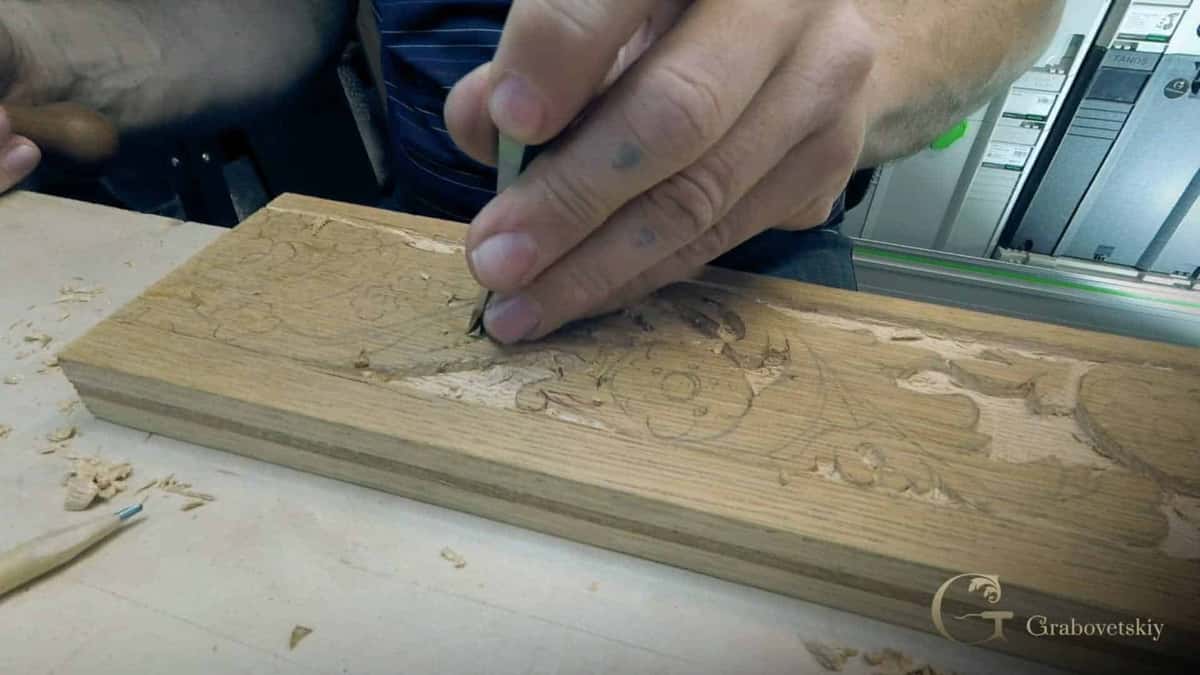
Stair treads, countertops, chair arms, floors. Hardness earns its money on those. It earns almost nothing on a bracket inside a cabinet that nobody will ever touch, so paying lignum vitae money for a hidden support buys a column that does not apply to your piece.
Step 4, look at the board in front of you, not the average
Every figure in my table is an average across many samples. The plank on the rack in front of you has its own grain and its own knots and its own drying history. Straight grained white oak will beat wild grained hickory in a bending job, whatever the chart says. Read the board.
Step 5, carve a test piece before you commit the stack
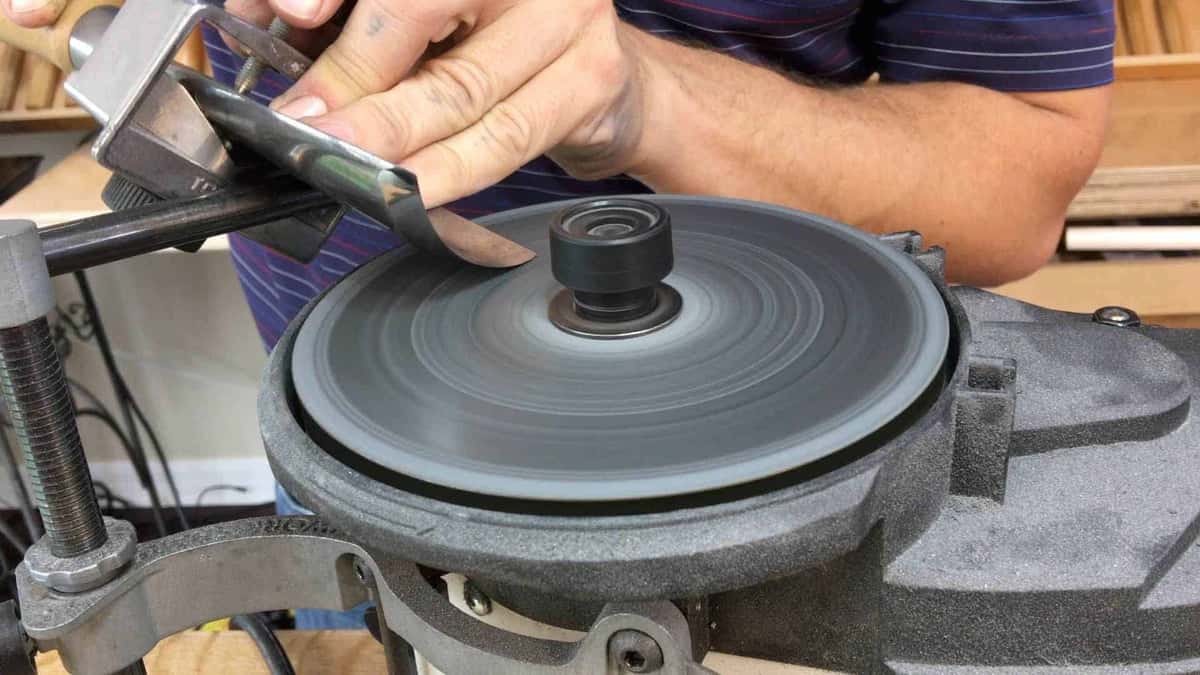
Buy one board. Carve a corner, bore a hole, clamp it and lean on it hard. Ten minutes of that teaches more than an hour of reading, and the tuition is one board instead of twelve. Our wood guide has a page per species if you want to check a candidate before driving to the yard, and my piece on what wood to use for carving covers the usual first choices. New to all of this? The start page is the place to begin.
Step 6, decide how long the piece must last
A prop for a photo shoot and an altar panel for a church are not the same brief, and pretending otherwise is how people overspend on lumber. The honest version sits on my page about how long carvings last. Finish and room beat species almost every time.
What does a hard wood cost you at the bench?
Hard wood costs you edges, mallet blows, and a thicker bevel that gives up some of the fineness you wanted in the first place. No chart mentions this part. Every carver finds it out alone, usually on a Saturday, usually while swearing at a piece of oak.
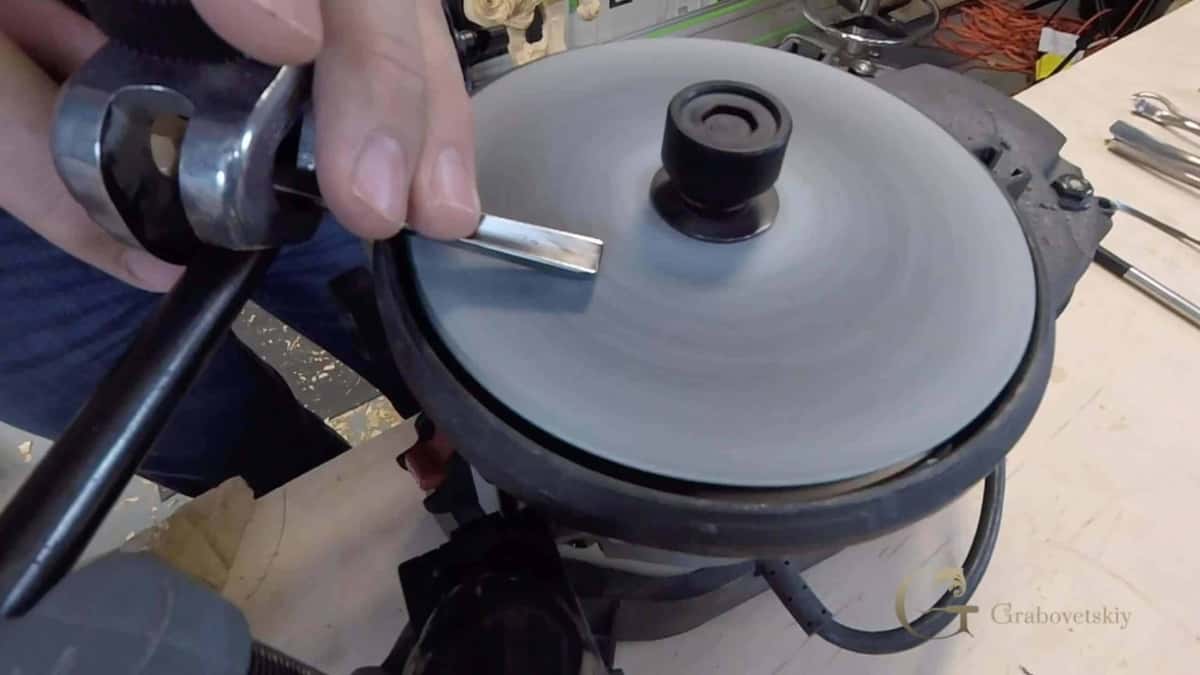
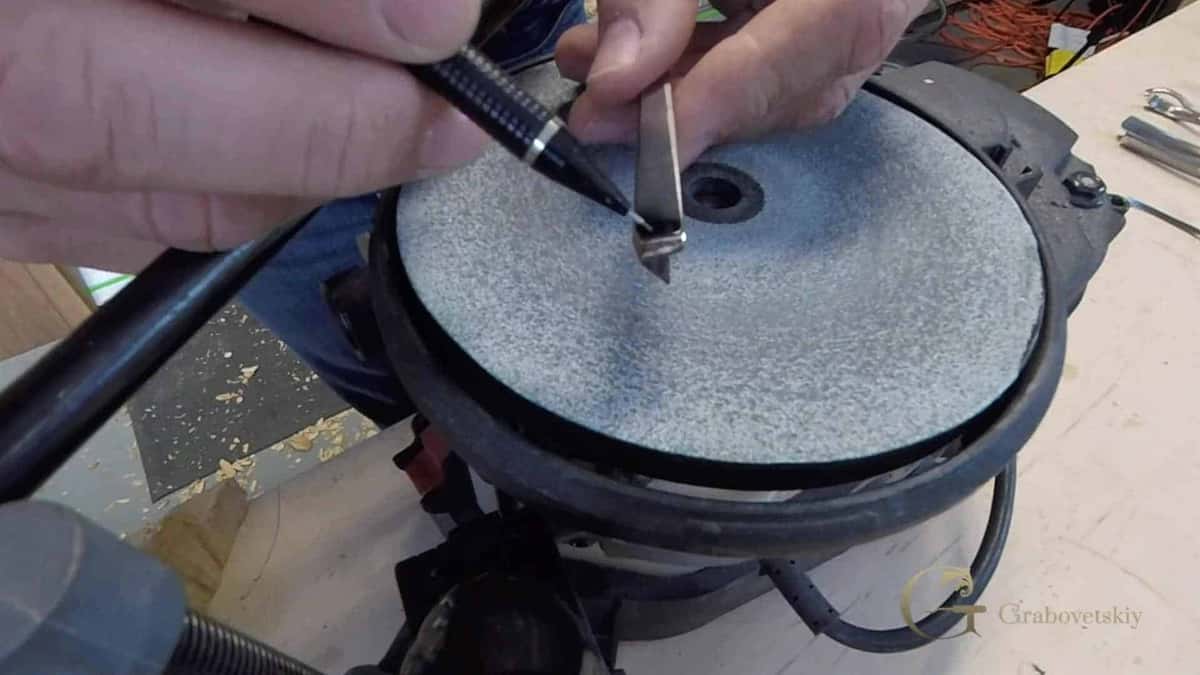
Start with the bevel. When I am carving oak I use a stronger bevel, because a low angle will break. And with a low angle you are still able to work oak, but the probability of breaking the tool is much higher. That is the whole trade in one sentence. Steeper steel survives the wood and pushes harder, thin steel slices sweeter and chips out on you.
Somebody always asks me for the angle. I am not measuring the angle, because a number on a page turns into a rule and rules stop people looking at their own tool. It comes to about between 18 and 22 degrees if you want to be really technical. Some of my bevels are actually really extreme, and some of them run a lot lower than that.

Then the mallet. Of course, oak is a harder wood, and to carve oak, most likely you have to use a mallet. Nothing about that is a failure of technique. Somewhere above a thousand pounds on the Janka scale the mallet comes out and stays out, and your shoulder says what the chart says. My page on whether you need a mallet covers weights and grips.
Grain fights harder in a dense wood too. The fibers are just breaking, not slicing, and you feel that crunch travel up the handle into your wrist. Reading grain direction stops being a nicety and turns into the difference between a clean surface and a torn one, which is why I send people to my piece on carving with the grain.
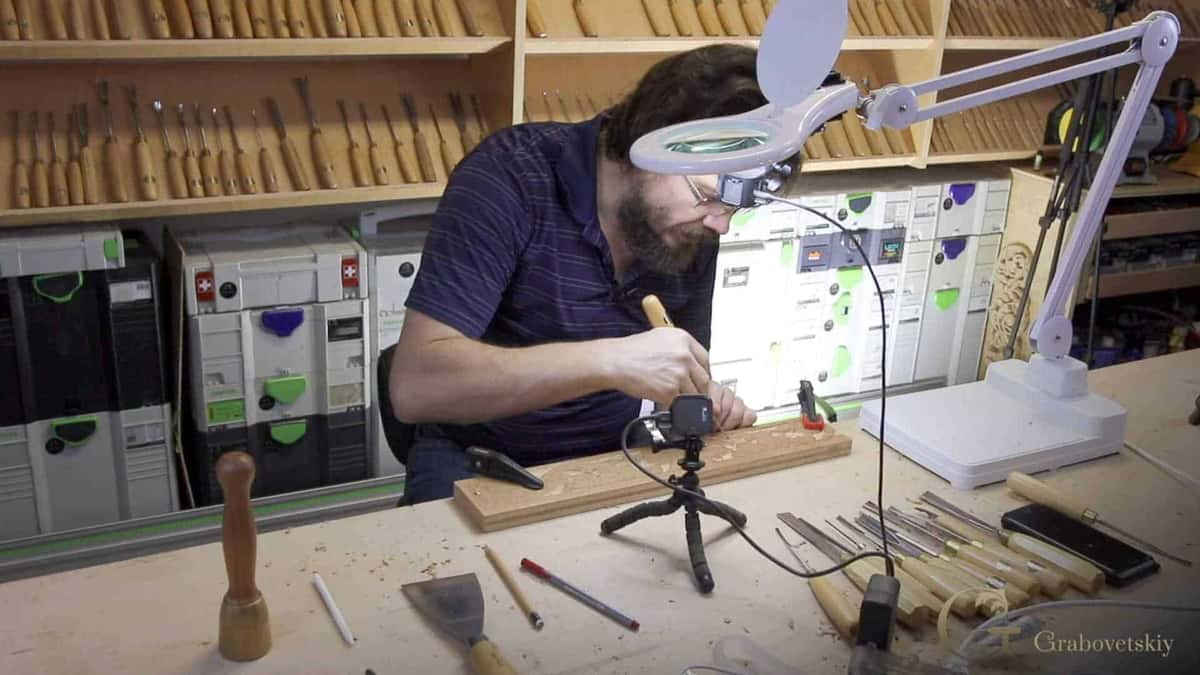
So the strongest wood on paper is very often the slowest wood in your hands. Ipe will hold up a deck out in the weather. I would not want to carve a leaf in it on a deadline.
Why did the carvings that survived get made in oak?
Oak sits at 1,350 lbf on the dent test, nowhere near the top of any column in my table, and it is what a great many of the surviving old carvings in Europe are made of. If you go to old churches, old ones, so you can find the beautiful carvings, but all done just in oak.

It used to be a tradition in England before the introduction of limewood. Carpenters and carvers over there used to carve just English brown oak, which is also a beautiful material, and probably one of my most favorite oaks. I believe the first person who introduced limewood to England was Grinling Gibbons, because in Europe, in Germany and other countries, limewood was the main timber for carving.
Take the work of Tilman Riemenschneider in Germany. Middle Ages, and he used limewood, the same wood exactly what we use today, and all his work has a brownish color. Limewood is basswood's European cousin, sitting at the soft end of nearly every column in my table. His work is still there to look at.

What kept those pieces alive, then? Dry buildings did most of the work, helped along by thick sections, honest joinery, and somebody who cared enough to keep the roof on, century after century. Hardness had almost nothing to do with it. A carving in ipe left out in the rain will die faster than a limewood saint in a cold German church, and that is not a paradox, it is just what survival actually depends on.
Which brings me back to your question, in a better version. Do not ask which wood is strongest. Ask what your piece has to survive, then read the column that measures it. That version has an answer, and the numbers are right up there for you.

We handle hard wood and soft wood side by side with real tools most weeks in the carving courses. The schedule of classes has its own page.

Frequently asked questions
What is the strongest wood in the world?
Three of the four standard measurements go to ipe, with a bending figure of 25,740 psi, an elastic modulus of 3,089,000 psi, and the best crushing number in my table. Only the dent test goes elsewhere, to lignum vitae at 4,390 pounds against ipe's 3,490.
Is lignum vitae stronger than oak?
On hardness, yes, by a wide margin, roughly three times the figure white oak posts. The bending gap narrows a lot though. Bending puts lignum vitae at 17,970 pounds per square inch and white oak at 14,830, so oak carries about 83 percent of that load for a small fraction of the money.
Does a higher Janka number mean a stronger board?
No. Boxwood dents at 2,940 pounds and shagbark hickory at 1,880, yet hickory is the stiffer wood by roughly 380,000 psi. Janka measures how well a surface resists a dent, one property, one depth. Nothing in it describes a beam under load.
What is the strongest wood I can still carve by hand?
White oak is where I would draw that line for most people, and hard maple at 1,450 lbf is doable with a mallet and a steeper bevel. Past roughly 2,000 pounds the work slows down enough that the piece stops being a pleasure and starts being a job.
Why is basswood used for carving if it is so weak?
Basswood reads 410 lbf and sits near the bottom of every column, and it holds fine detail with almost no tearing. Riemenschneider carved in its European cousin, limewood, in the Middle Ages, and his figures survived the centuries anyway. Weak on a chart and short lived are two different things.
Which wood should I use for a table leg or a post?
Look at the crushing strength column, since a vertical post fails by buckling rather than bending. Ipe leads at 13,160 psi, with lignum vitae next at 12,380 and gaboon ebony at 11,060. For furniture at a sane price, hard maple at 7,830 psi and black walnut at 7,580 psi both do the work well.