

Alexander Grabovetskiy, woodcarver, School of Woodcarving · Published 2020
What does a wood carver mean by "dilute"?
Quick answer: Workshop 95, part 6, holds a plan for glue and water, a translucent glue and a line about putting none on. Other lessons of mine use the word for yellow glue, shellac, chalk and a color. Each passage is cued and linked below.
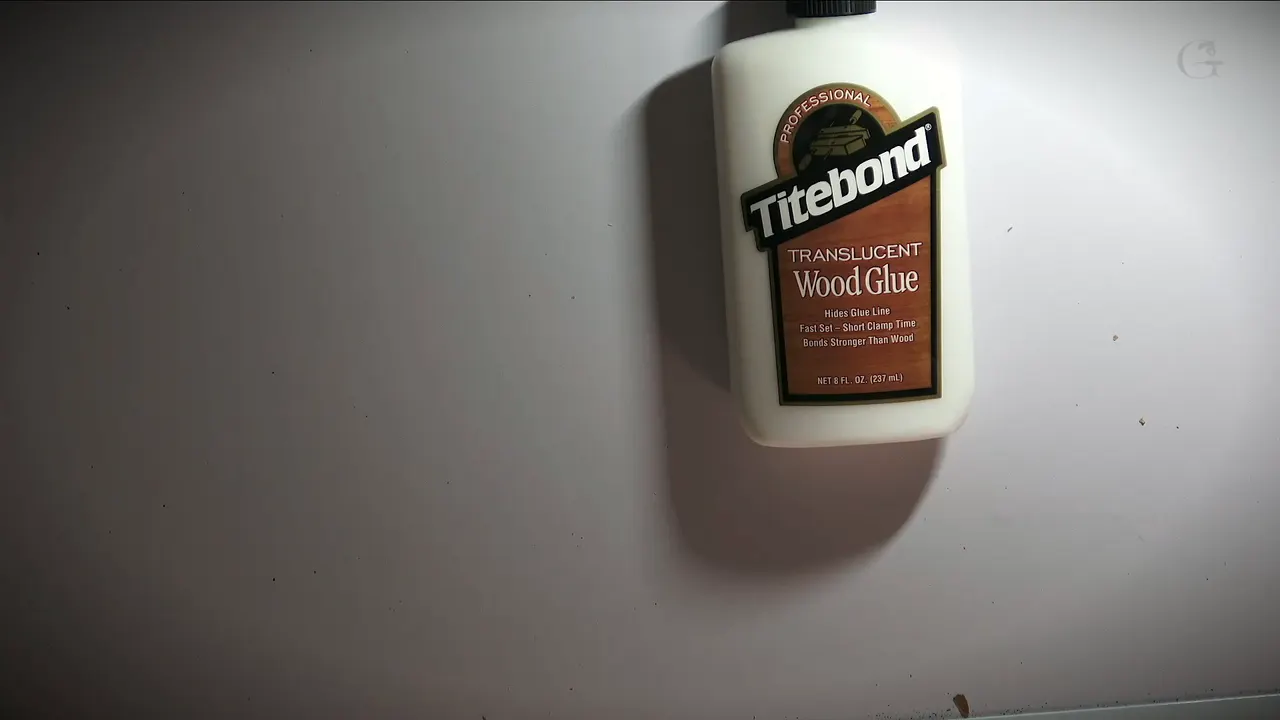

In workshop 95, part 6, I say "I mean, I could dilute some glue and penetrate that." Other lessons of mine use the word dilute for yellow glue, for shellac, for chalk and for a color, using water, and spirit for the shellac. This page sets those lessons side by side.
Have you ever looked at a thin edge of wood and wondered how it would hold under your tool? Do you wish you had a way to make it more stable? Come through workshop 95 with me and read the lines around the word. Every lesson I borrow from is named and linked.
A short list for part 6
- A shape comes first, with number three, then number five, and a number 7 gouge again.
- A leaf that "doesn't look as acanthus yet", so a separation has to go farther.
- Two small tools: a 2 mm (about 5/64 in) number 11, and a 1 mm (0.04 in) one.
- A glue named Titebond, a translucent one. Also this line: "I don't want to put any glue."
- A direction to change, with a 3 mm (0.12 in) number 11, then a smaller one, for a deeper hole.
- A part I am "not too happy" with.
Where do I say dilute in part 6?
The glue lands in the middle of the video, after small tools and a word about being careful. Before it I say "I have to be careful." Paint is mentioned next, then "It's going to be more solid." And: "I'm not going to worry about breaking it," and "and I don't want to put any glue."
A name for the glue is next. "So I kind of like lately talking about this Titebond glue." And "It is translucent glue."

Here is the line: "And, you can just dilute with the water that glue and penetrate the surface." After that I say "And that's going to create a more rubbery, more solid." My reason is "You can stabilize the texture because there is a strong presence inside of that glue."
Back at the tool, the video has "Carefully, carefully, carefully." and then "Get in and take my time."
What does part 6 do before it gets to the glue?
It opens with "Shouldn't rush." Later: "All right, that is good." Next is "So now I need to fix overall shape of it." Number three is named next. Soon after, I find "And I've got the same problem right here,".

My next plan is "I need to fix overall movement with number five." A number 7 gouge follows. "I'll try to be careful this time."

A verdict follows: "Ok, that is not bad, except I have exactly the same problem," and "not the problem, but it doesn't look as acanthus yet." The fix is a plan: "So which means I need to bring this separation all the way to this point." And "Otherwise, it's just not looking right."
For it I name "small tools like number 11 and two millimeters", which is a 2 mm (about 5/64 in) number 11. After that, "Start digging out some of the excess materials".

How does part 6 end?
A smaller tool comes in: "And I will use a smaller tool." Next, "To get rid of the waste on the inside number three." The size is "One-eighth of an inch." In metric, 3.2 mm. The verdict is "OK, that is good." and "Wonderful."

A problem with direction follows: "it just creates the illusion it's supposed to go this direction." My plan is "But what I have to do, I have to create the illusion that's going to go this direction." And "I need to widen it like this a little bit."
A correction comes: "Not widen, but, just change, the direction, slightly create the small movement." A second line reads "Maybe even deeper movement."

The tools are a number 11 at "three millimeters" (0.12 in), then "two millimeters" (roughly 5/64 of an inch). I say "and again, really carefully and to create this eye." The line on the hole is "And excavate a slightly deeper hole, and that's already looking better."
The video stops on a plan and a verdict: "I'm not too happy how this part looks." "So I need to remove some of that excess material from underneath," and, for the movement, "because it does not look good yet."

Where else do I say dilute?
This word sits in my carving lessons: Venetian workshops, a Roman acanthus lesson, a Greek acroterion, a tray, a lily box, a floral panel, a tip about back cutting and a livestream. Each passage below is cued to its video and linked to its lesson page. A few mean glue before I carve, a few mean a color, and one means chalk on old houses.
How does dilute work in workshop 28?
A detail is weak in workshop 28: "It's already too weak." Next: "Maybe I have to just penetrate." A condition follows: "if you're not planning to put stain on it,".

The mix comes after that. "So the way you can make that detail stronger, you just dilute glue, yellow glue, just normal yellow glue like Titebond or so in the water, and penetrate all that wood right there."
My plan, still in workshop 28: "That's probably what I'm going to do since it's going to be paint, so it's not going to create the problem of blotchiness."
The tools come after it: "Okay, I'm using a really small number three, and I can excavate, and I can clean inside one-eighth of an inch." That is 3.2 mm. Next, "And again, I'll use one millimeter." In inches, that comes to 0.04 in.
Does diluted glue show up again, this time in workshop 35?
Yes, as a plan. At one spot in workshop 35 I say "Okay, have to be careful right here." And "Maybe I do have to penetrate that with the diluted glue."

Beside it sit "And I've got right there I could do a separation," and the words "extra small eye."
What did I plan in workshop 112?
Workshop 112 has its own plan: "I can always reinforce it." Then the how: "What I'm talking about, I can just get glue diluted with water and penetrate it with the glue."

Paint and stain are the two finishes in these lines. A grade comes with each: "a paint grade, so it should not create any problem." And "If it would be a stain grade, then it would be blotchy." Then: "So it would create blotchiness. It would be a mistake."
How thin is the edge in the Roman leaf?
In Roman acanthus 11 I talk about an edge: "This edge becomes really fragile." Then "There is a way to make that edge more stable."

The way is "You can dilute some glue, even yellow glue, just a carpenter's glue, like a Titebond," plus "More water than glue, dilute it really good," and "and penetrate the fragile parts."
The glue has a reason in it: "the yellow glue has some resins in it," and and then "you can work more safely without it breaking." A note on my own habit follows: "I usually don't use that technique, but you could." The gain is "You can get to the really unique thinness, like a paper thin, and still be safe." And a warning: "You'll still be able to break it if you overdo it".
What is the mix for back cutting?
In a simple tip for back cutting the numbers come first: "you actually dilute that 50/50". Water is the other half. After it: "So that is what I have, just dilute it." And "brush it on."
The limit is stated: "that method is good only, only if you're not planning to stain."
Which glue stays as it comes for the Greek acroterion?
In Greek acroterion lesson 4 the question is about a paper pattern: "Some of you asking why I don't dilute my glue when I'm gluing my paper," Of adding water, I say "I don't think it's anything wrong with that. You can probably add water." Then "it has a tendency to penetrate inside of the fibers of the wood."

A clear coat is fine: "you are planning just on a clear coat, then I don't think it's a problem." A stain changes it: "I found out, even if you're sanding and you apply your stain, you can see some spots."
Glue straight from the bottle goes another way: "I don't see that problem." And "You can see it's actually staying right on the top of my work piece, and it's not penetrating at all."
Do I dilute shellac too?
Yes, in lily box lesson 6. A line sits earlier in that stretch: "you can undercut as extremely as you wish." Then comes spirit: "you can dilute a shellac as much as possible by using spirit and penetrate multiple times."

Next comes glue: "dilute just a carpenter's glue," and "soak that area with that glue." I also say "that glue has a resin on inside." Last is a trick for a fragile piece: "Before you carve it, before you touch with the knife, you can always do the same thing. Just get glue, dilute with the water, and carve after it's dry."
What changes in the Tray of Blessing?
The tray lesson has a worry about short grain: "Because the grain, you know, the short grain and you can break it." Then, about a glue, "and also penetrate with the resin."

Why did chalk go into water on old houses?
In Floral and Molding lesson 13 I talk about houses: "You go to Ukraine, you go to in Russia, some of the houses inside and outside, just covered with the chalk." The methods differed: "Of course, the methods, they were a little different." Next: "They would take chalk, put that in the water, dilute that, and then just brush on."

I add "It wasn't that efficient. The rainy season would just wash off a lot of that stuff." Then about today's chalk paint: "And now it's waterproof."
Does water thin a color in the lily box?
In lily box lesson 13, the fifth video, I say "And the color is raw umber." Later in that video comes acrylic paints: "But if you're going to use acrylic paints, so you're going to cover, unless if you just also diluted a lot".

The raw umber gets water: "just using water, I dilute that and whatever consistency and the darkness I need." And near the end: "it still penetrates inside, but not as much as a dye."
The seventh video says "I like this product because it gives me ability to take care if I apply too much of the color, I can actually put just some water." And "dilutes that product so nicely," with "I can just blend it really, really quickly".

The ninth video has a payoff for pigment, and it is small: "just a little bit of pigment." And "It just gives that lighter effect without destroying the grain of the wood."

What glue did I name on a livestream?
In a livestream in October 2020 I say "But the way to prevent and not to break it, what you can do, you can actually take glue, okay?" It is "this one is a translucent glue." The livestream also has "you can actually dilute that" with a little water, and after it "and then you just brush that on a piece of wood". On what it does, the livestream says "penetrate inside of the fibers."

Where do the dilute lines sit, side by side?
| Where I say the word, by lesson and video | What sits beside it |
|---|---|
| My own video in workshop 95 | A plan for glue and water, a translucent glue, and a line about holding off |
| Workshop 28, ninth video | Yellow glue in water on a weak detail, with paint ahead |
| A careful spot in workshop 35 | A plan for diluted glue, and an extra small eye |
| Third video of workshop 112 | Glue diluted with water, a paint grade, a stain grade that blotches |
| Roman acanthus 11, fifth video | A watery mix for an edge that turned fragile |
| A tip for back cutting | Fifty and fifty, brushed on, and not for stain |
| A livestream in October 2020 | A translucent glue thinned a little, then brushed onto the wood |
| Ninth video of lily box 6 | Shellac thinned with spirit, then glue, then carve when dry |
| Greek acroterion 4, first video | Why a paper pattern gets its glue as it comes |
| The Tray of Blessing 5, first video | Short grain, a glue to penetrate, and a limit for staining |
| Floral and Molding 13, first video | Chalk put in water and brushed on old houses |
| The color video, lily box 13 | A color thinned until it has the consistency I need |
| Ninth video of the same lesson | A little pigment at the surface, and a lighter look |
How it's done
- Fix the overall shape first. Early on, the plan is the overall shape of the piece, with number three named next.
- Bring the separation to the point. A separation has to go "all the way to this point," or it is just not looking right.
- Name the glue plan. A Titebond is named, beside a line about not putting any on.
- Add water to the glue. Thinned in water, the glue gets "more rubbery, more solid."
- Go in with a smaller tool. A smaller tool gets rid of the waste on the inside.
- Change the direction a little. A 3 mm (0.118 in) number 11, then a smaller one, for a slightly deeper hole.
Frequently asked questions
Which glue do I name in part 6?
A Titebond, and a translucent one. In the same video I give my reason for the thinned mix: a strong presence inside of that glue. Paint gets a mention there too.
How much water goes in the glue?
The Roman leaf lesson favors a watery mix, and the tip on back cutting says fifty and fifty. The lessons give different mixes, so each one is cued above, in the lesson that gives it.
When does thinned glue cause trouble?
With a stain. A stain grade would be blotchy, says workshop 112, and in the Greek lesson you can see some spots. For paint, workshops 28 and 112 raise no worry.
What to carve next