
Alexander Grabovetskiy, woodcarver, School of Woodcarving · Published 2026
Why do you carve at a 45 degree angle when you can't go with the grain?
Quick answer: Carving at 45 degrees to the grain is my safer way to bend the grain rule. At one place on my hazelnut panel, a head-on pass would have broken the wood, and the good side was closed to me. So I came in on a slant, about 45, and under a minute later said the opposite direction gets 45 too.
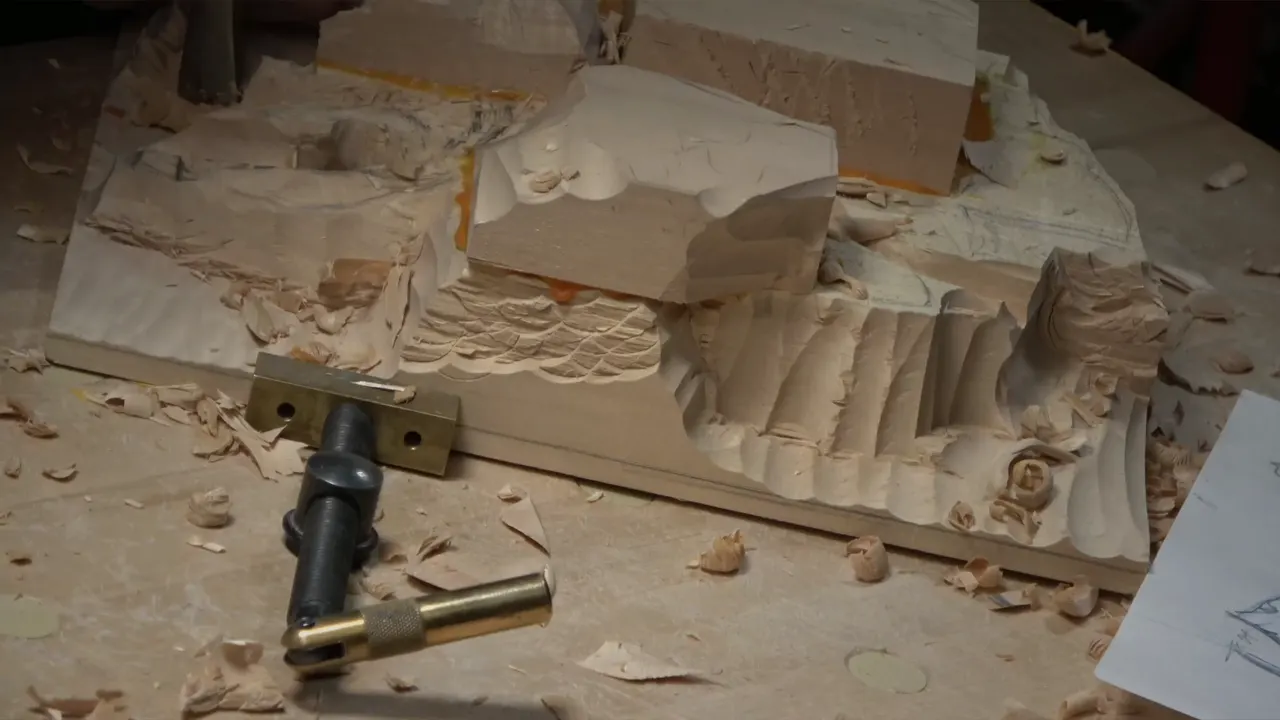
Carving at 45 degrees to the grain is how I break the grain rule when a shape leaves me no good side to come from. My hazelnut panel had one such spot, in part 2 of lesson 4. Across the fibers was my first plan there. A pass straight in would catch, I said, and break the wood, and there was no way in from the side I wanted. So I came in on a slant. Under a minute later the opposite direction got the same 45, as I said on camera. If you searched for wood carving grain direction, this is what it looks like when the grain wants one thing and the shape wants another.
Have you seen wood split ahead of a blade, on a kitchen board or a stick for the fire? Did the split follow the lines in the wood? Those lines are the grain, and at one small place on my Carving Hazelnuts panel they ran against me. Below is what I did there, in order, with the tool I held. After it come other pieces where I said the same thing another way, like a Cabernet tray, my Venice Room carvings, a furniture panel and three acanthus leaves.
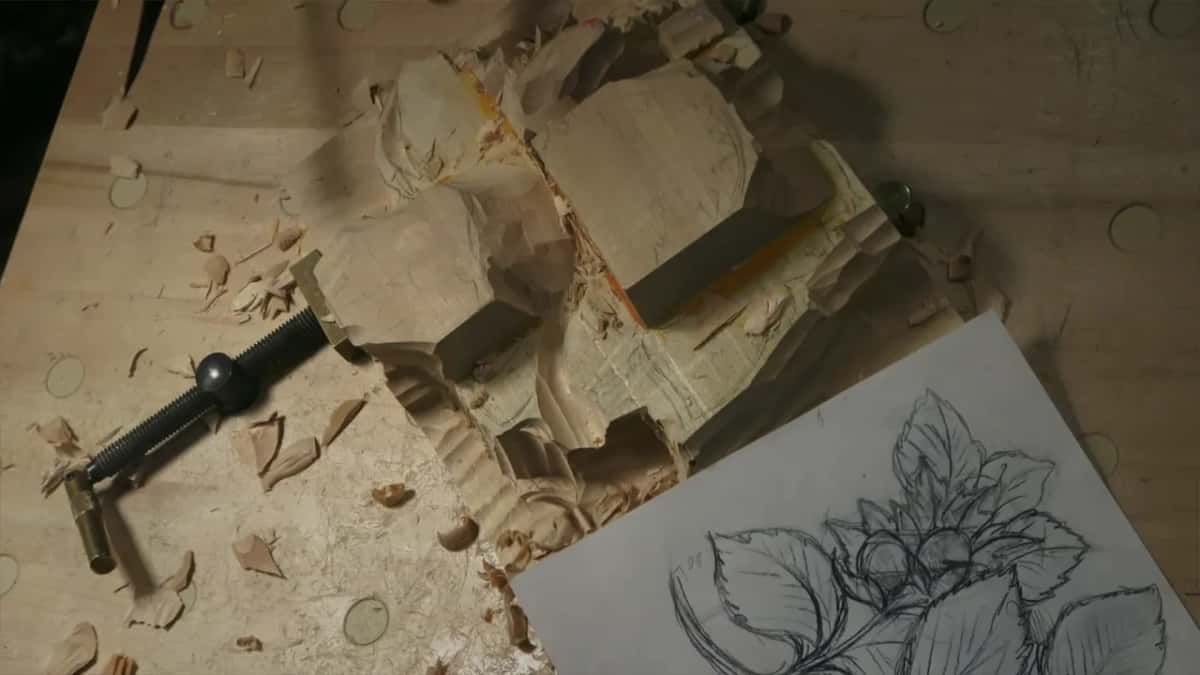
What happened at that one spot, short version
My plan was a number 9 fishtail, 10 mm (3/8 in) wide, at right angles to the fibers.
Driving it straight in was off the table, because the wood would break.
Nothing could reach it from the good side. "It is impossible," I told the camera.
A slant of about 45 was my answer, and I called it safer.
Fifty seconds on, the opposite direction, also 45.
Only then did a nearly flat Ashley Iles number 3 clean my background.
Which way did the gouge go before the 45?
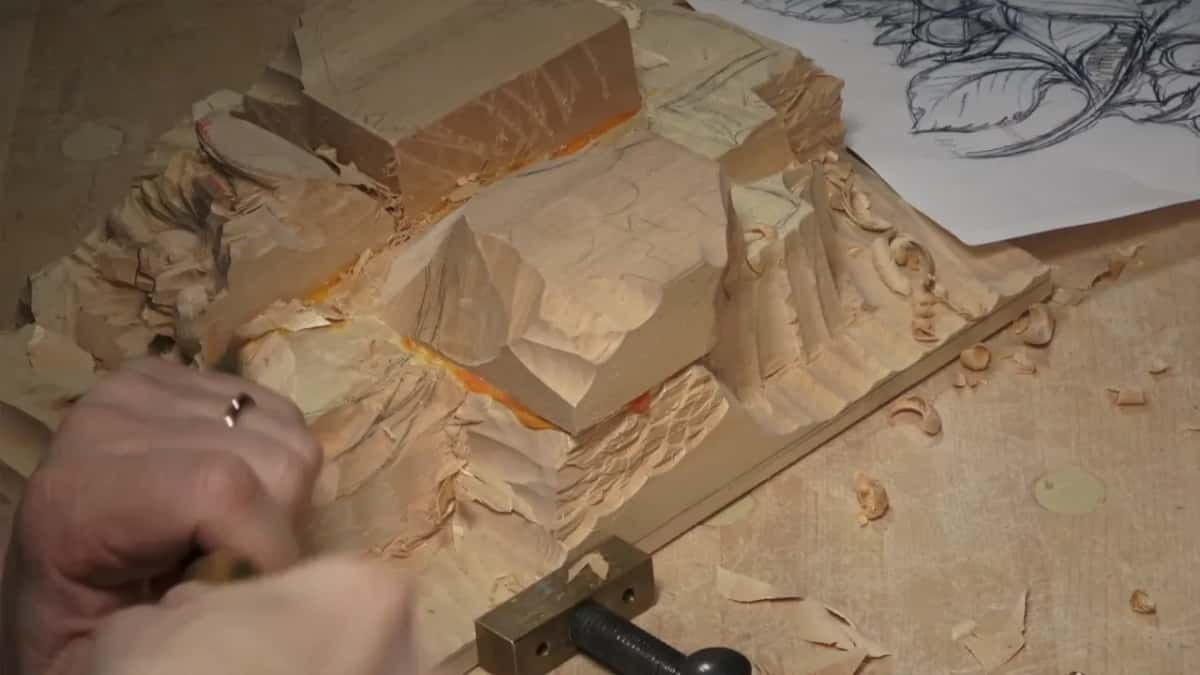
Crosswise, at a right angle to the fibers. Lesson 4 was still what I called the blocking-in stage, and a leaf had to go under a husk. Then I turned to one more place. It could go, I said, with the same number 9 and 10 mm gouge, the fishtail I had picked up about five minutes earlier for a quicker result than my quarter-inch one.
My next words were plain. "I'll do perpendicular to the grain." That means the edge travels across the fibers, not along them. The course page gives the general rule for the whole project, so I won't repeat it. This page stays where that rule ran out, and with what I did next.
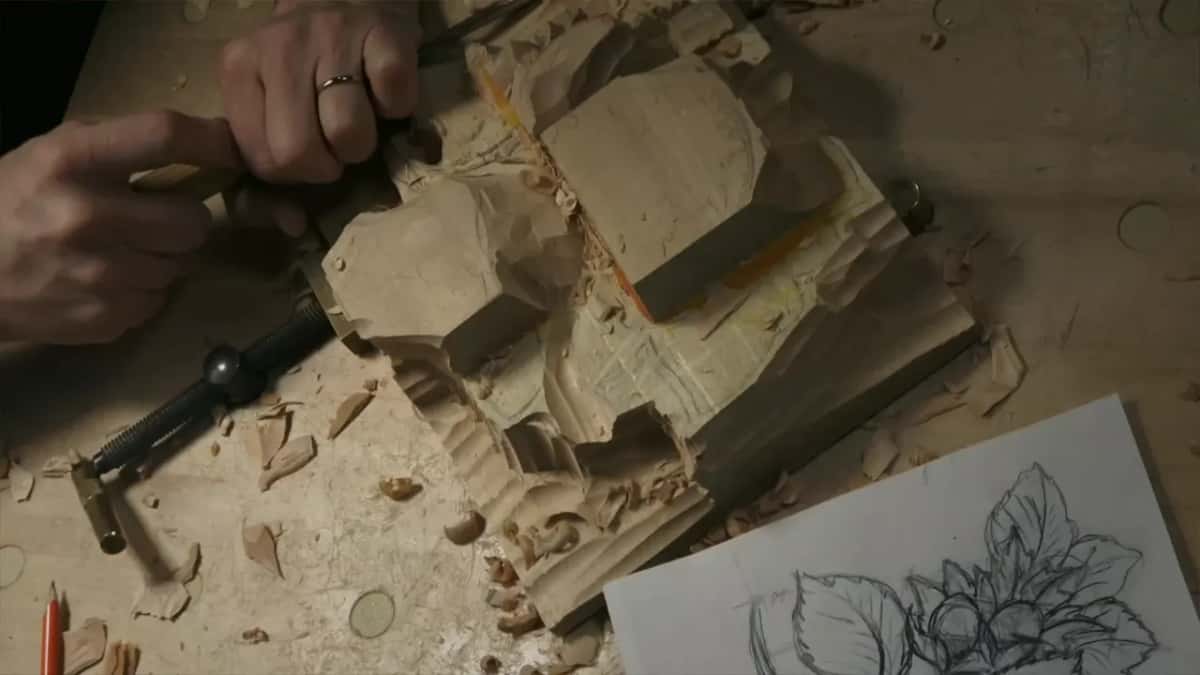
Why not carve straight into the grain there?
The wood would break. I didn't want to go into the grain right now, I said, and gave the reason in the same breath. If I went in that way, "I'm going to catch it and I'm going to break it," I said, "and it's not going to be good." Nothing about how big a piece. Only that it would break.
The Venice Room has the same worry, said another way, in workshop 85. My gouge angled a little there, like 45 degrees, because of the grain, and I said you can see how it runs. Go the other way and I can split. Not that big of a problem, I said, but I can split too deep, and I can make mistakes. So there I went across the grain, and called it always better, across or perpendicular to it. Half a minute later I said, there you go, I almost made a mistake. I said it twice. But I kept the line that gives me the final depth.
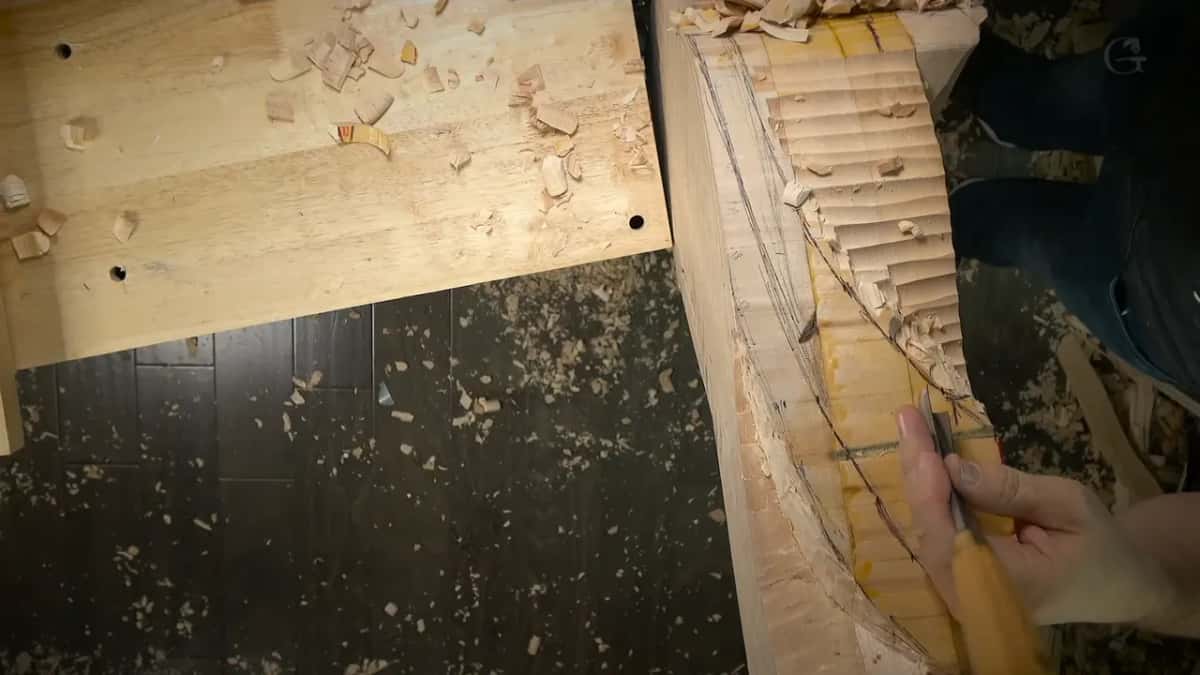
Wood carving grain direction when the right side is out of reach
That side was closed to me. "And if you would ask me, why am I breaking the rule?" I said on camera. "Because there's no way I can attack from this side. It is impossible." Then, "Okay. Hope it makes some sense." That was the whole reason I gave.
A Venice Room panel in workshop 5 put me in the same place. Logically I'm supposed to go from this side, I said, but absolutely no way, I'm not able to use the tool the right way. I really had to break the rule there. There I kept an eye on the grain so it would not split the wrong direction, and I pulled the tool back now and then. "I make my cut, then I pull, then cut again," I said. I call it the pulling cut. Earlier in that clip I called the tool in my hand a back bent, by the way, and said I needed to sharpen it.
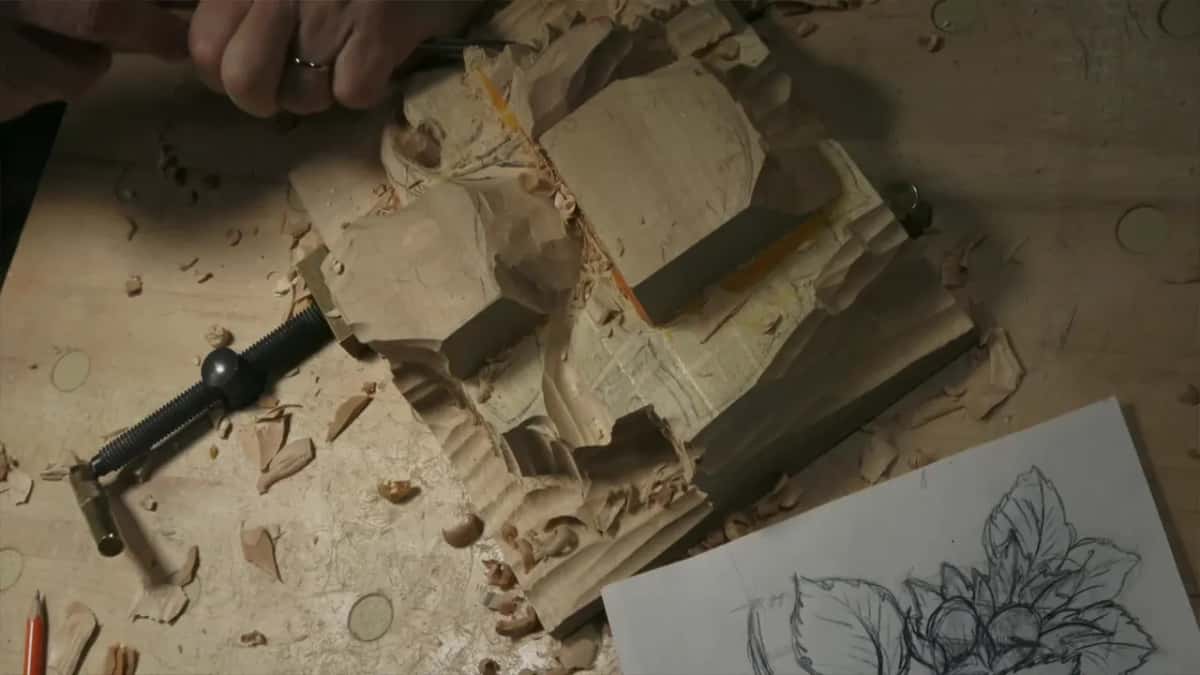
Back in workshop 4 I said more about why. There I made a few strokes in, then raised the tool, breaking those particles off because I didn't want a break on the inside. Sometimes you're limited, and I was, because I don't want to rotate my piece. I don't like to swap my hands either, since it's still not comfortable for me. I do swap them, don't get me wrong. I'd rather not if I don't have to.
The Modern Acanthus leaf from a 1903 design gave me a place that was almost impossible too, and I said so. You can get all types of crazy tools, I said, but what about if you don't have them? Keep your tool sharp. That's it. Even with my smallest passes I was still trying to slice, and I was doing it on a 45, pretty much. Right after, I went back to the big one, a number 9 three-quarters of an inch wide, 20 mm.
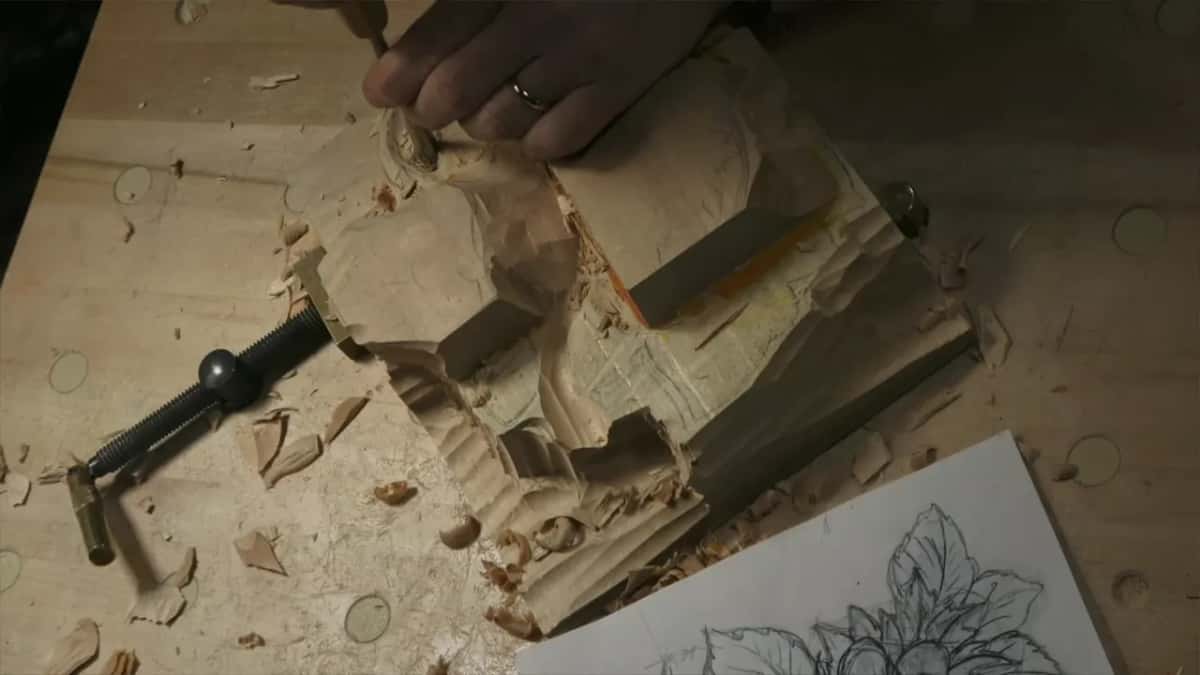
Why is 45 degrees safer than going straight in?
I called it safer, and I kept the reason short. "I could attack that at a 45 degrees, which is safer," I said. Then came the line this page is built on. "If you really have to break the rule, at least break it with the right direction." And right after it, "It's still somewhat safe." Note the word somewhat.
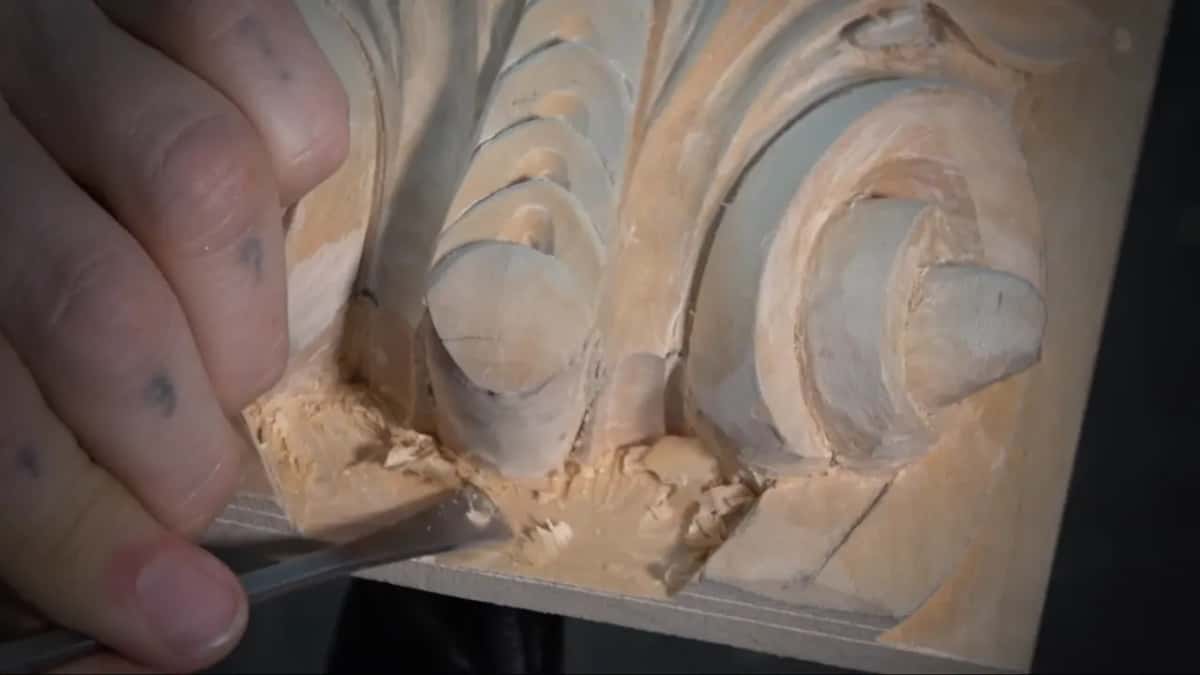
The Cabernet tray got a longer version. I told you one more time, because I still see the same problem in everyone, I said. When people start carving, they push the tool in at 90 degrees, I said. Present the tool at 45 every time, I said. The reason I gave was a "much cleaner cut, it's gonna be more slicing cut." Right there I was carving against the grain, and I said my tool was sharp and I was okay with that. Again, 45, I said, and round that thing.
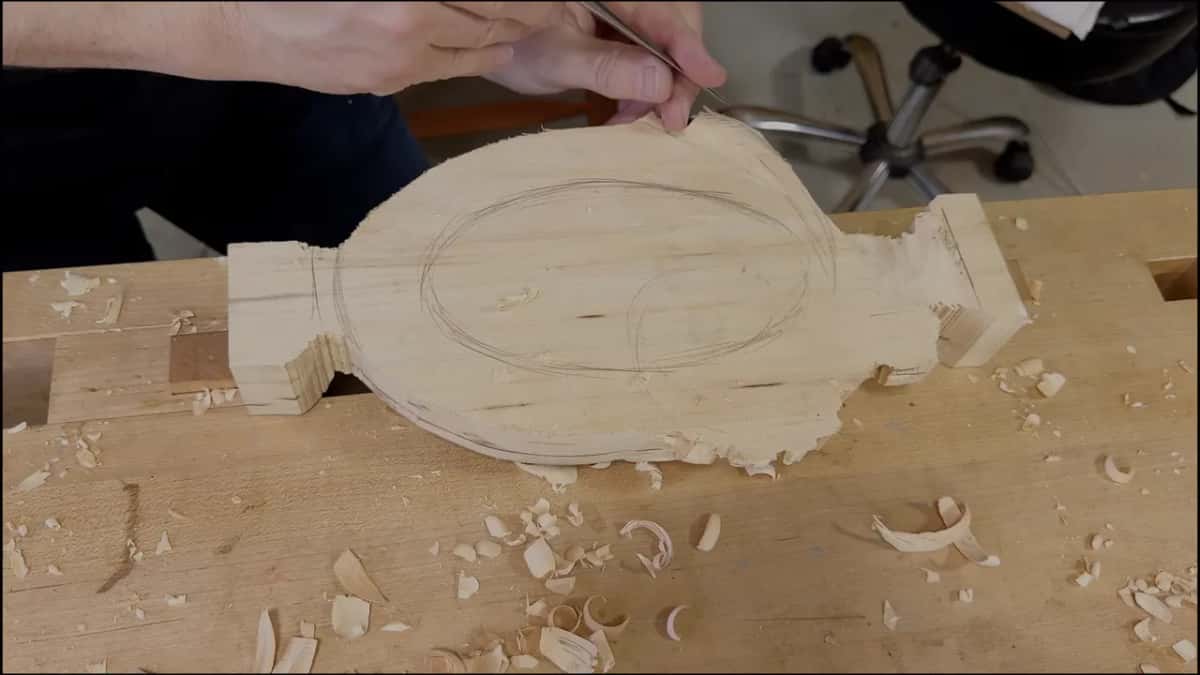
My furniture panel differs in lesson 19. Following the grain was the better way there, I said. Still I used a 45 on my passes, because I feel much safer, and I worked only with the corner. It looks better when you look at it, too. A much better finish. Then came clean pass after clean pass, until it was really good, I said, and the same height.
My Roman acanthus, lesson 16, had me cleaning with a 10 mm number 4 by Auriou. I like to work across the grain, I said. Sometimes, though, I'm able to go on a 45 degree angle and slice it right to the finish. That number 4 needed a little buffing, and I always like to buff more on the inside bevel than on the outside.
Did I come back from the far side at 45 too?
By my own words, yes. "Opposite direction also to 45 degrees," I said, fifty seconds after the first slant. A few seconds on, "I can see how it develops."
The Cabernet tray has the same idea. In lesson 7 I said I would present again on a 45 and start blending. My hand sat solid on the workbench. Don't push it too hard, I said there, because I'm working along the grain, and you can catch it and break it.
Back on the hazelnut, I reached for a gouge with a flatter sweep, a bigger number 3. About three-quarters of an inch, I said, and then corrected myself, more like seven-eighths (22 mm), by Ashley Iles. With it I cleaned my background. Keep an eye, I said, don't remove too much material. With that tool I set my boundaries, and then I picked up a one-inch skew chisel, a number one, also Ashley Iles. I also have a favorite tool for this, with some radius on it, that slices much better. You don't have to use it, I said, and any skew gouge or even a normal number 3 will do.
What does a sharp gouge change?
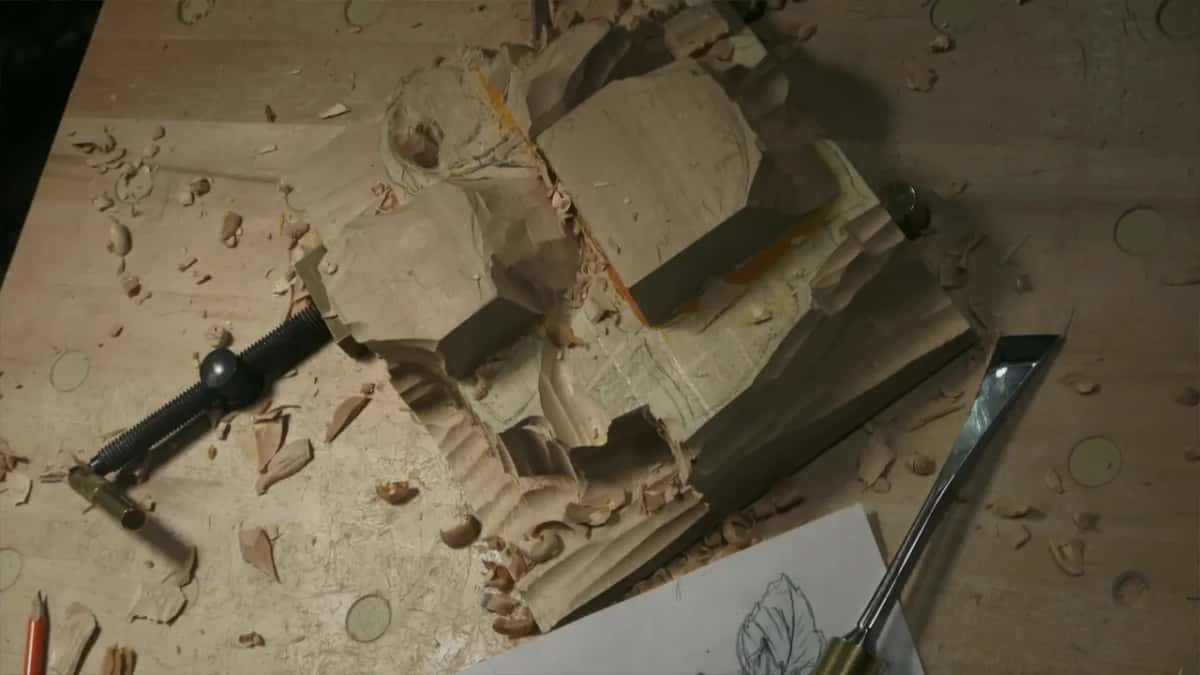
A sharp one lets me work against the fibers while the shape is still rough. Part 4-2 opens with it. Of the tool in my hand I said, "I like this tool because I can work even against the grain if I wanted to. Obviously, it has to go down." Twenty seconds after that, I said I was breaking the grain rule right then, and that I don't have a problem with breaking it. Thirty seconds after that came "I know it looks messy, but that's all right."
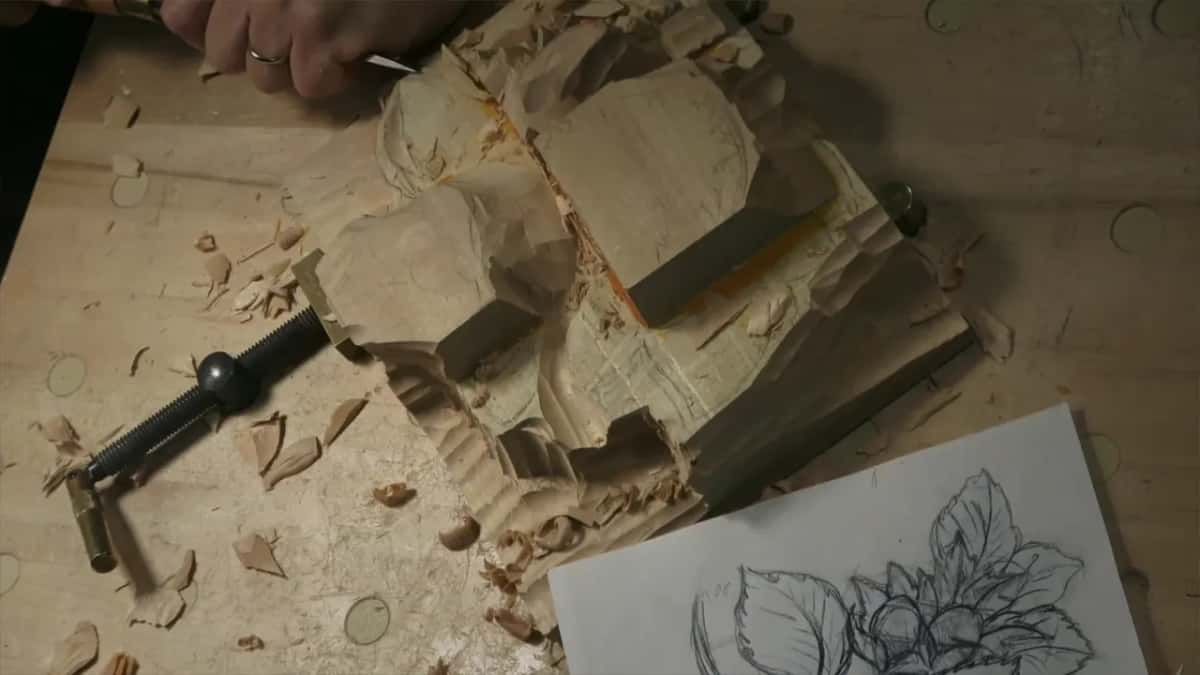
In lesson 3 of the Roman acanthus, I set the limit plainly. The wiser way, I said, is the right direction of the grain, from outside in. And I know I'm breaking that rule all the time. "As long as you have really sharp tools, and if it's not the final form, really doesn't matter." If it's a final pass, yes, do it with the grain, I said, and that's not always possible, believe me.
For the Byzantine acanthus the condition came first. Going the wrong way of the grain works if the tool is sharp, I said. If it's not, it's better to attack it from the right position. Any flatter tool will work, I added. "Unfortunately, you don't see it," I said, and then, "Come around, take a look." I was blending to the line there without touching my first layer yet. My stropping lessons show the edge behind that. Just after honing, I said I can actually break the rules of the grain with sharp tools, and it gives me a shiny finish. I held the tool by two fingers, no second hand, and it shaved easily because it was already super sharp. Sharper than a surgeon's tools, I said, and I meant the medical doctors.
Furniture panel lesson 18 says it twice. First I said you can break the rules, and it's no big deal as long as the tool is really sharp. A little later I was honest about the camera. I was breaking some rules because of where the camera sat, I said, and I really don't want to reposition and waste my time. Logically, if you can avoid breaking the rules, that would be much better.
Other questions sit next to this one, and each has its own page. How to stop the wood tearing once you do go the wrong way is on a Venice Room ceiling piece. When a rule may bend at all is the subject of my dining table apron page. Why roughing lengthwise is risky is in Venice Room workshop 75. And a 45 held against a drawn line, not against the fibers, belongs to Carving Furniture Panel, part 2.
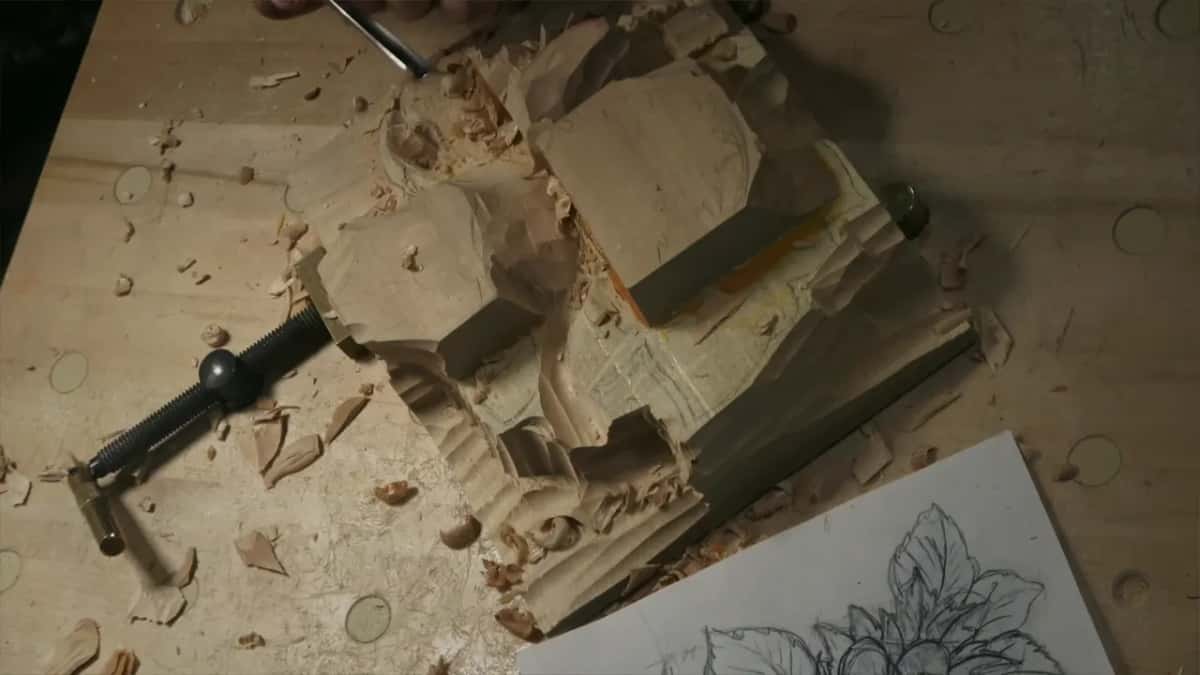
Each piece where I took the slant, and why
Piece and lesson | Which way the gouge went, and why | Tool or edge | The reason, in a few words |
|---|---|---|---|
Hazelnuts, part 4-2 | Slanted in, then the opposite way too | Number 9 | Good side was out of reach |
Venice Room 85 | Angled a little, for the grain's sake | Not named | Otherwise it can split too deep |
Venice Room 5 | Wrong way, pulling back now and then | Unnamed tool | Could not use the tool right |
Cabernet tray, 6 | Presented at 45, sharp edge, wrong way | Not named | Cleaner, more of a slicing pass |
Furniture panel, 19 | 45s, though going with it was better | Corner only | I feel much safer that way |
Roman acanthus, 16 | Across mostly, at times 45 to finish | Number 4 | Just slice it to the final |
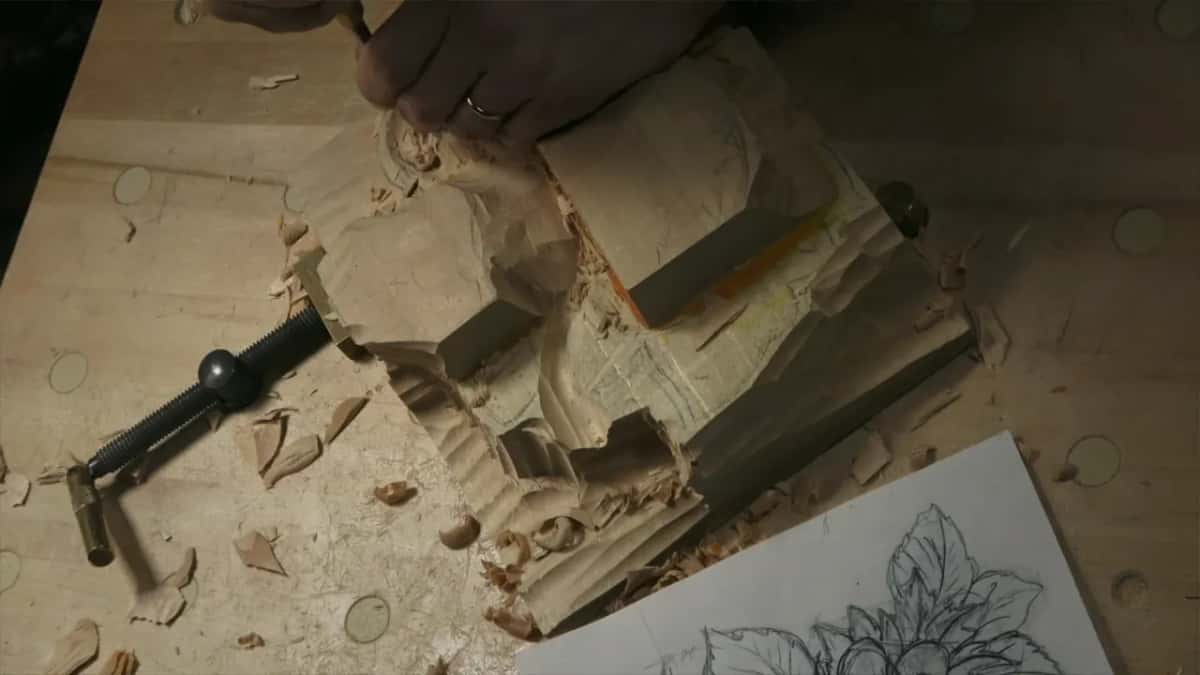
Where can you watch the 45 on the hazelnut panel?
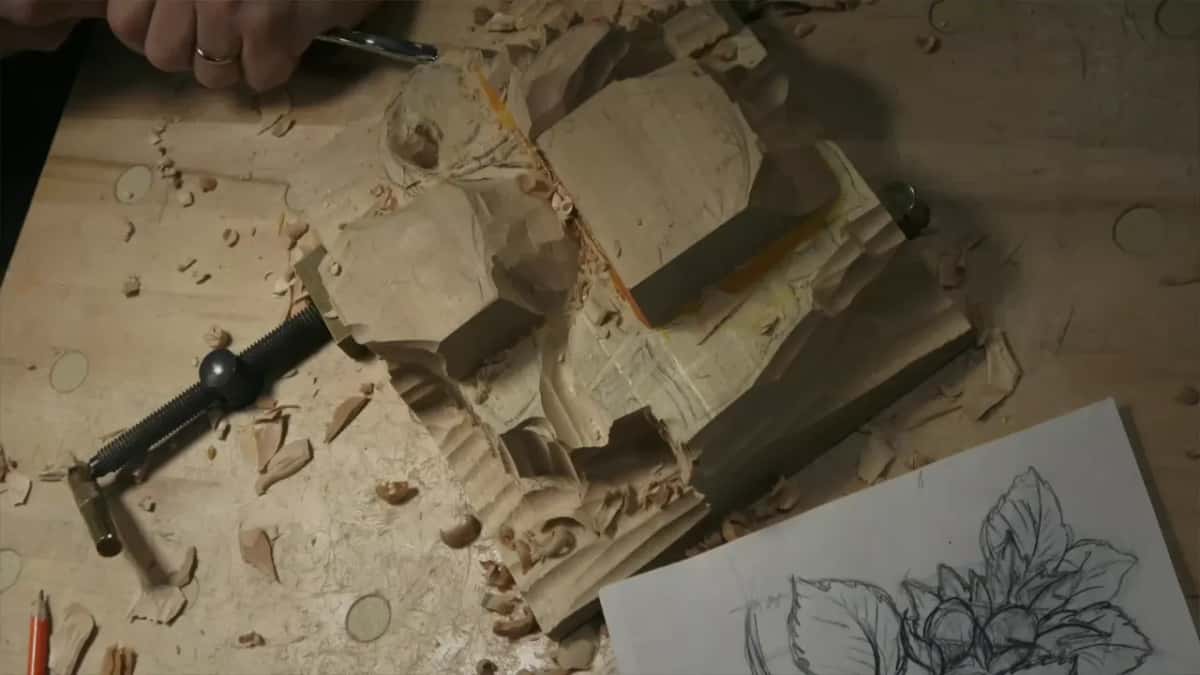
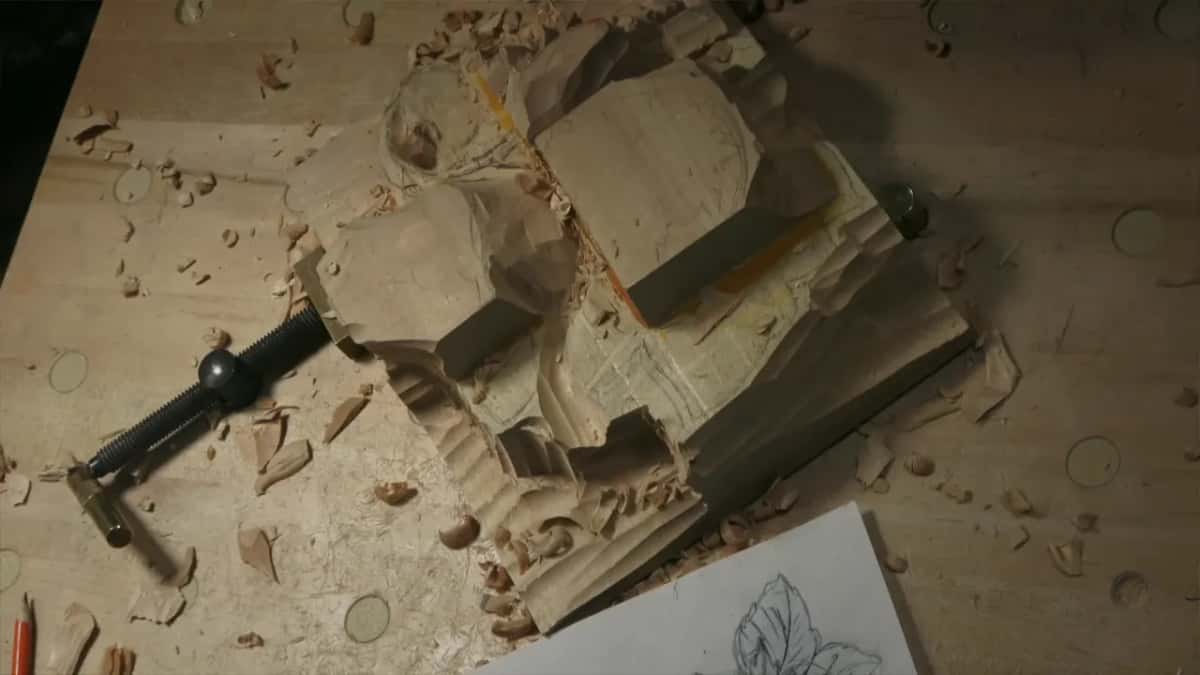
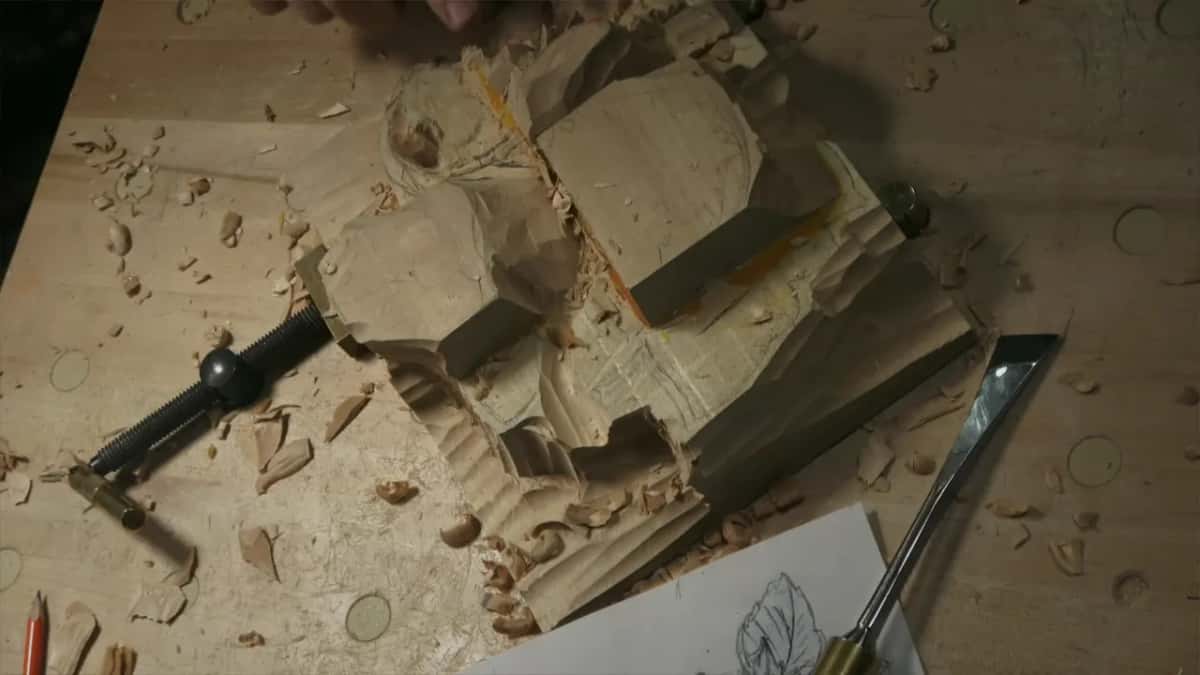
The place comes around the eleventh minute of part 4-2, inside lesson 4 of Carving Hazelnuts. Lesson 4 works the stem and the second bunch of nuts, and lesson 5 goes on to the third bunch. In the next part, on that second bunch, the wood fought me at the grain line, because I was working the end grain. The panel is basswood, a solid board with blocks glued on top where the high spots need thickness, carved in relief.
Is there a piece of wood somewhere in your house? Does its grain run one way? Then you already own the problem I had there. Part 4-2 opens with Access on the Tuition page, and so does every wood carving lesson named here.
How it's done
- Plan a crosswise pass. At my hazelnut place the first choice was a right angle to the fibers, with the 10 mm fishtail.
- Keep the edge from driving in head on. Head on, the wood breaks, I said, so I kept the edge out of it at that place.
- Check which side you can reach. On my panel the good side could not be reached at all, and that alone was my reason.
- Go in on a slant. When you must break the grain rule, give it the right direction, I said. A slant of roughly 45 was safer, though only somewhat.
- Mirror it on the other side. Fifty seconds on, I said the opposite direction gets 45 too.
- Keep the tool sharp. Breaking the grain rule is no big deal with a really sharp tool, I told viewers on a furniture panel.
- Save final passes for the grain. Where you can, finish along the fibers, as on my Roman acanthus. Sometimes that is not possible.
Frequently asked questions
What gouge carves the slanted pass on the hazelnut panel?
A number 9 fishtail, 10 mm (3/8 in) wide. In part 4-2 I had switched to it from a quarter-inch fishtail for a quicker result, and I said that spot could go with the same tool. A bigger, almost flat number 3 by Ashley Iles came after, for the background.
Is the slanted pass completely safe?
Somewhat safe was my phrase. I called a 45 safer than driving straight in. On other pieces I tied this to a really sharp edge, and in Venice Room workshop 85 I warned that a pass the other way can split deeper than you want.
Should the last pass on a carving follow the fibers?
Where you can, yes, I said on the Roman acanthus. Against them, with really sharp tools, was fine for me while the shape was not the final form. Then I added the honest part, that following the fibers on a final pass is not always possible.
What to carve next