
August 30, 2024 · Updated August 16, 2026
By Alexander Grabovetskiy — Master Woodcarver · Founder, School of Wood Carving · 12 min read
Does dense wood float?
Dense wood is wood that weighs more than 62.4 pounds per cubic foot, and that one number settles it. So does dense wood float? Only when it comes in lighter than water. African blackwood, listed at 79 pounds on our own wood page, goes straight down. Basswood at 26 rides high, and a wet board can cross the line either way.
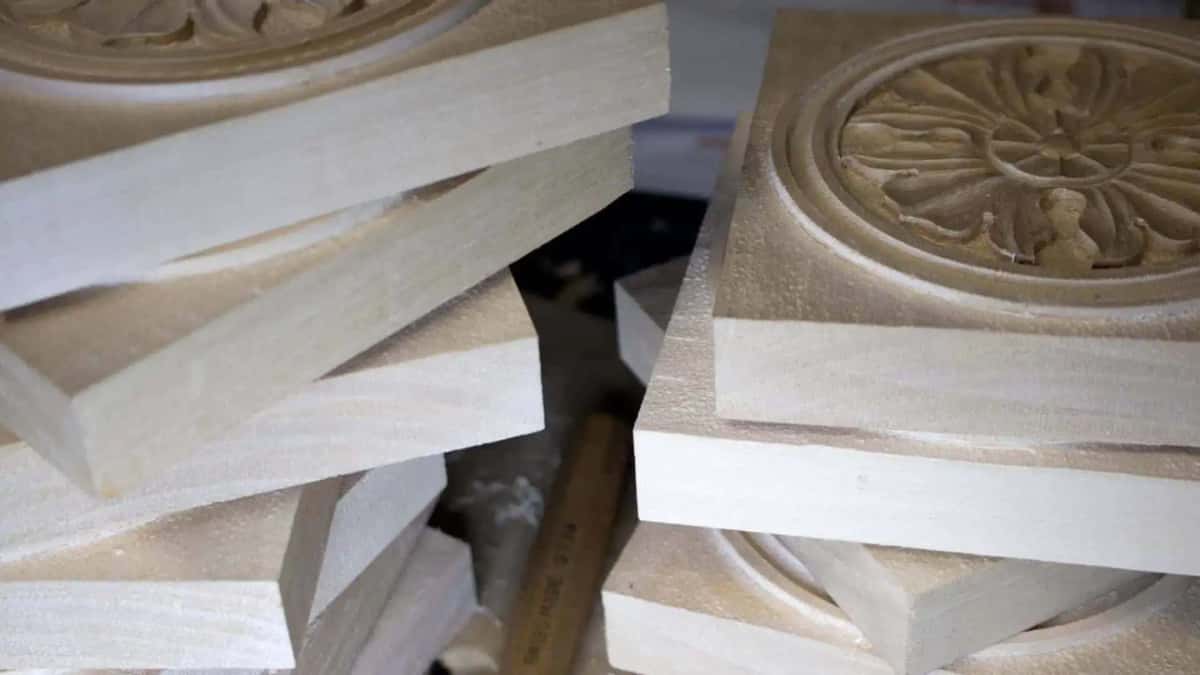
Air dried basswood, sawn a shade over two inches thick. Around 26 lb, so every board in that pile sits on top of water.
People ask me this after a school science lesson, or after they drop a scrap of walnut in a bucket and watch it go straight down. Same question underneath. You want to know if weight alone decides it.
I have carved for over forty years and I have never once needed a board to float. What I want to know is what it weighs before I lift it onto the bench. That number tells me how the gouge is going in, and whether the finished panel will pull its own screws out of a wall.
- Fresh water comes in at 62.4 lb per cubic foot, and any wood lighter than that floats.
- Most carving woods sit well under it. Even oak and walnut float once they are dry.
- Our page for African blackwood lists 79 pounds, which is the heaviest here.
- Water inside a board moves it across the line, so a green log can sink and that same log floats after two years in a shed.
- A carver cares about density for the edge and for the wall fixing. Floating is a party trick.
What weight does a wood have to beat before it sinks?
Fresh water weighs 62.4 pounds for every cubic foot of it, and that is the whole test. A block lighter than the water it shoves aside will ride up.
That rule is buoyancy, and Archimedes wrote the principle down two thousand years ago. The wood does not care how hard it is. Age of the tree makes no difference either, and neither does what you paid. Weight against water, and nothing else.
Wood people write the number two ways. Pounds for a cubic foot, which is what the wood pages on this site use, and kilograms for a cubic metre, which most of the world uses. Water is 62.4 in the first and 1,000 in the second. Same water, two rulers.
One thing trips everybody. A published density is almost always an oven dry weight, meaning every drop of water has been baked out in a lab. Real boards never get that dry. The gap between the lab and my shop is where this whole argument lives.
Which woods on our own wood pages actually sink?
Only a small group of the 68 wood pages here publishes a figure above the water line. Here is the spread, lightest to heaviest.
| Wood, as listed | The density figure our wood page publishes | In water | Where a carver runs into it |
|---|---|---|---|
| Balsa, our featherweight | 9 lb when oven dry, nothing lighter | Rides high | Model work, and never big panels |
| Batai, a plantation wood | 22 lb, one of the lightest we list | Still floats easily | Fast grown, soft and very open grained |
| Basswood, American linden | 26 lb, well under the line | Floats high | The carving wood we teach on every week |
| Quaking aspen, a poplar | 35 lb once the board is dry | Sits noticeably lower | Fuzzy under a dull edge, good practice |
| European beech, a bench wood | 44.3 lb, which is still short of water | Floats quite low | Mallet heads, and it is hard on edges |
| Brazilwood, the dye wood | 65.6 lb, only just past the line | Sinks, but barely | Violin bows, and not big friezes |
| Grey box, an Australian eucalypt | 70 lb, a long way past the line | Sinks, and stays down | Fence posts and tool handles, very rarely carving |
| Blackwood, the true African rosewood | 79 lb, the heaviest number we list | Goes down fast | Clarinets and small turnings |
Look at how lopsided that list is. Nearly every wood a carver will ever hold floats, and the ones that go down are mostly small stock for bows, pipes and pool cues. Quebracho at 77 and Malaysian blackwood at 72 belong in that same short group, along with yellow box at 67 and satine bloodwood at 66.
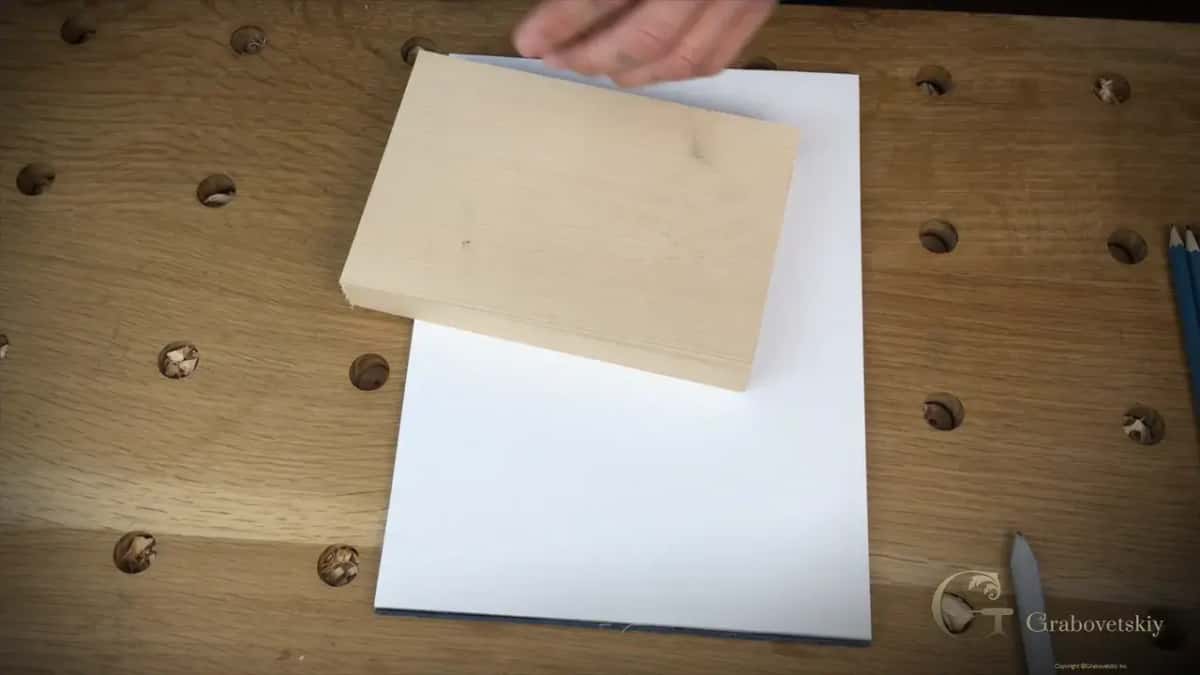
The block I chose to match an old carving. Light enough to hold in one hand all day, which is the whole appeal of basswood.
If you want the extremes rather than the water question, I have separate pages on the densest wood ever recorded and on the lowest density wood there is.
Why is red oak listed at 63 pounds when dry red oak floats?
The 63 pounds on our red oak page is a green weight, measured while the tree still held its water. Dried down to the board you buy, red oak floats.
This is the part that makes the whole question slippery, and it is why I will not give you a yes or a no. A freshly felled oak log can be more than half water by weight. Roll it into a river and it sits low. Some go under. Stack that same log in a shed for two summers and it will bob like a cork.
The USDA Forest Products Laboratory Wood Handbook sorts this out properly. It lists green and oven dry density separately for every species, because the lab knew a hundred years ago that one figure would fool people. The Wood Database page on wood and moisture covers the same ground in fewer pages.
In my livestream on wood movement I put it the plain way. Wood is just like a sponge. It takes water. If there is moisture in the air, it is going to get that water in, and once it takes the water in, it expands. It puffs out.
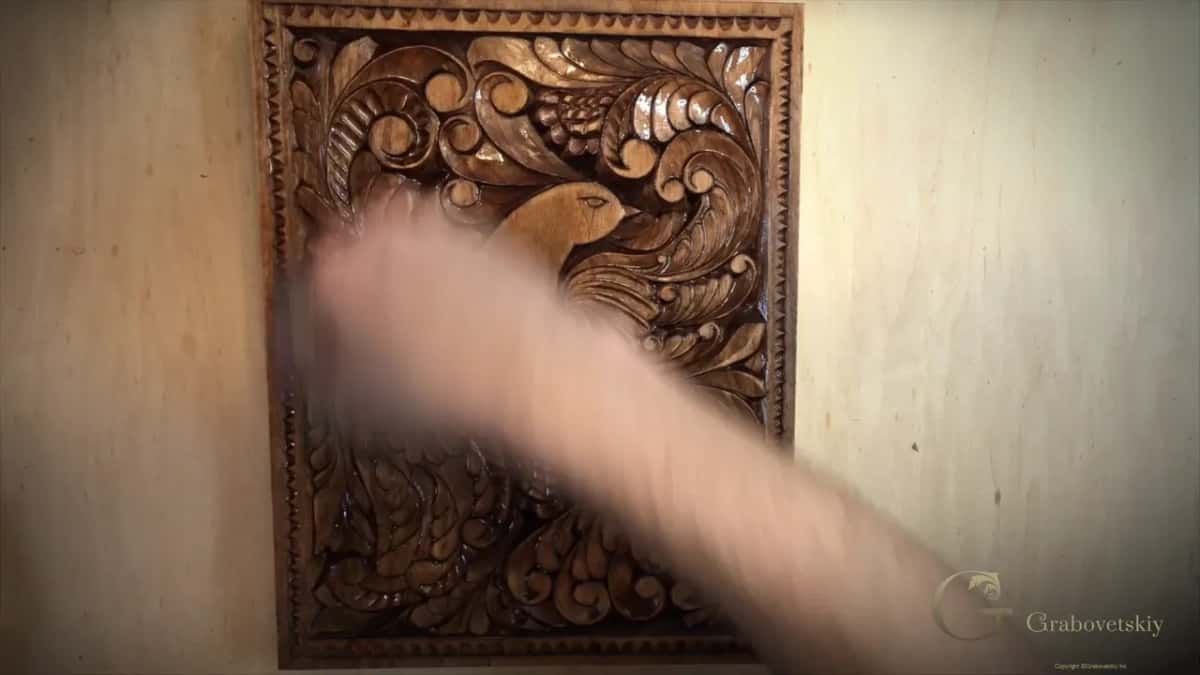
Not water here, food grade mineral oil going into a carved board. Watch the color change.
Living in Russia we used the cold to beat that. Thirty below, forty below, and one winter of my childhood it hit fifty three below zero. You take the board outside and the water inside it, all the water it drank over the summer, freezes and comes out. It is a freeze dry. Everything gets out of the board and it really becomes dry.
Fibers do not drink at the same speed forever. When you fell the tree those fibers are still alive, and they suck water much quicker. The longer the tree has been down, the more they dry out, and they stop taking that water. Some of my boards have sat in the shop over ten years. A few are twenty four or twenty five years old, including French limewood, rift sawn, with flames still showing in it.
Does salt water change the answer?
Sea water runs about 64 pounds for the same volume, so it lifts a little harder than fresh. That extra pound and a half buys you almost nothing.
A board at 63 pounds might sit half under in a lake and just barely float in the sea. At 79 it goes down in both. People love this one because it feels like a loophole. It is a rounding error.
How do you use water to tell if a blank is dry enough to carve?
Weigh a scrap off the end, then weigh it again in two weeks. Water leaving the board is the only reading worth having.
Please do not soak your actual blank. You will ruin a piece of stock you paid for. Take an offcut instead, and read the result honestly.
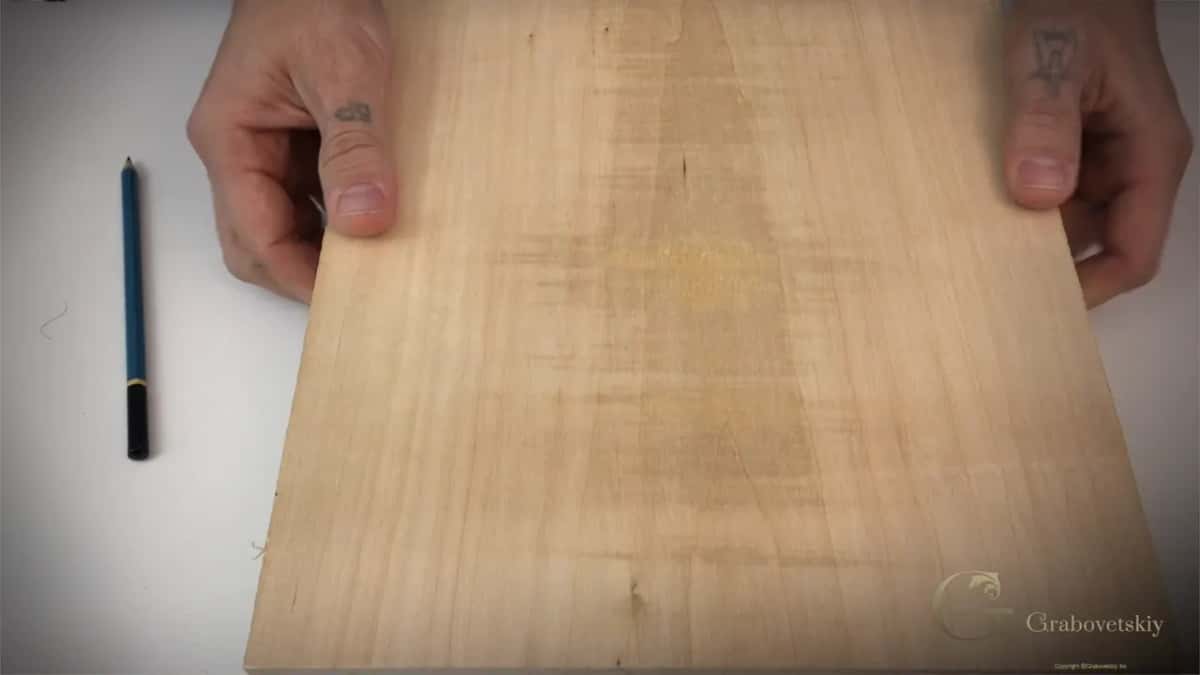
Step 1, saw a thin scrap off the end of the board
Half an inch is plenty. You want fresh end grain on both faces, because the ends of a board dry first and lie to you about the middle.
Step 2, weigh the scrap and write the number on it in pencil
A kitchen scale that reads to one gram is enough. Write the date beside the weight. You will not remember it.
Step 3, drop a second scrap in a jar of water and watch how it sits
A well dried scrap of basswood or limewood floats with a good part of itself above the surface. One that sits nearly flush is still wet inside, whatever the seller told you.
Step 4, put the first scrap back on the shelf and leave it alone
Same room as the board. Two weeks. Longer if your shop swings between damp and hot.
Step 5, weigh it again, and carve when the number stops moving
Two weighings a fortnight apart that read the same means the wood has settled into your shop. Start carving then. Weight still dropping means the board is still moving, and carving into a moving board is how a panel splits a year later.
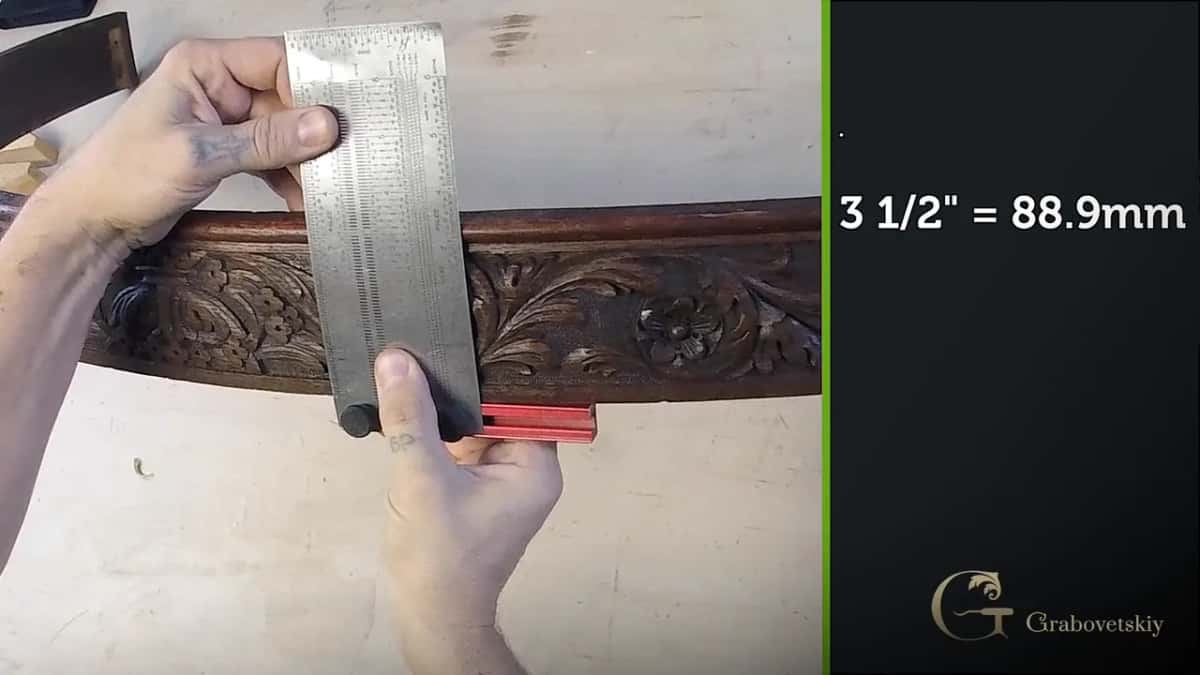
Different job, same habit. I measured this old apron at three and a half inches, 88.9 mm, before carving a single replacement section.
None of that has much to do with floating, and everything to do with why the float question has no single answer. Moisture is the moving part. For the drying method itself rather than a scrap test, read whether you have to dry wood before carving and how to dry green wood at home.
What does a heavy wood do to your gouge?
Dense timber blunts an edge faster, and it fights the tool on the way in. That is the reason a carver watches density at all.
Oak is more crunchy, and it has a lot of grain. You can do a lot more with limewood than you will ever do with oak. That is what I tell students in the dining table apron lessons, when they ask why we are not carving something grander. The Janka hardness scale puts numbers on the same feeling, though hardness and density are not the same measurement.
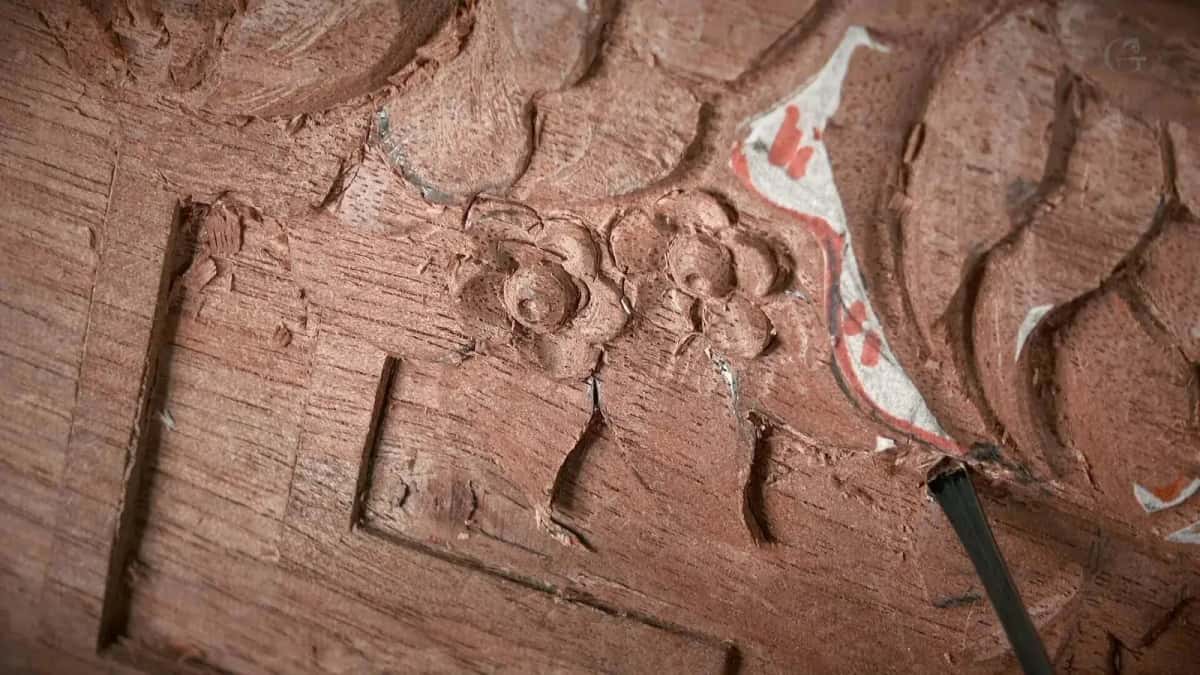
Watch what happens in a coarse hardwood when the edge goes off even slightly. The fibers tear ahead of the tool instead of parting under it, and you get a ragged fuzzy surface that no amount of sanding will save. In basswood you can carve for an hour with a tired edge and still get a clean surface. Try that in something at 60 lb and the panel is ruined inside a minute.
There is a trade. Heavy wood holds a fine detail that soft wood will crumble, and it takes a polish soft wood never gets near. My students who move up to carving in walnut notice both things in the same afternoon.
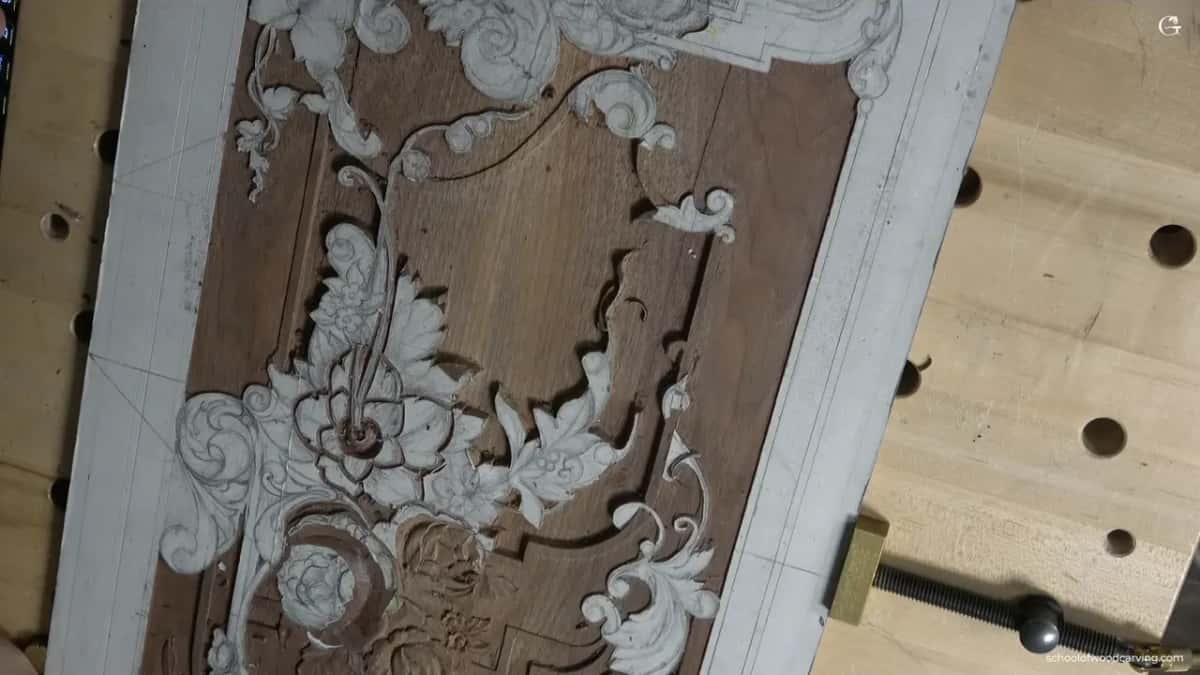
Walnut, glued up from three boards and clamped hard. It floats without any trouble, and it still wears an edge out far quicker than basswood does.
Whether the extra weight buys extra strength is a separate argument, and I answer it on the page about whether denser wood is stronger. The definitions live on what counts as high density wood and what makes a wood less dense in the first place.
How much does a dense carved panel weigh once it is on a wall?
Multiply the board volume by the density and you have your answer before you drill. This is the one place the number really earns its keep.
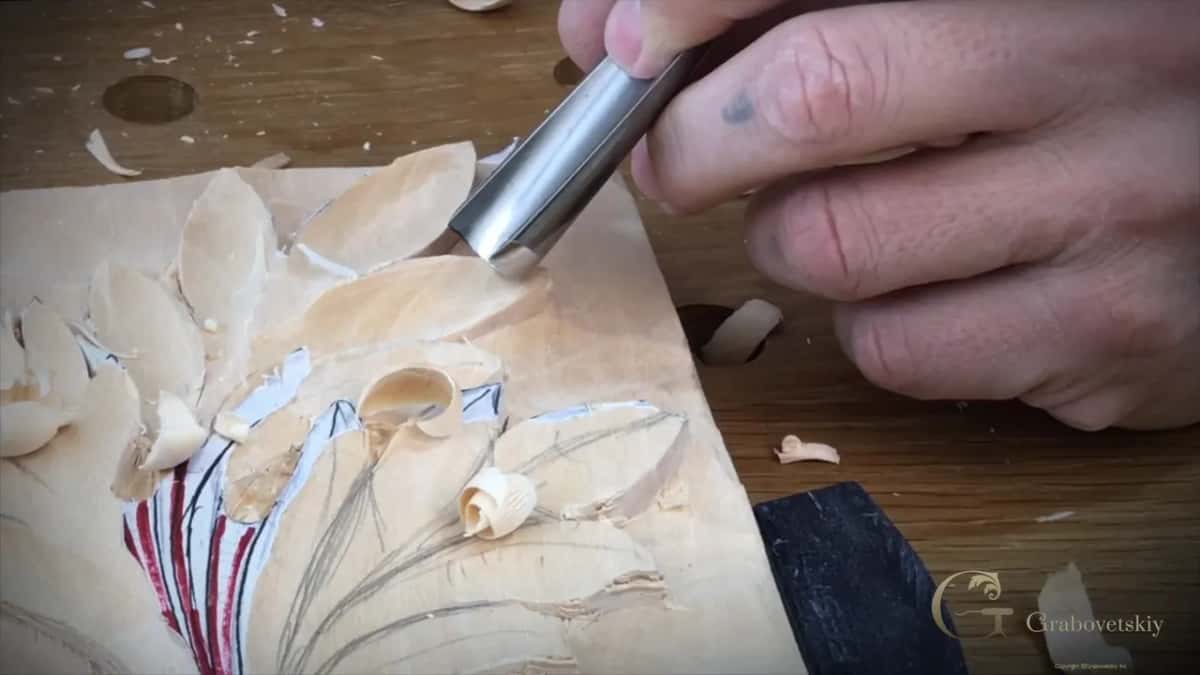
Take a panel four feet long, a foot wide, two inches thick. Two thirds of a cubic foot. In basswood at 26 lb you are hanging about 17 pounds on the wall. Carve the same panel in European beech at 44.3 and it is nearly 30 pounds, before a drop of finish goes on.
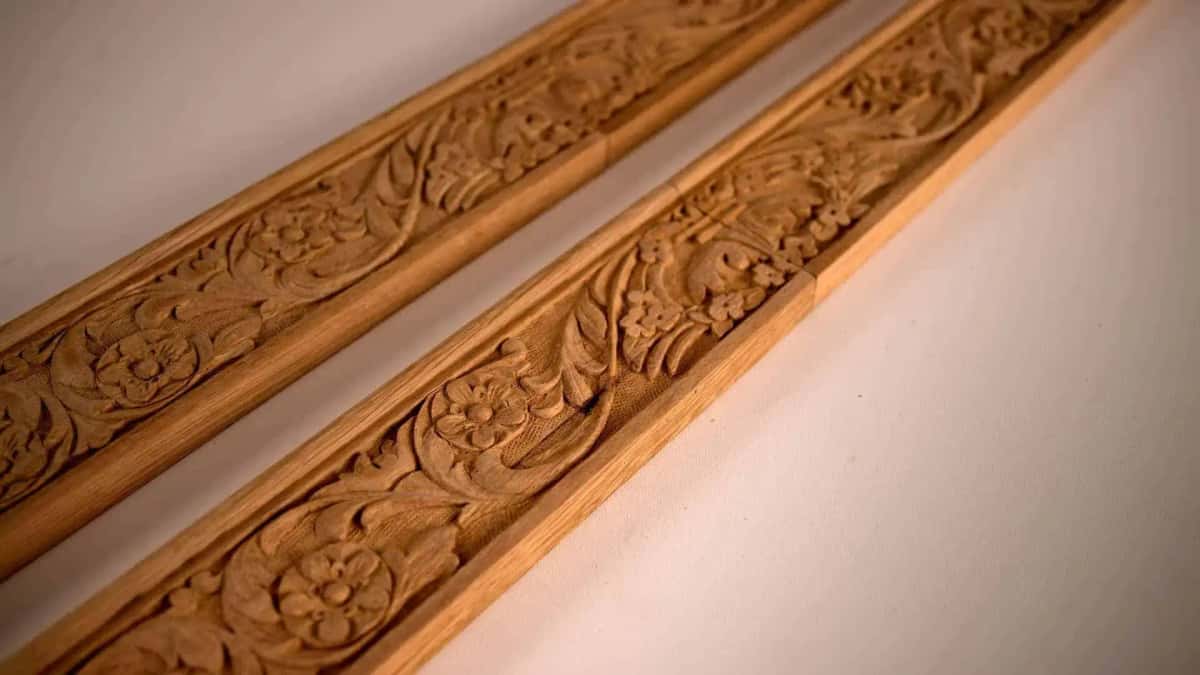
Seventeen pounds takes two screws into a stud. Thirty pounds wants a cleat, and I have seen a beautiful panel come off a plaster wall at two in the morning because somebody trusted a picture hook. Carving is the fun part. Holding the thing up afterwards is the part nobody films.
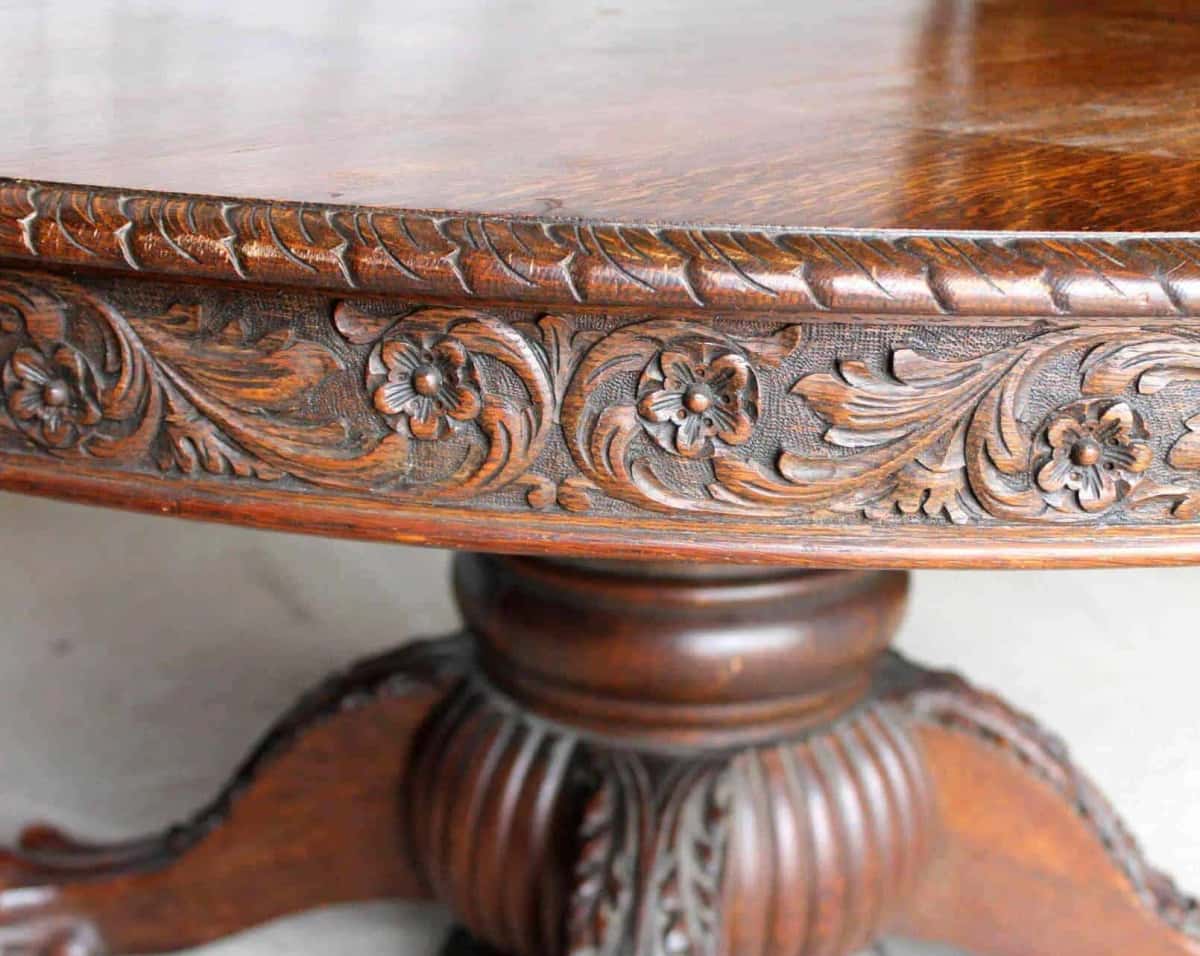
Weight is also why so much architectural work through history went into limewood rather than oak. Grinling Gibbons hung whole cascades of fruit and flowers above doorways in a tradition of wood carving that had every reason to pick the lighter timber. A ceiling does not care how impressive your species sounds.

If any of this makes you want to put a gouge in a board rather than a board in a bucket, the carving courses here start on basswood for exactly the reasons above. Light, cheap, and it forgives a beginner.
Frequently asked questions
Does oak float in water, or does it sink?
Dry oak floats, and it sits fairly low because it is around 44 lb against water at 62.4. Freshly felled oak is a different animal and can go under while it is still full of sap. The same log bobs after a couple of years in a shed.
What is the heaviest wood that still floats?
Anything just under 62.4 manages it, and the margin near the top is uncomfortably thin. Brownheart at 62 on our pages is right on the edge. A board that heavy floats with barely a whisker showing above the surface.
Can balsa ever sink?
Leave it in water long enough and yes. Balsa is nine pounds of solid matter wrapped around a huge amount of empty cell space, and once that space fills up, the block loses its lift. Sealed and finished, it stays up almost indefinitely.
Why does driftwood eventually sink after years at sea?
Two things pile up together. Sea water works into the cell walls until the wood carries most of its own volume in liquid, and minerals and sand settle inside the empty spaces. Old shipwreck timber pulled off the seabed is heavy enough to surprise you.
Is a wood that sinks stronger than one that floats?
Usually stronger in the ways an engineer measures, though not always in the way a carver needs. Grain direction, knots and the way the board was sawn matter more for a carved panel than the density figure alone. A dense board with wild grain can be worse than a light straight one.
Do carvers ever work in a wood that sinks?
Rarely, and almost never at any size. Quebracho, African blackwood and lignum vitae turn up as pipe bowls, mallet heads and instrument parts, where a few ounces of stock is the whole job. Nobody carves an eight foot frieze out of something that would sink in a lake.
Filed under
- Best practices for wood carving blocks
- best wood for carving projects
- Can I use dense wood for buoyant toys?
- Can wood density determine floating?
- Do different wood types affect buoyancy?
- Does all wood float or sink?
- Does wood absorb water?
- Does wood shape impact its floatation?
- Floating properties of hardwood vs. softwood
- How does water temperature affect wood?
- How thick should carving blocks be?
- How to choose wood for water-based projects
- Is basswood a good carving wood?
- Strategies for choosing carving wood
- Understanding Wood for Carving
- What affects wood's ability to float?
- What is the best wood for carving?
- What types of wood sink in water?
- Which wood is best for carving blocks?
- Why does my wood sink in water?
- Why does wood float even when heavy?