
September 16, 2024 · Updated August 18, 2026
By Alexander Grabovetskiy — Master Woodcarver · Founder, School of Wood Carving · 17 min read
Where Can I Find Inspiration and Community for Wood Carving?
A wood carving community is any group where somebody looks at what you carved and then tells you the truth about it. I learned the craft standing behind one man for years. Below I rank the real places, from a rough Sunday critique on Reddit to a juried show in Iowa that hands out ribbons.
You typed that question because the carving on your bench is not going the way you hoped and nobody in the room can say why. I know that feeling well. For years a man stood behind me and told me the thing I did not want to hear, and he was worth more than every book I owned. Most pages answer this with a list of subreddits. You will get that list here too, and ranked, because a feed and a master are not the same animal, and pretending they are will cost you a lot of evenings. I have put the money and the waiting time beside each door in a table, since those two numbers are what nobody mentions until after you sign up.

The short version
Five lines, in case you are standing in a hallway somewhere with your phone out.
- A group counts as community only when somebody there will say your leaf is flat and mean it.
- Guild apprentices watched their master for about seven years before they were handed anything to carve.
- Old churches in Germany and England hold more carving than most museums, and nearly all of it is oak.
- Ribbons at the Decorah folk art show come with feedback from judges, every second summer.
- NWCA dues run 29 dollars stateside, and the club directory they maintain is the best one going.
Where do wood carvers actually gather online?
Carvers gather in three kinds of online rooms, and only one of them will argue with you. The busiest is the r/Woodcarving forum on Reddit, which runs day and night and costs nothing.
Post a roughed-out leaf on a Sunday evening with a photo of the grain running through it, and by Monday somebody will have told you your undercut is too shallow. Speed like that is the whole value. Nobody there knows your name, so nobody is being polite to spare your feelings. Useful, if you are still working out how to start learning at all.
Facebook groups and Instagram hashtags are the second room. They are wonderful for seeing work and terrible for getting corrected, because the whole machinery of those places rewards applause. A hundred hearts on a photograph tells you the photograph was good. It says nothing about your carving.

The third room is the one people forget. Blogs written by one carver, kept up for years, with no algorithm in between. WoodBeeCarver is Don Mertz writing about his own carving, and one of his recent posts walks through carving a study stick, which is exactly the kind of unglamorous exercise a feed would never surface for you. He says the best lessons come in the doing. Correct, in my experience.
Here is the honest limit of all three. You can read every common beginner mistake ever written down and still make each one, because reading about a slip will never feel like the gouge diving. I complained to my teacher once that my wood was no good. He said, there is nothing to do with the wood. That sentence took me a year to understand, and no forum could have delivered it to me.
What does an apprenticeship give you that a feed never will?
An apprenticeship gives you a witness, and a witness is the thing no website has ever managed to ship. The best way to learn wood carving is to become an apprentice. Not a student, an apprentice. Those two words look similar and they are not.
A carving guild in the eighteenth century ran like this. One main man, a shop full of benches, and a crowd of apprentices who worked for seven years before they were allowed to carve anything. Seven years. Those apprentices would just watch what the master does. Watching was the whole method. There were no lectures, there was no syllabus, and nobody handed out a certificate at the end.

I lived inside that method. Nobody made me an apprentice of a master wood carver until the age of sixteen, and when I finally met him, the first thing he did was hand me a piece of paper and a pencil and say, design. He started there. Not with a gouge. With a pencil, and the laws of space behind it, which is why design rules come before tools in everything I teach now.
Years later I thought about what I could actually do with all of that, and the answer was to work the old European way. People come to my shop and watch. Nothing more complicated. When you are watching me carve, you are doing exactly what an apprentice in a guild did, only your bench is in your own house.
The gap between that and a comment thread is not about video quality. What matters is somebody having seen your last four pieces and remembering what you did wrong on the second one.

Where should I look for inspiration away from a screen?
Look at work that has already survived four hundred years, because survival is the only review that means anything. If you go to old churches, old ones, you can find beautiful carvings all done just in oak.
Go to palaces in England and see all the work there, or go to Germany, into old churches with fifteenth and sixteenth century carvings, and you will be surprised.
I am not sending you sightseeing. Go there to measure. Everything that survived in museums is based on the golden ratio. Stand close enough to see how the carver divided his space, and you will start finding sixty-two and thirty-eight everywhere, in the height of a leaf against its stem, in the turn of a scroll. Take pictures. We can see different museums and just take pictures and develop the idea, which is beautiful.
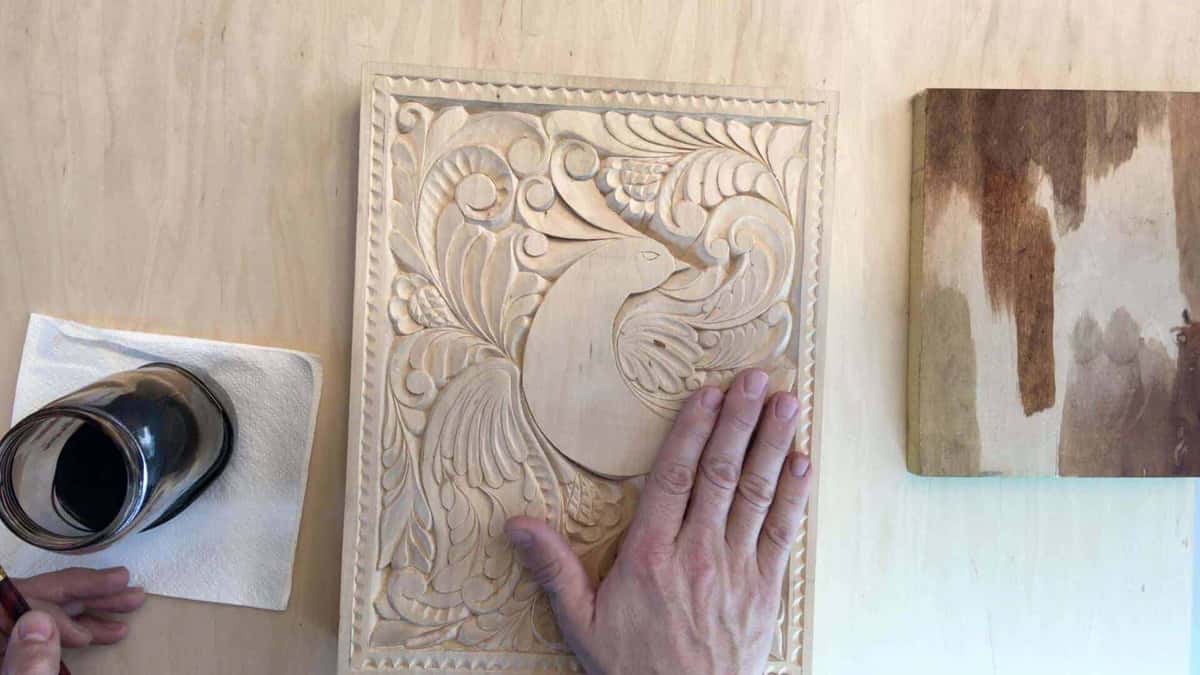
Without plane fare, the collections are online now. The V and A collections will put historic woodwork on your screen at a resolution no guidebook ever managed. Nothing like walking around a pulpit. Still a great deal better than a mood board of other people's finished projects.
One warning, and I mean it. Copying a photograph of somebody's finished carving teaches you their answer without teaching you their question. Old work is different, because the man who made it is not around to explain, so you are forced to work out the geometry yourself. The struggle itself is the lesson. For a shortcut into it, the principles of design course is where I lay out the golden ratio properly, and planning and sketching a design covers the paper stage.


Which carving communities are worth your time and money?
Rank them by how fast a real person will study your carving and say something useful. That single measure sorts the whole field, and it sorts it differently from every list you have read.
A magazine you love may sit near the bottom here, not because it is weak, but because it was never built to answer you back.
| Where to go | What it costs you to walk in | The payback | How fast an answer comes back |
|---|---|---|---|
| The r/Woodcarving forum | Free, open at three in the morning | Rough critique | Sunday post, and Monday you know |
| Your nearest club | Usually a small fee and one evening | Steady company | Weeks, once you show up twice |
| The NWCA itself | 29 dollars a year in the States | Club directory | One search, and the map answers |
| Vesterheim in Decorah | Class fees plus the drive to Iowa | Judged feedback | Every other summer, ribbons and all |
| North House, Minnesota | Tuition for a course that runs days | Hand skills | Days, not months, beside Lake Superior |
| Woodcarving Illustrated magazine | A cover price, and nobody grades you | Patterns, projects | Whenever the next issue reaches you |
| School of Woodcarving | Tuition, and you carve at your bench | Watching me | Tonight, if the wood is ready |
Read that table twice and you notice something. The two cheapest doors give you the fastest answer, and the slowest door hands back a ribbon that took years to earn. Both matter. A man who only ever posts online gets quick opinions from strangers forever and never once has his work judged against a standard. Somebody who only enters shows waits two years to find out he has been carving a leaf wrong the whole time.

Use the top of that list for speed and the bottom of it for standards. If money is the thing stopping you, read what carving really costs as a hobby before you decide anything, because most people guess high on tools and low on wood.
How do I get an honest opinion on my carving?
Enter something into a juried show, where a person who knows more than you looks at the piece in your hand and writes down what is wrong with it. This is the part of community almost nobody chases, and it is the part that moved me furthest.
Vesterheim runs a National Norwegian-American Folk Art Exhibition in Decorah, Iowa, every other year, and the 2026 run was June 12 to July 25. Rosemaling, weaving and woodworking come in from carvers all over the country. Judges look at every entered piece, tell the maker plainly what they see in it, and then award ribbons. Collect enough ribbons across enough years and you are awarded the Vesterheim Gold Medal. A standard held over decades outranks any like button.
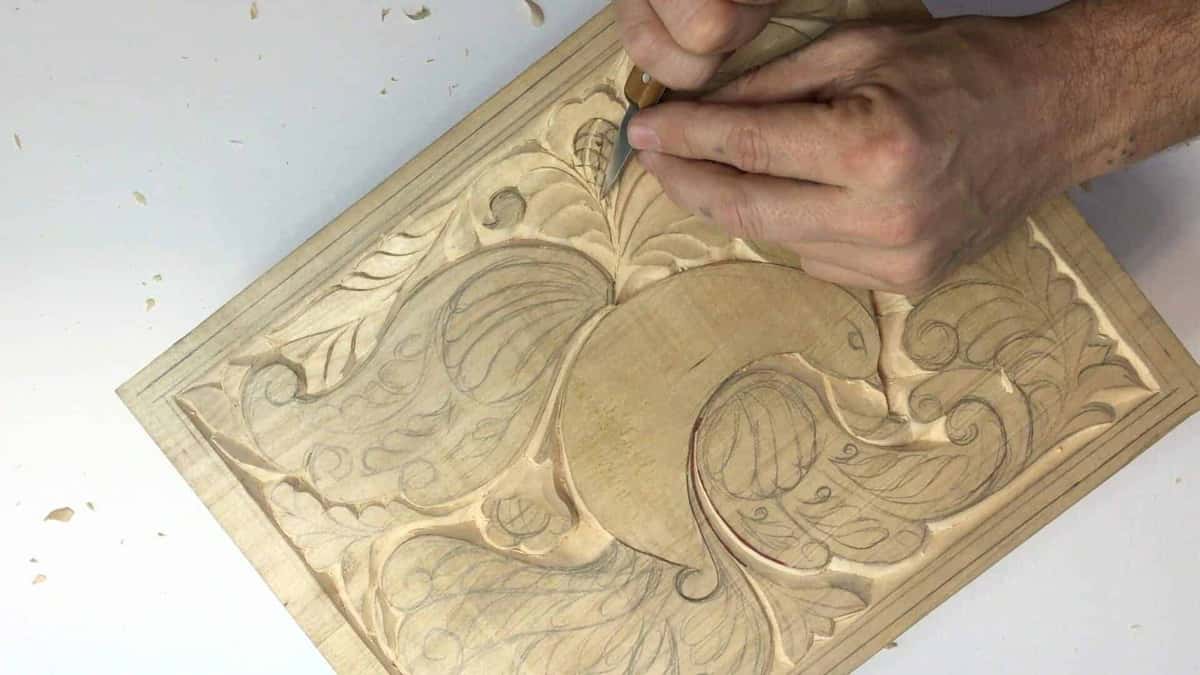
Vesterheim also runs a Folk Art Apprentice Program, which pairs master folk artists with carvers who are already proficient and want to teach. Up to two apprenticeships may be awarded around mid-June. Read that sentence again if you have been telling yourself real apprenticeship died in Europe two hundred years ago. It did not. The thing runs in Iowa, and the applications are open to woodworking and knifemaking among others.
My teacher gave me the hardest feedback I ever got, and he gave it without looking at any particular piece. He said that if you look at your work, and you think it is done and you like it, you are not an artist anymore. No softness in that at all. The true artist still does not like what he sees before him. I have carried that around ever since and it still stings when I finish something and catch myself feeling satisfied. Nobody improves without that sting, which is really the whole of improving your technique.
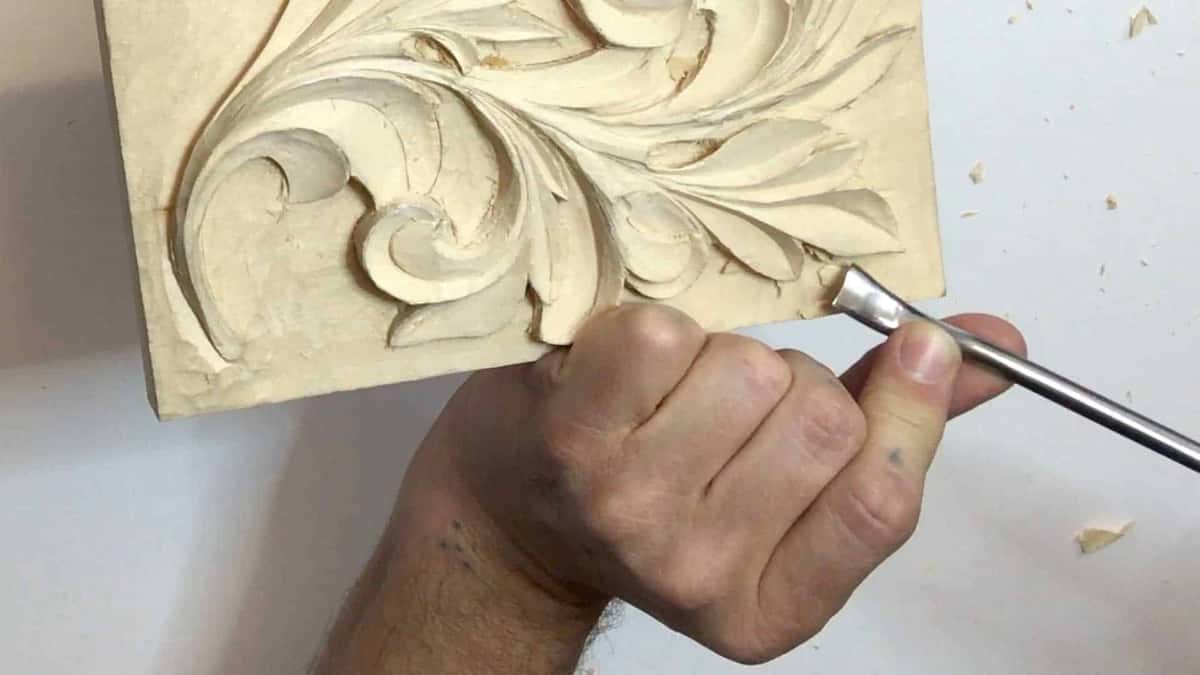
Told a different way, he also said once, if you like what you have done, you are not anymore master. Same knife, different handle. A real community does that for you, and it explains why a chorus of encouraging comments can quietly stall a carver for a decade.

How do I find a carving club near me?
Start with the National Wood Carvers Association, which keeps the club directory nobody else bothers to maintain. Their site is chipchats.org, named for Chip Chats, the magazine that comes with it.
Annual dues are 29 dollars in the United States, 31 for Canadian addresses and 35 international, and that includes the magazine.
Go straight to their find a club near you page. Clubs list themselves there, which means the listings are maintained by the people who actually run the meetings. They also keep a page of teachers and demonstrators and a calendar of events, so if there is a show or a cut-in within driving distance this season, that calendar knows about it.
If nothing sits near you, the old routes still work. Libraries, craft stores and woodworking supply shops usually know who is teaching locally, because those are the counters where carvers buy their basswood. Ask at the till. One of my students said the same thing during a livestream years ago, plain as anything: join a carving club. He was answering somebody else's question and he was right. Clubs also tend to know which local teacher runs a decent set of beginner classes, and which one to avoid.

Two schools deserve naming here because I teach at both every year. Marc Adams School of Woodworking in Indiana is enormous, and my classes there are on the in-person schedule. Sam Beauford Woodworking Institute in Adrian, Michigan is an accredited trade school with a furniture design program, and the classes there are smaller. Both fill fast. Mine tend to sell out in about eight minutes, which I mention as a warning rather than bragging.
Are folk schools worth travelling for?
A folk school buys you something a screen cannot hand over, namely a week where carving is the only thing you do. North House Folk School sits in Grand Marais, Minnesota, right on Lake Superior, and its course calendar runs through the year. They teach northern hand craft.
A Slojd fellowship and scholarships run alongside the courses, worth knowing if tuition is the thing stopping you.
Vesterheim's Folk Art School is the other one I would drive to. Same building as the museum and the juried exhibition, which is the reason to go. You take a class, then you walk twenty steps and look at four generations of the tradition you just spent three days failing at. Very few places in America let you do both in one afternoon.

What you get from a week like that is not technique. Technique you can get anywhere now. The real prize is the correction loop running at full speed, all day, for days, with somebody standing over your right shoulder catching the thing you cannot see. Then you go home and you have to keep yourself honest, which is the hard part nobody warns you about.
And be realistic about cost. Tuition, travel, a bed for five nights and the wood itself adds up quickly, and it is worth every dollar exactly once you already know how to sharpen. Show up unable to put an edge on a gouge and you will spend the whole week fighting your tools instead of learning. The beginner course exists for exactly that reason. Get sharpening handled first. I am not selling you anything there. Turning up blunt is the single most common way a paid week gets wasted.

Where does a magazine or a pattern book fit?
Print is where you go for ideas at eleven at night when you do not want to talk to anybody. Woodcarving Illustrated is the main one in America.
Their site carries patterns, tool reviews, projects sorted by season, and a Best Carving Design Contest, which is a low-pressure way to have your design measured against other people's.
I also keep antique books, and I read a lot. Some of them are genuinely old, and I honor the old, old book. There is one problem with them and it is worth saying out loud: an antique book shows you a printed plate of a carving, and a plate is somebody's drawing of somebody else's work. Two translations away from the wood. A photograph of the real thing in a church beats it every time.
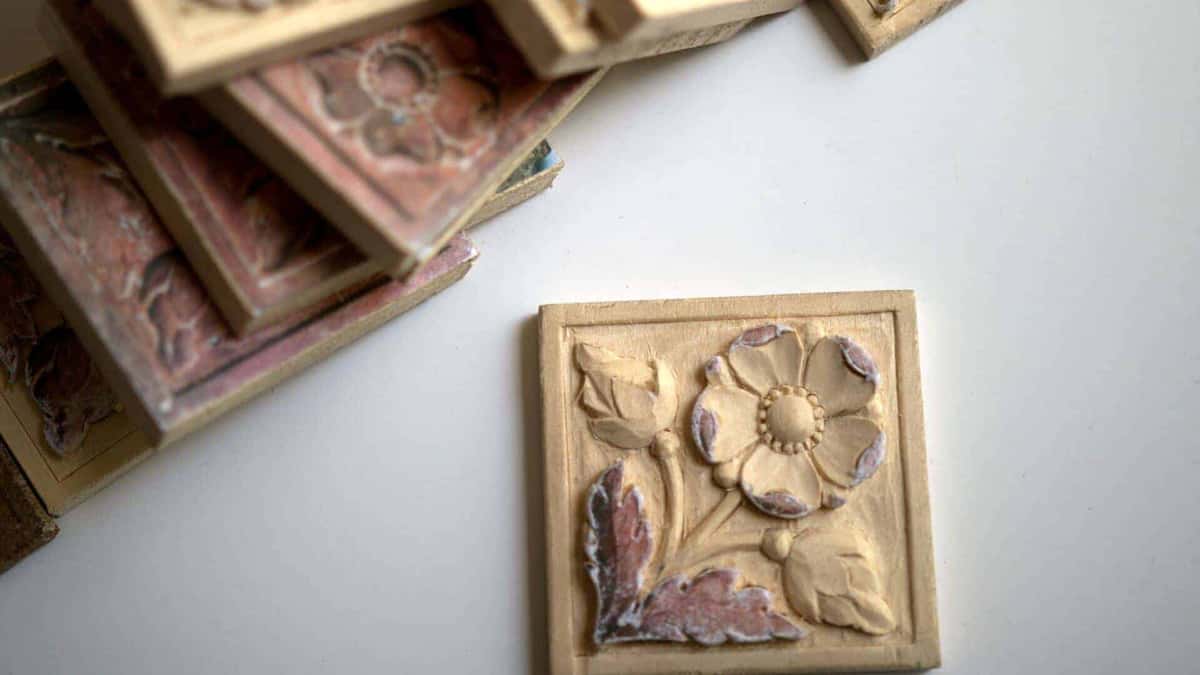
Where print earns its place is design vocabulary. You need to know the difference between a Roman acanthus and a Greek one before you can decide which one belongs on the panel you are carving, and reading is the cheapest way to learn a hundred motifs quickly. My own version sits here too, in the Greek and Roman acanthus comparison, and the drawing skills piece covers whether you need to draw at all.
Can I learn from a master without moving house?
Watching a master work, every day, over months, is the part of apprenticeship that actually transfers through a camera. I do not call this a school. The name I use is virtual apprenticeship, and it has been that on livestreams for years, because school is the wrong word for what happens here.
The reasoning is simple and it is the same reasoning the guilds used. An apprentice learned by watching over the shoulder of his master, day after day, doing exactly what the master said to do. He was not sitting through lectures. Nobody was quizzing him. He watched, he copied, he got corrected, and after seven years he was allowed to carve.
Point a camera over my shoulder and that first part comes through whole. You see the angle of the tool, the moment I stop, the mistakes I leave in because editing them out would teach you nothing. What does not come through is the correction, and I am not going to pretend otherwise. So a club still belongs on this page, along with a show and a week in Indiana, and I put them above my own name in more than one row of that table.
Place it honestly, then. If you have nobody near you and no week free, watching a master work every night is the closest thing available to the old way, and it is available tonight. With a club forty minutes away, go to the club as well. The two do different jobs. My class list shows what is inside, whether you can teach yourself answers the question underneath this one, and the wood guide settles what to put on the bench first.
My teacher said there is no such a thing as not good wood. Nine times out of ten, when a student tells me the community around him is no good either, the same answer applies.

Frequently asked questions
Is Reddit good enough on its own for learning wood carving?
For quick correction, r/Woodcarving is hard to beat, and it costs nothing. What it cannot do is watch you work across months and notice the habit you keep repeating. Pair it with one place where a real person sees your hands, whether that is a club, a class, or a camera pointed at a master.
How much does joining the National Wood Carvers Association cost?
Dues run 29 dollars a year for addresses in the United States, 31 dollars for Canada and 35 dollars internationally, and Chip Chats magazine is included. Their club finder is the main reason to bother. Clubs keep their own entries current, which is why the listings hold up.
What is a juried carving show and should a beginner enter one?
Judges look at each entered piece, tell the maker what they see, and award ribbons. Vesterheim in Iowa runs one every other year. Enter early rather than waiting until you feel ready, since the written feedback is the prize and beginners get more out of it than anyone.
Where can I see historical wood carving in person?
Old churches hold more of it than museums do, especially in Germany and England, and much of it is oak. Stand close and look at how the carver divided the space rather than at the finished effect. Bring a camera. Real work photographs better than somebody's drawing of it.
Do I need a local club if I already take online classes?
Both together beat either one alone, easily. Video puts a master in front of you every night. A club gives you people who remember your last three pieces and will say the awkward thing out loud. Chip Chats keeps the directory that finds one near you.
What did apprenticeship actually involve?
Guild apprentices watched their master work for years before carving anything themselves, often seven, and the watching was the method. There were no lectures and no certificates. Vesterheim still runs a version of it in Iowa, awarding up to two folk art apprenticeships a year to carvers who want to teach.