

Alexander Grabovetskiy, woodcarver, School of Woodcarving · Published 2020
What does a wood carver mean by "the only problem"?
Quick answer: In workshop 84, part 3, I said upright grain is going to hold, and I called carving it inconvenient "the only problem." Elsewhere I used those words for a reach, a tool angle, not much space, black dirt, dull tools and lost time.
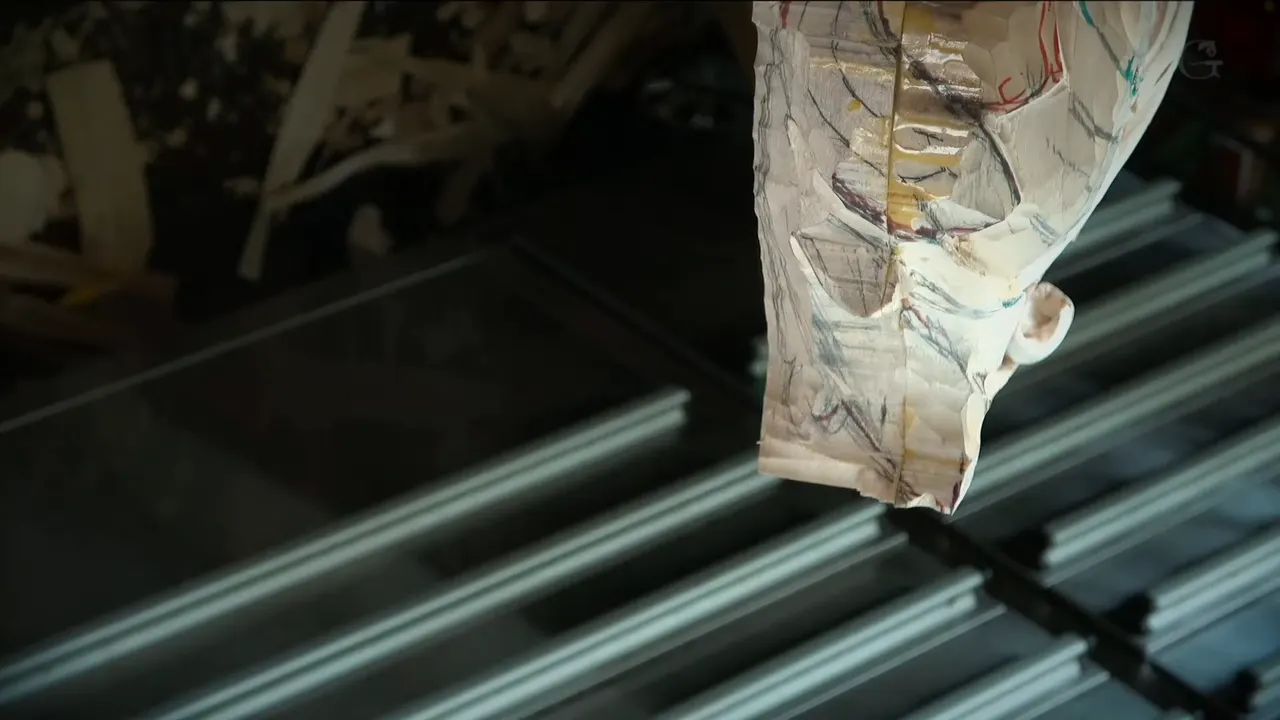

Workshop 84, part 3 gives upright grain the words: I said the wood will hold, and said carving it is inconvenient, the only problem. Other courses of mine use those two words for a reach, a tool angle, too little space, black dirt, dull tools and lost time.
Ever find one small thing standing between you and the shape you want? Part 3 comes first here, and the other videos where I say "the only problem" follow it.
What I said about the grain
Part 3 starts in the middle of a thought about "the grain direction." All "the grain runs like that, upright," I said, and so "it's not the most convenient." Then "one thing is really important to understand": "they really must be super sharp," and "Let me raise it a little bit." Next, "Tools must be super sharp. Let me outline this section." Wikipedia has a short page on grain, in case the word is new to you.

"All right. So that is good," I said, and "So I can see what I want to see." On a ridge: "So which means I need to clean a little bit this ridge." Another line on the grain direction itself: "See? The grain direction. Not too convenient."
Which boundary came first at the curl-up?
"So this movement, that's a really interesting movement," I said. Next: "let me clean right away boundary of this curl-up." After "Here you go," came "I want to make sure it makes sense in overall movement."
The opposite way, as an option
"Now I need to outline this section," I said, "Otherwise, it's not going to look good," and an option followed: "I could actually do opposite direction. I could lower down that side instead, and make that part flipping a little bit above. That's probably what I should do." No finished carve here, only an option.
A verdict followed: "that was not the right way, I guess, of doing it, but it's okay. I still have plenty of material." I thought it would make "a lot more sense."
Did I call the change a mistake?
"That is wonderful. So let me fix this, which is actually okay." "I still going to do a concave," I said, "so it's not like I made a huge mistake." Then "at least now, this is going to be a lot more logical movement this way," and "it's going to go all the way wrapping like that." I expected "a really nice and beautiful movement."

How did I plan the edge?
The edge itself was next: "I need to probably take care of the edge itself." Also "I doubt you see it." Yet "I do have a line, so I'm going to make sure I'm staying on that line." My tool plan was a "smaller number 11, maybe about 3 millimeters" (about 0.12 in), to "just carefully outline it, whatever I have to work around." The reason I gave: "Because I really don't want to mess up." And "just barely hitting the point."

On the grain: "I got to be really careful because of the grain." "I can easily break it" and "I don't really want to break it."
What upright grain does for strength
"So now I am able to see much better," I said, and "Just because of the grain, so got to be super careful." Then, on strength: "yes, it will be strong because the grain goes that direction, it's going to hold. It's just inconvenient to carve. That is the only problem."

The transcript of this part ends on "So now what I have to do." The gouge has a Wikipedia page, and so does the corbel.
Where else do I say it?
Videos from several of my courses carry the same two words, and they sit below in three groups, each passage naming its course and its video.
A reach or an angle in the way
In Venice Room 61, part 7, in the Part 5 course, I said "See how it develops? It develops absolutely beautifully." Next: "The only problem I have, I can't get to this side to clean it. It's almost impossible for me." Also "I have to be somehow using some of the tools to get in." About the tool marks I said "I like them personally," and "Maybe I should leave it like that" because "it's anyway going to be paint grade."

Workshop 60, part 2, wanted "a really deep shadow." Of the ways to get that shadow, "I think it's my favorite way anyway, just to get my plug cut." I named the snag: "the only problem is the angle of this plug." Next, "I can't go in underneath of this leaf with a straight tool." My plan was to "start straight cut down," and "I could probably use a mallet a little bit." Wikipedia covers the mallet as well.

The Grinling Gibbons class in Maine, lesson 16, part 3, has "I don't really have to." Yet "I think it's gonna look nice if I'll be able to excavate slightly on inside," I said. The snag: "I have to attack that against the grain and Uphill." The tool was "the number eight." And "this one is one millimeter" (close to 0.04 in). Plan: "I'll do a plug cut," I said, "without pressing too much."

In the Furniture Panel course, lesson 22 on the upper part and its acanthus movements, part 10, I said you could "take just a normal knife" to "outline first and cut it," and called it "probably one of the quickest ways." On that approach: "when you dig in, you limited how much undercut you're going to do." The point of the knife "can leave, on a background or on a lower level, a mark, tool mark, which is not going to look as nice." I intended to show that approach. The knife has a short entry on Wikipedia, if you want the basics.

Furniture Panel lesson 27, part 2, has "My router plane." About it: "on a router plane, if you look on the backside, that is a little too long." "It's a good idea sometimes to modify those knives and get at this part," I said, and "But just remove the heel part, this part just to grind it down." About doing it: "I don't wanna do it," and "it's possible." For me "it's okay as long if I can just get, you know, the middle part." The router plane has a Wikipedia page too.

Room or shape as the trouble
Workshop 74, part 4, has a center line I called "visually really nice." My "only problem" was that "I want to utilize as much space as I can, which in this case is going to go all the way to the edge." I brought up the golden ratio, and "62% or 60/40" as the easier split. "To be exact, it's a 62% and 38%." That line became "my boundary," and about one spot: "that is a really high spot."

Eyes were the matter in workshop 60, part 1. "Now I'm able to create some eyes," I said. For the eyes, the "only problem" was "I don't have too much space for the eyes," and "too close, I think." A maybe came next: "Maybe I should just do small on this side, really small eye." It stays a maybe.

Workshop 94, part 2 (Venice Room 94, Part 8 course), has "I need to be symmetrical again and do something like that." On "the only problem," "I got too many divisions." About that I said "Maybe it's OK. Maybe it's all right." Also "have to be true to my previous piece," I said, "the central piece." I gave verdicts on sections too: "I'm happy with this part," "I am not too happy about this part, this section," and "I'm okay with this one."

Part 2 of workshop 148 (Part 13 course) has the "only problem" for me: "I kind of don't like section right here, and it's already high." Then "when you look from the side, it doesn't look too appealing. I really want to lower that down." I added "maybe, I'm going to lower that down and make the twist little wider." "I know it does not make sense yet," I said. That plan stays a plan.
Grape Onlay lesson 8, part 2, brought a shifted line. I had shifted my central line, and "my bulging, my convex, it's kind of center right here." So "I need to kinda drive an eye." The tool was "number 11 again and 10 millimeters" (roughly 0.4 in), with "Not big. I wanna blend it."
Later in that part came "Beautiful and nice movement," and another trouble: every lobe is "supposed to have multiple subdivisions." "I can actually subdivide this and create another notch." After "Subdivision of subdivision, okay?" I added "I don't wanna overdo it," and "For me it looks good." Next, "I can probably go ahead" and "undercut with the same tool with the small number 11 and two and a half millimeters" (nearly 0.1 in).

Venice Room 37, part 12, in the Part 3 course, has "it's not a big problem, but it's still kind of a problem." "This area needs to be excavated right now deeper." Of that area I said "I don't want to do too much work underneath, but logically, I cannot just excavate and leave undeveloped part." So "I need to develop some kind of detail on inside, which you don't see." Then "there should be some kind of acanthus developing on inside. Otherwise, it just doesn't make any sense." A Wikipedia page on acanthus is one click away.

Furniture Panel lesson 30, part 1, had a shadow in doubt: "The only problem in this area, I'm not sure if I'm gonna be able to exaggerate that shadow around this cut." I called it "a little challenging." An option I gave: a cut "not flat, not parallel to the background, but slightly inward cut," and "make this part little deeper than the opposite side of it." Then "Let me outline little deeper around."
Dull tools, black dirt and lost time
In Chamomile and Bow Rosette, lesson 4, part 1, I said "I trace that," and "that is my main element." About that method: "The only problem that I have with that method is how much black dirt it just accumulates." "It's just the only problem because it's just black carbon." "But it's okay. I'll clean that a little later."

Lesson 2 of that course, part 3, has a downside of its own. The paper holds "really well," I said. "Have no problem with the paper whatsoever." Next came "The only problem or the only downside of the paper sandwich method": "See all that dark spots? It's like a dust and whatever, rubbing hands and so on." It "becomes kind of dirty, and it's not really appealing." Even so, "I'm okay with that."
In How to Sharpen Micro Tools, part 2, a flat bevel "gives me absolutely flat bevel, and this point is not as weak." With stones, "it just takes so long to create a long bevel." My lengths were "usually, I would say about 10 millimeters, 14 millimeters on some of my tools, and some of them 25 millimeters," and in inches "three-eighths of an inch, about half an inch, and approximately one inch." For sharpening stones and the bevel, Wikipedia has short pages.

The Maine class on sharpening, part 1, holds a story: "I came to him one day and I said," "Why did you give me that bad piece of wood?" and "It's a bad piece of wood." He answered "There's no such a thing as a bad wood." "It's a dull tools. That's the only problem, dull tools." "Sharp tools can do beautiful stuff, even on the worst of the worst pieces of wood." That sits close to my words in workshop 84 about sharp tools.
Venice Room 72, part 1 (workshop 72, Part 6 course), has "I really have to explain to you what happened. Well, actually nothing happened." And "The only problem is I just lost again about 40 minutes, well, less than 40, about maybe half an hour of video when I've done this part." And "problem is a problem." Next, "today, I going to concentrate probably just on this detail," and "that detail is really important for me today."

The troubles side by side
| Trouble and place | A few of my words from that video, as I said them |
|---|---|
| Upright grain, in workshop 84 | "Not too convenient" |
| A side I cannot reach, in Venice Room 61 | "almost impossible for me" |
| The angle of a plug cut, in lesson 60 | "a straight tool" |
| Too little space for the eyes, in lesson 60 | "too close, I think" |
| Too many divisions, in workshop 94 | "Maybe it's OK" |
| An inside spot, in the Grinling Gibbons class | "Uphill" |
| The back of a router plane, in Furniture Panel 27 | "a little too long" |
| Black dirt from tracing, in Chamomile and Bow Rosette 4 | "just black carbon" |
| Stones and a long bevel, in the micro tools video | "so long" |
| Bad wood, in the Maine class on sharpening, part 1 | "There's no bad wood, okay?" |
| Lost video time | "about maybe half an hour of video" |
Where can you watch every video on this page?
You can find part 3 in workshop 84, with 83 before it and 85 after it. All twelve are in the Part 7 course. What is the one thing in your own carving that you would call the only problem? Pages worth a look: wood carving, woodworking, hand tools and chisel.
How it's done
- Name the grain. All the grain runs upright, I said, so it is not the most convenient.
- Say what the wood will do. The wood will hold, I said, giving the grain as the reason.
- Keep the tools sharp. My word for the tools was super sharp.
- Plan the edge. Next, stay on the line I had and outline the edge carefully: that was the plan.
- Say what is left. Carving upright grain is inconvenient, I said, and I called that the only problem.
Frequently asked questions
Will upright grain make a carving weak?
Not in my words from that part: the wood will be strong and will hold, as the grain goes that direction. The carving itself is inconvenient, I said, and I called that the only problem.
Which tool did I plan for the edge in part 3?
A smaller number 11, maybe about 3 millimeters (roughly 0.12 in), to carefully outline the edge.
What did I say about my tools in part 3?
Super sharp. In that Maine class I said "sharp tools, really important."
What stood in the way of the plug cut in Venice Room 60?
What to carve next