
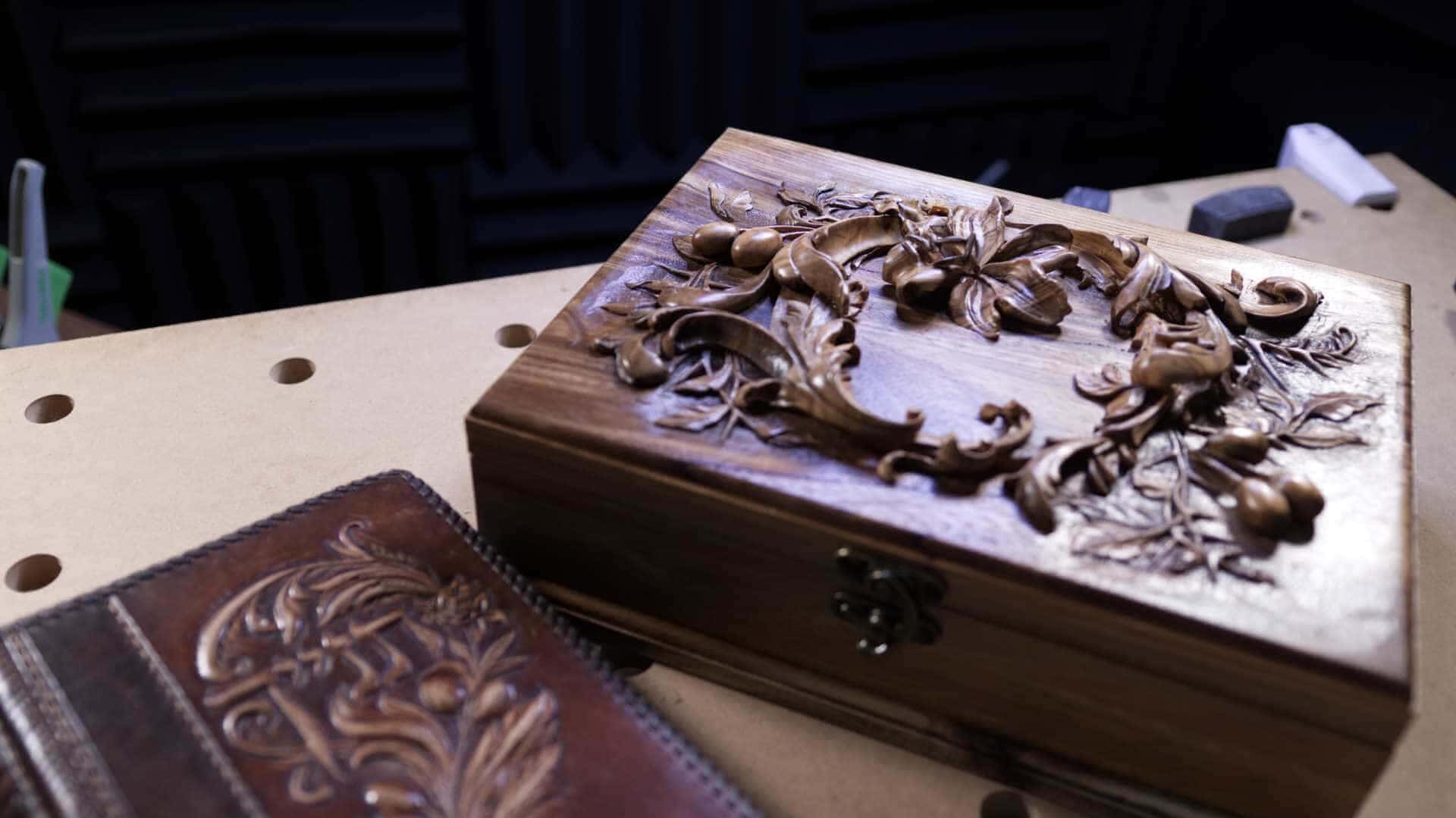
September 5, 2024 · Updated August 17, 2026
By Alexander Grabovetskiy — Master Woodcarver · Founder, School of Wood Carving · 17 min read
How does a lacquer finish on wood carvings actually work?
A lacquer finish on wood carvings is a solvent-release coating. The resin sits dissolved in thinner, the thinner leaves as vapor, and a hard skin stays behind. Nothing cures. Each fresh pass softens the pass below it, so the coats knit into one continuous film instead of stacking up like paint.
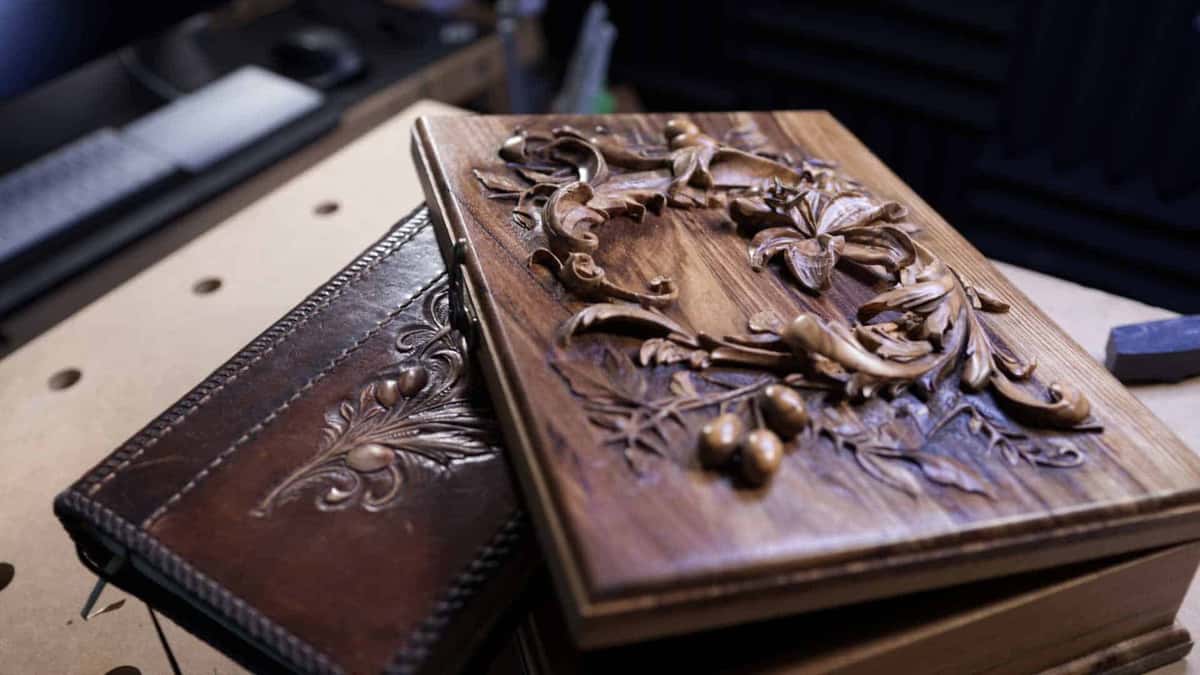
Four or five aerosol passes, buffed where a hand lands.
You carved for three weeks. The leaf turned, the undercut threw a real shadow, then you sprayed it and the whole thing went flat. I have done that. A finish is a lens, and light travels through it twice before reaching your eye, which is why the wrong film can undo a month of carving in about eleven seconds.
Know how the skin forms and you can predict what it does to your cuts. Nearby: how many coats of lacquer a durable finish needs and the whole survey of carving finishes and sealants.
- Lacquer dries by losing its thinner. No chemical cure happens, so the film stays soluble for life.
- A fresh coat melts into the coat below, so nobody sands between passes.
- The film runs downhill into your deep cuts and puts a shine at the bottom of the shadow.
- Sheen is a number you buy. Dead flat and 10 percent come out of the same resin.
- Nitrocellulose, acrylic and the water based kind each behave differently over pale carving wood like lime.
- Outdoors, on a food surface, or over unfilled oak pores, lacquer is the wrong call.
How does lacquer dry on a carving?
Lacquer dries by losing its thinner, and that is the whole event. The encyclopedia entry on the modern definition of lacquer calls it a coating that dries by solvent evaporation to a hard, durable finish.
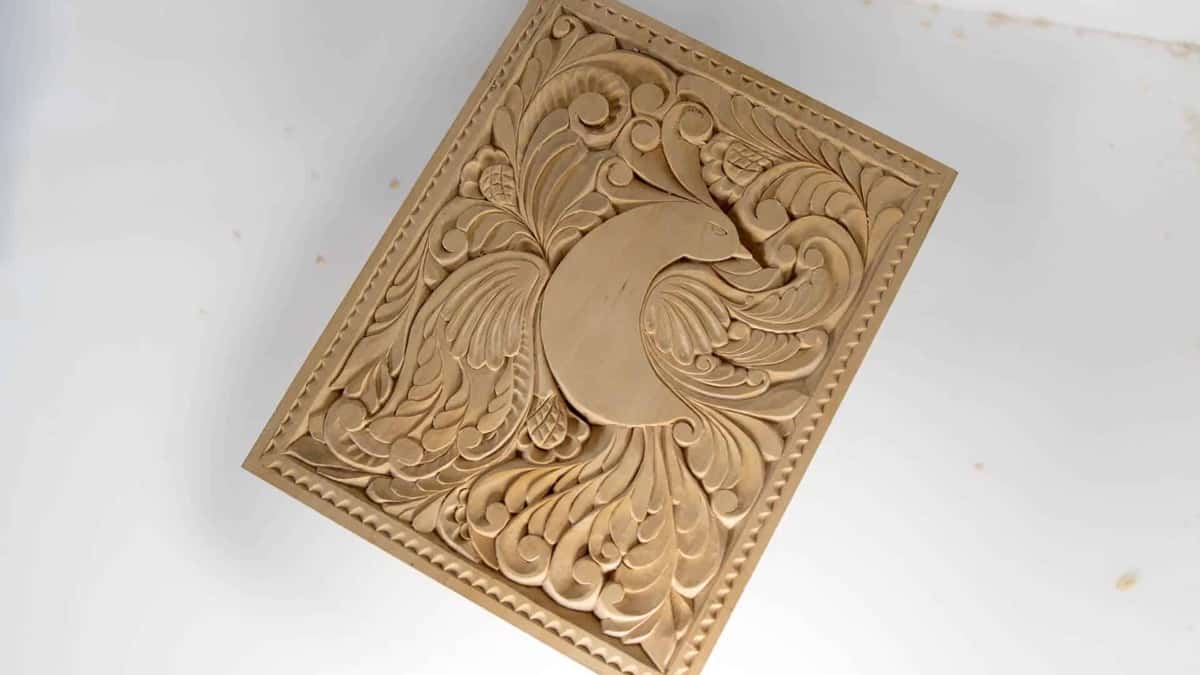
Bare wood. Every facet here is a decision the film will keep or bury.
Look at what that means. A synthetic lacquer is polymer held in organic solvents called lacquer thinner, and the polymer might be nitrocellulose, cellulose acetate butyrate or acrylic resin. Nothing in that mixture waits to react. There is no hardener to add, so the skin begins the moment air carries the thinner away.
Nitrocellulose itself is cellulose nitrated with nitric and sulfuric acid, and it dissolves in acetone and ethyl acetate. Most lacquer grades use the dinitrate. Explosives are mainly the trinitrate, which tells you something about the family you are spraying indoors.

Turn the lamp to the front and half of this ornament stops existing.
In my Acacia olive wood Lily box course I say it plainly: to make a story short, what solution I used, I used just lacquer. That box sits on a table every day with a Bible inside. Wax melts in a warm house and smudges pages, so a hard film that stays put was the honest answer.
Why does each new coat melt into the one under it?
Each pass arrives carrying the same solvents that dissolved the resin in the first place, so it softens the dried coat underneath and the two merge. The section on how nitrocellulose lacquer was developed puts it directly: each coat of lacquer dissolves some of the previous coat.
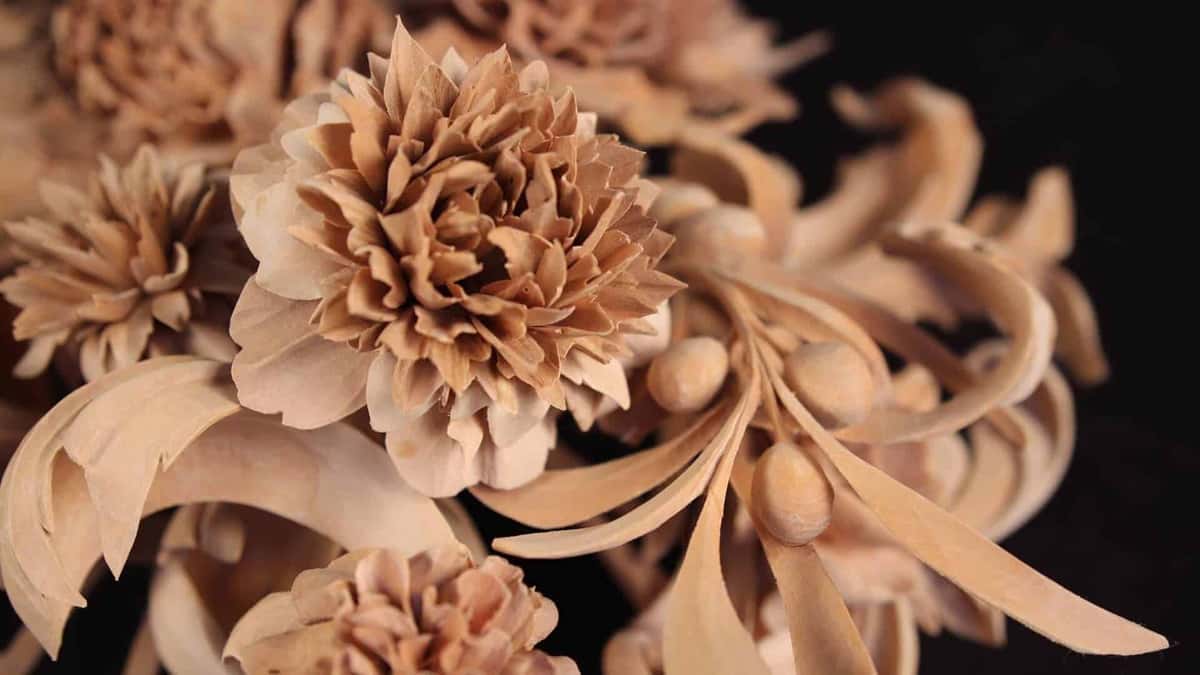
Those petal edges run under a millimeter.
Say that back to yourself slowly, because it matters downstream. Three coats of lacquer are not three coats. They are one skin that arrived in three deliveries, and the boundaries between them are gone.
Two consequences fall straight out. Standard finishing tables list no sanding between coats for nitrocellulose lacquer, and the reason is chemical rather than lazy. Thickness also accumulates whether you meant it or not, and thickness is the enemy of a carved edge. For the alternatives, read how to seal a carving once the tools are down.
What does the film do to carved detail?
Liquid lacquer runs downhill, so it thins on every ridge and pools in every hollow. Gravity and surface tension do not care about your design. On a flat panel that hardly shows. Carve deeply and it shows at once.
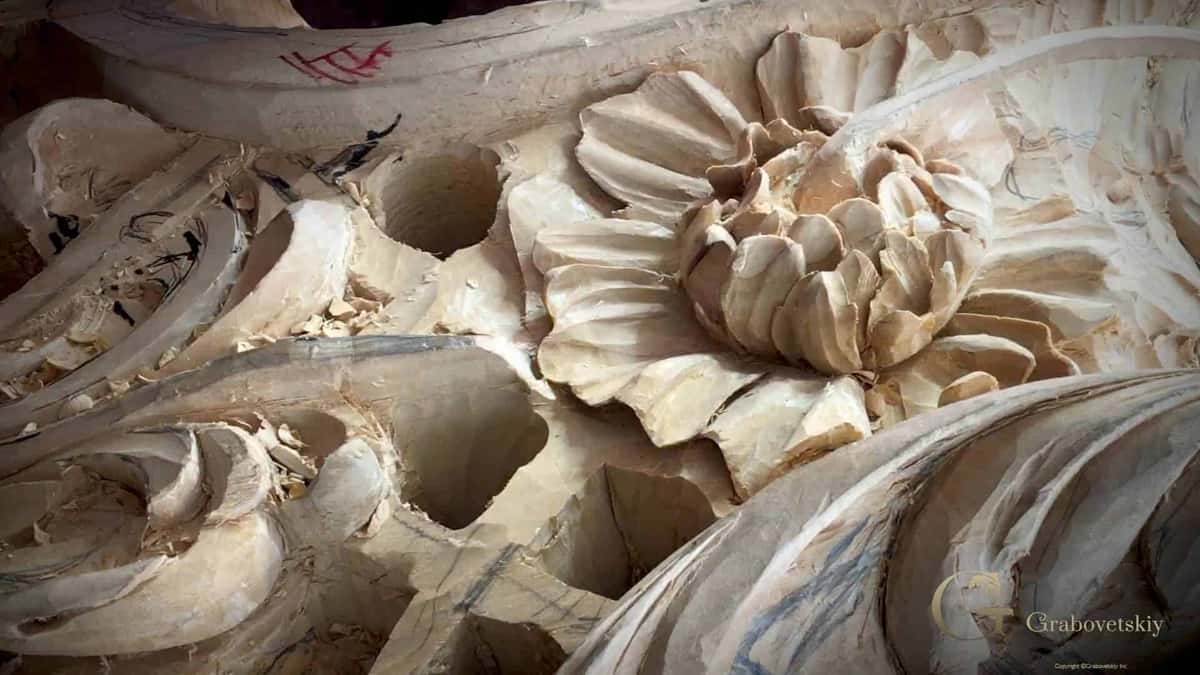
Drilled pockets take the dark deeper than a gouge reaches.
Picture a veiner cut half a millimeter wide down the middle of a leaf. Its walls meet at the bottom in a sharp valley, the darkest thing on the piece, and that is why the leaf reads as a leaf from six feet away. Now flood it with a wet coat. The liquid gathers, the sharp meeting softens, and the dark line goes gray.
The same thing is said of thick shellac, and I have watched it happen on my own bench. Any film thick enough to see can round a corner you spent an hour cutting.
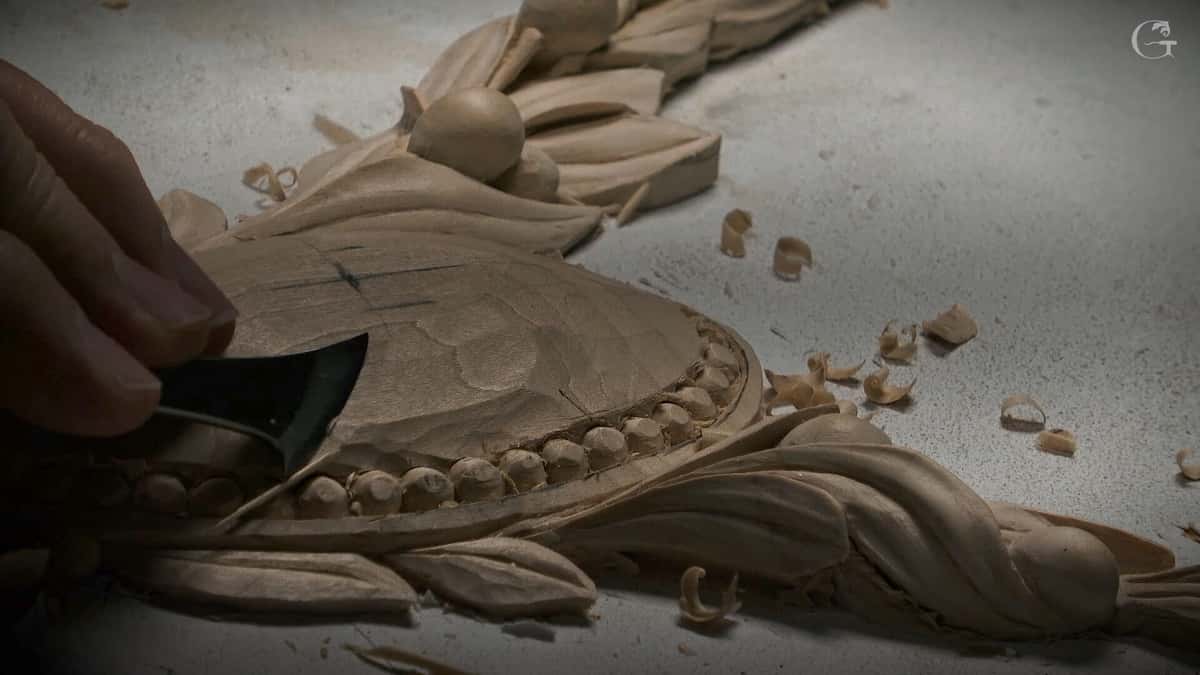
Every ball needs its crescent of dark or the row goes soft.
Beads are the cruelest test I know. A bead row is tiny spheres separated by tiny valleys, and the whole effect lives in those valleys. Two heavy coats and the row dies.
Why does a wrong film flatten a relief carving?
Shadow is what makes relief read, and a film changes how much light comes back out of a shadow. Gloss inside a hollow bounces light straight back at the viewer, which raises the darkest value on the piece and drops your contrast.
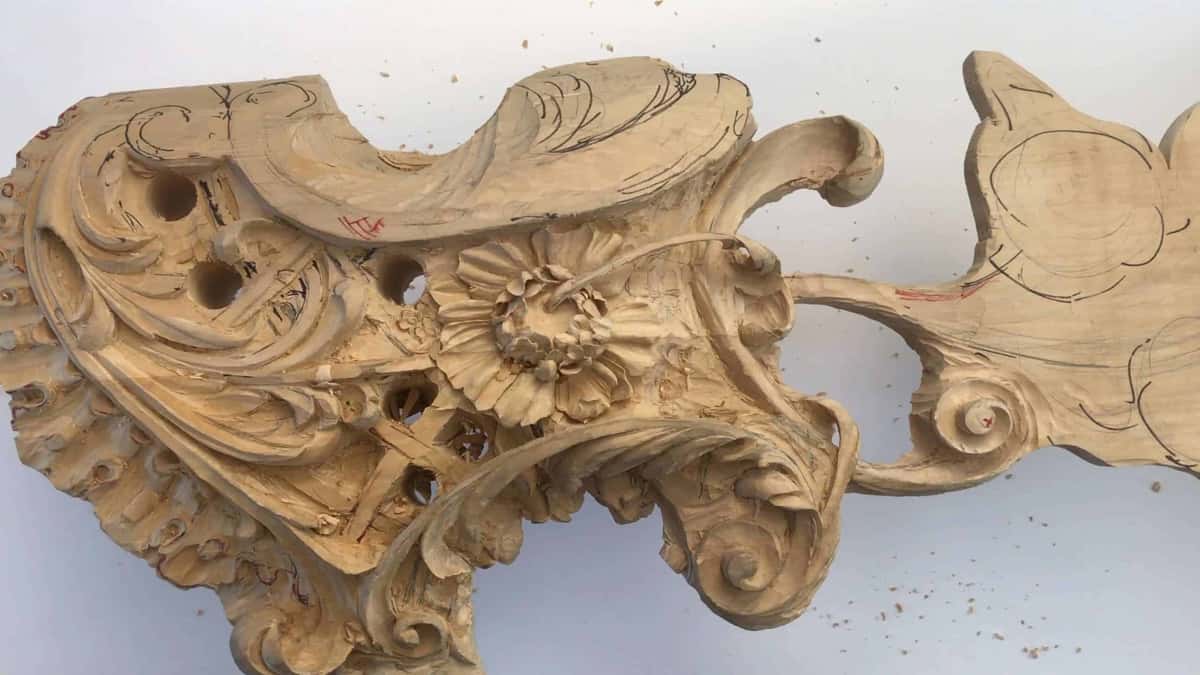
Nothing here is painted, and it still has black in it.
Gloss has a measurable definition. The reference on gloss measured as specular reflection gives three factors that set it: refractive index, the angle light arrives at, and surface texture. Smooth surfaces send light back in a mirror direction and look shiny. Rough ones scatter it and look dull.
In the Venice Room carving workshops I say this every session. Those excavations, they create darker spots, and it is all about the light and the shadow. The deeper excavation you create, there is going to be a much darker spot.
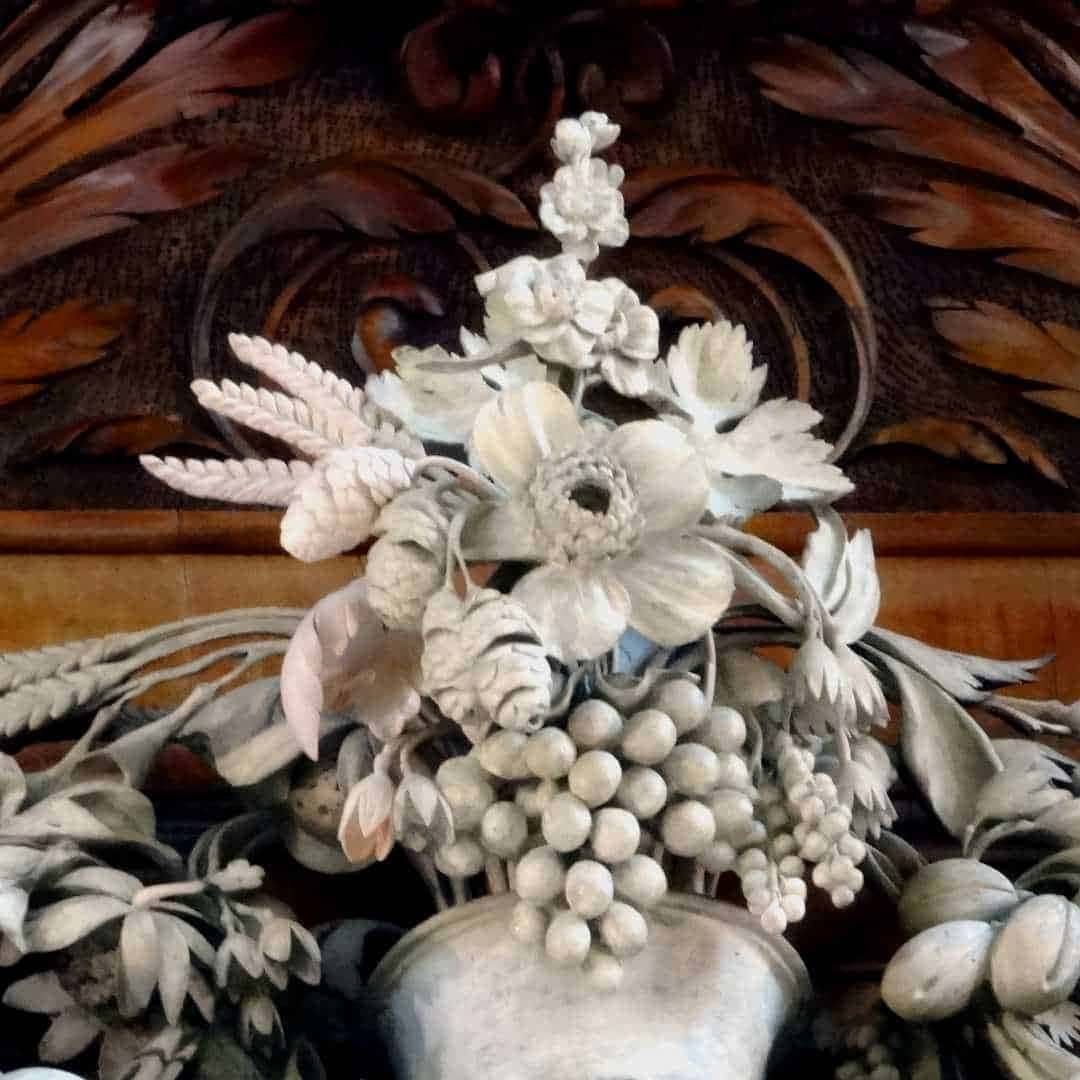
One frame, two sheens, and the eye reads both.
Which is exactly why gloss hurts a carver more than a cabinetmaker. A tabletop wants specular reflection, because a tabletop is a mirror lying on legs. Carved acanthus wants the opposite. Ornament of the kind Grinling Gibbons cut in limewood survives in dim English houses because the darks are genuinely dark, and the Gibbons work at the Victoria and Albert Museum still holds at twenty paces.
Which kind of lacquer belongs on a carving?
Three resin families sit under the same word, and the differences matter more on carved wood than on a flat door. Pick by what the resin does to a pale species and a deep cut, never by what the label shouts.
| Which resin family | What actually carries the resin in it | Grain raising | How it behaves on carved wood |
|---|---|---|---|
| Nitrocellulose based lacquer | lacquer thinner, a blend of organic solvents | no water | soft film, rubs beautifully, warm cast |
| Acrylic and CAB resins | that same thinner, holding a clear colorless resin | also water free | reads clearer over pale basswood or lime |
| Water based lacquer | water plus a small co-solvent load | real risk | low odor, but it fuzzes a sanded surface |
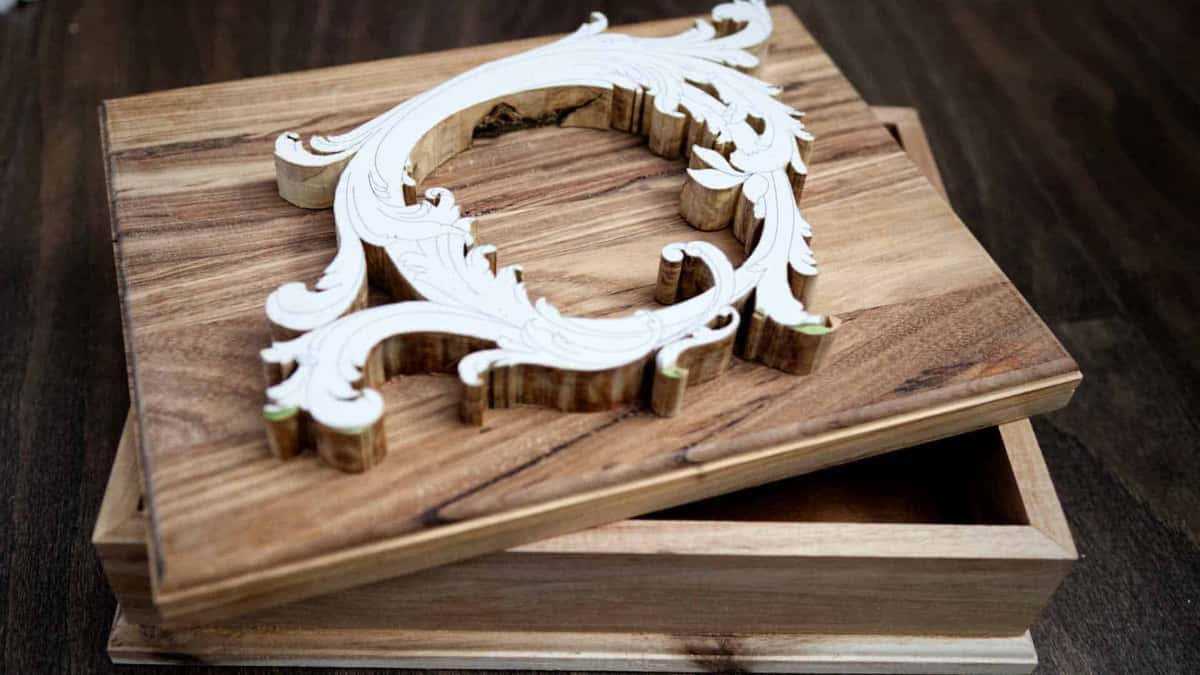
The last moment wood is all you are looking at.
Cellulose acetate butyrate, the CAB resin, is a thermoplastic with better weathering resistance and lower moisture absorption than plain cellulose acetate, and acrylic resin gets described as a clear, colorless thermoplastic. That clarity is what the trade points at when it stamps a can water white. On a species as pale as basswood, also sold as lime or linden, no color in the wood hides a warm cast.
Water based products are a different animal. The water based lacquer entry notes their fumes are considerably less hazardous and that they lack the combustibility problems of solvent kinds, while they can still throw airborne particulates that call for protective wear. Their real trap on carved work is grain raising. The reference on the standard sanding schedule for wood finishing explains that sanding ridges and slivers of cell wall swell and spring up under a water based finish, and the surface turns fuzzy.
Should you spray or brush lacquer into an undercut?
Spray, on anything with a real undercut. A brush cannot reach behind a leaf cut free of its ground, and lacquer flashes off so fast that a brushed edge sets before you can join it to the next stroke.
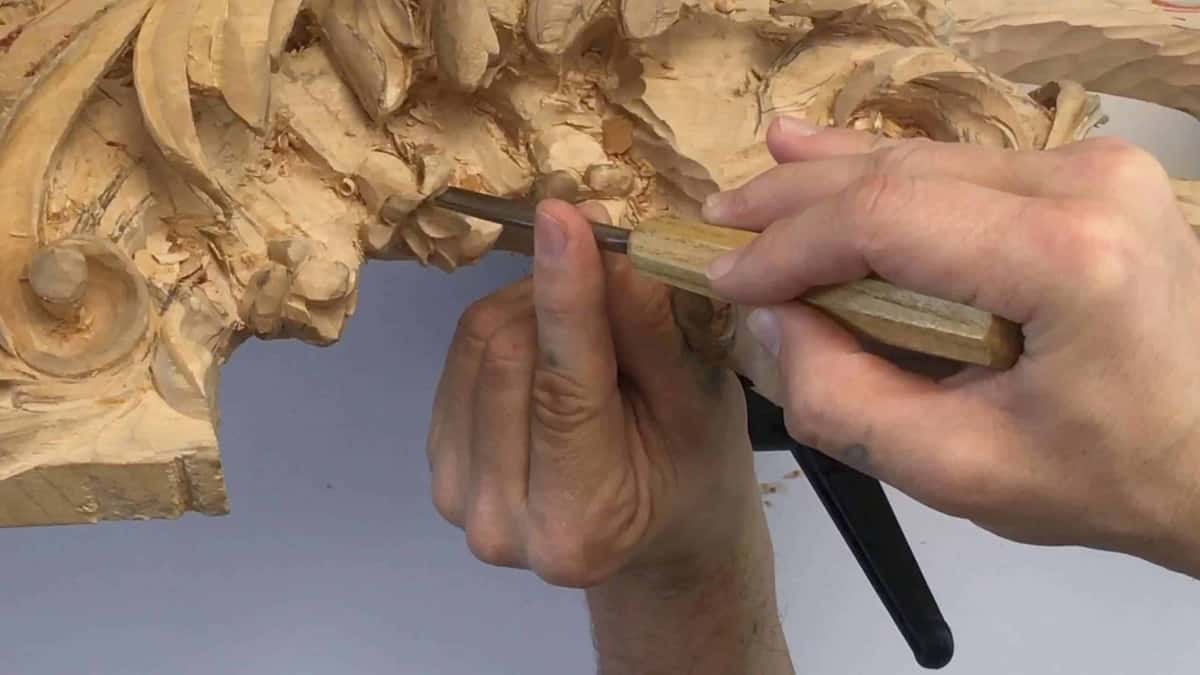
Almost sideways. No brush handle follows a chisel in there.
Nitrocellulose lacquers drove the first real use of spray guns, and spraying stayed the preferred way to apply them. A brush is in no carving kit either, which you notice reading how to judge a beginner carving tool set: twelve gouges, nothing to spread a finish with.

Six or seven directions for a spray on one tray.
My kit is smaller than people expect. I own a five stage HVLP system and rarely pull it out for small work, because I do not want the mess. A pre-mixed aerosol, around seven or eight dollars, does one project. Cheap hardware store aerosols behaved differently in my hands: more like spitting than spraying.
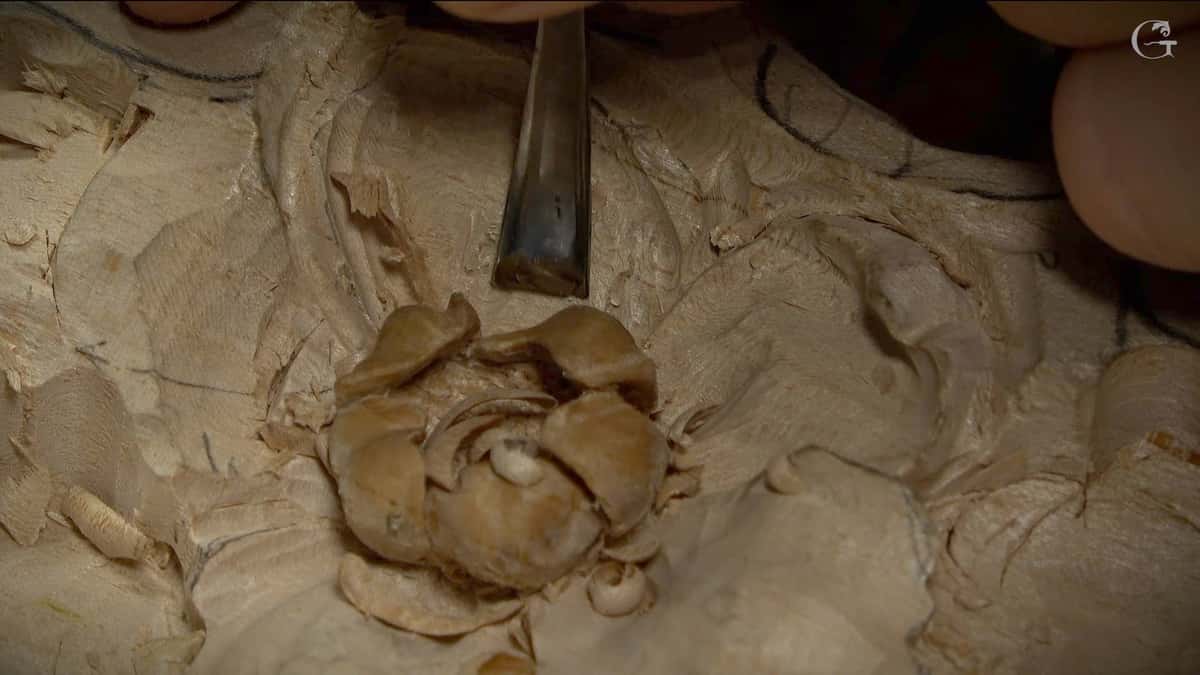
Two heavy coats would fill those gaps, and the rose would read as one lump.
Distance is the variable nobody teaches. Hold the can close and you lay down a wet coat that runs into your valleys. Further back, the droplets arrive half dry and build a thinner film that respects the cut. Deep undercuts get the first pass, from underneath.
Do you sand a carving before the lacquer goes on?
Sanding a carving is a decision that depends entirely on which finish is going over it. A film sitting on the surface records whatever it lands on, so the question becomes what gets recorded.
In that workshop I am carving a pipe organ shade for New York, and the sanding question turns on the finish going over it and whether gold leaf is coming. Baroque shops used rush and shark skin. I use mesh instead of paper now.
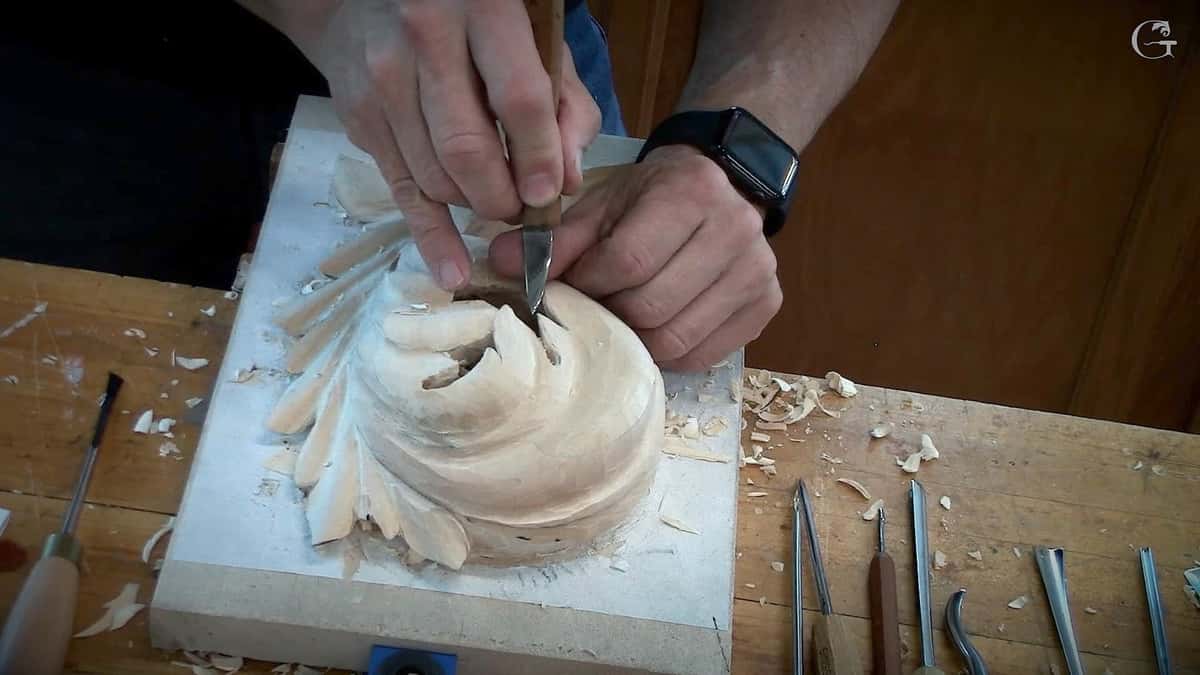
The rosette is under a hand, the shavings are fresh.
For a lacquered carving my rule is short. Tool facets stay. Sand a facet away and you trade a crisp plane that catches light for a soft blur that does not, and the film copies whichever one you leave. A typical furniture schedule might climb 80, 100, 120, 150, 180 and sometimes 220 grit, and the same reference notes that scratches show more in finer, harder wood and in end grain than in coarse oak.
Dust does need attention. Every hollow you cut is a cup, and every cup holds chips. Blow it out with air, then brush it, then look under a raking lamp, because a chip trapped under lacquer is trapped for good.
How do I lay a lacquer film on a relief carving?
Six passes in the right order will do it, and the order matters more than the product. Everything here assumes a small aerosol and an interior piece.
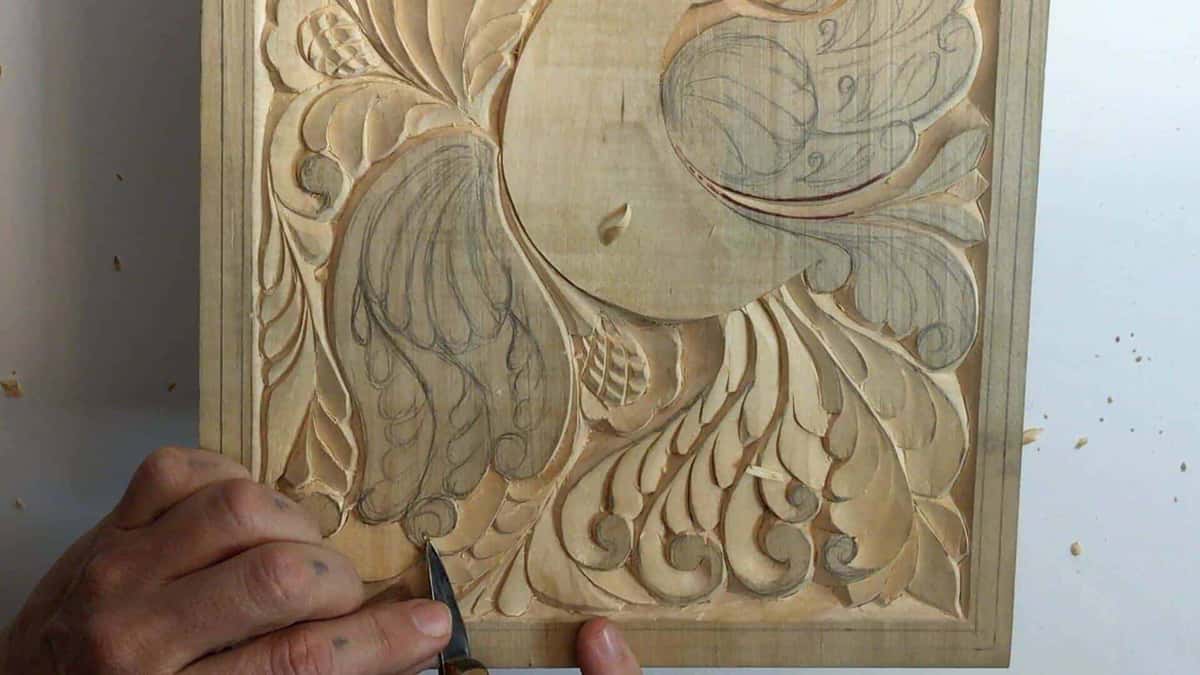
These lines vanish before any finish.
Step 1, blow every chip out of the deep cuts
Compressed air first, then a stiff brush, then a raking lamp. Anything left in a hollow becomes a permanent inclusion the moment the thinner touches it.
Step 2, spray a test card in the same species
Carve a few gouge cuts into an offcut and finish that first. It tells you how the sheen you bought behaves on the wood you used, which no label can.
Step 3, hit the undercuts from below before anything else
Turn the piece over or tilt it. Those surfaces get missed on every straight-on pass, and a bare patch behind a leaf grays out in a year.
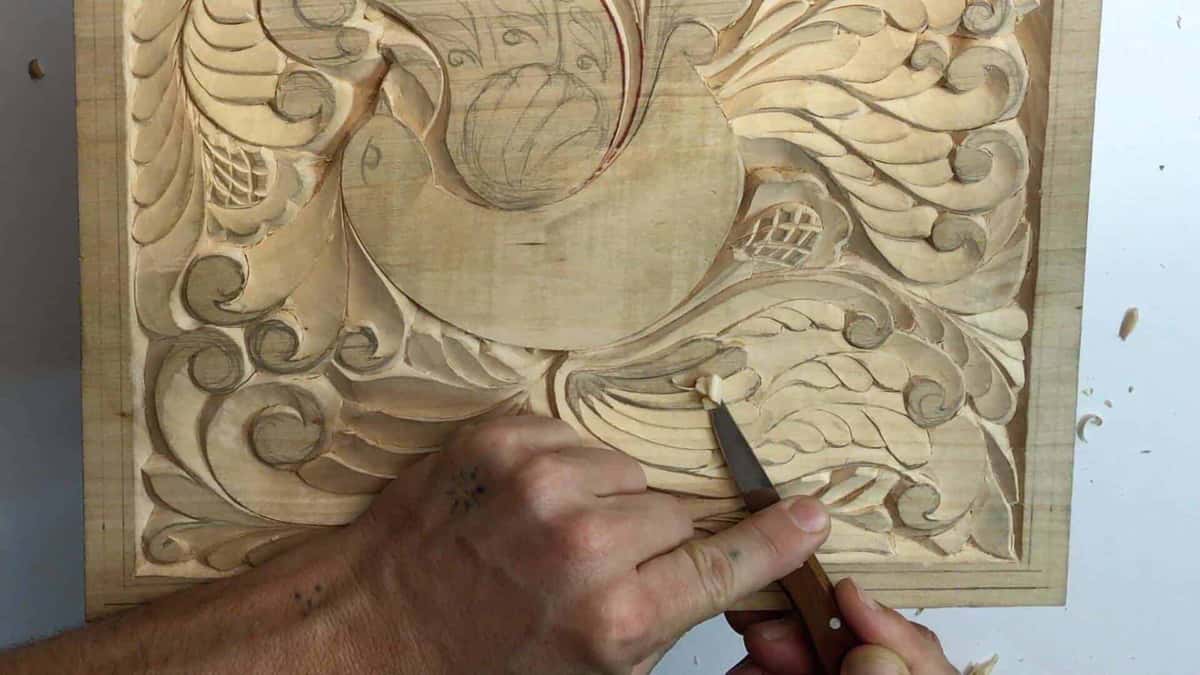
Hatching kills reflection. A heavy coat cancels it.
Step 4, keep the pass dry and keep it moving
Further back than feels right, and never linger over a hollow. A dry pass builds slowly, which is exactly what you want on carved work.
Step 5, let the thinner flash off before the next pass
Touch a hidden spot with a knuckle. Tack means the solvent is still leaving, and a second coat over tack is how a run starts in a valley.
Step 6, buff the raised parts and leave the ground alone
Here the piece comes alive. I use a fine abrasive sponge, the Mirka kind, at 4000 grit, and buff only what a hand naturally touches.
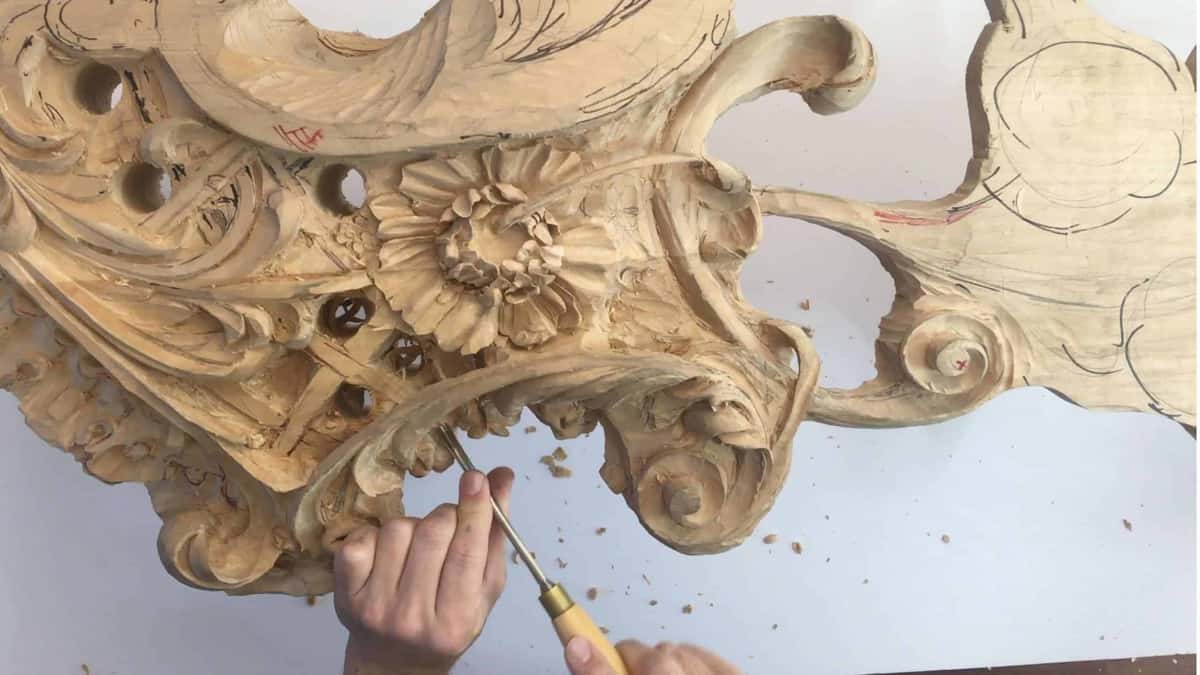
Selective buffing copies exactly this pattern of light.
People skip that last step, and it is the one that makes a lacquered carving look waxed. In the Lily box lessons I put it this way: I would just buff a little bit the areas which I want to make it a little more shinier, and it would still leave those areas around matte.
The sheen numbers are only numbers. I really like to use a dead flat a lot of times, and I really love to use a 10 or 15 percent sheen. I did not use a 25 percent, it would be a little too shiny.
What does a lacquer film look like after ten years?
A lacquer film ages by staying soluble, which is both its weakness and its best quality. Nothing crossed over into a new substance, so the right thinner still opens it a decade later.
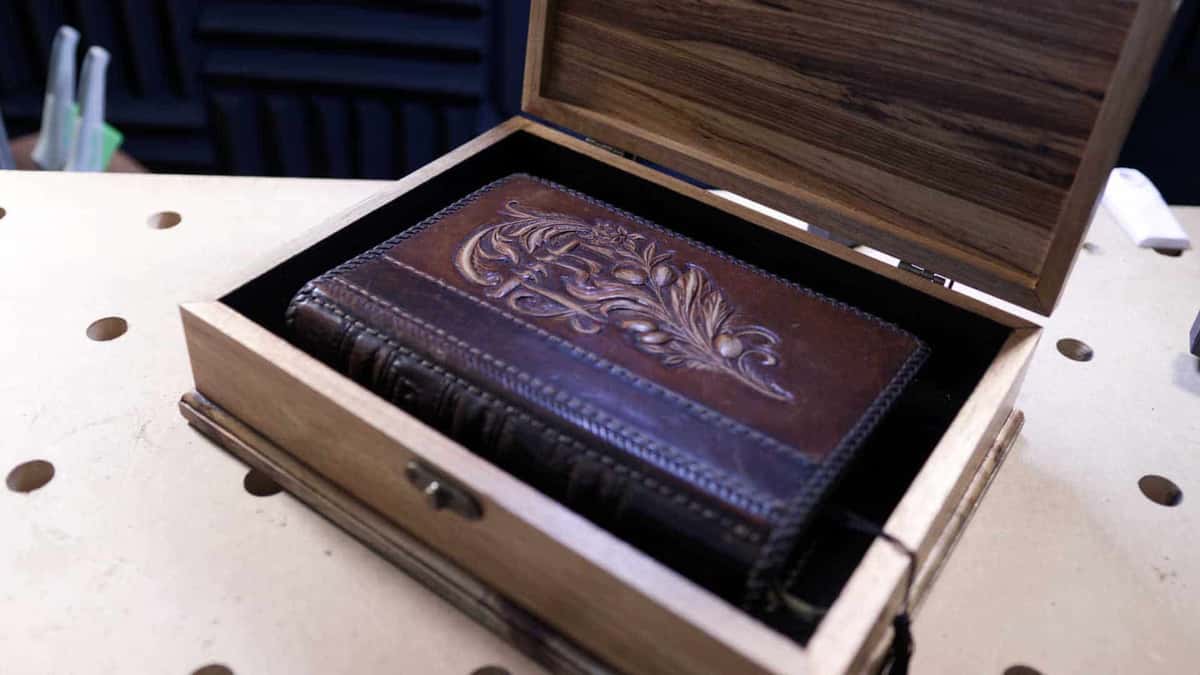
Plain inside, carved outside, and the book it was made for.
Finishing tables put nitrocellulose lacquer down as a soft, somewhat durable film with reasonable protection, reversible with the proper solvents, and excellent for rubbing out. Soft means a knock dents rather than chips. Reversible means a scratch melts shut instead of getting stripped.
Shellac is the honest comparison, since shellac and its alcohol solvent was one of the dominant western wood finishes until nitrocellulose lacquer largely replaced it through the 1920s and 1930s. The same finishing table calls it completely reversible in alcohol with poor solvent protection, and shellac is edible enough to glaze pills. An oil finish darkens with age instead of sitting on top.
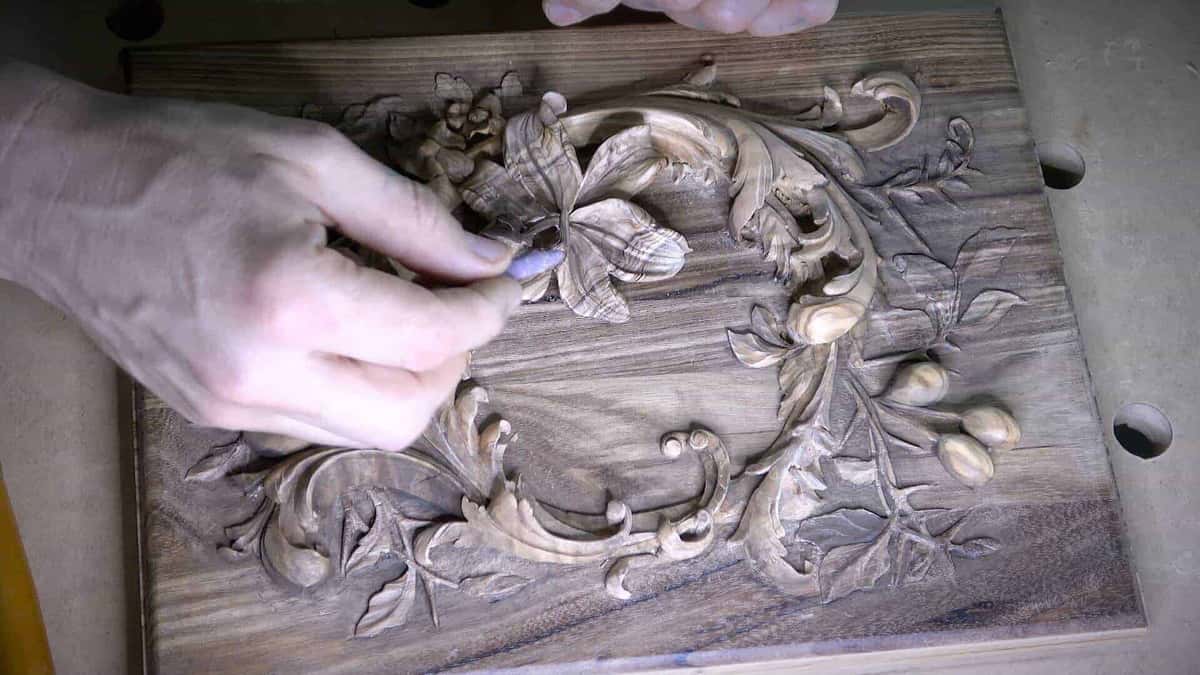
Tool marks still fully intact.
I stay careful about durability claims and so should you. About the brand I use I say this: it is really, really durable, they are claiming this can last, the finish itself, all the way 10, 15, and some people say it is all the way to 50 years. I am not sure, but it is what they are claiming.
The real ten-year risk is not wear. Lacquer is usually harder and more brittle than oil-based or latex paint, and it sits on wood that keeps moving, because wood is hygroscopic and moves in service, gaining and losing moisture almost like a sponge as the room changes. A brittle skin over a moving substrate cracks in a dry winter, and it cracks first where the film is thickest, which on a carving means the bottom of your deepest cut.
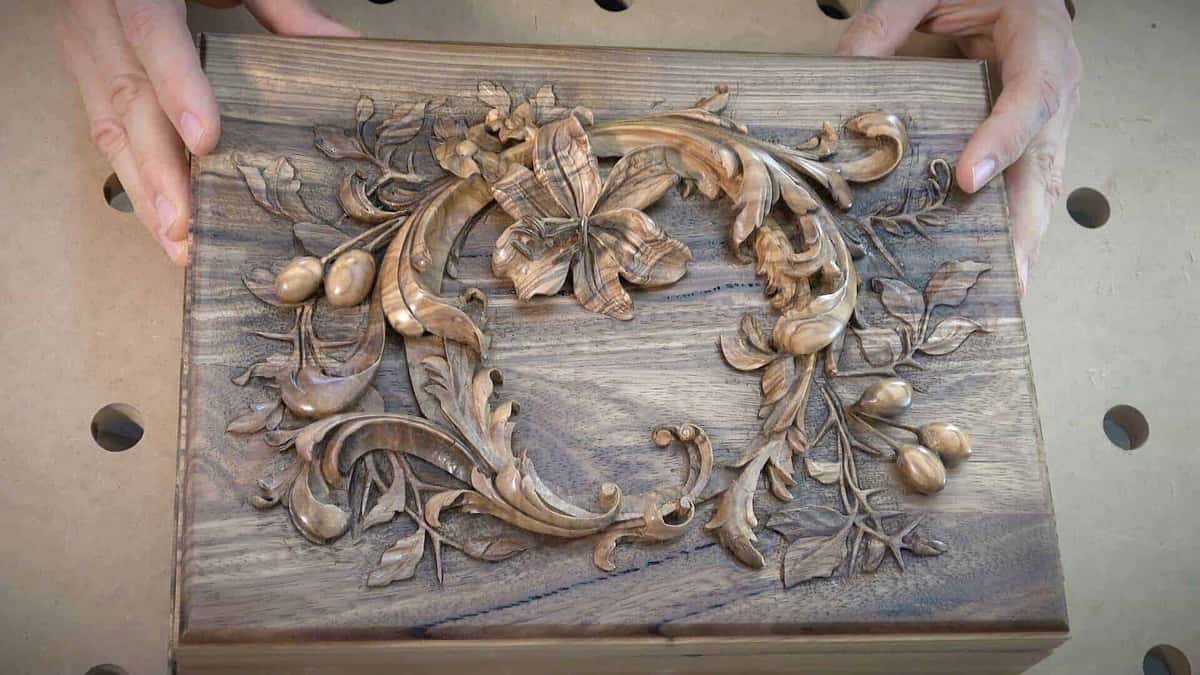
The shine sits only where the cloth reached.
When is lacquer the wrong finish for a carving?
Outdoors, on anything that touches food, over unfilled coarse pores, and in a room you cannot ventilate. Four situations with four reasons, and none of them is about taste.
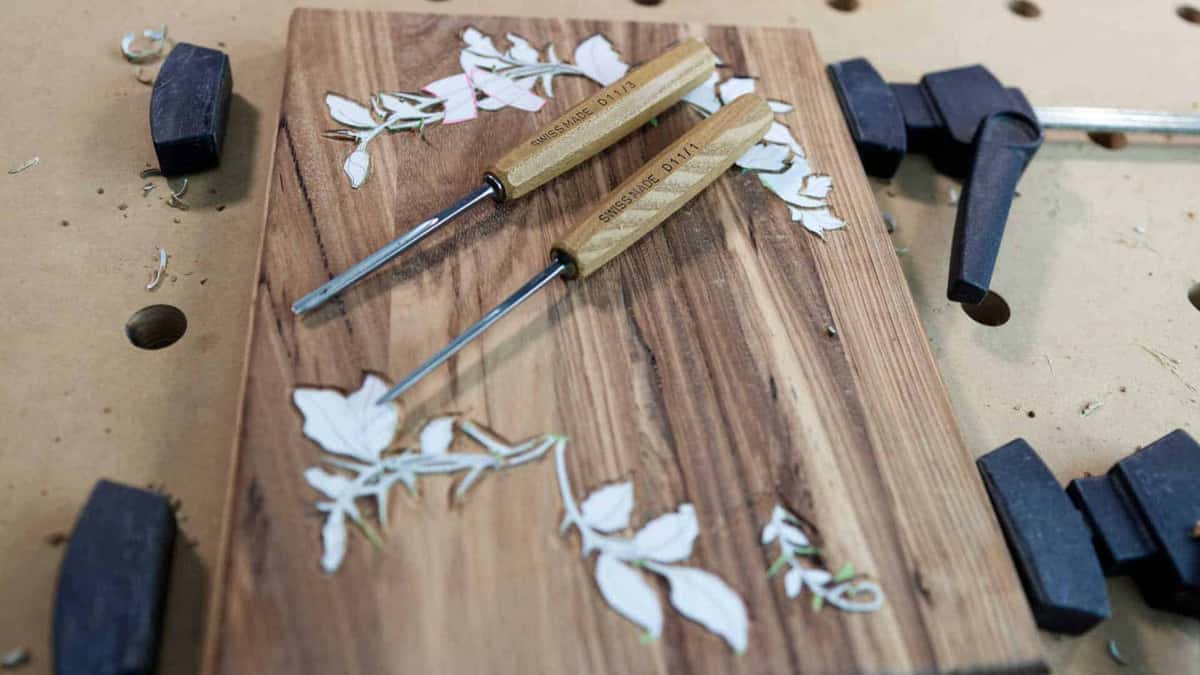
Neither gouge has an opinion about finish. That is the point.
Outdoors is settled history. Nitrocellulose was so viscous that it had to be thinned heavily, which left a film too thin to be durable outside. The automotive trade later moved to tougher two-component coatings that resist weather and chemicals. A garden carving needs something else.
Food surfaces are a different objection. Shellac is documented as a food glaze and gets used on pills and citrus, while lacquer carries no such claim. A carved spoon belongs in another conversation, and the case for oiling a block instead starts closer to it.
Coarse pores catch carvers out. Ring-porous species may need their pores filled before finishing so the coating can bridge them and resist cracking, and red oak has pores so large that you can blow into one end of a straight-grained board and feel air come out the other. Spray lacquer onto that and the film sinks into every vessel and pinholes. Anyone buying local hardwood runs into this, because oak is ring-porous, so the woods an Irish beginner can really buy matter first. A closer-textured species such as black walnut with its medium texture gives a film less to fall into.
Then there is your health, and this part is not negotiable. Solvent lacquer is flammable and its solvents are toxic. OSHA's page on solvent hazards says the health hazards associated with solvent exposure include toxicity to the nervous system, reproductive damage, liver and kidney damage, respiratory impairment, cancer, and dermatitis. The EPA page on indoor volatile organic compounds adds that VOCs include a variety of chemicals, some of which may have short and long term adverse health effects. Indoor levels of many run consistently higher than outdoors, up to ten times higher, and raised concentrations can persist long after the job is done. Spray outdoors or in front of real extraction, wear a cartridge respirator rather than a dust mask, and keep the can away from ignition.
One more case is aesthetic. If a piece lives on shadow alone, deep undercut work in pale lime, I sometimes leave it bare and nothing else at all. In my Roman acanthus leaf course the leaf spends its life being judged from across a room, and a film that lifts the darks at all costs more than it gives.
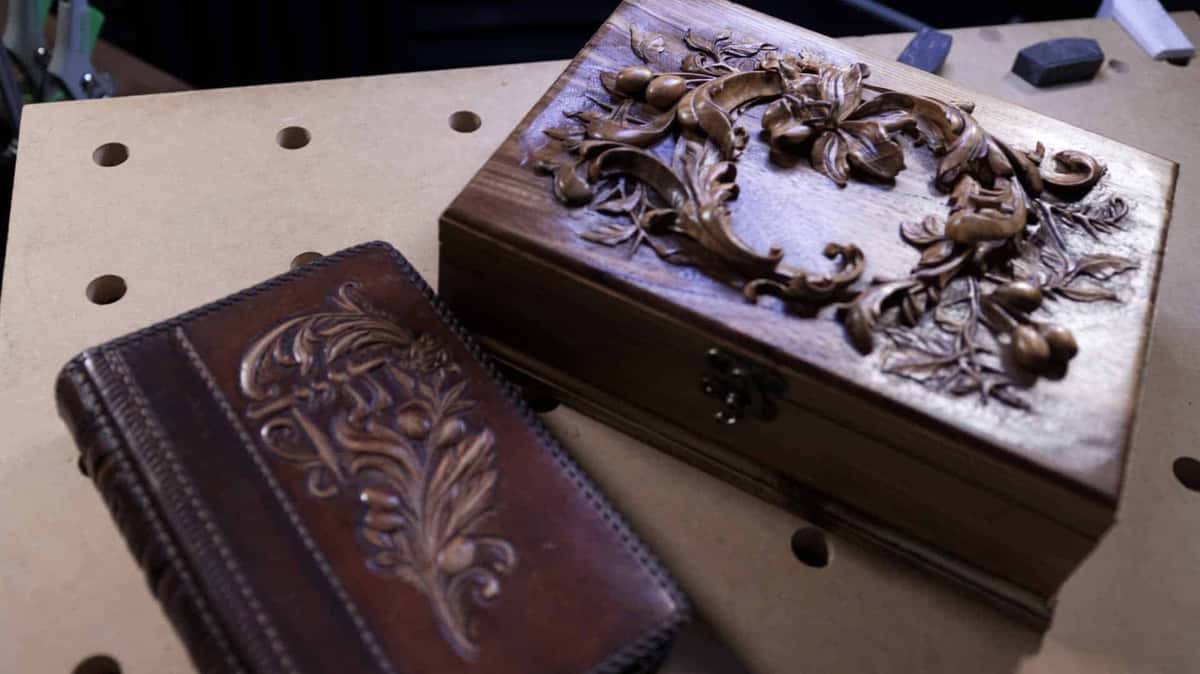
Everything about this piece was built around one book.
The product I prefer is not on a big box shelf. You will find it where cabinet shops buy, and you may have to walk in and ask them where they shop. If that sounds like trouble, look at what the first year of carving actually costs.
A last word on what sits under the film. Grain direction decides how clean your valleys are before any finish gets a vote, so reading grain direction in a carving and turning a rough board into a carving blank pay off long before the can comes out. So does drying wood before you carve it. A hard board dulls tools and leaves torn valleys no film can flatter, which is what the Janka hardness number measures and why softening a block that fights you is sometimes right. Still choosing stock? Start with which wood carves best, then the mistakes beginners make at the bench. Good steel helps, and Swiss made Pfeil tools hold an edge long enough to leave facets worth protecting.
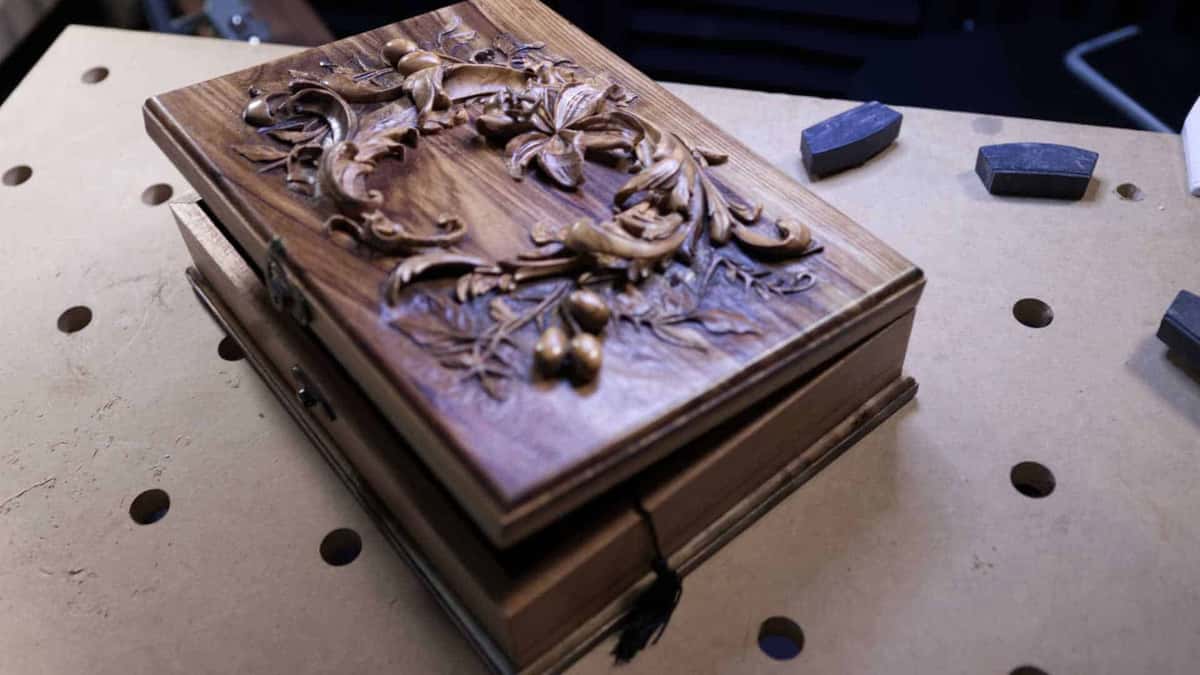
Notice how the olives still throw a shadow onto the lid.
Frequently asked questions
Does lacquer yellow a pale carving over time?
Nitrocellulose carries a warmer cast than the clear acrylic and CAB kinds, and on a pale species that shows. I have found no published rate anyone can stand behind, so treat it as a look you choose. Spray an offcut and leave it on a sill.
Can I put lacquer over an oiled carving?
Oil under a solvent film is a gamble I stopped taking. A fully cured oil sometimes accepts lacquer and sometimes leaves a soft, patchy skin that never hardens. Pick one system, and if oil is what you want, let oil be the answer.
How long should a lacquer coat dry before I buff it?
Flash time and cure are separate things. A pass can feel dry in minutes while thinner still leaves the bottom of a deep cut, and buffing then drags the film. Give it a day on carved work, longer if your shop runs cold.
Will lacquer fill in the fine veins on a leaf?
Fine veins survive two or three dry passes and start vanishing after five or six wet ones. Anything under about a millimeter wide is at risk, and a half millimeter veiner cut is genuinely fragile. Keep passes dry and check the veins under raking light.
Is aerosol lacquer good enough, or do I need a spray gun?
Aerosol is what I reach for on small pieces, and a good professional grade can behaves almost like a gun. A gun earns its keep on panels and doors, mostly because one can runs dry and a fresh can may not match.
Can I repair a scratch in a lacquer film without stripping the piece?
Repair is where this family beats every modern coating. Because the film stays soluble, a light pass of thinner or fresh lacquer melts the edges of a scratch together, and a fine abrasive plus buffing takes it from there. Try your test offcut first.
Filed under
- benefits of using lacquer on carvings
- best lacquer for wood finishes
- can you use lacquer on all woods
- common problems with lacquer finishes
- differences between lacquer and polyurethane
- DIY lacquer for wood carvings
- drying time for lacquer on wood
- how lacquer adds shine to wood carvings
- how lacquer protects carvings
- how to apply lacquer to carvings
- lacquer finish maintenance tips
- lacquer finish vs. varnish on wood
- maintenance of lacquer-coated wood carvings
- pros and cons of lacquer finishes
- safety tips for using lacquer on wood
- tips for a perfect lacquer finish
- types of lacquer for wood projects
- types of wood suitable for lacquer
- understanding lacquer application techniques
- Wood Carving finish
- wood carvings and lacquer durability