
September 6, 2024 · Updated August 17, 2026
By Alexander Grabovetskiy — Master Woodcarver · Founder, School of Wood Carving · 16 min read
The best wood for carving in Ireland when you are starting out
The best wood for carving in Ireland is sycamore for a first panel, with imported lime or American basswood when you want the softest carve. Alder and willow both work. Birch, ash and oak hold detail but punish a dull edge, and bog oak belongs to nobody's first month.

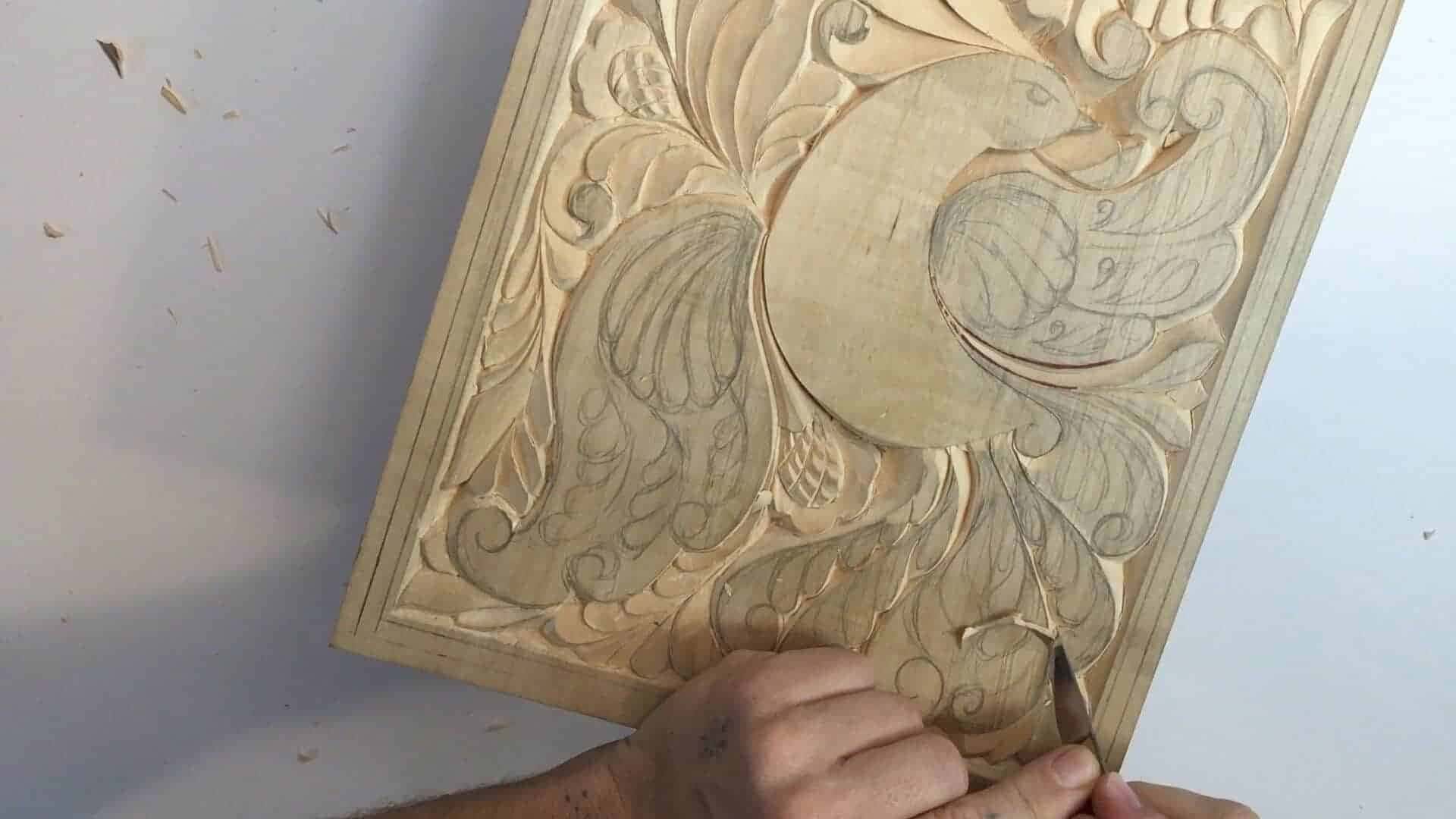
The pencil goes on first. Only then does the ground around the flowers start to drop.
Ireland hands a beginner an odd problem. Every carving book names lime before anything else, and lime is not an Irish tree. Every board of it on the island arrived by post or by lorry. Meanwhile the trees along your own ditch are harder than lime, wetter than lime, and free.
I carve in Florida. My basswood comes on a special order from a hardwood yard in Orlando, and I buy it years ahead of the project it belongs to. So I will not pretend I have walked an Irish mill yard on a wet Tuesday counting boards. I can still tell you exactly what each of these species does under a gouge, because a plank has no idea which country grew it.
- Lime is absent from Ireland's list of native tree species, so the kindest carving wood in Europe is an import for you.
- Sycamore arrived with settlers and spread into every hedge. Nothing on the island comes closer to a free carving board, and it is harder than most beginners expect.
- Ash is native and beautiful and dying. Dieback reached a Leitrim plantation in 2012.
- Sitka spruce fills the plantations, which means most Irish timber leaving a forest gate is construction softwood rather than carving stock.
- Bog oak looks like buried treasure and behaves like slate, so leave it well alone for your first couple of years at the bench.
Why is limewood so hard to get in Ireland?
Lime is not native to Ireland, so every board of it in the country was imported. The Tree Council of Ireland lists every native Irish tree and no Tilia appears on it.
Coillte, the state forestry company, files lime alongside beech, sycamore and larch as a popular non-native in its own Dublin Mountains breakdown. One botanical fact reshapes your whole shopping list.
You have two honest routes to it. European lime, Tilia x europaea, comes from British and continental suppliers and reads 700 lbf on the Janka scale at the Wood Database. American basswood, Tilia americana, ships in from the States and reads 410 lbf for the same test. Same genus, wildly different softness. Both travel under the names lime, linden or basswood, depending on who is selling.

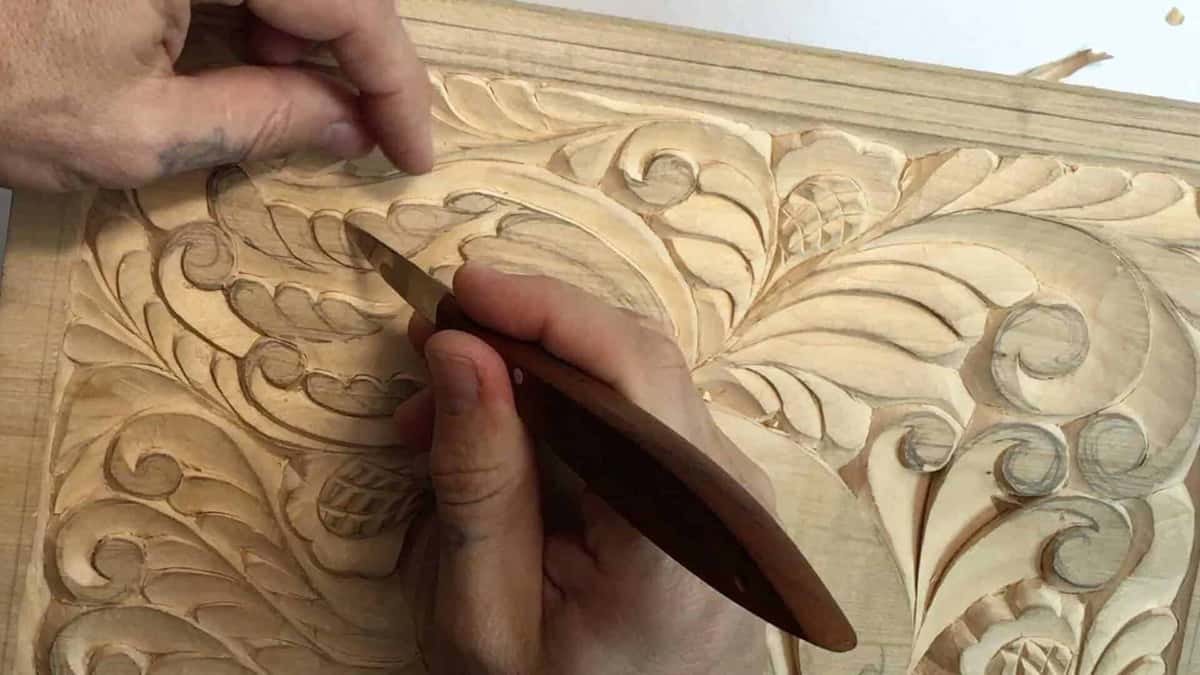
Half the reason carvers reach for the pale board is that it gets out of the way and lets the shape talk.
Oak was the old answer here and across the water, and it still stands in the churches. I believe the first person who brought limewood to England was Grinling Gibbons, because in Germany and the rest of Europe limewood had already been the main timber for carving. You can do a lot more with limewood than you can do with oak. Oak is more crunchy, and it has a lot of grain.
Which trees will you actually find in Ireland?
Alder, birch, willow, hazel, holly, ash, Scots pine and the two native oaks are what an Irish beginner meets, plus sycamore in places nobody planted it.
Every one of those sits on the Tree Council's native list, drawn up from the species that reached the island before the land bridges flooded. Sycamore is an introduction that behaved like a native and then took over.
The state estate is a different story from the hedge. Coillte owns 440,000 hectares, close to seven percent of Ireland, and Sitka spruce is its main commercial species. In the Dublin Mountains alone, 57 percent of the forest there is Sitka. Coillte cut 2.31 million cubic metres of roundwood in 2020 and it went out to sawmill customers in volume, not in single boards to a person with one gouge and a kitchen table.
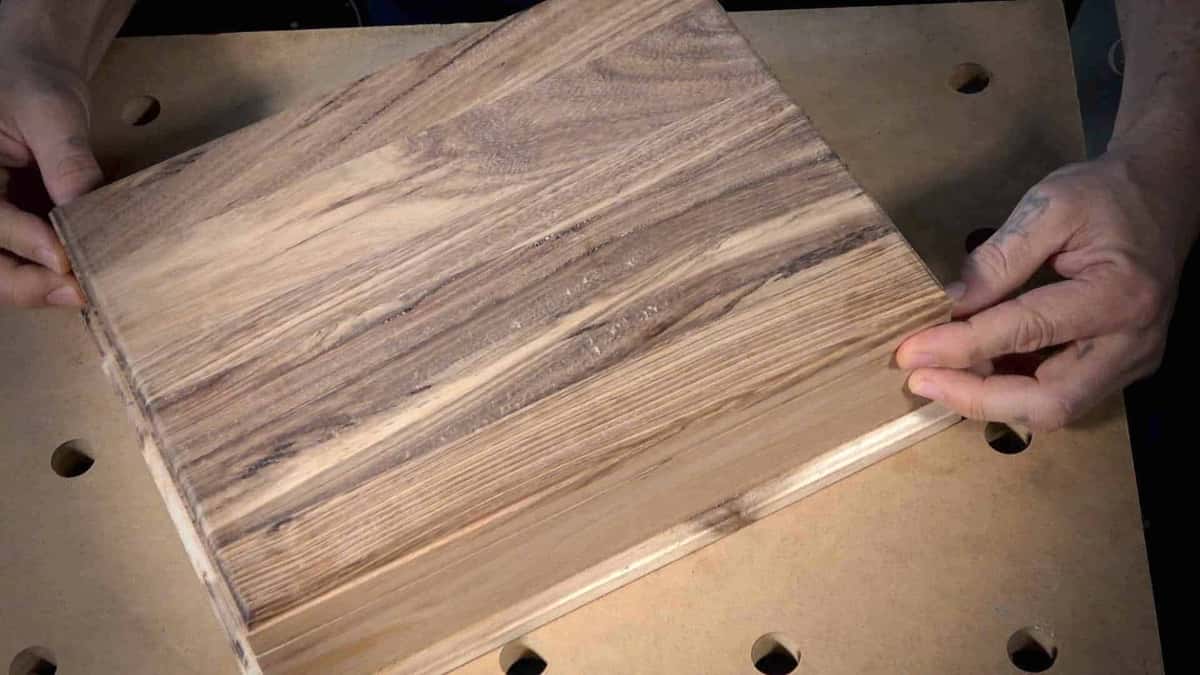
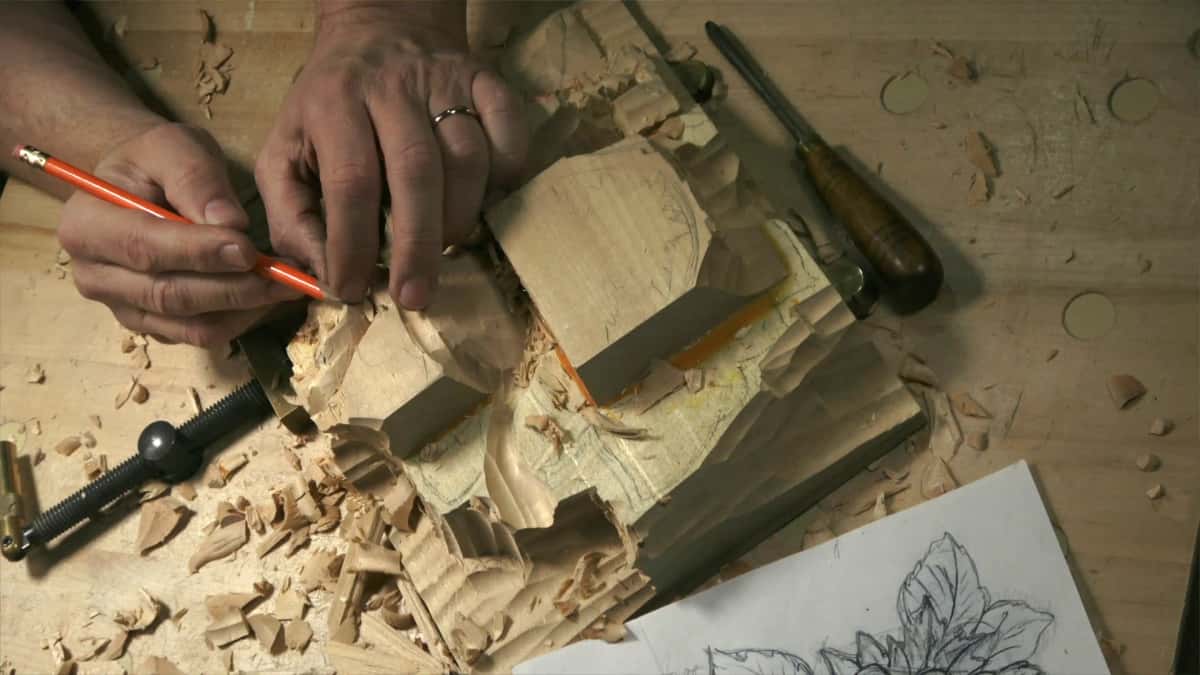
Every board gets tipped to the light before I mark it. Grain that runs uphill at one end will tear out later.
So your real suppliers are smaller and quieter. A hardwood mill that saws native broadleaf. A tree surgeon with a felled sycamore lying in the yard behind his chipper. A firewood merchant who has no idea he is holding carving stock. I go into that hunt further down, and none of it looks like a shop.
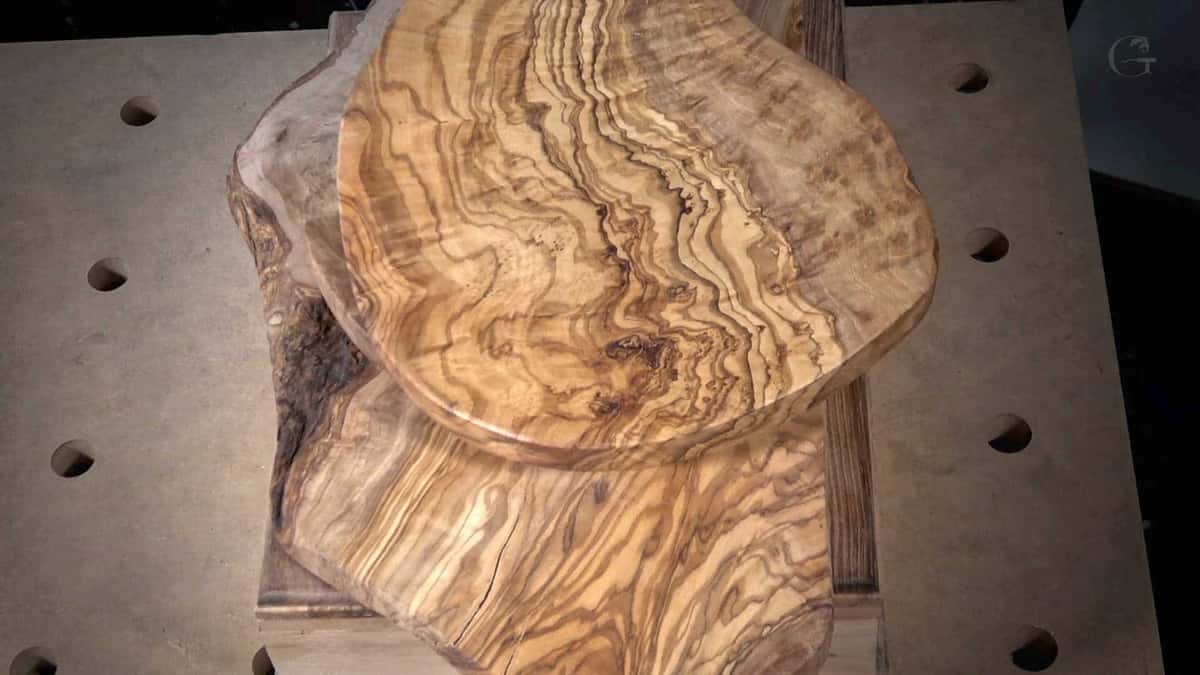
One warning about the pretty stuff. Wild figure, burr and swirl look wonderful in a photograph and they fight a beginner every inch of the way, because the grain changes direction three times inside a single carved leaf. In my Lily Box course I stop and say it out loud while working olive: I am catching the grain of the wood, not migraine, okay? Plain, straight, boring grain is what you want. For the long version, read how grain direction turns inside one carved leaf.
Which of these Irish woods is soft enough for a first carving?
Lime, alder and willow all come in under 700 lbf of side hardness, and sycamore at 1,050 is the hardest board I would hand a beginner. Above that number a hand gouge stops slicing and starts skidding, which is when beginners blame themselves for a problem the board caused.
| Wood you can find | How it behaves under a sharp gouge | Janka number | What I would do with it |
|---|---|---|---|
| Sycamore, not a native | Pale and close grained, mild figure, forgiving on a curve | 1,050 lbf | Saw your first flat panel out of this |
| Lime, imported only | Softest of the lot, takes detail and deep undercuts | 700 lbf | Order it for the good project |
| Alder, a wet ground tree | Even and soft, bruises badly when a thumb leans too hard | 650 lbf | Good for small panels, and keep the relief shallow |
| Willow, riverbank stuff | Woolly surface, plenty of drying defects, glues and finishes fine | 570 lbf | Use it for practice passes, nothing else |
| Birch, downy or silver | Hard, and wild grain tears out on curves | 1,210 lbf | Good for boxes, poor for leaves |
| Ash, now under dieback pressure | Coarse open pores, ring porous, and it wants a mallet behind it | 1,480 lbf | Bold shapes only, and sharpen far more often |
| Scots pine, a true native | Resin and hard summer rings fight your gouge | 540 lbf | Cheap practice wood, expect fuzzy results |

Every number in that table comes off a species page you can open yourself: sycamore maple, European alder, white willow, silver birch and Scots pine. Read them beside the table and the shape of your first year gets obvious.
The test behind those figures is worth ten minutes of an evening, and it is not complicated: what the Janka number measures and how the steel ball is driven. Two references will sometimes quote one species a hundred pounds apart, and the hardness article at that same site explains why the numbers drift. Sycamore at 1,050 against lime at 700 is the honest gap you will feel in your wrist by the end of an hour.
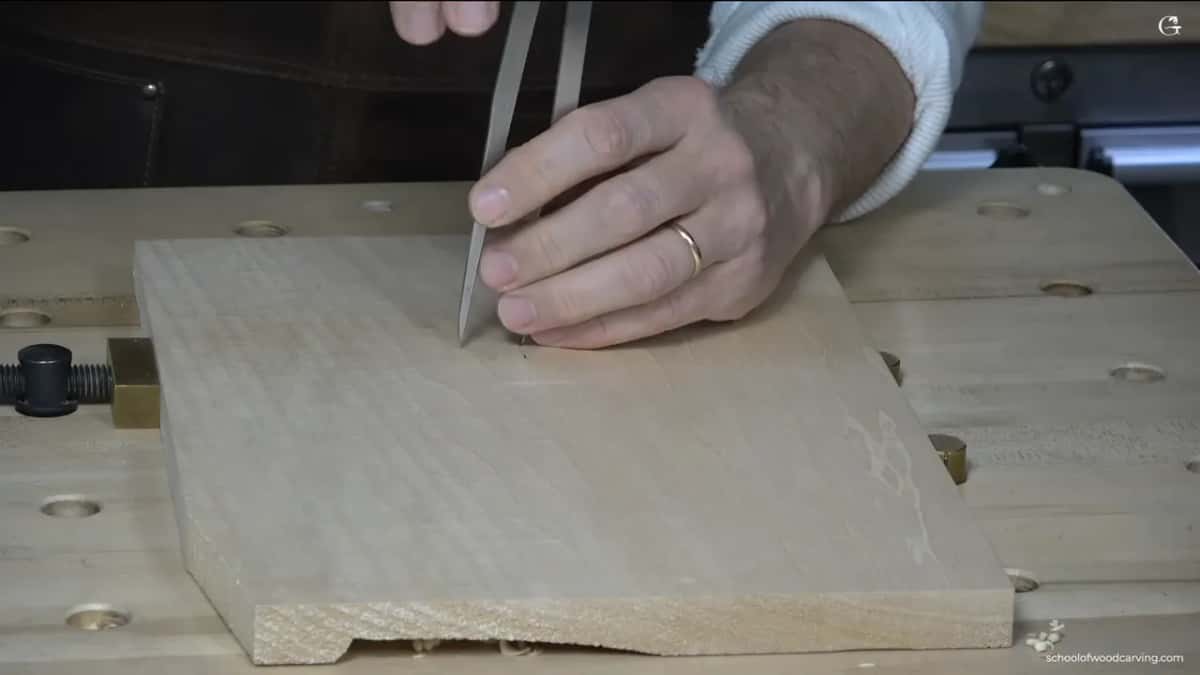
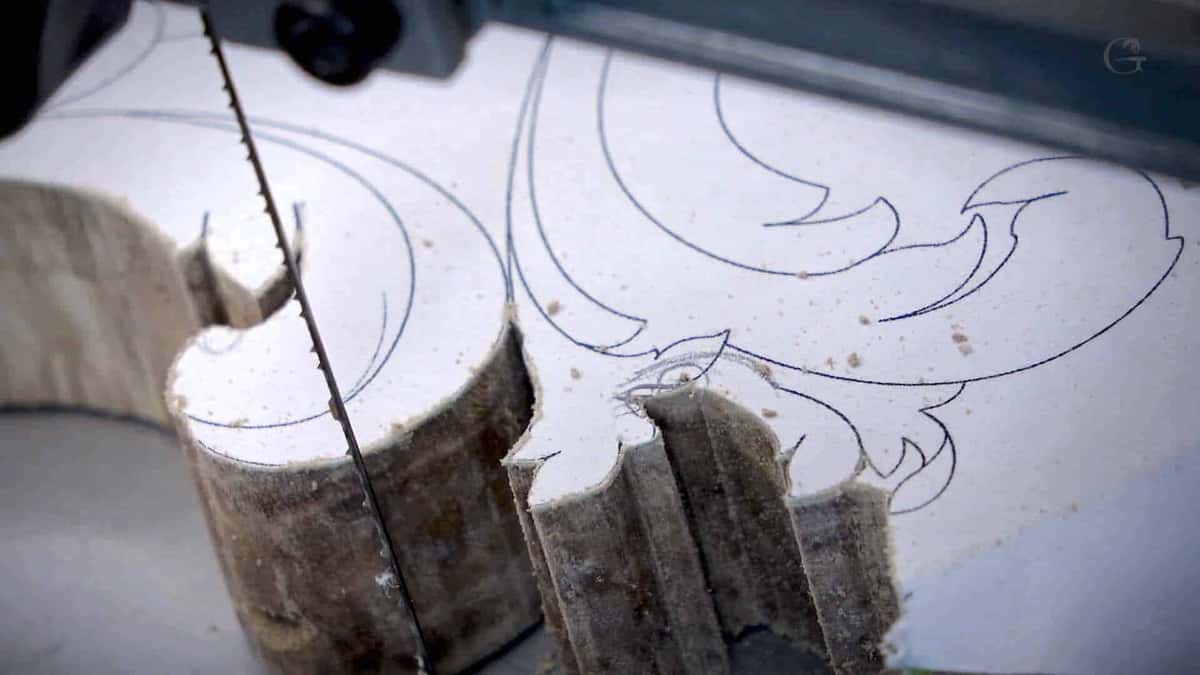
Twenty minutes of layout here saves a week of repair later.
What should you carve first if sycamore is all you can get?
Carve one shallow leaf into a flat sycamore panel about 25mm thick, and keep the deepest part under 6mm. Sycamore is 1,050 against lime at 700, so the board will not forgive a lazy edge, and shallow work keeps you out of the trouble that depth creates.
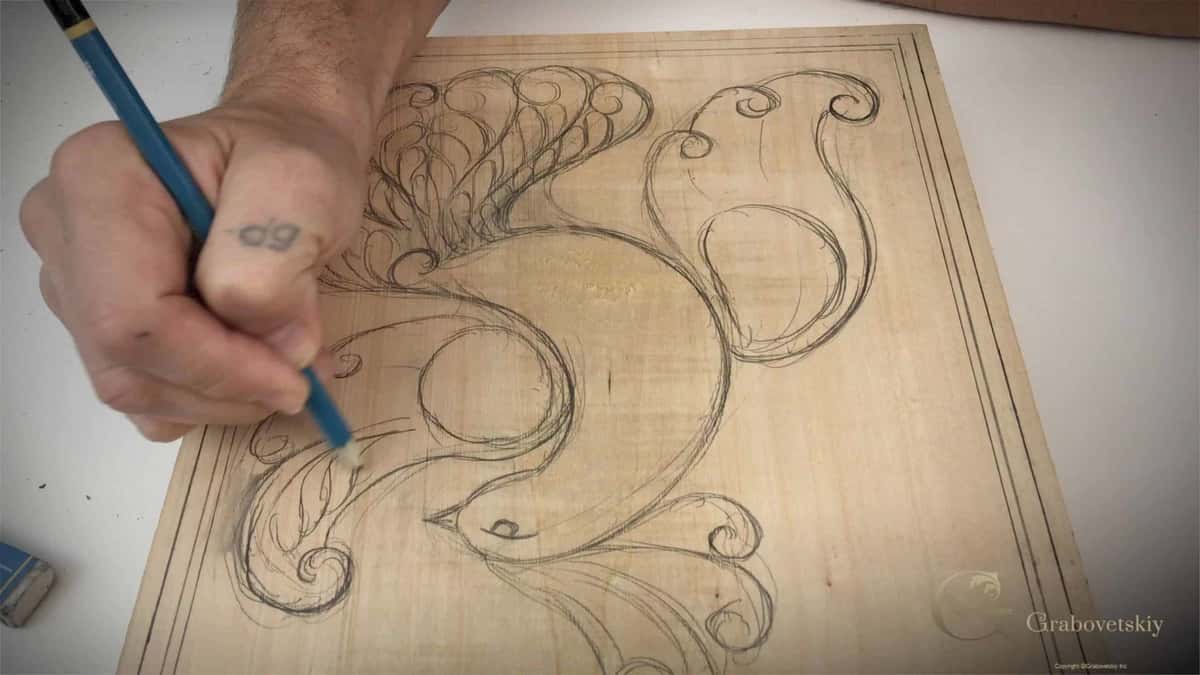
Draw the whole thing on the board before a tool touches it. Sycamore takes a pencil line beautifully, because the surface is pale and tight and it does not blur. In my plate course I keep repeating one warning while working fine petals: do not press too hard, you can break those details. That goes double on a wood harder than the one the design was drawn for.
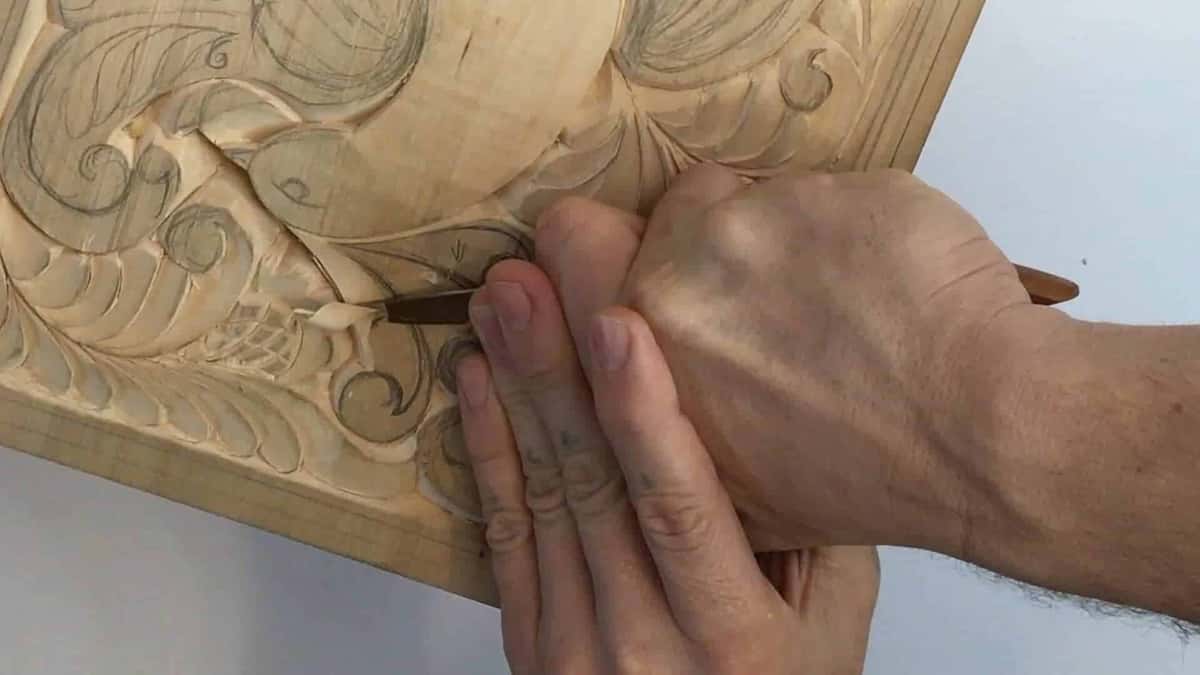
Work with two hands on one gouge, the way it looks in that photograph. One hand steers, the other pushes, and the tool moves about the width of your thumbnail per pass. Beginners want long heroic passes. Sycamore answers a long pass by tearing out at the far end of the curve, and then you are carving repairs rather than leaves. Shallow, short, sharp. When the time comes to make your own blanks, turning a rough board into a carving blank covers the bench work, and judging a board in your own hand is the yard-side version of the same skill.
Is Irish ash still worth carving after the dieback?
Ash is worth carving for bold shapes and wrong for a first leaf, and the dieback means there is a great deal of it about.
The Department of Agriculture, Food and the Marine confirmed the first Irish case of Hymenoscyphus fraxineus at a plantation in County Leitrim in October 2012, and the fungus has spread across most of the island since.
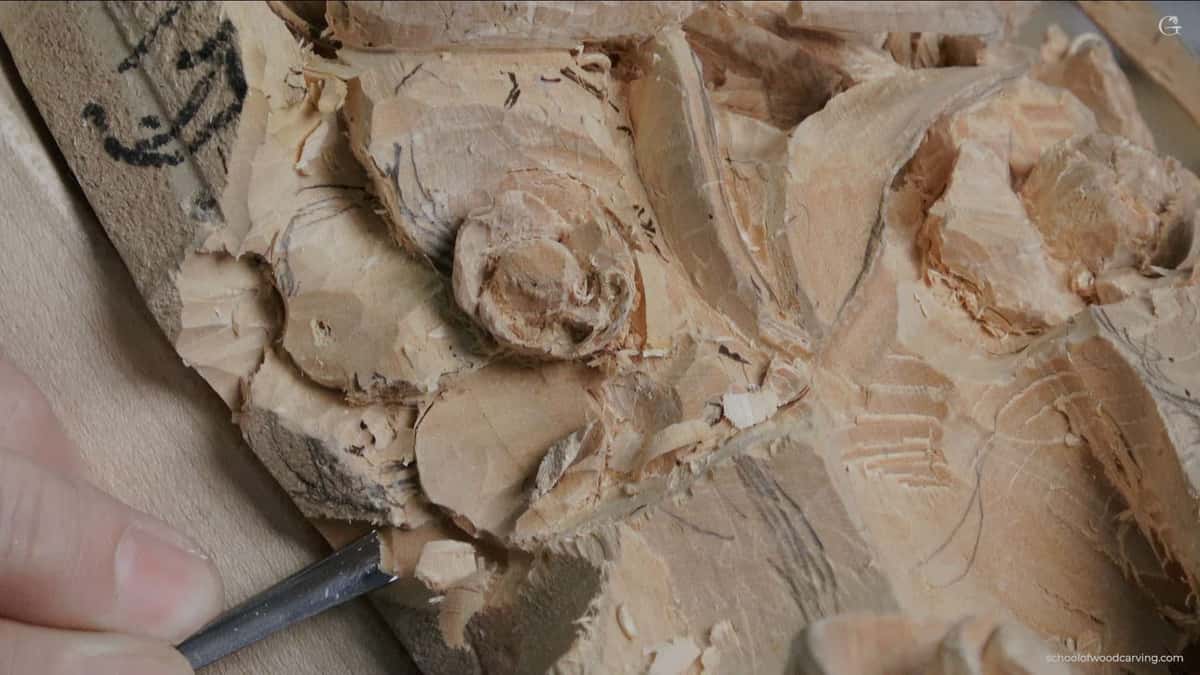
By September 2013 the disease had been recorded at 96 sites in the Republic. Teagasc warned in 2021 that the majority of Irish ash will likely die over the following two decades. Sad for a hedgerow. Strange for a carver, because felled ash now sits in yards the length of the country at firewood prices, and some of it is straight, clean, wide stock that would have cost real money ten years ago.
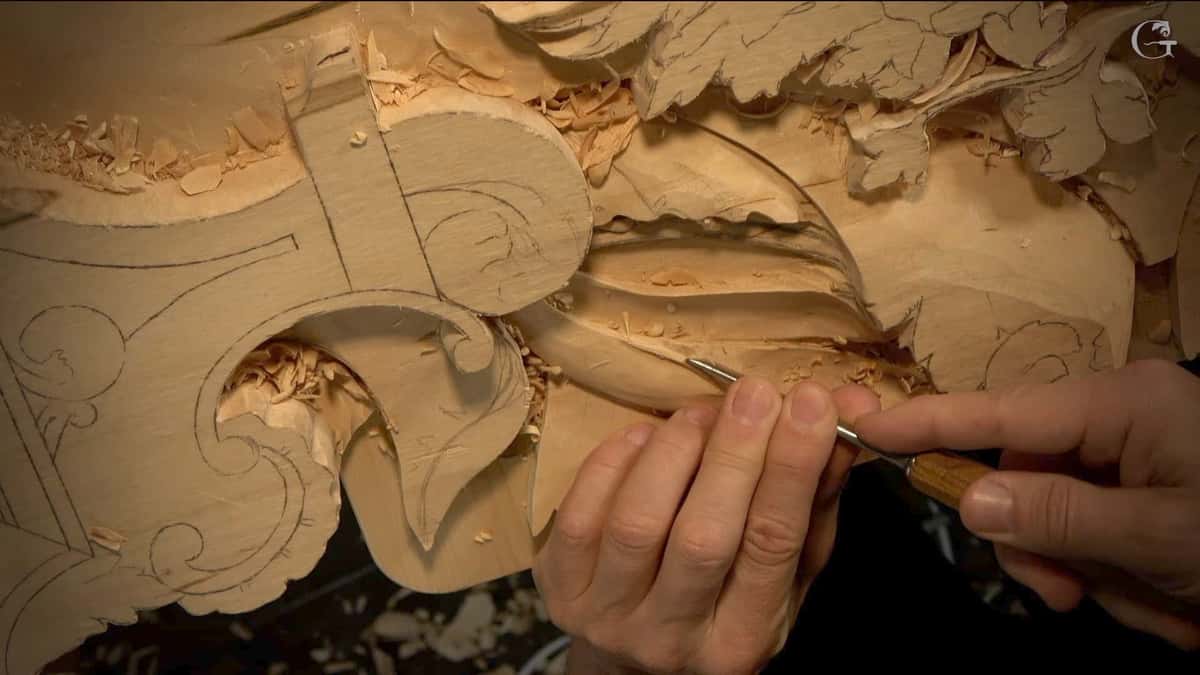
Raking light across a deep panel. On coarse wood like ash the shadow does most of the work.
Here is the trade you are making. Ash measures 1,480 lbf of side hardness, and it is ring porous, so the early wood inside one growth ring is soft while the late wood beside it is hard. A fine petal edge lands half in each and breaks away. Big shapes take it well. Read the USDA Forest Products Laboratory wood handbook for the mechanics behind that behaviour, and see how density and float relate for a fast way to guess weight in a yard.
Should an Irish beginner start with bog oak?
Leave bog oak for later, and your skill has nothing to do with the reason. Bog oak is oak that lay in a peat bog for centuries or for thousands of years, and the tannin bath turned it into something else entirely.

That maturation takes the wood from golden brown to black and raises its hardness so far that, as the reference dryly puts it, bog wood can only be carved with specialty tools. The same page notes that bog wood may crack or split as it dries. So the material is harder than any gouge you own is set up for, it is unstable until it settles, and it costs money you would rather put into steel.
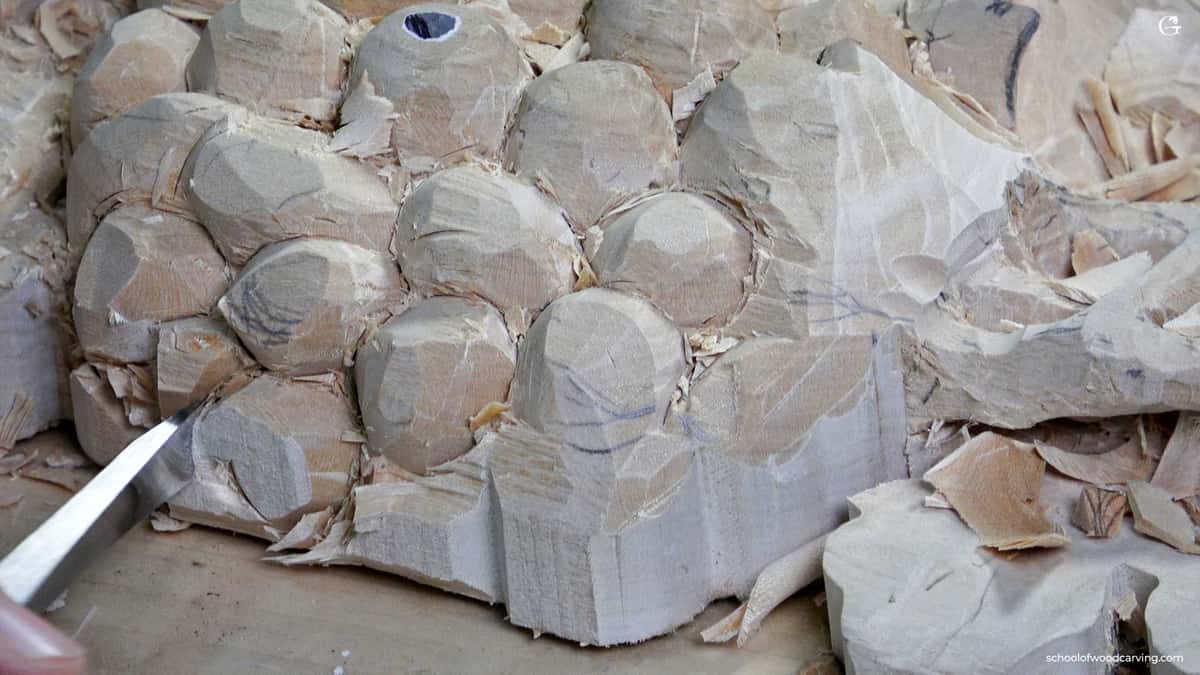
Keep it for year three. There will still be bogs then, and the wood in them has waited a few thousand years already. If a hard block has already landed on your bench and you are stuck with it, softening a block that fights back lays out the honest options, and not one of them is magic.
Where does an Irish beginner actually buy a board?
Ring a hardwood sawmill, a tree surgeon and a firewood yard, in that order, and buy lime online when you want the soft stuff. The state forest sells roundwood in volume to mills, so nothing in that supply chain is built for one person buying one board.

My own supply looks the same shape from this side of the Atlantic. I place a special order with a hardwood lumberyard in Orlando and they get the basswood for me. It is not a normal building lumberyard, it is a hardwood lumberyard, and it is not open to the public. You have to be in business to buy from them. Members of the public buy online instead, and there is no shame in that at all.
Nearly an hour of livestream from March 2020, where I go through the boards I buy and why.
Step 1, phone the mill before you drive anywhere
Ask one question. Do you saw native broadleaf, and will you sell a small quantity? A mill that only handles spruce for pallets tells you in ten seconds and saves you the diesel.
Step 2, ask for air dried stock by name
There are two kinds of dryness in basswood and in every other wood, natural air drying and kiln drying. Say which one you want out loud. Air dried moves less under the gouge, and air dried is what I buy for carving.
Step 3, buy thicker than the design needs
A 25mm board gives you room to lower a background and still have a panel left underneath. Thin stock cups, and a cupped panel pulls your relief out of true while you are still carving it.
Step 4, take the boring board home
Straight grain with no knots in it, nothing swirling, no bark edge. Leave the gorgeous figured slab on the rack for the day you can read it.

Step 5, expect the small piece to cost more per inch
The smaller the piece you buy, the more expensive it becomes. You spend less money in total and more per cubic inch, and that arithmetic never changes anywhere. Good carving wood is not cheap, and I would rather say so than let you find out at the till.
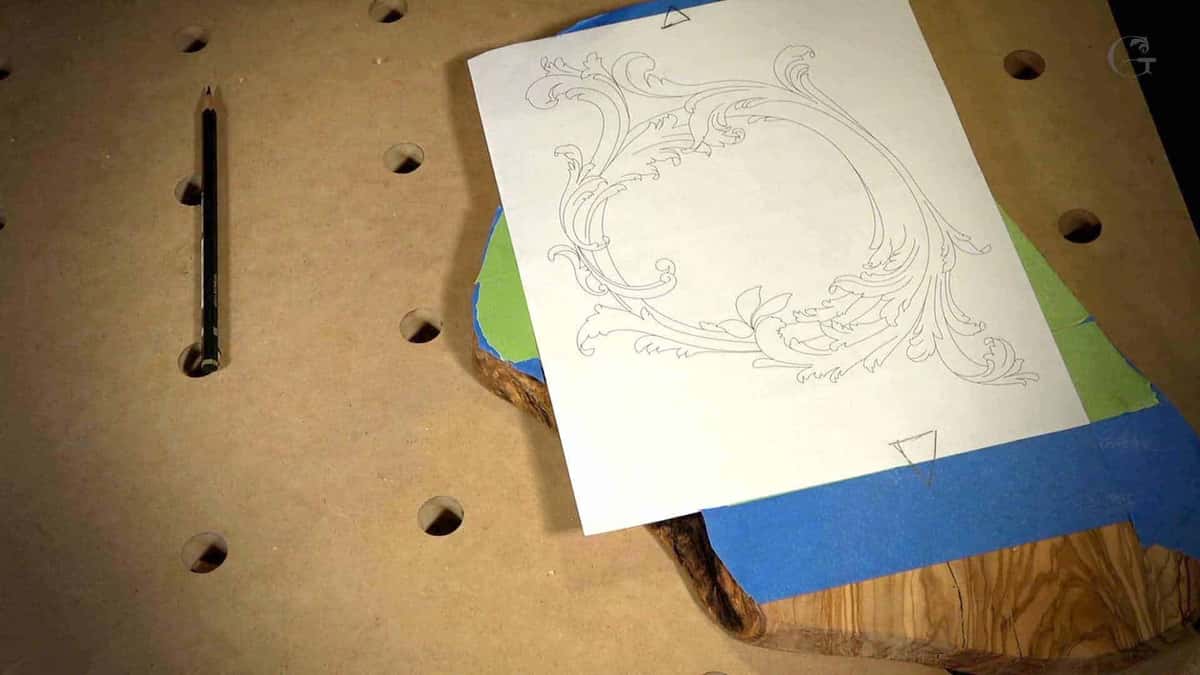
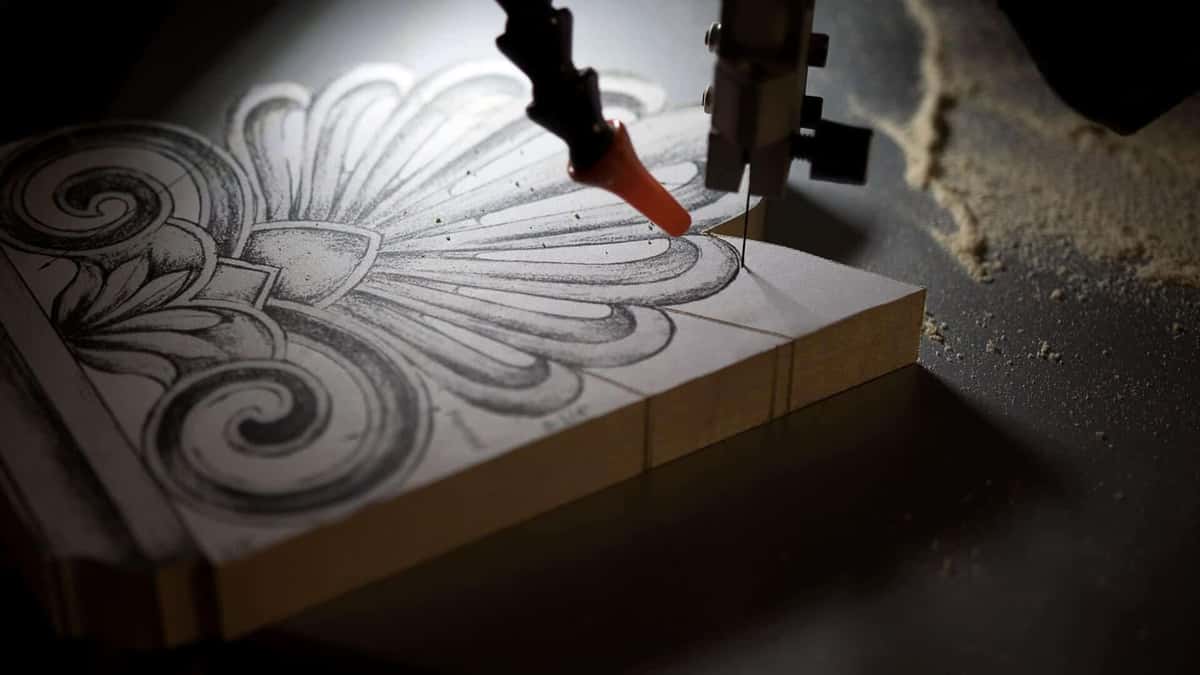
Pattern taped down, ready to trace. This is the last cheap moment in the whole project.
Two neighbouring questions come up here constantly, so take them one at a time. Green sycamore off the saw wants time before you commit a design to it, and drying green wood at home without splitting it covers that. What a first year costs, tools included, sits in what wood carving costs as a hobby.
Why does soft wood dull a gouge faster than oak?
Forty years at the bench and I still cannot explain it properly. While carving oak I do not walk to my sharpening station as often as I do on basswood, and that is a paradox.

Basswood is much the softer wood of the two. Call it basswood or call it limewood, it is the same tree. It is softer, and my tools get dull a lot quicker on basswood than on oak. My teacher tried to explain it to me. I still did not get it. I would rather hand you an open question than a tidy answer I made up on the way past.
My own workaround is no mystery, though. I keep two setups on the rack. When I am carving oak I take the tool with the stronger bevel, and for limewood or basswood I switch to the other one. Most of my tools carry a really low angle. Really important. On lime and basswood that low angle is what lets the edge slice instead of push.
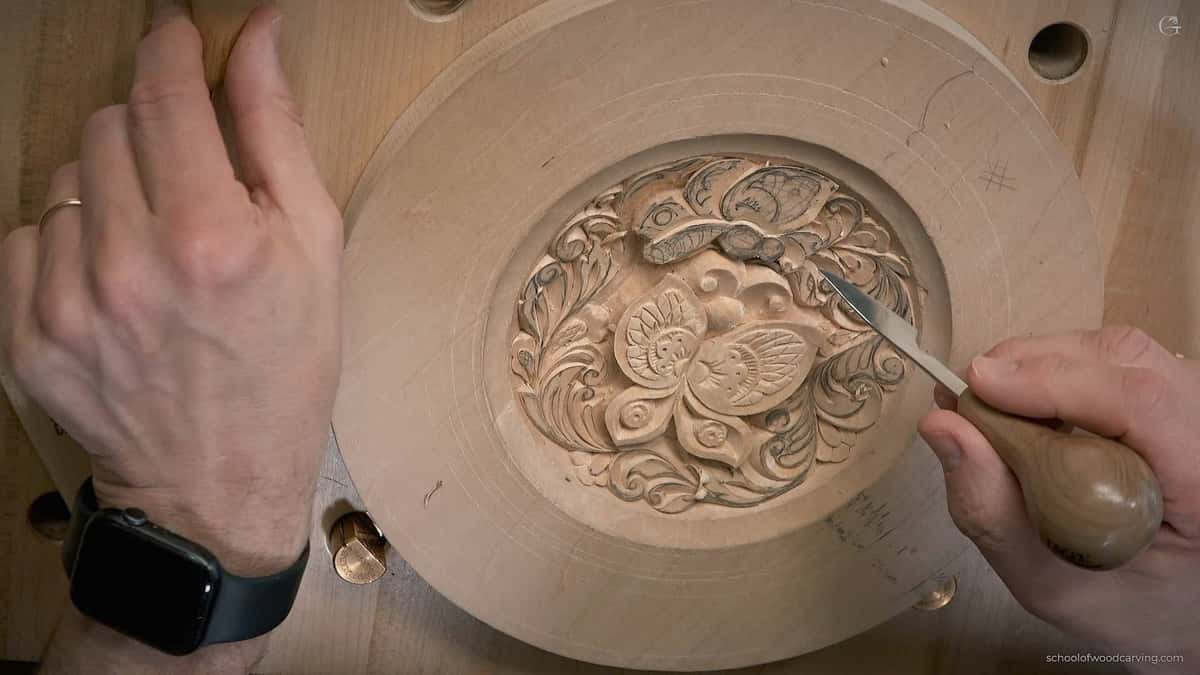
For an Irish reader the practical result is plain. Sycamore, birch and ash all sit above lime on the hardness scale, so a low soft-wood bevel will roll over on you and the stronger one will hold. This is a set-up decision rather than a shopping decision, which is exactly why judging a boxed set of carving tools before you pay matters more than the badge printed on the box. My tool sharpening course takes the bevel apart properly, and the beginner carving course starts from a flat panel like the one you can saw out of Irish sycamore this week.
What goes on an Irish carving once it is finished?
Open pored woods like ash and oak drink a film finish unevenly, while pale close grained woods like sycamore and lime take it quietly. That difference decides how your carved shadows read from across a room.

A carving lives or dies by shadow. Pour something glossy into the deep parts of an ash panel and the open pores swallow it in patches, so the shine goes blotchy and a shadow stops being a shadow. How a lacquer film forms on a carving walks through the mechanism, and a companion piece on wood and moisture explains the movement that opens those pores.
Two more that answer whatever you were going to ask next. My pick for the best carving wood anywhere in the world ignores geography completely, and how softwoods behave under a gouge matters if Sitka spruce is what your nearest yard actually stocks. Across the Irish Sea, the species list for a beginner in the UK is a different set of trees, and the same question answered for a beginner buying wood in Botswana shows how far the answer moves with latitude.
One last thing, said plainly. Wood is the cheapest part of this craft and the part beginners get wrong most often, which is why the mistakes I watch beginners repeat starts with the board and not with the tool. A sycamore offcut from a tree surgeon, one sharp gouge and a pencil, and you have everything you need to find out whether this craft is yours. God gave somebody in your house that pair of hands for a reason.
Frequently asked questions
Can you carve Irish sycamore green, straight off the saw?
Green sycamore carves easily and then moves while it dries, which twists a finished panel out of true. Let a 25mm board sit indoors for months rather than weeks. A shallow practice leaf is fine on green stock, since nothing much is lost when it warps.
Is holly worth anything to a carver in Ireland?
Holly is one of the Irish natives on that list and a difficult first wood. It grows small and knotty, the grain interlocks, and it moves a great deal on the way to dry. Keep holly for tiny white details that need almost no width.
Does hazel make a usable carving blank?
Hazel grows as a cluster of thin stems rather than a trunk, so it hands you rods instead of boards. Coppiced hazel is superb for baskets and for hurdles. For a relief panel you would be gluing scraps together to reach any useful width.
Which single gouge would you buy first for Irish sycamore?
Buy one medium sweep about 12mm wide and learn what it does before adding a second. That single gouge will lower a background, shape a leaf and clean up a curve on hard pale wood like sycamore. The rest can wait.
Can you carve Sitka spruce from an Irish plantation?
Sitka spruce measures just 510 lbf, so it feels soft under the tool, and knots ruin it. Its own species page calls it easy to work as long as no knots are present, and plantation stock is full of them. Practice wood, nothing more.
How thick should a first Irish practice board be?
I would take 25mm and never go under 18mm. Thin panels cup while you are lowering the ground, and a cupped panel throws your whole relief out of level. Extra thickness also buys a second chance when a first attempt goes wrong.
Filed under
- Basswood (Lime-wood) characteristics for carving
- Basswood (Lime-wood) grain texture for carving
- beginner-friendly wood types for carving
- benefits of Basswood (Lime-wood) carving
- best places to buy wood in Ireland
- best wood for beginner carvers in Ireland
- best woods for beginner woodworkers
- carving Basswood (Lime-wood) with knives
- carving safety tips for beginners
- carving tools for beginners
- common uses of Basswood (Lime-wood) wood
- easy wood carving materials
- learning wood carving basics
- methods for carving Basswood (Lime-wood)
- simple carving projects with Basswood (Lime-wood)
- softwoods for carving projects
- top beginner woods for carving skills
- Understanding Wood for Carving
- where to find Basswood (Lime-wood) in Ireland
- why choose Basswood (Lime-wood) for beginners
- wood carving tips for starters